Author: Patricia

  • Tenerife with Teenagers: Adventure, Beaches, Water Parks, Food and Evening Plans

    Tenerife with Teenagers: Adventure, Beaches, Water Parks, Food and Evening Plans

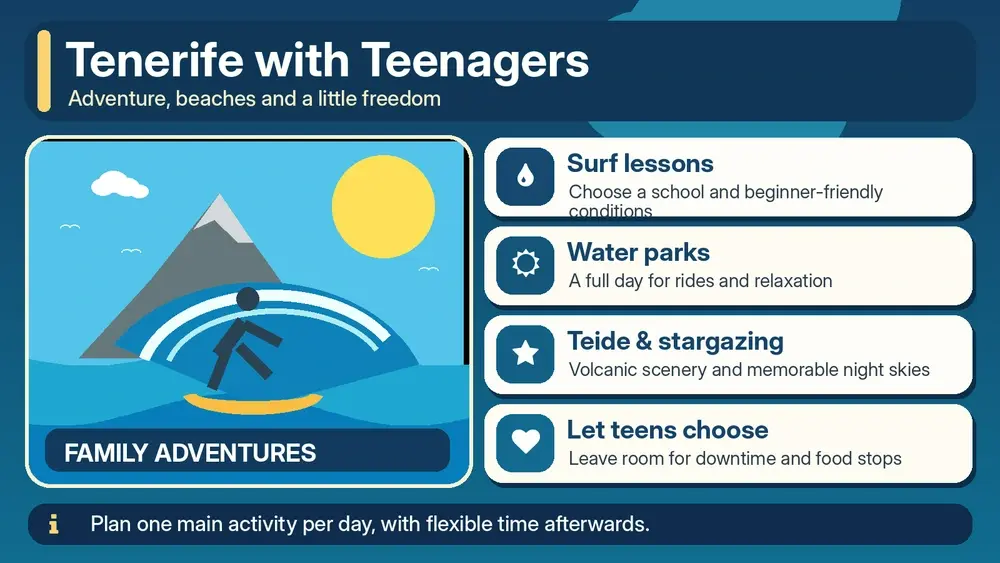
    Quick summary: The best Tenerife trip with teenagers mixes autonomy, adrenaline and downtime. I avoid filling every day with “family attractions” and instead combine one high-energy experience—Siam Park, surfing, bodyboarding, snorkelling, karting or a boat trip—with beaches, good food, a city evening and at least one landscape that feels genuinely different from home.

    Good baseSouth for easy beaches/activities; north for greener towns and variety
    High-energy ideasWater park, surf, bodyboard, karting, biking
    Low-cost balanceBeach, promenade, viewpoints, sunset, markets
    Key planning ruleLet teenagers choose part of the itinerary

    What teenagers usually want from Tenerife

    Teenagers are old enough to notice when every activity has been designed for small children but young enough that transport, booking and safety still depend on the adults. I give them real choices: pick the beach, choose between surf and karting, decide which restaurant looks good, or take responsibility for navigating one bus journey.

    That small amount of ownership changes the mood of the trip. Tenerife has enough variety that the holiday can feel active without becoming a compulsory sports camp.

    Water parks and adventure

    Siam Park is an obvious anchor for many families because older children and teens can use the more thrilling slides while adults choose their own pace. I check height restrictions and current opening information directly before buying tickets.

    Surf and bodyboarding around suitable schools in El Médano or other established areas can be excellent for a first lesson. For water sports, I use qualified operators and let conditions decide whether the session happens. The Atlantic is not a swimming pool, and confidence on a board is not the same as ocean experience.
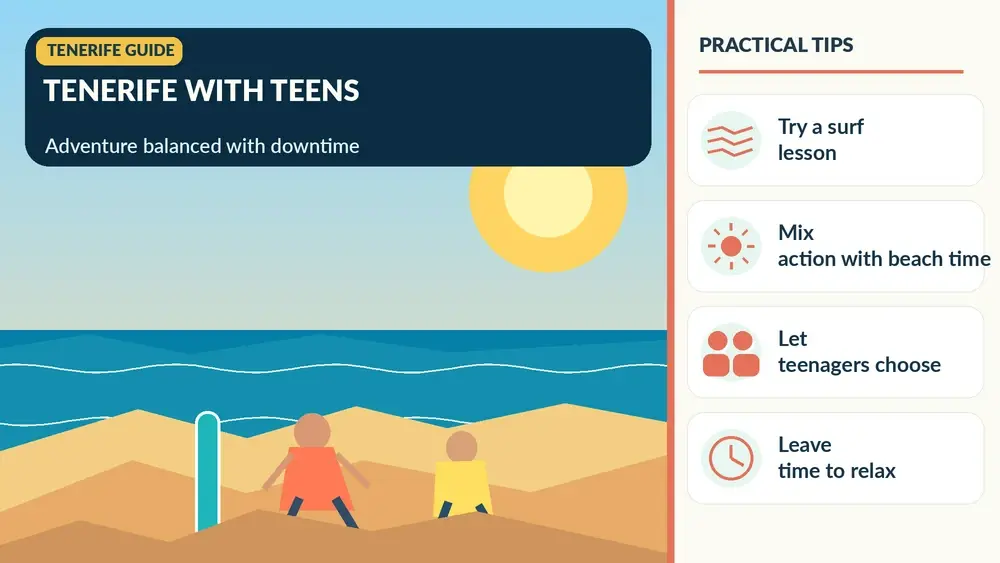
    Illustrated guide: Tenerife with Teenagers, with practical visitor tips
    Illustrated guide: Tenerife with Teenagers.

    Teide without turning it into a lecture

    Teide works best with teenagers when the day has a purpose: cable car, stargazing, a short trail, photography or a road trip with music and food stops. A long sequence of viewpoints chosen only by adults can feel repetitive.

    I build in the altitude and temperature difference. Even when the coast is hot, the national park can be cold or windy. I also confirm permits and access rules for any trail that requires them.

    Beaches, snorkelling and independence

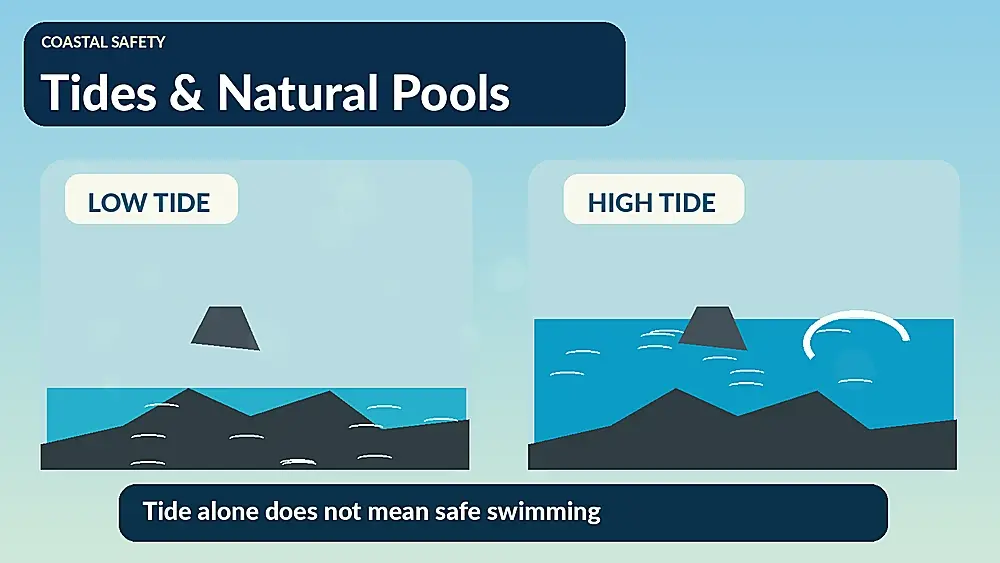
    A resort beach or natural pool can give teenagers a sense of freedom while adults stay nearby, but I set clear water-safety rules. Flags, waves and rocky entries matter. For snorkelling, a guided first session can be more useful than buying equipment and assuming every cove is suitable.

    I choose accommodation within walking distance of food and a promenade when teens want some independence. A safe, well-lit route to an ice-cream shop or café can make evenings much easier for the whole family.

    Food that works

    I mix familiar options with local food rather than turning every meal into a cultural test. Arepas, bocadillos, papas arrugadas, grilled fish, burgers and tapas-style sharing can give everyone choice. Markets are useful because each person can try something different without committing to a long formal lunch.
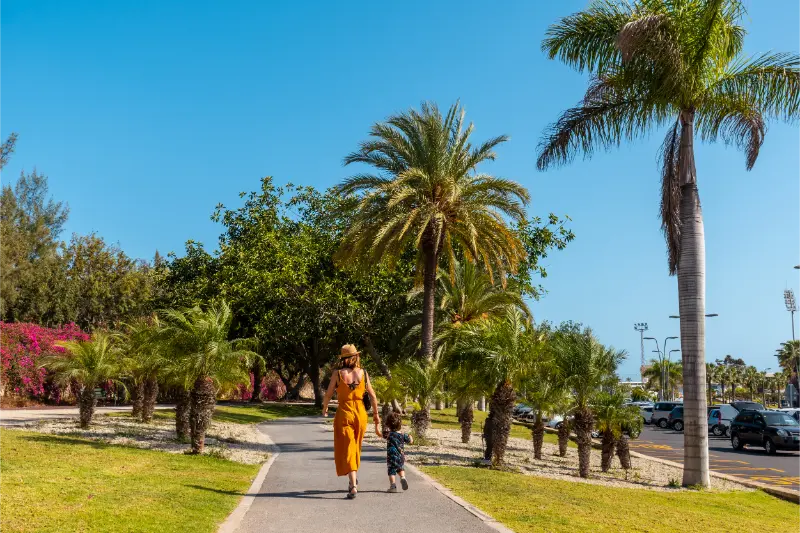
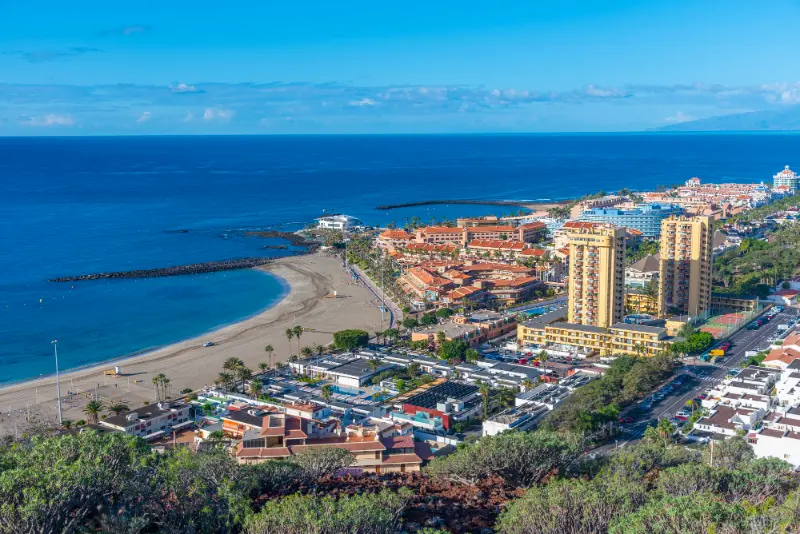
    Mother And Son Walking In Los Cristianos Tenerife

    For older teens, I involve them in the budget. Giving them a daily snack allowance or letting them compare activity prices makes the trip feel less like being managed.

    Evenings and age limits

    Nightlife rules and venue age policies matter. A family can enjoy a busy promenade, live music, cinema or late dinner without treating adult clubs as a teenage attraction. I check the specific venue rather than assuming that a tourist area is automatically suitable for under-18s late at night.

    Siam Night and seasonal events can be attractive to older teens, but current dates and age/accompaniment rules should be checked before planning the holiday around them.

    Build one teen-choice day

    I let the teenager choose the main activity, lunch and one evening plan within a budget. It creates ownership without giving up the practical framework.

    I would verify this point close to the travel date because a small operational change can affect the whole day. My preference is to keep one workable backup rather than build a complicated Plan B: a second document copy, another transport option, a nearby supermarket, a lower-effort activity or enough time to ask staff for help. That approach is especially useful in Tenerife because the island offers many alternatives within a relatively short distance.

    Use bad-weather backups

    Cinema, escape rooms, shopping centres, bowling and city cafés keep a cloudy or windy day from becoming a family argument.

    I would verify this point close to the travel date because a small operational change can affect the whole day. My preference is to keep one workable backup rather than build a complicated Plan B: a second document copy, another transport option, a nearby supermarket, a lower-effort activity or enough time to ask staff for help. That approach is especially useful in Tenerife because the island offers many alternatives within a relatively short distance.

    How I would use this guide on a real Tenerife trip

    I treat Tenerife with teenagers as a practical layer of the holiday rather than something that should dominate every day. I verify the few details that can create a real problem—documents, opening times, transport, medical or legal requirements—and keep the rest flexible. Tenerife changes quickly between the south coast, the north, the metropolitan area and the high mountains, so geography and timing are often more important than adding more activities.

    Childrens Play Area At Siam Park Tenerife

    I also save the key official link, booking reference or emergency contact offline before I leave the hotel. Mobile data is generally easy to arrange, but the moment I most need a detail is often when I am at an airport counter, inside a police station, on a mountain road or trying to make a connection. A screenshot and a small time buffer are simple habits that make the trip calmer.

    Useful related guides on My Tenerife Experience

    Where I would stay

    I choose a base according to the hardest part of the itinerary. Costa Adeje and Los Cristianos are convenient for many family and resort services, Puerto de la Cruz works well for the greener north, while Santa Cruz and La Laguna are useful for city services and public transport. I compare accommodation in Tenerife and then read the newest reviews for details that matter to this specific trip rather than relying only on the headline score.

    Official information to recheck

    Frequently asked questions

    Is Tenerife good for teenagers?

    Yes. The island combines beaches, water parks, outdoor sports, cities, volcano scenery and easy casual food, which makes it flexible for different interests.

    Where should a family with teenagers stay?

    The south is easiest for concentrated activities and beaches; Puerto de la Cruz gives a greener, more local-feeling base. Choose around the activities your family values most.

    Can teenagers go out alone?

    That depends on age, maturity, location and family rules. I prefer walkable, well-lit resort or town areas and clear check-in times.

    Final thoughts

    The aim is not to entertain teenagers every minute. Give them a few memorable activities, some real decision-making power and enough unstructured time, and Tenerife becomes much easier for everyone.

    Practical planning checkpoint 1

    Before I lock this part of the trip in, I check the exact date, location and operator rather than relying on a screenshot from months earlier. Tenerife is easy to travel around, but opening hours, transport frequency, weather, service availability and access conditions can change between municipalities and seasons. I keep one alternative in the same area so a small change does not force a cross-island detour.
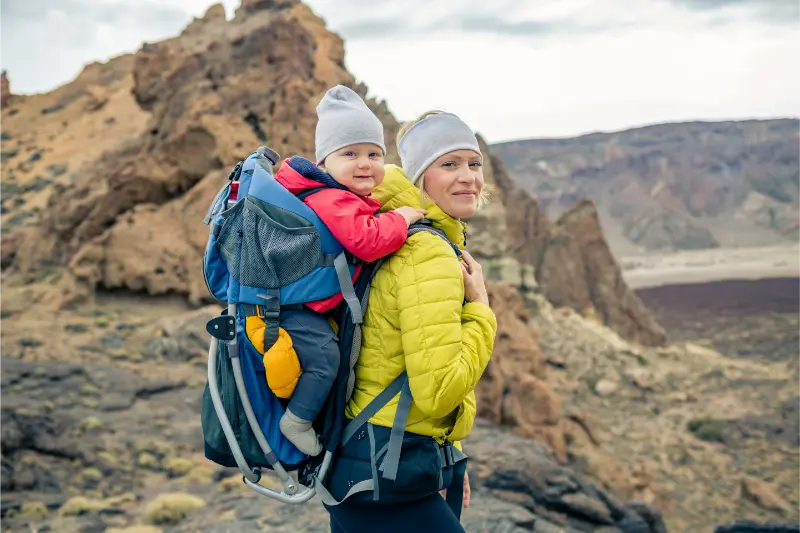
    Exploring Tenerife With Kids

    I also think about who is actually travelling. A plan that works for a solo adult can be poor for a toddler, a teenager, a pregnant traveller, an older relative or someone working remotely. The useful question is not “Is Tenerife suitable?” but “What would make this particular day comfortable and realistic?” That usually produces better choices about timing, accommodation, food stops and transport.
    Practical planning checkpoint 2

    Before I lock this part of the trip in, I check the exact date, location and operator rather than relying on a screenshot from months earlier. Tenerife is easy to travel around, but opening hours, transport frequency, weather, service availability and access conditions can change between municipalities and seasons. I keep one alternative in the same area so a small change does not force a cross-island detour.

    I also think about who is actually travelling. A plan that works for a solo adult can be poor for a toddler, a teenager, a pregnant traveller, an older relative or someone working remotely. The useful question is not “Is Tenerife suitable?” but “What would make this particular day comfortable and realistic?” That usually produces better choices about timing, accommodation, food stops and transport.

    Practical planning checkpoint 3

    Before I lock this part of the trip in, I check the exact date, location and operator rather than relying on a screenshot from months earlier. Tenerife is easy to travel around, but opening hours, transport frequency, weather, service availability and access conditions can change between municipalities and seasons. I keep one alternative in the same area so a small change does not force a cross-island detour.

    I also think about who is actually travelling. A plan that works for a solo adult can be poor for a toddler, a teenager, a pregnant traveller, an older relative or someone working remotely. The useful question is not “Is Tenerife suitable?” but “What would make this particular day comfortable and realistic?” That usually produces better choices about timing, accommodation, food stops and transport.
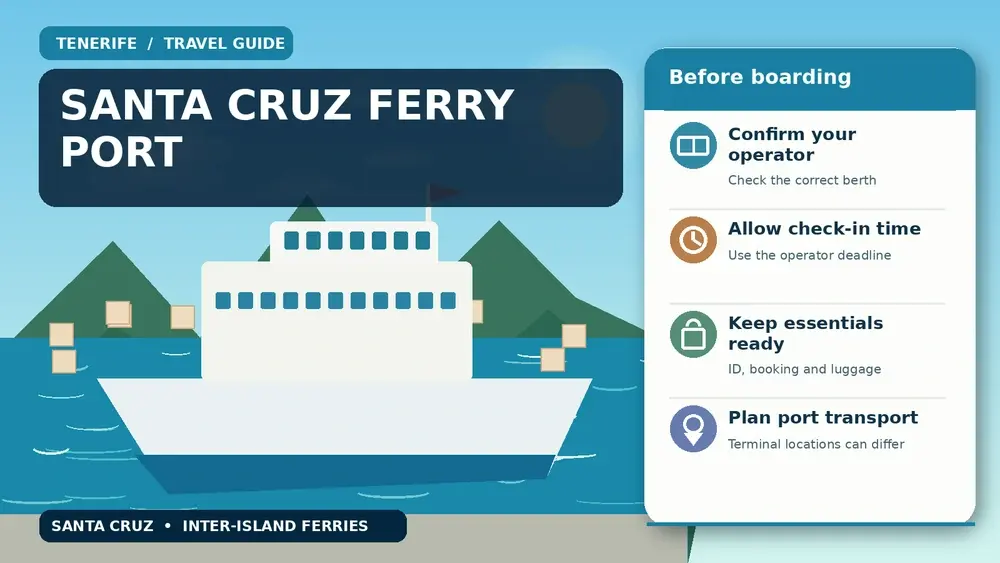
  • Santa Cruz de Tenerife Ferry Port Guide: Terminals, Transport, Parking and Connections

    Santa Cruz de Tenerife Ferry Port Guide: Terminals, Transport, Parking and Connections

    Quick summary: Santa Cruz is Tenerife’s major capital-city port and an important ferry gateway, especially for connections involving Gran Canaria and inter-island networks. Unlike Los Cristianos, the port is spread along a large waterfront, so I check the operator, quay and access instructions before travelling. “Port of Santa Cruz” is not one tiny terminal door.

    Best forMajor inter-island connections and capital-city access
    City centreClose, but the exact ferry berth can still require a walk or shuttle
    TransportTaxi, TITSA, tram/bus connections in the city, vehicle access
    Key ruleConfirm operator, terminal/quay and boarding deadline

    Understanding the port layout

    Santa Cruz de Tenerife has a long working waterfront used by ferries, cruise ships, cargo and other traffic. I do not navigate simply to “Puerto de Santa Cruz” and hope to see my ship. I open the operator’s terminal instructions and enter the specific access point. Fred. Olsen identifies its Muelle Ribera terminal and gives separate road and pedestrian directions.

    The waterfront is close to central Santa Cruz, but “close” is relative when luggage, fencing, port security and large quays are involved. If I arrive by taxi, I show the ferry company and sailing rather than only saying “the port.” That reduces the risk of being dropped at a cruise terminal or another entrance.

    Which routes use Santa Cruz?

    Santa Cruz is central to Tenerife’s connections with Gran Canaria and can be part of wider inter-island itineraries. Routes, frequencies and vessel ports can change, so I search by exact date. Some western-island services are more naturally associated with Los Cristianos. The simplest rule is never to assume that every Tenerife ferry leaves from the same harbour.

    If I am building an island-hopping holiday, I check the port before booking the hotel and again before departure. A same-day connection that looks easy on a ferry search engine can become awkward if the first ship arrives in Los Cristianos and the second leaves from Santa Cruz.

    Foot passengers and luggage

    For foot passengers, I arrive early enough to locate the check-in area without stress. Fred. Olsen lists trolleys and a small luggage transport service at its Santa Cruz operation, but I still follow the specific fare and ticket conditions. Valuables, medication, travel documents and batteries stay with me.

    A small wheeled case is easier on the city-port transition than multiple loose bags. If I have several hours before check-in, I use a planned luggage-storage option rather than dragging cases through Santa Cruz. This is especially useful if I want to visit the market, TEA or the old centre before an afternoon sailing.

    Arriving by car

    Drivers approach the port from the city’s seafront road network and then follow operator signage. The exact entrance matters because the port perimeter is large. I add a margin for urban traffic and do not schedule refuelling after the advertised vehicle check-in cut-off. If the car is rented, I check ferry permission before the day of travel.

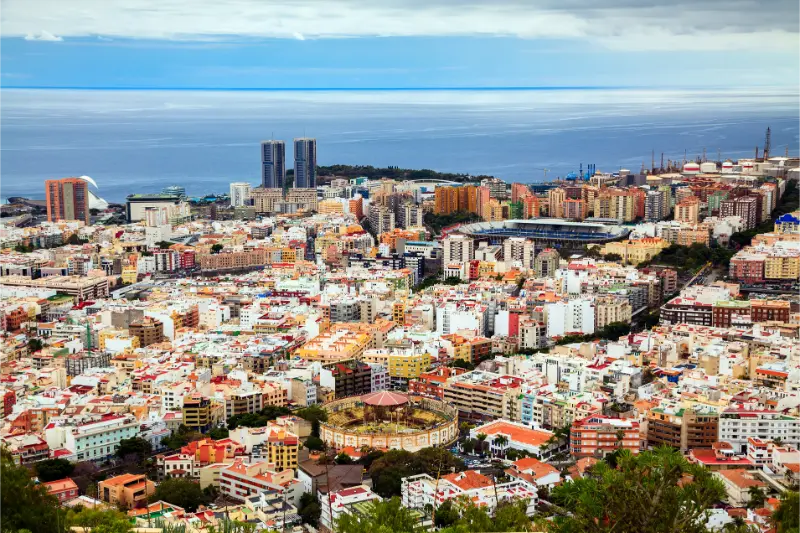
    Aerial View Of Santa Cruz De Tenerife

    Vehicle boarding is usually organised in staging lanes. I keep the booking accessible on my phone and, when possible, offline. Once on board, I remove the things I need during the crossing because access to the vehicle deck may be restricted.

    From the city centre to the ferry

    Santa Cruz is one of the few places in Tenerife where a ferry departure can pair naturally with a city stay. Taxis are the simplest option with luggage. Public transport can bring me into the metropolitan hub, but I still check the final walking route to the specific terminal. The tram is excellent for moving between Santa Cruz and La Laguna, but it does not replace the final port access step.

    If my hotel is central, I ask reception for the realistic taxi time to the operator’s terminal rather than measuring the straight-line distance. Port roads and security entrances can make a short map distance feel longer.

    Connections between Santa Cruz and Los Cristianos

    Fred. Olsen lists a complimentary ferry bus linking Santa Cruz and Los Cristianos for passengers on certain western-island services. I treat this as an operator connection, not a general free public bus. Eligibility, meeting point and timetable should be confirmed on the booking.

    Without an operator shuttle, the road journey between the two ports is substantial enough that I allow a generous margin. A traffic problem on TF-1 can break a tight connection. If two separate tickets are involved, I plan even more conservatively because the second carrier may not protect a missed connection.

    Parking and overnight strategy

    For a car that is not boarding the ferry, I check official or commercial parking close to the port and read the access hours. I avoid leaving a vehicle in an apparently convenient street space for several days without confirming signs and restrictions. In central Santa Cruz, a paid garage can be worth the predictability.

    For an early sailing, a city-centre night works well because restaurants and services are close. For a late arrival, I avoid stacking a long cross-island drive after the ferry if I know I will be tired. Tenerife’s roads are good, but fatigue is a poor way to begin or end an island-hopping leg.

    How I would build this into a real Tenerife trip

    I treat Santa Cruz Tenerife ferry port as one layer of the holiday rather than a reason to over-plan every hour. My usual method is to identify the one decision that could create a genuine problem—missing a ferry, choosing an unsuitable room, arriving after the last bus, or assuming a service exists at a beach—and verify that point first. Everything else can stay flexible. Tenerife is easy to enjoy when the important logistics are checked early and the day still has enough breathing room for weather, traffic and spontaneous stops.

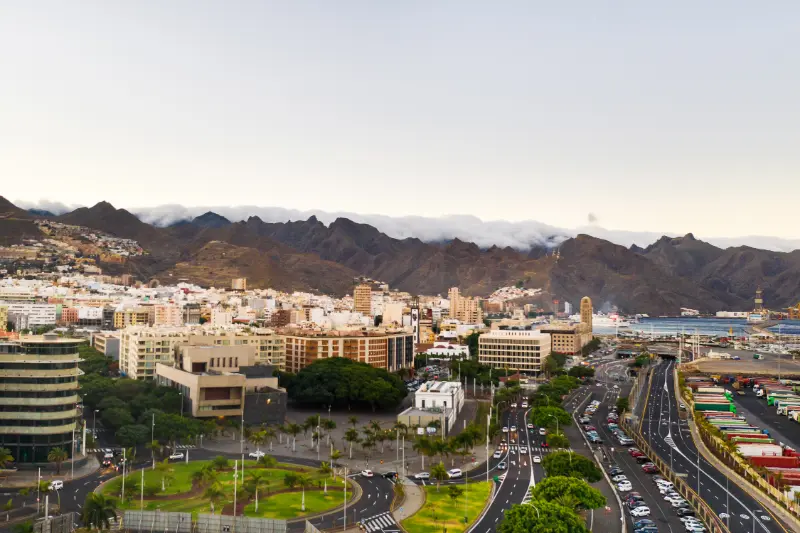
    Auditorio De Tenerife Santa Cruz Coastline

    I also keep geography in mind. Tenerife may look compact on a map, but the TF-1, TF-5, mountain roads and the separation between the north, south and metropolitan area can turn a small planning error into a long detour. I group activities by area, avoid crossing the island unnecessarily, and leave a buffer around anything with a fixed departure or appointment. That same habit improves almost every trip, whether I am driving, using TITSA buses, catching a ferry or arranging an accessible transfer.

    Useful related guides on My Tenerife Experience

    Where I would stay

    I choose accommodation according to the hardest part of the itinerary, not simply the lowest nightly rate. For an early ferry I value a walkable or short-taxi location; for a no-car stay I prioritise bus connections; for accessibility I verify the exact route from the room to the entrance, restaurant and pool; and for a road trip I care more about straightforward parking than a postcard address. I compare places to stay in Tenerife and then read the most recent reviews for details that matter to my specific trip.

    Official information I would recheck before travelling

    Frequently asked questions

    Is Santa Cruz ferry port walkable from the centre?

    Parts of the port are close to central Santa Cruz, but the exact berth and secured access route matter. With luggage, a taxi can be easier.

    Is Santa Cruz the same port as Los Cristianos?

    No. They are separate ports on different parts of Tenerife.

    Should I book accommodation near the port for an early ferry?

    It can reduce stress, especially when the alternative is a long pre-dawn drive from the south or north.

    Final thoughts

    Santa Cruz ferry travel becomes much easier when I plan for the exact terminal instead of treating the whole waterfront as one small passenger station. My preference is to use official information for rules, timetables and safety-critical details, then use the rest of the day for the part of Tenerife I actually came to experience. A practical guide should reduce friction, not make the island feel complicated.

    Panoramic View Of Santa Cruz De Tenerife

    Extra practical note 1

    Confirm the exact quay because Santa Cruz is a large working port. I treat this as a small decision with a large payoff. Tenerife trips often combine airports, coast, cities and mountain roads in a single week, so a detail that seems minor at home can become important when plans are linked together. I verify the current rule or service, keep a realistic time buffer and avoid assuming that every municipality, operator or hotel works in exactly the same way. This approach gives me flexibility without turning the holiday into administration.

    I also think about the return journey. What is easy on arrival can be different when I am tired, carrying purchases, travelling after dark or working around a fixed flight or ferry. A short note saved on my phone—address, booking reference, official link or opening time—usually does more for the trip than a long list of generic tips. When circumstances change, I choose the simpler option and protect the part of the day that matters most.

    Extra practical note 2

    Use a taxi when luggage makes the pedestrian route awkward. I treat this as a small decision with a large payoff. Tenerife trips often combine airports, coast, cities and mountain roads in a single week, so a detail that seems minor at home can become important when plans are linked together. I verify the current rule or service, keep a realistic time buffer and avoid assuming that every municipality, operator or hotel works in exactly the same way. This approach gives me flexibility without turning the holiday into administration.

    I also think about the return journey. What is easy on arrival can be different when I am tired, carrying purchases, travelling after dark or working around a fixed flight or ferry. A short note saved on my phone—address, booking reference, official link or opening time—usually does more for the trip than a long list of generic tips. When circumstances change, I choose the simpler option and protect the part of the day that matters most.

  • Los Cristianos Ferry Port Guide: Check-In, Parking, Buses, Luggage and Island Routes

    Los Cristianos Ferry Port Guide: Check-In, Parking, Buses, Luggage and Island Routes

    Quick summary: Los Cristianos is Tenerife’s key ferry gateway to La Gomera, La Palma and El Hierro. The port sits directly beside the resort centre, but the main bus station is not on the quay, vehicle boarding has earlier cut-offs than foot-passenger boarding, and busy sailing periods can make the access roads feel much tighter than the map suggests. I arrive with my ticket, ID and luggage plan already sorted.

    Main island routesLa Gomera, La Palma, El Hierro
    Nearest major airportTenerife South (TFS)
    Foot passengerAllow time to walk from bus/taxi drop-off to the correct operator area
    Vehicle passengerFollow operator check-in cut-offs; arrive earlier than pedestrians

    Why Los Cristianos matters for island hopping

    For the western Canary Islands, Los Cristianos is one of the most useful transport hubs in Tenerife. Fast ferries connect it with San Sebastián de La Gomera, Santa Cruz de La Palma and Valverde in El Hierro. Fred. Olsen currently publishes approximate crossing times of about 50 minutes to La Gomera, 150 minutes to La Palma and 140 minutes to El Hierro, although schedules and vessel assignments can change.

    The port’s biggest advantage is its location inside a major resort area. If I stay in Los Cristianos, I can often walk or take a very short taxi rather than building an airport-style transfer around the ferry. The disadvantage is that the surrounding streets can be busy, especially when ferry traffic, resort traffic and beach visitors converge.

    Foot-passenger check-in

    I save the ticket offline and keep the identification required by the booking easy to reach. Operator rules differ, so I use the cut-off shown on my ticket rather than a generic blog time. Fred. Olsen’s Los Cristianos terminal information currently states that foot-passenger boarding closes 20 minutes before departure unless the ticket says otherwise. I still aim to arrive earlier because finding the correct desk, using the toilet, checking luggage arrangements and walking to the boarding area all take time.

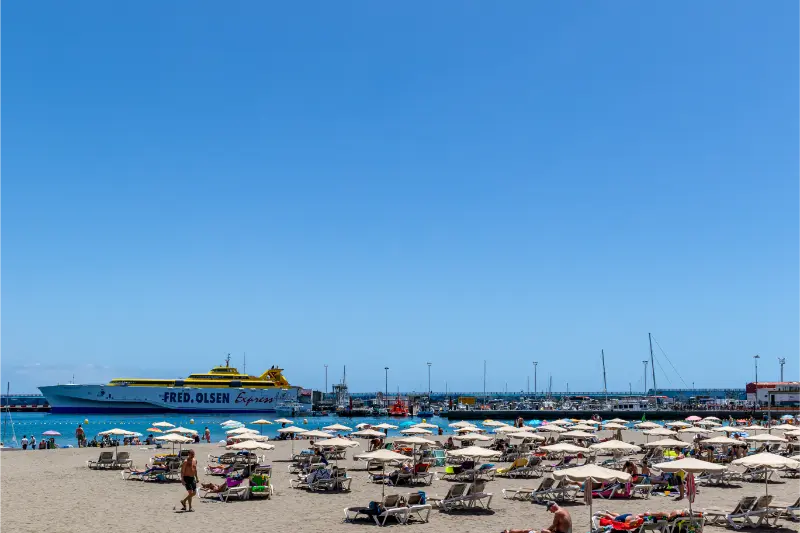
    Los Cristianos Beach Near The Port Tenerife

    If I am coming by TITSA bus, I remember that the main Los Cristianos bus station is around a 15-minute walk from the Fred. Olsen terminal according to the operator. With a suitcase, child or mobility limitation, I would either allow more time or use a taxi for the final section. A “15-minute walk” on a timetable is not the same experience for every traveller.

    Travelling with a car

    Vehicle check-in needs more margin. Fred. Olsen currently states that vehicle boarding closes 40 minutes before departure. I follow the operator’s signs into the pre-boarding area and avoid entering the port on a nearly empty fuel tank or with the rental paperwork unresolved. If the vehicle is hired, I check the rental company’s ferry policy before buying the car ticket.

    Once queued, I keep medicines, valuables, documents and anything I want during the crossing in a small bag that is easy to remove. Vehicle decks may not remain accessible during the voyage. I also photograph where I parked on the ship if the vessel is large; after an unfamiliar crossing, deck numbers are surprisingly easy to forget.

    Luggage at Los Cristianos

    Foot passengers should not assume every operator handles luggage exactly the same way. Fred. Olsen lists luggage racks/trolleys and a left-luggage transport service subject to conditions and availability. Naviera Armas may use its own procedures. I therefore check the ticket for baggage allowances and ask staff where larger cases should go rather than carrying everything blindly toward the passenger lounge.

    For a one-day trip, I travel light. A heavy suitcase turns the walk between the bus station, port and town into unnecessary work. If I am changing islands with full luggage, I protect fragile electronics and documents in my hand bag and label checked or trolley luggage clearly.

    Getting to the port

    From TFS, buses and taxis make Los Cristianos one of the easier ferry ports to reach. Fred. Olsen references TITSA route 40 from Tenerife South Airport and route 112 from Santa Cruz in its terminal directions, but I always check the current TITSA journey planner because line patterns can change. From Costa Adeje and nearby resorts, local buses or taxis are straightforward.

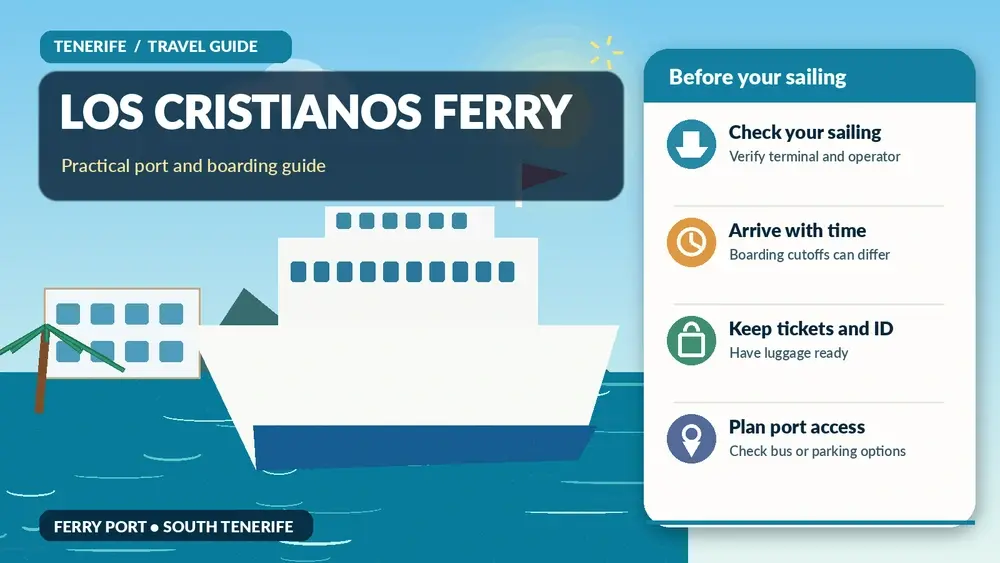
    Illustrated guide: Los Cristianos Ferry Port, with practical visitor tips
    Illustrated guide: Los Cristianos Ferry Port.

    By car, the usual approach is via TF-1 exit 72 and the local streets toward the harbour. I do not leave the final ten minutes to chance: queues near Los Cristianos can build, and the correct lane matters when ferry boarding is closing. For a very early ferry, staying locally the night before can be more relaxing than a long pre-dawn drive.

    Parking and waiting

    The port has parking/pre-boarding areas, but I distinguish between vehicle staging for a ferry and leaving a private car for a multi-day island trip. Long-stay parking availability, restrictions and prices can change, so I verify the current option rather than relying on an old forum recommendation. If I am staying in Los Cristianos, leaving the car at accommodation and walking can be simpler.

    When I arrive early as a foot passenger, the resort centre has cafés and services within walking distance, but I stay close enough that a relaxed coffee does not become a missed sailing. Boarding times are operational deadlines, not suggestions.

    Choosing between Los Cristianos and Santa Cruz ports

    The correct Tenerife port depends on the island and operator. Los Cristianos is particularly important for La Gomera, La Palma and El Hierro. Santa Cruz handles major connections toward Gran Canaria and other routes. I never search only “Tenerife ferry” and assume the first result uses the same port. The ticket must name the departure port clearly.

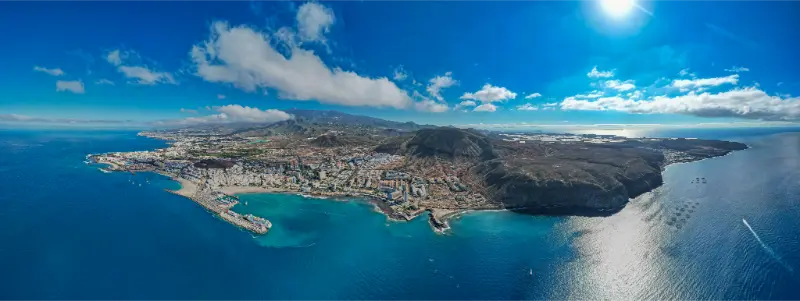
    Los Cristianos Peninsula Aerial View Tenerife

    This matters even more on a same-day connection: Los Cristianos and Santa Cruz are on different parts of Tenerife. Fred. Olsen offers a ferry bus on certain connecting itineraries, but I only rely on it when my booking confirms eligibility and timing.

    How I would build this into a real Tenerife trip

    I treat Los Cristianos ferry port as one layer of the holiday rather than a reason to over-plan every hour. My usual method is to identify the one decision that could create a genuine problem—missing a ferry, choosing an unsuitable room, arriving after the last bus, or assuming a service exists at a beach—and verify that point first. Everything else can stay flexible. Tenerife is easy to enjoy when the important logistics are checked early and the day still has enough breathing room for weather, traffic and spontaneous stops.

    I also keep geography in mind. Tenerife may look compact on a map, but the TF-1, TF-5, mountain roads and the separation between the north, south and metropolitan area can turn a small planning error into a long detour. I group activities by area, avoid crossing the island unnecessarily, and leave a buffer around anything with a fixed departure or appointment. That same habit improves almost every trip, whether I am driving, using TITSA buses, catching a ferry or arranging an accessible transfer.

    Useful related guides on My Tenerife Experience

    Where I would stay

    I choose accommodation according to the hardest part of the itinerary, not simply the lowest nightly rate. For an early ferry I value a walkable or short-taxi location; for a no-car stay I prioritise bus connections; for accessibility I verify the exact route from the room to the entrance, restaurant and pool; and for a road trip I care more about straightforward parking than a postcard address. I compare places to stay in Tenerife and then read the most recent reviews for details that matter to my specific trip.

    Official information I would recheck before travelling

    Frequently asked questions

    Which islands can I reach from Los Cristianos?

    The main direct ferry links are La Gomera, La Palma and El Hierro, with schedules varying by operator and date.

    How early should I arrive?

    Use your operator’s stated cut-off. Vehicle passengers generally need to be ready earlier than foot passengers.

    Is the bus station inside the port?

    No. The main Los Cristianos bus station is a walk from the ferry terminal, so add time if you have luggage.

    Final thoughts

    Los Cristianos is a convenient port once I treat the boarding deadline, bus-to-pier walk and luggage arrangements as part of the journey rather than details to solve at the gate. My preference is to use official information for rules, timetables and safety-critical details, then use the rest of the day for the part of Tenerife I actually came to experience. A practical guide should reduce friction, not make the island feel complicated.

    Los Cristianos Tenerife Aerial View

    Extra practical note 1

    Check whether the ticket is through-booked or two separate reservations. I treat this as a small decision with a large payoff. Tenerife trips often combine airports, coast, cities and mountain roads in a single week, so a detail that seems minor at home can become important when plans are linked together. I verify the current rule or service, keep a realistic time buffer and avoid assuming that every municipality, operator or hotel works in exactly the same way. This approach gives me flexibility without turning the holiday into administration.

    I also think about the return journey. What is easy on arrival can be different when I am tired, carrying purchases, travelling after dark or working around a fixed flight or ferry. A short note saved on my phone—address, booking reference, official link or opening time—usually does more for the trip than a long list of generic tips. When circumstances change, I choose the simpler option and protect the part of the day that matters most.

  • Teide Altitude & Altitude Sickness: 3,718 m, Cable Car, Symptoms and Safer Planning

    Teide Altitude & Altitude Sickness: 3,718 m, Cable Car, Symptoms and Safer Planning

    Quick summary: Teide rises from sea-level resorts to 3,718 metres, and the rapid change in altitude is one of the reasons I take the mountain seriously even on a short sightseeing day. Most visitors have no major problem, but headache, nausea, dizziness or unusual fatigue should never be dismissed simply because the cable car makes high altitude easy to reach.

    Tenerife creates a travel pattern that is unusual in Europe: breakfast at sea level, a drive through pine forest and then a cable-car ride to around 3,550 metres within a few hours. The landscape is accessible, but the body still experiences lower oxygen pressure, colder air, stronger ultraviolet exposure and drier conditions.

    Teide summit3,718 m
    La Rambleta / upper cable-car areaabout 3,550 m
    Risk increasesWith rapid ascent, exertion and individual susceptibility
    Key responseDo not go higher when feeling unwell; descend if symptoms worsen
    Emergency112 for serious symptoms or an emergency

    Why altitude can affect a Tenerife day trip

    Altitude illness is associated with lower oxygen pressure. The NHS notes that altitude sickness can occur above roughly 2,500 metres, while the CDC treats rapid ascent above about 2,450–2,750 metres as a meaningful risk context for unacclimatised travellers. Teide’s upper cable-car station and summit are well above those levels.

    I use the official Tenerife trail page for the mountain facts: the Telesforo Bravo path starts around 3,550 m and reaches 3,718 m. For health background I use the CDC high-altitude guidance rather than treating a travel blog as medical advice.

    Symptoms I do not ignore

    A headache alone can have many causes on Tenerife—dehydration, strong sun, poor sleep or caffeine withdrawal among them—but headache with nausea, dizziness, unusual tiredness or loss of appetite after rapid ascent deserves attention. Severe confusion, loss of coordination, breathlessness at rest or worsening symptoms are not “push through it” situations.

    I do not diagnose myself from a checklist. My practical rule is simpler: if I feel significantly unwell at high altitude, I stop ascending. If symptoms worsen, descending is the priority and medical help may be necessary.

    Fitness does not make anyone immune

    A strong runner can still be affected by altitude. Physical fitness is useful for the trail, but it does not guarantee protection from altitude illness. This matters because Teide attracts hikers who may otherwise be comfortable with steep terrain and assume effort is the only challenge.

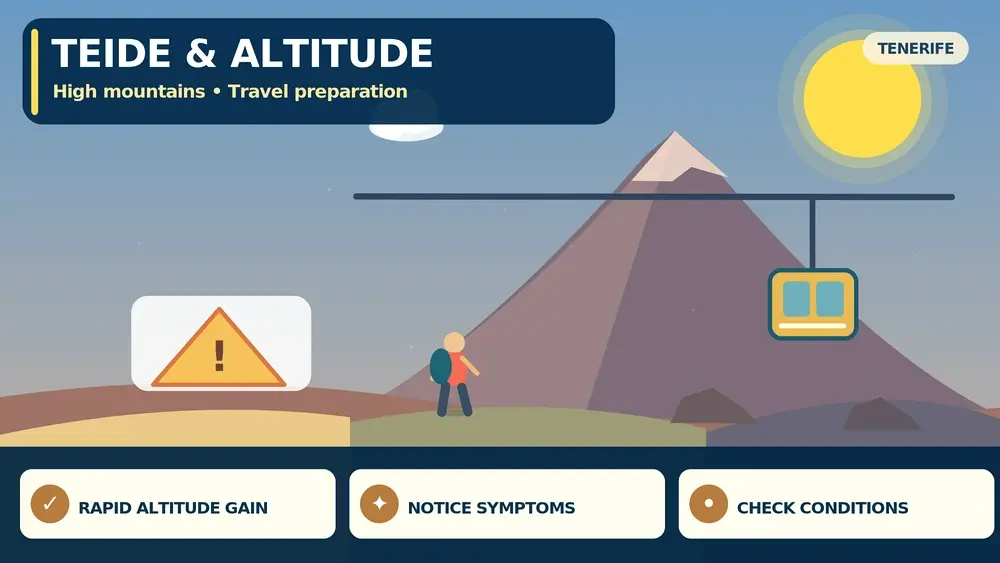
    Illustrated guide: Teide Altitude & Altitude Sickness, with practical visitor tips
    Illustrated guide: Teide Altitude & Altitude Sickness.

    Cable car visitors versus summit hikers

    A cable-car sightseeing visit exposes me to high altitude quickly but usually for a shorter time and without sleeping high. A summit hike adds exertion and can keep me high for longer. The two experiences therefore need different levels of preparation, even though both use the same mountain infrastructure.

    My Mount Teide guide covers permits, transport and route planning. This page focuses on how I adjust pace and expectations once altitude is part of the day.

    What I do before going up

    • Sleep normally and avoid starting dehydrated.
    • Eat a normal meal rather than arriving hungry after an early flight.
    • Carry water and sun protection.
    • Dress for wind and cold even if the coast is warm.
    • Avoid turning the first minutes at altitude into a sprint for photographs.
    • Discuss high-altitude travel with a clinician in advance if I have relevant heart, lung or other medical conditions.

    Alcohol, medication and medical conditions

    I do not use alcohol as part of a high-altitude day. Anyone with significant heart or lung disease, pregnancy concerns or a history of altitude problems should seek personalised medical advice before a high-altitude visit. Prescription prevention medicines exist for some itineraries, but they are not something I self-prescribe from an internet article.

    Teide Cable Car Tenerife

    Children and older travellers

    Children can be affected by altitude too, and young children may not describe symptoms clearly. With families I keep the high-altitude portion short, watch behaviour and appetite and make it easy to turn around. For older travellers, general fitness, medication and underlying conditions matter more than age alone.

    Cold, UV and dehydration can mimic or worsen discomfort

    High altitude also means colder temperatures, low humidity and stronger UV exposure. A person who is shivering, sunburned or dehydrated can feel terrible without classic altitude illness. I prepare for all of those factors rather than blaming every symptom on oxygen.

    How I fit this into a real Tenerife trip

    I treat high altitude on Teide as a planning layer rather than the main reason to cross the island. Tenerife is compact on a map but not in practice: mountain roads, resort traffic, parking searches and different microclimates can make a short distance feel much longer. I decide what part of the day is fixed, what can move and what I will drop if conditions change.

    My preferred itinerary has one main commitment, one nearby secondary stop and enough unplanned time for food, parking and weather. That structure is especially useful when the subject involves an official rule, a seasonal event, a beach condition or a transport product that can change after an article is published.

    What I recheck shortly before travelling

    I recheck only the details that can genuinely change: opening hours, official alerts, event dates, road or trail status, municipal rules, public-transport timetables and the terms of anything I have booked. I save the relevant official page or screenshot offline so I am not dependent on mobile coverage at the exact moment I need it.

    If a sign, lifeguard, police officer, accommodation rule or current official notice conflicts with an older travel article, I follow the current instruction. That sounds obvious, but it is one of the simplest ways to avoid turning a small misunderstanding into a fine, a missed reservation or an unsafe decision.

    Teide National Park Desert Landscape Tenerife

    Useful related guides already on this site

    For the wider trip, I connect this subject with Mount Teide guide, Tenerife packing list, best time to visit Tenerife. Those guides cover the surrounding logistics so this article can stay focused instead of repeating the same airport, weather and accommodation advice in every page.

    Where accommodation changes the experience

    Location can remove more friction than an extra hotel facility. I look at walking gradients, late-night transport, parking, reception hours and how easy it is to reach the places that matter to the trip. A room that is slightly more expensive but avoids repeated taxis or cross-island drives can be better value overall.

    Check current Tenerife accommodation on Booking.com.

    Tours and bookable experiences

    I use an organised tour when it solves a real problem: transport, specialist equipment, limited access, interpretation or a weather-dependent activity that is easier with a local operator. I still read the meeting point, cancellation conditions, age limits, accessibility notes and exact inclusions before paying.

    A final rule I use

    The most useful approach to high altitude on Teide is to understand the principle, verify the current detail and keep enough flexibility to respond to what is actually happening on the island. Tenerife rewards preparation, but it rewards adaptable preparation even more.

    Frequently asked questions

    Can you get altitude sickness on Teide?

    Yes, it is possible. The upper mountain is above the altitude where acute altitude illness can occur, especially after rapid ascent from sea level.

    Should I continue to the summit with a headache?

    I would not ascend higher while feeling unwell. If symptoms worsen, descend and seek medical help when necessary.

    Does the cable car eliminate the physical risk?

    No. It reduces walking but increases the speed of ascent, so I still take the altitude seriously.

    What number do I call in an emergency?

    112 is the general emergency number in the Canary Islands and Spain.

    Final thoughts

    Teide is accessible enough to feel easy and high enough to demand respect. I plan the permits and parking, but I also plan to move slowly, notice how I feel and turn around without hesitation if the mountain stops being enjoyable.

    A practical scenario I would plan before the trip

    Before I rely on Teide altitude sickness in a real itinerary, I picture the most ordinary version of the problem rather than the dramatic one. I ask what information I would need if the phone battery were low, if the first business were closed, if one person in the group moved more slowly than expected or if the weather changed after breakfast. This kind of scenario planning takes only a few minutes and usually reveals whether the itinerary has too many dependencies.

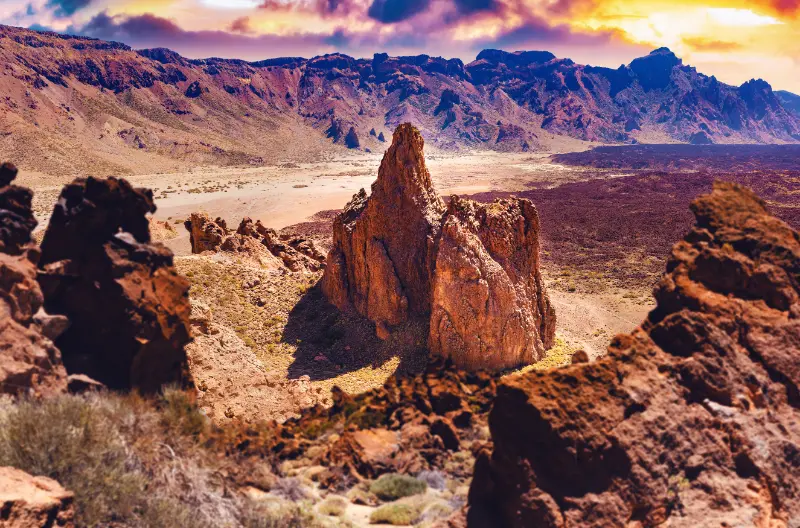
    Volcanic rock formations of Roques de García in Teide National Park

    I also separate facts I can know in advance from decisions that belong to the day itself. Dates, legal frameworks, addresses and booking conditions can be checked before travel. Weather, queues, sea state, individual energy and temporary closures must be judged close to the activity. Mixing those two categories is how travellers either over-plan months in advance or improvise things that should have been settled at home.

    How I keep the information useful after the trip begins

    I save a short note rather than a giant folder: the official source, one contact number, the relevant booking reference and the backup option. That gives me enough information to act without spending the holiday rereading research. If I am travelling as a family or group, I share the note with one other adult so the plan does not depend on a single phone.

    Tenerife is particularly well suited to flexible planning because very different experiences sit relatively close together. A mountain day can become a historic-town day; a rough-sea morning can become a market or museum visit; a crowded resort afternoon can become a rural meal. The backup does not need to imitate the original plan to be successful.

    Responsible travel and local context

    I remember that most visitor rules exist inside places where people live and work. Roads serve residents, beaches are public spaces, vineyards are farms, apartment buildings are homes and emergency systems are designed first to protect life. Acting as a temporary neighbour rather than a consumer of scenery produces better decisions almost automatically.

    That also means I do not use “everyone else is doing it” as evidence that something is allowed. A parked car can still be illegal, a swimmer can still be ignoring a red flag and a loud balcony can still be disturbing the building. Current signs and official instructions are a better guide than copying the nearest tourist.

    What I would change for a short break

    On a three- or four-night trip I simplify more aggressively. I choose a base that reduces transfers, protect one or two high-priority experiences and avoid any plan that requires perfect traffic, weather and opening hours on the same day. The shorter the trip, the more valuable a flexible half-day becomes.

    On a two-week stay I do the opposite: I spread high-demand activities across the holiday, use poor-weather days for practical errands and let local routines become part of the experience. More time does not mean I add more commitments; it means I can wait for the right conditions.

  • Sea Urchins & Rocky Shore Safety in Tenerife: Water Shoes, Cuts, Spines and Natural Pools

    Sea Urchins & Rocky Shore Safety in Tenerife: Water Shoes, Cuts, Spines and Natural Pools

    Quick summary: Tenerife’s volcanic coast is beautiful, but sharp rock, slippery algae, surge and sea urchins can turn a casual scramble into an injury. I use proper access points, water shoes where appropriate and my hands for balance rather than grabbing unseen crevices. If I step on an urchin or receive a deep cut, I leave the water, clean the injury appropriately and seek medical advice when spines are deep, pain is severe, the wound is contaminated or I cannot remove a superficial fragment safely.

    Common hazardSharp volcanic rock and slippery wet surfaces
    Marine hazardSea urchin spines around rocky habitat
    Best preventionUse established entry points and suitable footwear
    Medical ruleSeek professional help for deep wounds, retained spines or concerning symptoms

    Before I commit money or time, I separate information into three levels: what is fixed by law or geography, what changes seasonally, and what can change from one day to the next. That simple distinction is especially useful in Tenerife, where weather, traffic, sea conditions, event programmes and transport availability can all change a plan without making the destination difficult. I keep the official source bookmarked, build a realistic buffer into the day, and avoid treating a single app, old forum post or social-media clip as a guarantee.

    Why rocky coasts need a different mindset

    A sandy resort beach encourages barefoot walking; a volcanic platform does not. Rock can be rough enough to cut skin and smooth enough to become dangerously slippery when wet. A calm-looking pool can receive a sudden surge through an opening. I therefore treat natural pools and wild coves as changing marine environments, not swimming pools with black walls. I watch how local swimmers enter, but I still make my own decision based on the conditions and official signs.

    Tenerife Rocky Coast And Natural Pool

    Where sea urchins fit into the risk

    Sea urchins live around rocky habitat and are easy to miss in cracks or dark water. Their spines are a defence, not an attack. Most problems happen because a swimmer steps, kneels or places a hand on them. I avoid standing on submerged rock when I cannot see clearly and never pick up an urchin for a photograph. If children are exploring rock pools, I supervise hands as carefully as feet.

    Water shoes: useful but not magic armour

    A good water shoe can improve grip and reduce small cuts, but it does not make every rocky entry safe. Thin soles may still be penetrated by sharp objects, and poor shoes can become slippery. I choose footwear that fits securely and is designed for wet rock. On a proper hiking approach I use hiking shoes and change near the water rather than walking kilometres in flimsy aqua shoes. Footwear is one layer of prevention, not permission to ignore waves.

    Cuts on volcanic rock

    Even a small cut can become messy when mixed with sand, salt water and continued swimming. I leave the water, control bleeding and clean the wound using appropriate first-aid supplies. Deep, gaping or heavily contaminated cuts deserve medical assessment. I keep a compact first-aid kit in the car or daypack because remote coves may not have a lifeguard. My aim is not to diagnose the wound on the beach; it is to stop turning a manageable injury into a bigger problem.

    What to do about urchin spines

    Spines can break and fragment. I do not dig aggressively into the skin with improvised tools, especially near joints, nerves or sensitive areas. A very superficial, easily accessible fragment is different from multiple deep spines. If pain persists, walking is difficult, the area becomes increasingly red or swollen, or I am unsure whether material remains, I seek professional medical advice. People with conditions that affect healing or infection risk should have a lower threshold for assessment.

    Natural pools and wave surge

    The most serious coastal risk can be the sea itself rather than the urchin. Waves can wash across a platform, push a swimmer against rock or make an exit impossible. I check flags and warnings, watch the water for several minutes and skip the swim if the pool is being overtopped strongly. The Tenerife ocean safety guide and jellyfish guide cover related hazards.

    Children and rock-pool exploring

    Rock pools are fascinating for children because every crack contains life, but I establish a simple rule: look, do not grab. Bare hands should not disappear under ledges where the child cannot see what is inside. I keep them away from exposed edges when swell is present and choose a safer beach if I want relaxed play rather than constant supervision. Wildlife stays in the pool; shells and animals are not souvenirs.

    My practical planning checklist

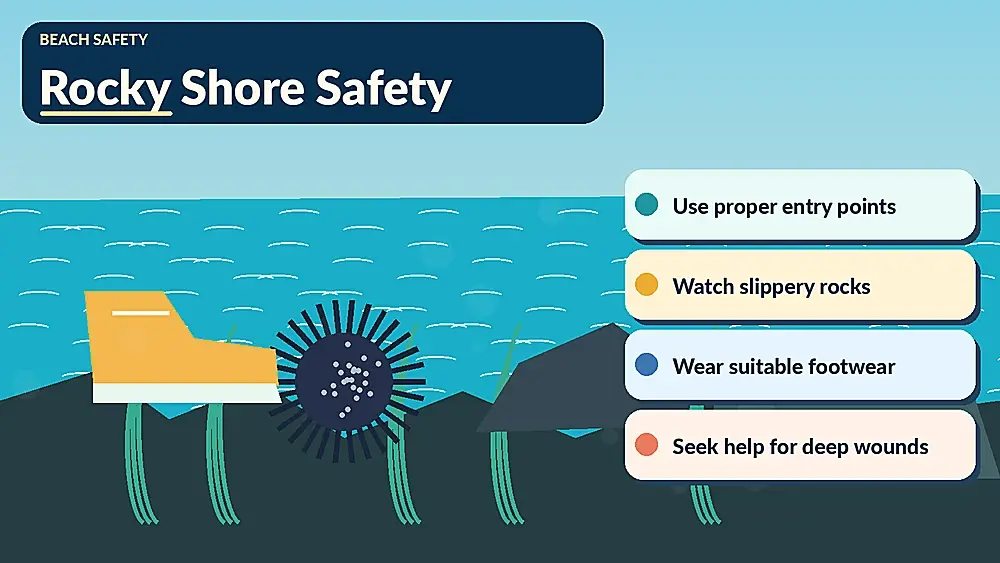
    • Use proper access points: A shortcut over wet rock can be much riskier than the marked stairs or ladder.
    • Wear suitable footwear: Choose grip and secure fit, while remembering shoes do not stop waves.
    • Look before placing hands or feet: Urchins and sharp rock are easier to avoid when visibility is good.
    • Carry basic first aid: Remote coves may have no lifeguard or nearby shop.
    • Do not dig at deep spines: Persistent or deep injuries deserve professional assessment.
    • Respect surge: If waves are overtopping the platform, skip the swim regardless of how many people are still in the water.

    How I build this into a Tenerife itinerary

    I keep the main purpose of the day simple and protect it with one backup. I do not schedule a fixed-time activity at one end of the island, a long lunch in the middle and another hard reservation at the other end unless the transport margin is genuinely comfortable. Tenerife rewards flexible planning because a motorway incident, cloud on a mountain road, sea conditions or an event can change the best order of the day. A backup is not a second full itinerary; it is one nearby option that still makes the day worthwhile.

    I also save screenshots or confirmations that matter when mobile coverage, battery or app login becomes inconvenient. For driving I keep the rental emergency contact; for an event I keep the ticket; for a wildlife activity I keep the meeting point; for a market or cultural venue I verify the official opening information before travelling. This is the difference between useful planning and overplanning: I prepare the few details that can stop the day, then leave the rest open enough to enjoy the island.

    Where I would stay

    The best base depends on how often this topic appears in the trip. For repeated city evenings I prefer Santa Cruz or La Laguna; for sea activities I usually favour the south or another coast close to the operator; for island touring I choose a base with easy road access rather than the prettiest address on paper. I compare places to stay in Tenerife and then check the exact location, recent reviews, parking or public-transport access before booking. A good base removes repeated friction from the holiday.

    Official information I would recheck

    Frequently asked questions

    Are sea urchins common around Tenerife rocks?

    They occur in rocky marine habitats, so swimmers using volcanic entries and natural pools should look before standing or placing hands.

    Do water shoes prevent urchin injuries?

    They can reduce risk, but thin soles are not guaranteed protection and footwear does not make unsafe sea conditions safe.

    When should I see a doctor?

    Seek medical advice for deep or multiple spines, severe pain, difficulty walking, deep cuts, retained material, infection signs or any situation that worries you.

    Extra planning notes that make a real difference

    Use proper access points. A shortcut over wet rock can be much riskier than the marked stairs or ladder. I treat this as a decision point rather than a rigid rule. The exact answer can depend on the part of Tenerife, the season, the time of day and the people travelling with me. I would rather spend two minutes checking the current situation than lose an hour correcting a preventable mistake. When in doubt, I choose the safer and simpler option and keep the more ambitious plan for a day when conditions are clearer.

    Wear suitable footwear. Choose grip and secure fit, while remembering shoes do not stop waves. I treat this as a decision point rather than a rigid rule. The exact answer can depend on the part of Tenerife, the season, the time of day and the people travelling with me. I would rather spend two minutes checking the current situation than lose an hour correcting a preventable mistake. When in doubt, I choose the safer and simpler option and keep the more ambitious plan for a day when conditions are clearer.

    Look before placing hands or feet. Urchins and sharp rock are easier to avoid when visibility is good. I treat this as a decision point rather than a rigid rule. The exact answer can depend on the part of Tenerife, the season, the time of day and the people travelling with me. I would rather spend two minutes checking the current situation than lose an hour correcting a preventable mistake. When in doubt, I choose the safer and simpler option and keep the more ambitious plan for a day when conditions are clearer.

    Carry basic first aid. Remote coves may have no lifeguard or nearby shop. I treat this as a decision point rather than a rigid rule. The exact answer can depend on the part of Tenerife, the season, the time of day and the people travelling with me. I would rather spend two minutes checking the current situation than lose an hour correcting a preventable mistake. When in doubt, I choose the safer and simpler option and keep the more ambitious plan for a day when conditions are clearer.

    Do not dig at deep spines. Persistent or deep injuries deserve professional assessment. I treat this as a decision point rather than a rigid rule. The exact answer can depend on the part of Tenerife, the season, the time of day and the people travelling with me. I would rather spend two minutes checking the current situation than lose an hour correcting a preventable mistake. When in doubt, I choose the safer and simpler option and keep the more ambitious plan for a day when conditions are clearer.

    Respect surge. If waves are overtopping the platform, skip the swim regardless of how many people are still in the water. I treat this as a decision point rather than a rigid rule. The exact answer can depend on the part of Tenerife, the season, the time of day and the people travelling with me. I would rather spend two minutes checking the current situation than lose an hour correcting a preventable mistake. When in doubt, I choose the safer and simpler option and keep the more ambitious plan for a day when conditions are clearer.

    Final thoughts

    Sea urchins tenerife is easiest to handle when I replace assumptions with one or two current checks and then keep the plan proportionate. Tenerife does not need to feel complicated. The island is well set up for visitors, but local roads, marine conditions, events, infrastructure and wildlife are real rather than theme-park scenery. I get more from the trip when I respect those systems, leave enough time, and use official information for anything that can materially affect safety, access or money.

  • Basketball in Tenerife: La Laguna Tenerife, Santiago Martín, Tickets and Match-Day Guide

    Basketball in Tenerife: La Laguna Tenerife, Santiago Martín, Tickets and Match-Day Guide

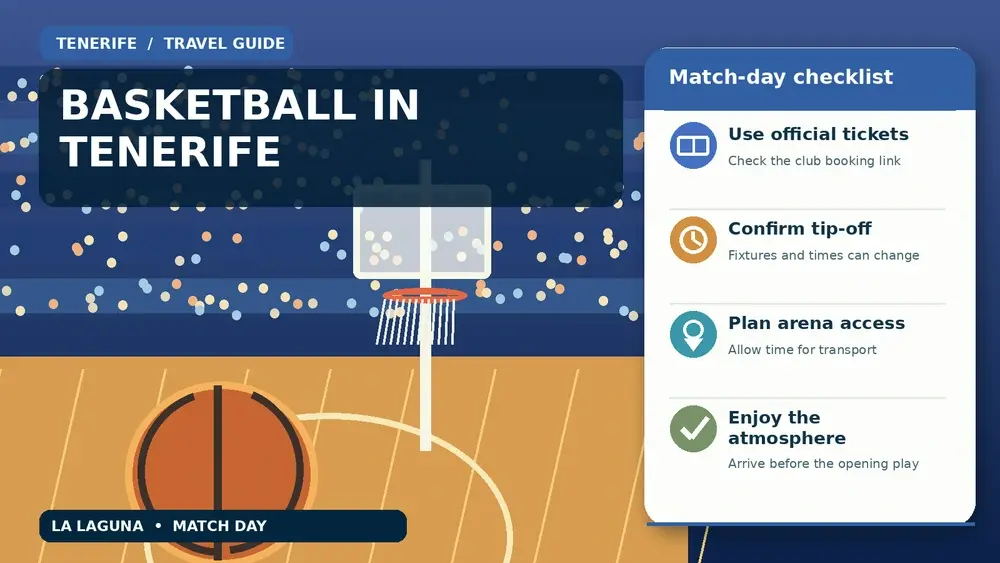
    Quick summary: For a live sports night beyond football, La Laguna Tenerife offers top-level Spanish basketball at the Pabellón Santiago Martín. The club competes in Liga Endesa and in 2026-27 uses the team name La Laguna Tenerife. I buy through the club’s official ticket route, check the exact competition and tip-off time, and arrive early because a compact arena and passionate crowd are part of the experience. Team sponsors, prices and schedules can change, so I keep the article practical rather than freezing one season forever.

    ClubCB 1939 Canarias / team name La Laguna Tenerife
    Home arenaPabellón Santiago Martín, La Laguna
    LeagueLiga Endesa (ACB)
    TicketsOfficial club website / linked ticket platform

    Before I commit money or time, I separate information into three levels: what is fixed by law or geography, what changes seasonally, and what can change from one day to the next. That simple distinction is especially useful in Tenerife, where weather, traffic, sea conditions, event programmes and transport availability can all change a plan without making the destination difficult. I keep the official source bookmarked, build a realistic buffer into the day, and avoid treating a single app, old forum post or social-media clip as a guarantee.

    Why a basketball game works well on holiday

    A basketball match is compact, energetic and usually easier to fit into an evening than a full day excursion. The indoor arena also makes it a strong option when mountain weather or rain changes outdoor plans. I like it because the experience is local without requiring deep knowledge of Spanish football culture. Even a first-time spectator can follow the score, enjoy the crowd and leave with a clear sense of the island’s sporting identity.

    The team in the 2026–27 season

    ACB and the club list the team as La Laguna Tenerife for 2026–27. The organisation is CB 1939 Canarias, and the home venue is Santiago Martín. The club’s official English information explains ticket buying and venue details. Sponsorship names can change over time, so if the team name looks different in a future season, I search for CB Canarias rather than assuming the club disappeared.

    Santiago Martín arena

    The arena is in the La Laguna metropolitan area rather than the historic pedestrian centre. I check the current access and parking information before leaving. For a popular opponent, parking and nearby roads can be busier, so I arrive early rather than timing the journey to the opening tip. The venue atmosphere is more enjoyable when I am seated before introductions and warm-ups instead of squeezing in while the first quarter is already underway.

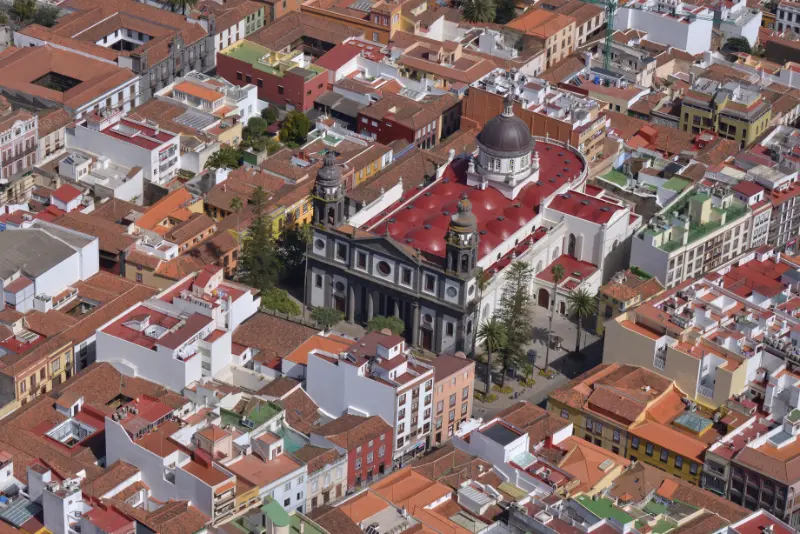
    Aerial View Of La Laguna Tenerife

    How I buy tickets

    I start with the official club website, which links to the authorised ticket route. For the 2026-27 league opener the club published adult and youth prices by stand, illustrating how cost depends on seat category and match. I do not copy one match’s price into my permanent budget because playoffs, European games, cup fixtures and special opponents can differ. I check whether a child needs a paid ticket or invitation under the current rule.

    Choosing a seat

    For a first game I prioritise a clear central or slightly angled view over sitting as close as physically possible behind a basket. A higher row can give a better tactical view. Families may prefer easier aisle access; supporters seeking the loudest atmosphere may choose a different zone. I inspect the seating map at purchase and consider stairs, mobility and how quickly I need to leave after the game for a bus or dinner reservation.

    Basketball with children

    Basketball can be an excellent family evening because action is continuous and the indoor environment is predictable. I still bring hearing protection for a child who is sensitive to loud music, horns or crowd noise. For older children and teenagers, it adds variety to parks and beaches; my Tenerife with teenagers guide has more ideas. Snacks, bag rules and re-entry policies should be checked for the specific event rather than assumed.

    Football versus basketball

    Visitors often know about CD Tenerife first. The experiences are different rather than competitors. Football at the Heliodoro offers a larger outdoor stadium culture; basketball gives a close indoor atmosphere and faster scoring. My CD Tenerife match guide explains the football option. If dates align, a sports-focused trip can include both without sacrificing daytime sightseeing.

    My practical planning checklist

    • Confirm the competition: League, European and cup fixtures can use different ticket conditions.
    • Buy from the club: Use the official site or its authorised ticket link.
    • Check the team name: Sponsor naming can change even though CB Canarias remains the club.
    • Arrive early: Parking, security and finding the correct stand take time.
    • Plan the return: Do not assume public transport frequency is the same after a late game.
    • Bring hearing protection if needed: Indoor sports can be loud for children or sound-sensitive visitors.

    How I build this into a Tenerife itinerary

    I keep the main purpose of the day simple and protect it with one backup. I do not schedule a fixed-time activity at one end of the island, a long lunch in the middle and another hard reservation at the other end unless the transport margin is genuinely comfortable. Tenerife rewards flexible planning because a motorway incident, cloud on a mountain road, sea conditions or an event can change the best order of the day. A backup is not a second full itinerary; it is one nearby option that still makes the day worthwhile.

    San Cristobal De La Laguna Historic Center Tenerife

    I also save screenshots or confirmations that matter when mobile coverage, battery or app login becomes inconvenient. For driving I keep the rental emergency contact; for an event I keep the ticket; for a wildlife activity I keep the meeting point; for a market or cultural venue I verify the official opening information before travelling. This is the difference between useful planning and overplanning: I prepare the few details that can stop the day, then leave the rest open enough to enjoy the island.

    Where I would stay

    The best base depends on how often this topic appears in the trip. For repeated city evenings I prefer Santa Cruz or La Laguna; for sea activities I usually favour the south or another coast close to the operator; for island touring I choose a base with easy road access rather than the prettiest address on paper. I compare places to stay in Tenerife and then check the exact location, recent reviews, parking or public-transport access before booking. A good base removes repeated friction from the holiday.

    Official information I would recheck

    Frequently asked questions

    What is Tenerife’s main top-level basketball team?

    CB Canarias currently competes under the team name La Laguna Tenerife.

    Where does La Laguna Tenerife play?

    Home games are at Pabellón Santiago Martín in La Laguna.

    Where should tourists buy tickets?

    Start with the official CB Canarias website and follow its ticket link for the specific match.

    Extra planning notes that make a real difference

    Confirm the competition. League, European and cup fixtures can use different ticket conditions. I treat this as a decision point rather than a rigid rule. The exact answer can depend on the part of Tenerife, the season, the time of day and the people travelling with me. I would rather spend two minutes checking the current situation than lose an hour correcting a preventable mistake. When in doubt, I choose the safer and simpler option and keep the more ambitious plan for a day when conditions are clearer.

    Buy from the club. Use the official site or its authorised ticket link. I treat this as a decision point rather than a rigid rule. The exact answer can depend on the part of Tenerife, the season, the time of day and the people travelling with me. I would rather spend two minutes checking the current situation than lose an hour correcting a preventable mistake. When in doubt, I choose the safer and simpler option and keep the more ambitious plan for a day when conditions are clearer.

    Check the team name. Sponsor naming can change even though CB Canarias remains the club. I treat this as a decision point rather than a rigid rule. The exact answer can depend on the part of Tenerife, the season, the time of day and the people travelling with me. I would rather spend two minutes checking the current situation than lose an hour correcting a preventable mistake. When in doubt, I choose the safer and simpler option and keep the more ambitious plan for a day when conditions are clearer.

    San Cristobal De La Laguna Panoramic View Tenerife

    Arrive early. Parking, security and finding the correct stand take time. I treat this as a decision point rather than a rigid rule. The exact answer can depend on the part of Tenerife, the season, the time of day and the people travelling with me. I would rather spend two minutes checking the current situation than lose an hour correcting a preventable mistake. When in doubt, I choose the safer and simpler option and keep the more ambitious plan for a day when conditions are clearer.

    Plan the return. Do not assume public transport frequency is the same after a late game. I treat this as a decision point rather than a rigid rule. The exact answer can depend on the part of Tenerife, the season, the time of day and the people travelling with me. I would rather spend two minutes checking the current situation than lose an hour correcting a preventable mistake. When in doubt, I choose the safer and simpler option and keep the more ambitious plan for a day when conditions are clearer.

    Bring hearing protection if needed. Indoor sports can be loud for children or sound-sensitive visitors. I treat this as a decision point rather than a rigid rule. The exact answer can depend on the part of Tenerife, the season, the time of day and the people travelling with me. I would rather spend two minutes checking the current situation than lose an hour correcting a preventable mistake. When in doubt, I choose the safer and simpler option and keep the more ambitious plan for a day when conditions are clearer.

    Final thoughts

    Basketball tenerife is easiest to handle when I replace assumptions with one or two current checks and then keep the plan proportionate. Tenerife does not need to feel complicated. The island is well set up for visitors, but local roads, marine conditions, events, infrastructure and wildlife are real rather than theme-park scenery. I get more from the trip when I respect those systems, leave enough time, and use official information for anything that can materially affect safety, access or money.

  • Recycling in Tenerife: Bin Colours, Glass, Packaging, Paper and Visitor Tips

    Recycling in Tenerife: Bin Colours, Glass, Packaging, Paper and Visitor Tips

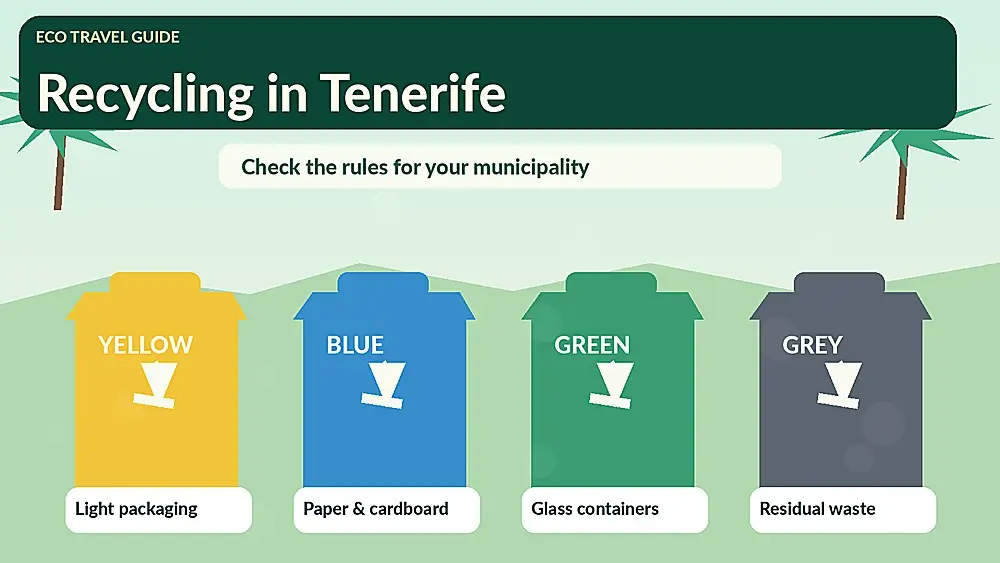
    Quick summary: Tenerife’s street recycling system is easy once I remember the main colours: yellow for light packaging, blue for paper/cardboard, green for glass containers, and grey or dark green for residual waste.

    Recycling is one of the easiest ways for a visitor to reduce waste in Tenerife, yet apartment kitchens and unfamiliar bin colours can make people give up after one day. The island’s official guidance is straightforward: separate common packaging, paper/cardboard and glass from residual waste, then use the appropriate municipal containers.

    The details matter because “made of plastic” does not automatically mean “yellow bin,” and “made of glass” does not mean every glass object belongs in the green container. I use the official Tenerife guidance rather than guessing based on the system in my home country.

    At a glance

    Yellow Light packaging such as many plastic and metal containers and cartons
    Blue Clean paper and cardboard
    Green Glass bottles and jars, normally without lids
    Grey/dark green Residual non-recyclable household waste; colour can vary by municipality

    Yellow bin: packaging, not every plastic object

    The yellow container is for light packaging. Official Tenerife guidance includes many plastic bottles and containers, metal cans, aluminium food containers, cartons and common packaging items. The key word is packaging. A plastic toy, bucket or toothbrush is not automatically yellow-bin material just because it is plastic.

    I empty containers and, when practical, keep them reasonably clean. Flattening bulky bottles or cartons helps save space, especially in a holiday apartment where the recycling bag can fill quickly.

    Blue bin: paper and cardboard

    The blue container is for paper and cardboard such as boxes, paper bags, newspapers, magazines and office paper. Greasy, contaminated or heavily laminated paper does not belong there. Pizza boxes can be a classic trap: clean cardboard sections can be separated, while oily food-soiled parts may need residual waste depending on local guidance.

    I flatten delivery boxes before taking them out. Leaving a full cardboard box beside a container because it does not fit is not a responsible shortcut.

    Green bin: glass containers

    The green container is for glass bottles and jars. It is not for drinking glasses, mirrors, ceramics, porcelain, window glass or light bulbs. Those materials melt or process differently and can contaminate the glass-container stream.

    I remove caps and lids and put those in the appropriate packaging stream when suitable. I never leave broken glass loose beside the container where it can injure waste workers, pedestrians or animals.

    Residual waste

    Grey or dark-green containers are commonly used for the remaining household waste, but municipal colours can vary. Hygiene products, heavily soiled paper and items that cannot go into the selective recycling streams generally belong here unless a specific collection exists.

    The goal is not perfection. If I genuinely do not know where a hazardous or unusual item belongs, I do not “wish-cycle” it into the nearest coloured bin. I check the municipal or Cabildo guidance.

    Organic waste and local variation

    Organic collection is expanding and may be available in some municipalities or accommodation complexes. Because implementation can differ, I follow the labels on the containers where I am staying rather than assuming the same brown-bin system exists everywhere.

    Hotels may separate waste behind the scenes even if guest-room bins are simple. In an apartment, the host can usually point out the nearest container island and any building-specific system.

    Batteries, electronics and unusual waste

    Batteries, electronics, fluorescent tubes, chemicals and bulky items should not be dropped into ordinary street containers. Tenerife has authorised collection systems and puntos limpios for many special wastes. A short-stay visitor will rarely need a full waste centre, but batteries can often be returned through designated retail or municipal collection points.

    If an electronic item breaks during the trip, I ask the retailer or accommodation before throwing it away. Small devices contain materials that do not belong in residual household waste.

    Holiday apartments: the easiest routine

    I use two or three bags rather than trying to reproduce a complicated home recycling station. One for light packaging, one for paper/cardboard, and a small place for glass usually covers most visitor waste. Residual rubbish stays separate. When I leave the apartment, I take the sorted bags to the municipal containers.

    This routine is especially easy for self-catering travellers using my Tenerife grocery shopping guide. Buying fewer single-use bottles in the first place reduces the amount I need to sort.

    Water bottles and refill strategy

    Tenerife’s water situation is more nuanced than a simple “tap versus bottled” argument because taste and supply conditions can vary. I use my tap-water guide to decide what is practical for the area, then choose larger containers or refill systems where suitable instead of accumulating dozens of small bottles.

    If I do buy bottled water, the plastic container belongs in the yellow packaging stream when empty. The better environmental choice is often reducing the number of containers before recycling even starts.

    Protected areas and hiking waste

    On trails and in protected landscapes, the rule is simpler: I carry out everything I carry in. A banana peel, tissue or “biodegradable” snack wrapper does not become acceptable simply because it is organic. Food waste can affect wildlife and visible litter encourages more litter.

    My sustainable Tenerife guide covers broader choices around transport, wildlife and protected areas.

    Official bin guidance

    The Cabildo’s Cada residuo a su contenedor page summarises the main streams, while Tenerife + Sostenible gives detailed examples of what belongs in each container.

    I use those pages when an item is uncertain because local sorting rules should always beat a generic international recycling infographic.

    My practical planning checklist

    Before I build a day around recycling Tenerife, I separate the fixed facts from the details that can change. Fixed facts include the location, cultural context or legal framework explained above. Changing details include current opening hours, temporary road closures, airline products, event routes, service times and prices. I verify those close to the travel date rather than copying an old timetable into the itinerary.

    • Save the official source offline or as a screenshot before leaving the hotel.
    • Keep one realistic backup plan in case weather, traffic, capacity or an operational change affects the original plan.
    • Do not schedule the next paid activity so tightly that a local event, meal or airport process becomes stressful.
    • Carry water, a charged phone and the basic layer or sun protection needed for the actual location rather than the resort forecast.
    • If a rule or sign on site conflicts with an older article, follow the current official instruction on site.

    I also keep the rest of the day geographically simple. Tenerife looks small on a map, but mountain roads, event traffic and the distance between north and south can turn an overfilled itinerary into hours in the car. One strong experience plus a nearby town, viewpoint or meal is usually better than chasing several unrelated stops.

    Useful Tenerife planning links

    Check Tenerife accommodation on Booking.com. I compare location first, then price, because a cheap room on the opposite side of the island can cost more in time and transport than it saves.

    For bookable tours and activities, I use the widget above as a comparison tool rather than assuming the first result is the best fit. I read cancellation terms, meeting points, age or mobility restrictions and the exact inclusions before paying.

    Frequently asked questions

    What goes in the yellow bin?

    Light packaging such as many plastic and metal containers and cartons—not every object made of plastic.

    Can drinking glasses go in the green glass bin?

    No. The green container is for glass packaging such as bottles and jars, not drinking glasses, mirrors or ceramics.

    What if my apartment has no recycling bins inside?

    Sort into simple bags and take them to the nearest municipal container point; ask the host where it is.

    Are bin colours identical everywhere?

    The main selective colours are widely used, but residual and organic systems can vary. Read local labels.

    Final thoughts

    The best way to use this guide is to treat recycling Tenerife as part of a wider Tenerife trip, not as an isolated checklist item. I verify the operational details, leave enough time to enjoy the experience at local pace and keep the plan flexible enough for weather or event changes. That combination—current information, realistic timing and respect for the place—usually matters more than trying to optimise every minute.

    How I would fit this into a real Tenerife itinerary

    I would not travel across Tenerife only to tick off recycling Tenerife unless it is the main reason for the holiday. Instead I look at the surrounding area and build a half-day or full-day cluster. That means checking where I will already be sleeping, how long the drive or bus journey really takes, where I can eat without rushing and what I can do if the first plan changes. On an island with strong microclimates and very different road conditions between the motorway coast and mountain interiors, this geographical discipline saves more time than almost any “travel hack.”

    For an early start, I pack the evening before and keep essential documents, medication, water and a light layer together. For an evening event, I reverse the logic: I keep the morning easy, eat before the busiest period if necessary and avoid planning a demanding Teide or Anaga hike on the same day. Families benefit from a clear toilet and snack plan; drivers benefit from deciding in advance whether alcohol, night driving or event road closures make local accommodation the better option.

    I also think about the exit before I arrive. At airports that means knowing where the gate or onward transport sits. At festivals it means identifying the road or tram stop that will still be accessible after closures. At restaurants it means knowing whether the kitchen is likely to close before I arrive. At religious or cultural events it means understanding whether leaving halfway through would be disruptive. These details sound small, but they are what make the difference between a flexible travel day and one that feels trapped by a timetable.

    Finally, I keep expectations proportional. A local celebration may be wonderful because it is small and ordinary, not because it produces a spectacular photograph every minute. A priority airport product may save only a short queue on a quiet day. A fixed lunch may be excellent value without being gourmet. Sustainable travel choices are often mundane. I prefer an accurate expectation and a pleasant surprise to an exaggerated promise that the destination then has to “live up to.”

  • Corpus Christi in Tenerife: La Orotava Flower Carpets, Volcanic Sand and Visit Tips

    Corpus Christi in Tenerife: La Orotava Flower Carpets, Volcanic Sand and Visit Tips

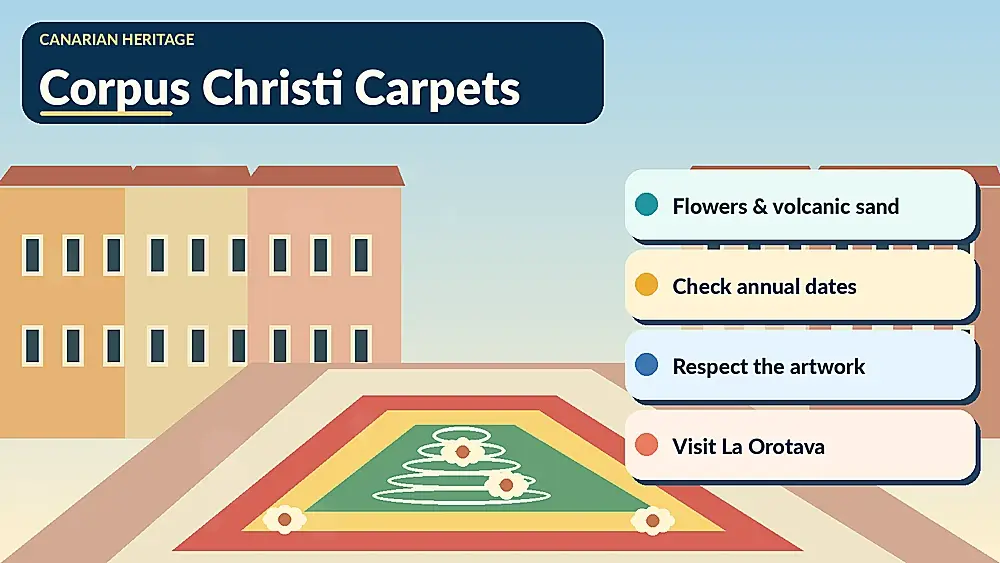
    Quick summary: Corpus Christi in La Orotava transforms streets and the town-hall square with temporary carpets made from flowers and coloured volcanic sand. The art is ephemeral, so timing and respectful movement matter.

    La Orotava’s Corpus Christi carpets are among Tenerife’s most extraordinary examples of art made to disappear. Flower petals, plant materials and coloured volcanic sands become detailed street carpets and a monumental tapestry in the town-hall square, only for the religious procession and the passing of time to end the installation.

    That temporary nature is why I plan more carefully than I would for a normal museum visit. The main carpet can be developed over a longer period, while street carpets are often at their most complete close to the celebration itself. Exact dates change each year because Corpus Christi follows the liturgical calendar, so I verify the municipal programme rather than assuming the same weekend.

    At a glance

    WhereLa Orotava is the best-known setting; La Laguna and other towns also create carpets
    WhenUsually May or June, depending on the liturgical calendar
    Signature workThe large volcanic-sand tapestry in Plaza del Ayuntamiento
    Visit styleWalk slowly, respect barriers and treat the carpets as ceremonial art

    Why La Orotava is special

    Turismo de Tenerife traces the modern fame of La Orotava’s carpets to 1847, when members of the Monteverde family created a flower carpet for the Corpus procession. The tradition developed into a defining cultural expression of the town, combining domestic participation, religious meaning and highly skilled design.

    Today the event works on two scales. Smaller carpets animate streets around the historic centre, while the town-hall square becomes the stage for a huge composition made with natural volcanic sands in different colours. Seeing both is important; the monumental carpet impresses through scale, while the street carpets reveal the community rhythm.

    The volcanic sand question

    Visitors often assume the main square is covered in ordinary beach sand. It is not. The famous tapestry uses naturally coloured volcanic sands associated with Teide, handled under controlled arrangements for the tradition. I never collect material in the national park myself; removing volcanic material from protected areas is not a souvenir strategy.

    Historic Street In La Orotava Tenerife

    The palette can produce astonishing detail without synthetic-looking colours. From the designated viewing points, I look for shading, perspective and the way artists use grain size and tone to create depth.

    When should I go?

    The answer depends on what I want to see. During preparation, I can sometimes observe the work in progress and understand the technique. Closer to the main celebration, the finished designs create the strongest visual impact but crowds are heavier. After the procession, some street carpets have fulfilled their ceremonial purpose and may no longer look pristine.

    I therefore check the current programme and choose intentionally: process if I care about craft, finished carpets if I care about photography, procession day if I care about the religious and community meaning.

    A walking route through La Orotava

    I start around Plaza del Ayuntamiento and then follow the marked streets of the carpet route rather than zigzagging randomly. The historic centre is hilly, and crowd controls can turn a short map distance into a longer walk. Comfortable shoes matter more than elegant festival clothing for most visitors.

    My existing La Orotava Carpet Museum guide is useful before the event because it explains the craft in a calmer environment. I also combine the route with Iglesia de La Concepción to understand the religious architecture behind the celebration.

    La Orotava Historic Center And Mountains Tenerife

    Photography without damaging the experience

    The obvious rule is never step onto a carpet. Less obvious is avoiding the temptation to hold a phone or tripod over a barrier where it blocks other people. I use a small zoom, wait for a clear angle and accept that the best view may come from a designated platform rather than the closest physical position.

    Midday sun can be harsh on pale petals and dark volcanic sands, so softer light can be attractive, but opening and crowd conditions matter more than chasing perfect photography light.

    Crowds, children and mobility

    The old centre has slopes, cobbles and temporary crowd routing. Families can enjoy the carpets, but I shorten the route for young children and carry water and a snack. A stroller may be awkward in the busiest streets. Visitors with reduced mobility should check the current accessible route with the municipality because event barriers can alter normal access.

    I choose a meeting point before entering the densest streets. Mobile reception is usually fine, but a physical landmark is still useful when a group becomes separated.

    La Laguna and other Corpus carpets

    La Orotava is the headline event, but it is not the only place where Tenerife creates Corpus carpets. Turismo de Tenerife notes celebrations in La Laguna and Tacoronte as well. These can offer a different scale and let travellers experience the tradition without treating one town as the entire island’s story.

    If I am based in Santa Cruz or La Laguna, a local carpet event may be more convenient. The La Laguna guide helps turn the cultural stop into a full day in the UNESCO historic centre.

    Religious meaning and visitor etiquette

    The carpets are art, but Corpus Christi is a Catholic feast and the procession is not staged solely for photographs. I lower my voice around services, do not obstruct clergy or participants, and avoid crossing a procession route after barriers are in place.

    Modest, comfortable clothing is sufficient for most public street viewing. If I enter a church, I follow posted rules for photography and dress. This simple shift—from spectacle consumer to respectful observer—makes the visit feel much more coherent.

    Where to stay

    Staying in La Orotava or Puerto de la Cruz removes the pressure of driving into a busy historic centre on the main day. Puerto de la Cruz has more resort infrastructure, while La Orotava gives the strongest sense of being inside the festival town.

    Check La Orotava accommodation on Booking.com if the carpets are the main reason for the trip.

    Official sources

    The evergreen cultural background is well explained by Turismo de Tenerife’s Corpus carpets page. For the actual year, I use the La Orotava municipal website because dates, street closures and viewing arrangements change.

    That distinction is important for SEO travel content too: the article can explain the tradition permanently while the official programme carries the operational details that should never be invented.

    My practical planning checklist

    Before I build a day around Corpus Christi Tenerife, I separate the fixed facts from the details that can change. Fixed facts include the location, cultural context or legal framework explained above. Changing details include current opening hours, temporary road closures, airline products, event routes, service times and prices. I verify those close to the travel date rather than copying an old timetable into the itinerary.

    • Save the official source offline or as a screenshot before leaving the hotel.
    • Keep one realistic backup plan in case weather, traffic, capacity or an operational change affects the original plan.
    • Do not schedule the next paid activity so tightly that a local event, meal or airport process becomes stressful.
    • Carry water, a charged phone and the basic layer or sun protection needed for the actual location rather than the resort forecast.
    • If a rule or sign on site conflicts with an older article, follow the current official instruction on site.

    I also keep the rest of the day geographically simple. Tenerife looks small on a map, but mountain roads, event traffic and the distance between north and south can turn an overfilled itinerary into hours in the car. One strong experience plus a nearby town, viewpoint or meal is usually better than chasing several unrelated stops.

    Useful Tenerife planning links

    Check Tenerife accommodation on Booking.com. I compare location first, then price, because a cheap room on the opposite side of the island can cost more in time and transport than it saves.

    For bookable tours and activities, I use the widget above as a comparison tool rather than assuming the first result is the best fit. I read cancellation terms, meeting points, age or mobility restrictions and the exact inclusions before paying.

    Frequently asked questions

    When is Corpus Christi in Tenerife?

    The date moves with the liturgical calendar and usually falls in May or June. Check the current La Orotava programme.

    Are the carpets free to see?

    Street viewing is generally public, though access routes and special viewing arrangements can vary.

    Can I see the main sand carpet before the procession?

    Often yes during preparation and display periods, but the exact working and viewing schedule changes each year.

    Is La Orotava the only place with carpets?

    No. La Laguna, Tacoronte and other communities also maintain Corpus carpet traditions.

    Final thoughts

    The best way to use this guide is to treat Corpus Christi Tenerife as part of a wider Tenerife trip, not as an isolated checklist item. I verify the operational details, leave enough time to enjoy the experience at local pace and keep the plan flexible enough for weather or event changes. That combination—current information, realistic timing and respect for the place—usually matters more than trying to optimise every minute.

  • San Andrés in Tenerife: Icod Tablas, New Wine, Chestnuts and Puerto de la Cruz Cacharros

    San Andrés in Tenerife: Icod Tablas, New Wine, Chestnuts and Puerto de la Cruz Cacharros

    Quick summary: On the night of November 29, northern Tenerife becomes noisy, fast and deeply seasonal: Icod is famous for the tablas, Puerto de la Cruz for cacharros, and the opening of new wine pairs with chestnuts and traditional food.

    San Andrés is one of those Tenerife traditions that makes much more sense when I stop looking for a single central “festival” and understand the network of local customs around November 29. In Icod de los Vinos, wooden boards race down steep streets. In Puerto de la Cruz, metal cacharros scrape and bang through the centre. Across wine areas, the new vintage is opened and tasted with seasonal food.

    This is not an attraction designed around tourists, and that is precisely why I approach it carefully. I watch from safe areas, follow barriers and local instructions, and never assume that seeing experienced participants sliding on boards means a visitor should copy them. The cultural value comes from the atmosphere, food, noise and community tradition—not from taking unnecessary risks.

    At a glance

    Key nightNovember 29
    Best-known placesIcod de los Vinos and Puerto de la Cruz
    Signature traditionsTablas, cacharros, new wine and chestnuts
    Main cautionCrowds, steep streets, noise and fast-moving participants

    The link with new wine

    San Andrés coincides with the traditional opening of the new wine in parts of Tenerife. The island’s northern wine districts give the festival a strong agricultural character: the celebration is not only noise and spectacle but also the moment when the work of the recent harvest becomes something people can taste together.

    I connect the tradition with the wider volcanic wine story in my Tenerife wine guide. Visitors do not need to be wine experts; the useful approach is to taste responsibly, ask what is local and remember that driving after village celebrations is a poor plan.

    Icod de los Vinos and the Tablas de San Andrés

    Icod is the most famous place for the tablas. Participants descend steep streets on wooden boards, creating a combination of speed, noise and local pride that is difficult to compare with anything else on the island. Turismo de Tenerife identifies the night of November 29 as the key moment and describes the traditional descents in Icod.

    I treat the descent route like a sporting event: barriers and marshal instructions matter. I do not step into a run for a photograph, and I keep children behind the safe viewing area. The boards can arrive quickly, and the tyres or other stopping arrangements at the bottom are part of a controlled local setup, not an invitation to improvise elsewhere.

    Puerto de la Cruz and the Cacharros

    Puerto de la Cruz has its own loud identity. The cacharros tradition involves old tins, pots and other metal objects tied together and dragged through streets, producing the metallic roar associated with San Andrés. The activity commonly centres around the historic town and Plaza del Charco.

    For a visitor, this version is easier to combine with dinner and a walk. My Puerto de la Cruz guide helps with parking alternatives, the seafront and the historic centre. I still expect crowds and choose a meeting point if travelling with friends.

    Aerial View Of Puerto De La Cruz City Tenerife

    Chestnuts, batatas and simple seasonal food

    Roasted chestnuts are one of the smells of late autumn in northern Tenerife. Turismo de Tenerife also highlights chestnuts, sweet potatoes, gofio and fish around San Andrés traditions. These are not elaborate festival inventions; they connect the evening with mountain agriculture, the new wine and cooler November nights.

    I eat where the event infrastructure and local stalls make sense rather than carrying a long list of “must-try” dishes. The best experience is often a paper cone of hot chestnuts, something savoury and a small taste of local wine while the streets fill with sound.

    What time should I arrive?

    I arrive before the densest evening crowd. In Icod that lets me understand the street layout, identify barriers and have a meal before the main atmosphere builds. In Puerto de la Cruz it gives time to walk Plaza del Charco and the harbour before the cacharros become the focus.

    Exact event programmes can change, so I do not publish a fixed hour as if it were permanent. I check the municipality and the current Turismo de Tenerife agenda in November.

    Noise and children

    The festival can be much louder than families expect. Metal dragged over paving and the impact of boards are part of the experience. For a child who dislikes sudden noise, ear defenders can change the evening from stressful to fun. I also avoid positioning a stroller in the tightest part of a crowd.

    Older children can enjoy the spectacle if they understand the safety boundaries. I explain before arriving that watching is the activity; joining a descent is not a spontaneous tourist experience.

    Parking and transport

    Icod’s historic centre has limited space even on a normal day. On a major tradition night, driving directly toward the event area is the least attractive strategy. I follow temporary parking and traffic signs, accept a longer walk and avoid residential streets that clearly are not intended for event parking.

    If I plan to drink new wine, I remove driving from the equation. Staying locally can be worth more than any parking shortcut. Check Icod accommodation on Booking.com.

    A respectful photography approach

    The scene is visually irresistible—boards, steep streets, smoke from chestnuts, old town façades and metal cacharros—but I keep the camera out of participants’ paths. A telephoto or moderate zoom is safer than leaning over a barrier. I ask before making close portraits of children or vendors.

    Aerial View Of Puerto De La Cruz Tenerife

    I also resist turning local traditions into a costume photo session. The value of San Andrés is the community context, not only the most dramatic frame.

    Combine it with an Icod day

    I arrive early enough to see the Drago area, historic streets and a museum or wine stop before the evening. My Icod de los Vinos guide has a full plan. I do not try to combine Cueva del Viento, a long mountain drive and San Andrés in one rushed day; the evening deserves energy.

    If I am based farther east, Puerto de la Cruz can be the easier version because it combines a strong tradition with a larger tourism infrastructure and more accommodation.

    Official and current information

    Turismo de Tenerife’s San Andrés tradition page describes the November 29 customs, and its Cacharro and chestnut page explains the Puerto de la Cruz celebration. I use those for the cultural framework and the municipalities for the year-specific programme.

    The date is stable; traffic layouts, barriers, staged activities and start times are not. That distinction keeps an evergreen guide useful without pretending next year will copy this year minute by minute.

    My practical planning checklist

    Before I build a day around San Andrés Tenerife, I separate the fixed facts from the details that can change. Fixed facts include the location, cultural context or legal framework explained above. Changing details include current opening hours, temporary road closures, airline products, event routes, service times and prices. I verify those close to the travel date rather than copying an old timetable into the itinerary.

    Playa Jardin Puerto De La Cruz Tenerife
    • Save the official source offline or as a screenshot before leaving the hotel.
    • Keep one realistic backup plan in case weather, traffic, capacity or an operational change affects the original plan.
    • Do not schedule the next paid activity so tightly that a local event, meal or airport process becomes stressful.
    • Carry water, a charged phone and the basic layer or sun protection needed for the actual location rather than the resort forecast.
    • If a rule or sign on site conflicts with an older article, follow the current official instruction on site.

    I also keep the rest of the day geographically simple. Tenerife looks small on a map, but mountain roads, event traffic and the distance between north and south can turn an overfilled itinerary into hours in the car. One strong experience plus a nearby town, viewpoint or meal is usually better than chasing several unrelated stops.

    Useful Tenerife planning links

    Check Tenerife accommodation on Booking.com. I compare location first, then price, because a cheap room on the opposite side of the island can cost more in time and transport than it saves.

    For bookable tours and activities, I use the widget above as a comparison tool rather than assuming the first result is the best fit. I read cancellation terms, meeting points, age or mobility restrictions and the exact inclusions before paying.

    Frequently asked questions

    When is San Andrés celebrated in Tenerife?

    The key night is November 29, with traditions extending into November 30 in some programmes.

    Can tourists ride the tablas in Icod?

    Treat the tablas as a local organised tradition and follow event rules. Watching from designated safe areas is the sensible visitor approach.

    Where are the cacharros?

    Puerto de la Cruz is particularly known for the noisy cacharros tradition around San Andrés.

    What food is typical?

    Chestnuts, sweet potatoes, gofio and local wine are strongly associated with the season and celebrations.

    Final thoughts

    The best way to use this guide is to treat San Andrés Tenerife as part of a wider Tenerife trip, not as an isolated checklist item. I verify the operational details, leave enough time to enjoy the experience at local pace and keep the plan flexible enough for weather or event changes. That combination—current information, realistic timing and respect for the place—usually matters more than trying to optimise every minute.

  • Tenerife Tides Guide: High Tide, Low Tide, Natural Pools and Coastal Safety

    Tenerife Tides Guide: High Tide, Low Tide, Natural Pools and Coastal Safety

    Quick summary: A practical guide to Tenerife tides for beach and natural-pool days, explaining why tide height matters but must always be considered together with swell, wind, waves and local closures.

    Tide planning is especially useful in Tenerife because volcanic coasts create natural pools, rock shelves and small beaches that can feel completely different a few hours apart. A low tide may expose more rock; a rising tide can refresh a pool; a high tide can also bring waves across walls that looked perfectly calm earlier.

    The key lesson is that tide is only one variable. Swell direction, wave period, wind and local geometry can make a place dangerous even at a tide state someone online described as ‘best’. I never use a tide app as permission to swim.

    At a glance

    Best forNatural-pool swimmers, photographers, coastal walkers and beach planners
    What matters mostCombine current tide data with swell, flags, closures and what you see on arrival
    My approachCheck official forecasts, then make the final decision at the coast
    Useful backupHave a conventional sheltered beach as backup when exposed pools are rough

    What high tide and low tide actually mean

    Tides are the regular rise and fall of sea level driven mainly by the gravitational effects of the Moon and Sun. High tide is the higher stage and low tide the lower stage within the cycle. The exact times shift each day.

    For travellers, the practical point is not memorising astronomy. It is understanding that the same pool, ladder, beach access or rock platform can sit at a different relationship to the sea depending on the hour.

    Tenerife has a meaningful tidal range

    Official port information for Santa Cruz de Tenerife and Los Cristianos has documented a maximum tidal range on the order of a few metres, enough to noticeably change many rocky shorelines. Exact daily levels vary, so historical figures are not a substitute for a current tide table.

    I use a current official or reputable tide forecast for the specific coast and date. A screenshot saved weeks earlier is poor planning because I may be looking at the wrong day or time zone.

    Natural pools and why tide matters

    Some natural pools are protected by walls or volcanic rock that reduces wave energy, but they remain connected to the ocean. At certain tide and swell combinations, water can wash over the edge violently.

    I watch the pool for several minutes before entering. If waves are repeatedly crossing the wall, people are being knocked around or lifeguards have closed access, I do not reinterpret the situation because an app says the tide should be favourable.

    Tenerife Rocky Coast And Natural Pool

    Swell is different from tide

    Swell describes waves travelling across the ocean, while tide describes the background sea level. A low tide with large long-period swell can be far more dangerous than a high tide on a calm day.

    This distinction explains many confusing travel posts. Someone may say a pool is ‘safe at low tide’, but that advice ignores the wave energy arriving that day.

    Wind, local shape and wave direction

    Tenerife’s coast faces different directions, so a north-coast pool and a sheltered south-coast bay can experience the same day very differently. Wind can also create chop or make exits difficult.

    I check the exact coast rather than an island-wide ‘sea conditions’ summary. Micro-location matters at the water as much as microclimate matters in the mountains.

    Beach size and access can change

    On some beaches, low tide exposes more sand or rock, while high tide narrows the usable beach. A path around a headland or access across rocks can become more difficult as water rises.

    I avoid leaving towels or bags on a patch that may be cut off later. If I need to cross rocks to return, I check the rising tide before committing.

    Photography and tide planning

    For photography, tide can transform reflections, rock textures and the amount of visible black volcanic shoreline. Low tide may reveal patterns; higher water may simplify the scene.

    I still keep a safe distance from wet rock ledges. A dramatic wave photograph is not worth standing in the impact zone, especially when a larger set can arrive after several quieter minutes.

    How I read a tide table

    I note the predicted high and low times plus heights, then look at the trend: rising or falling during my visit. I do not obsess over the exact minute because local water movement and waves are continuous.

    If I am unfamiliar with the coast, I arrive in daylight. Seeing access points, ladders, escape routes and wave behaviour is much easier than learning them after sunset.

    Red flags, closures and local instructions override the app

    Beach flags, barriers, lifeguard instructions and municipal closures are immediate local information. They always outweigh my personal interpretation of a tide graph.

    If a pool is closed, I do not climb around the barrier because other people are inside. A closure can reflect swell, contamination, damage or another hazard that a tide app cannot show.

    Before I go: my practical checklist

    Before I build a day around Tenerife tides, I check the exact date, location and access information again. Cultural programmes, market-style events, sea conditions and night-sky plans can all change for different reasons, so I save the current source rather than relying on a screenshot from an old article. I also save the address or meeting point offline in case mobile data is weak.

    I then look at transport in both directions. Getting somewhere is only half the plan: the last bus, evening road conditions, parking restrictions and walking distance back to the hotel can matter more after a late event or remote stop. If the day includes alcohol, darkness, mountain roads or swimming, I decide in advance who is driving—or remove driving from the plan completely.

    For anything outdoors, I check weather for the exact area rather than Tenerife as a whole. The island’s altitude and exposure create very different conditions between a south-coast resort, the north coast and Teide. I pack one extra layer, water and sun protection even when the activity itself seems easy.

    Finally, I keep the plan reversible. If the event is cancelled, the sea is rough, a venue is closed or cloud blocks the sky, I want an alternative nearby rather than an argument with reality. A museum, market, historic centre, sheltered beach or relaxed meal can rescue the day without turning it into a rushed cross-island chase.

    How I fit this into a real Tenerife holiday

    I check tides for one or two coastal days, not for every hour of the holiday. That is enough to improve natural-pool timing and photography without turning the trip into a spreadsheet.

    If conditions are rough, I move the swim rather than the rule. Tenerife has enough beaches and inland activities that there is rarely a reason to force one exposed pool.

    Tenerife is compact, but the island is not flat and travel times can be deceptive. I group experiences by area rather than crossing from one end of the island to the other several times in the same day. That makes the cultural, food or nature stop feel like part of the trip instead of another box to tick.

    I also keep one flexible half-day. Weather, sea conditions, event schedules and local opening patterns can change. A free block gives me room to move an activity rather than forcing it into poor conditions.

    Where I would stay

    I choose a base for the wider itinerary, not for this single activity. South-coast resorts are convenient for dependable holiday infrastructure, while Santa Cruz, La Laguna, Puerto de la Cruz and smaller northern towns can make culture, food and local events easier to weave into everyday plans.

    I compare location, parking or public transport, cancellation terms and recent guest feedback before booking. Compare accommodation in Tenerife on Booking.com.

    Bookable Tenerife experiences

    For tours and activities I compare the meeting point, duration, cancellation terms and what is actually included. I do not assume that two products with similar titles offer the same route or level of guidance.

    Useful related Tenerife guides

    Official and specialist sources I would recheck

    For details that can change, I prefer primary or specialist sources over old screenshots and social-media posts. These are the pages I would reopen close to the trip.

    Frequently asked questions

    How often do tides change in Tenerife?

    There are regular high and low tides each day, with times shifting. I check the current date and coast rather than using a permanent schedule.

    Is low tide always safest for natural pools?

    No. Swell, waves, wind, pool design and closures matter just as much, sometimes more.

    Can I rely on a tide app for swimming safety?

    No. It is a planning tool, not a safety guarantee. Observe conditions and follow lifeguards and closures.

    Why does the same pool look different in photos?

    Tide height, swell, light and recent weather can change the water level and amount of exposed rock dramatically.

    Should I visit natural pools at night?

    I prefer first visits in daylight so I can see access, ladders, wet rocks and wave behaviour.

    My final advice

    I use tide information to improve timing, never to overrule the ocean in front of me. The safest plan is the one that is easy to abandon when the coast looks stronger than expected.

    The best Tenerife trips leave enough space to notice the island rather than rushing through it. I verify the details that can change, respect local rules and traditions, and then allow the experience itself to be the memorable part.