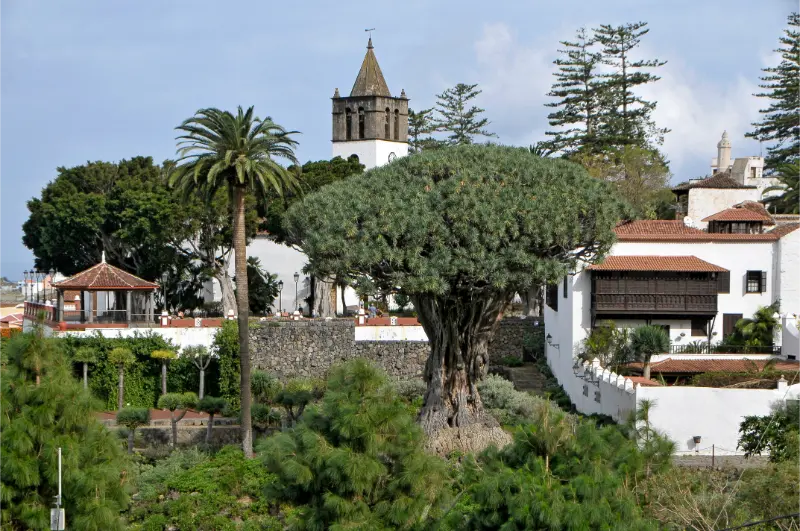
Icod de los Vinos is one of the north Tenerife towns I would visit when I want history, a famous natural landmark and volcanic geology in the same day. Most first-time visitors come for the Drago Milenario, but I think the town is much more satisfying when you also walk the historic centre and, if you reserve ahead, add the Cueva del Viento lava-tube experience.
Tenerife Tourism describes the celebrated Drago as around 800 years old and notes that the tree was declared a National Monument in 1917. The historic centre is compact, with squares, churches and traditional architecture close together, which makes Icod easy to combine with Garachico or another northwest stop without spending the whole day in the car.
The Drago Milenario: what to expect
The Drago is the visual symbol that pulls most people into Icod. You can see it from viewpoints around the historic centre, while the Parque del Drago offers a closer visit within a garden of Canary Islands flora and cultural interpretation. I would enter the park if I am genuinely interested in the tree and local botany rather than only trying to photograph it from every possible angle.
Current Tenerife Tourism information lists the park as open daily, with seasonal hours and a modest admission fee. Because those details can change, I check the official page on the day rather than print an old price into my itinerary. The tree will still be there; there is no reason to rush the logistics.
Walking the historic centre
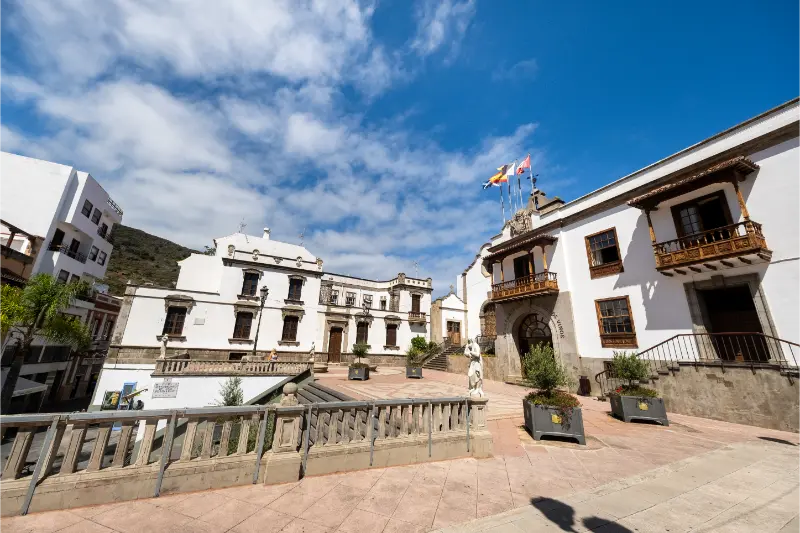
I start around the traditional squares near the Drago and San Marcos church, then walk slowly rather than navigate from one pin to the next. Icod’s appeal is the relationship between old buildings, stone, wood balconies, small plazas and the steep green landscape around the town. The centre is compact enough that wandering is part of the visit.
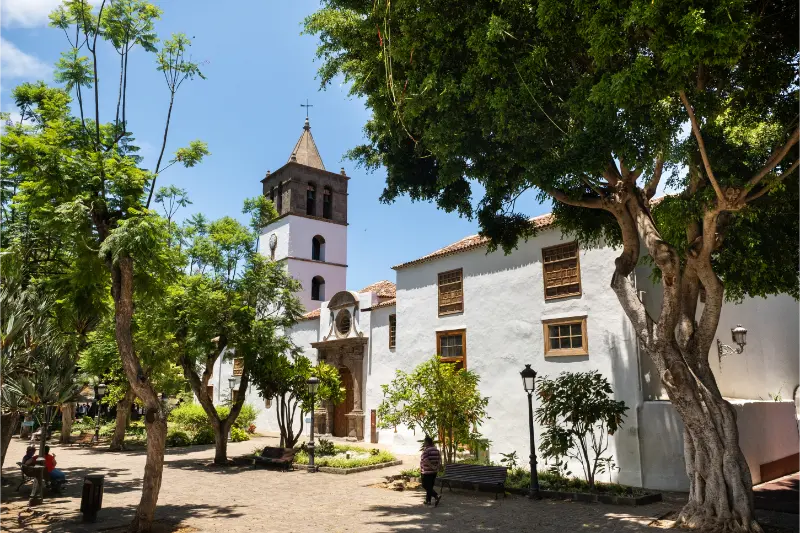
The official tourism route highlights places such as Plaza de la Pila, Iglesia Matriz de San Marcos, the former convent of San Francisco and Plaza Andrés de Lorenzo Cáceres. I do not need to enter every building. One interior, one long coffee and time in the streets usually gives me a stronger sense of place than a hurried museum sequence.
Cueva del Viento
Cueva del Viento is the experience that changes Icod from a short town stop into a potentially full day. It is a major volcanic tube system and visits are controlled and guided. I reserve in advance and follow the operator’s instructions about footwear, meeting time and physical conditions. I would never arrive assuming I can simply walk into a cave on my own.
The cave visit is not an amusement-park tunnel. Uneven ground, darkness and geological conservation are part of the experience. Travellers with mobility concerns, very young children or claustrophobia should read the current accessibility and participation requirements before booking.
How much time to spend in Icod
| Plan | Time | What fits |
|---|---|---|
| Quick stop | 1.5–2 hours | Historic centre and Drago viewpoints |
| Half day | 3–4 hours | Add Parque del Drago and lunch |
| Full day | 6+ hours | Add reserved Cueva del Viento visit |
| Northwest loop | Full day | Icod plus Garachico with careful pacing |
I prefer half a day if I am not visiting the cave. That gives time to stop for food rather than turn the town into a bus-tour photo break.
Food and wine
The town’s name reflects its historic relationship with wine, and the wider northwest has a strong agricultural identity. I use lunch to look for local wine, cheese, grilled meats, fish and Canarian staples rather than automatically return to the coast for international food. If driving, only one person should be responsible for tasting decisions, and that person should stay alcohol-free.
My Tenerife food guide explains papas arrugadas, mojo, gofio, local cheeses and the guachinche tradition in more detail.
Playa de San Marcos
Icod also reaches the coast at Playa de San Marcos, a sheltered bay below the town. I would not automatically add it to a packed historic day, but it works well when I want a slower finish or I am staying in the northwest. The road drops significantly from Icod’s centre, so it is not simply a flat walk to the sea.
Combine Icod with Garachico
Garachico is the most natural partner because the towns are close and their stories complement one another. Icod gives me the Drago and volcanic tube; Garachico adds a beautiful historic centre, natural pools and the visible memory of the 1706 volcanic eruption. My Garachico guide helps plan the second half of the day.
I would not also add Masca unless the objective is simply to drive all day. The mountain roads deserve concentration and the places deserve time.
Getting to Icod by bus
Icod is one of the northwestern towns that can work without a car. Tenerife Tourism currently highlights TITSA connections including line 363 from Puerto de la Cruz and Buenavista, line 108 from the Santa Cruz/La Laguna direction and line 460 connecting via the southwest. Timetables change, so I verify the exact journey in TITSA before leaving.
From Puerto de la Cruz, public transport is particularly practical. From Costa Adeje, a car may save time if I am building a multi-stop northwest day, but the bus can still work for a dedicated Icod visit. See my no-car Tenerife guide.
Parking
The historic core has narrow streets and visitor demand, so I prefer a signed public parking facility and then walk. Tenerife Tourism identifies the Parking del Drago as one commonly used option near the centre. I do not waste holiday time searching for a free space directly beside the Drago.
Where to stay
Icod can be a good overnight base for slow travel in the northwest, particularly if I want the cave, rural accommodation and early access to nearby towns. For a first Tenerife holiday, Puerto de la Cruz often provides more evening choice while keeping Icod within easy reach. If you want to stay locally, you can compare accommodation in Icod de los Vinos.

My ideal Icod day
I would arrive in the morning, walk the historic centre before the busiest period, visit the Drago park if it interests me and have lunch locally. If Cueva del Viento is reserved, I build the entire schedule around that fixed appointment. Without the cave, I continue to Garachico and end near the coast. I keep one stop optional so parking or lunch never becomes a crisis.
Official sources
For town information I use the official Icod de los Vinos tourism page and the official Parque del Drago page for current opening and visitor details.
Frequently asked questions
Can I see the Drago without paying?
There are public viewpoints from which the tree can be seen at a distance. Paying for the park gives a closer botanical and interpretive visit rather than simply a photograph.
Is Cueva del Viento walk-in?
I would never plan it that way. Visits are guided and capacity-controlled, so advance reservation and current instructions are essential.
Is Icod worth visiting without the cave?
Yes. The historic centre, Drago and a relaxed lunch make a good half-day, especially when combined with Garachico.
Is it a good base?
For quiet northwest exploration, yes. For a first-time traveller wanting nightlife, resort beaches and the broadest transport options, other bases may be easier.
Why I would not reduce Icod to a single tree
The Drago is famous enough that some itineraries allocate fifteen minutes: park, photograph, leave. I think that misses the relationship between the tree and the town. The squares, church, gardens and wine traditions explain why the landmark feels rooted in a living place rather than displayed in isolation. Even one extra hour changes the visit.
The same applies to Cueva del Viento. The lava tube is not simply another attraction beside the Drago; it explains the volcanic processes that built the island. Together, botany, geology and architecture make Icod one of the most coherent educational stops in the north.
A practical note about combining fixed reservations
If I book Cueva del Viento, that appointment becomes the anchor of the day. I would not also buy a timed activity in Garachico with a tight connection, because parking, traffic and the cave check-in can create delays. I keep the Drago and historic-centre walk flexible around the fixed cave slot instead.
This approach also leaves room for lunch. Northern Tenerife is more enjoyable when I can stop for local food without watching the clock every ten minutes. Icod is compact enough that a slower meal does not prevent me from seeing the essential centre; it often becomes one of the day’s best memories.
Final planning advice
For my own Icod de los Vinos guide planning, I keep the day flexible, verify the latest official information, avoid overloading the schedule and leave enough time for transport, food and weather changes. Tenerife rewards realistic pacing. The most memorable part of a day is often the unplanned coffee, viewpoint or conversation that only fits when the itinerary has margin. I also keep a simple backup plan so a closure, wind change or delayed bus does not turn one adjustment into a wasted day.
Leave a Reply