
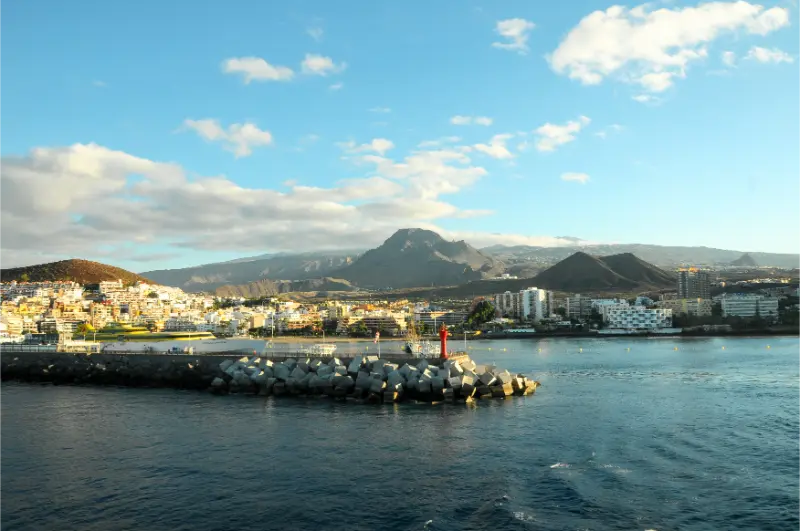
A La Gomera day trip from Tenerife is the island-hopping excursion I would choose when I want the biggest change of landscape without adding a flight. Ferries leave Los Cristianos in southern Tenerife for San Sebastián de La Gomera, and the crossing is fast enough to make a full day realistic. What makes the excursion worthwhile is not the ferry itself but how different La Gomera feels once you enter its deep ravines and laurel forest.
The main planning decision is whether to join an organised tour, take a ferry as a foot passenger or bring a car. A day trip has limited hours, so transport on La Gomera determines how much you actually see.
Ferry from Los Cristianos to La Gomera
Fred. Olsen Express currently advertises the Los Cristianos–San Sebastián de La Gomera route at around 50 minutes, with multiple departures on many days and up to five daily sailings on the route page. Schedules vary by date, so I always use the operator’s live booking system rather than a timetable copied into a blog.
You can check the official Tenerife–La Gomera ferry page for current departures. Other ferry operators may also serve the route, so I compare the exact date, baggage rules and vehicle availability before booking.
How early should you arrive?
I arrive earlier than the minimum check-in time, especially if travelling with a vehicle. Los Cristianos is a busy tourist town and harbour traffic can be confusing on a first visit. A missed morning ferry can destroy the logic of a one-day itinerary.
If I am staying nearby, I walk or use a taxi rather than worrying about long-term parking. My Los Cristianos guide explains the harbour area and why the resort is such a useful base for inter-island travel.
Option 1: organised day tour
For most first-time visitors, an organised tour is the simplest way to see La Gomera in one day. Transport is waiting on arrival, the route is already designed around ferry times and a guide adds context about Garajonay, villages and local culture. The trade-off is less freedom and a fixed pace.
I check whether the ferry is included, which port pickup is used, lunch arrangements, group size and how much actual walking happens. Some tours are panoramic bus days; others include short forest walks. Neither is automatically better—it depends on what you want.
Option 2: foot passenger independently
Travelling independently without a car works if the goal is mainly San Sebastián or if you have a very specific public-transport plan. It is less efficient for a first-time circuit through Garajonay and the western valleys because island buses are not designed around a tourist’s desire to stop at every viewpoint.
I would not arrive as a foot passenger and assume taxis will spontaneously recreate a full island tour at a low price. If I want a private driver, I arrange it before departure.
Option 3: take a car
Bringing a car gives maximum flexibility, but it adds vehicle fare, check-in time and responsibility on narrow mountain roads. I confirm that the rental agreement allows inter-island ferry travel before booking the car space. Some rental companies have restrictions or require notification.
La Gomera is small in distance but slow in driving. Deep barrancos mean roads curve constantly. A route that looks short on a map can take much longer than expected, so I keep the day focused.
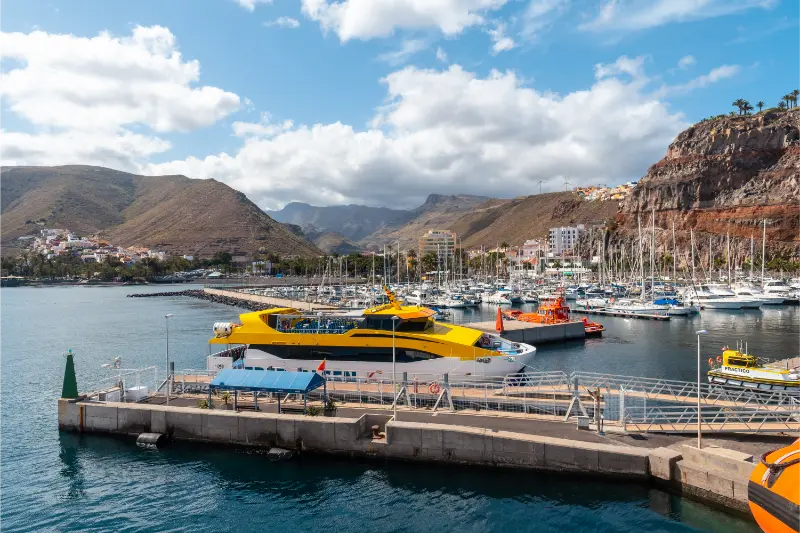
San Sebastián de La Gomera
The ferry arrives in the island capital, San Sebastián. I like to spend at least a little time here rather than treating the port only as a transport interchange. The town has strong associations with Christopher Columbus’s Atlantic voyages, a compact historic centre and a relaxed waterfront.
If I am driving, I may save the town for the end of the day when I need to be near the ferry anyway. That creates a buffer before departure and reduces the risk of missing the boat because I tried to squeeze in one final mountain viewpoint.
Garajonay National Park
For me, Garajonay is the essential reason to travel beyond San Sebastián. The UNESCO-listed national park protects laurel forest, a humid green ecosystem that can feel almost prehistoric when mist moves through the trees. It is a striking contrast with the dry southern coast of Tenerife.
Even on a day trip, I try to include a short forest walk rather than experiencing the park only through a bus window. The exact trail depends on weather, closures and time. I do not choose a long hike that leaves no margin for the return ferry.
Laguna Grande and short walks
Laguna Grande is a common stopping area within Garajonay and can be practical for short walks and interpretation. A recent 2026 Fred. Olsen itinerary for La Gomera specifically suggests a short circular walk around this part of the park as part of a one-day island circuit.
I still check current park information and trail status. Forest weather can be damp and cool even if Los Cristianos was sunny at breakfast, so I bring a light waterproof layer and proper shoes.
Viewpoints
La Gomera’s roads repeatedly open onto ravines and mountain walls. The challenge is not finding viewpoints but choosing which ones deserve time. I prefer two or three stops with time to appreciate the landscape rather than ten rushed pullovers.
Cloud can transform the view completely. If a high viewpoint is fogged in, I move on instead of waiting indefinitely; another part of the island may be clear.
Valle Gran Rey
Valle Gran Rey on the west side is one of La Gomera’s best-known destinations, with steep valley walls, settlements descending toward the sea and a more relaxed coastal atmosphere. It can fit into an ambitious full-day driving circuit, but I watch the clock carefully because the return to San Sebastián crosses the island.
If I prefer depth over coverage, I skip Valle Gran Rey on a day trip and focus on Garajonay plus the capital. La Gomera deserves a multi-day trip of its own, and there is no obligation to see every headline place in one visit.
Silbo Gomero
La Gomera is famous for Silbo Gomero, the island’s whistled language tradition. Some organised tours include a demonstration. I appreciate it most when the guide explains the cultural context rather than presenting it as a novelty performance.
This is one reason guided day trips can add value: you learn about landscape and local traditions that are easy to miss when driving independently between viewpoints.
Lunch
I keep lunch efficient but not rushed. Gomeran cuisine includes dishes and products distinct from Tenerife, and a day trip is more memorable when food becomes part of the island experience. I avoid a very long lunch if I still have a mountain crossing before the ferry.
If the tour includes a set meal, I check dietary requirements when booking. Independent travellers should remember that rural restaurants may have different opening patterns from the Tenerife resort strip.
What to bring
- Passport or ID required by your booking and travel circumstances.
- Ferry confirmation saved offline.
- A light waterproof layer for Garajonay.
- Comfortable walking shoes.
- Water and sun protection.
- Motion-sickness medication if appropriate for you and approved by your doctor or pharmacist.
Is the ferry rough?
Sea conditions vary. Fast ferries can feel motion in swell, and sensitive passengers may prefer a seat with less movement and avoid a heavy meal immediately before sailing. I check the marine forecast and operator notices rather than assuming every crossing will feel the same.
If weather disrupts ferries, safety comes first. I keep the following day reasonably flexible when La Gomera is a major priority.
Is one day enough?
One day is enough for a strong introduction, not for “seeing La Gomera”. I would choose Garajonay, a few viewpoints and San Sebastián, adding Valle Gran Rey only if the transport plan is efficient. A two- or three-night stay gives the island much more breathing room.
On a seven-day Tenerife holiday, I include La Gomera only if island hopping is a priority. My Tenerife 7-day itinerary helps show what you would be giving up on Tenerife itself.
Where to stay before the ferry
Los Cristianos is the most convenient base because you can reach the port on foot or by a short taxi ride. Playa de las Américas and Costa Adeje are also close enough for an early transfer. From Puerto de la Cruz, the day becomes much longer because you must cross Tenerife before and after the ferry.
You can compare Tenerife accommodation and use the harbour as your map reference if La Gomera is an important part of the trip.
Frequently asked questions
How long is the Tenerife–La Gomera ferry?
Fred. Olsen currently lists the fast crossing between Los Cristianos and San Sebastián at about 50 minutes. Check the live schedule for your exact date.
Can I take a Tenerife rental car to La Gomera?
Possibly, but you must check the rental company’s contract and permission for inter-island ferry travel before booking a vehicle space.
Is an organised tour worth it?
For a first one-day visit, often yes. It solves transport on La Gomera and protects the schedule around the ferry.
Can I visit Garajonay without hiking?
Yes, panoramic tours and viewpoints are possible, although I think even a short forest walk greatly improves the experience.
What is the biggest mistake?
Trying to cover the entire island. Choose a realistic route and protect a generous return margin before the ferry.
Leave a Reply