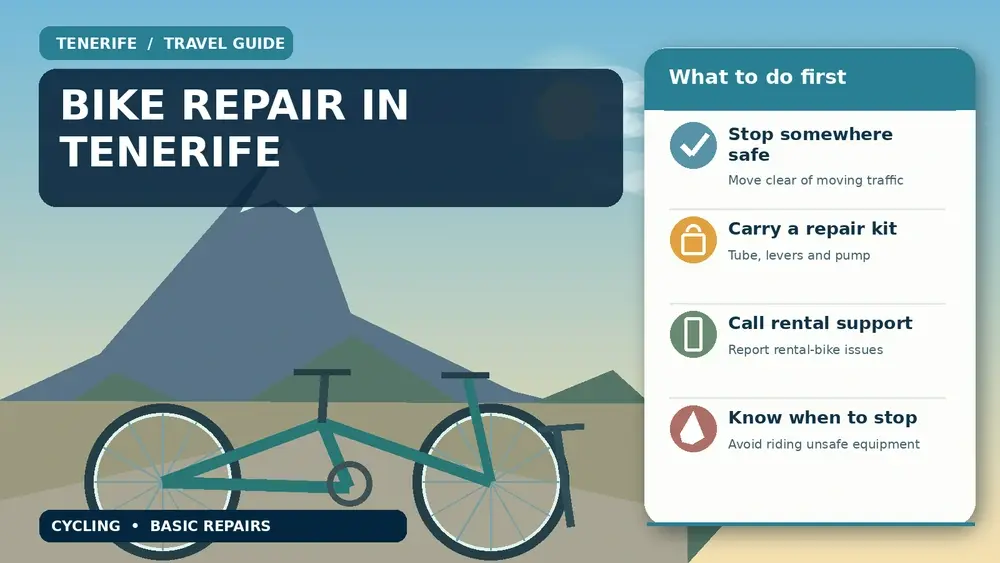
Quick summary: Tenerife is an outstanding cycling island, but the same climbs and remote roads that make it memorable can turn a small mechanical problem into a long walk. I distinguish between a rental-bike issue, which I report to the rental company first, and a problem on my own bike, which I can take to a local workshop. For road rides I carry the minimum tools I know how to use: tube or tubeless repair, inflation, tyre levers and a small multitool. For e-bikes I add battery planning and avoid opening electrical systems on the roadside. The goal is not to become a mechanic on holiday; it is to solve simple failures and know when to stop riding.
| Situation | What I would do |
|---|---|
| Rental bike puncture | I follow the rental company’s instructions and use the supplied repair kit if allowed. For major damage, I call rather than fitting expensive parts without approval. |
| Own road bike with flat tyre | I repair or replace the tube/tubeless puncture if safe, then inspect the tyre for the cause before inflating fully. |
| Broken chain or derailleur issue | I move off the road, assess whether a simple roadside fix is within my skills and otherwise arrange pickup or workshop help. |
| E-bike motor/battery fault | I check simple external connections and display messages but do not dismantle high-voltage components. I contact the rental shop or an e-bike-qualified workshop. |
| Mechanical failure on a remote climb | I focus on location, phone battery, water and safe pickup. Walking a bike for kilometres on a steep shoulder can be worse than waiting for help. |
Why Tenerife needs a repair plan
Popular cycling routes can climb from resort areas toward Teide, cross exposed ridges or pass through rural zones with long gaps between workshops. A puncture near a town is easy; the same puncture late in a high-altitude ride can become a temperature, hydration and daylight problem. I plan for where the route goes, not only its distance.
I save the rental shop number and my accommodation contact before leaving. On my own bike, I also note the nearest practical town along the route. Mobile coverage is generally good but not uniform in mountains, so I do not make a single app my only rescue plan.
- Carry enough water and one extra layer on high routes, even when the coast is warm.
- Start long climbs with a charged phone and, for e-bikes, realistic battery reserve.
- Tell someone the broad route when riding alone.
- Know whether the rental company offers roadside pickup, mobile assistance or only workshop service.
The puncture kit I actually carry
For a tubed setup I carry at least one compatible tube, tyre levers and a reliable pump or inflator. For tubeless tyres I add plugs appropriate to the system and still consider a backup tube for damage that sealant cannot close. A repair kit is useless if the valve length, tube size or pump head does not match the bike.
I practice at home before the trip. Tenerife is not the place to discover for the first time that I cannot remove a tight tyre bead or reinstall a thru-axle correctly. When renting, I ask what the shop supplies and what it expects me to do after a puncture.
- Tube or tubeless repair compatible with the exact wheel and tyre setup.
- Pump or inflator that fits the valve type, plus enough cartridges if relying on CO2.
- Small multitool with the fasteners used on the bike.
- A boot or robust temporary tyre patch for a cut casing, plus gloves or wipes for messy repairs.
Rental-bike mechanical problems
A rental bike is not my equipment to modify freely. If gears skip, brakes rub badly, a wheel develops play or an electronic system shows an error, I contact the shop. Good rental companies would rather solve a developing fault than receive a damaged bike after I continue riding it.
I photograph visible damage when I notice it and explain whether the problem appeared gradually or after an impact. If I crash, I prioritise health and safety before the bicycle. I do not conceal damage and hope the shop will miss it; clear reporting usually makes the return process easier.
- Ask at pickup what roadside repairs I am expected or allowed to perform.
- Keep the rental agreement and emergency number on the phone.
- Do not swap expensive components or tyres without authorisation.
- Report brake, steering or wheel faults immediately because they can become safety-critical on long descents.
E-bike problems in Tenerife
E-bikes add range and open steep routes to more riders, but they also add electronics, heavier wheels and battery constraints. I treat the battery percentage as part of route planning, especially on sustained climbing. A display estimate can change dramatically when gradients increase, headwind strengthens or assistance mode stays high.
If an error appears, I check the obvious external points the manufacturer allows: battery seating, visible connectors, display messages and whether the system restarts normally. I do not open battery packs, motors or sealed electronics. A specialist workshop or the rental company should handle those systems.
- Start with a fully charged battery and the correct charger if the trip is multi-day.
- Do not expose removable battery contacts to sand or water while troubleshooting.
- Remember that a heavy e-bike may be difficult to push uphill if the motor stops.
- Tell a pickup service that the bicycle is electric and give approximate weight/size if transport equipment matters.
Finding a workshop and explaining the fault
Cycling-focused towns and resort areas have bike shops, but stock is not unlimited. A rare tyre size, proprietary derailleur hanger or unusual e-bike component may need ordering. I bring a small critical spare when travelling with a high-end or unusual bike, especially a derailleur hanger that is specific to the frame.
At the workshop I explain the symptom rather than diagnosing aggressively: “the chain skips under load in these gears” is more useful than insisting that a cassette must be replaced. I ask for an estimate and timeframe, particularly if I have a flight or event approaching.
- Know tyre dimensions, axle standard and drivetrain speed before looking for parts.
- Bring or photograph the exact e-bike error code.
- Ask whether same-day service is realistic rather than assuming holiday urgency moves the queue.
- Keep removed specialty parts if they are yours and may be needed for warranty evidence.
Breakdowns on climbs and descents
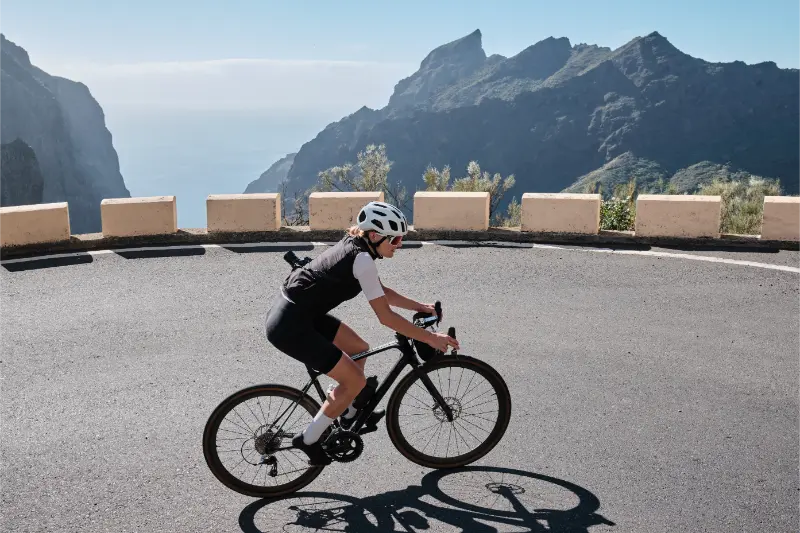
Mechanical judgement matters most on Tenerife’s long descents. A marginal brake, loose wheel or damaged tyre may feel tolerable at walking speed but become dangerous at 50 km/h. I do not “test it on the way down” if the safety of the bike is uncertain. I arrange pickup or descend only after a competent repair.
On a remote roadside I move myself and the bicycle away from traffic where possible. I use a map pin plus road name/direction to describe the location. If the problem coincides with injury, severe weather or another genuine emergency, the human situation takes priority over recovering the bike.
- Do not continue a descent with uncertain brakes or a compromised tyre sidewall.
- Move off blind bends and narrow carriageways before starting repairs.
- Protect phone battery while waiting; constant screen use can waste the resource needed for pickup calls.
- Carry some cash/card flexibility in case a taxi or transport solution is needed and allowed for the bike.
Useful related guides on My Tenerife Experience
- Road cycling in Tenerife guide
- Mountain biking and e-bike Tenerife guide
- Flying with bikes and sports equipment guide
- Strong wind in Tenerife guide
Useful official resources
My final checklist
- Save the rental shop or workshop number before a long ride.
- Carry a tube/tubeless solution that actually matches the bike.
- Carry working inflation equipment, not only repair patches.
- Start high routes with water, a layer and enough phone battery for a delayed return.
- Stop riding if brakes, wheel retention or tyre sidewalls are unsafe.
- For e-bikes, protect battery reserve and do not dismantle sealed electrical systems.
- Bring a frame-specific derailleur hanger if travelling with an unusual personal bike.
- Describe the fault and ask for an estimate before authorising major workshop work.
Frequently asked questions
Are bicycle repair shops easy to find in Tenerife?
There are bike shops and workshops in the main cycling and population areas, but not on every mountain road. I solve this by carrying basic puncture tools and having a pickup/contact plan for faults I cannot repair.
Should I repair a rental bike myself?
Only within the rental company’s instructions. Basic puncture repair may be expected, while brake, drivetrain, wheel or electronic work should normally be reported to the provider first. I avoid unauthorised parts replacement.
What spare is most useful for my own bike?
Beyond puncture supplies, a derailleur hanger specific to the frame can be valuable because workshops may not stock every proprietary shape. The exact best spare depends on the bike and trip.

Can I ride an e-bike home if the battery dies?
Most e-bikes can still be pedalled, but they are heavier and climbing can become extremely hard. I do not plan a remote route on the assumption that an empty battery will be an easy inconvenience.
Final thoughts
A Tenerife cycling repair plan is really a return-home plan. I carry the small items that solve common punctures, know who to call for everything else and refuse to ride a mechanically unsafe bike down a long descent. That approach keeps tools and spares proportional to the holiday while still respecting the island’s steep, exposed and sometimes remote riding environment.
Leave a Reply