
Tenerife is one of the few places where I can start a ride near sea level and finish in genuine high-mountain terrain on the same day. That vertical scale is what makes the island so attractive to road cyclists, but it is also what makes casual planning risky. Official Tenerife tourism information highlights road routes that rise beyond 2,000 metres and notes that professional teams regularly use the island for altitude training. I would therefore approach cycling here as a mountain trip with sunshine, not simply as a warm-weather spin. This guide focuses on realistic route choice, Teide climbs, rental logistics, weather and the details that matter once the gradient begins.
Why Tenerife works so well for road cycling
The island combines long climbs, generally good mountain roads, year-round riding weather and huge changes in landscape over relatively short distances. A single route can pass banana plantations, dry southern slopes, pine forest and volcanic high ground. The official cycling portal lists routes across the island, including demanding loops from La Orotava, Garachico and Santa Cruz. What I value most is the variety: I can choose a controlled endurance day on the lower coast or a serious climbing day toward Teide without changing destination.
I would not judge difficulty only by kilometres. In Tenerife, cumulative ascent and altitude are the numbers that change the ride. A 70-kilometre mountain route can feel much harder than a flat century elsewhere, particularly when the final hour is above the cloud layer. I compare cycling days with my Tenerife driving guide because the same winding roads that make scenic drives memorable also demand concentration on a bike.

The Teide climb: the ride many cyclists come for
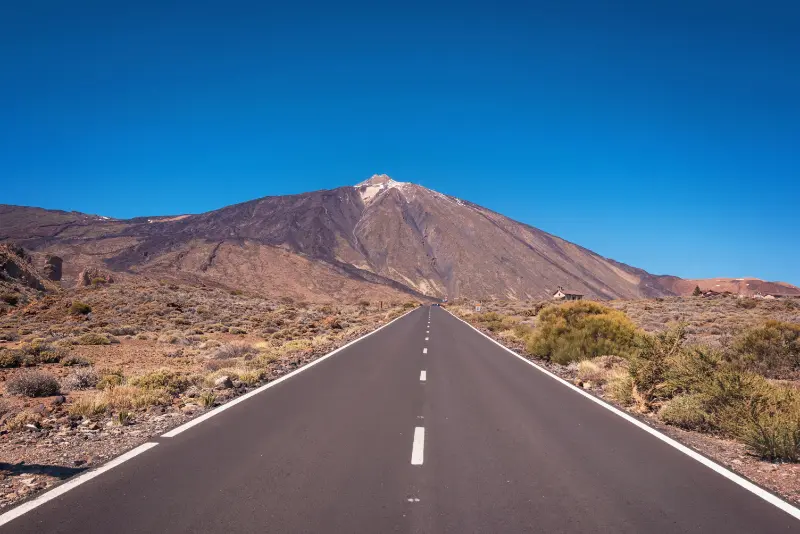
The ascent toward Teide is the island’s signature road-cycling challenge. There are several approaches, including roads from La Orotava in the north and from southern or western areas through Vilaflor, Chío or other highland connections. The attraction is not a single summit line but the sustained climbing and the chance to ride through pine forest into the open caldera landscape. I decide the route according to my base, fitness and wind rather than choosing the longest ascent simply because it sounds impressive.
Altitude matters. Above 2,000 metres the temperature, sun exposure and perceived effort can differ dramatically from the coast. I carry a wind layer for the descent even on a warm day and do not assume that a sunny beach forecast describes the national park. For the wider mountain context I use my Mount Teide guide and check current conditions before leaving.
Where I would base a cycling holiday
For climbing-focused riders, the south and southwest offer reliable access toward Vilaflor and western Teide roads, while Puerto de la Cruz and La Orotava place me close to the northern ascent. Costa Adeje has the largest resort infrastructure and easy access to rental services; El Médano is useful for an active atmosphere but can be windy; Los Gigantes gives dramatic western routes but more immediate gradients. I choose accommodation based on the first and last 20 kilometres of each ride, not on beach reputation alone.
If I am travelling with a non-cycling partner, I compromise. A base such as Costa Adeje, Puerto de la Cruz or La Laguna gives the rider useful roads while the rest of the group still has independent things to do. I compare areas in where to stay in Tenerife before booking.
Bike rental, gearing and what I would reserve in advance
I reserve a quality road bike before high season rather than assuming my preferred frame size will be available on arrival. I confirm pedal system, helmet, spare tube or tubeless support, pump, lights and the gearing fitted to the bike. Tenerife is not the place where I want an unnecessarily aggressive cassette. Compact or sub-compact gearing makes long gradients much more enjoyable, especially if the plan includes Teide after several consecutive riding days.
I also photograph the bike at collection and test brakes and shifting before starting a mountain route. If I bring my own bike, I check airline packing rules and transfer space. A standard airport taxi may not be the right solution for a large bike box, so I arrange transport before landing.
Traffic, road position and descents
The island has quiet mountain stretches but also busy approach roads and resort traffic. I use lights in poor visibility, avoid unnecessary bunching on narrow roads and expect drivers around bends. The biggest risk for many visiting cyclists is not the climb but the descent: speed rises quickly, surfaces change, cloud can reduce visibility and corners may tighten more than expected. I descend within sight distance rather than copying local riders who know every bend.
I am particularly conservative after a long Teide climb because fatigue reduces reaction time. I stop before the descent, add a layer, eat something and check that hands are not too cold for effective braking. That five-minute reset is one of the simplest safety habits on the island.
Weather, wind and microclimates
Tenerife can give me several different weather systems in one ride. The north may be cloudy while the south is bright, the trade wind can make exposed sections difficult, and high ground can be cold even when the coast feels summery. I check forecasts for the coast, mid-altitude and Teide separately. Wind direction often matters more than temperature because a strong crosswind on an exposed descent can turn a pleasant route into a stressful one.
I keep a lower-altitude alternative for uncertain days. That approach mirrors the planning advice in my Tenerife weather and seasons guide: the island is rideable for much of the year, but the best route is the one that fits the day rather than the one fixed weeks earlier.
Fuel, water and pacing on long climbs
I eat before I am hungry and drink before I feel dry. Long Tenerife climbs can create the illusion that a café is always around the next bend, but high sections have long gaps between services. I leave with enough carbohydrate for the planned duration plus a reserve, and I refill whenever a reliable opportunity appears. Strong sun and dry air can increase fluid needs even when the temperature feels comfortable.
I also avoid racing the first climb of the holiday. The island encourages ambition because every road seems to point uphill, but a better plan is to use the first ride to learn gradients, heat and rental-bike fit. I save the biggest Teide day until I know how my body responds.
My favourite way to build a three-ride mini plan
I would begin with a shorter coastal or mid-altitude ride, use the second day for a longer route with moderate climbing, then attempt Teide after either a rest day or an easy spin. That sequence gives me time to adjust bike position and understand local roads. If the mountain weather looks poor, I reverse the order rather than forcing the headline ride on the wrong day.
For a mixed holiday I alternate hard cycling with sightseeing days. A recovery day in La Orotava, Garachico or on a calm beach is not wasted time; it often makes the next ride better.
How I would plan it
I would use the official Tenerife cycling information as a starting point for current route ideas and local cycling services, then build each day around weather and my actual fitness.
For accommodation, I would compare current Tenerife accommodation options only after deciding which side of the island gives the best access to the rides I actually want to do.
What I would carry on every ride
Even on a short ride I carry identification, phone, payment card, two ways to repair a puncture, basic multitool, sun protection and a light layer. For mountain days I add more food than I expect to need and make sure navigation works offline. The most useful equipment is often boring: clear-lens glasses in cloud, a small rear light in shaded roads and gloves that remain comfortable on a long descent.
A note on training load
Tenerife makes it easy to accumulate more climbing than planned. I watch total elevation across the week and protect recovery days instead of turning every outing into a summit attempt. Travellers arriving from a winter with limited outdoor riding should be especially cautious: warm weather can hide the fact that the muscular load is far higher than normal.
Planning road cycling in Tenerife around the rest of the trip
I would not let road cycling in Tenerife dominate every day of the holiday. Tenerife works best when active or detailed plans are balanced with a slower meal, a short walk or time by the sea. I group nearby places together, leave a realistic margin for parking and changing conditions, and avoid crossing the island simply to add one more stop. That makes this part of the trip feel intentional rather than squeezed between unrelated attractions.
What I check the evening before
The evening before this part of the trip, I confirm weather, access, opening information and the exact route from my accommodation. For road cycling in Tenerife, small practical changes can matter more than they appear on a static itinerary. I save essential information offline, charge the phone and keep a nearby alternative in mind. That preparation means a closure, stronger wind or slower traffic changes the plan without ruining the day.