
Mount Teide dominates Tenerife physically and visually, but visiting it well takes more planning than simply driving toward the highest point on the island. The national park sits at high altitude, the weather can be completely different from the coast, parking and access can be busy, cable-car operation depends on conditions, and some trails require advance reservations. I treat a Teide day as a mountain excursion, even when the plan is mostly sightseeing.
This guide explains how I would organise a first visit: the scenic drive, the best type of stops, cable car versus hiking, summit permits, clothing, altitude, children and the mistakes that can turn an extraordinary day into a stressful one.
Why Teide deserves a full day
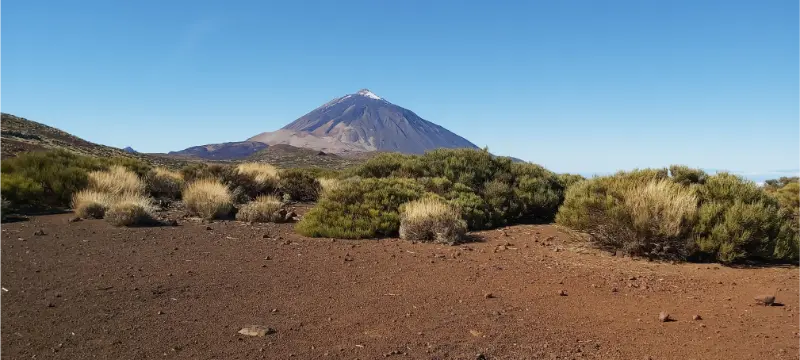
Teide is Spain’s highest mountain and the centrepiece of a volcanic landscape that feels far removed from Tenerife’s beaches. The experience starts before you reach the cable car. Roads climb through changing vegetation, pine forest and eventually open high-altitude terrain. Once inside the caldera, wide lava fields, layered rock and the cone of Teide create views that change constantly with light and cloud.
I would resist the temptation to schedule only a cable-car time and then drive back to the coast. The national park itself is the attraction. Scenic stops around Roques de García, viewpoints along the TF-21 and TF-24, and the contrast between different lava formations deserve time.
How to reach Teide National Park
Most independent visitors arrive by car from the south through Vilaflor or from the north through La Orotava, while the TF-24 route from the northeast can be especially scenic. Which road is best depends on your starting point and current conditions. Do not assume the fastest route in a navigation app will be the most enjoyable; on a first visit I often prefer to enter one way and leave another if daylight and weather allow.
Public transport options exist but are more restrictive because schedules determine how long you can stay. If you are not comfortable with mountain driving, an organised excursion can be a sensible alternative. Whatever your transport choice, check official road, weather and park information before departure.
Teide cable car: what it actually gives you
The official cable car runs from a base station at roughly 2,356 metres to the upper station at La Rambleta, around 3,555 metres. The ride is short, but the altitude gain is huge. From the upper station, visitors can enjoy high-level viewpoints and permitted trails depending on current conditions. Reaching the upper station does not automatically mean you can walk to the summit.

The operator sells timed tickets online and warns that operation can be interrupted by weather, particularly wind. I would book in advance during busy periods but keep the wider day flexible. Do not build a flight, ferry or non-refundable evening event around the assumption that the cable car will operate exactly as planned.
Check the current timetable and ticket conditions on the official Teide Cable Car website.
Do you need a permit for the summit?
Yes, access rules matter. The final route to the summit, Trail 10 Telesforo Bravo, is controlled and requires specific authorisation. In addition, Tenerife introduced reservation requirements for several high-altitude routes used by people ascending on foot toward La Rambleta. Rules, quotas and required equipment can change, so I would never rely on an old travel blog for this part of the trip.
Before choosing a hiking plan, check Tenerife ON and the current National Park reservation system. Carry the required identification and confirmation, and read the equipment requirements attached to your specific route. A reservation is not just bureaucracy: the upper mountain can expose visitors to cold, wind, strong sun and difficult terrain.
Cable car or hiking?
| Option | Best for | Main consideration |
|---|---|---|
| Scenic drive only | Most visitors | No altitude commitment beyond viewpoints |
| Cable car | Big views with less physical effort | Weather-dependent; high altitude |
| High-mountain hike | Experienced hikers | Reservations, equipment and fitness |
| Guided experience | Visitors wanting structure | Higher cost but simpler logistics |
There is no need to hike the summit to have a meaningful Teide experience. For many travellers, the scenic drive, Roques de García and a cable-car ride are more than enough. Hikers should choose a route because they are prepared for it, not because reaching the summit sounds like a box that must be ticked.

Altitude: the part many visitors underestimate
The upper cable-car station is above 3,500 metres. Even fit travellers can notice the altitude: breathlessness, headache, light-headedness or unusual fatigue. Walk slowly, avoid racing up steps for photographs and pay attention to how you feel. People with health concerns should seek appropriate medical advice before high-altitude activity.
Children are another reason to plan carefully. The cable-car operator applies age and health restrictions to certain products and activities, and mountain conditions are not comparable with a beach excursion. For a family trip, I prefer a shorter, flexible Teide visit rather than trying to reproduce an adult hiking itinerary. More ideas are in my Tenerife with kids guide.
What to wear and carry
I always plan Teide clothing as if I am visiting a mountain in a different season from the coast. A warm or windproof layer, closed footwear, water, sunglasses and high-SPF sunscreen are basic items. If your reservation specifies technical equipment, that requirement overrides any generic packing list. Winter conditions can include ice or snow at altitude even when people are swimming on the coast.
- Water and a snack, even for a mostly sightseeing day
- Warm layer and wind protection
- Sun protection: hat, sunglasses and sunscreen
- Closed shoes with good grip
- Phone with battery; offline maps are useful
- Permit/reservation and identification when required
- Any route-specific mandatory mountain equipment
Roques de García and easy sightseeing
Roques de García is one of the easiest ways to appreciate Teide’s geology without committing to the summit. The viewpoint area gives wide views of the caldera and distinctive rock formations. It can become crowded, so early or later daylight often creates a more pleasant experience. Even a short walk here can involve strong sun and uneven ground, so I would still carry water and proper shoes.
If the cable car is closed, do not consider the day ruined. This is exactly why I build the itinerary around the landscape rather than one piece of infrastructure. Scenic viewpoints, short accessible stops and the drive itself can still make Teide one of the best days of the trip.
Sunset and stargazing
Teide’s altitude and dark skies make the highlands attractive around sunset and after dark. The temperature drops quickly, traffic patterns change and you need to be more conservative with driving and walking. If stargazing is a priority, a guided experience can reduce the stress of choosing a safe location and understanding access rules.
I would not combine a demanding high-altitude hike, sunset and a long night drive unless everyone in the group is comfortable with that schedule. It is better to choose the main goal of the day and leave enough energy for the descent.
Best time of day
There is no universal best hour because clouds, wind, season and reservations matter. Early starts can reduce crowds at popular stops, while later light can be beautiful for photography. Midday can be intensely bright. In winter, daylight is shorter and mountain conditions deserve extra attention. I check conditions the evening before and again in the morning rather than locking the plan weeks in advance beyond the reservations I actually need.
Driving and parking strategy
Parking around popular Teide stops is finite. Arrive with patience and never create your own parking space on protected ground or in unsafe road areas. If a viewpoint is full, continue to another legal stop and return later. On the way down, use lower gears where appropriate and do not let the scenery distract from mountain driving.
If you are deciding whether to rent a car mainly for this day, read my getting around Tenerife guide. A car offers excellent freedom in the park, but only if the driver is comfortable with long climbs, bends and changing visibility.
A Teide day I would recommend for a first visit
- Leave the coast after checking weather, road and cable-car status.
- Climb through a scenic route and stop at one or two legal viewpoints rather than every turnout.
- Spend time around the national park landscape before your booked cable-car slot.
- Use the cable car if operating and suitable for your group; follow only the trails allowed by your booking and current conditions.
- After descending, visit Roques de García or another major viewpoint.
- Return by a different route if practical and if you have enough daylight.
- Keep the evening light: altitude and driving can make the day more tiring than expected.
Common mistakes I would avoid
- Assuming the coast forecast describes Teide conditions
- Buying a cable-car ticket and assuming it includes summit access
- Arriving without the reservation or equipment required for a high-altitude trail
- Wearing sandals because the day started at the beach
- Planning too many attractions after Teide
- Ignoring signs of altitude discomfort
- Parking illegally when popular viewpoints are full
How Teide fits into a Tenerife itinerary
I normally place Teide near the start of a week-long trip but not on the first morning after a late flight. That leaves room to move the day if conditions are poor. In my 7-day Tenerife itinerary, the mountain is a major day rather than a short stop between unrelated attractions.
The best Teide visit is not necessarily the one that reaches the highest point. It is the one that matches your fitness, reservations and weather while giving you time to understand the extraordinary volcanic landscape around you. Plan conservatively, use official information and let the mountain—not a checklist—set the pace.
Leave a Reply