Tag: Mount Teide

  • Alto de Guajara Tenerife Hiking Guide: 2,715 m Teide Caldera Summit

    Alto de Guajara Tenerife Hiking Guide: 2,715 m Teide Caldera Summit

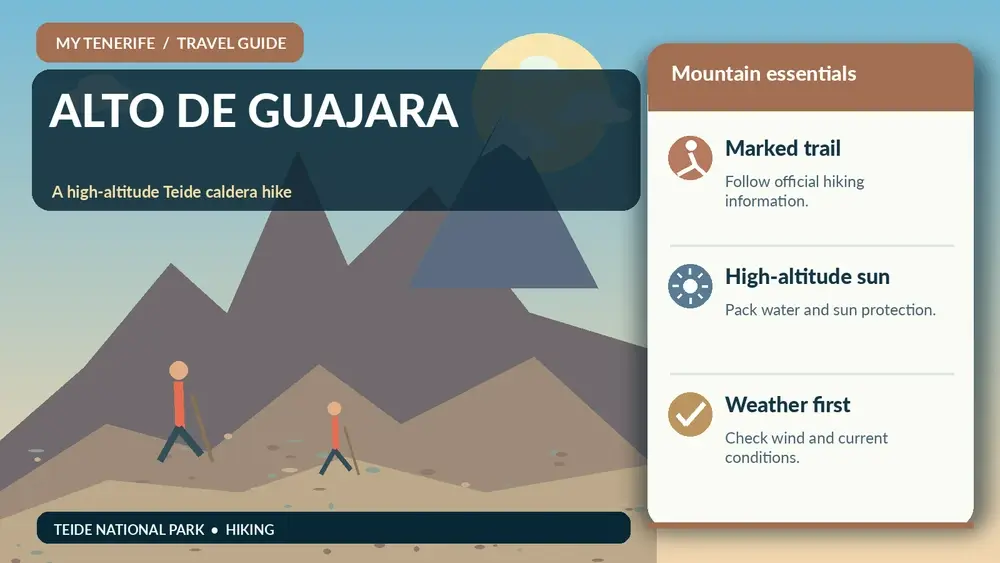
    Alto de Guajara is the high Teide hike I choose when I want a genuine mountain objective without climbing Pico del Teide itself. At 2,715 metres, Guajara is the highest point of the caldera wall and the third-highest elevation in Teide National Park.

    The official trail 15 segment runs 2.0 km from Degollada de Guajara to the summit, with about 357 metres of ascent and an estimated duration of 1 hour 30 minutes. That number is only the summit segment: I still need to reach Degollada de Guajara and return, so the complete outing is much longer.

    Quick planning facts

    Trail15 Alto de Guajara
    Official segmentDegollada de Guajara to Alto de Guajara
    Segment distance2.0 km one way
    Official segment durationAbout 1 h 30 min
    Maximum elevation2,715 m
    Segment ascentAbout 357 m
    DifficultyMedium
    AuthorisationNot normally required for trail 15

    Why Guajara is a serious step up

    Alto de Guajara reaches 2,715 metres and forms the highest point of the caldera wall. The official trail 15 section begins at Degollada de Guajara and climbs 2.0 km to the summit, with around 357 metres of ascent and an estimated 1 hour 30 minutes for that segment.

    The important planning detail is that most visitors must also reach Degollada de Guajara first and then return, so the full day is substantially longer than the 2 km summit segment. I never quote the official segment distance as if it represents the entire outing from a road-access point.

    Building the full route

    I connect trail 15 with the approach that fits current park access and my ability, commonly via the Siete Cañadas/Degollada area. Before walking I check the current official map because route status and permitted access can change.

    I calculate total distance, ascent and daylight for the exact combination I intend to walk. Guajara is not the place to improvise a route from screenshots after leaving the car.

    Altitude and physical demand

    At 2,715 metres, altitude is part of the challenge. I walk slower than I would at sea level, drink regularly and turn around if I develop significant headache, nausea, unusual dizziness or other concerning symptoms.

    The climb is officially graded medium for the trail segment, but the overall day can feel demanding because of exposure, altitude and the approach distance.

    Weather and visibility

    Guajara can deliver extraordinary views across the Teide caldera and, on clear days, toward other islands. It can also sit in wind, cloud or rapidly changing mountain conditions. I choose the day based on a mountain forecast, not simply a beach forecast from Costa Adeje.

    I carry a warm and windproof layer in every season. My Tenerife packing list covers how I layer for Teide.

    Why sunrise and sunset require extra caution

    Photographers are naturally drawn to high viewpoints at low light, but I only consider sunrise or sunset if I am experienced, equipped with a reliable headlamp and fully understand the route. Temperature drops quickly once the sun disappears.

    For most travellers I prefer a daylight hike and a separate roadside viewpoint for sunset. The safer plan usually produces a better overall day.

    No normal permit, but rules still matter

    The official Alto de Guajara trail page states that authorisation is not required for trail 15. That does not mean every connecting path is always open or that weather closures can be ignored.
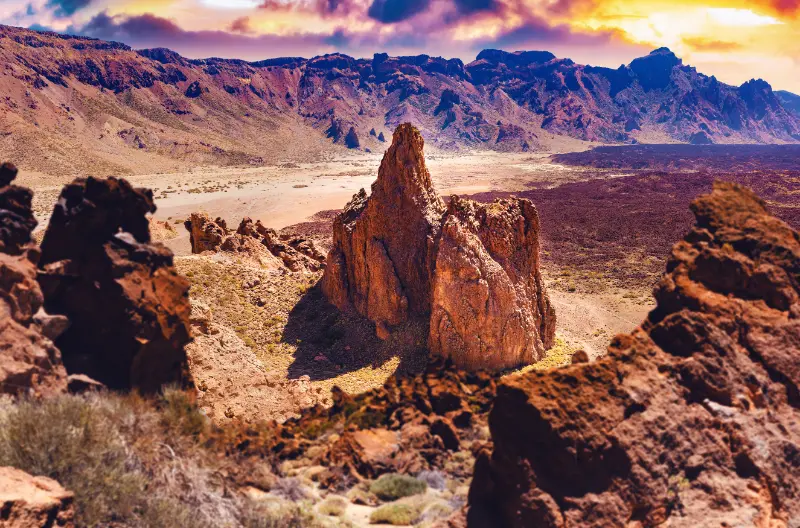
    Volcanic rock formations of Roques de García in Teide National Park

    I check Tenerife ON and Teide National Park information before departure. My Tenerife hiking permits and trail rules guide explains the wider system.

    Who should choose another trail

    I would choose a lower or shorter trail for travellers who are not comfortable with sustained climbing, exposed high-altitude terrain or several hours away from roadside services. Roques de García and Sámara offer excellent volcanic scenery with less commitment.

    Changing route is not a failure. Tenerife has enough hiking options that I can match the day to fitness and weather rather than forcing one summit.

    Official source and route verification

    I use the official Alto de Guajara trail page for the summit-segment facts. I then verify the entire approach route separately because the official 2 km figure begins at Degollada de Guajara, not at my car.

    That distinction is the most important practical detail in this guide and prevents a common planning mistake.

    How I fit it into a realistic Tenerife day

    I treat Alto de Guajara as part of a wider Teide National Park day rather than an isolated pin on the map. Tenerife looks compact, but mountain roads, parking searches and changing weather can turn short distances into slow travel. I decide in advance which stop is the priority and which stops are optional.

    My preferred approach is to pair it with Siete Cañadas, Parador viewpoints or a lower-elevation stop after the hike. That creates a day with contrast without spending most of the time in the car. I also keep one backup plan nearby in case wind, cloud, surf or temporary access restrictions change the experience.

    Weather, clothing and microclimates

    I never use a single Tenerife forecast for the whole island. North-coast cloud, Anaga mist, Teide sunshine and south-coast heat can all occur on the same day. I check the forecast for the exact municipality and, for mountain or coastal activities, I also look at wind and sea conditions.

    Even on warm days I carry sun protection, water and a light layer. At higher elevations I add a windproof layer, while on the coast I bring footwear with grip because volcanic rock, wet steps and black sand can all be slippery or hot.

    Responsible travel habits I use here

    Small beaches, villages, viewpoints and trailheads are shared local spaces. I park only where it is legal, keep access to homes and farm tracks clear, take rubbish away and avoid turning narrow roads into informal photo stops. In protected areas I stay on the marked route and never collect volcanic material, plants or other natural objects.

    I also prefer to support the area in a simple way: a coffee, lunch, market purchase or locally made product is often a better souvenir than something generic. Respectful travel is mostly about ordinary decisions that reduce pressure on places I want to remain enjoyable.

    My backup plan when conditions are wrong

    If the sea is rough, I do not force a swim. If a viewpoint is inside cloud, I move lower or switch to a village, museum or food stop. If parking is full, I continue to the next planned place rather than circling residential streets. This flexibility is especially useful in Tenerife because very different landscapes sit close together.

    I build the day around one must-do experience and several optional stops. That structure produces better trips than trying to complete a rigid checklist, and it makes it easier to respond to closures, weather and local events without feeling that the day has failed.

    Frequently asked questions

    Do I need a permit for Alto de Guajara?

    The official trail page says authorisation is not required for trail 15, but temporary closures and connecting-route rules can still apply.

    Is the hike only 2 km?

    No. The official 2 km figure starts at Degollada de Guajara, which most hikers must first reach by another trail.

    How high is Guajara?

    The summit is 2,715 metres above sea level.

    Is altitude a problem?

    It can be. I slow down, hydrate and take symptoms seriously because the summit is well above 2,500 metres.

    Is Guajara harder than Sámara?

    Yes. Guajara is a more demanding high-altitude objective with a longer overall outing once the approach is included.

    Questions I ask myself before I go

    I check four things before leaving: current access, exact weather, realistic travel time and what I will do if the first plan fails. Tenerife is an easy island to underestimate because distances look short on a map. A mountain road, coastal traffic or a full car park can add far more time than expected.
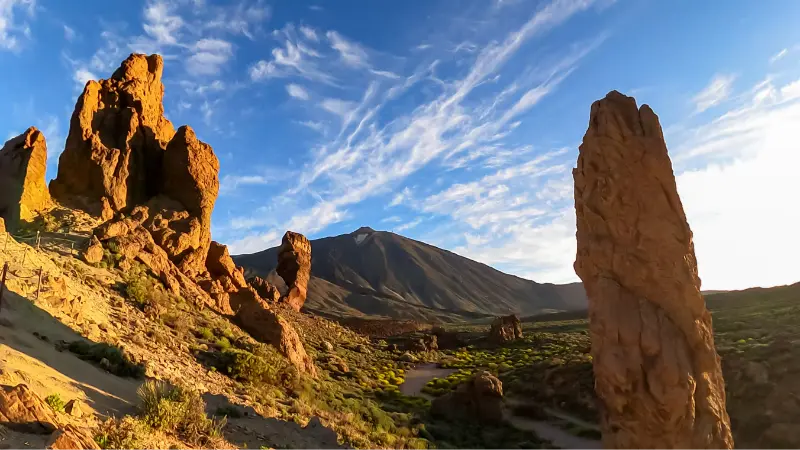
    Roque Cinchado Roques De Garcia Tenerife

    I also decide whether the destination is the purpose of the day or simply one stop. When it is the main purpose, I leave enough time to experience it slowly. When it is secondary, I set a clear limit so the rest of the itinerary does not become rushed.

    What makes this worth adding to a longer Tenerife trip

    The strongest Tenerife itineraries mix famous landmarks with smaller places and experiences. Teide, Anaga and the main beaches explain the island at a large scale, while a local pool, rural trail, village festival or food tradition explains how people actually use and understand the landscape.

    I therefore do not judge a place only by the number of attractions. A short viewpoint can be valuable if it helps me read the geography; a small village can be memorable if I slow down for lunch; a modest trail can reveal volcanic history better than a long drive through the same area.

    Practical travel habits that improve the day

    I download maps or save the route before entering areas with weaker mobile coverage. I start with a full bottle of water, keep a layer in the car, carry some cash for small local businesses and avoid planning every meal at the most obvious tourist time. These are small habits, but they make rural Tenerife much easier.

    I also leave more space between stops than a navigation app suggests. That time absorbs photo stops, roadworks, wrong turns and simple curiosity. The best travel days on Tenerife often improve when I have enough margin to stop somewhere I had not planned.

    My final take

    Guajara is rewarding because it demands real planning. I treat the official 2 km summit segment as only one piece of the route, prepare for 2,715 metres and choose the day for stable mountain weather rather than trying to force the hike into a fixed itinerary.
  • Sámara Trail Tenerife Guide: Easy Volcanic Loop in Teide National Park

    Sámara Trail Tenerife Guide: Easy Volcanic Loop in Teide National Park

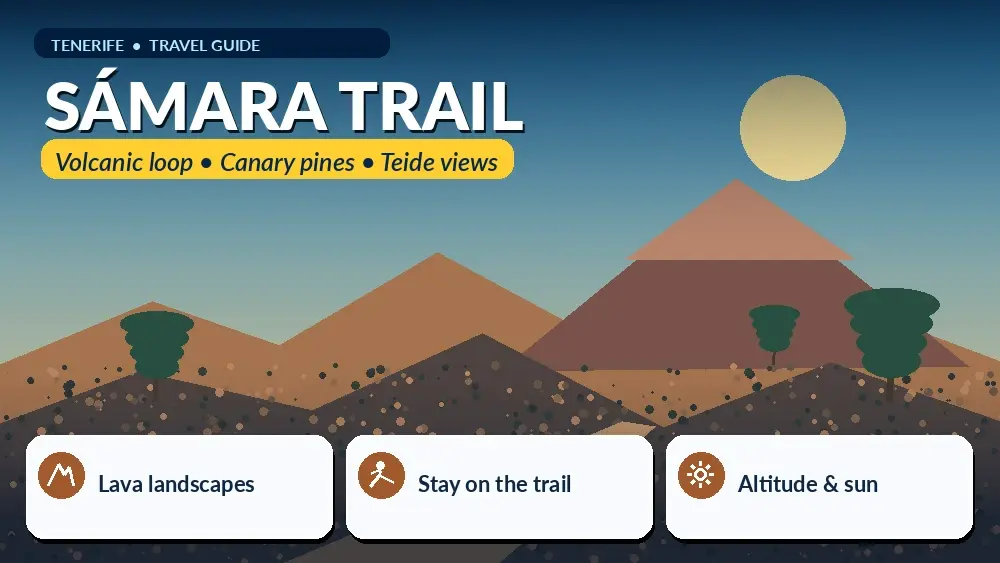
    The Sámara trail is one of the Teide National Park walks I recommend when I want volcanic drama without an all-day mountain objective. The circular route starts at Mirador de Sámara and crosses dark pyroclastic terrain between Canary pines, with broad views toward Teide, Pico Viejo and younger volcanic cones.

    Official Tenerife tourism information lists the loop at 5.1 km, about 2 hours 45 minutes, 308 metres of ascent and a maximum elevation of 2,103 metres. It is graded low difficulty and does not normally require authorisation, but altitude, sun and wind still deserve serious preparation.

    Quick planning facts

    Trail13 Sámara
    Start/finishMirador de Sámara
    Distance5.1 km circular
    Official durationAbout 2 h 45 min
    DifficultyLow
    Maximum elevation2,103 m
    AscentAbout 308 m
    AuthorisationNot normally required

    Why Sámara is one of my favourite short Teide walks

    The Sámara trail gives me three classic Tenerife landscapes in one manageable loop: dark volcanic cones, Canary pine forest and views toward Teide and Pico Viejo. The official trail page lists a 5.1 km circular route with about 308 metres of ascent and a typical duration of 2 hours 45 minutes.

    The difficulty is officially low, but altitude changes how a walk feels. The route runs between roughly 1,873 and 2,103 metres, so sun, wind and thinner air matter more than the modest distance suggests.

    Official route facts and terrain

    Turismo de Tenerife describes the trail as running over dark pyroclastic material, including lapilli and scoria, with small gradients that are generally easy to negotiate. The surface can still be loose, so I prefer hiking shoes over smooth-soled trainers.

    An official detail I like is that no authorisation is required for trail 13 Sámara. That does not remove the need to respect temporary closures, fire restrictions or protected-area rules.

    Starting at Mirador de Sámara

    The route starts and ends at Mirador de Sámara. I arrive early because roadside trailheads can become awkward when many cars appear at the same time, and I never create a new parking space on vegetation or soft volcanic ground.

    I take a few minutes at the viewpoint before walking. Seeing the line of cones and the scale of the western Teide landscape helps me understand what the trail is about.

    Altitude, sun and wind

    At more than 2,000 metres, UV exposure is intense even on cool days. I carry more water than I expect to drink, use sunscreen and bring a windproof layer. In winter I check for cold, ice or snow-related restrictions before driving up.

    My Mount Teide guide explains altitude and weather planning in more detail, while Tenerife weather by month helps with seasonal expectations.

    Photography and volcanic colours

    Sámara is especially photogenic because black and rust-coloured cones contrast with green Canary pines and the pale summit landscape. Morning and late afternoon give the terrain more shape, but I prioritise safe daylight over chasing a perfect image.

    I stay on the route even when a nearby cone looks easy to climb. Fragile volcanic surfaces recover slowly from repeated shortcuts.

    Who I recommend it to

    I recommend Sámara to travellers who want a real Teide National Park walk without committing to a summit-style day. It also works well for active families with older children who are comfortable on uneven ground and at altitude.

    For an even easier introduction I compare it with Roques de García. For a harder high-level hike I look toward Guajara.

    Official trail source

    I plan with the official Sámara trail page, which provides distance, duration, elevation and authorisation status. On the day, I also check Teide National Park alerts and weather.

    Teide National Park Desert Landscape Tenerife

    Protected-area rules can change temporarily because of fire risk, snow, maintenance or conservation. Current signage always outranks an older itinerary.

    A simple half-day plan

    • Drive up early and stop only at legal viewpoints.
    • Walk the Sámara loop at a steady pace with water breaks.
    • Have lunch or a picnic only where permitted.
    • Continue to a different Teide viewpoint rather than adding another long hike.
    • Descend before fatigue turns the mountain road into work.

    This leaves margin for weather and makes the trail the centre of the day rather than one item in a rushed checklist.

    How I fit it into a realistic Tenerife day

    I treat the Sámara trail as part of a wider Teide National Park day rather than an isolated pin on the map. Tenerife looks compact, but mountain roads, parking searches and changing weather can turn short distances into slow travel. I decide in advance which stop is the priority and which stops are optional.

    My preferred approach is to pair it with Roques de García, western Teide viewpoints or Santiago del Teide. That creates a day with contrast without spending most of the time in the car. I also keep one backup plan nearby in case wind, cloud, surf or temporary access restrictions change the experience.

    Weather, clothing and microclimates

    I never use a single Tenerife forecast for the whole island. North-coast cloud, Anaga mist, Teide sunshine and south-coast heat can all occur on the same day. I check the forecast for the exact municipality and, for mountain or coastal activities, I also look at wind and sea conditions.

    Even on warm days I carry sun protection, water and a light layer. At higher elevations I add a windproof layer, while on the coast I bring footwear with grip because volcanic rock, wet steps and black sand can all be slippery or hot.

    Responsible travel habits I use here

    Small beaches, villages, viewpoints and trailheads are shared local spaces. I park only where it is legal, keep access to homes and farm tracks clear, take rubbish away and avoid turning narrow roads into informal photo stops. In protected areas I stay on the marked route and never collect volcanic material, plants or other natural objects.

    I also prefer to support the area in a simple way: a coffee, lunch, market purchase or locally made product is often a better souvenir than something generic. Respectful travel is mostly about ordinary decisions that reduce pressure on places I want to remain enjoyable.

    My backup plan when conditions are wrong

    If the sea is rough, I do not force a swim. If a viewpoint is inside cloud, I move lower or switch to a village, museum or food stop. If parking is full, I continue to the next planned place rather than circling residential streets. This flexibility is especially useful in Tenerife because very different landscapes sit close together.

    I build the day around one must-do experience and several optional stops. That structure produces better trips than trying to complete a rigid checklist, and it makes it easier to respond to closures, weather and local events without feeling that the day has failed.

    Frequently asked questions

    Do I need a permit for the Sámara trail?

    The official trail page states that authorisation is not required, although temporary closures or restrictions can still apply.

    Is Sámara suitable for beginners?

    It is officially graded low difficulty, but beginners should still be comfortable with loose volcanic terrain, sun and altitude.

    How long does it take?

    The official estimate is about 2 hours 45 minutes for the 5.1 km loop.

    Can I see Teide from the trail?

    Yes. The route offers broad views of Teide, Pico Viejo and surrounding volcanic cones.

    What shoes should I wear?

    I use hiking shoes or trail shoes with grip because lapilli and scoria can be loose underfoot.

    Questions I ask myself before I go

    I check four things before leaving: current access, exact weather, realistic travel time and what I will do if the first plan fails. Tenerife is an easy island to underestimate because distances look short on a map. A mountain road, coastal traffic or a full car park can add far more time than expected.

    I also decide whether the destination is the purpose of the day or simply one stop. When it is the main purpose, I leave enough time to experience it slowly. When it is secondary, I set a clear limit so the rest of the itinerary does not become rushed.

    What makes this worth adding to a longer Tenerife trip

    The strongest Tenerife itineraries mix famous landmarks with smaller places and experiences. Teide, Anaga and the main beaches explain the island at a large scale, while a local pool, rural trail, village festival or food tradition explains how people actually use and understand the landscape.

    I therefore do not judge a place only by the number of attractions. A short viewpoint can be valuable if it helps me read the geography; a small village can be memorable if I slow down for lunch; a modest trail can reveal volcanic history better than a long drive through the same area.

    Practical travel habits that improve the day

    I download maps or save the route before entering areas with weaker mobile coverage. I start with a full bottle of water, keep a layer in the car, carry some cash for small local businesses and avoid planning every meal at the most obvious tourist time. These are small habits, but they make rural Tenerife much easier.

    I also leave more space between stops than a navigation app suggests. That time absorbs photo stops, roadworks, wrong turns and simple curiosity. The best travel days on Tenerife often improve when I have enough margin to stop somewhere I had not planned.

    My final take

    Sámara is my kind of Teide walk: short enough to fit a flexible day, but visually strong enough to feel like a genuine mountain experience. I give it respect for altitude and weather, stay on the route and let the volcanic landscape provide the drama.

  • Teide Observatory Guide: Tours, Altitude, Weather and Visit Tips

    Teide Observatory Guide: Tours, Altitude, Weather and Visit Tips

    The Teide Observatory is one of the places I would add when I want to understand why Tenerife is internationally important for astronomy, not just admire a dark sky. The observatory at Izaña is an active scientific facility operated within the Instituto de Astrofísica de Canarias network. That matters: visits are controlled around research, weather and safety rather than functioning like a museum where I can simply walk in.

    The IAC’s current 2026 visitor information says private and group visits require prior reservation. Its 2026 open days were held on 20–21 June and filled completely. The IAC also notes that visits can be affected by adverse weather, while commercial guided daytime visits currently advertise an approximate 1 hour 30 minute experience, minimum age of eight and arrival at least 30 minutes before the scheduled start. I would always re-check the official booking page because prices, calendars and access rules can change.

    Quick planning facts

    LocationIzaña, Tenerife highlands
    AltitudeAbout 2,400 m
    Type of placeActive astronomical research observatory
    Walk-in visitsNo — I would book an authorised visit in advance
    Typical guided daytime visitAbout 1.5 hours according to the current visitor operator
    Age noteCurrent guided visitor information excludes children under 8

    My first source would be the IAC Teide Observatory visits page. For the bookable public daytime tour, I would also check the current guided Observatory visit information.

    Why the observatory is worth adding to a Tenerife trip

    Stargazing from a viewpoint and visiting a research observatory are different experiences. A night under the stars is emotional and visual; the observatory adds instruments, scientific context and an explanation of how astronomers actually study the Sun and universe.

    I would choose the observatory if I am curious about science, travelling with older children or teenagers, or already planning a Teide day and want one structured activity. I would not choose it merely because it sits near Teide; the visit makes most sense when the astronomy itself interests me.

    What a guided daytime visit can include

    The current commercial daytime visit describes solar observation through filtered telescopes, entry into a night-sky telescope and an astrophysics workshop, subject to operational conditions. I would treat the exact telescope access as variable because this is a working observatory. Research priorities and weather can affect what visitors see.

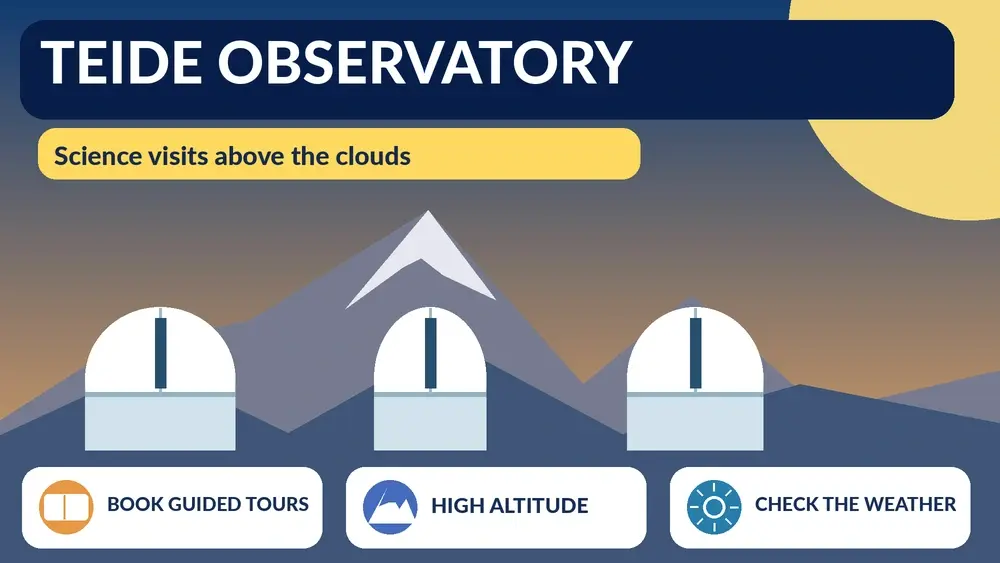
    Illustrated guide: Teide Observatory, with practical visitor tips
    Illustrated guide: Teide Observatory.

    I would listen more than photograph. The value is understanding instruments, wavelengths, solar observation and why the Canary Islands have become such important astronomy locations.

    Booking: do not arrive hoping to improvise

    I would book before driving up. The IAC explicitly requires prior arrangements for visitor access, and the open days can fill quickly. This is not an attraction where I would rely on same-day availability.

    I would save the confirmation offline and bring the identification required by the operator. Current guided-tour information says visitors should arrive at the access gate at least 30 minutes early. I would build a larger buffer because mountain roads and parking take longer than a flat city journey.

    Altitude: the detail I would take seriously

    The observatory is around 2,400 metres above sea level. At that altitude some people notice shortness of breath, headache or fatigue. Current visitor information advises against the visit for people with certain health problems such as heart, respiratory issues or anaemia and notes that the site has walking on paths and stairs.

    If I had any medical concern about altitude, I would ask my own healthcare professional rather than rely on a travel article. I would also move slowly, drink water and avoid arriving dehydrated after a long hike.

    Accessibility and mobility

    The current guided daytime tour says it is not recommended for people with reduced mobility because the visit involves paths and stairs. That is an important distinction from a museum-style attraction. I would contact the operator before booking if mobility needs are significant.

    I would never assume that “low difficulty” means fully accessible. Difficulty describes physical effort broadly; accessibility depends on surfaces, steps and site design.

    Children: check the age rule

    Current public guided-tour information says children under eight are not allowed on the daytime Observatory visit. I would verify that rule at booking because it may apply differently to special educational programmes or future events.

    For older children, I would prepare them with a simple explanation of what they will see. An observatory visit becomes more interesting when a child already understands that the telescopes are research instruments rather than giant binoculars for tourists.

    Weather can cancel the visit

    High-altitude weather is not the same as resort weather. The operator specifically warns that snow, ice, rockfall risk and other adverse conditions can affect access and lead to cancellations. I would keep the rest of my mountain day flexible and never schedule the Observatory immediately before a flight or another inflexible commitment.

    If the tour is cancelled, I would not try to access the facility independently. I would switch to lower-altitude plans or another Teide viewpoint only if roads and authorities indicate conditions are safe.

    What to wear

    I would bring closed shoes, layers, sun protection and a windproof outer layer. Even when the coast is hot, Izaña can feel much cooler and windier. Strong sun at altitude is another reason to use sunscreen and sunglasses.

    I would avoid arriving in beachwear because the visit involves walking around a scientific facility at elevation, not relaxing at a resort.

    Getting there

    Current visitor information says access requires private transport or a booked transfer service for the guided visit, and bicycles are not permitted inside the facility. If I use a taxi, I would clarify the return arrangement because the driver may need to wait outside until the activity ends.

    For most visitors, a rental car or organised transfer is simplest. My getting around Tenerife guide explains the broader transport options.

    Combining the Observatory with Teide National Park

    This is the obvious combination, but I would not overbook. I would choose either a major Teide hike or the Observatory as the structured centre of the day, then use viewpoints and short walks around it. Trying to fit a summit permit, cable car, full observatory tour and sunset stargazing into one day can become exhausting.

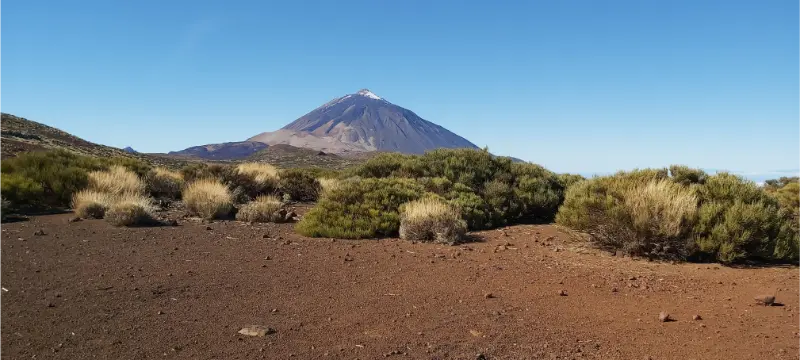
    Mount Teide behind an open volcanic plain and low scrub

    My Mount Teide guide and Roques de García guide help build a realistic route.

    Observatory visit versus stargazing tour

    If I want science and instruments, I would choose the Observatory. If I want a night experience under dark skies, constellations and visual observing, I would choose a stargazing activity. They complement each other but are not substitutes.

    My stargazing in Tenerife guide explains night-sky planning, clothing and location choices.

    2026 open days: useful context, not a permanent schedule

    The IAC held 2026 open days on 20 and 21 June, free in Spanish and lasting three hours, and the places filled. I would mention this only as an example of how special access works, not as something future visitors can use. Open-day dates change by year.

    If I am planning for another year, I would monitor the IAC’s official announcements rather than copy the 2026 dates into my calendar.

    Where to stay

    I would not choose a hotel solely to be near the Observatory because the highland site is not a normal accommodation zone. La Laguna, Puerto de la Cruz, Santa Cruz or southern resorts can all work depending on the rest of the itinerary.

    For a mountain-focused trip I would compare Tenerife accommodation on Booking.com and choose based on the full holiday, not one 90-minute activity.

    Photography and behaviour at an active observatory

    I would follow staff instructions about where photography is allowed. Research facilities have operational areas, equipment and safety rules that are not negotiable for a visitor. I would not wander away from the group for a better image.

    I would also keep noise and phone use under control during explanations. The point is to understand the facility, not simply collect a photograph of a dome.

    Common mistakes I would avoid

    • Driving up without a confirmed reservation.
    • Underestimating the effect of 2,400 m altitude.
    • Wearing only beach clothes because the coast is hot.
    • Arriving late and expecting the tour to wait.
    • Combining too many fixed Teide activities in one day.
    • Assuming the observatory is a public viewpoint that can be entered freely.

    Frequently asked questions

    Can I visit Teide Observatory without booking?

    I would not plan on it. The IAC requires prior arrangements for visitor access, and public tours are reservation-based.

    How high is the observatory?

    About 2,400 metres above sea level.

    Can young children visit?

    The current guided daytime visitor information excludes children under eight. I would confirm the rule for the exact activity booked.

    How long does the visit take?

    The current commercial daytime guided visit is advertised at approximately 1 hour 30 minutes, while special open-day programmes can be longer.

    Can bad weather cancel the visit?

    Yes. High-altitude road and site conditions can lead to cancellations for safety.

    My final take

    The Teide Observatory is most rewarding when I visit with the right expectation: this is a working scientific facility that happens to allow carefully managed public access. I would book ahead, respect altitude and weather, arrive early and use the experience to add scientific depth to a Teide day rather than treating it as another quick sightseeing stop.

  • Best Day Trips from Costa Adeje: Teide, Masca, Anaga, La Gomera and More

    Best Day Trips from Costa Adeje: Teide, Masca, Anaga, La Gomera and More

    Costa Adeje is a comfortable base, but I would never spend an entire Tenerife trip only on its seafront. The island’s strongest experiences are scattered across the highlands, north coast, Anaga and Teno. The good news is that many work as day trips if I group places logically and accept that mountain roads are slower than the map suggests.

    This guide starts from the assumptions in my Costa Adeje guide. I focus on realistic day trips rather than “see the whole island in a day” routes. Some excursions are easiest with a rental car, others make more sense as organised tours or by ferry.

    Teide National Park: the essential first day trip

    Mount Teide is the day trip I would prioritise on a first visit. From Costa Adeje the drive climbs through Vilaflor or another mountain route into a landscape of lava, caldera walls and high-altitude viewpoints. Even without the cable car, the national park is extraordinary.

    I leave early, bring warm layers and check both road and weather conditions. If I plan to hike regulated high-mountain trails, I also verify permits on Tenerife ON. A cable-car reservation should have enough margin for the drive, because mountain traffic and viewpoint stops can easily slow me down.

    Masca and Teno: dramatic roads and mountain villages

    Masca is a beautiful excursion, but I separate “visiting the village” from “hiking the gorge.” The gorge is regulated and requires advance planning. A simple road trip can combine Santiago del Teide, Masca viewpoints and parts of Teno.

    Masca Village Tenerife

    The road is winding, and parking/access rules around Masca matter. I avoid creating a day that depends on finding a spontaneous parking space. For nervous drivers, an organised excursion can be more relaxing.

    Los Gigantes and whale watching

    Los Gigantes is an easy day trip from Costa Adeje and works especially well with a responsible whale-watching trip. The cliffs are impressive from land but even more dramatic from the water.

    I book the boat as the fixed anchor and keep the rest of the day flexible. A late-afternoon return to Costa Adeje is simple, or I stay for sunset around Puerto Santiago. This is one of the least tiring day trips on the list.

    La Laguna and Anaga: the best culture-and-nature combination

    The combination of La Laguna and Anaga gives the strongest contrast with Costa Adeje. I start in the UNESCO-listed historic centre, then drive into laurel forest and mountain viewpoints.

    I do not try to add Taganana, Benijo, every mirador and a long hike to the same day unless I start very early. Anaga roads are slow. A better plan is one short forest walk, two or three viewpoints and either Taganana or the La Laguna centre as the main second focus.

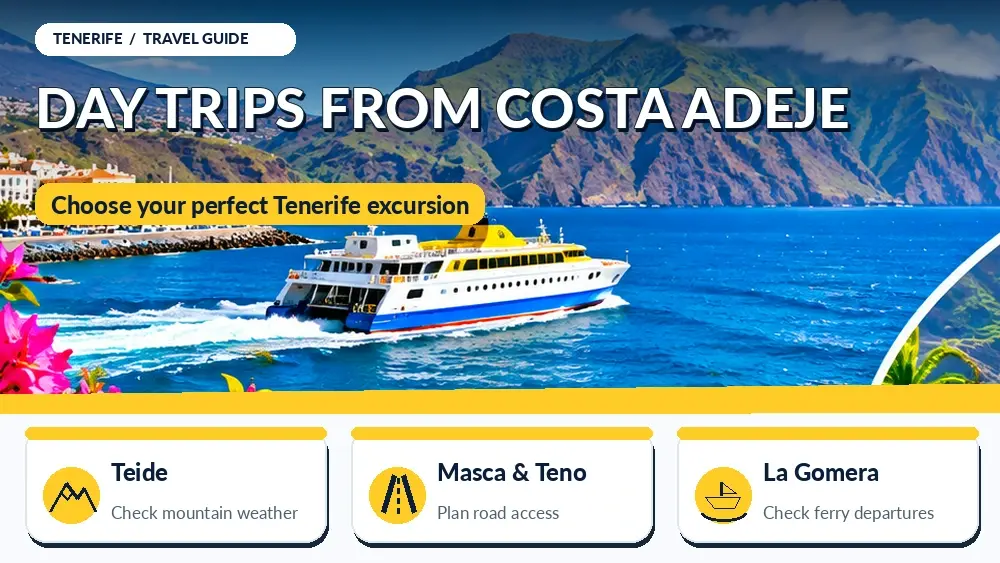
    Illustrated guide: Best Day Trips from Costa Adeje, with practical visitor tips
    Illustrated guide: Best Day Trips from Costa Adeje.

    Garachico, Icod and the northwest

    A classic northwest day combines Garachico with Icod de los Vinos. Icod brings the Drago Milenario and historic centre; Garachico adds volcanic history and natural pools. If time remains, I continue toward Buenavista rather than adding distant La Orotava.

    This route involves a longer motorway drive from Costa Adeje, but it is straightforward compared with Anaga mountain roads. I leave swimming in Garachico dependent on sea conditions and keep a walking alternative ready.

    La Orotava and Puerto de la Cruz

    La Orotava and Puerto de la Cruz fit naturally together. I spend the morning among La Orotava’s historic streets and gardens, then descend to the coast for lunch, Lago Martiánez, the seafront or Playa Jardín.

    This is a gentler day than a long mountain hike and works well when the south is hot. North-coast weather can be cloudier, so I pack a light layer and treat that contrast as part of the experience rather than a problem.

    Santa Cruz and Las Teresitas

    For shopping, architecture and an urban day, I go to Santa Cruz. After the market, Auditorio area and city centre, I continue to Las Teresitas for a swim or sunset.

    This trip works well by car or public transport. It also makes sense for travellers who do not want mountain driving. If Carnival is taking place, normal traffic and transport arrangements change considerably, so I plan around the event rather than treating it as a regular city day.

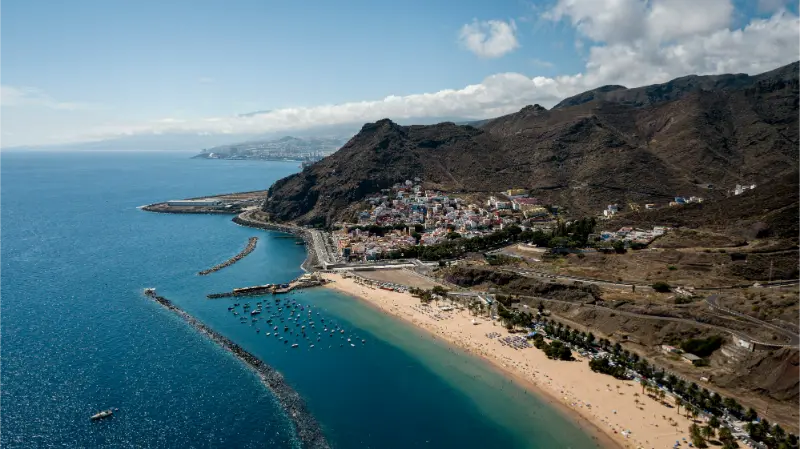
    The crescent of Las Teresitas and its breakwater below the Anaga mountains

    La Gomera: the island-to-island day trip

    Ferries from Los Cristianos make La Gomera possible as a long day trip. The attraction is not simply “another island”; Garajonay National Park, deep ravines and San Sebastián create a landscape and cultural history distinct from Tenerife.

    Because ferry times are fixed, I prefer an organised island tour or a very carefully planned rental-car day. I never book the last ferry connection as if delays were impossible. For a relaxed trip, one night on La Gomera is better than trying to see everything in a few hours.

    El Médano and the south-east coast

    For an easy half-day or low-stress day trip, El Médano offers a completely different south-coast atmosphere. The town has cafés, windsurfing culture and access to the Montaña Roja landscape and La Tejita beach.

    I choose it when I want less driving and more time outdoors. Wind is part of the local character, so beach conditions may be breezier than Costa Adeje. That is good for watersports and less ideal for a calm sunbathing day.

    Which day trips work without a car?

    Los Gigantes, Santa Cruz, La Laguna, El Médano and Puerto de la Cruz are all possible using public transport, though journey times vary. Teide is more complicated without a car and often easier as an organised excursion. My Tenerife without a car guide explains the basics.

    I compare the real door-to-door time, not just the distance. A tour can be better value than multiple buses when it includes remote viewpoints; public transport is better when I want a city day with no fixed programme.

    Masca Mountain Valley Tenerife

    How many day trips would I do in one week?

    On a seven-night Costa Adeje stay, I usually plan three substantial excursions and leave the other days for beaches, local walks and flexible plans. Teide, one north/northwest day and one Anaga or La Gomera day create plenty of variety.

    Doing a full-day road trip every day defeats the reason for staying in Costa Adeje. I like using the resort comfort as a recovery base, not merely a place to sleep between twelve-hour drives.

    Renting a car for day trips

    A rental car gives the most freedom for Teide, Teno and the northwest. My Tenerife by car guide covers mountain-road habits, parking and route planning. I book a vehicle only for the days I genuinely need it if the rest of the holiday is resort-based.

    Fuel distances are modest, but driving hours add up. I avoid planning Teide, Masca and Anaga on consecutive days if I am the only driver. A rest day by the beach makes the next excursion more enjoyable.

    Organised tours: when they make sense

    Tours are particularly useful for Teide without a car, a first visit to Masca, and La Gomera when I want transport logistics handled. They also let everyone in the group enjoy mountain scenery instead of one person concentrating on hairpin bends.

    Masca Valley Panoramic View Tenerife

    I read the itinerary carefully. Some “island tours” spend most of the day in a bus and only minutes at each stop. I prefer fewer stops with meaningful time over a long list of place names.

    Practical planning notes

    Before I build a day around best day trips from Costa Adeje, I check opening or access conditions, the weather in the exact part of the island, transport for the return journey and how much walking the day really involves. Tenerife rewards flexible planning because coast, mountain and urban conditions can differ sharply. I keep one alternative nearby instead of replacing a cancelled plan with a long drive to the opposite side of the island.

    I also leave more time for meals and parking than a map suggests. Historic centres, beach promenades and mountain trailheads all become slower at popular times. An itinerary with some empty space usually produces better travel experiences than one that requires every transfer to work perfectly. When official restrictions or warning signs conflict with my original plan, I change the plan rather than looking for a workaround.

    For accommodation, I pay attention to the real route from the property to the places I expect to use every day. Tenerife has steep streets, large resort zones and rural roads where a short straight-line distance can hide a significant climb or an inconvenient walk. Reading the map at neighbourhood level is one of the simplest ways to avoid a poor base.

    Final thoughts

    Costa Adeje is one of Tenerife’s easiest bases precisely because so much of the island is reachable from it. The key is choosing a few day trips that are genuinely different rather than repeating similar coastal stops.

    For a first trip I would choose Teide, a north or northwest route, and either Anaga or La Gomera. That combination shows volcanic highland, historic Tenerife and a completely different landscape without turning the holiday into a race.

  • Tenerife for Couples: Romantic Places, Hotels, Beaches and Experiences

    Tenerife for Couples: Romantic Places, Hotels, Beaches and Experiences

    Tenerife for couples works because the island can change mood several times in one day. A morning can begin with coffee in a historic town, continue through volcanic highlands and end with sunset beside the Atlantic. I would not build a romantic trip around a checklist of “couples attractions”; I would build it around privacy, beautiful settings and enough unscheduled time to enjoy being there together.

    The right base depends on the couple. Some want a luxury hotel and beach club, others prefer a rural house, a surf town or a walkable historic centre. Tenerife offers all of those without requiring a different island.

    Best areas for a couples trip

    Costa Adeje is the obvious choice for upscale hotels, spas, good restaurants and easy beach days. La Caleta feels quieter and more food-focused. El Médano suits couples who prefer a casual local atmosphere. Puerto de la Cruz combines gardens, old streets and the north-coast landscape. My where to stay in Tenerife guide compares the areas in detail.

    I choose the hotel by how we expect to spend evenings. A beautiful property far from restaurants can be perfect if we want resort time, but frustrating if we picture spontaneous walks to dinner every night.

    A romantic Teide day

    Teide is one of the strongest couples experiences because the landscape feels genuinely different from the coast. I drive through the pine forest, stop at selected viewpoints and leave time to sit rather than rushing from car park to car park. My Teide guide explains cable-car and permit planning.

    For a special evening, I combine sunset with stargazing, using the practical advice in my stargazing guide. Warm clothes matter; romance fades quickly if both people are shivering in beachwear at 2,000 metres.

    Illustrated guide: Tenerife for Couples, with practical visitor tips
    Illustrated guide: Tenerife for Couples.

    Sunset without the crowds

    I do not chase only the most famous Instagram viewpoint. A quieter coastal promenade, a legal roadside mirador or a terrace near the accommodation can be more enjoyable than competing for parking at a viral spot. The best sunset is one where we can stay for the changing light without watching the clock.

    On the west coast, the Los Gigantes area can be dramatic; in the south, the long promenade offers easy options; in Anaga, I prioritise a safe drive back before darkness if mountain roads are unfamiliar.

    Beaches for two different moods

    For an easy swimming day I choose a serviced beach such as Playa del Duque or Las Vistas when conditions are calm. For scenery I might visit Benijo without expecting a swim. My best beaches guide separates practical bathing beaches from wild landscape beaches.

    I avoid pretending that secluded automatically means better. Remote beaches can involve difficult access, strong surf and no facilities. Sometimes a comfortable sunbed, lunch nearby and a sunset walk are exactly the romantic day we want.

    Whale watching as a shared experience

    A small-group responsible whale-watching trip can be a memorable couple activity, especially when the operator focuses on wildlife rather than party music. I follow my whale-watching guide and look for authorised, responsible providers.

    Couple Exploring Tenerife

    I choose a morning or late-afternoon slot according to sea conditions and our tolerance for motion. I never book wildlife with a guarantee mindset; the experience is about being at sea in an important cetacean habitat, not collecting a promised photograph.

    Wine, food and guachinches

    A winery visit is a natural couples day if neither person needs to drive afterward. Tenerife’s volcanic soils and multiple wine regions make tasting more interesting when the producer explains altitude and grape varieties. My wine guide helps plan the region.

    For a casual meal, a guachinche can be more memorable than formal dining. My food guide covers local dishes. I mix one special restaurant with simple local meals rather than making every dinner an expensive event.

    Historic towns for a slower day

    La Laguna, La Orotava and Garachico are ideal when we want to walk, talk and stop for coffee without a strict timetable. Each has a different feel: UNESCO urban history in La Laguna, balconies and valley views in La Orotava, and volcanic coastal history in Garachico.

    I choose one or two towns in a day, not five. Couples trips improve when there is time to notice details instead of spending the afternoon getting in and out of a car.

    A spa or hotel day is not wasted time

    On a seven- or ten-night trip, I deliberately schedule half a day with no sightseeing. A spa, pool, long breakfast or private terrace can be part of the destination, especially after hiking or driving days.

    When choosing accommodation, I decide whether I will actually use resort facilities. If yes, paying a little more for the right hotel can produce better value than booking a basic room and then paying separately for every leisure activity. You can compare romantic and adults-focused stays in Tenerife while checking current guest reviews.

    Active couples: hiking and water sports

    For active couples I combine one mountain walk with one ocean activity. Anaga offers forest hiking, Teno gives rugged western landscapes, and El Médano is the obvious base for wind sports. My hiking guide and snorkeling and diving guide help choose realistic levels.

    I do not turn shared adventure into pressure. If one person is a confident diver and the other is not, a beginner session or boat day may be more enjoyable than forcing identical activities.

    Where I would stay for an anniversary or honeymoon

    For a special occasion, I prioritise room quality, quiet at night, breakfast and the immediate surroundings. A sea view matters only if the room orientation and balcony genuinely allow us to use it. I read recent reviews for construction noise and entertainment schedules.

    I also tell the hotel about a real anniversary or honeymoon when booking, but I never assume a free upgrade. If a specific room category matters, I book it rather than hoping for a surprise.

    A four-day couples plan inside a longer holiday

    My favourite sequence is: relaxed south-coast day, Teide and stars, a historic north-coast day, then whale watching or a beach afternoon. After that, I let the rest of the holiday follow energy and weather.

    Couple On A Tenerife Beach

    This rhythm creates contrast without turning romance into logistics. The most valuable ingredient is often an empty evening.

    Couples without a car

    A no-car couples holiday is easy from a walkable southern resort or Puerto de la Cruz. I use buses for cities and major corridors, taxis for occasional evenings and organised tours for a mountain day. My no-car guide explains the trade-offs.

    Not driving can actually improve a wine or nightlife evening because neither person has to stay sober for the return. I include transport in the activity budget rather than treating it as an afterthought.

    What I avoid on a romantic trip

    I avoid overbooking dinner reservations every night, changing hotels too often and planning sunrise after a late night simply because a social-media itinerary says to. I also avoid remote sunset drives if the driver is uncomfortable on mountain roads in darkness.

    A romantic itinerary should reduce friction. Fewer transitions, better timing and a room we genuinely like are more important than the number of attractions visited.

    Frequently asked questions

    Is Tenerife good for couples?

    Yes. The island combines beaches, mountain scenery, restaurants, wineries, historic towns and upscale resorts, so couples can build very different styles of trip.

    Which area is best for couples?

    Costa Adeje is convenient for upscale resort stays, while La Caleta, El Médano, Puerto de la Cruz and rural areas suit different moods.

    What is the most romantic Tenerife experience?

    There is no single answer, but Teide sunset and stargazing, a quiet coastal dinner, winery visit or small-group boat trip can all work beautifully.

    Do couples need a car?

    Not necessarily. A walkable resort plus buses, taxis and selected tours can be easier if neither person wants to drive.

    How many nights are ideal?

    A week gives enough time for beach relaxation and several landscape days. Ten nights is even better if you want north and south without rushing.

    Photographs without turning the trip into a photo shoot

    I choose one or two places where we genuinely want photographs and keep the rest of the day normal. A small tripod or asking another visitor for one picture is enough. I avoid climbing barriers, entering private terraces or blocking viewpoints for staged images.

    Couple On Holiday In Tenerife

    The pictures I value most usually come from ordinary moments: coffee in La Laguna, wind in El Médano, a quiet bench above the ocean. Tenerife provides enough scenery that there is no need to manufacture drama.

    Planning a surprise without creating stress

    If I want to arrange a birthday dinner, proposal, private spa treatment or special excursion, I confirm the logistics directly with the venue and build spare time around it. I do not schedule the surprise immediately after a long mountain drive or a flight because delays turn romance into pressure. For restaurants, I mention dietary needs and whether an outdoor table depends on weather. For a proposal at a viewpoint or beach, I also respect access rules and other visitors rather than trying to reserve a public landscape for ourselves.

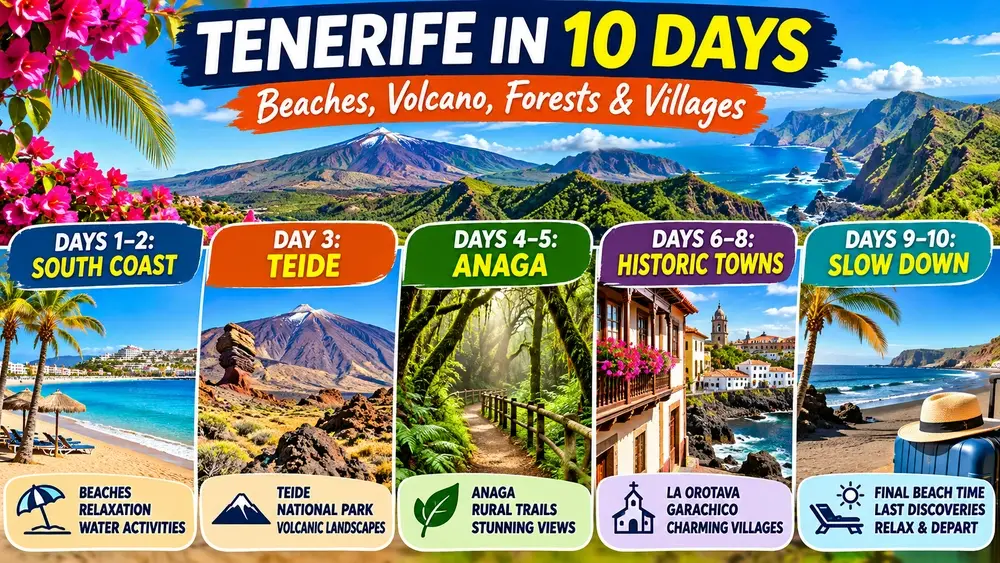
  • 10 Days in Tenerife: The Best Itinerary for Beaches, Teide, Anaga and Villages

    10 Days in Tenerife: The Best Itinerary for Beaches, Teide, Anaga and Villages

    Ten days in Tenerife is the length of trip where I stop feeling forced to choose between the island’s personalities. I can have resort beach time, spend a full day on Teide, explore Anaga, see historic towns, visit the northwest and still leave room for a weather change or a lazy afternoon.

    My ten-day itinerary is designed for a first visit, but it is deliberately modular. If you love hiking, you can replace a beach day with a trail. If you travel with children, you can substitute a major attraction. If food and villages matter more than nightlife, the same route works from a northern base.

    How I structure ten days

    I divide the trip into three types of day: major landscape days, cultural/coastal days and recovery days. Teide, Anaga and Teno require attention and driving; a beach day does not. Alternating them keeps the holiday enjoyable.

    I also keep one day partially uncommitted. Tenerife weather can be completely different north and south, and a flexible slot lets me move an important mountain plan to the clearest forecast.

    Days 1–2: arrive and understand the south

    Day one is for arrival, the promenade and an early dinner. Day two explores the southern coast more intentionally: Costa Adeje beaches, Los Cristianos harbour, a surf lesson near Playa de las Américas or El Médano depending on interests. The individual guides to Costa Adeje, Los Cristianos and Playa de las Américas help me choose.

    Illustrated guide: 10 Days in Tenerife, with practical visitor tips
    Illustrated guide: 10 Days in Tenerife.

    I resist the urge to begin with a two-hour cross-island drive. The south deserves at least one genuine day rather than being treated only as a hotel zone.

    Day 3: Teide National Park

    I use a clear day for Teide. If I have cable-car or summit plans, I follow the current rules and reservations in my Mount Teide guide. If not, I still spend time at the national park viewpoints and volcanic landscapes rather than simply driving across the caldera.

    I like the southern approach through Vilaflor. On the return I choose either an early descent or a planned stargazing evening; I do not accidentally turn a day trip into a midnight mountain drive.

    Day 4: La Laguna and Anaga forest

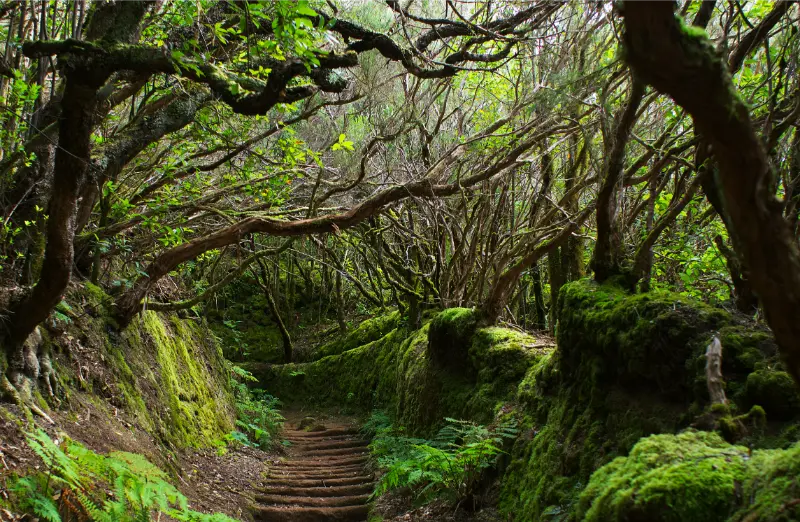
    I start in historic La Laguna and continue to the laurel forest of Anaga. A short trail plus selected viewpoints is enough. My Anaga Rural Park guide explains why this region is about atmosphere and landscape rather than collecting stops.

    If the weather is cloudy, I do not automatically cancel. Mist can make the forest beautiful, although visibility and trail conditions still matter. Heavy rain or official closures are different: I respect them and move the plan to the flexible day.

    Mount Teide Landscape Tenerife

    Day 5: Benijo, Taganana and the northeast coast

    With ten days, I can give the Anaga coast its own slower day instead of combining everything with La Laguna. I drive toward Taganana, eat locally and visit Benijo or nearby coastal viewpoints. My Benijo guide emphasises sea safety because this is an exposed Atlantic beach, not a guaranteed swimming spot.

    This day is one reason I like a longer trip. The northeast feels completely different from the resort belt, and its road deserves daylight and patience.

    Day 6: Puerto de la Cruz and La Orotava

    I spend a northern day between Puerto de la Cruz and La Orotava. I walk the old streets, stop for lunch and decide whether Lago Martiánez, a garden or another local attraction fits the group.

    I avoid adding Loro Parque automatically. It can take most of a day, so I treat it as an alternative full-day plan rather than an extra two-hour stop.

    Day 7: Garachico, Icod and the northwest

    Day seven moves west through the north. Garachico offers volcanic history and natural pools; Icod adds the Drago area and, with a separate reservation, the Cueva del Viento. The relevant guides are Garachico, Icod de los Vinos and Cueva del Viento.

    I choose two main experiences, not all three at full length. A cave tour has a fixed time, while a natural pool depends on sea conditions. The schedule should respect both.

    Day 8: Teno, Masca or Los Gigantes

    This is the western landscape day. I might visit the Teno highlands and Masca viewpoints, or take a boat from Los Gigantes. If I have a confirmed Barranco de Masca booking, that becomes the entire day. I follow the current access rules in my Masca guide rather than old blogs.

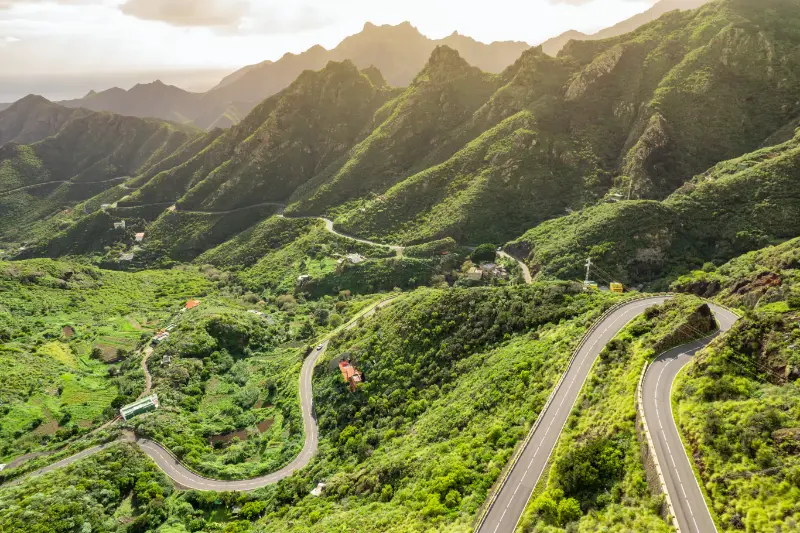
    Hairpin bends on the winding road through the Masca valley

    For an easier day, I use Los Gigantes as the base, enjoy the cliffs from sea level and perhaps book a responsible cetacean trip.

    Day 9: choose a signature experience

    I keep day nine for the activity that best matches the travellers: Siam Park, Loro Parque, whale watching, diving, a wine visit or a longer hike. This is where a ten-day trip becomes personal rather than generic.

    I also use this day as the weather reserve. If Teide was closed or Anaga had poor conditions earlier, the priority landscape gets this slot instead.

    Day 10: slow coast and departure preparation

    The final day should not feel like punishment for having travelled. I stay near the accommodation, swim if conditions are good, buy local products, organise luggage and prepare for the airport. If the flight is the following morning, I enjoy a final long dinner rather than adding another mountain circuit.

    A relaxed ending also gives a safety buffer if the rental car needs attention or someone realises a souvenir is still in the hotel safe.

    One base or two bases?

    With ten nights, I seriously consider splitting the stay. Five or six nights in the south and four or five in Puerto de la Cruz or La Laguna reduces repeated cross-island drives. You can compare Tenerife accommodation for a two-base itinerary and calculate the road time between the exact properties.

    The disadvantage is packing and check-in. For families with lots of luggage, one base may still be more comfortable. I choose based on how many north-side days are genuinely planned.

    Ten days without a car

    This itinerary can be adapted to public transport, but I simplify the mountain days and use organised excursions selectively. Teide tours, whale watching and La Gomera can be easier without a car, while La Laguna, Santa Cruz, Los Cristianos and Puerto de la Cruz are well connected. My Tenerife without a car guide explains the network.

    Anaga Laurel Forest Path Tenerife

    The key is not to reproduce a car itinerary bus for bus. Public transport works best when I stay in fewer areas and spend longer at each destination.

    How I would adapt it for families

    With children I reduce long drives and replace one cultural or hiking day with a major attraction. I also choose beaches with easier access and calmer conditions. My Tenerife with kids guide helps decide which areas make the best family bases.

    I never assume a child will enjoy a full day of viewpoints because adults do. A playground, pool or simple beach afternoon often creates the best balance.

    How I would adapt it for hikers

    Hikers can replace day two or day nine with a serious trail, but I leave recovery time after demanding elevation. My best hikes in Tenerife guide compares Anaga, Teide, Teno and forest routes.

    I check Tenerife ON and the relevant managing authority for restrictions before every mountain day. A route that was open when an article was written may be closed temporarily for weather, fire risk or maintenance.

    Food strategy for a ten-day trip

    I mix resort convenience with local meals. A guachinche or winery visit makes more sense on a northern or rural day than as a long evening drive after returning to the south. My Tenerife food guide and wine guide give me ideas without turning every meal into research.

    Garachico Historic Town Tenerife

    Ten days is long enough to learn the difference between tourist menus and everyday Canarian cooking. I leave some meals unplanned so local recommendations can change the route.

    Frequently asked questions

    Is ten days too long in Tenerife?

    No. Ten days is an excellent length for combining landscapes, towns, beaches and rest without rushing.

    Should I split the trip between north and south?

    It can be very efficient for ten days, especially if you plan several Anaga, Puerto de la Cruz and northwest days.

    Can I add La Gomera?

    Yes. A La Gomera day trip fits more comfortably into a ten-day schedule, although I would use the flexible day rather than stacking it on top of the plan.

    How many long driving days are there?

    In my version, roughly four to five days involve significant driving, separated by easier days.

    Do I need to book every day in advance?

    No. I pre-book capacity-limited experiences and keep ordinary towns, beaches and scenic drives flexible around weather.

    What I book before a ten-day trip

    I reserve accommodation, any essential Teide access, regulated hikes and must-do tours. I save restaurants, beaches and most towns for spontaneous decisions. This balance gives structure without locking ten consecutive days into prepaid times.

    I keep screenshots of reservations in one folder and note cancellation deadlines. With a longer trip, weather can force me to move activities, so flexible bookings are often worth a modest price difference.

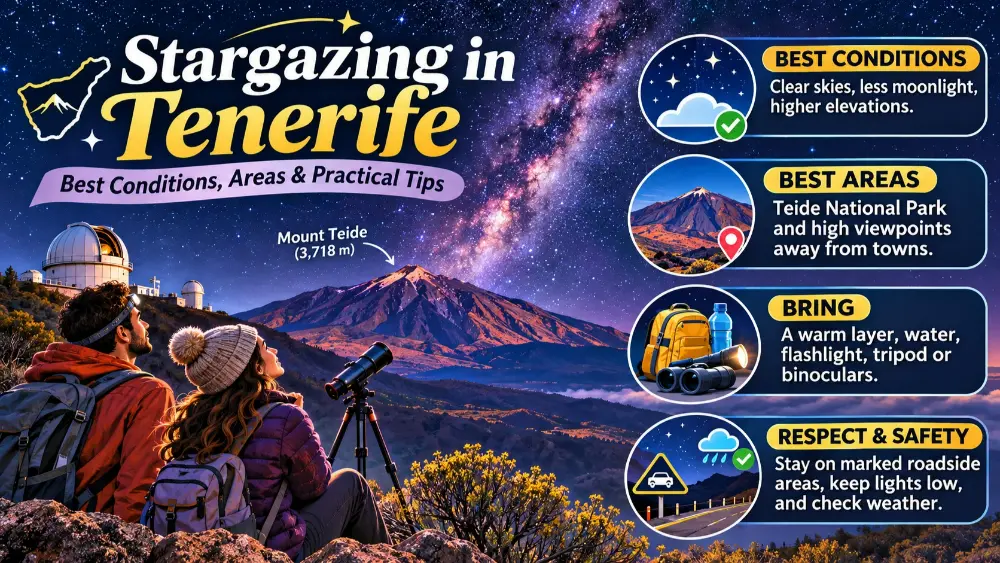
  • Stargazing in Tenerife: Teide Night Sky, Best Spots, Tours and Practical Tips

    Stargazing in Tenerife: Teide Night Sky, Best Spots, Tours and Practical Tips

    Stargazing in Tenerife is one of the experiences that makes the island feel bigger than a beach destination. Drive from the coast into the Teide highlands after sunset and the atmosphere changes completely: the temperature drops, much of the coastal light disappears below you and the volcanic landscape becomes almost abstract. On a clear night, even visitors who know little about astronomy can understand why Tenerife is internationally important for observing the sky.

    I plan a stargazing night with the same care as a mountain hike. I think about weather, moonlight, warm clothing, road fatigue and where I am actually allowed to stop. The goal is not to chase darkness into an unsafe roadside location; it is to enjoy the sky from a sensible place and return comfortably.

    Why Tenerife is so good for astronomy

    Tenerife benefits from altitude, relatively clean high-level air and a location near 28 degrees north. The official tourism information highlights the transparency of the sky and notes that the Teide Observatory sits at around 2,400 metres. The sea of clouds that often forms below the summit area can also help separate the highlands from coastal light.

    The island’s importance is scientific as well as touristic. The Teide Observatory is part of the Canary Islands’ astronomical infrastructure, and research teams from many countries use the archipelago’s observing conditions. For background, I use the official Tenerife astronomy page.

    Volcanic rock formations of Roques de García in Teide National Park

    Best areas for stargazing

    I focus on the Teide highlands rather than searching for darkness beside a resort. The official tourism site specifically mentions areas around the Parador and Montaña de Guajara as notable places for the night sky. I use established parking or observation areas and never leave the car on a blind bend or protected terrain.

    Vilaflor is useful as a base on the southern approach, while La Orotava gives access from the north. If I am staying in Costa Adeje, I allow enough time to climb gradually, enjoy sunset if conditions are right and stay after full darkness without rushing back. The mountain road is part of the plan, not dead time.

    Should you book a stargazing tour?

    A guided tour is worthwhile if you want telescopes, interpretation and less responsibility for choosing the observation point. A good guide can identify constellations, planets and deep-sky objects that a beginner might miss. Some tours combine sunset, astronomy and transport from the south, which can be especially useful if you do not want to drive mountain roads at night.

    Self-guided stargazing is also possible. The official Tenerife tourism site notes that visitors can observe on their own, but that does not mean every location is appropriate. I still check protected-area rules, weather and access. If I want a structured experience, I book with a reputable astronomy provider rather than someone promising unrealistic sightings.

    Illustrated guide: Stargazing in Tenerife, with practical visitor tips
    Illustrated guide: Stargazing in Tenerife.

    What you can see

    The visible sky changes through the year and from hour to hour. Planets move, the Moon changes phase and seasonal constellations rotate through the night. From Tenerife’s latitude, observers can see a broad range of northern and some southern celestial objects. The official tourism material even highlights Omega Centauri as one of the notable objects visible from the island under suitable conditions.

    I avoid writing a fixed list such as “you will see the Milky Way at 10 pm” because visibility depends on date, moonlight, clouds and direction. Before the trip I check an astronomy app or sky chart for the exact night.

    Moon phase matters

    A bright full Moon can be beautiful, especially over the volcanic landscape, but it washes out many faint stars. If my main goal is the Milky Way or deep-sky objects, I prefer a darker lunar phase. If my goal is simply a memorable night in Teide, I do not cancel because the Moon is bright; I change expectations.

    This distinction is important for photographers too. A moonlit volcanic landscape can be easier to photograph than an extremely dark foreground. The “best” night depends on whether you want stars, landscape detail or a guided telescope session.

    Weather and cloud

    Tenerife’s microclimates are famous, and they matter at night. The coast can be cloudy while the highlands are clear above the cloud layer, or mountain cloud can spoil an evening that looked perfect from the beach. I check high-altitude forecasts rather than only the weather icon for Costa Adeje.

    Wind matters as much as cloud. A clear but windy night can feel extremely cold and make long observation uncomfortable. I bring more insulation than I think I need and keep a flexible backup evening in the itinerary when stargazing is a high priority.

    What to wear

    I dress for mountains, not for a Tenerife beach holiday. Long trousers, closed shoes, a warm layer and a wind-resistant jacket are sensible year-round at altitude after dark. In colder periods I add hat and gloves. A thermos can be useful if you are staying out for hours.

    I also bring a red-light mode or dim light instead of shining a bright phone torch at everyone. Your eyes need time to adapt to darkness, and one strong white light can ruin that adaptation for the whole group.

    Driving at night

    Night driving is the part I take most seriously. The roads are paved and manageable for many visitors, but darkness, bends, altitude and fatigue change the task. I avoid alcohol entirely, drive more slowly than in daylight and never stop suddenly because I see a good photograph.

    If the driver is uncomfortable, an organised tour is a better choice. My Tenerife by car guide covers mountain-road habits, while Tenerife without a car explains why organised excursions can fill transport gaps.

    Teide Observatory visits

    The scientific observatory is not the same thing as a casual roadside stargazing stop. Visits, when available, operate through specific programmes and schedules. I book in advance and read the exact instructions rather than assuming I can arrive at the telescopes independently. Daytime observatory visits can complement a night-sky experience because they explain the science behind the location.

    Teide Observatory And Mount Teide Tenerife

    I also distinguish the observatory from the Teide cable car. They are separate experiences with separate logistics. For cable-car and summit planning, use my Mount Teide guide.

    Astrophotography basics

    For simple night-sky photography, stability matters more than expensive equipment. A tripod, manual control and a wide lens can produce excellent results. I focus carefully, use a timer or remote trigger and avoid walking with bright lights through another photographer’s frame.

    Phone cameras have improved dramatically, but I still prioritise the experience over endless attempts to reproduce professional astrophotography. The best memory can be the moment your eyes adjust and the sky becomes visibly richer.

    A good evening itinerary

    If I am starting in the south, I might have an early dinner in Vilaflor, continue toward Teide before sunset, stop only at legal viewpoints and remain in one observation area after dark. I keep the return route simple. If I am staying in Puerto de la Cruz, I approach from the north and avoid crossing the whole island twice in one evening.

    My Vilaflor guide is useful if you want a village stop before the night session. I do not combine a strenuous summit hike and a very late stargazing session unless the group is experienced and rested.

    Respecting the night environment

    Darkness is part of the resource you came to enjoy. I keep noise low, use minimal light, take rubbish away and stay on authorised surfaces. Protected landscapes are not empty spaces waiting for cars to spread out. If an area is closed, I choose another viewpoint.

    For the latest general information about astronomical tourism, I check the official Tenerife stargazing page before the trip.

    Where to stay

    Vilaflor is the obvious rural choice for serious stargazing, but you do not need to sleep in the mountains. Costa Adeje, Los Cristianos, Puerto de la Cruz and La Orotava can all work if you plan transport. I choose the base for the whole holiday, then dedicate one evening to the sky.

    You can compare accommodation across Tenerife and use the map to judge the drive to your preferred Teide approach.

    Frequently asked questions

    Can I stargaze in Teide without a tour?

    Yes, in suitable publicly accessible areas, but I still follow road and protected-area rules and choose established viewpoints rather than improvising.

    Is stargazing good every night?

    No. Cloud, wind, haze and moonlight change the experience. A flexible itinerary gives you the best chance.

    Is it cold at night?

    It can be much colder than the coast, especially with wind. I always bring warm layers even in summer.

    Do I need a telescope?

    No. The naked-eye sky can be spectacular. A telescope or guided session adds detail and interpretation.

    What is the biggest planning mistake?

    Underestimating the return drive. A safe, comfortable journey back to the hotel is part of a successful stargazing night.

    My simple checklist before leaving the hotel

    Before a stargazing evening I check four things: high-altitude cloud, wind, moon phase and the return driving time. If two of those look poor, I move the experience to another night rather than forcing it. I also download the route and any sky map before climbing because mobile coverage can be inconsistent in mountain areas.

    Tenerife Mountain Landscape And Moon

    I carry water, a warm drink, spare layers and a small torch with a red setting. If I am joining a tour, I still dress independently for the cold because operators cannot control personal temperature tolerance. Finally, I tell someone in the group exactly when we plan to leave the observation area. Night photography and telescopes can make time disappear, and fatigue is the hidden risk at the end of an otherwise beautiful experience. The best stargazing night is one you remember for the sky, not for an exhausting drive home.

  • Mount Teide Guide: Cable Car, Permits, Hiking and Practical Tips

    Mount Teide Guide: Cable Car, Permits, Hiking and Practical Tips

    Mount Teide dominates Tenerife physically and visually, but visiting it well takes more planning than simply driving toward the highest point on the island. The national park sits at high altitude, the weather can be completely different from the coast, parking and access can be busy, cable-car operation depends on conditions, and some trails require advance reservations. I treat a Teide day as a mountain excursion, even when the plan is mostly sightseeing.

    This guide explains how I would organise a first visit: the scenic drive, the best type of stops, cable car versus hiking, summit permits, clothing, altitude, children and the mistakes that can turn an extraordinary day into a stressful one.

    Why Teide deserves a full day

    Teide is Spain’s highest mountain and the centrepiece of a volcanic landscape that feels far removed from Tenerife’s beaches. The experience starts before you reach the cable car. Roads climb through changing vegetation, pine forest and eventually open high-altitude terrain. Once inside the caldera, wide lava fields, layered rock and the cone of Teide create views that change constantly with light and cloud.

    I would resist the temptation to schedule only a cable-car time and then drive back to the coast. The national park itself is the attraction. Scenic stops around Roques de García, viewpoints along the TF-21 and TF-24, and the contrast between different lava formations deserve time.

    How to reach Teide National Park

    Most independent visitors arrive by car from the south through Vilaflor or from the north through La Orotava, while the TF-24 route from the northeast can be especially scenic. Which road is best depends on your starting point and current conditions. Do not assume the fastest route in a navigation app will be the most enjoyable; on a first visit I often prefer to enter one way and leave another if daylight and weather allow.

    Public transport options exist but are more restrictive because schedules determine how long you can stay. If you are not comfortable with mountain driving, an organised excursion can be a sensible alternative. Whatever your transport choice, check official road, weather and park information before departure.

    Teide cable car: what it actually gives you

    The official cable car runs from a base station at roughly 2,356 metres to the upper station at La Rambleta, around 3,555 metres. The ride is short, but the altitude gain is huge. From the upper station, visitors can enjoy high-level viewpoints and permitted trails depending on current conditions. Reaching the upper station does not automatically mean you can walk to the summit.

    Teide Cable Car Tenerife

    The operator sells timed tickets online and warns that operation can be interrupted by weather, particularly wind. I would book in advance during busy periods but keep the wider day flexible. Do not build a flight, ferry or non-refundable evening event around the assumption that the cable car will operate exactly as planned.

    Check the current timetable and ticket conditions on the official Teide Cable Car website.

    Do you need a permit for the summit?

    Yes, access rules matter. The final route to the summit, Trail 10 Telesforo Bravo, is controlled and requires specific authorisation. In addition, Tenerife introduced reservation requirements for several high-altitude routes used by people ascending on foot toward La Rambleta. Rules, quotas and required equipment can change, so I would never rely on an old travel blog for this part of the trip.

    Before choosing a hiking plan, check Tenerife ON and the current National Park reservation system. Carry the required identification and confirmation, and read the equipment requirements attached to your specific route. A reservation is not just bureaucracy: the upper mountain can expose visitors to cold, wind, strong sun and difficult terrain.

    Cable car or hiking?

    OptionBest forMain consideration
    Scenic drive onlyMost visitorsNo altitude commitment beyond viewpoints
    Cable carBig views with less physical effortWeather-dependent; high altitude
    High-mountain hikeExperienced hikersReservations, equipment and fitness
    Guided experienceVisitors wanting structureHigher cost but simpler logistics

    There is no need to hike the summit to have a meaningful Teide experience. For many travellers, the scenic drive, Roques de García and a cable-car ride are more than enough. Hikers should choose a route because they are prepared for it, not because reaching the summit sounds like a box that must be ticked.

    Altitude: the part many visitors underestimate

    The upper cable-car station is above 3,500 metres. Even fit travellers can notice the altitude: breathlessness, headache, light-headedness or unusual fatigue. Walk slowly, avoid racing up steps for photographs and pay attention to how you feel. People with health concerns should seek appropriate medical advice before high-altitude activity.

    Children are another reason to plan carefully. The cable-car operator applies age and health restrictions to certain products and activities, and mountain conditions are not comparable with a beach excursion. For a family trip, I prefer a shorter, flexible Teide visit rather than trying to reproduce an adult hiking itinerary. More ideas are in my Tenerife with kids guide.

    Mount Teide Cable Car Tenerife

    What to wear and carry

    I always plan Teide clothing as if I am visiting a mountain in a different season from the coast. A warm or windproof layer, closed footwear, water, sunglasses and high-SPF sunscreen are basic items. If your reservation specifies technical equipment, that requirement overrides any generic packing list. Winter conditions can include ice or snow at altitude even when people are swimming on the coast.

    • Water and a snack, even for a mostly sightseeing day
    • Warm layer and wind protection
    • Sun protection: hat, sunglasses and sunscreen
    • Closed shoes with good grip
    • Phone with battery; offline maps are useful
    • Permit/reservation and identification when required
    • Any route-specific mandatory mountain equipment

    Roques de García and easy sightseeing

    Roques de García is one of the easiest ways to appreciate Teide’s geology without committing to the summit. The viewpoint area gives wide views of the caldera and distinctive rock formations. It can become crowded, so early or later daylight often creates a more pleasant experience. Even a short walk here can involve strong sun and uneven ground, so I would still carry water and proper shoes.

    If the cable car is closed, do not consider the day ruined. This is exactly why I build the itinerary around the landscape rather than one piece of infrastructure. Scenic viewpoints, short accessible stops and the drive itself can still make Teide one of the best days of the trip.

    Mount Teide Landscape Tenerife

    Sunset and stargazing

    Teide’s altitude and dark skies make the highlands attractive around sunset and after dark. The temperature drops quickly, traffic patterns change and you need to be more conservative with driving and walking. If stargazing is a priority, a guided experience can reduce the stress of choosing a safe location and understanding access rules.

    I would not combine a demanding high-altitude hike, sunset and a long night drive unless everyone in the group is comfortable with that schedule. It is better to choose the main goal of the day and leave enough energy for the descent.

    Best time of day

    There is no universal best hour because clouds, wind, season and reservations matter. Early starts can reduce crowds at popular stops, while later light can be beautiful for photography. Midday can be intensely bright. In winter, daylight is shorter and mountain conditions deserve extra attention. I check conditions the evening before and again in the morning rather than locking the plan weeks in advance beyond the reservations I actually need.

    Driving and parking strategy

    Parking around popular Teide stops is finite. Arrive with patience and never create your own parking space on protected ground or in unsafe road areas. If a viewpoint is full, continue to another legal stop and return later. On the way down, use lower gears where appropriate and do not let the scenery distract from mountain driving.

    If you are deciding whether to rent a car mainly for this day, read my getting around Tenerife guide. A car offers excellent freedom in the park, but only if the driver is comfortable with long climbs, bends and changing visibility.

    A Teide day I would recommend for a first visit

    1. Leave the coast after checking weather, road and cable-car status.
    2. Climb through a scenic route and stop at one or two legal viewpoints rather than every turnout.
    3. Spend time around the national park landscape before your booked cable-car slot.
    4. Use the cable car if operating and suitable for your group; follow only the trails allowed by your booking and current conditions.
    5. After descending, visit Roques de García or another major viewpoint.
    6. Return by a different route if practical and if you have enough daylight.
    7. Keep the evening light: altitude and driving can make the day more tiring than expected.

    Common mistakes I would avoid

    • Assuming the coast forecast describes Teide conditions
    • Buying a cable-car ticket and assuming it includes summit access
    • Arriving without the reservation or equipment required for a high-altitude trail
    • Wearing sandals because the day started at the beach
    • Planning too many attractions after Teide
    • Ignoring signs of altitude discomfort
    • Parking illegally when popular viewpoints are full

    How Teide fits into a Tenerife itinerary

    I normally place Teide near the start of a week-long trip but not on the first morning after a late flight. That leaves room to move the day if conditions are poor. In my 7-day Tenerife itinerary, the mountain is a major day rather than a short stop between unrelated attractions.

    The best Teide visit is not necessarily the one that reaches the highest point. It is the one that matches your fitness, reservations and weather while giving you time to understand the extraordinary volcanic landscape around you. Plan conservatively, use official information and let the mountain—not a checklist—set the pace.