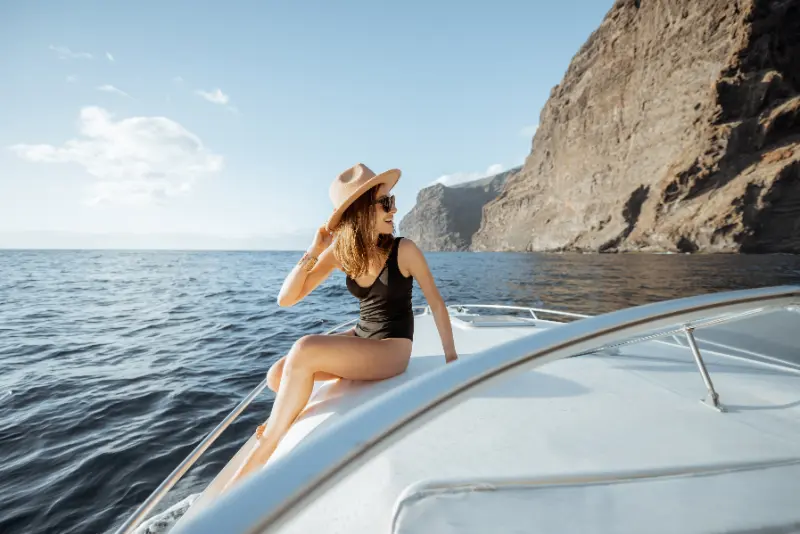
Whale watching is one of the Tenerife experiences I would choose even on a short first trip, but only if the excursion is run responsibly. The waters off the island’s southwest coast are known for resident cetacean populations, and boats depart from places such as Puerto Colón and Los Gigantes. That accessibility is a privilege, not a reason to chase animals aggressively, so the operator matters as much as the boat.
Tenerife’s official tourism guidance states that authorised whale-watching boats must respect rules including a minimum 60-metre distance, a maximum observation period of 30 minutes, reduced speed and no swimming with, feeding or touching the animals. I use those rules as a quick test when reading tour descriptions. Any marketing that promises behaviour inconsistent with the regulations is a reason for me to look elsewhere.
Where whale-watching trips leave from
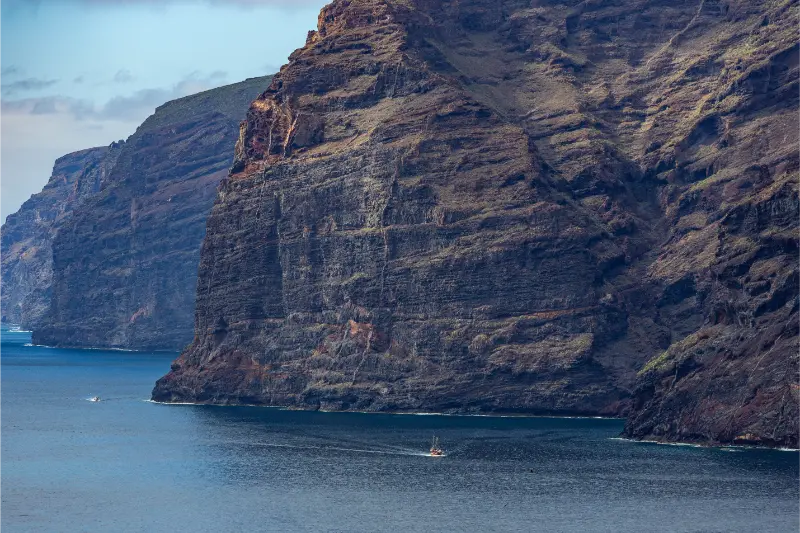
Puerto Colón in Costa Adeje is the most convenient departure point for many south-coast visitors. It has a large selection of excursions and is easy to combine with accommodation in Costa Adeje, Playa de las Américas or Los Cristianos. Los Gigantes is the alternative I like for travellers who want the dramatic cliff scenery to be part of the trip; the harbour is smaller and the setting feels very different.
I choose the departure port based on where I am staying rather than driving across the island for a small difference in ticket price. A 15-minute taxi to Puerto Colón can make far more sense than a long early drive to another marina. See my Los Gigantes guide and Costa Adeje guide for the two main bases.
What animals might you see?
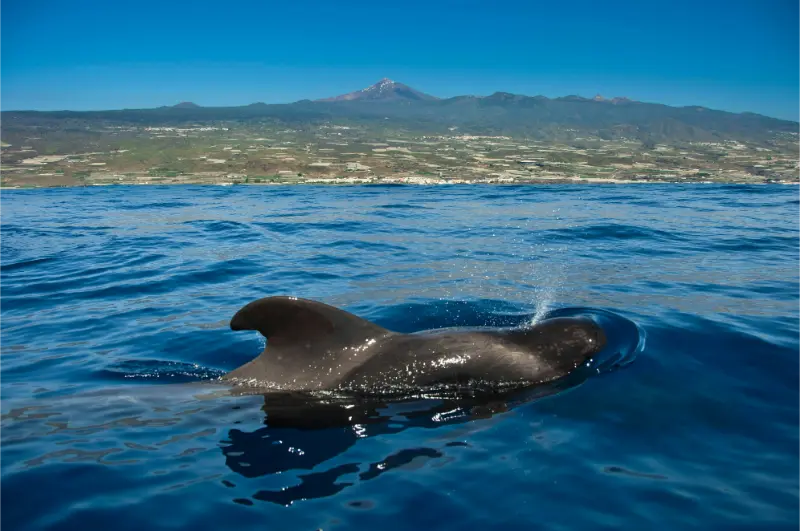
Pilot whales and bottlenose dolphins are strongly associated with the waters around Tenerife, while other species can appear depending on season and chance. I never treat a wildlife trip as a guarantee of a particular species or behaviour. The point is to observe wild animals on their terms. A good guide explains what is seen, how the animals behave and why distance matters instead of manufacturing excitement by forcing a closer encounter.
This is also why I prefer a trip with interpretation. A marine biologist or knowledgeable guide can turn a distant dorsal fin into a meaningful observation by explaining group structure, feeding, movement and acoustic behaviour. The experience becomes less about collecting photographs and more about understanding the marine environment.
How to choose a responsible operator
- Check that the vessel is authorised for cetacean-watching activity.
- Look for clear reference to distance, time and wildlife-protection rules.
- Avoid products that advertise touching, feeding or swimming with wild cetaceans.
- Prefer operators that explain what happens if animals are stressed or difficult to locate.
- Read the cancellation policy for rough-sea or weather decisions.
- Choose a boat size that matches your comfort, not only the cheapest fare.
Tenerife Tourism also promotes a voluntary sustainability charter for whale-watching companies. I consider participation a useful positive signal, but I still read the actual operating practices. Labels help; responsible behaviour on the water matters more.
Small boat or large catamaran?
Neither is automatically better for every traveller. A small boat can feel more personal, usually carries fewer passengers and may offer stronger interpretation, but movement is more noticeable and facilities can be limited. A large catamaran can provide more space, shade and toilets, which some families appreciate, but the experience may feel less intimate. I decide based on seasickness, children, mobility, trip length and how important commentary is to me.
| Boat style | Advantages | Think about |
|---|---|---|
| Small boat | Fewer passengers, personal guiding | More motion, fewer facilities |
| Catamaran | Space, shade, easier family comfort | Larger group atmosphere |
| Sailing boat | Quiet feel, smaller scale | Space and access can be limited |
| Private charter | Flexible group experience | Much higher cost |
How long should the tour be?
For most first-time visitors I like roughly two to three hours. It is long enough to leave the harbour area and enjoy the sea without making the boat the entire day. Longer cruises can include food, swimming stops or more coastline, but those extras are not the same as additional cetacean observation because regulated viewing time still applies.
With young children or anyone prone to motion sickness, I would choose the shortest format that still offers a proper wildlife experience. Four hours can feel very long when someone becomes uncomfortable after the first thirty minutes.
Seasickness: what I do
I check the marine forecast, eat a light meal, avoid excessive alcohol the night before and choose a position with fresh air and a clear horizon. If I know I am susceptible, I discuss appropriate prevention with a pharmacist or doctor before the trip rather than improvising medication at the harbour. I also tell the crew early if I feel unwell; they see seasickness regularly and can often suggest the best place to sit.
What to wear and bring
Even on a warm Costa Adeje morning, the boat can feel cooler and windier than the promenade. I bring sun protection, sunglasses with a secure fit, a light wind layer, water and a camera with a strap. I do not bring a large amount of equipment. The more time I spend changing lenses and protecting bags from spray, the less I actually watch the sea.

Whale watching with children
Children often love the anticipation, but the experience includes waiting. I explain before departure that wild animals are not a scheduled show. For younger children I choose a boat with shade, a toilet and easy seating, and I pack a simple snack if permitted. A shorter tour is usually better than the ‘best value’ longest cruise.
If a child is nervous around boats, I would not make whale watching the first activity immediately after a tiring flight. A calm beach day first can help. My Tenerife with kids guide has more ideas for balancing high-energy and low-energy days.
Best time of day
I do not believe there is one universally guaranteed best hour for sightings. Wildlife and sea conditions vary. I prioritise the marine forecast and the operator’s local advice. Morning can be appealing for cooler conditions and a clean start to the day; an afternoon departure can fit a beach morning. The responsible operator should cancel or adapt when conditions are unsafe.
Can you swim with whales or dolphins in Tenerife?
Not as part of lawful wildlife observation. The official rules prohibit swimming with, touching or feeding cetaceans. If you see a product framed around direct interaction with wild dolphins or whales, I would verify exactly what is being sold and whether it complies with Canary Islands and national regulations.
How I would combine the excursion
From Puerto Colón, I would pair a morning cruise with a relaxed Costa Adeje afternoon rather than drive to Teide. From Los Gigantes, I would add lunch, the harbour and a coastal viewpoint, or simply enjoy the cliffs. A wildlife excursion already contains uncertainty; the rest of the day should have margin.
Where to stay
Costa Adeje gives the widest selection of south-coast hotels and the easiest Puerto Colón access. Los Gigantes is quieter and puts the cliffs directly into the experience. If whale watching is one of several island activities, I would choose the base that also works for beaches and transport. You can compare accommodation in Costa Adeje.
Official rules worth reading
Before booking, I read Tenerife Tourism’s official whale-watching regulations. The current guidance includes the 60-metre minimum approach distance, 30-minute maximum observation period, reduced speed and the prohibition on swimming with, touching or feeding cetaceans.
Frequently asked questions
Are sightings guaranteed?
No responsible wildlife experience should be described as a guaranteed performance. Some operators may offer their own repeat-trip policy if no animals are seen, but that is a commercial condition, not a guarantee of nature.
Is a small boat always more sustainable?
Boat size alone does not prove responsible behaviour. Authorisation, distance, time near animals, speed, guiding and crew decisions are more meaningful indicators.
Can I book at the harbour on the day?
Sometimes, but I prefer to reserve a suitable authorised operator in advance during busy periods. That prevents me from choosing only by the next departure time.
What is the biggest mistake?
Choosing purely on price. The quality of the wildlife interpretation, legal compliance, boat comfort and sea conditions determine far more of the experience than a small ticket saving.
How I think about photographs and wildlife etiquette
A camera can improve the memory of the trip, but I do not let photography dictate the boat’s behaviour. I use a moderate zoom, keep straps secure and accept that many of the best sightings are too brief for a perfect image. I never ask a skipper to move closer for a photo. The legal distance exists for the animals, not for the convenience of my lens.
I also avoid geotagging a precise live location when that could encourage other vessels to converge. The professional operators coordinate within regulations and understand the local situation far better than passengers. My role is to observe, listen and leave the encounter with as little disturbance as possible.
Leave a Reply