Tag: Costa Adeje

  • Best Day Trips from Costa Adeje: Teide, Masca, Anaga, La Gomera and More

    Best Day Trips from Costa Adeje: Teide, Masca, Anaga, La Gomera and More

    Costa Adeje is a comfortable base, but I would never spend an entire Tenerife trip only on its seafront. The island’s strongest experiences are scattered across the highlands, north coast, Anaga and Teno. The good news is that many work as day trips if I group places logically and accept that mountain roads are slower than the map suggests.

    This guide starts from the assumptions in my Costa Adeje guide. I focus on realistic day trips rather than “see the whole island in a day” routes. Some excursions are easiest with a rental car, others make more sense as organised tours or by ferry.

    Teide National Park: the essential first day trip

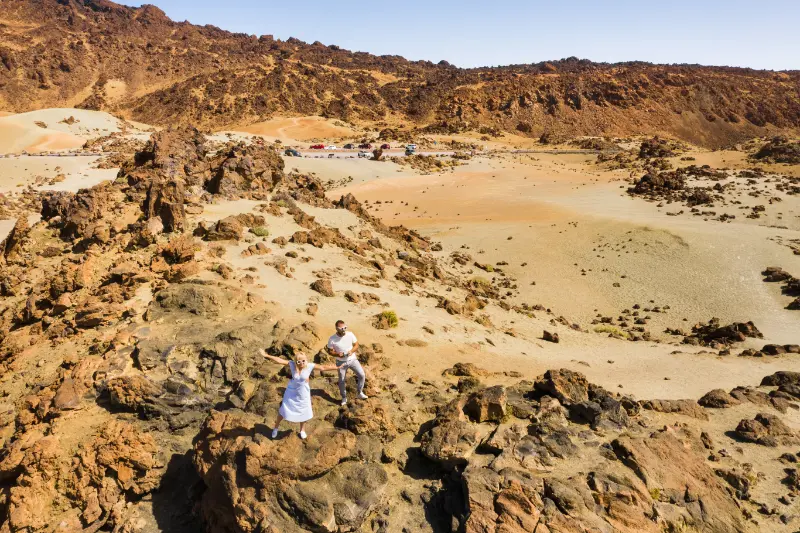
    Mount Teide is the day trip I would prioritise on a first visit. From Costa Adeje the drive climbs through Vilaflor or another mountain route into a landscape of lava, caldera walls and high-altitude viewpoints. Even without the cable car, the national park is extraordinary.

    I leave early, bring warm layers and check both road and weather conditions. If I plan to hike regulated high-mountain trails, I also verify permits on Tenerife ON. A cable-car reservation should have enough margin for the drive, because mountain traffic and viewpoint stops can easily slow me down.

    Masca and Teno: dramatic roads and mountain villages

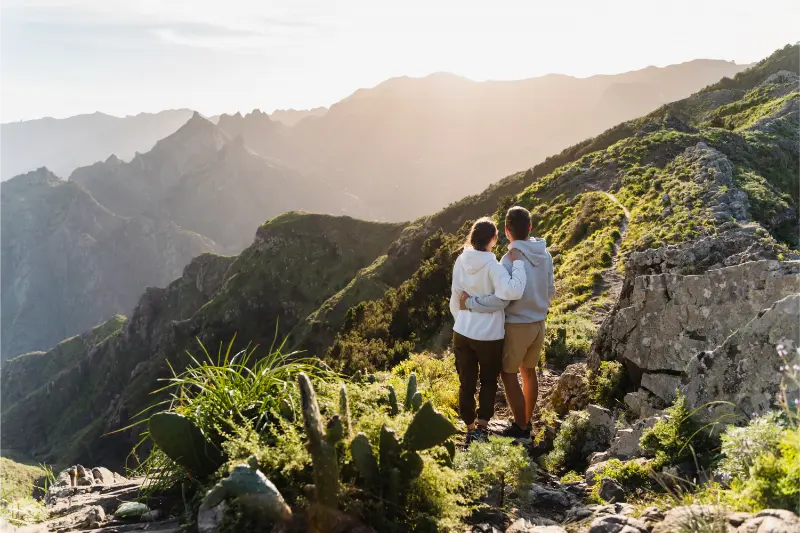
    Masca is a beautiful excursion, but I separate “visiting the village” from “hiking the gorge.” The gorge is regulated and requires advance planning. A simple road trip can combine Santiago del Teide, Masca viewpoints and parts of Teno.

    The road is winding, and parking/access rules around Masca matter. I avoid creating a day that depends on finding a spontaneous parking space. For nervous drivers, an organised excursion can be more relaxing.

    Masca Village Tenerife

    Los Gigantes and whale watching

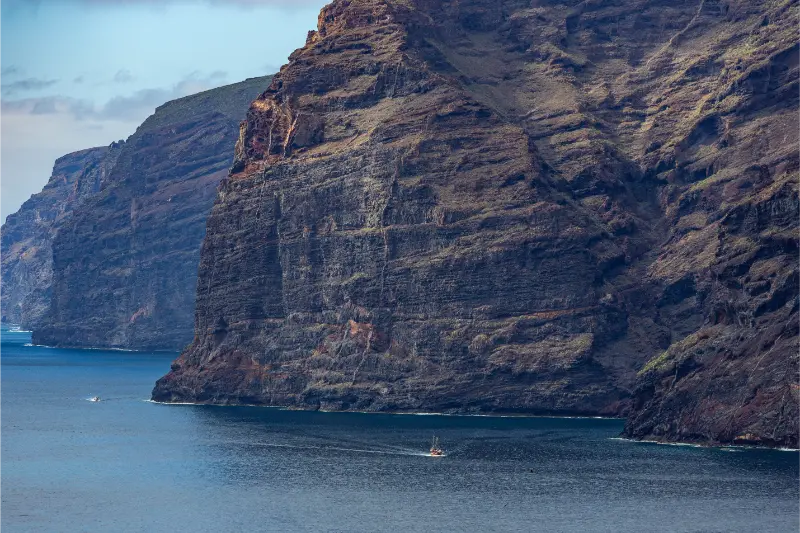
    Los Gigantes is an easy day trip from Costa Adeje and works especially well with a responsible whale-watching trip. The cliffs are impressive from land but even more dramatic from the water.

    I book the boat as the fixed anchor and keep the rest of the day flexible. A late-afternoon return to Costa Adeje is simple, or I stay for sunset around Puerto Santiago. This is one of the least tiring day trips on the list.

    La Laguna and Anaga: the best culture-and-nature combination

    The combination of La Laguna and Anaga gives the strongest contrast with Costa Adeje. I start in the UNESCO-listed historic centre, then drive into laurel forest and mountain viewpoints.

    I do not try to add Taganana, Benijo, every mirador and a long hike to the same day unless I start very early. Anaga roads are slow. A better plan is one short forest walk, two or three viewpoints and either Taganana or the La Laguna centre as the main second focus.

    Garachico, Icod and the northwest

    A classic northwest day combines Garachico with Icod de los Vinos. Icod brings the Drago Milenario and historic centre; Garachico adds volcanic history and natural pools. If time remains, I continue toward Buenavista rather than adding distant La Orotava.

    This route involves a longer motorway drive from Costa Adeje, but it is straightforward compared with Anaga mountain roads. I leave swimming in Garachico dependent on sea conditions and keep a walking alternative ready.

    La Orotava and Puerto de la Cruz

    La Orotava and Puerto de la Cruz fit naturally together. I spend the morning among La Orotava’s historic streets and gardens, then descend to the coast for lunch, Lago Martiánez, the seafront or Playa Jardín.

    This is a gentler day than a long mountain hike and works well when the south is hot. North-coast weather can be cloudier, so I pack a light layer and treat that contrast as part of the experience rather than a problem.

    Santa Cruz and Las Teresitas

    For shopping, architecture and an urban day, I go to Santa Cruz. After the market, Auditorio area and city centre, I continue to Las Teresitas for a swim or sunset.

    This trip works well by car or public transport. It also makes sense for travellers who do not want mountain driving. If Carnival is taking place, normal traffic and transport arrangements change considerably, so I plan around the event rather than treating it as a regular city day.

    La Gomera: the island-to-island day trip

    Ferries from Los Cristianos make La Gomera possible as a long day trip. The attraction is not simply “another island”; Garajonay National Park, deep ravines and San Sebastián create a landscape and cultural history distinct from Tenerife.

    Because ferry times are fixed, I prefer an organised island tour or a very carefully planned rental-car day. I never book the last ferry connection as if delays were impossible. For a relaxed trip, one night on La Gomera is better than trying to see everything in a few hours.

    El Médano and the south-east coast

    For an easy half-day or low-stress day trip, El Médano offers a completely different south-coast atmosphere. The town has cafés, windsurfing culture and access to the Montaña Roja landscape and La Tejita beach.

    I choose it when I want less driving and more time outdoors. Wind is part of the local character, so beach conditions may be breezier than Costa Adeje. That is good for watersports and less ideal for a calm sunbathing day.

    Which day trips work without a car?

    Los Gigantes, Santa Cruz, La Laguna, El Médano and Puerto de la Cruz are all possible using public transport, though journey times vary. Teide is more complicated without a car and often easier as an organised excursion. My Tenerife without a car guide explains the basics.

    I compare the real door-to-door time, not just the distance. A tour can be better value than multiple buses when it includes remote viewpoints; public transport is better when I want a city day with no fixed programme.

    How many day trips would I do in one week?

    On a seven-night Costa Adeje stay, I usually plan three substantial excursions and leave the other days for beaches, local walks and flexible plans. Teide, one north/northwest day and one Anaga or La Gomera day create plenty of variety.

    Doing a full-day road trip every day defeats the reason for staying in Costa Adeje. I like using the resort comfort as a recovery base, not merely a place to sleep between twelve-hour drives.

    Masca Mountain Valley Tenerife

    Renting a car for day trips

    A rental car gives the most freedom for Teide, Teno and the northwest. My Tenerife by car guide covers mountain-road habits, parking and route planning. I book a vehicle only for the days I genuinely need it if the rest of the holiday is resort-based.

    Fuel distances are modest, but driving hours add up. I avoid planning Teide, Masca and Anaga on consecutive days if I am the only driver. A rest day by the beach makes the next excursion more enjoyable.

    Organised tours: when they make sense

    Tours are particularly useful for Teide without a car, a first visit to Masca, and La Gomera when I want transport logistics handled. They also let everyone in the group enjoy mountain scenery instead of one person concentrating on hairpin bends.

    Masca Valley Panoramic View Tenerife

    I read the itinerary carefully. Some “island tours” spend most of the day in a bus and only minutes at each stop. I prefer fewer stops with meaningful time over a long list of place names.

    Practical planning notes

    Before I build a day around best day trips from Costa Adeje, I check opening or access conditions, the weather in the exact part of the island, transport for the return journey and how much walking the day really involves. Tenerife rewards flexible planning because coast, mountain and urban conditions can differ sharply. I keep one alternative nearby instead of replacing a cancelled plan with a long drive to the opposite side of the island.

    I also leave more time for meals and parking than a map suggests. Historic centres, beach promenades and mountain trailheads all become slower at popular times. An itinerary with some empty space usually produces better travel experiences than one that requires every transfer to work perfectly. When official restrictions or warning signs conflict with my original plan, I change the plan rather than looking for a workaround.

    For accommodation, I pay attention to the real route from the property to the places I expect to use every day. Tenerife has steep streets, large resort zones and rural roads where a short straight-line distance can hide a significant climb or an inconvenient walk. Reading the map at neighbourhood level is one of the simplest ways to avoid a poor base.

    Final thoughts

    Costa Adeje is one of Tenerife’s easiest bases precisely because so much of the island is reachable from it. The key is choosing a few day trips that are genuinely different rather than repeating similar coastal stops.

    For a first trip I would choose Teide, a north or northwest route, and either Anaga or La Gomera. That combination shows volcanic highland, historic Tenerife and a completely different landscape without turning the holiday into a race.

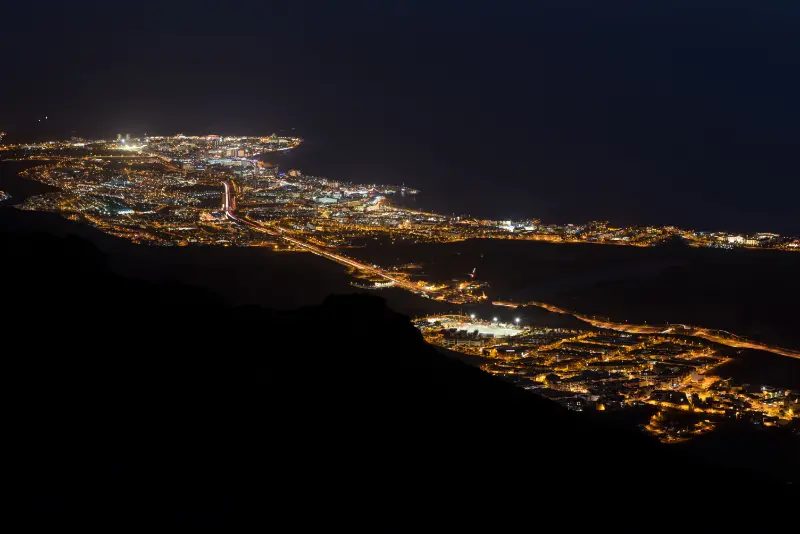
  • Tenerife Nightlife Guide: Best Areas, Bars, Clubs and Evening Atmosphere

    Tenerife Nightlife Guide: Best Areas, Bars, Clubs and Evening Atmosphere

    Tenerife nightlife is not one single scene. The loud late-night bars of Playa de las Américas, the hotel lounges of Costa Adeje, the terraces of Puerto de la Cruz and the local city evenings of Santa Cruz feel completely different. I choose the area according to what I actually want from the night rather than assuming the island is either “party” or “quiet”.

    This guide is about planning evenings, not ranking individual venues that can change names or opening hours. I focus on the neighbourhoods, atmosphere, transport and practical choices that remain useful even when a specific bar closes.

    Playa de las Américas: the main party zone

    Playa de las Américas is the easiest area if clubs, late bars and a concentrated nightlife strip are the purpose of the trip. The area around Veronicas and nearby commercial centres has long been associated with younger, louder nightlife, while other parts of the resort have live music, pubs and cocktail bars. My Playa de las Américas guide explains the daytime side too.

    I do not book a hotel directly above the busiest nightlife just because I want to go out. Walking five or ten minutes can create a much better sleep-versus-party balance.

    Costa Adeje: polished evenings and hotel bars

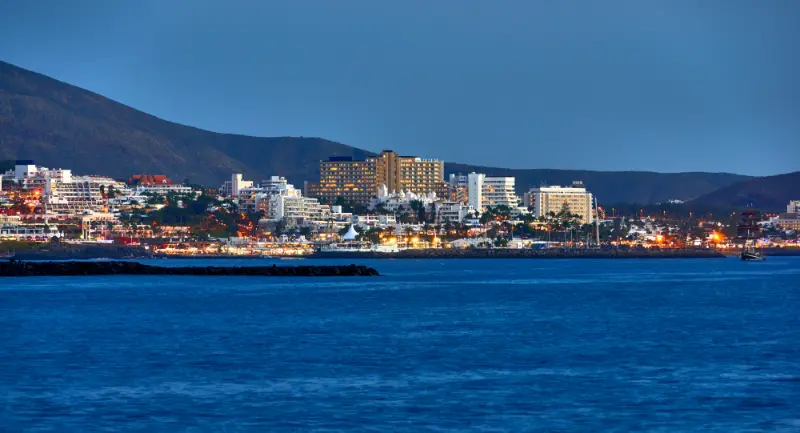
    Costa Adeje generally suits people who want dinner, cocktails, beach clubs and stylish hotel venues more than all-night clubbing. Areas around Playa del Duque and La Caleta tend to feel more relaxed in the evening, while the broader resort still offers plenty of bars. See my Costa Adeje guide for the neighbourhood differences.

    Adeje And Playa De Las Americas At Night

    I like Costa Adeje for couples or mixed-age groups because one person can have a sophisticated evening while another still finds lively music nearby. The compromise is usually higher drink and restaurant prices in the most premium zones.

    Los Cristianos: easygoing bars and walkability

    Los Cristianos has pubs, live music, sports bars and casual seafront evenings without the same concentration of large late-night venues as central Las Américas. I choose it when I want a social atmosphere but still care about a town-like daytime routine and ferry access. My Los Cristianos guide covers the harbour and beaches.

    The promenade connection means I can walk toward Las Américas for a bigger night and return by taxi if the hour becomes too late for a comfortable walk.

    Puerto de la Cruz: northern evenings

    Puerto de la Cruz has a different rhythm. I think of terraces, restaurants, local bars and occasional music venues rather than a resort built primarily around clubbing. La Ranilla and the central streets are pleasant for an evening walk, while the seafront keeps people outside late when the weather is comfortable. My Puerto de la Cruz guide helps with the layout.

    For travellers staying in the north, I would not cross the island to Las Américas every night. The return journey defeats the purpose of choosing a northern base.

    Santa Cruz: city nightlife

    Santa Cruz offers the most urban evening atmosphere, with restaurants, cocktail bars, cultural events and weekend nightlife used by residents as well as tourists. I combine an evening with a city day rather than travelling in solely for a club. My Santa Cruz guide covers the central areas.

    Carnival is a completely different scale and should be researched separately because street events, transport and crowd conditions change during the festival period.

    El Médano: surf-town evenings

    El Médano is one of my favourite alternatives when I want an informal night: dinner, drinks near the square or seafront and a younger surf-oriented atmosphere. It is not where I go for huge clubs. My El Médano guide explains why the town feels different from the large resorts.

    Wind can make outdoor evenings cooler than visitors expect, so I bring a light layer even after a hot beach day.

    Live music, pubs and sports bars

    Not everyone wants a nightclub. The southern resorts have a wide range of live-music bars, karaoke, Irish and British-style pubs, sports venues and hotel entertainment. I check current schedules locally because performers and theme nights change frequently.

    For a specific match or event, I message the venue before travelling. A sign saying “sports bar” does not guarantee it will show a particular league on the exact screen or with sound.

    Beach clubs and daytime-to-evening venues

    Some venues blend sunbeds, food, DJs and sunset drinks. I treat them as a separate category from traditional nightlife because dress expectations, minimum spend and reservation policies can be different. I read the current venue terms before assuming I can arrive in beachwear at any hour.

    These places can be excellent for a group celebration, but I compare what is included. Paying for a reserved bed or table may make sense if the group genuinely plans to stay for hours.

    Getting home safely

    I decide transport before going out. In the main southern resort belt, taxis are usually the simplest late-night option. Public buses can work on some corridors, including night services, but I verify the timetable rather than assuming daytime frequency. My transport guide is useful for planning.

    If I have a rental car, the driver does not drink. I never create a plan where someone is expected to “see how they feel” after several drinks and then drive unfamiliar roads.

    Drinks, bills and tipping

    I check prices before ordering rounds in premium venues and keep track of the bill in busy bars. Tipping is voluntary in Tenerife; the official tourism guidance describes it as a way to reward good service rather than an obligation. I follow normal local practice rather than importing mandatory percentages.

    I also keep my payment card and phone under control. Busy nightlife areas anywhere in the world are places where distracted visitors are easier targets for opportunistic theft.

    Nightlife for couples

    For couples I usually prefer Costa Adeje, La Caleta, Puerto de la Cruz or a dinner-and-stargazing evening rather than the busiest party strip, unless clubbing is specifically the plan. My Tenerife for couples guide gives more romantic evening ideas.

    A good night can be as simple as a long dinner and promenade walk. I do not treat nightlife as a separate attraction that must always involve loud music.

    Avenida De Las Americas At Night Tenerife

    Nightlife for solo travellers

    Solo travellers may find Playa de las Américas easiest for meeting people, but organised activities, surf schools and hostels can create social opportunities earlier in the day too. My solo Tenerife guide covers sensible safety and transport habits.

    I keep independent control of my return journey and do not depend on a person I just met for transport or accommodation access.

    Where to stay if nightlife matters

    I stay close enough to walk to the type of evening I want but not directly above the loudest venues unless sleeping late is part of the plan. Recent reviews are essential because street noise and hotel entertainment can change. You can compare nightlife-friendly accommodation in Tenerife and inspect the exact map position.

    I read reviews from travellers who stayed recently and mention room location. Two rooms in the same hotel can have completely different noise exposure.

    A balanced nightlife itinerary

    On a one-week holiday I would plan one major night out, one dinner-and-cocktails evening, one live-music or local-town evening and leave the rest spontaneous. That gives nightlife a role without making every morning unusable.

    Tenerife is at its best when nights and days support each other. Missing Teide because I stayed out until sunrise three nights in a row is a choice, but it should be a deliberate one.

    Frequently asked questions

    Which part of Tenerife has the best nightlife?

    Playa de las Américas has the highest concentration of late bars and clubs. Costa Adeje is more polished, while Santa Cruz and Puerto de la Cruz offer more local urban evenings.

    Santa Cruz De Tenerife At Night

    Is Tenerife nightlife only for young travellers?

    No. The island has cocktail bars, live music, hotel lounges, restaurants and beach clubs for many age groups and travel styles.

    Can I walk between Los Cristianos and Playa de las Américas?

    The coastal areas are connected and many visitors walk between them, although distance depends on the exact starting point and late-night taxis can be more comfortable.

    Are there night buses?

    Some TITSA night services operate on key corridors. I always check the current timetable for the exact date rather than assuming a particular route runs all night.

    Where should couples stay for evening atmosphere without heavy clubbing?

    Costa Adeje, La Caleta, Puerto de la Cruz and El Médano are all worth considering depending on budget and preferred style.

    Dress codes and reservations

    Most casual bars are relaxed, but premium hotel bars, rooftop venues, clubs and beach clubs can have their own dress or entry policies. I check the specific venue on the day instead of relying on a ten-year-old review. For a birthday or large group I reserve early and confirm whether the booking is a table reservation, minimum spend or prepaid package.

    I also carry a light layer. Tenerife nights can feel cooler than the daytime temperature suggests, especially in windy coastal areas or during winter months.

  • Tenerife for Couples: Romantic Places, Hotels, Beaches and Experiences

    Tenerife for Couples: Romantic Places, Hotels, Beaches and Experiences

    Tenerife for couples works because the island can change mood several times in one day. A morning can begin with coffee in a historic town, continue through volcanic highlands and end with sunset beside the Atlantic. I would not build a romantic trip around a checklist of “couples attractions”; I would build it around privacy, beautiful settings and enough unscheduled time to enjoy being there together.

    The right base depends on the couple. Some want a luxury hotel and beach club, others prefer a rural house, a surf town or a walkable historic centre. Tenerife offers all of those without requiring a different island.

    Best areas for a couples trip

    Costa Adeje is the obvious choice for upscale hotels, spas, good restaurants and easy beach days. La Caleta feels quieter and more food-focused. El Médano suits couples who prefer a casual local atmosphere. Puerto de la Cruz combines gardens, old streets and the north-coast landscape. My where to stay in Tenerife guide compares the areas in detail.

    I choose the hotel by how we expect to spend evenings. A beautiful property far from restaurants can be perfect if we want resort time, but frustrating if we picture spontaneous walks to dinner every night.

    A romantic Teide day

    Teide is one of the strongest couples experiences because the landscape feels genuinely different from the coast. I drive through the pine forest, stop at selected viewpoints and leave time to sit rather than rushing from car park to car park. My Teide guide explains cable-car and permit planning.

    For a special evening, I combine sunset with stargazing, using the practical advice in my stargazing guide. Warm clothes matter; romance fades quickly if both people are shivering in beachwear at 2,000 metres.

    Sunset without the crowds

    I do not chase only the most famous Instagram viewpoint. A quieter coastal promenade, a legal roadside mirador or a terrace near the accommodation can be more enjoyable than competing for parking at a viral spot. The best sunset is one where we can stay for the changing light without watching the clock.

    On the west coast, the Los Gigantes area can be dramatic; in the south, the long promenade offers easy options; in Anaga, I prioritise a safe drive back before darkness if mountain roads are unfamiliar.

    Beaches for two different moods

    For an easy swimming day I choose a serviced beach such as Playa del Duque or Las Vistas when conditions are calm. For scenery I might visit Benijo without expecting a swim. My best beaches guide separates practical bathing beaches from wild landscape beaches.

    I avoid pretending that secluded automatically means better. Remote beaches can involve difficult access, strong surf and no facilities. Sometimes a comfortable sunbed, lunch nearby and a sunset walk are exactly the romantic day we want.

    Whale watching as a shared experience

    A small-group responsible whale-watching trip can be a memorable couple activity, especially when the operator focuses on wildlife rather than party music. I follow my whale-watching guide and look for authorised, responsible providers.

    Couple Exploring Tenerife

    I choose a morning or late-afternoon slot according to sea conditions and our tolerance for motion. I never book wildlife with a guarantee mindset; the experience is about being at sea in an important cetacean habitat, not collecting a promised photograph.

    Wine, food and guachinches

    A winery visit is a natural couples day if neither person needs to drive afterward. Tenerife’s volcanic soils and multiple wine regions make tasting more interesting when the producer explains altitude and grape varieties. My wine guide helps plan the region.

    For a casual meal, a guachinche can be more memorable than formal dining. My food guide covers local dishes. I mix one special restaurant with simple local meals rather than making every dinner an expensive event.

    Historic towns for a slower day

    La Laguna, La Orotava and Garachico are ideal when we want to walk, talk and stop for coffee without a strict timetable. Each has a different feel: UNESCO urban history in La Laguna, balconies and valley views in La Orotava, and volcanic coastal history in Garachico.

    I choose one or two towns in a day, not five. Couples trips improve when there is time to notice details instead of spending the afternoon getting in and out of a car.

    A spa or hotel day is not wasted time

    On a seven- or ten-night trip, I deliberately schedule half a day with no sightseeing. A spa, pool, long breakfast or private terrace can be part of the destination, especially after hiking or driving days.

    When choosing accommodation, I decide whether I will actually use resort facilities. If yes, paying a little more for the right hotel can produce better value than booking a basic room and then paying separately for every leisure activity. You can compare romantic and adults-focused stays in Tenerife while checking current guest reviews.

    Active couples: hiking and water sports

    For active couples I combine one mountain walk with one ocean activity. Anaga offers forest hiking, Teno gives rugged western landscapes, and El Médano is the obvious base for wind sports. My hiking guide and snorkeling and diving guide help choose realistic levels.

    I do not turn shared adventure into pressure. If one person is a confident diver and the other is not, a beginner session or boat day may be more enjoyable than forcing identical activities.

    Where I would stay for an anniversary or honeymoon

    For a special occasion, I prioritise room quality, quiet at night, breakfast and the immediate surroundings. A sea view matters only if the room orientation and balcony genuinely allow us to use it. I read recent reviews for construction noise and entertainment schedules.

    I also tell the hotel about a real anniversary or honeymoon when booking, but I never assume a free upgrade. If a specific room category matters, I book it rather than hoping for a surprise.

    A four-day couples plan inside a longer holiday

    My favourite sequence is: relaxed south-coast day, Teide and stars, a historic north-coast day, then whale watching or a beach afternoon. After that, I let the rest of the holiday follow energy and weather.

    Couple On A Tenerife Beach

    This rhythm creates contrast without turning romance into logistics. The most valuable ingredient is often an empty evening.

    Couples without a car

    A no-car couples holiday is easy from a walkable southern resort or Puerto de la Cruz. I use buses for cities and major corridors, taxis for occasional evenings and organised tours for a mountain day. My no-car guide explains the trade-offs.

    Not driving can actually improve a wine or nightlife evening because neither person has to stay sober for the return. I include transport in the activity budget rather than treating it as an afterthought.

    What I avoid on a romantic trip

    I avoid overbooking dinner reservations every night, changing hotels too often and planning sunrise after a late night simply because a social-media itinerary says to. I also avoid remote sunset drives if the driver is uncomfortable on mountain roads in darkness.

    A romantic itinerary should reduce friction. Fewer transitions, better timing and a room we genuinely like are more important than the number of attractions visited.

    Frequently asked questions

    Is Tenerife good for couples?

    Yes. The island combines beaches, mountain scenery, restaurants, wineries, historic towns and upscale resorts, so couples can build very different styles of trip.

    Couple On Holiday In Tenerife

    Which area is best for couples?

    Costa Adeje is convenient for upscale resort stays, while La Caleta, El Médano, Puerto de la Cruz and rural areas suit different moods.

    What is the most romantic Tenerife experience?

    There is no single answer, but Teide sunset and stargazing, a quiet coastal dinner, winery visit or small-group boat trip can all work beautifully.

    Do couples need a car?

    Not necessarily. A walkable resort plus buses, taxis and selected tours can be easier if neither person wants to drive.

    How many nights are ideal?

    A week gives enough time for beach relaxation and several landscape days. Ten nights is even better if you want north and south without rushing.

    Photographs without turning the trip into a photo shoot

    I choose one or two places where we genuinely want photographs and keep the rest of the day normal. A small tripod or asking another visitor for one picture is enough. I avoid climbing barriers, entering private terraces or blocking viewpoints for staged images.

    The pictures I value most usually come from ordinary moments: coffee in La Laguna, wind in El Médano, a quiet bench above the ocean. Tenerife provides enough scenery that there is no need to manufacture drama.

    Planning a surprise without creating stress

    If I want to arrange a birthday dinner, proposal, private spa treatment or special excursion, I confirm the logistics directly with the venue and build spare time around it. I do not schedule the surprise immediately after a long mountain drive or a flight because delays turn romance into pressure. For restaurants, I mention dietary needs and whether an outdoor table depends on weather. For a proposal at a viewpoint or beach, I also respect access rules and other visitors rather than trying to reserve a public landscape for ourselves.

  • Playa de las Américas Guide: Beaches, Surf, Nightlife and Where to Stay

    Playa de las Américas Guide: Beaches, Surf, Nightlife and Where to Stay

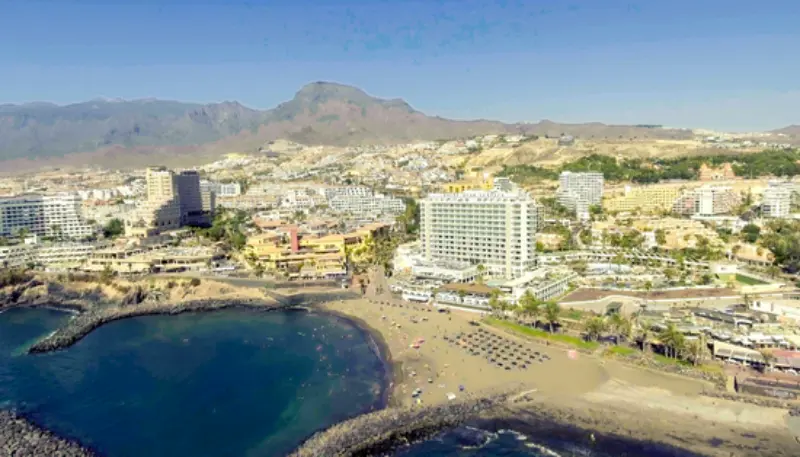
    Playa de las Américas is the Tenerife resort I would choose when I want energy on the doorstep: beaches, surf schools, restaurants, shopping and nightlife within walking distance. It sits in the busy southern tourism zone between Arona and Adeje, merging almost continuously with Los Cristianos on one side and Costa Adeje on the other. That makes it extremely convenient, but it also means the exact street matters when choosing a hotel.

    The phrase “Playa de las Américas” can describe a wider resort area rather than one small beach. Before booking, I look at the map and decide whether I want to be close to nightlife, the surf zone, quieter promenades or family beaches. A property only ten minutes away can have a very different evening atmosphere.

    Who is Playa de las Américas best for?

    I recommend it most strongly to younger couples, groups of friends, first-time visitors without a car and travellers who want to walk to entertainment at night. It can also work for families, especially near calmer beaches and away from the loudest late-night streets. Travellers seeking traditional Canarian village life should use it as a practical base rather than expecting the resort itself to provide that atmosphere.

    The official Tenerife tourism site describes the south as a year-round leisure area and specifically notes that Playa de las Américas, between Arona and Adeje, has a large concentration of bars, restaurants, cafés and discos near the sea. For a broader comparison, see my where to stay in Tenerife guide.

    Beaches in and around the resort

    The coast is a sequence of beaches, rocky surf sections and promenades rather than one uninterrupted strip of sand. Playas de Troya are among the classic urban beaches in the area. The official tourism information describes Troya I and II as grey volcanic-sand beaches with relatively calm water in normal conditions and a full range of services.

    Farther toward Los Cristianos, Las Vistas offers a broad, accessible beach environment. Toward Costa Adeje, Fañabé and Playa del Duque provide a more polished resort feel. This variety is why I do not rent a car simply to find a beach when staying in Las Américas; several options are walkable or a short bus/taxi ride away.

    Surfing

    Playa de las Américas is one of Tenerife’s best-known surf zones. The coast around the resort includes reef and rock breaks used by experienced surfers, and local schools offer beginner lessons in appropriate conditions. The official Arona tourism material also highlights surf areas such as Fitenia and has introduced site-specific safety signage.

    Playa De Las Americas Bay Aerial View Tenerife

    If I am a beginner, I book a lesson rather than paddling into a crowded reef break because the wave looks close to shore. A good school chooses the correct spot for the day’s swell and explains priority rules. Experienced surfers should respect local users and understand entry/exit points before entering.

    Nightlife

    Nightlife is one of the main reasons people choose Las Américas, but it is not the entire resort. There are loud bars and clubs, relaxed cocktail venues, live music, beach clubs and quieter restaurants. The key is to sleep in the right sub-area for your priorities.

    If I want late nights, I stay within easy walking distance so I do not depend on taxis. If I want early Teide starts or have young children, I choose accommodation farther from the busiest nightlife corridors. Reading recent hotel reviews specifically for noise is more useful than simply checking the star category.

    Restaurants and eating well

    International choice is enormous, which is convenient but can make it easy to eat the same food you would find in any resort. I use Las Américas for variety, then travel inland or north for more traditional Canarian meals. Even within the resort, I look beyond the front row of tourist menus and check where local ingredients actually appear.

    My Tenerife food guide explains what dishes to look for, while the nearby Los Cristianos harbour area gives another atmosphere for an evening meal.

    Walking to Los Cristianos

    One of the resort’s great advantages is continuity. I can walk along the coast toward Los Cristianos, stop at Las Vistas and continue to the harbour. That means a holiday can feel more varied without using a car every day.

    Los Cristianos is also the departure point for ferries to La Gomera and other inter-island services. My Los Cristianos guide covers the harbour and transport in detail.

    Walking toward Costa Adeje

    In the other direction, the coast leads toward Costa Adeje, Puerto Colón, Fañabé and Del Duque. The atmosphere becomes more polished in sections, with large hotels and landscaped promenades. I like this for a long morning walk followed by a beach stop.

    See my Costa Adeje guide if you are deciding which of the two resort areas fits your style better.

    Siam Park

    Siam Park is close enough to make Las Américas one of the easiest bases for a water-park day. I treat it as a full-day attraction rather than squeezing it between other sightseeing. Arriving early, setting priorities and taking a proper lunch break makes the day much more relaxed.

    My Siam Park guide covers current planning, families and how I organise the first hour.

    Getting around without a car

    For a car-free holiday, Las Américas is one of Tenerife’s strongest bases. Buses serve the southern resorts and connect toward the airport and other parts of the island, while taxis are widely available for short trips. Many everyday needs are walkable.

    The disadvantage is that remote hiking areas and some north-coast villages take longer by public transport. I solve that with one or two organised excursions rather than renting a car for the entire stay. See Tenerife without a car for route-planning principles.

    Getting there from Tenerife South Airport

    Tenerife South Airport is the convenient airport for Playa de las Américas. I compare the current TITSA bus options with a taxi or pre-booked transfer, especially if the flight arrives late or I have children and luggage. The drive is much shorter than from Tenerife North Airport.

    Playa De Las Americas Coastal Buildings Aerial View Tenerife

    My getting around Tenerife guide includes both airports and the practical trade-offs between bus, taxi and rental car.

    Day trips from Las Américas

    I would use the resort as a base for Teide, Los Gigantes, Masca, La Gomera and perhaps a north-coast day. The mistake is scheduling a long excursion every day and never enjoying the walkable coast you paid to stay beside.

    A balanced week might include two beach/resort days, Teide, a west-coast day, one cultural/north day, Siam Park and one flexible day. My 7-day Tenerife itinerary provides a broader framework.

    Where exactly to stay

    For nightlife, I stay closer to the main evening venues. For surfing, I prioritise the reef coast and surf schools. For families, I look toward quieter edges and easy beach access. For couples who want a more refined hotel environment, I compare nearby Costa Adeje before committing.

    You can compare accommodation in Playa de las Américas and Tenerife and then use recent reviews to check noise, hill gradient and actual walking time to the beach.

    Safety and practical habits

    As in any busy resort, I keep normal awareness around nightlife, do not leave phones unattended on bar tables and use licensed transport. I also watch the ocean: calm urban beaches and rocky surf zones can be only a short walk apart, so I do not assume every stretch of coast is safe for swimming.

    Sun exposure is another easy mistake. The south can feel comfortable because of breeze, but a long promenade day still requires sunscreen and water.

    Frequently asked questions

    Is Playa de las Américas only for nightlife?

    No. Nightlife is important, but the area also has beaches, surfing, restaurants, shopping and excellent transport. Your experience depends heavily on the exact hotel location.

    Avenida De Las Americas Playa De Las Americas Tenerife

    Is it good for families?

    Yes if you choose a quieter area near a suitable beach. I would avoid booking directly beside late-night venues with young children.

    Do I need a car?

    No for the resort itself. A car or organised tours become useful for remote natural areas and ambitious island exploration.

    Is it better than Costa Adeje?

    They suit different styles. Las Américas is generally livelier and more nightlife-focused; Costa Adeje offers many calmer and more upscale pockets.

    What is the biggest booking mistake?

    Choosing solely by hotel price and ignoring the map. In a dense resort, a few streets can change noise, hill gradient and beach access.

    How I would choose between the neighbouring resorts

    I think of Las Américas, Los Cristianos and Costa Adeje as one connected southern zone with three different personalities. Las Américas suits me when nightlife, surfing and central location matter most. Los Cristianos is practical for ferries and has a slightly more established town feel around the harbour. Costa Adeje offers the widest choice of polished hotels and quieter upscale pockets.

    If I am undecided, I compare the exact hotel positions rather than the resort labels. A waterfront property at the edge of Las Américas may feel calmer than a busy hotel in another resort, while an inland bargain can involve steep walks every day. I also check where I expect to spend evenings, because walking home along the promenade is often easier than relying on taxis after dinner. Choosing the right micro-location can improve the holiday more than changing hotel category.

  • Whale Watching in Tenerife: How to Choose a Responsible Boat Tour

    Whale Watching in Tenerife: How to Choose a Responsible Boat Tour

    Whale watching is one of the Tenerife experiences I would choose even on a short first trip, but only if the excursion is run responsibly. The waters off the island’s southwest coast are known for resident cetacean populations, and boats depart from places such as Puerto Colón and Los Gigantes. That accessibility is a privilege, not a reason to chase animals aggressively, so the operator matters as much as the boat.

    Tenerife’s official tourism guidance states that authorised whale-watching boats must respect rules including a minimum 60-metre distance, a maximum observation period of 30 minutes, reduced speed and no swimming with, feeding or touching the animals. I use those rules as a quick test when reading tour descriptions. Any marketing that promises behaviour inconsistent with the regulations is a reason for me to look elsewhere.

    Where whale-watching trips leave from

    Puerto Colón in Costa Adeje is the most convenient departure point for many south-coast visitors. It has a large selection of excursions and is easy to combine with accommodation in Costa Adeje, Playa de las Américas or Los Cristianos. Los Gigantes is the alternative I like for travellers who want the dramatic cliff scenery to be part of the trip; the harbour is smaller and the setting feels very different.

    I choose the departure port based on where I am staying rather than driving across the island for a small difference in ticket price. A 15-minute taxi to Puerto Colón can make far more sense than a long early drive to another marina. See my Los Gigantes guide and Costa Adeje guide for the two main bases.

    What animals might you see?

    Pilot whales and bottlenose dolphins are strongly associated with the waters around Tenerife, while other species can appear depending on season and chance. I never treat a wildlife trip as a guarantee of a particular species or behaviour. The point is to observe wild animals on their terms. A good guide explains what is seen, how the animals behave and why distance matters instead of manufacturing excitement by forcing a closer encounter.

    This is also why I prefer a trip with interpretation. A marine biologist or knowledgeable guide can turn a distant dorsal fin into a meaningful observation by explaining group structure, feeding, movement and acoustic behaviour. The experience becomes less about collecting photographs and more about understanding the marine environment.

    How to choose a responsible operator

    • Check that the vessel is authorised for cetacean-watching activity.
    • Look for clear reference to distance, time and wildlife-protection rules.
    • Avoid products that advertise touching, feeding or swimming with wild cetaceans.
    • Prefer operators that explain what happens if animals are stressed or difficult to locate.
    • Read the cancellation policy for rough-sea or weather decisions.
    • Choose a boat size that matches your comfort, not only the cheapest fare.

    Tenerife Tourism also promotes a voluntary sustainability charter for whale-watching companies. I consider participation a useful positive signal, but I still read the actual operating practices. Labels help; responsible behaviour on the water matters more.

    Small boat or large catamaran?

    Neither is automatically better for every traveller. A small boat can feel more personal, usually carries fewer passengers and may offer stronger interpretation, but movement is more noticeable and facilities can be limited. A large catamaran can provide more space, shade and toilets, which some families appreciate, but the experience may feel less intimate. I decide based on seasickness, children, mobility, trip length and how important commentary is to me.

    Boat styleAdvantagesThink about
    Small boatFewer passengers, personal guidingMore motion, fewer facilities
    CatamaranSpace, shade, easier family comfortLarger group atmosphere
    Sailing boatQuiet feel, smaller scaleSpace and access can be limited
    Private charterFlexible group experienceMuch higher cost

    How long should the tour be?

    For most first-time visitors I like roughly two to three hours. It is long enough to leave the harbour area and enjoy the sea without making the boat the entire day. Longer cruises can include food, swimming stops or more coastline, but those extras are not the same as additional cetacean observation because regulated viewing time still applies.

    With young children or anyone prone to motion sickness, I would choose the shortest format that still offers a proper wildlife experience. Four hours can feel very long when someone becomes uncomfortable after the first thirty minutes.

    Seasickness: what I do

    I check the marine forecast, eat a light meal, avoid excessive alcohol the night before and choose a position with fresh air and a clear horizon. If I know I am susceptible, I discuss appropriate prevention with a pharmacist or doctor before the trip rather than improvising medication at the harbour. I also tell the crew early if I feel unwell; they see seasickness regularly and can often suggest the best place to sit.

    What to wear and bring

    Even on a warm Costa Adeje morning, the boat can feel cooler and windier than the promenade. I bring sun protection, sunglasses with a secure fit, a light wind layer, water and a camera with a strap. I do not bring a large amount of equipment. The more time I spend changing lenses and protecting bags from spray, the less I actually watch the sea.

    Boat Trip Off Costa Adeje Tenerife

    Whale watching with children

    Children often love the anticipation, but the experience includes waiting. I explain before departure that wild animals are not a scheduled show. For younger children I choose a boat with shade, a toilet and easy seating, and I pack a simple snack if permitted. A shorter tour is usually better than the ‘best value’ longest cruise.

    If a child is nervous around boats, I would not make whale watching the first activity immediately after a tiring flight. A calm beach day first can help. My Tenerife with kids guide has more ideas for balancing high-energy and low-energy days.

    Best time of day

    I do not believe there is one universally guaranteed best hour for sightings. Wildlife and sea conditions vary. I prioritise the marine forecast and the operator’s local advice. Morning can be appealing for cooler conditions and a clean start to the day; an afternoon departure can fit a beach morning. The responsible operator should cancel or adapt when conditions are unsafe.

    Can you swim with whales or dolphins in Tenerife?

    Not as part of lawful wildlife observation. The official rules prohibit swimming with, touching or feeding cetaceans. If you see a product framed around direct interaction with wild dolphins or whales, I would verify exactly what is being sold and whether it complies with Canary Islands and national regulations.

    Dolphins Off The Coast Of Tenerife

    How I would combine the excursion

    From Puerto Colón, I would pair a morning cruise with a relaxed Costa Adeje afternoon rather than drive to Teide. From Los Gigantes, I would add lunch, the harbour and a coastal viewpoint, or simply enjoy the cliffs. A wildlife excursion already contains uncertainty; the rest of the day should have margin.

    Where to stay

    Costa Adeje gives the widest selection of south-coast hotels and the easiest Puerto Colón access. Los Gigantes is quieter and puts the cliffs directly into the experience. If whale watching is one of several island activities, I would choose the base that also works for beaches and transport. You can compare accommodation in Costa Adeje.

    Los Gigantes Cliffs From The Sea Tenerife

    Official rules worth reading

    Before booking, I read Tenerife Tourism’s official whale-watching regulations. The current guidance includes the 60-metre minimum approach distance, 30-minute maximum observation period, reduced speed and the prohibition on swimming with, touching or feeding cetaceans.

    Frequently asked questions

    Are sightings guaranteed?

    No responsible wildlife experience should be described as a guaranteed performance. Some operators may offer their own repeat-trip policy if no animals are seen, but that is a commercial condition, not a guarantee of nature.

    Is a small boat always more sustainable?

    Boat size alone does not prove responsible behaviour. Authorisation, distance, time near animals, speed, guiding and crew decisions are more meaningful indicators.

    Can I book at the harbour on the day?

    Sometimes, but I prefer to reserve a suitable authorised operator in advance during busy periods. That prevents me from choosing only by the next departure time.

    What is the biggest mistake?

    Choosing purely on price. The quality of the wildlife interpretation, legal compliance, boat comfort and sea conditions determine far more of the experience than a small ticket saving.

    How I think about photographs and wildlife etiquette

    A camera can improve the memory of the trip, but I do not let photography dictate the boat’s behaviour. I use a moderate zoom, keep straps secure and accept that many of the best sightings are too brief for a perfect image. I never ask a skipper to move closer for a photo. The legal distance exists for the animals, not for the convenience of my lens.

    I also avoid geotagging a precise live location when that could encourage other vessels to converge. The professional operators coordinate within regulations and understand the local situation far better than passengers. My role is to observe, listen and leave the encounter with as little disturbance as possible.

  • Costa Adeje Travel Guide: Beaches, Areas, Things to Do and Where to Stay

    Costa Adeje Travel Guide: Beaches, Areas, Things to Do and Where to Stay

    Costa Adeje is the part of Tenerife I would recommend to a first-time visitor who wants the easiest combination of reliable beach weather, good hotels, restaurants, family-friendly services and convenient access to the rest of the island. It is polished and tourism-focused, but it is not one single resort. The coast changes noticeably as you walk from the livelier areas around Puerto Colón and Torviscas toward Fañabé, Playa del Duque and the quieter atmosphere of La Caleta.

    That variety is the main reason I would not choose a Costa Adeje hotel only by star rating. The exact neighbourhood changes the feel of the holiday. A property close to Puerto Colón is useful for boat trips and activity, while the Del Duque side feels calmer and more upscale. La Caleta is better for travellers who want long lunches, sunset walks and a smaller-village atmosphere. This guide explains how I would choose between them and how I would use Costa Adeje as a base for a wider Tenerife trip.

    Why choose Costa Adeje?

    The biggest advantage is convenience. You have beaches with services, a long seafront promenade, supermarkets, restaurants in many price ranges, taxi ranks, bus connections and a large choice of accommodation. Tenerife South Airport is also much closer to Costa Adeje than the northern resorts. For families, couples and anyone visiting the island for the first time, that reduces the amount of everyday planning.

    The compromise is that Costa Adeje is not the place I would choose for a purely local Canarian atmosphere. It is an international resort zone. I solve that by using it as a comfortable base and then spending several days exploring Teide, La Laguna, Anaga, the north coast and traditional towns. If you want a broader overview before deciding, start with my Tenerife travel guide and comparison of the best areas to stay.

    The main areas of Costa Adeje

    Puerto Colón and Torviscas

    This is one of the most practical parts of the resort if you want activity close at hand. Puerto Colón is a major departure point for boat excursions, including whale- and dolphin-watching trips. Around Torviscas and the lower resort streets you will find a dense concentration of restaurants, bars, shops and services. It is convenient without being dependent on a car, although some accommodation farther inland sits on steep slopes.

    Fañabé

    Playa de Fañabé is a classic all-round beach base. The official Tenerife tourism site describes it as a 600-metre urban beach with services, easy access, calm conditions and a promenade lined with restaurants and shops. I like this area for families and travellers who want to alternate beach time with short outings rather than drive every day. The promenade also makes it easy to walk toward Torviscas or Del Duque.

    Playa del Duque

    The Del Duque end is more refined, with higher-end hotels, landscaped promenades and a quieter evening feel than the busiest stretches farther south. The beach itself is one of the easiest recommendations for a relaxed resort day. If budget is comfortable and nightlife is not the priority, this is the part of Costa Adeje I would shortlist first for couples and luxury-focused travellers.

    La Caleta

    La Caleta feels different again. It began as a fishing settlement and still has a more compact, low-rise character near the waterfront, although the surrounding area now includes premium resorts. I would come here for seafood, a slower sunset meal and walks along the coast. It is a good choice for travellers who want to be near Costa Adeje’s facilities without sleeping in its busiest zone.

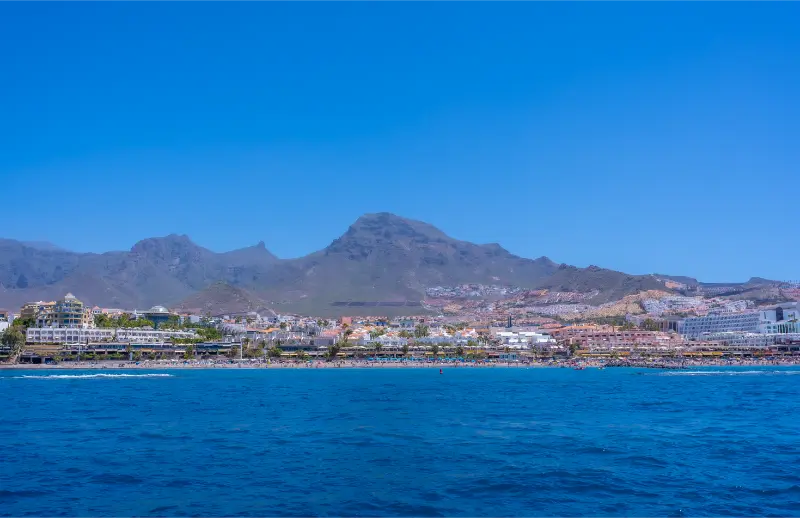
    Costa Adeje Panoramic View From The Sea Tenerife

    Best beaches in and around Costa Adeje

    For an easy family beach, Fañabé and Torviscas are practical. Playa del Duque works particularly well when comfort and a polished setting matter. Farther along the coast, smaller coves and rocky sections change the scenery. I would not spend the entire holiday trying to sample every beach; choose one convenient local beach and then add one or two very different coastal experiences elsewhere on the island.

    For example, pair a Costa Adeje beach with Las Teresitas on a Santa Cruz day or a wild black-sand viewpoint in Anaga. My best beaches in Tenerife guide compares the island’s resort beaches, volcanic beaches and natural pools.

    Whale watching from Costa Adeje

    The waters off southwest Tenerife are one of the island’s signature wildlife experiences, and Puerto Colón is an easy departure point. I would choose an operator that follows the island’s whale-watching regulations and gives wildlife space rather than a trip marketed around getting as close as possible. Sightings are never something a responsible operator should treat like a staged attraction.

    If seasickness is a concern, check the forecast, choose a vessel that suits you and avoid a heavy meal immediately before departure. Morning conditions can sometimes feel calmer, but there is no universal rule. The official Tenerife tourism site lists authorised whale-watching companies and is a better reference than choosing only by the cheapest online ticket.

    Siam Park and family activities

    Costa Adeje is especially easy for families because many major activities are close together. Siam Park is nearby, beaches are well serviced and short taxi journeys can replace complicated driving. I would still avoid scheduling a water park, a long boat excursion and a late dinner on consecutive days with young children. A beach morning between bigger activities usually makes the week much easier.

    For age-appropriate planning, beach safety, mountain days and a slower weekly rhythm, use my Tenerife with kids guide.

    Restaurants and evenings

    Costa Adeje has almost every type of restaurant, which is useful but can make it easy to eat international food for the whole trip. I would mix resort convenience with at least two more local meals. Look for Canarian potatoes with mojo, grilled fish, goat cheese, gofio-based dishes and local wines, then plan a guachinche or traditional restaurant stop when you explore the north.

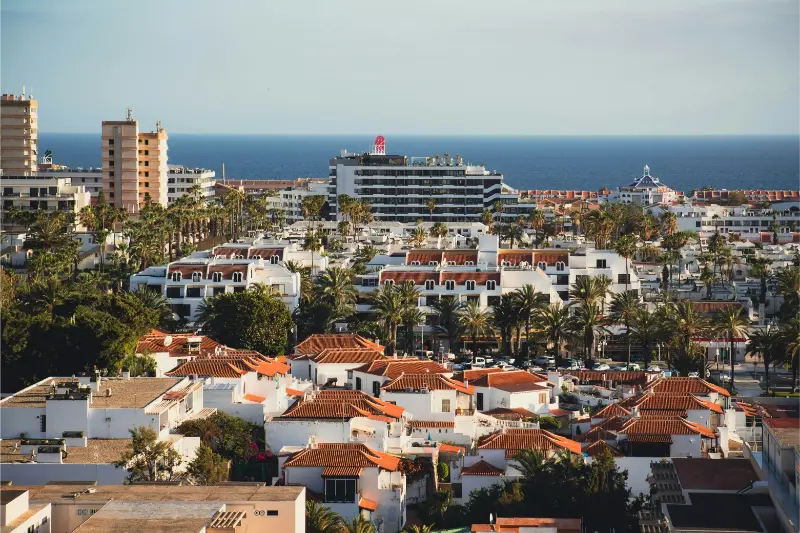
    Costa Adeje Resort District Tenerife

    The promenade is ideal for an easy evening walk. The atmosphere becomes busier around some Torviscas and Puerto Colón sections, while Del Duque and La Caleta generally suit a quieter dinner. If you want more nightlife than Costa Adeje offers, Playa de las Américas is immediately nearby. For traditional flavours, see what to eat in Tenerife.

    Do you need a car in Costa Adeje?

    Not for everyday resort life. You can walk much of the seafront, use taxis for short trips and take TITSA buses to many destinations. A car becomes valuable when you want to build flexible days around Teide, Anaga, Teno, small villages and viewpoints. My preferred approach for a one-week holiday is often to rent for only the exploration days rather than pay for a parked car all week.

    Parking can be frustrating around popular beaches and busy resort streets, so check whether your accommodation includes a space. If you will not drive, choose a hotel close to the promenade or a useful bus stop and read my getting around Tenerife guide before booking.

    Best day trips from Costa Adeje

    • Mount Teide: the most important full-day landscape excursion; check mountain conditions and reservations before leaving.
    • Los Gigantes: an easy west-coast day for cliffs, boat trips and sunset.
    • La Laguna and Anaga: a strong culture-and-nature combination, very different from the south.
    • Garachico and La Orotava: ideal for historic streets, northern scenery and a slower pace.
    • Santa Cruz and Las Teresitas: combine city life, market or museums with a beach afternoon.

    For a realistic first week, I would not do a major day trip every day. My 7-day Tenerife itinerary deliberately alternates larger excursions with easier beach time.

    Where to stay in Costa Adeje

    AreaBest forThings to know
    Puerto Colón / TorviscasActivities, boat trips, lively convenienceBusy and some inland streets are steep
    FañabéFamilies, beach access, walkabilityPopular and active
    Playa del DuqueCouples, comfort, upscale hotelsUsually higher prices
    La CaletaQuiet evenings, food, premium staysSmaller beach-resort feel

    Before booking, zoom into the map and check elevation as well as distance. A hotel can appear only 700 metres from the sea but involve a substantial uphill walk. If location is right, you can compare current Costa Adeje hotel prices.

    When to visit Costa Adeje

    Costa Adeje is one of the strongest year-round sun choices on Tenerife because the southwest is generally drier than the north. Winter is popular with visitors escaping colder European weather; summer is warmer and busier around school holidays. Spring and autumn can be excellent when you want warm days with a little more flexibility in prices and crowds.

    Costa Adeje Resort View Tenerife

    Remember that a sunny forecast at the coast says very little about Teide or Anaga. Pack layers for island excursions even if every day beside the hotel pool is warm. My best time to visit Tenerife guide explains the microclimates in more detail.

    My ideal Costa Adeje stay

    For a seven-night first trip, I would use Costa Adeje as a comfortable base rather than as the entire holiday. I would keep three genuinely slow periods for the beach or pool, spend one day at Teide, one day exploring the north, one day around La Laguna and Anaga, and use the remaining time for a boat trip or Los Gigantes. That balance preserves the convenience that makes Costa Adeje attractive while still showing you why Tenerife is much more than a resort island.

    For current destination information, beach details and municipal attractions, I also check the official Tenerife tourism page for Adeje and Costa Adeje before travelling.

    Budget planning in Costa Adeje

    Costa Adeje can be inexpensive or very expensive depending on where you sleep and how often you use hotel restaurants. I would spend on location before room category, because a well-located apartment can reduce taxis and make every evening easier. Beach access itself is public, while loungers, water sports and premium hotel facilities add optional costs. For day trips, compare the real cost of a rental car plus fuel and parking with an organised excursion rather than assuming one is always cheaper.

    A note on hills and accessibility

    The seafront looks flat on photographs, but the resort climbs inland quickly. Travellers with reduced mobility, parents with buggies and anyone who dislikes steep walks should examine the route from accommodation to the promenade in detail. Ask the hotel about gradients, lifts and accessible entrances instead of relying only on the straight-line distance shown by a booking platform.

  • Where to Stay in Tenerife: Best Areas for Every Type of Trip

    Where to Stay in Tenerife: Best Areas for Every Type of Trip

    Where you stay can completely change the feel of a Tenerife holiday. The island is compact compared with many destinations, but the mountains, winding roads and different microclimates mean that two hotels only 40 kilometres apart can deliver very different trips. I would choose the area before choosing the property: first decide whether you want guaranteed resort convenience, nightlife, family beaches, local atmosphere, a greener climate or easy access to hiking.

    This guide compares the main bases I would consider for different types of travellers. There is no single ‘best’ place to stay in Tenerife. Costa Adeje may be ideal for one week with children, Puerto de la Cruz can be far more rewarding for a couple who wants traditional towns and northern scenery, while El Médano appeals to travellers who prefer a breezy, low-key beach town.

    Quick comparison: the main areas

    AreaBest forWatch for
    Costa AdejeFirst-timers, couples, familiesHigher prices in prime beachfront zones
    Los CristianosWalkability, families, ferriesBusy central areas
    Playa de las AméricasNightlife, entertainmentLess quiet at night
    Puerto de la CruzNorth coast, culture, sceneryCloudier than the south at times
    El MédanoSurf, relaxed atmosphereWind is part of the experience
    Santa Cruz / La LagunaCity breaks, cultureNot a classic beach-resort base

    Costa Adeje: the easiest all-round base

    For many first-time visitors, Costa Adeje is the most straightforward base. It has a long seafront, a wide range of hotels and apartments, restaurants at different price levels, beaches with services and easy access to excursions. Playa del Duque feels more polished, while areas closer to Puerto Colón are busier and useful for boat trips. Families appreciate the practical infrastructure; couples can choose quieter, higher-end properties; and first-time visitors rarely struggle to find what they need.

    The main compromise is that Costa Adeje can feel like a destination designed around tourism rather than everyday Canarian life. That is not necessarily negative, but I would use it as a comfortable base and deliberately plan days in Teide, Anaga, La Laguna, Garachico or the Orotava Valley. Also check the elevation of your accommodation. Some hotels and apartments sit well above the waterfront, making the return walk much steeper than the map suggests.

    Los Cristianos: practical and walkable

    Los Cristianos has a more established town feel than parts of the neighbouring resort strip. The harbour is active, ferries leave for other islands, the promenade links into the wider southern coast and there are plenty of restaurants and everyday services. I like it for travellers who want to do a lot on foot and for families who value a relatively simple day-to-day routine.

    It can be crowded, and the atmosphere around the centre is busy rather than secluded. If peace is a priority, look at the exact street and distance from nightlife or traffic. Los Cristianos is particularly useful when your itinerary includes a ferry day to La Gomera, because you can avoid an early cross-island transfer.

    Playa de las Américas: nightlife and constant activity

    Playa de las Américas is best when you want energy: bars, restaurants, entertainment, shopping and a busy seafront. It can suit younger travellers, groups and anyone who prefers to have something happening every evening. The resort also connects on foot with Los Cristianos and Costa Adeje, so you can move through a large stretch of the southern coast without a car.

    I would be more selective here if travelling with small children or if sleep quality is a priority. A quiet room in the right part of the resort can work perfectly, but booking solely by price can put you closer to late-night venues than expected. Read the most recent accommodation reviews with location in mind, not just the overall score.

    Tenerife Resort And Mountain Panorama

    Puerto de la Cruz: my pick for a greener, more traditional feel

    Puerto de la Cruz is a strong choice if you want the north’s landscapes and culture to be part of everyday life. It has a seafront, black-sand beaches, gardens, plazas and easy access to La Orotava, Icod and the northern coast. The town has a long tourism history but feels different from the purpose-built south. For travellers who enjoy cafés, walking streets and day trips through older towns, it can be an excellent base.

    The trade-off is weather. The north is greener precisely because it receives more humidity and cloud than the south. You can still have beautiful sunny days, but travellers whose top priority is lying in the sun every afternoon may prefer the south. I see Puerto de la Cruz as a base for exploring, not just resort living.

    El Médano: relaxed, windy and active

    El Médano has a more casual atmosphere, a beach-town centre and a strong wind- and water-sports identity. It is close to Tenerife South Airport, yet feels less like a large resort complex. The beach and promenade are easy to use, and the landscape around Montaña Roja gives the area a distinctive setting.

    The wind is not a minor detail; it is one of the reasons people come. If you love kitesurfing or windsurfing, that can be a major advantage. If you dream of completely still beach days, it may be a disadvantage. I would choose El Médano for independent travellers, active couples and repeat visitors who want a different southern base.

    Los Gigantes and Puerto de Santiago: scenery and a slower west-coast rhythm

    The west coast around Los Gigantes offers dramatic cliff views, boat-trip access and a quieter atmosphere than the largest southern resorts. It is appealing for couples and travellers who expect to spend more time around the west of Tenerife. Sunsets can be excellent, and the cliffs give even ordinary seafront walks a spectacular background.

    The location is less central for eastern and northeastern sightseeing. If your plan includes several days in Anaga, Santa Cruz or La Laguna, you will spend more time driving. For a slow holiday focused on the coast, Teno and boat excursions, however, it makes sense.

    Santa Cruz and La Laguna: best for an urban Tenerife trip

    Santa Cruz is the island capital and works well for travellers interested in shopping, museums, city life and easy access to Playa de Las Teresitas. La Laguna, higher and cooler, is one of Tenerife’s most attractive historic environments and a natural gateway to Anaga. These areas are less obvious for a classic resort holiday but can be excellent for a short city-focused stay or a split trip.

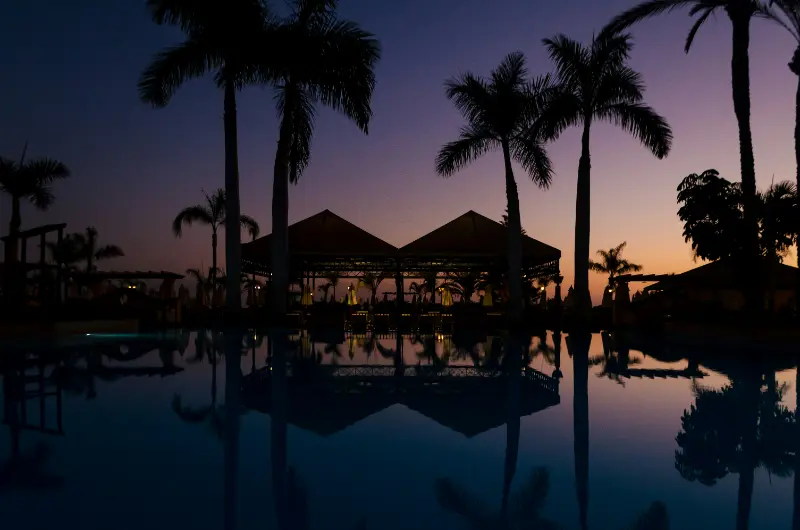
    Tenerife Resort Palms At Sunset

    I especially like the idea of spending a few nights in the south and a few nights around La Laguna or the north on a longer trip. A split stay reduces repeated cross-island driving and lets you experience the climate and evening atmosphere of two distinct parts of Tenerife.

    North or south Tenerife?

    The decision is easier if you identify your non-negotiable priority. Choose the south for more consistent sunshine, broad tourist infrastructure, family attractions and resort convenience. Choose the north for greener landscapes, traditional towns, food, gardens and easier access to many northern sights. Neither side is objectively better; they are different tools for different trips.

    The official tourism board highlights the same climatic contrast: the south generally has more sunshine and a drier environment, while the north receives more humidity and supports lush vegetation. That difference is one of the island’s strengths, not a flaw.

    Do you need a car where you stay?

    If you stay in Costa Adeje, Los Cristianos or Playa de las Américas and plan mostly organised excursions, you can manage without a car. TITSA buses connect the major tourist centres, airports and towns. A car becomes more valuable when you want sunrise viewpoints, remote trailheads, flexible Teide timing or a day that combines small villages and natural areas.

    Parking should be part of the accommodation decision. In older towns and dense resort zones, free street parking can be competitive. A hotel with parking may save more time than a cheaper room several streets away. See the full Tenerife transport guide before deciding whether to rent for the whole trip or only selected days.

    Where I would stay for different travel styles

    • First visit: Costa Adeje or Los Cristianos for simplicity.
    • Families: Costa Adeje for services and easy activity days; Los Cristianos for walkability.
    • Couples: Costa Adeje for comfort, Puerto de la Cruz for atmosphere, Los Gigantes for scenery.
    • Nightlife: Playa de las Américas.
    • Hiking and nature: La Laguna, north Tenerife or a split stay.
    • Surf and wind sports: El Médano.
    • Local culture: La Laguna, Santa Cruz, Puerto de la Cruz or La Orotava area.
    • Without a car: choose a central resort or town with strong bus connections and walkable services.

    How I choose an actual hotel or apartment

    I start with the map, not the photo gallery. I check walking distance to the beach or town centre, road gradient, bus stops, parking, supermarket access and the likely evening noise. Then I compare recent reviews for recurring problems: construction, poor soundproofing, difficult parking or long waits for lifts in large resort hotels. Only after that do I compare pools, breakfast and room design.

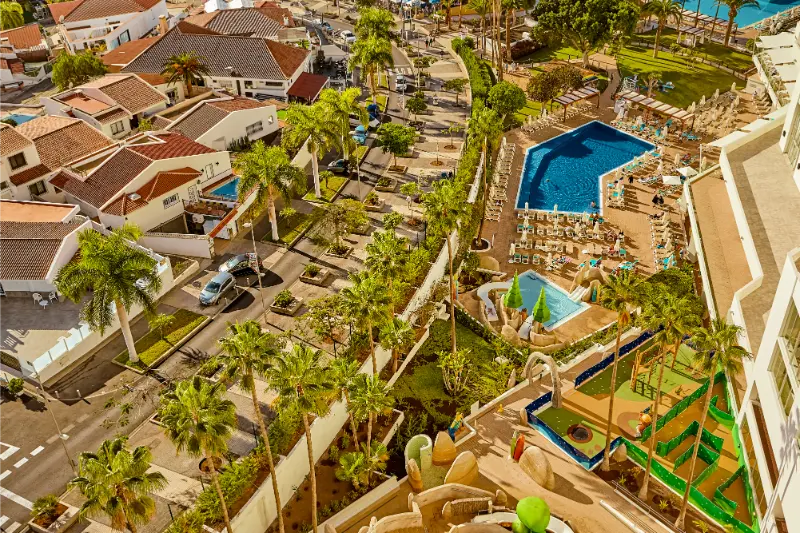
    Aerial View Of Tenerife Seaside Resort

    For current availability you can compare Tenerife hotels and apartments. Filter by neighbourhood rather than simply by ‘Tenerife’, because island-wide search results can mix properties that are more than an hour apart by road.

    When a split stay is worth it

    A split stay is useful on trips of ten nights or more. For example, five or six nights in Costa Adeje followed by four nights in Puerto de la Cruz or La Laguna creates two different holidays and shortens several sightseeing days. It is less useful on a five-night trip because moving accommodation consumes time and adds packing friction.

    If you are following my 7-day itinerary, I would usually keep one base. If you have two weeks, I would seriously consider north plus south. That is one of the easiest ways to appreciate how much variety Tenerife packs into a relatively small island.

    Final choice: match the base to the holiday you actually want

    The biggest accommodation mistake in Tenerife is booking an attractive hotel in an area that does not match your plans. A luxury resort can still be inconvenient if every place you want to visit is on the opposite side of the island. Start by writing down your top five experiences, place them on a map, and then choose the base that reduces unnecessary driving while giving you the atmosphere you want in the evening.

    For a first trip with mixed interests, I would keep the decision simple: Costa Adeje for easy resort comfort, Los Cristianos for walkability, Puerto de la Cruz for northern character, and La Laguna for culture and nature access. From there, refine by budget, exact neighbourhood and transport plan.