Playa de San Marcos is one of the north-coast beaches I would consider when I want black sand and a more sheltered setting than the exposed Atlantic beaches nearby. The bay belongs to Icod de los Vinos and has a curved, shell-like shape that helps protect it from some of the swell that affects other northern beaches. That does not make the water permanently calm, but it gives San Marcos a different character from surf-oriented or open-coast beaches.
Tenerife Tourism lists the beach at around 160 metres long and 40 metres wide, with black volcanic sand, easy pedestrian access, adapted access, toilets, showers, restaurants and parking. It is an urban beach, so I would come for convenience and local atmosphere rather than for an untouched natural setting.
Playa de San Marcos at a glance
| Location | San Marcos, Icod de los Vinos |
|---|---|
| Length | About 160 m |
| Sand | Black volcanic sand |
| Character | Sheltered urban bay |
| Accessibility | Adapted access listed officially |
| Best for | North-coast beach time, families in suitable conditions, combining with Icod |
I would check the official Playa de San Marcos page for current services before relying on a specific facility.
What makes the bay different
The shape of San Marcos is the key. The surrounding headlands and curved bay reduce direct exposure compared with many stretches of the north coast. Tenerife Tourism describes it as one of the calmer beaches in northern Tenerife, and that is the main reason I would choose it for a swimming day.
I would still watch the sea carefully. A sheltered bay can have surge, shore break or changing currents, especially when Atlantic swell is larger. I would never use the beach’s reputation as a substitute for flags and local conditions.
The atmosphere
San Marcos feels like a small coastal settlement rather than a major resort. Apartment buildings, restaurants and terraces frame the bay, and the beach can become lively with local families in summer. I would not expect the polished promenade scale of Costa Adeje or Las Vistas.
For me, that is part of the appeal. I can spend a few hours by the water, have lunch overlooking the bay and then drive uphill to Icod’s historic centre without committing to a full resort day.
Black sand: beautiful and hot
The volcanic sand gives the beach its visual identity, but it can become hot under strong sun. I would bring sandals and be especially careful with children. The north can feel cooler and cloudier than the south, yet UV exposure remains important even when the sky is not perfectly clear.
I also find black-sand beaches easier to enjoy when I bring a second small towel for feet and keep electronics protected from fine sand.
Swimming and family use
When conditions are calm, the sheltered setting can work well for families. I would choose the central bathing area, stay within any supervised zone and keep younger children close. In summer, when the beach is busier, I would arrive before peak midday hours to find a comfortable space.
If the sea is rough, I would not force the swim. Icod gives me several inland alternatives, including the Drago area, historic centre and Cueva del Viento if I have a reservation.
Facilities and accessibility
The official listing includes toilets, showers, cleaning, restaurants and adapted access. Parking is also available, although the page notes fewer than fifty spaces. That is a useful warning: on busy days I would not assume I can arrive at lunchtime and park immediately beside the water.
If accessibility is essential, I would confirm the exact beach service and route from parking to sand in advance. My accessible Tenerife guide helps compare alternatives around the island.
Parking strategy
San Marcos is reached by descending from Icod toward the coast. I would drive slowly, follow legal parking signs and avoid blocking residential access while searching for a closer space. The final approach is part of a lived-in coastal neighbourhood, not a giant beach car park.
During summer weekends I would either arrive earlier or accept that I may need to walk farther. I would not create a stressful start to the day by circling indefinitely.
Combining San Marcos with Icod de los Vinos
This is the pairing I would recommend most strongly. Icod’s historic centre and famous Drago Milenario are close enough that the town and beach can share the same day without feeling rushed. I would use the morning for Icod when streets are cooler, then descend to the bay for lunch and a swim if conditions are good.
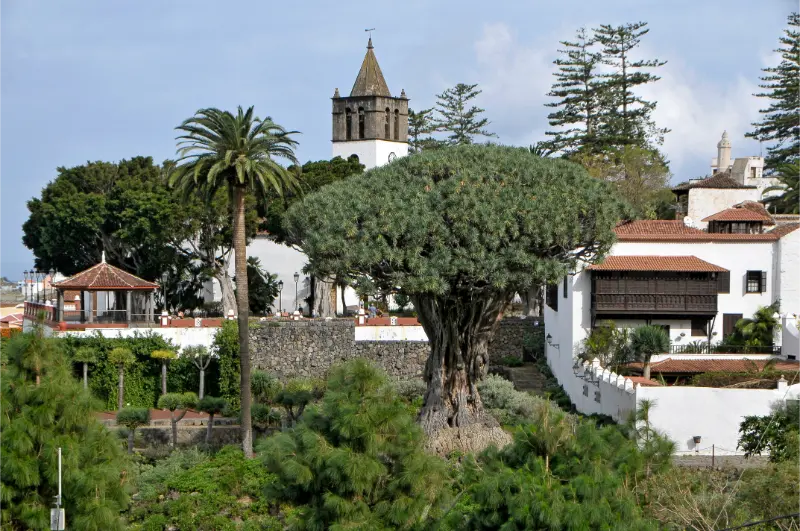
My Icod de los Vinos guide covers the historic centre, Drago and other practical stops.
Adding Cueva del Viento
Cueva del Viento can turn the day into something much more distinctive, but I would only add it with a confirmed booking. Cave visits operate on fixed arrangements and are not something I would assume I can join spontaneously. I would leave enough time between the cave and beach rather than schedule them back to back.
My Cueva del Viento guide explains clothing, booking and what to expect.
Where to eat
The bay has restaurants and terraces, making lunch easy. I would look at current menus rather than choosing only by the closest table to the sand. Fresh fish and Canarian dishes make sense here, but I would clarify prices for seafood sold by weight before ordering.
If I prefer a guachinche experience, I would eat inland around the north rather than expect the beachfront to provide the same atmosphere.
Where to stay
San Marcos can be a peaceful base for travellers who want the north coast and do not need a large nightlife scene. I would compare accommodation around Icod de los Vinos on Booking.com and check whether a property is in the historic town, at the coast or on the slopes between them. Those locations feel very different without being far apart on the map.
How San Marcos compares with other north beaches
For drama, I would choose Benijo. For surf atmosphere, El Socorro. For a more secluded volcanic setting near La Orotava, El Bollullo. San Marcos is the practical choice when I want a sheltered urban bay with food and parking nearby.
My black-sand beaches guide helps compare these different experiences.
Best time to visit
I would choose a day when the north-coast forecast and sea conditions are favourable. Morning often gives easier parking and a quieter beach. Summer brings more local families and a livelier atmosphere; winter can still produce beautiful beach days but the ocean deserves extra respect.
I would not cancel solely because Puerto de la Cruz looks cloudy on an app. North-coast cloud can shift locally, and the bay may still be pleasant. I would combine weather and sea forecasts with real-time observation.
A realistic half-day plan
If I were building a half day around San Marcos, I would start in Icod de los Vinos before the historic centre becomes busier, spend time around the Drago and old streets, then descend to the coast for lunch. After eating, I would check the sea from the promenade before deciding whether to swim. This order avoids making the beach the only reason for the trip and gives me an easy fallback if the water is rough.

I would leave at least a little unplanned time after the beach. Northern Tenerife often rewards small detours: a viewpoint, a bakery, a short walk or simply a second coffee can be more memorable than forcing another major attraction into the afternoon.
Why I would not rush onward to Garachico
Garachico is close enough that it is tempting to add it automatically, but I would do so only if I have already seen Icod or if the beach stop is short. Garachico deserves its own walking time, and combining two historic towns, a cave booking and a beach in one day is more driving than it appears on a map. I prefer to leave something for the next day.
Common mistakes I would avoid
- Assuming “sheltered” means the sea is always safe.
- Arriving at peak summer lunch time with no parking plan.
- Walking barefoot on hot black sand.
- Trying to fit Icod, Cueva del Viento, Garachico and a long beach session into one rushed day.
- Choosing a hotel without understanding the vertical difference between Icod town and the coast.
Frequently asked questions
Is Playa de San Marcos good for swimming?
It is often calmer than more exposed north-coast beaches because of the bay shape, but I would always follow current flags and conditions.
Is it a black-sand beach?
Yes. The sand is volcanic and dark, typical of much of Tenerife’s northern coast.
Is it close to Icod de los Vinos?
Yes. The beach belongs to Icod and is easy to combine with the historic centre and Drago area.
Does it have restaurants?
Yes. The urban bay has restaurants and terraces close to the beach.
Is parking easy?
Parking exists, but official information indicates limited capacity. I would arrive earlier during busy periods.
My final take
Playa de San Marcos is a useful north-Tenerife beach because it combines volcanic character, a relatively sheltered bay and easy access to Icod de los Vinos. I would not cross the island only to collect another beach, but if I am exploring Icod or the northwest, it is exactly the kind of coastal stop that can turn a sightseeing day into a more balanced holiday day.