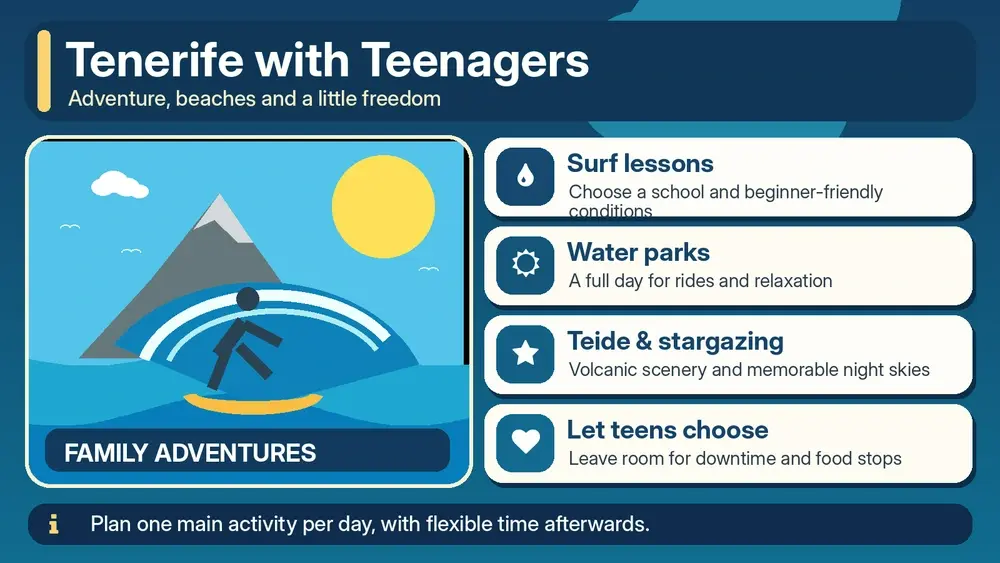
Quick summary: The best Tenerife trip with teenagers mixes autonomy, adrenaline and downtime. I avoid filling every day with “family attractions” and instead combine one high-energy experience—Siam Park, surfing, bodyboarding, snorkelling, karting or a boat trip—with beaches, good food, a city evening and at least one landscape that feels genuinely different from home.
| Good base | South for easy beaches/activities; north for greener towns and variety |
|---|---|
| High-energy ideas | Water park, surf, bodyboard, karting, biking |
| Low-cost balance | Beach, promenade, viewpoints, sunset, markets |
| Key planning rule | Let teenagers choose part of the itinerary |
What teenagers usually want from Tenerife
Teenagers are old enough to notice when every activity has been designed for small children but young enough that transport, booking and safety still depend on the adults. I give them real choices: pick the beach, choose between surf and karting, decide which restaurant looks good, or take responsibility for navigating one bus journey.
That small amount of ownership changes the mood of the trip. Tenerife has enough variety that the holiday can feel active without becoming a compulsory sports camp.
Water parks and adventure
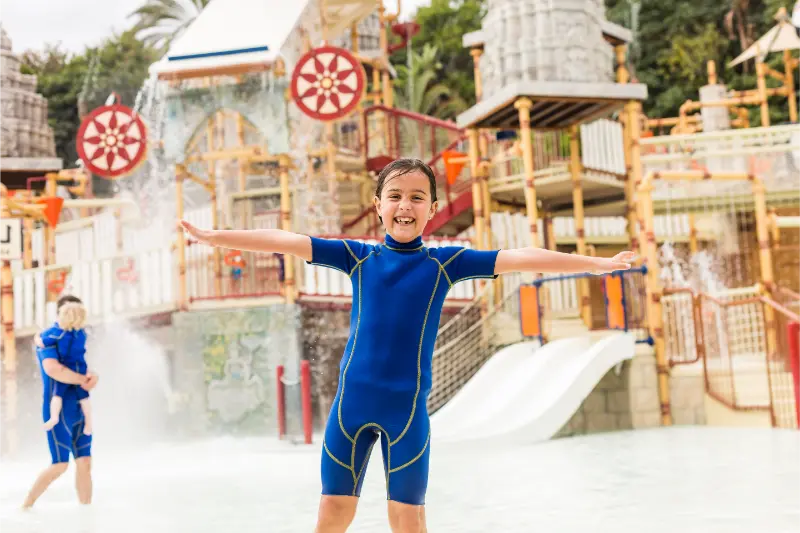
Siam Park is an obvious anchor for many families because older children and teens can use the more thrilling slides while adults choose their own pace. I check height restrictions and current opening information directly before buying tickets.
Surf and bodyboarding around suitable schools in El Médano or other established areas can be excellent for a first lesson. For water sports, I use qualified operators and let conditions decide whether the session happens. The Atlantic is not a swimming pool, and confidence on a board is not the same as ocean experience.
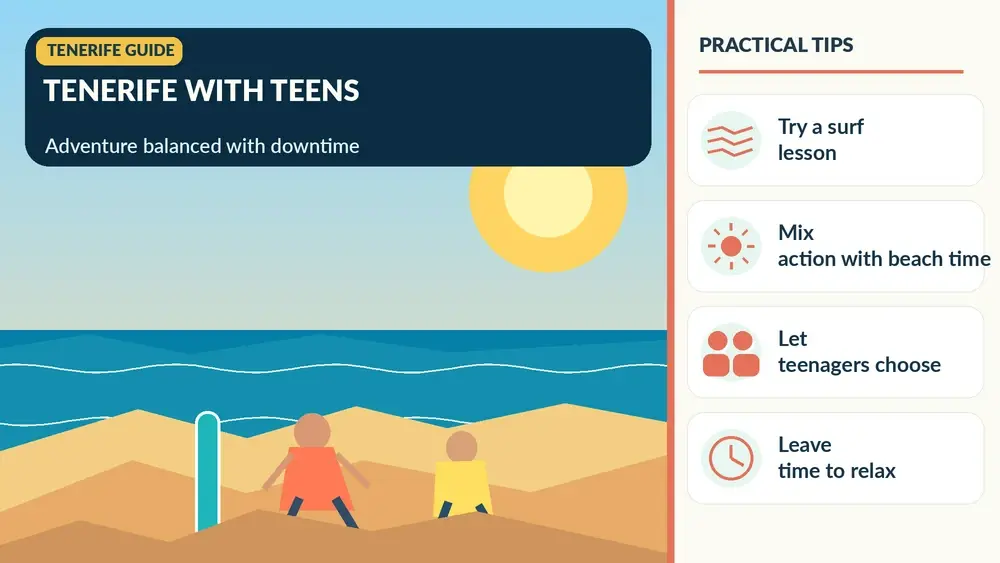
Teide without turning it into a lecture
Teide works best with teenagers when the day has a purpose: cable car, stargazing, a short trail, photography or a road trip with music and food stops. A long sequence of viewpoints chosen only by adults can feel repetitive.
I build in the altitude and temperature difference. Even when the coast is hot, the national park can be cold or windy. I also confirm permits and access rules for any trail that requires them.
Beaches, snorkelling and independence
A resort beach or natural pool can give teenagers a sense of freedom while adults stay nearby, but I set clear water-safety rules. Flags, waves and rocky entries matter. For snorkelling, a guided first session can be more useful than buying equipment and assuming every cove is suitable.
I choose accommodation within walking distance of food and a promenade when teens want some independence. A safe, well-lit route to an ice-cream shop or café can make evenings much easier for the whole family.
Food that works
I mix familiar options with local food rather than turning every meal into a cultural test. Arepas, bocadillos, papas arrugadas, grilled fish, burgers and tapas-style sharing can give everyone choice. Markets are useful because each person can try something different without committing to a long formal lunch.
For older teens, I involve them in the budget. Giving them a daily snack allowance or letting them compare activity prices makes the trip feel less like being managed.
Evenings and age limits
Nightlife rules and venue age policies matter. A family can enjoy a busy promenade, live music, cinema or late dinner without treating adult clubs as a teenage attraction. I check the specific venue rather than assuming that a tourist area is automatically suitable for under-18s late at night.
Siam Night and seasonal events can be attractive to older teens, but current dates and age/accompaniment rules should be checked before planning the holiday around them.
Build one teen-choice day
I let the teenager choose the main activity, lunch and one evening plan within a budget. It creates ownership without giving up the practical framework.
I would verify this point close to the travel date because a small operational change can affect the whole day. My preference is to keep one workable backup rather than build a complicated Plan B: a second document copy, another transport option, a nearby supermarket, a lower-effort activity or enough time to ask staff for help. That approach is especially useful in Tenerife because the island offers many alternatives within a relatively short distance.
Use bad-weather backups
Cinema, escape rooms, shopping centres, bowling and city cafés keep a cloudy or windy day from becoming a family argument.
I would verify this point close to the travel date because a small operational change can affect the whole day. My preference is to keep one workable backup rather than build a complicated Plan B: a second document copy, another transport option, a nearby supermarket, a lower-effort activity or enough time to ask staff for help. That approach is especially useful in Tenerife because the island offers many alternatives within a relatively short distance.
How I would use this guide on a real Tenerife trip
I treat Tenerife with teenagers as a practical layer of the holiday rather than something that should dominate every day. I verify the few details that can create a real problem—documents, opening times, transport, medical or legal requirements—and keep the rest flexible. Tenerife changes quickly between the south coast, the north, the metropolitan area and the high mountains, so geography and timing are often more important than adding more activities.
I also save the key official link, booking reference or emergency contact offline before I leave the hotel. Mobile data is generally easy to arrange, but the moment I most need a detail is often when I am at an airport counter, inside a police station, on a mountain road or trying to make a connection. A screenshot and a small time buffer are simple habits that make the trip calmer.
Useful related guides on My Tenerife Experience
Where I would stay
I choose a base according to the hardest part of the itinerary. Costa Adeje and Los Cristianos are convenient for many family and resort services, Puerto de la Cruz works well for the greener north, while Santa Cruz and La Laguna are useful for city services and public transport. I compare accommodation in Tenerife and then read the newest reviews for details that matter to this specific trip rather than relying only on the headline score.
Official information to recheck
Frequently asked questions
Is Tenerife good for teenagers?
Yes. The island combines beaches, water parks, outdoor sports, cities, volcano scenery and easy casual food, which makes it flexible for different interests.
Where should a family with teenagers stay?
The south is easiest for concentrated activities and beaches; Puerto de la Cruz gives a greener, more local-feeling base. Choose around the activities your family values most.
Can teenagers go out alone?
That depends on age, maturity, location and family rules. I prefer walkable, well-lit resort or town areas and clear check-in times.
Final thoughts
The aim is not to entertain teenagers every minute. Give them a few memorable activities, some real decision-making power and enough unstructured time, and Tenerife becomes much easier for everyone.
Practical planning checkpoint 1
Before I lock this part of the trip in, I check the exact date, location and operator rather than relying on a screenshot from months earlier. Tenerife is easy to travel around, but opening hours, transport frequency, weather, service availability and access conditions can change between municipalities and seasons. I keep one alternative in the same area so a small change does not force a cross-island detour.
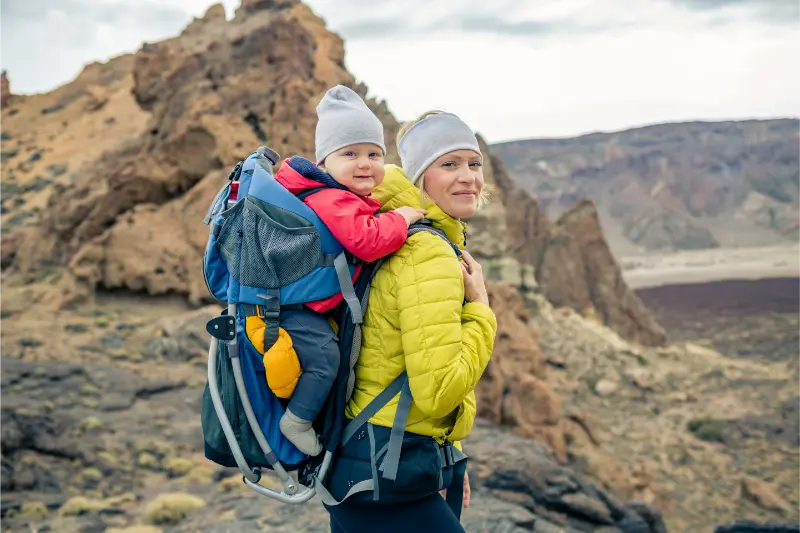
I also think about who is actually travelling. A plan that works for a solo adult can be poor for a toddler, a teenager, a pregnant traveller, an older relative or someone working remotely. The useful question is not “Is Tenerife suitable?” but “What would make this particular day comfortable and realistic?” That usually produces better choices about timing, accommodation, food stops and transport.
Practical planning checkpoint 2
Before I lock this part of the trip in, I check the exact date, location and operator rather than relying on a screenshot from months earlier. Tenerife is easy to travel around, but opening hours, transport frequency, weather, service availability and access conditions can change between municipalities and seasons. I keep one alternative in the same area so a small change does not force a cross-island detour.
I also think about who is actually travelling. A plan that works for a solo adult can be poor for a toddler, a teenager, a pregnant traveller, an older relative or someone working remotely. The useful question is not “Is Tenerife suitable?” but “What would make this particular day comfortable and realistic?” That usually produces better choices about timing, accommodation, food stops and transport.
Practical planning checkpoint 3
Before I lock this part of the trip in, I check the exact date, location and operator rather than relying on a screenshot from months earlier. Tenerife is easy to travel around, but opening hours, transport frequency, weather, service availability and access conditions can change between municipalities and seasons. I keep one alternative in the same area so a small change does not force a cross-island detour.
I also think about who is actually travelling. A plan that works for a solo adult can be poor for a toddler, a teenager, a pregnant traveller, an older relative or someone working remotely. The useful question is not “Is Tenerife suitable?” but “What would make this particular day comfortable and realistic?” That usually produces better choices about timing, accommodation, food stops and transport.
Leave a Reply