
Quick summary: Los Cristianos is Tenerife’s key ferry gateway to La Gomera, La Palma and El Hierro. The port sits directly beside the resort centre, but the main bus station is not on the quay, vehicle boarding has earlier cut-offs than foot-passenger boarding, and busy sailing periods can make the access roads feel much tighter than the map suggests. I arrive with my ticket, ID and luggage plan already sorted.
| Main island routes | La Gomera, La Palma, El Hierro |
|---|---|
| Nearest major airport | Tenerife South (TFS) |
| Foot passenger | Allow time to walk from bus/taxi drop-off to the correct operator area |
| Vehicle passenger | Follow operator check-in cut-offs; arrive earlier than pedestrians |
Why Los Cristianos matters for island hopping
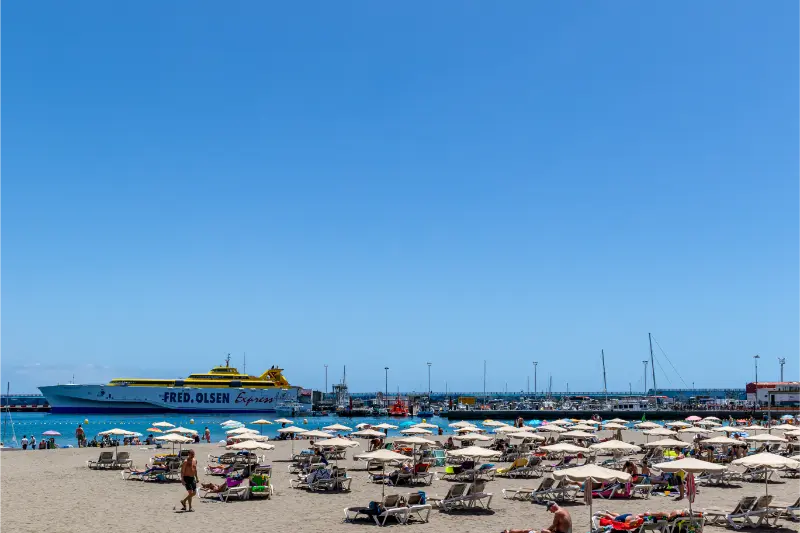
For the western Canary Islands, Los Cristianos is one of the most useful transport hubs in Tenerife. Fast ferries connect it with San Sebastián de La Gomera, Santa Cruz de La Palma and Valverde in El Hierro. Fred. Olsen currently publishes approximate crossing times of about 50 minutes to La Gomera, 150 minutes to La Palma and 140 minutes to El Hierro, although schedules and vessel assignments can change.
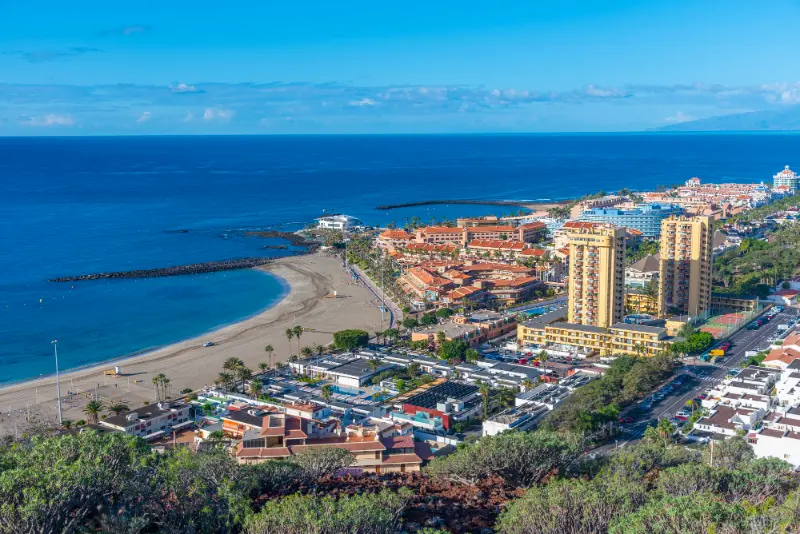
The port’s biggest advantage is its location inside a major resort area. If I stay in Los Cristianos, I can often walk or take a very short taxi rather than building an airport-style transfer around the ferry. The disadvantage is that the surrounding streets can be busy, especially when ferry traffic, resort traffic and beach visitors converge.
Foot-passenger check-in
I save the ticket offline and keep the identification required by the booking easy to reach. Operator rules differ, so I use the cut-off shown on my ticket rather than a generic blog time. Fred. Olsen’s Los Cristianos terminal information currently states that foot-passenger boarding closes 20 minutes before departure unless the ticket says otherwise. I still aim to arrive earlier because finding the correct desk, using the toilet, checking luggage arrangements and walking to the boarding area all take time.
If I am coming by TITSA bus, I remember that the main Los Cristianos bus station is around a 15-minute walk from the Fred. Olsen terminal according to the operator. With a suitcase, child or mobility limitation, I would either allow more time or use a taxi for the final section. A “15-minute walk” on a timetable is not the same experience for every traveller.
Travelling with a car
Vehicle check-in needs more margin. Fred. Olsen currently states that vehicle boarding closes 40 minutes before departure. I follow the operator’s signs into the pre-boarding area and avoid entering the port on a nearly empty fuel tank or with the rental paperwork unresolved. If the vehicle is hired, I check the rental company’s ferry policy before buying the car ticket.
Once queued, I keep medicines, valuables, documents and anything I want during the crossing in a small bag that is easy to remove. Vehicle decks may not remain accessible during the voyage. I also photograph where I parked on the ship if the vessel is large; after an unfamiliar crossing, deck numbers are surprisingly easy to forget.
Luggage at Los Cristianos
Foot passengers should not assume every operator handles luggage exactly the same way. Fred. Olsen lists luggage racks/trolleys and a left-luggage transport service subject to conditions and availability. Naviera Armas may use its own procedures. I therefore check the ticket for baggage allowances and ask staff where larger cases should go rather than carrying everything blindly toward the passenger lounge.
For a one-day trip, I travel light. A heavy suitcase turns the walk between the bus station, port and town into unnecessary work. If I am changing islands with full luggage, I protect fragile electronics and documents in my hand bag and label checked or trolley luggage clearly.
Getting to the port
From TFS, buses and taxis make Los Cristianos one of the easier ferry ports to reach. Fred. Olsen references TITSA route 40 from Tenerife South Airport and route 112 from Santa Cruz in its terminal directions, but I always check the current TITSA journey planner because line patterns can change. From Costa Adeje and nearby resorts, local buses or taxis are straightforward.
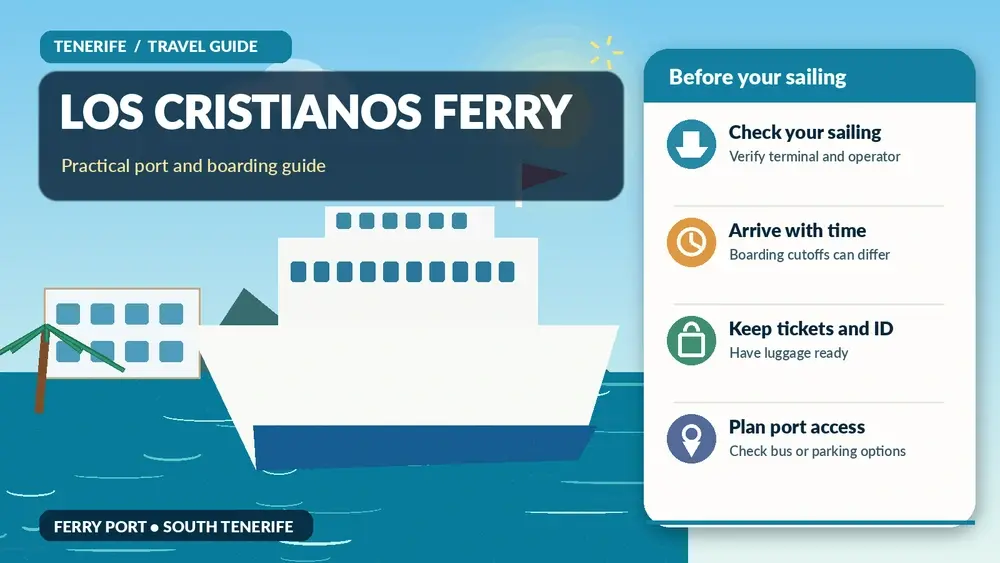
By car, the usual approach is via TF-1 exit 72 and the local streets toward the harbour. I do not leave the final ten minutes to chance: queues near Los Cristianos can build, and the correct lane matters when ferry boarding is closing. For a very early ferry, staying locally the night before can be more relaxing than a long pre-dawn drive.
Parking and waiting
The port has parking/pre-boarding areas, but I distinguish between vehicle staging for a ferry and leaving a private car for a multi-day island trip. Long-stay parking availability, restrictions and prices can change, so I verify the current option rather than relying on an old forum recommendation. If I am staying in Los Cristianos, leaving the car at accommodation and walking can be simpler.
When I arrive early as a foot passenger, the resort centre has cafés and services within walking distance, but I stay close enough that a relaxed coffee does not become a missed sailing. Boarding times are operational deadlines, not suggestions.
Choosing between Los Cristianos and Santa Cruz ports
The correct Tenerife port depends on the island and operator. Los Cristianos is particularly important for La Gomera, La Palma and El Hierro. Santa Cruz handles major connections toward Gran Canaria and other routes. I never search only “Tenerife ferry” and assume the first result uses the same port. The ticket must name the departure port clearly.
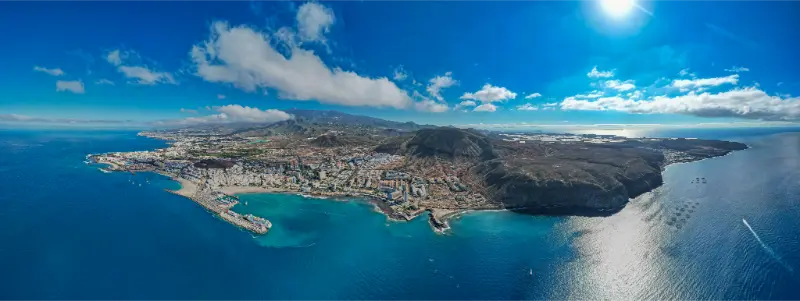
This matters even more on a same-day connection: Los Cristianos and Santa Cruz are on different parts of Tenerife. Fred. Olsen offers a ferry bus on certain connecting itineraries, but I only rely on it when my booking confirms eligibility and timing.
How I would build this into a real Tenerife trip
I treat Los Cristianos ferry port as one layer of the holiday rather than a reason to over-plan every hour. My usual method is to identify the one decision that could create a genuine problem—missing a ferry, choosing an unsuitable room, arriving after the last bus, or assuming a service exists at a beach—and verify that point first. Everything else can stay flexible. Tenerife is easy to enjoy when the important logistics are checked early and the day still has enough breathing room for weather, traffic and spontaneous stops.
I also keep geography in mind. Tenerife may look compact on a map, but the TF-1, TF-5, mountain roads and the separation between the north, south and metropolitan area can turn a small planning error into a long detour. I group activities by area, avoid crossing the island unnecessarily, and leave a buffer around anything with a fixed departure or appointment. That same habit improves almost every trip, whether I am driving, using TITSA buses, catching a ferry or arranging an accessible transfer.
Useful related guides on My Tenerife Experience
Where I would stay
I choose accommodation according to the hardest part of the itinerary, not simply the lowest nightly rate. For an early ferry I value a walkable or short-taxi location; for a no-car stay I prioritise bus connections; for accessibility I verify the exact route from the room to the entrance, restaurant and pool; and for a road trip I care more about straightforward parking than a postcard address. I compare places to stay in Tenerife and then read the most recent reviews for details that matter to my specific trip.
Official information I would recheck before travelling
Frequently asked questions
Which islands can I reach from Los Cristianos?
The main direct ferry links are La Gomera, La Palma and El Hierro, with schedules varying by operator and date.
How early should I arrive?
Use your operator’s stated cut-off. Vehicle passengers generally need to be ready earlier than foot passengers.
Is the bus station inside the port?
No. The main Los Cristianos bus station is a walk from the ferry terminal, so add time if you have luggage.
Final thoughts
Los Cristianos is a convenient port once I treat the boarding deadline, bus-to-pier walk and luggage arrangements as part of the journey rather than details to solve at the gate. My preference is to use official information for rules, timetables and safety-critical details, then use the rest of the day for the part of Tenerife I actually came to experience. A practical guide should reduce friction, not make the island feel complicated.
Extra practical note 1
Check whether the ticket is through-booked or two separate reservations. I treat this as a small decision with a large payoff. Tenerife trips often combine airports, coast, cities and mountain roads in a single week, so a detail that seems minor at home can become important when plans are linked together. I verify the current rule or service, keep a realistic time buffer and avoid assuming that every municipality, operator or hotel works in exactly the same way. This approach gives me flexibility without turning the holiday into administration.
I also think about the return journey. What is easy on arrival can be different when I am tired, carrying purchases, travelling after dark or working around a fixed flight or ferry. A short note saved on my phone—address, booking reference, official link or opening time—usually does more for the trip than a long list of generic tips. When circumstances change, I choose the simpler option and protect the part of the day that matters most.
Leave a Reply