Quick summary: Corpus Christi in La Orotava transforms streets and the town-hall square with temporary carpets made from flowers and coloured volcanic sand. The art is ephemeral, so timing and respectful movement matter.
La Orotava’s Corpus Christi carpets are among Tenerife’s most extraordinary examples of art made to disappear. Flower petals, plant materials and coloured volcanic sands become detailed street carpets and a monumental tapestry in the town-hall square, only for the religious procession and the passing of time to end the installation.
That temporary nature is why I plan more carefully than I would for a normal museum visit. The main carpet can be developed over a longer period, while street carpets are often at their most complete close to the celebration itself. Exact dates change each year because Corpus Christi follows the liturgical calendar, so I verify the municipal programme rather than assuming the same weekend.
At a glance
| Where | La Orotava is the best-known setting; La Laguna and other towns also create carpets |
|---|---|
| When | Usually May or June, depending on the liturgical calendar |
| Signature work | The large volcanic-sand tapestry in Plaza del Ayuntamiento |
| Visit style | Walk slowly, respect barriers and treat the carpets as ceremonial art |
Why La Orotava is special
Turismo de Tenerife traces the modern fame of La Orotava’s carpets to 1847, when members of the Monteverde family created a flower carpet for the Corpus procession. The tradition developed into a defining cultural expression of the town, combining domestic participation, religious meaning and highly skilled design.
Today the event works on two scales. Smaller carpets animate streets around the historic centre, while the town-hall square becomes the stage for a huge composition made with natural volcanic sands in different colours. Seeing both is important; the monumental carpet impresses through scale, while the street carpets reveal the community rhythm.

The volcanic sand question
Visitors often assume the main square is covered in ordinary beach sand. It is not. The famous tapestry uses naturally coloured volcanic sands associated with Teide, handled under controlled arrangements for the tradition. I never collect material in the national park myself; removing volcanic material from protected areas is not a souvenir strategy.
The palette can produce astonishing detail without synthetic-looking colours. From the designated viewing points, I look for shading, perspective and the way artists use grain size and tone to create depth.
When should I go?
The answer depends on what I want to see. During preparation, I can sometimes observe the work in progress and understand the technique. Closer to the main celebration, the finished designs create the strongest visual impact but crowds are heavier. After the procession, some street carpets have fulfilled their ceremonial purpose and may no longer look pristine.
I therefore check the current programme and choose intentionally: process if I care about craft, finished carpets if I care about photography, procession day if I care about the religious and community meaning.
A walking route through La Orotava
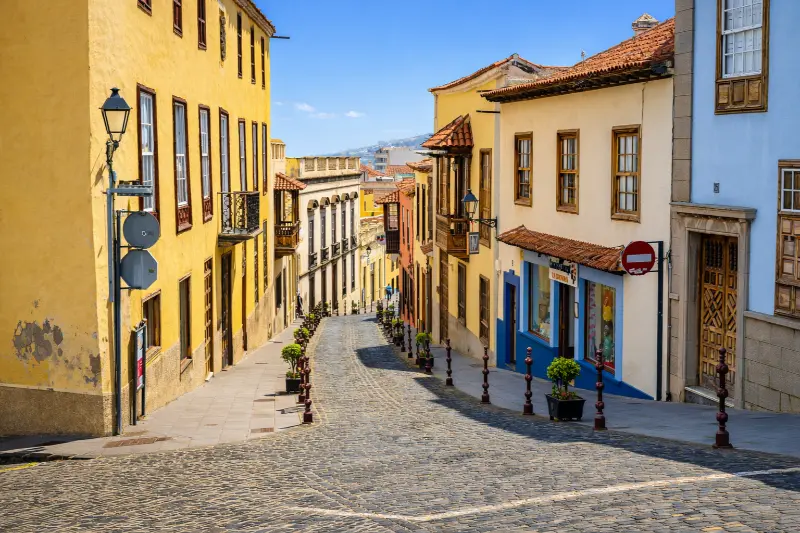
I start around Plaza del Ayuntamiento and then follow the marked streets of the carpet route rather than zigzagging randomly. The historic centre is hilly, and crowd controls can turn a short map distance into a longer walk. Comfortable shoes matter more than elegant festival clothing for most visitors.
My existing La Orotava Carpet Museum guide is useful before the event because it explains the craft in a calmer environment. I also combine the route with Iglesia de La Concepción to understand the religious architecture behind the celebration.
Photography without damaging the experience
The obvious rule is never step onto a carpet. Less obvious is avoiding the temptation to hold a phone or tripod over a barrier where it blocks other people. I use a small zoom, wait for a clear angle and accept that the best view may come from a designated platform rather than the closest physical position.
Midday sun can be harsh on pale petals and dark volcanic sands, so softer light can be attractive, but opening and crowd conditions matter more than chasing perfect photography light.
Crowds, children and mobility
The old centre has slopes, cobbles and temporary crowd routing. Families can enjoy the carpets, but I shorten the route for young children and carry water and a snack. A stroller may be awkward in the busiest streets. Visitors with reduced mobility should check the current accessible route with the municipality because event barriers can alter normal access.
I choose a meeting point before entering the densest streets. Mobile reception is usually fine, but a physical landmark is still useful when a group becomes separated.
La Laguna and other Corpus carpets
La Orotava is the headline event, but it is not the only place where Tenerife creates Corpus carpets. Turismo de Tenerife notes celebrations in La Laguna and Tacoronte as well. These can offer a different scale and let travellers experience the tradition without treating one town as the entire island’s story.
If I am based in Santa Cruz or La Laguna, a local carpet event may be more convenient. The La Laguna guide helps turn the cultural stop into a full day in the UNESCO historic centre.
Religious meaning and visitor etiquette
The carpets are art, but Corpus Christi is a Catholic feast and the procession is not staged solely for photographs. I lower my voice around services, do not obstruct clergy or participants, and avoid crossing a procession route after barriers are in place.
Modest, comfortable clothing is sufficient for most public street viewing. If I enter a church, I follow posted rules for photography and dress. This simple shift—from spectacle consumer to respectful observer—makes the visit feel much more coherent.
Where to stay
Staying in La Orotava or Puerto de la Cruz removes the pressure of driving into a busy historic centre on the main day. Puerto de la Cruz has more resort infrastructure, while La Orotava gives the strongest sense of being inside the festival town.

Check La Orotava accommodation on Booking.com if the carpets are the main reason for the trip.
Official sources
The evergreen cultural background is well explained by Turismo de Tenerife’s Corpus carpets page. For the actual year, I use the La Orotava municipal website because dates, street closures and viewing arrangements change.
That distinction is important for SEO travel content too: the article can explain the tradition permanently while the official programme carries the operational details that should never be invented.
My practical planning checklist
Before I build a day around Corpus Christi Tenerife, I separate the fixed facts from the details that can change. Fixed facts include the location, cultural context or legal framework explained above. Changing details include current opening hours, temporary road closures, airline products, event routes, service times and prices. I verify those close to the travel date rather than copying an old timetable into the itinerary.
- Save the official source offline or as a screenshot before leaving the hotel.
- Keep one realistic backup plan in case weather, traffic, capacity or an operational change affects the original plan.
- Do not schedule the next paid activity so tightly that a local event, meal or airport process becomes stressful.
- Carry water, a charged phone and the basic layer or sun protection needed for the actual location rather than the resort forecast.
- If a rule or sign on site conflicts with an older article, follow the current official instruction on site.
I also keep the rest of the day geographically simple. Tenerife looks small on a map, but mountain roads, event traffic and the distance between north and south can turn an overfilled itinerary into hours in the car. One strong experience plus a nearby town, viewpoint or meal is usually better than chasing several unrelated stops.
Useful Tenerife planning links
Check Tenerife accommodation on Booking.com. I compare location first, then price, because a cheap room on the opposite side of the island can cost more in time and transport than it saves.
For bookable tours and activities, I use the widget above as a comparison tool rather than assuming the first result is the best fit. I read cancellation terms, meeting points, age or mobility restrictions and the exact inclusions before paying.
Frequently asked questions
When is Corpus Christi in Tenerife?
The date moves with the liturgical calendar and usually falls in May or June. Check the current La Orotava programme.

Are the carpets free to see?
Street viewing is generally public, though access routes and special viewing arrangements can vary.
Can I see the main sand carpet before the procession?
Often yes during preparation and display periods, but the exact working and viewing schedule changes each year.
Is La Orotava the only place with carpets?
No. La Laguna, Tacoronte and other communities also maintain Corpus carpet traditions.
Final thoughts
The best way to use this guide is to treat Corpus Christi Tenerife as part of a wider Tenerife trip, not as an isolated checklist item. I verify the operational details, leave enough time to enjoy the experience at local pace and keep the plan flexible enough for weather or event changes. That combination—current information, realistic timing and respect for the place—usually matters more than trying to optimise every minute.
Leave a Reply