Category: Food & Culture

Tenerife food, Canarian dishes, wine, markets and cultural experiences for curious travellers.

  • Contemporary Art in Tenerife: TEA, Galleries, Exhibitions and a Santa Cruz–La Laguna Art Day

    Contemporary Art in Tenerife: TEA, Galleries, Exhibitions and a Santa Cruz–La Laguna Art Day

    Quick summary: Tenerife has a stronger contemporary-art scene than a beach-only itinerary suggests. TEA is the anchor, while Santa Cruz and La Laguna make it easy to add temporary exhibitions, architecture and independent cultural spaces.

    TopicContemporary art and galleries in Tenerife
    Best forArt lovers, repeat visitors, rainy-day travellers and anyone wanting an urban cultural day beyond Tenerife’s major historic museums
    My priorityCheck the current exhibition programme rather than assuming permanent displays are the main reason to visit
    Key Tenerife factorTemporary shows, free cultural programmes and the Santa Cruz–La Laguna urban corridor make art easy to combine with food and architecture

    TEA Tenerife Espacio de las Artes is my anchor

    TEA is the first place I check for contemporary art in Tenerife. Its official visitor page currently lists exhibition hours from Tuesday to Sunday, 10:00 to 20:00, with Monday closed except holidays, and free entry to the exhibition spaces. I verify the current details at TEA – visits because exhibition changeovers can affect what is open.

    The building is worth time in its own right: it combines exhibition spaces with a library, cinema, shop and public cultural programme. I do not rush through it between the market and a bus; I choose one or two exhibitions and allow time to read the context.

    Temporary exhibitions are the point

    The 2026 programme includes changing projects across several galleries rather than one fixed “must-see” collection. The Cabildo publishes the programme through its TEA exhibition calendar. I check dates immediately before the trip because a show that appears in an old article may already have closed.

    That changing programme is useful for repeat visitors. TEA can be a different experience every time, and it often connects contemporary work to Canarian history, urban change, photography, archives, identity and the landscape.

    Santa Cruz beyond TEA

    I build an art day as a walk rather than a list of isolated doors. From TEA I can combine the Mercado de Nuestra Señora de África area, historic streets, public sculpture, municipal exhibition spaces and cafés. Temporary halls and cultural centres are most valuable when I check what is actually on rather than visiting only because the building appears on a map.

    My public art and sculpture guide is the best companion for the outdoor part of the day, especially when the weather is good.

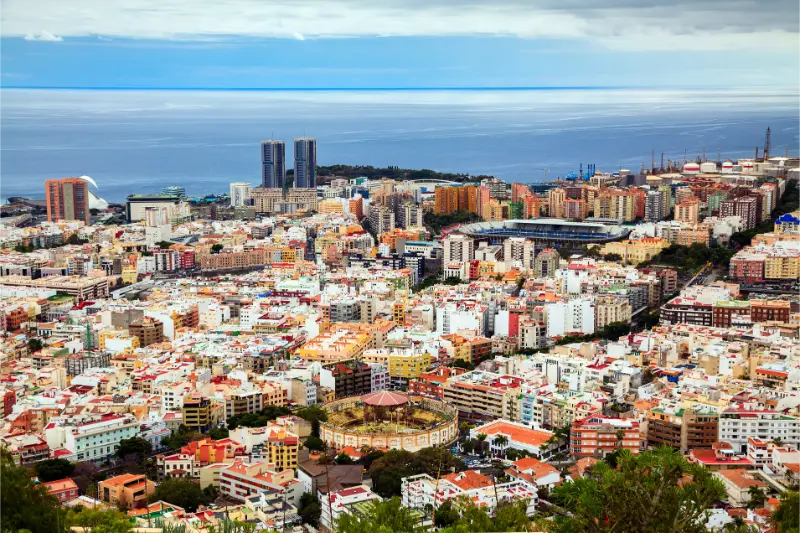
    Auditorio De Tenerife Santa Cruz Coastline

    La Laguna: art in a historic city

    La Laguna gives a different context. Contemporary exhibitions sit inside or beside a UNESCO historic city, university culture, courtyards and older religious architecture. I like the contrast: a modern installation can be followed by a wooden balcony, a convent façade and a traditional lunch without needing a car between every stop.

    I check the cultural programme for temporary university, municipal and foundation spaces before travelling. I avoid promising a specific independent gallery will be open months in advance, because small cultural venues can change programmes and hours more often than a large museum.

    Photography, design and moving image

    Contemporary art in Tenerife is not only painting. TEA’s programme includes photography, video, installation, archives, performance and film. Its cinema programme is especially useful for visitors who enjoy original-language and independent film, and I combine it with the dedicated cinema guide when planning an evening.

    The Tenerife cinema guide explains VOSE and TEA film programming, while the art and craft workshop guide is better for travellers who want to make something rather than only view exhibitions.

    An easy art-focused day

    I start late morning at TEA, have lunch around the market or central Santa Cruz, walk a public-art route, then take the tram to La Laguna for a temporary exhibition, historic-centre walk and dinner. That keeps transport simple and gives enough time for one exhibition to be memorable instead of turning the day into a museum marathon.

    On a rainy day I spend longer indoors and shorten the outdoor sculpture section. On a very hot day I reverse the plan so the city walk happens earlier and the museum occupies the warmest hours.

    How I fit this into a Tenerife itinerary

    I get more from cultural Tenerife when I stop treating every day as a race between landmarks. I combine one main visit with a neighbourhood walk, a café or meal and enough unplanned time to notice what is actually happening around me. That is especially useful in Santa Cruz and La Laguna, where museums, galleries, markets, music and food are close enough to build a relaxed half-day without constant driving.

    I link this topic with traditional Tenerife crafts, live music in Tenerife and food tours and cooking experiences. Together they give a more rounded view of the island than a checklist of beaches and viewpoints.

    Booking and opening hours

    I verify the official programme on the day, especially for exhibitions, performances, tastings and small venues. Tenerife has many events that are seasonal or temporary, and a venue can change hours for holidays, installation periods or private events. When a timed ticket matters, I book directly with the venue or a clearly identified operator and save the confirmation offline.

    Where I would stay

    For a culture-and-food trip I compare accommodation in Tenerife on Booking.com. Santa Cruz and La Laguna are the obvious urban bases, while Puerto de la Cruz works well for a north-coast stay with restaurants, historic streets and easy access to smaller towns.
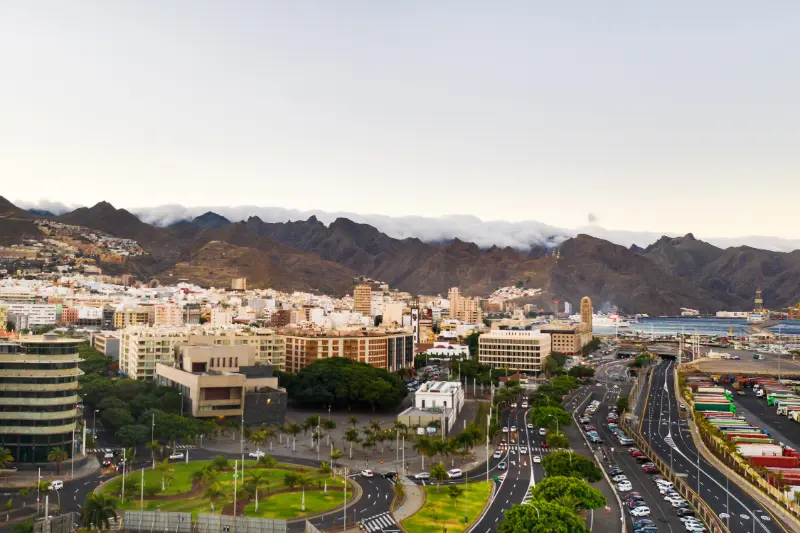
    Panoramic View Of Santa Cruz De Tenerife

    Useful related Tenerife guides

    Official sources I check

    Frequently asked questions

    Is TEA Tenerife free?

    The official visitor information currently lists free entry to the exhibition spaces. I check the page again because special activities and cinema have separate conditions.

    What are TEA opening hours?

    The official page currently lists Tuesday to Sunday, 10:00–20:00, with Monday closed except holidays. Exhibition changeovers can still affect access.

    Is Tenerife good for contemporary art?

    Yes, especially if I combine TEA with temporary spaces, public art and La Laguna rather than expecting one giant permanent museum collection.

    Can I combine Santa Cruz and La Laguna without a car?

    Yes. The tram makes the two centres easy to combine, and both are walkable once I arrive.

    Is contemporary art a good rainy-day plan?

    Yes. TEA and other cultural spaces are useful on wet or cloudy days, and the visit can be combined with food and cinema.

    My final advice

    Contemporary art gives Tenerife a different rhythm. I use TEA as the anchor, check the live exhibition calendar and then let Santa Cruz and La Laguna provide the architecture, food and public space around it.
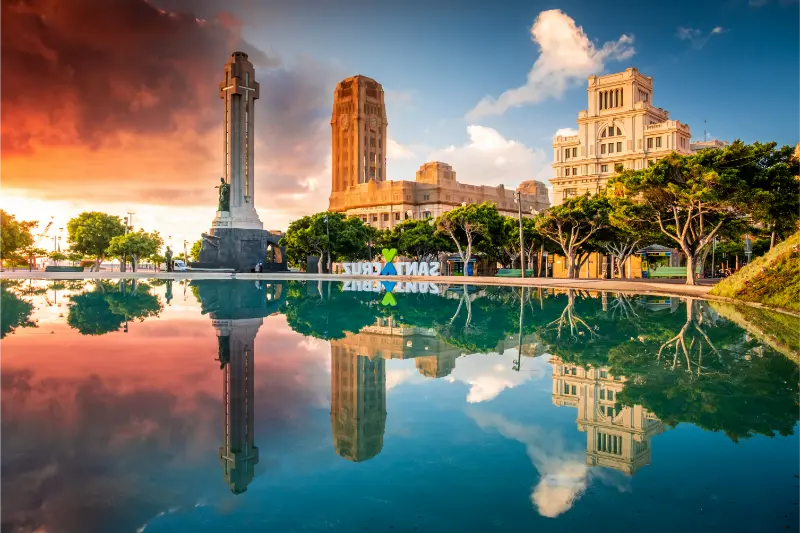
    Plaza De Espana Santa Cruz De Tenerife

    I treat this guide as a planning framework, not a substitute for live information. Rules, opening hours, alerts and services can change after publication, so I recheck the official source when a detail can affect safety, health, access or a paid booking. That small habit makes a Tenerife trip much easier to adapt when conditions change.

    A realistic seven-day-trip approach

    I do not let contemporary art and galleries in tenerife dominate the whole holiday. I solve the specific requirement, then build ordinary Tenerife days around it: one major activity, one flexible meal plan, realistic transport and a backup that works if weather or energy changes. The island rewards slower days because a short drive can move from hot coast to cloud, wind or altitude, and every transition adds time that a map does not show.

    I also avoid placing the most complicated day immediately after a late flight or immediately before departure. A spare half-day gives room for a delayed booking, a closure, tired children, an upset stomach or simply a place worth staying longer than expected. That buffer is one of the easiest ways to make a highly planned trip feel relaxed rather than fragile.

    What I save offline before leaving the hotel

    I save the accommodation address, insurance details, official alert page, relevant booking confirmation, a map of the day and the phone numbers I would need if mobile data fails. I also keep enough battery for the return journey. Tenerife has good connectivity in populated areas, but mountain terrain and underground or remote locations are exactly where I do not want every useful detail to depend on a live connection.

    For paid activities I screenshot the cancellation conditions and meeting-point instructions. For health or safety-sensitive plans I save the exact name of medication, allergies or key information in a form that can be shown to a professional. Preparation should make the day easier, not create a folder of documents nobody can find when needed.

    How I avoid overplanning

    My rule is to confirm the details that can create a real problem—health, safety, access, transport, opening times and paid reservations—and leave the rest open. I do not reserve every meal or minute. If the morning goes well, I extend it. If conditions are poor, I change area. Tenerife is much more enjoyable when the itinerary can respond to the island instead of fighting it.

  • Romería de San Roque in Garachico: August 16 Festival, Traditions and Visit Tips

    Romería de San Roque in Garachico: August 16 Festival, Traditions and Visit Tips

    Quick summary: Romería de San Roque in Garachico is worth planning as a real local event, not as a normal sightseeing stop with extra decoration. August 16, at the end of the town’s summer patronal celebrations. My approach is to choose one or two key moments from the official programme, arrive earlier than I think I need to, use public transport when roads are affected, and leave enough flexibility for crowds, weather and last-minute programme changes.

    WhereGarachico
    When to look for itAugust 16, at the end of the town’s summer patronal celebrations
    Best forCanarian culture, local traditions, photography and repeat visitors
    Main planning issueCrowds, temporary road closures and annual programme changes
    My key ruleCheck the official programme again 24–48 hours before travelling

    Why this festival deserves its own Tenerife itinerary

    Garachico already has a dramatic volcanic and maritime setting; on San Roque day it adds decorated carts, traditional clothing, folklore and a strong local devotional story. The festival feels different from a normal sightseeing day in the historic town.

    That is why I would not squeeze this into the middle of a Teide day, a long beach circuit or a cross-island road trip. The value is being present long enough to understand what is happening: who is participating, which parts are religious, which are popular or folkloric, how local people use the streets and why certain moments draw much larger crowds than others.

    A festival also changes the practical geography of a town. A street that is normally easy to cross may be closed, the nearest car park may be full, a bus stop may be moved and a restaurant that normally accepts walk-ins may be completely booked. I therefore plan the event first and build the rest of the day around it, not the other way around.

    When it takes place

    August 16, at the end of the town’s summer patronal celebrations. Annual festivals keep a strong traditional framework, but concert dates, procession times, road closures and supporting events can move. I treat any previous-year schedule as historical context rather than a promise.

    Garachico’s 2026 patronal programme ran from July 24 to August 16 and ended on the feast of San Roque with the traditional Romería. The wider programme also included a Romería Chica, a Fiesta de las Tradiciones and a Baile de Magos.

    For a future visit I check the municipality or official tourism page as soon as the new programme is published. If the exact date is essential to my trip, I also avoid booking a non-refundable activity across the same evening until the timetable is confirmed.

    What I would expect to see

    Garachico already has a dramatic volcanic and maritime setting; on San Roque day it adds decorated carts, traditional clothing, folklore and a strong local devotional story. The festival feels different from a normal sightseeing day in the historic town.

    Garachico Coast And Natural Pools Tenerife

    I separate the event into three layers. The first is the core tradition: the procession, romería, decorated structures, ceremony or civic ritual that gives the celebration its identity. The second is the supporting programme: concerts, folklore, children’s activities, fairs, sports or food events. The third is the town itself, which is still worth seeing before the busiest hours because architecture and local context make the festival easier to understand.

    If I have only half a day, I choose the core tradition plus one nearby heritage stop. If I have a full day, I arrive before the main crowd, explore the town, eat early and then settle into a good viewing area rather than constantly changing location.

    Where to position yourself

    The historic centre and routes associated with San Roque become the focus. Narrow streets and limited parking make advance transport planning especially important in a town that is busy even on ordinary summer days.

    I do not automatically choose the absolute front row. A slightly wider position often gives a better view, more room to move and a safer exit. This matters especially with carts, animals, pyrotechnics, maritime edges or narrow historic streets. Official barriers and steward instructions are part of the event design, not obstacles to work around.

    For photography I look for a place where the background explains Tenerife: a church façade, old balconies, a plaza, the harbour or a sloping historic street. That usually produces a more meaningful image than a close-up with no sense of place.

    Crowds, traffic and public transport

    I would arrive well before the main procession, park only where officially permitted and expect some roads to close. If I am based elsewhere in north Tenerife, a bus or taxi strategy can be more relaxing than trying to retrieve a car from the centre at peak time.

    I check current TITSA and, where relevant, Metrotenerife information on the day because temporary diversions can affect stops. For a major night event I plan the return before I leave the hotel: last bus, taxi rank, walking distance to a quieter pickup point and a backup if mobile networks become slow in a dense crowd.

    Driving can still make sense if I am staying in a rural area, travelling with mobility equipment or combining the event with another nearby stop. In that case I aim for a legal car park outside the ceremonial core and accept a longer walk. I never block resident access, emergency lanes, farm entrances or a procession route to save ten minutes.

    What to wear

    Comfort matters more than trying to imitate participants. Traditional Canarian clothing has cultural meaning and specific forms; I would not buy a novelty costume simply to “fit in.” If an event explicitly encourages traditional dress, I follow the organiser’s guidance and choose respectful clothing rather than a caricature.

    For ordinary visitors I prioritise comfortable shoes, sun protection and a light layer for evening. La Laguna and north-coast towns can feel cooler than the south, while summer daytime events can be hot. At religious services or inside churches I dress more conservatively and keep hats, food and loud conversation outside.

    Food and drink

    Restaurants in Garachico can be busy on any August weekend and especially during a major festival. I reserve ahead or eat at an intentionally off-peak hour.

    I carry water but avoid glass bottles in dense events. Alcohol can be part of some popular celebrations, yet I keep the day manageable: crowds, heat, uneven streets and transport are easier when I am fully alert. I also carry a small amount of cash because temporary stalls or busy payment networks do not always behave like a normal restaurant.

    Going with children

    Garachico is compact, which helps, but cobbles, slopes and dense crowds can tire younger children. I pair the festival with a simple shaded break rather than trying to combine it with every attraction in town.

    Garachico Historic Town Tenerife

    My family plan is deliberately simple: identify toilets, shade and a meeting point first; add one snack stop; then choose one main spectacle. Children do not need to see every event in the programme for the day to feel special. For fireworks or loud bands, child-appropriate hearing protection can make a major difference.

    Accessibility and sensory planning

    Historic Tenerife can involve cobbles, slopes, temporary barriers and very dense pedestrian areas. If step-free access is essential, I contact the organiser or municipality about the specific event route rather than relying on a general accessibility description of the town. A venue can be accessible on an ordinary day but difficult during a procession.

    For sensory needs, I favour the beginning or end of an event, a side street with a clear view, or a daytime programme instead of the loudest night. I save a calm retreat point—a café, hotel, parked vehicle or quieter plaza—before the crowd builds.

    Photography etiquette

    I look for wider views that connect traditional dress and carts with Garachico’s architecture. I keep clear of animals and processional space and avoid using the church steps as a tripod platform during religious moments.

    I avoid flash during worship, do not climb monuments or barriers, and never ask a participant to interrupt a procession for a portrait. Children deserve particular privacy. When I photograph identifiable people at close range, a quick gesture or question is better than assuming festival clothing makes everyone a model.

    How I would combine the festival with nearby places

    I keep the cluster local. Tenerife looks small on a map, but a festival day is the wrong moment to add unnecessary motorway kilometres. Parking delays, road closures and a slow meal can easily use the time that looked “free” in a spreadsheet itinerary.

    A realistic festival-day plan

    1. Morning: arrive before the busiest period, walk the historic area and confirm barriers, stages or procession routes.
    2. Late morning: visit one nearby church, museum, market or viewpoint from the local cluster.
    3. Lunch: eat before the peak crowd and use a reservation when the town is known to fill.
    4. Afternoon: take a rest, hydrate and move toward the chosen viewing area with time to spare.
    5. Main event: stay in one good position rather than repeatedly crossing the route.
    6. Departure: wait ten or fifteen minutes if necessary for the first crowd surge to thin, then use the transport plan prepared earlier.

    Where to stay

    Staying in or close to Garachico can turn a stressful late-night transfer into an easy walk, especially when the main event finishes after normal sightseeing hours. I compare the exact map position, not just the town name, because hills and road closures matter. Compare accommodation around Garachico on Booking.com.

    Garachico Town And Coast Tenerife

    Other Tenerife activities

    If I am building several days around the festival, I keep one flexible day for Teide, the coast or a guided experience. Availability changes, so I prefer a live activity widget to hard-coding a tour that may later disappear.

    Common mistakes I would avoid

    • Using an old programme as if the times cannot change.
    • Driving into the centre just before the main event and expecting easy parking.
    • Trying to combine a major festival with a full cross-island sightseeing day.
    • Standing inside a procession, cart or emergency corridor for photographs.
    • Assuming every popular tradition is staged for tourists rather than for the local community.
    • Depending on mobile data alone for the return journey; I save tickets, maps and addresses offline.
    • Leaving food, cups or confetti in historic streets or on beaches after the celebration.

    How this differs from Tenerife Carnival

    Carnival is Tenerife’s internationally famous mass celebration, but local patronal festivals are often more useful for understanding everyday island identity. They are smaller in scale, more closely linked to a town, parish, agricultural tradition or local history, and often mix sacred and secular activities without a clear boundary between “show” and community life.

    I therefore approach them differently. I spend more time learning what the central ritual means, I photograph less aggressively and I expect fewer English-language explanations. The reward is a more specific sense of place.

    Frequently asked questions

    Do I need a ticket?

    The central outdoor tradition is generally public, but concerts, reserved tables, dinners or special activities can require tickets or prior registration. The annual official programme is the final reference.

    Can I wear traditional Canarian clothes?

    If the event invites traditional dress, visitors can participate respectfully, but authentic clothing is not a costume. I follow local guidance and avoid novelty versions.

    Is it worth visiting if I do not speak Spanish?

    Yes. The visual and musical parts are easy to enjoy, but I translate the official programme in advance so I understand the sequence and any safety notices.

    Should I rent a car for the festival?

    Not necessarily. For central urban events I often prefer public transport; for rural or late-night events a car may be useful if I can park legally outside the closed area.

    What if the weather changes?

    Outdoor programmes can be modified for wind, rain, heat or fire risk. I check the municipality’s same-day channels instead of assuming an event will run exactly as printed weeks earlier.

    Official information

    For the current programme, routes, safety restrictions and last-minute changes I use the official source: official information for Romería de San Roque in Garachico. The dates and examples in this guide include 2026 context, but the official programme for the year of travel always takes priority.

    Final thoughts

    I would include Romería de San Roque in Garachico in a Tenerife trip when the dates line up naturally, not because every visitor needs another item on a checklist. A local festival works best when I slow down, choose one meaningful moment and let the town be the destination for the day. That approach produces a better experience than arriving late, photographing the crowd and immediately driving away.

  • Romería de San Isidro in La Orotava: Carts, Traditional Dress and June Guide

    Romería de San Isidro in La Orotava: Carts, Traditional Dress and June Guide

    Quick summary: Romería de San Isidro in La Orotava is worth planning as a real local event, not as a normal sightseeing stop with extra decoration. June, near the end of the town’s patronal festival cycle; the exact sunday changes with the annual programme. My approach is to choose one or two key moments from the official programme, arrive earlier than I think I need to, use public transport when roads are affected, and leave enough flexibility for crowds, weather and last-minute programme changes.

    WhereLa Orotava
    When to look for itJune, near the end of the town’s patronal festival cycle; the exact Sunday changes with the annual programme
    Best forCanarian culture, local traditions, photography and repeat visitors
    Main planning issueCrowds, temporary road closures and annual programme changes
    My key ruleCheck the official programme again 24–48 hours before travelling

    Why this festival deserves its own Tenerife itinerary

    La Orotava’s steep historic streets, traditional carts, agricultural symbolism, folk groups and Canarian dress create one of the island’s best-known romería settings. It also connects naturally with the wider Corpus Christi and patronal celebrations.

    That is why I would not squeeze this into the middle of a Teide day, a long beach circuit or a cross-island road trip. The value is being present long enough to understand what is happening: who is participating, which parts are religious, which are popular or folkloric, how local people use the streets and why certain moments draw much larger crowds than others.

    A festival also changes the practical geography of a town. A street that is normally easy to cross may be closed, the nearest car park may be full, a bus stop may be moved and a restaurant that normally accepts walk-ins may be completely booked. I therefore plan the event first and build the rest of the day around it, not the other way around.

    When it takes place

    June, near the end of the town’s patronal festival cycle; the exact sunday changes with the annual programme. Annual festivals keep a strong traditional framework, but concert dates, procession times, road closures and supporting events can move. I treat any previous-year schedule as historical context rather than a promise.

    For 2026, the Romería in honour of San Isidro Labrador and Santa María de la Cabeza was held on June 14. The municipality described it as the 89th edition and expected more than 25,000 participants and visitors, with dozens of decorated carts.

    For a future visit I check the municipality or official tourism page as soon as the new programme is published. If the exact date is essential to my trip, I also avoid booking a non-refundable activity across the same evening until the timetable is confirmed.

    What I would expect to see

    La Orotava’s steep historic streets, traditional carts, agricultural symbolism, folk groups and Canarian dress create one of the island’s best-known romería settings. It also connects naturally with the wider Corpus Christi and patronal celebrations.

    Historic Center Of La Orotava Tenerife

    I separate the event into three layers. The first is the core tradition: the procession, romería, decorated structures, ceremony or civic ritual that gives the celebration its identity. The second is the supporting programme: concerts, folklore, children’s activities, fairs, sports or food events. The third is the town itself, which is still worth seeing before the busiest hours because architecture and local context make the festival easier to understand.

    If I have only half a day, I choose the core tradition plus one nearby heritage stop. If I have a full day, I arrive before the main crowd, explore the town, eat early and then settle into a good viewing area rather than constantly changing location.

    Where to position yourself

    The route crosses the historic town between the San Francisco area and El Calvario. Slopes are part of the experience, so footwear matters even if I am only watching.

    I do not automatically choose the absolute front row. A slightly wider position often gives a better view, more room to move and a safer exit. This matters especially with carts, animals, pyrotechnics, maritime edges or narrow historic streets. Official barriers and steward instructions are part of the event design, not obstacles to work around.

    For photography I look for a place where the background explains Tenerife: a church façade, old balconies, a plaza, the harbour or a sloping historic street. That usually produces a more meaningful image than a close-up with no sense of place.

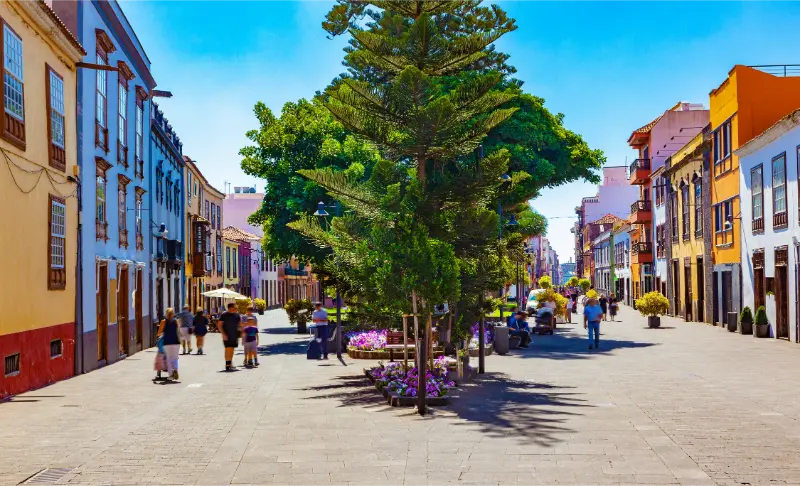
    Historic Street In La Orotava Tenerife

    Crowds, traffic and public transport

    I would arrive early, use official transport advice and avoid driving into streets that form part of the route. After the procession, the Baile de Romería keeps the atmosphere going, so departure can be slow.

    I check current TITSA and, where relevant, Metrotenerife information on the day because temporary diversions can affect stops. For a major night event I plan the return before I leave the hotel: last bus, taxi rank, walking distance to a quieter pickup point and a backup if mobile networks become slow in a dense crowd.

    Driving can still make sense if I am staying in a rural area, travelling with mobility equipment or combining the event with another nearby stop. In that case I aim for a legal car park outside the ceremonial core and accept a longer walk. I never block resident access, emergency lanes, farm entrances or a procession route to save ten minutes.

    What to wear

    Comfort matters more than trying to imitate participants. Traditional Canarian clothing has cultural meaning and specific forms; I would not buy a novelty costume simply to “fit in.” If an event explicitly encourages traditional dress, I follow the organiser’s guidance and choose respectful clothing rather than a caricature.

    For ordinary visitors I prioritise comfortable shoes, sun protection and a light layer for evening. La Laguna and north-coast towns can feel cooler than the south, while summer daytime events can be hot. At religious services or inside churches I dress more conservatively and keep hats, food and loud conversation outside.

    Food and drink

    Agricultural products and shared food are part of the romería identity, but visitors should not treat carts as free catering. I plan a normal meal in La Orotava and enjoy any offered taste as a bonus.

    I carry water but avoid glass bottles in dense events. Alcohol can be part of some popular celebrations, yet I keep the day manageable: crowds, heat, uneven streets and transport are easier when I am fully alert. I also carry a small amount of cash because temporary stalls or busy payment networks do not always behave like a normal restaurant.

    Going with children

    Children often enjoy the carts and music, but long standing on sloping streets is tiring. I choose one viewing point with nearby shade, toilets and an escape route rather than constantly moving.

    My family plan is deliberately simple: identify toilets, shade and a meeting point first; add one snack stop; then choose one main spectacle. Children do not need to see every event in the programme for the day to feel special. For fireworks or loud bands, child-appropriate hearing protection can make a major difference.

    Accessibility and sensory planning

    Historic Tenerife can involve cobbles, slopes, temporary barriers and very dense pedestrian areas. If step-free access is essential, I contact the organiser or municipality about the specific event route rather than relying on a general accessibility description of the town. A venue can be accessible on an ordinary day but difficult during a procession.

    For sensory needs, I favour the beginning or end of an event, a side street with a clear view, or a daytime programme instead of the loudest night. I save a calm retreat point—a café, hotel, parked vehicle or quieter plaza—before the crowd builds.

    Photography etiquette

    I use the architecture to frame the procession and avoid stepping into the path of carts or animals. Traditional dress deserves the same courtesy as any portrait: I ask when I am close enough for a person to be identifiable.

    I avoid flash during worship, do not climb monuments or barriers, and never ask a participant to interrupt a procession for a portrait. Children deserve particular privacy. When I photograph identifiable people at close range, a quick gesture or question is better than assuming festival clothing makes everyone a model.

    How I would combine the festival with nearby places

    I keep the cluster local. Tenerife looks small on a map, but a festival day is the wrong moment to add unnecessary motorway kilometres. Parking delays, road closures and a slow meal can easily use the time that looked “free” in a spreadsheet itinerary.

    A realistic festival-day plan

    1. Morning: arrive before the busiest period, walk the historic area and confirm barriers, stages or procession routes.
    2. Late morning: visit one nearby church, museum, market or viewpoint from the local cluster.
    3. Lunch: eat before the peak crowd and use a reservation when the town is known to fill.
    4. Afternoon: take a rest, hydrate and move toward the chosen viewing area with time to spare.
    5. Main event: stay in one good position rather than repeatedly crossing the route.
    6. Departure: wait ten or fifteen minutes if necessary for the first crowd surge to thin, then use the transport plan prepared earlier.

    Where to stay

    Staying in or close to La Orotava can turn a stressful late-night transfer into an easy walk, especially when the main event finishes after normal sightseeing hours. I compare the exact map position, not just the town name, because hills and road closures matter. Compare accommodation around La Orotava on Booking.com.

    La Orotava Historic Center And Mountains Tenerife

    Other Tenerife activities

    If I am building several days around the festival, I keep one flexible day for Teide, the coast or a guided experience. Availability changes, so I prefer a live activity widget to hard-coding a tour that may later disappear.

    Common mistakes I would avoid

    • Using an old programme as if the times cannot change.
    • Driving into the centre just before the main event and expecting easy parking.
    • Trying to combine a major festival with a full cross-island sightseeing day.
    • Standing inside a procession, cart or emergency corridor for photographs.
    • Assuming every popular tradition is staged for tourists rather than for the local community.
    • Depending on mobile data alone for the return journey; I save tickets, maps and addresses offline.
    • Leaving food, cups or confetti in historic streets or on beaches after the celebration.

    How this differs from Tenerife Carnival

    Carnival is Tenerife’s internationally famous mass celebration, but local patronal festivals are often more useful for understanding everyday island identity. They are smaller in scale, more closely linked to a town, parish, agricultural tradition or local history, and often mix sacred and secular activities without a clear boundary between “show” and community life.

    I therefore approach them differently. I spend more time learning what the central ritual means, I photograph less aggressively and I expect fewer English-language explanations. The reward is a more specific sense of place.

    Frequently asked questions

    Do I need a ticket?

    The central outdoor tradition is generally public, but concerts, reserved tables, dinners or special activities can require tickets or prior registration. The annual official programme is the final reference.

    Can I wear traditional Canarian clothes?

    If the event invites traditional dress, visitors can participate respectfully, but authentic clothing is not a costume. I follow local guidance and avoid novelty versions.

    Is it worth visiting if I do not speak Spanish?

    Yes. The visual and musical parts are easy to enjoy, but I translate the official programme in advance so I understand the sequence and any safety notices.

    Should I rent a car for the festival?

    Not necessarily. For central urban events I often prefer public transport; for rural or late-night events a car may be useful if I can park legally outside the closed area.

    What if the weather changes?

    Outdoor programmes can be modified for wind, rain, heat or fire risk. I check the municipality’s same-day channels instead of assuming an event will run exactly as printed weeks earlier.

    Official information

    For the current programme, routes, safety restrictions and last-minute changes I use the official source: official information for Romería de San Isidro in La Orotava. The dates and examples in this guide include 2026 context, but the official programme for the year of travel always takes priority.

    Final thoughts

    I would include Romería de San Isidro in La Orotava in a Tenerife trip when the dates line up naturally, not because every visitor needs another item on a checklist. A local festival works best when I slow down, choose one meaningful moment and let the town be the destination for the day. That approach produces a better experience than arriving late, photographing the crowd and immediately driving away.

  • Virgen de Candelaria August Pilgrimage: August 14–15 Traditions and Visitor Guide

    Virgen de Candelaria August Pilgrimage: August 14–15 Traditions and Visitor Guide

    Quick summary: Virgen de Candelaria August Pilgrimage is worth planning as a real local event, not as a normal sightseeing stop with extra decoration. August 14 and 15, with related festivities extending across the first half of august. My approach is to choose one or two key moments from the official programme, arrive earlier than I think I need to, use public transport when roads are affected, and leave enough flexibility for crowds, weather and last-minute programme changes.

    WhereCandelaria
    When to look for itAugust 14 and 15, with related festivities extending across the first half of August
    Best forCanarian culture, local traditions, photography and repeat visitors
    Main planning issueCrowds, temporary road closures and annual programme changes
    My key ruleCheck the official programme again 24–48 hours before travelling

    Why this festival deserves its own Tenerife itinerary

    This is both a religious pilgrimage and a major Canarian identity event. The Guanche Ceremony recreates the traditional story of the image’s discovery, while August 15 combines worship, institutional acts, offerings, music and processions.

    That is why I would not squeeze this into the middle of a Teide day, a long beach circuit or a cross-island road trip. The value is being present long enough to understand what is happening: who is participating, which parts are religious, which are popular or folkloric, how local people use the streets and why certain moments draw much larger crowds than others.

    A festival also changes the practical geography of a town. A street that is normally easy to cross may be closed, the nearest car park may be full, a bus stop may be moved and a restaurant that normally accepts walk-ins may be completely booked. I therefore plan the event first and build the rest of the day around it, not the other way around.

    When it takes place

    August 14 and 15, with related festivities extending across the first half of august. Annual festivals keep a strong traditional framework, but concert dates, procession times, road closures and supporting events can move. I treat any previous-year schedule as historical context rather than a promise.

    The 2026 programme placed the Guanche Ceremony and procession on the evening of August 14 and the principal Patroness of the Canary Islands celebrations on August 15. The municipality reported thousands of pilgrims, with the Basilica open through the night and multiple religious and cultural events.

    For a future visit I check the municipality or official tourism page as soon as the new programme is published. If the exact date is essential to my trip, I also avoid booking a non-refundable activity across the same evening until the timetable is confirmed.

    What I would expect to see

    This is both a religious pilgrimage and a major Canarian identity event. The Guanche Ceremony recreates the traditional story of the image’s discovery, while August 15 combines worship, institutional acts, offerings, music and processions.

    I separate the event into three layers. The first is the core tradition: the procession, romería, decorated structures, ceremony or civic ritual that gives the celebration its identity. The second is the supporting programme: concerts, folklore, children’s activities, fairs, sports or food events. The third is the town itself, which is still worth seeing before the busiest hours because architecture and local context make the festival easier to understand.

    If I have only half a day, I choose the core tradition plus one nearby heritage stop. If I have a full day, I arrive before the main crowd, explore the town, eat early and then settle into a good viewing area rather than constantly changing location.

    Where to position yourself

    The Basilica and Plaza de la Patrona are the centre, but the pilgrimage experience extends onto approach roads and walking routes used by people arriving from other parts of Tenerife.

    I do not automatically choose the absolute front row. A slightly wider position often gives a better view, more room to move and a safer exit. This matters especially with carts, animals, pyrotechnics, maritime edges or narrow historic streets. Official barriers and steward instructions are part of the event design, not obstacles to work around.

    For photography I look for a place where the background explains Tenerife: a church façade, old balconies, a plaza, the harbour or a sloping historic street. That usually produces a more meaningful image than a close-up with no sense of place.

    Crowds, traffic and public transport

    Walking along roads at night is not something I improvise. If I join the pilgrimage, I use the official safety information, reflective gear where appropriate, water and a realistic route; otherwise I arrive by organised transport and avoid roads affected by restrictions.

    I check current TITSA and, where relevant, Metrotenerife information on the day because temporary diversions can affect stops. For a major night event I plan the return before I leave the hotel: last bus, taxi rank, walking distance to a quieter pickup point and a backup if mobile networks become slow in a dense crowd.

    Driving can still make sense if I am staying in a rural area, travelling with mobility equipment or combining the event with another nearby stop. In that case I aim for a legal car park outside the ceremonial core and accept a longer walk. I never block resident access, emergency lanes, farm entrances or a procession route to save ten minutes.

    What to wear

    Comfort matters more than trying to imitate participants. Traditional Canarian clothing has cultural meaning and specific forms; I would not buy a novelty costume simply to “fit in.” If an event explicitly encourages traditional dress, I follow the organiser’s guidance and choose respectful clothing rather than a caricature.

    For ordinary visitors I prioritise comfortable shoes, sun protection and a light layer for evening. La Laguna and north-coast towns can feel cooler than the south, while summer daytime events can be hot. At religious services or inside churches I dress more conservatively and keep hats, food and loud conversation outside.

    Food and drink

    Candelaria becomes extremely busy, so I would not depend on finding an immediate table beside the Basilica. I reserve, eat at an off-peak time or use a simple picnic only where permitted.

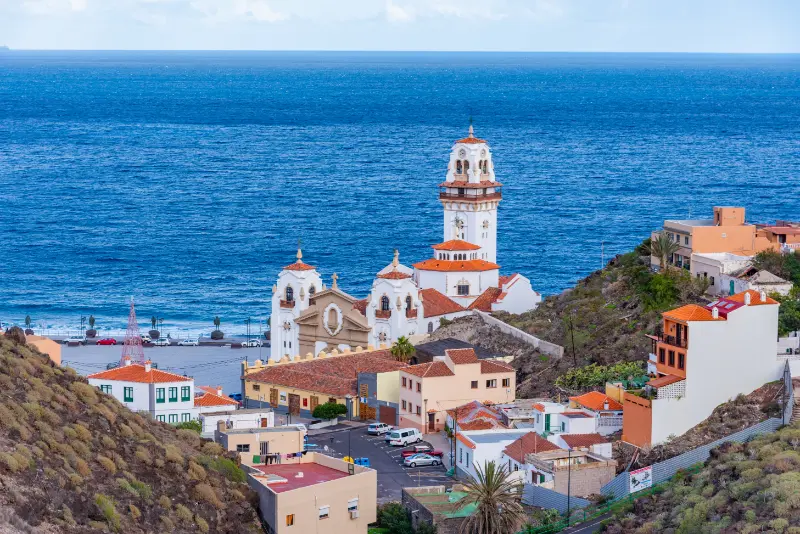
    Candelaria Tenerife Basilica And Coast

    I carry water but avoid glass bottles in dense events. Alcohol can be part of some popular celebrations, yet I keep the day manageable: crowds, heat, uneven streets and transport are easier when I am fully alert. I also carry a small amount of cash because temporary stalls or busy payment networks do not always behave like a normal restaurant.

    Going with children

    Families can enjoy the daytime August 15 programme, but overnight pilgrimage conditions and dense late-night crowds are a different level of commitment. I separate those two experiences when travelling with children.

    My family plan is deliberately simple: identify toilets, shade and a meeting point first; add one snack stop; then choose one main spectacle. Children do not need to see every event in the programme for the day to feel special. For fireworks or loud bands, child-appropriate hearing protection can make a major difference.

    Accessibility and sensory planning

    Historic Tenerife can involve cobbles, slopes, temporary barriers and very dense pedestrian areas. If step-free access is essential, I contact the organiser or municipality about the specific event route rather than relying on a general accessibility description of the town. A venue can be accessible on an ordinary day but difficult during a procession.

    For sensory needs, I favour the beginning or end of an event, a side street with a clear view, or a daytime programme instead of the loudest night. I save a calm retreat point—a café, hotel, parked vehicle or quieter plaza—before the crowd builds.

    Photography etiquette

    The Guanche Ceremony is a performance with cultural and devotional meaning. I photograph from public spectator areas and avoid flash or movement that distracts from the ritual.

    I avoid flash during worship, do not climb monuments or barriers, and never ask a participant to interrupt a procession for a portrait. Children deserve particular privacy. When I photograph identifiable people at close range, a quick gesture or question is better than assuming festival clothing makes everyone a model.

    How I would combine the festival with nearby places

    I keep the cluster local. Tenerife looks small on a map, but a festival day is the wrong moment to add unnecessary motorway kilometres. Parking delays, road closures and a slow meal can easily use the time that looked “free” in a spreadsheet itinerary.

    A realistic festival-day plan

    1. Morning: arrive before the busiest period, walk the historic area and confirm barriers, stages or procession routes.
    2. Late morning: visit one nearby church, museum, market or viewpoint from the local cluster.
    3. Lunch: eat before the peak crowd and use a reservation when the town is known to fill.
    4. Afternoon: take a rest, hydrate and move toward the chosen viewing area with time to spare.
    5. Main event: stay in one good position rather than repeatedly crossing the route.
    6. Departure: wait ten or fifteen minutes if necessary for the first crowd surge to thin, then use the transport plan prepared earlier.

    Where to stay

    Staying in or close to Candelaria can turn a stressful late-night transfer into an easy walk, especially when the main event finishes after normal sightseeing hours. I compare the exact map position, not just the town name, because hills and road closures matter. Compare accommodation around Candelaria on Booking.com.

    Basilica Of Candelaria On The Tenerife Coast

    Other Tenerife activities

    If I am building several days around the festival, I keep one flexible day for Teide, the coast or a guided experience. Availability changes, so I prefer a live activity widget to hard-coding a tour that may later disappear.

    Common mistakes I would avoid

    • Using an old programme as if the times cannot change.
    • Driving into the centre just before the main event and expecting easy parking.
    • Trying to combine a major festival with a full cross-island sightseeing day.
    • Standing inside a procession, cart or emergency corridor for photographs.
    • Assuming every popular tradition is staged for tourists rather than for the local community.
    • Depending on mobile data alone for the return journey; I save tickets, maps and addresses offline.
    • Leaving food, cups or confetti in historic streets or on beaches after the celebration.

    How this differs from Tenerife Carnival

    Carnival is Tenerife’s internationally famous mass celebration, but local patronal festivals are often more useful for understanding everyday island identity. They are smaller in scale, more closely linked to a town, parish, agricultural tradition or local history, and often mix sacred and secular activities without a clear boundary between “show” and community life.

    I therefore approach them differently. I spend more time learning what the central ritual means, I photograph less aggressively and I expect fewer English-language explanations. The reward is a more specific sense of place.

    Frequently asked questions

    Do I need a ticket?

    The central outdoor tradition is generally public, but concerts, reserved tables, dinners or special activities can require tickets or prior registration. The annual official programme is the final reference.

    Can I wear traditional Canarian clothes?

    If the event invites traditional dress, visitors can participate respectfully, but authentic clothing is not a costume. I follow local guidance and avoid novelty versions.

    Is it worth visiting if I do not speak Spanish?

    Yes. The visual and musical parts are easy to enjoy, but I translate the official programme in advance so I understand the sequence and any safety notices.

    Should I rent a car for the festival?

    Not necessarily. For central urban events I often prefer public transport; for rural or late-night events a car may be useful if I can park legally outside the closed area.

    What if the weather changes?

    Outdoor programmes can be modified for wind, rain, heat or fire risk. I check the municipality’s same-day channels instead of assuming an event will run exactly as printed weeks earlier.

    Official information

    For the current programme, routes, safety restrictions and last-minute changes I use the official source: official information for Virgen de Candelaria August Pilgrimage. The dates and examples in this guide include 2026 context, but the official programme for the year of travel always takes priority.

    Basilica Of Our Lady Of Candelaria Tenerife Canary Islands Spain

    Final thoughts

    I would include Virgen de Candelaria August Pilgrimage in a Tenerife trip when the dates line up naturally, not because every visitor needs another item on a checklist. A local festival works best when I slow down, choose one meaningful moment and let the town be the destination for the day. That approach produces a better experience than arriving late, photographing the crowd and immediately driving away.

  • Virgen del Carmen Festival in Puerto de la Cruz: Maritime Procession and July Guide

    Virgen del Carmen Festival in Puerto de la Cruz: Maritime Procession and July Guide

    Quick summary: Virgen del Carmen Festival in Puerto de la Cruz is worth planning as a real local event, not as a normal sightseeing stop with extra decoration. July, during the grandes fiestas de julio; the principal maritime procession date is announced in the yearly programme. My approach is to choose one or two key moments from the official programme, arrive earlier than I think I need to, use public transport when roads are affected, and leave enough flexibility for crowds, weather and last-minute programme changes.

    WherePuerto de la Cruz
    When to look for itJuly, during the Grandes Fiestas de Julio; the principal maritime procession date is announced in the yearly programme
    Best forCanarian culture, local traditions, photography and repeat visitors
    Main planning issueCrowds, temporary road closures and annual programme changes
    My key ruleCheck the official programme again 24–48 hours before travelling

    Why this festival deserves its own Tenerife itinerary

    The emotional centre is the relationship between the town and the sea: the image moves from the church through the streets toward the fishing harbour and is embarked, surrounded by a crowd that mixes devotion, maritime identity and popular celebration.

    That is why I would not squeeze this into the middle of a Teide day, a long beach circuit or a cross-island road trip. The value is being present long enough to understand what is happening: who is participating, which parts are religious, which are popular or folkloric, how local people use the streets and why certain moments draw much larger crowds than others.

    A festival also changes the practical geography of a town. A street that is normally easy to cross may be closed, the nearest car park may be full, a bus stop may be moved and a restaurant that normally accepts walk-ins may be completely booked. I therefore plan the event first and build the rest of the day around it, not the other way around.

    When it takes place

    July, during the grandes fiestas de julio; the principal maritime procession date is announced in the yearly programme. Annual festivals keep a strong traditional framework, but concert dates, procession times, road closures and supporting events can move. I treat any previous-year schedule as historical context rather than a promise.

    In 2026 the main day was July 14. The municipality scheduled a 17:15 Eucharist followed by the land-and-sea procession of the Virgen del Carmen and San Telmo, and later reported that around 30,000 people took part across the day.

    For a future visit I check the municipality or official tourism page as soon as the new programme is published. If the exact date is essential to my trip, I also avoid booking a non-refundable activity across the same evening until the timetable is confirmed.

    What I would expect to see

    The emotional centre is the relationship between the town and the sea: the image moves from the church through the streets toward the fishing harbour and is embarked, surrounded by a crowd that mixes devotion, maritime identity and popular celebration.

    I separate the event into three layers. The first is the core tradition: the procession, romería, decorated structures, ceremony or civic ritual that gives the celebration its identity. The second is the supporting programme: concerts, folklore, children’s activities, fairs, sports or food events. The third is the town itself, which is still worth seeing before the busiest hours because architecture and local context make the festival easier to understand.

    If I have only half a day, I choose the core tradition plus one nearby heritage stop. If I have a full day, I arrive before the main crowd, explore the town, eat early and then settle into a good viewing area rather than constantly changing location.

    Where to position yourself

    The parish of Nuestra Señora de la Peña de Francia, central streets and the muelle pesquero form the key sequence. I would scout the harbour area earlier in the day because access becomes much tighter later.

    I do not automatically choose the absolute front row. A slightly wider position often gives a better view, more room to move and a safer exit. This matters especially with carts, animals, pyrotechnics, maritime edges or narrow historic streets. Official barriers and steward instructions are part of the event design, not obstacles to work around.

    For photography I look for a place where the background explains Tenerife: a church façade, old balconies, a plaza, the harbour or a sloping historic street. That usually produces a more meaningful image than a close-up with no sense of place.

    Crowds, traffic and public transport

    This is one of the busiest days in Puerto de la Cruz. I would not attempt a last-minute drive into the centre; I would use bus, taxi or a parking strategy outside the core and expect slow pedestrian movement after the embarkation.

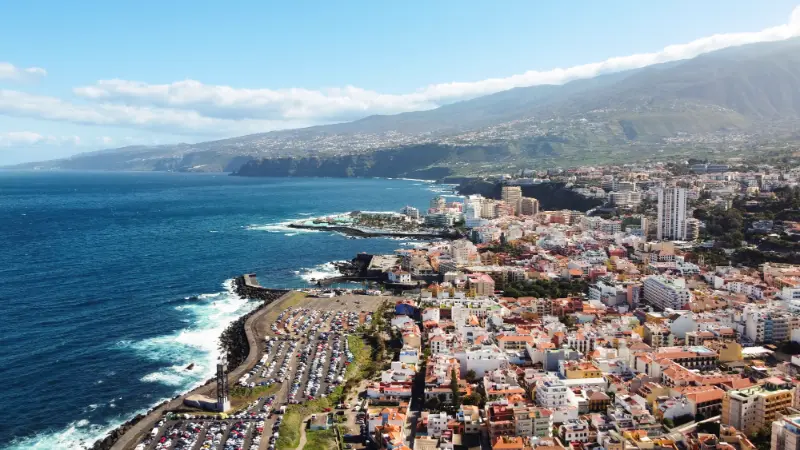
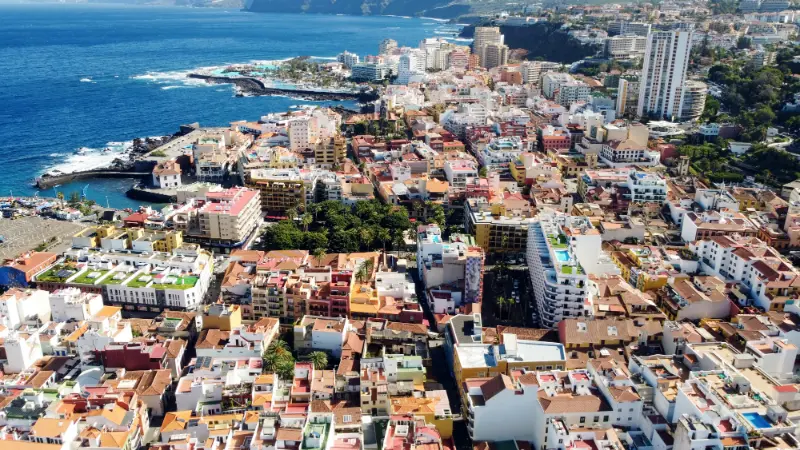
    Aerial View Of Puerto De La Cruz City Tenerife

    I check current TITSA and, where relevant, Metrotenerife information on the day because temporary diversions can affect stops. For a major night event I plan the return before I leave the hotel: last bus, taxi rank, walking distance to a quieter pickup point and a backup if mobile networks become slow in a dense crowd.

    Driving can still make sense if I am staying in a rural area, travelling with mobility equipment or combining the event with another nearby stop. In that case I aim for a legal car park outside the ceremonial core and accept a longer walk. I never block resident access, emergency lanes, farm entrances or a procession route to save ten minutes.

    What to wear

    Comfort matters more than trying to imitate participants. Traditional Canarian clothing has cultural meaning and specific forms; I would not buy a novelty costume simply to “fit in.” If an event explicitly encourages traditional dress, I follow the organiser’s guidance and choose respectful clothing rather than a caricature.

    For ordinary visitors I prioritise comfortable shoes, sun protection and a light layer for evening. La Laguna and north-coast towns can feel cooler than the south, while summer daytime events can be hot. At religious services or inside churches I dress more conservatively and keep hats, food and loud conversation outside.

    Food and drink

    The July fiestas include food, folklore and evening events, but restaurants fill quickly. I book an early or late meal and keep the peak procession window free.

    I carry water but avoid glass bottles in dense events. Alcohol can be part of some popular celebrations, yet I keep the day manageable: crowds, heat, uneven streets and transport are easier when I am fully alert. I also carry a small amount of cash because temporary stalls or busy payment networks do not always behave like a normal restaurant.

    Going with children

    The spectacle can be memorable for children, but the harbour edge and dense crowds require attention. I keep younger children away from waterfront pressure points and choose a more spacious viewing position.

    My family plan is deliberately simple: identify toilets, shade and a meeting point first; add one snack stop; then choose one main spectacle. Children do not need to see every event in the programme for the day to feel special. For fireworks or loud bands, child-appropriate hearing protection can make a major difference.

    Accessibility and sensory planning

    Historic Tenerife can involve cobbles, slopes, temporary barriers and very dense pedestrian areas. If step-free access is essential, I contact the organiser or municipality about the specific event route rather than relying on a general accessibility description of the town. A venue can be accessible on an ordinary day but difficult during a procession.

    For sensory needs, I favour the beginning or end of an event, a side street with a clear view, or a daytime programme instead of the loudest night. I save a calm retreat point—a café, hotel, parked vehicle or quieter plaza—before the crowd builds.

    Photography etiquette

    The maritime procession is visually powerful, but I do not lean over harbour edges or enter working areas for a shot. A zoom lens can be safer and more respectful than forcing a front-row position.

    I avoid flash during worship, do not climb monuments or barriers, and never ask a participant to interrupt a procession for a portrait. Children deserve particular privacy. When I photograph identifiable people at close range, a quick gesture or question is better than assuming festival clothing makes everyone a model.

    How I would combine the festival with nearby places

    I keep the cluster local. Tenerife looks small on a map, but a festival day is the wrong moment to add unnecessary motorway kilometres. Parking delays, road closures and a slow meal can easily use the time that looked “free” in a spreadsheet itinerary.

    A realistic festival-day plan

    1. Morning: arrive before the busiest period, walk the historic area and confirm barriers, stages or procession routes.
    2. Late morning: visit one nearby church, museum, market or viewpoint from the local cluster.
    3. Lunch: eat before the peak crowd and use a reservation when the town is known to fill.
    4. Afternoon: take a rest, hydrate and move toward the chosen viewing area with time to spare.
    5. Main event: stay in one good position rather than repeatedly crossing the route.
    6. Departure: wait ten or fifteen minutes if necessary for the first crowd surge to thin, then use the transport plan prepared earlier.

    Where to stay

    Staying in or close to Puerto de la Cruz can turn a stressful late-night transfer into an easy walk, especially when the main event finishes after normal sightseeing hours. I compare the exact map position, not just the town name, because hills and road closures matter. Compare accommodation around Puerto de la Cruz on Booking.com.

    Aerial View Of Puerto De La Cruz Tenerife

    Other Tenerife activities

    If I am building several days around the festival, I keep one flexible day for Teide, the coast or a guided experience. Availability changes, so I prefer a live activity widget to hard-coding a tour that may later disappear.

    Common mistakes I would avoid

    • Using an old programme as if the times cannot change.
    • Driving into the centre just before the main event and expecting easy parking.
    • Trying to combine a major festival with a full cross-island sightseeing day.
    • Standing inside a procession, cart or emergency corridor for photographs.
    • Assuming every popular tradition is staged for tourists rather than for the local community.
    • Depending on mobile data alone for the return journey; I save tickets, maps and addresses offline.
    • Leaving food, cups or confetti in historic streets or on beaches after the celebration.

    How this differs from Tenerife Carnival

    Carnival is Tenerife’s internationally famous mass celebration, but local patronal festivals are often more useful for understanding everyday island identity. They are smaller in scale, more closely linked to a town, parish, agricultural tradition or local history, and often mix sacred and secular activities without a clear boundary between “show” and community life.

    I therefore approach them differently. I spend more time learning what the central ritual means, I photograph less aggressively and I expect fewer English-language explanations. The reward is a more specific sense of place.

    Frequently asked questions

    Do I need a ticket?

    The central outdoor tradition is generally public, but concerts, reserved tables, dinners or special activities can require tickets or prior registration. The annual official programme is the final reference.

    Can I wear traditional Canarian clothes?

    If the event invites traditional dress, visitors can participate respectfully, but authentic clothing is not a costume. I follow local guidance and avoid novelty versions.

    Is it worth visiting if I do not speak Spanish?

    Yes. The visual and musical parts are easy to enjoy, but I translate the official programme in advance so I understand the sequence and any safety notices.

    Should I rent a car for the festival?

    Not necessarily. For central urban events I often prefer public transport; for rural or late-night events a car may be useful if I can park legally outside the closed area.

    What if the weather changes?

    Outdoor programmes can be modified for wind, rain, heat or fire risk. I check the municipality’s same-day channels instead of assuming an event will run exactly as printed weeks earlier.

    Official information

    For the current programme, routes, safety restrictions and last-minute changes I use the official source: official information for Virgen del Carmen Festival in Puerto de la Cruz. The dates and examples in this guide include 2026 context, but the official programme for the year of travel always takes priority.

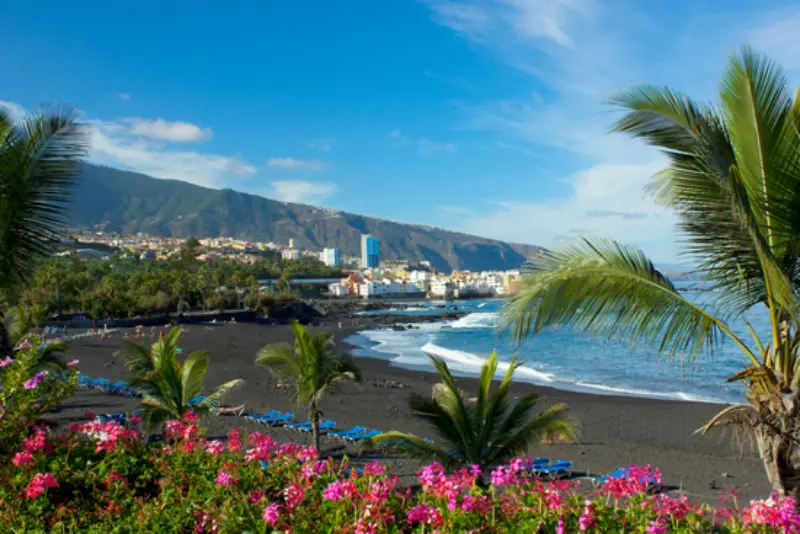
    Playa Jardin Puerto De La Cruz Tenerife

    Final thoughts

    I would include Virgen del Carmen Festival in Puerto de la Cruz in a Tenerife trip when the dates line up naturally, not because every visitor needs another item on a checklist. A local festival works best when I slow down, choose one meaningful moment and let the town be the destination for the day. That approach produces a better experience than arriving late, photographing the crowd and immediately driving away.

  • Romería de San Benito Abad in La Laguna: Traditional Dress, Carts and 2026 Guide

    Romería de San Benito Abad in La Laguna: Traditional Dress, Carts and 2026 Guide

    Quick summary: Romería de San Benito Abad in La Laguna is worth planning as a real local event, not as a normal sightseeing stop with extra decoration. July, as part of the fiestas de san benito abad; the exact weekend should always be checked in the current municipal programme. My approach is to choose one or two key moments from the official programme, arrive earlier than I think I need to, use public transport when roads are affected, and leave enough flexibility for crowds, weather and last-minute programme changes.

    WhereSan Cristóbal de La Laguna
    When to look for itJuly, as part of the Fiestas de San Benito Abad; the exact weekend should always be checked in the current municipal programme
    Best forCanarian culture, local traditions, photography and repeat visitors
    Main planning issueCrowds, temporary road closures and annual programme changes
    My key ruleCheck the official programme again 24–48 hours before travelling

    Why this festival deserves its own Tenerife itinerary

    This is one of Tenerife’s major romería experiences: decorated carts, folk groups, traditional Canarian clothing, music, food and a procession atmosphere that turns part of La Laguna into a moving showcase of island traditions.

    That is why I would not squeeze this into the middle of a Teide day, a long beach circuit or a cross-island road trip. The value is being present long enough to understand what is happening: who is participating, which parts are religious, which are popular or folkloric, how local people use the streets and why certain moments draw much larger crowds than others.

    A festival also changes the practical geography of a town. A street that is normally easy to cross may be closed, the nearest car park may be full, a bus stop may be moved and a restaurant that normally accepts walk-ins may be completely booked. I therefore plan the event first and build the rest of the day around it, not the other way around.

    When it takes place

    July, as part of the fiestas de san benito abad; the exact weekend should always be checked in the current municipal programme. Annual festivals keep a strong traditional framework, but concert dates, procession times, road closures and supporting events can move. I treat any previous-year schedule as historical context rather than a promise.

    In 2026 La Laguna celebrated the 80th edition of the festivities. The Regional Romería took place on July 12 and the municipality announced around 80 carts and small carts plus nearly 40 folklore groups; the Baile de Magos was scheduled two days earlier.

    For a future visit I check the municipality or official tourism page as soon as the new programme is published. If the exact date is essential to my trip, I also avoid booking a non-refundable activity across the same evening until the timetable is confirmed.

    What I would expect to see

    This is one of Tenerife’s major romería experiences: decorated carts, folk groups, traditional Canarian clothing, music, food and a procession atmosphere that turns part of La Laguna into a moving showcase of island traditions.

    I separate the event into three layers. The first is the core tradition: the procession, romería, decorated structures, ceremony or civic ritual that gives the celebration its identity. The second is the supporting programme: concerts, folklore, children’s activities, fairs, sports or food events. The third is the town itself, which is still worth seeing before the busiest hours because architecture and local context make the festival easier to understand.

    If I have only half a day, I choose the core tradition plus one nearby heritage stop. If I have a full day, I arrive before the main crowd, explore the town, eat early and then settle into a good viewing area rather than constantly changing location.

    Where to position yourself

    The event uses streets around the historic city and San Benito area. The precise route and traffic controls matter, so I save the current official map rather than following an old blog route.

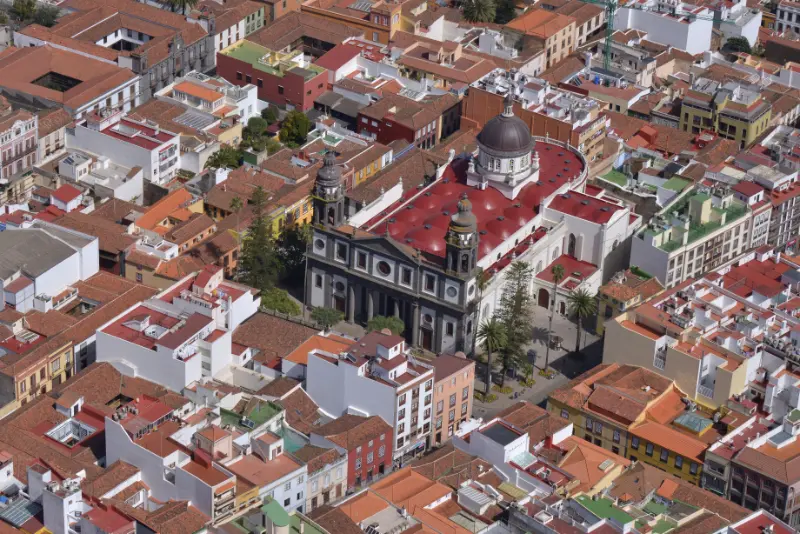
    San Cristobal De La Laguna Historic Center Tenerife

    I do not automatically choose the absolute front row. A slightly wider position often gives a better view, more room to move and a safer exit. This matters especially with carts, animals, pyrotechnics, maritime edges or narrow historic streets. Official barriers and steward instructions are part of the event design, not obstacles to work around.

    For photography I look for a place where the background explains Tenerife: a church façade, old balconies, a plaza, the harbour or a sloping historic street. That usually produces a more meaningful image than a close-up with no sense of place.

    Crowds, traffic and public transport

    With tens of thousands of spectators possible at major romerías, arrival time changes the experience. I would enter by public transport, find one good viewing area and avoid trying to follow the entire procession through the densest points.

    I check current TITSA and, where relevant, Metrotenerife information on the day because temporary diversions can affect stops. For a major night event I plan the return before I leave the hotel: last bus, taxi rank, walking distance to a quieter pickup point and a backup if mobile networks become slow in a dense crowd.

    Driving can still make sense if I am staying in a rural area, travelling with mobility equipment or combining the event with another nearby stop. In that case I aim for a legal car park outside the ceremonial core and accept a longer walk. I never block resident access, emergency lanes, farm entrances or a procession route to save ten minutes.

    What to wear

    Comfort matters more than trying to imitate participants. Traditional Canarian clothing has cultural meaning and specific forms; I would not buy a novelty costume simply to “fit in.” If an event explicitly encourages traditional dress, I follow the organiser’s guidance and choose respectful clothing rather than a caricature.

    For ordinary visitors I prioritise comfortable shoes, sun protection and a light layer for evening. La Laguna and north-coast towns can feel cooler than the south, while summer daytime events can be hot. At religious services or inside churches I dress more conservatively and keep hats, food and loud conversation outside.

    Food and drink

    Food is part of romería culture, but distribution from carts is not a guaranteed meal plan for visitors. I eat beforehand or reserve somewhere nearby and treat offered food as hospitality rather than entitlement.

    I carry water but avoid glass bottles in dense events. Alcohol can be part of some popular celebrations, yet I keep the day manageable: crowds, heat, uneven streets and transport are easier when I am fully alert. I also carry a small amount of cash because temporary stalls or busy payment networks do not always behave like a normal restaurant.

    Going with children

    The colours, animals, music and carts can be excellent for children, but heat, noise and standing time add up. I bring water, hats and a simple meeting point in case the group separates.

    My family plan is deliberately simple: identify toilets, shade and a meeting point first; add one snack stop; then choose one main spectacle. Children do not need to see every event in the programme for the day to feel special. For fireworks or loud bands, child-appropriate hearing protection can make a major difference.

    Accessibility and sensory planning

    Historic Tenerife can involve cobbles, slopes, temporary barriers and very dense pedestrian areas. If step-free access is essential, I contact the organiser or municipality about the specific event route rather than relying on a general accessibility description of the town. A venue can be accessible on an ordinary day but difficult during a procession.

    For sensory needs, I favour the beginning or end of an event, a side street with a clear view, or a daytime programme instead of the loudest night. I save a calm retreat point—a café, hotel, parked vehicle or quieter plaza—before the crowd builds.

    Photography etiquette

    I photograph the wider scene before chasing portraits. Animals, cart handlers and performers need space, and I never step into the procession lane for a better angle.

    I avoid flash during worship, do not climb monuments or barriers, and never ask a participant to interrupt a procession for a portrait. Children deserve particular privacy. When I photograph identifiable people at close range, a quick gesture or question is better than assuming festival clothing makes everyone a model.

    How I would combine the festival with nearby places

    I keep the cluster local. Tenerife looks small on a map, but a festival day is the wrong moment to add unnecessary motorway kilometres. Parking delays, road closures and a slow meal can easily use the time that looked “free” in a spreadsheet itinerary.

    A realistic festival-day plan

    1. Morning: arrive before the busiest period, walk the historic area and confirm barriers, stages or procession routes.
    2. Late morning: visit one nearby church, museum, market or viewpoint from the local cluster.
    3. Lunch: eat before the peak crowd and use a reservation when the town is known to fill.
    4. Afternoon: take a rest, hydrate and move toward the chosen viewing area with time to spare.
    5. Main event: stay in one good position rather than repeatedly crossing the route.
    6. Departure: wait ten or fifteen minutes if necessary for the first crowd surge to thin, then use the transport plan prepared earlier.

    Where to stay

    Staying in or close to San Cristóbal de La Laguna can turn a stressful late-night transfer into an easy walk, especially when the main event finishes after normal sightseeing hours. I compare the exact map position, not just the town name, because hills and road closures matter. Compare accommodation around San Cristóbal de La Laguna on Booking.com.

    San Cristobal De La Laguna Panoramic View Tenerife

    Other Tenerife activities

    If I am building several days around the festival, I keep one flexible day for Teide, the coast or a guided experience. Availability changes, so I prefer a live activity widget to hard-coding a tour that may later disappear.

    Common mistakes I would avoid

    • Using an old programme as if the times cannot change.
    • Driving into the centre just before the main event and expecting easy parking.
    • Trying to combine a major festival with a full cross-island sightseeing day.
    • Standing inside a procession, cart or emergency corridor for photographs.
    • Assuming every popular tradition is staged for tourists rather than for the local community.
    • Depending on mobile data alone for the return journey; I save tickets, maps and addresses offline.
    • Leaving food, cups or confetti in historic streets or on beaches after the celebration.

    How this differs from Tenerife Carnival

    Carnival is Tenerife’s internationally famous mass celebration, but local patronal festivals are often more useful for understanding everyday island identity. They are smaller in scale, more closely linked to a town, parish, agricultural tradition or local history, and often mix sacred and secular activities without a clear boundary between “show” and community life.

    I therefore approach them differently. I spend more time learning what the central ritual means, I photograph less aggressively and I expect fewer English-language explanations. The reward is a more specific sense of place.

    Frequently asked questions

    Do I need a ticket?

    The central outdoor tradition is generally public, but concerts, reserved tables, dinners or special activities can require tickets or prior registration. The annual official programme is the final reference.

    Can I wear traditional Canarian clothes?

    If the event invites traditional dress, visitors can participate respectfully, but authentic clothing is not a costume. I follow local guidance and avoid novelty versions.

    Is it worth visiting if I do not speak Spanish?

    Yes. The visual and musical parts are easy to enjoy, but I translate the official programme in advance so I understand the sequence and any safety notices.

    Should I rent a car for the festival?

    Not necessarily. For central urban events I often prefer public transport; for rural or late-night events a car may be useful if I can park legally outside the closed area.

    What if the weather changes?

    Outdoor programmes can be modified for wind, rain, heat or fire risk. I check the municipality’s same-day channels instead of assuming an event will run exactly as printed weeks earlier.

    Official information

    For the current programme, routes, safety restrictions and last-minute changes I use the official source: official information for Romería de San Benito Abad in La Laguna. The dates and examples in this guide include 2026 context, but the official programme for the year of travel always takes priority.

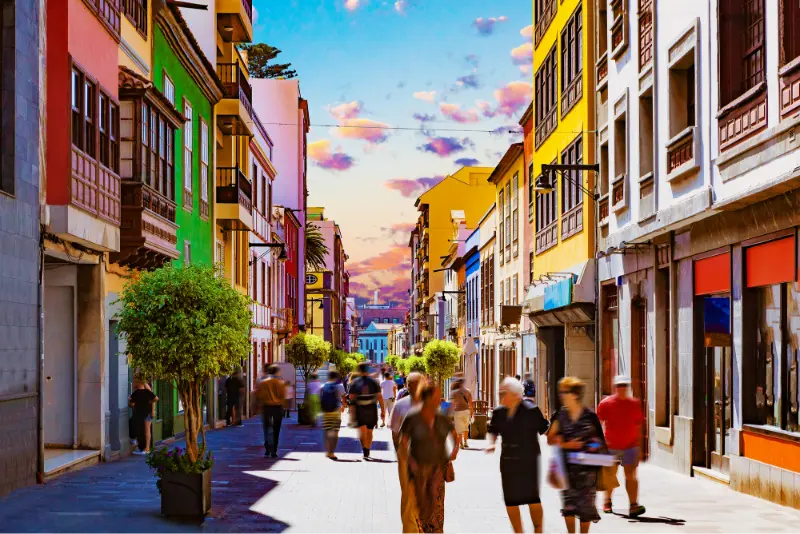
    La Laguna Colorful Historic Street Tenerife

    Final thoughts

    I would include Romería de San Benito Abad in La Laguna in a Tenerife trip when the dates line up naturally, not because every visitor needs another item on a checklist. A local festival works best when I slow down, choose one meaningful moment and let the town be the destination for the day. That approach produces a better experience than arriving late, photographing the crowd and immediately driving away.

  • Fiestas del Cristo de La Laguna: September 14, Fireworks, Traditions and Visit Tips

    Fiestas del Cristo de La Laguna: September 14, Fireworks, Traditions and Visit Tips

    Quick summary: Fiestas del Cristo de La Laguna is worth planning as a real local event, not as a normal sightseeing stop with extra decoration. Through much of september, with september 14 as the principal feast day and the octava later in the month. My approach is to choose one or two key moments from the official programme, arrive earlier than I think I need to, use public transport when roads are affected, and leave enough flexibility for crowds, weather and last-minute programme changes.

    WhereSan Cristóbal de La Laguna
    When to look for itthrough much of September, with September 14 as the principal feast day and the Octava later in the month
    Best forCanarian culture, local traditions, photography and repeat visitors
    Main planning issueCrowds, temporary road closures and annual programme changes
    My key ruleCheck the official programme again 24–48 hours before travelling

    Why this festival deserves its own Tenerife itinerary

    The festival combines the solemn presence of the Santísimo Cristo with concerts, folklore, street events, processions and a major pyrotechnic tradition. It is one of the clearest examples of how religious and civic life overlap in La Laguna.

    That is why I would not squeeze this into the middle of a Teide day, a long beach circuit or a cross-island road trip. The value is being present long enough to understand what is happening: who is participating, which parts are religious, which are popular or folkloric, how local people use the streets and why certain moments draw much larger crowds than others.

    A festival also changes the practical geography of a town. A street that is normally easy to cross may be closed, the nearest car park may be full, a bus stop may be moved and a restaurant that normally accepts walk-ins may be completely booked. I therefore plan the event first and build the rest of the day around it, not the other way around.

    When it takes place

    Through much of september, with september 14 as the principal feast day and the octava later in the month. Annual festivals keep a strong traditional framework, but concert dates, procession times, road closures and supporting events can move. I treat any previous-year schedule as historical context rather than a promise.

    The 2026 edition included more than 50 cultural, popular, sporting and religious events. On September 14 the official programme scheduled civic-religious processions through the historic centre and the Fuegos del Risco at 23:00, with traffic restrictions around key roads.

    For a future visit I check the municipality or official tourism page as soon as the new programme is published. If the exact date is essential to my trip, I also avoid booking a non-refundable activity across the same evening until the timetable is confirmed.

    What I would expect to see

    The festival combines the solemn presence of the Santísimo Cristo with concerts, folklore, street events, processions and a major pyrotechnic tradition. It is one of the clearest examples of how religious and civic life overlap in La Laguna.

    Aerial View Of La Laguna Tenerife

    I separate the event into three layers. The first is the core tradition: the procession, romería, decorated structures, ceremony or civic ritual that gives the celebration its identity. The second is the supporting programme: concerts, folklore, children’s activities, fairs, sports or food events. The third is the town itself, which is still worth seeing before the busiest hours because architecture and local context make the festival easier to understand.

    If I have only half a day, I choose the core tradition plus one nearby heritage stop. If I have a full day, I arrive before the main crowd, explore the town, eat early and then settle into a good viewing area rather than constantly changing location.

    Where to position yourself

    Plaza del Cristo, the Real Santuario, the Cathedral area and the UNESCO historic streets are the core. On the main day I would walk rather than drive between them.

    I do not automatically choose the absolute front row. A slightly wider position often gives a better view, more room to move and a safer exit. This matters especially with carts, animals, pyrotechnics, maritime edges or narrow historic streets. Official barriers and steward instructions are part of the event design, not obstacles to work around.

    For photography I look for a place where the background explains Tenerife: a church façade, old balconies, a plaza, the harbour or a sloping historic street. That usually produces a more meaningful image than a close-up with no sense of place.

    Crowds, traffic and public transport

    September 14 and the fireworks draw the biggest pressure on roads and parking. The tram is usually the transport option I would investigate first from Santa Cruz, while checking temporary service changes and late return options.

    I check current TITSA and, where relevant, Metrotenerife information on the day because temporary diversions can affect stops. For a major night event I plan the return before I leave the hotel: last bus, taxi rank, walking distance to a quieter pickup point and a backup if mobile networks become slow in a dense crowd.

    Driving can still make sense if I am staying in a rural area, travelling with mobility equipment or combining the event with another nearby stop. In that case I aim for a legal car park outside the ceremonial core and accept a longer walk. I never block resident access, emergency lanes, farm entrances or a procession route to save ten minutes.

    What to wear

    Comfort matters more than trying to imitate participants. Traditional Canarian clothing has cultural meaning and specific forms; I would not buy a novelty costume simply to “fit in.” If an event explicitly encourages traditional dress, I follow the organiser’s guidance and choose respectful clothing rather than a caricature.

    For ordinary visitors I prioritise comfortable shoes, sun protection and a light layer for evening. La Laguna and north-coast towns can feel cooler than the south, while summer daytime events can be hot. At religious services or inside churches I dress more conservatively and keep hats, food and loud conversation outside.

    Food and drink

    La Laguna has enough restaurants and cafés to eat away from the densest festival area. I would reserve dinner on the main weekend and allow extra time because streets can close.

    I carry water but avoid glass bottles in dense events. Alcohol can be part of some popular celebrations, yet I keep the day manageable: crowds, heat, uneven streets and transport are easier when I am fully alert. I also carry a small amount of cash because temporary stalls or busy payment networks do not always behave like a normal restaurant.

    Going with children

    Earlier processions and daytime cultural events are easier for many families than the late fireworks. Hearing protection can be sensible for children who are sensitive to loud pyrotechnics.

    My family plan is deliberately simple: identify toilets, shade and a meeting point first; add one snack stop; then choose one main spectacle. Children do not need to see every event in the programme for the day to feel special. For fireworks or loud bands, child-appropriate hearing protection can make a major difference.

    Accessibility and sensory planning

    Historic Tenerife can involve cobbles, slopes, temporary barriers and very dense pedestrian areas. If step-free access is essential, I contact the organiser or municipality about the specific event route rather than relying on a general accessibility description of the town. A venue can be accessible on an ordinary day but difficult during a procession.

    For sensory needs, I favour the beginning or end of an event, a side street with a clear view, or a daytime programme instead of the loudest night. I save a calm retreat point—a café, hotel, parked vehicle or quieter plaza—before the crowd builds.

    Photography etiquette

    The historic architecture gives the festival a strong visual setting, but low light and crowds make tripods awkward. I favour a small camera, high ISO and respectful distance during worship and processions.

    I avoid flash during worship, do not climb monuments or barriers, and never ask a participant to interrupt a procession for a portrait. Children deserve particular privacy. When I photograph identifiable people at close range, a quick gesture or question is better than assuming festival clothing makes everyone a model.

    How I would combine the festival with nearby places

    I keep the cluster local. Tenerife looks small on a map, but a festival day is the wrong moment to add unnecessary motorway kilometres. Parking delays, road closures and a slow meal can easily use the time that looked “free” in a spreadsheet itinerary.

    A realistic festival-day plan

    1. Morning: arrive before the busiest period, walk the historic area and confirm barriers, stages or procession routes.
    2. Late morning: visit one nearby church, museum, market or viewpoint from the local cluster.
    3. Lunch: eat before the peak crowd and use a reservation when the town is known to fill.
    4. Afternoon: take a rest, hydrate and move toward the chosen viewing area with time to spare.
    5. Main event: stay in one good position rather than repeatedly crossing the route.
    6. Departure: wait ten or fifteen minutes if necessary for the first crowd surge to thin, then use the transport plan prepared earlier.

    Where to stay

    Staying in or close to San Cristóbal de La Laguna can turn a stressful late-night transfer into an easy walk, especially when the main event finishes after normal sightseeing hours. I compare the exact map position, not just the town name, because hills and road closures matter. Compare accommodation around San Cristóbal de La Laguna on Booking.com.

    San Cristobal De La Laguna Historic Center Tenerife

    Other Tenerife activities

    If I am building several days around the festival, I keep one flexible day for Teide, the coast or a guided experience. Availability changes, so I prefer a live activity widget to hard-coding a tour that may later disappear.

    Common mistakes I would avoid

    • Using an old programme as if the times cannot change.
    • Driving into the centre just before the main event and expecting easy parking.
    • Trying to combine a major festival with a full cross-island sightseeing day.
    • Standing inside a procession, cart or emergency corridor for photographs.
    • Assuming every popular tradition is staged for tourists rather than for the local community.
    • Depending on mobile data alone for the return journey; I save tickets, maps and addresses offline.
    • Leaving food, cups or confetti in historic streets or on beaches after the celebration.

    How this differs from Tenerife Carnival

    Carnival is Tenerife’s internationally famous mass celebration, but local patronal festivals are often more useful for understanding everyday island identity. They are smaller in scale, more closely linked to a town, parish, agricultural tradition or local history, and often mix sacred and secular activities without a clear boundary between “show” and community life.

    I therefore approach them differently. I spend more time learning what the central ritual means, I photograph less aggressively and I expect fewer English-language explanations. The reward is a more specific sense of place.

    Frequently asked questions

    Do I need a ticket?

    The central outdoor tradition is generally public, but concerts, reserved tables, dinners or special activities can require tickets or prior registration. The annual official programme is the final reference.

    Can I wear traditional Canarian clothes?

    If the event invites traditional dress, visitors can participate respectfully, but authentic clothing is not a costume. I follow local guidance and avoid novelty versions.

    Is it worth visiting if I do not speak Spanish?

    Yes. The visual and musical parts are easy to enjoy, but I translate the official programme in advance so I understand the sequence and any safety notices.

    Should I rent a car for the festival?

    Not necessarily. For central urban events I often prefer public transport; for rural or late-night events a car may be useful if I can park legally outside the closed area.

    What if the weather changes?

    Outdoor programmes can be modified for wind, rain, heat or fire risk. I check the municipality’s same-day channels instead of assuming an event will run exactly as printed weeks earlier.

    Official information

    For the current programme, routes, safety restrictions and last-minute changes I use the official source: official information for Fiestas del Cristo de La Laguna. The dates and examples in this guide include 2026 context, but the official programme for the year of travel always takes priority.

    San Cristobal De La Laguna Panoramic View Tenerife

    Final thoughts

    I would include Fiestas del Cristo de La Laguna in a Tenerife trip when the dates line up naturally, not because every visitor needs another item on a checklist. A local festival works best when I slow down, choose one meaningful moment and let the town be the destination for the day. That approach produces a better experience than arriving late, photographing the crowd and immediately driving away.

  • Cruces de Mayo in Santa Cruz de Tenerife: May 3 Flower Crosses and Walking Route

    Cruces de Mayo in Santa Cruz de Tenerife: May 3 Flower Crosses and Walking Route

    Quick summary: Cruces de Mayo in Santa Cruz de Tenerife is worth planning as a real local event, not as a normal sightseeing stop with extra decoration. Around may 3, the city’s founding date and one of the symbolic high points of the fiestas de mayo. My approach is to choose one or two key moments from the official programme, arrive earlier than I think I need to, use public transport when roads are affected, and leave enough flexibility for crowds, weather and last-minute programme changes.

    WhereSanta Cruz de Tenerife
    When to look for itaround May 3, the city’s founding date and one of the symbolic high points of the Fiestas de Mayo
    Best forCanarian culture, local traditions, photography and repeat visitors
    Main planning issueCrowds, temporary road closures and annual programme changes
    My key ruleCheck the official programme again 24–48 hours before travelling

    Why this festival deserves its own Tenerife itinerary

    The experience is not a single monument. It is a walking festival of crosses decorated with flowers and other materials, tied to the city name, the founding celebrations and neighbourhood participation.

    That is why I would not squeeze this into the middle of a Teide day, a long beach circuit or a cross-island road trip. The value is being present long enough to understand what is happening: who is participating, which parts are religious, which are popular or folkloric, how local people use the streets and why certain moments draw much larger crowds than others.

    A festival also changes the practical geography of a town. A street that is normally easy to cross may be closed, the nearest car park may be full, a bus stop may be moved and a restaurant that normally accepts walk-ins may be completely booked. I therefore plan the event first and build the rest of the day around it, not the other way around.

    When it takes place

    Around may 3, the city’s founding date and one of the symbolic high points of the fiestas de mayo. Annual festivals keep a strong traditional framework, but concert dates, procession times, road closures and supporting events can move. I treat any previous-year schedule as historical context rather than a promise.

    For 2026, Santa Cruz reported 72 crosses displayed in neighbourhoods and streets for the city’s 532nd anniversary, alongside contests for natural-flower crosses and other Fiestas de Mayo activities.

    Auditorio De Tenerife Santa Cruz Coastline

    For a future visit I check the municipality or official tourism page as soon as the new programme is published. If the exact date is essential to my trip, I also avoid booking a non-refundable activity across the same evening until the timetable is confirmed.

    What I would expect to see

    The experience is not a single monument. It is a walking festival of crosses decorated with flowers and other materials, tied to the city name, the founding celebrations and neighbourhood participation.

    I separate the event into three layers. The first is the core tradition: the procession, romería, decorated structures, ceremony or civic ritual that gives the celebration its identity. The second is the supporting programme: concerts, folklore, children’s activities, fairs, sports or food events. The third is the town itself, which is still worth seeing before the busiest hours because architecture and local context make the festival easier to understand.

    If I have only half a day, I choose the core tradition plus one nearby heritage stop. If I have a full day, I arrive before the main crowd, explore the town, eat early and then settle into a good viewing area rather than constantly changing location.

    Where to position yourself

    The centre and Rambla are convenient starting points, but displays can appear in multiple districts. I would use the official annual map or programme rather than assuming last year’s exact locations.

    I do not automatically choose the absolute front row. A slightly wider position often gives a better view, more room to move and a safer exit. This matters especially with carts, animals, pyrotechnics, maritime edges or narrow historic streets. Official barriers and steward instructions are part of the event design, not obstacles to work around.

    For photography I look for a place where the background explains Tenerife: a church façade, old balconies, a plaza, the harbour or a sloping historic street. That usually produces a more meaningful image than a close-up with no sense of place.

    Crowds, traffic and public transport

    May 3 is lively but can be easier to experience than a tightly packed procession because the displays are distributed. I would go early for quieter photographs and return later if I want the evening atmosphere.

    I check current TITSA and, where relevant, Metrotenerife information on the day because temporary diversions can affect stops. For a major night event I plan the return before I leave the hotel: last bus, taxi rank, walking distance to a quieter pickup point and a backup if mobile networks become slow in a dense crowd.

    Driving can still make sense if I am staying in a rural area, travelling with mobility equipment or combining the event with another nearby stop. In that case I aim for a legal car park outside the ceremonial core and accept a longer walk. I never block resident access, emergency lanes, farm entrances or a procession route to save ten minutes.

    What to wear

    Comfort matters more than trying to imitate participants. Traditional Canarian clothing has cultural meaning and specific forms; I would not buy a novelty costume simply to “fit in.” If an event explicitly encourages traditional dress, I follow the organiser’s guidance and choose respectful clothing rather than a caricature.

    For ordinary visitors I prioritise comfortable shoes, sun protection and a light layer for evening. La Laguna and north-coast towns can feel cooler than the south, while summer daytime events can be hot. At religious services or inside churches I dress more conservatively and keep hats, food and loud conversation outside.

    Food and drink

    A slow centre walk pairs naturally with breakfast, lunch or merienda. I would not plan the day around temporary stalls alone; Santa Cruz has enough permanent cafés and restaurants to keep the itinerary flexible.

    Panoramic View Of Santa Cruz De Tenerife

    I carry water but avoid glass bottles in dense events. Alcohol can be part of some popular celebrations, yet I keep the day manageable: crowds, heat, uneven streets and transport are easier when I am fully alert. I also carry a small amount of cash because temporary stalls or busy payment networks do not always behave like a normal restaurant.

    Going with children

    This works well as a low-pressure family walk because children can look for different designs rather than sit through a long ceremony. I would keep the route short and add a park stop.

    My family plan is deliberately simple: identify toilets, shade and a meeting point first; add one snack stop; then choose one main spectacle. Children do not need to see every event in the programme for the day to feel special. For fireworks or loud bands, child-appropriate hearing protection can make a major difference.

    Accessibility and sensory planning

    Historic Tenerife can involve cobbles, slopes, temporary barriers and very dense pedestrian areas. If step-free access is essential, I contact the organiser or municipality about the specific event route rather than relying on a general accessibility description of the town. A venue can be accessible on an ordinary day but difficult during a procession.

    For sensory needs, I favour the beginning or end of an event, a side street with a clear view, or a daytime programme instead of the loudest night. I save a calm retreat point—a café, hotel, parked vehicle or quieter plaza—before the crowd builds.

    Photography etiquette

    Natural-flower crosses reward close details as well as wider street scenes. I keep doorways free, avoid touching arrangements and remember that some crosses have devotional meaning, not just decorative value.

    I avoid flash during worship, do not climb monuments or barriers, and never ask a participant to interrupt a procession for a portrait. Children deserve particular privacy. When I photograph identifiable people at close range, a quick gesture or question is better than assuming festival clothing makes everyone a model.

    How I would combine the festival with nearby places

    I keep the cluster local. Tenerife looks small on a map, but a festival day is the wrong moment to add unnecessary motorway kilometres. Parking delays, road closures and a slow meal can easily use the time that looked “free” in a spreadsheet itinerary.

    A realistic festival-day plan

    1. Morning: arrive before the busiest period, walk the historic area and confirm barriers, stages or procession routes.
    2. Late morning: visit one nearby church, museum, market or viewpoint from the local cluster.
    3. Lunch: eat before the peak crowd and use a reservation when the town is known to fill.
    4. Afternoon: take a rest, hydrate and move toward the chosen viewing area with time to spare.
    5. Main event: stay in one good position rather than repeatedly crossing the route.
    6. Departure: wait ten or fifteen minutes if necessary for the first crowd surge to thin, then use the transport plan prepared earlier.

    Where to stay

    Staying in or close to Santa Cruz de Tenerife can turn a stressful late-night transfer into an easy walk, especially when the main event finishes after normal sightseeing hours. I compare the exact map position, not just the town name, because hills and road closures matter. Compare accommodation around Santa Cruz de Tenerife on Booking.com.

    Plaza De Espana Santa Cruz De Tenerife

    Other Tenerife activities

    If I am building several days around the festival, I keep one flexible day for Teide, the coast or a guided experience. Availability changes, so I prefer a live activity widget to hard-coding a tour that may later disappear.

    Common mistakes I would avoid

    • Using an old programme as if the times cannot change.
    • Driving into the centre just before the main event and expecting easy parking.
    • Trying to combine a major festival with a full cross-island sightseeing day.
    • Standing inside a procession, cart or emergency corridor for photographs.
    • Assuming every popular tradition is staged for tourists rather than for the local community.
    • Depending on mobile data alone for the return journey; I save tickets, maps and addresses offline.
    • Leaving food, cups or confetti in historic streets or on beaches after the celebration.

    How this differs from Tenerife Carnival

    Carnival is Tenerife’s internationally famous mass celebration, but local patronal festivals are often more useful for understanding everyday island identity. They are smaller in scale, more closely linked to a town, parish, agricultural tradition or local history, and often mix sacred and secular activities without a clear boundary between “show” and community life.

    I therefore approach them differently. I spend more time learning what the central ritual means, I photograph less aggressively and I expect fewer English-language explanations. The reward is a more specific sense of place.

    Frequently asked questions

    Do I need a ticket?

    The central outdoor tradition is generally public, but concerts, reserved tables, dinners or special activities can require tickets or prior registration. The annual official programme is the final reference.

    Can I wear traditional Canarian clothes?

    If the event invites traditional dress, visitors can participate respectfully, but authentic clothing is not a costume. I follow local guidance and avoid novelty versions.

    Is it worth visiting if I do not speak Spanish?

    Yes. The visual and musical parts are easy to enjoy, but I translate the official programme in advance so I understand the sequence and any safety notices.

    Should I rent a car for the festival?

    Not necessarily. For central urban events I often prefer public transport; for rural or late-night events a car may be useful if I can park legally outside the closed area.

    What if the weather changes?

    Outdoor programmes can be modified for wind, rain, heat or fire risk. I check the municipality’s same-day channels instead of assuming an event will run exactly as printed weeks earlier.

    Official information

    For the current programme, routes, safety restrictions and last-minute changes I use the official source: official information for Cruces de Mayo in Santa Cruz de Tenerife. The dates and examples in this guide include 2026 context, but the official programme for the year of travel always takes priority.

    Final thoughts

    I would include Cruces de Mayo in Santa Cruz de Tenerife in a Tenerife trip when the dates line up naturally, not because every visitor needs another item on a checklist. A local festival works best when I slow down, choose one meaningful moment and let the town be the destination for the day. That approach produces a better experience than arriving late, photographing the crowd and immediately driving away.

  • Fiestas de Mayo in Santa Cruz de Tenerife: Traditions, Baile de Magos and Visit Tips

    Fiestas de Mayo in Santa Cruz de Tenerife: Traditions, Baile de Magos and Visit Tips

    Quick summary: Fiestas de Mayo in Santa Cruz de Tenerife is worth planning as a real local event, not as a normal sightseeing stop with extra decoration. Late april and throughout may, with the most traditional founding celebrations clustered around the first days of may. My approach is to choose one or two key moments from the official programme, arrive earlier than I think I need to, use public transport when roads are affected, and leave enough flexibility for crowds, weather and last-minute programme changes.

    WhereSanta Cruz de Tenerife
    When to look for itlate April and throughout May, with the most traditional founding celebrations clustered around the first days of May
    Best forCanarian culture, local traditions, photography and repeat visitors
    Main planning issueCrowds, temporary road closures and annual programme changes
    My key ruleCheck the official programme again 24–48 hours before travelling

    Why this festival deserves its own Tenerife itinerary

    Rather than one single parade, this is a month-long civic festival that mixes the capital’s founding story with Canarian dress, music, food, flowers, books, neighbourhood events and public performances.

    That is why I would not squeeze this into the middle of a Teide day, a long beach circuit or a cross-island road trip. The value is being present long enough to understand what is happening: who is participating, which parts are religious, which are popular or folkloric, how local people use the streets and why certain moments draw much larger crowds than others.

    A festival also changes the practical geography of a town. A street that is normally easy to cross may be closed, the nearest car park may be full, a bus stop may be moved and a restaurant that normally accepts walk-ins may be completely booked. I therefore plan the event first and build the rest of the day around it, not the other way around.

    When it takes place

    Late april and throughout may, with the most traditional founding celebrations clustered around the first days of may. Annual festivals keep a strong traditional framework, but concert dates, procession times, road closures and supporting events can move. I treat any previous-year schedule as historical context rather than a promise.

    In 2026 the official programme began with the pregón on 21 April and continued through May. The city marked its 532nd anniversary, while the early-May programme included the Baile de Magos, floral crosses and the regional exhibition of flowers, plants, Canarian crafts, gastronomy and books in Parque García Sanabria.

    For a future visit I check the municipality or official tourism page as soon as the new programme is published. If the exact date is essential to my trip, I also avoid booking a non-refundable activity across the same evening until the timetable is confirmed.

    What I would expect to see

    Rather than one single parade, this is a month-long civic festival that mixes the capital’s founding story with Canarian dress, music, food, flowers, books, neighbourhood events and public performances.

    I separate the event into three layers. The first is the core tradition: the procession, romería, decorated structures, ceremony or civic ritual that gives the celebration its identity. The second is the supporting programme: concerts, folklore, children’s activities, fairs, sports or food events. The third is the town itself, which is still worth seeing before the busiest hours because architecture and local context make the festival easier to understand.

    If I have only half a day, I choose the core tradition plus one nearby heritage stop. If I have a full day, I arrive before the main crowd, explore the town, eat early and then settle into a good viewing area rather than constantly changing location.

    Where to position yourself

    The historic centre, Plaza de la Candelaria, Calle La Noria and Parque García Sanabria are among the places that repeatedly become important, although each year’s programme spreads events across the city.

    Aerial View Of Santa Cruz De Tenerife

    I do not automatically choose the absolute front row. A slightly wider position often gives a better view, more room to move and a safer exit. This matters especially with carts, animals, pyrotechnics, maritime edges or narrow historic streets. Official barriers and steward instructions are part of the event design, not obstacles to work around.

    For photography I look for a place where the background explains Tenerife: a church façade, old balconies, a plaza, the harbour or a sloping historic street. That usually produces a more meaningful image than a close-up with no sense of place.

    Crowds, traffic and public transport

    The Baile de Magos and the first weekend of May can transform central streets, with road closures, reserved tables and large evening crowds. I would use tram or bus where practical and treat parking in the core as a poor last-minute strategy.

    I check current TITSA and, where relevant, Metrotenerife information on the day because temporary diversions can affect stops. For a major night event I plan the return before I leave the hotel: last bus, taxi rank, walking distance to a quieter pickup point and a backup if mobile networks become slow in a dense crowd.

    Driving can still make sense if I am staying in a rural area, travelling with mobility equipment or combining the event with another nearby stop. In that case I aim for a legal car park outside the ceremonial core and accept a longer walk. I never block resident access, emergency lanes, farm entrances or a procession route to save ten minutes.

    What to wear

    Comfort matters more than trying to imitate participants. Traditional Canarian clothing has cultural meaning and specific forms; I would not buy a novelty costume simply to “fit in.” If an event explicitly encourages traditional dress, I follow the organiser’s guidance and choose respectful clothing rather than a caricature.

    For ordinary visitors I prioritise comfortable shoes, sun protection and a light layer for evening. La Laguna and north-coast towns can feel cooler than the south, while summer daytime events can be hot. At religious services or inside churches I dress more conservatively and keep hats, food and loud conversation outside.

    Food and drink

    The festival is a good time to look for Canarian food showcases and local products, but I would still book a normal restaurant or keep a backup plan because event stalls can be busy.

    I carry water but avoid glass bottles in dense events. Alcohol can be part of some popular celebrations, yet I keep the day manageable: crowds, heat, uneven streets and transport are easier when I am fully alert. I also carry a small amount of cash because temporary stalls or busy payment networks do not always behave like a normal restaurant.

    Going with children

    Daytime flower, craft and cultural events are much easier with children than the late-night Baile de Magos. I would build a family visit around Parque García Sanabria, a short old-centre walk and one scheduled performance.

    My family plan is deliberately simple: identify toilets, shade and a meeting point first; add one snack stop; then choose one main spectacle. Children do not need to see every event in the programme for the day to feel special. For fireworks or loud bands, child-appropriate hearing protection can make a major difference.

    Accessibility and sensory planning

    Historic Tenerife can involve cobbles, slopes, temporary barriers and very dense pedestrian areas. If step-free access is essential, I contact the organiser or municipality about the specific event route rather than relying on a general accessibility description of the town. A venue can be accessible on an ordinary day but difficult during a procession.

    For sensory needs, I favour the beginning or end of an event, a side street with a clear view, or a daytime programme instead of the loudest night. I save a calm retreat point—a café, hotel, parked vehicle or quieter plaza—before the crowd builds.

    Photography etiquette

    Traditional clothing, floral displays and decorated streets are photogenic, but this is a living civic celebration. I would ask before making close portraits and avoid blocking groups, dancers or processions.

    I avoid flash during worship, do not climb monuments or barriers, and never ask a participant to interrupt a procession for a portrait. Children deserve particular privacy. When I photograph identifiable people at close range, a quick gesture or question is better than assuming festival clothing makes everyone a model.

    How I would combine the festival with nearby places

    I keep the cluster local. Tenerife looks small on a map, but a festival day is the wrong moment to add unnecessary motorway kilometres. Parking delays, road closures and a slow meal can easily use the time that looked “free” in a spreadsheet itinerary.

    A realistic festival-day plan

    1. Morning: arrive before the busiest period, walk the historic area and confirm barriers, stages or procession routes.
    2. Late morning: visit one nearby church, museum, market or viewpoint from the local cluster.
    3. Lunch: eat before the peak crowd and use a reservation when the town is known to fill.
    4. Afternoon: take a rest, hydrate and move toward the chosen viewing area with time to spare.
    5. Main event: stay in one good position rather than repeatedly crossing the route.
    6. Departure: wait ten or fifteen minutes if necessary for the first crowd surge to thin, then use the transport plan prepared earlier.

    Where to stay

    Staying in or close to Santa Cruz de Tenerife can turn a stressful late-night transfer into an easy walk, especially when the main event finishes after normal sightseeing hours. I compare the exact map position, not just the town name, because hills and road closures matter. Compare accommodation around Santa Cruz de Tenerife on Booking.com.

    Auditorio De Tenerife Santa Cruz Coastline

    Other Tenerife activities

    If I am building several days around the festival, I keep one flexible day for Teide, the coast or a guided experience. Availability changes, so I prefer a live activity widget to hard-coding a tour that may later disappear.

    Common mistakes I would avoid

    • Using an old programme as if the times cannot change.
    • Driving into the centre just before the main event and expecting easy parking.
    • Trying to combine a major festival with a full cross-island sightseeing day.
    • Standing inside a procession, cart or emergency corridor for photographs.
    • Assuming every popular tradition is staged for tourists rather than for the local community.
    • Depending on mobile data alone for the return journey; I save tickets, maps and addresses offline.
    • Leaving food, cups or confetti in historic streets or on beaches after the celebration.

    How this differs from Tenerife Carnival

    Carnival is Tenerife’s internationally famous mass celebration, but local patronal festivals are often more useful for understanding everyday island identity. They are smaller in scale, more closely linked to a town, parish, agricultural tradition or local history, and often mix sacred and secular activities without a clear boundary between “show” and community life.

    I therefore approach them differently. I spend more time learning what the central ritual means, I photograph less aggressively and I expect fewer English-language explanations. The reward is a more specific sense of place.

    Frequently asked questions

    Do I need a ticket?

    The central outdoor tradition is generally public, but concerts, reserved tables, dinners or special activities can require tickets or prior registration. The annual official programme is the final reference.

    Can I wear traditional Canarian clothes?

    If the event invites traditional dress, visitors can participate respectfully, but authentic clothing is not a costume. I follow local guidance and avoid novelty versions.

    Is it worth visiting if I do not speak Spanish?

    Yes. The visual and musical parts are easy to enjoy, but I translate the official programme in advance so I understand the sequence and any safety notices.

    Should I rent a car for the festival?

    Not necessarily. For central urban events I often prefer public transport; for rural or late-night events a car may be useful if I can park legally outside the closed area.

    What if the weather changes?

    Outdoor programmes can be modified for wind, rain, heat or fire risk. I check the municipality’s same-day channels instead of assuming an event will run exactly as printed weeks earlier.

    Official information

    For the current programme, routes, safety restrictions and last-minute changes I use the official source: official information for Fiestas de Mayo in Santa Cruz de Tenerife. The dates and examples in this guide include 2026 context, but the official programme for the year of travel always takes priority.

    Panoramic View Of Santa Cruz De Tenerife

    Final thoughts

    I would include Fiestas de Mayo in Santa Cruz de Tenerife in a Tenerife trip when the dates line up naturally, not because every visitor needs another item on a checklist. A local festival works best when I slow down, choose one meaningful moment and let the town be the destination for the day. That approach produces a better experience than arriving late, photographing the crowd and immediately driving away.

  • Corpus Christi in Tenerife: La Orotava Flower Carpets, Volcanic Sand and Visit Tips

    Corpus Christi in Tenerife: La Orotava Flower Carpets, Volcanic Sand and Visit Tips

    Quick summary: Corpus Christi in La Orotava transforms streets and the town-hall square with temporary carpets made from flowers and coloured volcanic sand. The art is ephemeral, so timing and respectful movement matter.

    La Orotava’s Corpus Christi carpets are among Tenerife’s most extraordinary examples of art made to disappear. Flower petals, plant materials and coloured volcanic sands become detailed street carpets and a monumental tapestry in the town-hall square, only for the religious procession and the passing of time to end the installation.

    That temporary nature is why I plan more carefully than I would for a normal museum visit. The main carpet can be developed over a longer period, while street carpets are often at their most complete close to the celebration itself. Exact dates change each year because Corpus Christi follows the liturgical calendar, so I verify the municipal programme rather than assuming the same weekend.

    At a glance

    WhereLa Orotava is the best-known setting; La Laguna and other towns also create carpets
    WhenUsually May or June, depending on the liturgical calendar
    Signature workThe large volcanic-sand tapestry in Plaza del Ayuntamiento
    Visit styleWalk slowly, respect barriers and treat the carpets as ceremonial art

    Why La Orotava is special

    Turismo de Tenerife traces the modern fame of La Orotava’s carpets to 1847, when members of the Monteverde family created a flower carpet for the Corpus procession. The tradition developed into a defining cultural expression of the town, combining domestic participation, religious meaning and highly skilled design.

    Today the event works on two scales. Smaller carpets animate streets around the historic centre, while the town-hall square becomes the stage for a huge composition made with natural volcanic sands in different colours. Seeing both is important; the monumental carpet impresses through scale, while the street carpets reveal the community rhythm.

    Historic Street In La Orotava Tenerife

    The volcanic sand question

    Visitors often assume the main square is covered in ordinary beach sand. It is not. The famous tapestry uses naturally coloured volcanic sands associated with Teide, handled under controlled arrangements for the tradition. I never collect material in the national park myself; removing volcanic material from protected areas is not a souvenir strategy.

    The palette can produce astonishing detail without synthetic-looking colours. From the designated viewing points, I look for shading, perspective and the way artists use grain size and tone to create depth.

    When should I go?

    The answer depends on what I want to see. During preparation, I can sometimes observe the work in progress and understand the technique. Closer to the main celebration, the finished designs create the strongest visual impact but crowds are heavier. After the procession, some street carpets have fulfilled their ceremonial purpose and may no longer look pristine.

    I therefore check the current programme and choose intentionally: process if I care about craft, finished carpets if I care about photography, procession day if I care about the religious and community meaning.

    A walking route through La Orotava

    I start around Plaza del Ayuntamiento and then follow the marked streets of the carpet route rather than zigzagging randomly. The historic centre is hilly, and crowd controls can turn a short map distance into a longer walk. Comfortable shoes matter more than elegant festival clothing for most visitors.

    My existing La Orotava Carpet Museum guide is useful before the event because it explains the craft in a calmer environment. I also combine the route with Iglesia de La Concepción to understand the religious architecture behind the celebration.

    Photography without damaging the experience

    The obvious rule is never step onto a carpet. Less obvious is avoiding the temptation to hold a phone or tripod over a barrier where it blocks other people. I use a small zoom, wait for a clear angle and accept that the best view may come from a designated platform rather than the closest physical position.

    Midday sun can be harsh on pale petals and dark volcanic sands, so softer light can be attractive, but opening and crowd conditions matter more than chasing perfect photography light.

    Crowds, children and mobility

    The old centre has slopes, cobbles and temporary crowd routing. Families can enjoy the carpets, but I shorten the route for young children and carry water and a snack. A stroller may be awkward in the busiest streets. Visitors with reduced mobility should check the current accessible route with the municipality because event barriers can alter normal access.

    I choose a meeting point before entering the densest streets. Mobile reception is usually fine, but a physical landmark is still useful when a group becomes separated.

    La Laguna and other Corpus carpets

    La Orotava is the headline event, but it is not the only place where Tenerife creates Corpus carpets. Turismo de Tenerife notes celebrations in La Laguna and Tacoronte as well. These can offer a different scale and let travellers experience the tradition without treating one town as the entire island’s story.

    If I am based in Santa Cruz or La Laguna, a local carpet event may be more convenient. The La Laguna guide helps turn the cultural stop into a full day in the UNESCO historic centre.

    Religious meaning and visitor etiquette

    The carpets are art, but Corpus Christi is a Catholic feast and the procession is not staged solely for photographs. I lower my voice around services, do not obstruct clergy or participants, and avoid crossing a procession route after barriers are in place.

    Modest, comfortable clothing is sufficient for most public street viewing. If I enter a church, I follow posted rules for photography and dress. This simple shift—from spectacle consumer to respectful observer—makes the visit feel much more coherent.

    Where to stay

    Staying in La Orotava or Puerto de la Cruz removes the pressure of driving into a busy historic centre on the main day. Puerto de la Cruz has more resort infrastructure, while La Orotava gives the strongest sense of being inside the festival town.

    La Orotava Historic Center And Mountains Tenerife

    Check La Orotava accommodation on Booking.com if the carpets are the main reason for the trip.

    Official sources

    The evergreen cultural background is well explained by Turismo de Tenerife’s Corpus carpets page. For the actual year, I use the La Orotava municipal website because dates, street closures and viewing arrangements change.

    That distinction is important for SEO travel content too: the article can explain the tradition permanently while the official programme carries the operational details that should never be invented.

    My practical planning checklist

    Before I build a day around Corpus Christi Tenerife, I separate the fixed facts from the details that can change. Fixed facts include the location, cultural context or legal framework explained above. Changing details include current opening hours, temporary road closures, airline products, event routes, service times and prices. I verify those close to the travel date rather than copying an old timetable into the itinerary.

    • Save the official source offline or as a screenshot before leaving the hotel.
    • Keep one realistic backup plan in case weather, traffic, capacity or an operational change affects the original plan.
    • Do not schedule the next paid activity so tightly that a local event, meal or airport process becomes stressful.
    • Carry water, a charged phone and the basic layer or sun protection needed for the actual location rather than the resort forecast.
    • If a rule or sign on site conflicts with an older article, follow the current official instruction on site.

    I also keep the rest of the day geographically simple. Tenerife looks small on a map, but mountain roads, event traffic and the distance between north and south can turn an overfilled itinerary into hours in the car. One strong experience plus a nearby town, viewpoint or meal is usually better than chasing several unrelated stops.

    Useful Tenerife planning links

    Check Tenerife accommodation on Booking.com. I compare location first, then price, because a cheap room on the opposite side of the island can cost more in time and transport than it saves.

    For bookable tours and activities, I use the widget above as a comparison tool rather than assuming the first result is the best fit. I read cancellation terms, meeting points, age or mobility restrictions and the exact inclusions before paying.

    Frequently asked questions

    When is Corpus Christi in Tenerife?

    The date moves with the liturgical calendar and usually falls in May or June. Check the current La Orotava programme.

    La Orotava Historic Center Panorama Tenerife

    Are the carpets free to see?

    Street viewing is generally public, though access routes and special viewing arrangements can vary.

    Can I see the main sand carpet before the procession?

    Often yes during preparation and display periods, but the exact working and viewing schedule changes each year.

    Is La Orotava the only place with carpets?

    No. La Laguna, Tacoronte and other communities also maintain Corpus carpet traditions.

    Final thoughts

    The best way to use this guide is to treat Corpus Christi Tenerife as part of a wider Tenerife trip, not as an isolated checklist item. I verify the operational details, leave enough time to enjoy the experience at local pace and keep the plan flexible enough for weather or event changes. That combination—current information, realistic timing and respect for the place—usually matters more than trying to optimise every minute.