Category: Food & Culture

Tenerife food, Canarian dishes, wine, markets and cultural experiences for curious travellers.

  • San Andrés in Tenerife: Icod Tablas, New Wine, Chestnuts and Puerto de la Cruz Cacharros

    San Andrés in Tenerife: Icod Tablas, New Wine, Chestnuts and Puerto de la Cruz Cacharros

    Quick summary: On the night of November 29, northern Tenerife becomes noisy, fast and deeply seasonal: Icod is famous for the tablas, Puerto de la Cruz for cacharros, and the opening of new wine pairs with chestnuts and traditional food.

    San Andrés is one of those Tenerife traditions that makes much more sense when I stop looking for a single central “festival” and understand the network of local customs around November 29. In Icod de los Vinos, wooden boards race down steep streets. In Puerto de la Cruz, metal cacharros scrape and bang through the centre. Across wine areas, the new vintage is opened and tasted with seasonal food.

    This is not an attraction designed around tourists, and that is precisely why I approach it carefully. I watch from safe areas, follow barriers and local instructions, and never assume that seeing experienced participants sliding on boards means a visitor should copy them. The cultural value comes from the atmosphere, food, noise and community tradition—not from taking unnecessary risks.

    At a glance

    Key nightNovember 29
    Best-known placesIcod de los Vinos and Puerto de la Cruz
    Signature traditionsTablas, cacharros, new wine and chestnuts
    Main cautionCrowds, steep streets, noise and fast-moving participants

    The link with new wine

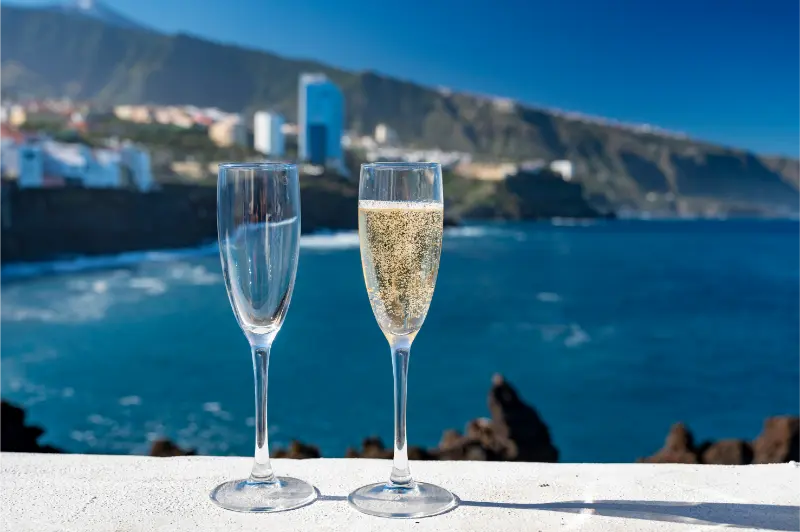
    San Andrés coincides with the traditional opening of the new wine in parts of Tenerife. The island’s northern wine districts give the festival a strong agricultural character: the celebration is not only noise and spectacle but also the moment when the work of the recent harvest becomes something people can taste together.

    I connect the tradition with the wider volcanic wine story in my Tenerife wine guide. Visitors do not need to be wine experts; the useful approach is to taste responsibly, ask what is local and remember that driving after village celebrations is a poor plan.

    Icod de los Vinos and the Tablas de San Andrés

    Icod is the most famous place for the tablas. Participants descend steep streets on wooden boards, creating a combination of speed, noise and local pride that is difficult to compare with anything else on the island. Turismo de Tenerife identifies the night of November 29 as the key moment and describes the traditional descents in Icod.

    I treat the descent route like a sporting event: barriers and marshal instructions matter. I do not step into a run for a photograph, and I keep children behind the safe viewing area. The boards can arrive quickly, and the tyres or other stopping arrangements at the bottom are part of a controlled local setup, not an invitation to improvise elsewhere.

    Puerto de la Cruz and the Cacharros

    Puerto de la Cruz has its own loud identity. The cacharros tradition involves old tins, pots and other metal objects tied together and dragged through streets, producing the metallic roar associated with San Andrés. The activity commonly centres around the historic town and Plaza del Charco.

    For a visitor, this version is easier to combine with dinner and a walk. My Puerto de la Cruz guide helps with parking alternatives, the seafront and the historic centre. I still expect crowds and choose a meeting point if travelling with friends.
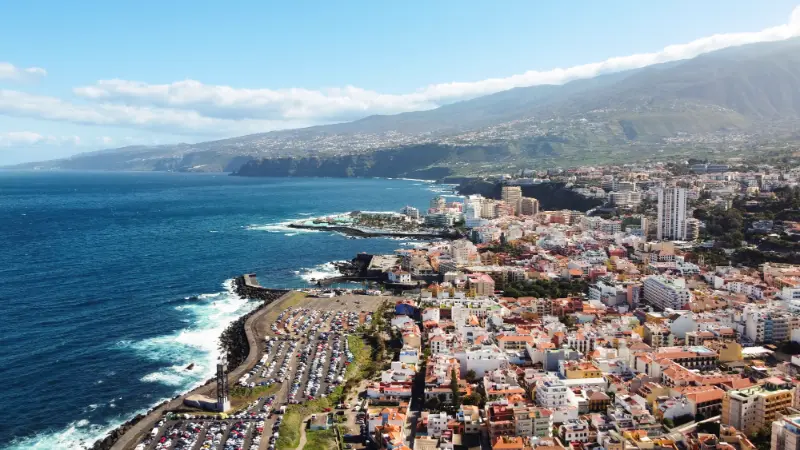
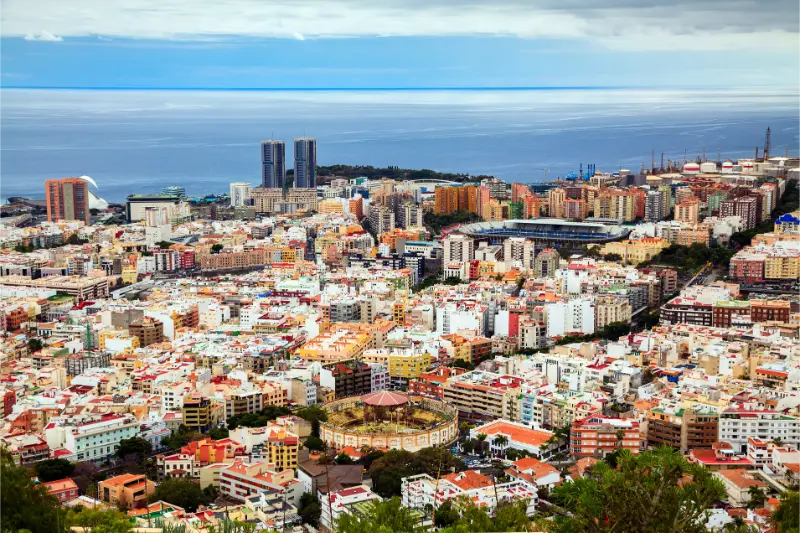
    Aerial View Of Puerto De La Cruz City Tenerife

    Chestnuts, batatas and simple seasonal food

    Roasted chestnuts are one of the smells of late autumn in northern Tenerife. Turismo de Tenerife also highlights chestnuts, sweet potatoes, gofio and fish around San Andrés traditions. These are not elaborate festival inventions; they connect the evening with mountain agriculture, the new wine and cooler November nights.

    I eat where the event infrastructure and local stalls make sense rather than carrying a long list of “must-try” dishes. The best experience is often a paper cone of hot chestnuts, something savoury and a small taste of local wine while the streets fill with sound.

    What time should I arrive?

    I arrive before the densest evening crowd. In Icod that lets me understand the street layout, identify barriers and have a meal before the main atmosphere builds. In Puerto de la Cruz it gives time to walk Plaza del Charco and the harbour before the cacharros become the focus.

    Exact event programmes can change, so I do not publish a fixed hour as if it were permanent. I check the municipality and the current Turismo de Tenerife agenda in November.

    Noise and children

    The festival can be much louder than families expect. Metal dragged over paving and the impact of boards are part of the experience. For a child who dislikes sudden noise, ear defenders can change the evening from stressful to fun. I also avoid positioning a stroller in the tightest part of a crowd.

    Older children can enjoy the spectacle if they understand the safety boundaries. I explain before arriving that watching is the activity; joining a descent is not a spontaneous tourist experience.

    Parking and transport

    Icod’s historic centre has limited space even on a normal day. On a major tradition night, driving directly toward the event area is the least attractive strategy. I follow temporary parking and traffic signs, accept a longer walk and avoid residential streets that clearly are not intended for event parking.

    If I plan to drink new wine, I remove driving from the equation. Staying locally can be worth more than any parking shortcut. Check Icod accommodation on Booking.com.

    A respectful photography approach

    The scene is visually irresistible—boards, steep streets, smoke from chestnuts, old town façades and metal cacharros—but I keep the camera out of participants’ paths. A telephoto or moderate zoom is safer than leaning over a barrier. I ask before making close portraits of children or vendors.

    I also resist turning local traditions into a costume photo session. The value of San Andrés is the community context, not only the most dramatic frame.

    Combine it with an Icod day

    I arrive early enough to see the Drago area, historic streets and a museum or wine stop before the evening. My Icod de los Vinos guide has a full plan. I do not try to combine Cueva del Viento, a long mountain drive and San Andrés in one rushed day; the evening deserves energy.

    If I am based farther east, Puerto de la Cruz can be the easier version because it combines a strong tradition with a larger tourism infrastructure and more accommodation.
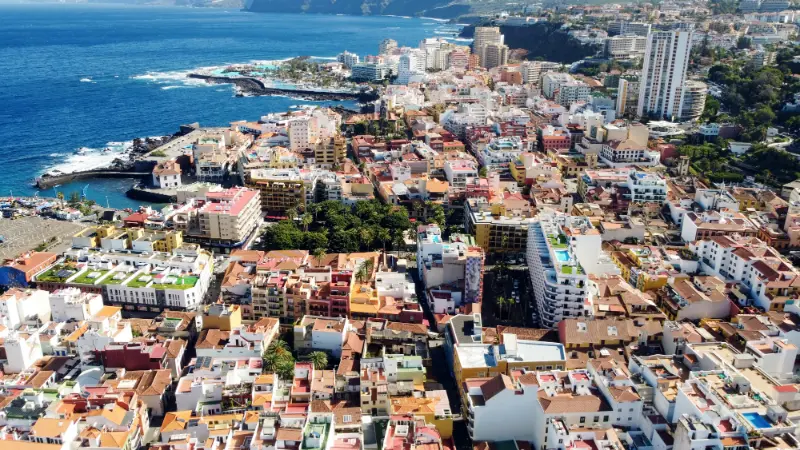
    Aerial View Of Puerto De La Cruz Tenerife

    Official and current information

    Turismo de Tenerife’s San Andrés tradition page describes the November 29 customs, and its Cacharro and chestnut page explains the Puerto de la Cruz celebration. I use those for the cultural framework and the municipalities for the year-specific programme.

    The date is stable; traffic layouts, barriers, staged activities and start times are not. That distinction keeps an evergreen guide useful without pretending next year will copy this year minute by minute.

    My practical planning checklist

    Before I build a day around San Andrés Tenerife, I separate the fixed facts from the details that can change. Fixed facts include the location, cultural context or legal framework explained above. Changing details include current opening hours, temporary road closures, airline products, event routes, service times and prices. I verify those close to the travel date rather than copying an old timetable into the itinerary.

    • Save the official source offline or as a screenshot before leaving the hotel.
    • Keep one realistic backup plan in case weather, traffic, capacity or an operational change affects the original plan.
    • Do not schedule the next paid activity so tightly that a local event, meal or airport process becomes stressful.
    • Carry water, a charged phone and the basic layer or sun protection needed for the actual location rather than the resort forecast.
    • If a rule or sign on site conflicts with an older article, follow the current official instruction on site.

    I also keep the rest of the day geographically simple. Tenerife looks small on a map, but mountain roads, event traffic and the distance between north and south can turn an overfilled itinerary into hours in the car. One strong experience plus a nearby town, viewpoint or meal is usually better than chasing several unrelated stops.

    Useful Tenerife planning links

    Check Tenerife accommodation on Booking.com. I compare location first, then price, because a cheap room on the opposite side of the island can cost more in time and transport than it saves.

    For bookable tours and activities, I use the widget above as a comparison tool rather than assuming the first result is the best fit. I read cancellation terms, meeting points, age or mobility restrictions and the exact inclusions before paying.

    Frequently asked questions

    When is San Andrés celebrated in Tenerife?

    The key night is November 29, with traditions extending into November 30 in some programmes.

    Can tourists ride the tablas in Icod?

    Treat the tablas as a local organised tradition and follow event rules. Watching from designated safe areas is the sensible visitor approach.

    Where are the cacharros?

    Puerto de la Cruz is particularly known for the noisy cacharros tradition around San Andrés.
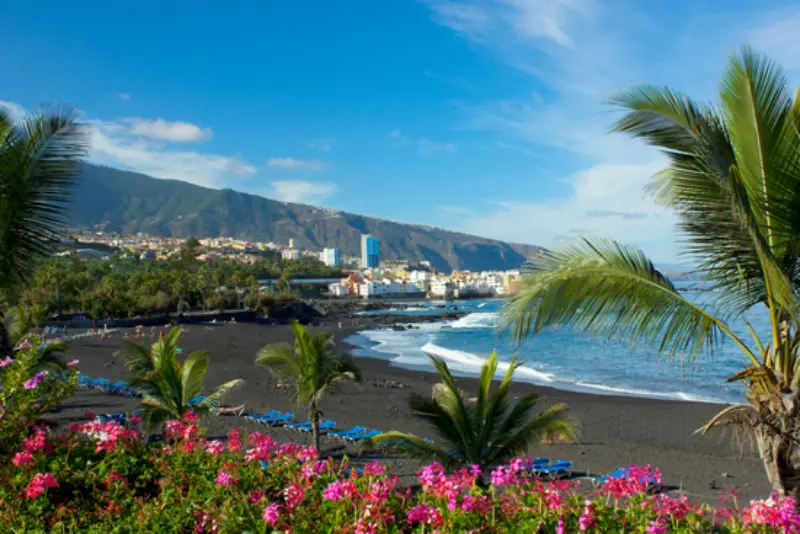
    Playa Jardin Puerto De La Cruz Tenerife

    What food is typical?

    Chestnuts, sweet potatoes, gofio and local wine are strongly associated with the season and celebrations.

    Final thoughts

    The best way to use this guide is to treat San Andrés Tenerife as part of a wider Tenerife trip, not as an isolated checklist item. I verify the operational details, leave enough time to enjoy the experience at local pace and keep the plan flexible enough for weather or event changes. That combination—current information, realistic timing and respect for the place—usually matters more than trying to optimise every minute.
  • Semana Santa in Tenerife: La Laguna Processions, Holy Week Etiquette and Planning

    Semana Santa in Tenerife: La Laguna Processions, Holy Week Etiquette and Planning

    Semana Santa, or Holy Week, shows a side of Tenerife that is very different from beaches and resort entertainment. Historic streets fill with processions, religious brotherhoods carry images through town centres, churches become focal points and traffic patterns change around events that are both public traditions and acts of faith.

    La Laguna is the island’s best-known place to experience Holy Week because the UNESCO historic centre creates a powerful setting for processions and the city has a long religious tradition. But it is not the only option. The official Tenerife tourism portal also highlights processions and ceremonies in La Orotava, Puerto de la Cruz, Icod de los Vinos, Santa Cruz, Adeje and Arona, with Via Crucis representations in several municipalities.

    I would approach Semana Santa as culture with religious meaning, not as a street show staged for visitors. You do not need to be Catholic to attend, but quiet behaviour, modest respect inside churches and sensitivity around worshippers make the experience better for everyone.

    Semana Santa Tenerife at a glance

    Main destinationSan Cristóbal de La Laguna
    SeasonMarch or April, depending on Easter
    Key atmosphereProcessions, churches, music and silence
    Main logistics issueRoad closures, parking and crowds
    Best mindsetObserve respectfully; this is a living religious tradition

    Why La Laguna is the first place I would choose

    La Laguna’s pedestrian streets, church towers, convents and historic façades make the processions feel closely connected to the city rather than isolated events. Several important churches sit within a walkable area, so you can spend the afternoon exploring the centre before finding a respectful place to watch an evening procession.

    Use the La Laguna travel guide to understand the city before Holy Week. If you want more context, articles on the cathedral, La Concepción church and Santuario del Cristo explain landmarks that appear repeatedly in the city’s religious life.

    What happens during Holy Week

    The programme changes each year, but the week normally includes multiple processions associated with different brotherhoods, churches and biblical scenes. Some are solemn and quiet; others include music and larger crowds. Good Friday is particularly important, but I would not assume one procession is the only event worth seeing.

    For 2026, Turismo de Tenerife listed La Laguna Holy Week from 29 March to 5 April and highlighted major events such as the Procesión Magna and the Cristo procession. Those dates are historical once the year passes, so always download the current programme rather than copying last year’s timetable.

    Other towns to consider

    La Orotava offers another beautiful historic setting, and Puerto de la Cruz is practical if you are staying on the north coast. Icod de los Vinos, Santa Cruz, Adeje and Arona also host Holy Week events. Candelaria, Güímar and Adeje are known for Via Crucis representations according to the official island tourism information.

    This gives you flexibility. If La Laguna is crowded or far from your accommodation, a local event may be more meaningful and far easier logistically. Ask your hotel or municipal tourism office what is happening nearby.

    How to watch a procession respectfully

    Do not step into the route for a photograph, use flash close to participants or talk loudly during silent sections. Keep doorways clear, especially at churches, and follow instructions from local police or stewards. If a crowd becomes dense, move to a wider street rather than pushing toward the front.

    Photography is generally part of public life, but a telephoto lens or phone zoom lets you keep distance. Remember that children, elderly participants and people in prayer are not performers who owe visitors a close-up image.

    What to wear

    There is no tourist dress code for standing outside, but clothing that looks appropriate in a church is a sensible baseline if you plan to enter. La Laguna can be cool after sunset even when the southern coast is warm, so bring a layer and comfortable shoes for cobbles and long periods standing.

    Aerial View Of La Laguna Tenerife

    If rain threatens, a compact waterproof jacket is easier in a crowd than a large umbrella. Processions can be altered or postponed by weather, another reason to check the current programme on the day.

    Parking, road closures and public transport

    Holy Week events can close streets and remove normal parking access. I would avoid trying to drive into the heart of La Laguna immediately before a major procession. Park farther out or use public transport, then walk into the centre.

    The tram connects Santa Cruz and La Laguna and can be useful, although event crowds affect demand. Check current service notices. The Tenerife parking guide and Tenerife without a car guide help with the broader transport strategy.

    Restaurants and opening times during Holy Week

    Tourist restaurants usually continue operating, but public holidays and major processions can change opening hours, deliveries and access. If you have a dinner reservation in a historic centre, confirm that the route to the restaurant remains open.

    Maundy Thursday and Good Friday can be public-holiday dates in the Canary Islands depending on the calendar. The public holiday guide explains why supermarkets and smaller businesses may not follow normal weekday hours.

    Attending a church service

    If you attend Mass or another service, remember that you are entering worship rather than a tourist attraction. Arrive early, keep phones silent and do not walk around photographing during the liturgy. If you are unsure about communion, simply remain in place rather than copying others.

    Churches may close to sightseeing while services or processions are being prepared. A closed door or restricted aisle is not a failed visit; it is part of the building’s primary religious function.

    Holy Week with children

    Processions can be visually fascinating for children, but long waits and late-night schedules are challenging. Choose one shorter event, stand near an exit route and bring water and a quiet snack. Explain beforehand that some moments require silence.

    Pointed penitential hoods can surprise children who have never seen Spanish Holy Week. Explain that they are traditional religious garments used by brotherhoods and are unrelated to modern extremist imagery from other countries.

    How I would plan it

    I would keep this experience geographically sensible. Tenerife is not difficult to travel around, but a short distance on the map can turn into a slow journey when the route crosses resort traffic, mountain roads or a busy historic centre. I choose one main area, add one or two nearby stops, and leave enough spare time for parking, queues, weather changes or a longer meal than expected.

    The evening before, I save the exact address or meeting point, opening information, a contact number and a backup plan. I also check the local forecast rather than a single island-wide symbol. Tenerife has strong microclimates, and conditions on the north coast, in La Laguna, at Teide and in Costa Adeje can be completely different on the same day.

    San Cristobal De La Laguna Historic Center Tenerife

    I avoid building a trip around old prices or screenshots. Opening hours, seasonal services, public events and commercial offers change. If a detail matters enough to make or break the day, I verify it on the official website shortly before travelling and keep the confirmation available offline on my phone.

    Check current information before you go

    Use the official Tenerife Holy Week page for island context and the current La Laguna municipal programme for exact procession dates and routes.

    Tours and experiences

    If you want to compare current bookable experiences, meeting points and cancellation conditions, the widget below is useful as a starting point:

    Where to stay

    La Laguna is the obvious base for a culture-focused Holy Week trip; Santa Cruz gives easy tram access, while Puerto de la Cruz or La Orotava work well for north-coast events. Compare accommodation across Tenerife on Booking.com

    Frequently asked questions

    When is Semana Santa in Tenerife?

    It takes place in the week leading to Easter and therefore falls in March or April. Exact dates change every year.

    Where is the best place to see processions?

    La Laguna is the most famous setting, but La Orotava, Puerto de la Cruz, Icod, Santa Cruz, Adeje, Arona and other municipalities also hold events.

    San Cristobal De La Laguna Panoramic View Tenerife

    Do I need tickets?

    Street processions are generally public events. Some indoor concerts, special seating or separate cultural activities may use tickets.

    Can tourists enter churches during Holy Week?

    Often yes outside services and preparations, but access can be restricted. Follow local notices and respect worship.

    Is public transport better than driving?

    For major La Laguna processions it can be, because central road closures and parking pressure make driving less convenient.

    Building Holy Week into a normal Tenerife holiday

    You do not need to dedicate the entire week to religious events. One afternoon and evening in La Laguna can add cultural depth to a beach holiday, while travellers already staying in Puerto de la Cruz or La Orotava can choose a local procession instead of making a special cross-island trip.

    I would pair a procession with a calm daytime plan rather than a strenuous Teide hike. Holy Week evenings can finish late, and standing in crowds after a full mountain day is less enjoyable than it sounds when planning from home.

    Final thoughts

    Semana Santa is one of the best opportunities to see Tenerife as a lived-in island with deep local traditions. Choose one or two processions rather than chasing the whole programme, learn what the event means, arrive early and treat the streets and churches with the same respect you would expect at an important ceremony at home.

  • Coffee in Tenerife: Barraquito, Cortado, Specialty Cafés and How to Order

    Coffee in Tenerife: Barraquito, Cortado, Specialty Cafés and How to Order

    Tenerife has a very easy coffee culture for travellers to join. You do not need to know a long list of rules: walk into a café or bar, choose a simple coffee, stand at the counter or sit down depending on the place, and expect the drink to be part of everyday life rather than a formal tasting ceremony. The interesting part is learning the local vocabulary and understanding why the same order can look different from one bar to another.

    The drink most visitors remember is the barraquito, a layered Tenerife classic normally built with coffee, milk, condensed milk and flavourings such as cinnamon and lemon peel; many versions also include Licor 43 or another alcoholic element. But barraquito is only one part of the picture. A cortado, café solo or café con leche is often what people actually order in routine morning and after-lunch stops.

    I would use coffee as a way to slow a Tenerife itinerary down. Instead of treating every café as a quick caffeine station, choose one morning in La Laguna, Santa Cruz, Puerto de la Cruz or La Orotava when you can sit for twenty minutes, watch local life and pair the drink with breakfast or a small pastry. That small pause often feels more local than another rushed attraction.

    Coffee In Tenerife at a glance

    Most local orderCortado or café con leche
    Signature Tenerife drinkBarraquito
    Alcohol-free questionAsk for a barraquito sin alcohol or confirm ingredients
    Best settingNeighbourhood bar, historic-centre café or specialty shop
    Main visitor mistakeAssuming coffee names and sizes are identical to home

    The basic coffee vocabulary I would learn first

    A café solo is the closest everyday equivalent to a small espresso-style coffee. A cortado is coffee softened with a smaller amount of milk. Café con leche contains more milk and is a common breakfast order. These definitions sound simple, but cup size and milk ratio vary by establishment, so I would not argue with a barista because a drink looks slightly different from the version I had the day before.

    If you prefer decaffeinated coffee, ask for descafeinado. Some traditional bars may ask whether you want it de máquina or de sobre, meaning machine-made or from a sachet. Plant-based milk is increasingly easy to find in tourist areas and specialty cafés, but I would still ask before assuming that oat, soy or almond is available.

    Barraquito: what makes it different

    The barraquito is the Tenerife coffee tourists actively seek out. The visual appeal comes from the layers, usually including condensed milk, coffee, milk foam and a liqueur component, with cinnamon and a strip of lemon peel. Recipes and presentation vary. In some places the name zaperoco is used for a related layered version, and locals can debate details that do not need to become a traveller’s problem.

    If you do not drink alcohol, say so clearly before ordering because the classic version may contain liqueur. My dedicated barraquito guide explains the drink in more detail. I would enjoy one after a meal rather than treating it as a normal hydration stop; condensed milk and liqueur make it richer than an ordinary coffee.

    Specialty coffee versus traditional bar coffee

    Tenerife now has cafés that focus on lighter roasts, single-origin beans, filter methods and carefully textured milk, especially in the larger cities and tourist centres. That is a different experience from the inexpensive cortado at a neighbourhood bar, and I do not think one should replace the other. They answer different moods.

    If I want to work for an hour, taste a specific origin or drink a flat white, I look for a specialty café. If I want to stop during a market morning, order quickly in Spanish and watch a football discussion at the counter, I choose a traditional bar. A complete Tenerife coffee experience includes both.

    Aperitif In Tenerife

    Coffee at breakfast

    A common simple breakfast is coffee with toast, often with tomato, olive oil, cheese or ham depending on the café. Churros appear in some places, while pastries and bocadillos are easy to find. My Tenerife breakfast guide gives a wider picture of morning food.

    Hotel buffet coffee can be convenient but it is not the benchmark I would use to judge local café culture. Even on a half-board holiday, leave the hotel for breakfast once or twice. A short walk to a local café changes the rhythm of the morning and usually costs far less than a formal brunch.

    How ordering and payment usually work

    In some cafés you order at the table; in others the counter is faster. If you are unsure, watch what other customers do. In busy local bars, staff may take the order quickly and remember it without writing anything down. Do not interpret a brisk service style as unfriendly.

    Cards are widely accepted, but I still keep a small amount of cash for tiny purchases or places where the terminal is temporarily unavailable. The money and tipping guide explains the wider practical context. Tipping for one coffee is optional; rounding up or leaving small change for good table service is enough if you want to.

    Coffee in La Laguna, Santa Cruz and the north

    La Laguna is one of my favourite places for a slow café stop because the historic streets naturally encourage walking and sitting. Santa Cruz has more urban variety, from old-school counters to modern specialty cafés. Puerto de la Cruz and La Orotava combine coffee with plazas, gardens and historic architecture.

    In the resorts, you will find everything from British-style breakfast cafés to international chains and Canarian bars. I would walk one or two streets back from the most tourist-facing promenade when I want a more everyday atmosphere, while still checking recent reviews for opening times.

    Coffee etiquette and useful Spanish

    • Un cortado, por favor — a cortado, please.
    • Un café con leche — coffee with milk.
    • Descafeinado — decaffeinated.
    • Con leche de avena, si tiene — with oat milk, if you have it.
    • Un barraquito sin alcohol — an alcohol-free barraquito.
    • La cuenta, por favor — the bill, please.

    There is no need to perform perfect Spanish. A greeting, a clear order and gracias are enough. The Spanish phrases guide is useful if you want a few more practical expressions for cafés and restaurants.

    Tenerife Seafront Restaurant Terrace

    A simple coffee crawl without overdoing caffeine

    I would not plan six full coffees in one morning. Start with a café con leche at breakfast, walk for an hour, try a specialty filter or cortado, then leave the barraquito for after lunch. That gives you different styles without turning the day into a caffeine endurance challenge.

    Coffee also combines well with markets. Visit a municipal or farmers’ market, taste fruit, cheese or pastries, then use a nearby café as a rest stop. The Tenerife markets guide can help build that kind of morning.

    How I would plan it

    I would keep this experience geographically sensible. Tenerife is not difficult to travel around, but a short distance on the map can turn into a slow journey when the route crosses resort traffic, mountain roads or a busy historic centre. I choose one main area, add one or two nearby stops, and leave enough spare time for parking, queues, weather changes or a longer meal than expected.

    The evening before, I save the exact address or meeting point, opening information, a contact number and a backup plan. I also check the local forecast rather than a single island-wide symbol. Tenerife has strong microclimates, and conditions on the north coast, in La Laguna, at Teide and in Costa Adeje can be completely different on the same day.

    I avoid building a trip around old prices or screenshots. Opening hours, seasonal services, public events and commercial offers change. If a detail matters enough to make or break the day, I verify it on the official website shortly before travelling and keep the confirmation available offline on my phone.

    Check current information before you go

    For wider food culture, use the official Tenerife gastronomy portal and verify individual café opening hours directly before making a special trip.

    Where to stay

    For a café-and-culture trip, La Laguna and Santa Cruz offer the widest urban choice, while Puerto de la Cruz and La Orotava are excellent for slower mornings in the north. Compare accommodation across Tenerife on Booking.com

    Frequently asked questions

    Is barraquito always alcoholic?

    Often it includes liqueur, but recipes vary. If alcohol matters, ask before ordering and request a version without alcohol.

    What is the difference between cortado and café con leche?

    A cortado normally has less milk and a stronger coffee flavour; café con leche is milkier and commonly ordered at breakfast.

    Coffee And Cappuccino In Tenerife

    Can I find specialty coffee in Tenerife?

    Yes, especially in Santa Cruz, La Laguna and larger tourist areas. Search recent opening information because independent cafés change faster than traditional landmarks.

    Do cafés accept cards?

    Most do, but carrying a little cash is useful for small purchases or temporary terminal problems.

    What should I order if I dislike sweet coffee?

    Choose café solo, cortado or café con leche rather than barraquito, which is usually much sweeter.

    Final thoughts

    Coffee in Tenerife is best approached with curiosity rather than a checklist. Learn three or four useful words, try a traditional cortado and one barraquito, then leave space for a modern specialty café if that interests you. The point is not to find one “best” coffee; it is to use cafés as part of the island’s daily rhythm.

  • Public Art & Sculpture in Tenerife: Santa Cruz Street Art, Parks and La Victoria Route

    Public Art & Sculpture in Tenerife: Santa Cruz Street Art, Parks and La Victoria Route

    Tenerife’s public art is easy to miss because much of it is not inside a museum. Sculptures sit in city parks, on traffic islands, along rambla routes and in small northern towns. If you normally think of Tenerife only as beaches and Teide, a public-art day shows a different island: one that has used streets and gardens as exhibition space for decades.

    Santa Cruz is the strongest starting point. The city retains a large group of works connected with the International Sculpture in the Street exhibitions, including pieces by internationally known artists. More recently, La Victoria de Acentejo has developed a cultural route around works by sculptor Julio Nieto, adding a smaller-town contrast.

    I would approach public art as a walking route, not a list of isolated monuments. The relationship between sculpture, trees, streets and everyday city life is part of the experience.

    Public art in Tenerife at a glance

    Best citySanta Cruz de Tenerife
    Best green settingParque García Sanabria
    Best newer town routeLa Victoria de Acentejo
    Best combinationArt walk plus café, market or museum
    CostMost outdoor public-art viewing is free

    Santa Cruz and the sculpture-in-the-street tradition

    Tenerife tourism highlights the quantity of international sculpture found along Santa Cruz avenues and describes a pedestrian route beginning around the Rambla. Works associated with the city’s outdoor sculpture exhibitions include pieces by artists such as Joan Miró, Henry Moore, Xavier Corberó and Martín Chirino.

    The important point is that these works are integrated into the city. You may pass one while going to lunch or waiting at a crossing. I would therefore use the Santa Cruz guide and let sculpture shape the walking route rather than making a separate journey for every object.

    Parque García Sanabria

    Parque García Sanabria is the best place to understand how art and landscape overlap in Santa Cruz. The official tourism page notes sculptures connected with the first International Sculpture in the Street exhibition alongside monuments and tropical planting.

    Use my Parque García Sanabria guide for a dedicated visit. The park works especially well in warm weather because the trees provide a more comfortable environment than a fully exposed city route.

    The Rambla as an outdoor gallery

    The Rambla is not a conventional gallery, and that is the attraction. Traffic, cafés, residents, shade trees and sculpture exist together. Give yourself time to look from different angles rather than taking one photograph and moving on.

    Morning can be quieter, while late afternoon gives softer light. Midday sun may create harsh contrast on bronze and polished surfaces, though shaded works can still photograph well.

    La Victoria de Acentejo sculpture route

    In July 2026, Tenerife tourism announced a cultural route in La Victoria de Acentejo dedicated to the work of sculptor Julio Nieto. The project places twelve sculptures around the municipality and is intended as an open-air cultural route connected with local landscape and identity.

    This makes La Victoria interesting for travellers who want culture outside the main cities. My La Victoria de Acentejo guide provides the wider context of the town, food, history and surrounding north-coast area.

    Public art versus museums

    Outdoor art should not replace Tenerife’s museums; it complements them. If weather becomes poor or you want more context, Santa Cruz has several indoor cultural options. The Municipal Fine Arts Museum guide is a useful next step.

    Santa Cruz De Tenerife Skyline And Auditorium

    A mixed day works well: outdoor sculpture in the morning, lunch around the centre, then an indoor museum or TEA in the afternoon.

    How to photograph public sculpture

    A sculpture rarely needs to fill the frame. Include some of the environment so the image explains where the work lives. Trees, paving, buildings and pedestrians can give scale. If you want a clean image, wait rather than asking people to move from a public space.

    Be careful with plaques. Photographing the artist and title information can help you identify a work later without needing to rely on memory.

    Respecting artworks and public space

    Do not climb, sit on or lean equipment against a sculpture unless the work is explicitly designed for interaction. Public art can look robust but surfaces are vulnerable to scratches and oils. Children should be supervised around works that have sharp edges, height or water features.

    If an area is fenced for maintenance, treat that as a closure rather than an invitation to step around the barrier for a better photo.

    A half-day Santa Cruz art walk

    I would begin near the central city, walk a section of the Rambla, spend time in Parque García Sanabria and then continue toward a café or museum. This is deliberately flexible because the exact route depends on accommodation, heat and how much time you spend with each work.

    The best public-art walk is one that still feels like a city day. Stop for coffee, notice architecture and use the route to understand Santa Cruz rather than separating art from everything around it.

    Aerial View Of Santa Cruz De Tenerife

    Official information

    The official Santa Cruz tourism page describes the city’s sculpture route, while Tenerife tourism’s 2026 announcement explains the new Julio Nieto route in La Victoria. These are useful references when individual works are temporarily moved or under maintenance.

    Frequently asked questions

    Where is the best public art in Tenerife?

    Santa Cruz has the strongest concentration, especially around the Rambla and Parque García Sanabria.

    Is the outdoor sculpture route free?

    Viewing public sculptures in streets and parks is normally free.

    Are there works by famous international artists?

    Yes. Official tourism material references artists including Joan Miró and Henry Moore among works in Santa Cruz.

    Is La Victoria worth visiting for art?

    The municipality launched a twelve-sculpture Julio Nieto cultural route in 2026, which adds an interesting northern alternative to Santa Cruz.

    How long should I allow?

    A relaxed Santa Cruz sculpture-and-park walk can fill half a day when combined with coffee, lunch or a museum.

    Auditorio De Tenerife Santa Cruz Coastline

    How I would plan this experience

    I would first decide whether this is the main purpose of the day or one element in a wider itinerary. Tenerife is compact on a map but travel time can grow quickly because of mountain roads, parking, one-way streets and the temptation to combine places that sit on opposite sides of the island. A realistic plan usually groups two or three stops in the same area rather than chasing a long checklist.

    I save the exact parking point or bus stop, the return route and one nearby alternative before leaving accommodation. That simple preparation matters on Tenerife because coast, forest and highland weather can differ dramatically on the same day. It also makes it easier to abandon a plan without wasting the whole day if wind, cloud, traffic or access rules change.

    For any activity that involves a provider, I read the cancellation terms, language, meeting point and what is included before paying. For self-guided days, I download offline maps and avoid relying on a single social-media pin. The island is easy to enjoy independently, but many of the best landscapes are protected places where access, parking and behaviour matter.

    What to bring

    • Water and a small snack, even for a short outing.
    • Sun protection; UV exposure can be strong in every season.
    • A light layer for wind, cloud, air-conditioned interiors or higher elevations.
    • A charged phone with offline maps and screenshots of reservations or directions.
    • Footwear suited to the real surface rather than only to resort walking.
    • A little flexibility: weather, traffic and local events can change the best order of the day.

    Where to stay

    For a first Tenerife trip, I choose accommodation according to the activities I will do most rather than only the lowest room price. Costa Adeje and Los Cristianos are convenient for the south; Puerto de la Cruz and La Orotava work well for the north; Santa Cruz and La Laguna are stronger for an urban and cultural stay. Compare accommodation across Tenerife on Booking.com and then check actual road or bus times to the places you expect to visit.

    Final planning advice

    My main rule is to leave space between activities. Tenerife rewards travellers who allow time for an unplanned viewpoint, a long lunch, a swim, a change in cloud cover or simply a slower road than expected. A slightly shorter itinerary often produces a better day because you can adapt instead of spending the holiday watching the clock.

    Find current tours and experiences

    For bookable Tenerife experiences, I use the widget below to compare current options, meeting points and cancellation conditions rather than relying on an old price or timetable.

    Make the art route accessible and comfortable

    Outdoor art routes are flexible, which is useful for travellers who do not want a fixed museum visit. In Santa Cruz, you can shorten the walk to the park and the most convenient section of the Rambla, use cafés for regular breaks and avoid the hottest part of the day. Travellers with limited mobility should check paving, gradients and temporary street works before assuming every sculpture on a published route is equally easy to reach.

    I also recommend saving the names of only five or six works rather than trying to memorise an entire catalogue. Once you recognise a few artists and styles, the rest of the city becomes more interesting because you start noticing sculpture without actively searching for it. That is the point where the route stops feeling like homework and starts changing the way you see Santa Cruz.

  • Learn Spanish in Tenerife: Courses, Schools, La Laguna and Study Tips

    Learn Spanish in Tenerife: Courses, Schools, La Laguna and Study Tips

    Learning Spanish in Tenerife is one of the easiest ways to turn a long holiday into something more memorable. Even a short course changes daily life: markets become less intimidating, bus questions become easier and conversations with local people stop ending after the first sentence. For remote workers, Erasmus students and month-long visitors, classes also create a routine and a social circle.

    You do not need to arrive with academic ambitions. Tenerife has options ranging from structured university language courses to private schools, conversation sessions and one-to-one lessons. The key is choosing a format that matches the length of your stay rather than signing up for a course designed for a completely different type of student.

    Spanish courses in Tenerife at a glance

    Strong academic optionUniversity of La Laguna Language Service
    Main study areasSanta Cruz / La Laguna and the south
    Course formatsMonthly, conversation, intensive, exam preparation and longer academic courses
    Best for short visitorsPrivate lessons, conversation or intensive formats
    Best for longer staysMulti-week or term-based group courses

    Why study Spanish during a Tenerife trip?

    Tenerife is tourist-friendly enough that you can manage a holiday in English in many resort areas. That is precisely why basic Spanish adds value: it moves you beyond the tourist layer. Ordering in a local bar, asking about a bus connection or understanding a market seller becomes part of the trip rather than a transaction you rush through.

    The Spanish phrases for Tenerife guide is enough for a short break. A course makes sense when you want progression, feedback and a reason to use the language every day.

    University of La Laguna Language Service

    The University of La Laguna’s Language Service is the most useful official reference for structured Spanish study on the island. Its current information lists Spanish as a foreign language in both the Santa Cruz/La Laguna metropolitan area and the south.

    The service offers different formats, including monthly courses, conversation courses, intensive options and preparation for certification. Current schedules change by academic term, so check the live timetable rather than relying on dates from an old blog post.

    Who can enrol?

    The university language service states that courses are open beyond the university community, with many options available to anyone aged 16 or over, subject to the specific course conditions. This makes it relevant not only to Erasmus students but also to long-stay visitors and residents.

    If you are under 18, travelling with a teenager or need a specific visa-related document, ask the school directly about eligibility and paperwork before paying.

    La Laguna as a study base

    La Laguna is probably the most natural place to study if you want a student atmosphere. The historic centre is walkable, cafés are full of local life and the tram links the city with Santa Cruz. After class, you can practise Spanish without needing to create artificial exercises.

    The La Laguna guide explains the UNESCO historic centre and the surrounding area. For a language-focused stay, I would choose accommodation within walking distance of class or a tram stop.

    Santa Cruz for language plus city life

    Santa Cruz suits students who want a larger city, shopping, cultural events and easy transport. You can study in the metropolitan area and still have beaches such as Las Teresitas within reach.

    See the Santa Cruz guide for neighbourhood context. If your classes are in La Laguna, the tram makes the two cities function almost like one study zone.

    Studying Spanish in the south

    The south is more convenient for travellers who want lessons without leaving a resort-based holiday. The University of La Laguna language service currently lists southern course options, including Adeje in some terms, while private schools operate in the larger tourist areas.

    La Laguna Pedestrian Street Tenerife

    This works well for digital nomads staying in Costa Adeje, Los Cristianos or nearby. Read the Tenerife digital nomad guide if you are combining work, classes and a longer stay.

    Group course or private lessons?

    Group classes are cheaper per hour and create a social environment. They also force you to listen to different accents and speaking styles. The downside is fixed pacing: a class may spend time on grammar you already know or move faster than you would choose.

    Private lessons cost more but are efficient for short stays. If I had only one week, I would rather book two or three focused one-to-one sessions than join a group course halfway through its syllabus.

    Conversation classes

    Conversation sessions are useful for travellers who already know grammar but freeze in real interactions. A good teacher corrects recurring mistakes without turning every sentence into an interruption.

    Pair conversation lessons with daily tasks: buy fruit at a market, ask a museum question in Spanish, order lunch without switching immediately to English. The island becomes the practice environment.

    Intensive courses

    An intensive course can produce visible progress in one or two weeks, but it also consumes holiday energy. Four hours of class plus homework is not compatible with an ambitious sightseeing itinerary every afternoon.

    I would design the trip around study mornings and lighter local activities rather than trying to fit Teide, Anaga and boat tours between classes. Save the major excursions for weekends or the days after the course.

    Level tests and CEFR levels

    Established schools usually work with CEFR levels from A1 upward. If you already speak some Spanish, a placement test prevents wasting the first week in a class that is too easy or too hard.

    Be honest about speaking ability. Someone who can read B1 grammar but cannot hold a basic conversation may need a different course emphasis than the test score alone suggests.

    DELE and certification preparation

    If your goal is an official Spanish qualification, choose a course specifically designed for the exam rather than a generic holiday course. The ULL language service lists preparation and accreditation-related options at different times.

    Exam dates, registration rules and accepted certificates are administrative matters that can change. Confirm them with the official examining body and school before making travel arrangements.

    How much Spanish can you learn in one week?

    Enough to improve confidence, pronunciation and a limited set of practical situations—if expectations are realistic. You will not “become fluent” in a holiday week. What you can do is leave with a better system for continuing at home.

    I would focus on greetings, numbers, directions, food, transport and the verbs you actually use every day. A smaller vocabulary used repeatedly beats a giant word list forgotten after two days.

    Using Tenerife as your classroom

    Markets, buses and cafés provide natural practice, but remember that local people are not unpaid language teachers. Be polite, keep interactions efficient when a queue is forming and switch language if communication becomes difficult.

    La Laguna and Santa Cruz are especially good for this because daily life is not built entirely around tourism. In southern resorts, staff may switch to English quickly; you can politely say that you are learning Spanish if you want to continue.

    Aerial View Of La Laguna Tenerife

    Accommodation for a study stay

    For courses lasting several weeks, kitchen access, laundry and workspace matter more than resort facilities. An apartment or aparthotel can be more practical than a full-service beach hotel.

    Compare accommodation across Tenerife on Booking.com and filter by the exact study area. The one month in Tenerife guide is useful if the course is part of a longer stay.

    Transport planning

    Do not choose a cheap apartment that requires two buses before a 9:00 class. The commute quickly becomes the defining feature of the course. In the metropolitan area, tram access is valuable; in the south, walking distance to school is ideal.

    Use the Tenerife without a car guide for no-car planning.

    Official course information

    The University of La Laguna Language Service Spanish page lists current formats and study areas. Its broader course information explains levels, enrolment and who can participate. Private-school schedules should always be checked directly with the provider.

    Frequently asked questions

    Can tourists take Spanish classes in Tenerife?

    Yes. University and private options are available, with course-specific enrolment conditions.

    Is La Laguna the best place to study?

    It is excellent for a student atmosphere, while the south is more convenient for resort-based visitors.

    San Cristobal De La Laguna Historic Center Tenerife

    Can I take only a few lessons?

    Private lessons and conversation sessions are usually the easiest short-stay formats.

    Do I need to know Spanish before starting?

    No. Beginner courses start from A1 or equivalent, while experienced learners can take a placement test.

    Will people speak English to me?

    Often in tourist areas. Tell them politely that you are learning Spanish if you want to practise.

    Final thoughts

    A Spanish course can transform Tenerife from a place you visit into a place you participate in. Choose a format that fits the trip length, live close to class and use everyday errands as practice. Even modest progress makes the rest of the island feel more accessible.

    Language exchanges and making local connections

    Formal lessons are only part of the process. Language exchanges, university events and conversation meetups can help you speak with people outside the classroom. For a long stay, I would ask the school whether it organises intercambios or knows current local groups rather than relying on an old social-media event page.

    Keep expectations balanced: a language exchange works when both sides get value. Spend part of the conversation in Spanish and part in the other participant’s target language instead of treating a local person as a free tutor.

    Studying with children or teenagers

    Families can also use a Tenerife stay for language learning, but adult courses are not automatically suitable for minors. Ask schools about age-specific programmes, safeguarding and class levels. For children, shorter interactive lessons usually fit a holiday better than a full academic timetable.

    Parents can reinforce the learning naturally by letting children order an ice cream, ask for the bill or read simple signs. Correct gently and keep the experience positive.

  • Tenerife Food Tours & Cooking Experiences: Markets, Tastings, Local Products and Classes

    Tenerife Food Tours & Cooking Experiences: Markets, Tastings, Local Products and Classes

    A food tour can be one of the fastest ways to understand Tenerife beyond the resort strip. In a few hours you can connect market produce, Canarian dishes, wine, cheese, mojo and the history of a town in a way that is difficult to reproduce by simply searching “best restaurant near me”. The value is not the quantity of food; it is the explanation and access.

    Tenerife does not have one standard type of food tour. Some experiences are walking tastings in a city or historic town, some are winery visits, some combine markets with lunch, and others are private cooking or farm-based experiences. Availability changes, so I would choose by theme and operator quality rather than by expecting a fixed year-round calendar.

    The island’s tourism authorities continue to treat gastronomy as a major part of the destination, with current programmes focused on local ingredients, wine, fish, gofio, potatoes and professional culinary training. Travellers can use that same idea at a visitor level: look for experiences that explain real products and producers rather than generic “Spanish tapas” that could happen anywhere.

    Tenerife Food Tours at a glance

    Best first experienceMarket + local tasting or guided food walk
    Best for wineTacoronte-Acentejo / El Sauzal and other wine regions
    Best hands-on optionSmall cooking class or mojo/Canarian recipe workshop
    Best question to askWhich foods, producers and drinks are actually included?
    Main booking issueDietary requirements and current availability

    Market-based food experiences

    Mercado Nuestra Señora de África in Santa Cruz is one of the most useful starting points because it combines produce, fish, meat, prepared food and everyday local shopping. A guide can explain ingredients you might otherwise walk past. Use my market guide before visiting.

    La Laguna and other local markets can also support food-focused walking tours. The best guide adds historical and culinary context rather than simply leading you from stall to stall.

    Wine tastings as a food tour

    Tenerife’s five wine denominations and volcanic soils make wine one of the island’s strongest gastronomic themes. A winery tour can include vineyard landscape, cellar explanation and food pairings, while a guided wine route removes the driving problem.

    The Tegueste–Tacoronte-Acentejo wine route and Casa del Vino guide are good starting points if you want to build the day independently.

    Cooking classes: what makes one worthwhile

    A useful class should teach techniques or ingredients you can reproduce at home: mojo, wrinkled potatoes, gofio preparations, local fish, sauces or desserts. Ask how much is hands-on, how many people share a workstation and whether recipes are provided afterwards.

    Avoid assuming every class is suitable for children or dietary restrictions. Contact the host before booking if you need gluten-free, vegetarian or allergy-safe preparation because shared kitchens create cross-contact issues.

    Cheese, honey, bananas and local products

    Not every food experience needs to be a full meal. Tenerife cheese, honey, bananas, gofio and bakery products can form excellent short tastings. The food souvenirs guide helps identify products that also work as things to take home.

    When a tour mentions “local products”, look for specific producers or ingredients in the description. The more concrete the itinerary, the easier it is to judge value.

    Vegetable Soup At A Masca Village Inn Tenerife

    Guachinche experiences

    A guided visit to a guachinche can be useful for first-time visitors because the format and location can be confusing if you are staying in the south. But I would avoid tours that turn the experience into a staged “folk restaurant” cliché. The point is simple seasonal food and local wine in the north-island tradition.

    Ask whether transport is included, especially if wine is part of the meal. Independent drivers should not build a tasting lunch around driving back to the resort.

    Food tours for families

    Families often do better with a shorter market or tasting experience than a three-hour formal walking tour. Check how much standing is involved, whether toilets are easy to access and whether the food is child-friendly without requiring the guide to redesign the whole tour.

    A hands-on mojo or dessert workshop can be more engaging for older children than listening to a long historical explanation. The teenagers guide can help balance the food activity with beaches or adventure later.

    Dietary needs

    Tell the operator about allergies before booking, not at the first tasting stop. A tour may use several independent businesses, which makes last-minute substitutions difficult. The same is true for strict vegan or coeliac travellers.

    Use the existing vegetarian and vegan guide, gluten-free guide and food allergy guide for the wider trip.

    A two-day food mini-itinerary

    Day one: Santa Cruz market in the morning, a light lunch based on local produce, then La Laguna for historic streets and an early dinner. Day two: drive or take a guided excursion into wine country, visit a winery or Casa del Vino, then eat a simple north-island lunch rather than returning to the resort for a generic buffet.

    If you want one high-end contrast, add a Michelin-recognised dinner on another evening rather than on the same day as multiple tastings.

    Booking marketplaces versus direct operators

    Marketplaces are useful for comparing dates and reviews, while direct booking can make it easier to ask detailed dietary or accessibility questions. I use both: discover the type of experience, then read the operator description carefully before choosing.

    For activities that include transport, confirm the exact pickup area. “Tenerife pickup” rarely means every hotel on the island.

    Aperitif In Tenerife

    How I would build this into a Tenerife trip

    Food experiences work best for me when they are attached to a place rather than collected as isolated reservations. I would connect a special meal or tasting with the town, market, vineyard landscape or coastline around it. That gives the day a narrative and also makes it easier to understand why Tenerife ingredients taste and feel different from the generic “resort food” image some visitors arrive with.

    I also leave at least one meal unplanned. Tenerife is full of small bars, guachinches, bakeries and market counters that are difficult to appreciate if every lunch and dinner has already been booked. Reserve what genuinely needs a reservation, especially fine dining, then keep the rest flexible.

    Useful companion guides

    For the broader food picture, start with what to eat in Tenerife, eating-out etiquette, Tenerife wine and Tenerife markets. Travellers with dietary requirements should also read the dedicated vegetarian/vegan, gluten-free and food-allergy guides already on the site.

    Where to stay for a food-focused trip

    I would split food travellers between two bases rather than chase restaurants from one end of the island to the other. The south gives easy access to many destination restaurants and resort dining; the north adds markets, guachinches, wineries and historic towns. Compare accommodation across Tenerife on Booking.com, then map the reservations before finalising the hotel.

    Frequently asked questions

    Are food tours available all year?

    Many are, but specific tours, farm visits and classes can be seasonal or operate only on selected days. Check current calendars.

    What is the best food tour for a first visit?

    A market-based walking tour or local tasting in Santa Cruz/La Laguna gives broad context, while a winery excursion is best if wine is your main interest.

    Are cooking classes in English?

    Many tourist-facing experiences are multilingual, but confirm the language for your exact date before booking.

    Can tours handle allergies?

    Sometimes, but multi-stop tours can be difficult to adapt. Contact the operator before booking and explain the medical requirement clearly.

    Should I rent a car for a wine tour?

    If you intend to taste wine, a guided excursion, taxi or designated driver is the safer choice.

    Check current listings and opening details

    For up-to-date gastronomic context, Turismo de Tenerife publishes current material such as its Tenerife food and drink route. Tour and class schedules change, so verify the exact operator, meeting point and included tastings before booking.

    Final thoughts

    A good Tenerife food experience should make the rest of your holiday taste different. After a market walk, winery visit or cooking session, you start recognising ingredients and asking better questions in ordinary restaurants. That lasting context is more valuable than simply adding another large meal to the itinerary.

    Budgeting without losing the experience

    A food-focused Tenerife trip does not need to be expensive at every meal. I spend selectively: one destination restaurant or guided tasting, then simple lunches, bakeries, markets and local bars on other days. This creates contrast and keeps the trip from becoming financially and physically exhausting.

    Tenerife Seafront Restaurant Terrace

    When comparing a tour or tasting, calculate the real value from guide time, transport, included food, drinks and access rather than the number of tasting stops. Six rushed samples are not automatically better than three thoughtful stops with a guide who explains the producer and place.

    Reservations, timing and Spanish meal hours

    Tenerife follows later Spanish meal rhythms more than many northern European visitors expect. Lunch can stretch into mid-afternoon and dinner can start later than families are used to. Tourist areas offer wider hours, but independent local restaurants may have narrower kitchen times and weekly closing days.

    If a specific restaurant matters, verify the kitchen schedule and reserve. If it does not, keep flexibility: arriving at a good local place when you are genuinely hungry is often more enjoyable than crossing the island to meet an over-planned reservation.

  • Mirador de El Guincho Guide: Garachico Coast, Roque Views and Accessible Lookout

    Mirador de El Guincho Guide: Garachico Coast, Roque Views and Accessible Lookout

    Mirador de El Guincho is a useful stop for travellers who want to understand Tenerife beyond beaches and headline attractions. I would not cross the whole island only for this one place, but I would absolutely use it to add historical and local context to a day in Garachico.

    In this guide I separate documented facts from practical planning. Dates, dimensions, artistic details and historical associations come from official tourism or municipal heritage sources. My suggestions about timing, route order, photography and combinations are travel-planning advice. I avoid inventing fixed opening hours, prices or guaranteed access when current official information is uncertain.

    At a glance

    PlaceMirador de El Guincho
    WhereEl Guincho, Garachico, Tenerife
    Best forpanoramic photography, Garachico orientation and an easy roadside viewpoint
    Time to allow15–30 minutes
    Planning ruleCombine it with nearby sights, verify current access and keep the route flexible.

    Why I would include Mirador de El Guincho in a Tenerife itinerary

    One of the easiest mistakes on Tenerife is to jump from one major attraction to another without understanding the towns between them. Places like Mirador de El Guincho slow the trip down in a useful way. They show how local history, religion, trade, architecture, geology or landscape developed at the level of an individual community.

    I also value stops that work inside a compact cluster. In Garachico, I can usually combine several worthwhile places without repeated driving. That gives me more time to notice details, stop for coffee, change plans if access is closed and still finish the day without feeling that I have been chasing a checklist.

    My rule is simple: a small site earns its place when it helps explain the destination. I would rather spend thirty attentive minutes somewhere meaningful than add three generic viewpoints just to increase the number of stops.

    What the official record confirms

    • The viewpoint looks toward Garachico, its rugged coast, the Roque, El Guincho cliffs and the newer marina and fishing port.
    • Looking in the opposite direction reveals abandoned agricultural terraces from earlier cultivation.
    • Official tourism information lists parking and a nearby bus stop.
    • The official page also lists disabled access and an interpretation panel or table.

    Why El Guincho gives a different Garachico view

    Many travellers see Garachico from viewpoints directly above the old town, but El Guincho shifts the angle along the coast. The official viewpoint description highlights the Roque in the foreground, the cliff line, the modern marina and fishing port, and the broader town beyond. That lateral perspective is useful because it shows how Garachico occupies a narrow volcanic coastal shelf rather than appearing as a flat cluster of roofs from above.

    I would stop here either before entering the town, to understand the geography, or after visiting, to recognise places I have just walked. The view is especially good for comparing the old historic core with newer coastal infrastructure. It is less about a dramatic Teide panorama and more about reading the relationship between settlement, cliff and Atlantic.

    The abandoned terraces tell the inland half of the story

    Looking the other way, the viewpoint reveals old terraces that once supported cultivation. I think this side is easy to ignore because the eye naturally goes to the sea, but it helps explain why north-Tenerife communities were never purely maritime. Agriculture occupied steep slopes wherever people could create usable land, and terrace walls record that effort long after fields stop being actively worked.

    For a travel article, this is one of those small details that improves the whole route. After seeing the terraces, I notice agricultural traces more readily around Isla Baja and the lower slopes. The viewpoint becomes more than a photo stop because it connects coastal trade with the land that helped feed and support the communities behind it.

    Accessibility and practical value

    Turismo de Tenerife lists parking, a bus stop, disabled access and an interpretation panel at the viewpoint. Those facilities make El Guincho easier to recommend to mixed groups than many natural overlooks that require uneven paths. I still check the exact condition on the day, because roadworks, maintenance or temporary closures can affect access, and I never block traffic for a photograph if designated parking is full.

    The stop is short enough to combine with almost any Garachico day. I would not build a whole itinerary around it, but as an orientation point it adds value disproportionate to the time required. On a clear afternoon, the coast can be especially photogenic; in low cloud, the closer views of cliffs and terraces can still be worthwhile.

    What to combine with it nearby

    I would build the visit around nearby pages already covered on this site rather than create an isolated detour. Good combinations include Mirador de Garachico, El Caletón, PR-TF 43 Garachico–Chinyero. For a broader planning option, I also keep Isla Baja guide in the same cluster.

    Aerial View Of Garachico Tenerife

    How I plan the visit

    I start by deciding whether Mirador de El Guincho is the anchor of the outing or a supporting stop. For a small heritage or nature site, the second option is usually better. I allow enough time to read information, look at details and take a few photographs, but I do not turn a short visit into half a day simply because the itinerary has empty space.

    I then check the official source shortly before travelling. Religious services, conservation work, local events, sea conditions, trail restrictions, seasonal timetables or staffing can change access. If one element is unavailable, I want the surrounding route to remain worthwhile.

    1. Start with the most time-sensitive stop, such as a museum, church interior or safe coastal window.
    2. Continue on foot to exterior heritage, public squares, paths or viewpoints.
    3. Keep lunch or coffee flexible so a delay does not break the itinerary.
    4. Leave the final stop optional, especially if traffic, weather or a local event changes the pace.

    This style of planning works particularly well in Tenerife’s northern towns. Short map distances can hide steep streets, difficult parking, wet paths or strong Atlantic conditions, while a compact regional loop often reveals much more than several rushed car stops.

    How I read the history without oversimplifying it

    Heritage sites often mix documented facts, later restoration, local tradition and popular legend. I try to keep those layers separate. A date recorded by an official heritage inventory is not the same kind of evidence as a story passed through generations, even though both can be valuable for understanding the place.

    I also avoid treating Tenerife’s colonial period as a neutral backdrop. Conquest, Indigenous Guanche history, Atlantic trade, migration, agriculture and religious institutions all shaped the island. Where one of those themes is relevant to Mirador de El Guincho, I name it directly rather than reducing the story to decorative architecture.

    What I look for on site

    Before reaching for my phone, I look at materials and relationships: volcanic stone, timber, limewashed walls, ironwork, paving, water channels, old trees, surf patterns or the way a building faces a square. These details usually tell me more than a single façade photograph.

    I also pay attention to later changes. Historic places are rarely frozen in one century. Fires, floods, new roads, restorations, changing religious use, domestic water systems and civic adaptation can all become part of the story. I find a place more interesting when I can see those layers rather than searching for an imaginary “original” version.

    Getting there and moving around

    For Garachico, I compare driving with public transport according to the rest of the day. A car is helpful when I am continuing to rural viewpoints or another municipality, but it can be inconvenient in older streets with limited parking. If I am concentrating on a historic centre or marked coastal area, I prefer to park once and walk.

    Garachico Coast Aerial View Tenerife

    TITSA serves the main towns and tourist areas of Tenerife. I check the current journey planner instead of hard-coding a bus number into an evergreen article, because routes and stops can change. Travellers with a pushchair, luggage or limited mobility should also inspect the final approach: gradients, cobbles, steps and natural rock often matter more than the intercity journey.

    Best time of day

    For architecture and street photography, morning or late afternoon usually gives softer light. For a church or museum, access arrangements matter more than the angle of the sun. For beaches, natural pools and exposed paths, tide, swell, wind and rain matter more than a fixed clock time.

    Weekends, feast days and local events can transform a quiet place into a busy community space. That can be a highlight if I want atmosphere, but it can also affect parking and access. I check local notices when travelling around major religious, municipal or coastal events.

    Practical tips that make the stop better

    Comfortable shoes are my default even for short visits. Historic paving can be uneven, north-Tenerife towns often have steeper streets than a map suggests and volcanic coastal rock can be slippery. I carry water and a light layer because cloud, breeze and sun can change quickly across short distances.

    I do not assume that a public-looking heritage building has toilets, step-free access or continuous opening. Travellers who need specific accessibility features should verify them directly with the venue or municipality. At natural sites I also check whether the final approach is suitable for the whole group.

    For churches and devotional spaces, I dress respectfully and keep noise low. For schools or working cultural sites, I follow access instructions. On beaches, pools and protected volcanic terrain, I stay within legal access and never treat calm-looking water as proof that swimming is safe.

    Photography without missing the place itself

    I take one wide establishing image, then look for details: stonework, wood, metal, inscriptions, paving, water infrastructure, vegetation or the relationship between geology and human use. That produces a more useful visual record than ten almost identical front-on photographs.

    I never assume drone use is legal simply because a place looks quiet. Tenerife has controlled airspace, protected areas and populated zones. A travel guide cannot replace current aviation rules or local restrictions.

    Where to eat and how I fit meals into the route

    I prefer eating near the area I am already exploring instead of driving across the island for a single restaurant. In Garachico, that might mean a café in the historic centre, a traditional Canarian lunch or a longer meal after the walking portion of the day. I check recent opening information because weekly closing days and kitchen hours change.

    Local food makes more sense when connected to the place: papas arrugadas, mojo, gofio, cheeses, fish and Tenerife wines all reflect agriculture, trade and everyday island life. I would rather choose a simple meal that fits the route than interrupt the day for a famous restaurant far away.

    Where to stay

    If I want to explore this part of Tenerife over more than one day, I compare current accommodation on Booking.com. I pay attention to the exact map position, parking, elevation and recent guest comments rather than relying only on the property name.

    For a first visit, I choose a base according to the majority of the itinerary. A good location saves more time over a week than staying next to one small attraction that I will visit only once.

    Activities and tours

    A heritage or nature stop can pair well with one organised experience elsewhere on the island. I use the widget below to compare current options, but I avoid stacking a long excursion immediately before or after a dense driving day.

    Who will enjoy this stop most?

    Mirador de El Guincho is best for travellers who enjoy context rather than only headline attractions. Couples and solo travellers can fold it into a slow regional day; families can use it as a short educational stop when access and terrain are suitable; repeat visitors may appreciate it because it reveals a layer of Tenerife that is easy to miss on a first trip.

    It may be less useful for someone with only a few hours on the island who is still trying to prioritise Teide, Anaga or a major beach. I would rather say that clearly than label every place a “must-see”. A good guide should help readers decide what fits their interests.

    Common mistakes I would avoid

    • Driving across Tenerife only for this single stop without combining it with the surrounding area.
    • Assuming old opening hours, trail information or sea conditions are still valid.
    • Underestimating gradients, parking limitations, wet rock or narrow historic streets.
    • Treating local legends as proven history without saying they are traditions.
    • Ignoring services, worship, school security, safety signs, closures or private boundaries because a place appears visitor-oriented.

    Frequently asked questions

    What can I see from Mirador de El Guincho?

    Garachico, the Roque, the El Guincho cliffs, the marina and fishing port, plus old agricultural terraces in the opposite direction.

    Garachico Coast And Natural Pools Tenerife

    Is there parking?

    Yes. The official tourism page lists parking at the viewpoint.

    Can I reach it by bus?

    The official page lists a nearby bus stop.

    Is the viewpoint accessible?

    Turismo de Tenerife lists disabled access, though travellers with specific needs should verify current conditions before visiting.

    Official information

    For the documented background used in this guide and for any current operational information, I check the official visitor or heritage information for Mirador de El Guincho shortly before travelling. Same-day signs, staff instructions, parish notices, municipal updates, sea warnings and safety restrictions always take priority over an evergreen article.

    Final thoughts

    I would include Mirador de El Guincho when it strengthens the story of a day in Garachico. Its value is not measured by how many hours it occupies. A short stop can be meaningful when it explains architecture, faith, trade, geology, water, landscape or everyday life.

    My preferred approach is simple: know the key facts before arriving, stay flexible about access, respect the place as part of local life and connect it with nearby sights. Done that way, it becomes one more piece of a Tenerife itinerary that feels coherent rather than crowded.

  • Ermita de San Roque Garachico Guide: 17th-Century Chapel and August Romería

    Ermita de San Roque Garachico Guide: 17th-Century Chapel and August Romería

    Ermita de San Roque is a useful stop for travellers who want to understand Tenerife beyond beaches and headline attractions. I would not cross the whole island only for this one place, but I would absolutely use it to add historical and local context to a day in Garachico.

    In this guide I separate documented facts from practical planning. Dates, dimensions, artistic details and historical associations come from official tourism or municipal heritage sources. My suggestions about timing, route order, photography and combinations are travel-planning advice. I avoid inventing fixed opening hours, prices or guaranteed access when current official information is uncertain.

    At a glance

    PlaceErmita de San Roque
    WhereCamino Real Garachico, 1, 38450 Garachico
    Best forlocal devotion, simple Canarian religious architecture and festival history
    Time to allow20–30 minutes outside festival periods
    Planning ruleCombine it with nearby sights, verify current access and keep the route flexible.

    Why I would include Ermita de San Roque in a Tenerife itinerary

    One of the easiest mistakes on Tenerife is to jump from one major attraction to another without understanding the towns between them. Places like Ermita de San Roque slow the trip down in a useful way. They show how local history, religion, trade, architecture, geology or landscape developed at the level of an individual community.

    I also value stops that work inside a compact cluster. In Garachico, I can usually combine several worthwhile places without repeated driving. That gives me more time to notice details, stop for coffee, change plans if access is closed and still finish the day without feeling that I have been chasing a checklist.

    My rule is simple: a small site earns its place when it helps explain the destination. I would rather spend thirty attentive minutes somewhere meaningful than add three generic viewpoints just to increase the number of stops.

    What the official record confirms

    • The chapel was built by the residents of Garachico at the beginning of the 17th century.
    • It stands at the entrance to the historic town.
    • The building has a simple rectangular plan and a four-sided roof.
    • Its main doorway is formed by a stone arch.

    A chapel built by the community, not a grand institutional monument

    The official description emphasises that Garachico’s residents themselves built the chapel at the beginning of the seventeenth century. That gives San Roque a different character from the town’s large convents and noble houses. Its importance comes from local devotion and continuity rather than architectural scale. For me, that makes the simple rectangular plan, hipped roof and stone entrance arch feel appropriate rather than plain.

    I would not oversell the visit as a major architectural attraction. The chapel works best when I understand why communities built small religious landmarks at entrances, crossroads and neighbourhood edges. In that context, a short stop can explain more about lived religion than a much larger church where the social story is harder to see.

    The entrance to town is part of the experience

    San Roque stands at the entrance to Garachico, which is exactly where I would expect a small devotional landmark to have a strong relationship with movement. Travellers, processions and residents approaching the town all encounter this edge differently from the central plazas. I like to imagine the chapel as a threshold rather than as an isolated object.

    That position also makes it easy to combine with a longer route. I can start here and walk into the historic centre, or visit at the end before continuing toward higher roads and viewpoints. I avoid stopping unsafely on the roadside just for a photograph; the best visit is one planned around legal parking and a short walk.

    Festival context without promising a fixed annual programme

    San Roque is one of Garachico’s strongest devotional traditions, and August festivities can transform the town with processions, music and large crowds. Because programmes, road closures and event formats vary by year, I do not hard-code a timetable into an evergreen guide. Instead, I check the municipal calendar if I am travelling in August and decide whether I want the energy of a festival day or the calm of an ordinary visit.

    For photographers and families, that choice matters. A fiesta can provide extraordinary atmosphere but also noise, heat, restricted parking and dense crowds. Outside the celebrations, the chapel is easier to appreciate architecturally. Neither version is ‘better’; they offer different ways of understanding the same local tradition.

    What to combine with it nearby

    I would build the visit around nearby pages already covered on this site rather than create an isolated detour. Good combinations include El Caletón, Mirador de Garachico, PR-TF 43 Garachico–Chinyero. For a broader planning option, I also keep Isla Baja guide in the same cluster.

    Garachico Town And Coast Tenerife

    How I plan the visit

    I start by deciding whether Ermita de San Roque is the anchor of the outing or a supporting stop. For a small heritage or nature site, the second option is usually better. I allow enough time to read information, look at details and take a few photographs, but I do not turn a short visit into half a day simply because the itinerary has empty space.

    I then check the official source shortly before travelling. Religious services, conservation work, local events, sea conditions, trail restrictions, seasonal timetables or staffing can change access. If one element is unavailable, I want the surrounding route to remain worthwhile.

    1. Start with the most time-sensitive stop, such as a museum, church interior or safe coastal window.
    2. Continue on foot to exterior heritage, public squares, paths or viewpoints.
    3. Keep lunch or coffee flexible so a delay does not break the itinerary.
    4. Leave the final stop optional, especially if traffic, weather or a local event changes the pace.

    This style of planning works particularly well in Tenerife’s northern towns. Short map distances can hide steep streets, difficult parking, wet paths or strong Atlantic conditions, while a compact regional loop often reveals much more than several rushed car stops.

    How I read the history without oversimplifying it

    Heritage sites often mix documented facts, later restoration, local tradition and popular legend. I try to keep those layers separate. A date recorded by an official heritage inventory is not the same kind of evidence as a story passed through generations, even though both can be valuable for understanding the place.

    I also avoid treating Tenerife’s colonial period as a neutral backdrop. Conquest, Indigenous Guanche history, Atlantic trade, migration, agriculture and religious institutions all shaped the island. Where one of those themes is relevant to Ermita de San Roque, I name it directly rather than reducing the story to decorative architecture.

    What I look for on site

    Before reaching for my phone, I look at materials and relationships: volcanic stone, timber, limewashed walls, ironwork, paving, water channels, old trees, surf patterns or the way a building faces a square. These details usually tell me more than a single façade photograph.

    I also pay attention to later changes. Historic places are rarely frozen in one century. Fires, floods, new roads, restorations, changing religious use, domestic water systems and civic adaptation can all become part of the story. I find a place more interesting when I can see those layers rather than searching for an imaginary “original” version.

    Getting there and moving around

    For Garachico, I compare driving with public transport according to the rest of the day. A car is helpful when I am continuing to rural viewpoints or another municipality, but it can be inconvenient in older streets with limited parking. If I am concentrating on a historic centre or marked coastal area, I prefer to park once and walk.

    Aerial View Of Garachico Tenerife

    TITSA serves the main towns and tourist areas of Tenerife. I check the current journey planner instead of hard-coding a bus number into an evergreen article, because routes and stops can change. Travellers with a pushchair, luggage or limited mobility should also inspect the final approach: gradients, cobbles, steps and natural rock often matter more than the intercity journey.

    Best time of day

    For architecture and street photography, morning or late afternoon usually gives softer light. For a church or museum, access arrangements matter more than the angle of the sun. For beaches, natural pools and exposed paths, tide, swell, wind and rain matter more than a fixed clock time.

    Weekends, feast days and local events can transform a quiet place into a busy community space. That can be a highlight if I want atmosphere, but it can also affect parking and access. I check local notices when travelling around major religious, municipal or coastal events.

    Practical tips that make the stop better

    Comfortable shoes are my default even for short visits. Historic paving can be uneven, north-Tenerife towns often have steeper streets than a map suggests and volcanic coastal rock can be slippery. I carry water and a light layer because cloud, breeze and sun can change quickly across short distances.

    I do not assume that a public-looking heritage building has toilets, step-free access or continuous opening. Travellers who need specific accessibility features should verify them directly with the venue or municipality. At natural sites I also check whether the final approach is suitable for the whole group.

    For churches and devotional spaces, I dress respectfully and keep noise low. For schools or working cultural sites, I follow access instructions. On beaches, pools and protected volcanic terrain, I stay within legal access and never treat calm-looking water as proof that swimming is safe.

    Photography without missing the place itself

    I take one wide establishing image, then look for details: stonework, wood, metal, inscriptions, paving, water infrastructure, vegetation or the relationship between geology and human use. That produces a more useful visual record than ten almost identical front-on photographs.

    I never assume drone use is legal simply because a place looks quiet. Tenerife has controlled airspace, protected areas and populated zones. A travel guide cannot replace current aviation rules or local restrictions.

    Where to eat and how I fit meals into the route

    I prefer eating near the area I am already exploring instead of driving across the island for a single restaurant. In Garachico, that might mean a café in the historic centre, a traditional Canarian lunch or a longer meal after the walking portion of the day. I check recent opening information because weekly closing days and kitchen hours change.

    Local food makes more sense when connected to the place: papas arrugadas, mojo, gofio, cheeses, fish and Tenerife wines all reflect agriculture, trade and everyday island life. I would rather choose a simple meal that fits the route than interrupt the day for a famous restaurant far away.

    Where to stay

    If I want to explore this part of Tenerife over more than one day, I compare current accommodation on Booking.com. I pay attention to the exact map position, parking, elevation and recent guest comments rather than relying only on the property name.

    For a first visit, I choose a base according to the majority of the itinerary. A good location saves more time over a week than staying next to one small attraction that I will visit only once.

    Activities and tours

    A heritage or nature stop can pair well with one organised experience elsewhere on the island. I use the widget below to compare current options, but I avoid stacking a long excursion immediately before or after a dense driving day.

    Who will enjoy this stop most?

    Ermita de San Roque is best for travellers who enjoy context rather than only headline attractions. Couples and solo travellers can fold it into a slow regional day; families can use it as a short educational stop when access and terrain are suitable; repeat visitors may appreciate it because it reveals a layer of Tenerife that is easy to miss on a first trip.

    It may be less useful for someone with only a few hours on the island who is still trying to prioritise Teide, Anaga or a major beach. I would rather say that clearly than label every place a “must-see”. A good guide should help readers decide what fits their interests.

    Common mistakes I would avoid

    • Driving across Tenerife only for this single stop without combining it with the surrounding area.
    • Assuming old opening hours, trail information or sea conditions are still valid.
    • Underestimating gradients, parking limitations, wet rock or narrow historic streets.
    • Treating local legends as proven history without saying they are traditions.
    • Ignoring services, worship, school security, safety signs, closures or private boundaries because a place appears visitor-oriented.

    Frequently asked questions

    When was Ermita de San Roque built?

    Official tourism information places its construction at the beginning of the 17th century.

    Who built it?

    The official page says it was built by the residents of Garachico.

    Garachico Coast Aerial View Tenerife

    What does the building look like?

    It has a rectangular plan, a four-sided roof and a stone arch at the main entrance.

    When is San Roque celebrated?

    Garachico is well known for San Roque festivities in August, but exact annual programmes should be checked with the municipality.

    Official information

    For the documented background used in this guide and for any current operational information, I check the official visitor or heritage information for Ermita de San Roque shortly before travelling. Same-day signs, staff instructions, parish notices, municipal updates, sea warnings and safety restrictions always take priority over an evergreen article.

    Final thoughts

    I would include Ermita de San Roque when it strengthens the story of a day in Garachico. Its value is not measured by how many hours it occupies. A short stop can be meaningful when it explains architecture, faith, trade, geology, water, landscape or everyday life.

    My preferred approach is simple: know the key facts before arriving, stay flexible about access, respect the place as part of local life and connect it with nearby sights. Done that way, it becomes one more piece of a Tenerife itinerary that feels coherent rather than crowded.

  • Santo Domingo Dominican Convent Garachico Guide: Seven Balconies, Museum and Auditorium

    Santo Domingo Dominican Convent Garachico Guide: Seven Balconies, Museum and Auditorium

    Convento Dominico de Santo Domingo is a useful stop for travellers who want to understand Tenerife beyond beaches and headline attractions. I would not cross the whole island only for this one place, but I would absolutely use it to add historical and local context to a day in Garachico.

    In this guide I separate documented facts from practical planning. Dates, dimensions, artistic details and historical associations come from official tourism or municipal heritage sources. My suggestions about timing, route order, photography and combinations are travel-planning advice. I avoid inventing fixed opening hours, prices or guaranteed access when current official information is uncertain.

    At a glance

    PlaceConvento Dominico de Santo Domingo
    WhereSanto Domingo, 1, 38450 Garachico
    Best forarchitecture, adaptive reuse, culture and the 1706 eruption story
    Time to allow30–60 minutes depending on current museum or event access
    Planning ruleCombine it with nearby sights, verify current access and keep the route flexible.

    Why I would include Convento Dominico de Santo Domingo in a Tenerife itinerary

    One of the easiest mistakes on Tenerife is to jump from one major attraction to another without understanding the towns between them. Places like Convento Dominico de Santo Domingo slow the trip down in a useful way. They show how local history, religion, trade, architecture, geology or landscape developed at the level of an individual community.

    I also value stops that work inside a compact cluster. In Garachico, I can usually combine several worthwhile places without repeated driving. That gives me more time to notice details, stop for coffee, change plans if access is closed and still finish the day without feeling that I have been chasing a checklist.

    My rule is simple: a small site earns its place when it helps explain the destination. I would rather spend thirty attentive minutes somewhere meaningful than add three generic viewpoints just to increase the number of stops.

    What the official record confirms

    • The convent’s location allowed it to escape the destruction of Garachico’s 1706 eruption.
    • Its historic façade retains seven balconies.
    • The complex now includes a residence for older people, a contemporary-art museum and the Municipal Auditorium.
    • Its current functions show how a historic religious building has been adapted to civic and cultural uses.

    Seven balconies and a lucky position in 1706

    The feature most visitors can appreciate immediately is the façade with seven balconies. Official tourism information also explains that the convent’s location kept it out of the path of the 1706 eruption. That makes the building useful for understanding the geography of the disaster. Lava did not affect every street equally, and surviving structures help reveal which parts of town escaped the most destructive flows.

    I would compare its position with the lower waterfront and old-port zone rather than think of survival as pure chance. A viewpoint before or after the visit makes the topography clearer. Garachico’s steep setting means small differences in elevation and route can have major historical consequences, and the convent is a good example of how landscape shaped what remains today.

    From Dominican convent to a mixed civic complex

    What I find most interesting now is the range of current uses. Turismo de Tenerife lists a residence for older people, a contemporary-art museum and the Municipal Auditorium within the complex. A building created for one religious institution has therefore become several kinds of social and cultural space. That is a strong example of adaptive reuse rather than heritage preserved only as a static monument.

    Because different parts of the complex may have different access rules, I check the current programme before visiting. An exhibition or concert can make the stop more rewarding, but I do not assume the whole convent is open whenever one cultural facility is operating. Respect for residents and working spaces matters more than completing a checklist of interiors.

    How I use the convent to balance a Garachico itinerary

    After several houses and churches, a functioning cultural complex changes the rhythm of the day. I would schedule Santo Domingo around any exhibition or event that genuinely interests me, then walk toward the central squares and coast. If there is no event, I still use the façade and surroundings as a historical stop on the route.

    I also like pairing this convent with the Conceptionist convent because their survival stories differ. One is highlighted for its position outside the main 1706 destruction; the other endured lava proximity, fire and sea damage. Together they prevent me from telling Garachico’s history as a single simple before-and-after narrative.

    What to combine with it nearby

    I would build the visit around nearby pages already covered on this site rather than create an isolated detour. Good combinations include Mirador de Garachico, El Caletón, Franciscan Conceptionist Convent. For a broader planning option, I also keep Isla Baja guide in the same cluster.

    How I plan the visit

    I start by deciding whether Convento Dominico de Santo Domingo is the anchor of the outing or a supporting stop. For a small heritage or nature site, the second option is usually better. I allow enough time to read information, look at details and take a few photographs, but I do not turn a short visit into half a day simply because the itinerary has empty space.

    I then check the official source shortly before travelling. Religious services, conservation work, local events, sea conditions, trail restrictions, seasonal timetables or staffing can change access. If one element is unavailable, I want the surrounding route to remain worthwhile.

    1. Start with the most time-sensitive stop, such as a museum, church interior or safe coastal window.
    2. Continue on foot to exterior heritage, public squares, paths or viewpoints.
    3. Keep lunch or coffee flexible so a delay does not break the itinerary.
    4. Leave the final stop optional, especially if traffic, weather or a local event changes the pace.

    This style of planning works particularly well in Tenerife’s northern towns. Short map distances can hide steep streets, difficult parking, wet paths or strong Atlantic conditions, while a compact regional loop often reveals much more than several rushed car stops.

    How I read the history without oversimplifying it

    Heritage sites often mix documented facts, later restoration, local tradition and popular legend. I try to keep those layers separate. A date recorded by an official heritage inventory is not the same kind of evidence as a story passed through generations, even though both can be valuable for understanding the place.

    I also avoid treating Tenerife’s colonial period as a neutral backdrop. Conquest, Indigenous Guanche history, Atlantic trade, migration, agriculture and religious institutions all shaped the island. Where one of those themes is relevant to Convento Dominico de Santo Domingo, I name it directly rather than reducing the story to decorative architecture.

    What I look for on site

    Before reaching for my phone, I look at materials and relationships: volcanic stone, timber, limewashed walls, ironwork, paving, water channels, old trees, surf patterns or the way a building faces a square. These details usually tell me more than a single façade photograph.

    I also pay attention to later changes. Historic places are rarely frozen in one century. Fires, floods, new roads, restorations, changing religious use, domestic water systems and civic adaptation can all become part of the story. I find a place more interesting when I can see those layers rather than searching for an imaginary “original” version.

    Getting there and moving around

    For Garachico, I compare driving with public transport according to the rest of the day. A car is helpful when I am continuing to rural viewpoints or another municipality, but it can be inconvenient in older streets with limited parking. If I am concentrating on a historic centre or marked coastal area, I prefer to park once and walk.

    Garachico Historic Town Tenerife

    TITSA serves the main towns and tourist areas of Tenerife. I check the current journey planner instead of hard-coding a bus number into an evergreen article, because routes and stops can change. Travellers with a pushchair, luggage or limited mobility should also inspect the final approach: gradients, cobbles, steps and natural rock often matter more than the intercity journey.

    Best time of day

    For architecture and street photography, morning or late afternoon usually gives softer light. For a church or museum, access arrangements matter more than the angle of the sun. For beaches, natural pools and exposed paths, tide, swell, wind and rain matter more than a fixed clock time.

    Weekends, feast days and local events can transform a quiet place into a busy community space. That can be a highlight if I want atmosphere, but it can also affect parking and access. I check local notices when travelling around major religious, municipal or coastal events.

    Practical tips that make the stop better

    Comfortable shoes are my default even for short visits. Historic paving can be uneven, north-Tenerife towns often have steeper streets than a map suggests and volcanic coastal rock can be slippery. I carry water and a light layer because cloud, breeze and sun can change quickly across short distances.

    I do not assume that a public-looking heritage building has toilets, step-free access or continuous opening. Travellers who need specific accessibility features should verify them directly with the venue or municipality. At natural sites I also check whether the final approach is suitable for the whole group.

    For churches and devotional spaces, I dress respectfully and keep noise low. For schools or working cultural sites, I follow access instructions. On beaches, pools and protected volcanic terrain, I stay within legal access and never treat calm-looking water as proof that swimming is safe.

    Photography without missing the place itself

    I take one wide establishing image, then look for details: stonework, wood, metal, inscriptions, paving, water infrastructure, vegetation or the relationship between geology and human use. That produces a more useful visual record than ten almost identical front-on photographs.

    I never assume drone use is legal simply because a place looks quiet. Tenerife has controlled airspace, protected areas and populated zones. A travel guide cannot replace current aviation rules or local restrictions.

    Where to eat and how I fit meals into the route

    I prefer eating near the area I am already exploring instead of driving across the island for a single restaurant. In Garachico, that might mean a café in the historic centre, a traditional Canarian lunch or a longer meal after the walking portion of the day. I check recent opening information because weekly closing days and kitchen hours change.

    Garachico Town And Coast Tenerife

    Local food makes more sense when connected to the place: papas arrugadas, mojo, gofio, cheeses, fish and Tenerife wines all reflect agriculture, trade and everyday island life. I would rather choose a simple meal that fits the route than interrupt the day for a famous restaurant far away.

    Where to stay

    If I want to explore this part of Tenerife over more than one day, I compare current accommodation on Booking.com. I pay attention to the exact map position, parking, elevation and recent guest comments rather than relying only on the property name.

    For a first visit, I choose a base according to the majority of the itinerary. A good location saves more time over a week than staying next to one small attraction that I will visit only once.

    Activities and tours

    A heritage or nature stop can pair well with one organised experience elsewhere on the island. I use the widget below to compare current options, but I avoid stacking a long excursion immediately before or after a dense driving day.

    Who will enjoy this stop most?

    Convento Dominico de Santo Domingo is best for travellers who enjoy context rather than only headline attractions. Couples and solo travellers can fold it into a slow regional day; families can use it as a short educational stop when access and terrain are suitable; repeat visitors may appreciate it because it reveals a layer of Tenerife that is easy to miss on a first trip.

    It may be less useful for someone with only a few hours on the island who is still trying to prioritise Teide, Anaga or a major beach. I would rather say that clearly than label every place a “must-see”. A good guide should help readers decide what fits their interests.

    Common mistakes I would avoid

    • Driving across Tenerife only for this single stop without combining it with the surrounding area.
    • Assuming old opening hours, trail information or sea conditions are still valid.
    • Underestimating gradients, parking limitations, wet rock or narrow historic streets.
    • Treating local legends as proven history without saying they are traditions.
    • Ignoring services, worship, school security, safety signs, closures or private boundaries because a place appears visitor-oriented.

    Frequently asked questions

    Did Santo Domingo survive the 1706 eruption?

    Yes. The official tourism page says its location meant it was saved from the eruption.

    What is special about the façade?

    It retains a distinctive row of seven balconies.

    What is the building used for now?

    Official information lists a residence for older people, a contemporary-art museum and the Municipal Auditorium.

    Should I check an events calendar?

    Yes. Museum access and auditorium programming can change, so current municipal information is useful before visiting.

    Official information

    For the documented background used in this guide and for any current operational information, I check the official visitor or heritage information for Convento Dominico de Santo Domingo shortly before travelling. Same-day signs, staff instructions, parish notices, municipal updates, sea warnings and safety restrictions always take priority over an evergreen article.

    Final thoughts

    I would include Convento Dominico de Santo Domingo when it strengthens the story of a day in Garachico. Its value is not measured by how many hours it occupies. A short stop can be meaningful when it explains architecture, faith, trade, geology, water, landscape or everyday life.

    Aerial View Of Garachico Tenerife

    My preferred approach is simple: know the key facts before arriving, stay flexible about access, respect the place as part of local life and connect it with nearby sights. Done that way, it becomes one more piece of a Tenerife itinerary that feels coherent rather than crowded.

  • Franciscan Conceptionist Convent Garachico Guide: 1643 Cloister, Lava and Storm Survival

    Franciscan Conceptionist Convent Garachico Guide: 1643 Cloister, Lava and Storm Survival

    Convento de Concepcionistas Franciscanas is a useful stop for travellers who want to understand Tenerife beyond beaches and headline attractions. I would not cross the whole island only for this one place, but I would absolutely use it to add historical and local context to a day in Garachico.

    In this guide I separate documented facts from practical planning. Dates, dimensions, artistic details and historical associations come from official tourism or municipal heritage sources. My suggestions about timing, route order, photography and combinations are travel-planning advice. I avoid inventing fixed opening hours, prices or guaranteed access when current official information is uncertain.

    At a glance

    PlaceConvento de Concepcionistas Franciscanas
    WhereCalle San Diego, 15, 38450 Garachico
    Best forreligious history, disaster-and-recovery stories and historic architecture
    Time to allow20–40 minutes from the exterior and any currently accessible areas
    Planning ruleCombine it with nearby sights, verify current access and keep the route flexible.

    Why I would include Convento de Concepcionistas Franciscanas in a Tenerife itinerary

    One of the easiest mistakes on Tenerife is to jump from one major attraction to another without understanding the towns between them. Places like Convento de Concepcionistas Franciscanas slow the trip down in a useful way. They show how local history, religion, trade, architecture, geology or landscape developed at the level of an individual community.

    I also value stops that work inside a compact cluster. In Garachico, I can usually combine several worthwhile places without repeated driving. That gives me more time to notice details, stop for coffee, change plans if access is closed and still finish the day without feeling that I have been chasing a checklist.

    My rule is simple: a small site earns its place when it helps explain the destination. I would rather spend thirty attentive minutes somewhere meaningful than add three generic viewpoints just to increase the number of stops.

    What the official record confirms

    • The cloistered religious community began life in the building in 1643.
    • The convent endured the nearby lava flow of 1706, a fire three years later and destructive sea action in 1856.
    • Official tourism information describes it as the only convent that still survives in Garachico.
    • The sober white façade has a stone entrance and heraldic details; the surviving small chapel contains an altarpiece with an image of Nuestra Señora de la Concepción.

    A survival story that goes far beyond the 1706 eruption

    Garachico’s eruption dominates most summaries of the town, but the Conceptionist convent reminds me that disaster came in several forms. The community began cloistered life here in 1643. The building later faced the proximity of the 1706 lava flow, then a fire only three years later, and destructive sea action in 1856. Official tourism material identifies it as the only convent still surviving in Garachico. That sequence makes the building one of the clearest places to discuss long-term resilience rather than a single dramatic event.

    I am careful with the word ‘survived’. It does not mean nothing changed. Buildings that pass through fires, eruptions, storms and centuries of use are repaired and adapted. The value lies precisely in those layers. When I visit, I try to imagine how each episode altered the relationship between the convent, the town and the coastline.

    What to notice in the restrained exterior and chapel

    The façade is described as sober and white, with a stone doorway and heraldic elements. That restraint suits a cloistered institution and creates a strong contrast with more decorative noble houses nearby. I would look closely at the entrance stonework, the rhythm of openings and how little the façade reveals about the enclosed life behind it.

    The small surviving chapel is presided over by an altarpiece with an image of Nuestra Señora de la Concepción. Interior access may depend on current religious use, so I never promise that a visitor can simply walk in. If the chapel is closed, the exterior and documented history still make the stop worthwhile as part of a route connecting Garachico’s religious houses with its civic and commercial heritage.

    How I connect the convent to women’s history in Garachico

    Religious heritage is often narrated through founders, bishops or architecture, while the women who inhabited convents become almost invisible. Here, the fact that a cloistered female community began in 1643 should remain central. The nearby Casa del Marqués de la Quinta Roja also appears in the official record as temporary accommodation for Franciscan nuns, which gives a second point from which to discuss how the community navigated changing circumstances.

    I would use those connections to make the route more human. Instead of seeing the convent only as a photogenic façade, I think about enclosed religious life, labour, prayer, crisis and institutional continuity. That is a richer travel experience and avoids reducing historic Garachico to architecture without people.

    What to combine with it nearby

    I would build the visit around nearby pages already covered on this site rather than create an isolated detour. Good combinations include El Caletón, Mirador de Garachico, Casa del Marqués de la Quinta Roja. For a broader planning option, I also keep Isla Baja guide in the same cluster.

    How I plan the visit

    I start by deciding whether Convento de Concepcionistas Franciscanas is the anchor of the outing or a supporting stop. For a small heritage or nature site, the second option is usually better. I allow enough time to read information, look at details and take a few photographs, but I do not turn a short visit into half a day simply because the itinerary has empty space.

    I then check the official source shortly before travelling. Religious services, conservation work, local events, sea conditions, trail restrictions, seasonal timetables or staffing can change access. If one element is unavailable, I want the surrounding route to remain worthwhile.

    1. Start with the most time-sensitive stop, such as a museum, church interior or safe coastal window.
    2. Continue on foot to exterior heritage, public squares, paths or viewpoints.
    3. Keep lunch or coffee flexible so a delay does not break the itinerary.
    4. Leave the final stop optional, especially if traffic, weather or a local event changes the pace.

    This style of planning works particularly well in Tenerife’s northern towns. Short map distances can hide steep streets, difficult parking, wet paths or strong Atlantic conditions, while a compact regional loop often reveals much more than several rushed car stops.

    How I read the history without oversimplifying it

    Heritage sites often mix documented facts, later restoration, local tradition and popular legend. I try to keep those layers separate. A date recorded by an official heritage inventory is not the same kind of evidence as a story passed through generations, even though both can be valuable for understanding the place.

    I also avoid treating Tenerife’s colonial period as a neutral backdrop. Conquest, Indigenous Guanche history, Atlantic trade, migration, agriculture and religious institutions all shaped the island. Where one of those themes is relevant to Convento de Concepcionistas Franciscanas, I name it directly rather than reducing the story to decorative architecture.

    What I look for on site

    Before reaching for my phone, I look at materials and relationships: volcanic stone, timber, limewashed walls, ironwork, paving, water channels, old trees, surf patterns or the way a building faces a square. These details usually tell me more than a single façade photograph.

    I also pay attention to later changes. Historic places are rarely frozen in one century. Fires, floods, new roads, restorations, changing religious use, domestic water systems and civic adaptation can all become part of the story. I find a place more interesting when I can see those layers rather than searching for an imaginary “original” version.

    Getting there and moving around

    For Garachico, I compare driving with public transport according to the rest of the day. A car is helpful when I am continuing to rural viewpoints or another municipality, but it can be inconvenient in older streets with limited parking. If I am concentrating on a historic centre or marked coastal area, I prefer to park once and walk.

    TITSA serves the main towns and tourist areas of Tenerife. I check the current journey planner instead of hard-coding a bus number into an evergreen article, because routes and stops can change. Travellers with a pushchair, luggage or limited mobility should also inspect the final approach: gradients, cobbles, steps and natural rock often matter more than the intercity journey.

    Best time of day

    For architecture and street photography, morning or late afternoon usually gives softer light. For a church or museum, access arrangements matter more than the angle of the sun. For beaches, natural pools and exposed paths, tide, swell, wind and rain matter more than a fixed clock time.

    Garachico Coast And Natural Pools Tenerife

    Weekends, feast days and local events can transform a quiet place into a busy community space. That can be a highlight if I want atmosphere, but it can also affect parking and access. I check local notices when travelling around major religious, municipal or coastal events.

    Practical tips that make the stop better

    Comfortable shoes are my default even for short visits. Historic paving can be uneven, north-Tenerife towns often have steeper streets than a map suggests and volcanic coastal rock can be slippery. I carry water and a light layer because cloud, breeze and sun can change quickly across short distances.

    I do not assume that a public-looking heritage building has toilets, step-free access or continuous opening. Travellers who need specific accessibility features should verify them directly with the venue or municipality. At natural sites I also check whether the final approach is suitable for the whole group.

    For churches and devotional spaces, I dress respectfully and keep noise low. For schools or working cultural sites, I follow access instructions. On beaches, pools and protected volcanic terrain, I stay within legal access and never treat calm-looking water as proof that swimming is safe.

    Photography without missing the place itself

    I take one wide establishing image, then look for details: stonework, wood, metal, inscriptions, paving, water infrastructure, vegetation or the relationship between geology and human use. That produces a more useful visual record than ten almost identical front-on photographs.

    I never assume drone use is legal simply because a place looks quiet. Tenerife has controlled airspace, protected areas and populated zones. A travel guide cannot replace current aviation rules or local restrictions.

    Where to eat and how I fit meals into the route

    I prefer eating near the area I am already exploring instead of driving across the island for a single restaurant. In Garachico, that might mean a café in the historic centre, a traditional Canarian lunch or a longer meal after the walking portion of the day. I check recent opening information because weekly closing days and kitchen hours change.

    Garachico Historic Town Tenerife

    Local food makes more sense when connected to the place: papas arrugadas, mojo, gofio, cheeses, fish and Tenerife wines all reflect agriculture, trade and everyday island life. I would rather choose a simple meal that fits the route than interrupt the day for a famous restaurant far away.

    Where to stay

    If I want to explore this part of Tenerife over more than one day, I compare current accommodation on Booking.com. I pay attention to the exact map position, parking, elevation and recent guest comments rather than relying only on the property name.

    For a first visit, I choose a base according to the majority of the itinerary. A good location saves more time over a week than staying next to one small attraction that I will visit only once.

    Activities and tours

    A heritage or nature stop can pair well with one organised experience elsewhere on the island. I use the widget below to compare current options, but I avoid stacking a long excursion immediately before or after a dense driving day.

    Who will enjoy this stop most?

    Convento de Concepcionistas Franciscanas is best for travellers who enjoy context rather than only headline attractions. Couples and solo travellers can fold it into a slow regional day; families can use it as a short educational stop when access and terrain are suitable; repeat visitors may appreciate it because it reveals a layer of Tenerife that is easy to miss on a first trip.

    It may be less useful for someone with only a few hours on the island who is still trying to prioritise Teide, Anaga or a major beach. I would rather say that clearly than label every place a “must-see”. A good guide should help readers decide what fits their interests.

    Common mistakes I would avoid

    • Driving across Tenerife only for this single stop without combining it with the surrounding area.
    • Assuming old opening hours, trail information or sea conditions are still valid.
    • Underestimating gradients, parking limitations, wet rock or narrow historic streets.
    • Treating local legends as proven history without saying they are traditions.
    • Ignoring services, worship, school security, safety signs, closures or private boundaries because a place appears visitor-oriented.

    Frequently asked questions

    When did the convent community begin here?

    Official tourism information dates the beginning of cloistered life in the building to 1643.

    What disasters affected the convent?

    The official record mentions the nearby 1706 lava flow, a fire in 1709 and destructive sea action in 1856.

    Is it really the only surviving convent in Garachico?

    Yes, that is how Turismo de Tenerife describes it.

    Garachico Town And Coast Tenerife

    What remains inside?

    The official page mentions a small chapel with an altarpiece and an image of Nuestra Señora de la Concepción.

    Official information

    For the documented background used in this guide and for any current operational information, I check the official visitor or heritage information for Convento de Concepcionistas Franciscanas shortly before travelling. Same-day signs, staff instructions, parish notices, municipal updates, sea warnings and safety restrictions always take priority over an evergreen article.

    Final thoughts

    I would include Convento de Concepcionistas Franciscanas when it strengthens the story of a day in Garachico. Its value is not measured by how many hours it occupies. A short stop can be meaningful when it explains architecture, faith, trade, geology, water, landscape or everyday life.

    My preferred approach is simple: know the key facts before arriving, stay flexible about access, respect the place as part of local life and connect it with nearby sights. Done that way, it becomes one more piece of a Tenerife itinerary that feels coherent rather than crowded.