
Tenerife has a very easy coffee culture for travellers to join. You do not need to know a long list of rules: walk into a café or bar, choose a simple coffee, stand at the counter or sit down depending on the place, and expect the drink to be part of everyday life rather than a formal tasting ceremony. The interesting part is learning the local vocabulary and understanding why the same order can look different from one bar to another.
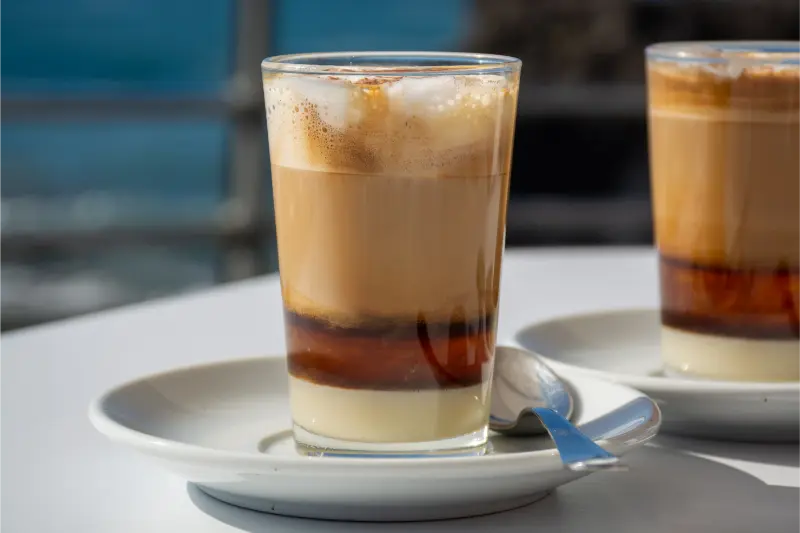
The drink most visitors remember is the barraquito, a layered Tenerife classic normally built with coffee, milk, condensed milk and flavourings such as cinnamon and lemon peel; many versions also include Licor 43 or another alcoholic element. But barraquito is only one part of the picture. A cortado, café solo or café con leche is often what people actually order in routine morning and after-lunch stops.
I would use coffee as a way to slow a Tenerife itinerary down. Instead of treating every café as a quick caffeine station, choose one morning in La Laguna, Santa Cruz, Puerto de la Cruz or La Orotava when you can sit for twenty minutes, watch local life and pair the drink with breakfast or a small pastry. That small pause often feels more local than another rushed attraction.
Coffee In Tenerife at a glance
| Most local order | Cortado or café con leche |
|---|---|
| Signature Tenerife drink | Barraquito |
| Alcohol-free question | Ask for a barraquito sin alcohol or confirm ingredients |
| Best setting | Neighbourhood bar, historic-centre café or specialty shop |
| Main visitor mistake | Assuming coffee names and sizes are identical to home |
The basic coffee vocabulary I would learn first
A café solo is the closest everyday equivalent to a small espresso-style coffee. A cortado is coffee softened with a smaller amount of milk. Café con leche contains more milk and is a common breakfast order. These definitions sound simple, but cup size and milk ratio vary by establishment, so I would not argue with a barista because a drink looks slightly different from the version I had the day before.
If you prefer decaffeinated coffee, ask for descafeinado. Some traditional bars may ask whether you want it de máquina or de sobre, meaning machine-made or from a sachet. Plant-based milk is increasingly easy to find in tourist areas and specialty cafés, but I would still ask before assuming that oat, soy or almond is available.
Barraquito: what makes it different
The barraquito is the Tenerife coffee tourists actively seek out. The visual appeal comes from the layers, usually including condensed milk, coffee, milk foam and a liqueur component, with cinnamon and a strip of lemon peel. Recipes and presentation vary. In some places the name zaperoco is used for a related layered version, and locals can debate details that do not need to become a traveller’s problem.
If you do not drink alcohol, say so clearly before ordering because the classic version may contain liqueur. My dedicated barraquito guide explains the drink in more detail. I would enjoy one after a meal rather than treating it as a normal hydration stop; condensed milk and liqueur make it richer than an ordinary coffee.
Specialty coffee versus traditional bar coffee
Tenerife now has cafés that focus on lighter roasts, single-origin beans, filter methods and carefully textured milk, especially in the larger cities and tourist centres. That is a different experience from the inexpensive cortado at a neighbourhood bar, and I do not think one should replace the other. They answer different moods.
If I want to work for an hour, taste a specific origin or drink a flat white, I look for a specialty café. If I want to stop during a market morning, order quickly in Spanish and watch a football discussion at the counter, I choose a traditional bar. A complete Tenerife coffee experience includes both.
Coffee at breakfast
A common simple breakfast is coffee with toast, often with tomato, olive oil, cheese or ham depending on the café. Churros appear in some places, while pastries and bocadillos are easy to find. My Tenerife breakfast guide gives a wider picture of morning food.
Hotel buffet coffee can be convenient but it is not the benchmark I would use to judge local café culture. Even on a half-board holiday, leave the hotel for breakfast once or twice. A short walk to a local café changes the rhythm of the morning and usually costs far less than a formal brunch.
How ordering and payment usually work
In some cafés you order at the table; in others the counter is faster. If you are unsure, watch what other customers do. In busy local bars, staff may take the order quickly and remember it without writing anything down. Do not interpret a brisk service style as unfriendly.
Cards are widely accepted, but I still keep a small amount of cash for tiny purchases or places where the terminal is temporarily unavailable. The money and tipping guide explains the wider practical context. Tipping for one coffee is optional; rounding up or leaving small change for good table service is enough if you want to.
Coffee in La Laguna, Santa Cruz and the north
La Laguna is one of my favourite places for a slow café stop because the historic streets naturally encourage walking and sitting. Santa Cruz has more urban variety, from old-school counters to modern specialty cafés. Puerto de la Cruz and La Orotava combine coffee with plazas, gardens and historic architecture.
In the resorts, you will find everything from British-style breakfast cafés to international chains and Canarian bars. I would walk one or two streets back from the most tourist-facing promenade when I want a more everyday atmosphere, while still checking recent reviews for opening times.
Coffee etiquette and useful Spanish
- Un cortado, por favor — a cortado, please.
- Un café con leche — coffee with milk.
- Descafeinado — decaffeinated.
- Con leche de avena, si tiene — with oat milk, if you have it.
- Un barraquito sin alcohol — an alcohol-free barraquito.
- La cuenta, por favor — the bill, please.
There is no need to perform perfect Spanish. A greeting, a clear order and gracias are enough. The Spanish phrases guide is useful if you want a few more practical expressions for cafés and restaurants.

A simple coffee crawl without overdoing caffeine
I would not plan six full coffees in one morning. Start with a café con leche at breakfast, walk for an hour, try a specialty filter or cortado, then leave the barraquito for after lunch. That gives you different styles without turning the day into a caffeine endurance challenge.
Coffee also combines well with markets. Visit a municipal or farmers’ market, taste fruit, cheese or pastries, then use a nearby café as a rest stop. The Tenerife markets guide can help build that kind of morning.
How I would plan it
I would keep this experience geographically sensible. Tenerife is not difficult to travel around, but a short distance on the map can turn into a slow journey when the route crosses resort traffic, mountain roads or a busy historic centre. I choose one main area, add one or two nearby stops, and leave enough spare time for parking, queues, weather changes or a longer meal than expected.
The evening before, I save the exact address or meeting point, opening information, a contact number and a backup plan. I also check the local forecast rather than a single island-wide symbol. Tenerife has strong microclimates, and conditions on the north coast, in La Laguna, at Teide and in Costa Adeje can be completely different on the same day.
I avoid building a trip around old prices or screenshots. Opening hours, seasonal services, public events and commercial offers change. If a detail matters enough to make or break the day, I verify it on the official website shortly before travelling and keep the confirmation available offline on my phone.
Check current information before you go
For wider food culture, use the official Tenerife gastronomy portal and verify individual café opening hours directly before making a special trip.
Where to stay
For a café-and-culture trip, La Laguna and Santa Cruz offer the widest urban choice, while Puerto de la Cruz and La Orotava are excellent for slower mornings in the north. Compare accommodation across Tenerife on Booking.com
Frequently asked questions
Is barraquito always alcoholic?
Often it includes liqueur, but recipes vary. If alcohol matters, ask before ordering and request a version without alcohol.
What is the difference between cortado and café con leche?
A cortado normally has less milk and a stronger coffee flavour; café con leche is milkier and commonly ordered at breakfast.
Can I find specialty coffee in Tenerife?
Yes, especially in Santa Cruz, La Laguna and larger tourist areas. Search recent opening information because independent cafés change faster than traditional landmarks.
Do cafés accept cards?
Most do, but carrying a little cash is useful for small purchases or temporary terminal problems.
What should I order if I dislike sweet coffee?
Choose café solo, cortado or café con leche rather than barraquito, which is usually much sweeter.
Final thoughts
Coffee in Tenerife is best approached with curiosity rather than a checklist. Learn three or four useful words, try a traditional cortado and one barraquito, then leave space for a modern specialty café if that interests you. The point is not to find one “best” coffee; it is to use cafés as part of the island’s daily rhythm.
Leave a Reply