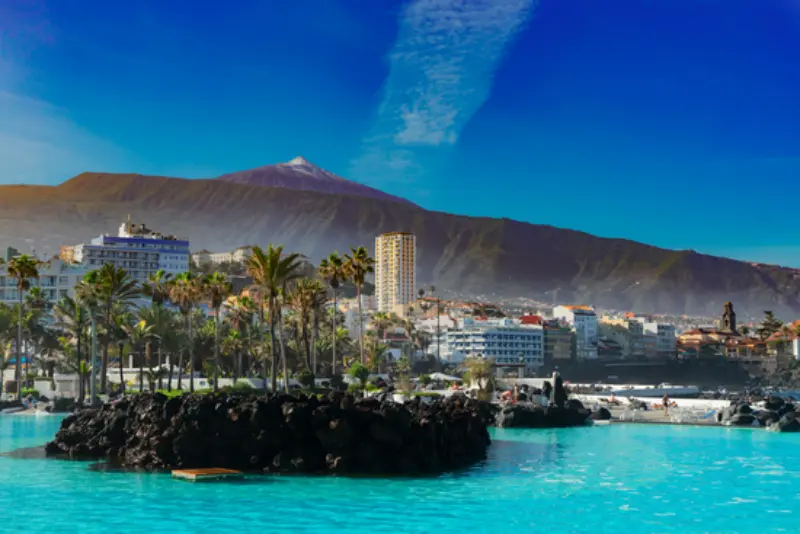
Quick summary: On the night of November 29, northern Tenerife becomes noisy, fast and deeply seasonal: Icod is famous for the tablas, Puerto de la Cruz for cacharros, and the opening of new wine pairs with chestnuts and traditional food.
San Andrés is one of those Tenerife traditions that makes much more sense when I stop looking for a single central “festival” and understand the network of local customs around November 29. In Icod de los Vinos, wooden boards race down steep streets. In Puerto de la Cruz, metal cacharros scrape and bang through the centre. Across wine areas, the new vintage is opened and tasted with seasonal food.
This is not an attraction designed around tourists, and that is precisely why I approach it carefully. I watch from safe areas, follow barriers and local instructions, and never assume that seeing experienced participants sliding on boards means a visitor should copy them. The cultural value comes from the atmosphere, food, noise and community tradition—not from taking unnecessary risks.
At a glance
| Key night | November 29 |
|---|---|
| Best-known places | Icod de los Vinos and Puerto de la Cruz |
| Signature traditions | Tablas, cacharros, new wine and chestnuts |
| Main caution | Crowds, steep streets, noise and fast-moving participants |
The link with new wine
San Andrés coincides with the traditional opening of the new wine in parts of Tenerife. The island’s northern wine districts give the festival a strong agricultural character: the celebration is not only noise and spectacle but also the moment when the work of the recent harvest becomes something people can taste together.
I connect the tradition with the wider volcanic wine story in my Tenerife wine guide. Visitors do not need to be wine experts; the useful approach is to taste responsibly, ask what is local and remember that driving after village celebrations is a poor plan.
Icod de los Vinos and the Tablas de San Andrés
Icod is the most famous place for the tablas. Participants descend steep streets on wooden boards, creating a combination of speed, noise and local pride that is difficult to compare with anything else on the island. Turismo de Tenerife identifies the night of November 29 as the key moment and describes the traditional descents in Icod.
I treat the descent route like a sporting event: barriers and marshal instructions matter. I do not step into a run for a photograph, and I keep children behind the safe viewing area. The boards can arrive quickly, and the tyres or other stopping arrangements at the bottom are part of a controlled local setup, not an invitation to improvise elsewhere.
Puerto de la Cruz and the Cacharros
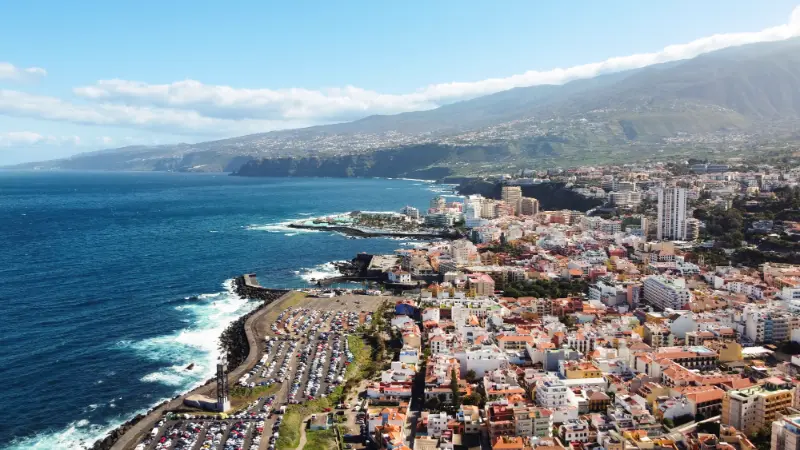
Puerto de la Cruz has its own loud identity. The cacharros tradition involves old tins, pots and other metal objects tied together and dragged through streets, producing the metallic roar associated with San Andrés. The activity commonly centres around the historic town and Plaza del Charco.
For a visitor, this version is easier to combine with dinner and a walk. My Puerto de la Cruz guide helps with parking alternatives, the seafront and the historic centre. I still expect crowds and choose a meeting point if travelling with friends.
Chestnuts, batatas and simple seasonal food
Roasted chestnuts are one of the smells of late autumn in northern Tenerife. Turismo de Tenerife also highlights chestnuts, sweet potatoes, gofio and fish around San Andrés traditions. These are not elaborate festival inventions; they connect the evening with mountain agriculture, the new wine and cooler November nights.
I eat where the event infrastructure and local stalls make sense rather than carrying a long list of “must-try” dishes. The best experience is often a paper cone of hot chestnuts, something savoury and a small taste of local wine while the streets fill with sound.
What time should I arrive?
I arrive before the densest evening crowd. In Icod that lets me understand the street layout, identify barriers and have a meal before the main atmosphere builds. In Puerto de la Cruz it gives time to walk Plaza del Charco and the harbour before the cacharros become the focus.
Exact event programmes can change, so I do not publish a fixed hour as if it were permanent. I check the municipality and the current Turismo de Tenerife agenda in November.
Noise and children
The festival can be much louder than families expect. Metal dragged over paving and the impact of boards are part of the experience. For a child who dislikes sudden noise, ear defenders can change the evening from stressful to fun. I also avoid positioning a stroller in the tightest part of a crowd.
Older children can enjoy the spectacle if they understand the safety boundaries. I explain before arriving that watching is the activity; joining a descent is not a spontaneous tourist experience.
Parking and transport
Icod’s historic centre has limited space even on a normal day. On a major tradition night, driving directly toward the event area is the least attractive strategy. I follow temporary parking and traffic signs, accept a longer walk and avoid residential streets that clearly are not intended for event parking.
If I plan to drink new wine, I remove driving from the equation. Staying locally can be worth more than any parking shortcut. Check Icod accommodation on Booking.com.
A respectful photography approach
The scene is visually irresistible—boards, steep streets, smoke from chestnuts, old town façades and metal cacharros—but I keep the camera out of participants’ paths. A telephoto or moderate zoom is safer than leaning over a barrier. I ask before making close portraits of children or vendors.
I also resist turning local traditions into a costume photo session. The value of San Andrés is the community context, not only the most dramatic frame.
Combine it with an Icod day
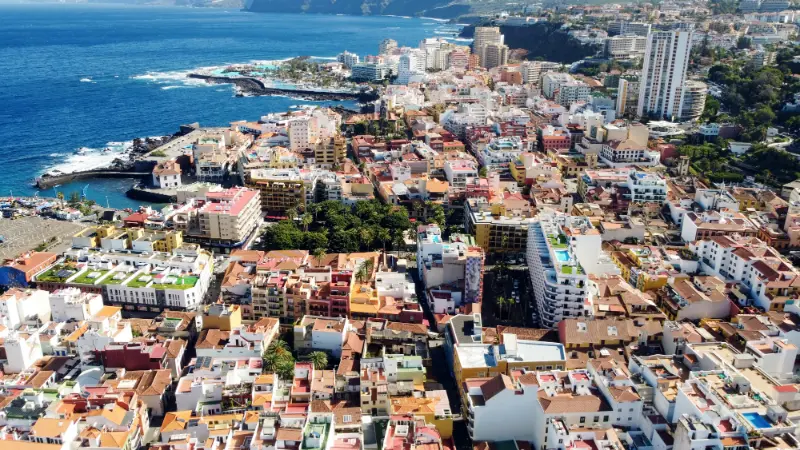
I arrive early enough to see the Drago area, historic streets and a museum or wine stop before the evening. My Icod de los Vinos guide has a full plan. I do not try to combine Cueva del Viento, a long mountain drive and San Andrés in one rushed day; the evening deserves energy.
If I am based farther east, Puerto de la Cruz can be the easier version because it combines a strong tradition with a larger tourism infrastructure and more accommodation.
Official and current information
Turismo de Tenerife’s San Andrés tradition page describes the November 29 customs, and its Cacharro and chestnut page explains the Puerto de la Cruz celebration. I use those for the cultural framework and the municipalities for the year-specific programme.
The date is stable; traffic layouts, barriers, staged activities and start times are not. That distinction keeps an evergreen guide useful without pretending next year will copy this year minute by minute.
My practical planning checklist
Before I build a day around San Andrés Tenerife, I separate the fixed facts from the details that can change. Fixed facts include the location, cultural context or legal framework explained above. Changing details include current opening hours, temporary road closures, airline products, event routes, service times and prices. I verify those close to the travel date rather than copying an old timetable into the itinerary.
- Save the official source offline or as a screenshot before leaving the hotel.
- Keep one realistic backup plan in case weather, traffic, capacity or an operational change affects the original plan.
- Do not schedule the next paid activity so tightly that a local event, meal or airport process becomes stressful.
- Carry water, a charged phone and the basic layer or sun protection needed for the actual location rather than the resort forecast.
- If a rule or sign on site conflicts with an older article, follow the current official instruction on site.
I also keep the rest of the day geographically simple. Tenerife looks small on a map, but mountain roads, event traffic and the distance between north and south can turn an overfilled itinerary into hours in the car. One strong experience plus a nearby town, viewpoint or meal is usually better than chasing several unrelated stops.
Useful Tenerife planning links
Check Tenerife accommodation on Booking.com. I compare location first, then price, because a cheap room on the opposite side of the island can cost more in time and transport than it saves.
For bookable tours and activities, I use the widget above as a comparison tool rather than assuming the first result is the best fit. I read cancellation terms, meeting points, age or mobility restrictions and the exact inclusions before paying.
Frequently asked questions
When is San Andrés celebrated in Tenerife?
The key night is November 29, with traditions extending into November 30 in some programmes.
Can tourists ride the tablas in Icod?
Treat the tablas as a local organised tradition and follow event rules. Watching from designated safe areas is the sensible visitor approach.
Where are the cacharros?
Puerto de la Cruz is particularly known for the noisy cacharros tradition around San Andrés.
What food is typical?
Chestnuts, sweet potatoes, gofio and local wine are strongly associated with the season and celebrations.
Final thoughts
The best way to use this guide is to treat San Andrés Tenerife as part of a wider Tenerife trip, not as an isolated checklist item. I verify the operational details, leave enough time to enjoy the experience at local pace and keep the plan flexible enough for weather or event changes. That combination—current information, realistic timing and respect for the place—usually matters more than trying to optimise every minute.
Leave a Reply