Tenerife’s public art is easy to miss because much of it is not inside a museum. Sculptures sit in city parks, on traffic islands, along rambla routes and in small northern towns. If you normally think of Tenerife only as beaches and Teide, a public-art day shows a different island: one that has used streets and gardens as exhibition space for decades.
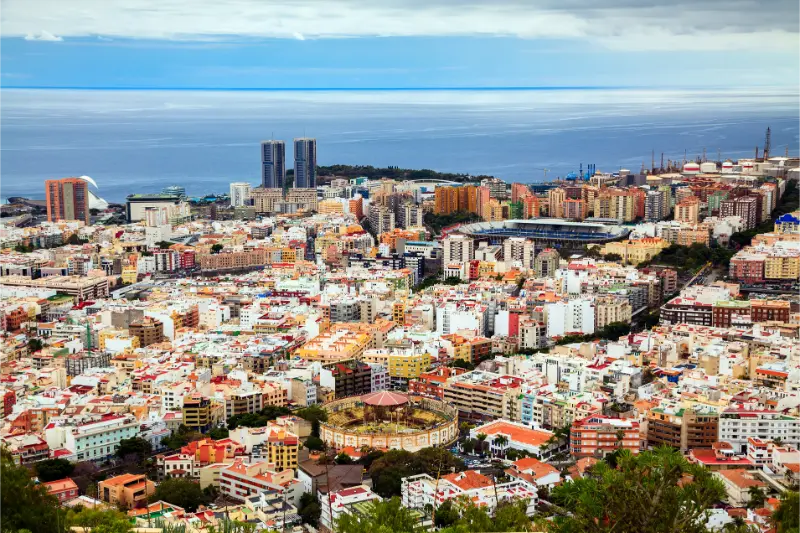
Santa Cruz is the strongest starting point. The city retains a large group of works connected with the International Sculpture in the Street exhibitions, including pieces by internationally known artists. More recently, La Victoria de Acentejo has developed a cultural route around works by sculptor Julio Nieto, adding a smaller-town contrast.
I would approach public art as a walking route, not a list of isolated monuments. The relationship between sculpture, trees, streets and everyday city life is part of the experience.
Public art in Tenerife at a glance
| Best city | Santa Cruz de Tenerife |
|---|---|
| Best green setting | Parque García Sanabria |
| Best newer town route | La Victoria de Acentejo |
| Best combination | Art walk plus café, market or museum |
| Cost | Most outdoor public-art viewing is free |
Santa Cruz and the sculpture-in-the-street tradition
Tenerife tourism highlights the quantity of international sculpture found along Santa Cruz avenues and describes a pedestrian route beginning around the Rambla. Works associated with the city’s outdoor sculpture exhibitions include pieces by artists such as Joan Miró, Henry Moore, Xavier Corberó and Martín Chirino.
The important point is that these works are integrated into the city. You may pass one while going to lunch or waiting at a crossing. I would therefore use the Santa Cruz guide and let sculpture shape the walking route rather than making a separate journey for every object.
Parque García Sanabria
Parque García Sanabria is the best place to understand how art and landscape overlap in Santa Cruz. The official tourism page notes sculptures connected with the first International Sculpture in the Street exhibition alongside monuments and tropical planting.
Use my Parque García Sanabria guide for a dedicated visit. The park works especially well in warm weather because the trees provide a more comfortable environment than a fully exposed city route.
The Rambla as an outdoor gallery
The Rambla is not a conventional gallery, and that is the attraction. Traffic, cafés, residents, shade trees and sculpture exist together. Give yourself time to look from different angles rather than taking one photograph and moving on.
Morning can be quieter, while late afternoon gives softer light. Midday sun may create harsh contrast on bronze and polished surfaces, though shaded works can still photograph well.
La Victoria de Acentejo sculpture route
In July 2026, Tenerife tourism announced a cultural route in La Victoria de Acentejo dedicated to the work of sculptor Julio Nieto. The project places twelve sculptures around the municipality and is intended as an open-air cultural route connected with local landscape and identity.
This makes La Victoria interesting for travellers who want culture outside the main cities. My La Victoria de Acentejo guide provides the wider context of the town, food, history and surrounding north-coast area.
Public art versus museums
Outdoor art should not replace Tenerife’s museums; it complements them. If weather becomes poor or you want more context, Santa Cruz has several indoor cultural options. The Municipal Fine Arts Museum guide is a useful next step.

A mixed day works well: outdoor sculpture in the morning, lunch around the centre, then an indoor museum or TEA in the afternoon.
How to photograph public sculpture
A sculpture rarely needs to fill the frame. Include some of the environment so the image explains where the work lives. Trees, paving, buildings and pedestrians can give scale. If you want a clean image, wait rather than asking people to move from a public space.
Be careful with plaques. Photographing the artist and title information can help you identify a work later without needing to rely on memory.
Respecting artworks and public space
Do not climb, sit on or lean equipment against a sculpture unless the work is explicitly designed for interaction. Public art can look robust but surfaces are vulnerable to scratches and oils. Children should be supervised around works that have sharp edges, height or water features.
If an area is fenced for maintenance, treat that as a closure rather than an invitation to step around the barrier for a better photo.
A half-day Santa Cruz art walk
I would begin near the central city, walk a section of the Rambla, spend time in Parque García Sanabria and then continue toward a café or museum. This is deliberately flexible because the exact route depends on accommodation, heat and how much time you spend with each work.
The best public-art walk is one that still feels like a city day. Stop for coffee, notice architecture and use the route to understand Santa Cruz rather than separating art from everything around it.
Official information
The official Santa Cruz tourism page describes the city’s sculpture route, while Tenerife tourism’s 2026 announcement explains the new Julio Nieto route in La Victoria. These are useful references when individual works are temporarily moved or under maintenance.
Frequently asked questions
Where is the best public art in Tenerife?
Santa Cruz has the strongest concentration, especially around the Rambla and Parque García Sanabria.
Is the outdoor sculpture route free?
Viewing public sculptures in streets and parks is normally free.
Are there works by famous international artists?
Yes. Official tourism material references artists including Joan Miró and Henry Moore among works in Santa Cruz.
Is La Victoria worth visiting for art?
The municipality launched a twelve-sculpture Julio Nieto cultural route in 2026, which adds an interesting northern alternative to Santa Cruz.
How long should I allow?
A relaxed Santa Cruz sculpture-and-park walk can fill half a day when combined with coffee, lunch or a museum.
How I would plan this experience
I would first decide whether this is the main purpose of the day or one element in a wider itinerary. Tenerife is compact on a map but travel time can grow quickly because of mountain roads, parking, one-way streets and the temptation to combine places that sit on opposite sides of the island. A realistic plan usually groups two or three stops in the same area rather than chasing a long checklist.

I save the exact parking point or bus stop, the return route and one nearby alternative before leaving accommodation. That simple preparation matters on Tenerife because coast, forest and highland weather can differ dramatically on the same day. It also makes it easier to abandon a plan without wasting the whole day if wind, cloud, traffic or access rules change.
For any activity that involves a provider, I read the cancellation terms, language, meeting point and what is included before paying. For self-guided days, I download offline maps and avoid relying on a single social-media pin. The island is easy to enjoy independently, but many of the best landscapes are protected places where access, parking and behaviour matter.
What to bring
- Water and a small snack, even for a short outing.
- Sun protection; UV exposure can be strong in every season.
- A light layer for wind, cloud, air-conditioned interiors or higher elevations.
- A charged phone with offline maps and screenshots of reservations or directions.
- Footwear suited to the real surface rather than only to resort walking.
- A little flexibility: weather, traffic and local events can change the best order of the day.
Where to stay
For a first Tenerife trip, I choose accommodation according to the activities I will do most rather than only the lowest room price. Costa Adeje and Los Cristianos are convenient for the south; Puerto de la Cruz and La Orotava work well for the north; Santa Cruz and La Laguna are stronger for an urban and cultural stay. Compare accommodation across Tenerife on Booking.com and then check actual road or bus times to the places you expect to visit.
Final planning advice
My main rule is to leave space between activities. Tenerife rewards travellers who allow time for an unplanned viewpoint, a long lunch, a swim, a change in cloud cover or simply a slower road than expected. A slightly shorter itinerary often produces a better day because you can adapt instead of spending the holiday watching the clock.
Find current tours and experiences
For bookable Tenerife experiences, I use the widget below to compare current options, meeting points and cancellation conditions rather than relying on an old price or timetable.
Make the art route accessible and comfortable
Outdoor art routes are flexible, which is useful for travellers who do not want a fixed museum visit. In Santa Cruz, you can shorten the walk to the park and the most convenient section of the Rambla, use cafés for regular breaks and avoid the hottest part of the day. Travellers with limited mobility should check paving, gradients and temporary street works before assuming every sculpture on a published route is equally easy to reach.
I also recommend saving the names of only five or six works rather than trying to memorise an entire catalogue. Once you recognise a few artists and styles, the rest of the city becomes more interesting because you start noticing sculpture without actively searching for it. That is the point where the route stops feeling like homework and starts changing the way you see Santa Cruz.
Leave a Reply