Centro de Arte Efímero “Alfombras de La Orotava” is the small La Orotava museum that explains the flower and volcanic-sand carpets associated with Corpus Christi. It is the place I would visit if I am in Tenerife outside the festival period and want to understand why “alfombras” are such a big part of the town’s identity.
The municipal tourism page currently lists Monday–Friday opening from 10:00 to 14:00, a €2 visitor price and free admission for Tenerife residents. The centre is at Calle San Francisco 5, beside the Casa de los Balcones area.
Quick practical facts
| Address | Calle San Francisco 5, La Orotava |
|---|---|
| Current hours | Monday–Friday 10:00–14:00 |
| Current visitor price | €2 |
| Tenerife residents | Free according to the municipal tourism page |
| Theme | Corpus Christi flower and Teide-sand carpets |
| History represented | More than 160 years of alfombrista tradition |
Why I would give Centro de Arte Efímero “Alfombras de La Orotava” its own stop
The Corpus carpets are inherently temporary. If a traveller visits in November, there is no street carpet to see. A permanent interpretation centre is therefore essential if the tradition is going to make sense year-round.
The museum also prevents a common misunderstanding: these are not simply “pretty flower designs”. The tradition involves planning, templates, natural materials, community organisation, religious festival context and, for the main plaza, coloured sands associated with Teide.
What to look for once you are there
Historic sketches and documents
The municipal description mentions early designs and documentary material that show how the tradition developed rather than presenting it as timeless folklore.
Tools and moulds
Practical objects explain how complex images are transferred onto streets and plazas. I find these more useful than only looking at finished photographs.
Flowers, heather and volcanic sands
The materials are part of the identity of the carpets. The contrast between perishable flowers and mineral colour is also the reason the works are genuinely ephemeral.
The historic house setting
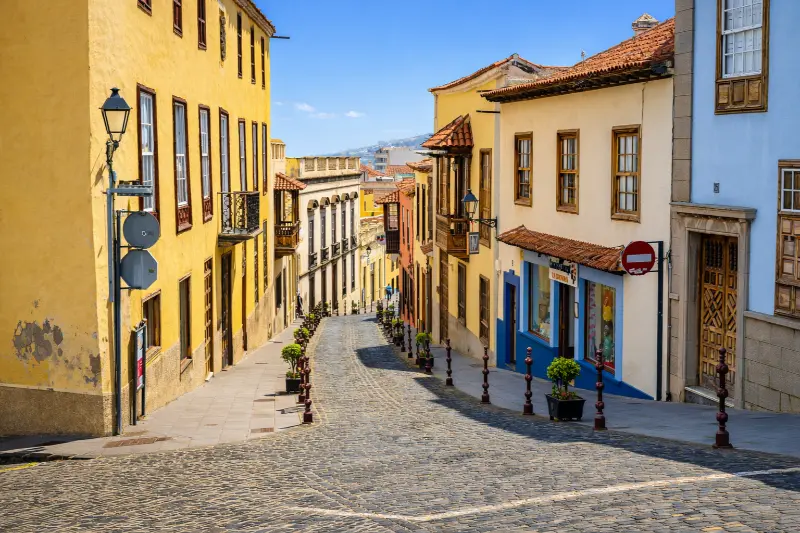
The centre occupies a traditional building in one of La Orotava’s most attractive heritage streets, so the museum naturally connects with the townscape outside.
The context that makes the visit more interesting
La Orotava’s carpet tradition became especially renowned from the mid-nineteenth century. Municipal heritage material links a key early development to the Monteverde family and Leonor del Castillo, after which the practice expanded into a major expression of the Corpus festivities.
The carpets are community art, religious festival practice and local identity at once. I avoid reducing them to a craft demonstration because their meaning depends on procession, street, neighbourhood and time.
The volcanic-sand carpet in the town-hall square is particularly associated with the dramatic colour palette of Teide materials. The interpretation centre helps explain technique year-round without encouraging anyone to collect volcanic material themselves.
How I would plan the visit
I would combine the centre with the La Orotava guide and Casa de los Balcones because they are in the same historic walking zone.

If garden time appeals more than another indoor attraction, the Hijuela del Botánico is an easy nearby contrast.
How much time to allow
Forty-five minutes to one hour is enough for most visitors. The centre is focused, and that focus is a strength rather than a reason to rush.
I would then spend at least another hour walking the surrounding streets. The historic setting helps explain why making art directly on the street has such impact during Corpus.
Getting there without turning the visit into a transport problem
Calle San Francisco is in La Orotava’s historic centre. I park once and walk; trying to move a car between Casa de los Balcones, the carpet centre, Hijuela and the church is unnecessary.

If I want a quieter north-island base, I may compare La Orotava accommodation and use the town for Teide and valley day trips.
Accessibility and comfort
The museum occupies a historic property, so I would check direct accessibility if step-free access to all rooms is essential. The old-centre streets also have slopes and traditional paving.
A short focused visit can still be worthwhile even if a traveller does not cover every room. I would ask staff which display best explains the technique and history.
Is it worth visiting with children?
Good for creative children because the process—drawing, templates, materials and building a design on the ground—is easy to understand visually.
I would connect the museum to an activity: ask children to design a simple geometric carpet on paper after the visit. That turns a short heritage stop into something memorable.
Best time of day
Morning is the obvious choice because the current published timetable ends at 14:00. I would not leave this museum for the end of an afternoon La Orotava visit.
During the Corpus period the wider town programme can change opening and crowd patterns. That is when I check special festival information rather than relying only on normal hours.
Photography and respectful visiting
I photograph sketches, tools or displays only where permitted, but I also photograph the street outside. The museum makes more sense when the viewer can imagine those designs covering the surrounding paving.
During the real Corpus carpets I never step onto or over protected work for a better angle. The artwork is temporary and vulnerable by definition.
Useful nearby stops
A realistic half-day plan
A strong morning is carpet centre, Casa de los Balcones, Hijuela del Botánico and a slow walk through the historic streets before lunch.
I would save the MAIT for another block if museum fatigue starts. La Orotava is better when indoor heritage and outdoor townscape alternate.
Common mistakes I would avoid
- Assuming the carpets exist on the streets all year.
- Arriving after 14:00 on a normal weekday and expecting the museum open.
- Reducing the tradition to decoration without Corpus and community context.
- Driving between nearby historic-centre sights.
- Collecting volcanic sand or other natural material to imitate the carpets.
Current information: what I would check again
The municipal tourism page currently lists Monday–Friday 10:00–14:00, €2 for visitors and free entry for Tenerife residents.
Festival periods and special exhibitions can produce different hours, so I check the local programme around Corpus Christi.
Official source
For normal hours, price and the heritage description I use La Orotava Tourism – Centro de Arte Efímero.
Frequently asked questions
Can I see La Orotava’s street carpets all year?
No. The actual street carpets are tied to Corpus celebrations, but the interpretation centre explains the tradition year-round.

What are the current normal hours?
The municipal tourism page lists Monday–Friday 10:00–14:00.
How much is admission?
The same page currently lists €2 for visitors and free admission for Tenerife residents.
How long should I allow?
Around 45–60 minutes for the centre, plus time to explore the surrounding historic streets.
How I decide whether this stop belongs in my itinerary
I do not add a place simply because it appears on a “top things to do” list. I ask what new layer it adds to the trip. Does it explain a part of Tenerife I have not understood yet? Does it fit naturally with places already on the route? Can I visit it without creating an hour of unnecessary driving? Those questions are especially useful on an island where a short distance on the map can still mean mountain roads, city parking or a change of microclimate.
I also distinguish between a destination visit and a cluster visit. A destination visit is worth crossing the island for; a cluster visit becomes valuable because it sits beside two or three other strong stops. Many museums, churches, small forts and interpretation centres are at their best in the second category. That does not make them less important. It simply means the itinerary should respect their real scale.
What I would verify on the morning of the visit
Opening hours, temporary closures, road conditions and special events are the four details most likely to change. I save the official source rather than relying on a screenshot taken months earlier. For cultural buildings I also check whether a private event, religious service, renovation or guided group affects normal access. For Teide locations I add mountain weather and road status to that list.
This last check takes only a few minutes and prevents the most common frustration in Tenerife planning: arriving with perfectly researched historical information but an outdated practical detail. I would rather change the order of a day than force an itinerary after the conditions have changed.
What makes a good Tenerife visit different from a checklist
The strongest days usually contain contrast. A museum works better when I can walk through the neighbourhood it explains; a volcanic trail means more after a visitor centre; a historic fort becomes clearer when modern city architecture surrounds it. I therefore build connections between places instead of treating every stop as an isolated review score.
I also leave blank space. Tenerife rewards unplanned pauses: a view of Teide appearing above cloud, a local café, a small plaza, or a change in light can become more memorable than the tenth scheduled attraction. A complete travel site should help a reader make those choices, not pressure them to “complete” the island.
Final thoughts
The carpet centre solves a real travel problem: most visitors are not in La Orotava on the exact days when the ephemeral art covers the streets. The museum turns a once-a-year tradition into something understandable at any season.
I would visit in the morning, learn the process, then walk outside and imagine the same paving transformed by flowers, heather and volcanic colour.