Author: Patricia

  • Getting Around Tenerife: Rental Car, Buses, Taxis and Airport Transfers

    Getting Around Tenerife: Rental Car, Buses, Taxis and Airport Transfers

    Getting around Tenerife is easy once you understand the shape of the island, but choosing the wrong transport strategy can add hours of unnecessary travel. The main coastal motorway is straightforward, while many of the places that make Tenerife special—Teide, Anaga, Masca, small northern towns and remote viewpoints—sit behind mountain roads or limited parking. For that reason, I do not automatically recommend either a rental car or public transport to everyone. I match transport to the itinerary.

    This guide explains the two airports, driving, buses, the ten+ system, taxis, parking and how I would move around with or without a car. The key idea is simple: use a car when flexibility genuinely improves the day, and avoid paying for one when you will spend three days walking around the same resort.

    Tenerife has two airports: TFS and TFN

    Tenerife South Airport (TFS) handles the largest share of international leisure traffic and is the most convenient airport for Costa Adeje, Playa de las Américas, Los Cristianos and El Médano. Tenerife North–Ciudad de La Laguna Airport (TFN) is close to La Laguna and Santa Cruz and is especially important for domestic and inter-island connections. Aena states that TFN is around 10 kilometres from Santa Cruz, while TFS sits in the south close to the main tourist zone.

    Always check the airport code before booking transfers or rental cars. ‘Tenerife Airport’ is not specific enough. A cheap flight into the opposite airport can still be a good deal, but only after you account for the transfer time to your accommodation.

    From Tenerife South Airport to the resorts

    TFS is well connected by road and bus. Taxis are available from the airport, rental-car companies operate there and TITSA runs services linking the airport with major tourist areas. If your hotel is in Costa Adeje or Los Cristianos and you plan to stay locally for the first days, you do not necessarily need to collect a rental car immediately.
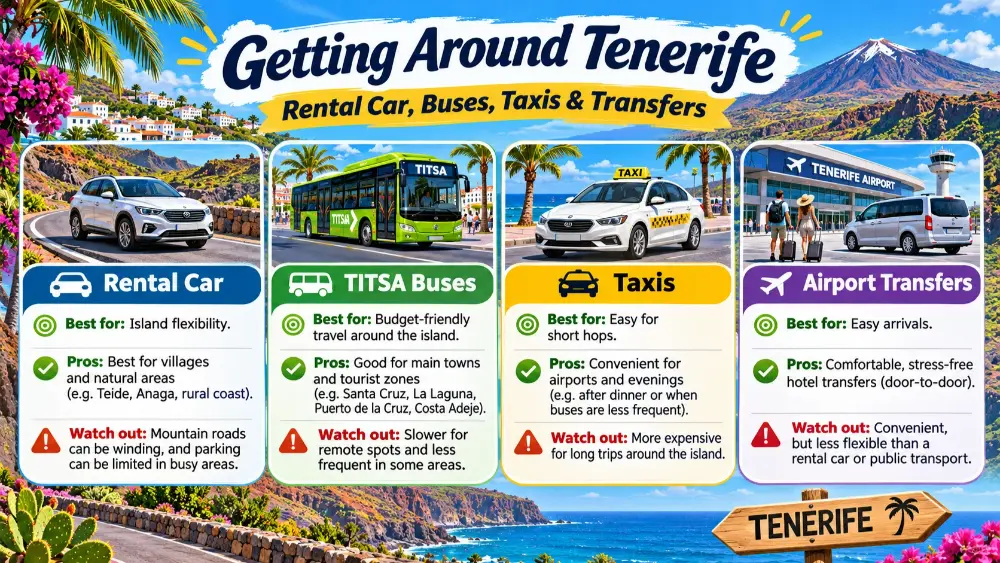
    Illustrated guide: Getting Around Tenerife, with practical visitor tips
    Illustrated guide: Getting Around Tenerife.

    I often prefer to separate airport logistics from sightseeing. A pre-planned bus, taxi or transfer can be easier after a late flight, then the car can start the next morning or later in the week. This also avoids paying for parking during days when the car remains unused.

    From Tenerife North Airport

    TFN is convenient for La Laguna, Santa Cruz and much of the north. It can also make sense for travellers arriving from mainland Spain or another Canary Island. If you are staying in Puerto de la Cruz, it is generally more naturally positioned than TFS, although exact journey times depend on traffic and your route.

    If you land at one airport and depart from the other, confirm one-way car-rental conditions before booking. The island is manageable, but returning to the wrong airport because an old itinerary says only ‘Tenerife Airport’ is an avoidable mistake.

    Do you need a rental car in Tenerife?

    For a resort holiday focused on beaches, pools and organised excursions, no. For an independent first trip that includes Teide, Anaga, the north coast and west-coast viewpoints, a car makes the itinerary much more flexible. It allows you to change direction when weather differs between north and south and to stop at places that are awkward to reach on a rigid timetable.

    The decision is not only about cost. Think about driver confidence. Mountain roads can be narrow, steep and winding, especially around parts of Anaga and Teno. If that makes you anxious, buses plus guided day trips can create a better holiday than forcing yourself to drive everywhere.

    What driving is like

    The main TF-1 and TF-5 corridors are modern roads, but congestion can build around urban areas and commuter periods. Once you leave the main roads, speed drops quickly. A route that looks short in kilometres may involve bends, villages, viewpoints and slow vehicles. I always add extra time to mountain routes and avoid scheduling a fixed restaurant reservation immediately after a long scenic drive.

    Fuel stations are easy to find in populated areas, but I would not head into a long mountain day with an almost empty tank. Download offline maps and remember that phone navigation can select a technically valid road that is less comfortable than a major signed route.

    Tour Bus On Mountain Road Tenerife

    Parking: where the car becomes less convenient

    Parking is one of the biggest arguments against keeping a car for every day. Historic centres such as La Laguna and La Orotava, busy beach resorts and popular natural viewpoints can be frustrating at peak times. Never assume you can leave a car anywhere because other vehicles are stopped there. Protected areas and mountain roads have specific restrictions for safety and conservation.

    When choosing accommodation, I treat guaranteed parking as a real amenity. A slightly more expensive hotel with a space can be better value than spending thirty minutes every evening circling dense streets.

    TITSA buses: the main public transport network

    TITSA buses connect towns, airports and many tourist areas across Tenerife. The network is extensive enough to support a car-free holiday if you choose your accommodation strategically. The official site includes a journey planner and specific information for airport and tourist routes.

    For sightseeing by bus, I prefer simple days with one main destination. A plan that requires three connections each way is fragile and leaves little room for spontaneous stops. Santa Cruz, La Laguna, Puerto de la Cruz, Costa Adeje and Los Cristianos are much easier bases for public-transport users than an isolated rural property.

    ten+ travelcards and current fares

    TITSA’s current fare information lists a 24-hour Day Travelcard at €10 and a 7-day Travelcard at €50, with a €2 physical card price where applicable. The ten+ wallet is another option, and the ten+ Móvil app supports selected tickets. These prices were checked against TITSA’s official information in September 2026 and can change, so verify them before your trip.

    The best product depends on how intensively you use buses and trams. Do not buy a seven-day pass simply because you are on the island for seven days; compare it with the journeys you realistically expect to make. Use the official TITSA fares page for current details.

    Tram in the Santa Cruz–La Laguna area

    Tenerife’s tram is useful in the metropolitan area, especially between Santa Cruz and La Laguna. It is not an island-wide rail system, so it does not replace buses or a car for Teide, Costa Adeje or the northwestern coast. For a city-focused day, however, it can reduce parking stress and works with the broader ten+ transport ecosystem.

    Taxis and private transfers

    Taxis are practical for airport transfers, evenings and short journeys when waiting for a bus is not worth the time. They become expensive as a substitute for a rental car on repeated cross-island trips. If you are travelling as a family or group, compare the total taxi or transfer cost with rental and parking rather than looking only at the per-person bus fare.

    Woman Relaxing In Rental Car Tenerife

    For late arrivals, I value certainty. Knowing how you will reach the hotel before landing is more important than finding the absolute cheapest option at midnight.

    Getting to Mount Teide without a car

    You can visit Teide without driving, but your freedom is reduced. Scheduled public transport and organised tours are the main alternatives. A tour can be especially sensible if you want a cable-car visit without worrying about mountain driving, parking and return timing. If you use public transport, confirm the latest schedules and build a generous buffer; mountain conditions and cable-car operation can change.

    Read my Mount Teide guide before choosing a transport method because summit permits and regulated trail reservations are separate from simply reaching the national park.

    Getting around with children

    With children, I value fewer transfers, predictable toilet stops and avoiding very late returns. A car can make family days easier because you can carry extra clothes, snacks and beach equipment. The trade-off is car-seat logistics and parking. If you rent, reserve the correct child restraint in advance rather than hoping the right size is available on arrival.

    For a slower family plan, see Tenerife with kids.

    My ideal transport strategy for a seven-day first trip

    If I were staying in Costa Adeje for one week, I would consider a car for three or four exploration days rather than automatically for all seven. I would use it for Teide, Anaga/La Laguna and the north or west coast, then spend the remaining days walking locally, taking a taxi or using buses. That combination reduces parking hassle while preserving independence where it matters most.

    Travellers staying in a rural finca or planning daily hikes should keep the car longer. Travellers staying in Los Cristianos with pre-booked tours may not need one at all.

    Airport and transport links I would bookmark

    Common transport mistakes

    • Booking a hotel without checking its exact elevation and then assuming everywhere is walkable.
    • Renting a car for seven days but using it only twice.
    • Planning mountain drives by kilometre count rather than realistic road time.
    • Relying on an old screenshot of a bus timetable.
    • Parking outside marked or legal areas near natural attractions.
    • Forgetting that Tenerife has two airports.
    • Scheduling a long drive immediately before a flight without traffic margin.

    Car, bus or taxi: my final decision rule

    Use a car for flexibility and remote access, buses for value and straightforward town-to-town travel, and taxis for short convenient gaps. Combining all three is often smarter than choosing one mode for the entire holiday.

    Once transport is decided, revisit your accommodation and itinerary. My where to stay guide and 7-day itinerary are designed to work together with this transport plan, so you can reduce backtracking before you book anything non-refundable.
  • Tenerife 7-Day Itinerary: My Ideal First Week on the Island

    Tenerife 7-Day Itinerary: My Ideal First Week on the Island

    A seven-day Tenerife itinerary should show you the island’s contrasts without making every day a long drive. My preferred approach is to build the week around three big exploration days—Teide, Anaga/La Laguna and the west or north coast—then alternate them with easier beach and local days. That rhythm leaves room for weather changes and makes the holiday feel like a holiday rather than a logistical challenge.

    This itinerary assumes one main base, preferably in the south for first-time visitors, and a rental car for the exploration days. If you stay in Puerto de la Cruz or La Laguna, reverse some routes. The exact order is flexible; in Tenerife, flexibility is a strength because weather can differ dramatically between coast and mountains.

    Day 1: arrive, settle in and learn your neighbourhood

    Do not waste the first afternoon racing to a famous attraction unless your flight arrives very early. Check in, buy water and basic supplies, walk the seafront and learn where you will park or catch the bus. If you are in Costa Adeje or Los Cristianos, use the promenade for an easy introduction to the south coast.

    I like to make the first dinner local but simple—fish, papas arrugadas, grilled meat or Canarian cheese—then get an early night. A Tenerife week becomes much easier if you start the first full day rested instead of recovering from travel.

    Day 2: Teide National Park

    Make Teide the first major day but not the day immediately after a midnight arrival. Check the mountain forecast, road status, any required trail reservations and cable-car operation before leaving. Drive up through a scenic route, stop at selected viewpoints and allow time for Roques de García and the volcanic landscape. If you have cable-car tickets, arrive with enough buffer rather than speeding between stops.

    Remember that the upper station is at high altitude and the summit route requires separate permission. Wear layers and closed shoes even if the coast is hot. My full Mount Teide guide explains permits, altitude and cable-car planning.

    Day 3: beach morning + Costa Adeje or Los Cristianos

    After the mountain day, slow down. Spend the morning at a convenient southern beach such as Playa del Duque or Las Vistas. Have a long lunch, walk the promenade and avoid feeling guilty about doing ‘less’. This recovery day is what makes the rest of the itinerary sustainable.

    If you want an activity in the afternoon, choose something close to your base: a short boat trip, shopping, a sunset walk or a relaxed visit to another nearby beach. Families may prefer to place a water-park day here instead; couples might book a later dinner or spa session.

    Day 4: La Laguna and Anaga Rural Park

    Start in San Cristóbal de La Laguna, where historic streets, courtyards and cafés provide a cultural contrast to the resorts. Then continue into Anaga, where roads climb into laurel forest and mountain ridges. Choose a few viewpoints and, if you have the time and correct conditions, a walk appropriate to your ability.

    Masca Village And Gorge Tenerife

    Do not try to visit every Anaga road and beach in one day. Distances look short but bends and stops add time. If Benijo is part of your plan, treat it as a scenic end point and keep an eye on daylight. Weather can be cool or misty in the forest even when Santa Cruz is sunny.

    Day 5: north Tenerife – La Orotava, Puerto de la Cruz and Garachico

    This is a town-and-coast day. I would begin in La Orotava, where walking the historic centre is most enjoyable before the busiest part of the day. Continue to Puerto de la Cruz for lunch or a seafront walk, then decide whether to spend more time there or continue west toward Garachico.

    Garachico’s volcanic coast, old streets and natural pools create a strong finale, but swimming is not guaranteed because sea conditions can close bathing areas. The goal is not to complete three towns; it is to enjoy two or three places without constantly checking the clock. If you dislike long multi-stop days, drop one destination.

    Day 6: Los Gigantes, Teno and a west-coast sunset

    The west coast offers a different landscape again. Los Gigantes is the easiest starting point, with views of the cliffs and access to boat excursions. A responsible whale-watching trip can fit here if it is a priority. Look for operators that follow local sustainability and wildlife-observation standards rather than choosing only by the cheapest ticket.

    Los Gigantes cliffs above the Atlantic with flowers in the foreground

    Depending on access rules and your comfort with mountain roads, you can add viewpoints toward Teno or Masca. Do not underestimate the roads. If you book a boat trip, keep the rest of the day light so that delays or sea conditions do not create stress. End with a west-coast sunset if the weather cooperates.

    Day 7: flexible day – choose what the week was missing

    I deliberately leave the last full day open. If Teide was cloudy, this is your backup. If the children want another beach, use it for that. If you fell in love with the north, return. If you have energy, consider Santa Cruz and Las Teresitas, a food-focused day, a winery visit, another hike or simply a pool day.

    Flexibility is not wasted time. In an island with microclimates and weather-sensitive mountain activities, the unplanned day often becomes the best day because you can respond to actual conditions rather than an itinerary written months earlier.

    A one-week itinerary at a glance

    DayMain planPace
    1Arrival and local areaEasy
    2Teide National ParkBig day
    3South-coast beachEasy
    4La Laguna + AnagaBig day
    5North-coast townsMedium/Big
    6Los Gigantes + westMedium
    7Flexible weather/interest dayYour choice

    Where to stay for this itinerary

    For a first trip, Costa Adeje or Los Cristianos makes the logistics easy and gives you good recovery days between excursions. A northern base reduces driving for La Orotava and Anaga but increases it for some southern activities. My where to stay in Tenerife guide explains the trade-offs.

    If you have more than ten nights, a split stay can work well. With only seven nights, I normally prefer one base because changing hotels takes more time than it saves.

    Do you need a rental car for this plan?

    You can reproduce much of the itinerary with buses and excursions, but not with the same flexibility. A car is especially valuable for Teide, Anaga viewpoints and multi-stop northern days. If you dislike mountain driving, book organised trips for the hardest days and use TITSA or taxis locally.

    The official TITSA network covers the island, including both airports and tourist areas. Current tourist travelcards and fares are listed on its website. See my getting around Tenerife guide before deciding whether to rent for seven days or only three or four.

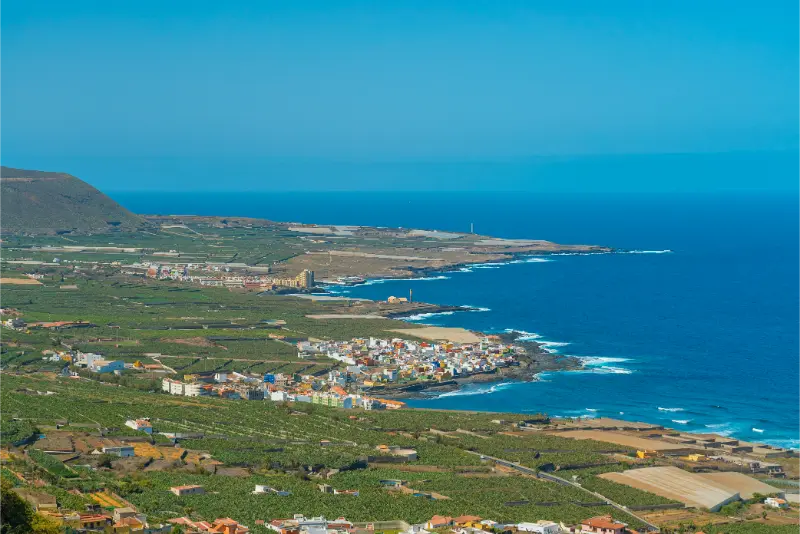
    West Coast Of Tenerife With Coastal Villages

    How to adapt the itinerary for children

    With young children, I would remove at least one multi-stop day and add another easy beach or pool day. Teide should be shorter and altitude considered carefully. Anaga can be reduced to La Laguna plus a few viewpoints. Families often enjoy a water-park day, but placing it between two long driving days is more comfortable than adding it to an already full schedule.

    My family guide to Tenerife gives a slower version with practical safety considerations.

    How to adapt it for hikers

    Hikers can turn Day 4 into a dedicated Anaga route, Day 6 into a Teno hiking day and add a lower-altitude walk on Day 7. High-mountain Teide routes require more preparation, reservations and equipment than casual sightseeing. Do not stack three demanding hikes on consecutive days if you are not used to the terrain.

    Use my Tenerife hiking guide to choose routes by landscape and difficulty rather than simply by social-media popularity.

    How to adapt it without a car

    Base yourself somewhere with strong transport links, such as Los Cristianos, Costa Adeje, Puerto de la Cruz, Santa Cruz or La Laguna. Use organised excursions for Teide and potentially Anaga, then public buses for town days. Avoid building days that depend on four or five separate bus legs; they look efficient on paper but leave little margin when you want to stop for lunch or stay longer somewhere.

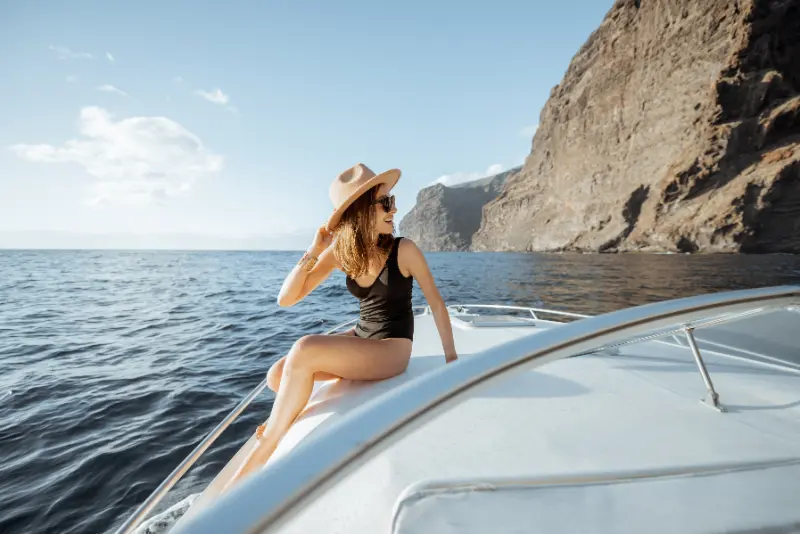
    Boat Trip In Tenerife

    Food stops I would build into the week

    A seven-day trip deserves more than resort restaurants. Use the north-coast day for a traditional lunch, try Canarian cheese and local wine, order fresh fish near a fishing harbour and look for papas arrugadas with different mojos. If you are curious about guachinches, plan them deliberately rather than assuming every restaurant using the name is a traditional one.

    See what to eat in Tenerife for dishes and practical ordering ideas.

    The weather rule that makes this itinerary work

    Do not tie the days to the numbers. Tie them to conditions. If the Teide forecast is poor on Day 2 but the coast is sunny, move the beach day forward. If Anaga is covered in heavy cloud and rain, visit Santa Cruz or the north-coast towns instead. Tenerife’s microclimates reward travellers who are willing to swap days.

    The official tourism board describes the south as generally sunnier and drier, with the north greener and more humid. For seasonal planning, use my best time to visit Tenerife guide.

    What I would not try to fit into seven days

    • A day trip to another Canary Island unless it is a major personal priority
    • Every famous beach on the island
    • Multiple theme parks plus all major natural areas
    • A summit hike without proper planning just because Teide is already on the itinerary
    • Both a long boat trip and a long mountain-road day together
    • Moving hotels twice

    Final advice for your first week

    The best one-week Tenerife itinerary is not the one with the most pins on Google Maps. It is the one that gives you contrast while leaving enough time to enjoy each place. Teide, Anaga, the north coast and the west provide the variety; the beach and flexible days keep the trip enjoyable.

    If I had to simplify this plan even further, I would protect three experiences—Teide, Anaga/La Laguna and one northern or western coastal day—then let the rest of the week follow the weather and your energy. That is enough to return home feeling that you actually saw Tenerife rather than only travelled through it.

  • Best Beaches in Tenerife: From Easy Family Bays to Wild Volcanic Shores

    Best Beaches in Tenerife: From Easy Family Bays to Wild Volcanic Shores

    Tenerife’s beaches are more varied than the classic image of a Canary Islands resort suggests. You can spend the morning on a pale, sheltered beach with sunbeds and cafés, then drive to a black-sand bay framed by volcanic cliffs or a windy stretch of coast where surfers and kitesurfers dominate the horizon. That variety is why I do not rank one beach as the single best on the island; I choose according to the kind of day I want.

    This guide focuses on beaches that are useful for real trip planning: family-friendly choices, scenic black-sand beaches, surf areas, beaches near major resorts and places that combine well with sightseeing. Always check local conditions and beach flags before swimming because Atlantic waves and currents can change quickly.

    Playa del Duque: polished and convenient

    Playa del Duque in Costa Adeje is one of the easiest beaches for travellers who want comfort. The surrounding area has hotels, restaurants, a promenade and extensive tourist services. The beach is attractive, organised and straightforward for a resort day, which is why it works especially well for couples and families who do not want complicated logistics.

    It is not the beach I would choose for a wild or local atmosphere. Its strength is convenience. If you are staying in Costa Adeje, I would use Playa del Duque for a relaxed half-day and save the rental car for beaches that are genuinely different rather than driving elsewhere simply because another name appears on a top-ten list.

    Playa de Las Vistas: one of the easiest family options

    Between Los Cristianos and Playa de las Américas, Las Vistas is broad, central and supported by a long promenade. It is useful for families because food, toilets and other services are close, and you can walk to a large range of accommodation. Conditions still vary, but it is a much simpler proposition than a remote natural beach.

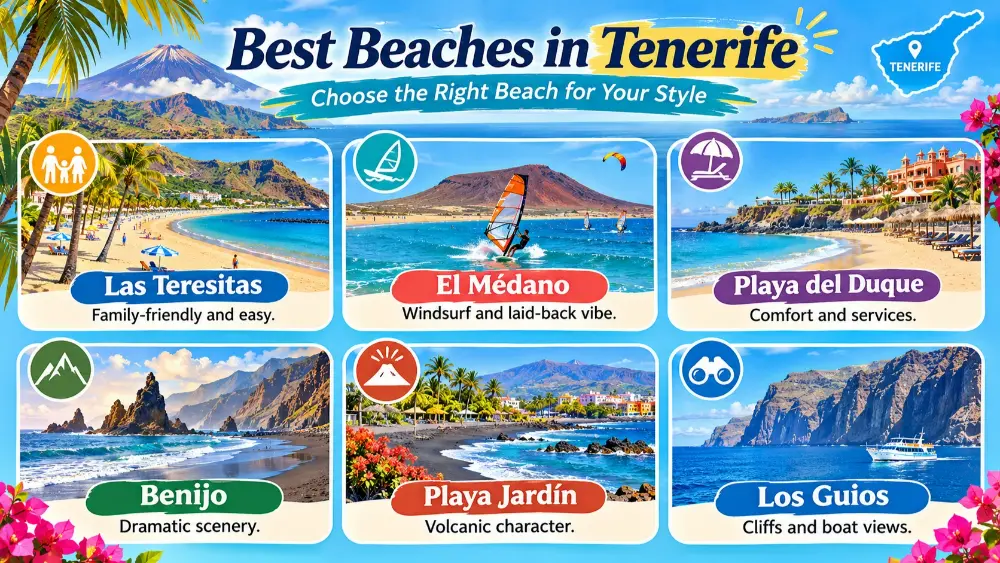
    Illustrated guide: Best Beaches in Tenerife, with practical visitor tips
    Illustrated guide: Best Beaches in Tenerife.

    I like Las Vistas on days when the goal is not adventure but an uncomplicated swim, lunch and walk. If you have children, that kind of easy day becomes more valuable after a long Teide or Anaga excursion.

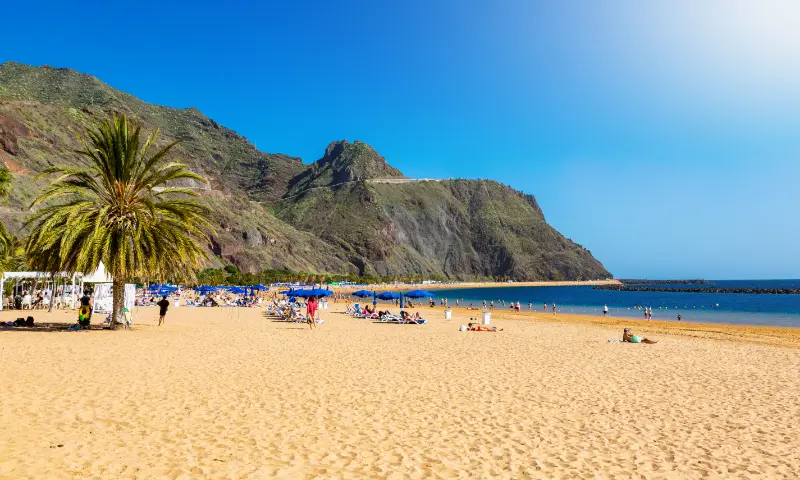
    Playa de Las Teresitas: the classic beach near Santa Cruz

    Las Teresitas is one of Tenerife’s most recognisable beaches, a long arc of light-coloured sand near the village of San Andrés, northeast of Santa Cruz. It is a natural addition to a day in the capital or a scenic drive toward Anaga. The bay setting and mountain backdrop make it visually very different from the southern resort beaches.

    Because it is popular with residents as well as visitors, weekends and good-weather days can be busy. I prefer arriving earlier, then combining the beach with lunch in San Andrés or continuing into the northeast if the weather is suitable.

    El Médano and Playa de la Tejita: for wind, space and Montaña Roja

    El Médano is one of Tenerife’s best-known wind-sports areas. The beach merges with a relaxed town atmosphere, and the view toward Montaña Roja gives the coast a distinctive identity. It is a good place to watch windsurfing or kitesurfing even if you are not participating.

    On the other side of Montaña Roja, Playa de la Tejita feels more open and natural. Wind can be strong, and there is less resort-style shelter, so I see it as a beach for travellers who enjoy space and landscape rather than guaranteed calm water. Respect protected areas around the natural reserve and avoid leaving marked paths where restrictions apply.

    Playa Jardín and the Puerto de la Cruz coast

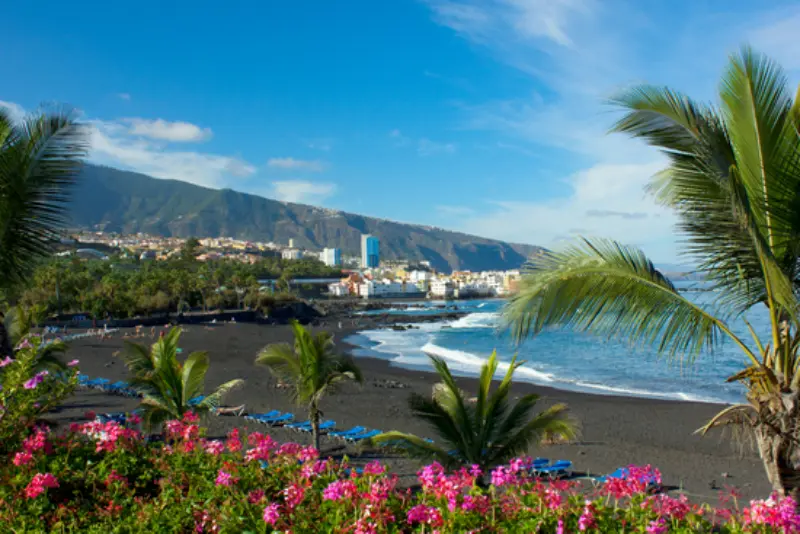
    The northern coast has a darker, more volcanic character. Beaches around Puerto de la Cruz are useful if you are staying in the north, but I choose them with conditions in mind. Waves can be stronger than at sheltered southern beaches. The value of the area is the combination: black sand, gardens, promenades, town life and easy access to La Orotava and other northern sights.

    Playa Jardin Puerto De La Cruz Tenerife

    A north-coast beach day also works well when the south is extremely hot or when you want a break from resort scenery. Just remember that the weather can be cloudier on the northern side even when the south is bright.

    Playa de Benijo: scenery first

    Benijo, beneath the Anaga mountains, is one of the most dramatic beaches on Tenerife. The attraction is the setting: dark sand, powerful Atlantic water and offshore rock formations. I treat it primarily as a landscape stop rather than promising myself a swim. Sea conditions can be serious, access involves steps, and the road through Anaga deserves time and concentration.

    For me, Benijo fits best into an Anaga day rather than a beach-hopping schedule. Arrive with proper footwear, check daylight, and never enter the water just because other people are swimming. The safest decision can be to enjoy the view from shore.

    Playa de Abama: beautiful but access needs planning

    The small beach below the Abama resort area is known for sheltered water and a photogenic setting. Public access to beaches in Spain is not the same as having easy resort-style access to every facility, so understand the walking route, parking situation and practical limitations before making a special trip. It can be pleasant, but I would not cross the island only for one small beach if your itinerary is already full.

    Black sand or golden sand?

    Tenerife’s volcanic beaches are part of the island’s identity. Black sand can become extremely hot under strong sun, so footwear is useful. Lighter beaches may feel more familiar, but colour tells you little about swimming conditions. Exposure, swell, wind, tide and local protection matter much more than sand colour.

    If you want…Try…Why
    Resort comfortPlaya del DuqueServices and promenade
    Family convenienceLas VistasCentral and easy facilities
    Scenery near Santa CruzLas TeresitasMountain-backed bay
    Wind sportsEl MédanoConsistent active atmosphere
    Wild volcanic sceneryBenijoDramatic Anaga setting
    North-coast characterPuerto de la Cruz beachesBlack sand and town access

    Natural pools: an alternative to the beach

    Tenerife also has natural swimming pools and volcanic bathing areas, especially around the north and west. Garachico is the most famous example, but access can be restricted when the sea is rough. These places should never be treated like ordinary hotel pools. Waves can wash across platforms and conditions can change rapidly. Follow closures and local instructions.

    Natural pools are especially useful on a sightseeing day because you can combine a short swim with historic towns and viewpoints. I would not promise children a swim until I have seen the conditions in person.

    Beach safety in Tenerife

    The Atlantic deserves respect. Flags, lifeguard instructions, barriers and local warnings are more important than any recommendation in a travel guide. A red flag means do not enter the water. Even on a sunny day, swell can produce strong shore break or currents. Remote beaches may not have lifeguards at all.

    Surfers On A Tenerife Beach
    • Check the flag and observe the water before swimming.
    • Keep children within immediate reach, not just within sight.
    • Avoid rocky entries when waves are breaking.
    • Do not swim after drinking alcohol.
    • Protect feet from hot dark sand and sharp volcanic rock.
    • Use reef-safe habits and take all rubbish away from natural beaches.
    • If locals leave the water because conditions worsen, pay attention.

    Best beaches without a car

    If you do not have a car, the easiest strategy is to stay in a coastal area with several beaches connected by promenade or bus. Costa Adeje, Los Cristianos and Playa de las Américas are obvious choices. Las Teresitas is reachable from Santa Cruz by public transport, while El Médano is connected by bus routes but requires more planning depending on your starting point.

    TITSA covers the island extensively, but a beach day becomes less relaxing if you are watching multiple transfers. Use the official journey planner and choose one good beach rather than trying to collect three in a day. My transport guide explains how I plan car-free days.

    Beaches with children

    For family days I prioritise easy access, toilets, food, shade options and lifeguard presence over dramatic scenery. Las Vistas and the main Costa Adeje beaches are usually more practical than remote northern coves. Even then, calm-looking water can change. Small children do not need a long list of beaches; they need one safe, convenient place where the adults are not stressed.

    For a broader family plan, see Tenerife with kids.

    When to go to the beach

    Tenerife can support beach days throughout much of the year, but the best coast may change with wind and cloud. The south generally receives more sunshine, while the north can be greener and cloudier. In summer, sand and exposed promenades can be very hot at midday. In winter, the sun may feel warm while the ocean remains refreshing and mountain air is much colder.

    That is why I keep beach plans flexible. A cloudy morning in the north can become a sunny afternoon in the south, and a windy day at El Médano may feel much calmer in a sheltered bay elsewhere. See my weather and best-time guide for the seasonal picture.

    My beach-planning rule

    I would choose two or three beaches for a week-long holiday, not ten. Pick one convenient beach near your accommodation, one beach that offers a completely different landscape and perhaps one that pairs naturally with sightseeing. This reduces driving, parking and the temptation to judge each place after twenty hurried minutes.

    If you stay in the south, a balanced combination could be Playa del Duque or Las Vistas for convenience, Las Teresitas on a Santa Cruz/Anaga day and Benijo purely for scenery if sea conditions and daylight are appropriate. That gives you three different sides of Tenerife’s coast without turning the holiday into a beach checklist.

  • Mount Teide Guide: Cable Car, Permits, Hiking and Practical Tips

    Mount Teide Guide: Cable Car, Permits, Hiking and Practical Tips

    Mount Teide dominates Tenerife physically and visually, but visiting it well takes more planning than simply driving toward the highest point on the island. The national park sits at high altitude, the weather can be completely different from the coast, parking and access can be busy, cable-car operation depends on conditions, and some trails require advance reservations. I treat a Teide day as a mountain excursion, even when the plan is mostly sightseeing.

    This guide explains how I would organise a first visit: the scenic drive, the best type of stops, cable car versus hiking, summit permits, clothing, altitude, children and the mistakes that can turn an extraordinary day into a stressful one.

    Why Teide deserves a full day

    Teide is Spain’s highest mountain and the centrepiece of a volcanic landscape that feels far removed from Tenerife’s beaches. The experience starts before you reach the cable car. Roads climb through changing vegetation, pine forest and eventually open high-altitude terrain. Once inside the caldera, wide lava fields, layered rock and the cone of Teide create views that change constantly with light and cloud.

    I would resist the temptation to schedule only a cable-car time and then drive back to the coast. The national park itself is the attraction. Scenic stops around Roques de García, viewpoints along the TF-21 and TF-24, and the contrast between different lava formations deserve time.

    How to reach Teide National Park

    Most independent visitors arrive by car from the south through Vilaflor or from the north through La Orotava, while the TF-24 route from the northeast can be especially scenic. Which road is best depends on your starting point and current conditions. Do not assume the fastest route in a navigation app will be the most enjoyable; on a first visit I often prefer to enter one way and leave another if daylight and weather allow.

    Public transport options exist but are more restrictive because schedules determine how long you can stay. If you are not comfortable with mountain driving, an organised excursion can be a sensible alternative. Whatever your transport choice, check official road, weather and park information before departure.

    Teide cable car: what it actually gives you

    The official cable car runs from a base station at roughly 2,356 metres to the upper station at La Rambleta, around 3,555 metres. The ride is short, but the altitude gain is huge. From the upper station, visitors can enjoy high-level viewpoints and permitted trails depending on current conditions. Reaching the upper station does not automatically mean you can walk to the summit.

    Teide Cable Car Tenerife

    The operator sells timed tickets online and warns that operation can be interrupted by weather, particularly wind. I would book in advance during busy periods but keep the wider day flexible. Do not build a flight, ferry or non-refundable evening event around the assumption that the cable car will operate exactly as planned.

    Check the current timetable and ticket conditions on the official Teide Cable Car website.

    Do you need a permit for the summit?

    Yes, access rules matter. The final route to the summit, Trail 10 Telesforo Bravo, is controlled and requires specific authorisation. In addition, Tenerife introduced reservation requirements for several high-altitude routes used by people ascending on foot toward La Rambleta. Rules, quotas and required equipment can change, so I would never rely on an old travel blog for this part of the trip.

    Before choosing a hiking plan, check Tenerife ON and the current National Park reservation system. Carry the required identification and confirmation, and read the equipment requirements attached to your specific route. A reservation is not just bureaucracy: the upper mountain can expose visitors to cold, wind, strong sun and difficult terrain.

    Cable car or hiking?

    OptionBest forMain consideration
    Scenic drive onlyMost visitorsNo altitude commitment beyond viewpoints
    Cable carBig views with less physical effortWeather-dependent; high altitude
    High-mountain hikeExperienced hikersReservations, equipment and fitness
    Guided experienceVisitors wanting structureHigher cost but simpler logistics

    There is no need to hike the summit to have a meaningful Teide experience. For many travellers, the scenic drive, Roques de García and a cable-car ride are more than enough. Hikers should choose a route because they are prepared for it, not because reaching the summit sounds like a box that must be ticked.

    Altitude: the part many visitors underestimate

    The upper cable-car station is above 3,500 metres. Even fit travellers can notice the altitude: breathlessness, headache, light-headedness or unusual fatigue. Walk slowly, avoid racing up steps for photographs and pay attention to how you feel. People with health concerns should seek appropriate medical advice before high-altitude activity.

    Children are another reason to plan carefully. The cable-car operator applies age and health restrictions to certain products and activities, and mountain conditions are not comparable with a beach excursion. For a family trip, I prefer a shorter, flexible Teide visit rather than trying to reproduce an adult hiking itinerary. More ideas are in my Tenerife with kids guide.

    Mount Teide Cable Car Tenerife

    What to wear and carry

    I always plan Teide clothing as if I am visiting a mountain in a different season from the coast. A warm or windproof layer, closed footwear, water, sunglasses and high-SPF sunscreen are basic items. If your reservation specifies technical equipment, that requirement overrides any generic packing list. Winter conditions can include ice or snow at altitude even when people are swimming on the coast.

    • Water and a snack, even for a mostly sightseeing day
    • Warm layer and wind protection
    • Sun protection: hat, sunglasses and sunscreen
    • Closed shoes with good grip
    • Phone with battery; offline maps are useful
    • Permit/reservation and identification when required
    • Any route-specific mandatory mountain equipment

    Roques de García and easy sightseeing

    Roques de García is one of the easiest ways to appreciate Teide’s geology without committing to the summit. The viewpoint area gives wide views of the caldera and distinctive rock formations. It can become crowded, so early or later daylight often creates a more pleasant experience. Even a short walk here can involve strong sun and uneven ground, so I would still carry water and proper shoes.

    If the cable car is closed, do not consider the day ruined. This is exactly why I build the itinerary around the landscape rather than one piece of infrastructure. Scenic viewpoints, short accessible stops and the drive itself can still make Teide one of the best days of the trip.

    Mount Teide Landscape Tenerife

    Sunset and stargazing

    Teide’s altitude and dark skies make the highlands attractive around sunset and after dark. The temperature drops quickly, traffic patterns change and you need to be more conservative with driving and walking. If stargazing is a priority, a guided experience can reduce the stress of choosing a safe location and understanding access rules.

    I would not combine a demanding high-altitude hike, sunset and a long night drive unless everyone in the group is comfortable with that schedule. It is better to choose the main goal of the day and leave enough energy for the descent.

    Best time of day

    There is no universal best hour because clouds, wind, season and reservations matter. Early starts can reduce crowds at popular stops, while later light can be beautiful for photography. Midday can be intensely bright. In winter, daylight is shorter and mountain conditions deserve extra attention. I check conditions the evening before and again in the morning rather than locking the plan weeks in advance beyond the reservations I actually need.

    Driving and parking strategy

    Parking around popular Teide stops is finite. Arrive with patience and never create your own parking space on protected ground or in unsafe road areas. If a viewpoint is full, continue to another legal stop and return later. On the way down, use lower gears where appropriate and do not let the scenery distract from mountain driving.

    If you are deciding whether to rent a car mainly for this day, read my getting around Tenerife guide. A car offers excellent freedom in the park, but only if the driver is comfortable with long climbs, bends and changing visibility.

    A Teide day I would recommend for a first visit

    1. Leave the coast after checking weather, road and cable-car status.
    2. Climb through a scenic route and stop at one or two legal viewpoints rather than every turnout.
    3. Spend time around the national park landscape before your booked cable-car slot.
    4. Use the cable car if operating and suitable for your group; follow only the trails allowed by your booking and current conditions.
    5. After descending, visit Roques de García or another major viewpoint.
    6. Return by a different route if practical and if you have enough daylight.
    7. Keep the evening light: altitude and driving can make the day more tiring than expected.

    Common mistakes I would avoid

    • Assuming the coast forecast describes Teide conditions
    • Buying a cable-car ticket and assuming it includes summit access
    • Arriving without the reservation or equipment required for a high-altitude trail
    • Wearing sandals because the day started at the beach
    • Planning too many attractions after Teide
    • Ignoring signs of altitude discomfort
    • Parking illegally when popular viewpoints are full

    How Teide fits into a Tenerife itinerary

    I normally place Teide near the start of a week-long trip but not on the first morning after a late flight. That leaves room to move the day if conditions are poor. In my 7-day Tenerife itinerary, the mountain is a major day rather than a short stop between unrelated attractions.

    The best Teide visit is not necessarily the one that reaches the highest point. It is the one that matches your fitness, reservations and weather while giving you time to understand the extraordinary volcanic landscape around you. Plan conservatively, use official information and let the mountain—not a checklist—set the pace.

  • Where to Stay in Tenerife: Best Areas for Every Type of Trip

    Where to Stay in Tenerife: Best Areas for Every Type of Trip

    Where you stay can completely change the feel of a Tenerife holiday. The island is compact compared with many destinations, but the mountains, winding roads and different microclimates mean that two hotels only 40 kilometres apart can deliver very different trips. I would choose the area before choosing the property: first decide whether you want guaranteed resort convenience, nightlife, family beaches, local atmosphere, a greener climate or easy access to hiking.

    This guide compares the main bases I would consider for different types of travellers. There is no single ‘best’ place to stay in Tenerife. Costa Adeje may be ideal for one week with children, Puerto de la Cruz can be far more rewarding for a couple who wants traditional towns and northern scenery, while El Médano appeals to travellers who prefer a breezy, low-key beach town.

    Quick comparison: the main areas

    AreaBest forWatch for
    Costa AdejeFirst-timers, couples, familiesHigher prices in prime beachfront zones
    Los CristianosWalkability, families, ferriesBusy central areas
    Playa de las AméricasNightlife, entertainmentLess quiet at night
    Puerto de la CruzNorth coast, culture, sceneryCloudier than the south at times
    El MédanoSurf, relaxed atmosphereWind is part of the experience
    Santa Cruz / La LagunaCity breaks, cultureNot a classic beach-resort base

    Costa Adeje: the easiest all-round base

    For many first-time visitors, Costa Adeje is the most straightforward base. It has a long seafront, a wide range of hotels and apartments, restaurants at different price levels, beaches with services and easy access to excursions. Playa del Duque feels more polished, while areas closer to Puerto Colón are busier and useful for boat trips. Families appreciate the practical infrastructure; couples can choose quieter, higher-end properties; and first-time visitors rarely struggle to find what they need.

    The main compromise is that Costa Adeje can feel like a destination designed around tourism rather than everyday Canarian life. That is not necessarily negative, but I would use it as a comfortable base and deliberately plan days in Teide, Anaga, La Laguna, Garachico or the Orotava Valley. Also check the elevation of your accommodation. Some hotels and apartments sit well above the waterfront, making the return walk much steeper than the map suggests.

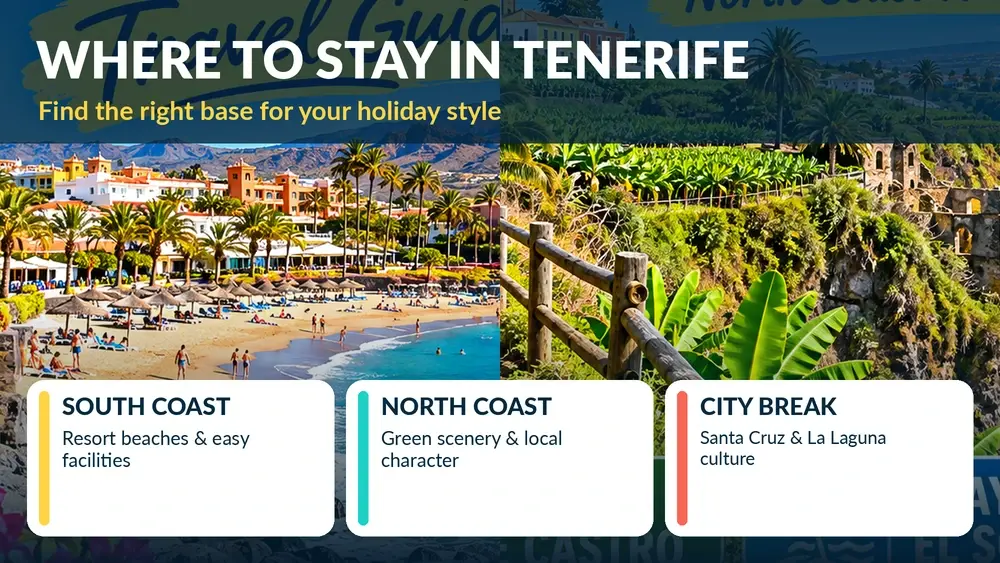
    Illustrated guide: Where to Stay in Tenerife, with practical visitor tips
    Illustrated guide: Where to Stay in Tenerife.

    Los Cristianos: practical and walkable

    Los Cristianos has a more established town feel than parts of the neighbouring resort strip. The harbour is active, ferries leave for other islands, the promenade links into the wider southern coast and there are plenty of restaurants and everyday services. I like it for travellers who want to do a lot on foot and for families who value a relatively simple day-to-day routine.

    It can be crowded, and the atmosphere around the centre is busy rather than secluded. If peace is a priority, look at the exact street and distance from nightlife or traffic. Los Cristianos is particularly useful when your itinerary includes a ferry day to La Gomera, because you can avoid an early cross-island transfer.

    Playa de las Américas: nightlife and constant activity

    Playa de las Américas is best when you want energy: bars, restaurants, entertainment, shopping and a busy seafront. It can suit younger travellers, groups and anyone who prefers to have something happening every evening. The resort also connects on foot with Los Cristianos and Costa Adeje, so you can move through a large stretch of the southern coast without a car.

    I would be more selective here if travelling with small children or if sleep quality is a priority. A quiet room in the right part of the resort can work perfectly, but booking solely by price can put you closer to late-night venues than expected. Read the most recent accommodation reviews with location in mind, not just the overall score.

    Tenerife Resort And Mountain Panorama

    Puerto de la Cruz: my pick for a greener, more traditional feel

    Puerto de la Cruz is a strong choice if you want the north’s landscapes and culture to be part of everyday life. It has a seafront, black-sand beaches, gardens, plazas and easy access to La Orotava, Icod and the northern coast. The town has a long tourism history but feels different from the purpose-built south. For travellers who enjoy cafés, walking streets and day trips through older towns, it can be an excellent base.

    The trade-off is weather. The north is greener precisely because it receives more humidity and cloud than the south. You can still have beautiful sunny days, but travellers whose top priority is lying in the sun every afternoon may prefer the south. I see Puerto de la Cruz as a base for exploring, not just resort living.

    El Médano: relaxed, windy and active

    El Médano has a more casual atmosphere, a beach-town centre and a strong wind- and water-sports identity. It is close to Tenerife South Airport, yet feels less like a large resort complex. The beach and promenade are easy to use, and the landscape around Montaña Roja gives the area a distinctive setting.

    The wind is not a minor detail; it is one of the reasons people come. If you love kitesurfing or windsurfing, that can be a major advantage. If you dream of completely still beach days, it may be a disadvantage. I would choose El Médano for independent travellers, active couples and repeat visitors who want a different southern base.

    Los Gigantes and Puerto de Santiago: scenery and a slower west-coast rhythm

    The west coast around Los Gigantes offers dramatic cliff views, boat-trip access and a quieter atmosphere than the largest southern resorts. It is appealing for couples and travellers who expect to spend more time around the west of Tenerife. Sunsets can be excellent, and the cliffs give even ordinary seafront walks a spectacular background.

    The location is less central for eastern and northeastern sightseeing. If your plan includes several days in Anaga, Santa Cruz or La Laguna, you will spend more time driving. For a slow holiday focused on the coast, Teno and boat excursions, however, it makes sense.

    Santa Cruz and La Laguna: best for an urban Tenerife trip

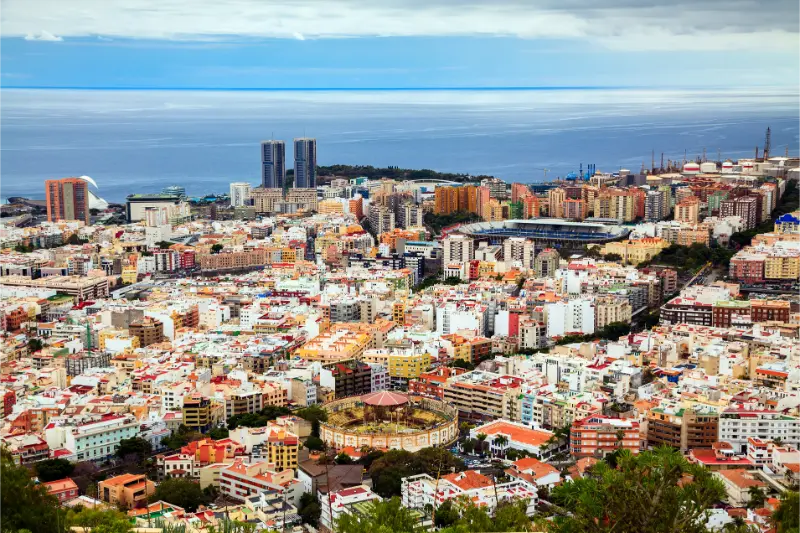
    Santa Cruz is the island capital and works well for travellers interested in shopping, museums, city life and easy access to Playa de Las Teresitas. La Laguna, higher and cooler, is one of Tenerife’s most attractive historic environments and a natural gateway to Anaga. These areas are less obvious for a classic resort holiday but can be excellent for a short city-focused stay or a split trip.

    I especially like the idea of spending a few nights in the south and a few nights around La Laguna or the north on a longer trip. A split stay reduces repeated cross-island driving and lets you experience the climate and evening atmosphere of two distinct parts of Tenerife.

    Aerial panorama of the city and Atlantic waterfront in Santa Cruz de Tenerife

    North or south Tenerife?

    The decision is easier if you identify your non-negotiable priority. Choose the south for more consistent sunshine, broad tourist infrastructure, family attractions and resort convenience. Choose the north for greener landscapes, traditional towns, food, gardens and easier access to many northern sights. Neither side is objectively better; they are different tools for different trips.

    The official tourism board highlights the same climatic contrast: the south generally has more sunshine and a drier environment, while the north receives more humidity and supports lush vegetation. That difference is one of the island’s strengths, not a flaw.

    Do you need a car where you stay?

    If you stay in Costa Adeje, Los Cristianos or Playa de las Américas and plan mostly organised excursions, you can manage without a car. TITSA buses connect the major tourist centres, airports and towns. A car becomes more valuable when you want sunrise viewpoints, remote trailheads, flexible Teide timing or a day that combines small villages and natural areas.

    Parking should be part of the accommodation decision. In older towns and dense resort zones, free street parking can be competitive. A hotel with parking may save more time than a cheaper room several streets away. See the full Tenerife transport guide before deciding whether to rent for the whole trip or only selected days.

    Where I would stay for different travel styles

    • First visit: Costa Adeje or Los Cristianos for simplicity.
    • Families: Costa Adeje for services and easy activity days; Los Cristianos for walkability.
    • Couples: Costa Adeje for comfort, Puerto de la Cruz for atmosphere, Los Gigantes for scenery.
    • Nightlife: Playa de las Américas.
    • Hiking and nature: La Laguna, north Tenerife or a split stay.
    • Surf and wind sports: El Médano.
    • Local culture: La Laguna, Santa Cruz, Puerto de la Cruz or La Orotava area.
    • Without a car: choose a central resort or town with strong bus connections and walkable services.

    How I choose an actual hotel or apartment

    I start with the map, not the photo gallery. I check walking distance to the beach or town centre, road gradient, bus stops, parking, supermarket access and the likely evening noise. Then I compare recent reviews for recurring problems: construction, poor soundproofing, difficult parking or long waits for lifts in large resort hotels. Only after that do I compare pools, breakfast and room design.

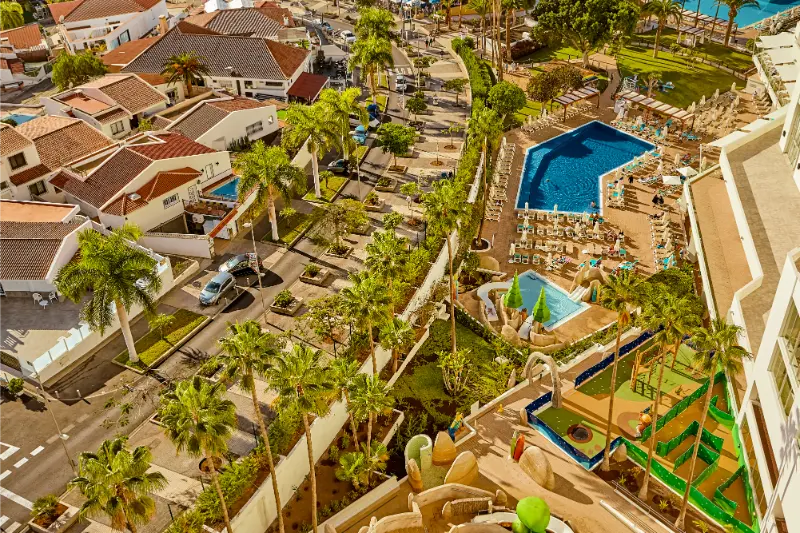
    Aerial View Of Tenerife Seaside Resort

    For current availability you can compare Tenerife hotels and apartments. Filter by neighbourhood rather than simply by ‘Tenerife’, because island-wide search results can mix properties that are more than an hour apart by road.

    When a split stay is worth it

    A split stay is useful on trips of ten nights or more. For example, five or six nights in Costa Adeje followed by four nights in Puerto de la Cruz or La Laguna creates two different holidays and shortens several sightseeing days. It is less useful on a five-night trip because moving accommodation consumes time and adds packing friction.

    If you are following my 7-day itinerary, I would usually keep one base. If you have two weeks, I would seriously consider north plus south. That is one of the easiest ways to appreciate how much variety Tenerife packs into a relatively small island.

    Final choice: match the base to the holiday you actually want

    The biggest accommodation mistake in Tenerife is booking an attractive hotel in an area that does not match your plans. A luxury resort can still be inconvenient if every place you want to visit is on the opposite side of the island. Start by writing down your top five experiences, place them on a map, and then choose the base that reduces unnecessary driving while giving you the atmosphere you want in the evening.

    For a first trip with mixed interests, I would keep the decision simple: Costa Adeje for easy resort comfort, Los Cristianos for walkability, Puerto de la Cruz for northern character, and La Laguna for culture and nature access. From there, refine by budget, exact neighbourhood and transport plan.

  • Tenerife Travel Guide: Everything I Would Know Before a First Trip

    Tenerife Travel Guide: Everything I Would Know Before a First Trip

    Tenerife is one of those islands that looks simple on a map and becomes much more varied as soon as you start exploring it. The sunny resorts of the south, the green valleys of the north, the volcanic highlands around Mount Teide, historic towns such as La Laguna and small coastal villages can feel like different destinations within the same holiday. That contrast is exactly why I think a first trip works best when you plan around experiences rather than trying to stay in one resort for the entire time.

    This guide is the starting point I would use for a first Tenerife holiday. It covers where to base yourself, how long to stay, the places that deserve priority, transport choices, beaches, food, weather and the practical details that make the island easier to enjoy. For deeper planning, I have linked the specialist guides throughout the article so you can build a trip that suits your pace rather than follow a rigid checklist.

    Tenerife at a glance: what kind of destination is it?

    Tenerife is the largest of the Canary Islands and its appeal goes well beyond winter sun. The south is generally drier and sunnier, which helps explain the popularity of Costa Adeje, Playa de las Américas and Los Cristianos. The north is greener, more humid and often feels more local, with Puerto de la Cruz, La Orotava and the fertile Orotava Valley as natural bases. Higher up, the landscape changes completely: pine forest gives way to the extraordinary volcanic scenery of Teide National Park.

    For most travellers, the island is best understood as a combination of four experiences: coast, volcano, historic towns and nature. If you include all four, Tenerife feels much richer than a standard resort break. Families can add water parks and easy beaches, hikers can spend several days in Anaga or Teno, and food-focused travellers can build days around guachinches, markets, wineries and traditional Canarian dishes.

    How many days do you need in Tenerife?

    A long weekend is enough for sunshine and one or two highlights, but it is not enough to understand the island. For a first visit I would aim for seven days. That gives you time for a Teide day, an Anaga or La Laguna day, at least one north-coast excursion, several beach periods and a flexible day for weather changes. With ten to fourteen days you can slow the pace, add Teno, Garachico, whale watching, more hiking and a day trip to another Canary Island.

    Trip lengthWhat it suitsSuggested priorities
    3–4 daysShort escapeSouth coast, Teide, one scenic day
    7 daysFirst complete visitSouth + Teide + north + Anaga + beaches
    10–14 daysSlow travelAdd Teno, hiking, villages, food and boat trips

    If you already know you want a balanced first week, use my 7-day Tenerife itinerary as a practical day-by-day framework.

    Where to stay on a first trip

    Choosing the right base matters more in Tenerife than many first-time visitors expect. If reliable beach weather, restaurants and easy tourist services are the priority, Costa Adeje is the safest all-round choice. Los Cristianos works well for a walkable resort atmosphere and ferry connections, while Playa de las Américas is better if nightlife matters. For a more traditional city-and-sea combination, Puerto de la Cruz is attractive, especially if you plan to explore the north.

    I would not choose accommodation only by hotel rating. Look at the exact neighbourhood, gradient, parking situation and walking distance to the places you will actually use. Tenerife has steep areas, and a property that seems close to the sea on a map can involve a demanding uphill return. My detailed where to stay in Tenerife guide compares the main bases by travel style. You can also check current hotel prices in Tenerife once you have chosen the right area.

    The places I would prioritise

    1. Teide National Park

    Mount Teide is not just a single viewpoint. The whole high-altitude landscape is one of Tenerife’s defining experiences: lava fields, strange rock formations, immense caldera scenery and rapidly changing light. Even if you do not hike to the summit, driving through the park and stopping at viewpoints is worth the journey. The cable car can take visitors to La Rambleta at about 3,555 metres, but summit access and some high-mountain trails have separate reservation requirements. Always check the current rules before travelling.

    View Across Tenerife Valley Toward Mount Teide

    2. San Cristóbal de La Laguna and Anaga

    La Laguna is one of the island’s best cultural stops and combines naturally with Anaga Rural Park. I like this pairing because the day moves from colourful historic streets and cafés to laurel forest, ridges and remote coastal scenery. Weather can change quickly in Anaga, so carry a light layer even when the coast is warm.

    3. The north coast: La Orotava, Garachico and Puerto de la Cruz

    The north offers some of the strongest contrasts with the resort south. La Orotava has historic architecture and hillside views; Garachico is known for its volcanic coastline and natural pools; Puerto de la Cruz mixes an older resort tradition with gardens, seafront walks and easy access to the Orotava Valley. These places are especially rewarding if you enjoy wandering rather than moving from attraction to attraction.

    4. Los Gigantes and Teno

    The cliffs of Los Gigantes create one of Tenerife’s most dramatic coastal landscapes. The western side of the island also gives access to Teno, Masca and several viewpoints where the terrain feels rugged and remote. Roads can be slow and winding, so I treat this as a full excursion rather than something to squeeze into a beach afternoon.

    Beaches: do not expect only golden sand

    Tenerife’s volcanic origin is visible on the coast. Some of its most memorable beaches have dark sand or pebbles, while several popular tourist beaches have lighter sand and extensive services. Playa de Las Teresitas near Santa Cruz is very different from Playa del Duque in Costa Adeje, El Médano in the southeast or the wild northern beaches beneath Anaga. The best beach depends on whether you want calm water, family facilities, surf, scenery or a local atmosphere.

    Ocean conditions matter. The Atlantic can be powerful, and a beach that looks inviting may have currents or waves that make swimming unsafe. Respect flags and local warnings, especially at less-developed beaches. I compare the most useful options in the best beaches in Tenerife guide.

    Getting around: car or public transport?

    A rental car gives the most flexibility, especially for Teide, viewpoints, small villages and multi-stop days. It also lets you change plans when cloud covers one side of the island. The downside is parking in busy resorts, historic centres and popular natural areas. If you do not want to drive, Tenerife’s TITSA bus network is extensive and connects the airports, major towns and tourist areas. The ten+ system includes tourist travelcards and stored-value options; current fares should always be checked on the official TITSA website.

    Aerial View Of Tenerife Resort Coast

    For a first trip, I often think the best solution is hybrid: use a car for a few exploration days and walk, bus or taxi on resort days. My getting around Tenerife guide explains the practical differences, including the two airports.

    Weather and the north–south difference

    Tenerife’s famous mild climate is real, but ‘eternal spring’ can be misunderstood. The island has strong microclimates. The south generally gets more sunshine and is drier, while the north is greener and more humid. In the mountains, conditions can be dramatically colder than at sea level. Official tourism information describes average conditions as mild year-round, with coastal temperatures roughly in the high teens in winter and the mid-to-high twenties in the warmest months.

    Pack for layers rather than one climate. Beachwear can be perfect in Costa Adeje while a fleece or windproof layer is useful near Teide. If you are choosing travel dates, see my best time to visit Tenerife guide for seasons, crowds and trip styles.

    What to eat in Tenerife

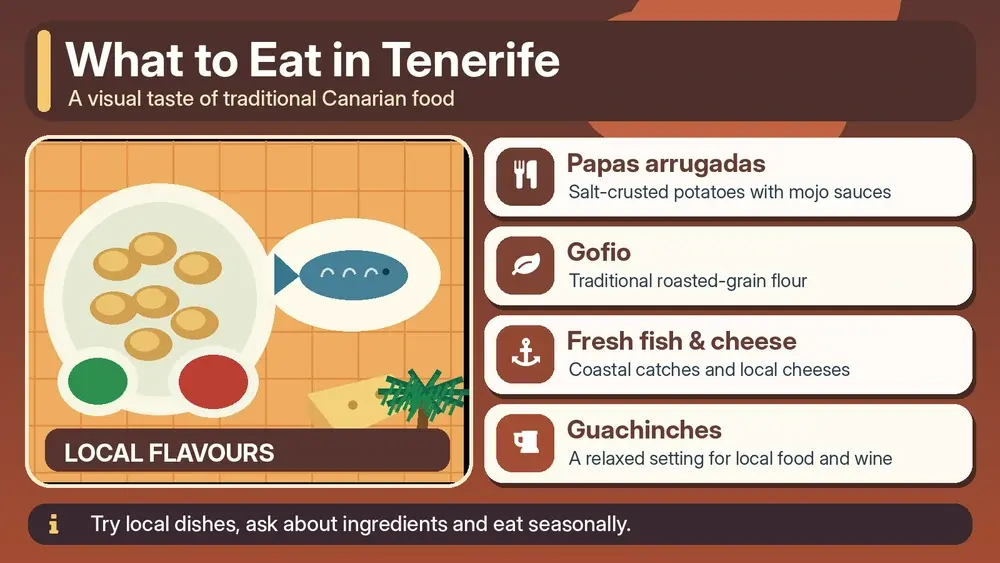
    Do not spend the whole holiday inside international resort menus. Traditional food is one of the easiest ways to make a Tenerife trip feel more distinctive. Look for papas arrugadas with mojo, grilled fish, octopus, goat dishes, Canarian cheeses, gofio-based recipes and local wines. Guachinches—traditionally simple establishments associated with local wine—are especially linked with the north, although the term is now used more broadly.

    A good strategy is to keep resort meals convenient when you need them, then deliberately plan two or three food-focused stops elsewhere. The Tenerife food guide explains dishes, ordering tips and the kinds of places I look for.

    Illustrated guide: What to Eat in Tenerife, with practical visitor tips
    Illustrated guide: What to Eat in Tenerife.

    Tenerife for families, couples and active travellers

    Families usually appreciate the south because of the concentration of accommodation, beaches and attractions, but the island also offers easy nature walks, botanical gardens, boat trips and volcanic landscapes that work well with children. Couples can mix resort comfort with sunsets, wine country and quieter northern towns. Active travellers have hiking, cycling, diving, surfing, paragliding and high-altitude routes. The important point is not to assume one part of the island has to provide everything.

    For parents, my Tenerife with kids guide focuses on realistic driving times, beach choices, altitude, heat and balancing big attractions with easier days. Hikers should continue with the hiking and nature guide.

    My practical planning rules for a smoother first trip

    • Do not schedule Teide on the only day you can visit: mountain weather and cable-car operations can change.
    • Keep at least one flexible day so you can follow the better weather between north and south.
    • Download offline maps before mountain drives and hikes.
    • Book high-demand activities and regulated hiking access in advance, but avoid overbooking every day.
    • Carry water, sun protection and a warm layer in the car; altitude changes the conditions quickly.
    • Treat driving times on mountain roads as estimates, not promises.
    • Choose accommodation for location first and hotel facilities second.
    • Respect beach flags, protected areas and trail closures even when other visitors appear to ignore them.

    Useful official resources

    For changing conditions, I rely on official sources rather than old screenshots or social-media comments. Check Tenerife ON for regulated nature access and trail information, TITSA for buses, and the official Tenerife tourism website for destination information. For flights, Aena operates both Tenerife South (TFS) and Tenerife North–Ciudad de La Laguna (TFN).

    A simple first-trip formula

    If I were building a first Tenerife holiday from zero, I would choose one convenient base, reserve a full day for Teide, one day for La Laguna and Anaga, one north-coast day, one west-coast day and keep the remaining time for beaches, food and spontaneous stops. That is enough structure to see the island’s range without turning the holiday into a race. The biggest mistake is not missing a specific attraction; it is spending seven days in one resort and assuming you have seen Tenerife.

    Once you know the style of trip you want, move next to the 7-day itinerary, accommodation and transport guides linked above. Together, those three decisions—where you stay, how you move and which days you keep flexible—have a bigger effect on the quality of a Tenerife holiday than any long list of must-see places.