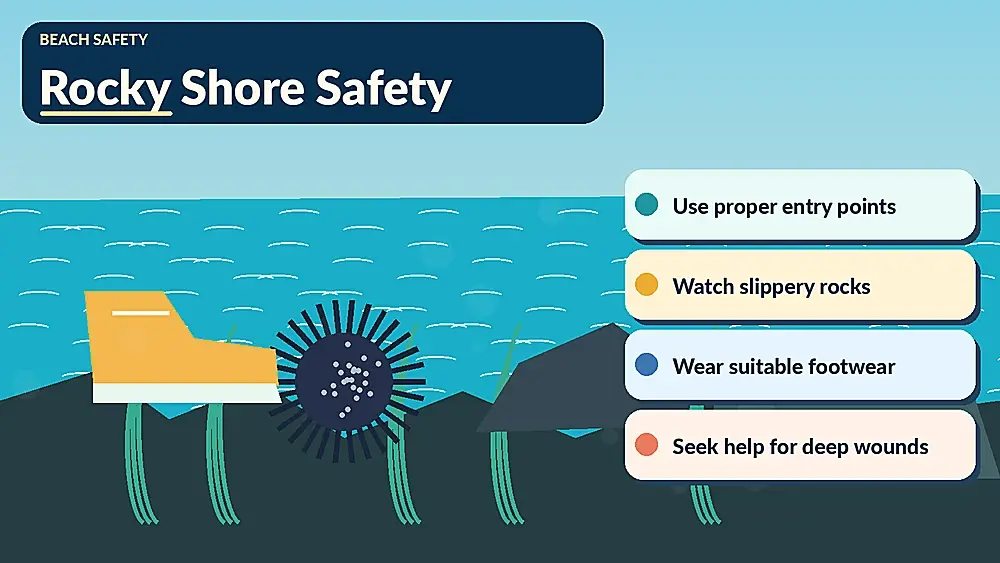
Quick summary: Tenerife’s volcanic coast is beautiful, but sharp rock, slippery algae, surge and sea urchins can turn a casual scramble into an injury. I use proper access points, water shoes where appropriate and my hands for balance rather than grabbing unseen crevices. If I step on an urchin or receive a deep cut, I leave the water, clean the injury appropriately and seek medical advice when spines are deep, pain is severe, the wound is contaminated or I cannot remove a superficial fragment safely.
| Common hazard | Sharp volcanic rock and slippery wet surfaces |
|---|---|
| Marine hazard | Sea urchin spines around rocky habitat |
| Best prevention | Use established entry points and suitable footwear |
| Medical rule | Seek professional help for deep wounds, retained spines or concerning symptoms |
Before I commit money or time, I separate information into three levels: what is fixed by law or geography, what changes seasonally, and what can change from one day to the next. That simple distinction is especially useful in Tenerife, where weather, traffic, sea conditions, event programmes and transport availability can all change a plan without making the destination difficult. I keep the official source bookmarked, build a realistic buffer into the day, and avoid treating a single app, old forum post or social-media clip as a guarantee.
Why rocky coasts need a different mindset
A sandy resort beach encourages barefoot walking; a volcanic platform does not. Rock can be rough enough to cut skin and smooth enough to become dangerously slippery when wet. A calm-looking pool can receive a sudden surge through an opening. I therefore treat natural pools and wild coves as changing marine environments, not swimming pools with black walls. I watch how local swimmers enter, but I still make my own decision based on the conditions and official signs.

Where sea urchins fit into the risk
Sea urchins live around rocky habitat and are easy to miss in cracks or dark water. Their spines are a defence, not an attack. Most problems happen because a swimmer steps, kneels or places a hand on them. I avoid standing on submerged rock when I cannot see clearly and never pick up an urchin for a photograph. If children are exploring rock pools, I supervise hands as carefully as feet.
Water shoes: useful but not magic armour
A good water shoe can improve grip and reduce small cuts, but it does not make every rocky entry safe. Thin soles may still be penetrated by sharp objects, and poor shoes can become slippery. I choose footwear that fits securely and is designed for wet rock. On a proper hiking approach I use hiking shoes and change near the water rather than walking kilometres in flimsy aqua shoes. Footwear is one layer of prevention, not permission to ignore waves.
Cuts on volcanic rock
Even a small cut can become messy when mixed with sand, salt water and continued swimming. I leave the water, control bleeding and clean the wound using appropriate first-aid supplies. Deep, gaping or heavily contaminated cuts deserve medical assessment. I keep a compact first-aid kit in the car or daypack because remote coves may not have a lifeguard. My aim is not to diagnose the wound on the beach; it is to stop turning a manageable injury into a bigger problem.
What to do about urchin spines
Spines can break and fragment. I do not dig aggressively into the skin with improvised tools, especially near joints, nerves or sensitive areas. A very superficial, easily accessible fragment is different from multiple deep spines. If pain persists, walking is difficult, the area becomes increasingly red or swollen, or I am unsure whether material remains, I seek professional medical advice. People with conditions that affect healing or infection risk should have a lower threshold for assessment.
Natural pools and wave surge
The most serious coastal risk can be the sea itself rather than the urchin. Waves can wash across a platform, push a swimmer against rock or make an exit impossible. I check flags and warnings, watch the water for several minutes and skip the swim if the pool is being overtopped strongly. The Tenerife ocean safety guide and jellyfish guide cover related hazards.
Children and rock-pool exploring
Rock pools are fascinating for children because every crack contains life, but I establish a simple rule: look, do not grab. Bare hands should not disappear under ledges where the child cannot see what is inside. I keep them away from exposed edges when swell is present and choose a safer beach if I want relaxed play rather than constant supervision. Wildlife stays in the pool; shells and animals are not souvenirs.
My practical planning checklist
- Use proper access points: A shortcut over wet rock can be much riskier than the marked stairs or ladder.
- Wear suitable footwear: Choose grip and secure fit, while remembering shoes do not stop waves.
- Look before placing hands or feet: Urchins and sharp rock are easier to avoid when visibility is good.
- Carry basic first aid: Remote coves may have no lifeguard or nearby shop.
- Do not dig at deep spines: Persistent or deep injuries deserve professional assessment.
- Respect surge: If waves are overtopping the platform, skip the swim regardless of how many people are still in the water.
How I build this into a Tenerife itinerary
I keep the main purpose of the day simple and protect it with one backup. I do not schedule a fixed-time activity at one end of the island, a long lunch in the middle and another hard reservation at the other end unless the transport margin is genuinely comfortable. Tenerife rewards flexible planning because a motorway incident, cloud on a mountain road, sea conditions or an event can change the best order of the day. A backup is not a second full itinerary; it is one nearby option that still makes the day worthwhile.
I also save screenshots or confirmations that matter when mobile coverage, battery or app login becomes inconvenient. For driving I keep the rental emergency contact; for an event I keep the ticket; for a wildlife activity I keep the meeting point; for a market or cultural venue I verify the official opening information before travelling. This is the difference between useful planning and overplanning: I prepare the few details that can stop the day, then leave the rest open enough to enjoy the island.
Where I would stay
The best base depends on how often this topic appears in the trip. For repeated city evenings I prefer Santa Cruz or La Laguna; for sea activities I usually favour the south or another coast close to the operator; for island touring I choose a base with easy road access rather than the prettiest address on paper. I compare places to stay in Tenerife and then check the exact location, recent reviews, parking or public-transport access before booking. A good base removes repeated friction from the holiday.
Official information I would recheck
Frequently asked questions
Are sea urchins common around Tenerife rocks?
They occur in rocky marine habitats, so swimmers using volcanic entries and natural pools should look before standing or placing hands.
Do water shoes prevent urchin injuries?
They can reduce risk, but thin soles are not guaranteed protection and footwear does not make unsafe sea conditions safe.
When should I see a doctor?
Seek medical advice for deep or multiple spines, severe pain, difficulty walking, deep cuts, retained material, infection signs or any situation that worries you.
Extra planning notes that make a real difference
Use proper access points. A shortcut over wet rock can be much riskier than the marked stairs or ladder. I treat this as a decision point rather than a rigid rule. The exact answer can depend on the part of Tenerife, the season, the time of day and the people travelling with me. I would rather spend two minutes checking the current situation than lose an hour correcting a preventable mistake. When in doubt, I choose the safer and simpler option and keep the more ambitious plan for a day when conditions are clearer.
Wear suitable footwear. Choose grip and secure fit, while remembering shoes do not stop waves. I treat this as a decision point rather than a rigid rule. The exact answer can depend on the part of Tenerife, the season, the time of day and the people travelling with me. I would rather spend two minutes checking the current situation than lose an hour correcting a preventable mistake. When in doubt, I choose the safer and simpler option and keep the more ambitious plan for a day when conditions are clearer.
Look before placing hands or feet. Urchins and sharp rock are easier to avoid when visibility is good. I treat this as a decision point rather than a rigid rule. The exact answer can depend on the part of Tenerife, the season, the time of day and the people travelling with me. I would rather spend two minutes checking the current situation than lose an hour correcting a preventable mistake. When in doubt, I choose the safer and simpler option and keep the more ambitious plan for a day when conditions are clearer.
Carry basic first aid. Remote coves may have no lifeguard or nearby shop. I treat this as a decision point rather than a rigid rule. The exact answer can depend on the part of Tenerife, the season, the time of day and the people travelling with me. I would rather spend two minutes checking the current situation than lose an hour correcting a preventable mistake. When in doubt, I choose the safer and simpler option and keep the more ambitious plan for a day when conditions are clearer.
Do not dig at deep spines. Persistent or deep injuries deserve professional assessment. I treat this as a decision point rather than a rigid rule. The exact answer can depend on the part of Tenerife, the season, the time of day and the people travelling with me. I would rather spend two minutes checking the current situation than lose an hour correcting a preventable mistake. When in doubt, I choose the safer and simpler option and keep the more ambitious plan for a day when conditions are clearer.
Respect surge. If waves are overtopping the platform, skip the swim regardless of how many people are still in the water. I treat this as a decision point rather than a rigid rule. The exact answer can depend on the part of Tenerife, the season, the time of day and the people travelling with me. I would rather spend two minutes checking the current situation than lose an hour correcting a preventable mistake. When in doubt, I choose the safer and simpler option and keep the more ambitious plan for a day when conditions are clearer.
Final thoughts
Sea urchins tenerife is easiest to handle when I replace assumptions with one or two current checks and then keep the plan proportionate. Tenerife does not need to feel complicated. The island is well set up for visitors, but local roads, marine conditions, events, infrastructure and wildlife are real rather than theme-park scenery. I get more from the trip when I respect those systems, leave enough time, and use official information for anything that can materially affect safety, access or money.
Leave a Reply