Author: Patricia

  • Best Playgrounds & Family Parks in Tenerife: La Laguna, Santa Cruz and Resort Play

    Best Playgrounds & Family Parks in Tenerife: La Laguna, Santa Cruz and Resort Play

    Playgrounds can be surprisingly important on a Tenerife family holiday. A six-year-old may enjoy Teide, a boat trip and a historic town, but still need an ordinary hour to climb, swing and run without being asked to appreciate another viewpoint. Building that unstructured play into the itinerary often makes the more ambitious parts of the day easier.

    The island has urban parks with children’s areas, sports facilities and shaded walking space, plus resort promenades where smaller play areas appear near beaches and cafés. I would not choose accommodation solely by one playground pin because equipment can close for maintenance, but I would definitely consider nearby parks when travelling with young children.

    The strongest family parks are not theme parks. They are free local spaces where residents exercise, walk dogs and take children after school. That local atmosphere can be a useful break from paid attractions.

    Family parks in Tenerife at a glance

    Best large urban family parkParque Pedro González / Parque La Vega, La Laguna
    Best Santa Cruz exercise-and-play parkParque de La Granja
    Good central La Laguna stopParque de la Constitución
    Best strategy in resortsCombine playground time with beach or promenade time
    Main practical issueSun-heated equipment and limited shade at some locations

    Parque La Vega in La Laguna

    Parque Pedro González, commonly known as Parque La Vega, is one of the most useful family parks in the La Laguna area. The official Tenerife tourism page describes more than 22,000 square metres with children’s recreation areas, sports facilities, a climbing wall, skate park, basketball, table tennis and a BMX circuit.

    That mix is excellent when siblings have different ages. A small child can use the play area while an older child or teenager has something more active nearby. The park also works as a decompression stop after the historic centre.

    Use the La Laguna guide to combine the park with a realistic half-day in the city.

    Parque de La Granja in Santa Cruz

    Parque de La Granja is another strong family option. Official tourism information describes a large urban green space with a children’s area, places for physical activity, picnic tables and services for pets. It is more of a neighbourhood exercise park than a tourist attraction, which is part of its appeal.

    I would use it in the morning or late afternoon, then continue into central Santa Cruz. The Santa Cruz guide helps you build the rest of the day without unnecessary driving.

    Parque de la Constitución in La Laguna

    This smaller park is useful when you want something close to the city rather than a destination in itself. The official tourism page notes two children’s play areas, gardens and a pond area. It can be combined with a short walk through the centre and works especially well when children need a break from churches and historic streets.

    Resort playgrounds and promenades

    In Costa Adeje, Los Cristianos and other major resorts, family life often happens along the promenade. Small play spaces, beaches, ice-cream stops and easy toilets can be more useful than a single large park far from accommodation. I would walk the area around a hotel on a map before booking and check whether a playground is reachable without crossing several busy roads.

    My Tenerife with kids guide is the better resource for the wider family holiday, including beaches, transport and paid attractions.

    Playgrounds for toddlers

    For toddlers, I care more about fencing, shade and surface than impressive equipment. A simple small play area beside a café can be better than a giant park with older children moving quickly. Bring a hat and check slide surfaces with your hand before a child uses them in strong sun.

    If you are travelling with a baby as well, use the Tenerife with babies and toddlers guide for practical packing and transport advice.

    What older children and teenagers need

    Older children often outgrow standard playgrounds but still want somewhere active. Parks with skate facilities, basketball or climbing are more useful. La Vega is a good example because several sports can happen in one place.

    For teenagers, the Tenerife with teenagers guide covers adventure activities and attractions beyond parks.

    Shade and heat

    Playground equipment can become very hot, especially dark plastic, rubber and metal exposed to afternoon sun. I would avoid the hottest part of the day in summer and use parks as morning or early-evening stops. Even in winter, sun protection matters because children may stay active for much longer than adults expect.

    A lightweight picnic blanket can also be useful when benches are full or when a younger child needs a quiet snack break away from equipment.

    Toilets, snacks and practical family logistics

    Do not assume every park has public toilets or a café inside. Before settling children into a long play session, locate the nearest toilet and water option. In city parks, a bakery or café nearby can be more reliable than expecting park facilities.

    I carry wipes, water, one simple snack and a small first-aid kit for grazes. That is enough for most ordinary playground stops without turning the family day bag into expedition luggage.

    Use playgrounds as itinerary tools

    A playground is most valuable when it improves the rhythm of a day. In La Laguna, I might visit the historic centre, have lunch, then give the children an hour at La Vega before driving elsewhere. In Santa Cruz, a park break can separate a museum visit from a later waterfront walk.

    Santa Cruz De Tenerife Colorful Architecture

    This works better than promising children a playground only at the very end of a long day when everyone is already tired.

    Official park information

    Useful official examples include Parque Pedro González / La Vega and Parque de La Granja. Equipment and maintenance status can change, so treat any individual feature as something to recheck close to the visit.

    Frequently asked questions

    Are playgrounds in Tenerife free?

    Public municipal playgrounds and parks are normally free to use.

    Which park is best for mixed ages?

    Parque La Vega is a strong option because it combines children’s areas with several sports facilities.

    Are playgrounds shaded?

    Some have tree cover and others are exposed. I would plan morning or late-afternoon visits and check equipment temperature.

    Is there a good park in Santa Cruz?

    Parque de La Granja is a useful large urban option with play and exercise space.

    Should I rent a car just for playgrounds?

    No. Choose playgrounds that fit naturally into the area you are already visiting rather than driving across Tenerife for ordinary play time.

    How I would plan this experience

    I would first decide whether this is the main purpose of the day or one element in a wider itinerary. Tenerife is compact on a map but travel time can grow quickly because of mountain roads, parking, one-way streets and the temptation to combine places that sit on opposite sides of the island. A realistic plan usually groups two or three stops in the same area rather than chasing a long checklist.

    Santa Cruz De Tenerife Skyline And Auditorium

    I save the exact parking point or bus stop, the return route and one nearby alternative before leaving accommodation. That simple preparation matters on Tenerife because coast, forest and highland weather can differ dramatically on the same day. It also makes it easier to abandon a plan without wasting the whole day if wind, cloud, traffic or access rules change.

    For any activity that involves a provider, I read the cancellation terms, language, meeting point and what is included before paying. For self-guided days, I download offline maps and avoid relying on a single social-media pin. The island is easy to enjoy independently, but many of the best landscapes are protected places where access, parking and behaviour matter.

    What to bring

    • Water and a small snack, even for a short outing.
    • Sun protection; UV exposure can be strong in every season.
    • A light layer for wind, cloud, air-conditioned interiors or higher elevations.
    • A charged phone with offline maps and screenshots of reservations or directions.
    • Footwear suited to the real surface rather than only to resort walking.
    • A little flexibility: weather, traffic and local events can change the best order of the day.

    Where to stay

    For a first Tenerife trip, I choose accommodation according to the activities I will do most rather than only the lowest room price. Costa Adeje and Los Cristianos are convenient for the south; Puerto de la Cruz and La Orotava work well for the north; Santa Cruz and La Laguna are stronger for an urban and cultural stay. Compare accommodation across Tenerife on Booking.com and then check actual road or bus times to the places you expect to visit.

    Final planning advice

    My main rule is to leave space between activities. Tenerife rewards travellers who allow time for an unplanned viewpoint, a long lunch, a swim, a change in cloud cover or simply a slower road than expected. A slightly shorter itinerary often produces a better day because you can adapt instead of spending the holiday watching the clock.

    Find current tours and experiences

    For bookable Tenerife experiences, I use the widget below to compare current options, meeting points and cancellation conditions rather than relying on an old price or timetable.

  • Learn Spanish in Tenerife: Courses, Schools, La Laguna and Study Tips

    Learn Spanish in Tenerife: Courses, Schools, La Laguna and Study Tips

    Learning Spanish in Tenerife is one of the easiest ways to turn a long holiday into something more memorable. Even a short course changes daily life: markets become less intimidating, bus questions become easier and conversations with local people stop ending after the first sentence. For remote workers, Erasmus students and month-long visitors, classes also create a routine and a social circle.

    You do not need to arrive with academic ambitions. Tenerife has options ranging from structured university language courses to private schools, conversation sessions and one-to-one lessons. The key is choosing a format that matches the length of your stay rather than signing up for a course designed for a completely different type of student.

    Spanish courses in Tenerife at a glance

    Strong academic optionUniversity of La Laguna Language Service
    Main study areasSanta Cruz / La Laguna and the south
    Course formatsMonthly, conversation, intensive, exam preparation and longer academic courses
    Best for short visitorsPrivate lessons, conversation or intensive formats
    Best for longer staysMulti-week or term-based group courses

    Why study Spanish during a Tenerife trip?

    Tenerife is tourist-friendly enough that you can manage a holiday in English in many resort areas. That is precisely why basic Spanish adds value: it moves you beyond the tourist layer. Ordering in a local bar, asking about a bus connection or understanding a market seller becomes part of the trip rather than a transaction you rush through.

    The Spanish phrases for Tenerife guide is enough for a short break. A course makes sense when you want progression, feedback and a reason to use the language every day.

    University of La Laguna Language Service

    The University of La Laguna’s Language Service is the most useful official reference for structured Spanish study on the island. Its current information lists Spanish as a foreign language in both the Santa Cruz/La Laguna metropolitan area and the south.

    The service offers different formats, including monthly courses, conversation courses, intensive options and preparation for certification. Current schedules change by academic term, so check the live timetable rather than relying on dates from an old blog post.

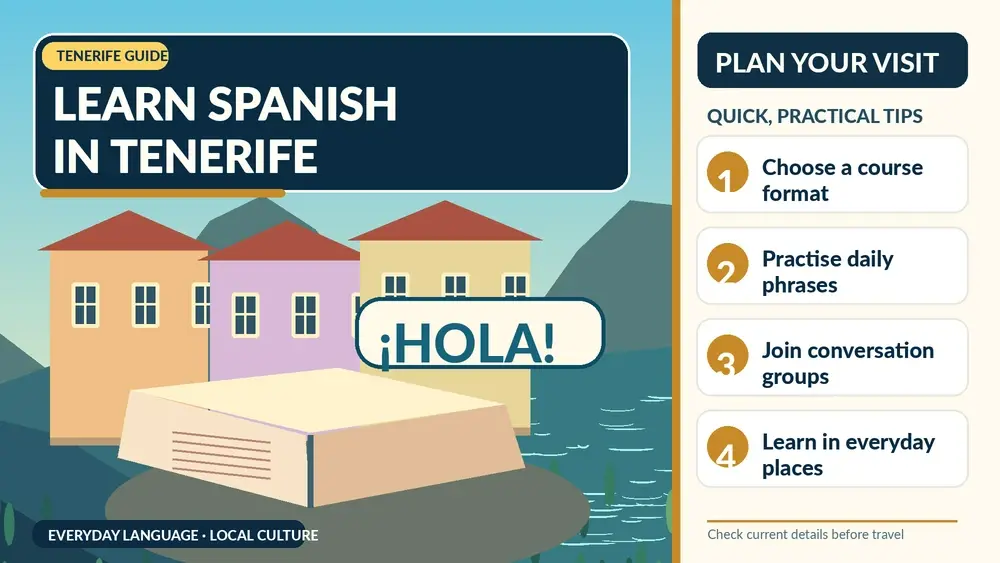
    Illustrated guide: Learn Spanish in Tenerife, with practical visitor tips
    Illustrated guide: Learn Spanish in Tenerife.

    Who can enrol?

    The university language service states that courses are open beyond the university community, with many options available to anyone aged 16 or over, subject to the specific course conditions. This makes it relevant not only to Erasmus students but also to long-stay visitors and residents.

    If you are under 18, travelling with a teenager or need a specific visa-related document, ask the school directly about eligibility and paperwork before paying.

    La Laguna as a study base

    La Laguna is probably the most natural place to study if you want a student atmosphere. The historic centre is walkable, cafés are full of local life and the tram links the city with Santa Cruz. After class, you can practise Spanish without needing to create artificial exercises.

    The La Laguna guide explains the UNESCO historic centre and the surrounding area. For a language-focused stay, I would choose accommodation within walking distance of class or a tram stop.

    Santa Cruz for language plus city life

    Santa Cruz suits students who want a larger city, shopping, cultural events and easy transport. You can study in the metropolitan area and still have beaches such as Las Teresitas within reach.

    See the Santa Cruz guide for neighbourhood context. If your classes are in La Laguna, the tram makes the two cities function almost like one study zone.

    Studying Spanish in the south

    The south is more convenient for travellers who want lessons without leaving a resort-based holiday. The University of La Laguna language service currently lists southern course options, including Adeje in some terms, while private schools operate in the larger tourist areas.

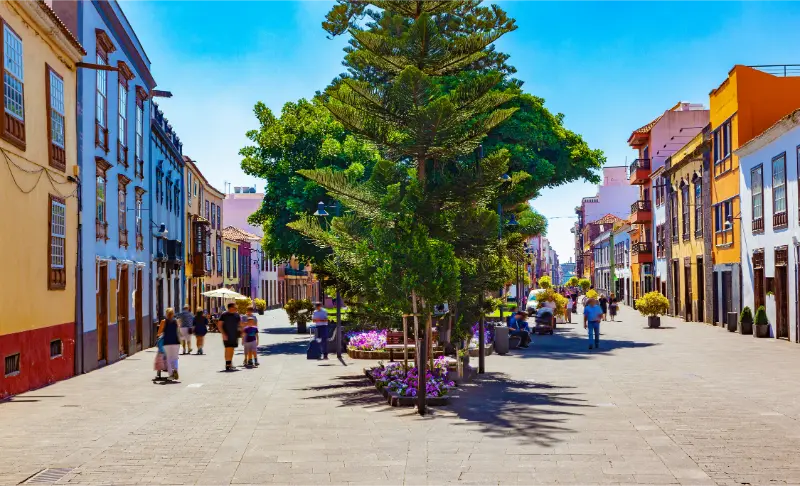
    La Laguna Pedestrian Street Tenerife

    This works well for digital nomads staying in Costa Adeje, Los Cristianos or nearby. Read the Tenerife digital nomad guide if you are combining work, classes and a longer stay.

    Group course or private lessons?

    Group classes are cheaper per hour and create a social environment. They also force you to listen to different accents and speaking styles. The downside is fixed pacing: a class may spend time on grammar you already know or move faster than you would choose.

    Private lessons cost more but are efficient for short stays. If I had only one week, I would rather book two or three focused one-to-one sessions than join a group course halfway through its syllabus.

    Conversation classes

    Conversation sessions are useful for travellers who already know grammar but freeze in real interactions. A good teacher corrects recurring mistakes without turning every sentence into an interruption.

    Pair conversation lessons with daily tasks: buy fruit at a market, ask a museum question in Spanish, order lunch without switching immediately to English. The island becomes the practice environment.

    Intensive courses

    An intensive course can produce visible progress in one or two weeks, but it also consumes holiday energy. Four hours of class plus homework is not compatible with an ambitious sightseeing itinerary every afternoon.

    I would design the trip around study mornings and lighter local activities rather than trying to fit Teide, Anaga and boat tours between classes. Save the major excursions for weekends or the days after the course.

    Level tests and CEFR levels

    Established schools usually work with CEFR levels from A1 upward. If you already speak some Spanish, a placement test prevents wasting the first week in a class that is too easy or too hard.

    Be honest about speaking ability. Someone who can read B1 grammar but cannot hold a basic conversation may need a different course emphasis than the test score alone suggests.

    DELE and certification preparation

    If your goal is an official Spanish qualification, choose a course specifically designed for the exam rather than a generic holiday course. The ULL language service lists preparation and accreditation-related options at different times.

    Exam dates, registration rules and accepted certificates are administrative matters that can change. Confirm them with the official examining body and school before making travel arrangements.

    How much Spanish can you learn in one week?

    Enough to improve confidence, pronunciation and a limited set of practical situations—if expectations are realistic. You will not “become fluent” in a holiday week. What you can do is leave with a better system for continuing at home.

    I would focus on greetings, numbers, directions, food, transport and the verbs you actually use every day. A smaller vocabulary used repeatedly beats a giant word list forgotten after two days.

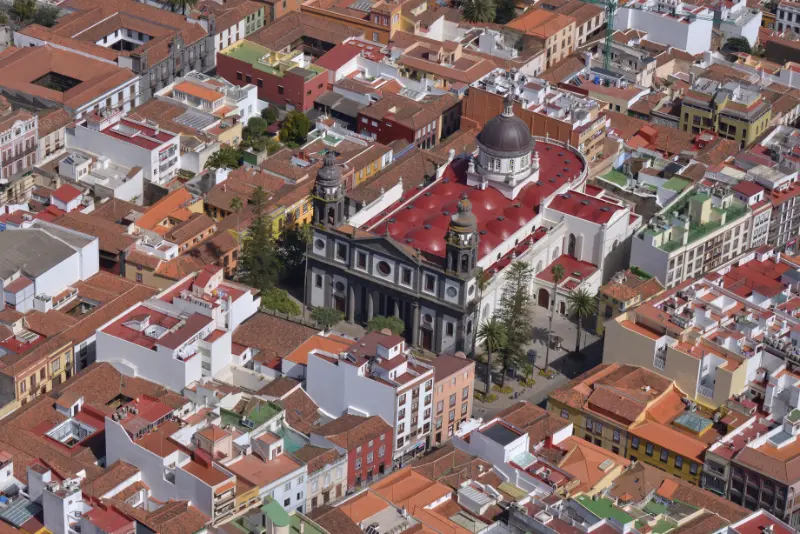
    Aerial View Of La Laguna Tenerife

    Using Tenerife as your classroom

    Markets, buses and cafés provide natural practice, but remember that local people are not unpaid language teachers. Be polite, keep interactions efficient when a queue is forming and switch language if communication becomes difficult.

    La Laguna and Santa Cruz are especially good for this because daily life is not built entirely around tourism. In southern resorts, staff may switch to English quickly; you can politely say that you are learning Spanish if you want to continue.

    Accommodation for a study stay

    For courses lasting several weeks, kitchen access, laundry and workspace matter more than resort facilities. An apartment or aparthotel can be more practical than a full-service beach hotel.

    Compare accommodation across Tenerife on Booking.com and filter by the exact study area. The one month in Tenerife guide is useful if the course is part of a longer stay.

    Transport planning

    Do not choose a cheap apartment that requires two buses before a 9:00 class. The commute quickly becomes the defining feature of the course. In the metropolitan area, tram access is valuable; in the south, walking distance to school is ideal.

    Use the Tenerife without a car guide for no-car planning.

    Official course information

    The University of La Laguna Language Service Spanish page lists current formats and study areas. Its broader course information explains levels, enrolment and who can participate. Private-school schedules should always be checked directly with the provider.

    San Cristobal De La Laguna Historic Center Tenerife

    Frequently asked questions

    Can tourists take Spanish classes in Tenerife?

    Yes. University and private options are available, with course-specific enrolment conditions.

    Is La Laguna the best place to study?

    It is excellent for a student atmosphere, while the south is more convenient for resort-based visitors.

    Can I take only a few lessons?

    Private lessons and conversation sessions are usually the easiest short-stay formats.

    Do I need to know Spanish before starting?

    No. Beginner courses start from A1 or equivalent, while experienced learners can take a placement test.

    Will people speak English to me?

    Often in tourist areas. Tell them politely that you are learning Spanish if you want to practise.

    Final thoughts

    A Spanish course can transform Tenerife from a place you visit into a place you participate in. Choose a format that fits the trip length, live close to class and use everyday errands as practice. Even modest progress makes the rest of the island feel more accessible.

    Language exchanges and making local connections

    Formal lessons are only part of the process. Language exchanges, university events and conversation meetups can help you speak with people outside the classroom. For a long stay, I would ask the school whether it organises intercambios or knows current local groups rather than relying on an old social-media event page.

    Keep expectations balanced: a language exchange works when both sides get value. Spend part of the conversation in Spanish and part in the other participant’s target language instead of treating a local person as a free tutor.

    Studying with children or teenagers

    Families can also use a Tenerife stay for language learning, but adult courses are not automatically suitable for minors. Ask schools about age-specific programmes, safeguarding and class levels. For children, shorter interactive lessons usually fit a holiday better than a full academic timetable.

    Parents can reinforce the learning naturally by letting children order an ice cream, ask for the bill or read simple signs. Correct gently and keep the experience positive.

  • Casinos in Tenerife: Santa Cruz, Puerto de la Cruz and Playa de las Américas

    Casinos in Tenerife: Santa Cruz, Puerto de la Cruz and Playa de las Américas

    Tenerife has three official casinos operated under the Casinos de Tenerife group: in Santa Cruz, Puerto de la Cruz and Playa de las Américas. For most visitors, choosing between them is less about the games and more about where the casino fits naturally into the evening. A traveller staying in Costa Adeje does not need to cross the island for Santa Cruz, and someone based in Puerto de la Cruz already has a casino within the town.

    I treat a casino night as entertainment, not as a way to “make money on holiday.” Decide the spending limit before entering, carry the identification required for access and stop when the planned entertainment budget is gone. That mindset makes the evening much easier to enjoy.

    Tenerife casinos at a glance

    Casino Santa CruzRambla de Santa Cruz, below the Hotel Mencey area
    Casino Puerto de la CruzAvenida Cristóbal Colón, close to Lago Martiánez
    Casino Playa de las AméricasPaseo Cándido García Sanjuan, Adeje
    Minimum age18
    IdentificationOfficial casino rules require ID such as DNI or passport
    EntranceThe current official rules state free entry, subject to admission conditions

    Which Tenerife casino is best for your trip?

    I would choose purely by location and the rest of the evening. Casino Playa de las Américas is the obvious fit for visitors staying in the south. Casino Santa Cruz works well after dinner in the capital. Casino Puerto de la Cruz is convenient for north-island travellers and sits near one of the town’s best-known leisure areas.

    The three venues share a common official website, but opening times, restaurant arrangements and individual game schedules can differ. Check the specific venue page on the day rather than relying on one generic timetable.

    Casino Playa de las Américas

    This is the most convenient option for the main southern resort zone. If you stay in Playa de las Américas, Costa Adeje or Los Cristianos, it can be added to a normal night out without creating a transport project.

    Read the Playa de las Américas guide and Tenerife nightlife guide if you want to combine the casino with bars or dinner. I would still check the walking route from your accommodation because resort names cover a larger area than they appear to on booking sites.

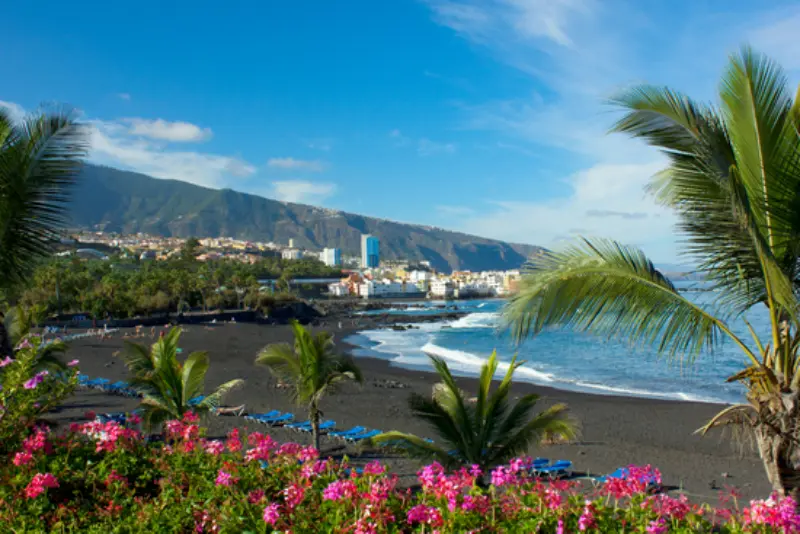
    Playa Jardin Puerto De La Cruz Tenerife

    Casino Santa Cruz

    The Santa Cruz casino is located on Rambla de Santa Cruz in the Hotel Mencey area. The official venue page currently lists separate hours for gaming tables and slot machines, which is a useful reminder that “casino open” does not necessarily mean every game is operating.

    For a city evening, I would have dinner first, take a walk through central Santa Cruz and arrive later rather than building the entire night around gambling. The Santa Cruz guide helps with restaurants, cultural stops and the wider city layout.

    Casino Puerto de la Cruz

    The Puerto de la Cruz venue is on Avenida Cristóbal Colón, close to Lago Martiánez and the seafront. That makes it easy to combine with a daytime visit to the pools, sunset on the coast and dinner before entering.

    Use the Puerto de la Cruz travel guide to decide whether the town suits a longer northern stay. If you are based elsewhere, I would not drive across the island just for the casino unless you already planned to visit Puerto de la Cruz.

    Age and identification rules

    The official casino rules prohibit entry to anyone under 18 and require identification. A passport is the safest document for an international visitor to carry if there is any doubt about what will be accepted. Do not assume a photo of a document on your phone will be sufficient.

    Admission can also be refused under the casino’s published conditions, including behaviour or other restrictions defined by gaming regulations. If you are going out in a group, make sure everyone understands the age and ID requirements before paying for taxis.

    Dress code

    The official rules ask guests to dress appropriately for the venue and specifically exclude some casual or sports clothing, including sleeveless shirts, shorts, tracksuits and beach-style footwear. The exact enforcement is a matter for the casino, so I would dress one step smarter than a normal beach-resort evening.

    You do not need formal evening wear, but arriving straight from the pool in flip-flops is a poor plan. If the casino is part of dinner and drinks, smart-casual clothing usually fits the whole evening better anyway.

    What games are available?

    The official group advertises slot machines, gaming tables and poker activity, with individual venues publishing their current offerings. Game availability can change by night and by hour. If you specifically want poker, roulette or another table game, confirm that it is running before travelling.

    Do not choose a casino based on an old review that lists a particular table or tournament. Tournament calendars and table schedules are inherently changeable.

    How much cash should you bring?

    I set a fixed entertainment budget before entering and treat it the same way I would treat concert tickets or a special dinner. Never increase the limit because of losses. If you win, that does not create an obligation to keep playing.

    The money in Tenerife guide explains cards, cash and ATMs more generally. For gambling, avoid using credit or repeatedly visiting an ATM after reaching your pre-set limit.

    Responsible gambling on holiday

    Holiday mood can make spending feel less real. Alcohol, late nights and the idea that “this is my only chance” are exactly why a fixed limit matters. Decide in advance how much time and money the casino gets, then move on with the evening.

    If gambling has ever been difficult for you, the best Tenerife casino plan is not to go. There are hundreds of other evening activities on the island, from live music to late dinners and coastal walks.

    Casino night without a car

    A taxi or walk can be sensible if you plan to drink. In Santa Cruz and Puerto de la Cruz, central accommodation makes this easy. In the south, check the exact distance because “Playa de las Américas” and “Costa Adeje” hotel locations can be farther apart than expected.

    Playa Martianez From Mirador De La Paz Puerto De La Cruz Tenerife

    The getting around Tenerife guide explains taxis and public transport. Late-night buses may be less frequent, so plan the return before entering.

    Can families visit the casino complex?

    The gaming areas are adult-only, so a casino is not a family attraction. If adults are travelling with children, arrange childcare responsibly rather than expecting a hotel lobby or nearby restaurant to solve the problem informally.

    For evening ideas with teenagers, see the Tenerife with teenagers guide instead.

    Combining the casino with dinner

    A casino works best as the final stop after a meal, not the place where the entire night starts and ends. In Santa Cruz, eat in the centre; in Puerto de la Cruz, combine it with the waterfront; in the south, use the large restaurant choice around Costa Adeje and Las Américas.

    This also makes budgeting easier: dinner is a known cost, while casino spending remains a separate capped amount.

    Where to stay

    If casino access matters, stay within walking or short-taxi distance. Southern visitors should look around Playa de las Américas/Costa Adeje, northern visitors around central Puerto de la Cruz, and city-break travellers around Santa Cruz. Compare accommodation across Tenerife on Booking.com and verify the exact property location on a map before booking.

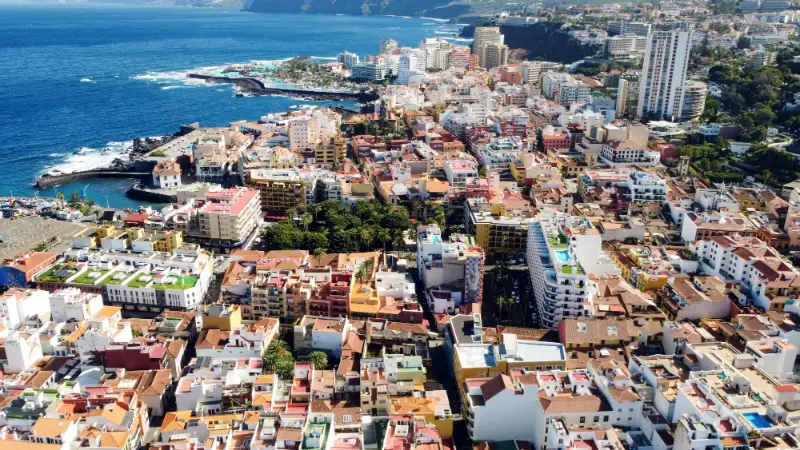
    Puerto De La Cruz And Lago Martianez Tenerife

    Official rules and current information

    The most reliable source is the official Casinos de Tenerife website. Its published casino rules currently state that visitors must be 18 or older, carry valid identification and comply with dress and admission rules. Venue pages should be checked for current opening times.

    Frequently asked questions

    How many official casinos are there in Tenerife?

    The Casinos de Tenerife group operates three: Santa Cruz, Puerto de la Cruz and Playa de las Américas.

    What is the minimum age?

    18, according to the official casino rules.

    Do I need my passport?

    You need accepted identification. For an international visitor, carrying a passport is the safest approach.

    Is there a dress code?

    Yes. The official rules exclude several types of very casual, beach and sports clothing.

    Should I book in advance?

    General gaming access may not require a reservation, but restaurants, special events or poker activity can have separate arrangements. Check the venue.

    Final thoughts

    Tenerife’s casinos are easy to visit because there is one in each of the main tourism zones: capital, north and south. Choose the one near you, dress appropriately, bring ID and decide the budget before you arrive. Treated as a short evening experience rather than a financial strategy, a casino can fit naturally into a wider Tenerife night out.

    How long should you spend in a casino?

    For most holidaymakers, one or two hours is enough. Casinos are deliberately designed to make time easy to lose, so I set a departure time as well as a spending limit. If the evening is going well, leaving on schedule keeps it as a positive memory rather than letting it drift into an expensive late night.

    This is particularly important when you have an early excursion the next day. A 7:00 pickup for Teide or La Gomera is not improved by staying at a gaming table until 3:00 in the morning.

    Photography and phones inside

    Do not assume you can photograph gaming tables or other guests. Casinos often have privacy and security rules around photography. If you want a picture to remember the evening, ask staff where photos are allowed rather than filming casually inside the gaming room.

    Cash, cards and personal security

    Carry only what you intend to spend and keep valuables secure, especially after leaving late at night. A casino itself is controlled, but the usual travel rules still apply in taxis, nightlife areas and crowded streets. The Tenerife scams and tourist traps guide covers wider money and safety issues.

  • Tenerife Food Tours & Cooking Experiences: Markets, Tastings, Local Products and Classes

    Tenerife Food Tours & Cooking Experiences: Markets, Tastings, Local Products and Classes

    A food tour can be one of the fastest ways to understand Tenerife beyond the resort strip. In a few hours you can connect market produce, Canarian dishes, wine, cheese, mojo and the history of a town in a way that is difficult to reproduce by simply searching “best restaurant near me”. The value is not the quantity of food; it is the explanation and access.

    Tenerife does not have one standard type of food tour. Some experiences are walking tastings in a city or historic town, some are winery visits, some combine markets with lunch, and others are private cooking or farm-based experiences. Availability changes, so I would choose by theme and operator quality rather than by expecting a fixed year-round calendar.

    The island’s tourism authorities continue to treat gastronomy as a major part of the destination, with current programmes focused on local ingredients, wine, fish, gofio, potatoes and professional culinary training. Travellers can use that same idea at a visitor level: look for experiences that explain real products and producers rather than generic “Spanish tapas” that could happen anywhere.

    Tenerife Food Tours at a glance

    Best first experienceMarket + local tasting or guided food walk
    Best for wineTacoronte-Acentejo / El Sauzal and other wine regions
    Best hands-on optionSmall cooking class or mojo/Canarian recipe workshop
    Best question to askWhich foods, producers and drinks are actually included?
    Main booking issueDietary requirements and current availability

    Market-based food experiences

    Mercado Nuestra Señora de África in Santa Cruz is one of the most useful starting points because it combines produce, fish, meat, prepared food and everyday local shopping. A guide can explain ingredients you might otherwise walk past. Use my market guide before visiting.

    La Laguna and other local markets can also support food-focused walking tours. The best guide adds historical and culinary context rather than simply leading you from stall to stall.

    Wine tastings as a food tour

    Tenerife’s five wine denominations and volcanic soils make wine one of the island’s strongest gastronomic themes. A winery tour can include vineyard landscape, cellar explanation and food pairings, while a guided wine route removes the driving problem.

    The Tegueste–Tacoronte-Acentejo wine route and Casa del Vino guide are good starting points if you want to build the day independently.

    Cooking classes: what makes one worthwhile

    A useful class should teach techniques or ingredients you can reproduce at home: mojo, wrinkled potatoes, gofio preparations, local fish, sauces or desserts. Ask how much is hands-on, how many people share a workstation and whether recipes are provided afterwards.

    Illustrated guide: Tenerife Food Tours & Cooking Experiences, with practical visitor tips
    Illustrated guide: Tenerife Food Tours & Cooking Experiences.

    Avoid assuming every class is suitable for children or dietary restrictions. Contact the host before booking if you need gluten-free, vegetarian or allergy-safe preparation because shared kitchens create cross-contact issues.

    Cheese, honey, bananas and local products

    Not every food experience needs to be a full meal. Tenerife cheese, honey, bananas, gofio and bakery products can form excellent short tastings. The food souvenirs guide helps identify products that also work as things to take home.

    When a tour mentions “local products”, look for specific producers or ingredients in the description. The more concrete the itinerary, the easier it is to judge value.

    Guachinche experiences

    A guided visit to a guachinche can be useful for first-time visitors because the format and location can be confusing if you are staying in the south. But I would avoid tours that turn the experience into a staged “folk restaurant” cliché. The point is simple seasonal food and local wine in the north-island tradition.

    Ask whether transport is included, especially if wine is part of the meal. Independent drivers should not build a tasting lunch around driving back to the resort.

    Food tours for families

    Families often do better with a shorter market or tasting experience than a three-hour formal walking tour. Check how much standing is involved, whether toilets are easy to access and whether the food is child-friendly without requiring the guide to redesign the whole tour.

    Vegetable Soup At A Masca Village Inn Tenerife

    A hands-on mojo or dessert workshop can be more engaging for older children than listening to a long historical explanation. The teenagers guide can help balance the food activity with beaches or adventure later.

    Dietary needs

    Tell the operator about allergies before booking, not at the first tasting stop. A tour may use several independent businesses, which makes last-minute substitutions difficult. The same is true for strict vegan or coeliac travellers.

    Use the existing vegetarian and vegan guide, gluten-free guide and food allergy guide for the wider trip.

    A two-day food mini-itinerary

    Day one: Santa Cruz market in the morning, a light lunch based on local produce, then La Laguna for historic streets and an early dinner. Day two: drive or take a guided excursion into wine country, visit a winery or Casa del Vino, then eat a simple north-island lunch rather than returning to the resort for a generic buffet.

    If you want one high-end contrast, add a Michelin-recognised dinner on another evening rather than on the same day as multiple tastings.

    Booking marketplaces versus direct operators

    Marketplaces are useful for comparing dates and reviews, while direct booking can make it easier to ask detailed dietary or accessibility questions. I use both: discover the type of experience, then read the operator description carefully before choosing.

    For activities that include transport, confirm the exact pickup area. “Tenerife pickup” rarely means every hotel on the island.

    How I would build this into a Tenerife trip

    Food experiences work best for me when they are attached to a place rather than collected as isolated reservations. I would connect a special meal or tasting with the town, market, vineyard landscape or coastline around it. That gives the day a narrative and also makes it easier to understand why Tenerife ingredients taste and feel different from the generic “resort food” image some visitors arrive with.

    I also leave at least one meal unplanned. Tenerife is full of small bars, guachinches, bakeries and market counters that are difficult to appreciate if every lunch and dinner has already been booked. Reserve what genuinely needs a reservation, especially fine dining, then keep the rest flexible.

    Useful companion guides

    For the broader food picture, start with what to eat in Tenerife, eating-out etiquette, Tenerife wine and Tenerife markets. Travellers with dietary requirements should also read the dedicated vegetarian/vegan, gluten-free and food-allergy guides already on the site.

    Aperitif In Tenerife

    Where to stay for a food-focused trip

    I would split food travellers between two bases rather than chase restaurants from one end of the island to the other. The south gives easy access to many destination restaurants and resort dining; the north adds markets, guachinches, wineries and historic towns. Compare accommodation across Tenerife on Booking.com, then map the reservations before finalising the hotel.

    Frequently asked questions

    Are food tours available all year?

    Many are, but specific tours, farm visits and classes can be seasonal or operate only on selected days. Check current calendars.

    What is the best food tour for a first visit?

    A market-based walking tour or local tasting in Santa Cruz/La Laguna gives broad context, while a winery excursion is best if wine is your main interest.

    Are cooking classes in English?

    Many tourist-facing experiences are multilingual, but confirm the language for your exact date before booking.

    Can tours handle allergies?

    Sometimes, but multi-stop tours can be difficult to adapt. Contact the operator before booking and explain the medical requirement clearly.

    Should I rent a car for a wine tour?

    If you intend to taste wine, a guided excursion, taxi or designated driver is the safer choice.

    Check current listings and opening details

    For up-to-date gastronomic context, Turismo de Tenerife publishes current material such as its Tenerife food and drink route. Tour and class schedules change, so verify the exact operator, meeting point and included tastings before booking.

    Final thoughts

    A good Tenerife food experience should make the rest of your holiday taste different. After a market walk, winery visit or cooking session, you start recognising ingredients and asking better questions in ordinary restaurants. That lasting context is more valuable than simply adding another large meal to the itinerary.

    Budgeting without losing the experience

    A food-focused Tenerife trip does not need to be expensive at every meal. I spend selectively: one destination restaurant or guided tasting, then simple lunches, bakeries, markets and local bars on other days. This creates contrast and keeps the trip from becoming financially and physically exhausting.

    Tenerife Seafront Restaurant Terrace

    When comparing a tour or tasting, calculate the real value from guide time, transport, included food, drinks and access rather than the number of tasting stops. Six rushed samples are not automatically better than three thoughtful stops with a guide who explains the producer and place.

    Reservations, timing and Spanish meal hours

    Tenerife follows later Spanish meal rhythms more than many northern European visitors expect. Lunch can stretch into mid-afternoon and dinner can start later than families are used to. Tourist areas offer wider hours, but independent local restaurants may have narrower kitchen times and weekly closing days.

    If a specific restaurant matters, verify the kitchen schedule and reserve. If it does not, keep flexibility: arriving at a good local place when you are genuinely hungry is often more enjoyable than crossing the island to meet an over-planned reservation.

  • Windsurfing & Wingfoil in Tenerife: El Médano, El Cabezo, Lessons and Wind

    Windsurfing & Wingfoil in Tenerife: El Médano, El Cabezo, Lessons and Wind

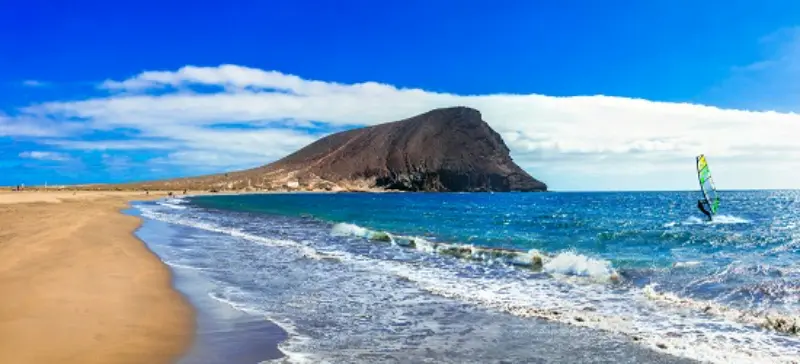
    El Médano is not simply a beach where people happen to windsurf; wind sports are part of the town’s identity. Boards and sails moving along the promenade, shops full of equipment and riders checking the water before breakfast make this one of the easiest places on Tenerife to understand why the island attracts wind-sport travellers.

    The official tourism site currently describes around 300 windy days a year and highlights El Médano, La Tejita and El Cabezo for windsurf and wingfoil. It also distinguishes a generally lighter winter pattern from a stronger summer pattern. Those figures are useful for trip planning, but they do not replace a same-day forecast or local judgement: wind direction, gusts, swell and the exact launch area determine whether conditions suit your level.

    For beginners, my advice is simple: start with a school in El Médano rather than trying to copy experienced riders at El Cabezo. A lesson gives you the right-sized sail or wing, a safer practice zone and someone who can explain local traffic and shore conditions. Experienced riders can then use the town as a base for rental, storage and access to the more demanding spots.

    Windsurfing Tenerife at a glance

    Main baseEl Médano in Granadilla de Abona
    Best-known advanced spotEl Cabezo
    Other area to researchLa Tejita
    Official wind patternGenerally stronger May–September than October–April
    Best for beginnersProfessional lesson with equipment included

    Why El Médano is the obvious base

    El Médano combines practical infrastructure with direct beach access. The town-side section is generally more sheltered and family-oriented, while the wider wind-sport scene extends along the coast. My El Médano guide covers the town, beaches, restaurants, Montaña Roja and where to stay.

    Being based in the town changes the experience. You can walk to a school, watch conditions before deciding to rent and stop when the wind becomes unsuitable without facing a long drive back to another resort. That flexibility is one reason I would choose El Médano over commuting every day from Costa Adeje for a dedicated windsurf trip.

    El Cabezo is not the beginner classroom

    El Cabezo is internationally known and hosts high-level competition. The combination of stronger wind, waves and more technical water makes it attractive to experienced windsurfers but inappropriate as a first independent launch for someone still learning basic control.

    If you are intermediate, ask a local centre which beach section fits your actual ability that day. A rider who is comfortable on flat water may not be ready for wave conditions. The safest choice can change hour by hour.

    When is the wind strongest?

    The official Tenerife tourism page describes two broad seasons: October to April often around 10–25 knots, and May to September often around 15–30 knots. These are approximate patterns, not promises. A week can include lighter or stronger days, and local thermal effects and direction matter.

    Summer is attractive to confident riders seeking stronger conditions, while learners may actually appreciate lighter sessions. I book flexible lesson slots and avoid choosing an entire holiday week on the assumption that every afternoon will be identical.

    Windsurf or wingfoil?

    Windsurfing has a long history in El Médano and remains deeply embedded in the local scene. Wingfoil is newer and can feel appealing because the equipment looks compact, but learning to control a wing and foil safely still requires instruction. Foils introduce their own risks because of speed, sharp edges and the need for enough depth.

    If you have never done either, choose the sport you genuinely want to continue rather than the one that looks easier online. A taster lesson can answer the question quickly.

    Renting equipment

    Rental works best when the centre can change board or sail size as conditions change. Ask whether insurance for equipment damage is included, how rescue assistance works, where you are allowed to sail and whether storage is available for multi-day hire.

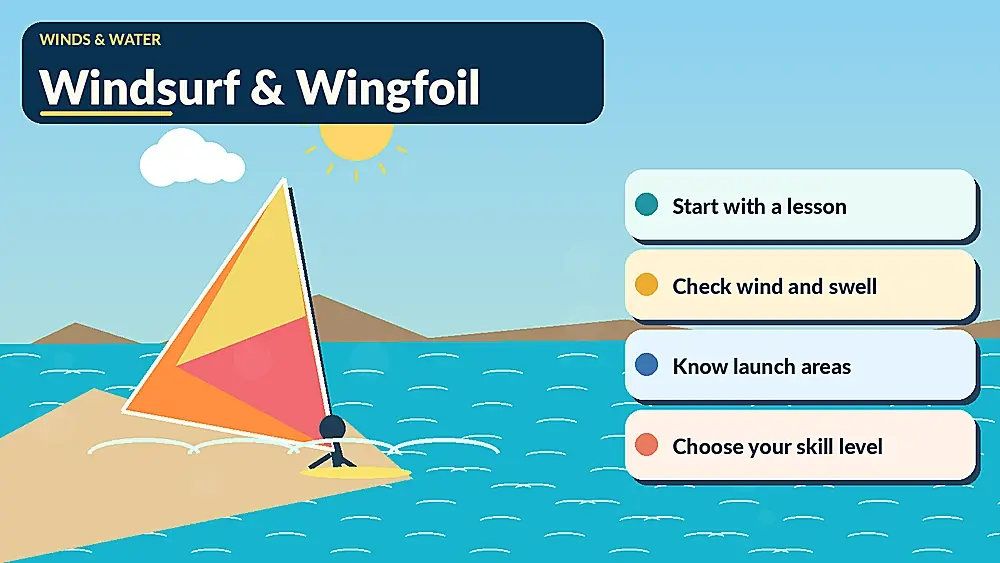
    Illustrated guide: Windsurfing & Wingfoil in Tenerife, with practical visitor tips
    Illustrated guide: Windsurfing & Wingfoil in Tenerife.

    Experienced riders bringing their own gear should check airline baggage rules carefully. Board bags can be expensive, and transfer vehicles must be large enough. For a short trip, high-quality local rental may be simpler than transporting everything.

    Lessons and progression

    A beginner lesson should cover rig or wing handling, basic stance, steering, stopping, launch area rules and what to do if you drift. Progression is not linear: a stronger second day can feel harder than the first. I would rather repeat fundamentals than move to a smaller board too soon.

    If you are staying a week, several shorter sessions often work better than one exhausting day. Wind sports are physically specific, especially for forearms, shoulders and core, and fatigue quickly reduces decision quality.

    Combine windsurfing with other El Médano activities

    When the wind is wrong for your level, use the day rather than forcing a session. Walk the coast, visit Montaña Roja if conditions and access suit, relax on the town beach or try another guided activity. The site also has dedicated guides to kitesurfing and stand-up paddleboarding.

    That variety is useful for couples where only one person wants to windsurf. El Médano is a real town with cafés and beaches rather than a remote sports camp.

    Check the current official information before you go

    Use the official Tenerife windsurf and wingfoil page for the current list of spots and companies. It also publishes the broad seasonal wind ranges. For beach context, see the official El Médano beach page.

    El Medano South Tenerife Coast

    How I would plan this experience

    I would start by deciding what I actually want from the day rather than booking the first activity with an attractive photo. Tenerife changes dramatically over short distances: a calm morning on one coast can coincide with stronger wind, swell, cloud or cooler temperatures somewhere else. I therefore check the exact meeting point, the forecast for that part of the island, the cancellation policy and the realistic travel time from my accommodation before paying.

    I also leave space around the activity. A two-hour session can occupy half a day once transfers, parking, changing, briefing, equipment and a meal are included. That is not wasted time; it is what keeps a holiday from becoming a sequence of rushed reservations. If the activity is weather-dependent, I schedule it early in the trip so I still have another day available if conditions force a change.

    For first-time visitors, I prefer an instructor or licensed operator over trying to save a small amount by improvising. Local professionals know the launch areas, access restrictions, seasonal conditions and the point at which a fun day should be postponed. Read recent reviews for organisation and safety, but use the operator and official authorities—not social-media comments—as the final reference for rules and conditions.

    What to bring

    • Water and a small snack, even when the activity itself is short.
    • High-SPF sunscreen and sunglasses for waiting time before or after the session.
    • A light layer for wind or altitude changes; Tenerife can feel much cooler away from the resort coast.
    • Secure footwear or the technical footwear requested by the operator.
    • A fully charged phone, booking confirmation and offline directions to the meeting point.
    • A dry bag or change of clothes when water, spray or wet equipment is involved.
    • Any medication you normally need, and honest disclosure of relevant health limitations to the operator.

    Weather, cancellations and safety decisions

    One of the most useful Tenerife habits is separating “good holiday weather” from “good activity conditions”. Blue sky does not automatically mean safe sea, mountain or wind conditions. Swell period, gusts, visibility, heat, cloud, wildfire restrictions and local closures can all matter more than the temperature shown on a resort forecast.

    If an operator cancels because of conditions, I treat that as a positive safety decision rather than a ruined day. Tenerife has enough alternatives that it is usually easy to switch to a town, beach, museum, market or shorter walk. The site’s broader Tenerife safety guide and weather-by-month guide are useful companions when you are building a flexible itinerary.

    Where to stay

    For a wind-sport holiday I would stay in El Médano itself. Walking to the beach and equipment centres is more useful than having a larger resort pool somewhere else. Compare Tenerife accommodation on Booking.com.

    Montana Roja And El Medano Tenerife

    Frequently asked questions

    Is Tenerife good for windsurfing?

    Yes. El Médano is internationally known and the official tourism site describes roughly 300 windy days a year.

    What is the best place for beginners?

    Use a recognised school in El Médano and let the instructor choose the practice area for that day. Do not choose El Cabezo simply because expert riders use it.

    When is the strongest wind?

    The official tourism information describes May to September as generally stronger than October to April, but daily conditions vary.

    Can I rent equipment?

    Yes. El Médano has specialist centres offering lessons and rentals. Confirm rescue, damage policy and where the equipment may be used.

    Do I need a special permit?

    The official tourism page states that a special permit is not normally required for windsurf or wingfoil, but local beach rules and safety instructions still apply.

    Final thoughts

    Tenerife can deliver world-class wind, but the best session is the one matched to your level. Use El Médano as a base, learn with a school if you are new, treat El Cabezo with respect and keep enough flexibility to wait for the right conditions.

  • Mountain Biking in Tenerife: Official BC Routes, E-Bikes, Rentals and Safety

    Mountain Biking in Tenerife: Official BC Routes, E-Bikes, Rentals and Safety

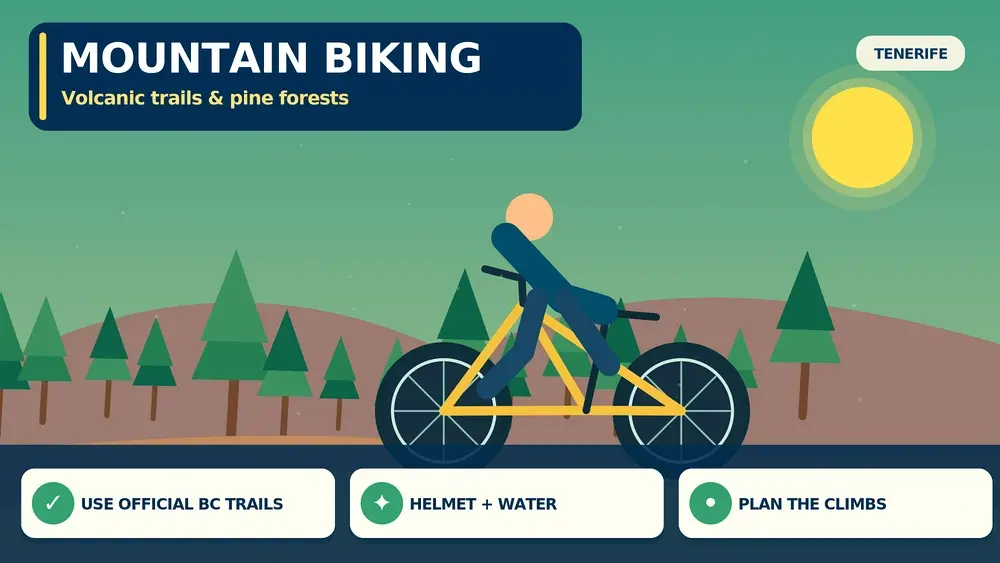
    Tenerife is famous among road cyclists, but the island is just as interesting away from the asphalt. Pine forest, volcanic soil, long forest tracks and big changes in altitude create a mountain-bike landscape that feels completely different from the resort coast. The important point is that “MTB in Tenerife” is not one single experience: a short forest loop near La Esperanza is very different from a long day linking high tracks across the Corona Forestal.

    I would start with the official BC network rather than downloading a random GPS track. Turismo de Tenerife currently describes more than 200 kilometres of forest tracks used by mountain bikes, with a network of signed routes and variants. That gives visitors a safer framework for choosing distance and terrain, and it makes it easier to understand which tracks are intended for this type of use.

    An e-bike can make climbing more accessible, but it does not remove technical difficulty. Loose volcanic surfaces, braking on long descents, battery management and changing weather still matter. For a first ride, I would rather choose a shorter official route and finish wanting more than commit to an ambitious all-day track because the battery percentage looked reassuring at the car park.

    Mountain Biking Tenerife at a glance

    Best-known network Official BC forest routes in the Corona Forestal and other upland areas
    Good first area La Esperanza / Las Lagunetas for shorter forest options
    Longest official route BC-1 Ruta Norte, with a very long main line plus variants
    E-bike advantage Makes climbing easier, but does not simplify technical descents
    Main planning issue Elevation, surface, weather, navigation and return logistics

    Start with the official BC network

    The official tourism site lists the mountain-bike routes rather than treating every forest road as open riding terrain. The network includes routes such as BC-1 Ruta Norte, BC-2 Las Raíces–Las Lagunetas, BC-3 Guía de Isora, BC-4 Ruta Sur and BC-5 Pinares de Vilaflor. The exact route data and access status should be checked before riding because forest restrictions can change.

    BC-1 is the major undertaking. The current official description gives a main line of roughly 85 km and numerous variants across the north and west, connecting recreation areas and high forest zones. I see it as a network to explore in sections rather than a default holiday ride. BC-2, by contrast, is a much shorter option in Las Lagunetas and is easier to build into a half day.

    The existing road-cycling guide covers the island from the asphalt perspective; this MTB guide is the complement for travellers who want forest tracks and off-road terrain.

    Best areas for different riders

    La Esperanza and Las Lagunetas are useful for riders who want forest scenery without committing to the most remote side of the island. The area is high enough to feel cooler and greener than the coast, with easy access from the metropolitan side. My La Esperanza guide helps with the wider area and road access.

    Vilaflor and the southern uplands suit riders who want pine forest combined with high-altitude landscapes. Do not judge temperature from Costa Adeje: the same day can feel hot at sea level and genuinely cool once you climb. The Vilaflor guide is useful if you want to stay closer to the mountain rather than commute from the coast.

    Guía de Isora and the Chío pine area give another western option and can fit travellers staying around Los Gigantes, Alcalá or the Abama side. The key is to confirm where the legal rideable route starts and ends instead of assuming every visible track on a mapping app is suitable.

    MTB or e-bike?

    A conventional mountain bike is lighter and simpler for strong riders who are comfortable with sustained climbing. An e-MTB can make Tenerife much more accessible to recreational cyclists, couples with different fitness levels and travellers who want to spend more time looking around than grinding uphill.

    The trade-off is weight and battery planning. A heavy e-bike is less pleasant if you have to lift it over an obstacle, and maximum advertised battery range is rarely the same as real range on steep terrain. Rider weight, assistance mode, temperature, surface and total ascent all change consumption. I ask the rental shop for a realistic route recommendation with that specific bike rather than relying on a generic kilometre figure.

    If you rent, confirm helmet, repair kit, spare tube or tubeless solution, pump, charger policy, lock, damage terms and roadside or pickup support. Photograph the bike at collection just as you would a rental car.

    Surface, descending and volcanic terrain

    Tenerife forest tracks can alternate between compact dirt, gravel, loose volcanic material and rocky sections. A route that looks easy in elevation data may still require confident braking and line choice. I reduce speed before loose corners and keep a bigger gap from other riders on descents because dust and stones can hide the surface.

    Long downhill sections are one of the island’s pleasures but also one of its risks. Brakes heat up, hands fatigue and speed rises quickly. Stop before fatigue changes your technique. If you are new to off-road riding, a guided half-day session can teach more than an ambitious solo route.

    Transport and one-way rides

    Point-to-point riding requires more planning than a circular route. Do not assume a public bus will take a full-size bike, or that a taxi can accommodate several bikes without prior arrangement. Rental companies sometimes offer delivery, shuttle or guided transfer options; ask before building a route around them.

    For independent riders, I prefer loops or out-and-back rides from a known recreation area. They make it easier to shorten the day if weather changes, a rider is tired or the battery drops faster than expected.

    Trail access, closures and fire restrictions

    Forest access in Tenerife is managed, and temporary restrictions can be introduced for wildfire risk, forestry work, hunting activity, landslides or severe weather. A saved GPX file is not permission to enter a closed area. Check the official route information and Tenerife ON close to the ride date.

    During hot, dry or windy periods, prevention measures can change quickly. The wildfire and emergency alert guide explains why a mountain activity needs a different mindset from a beach day.

    A realistic first MTB day

    I would collect the bike early, spend time adjusting saddle height and controls, then ride a moderate route close to services. Build in a long stop rather than using every minute for distance. If the first two hours feel easier than expected, you can add a short variant; if not, you still finish comfortably.

    After the ride, inspect tyres and brakes before planning another outing. On a multi-day cycling holiday I alternate a demanding ride with a lighter day, because long volcanic descents can fatigue arms and shoulders even when the cardiovascular effort felt manageable.

    Check the current official information before you go

    The best starting point is the official Turismo de Tenerife mountain-bike route network. It currently lists the BC routes, distances and route descriptions. For closures and protected-area access, also check Tenerife ON shortly before riding.

    How I would plan this experience

    I would start by deciding what I actually want from the day rather than booking the first activity with an attractive photo. Tenerife changes dramatically over short distances: a calm morning on one coast can coincide with stronger wind, swell, cloud or cooler temperatures somewhere else. I therefore check the exact meeting point, the forecast for that part of the island, the cancellation policy and the realistic travel time from my accommodation before paying.

    I also leave space around the activity. A two-hour session can occupy half a day once transfers, parking, changing, briefing, equipment and a meal are included. That is not wasted time; it is what keeps a holiday from becoming a sequence of rushed reservations. If the activity is weather-dependent, I schedule it early in the trip so I still have another day available if conditions force a change.

    For first-time visitors, I prefer an instructor or licensed operator over trying to save a small amount by improvising. Local professionals know the launch areas, access restrictions, seasonal conditions and the point at which a fun day should be postponed. Read recent reviews for organisation and safety, but use the operator and official authorities—not social-media comments—as the final reference for rules and conditions.

    What to bring

    • Water and a small snack, even when the activity itself is short.
    • High-SPF sunscreen and sunglasses for waiting time before or after the session.
    • A light layer for wind or altitude changes; Tenerife can feel much cooler away from the resort coast.
    • Secure footwear or the technical footwear requested by the operator.
    • A fully charged phone, booking confirmation and offline directions to the meeting point.
    • A dry bag or change of clothes when water, spray or wet equipment is involved.
    • Any medication you normally need, and honest disclosure of relevant health limitations to the operator.

    Weather, cancellations and safety decisions

    One of the most useful Tenerife habits is separating “good holiday weather” from “good activity conditions”. Blue sky does not automatically mean safe sea, mountain or wind conditions. Swell period, gusts, visibility, heat, cloud, wildfire restrictions and local closures can all matter more than the temperature shown on a resort forecast.

    If an operator cancels because of conditions, I treat that as a positive safety decision rather than a ruined day. Tenerife has enough alternatives that it is usually easy to switch to a town, beach, museum, market or shorter walk. The site’s broader Tenerife safety guide and weather-by-month guide are useful companions when you are building a flexible itinerary.

    Where to stay

    For forest access, La Esperanza, La Laguna, Puerto de la Cruz, La Orotava, Vilaflor and western bases can all make sense depending on the route. I choose the base after choosing the riding area, not the other way around. Compare accommodation across Tenerife on Booking.com.

    Frequently asked questions

    Is Tenerife good for mountain biking?

    Yes. The island has an official forest-track network and more than 200 km of MTB-accessible tracks described by Turismo de Tenerife, with terrain ranging from short forest routes to very long cross-island options.

    Can beginners ride MTB in Tenerife?

    Yes, but route choice matters. Start with a short official route and avoid judging difficulty only by distance; surface and descent technique are equally important.

    Are e-bikes useful in Tenerife?

    Very useful for climbing and mixed-ability groups. Battery range still needs conservative planning because elevation and assistance level can reduce it quickly.

    Do I need a permit?

    Rules depend on the track and protected area. Use the official BC route information and check current closures or restrictions before riding.

    Can I combine MTB with road cycling?

    Absolutely. Many cycling visitors use one or two off-road days alongside road routes, especially if they are staying long enough to recover between hard sessions.

    Final thoughts

    Mountain biking adds a side of Tenerife that many beach visitors never see: long pine tracks, cool highland air and volcanic surfaces that demand attention. Use the official network, choose a route that matches your technical ability and treat e-bike assistance as help with climbing rather than permission to overextend the day.

  • Kitesurfing in Tenerife: El Médano, Wind, Lessons and Safety

    Kitesurfing in Tenerife: El Médano, Wind, Lessons and Safety

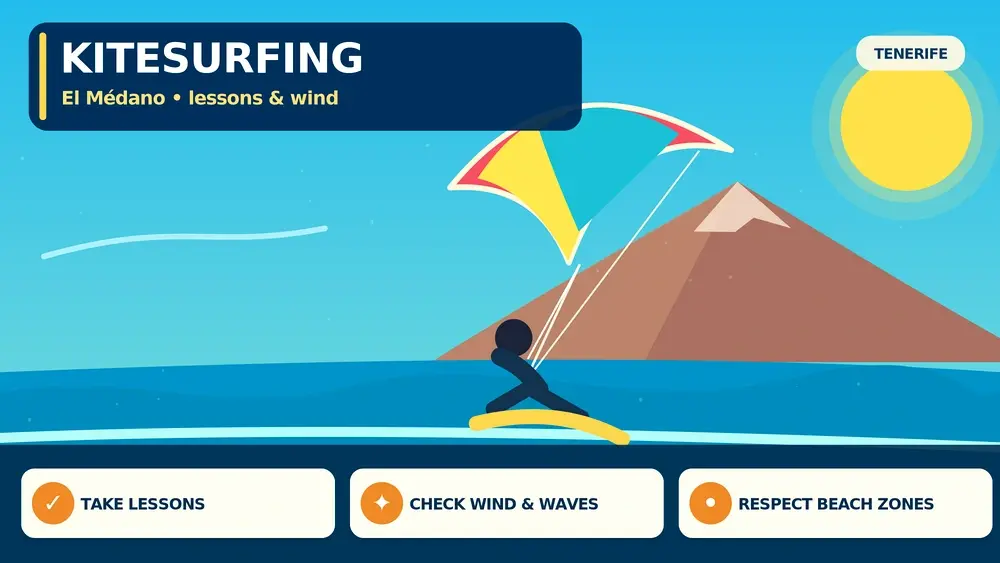
    Kitesurfing in Tenerife is closely associated with El Médano, the windy south-east coast where the Atlantic, open beaches and reliable trade winds have built one of the Canary Islands’ best-known watersports communities. Tenerife’s official tourism site describes El Médano as offering around 300 windy days a year, which explains why boards and kites are part of the landscape in almost every season.

    That does not mean every day is suitable for every rider. Wind direction, strength, shore break, tide, beach use and local zones matter. For a beginner, the smartest decision is not to rent equipment and copy experienced riders; it is to book a recognised lesson, understand the local launch area and progress under supervision.

    Kitesurfing Tenerife at a glance

    Main hubEl Médano
    Best for beginnersLessons with a qualified local school in conditions suitable for learning
    Best seasonPossible year-round; wind consistency and strength vary
    Need your own gear?No; schools and rental centres serve the El Médano area
    Main safety issueDo not treat strong trade winds and busy launch zones as beginner-friendly without instruction

    The official Tenerife tourism overview for the sport is the Tenerife kitesurf page. I use it as a starting point, then confirm the day’s conditions and local rules with the school or operator actually putting me on the water.

    Why El Médano is the centre of Tenerife kitesurfing

    El Médano sits on an exposed stretch of the south-east coast near Montaña Roja. The trade winds accelerate across the area, creating the conditions that have made the town internationally known for windsurfing and kitesurfing. This is not a manufactured watersports resort; the wind shapes the atmosphere of the place.

    My El Médano guide explains the town, beaches and Montaña Roja area. If kitesurfing is the main purpose of the holiday, staying here is much easier than commuting from Costa Adeje every day.

    Is El Médano good for beginners?

    It can be, with instruction and when the school judges the conditions appropriate. A famous kitesurf spot is not automatically an easy spot. Strong wind can make kite control physically and mentally demanding, and a busy beach requires good awareness of other riders and beach users.

    Montana Roja And El Medano Tenerife

    A proper beginner lesson should start with safety systems, wind window, launch and landing procedure, kite control and body dragging before independent riding. Progress varies enormously. I would never book a single lesson with the expectation that everyone will finish riding a board confidently.

    What a first lesson should feel like

    For me, a good lesson feels controlled rather than spectacular. The instructor explains the conditions, checks equipment, identifies safe zones and gives you one skill at a time. If the wind is inappropriate, postponing or changing the lesson is a sign of professional judgement, not poor service.

    Ask about group size. One instructor managing too many first-timers can mean long waits and less individual feedback. Private or semi-private lessons cost more but may provide more useful water time.

    Do you need to be strong or very fit?

    You do not need bodybuilder strength, but basic fitness, mobility and comfort in the water help. Modern kite systems are not controlled by simply pulling with the arms; technique matters more. However, repeated attempts, walking equipment and dealing with chop can be tiring.

    If you have a medical condition, injury or limited swimming confidence, tell the school before booking. The operator can advise whether the activity and conditions are appropriate.

    Wind seasons in Tenerife

    Kitesurfing is possible throughout the year, but Tenerife’s trade-wind pattern is not identical every month. Summer often brings frequent, stronger north-easterly trade winds, while winter can be more variable with different weather systems. Local thermal effects and acceleration around the island also matter.

    Illustrated guide: Kitesurfing in Tenerife, with practical visitor tips
    Illustrated guide: Kitesurfing in Tenerife.

    I do not plan a one-week holiday around a promise that it will be windy every day. Instead, I allow several possible riding days and keep alternative activities ready. That flexibility is especially important for beginners because a day that thrills advanced riders may be unsuitable for a first lesson.

    Where exactly should you ride?

    Use the zone recommended by a local school or current beach signage. El Médano includes different stretches of coast used by swimmers, windsurfers and kitesurfers, and practical zones can depend on conditions and local management. Do not launch from the nearest empty-looking patch of sand without understanding what is permitted and safe.

    For ordinary beach time, read my El Médano travel guide. Kitesurfing changes how you look at the same shoreline: wind direction, obstacles, downwind space and other users become more important than where the sand looks prettiest.

    Rental for experienced riders

    Experienced independent riders can find equipment rental in the El Médano area, but rental companies may require proof of competence or reserve the right to refuse equipment in unsuitable conditions. That is normal. A kite is not equivalent to renting a beach umbrella.

    Check what the rental includes: kite sizes, board, harness, wetsuit, helmet, impact vest, insurance and rescue arrangements can differ. If you bring your own equipment, ask local riders or a school about the spot before launching.

    El Medano Beach And Montana Roja Tenerife

    What to wear

    Water temperature around Tenerife is mild by European Atlantic standards, but wind creates cooling. The right wetsuit thickness depends on season, session length and personal tolerance. I prefer asking a local centre what they are currently using rather than packing based on a generic sea-temperature chart.

    Sun protection is essential. Wind can make the day feel cooler while UV exposure remains strong. Use a suitable water-resistant sunscreen and consider coverage that protects shoulders and back.

    Kitesurfing safety basics

    The most important rule is to know your own level. Do not ride in conditions beyond your training because other people make them look manageable. Maintain safe distance from swimmers, rocks, structures and other riders. Learn the local right-of-way etiquette and launch/landing process.

    Never rely on an offshore wind to “bring you back”. Understand the actual wind direction and what lies downwind. Check equipment before every session, know how to activate the safety release and do not disable safety systems to make setup more convenient.

    Travelling with your own kite gear

    If you fly with equipment, compare airline sports-baggage rules before buying the ticket. A cheaper fare can become more expensive after board-bag fees. Measure and weigh the packed bag at home, and protect fins and fragile components.

    At accommodation, storage matters. A tiny room in a pedestrian old town may be less practical than a simple apartment near El Médano with space to dry equipment. Search current Tenerife stays on Booking.com.

    Can you combine kitesurfing with surfing?

    Yes, and it is a good way to protect the holiday from unsuitable wind. Tenerife has several surf zones, especially around the south-west and north coast. Conditions and etiquette differ, so a kitesurfer should not assume the same competence transfers automatically to a surf break.

    My surfing in Tenerife guide covers beginner lessons and the main areas. On a mixed watersports trip, I decide each morning based on conditions rather than forcing one discipline.

    Other activities for no-wind days

    El Médano gives you useful backups. Walk toward Montaña Roja, spend a beach day, visit the town’s cafés or use the day for Teide and the south-east. A no-wind day is not a lost day on Tenerife.

    If you want a bookable alternative, compare current experiences here:

    Kitesurf trip without a rental car

    A car is not essential if you stay in El Médano and your school operates locally. The town is compact, and Tenerife South Airport is relatively close. For island sightseeing, buses and selected tours can fill the gaps.

    If you base yourself elsewhere, commuting with a board bag becomes less convenient. My Tenerife without a car guide explains the broader transport strategy.

    My 5-day beginner kitesurf plan

    Day 1: arrive, walk the beach and visit the school. Do not assume the first afternoon should be a lesson after a tiring flight.

    Day 2: first lesson if conditions suit. Learn safety systems and kite control rather than chasing board time.

    Day 3: second lesson or a rest/sightseeing day depending on wind and fatigue.

    Day 4: continue progression. If the instructor considers you ready, spend more time on water starts and controlled riding.

    Day 5: final coached session or switch to another Tenerife activity. I would rather finish with good technique than force an unsafe last session because it was prepaid.

    Common mistakes

    • Booking one lesson and expecting independent riding immediately.
    • Assuming El Médano’s famous wind is suitable for every beginner every day.
    • Renting equipment without understanding local zones.
    • Choosing accommodation far away to save a small amount, then paying for daily transport.
    • Underestimating sun exposure because the wind feels cool.
    • Ignoring airline sports-baggage fees when travelling with gear.

    Frequently asked questions

    Where is the best place to kitesurf in Tenerife?

    El Médano is the island’s main kitesurf hub and the first place I would research. Exact launch areas and suitability depend on current conditions and local rules.

    Can a complete beginner learn in Tenerife?

    Yes, with a qualified school and suitable conditions. Do not attempt self-teaching with rented equipment.

    Is kitesurfing possible all year?

    Tenerife supports year-round watersports, but wind strength and consistency vary. Summer trade winds are often a major draw, while winter conditions can be more variable.

    Should I stay in El Médano?

    If kitesurfing is the main purpose of the trip, yes. Staying locally reduces transport, makes last-minute condition changes easier and lets you use the town’s watersports infrastructure.

    Final thoughts

    Tenerife is a strong kitesurf destination because El Médano combines reliable wind, an established riding community and a town where the sport is part of everyday life. The same conditions that make it exciting also demand respect.

    For a beginner, invest in instruction and flexibility. For an experienced rider, learn the local setup before launching. In both cases, the best Tenerife kitesurf holiday is one where the wind decides the session and you still enjoy the island when it does not cooperate.

  • Gran Canaria Day Trip from Tenerife: Ferry, Agaete, Las Palmas and a Realistic Plan

    Gran Canaria Day Trip from Tenerife: Ferry, Agaete, Las Palmas and a Realistic Plan

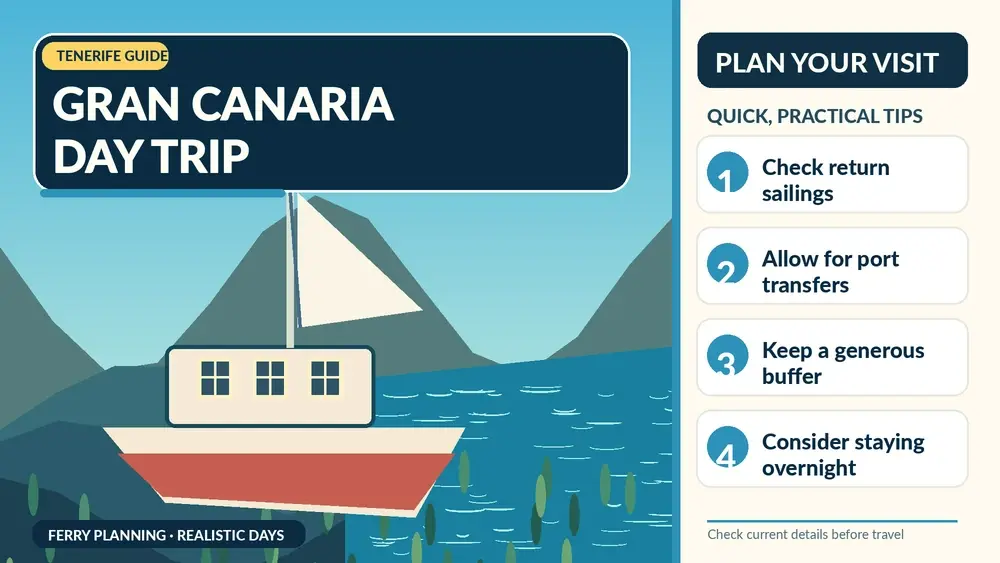
    A Gran Canaria day trip from Tenerife is possible, but it is one of those plans where the transport is part of the day, not a small detail. The key route for most leisure travellers is the fast ferry between Santa Cruz de Tenerife and Agaete in north-west Gran Canaria. On the current Fred. Olsen Express route, the crossing is advertised at about 80 minutes, with several sailings on operating days and a free connection between Agaete and Las Palmas linked to ferry travel.

    I would only make this a day trip if the ferry schedule gives me a genuinely useful block of time on Gran Canaria. Otherwise I would stay overnight. Both islands deserve a full holiday, so the purpose of a one-day visit should be specific: see Las Palmas, explore Agaete and the north-west, or get a quick first impression before returning for longer.

    Gran Canaria from Tenerife at a glance

    Main ferry routeSanta Cruz de Tenerife to Agaete
    Published fast-ferry timeAbout 80 minutes on the current Fred. Olsen Express service
    Best simple dayAgaete plus Las Palmas, without trying to cross the whole island
    Car needed?No for Las Palmas; useful for a focused north-west road trip
    Better as overnight?Yes if you want mountains, south-coast resorts or a slower itinerary

    Check schedules and conditions directly with Fred. Olsen Express before building the day. Ferry timetables are operational information and can change with season, day and conditions.

    First decision: day trip or overnight?

    A day trip works best for travellers already staying in or near Santa Cruz, La Laguna or the north-east of Tenerife. If you are based in Costa Adeje or Los Cristianos, you must add the trip across Tenerife before and after the ferry. That can turn a pleasant island hop into a very long transport day.

    I also consider the last return sailing non-negotiable. Missing a ferry between islands is more serious than missing a local bus. If the schedule leaves only a narrow buffer, I would postpone the idea or spend one night on Gran Canaria.

    How the Santa Cruz–Agaete route changes your itinerary

    The ferry arrives in Agaete rather than Las Palmas. That is actually useful if you want to see the north-west of Gran Canaria, but it means Las Palmas requires an onward connection. The operator currently promotes a free Ferry Bus between Agaete and Las Palmas for its passengers; verify the timetable and boarding details when you book because the connection should be treated as part of the transport plan, not assumed.

    Illustrated guide: Gran Canaria Day Trip from Tenerife, with practical visitor tips
    Illustrated guide: Gran Canaria Day Trip from Tenerife.

    If your only objective is Las Palmas, organise the outbound bus connection before leaving Tenerife. If you prefer Agaete, you can avoid the extra transfer and use the day for the port area, town and surrounding coast.

    Option 1: Las Palmas for a first day trip

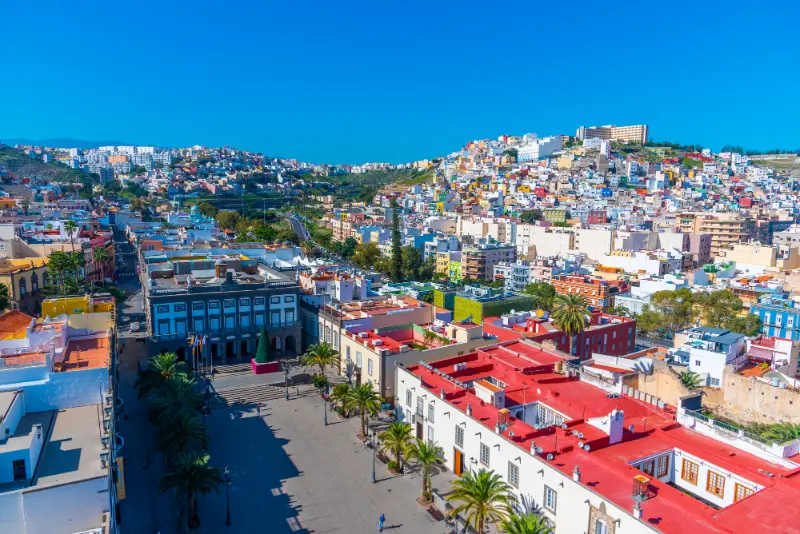
    Las Palmas de Gran Canaria is my most logical recommendation for a first one-day visit. It gives you a real city experience rather than a frantic island circuit. The historic Vegueta and Triana districts, local museums, cafés and the long urban beach at Las Canteras are enough for a full day.

    I would choose either a culture-heavy route around Vegueta and Triana or a city-plus-beach day. Trying to add the southern dunes of Maspalomas introduces another major transfer and removes the relaxed advantage of staying in one urban area.

    A realistic Las Palmas sequence

    After the ferry and onward connection, start in Vegueta while you still have energy. Walk the historic streets, see the cathedral area and choose one museum rather than several. Continue into Triana for lunch or coffee, then move to Las Canteras for a promenade and sea view. Begin the return journey with a conservative margin for the bus to Agaete and ferry check-in.

    Las Palmas De Gran Canaria Waterfront

    This plan is intentionally simple. The aim is to experience the city, not to prove how much of Gran Canaria can fit between two ferry departures.

    Option 2: Agaete and the north-west

    Agaete is a better choice if you want a quieter day with volcanic coast and small-town atmosphere. The port area of Puerto de las Nieves, the whitewashed town and the surrounding valley create a completely different mood from Tenerife’s south-coast resorts.

    With a rental car or prearranged transport, you can explore selected north-west viewpoints or rural areas, but I would still avoid an ambitious mountain loop. Gran Canaria’s interior roads can be winding and slow. For a day trip, the closer north-west landscape is a feature, not merely a route to somewhere else.

    Can I take a rental car on the ferry?

    Vehicle carriage may be available on inter-island ferries, but the ferry ticket is only one part of the decision. You must also check whether your Tenerife rental contract permits the vehicle to leave the island and whether insurance remains valid. Do not assume that a physically bookable vehicle space means your hire company authorises inter-island travel.

    For one day, I usually think travelling as a foot passenger is simpler unless the Gran Canaria itinerary genuinely needs a car. You avoid vehicle check-in, rental-contract questions and the pressure of returning a car to the ferry terminal on time.

    Getting to Santa Cruz from your Tenerife base

    If you are staying without a car, start with my Tenerife bus guide and Tenerife without a car guide. Travellers in the north-east have the easiest start. From the south, compare early public transport with a taxi or a night in Santa Cruz before the ferry.

    If you have a car, investigate parking near the departure port before the morning of travel. I do not build an early ferry plan around finding an unknown parking space at the last minute.

    What to book in advance

    I book the ferry first, because it determines whether the day is viable. Once that is confirmed, I reserve any timed attraction in Gran Canaria and leave the rest flexible. If I need accommodation before or after the trip, I compare current Tenerife options through Booking.com.

    Maspalomas Gran Canaria Spain

    For Tenerife planning more generally, my Tenerife ferry guide explains the main island-hopping routes, while the Santa Cruz guide is useful if you decide to add a night near the port.

    Can I visit Maspalomas on a day trip?

    Technically it may be possible with the right ferry and transport combination, but I would not call it the best first day-trip plan. You arrive in Agaete in the north-west, while Maspalomas is in the south. That means another substantial transfer each way before you have really started exploring.

    If the dunes or south-coast resorts are the main reason for going, I would spend at least one night. This removes the ferry clock and gives you a chance to see more than transport infrastructure.

    What about a guided trip?

    When a combined inter-island excursion is available for your dates, it can simplify tickets and transport, but read the itinerary carefully. Some tours prioritise one or two headline stops; others spend much of the day moving between them. I compare the actual time on Gran Canaria with the total advertised duration.

    Sea conditions and motion sickness

    Fast ferries are convenient, but the Atlantic can move. If you know you are prone to motion sickness, consider your usual preventative strategy before boarding, choose food and alcohol conservatively, and follow crew guidance. Conditions on the return can differ from the morning crossing.

    I also carry a light layer. Ferry interiors can feel cool even when both islands are warm, and outdoor decks can be windy.

    Documents, check-in and luggage

    Carry the identification required by the ferry operator and arrive within the stated check-in window. Do not use my example itinerary as a substitute for the booking confirmation; the operator’s instructions control check-in time, luggage conditions and any vehicle requirements.

    For a day trip I travel light. A small day pack with water, sun protection, power bank, light layer and essential medication is enough. Large luggage makes transfers more cumbersome and provides little benefit when you are returning the same evening.

    My sample day-trip strategy

    I choose the earliest sensible outbound ferry, not automatically the first sailing if it requires an unrealistic start from my Tenerife hotel. Once in Agaete, I either stay north-west or take the linked transport to Las Palmas. I set an alarm for the time I must begin returning, then another for the check-in deadline.

    For Las Palmas, I prioritise three experiences: historic streets, a good Canarian lunch and Las Canteras. For Agaete, I prioritise the waterfront, town and one nearby landscape stop. I do not add a third region of Gran Canaria merely because the map suggests it is possible.

    Amadores Gran Canaria Spain

    Who will enjoy this trip most?

    This day trip suits repeat Tenerife visitors, travellers who enjoy ferries, people staying near Santa Cruz and anyone curious about the contrast between the two largest Canary Islands. It is less suitable for visitors with only a few days in Tenerife who have not yet seen Teide, Anaga or the island’s own north and west.

    If this is your first Tenerife holiday, compare the island hop with a La Gomera day trip. La Gomera leaves from Los Cristianos and is often a more natural add-on for travellers based in the south, while Gran Canaria fits more naturally with a Santa Cruz base.

    Common mistakes

    • Counting only ferry time and ignoring travel to and from the ports.
    • Planning Maspalomas, Las Palmas and Agaete in one short visit.
    • Assuming a rental car can be taken off Tenerife without permission.
    • Leaving no buffer for the return bus connection to Agaete.
    • Booking a non-refundable attraction before confirming ferry times.
    • Returning on the last possible connection with no backup.

    Frequently asked questions

    How long is the Tenerife to Gran Canaria ferry?

    The current Fred. Olsen Express Santa Cruz–Agaete fast-ferry route is advertised at about 80 minutes. Check your specific date because vessels and schedules can change.

    Is Gran Canaria worth visiting for one day from Tenerife?

    Yes if you have a focused objective and a timetable that gives you useful time ashore. I would choose Las Palmas or Agaete/north-west, not attempt the entire island.

    Should I fly instead?

    Flights can make sense for some itineraries, especially if airport locations suit your accommodation, but total door-to-door time includes airport transfers, security and check-in. For a city-based Santa Cruz day, the ferry is a very natural option.

    Final thoughts

    Gran Canaria can be a rewarding side trip from Tenerife, but the best version is deliberately modest. The ferry makes the islands feel close; the reality on arrival is that Gran Canaria is another large, varied island with its own mountains, cities and coasts. Pick one area and let the contrast be the experience.

    If your wishlist already includes several parts of Gran Canaria, turn the day trip into an overnight stay. You will spend less time watching the clock and more time understanding why the islands feel related but never interchangeable.

  • Tenerife Cruise Port Guide: One Day in Santa Cruz and Shore Excursion Ideas

    Tenerife Cruise Port Guide: One Day in Santa Cruz and Shore Excursion Ideas

    A Tenerife cruise port day can be much easier than it first appears. Most cruise passengers arrive in Santa Cruz de Tenerife, the island capital, and the best use of a short call depends less on trying to “see Tenerife” and more on choosing one clear plan: explore Santa Cruz on foot, combine the city with Playa de Las Teresitas, take an organised island excursion, or use the day for one major highlight such as Teide or Anaga.

    I would not build a shore day around a long list of distant sights. Tenerife is larger and more mountainous than many first-time visitors expect, traffic can slow on busy days, and the island deserves more than a rushed loop. The practical goal is to enjoy one part of Tenerife well and return to the ship with a comfortable time margin.

    Tenerife cruise port at a glance

    Usual cruise citySanta Cruz de Tenerife
    Best easy planHistoric centre, market, waterfront and a museum or park
    Best beach add-onPlaya de Las Teresitas, north-east of the city
    Best big excursionTeide, Anaga or a carefully timed north-island tour
    Main ruleWork backwards from all-aboard time, not from the ship’s arrival time

    The Port Authority publishes current cruise calls and port information on its official cruise page. Berth arrangements and shuttle procedures can vary, so I always treat the exact instructions from the cruise line as the final reference for that day.

    Option 1: spend the whole day in Santa Cruz

    This is the option I recommend to travellers who dislike clock-watching. Santa Cruz is not a resort transplanted next to a harbour; it is a working Canarian capital with broad plazas, local cafés, shopping streets, museums, parks and an excellent food market. A city day also gives you a large buffer if the ship changes its schedule.

    Start around Plaza de España and the waterfront, then move into the centre. My detailed Santa Cruz de Tenerife guide covers the main sights and how I connect them on foot. I like to include the underground remains at the Castillo de San Cristóbal interpretation centre because it adds historical context without consuming half the day.

    Illustrated guide: A Cruise Day in Santa Cruz de Tenerife, with practical visitor tips
    Illustrated guide: A Cruise Day in Santa Cruz de Tenerife.

    From there, continue toward Mercado Nuestra Señora de África. It is one of the places where a short cruise visit can still feel local: fruit, cheeses, fish counters and small food businesses are more memorable to me than another generic souvenir stop. If you are hungry, this is a sensible area to pause rather than trying to squeeze lunch into the final hour.

    A relaxed Santa Cruz route

    A comfortable sequence is Plaza de España, Plaza de la Candelaria, the historic streets around Iglesia de la Concepción, Mercado de Nuestra Señora de África, then either TEA Tenerife Espacio de las Artes or the Palmetum. Parque García Sanabria is another good choice if you prefer shade, greenery and a slower pace.

    Do not assume every attraction will fit. Opening hours can change, some museums close on particular days, and a cruise arrival may not match the timetable perfectly. I prefer to choose one indoor attraction and keep the rest flexible.

    Option 2: Santa Cruz plus Playa de Las Teresitas

    If the weather is good and you want a beach rather than a full sightseeing day, Playa de Las Teresitas is the natural add-on. It lies beyond San Andrés and feels very different from the black volcanic beaches found elsewhere on Tenerife. The broad sandy bay, palm trees and mountain backdrop make it an easy visual contrast to the city.

    Aerial View Of Santa Cruz De Tenerife

    I would still spend at least a little time in central Santa Cruz first or after the beach. A cruise call is often a visitor’s only contact with the island, and going directly from the ship to a sun lounger misses the character of the capital.

    For transport, compare the current bus timetable with taxi travel time and the return margin. A taxi is often simpler for a small group with limited hours, while public transport can be economical when the timetable fits. Do not use the last plausible bus back to the port; leave yourself another option.

    Option 3: an organised shore excursion

    An organised excursion makes sense when you want to travel far from Santa Cruz. The advantage is not that guided travel is always “better”; it is that transport, sequence and timing are handled for you. Read the exact pickup point and return conditions before booking, especially when a tour is sold independently rather than through the cruise line.

    Teide is the obvious first-time choice. It gives you the volcanic landscapes most people associate with Tenerife, but the drive climbs from sea level to high altitude and conditions can differ sharply from the coast. My Mount Teide guide explains permits, cable-car planning and altitude issues. On a cruise day I would avoid a plan that depends on a narrowly timed summit permit unless the logistics are exceptionally secure.

    Anaga is another excellent option, particularly for travellers who prefer forests, viewpoints and mountain villages. Roads are winding and journey times are not obvious from a map, so it is better to see fewer stops than to race through the massif. The Anaga Rural Park guide can help you decide whether this style of day suits you.

    What I would not combine on a short cruise call

    I would be cautious about trying to combine Teide, Masca, Los Gigantes, Puerto de la Cruz and Santa Cruz in one ordinary port day. These places look close when the island is reduced to a map, but mountain roads, parking, traffic and photo stops turn a theoretical route into a long day in a vehicle.

    The same applies to independent hikes. A trail can have access rules, weather exposure, difficult parking or a return route that takes longer than expected. For a cruise passenger, I prefer a viewpoint or short established walk over a remote point-to-point hike.

    How much return buffer should I leave?

    I work backwards from the cruise line’s all-aboard time and build in a generous margin. There is no universal number because the right buffer depends on distance, transport and road conditions. Walking in Santa Cruz is low-risk; returning independently from the far side of Teide is not. The farther I travel, the more conservative I become.

    Do not confuse “ship departure” with “latest safe time to reach the terminal”. Security, shuttle buses, gangway closure and cruise-line procedures all happen before the ship actually sails. Follow the time printed in the ship’s daily programme and confirm whether ship time differs from local time.

    Independent tour or cruise-line excursion?

    Cruise-line excursions are usually the simplest option for travellers who place maximum value on coordinated port timing. Independent tours can offer smaller groups, different itineraries or better value, but you need to check the operator’s cruise-return policy yourself. A private driver can be excellent for families or groups because the route can be adjusted during the day.

    When I compare excursions, I look at the real itinerary rather than the title. “Teide and north Tenerife” might mean many hours on a coach and only short viewpoints, while a more focused tour may offer more time outside. Check whether cable-car tickets, lunch, entrance fees and pickup from the port are actually included.

    A practical one-day schedule

    For a medium-length call, my low-stress city plan would be: leave the port area after disembarkation, walk the central squares while the city is still relatively quiet, visit the market late morning, have an early lunch, choose one afternoon stop such as the Palmetum or Las Teresitas, then return with time to spare. If the call is short, I cut the beach rather than compressing everything.

    For a full-day island excursion, I would leave Santa Cruz promptly, make the distant part of the route first, then move progressively back toward the capital. That way the final two stops are expendable if the day runs late. It is the opposite of an itinerary that saves the longest drive for the end.

    Auditorio De Tenerife Santa Cruz Coastline

    Food and drink on a cruise day

    Santa Cruz is one of the easiest places on Tenerife to eat without organising a special tourist lunch. I look for a short menu, Canarian dishes and a place that can serve reasonably quickly. Papas arrugadas with mojo, grilled fish, local cheeses, ropa vieja or a bocadillo can all work well depending on appetite and time.

    If you are on a tight schedule, I would not sit down for a long multi-course meal in the middle of the day. Eat earlier than the busiest lunch period, or use the market for a lighter stop. Carry water even if the day feels mild; sunshine is strong and shore days often involve more walking than passengers expect.

    Accessibility and mobility

    Travellers with reduced mobility should check the berth, shuttle and terminal arrangement for their specific ship rather than relying on an old forum report. In the city, many central areas are comparatively straightforward, but paving, kerbs and gradients can still vary. A taxi or private accessible transfer can simplify a beach or viewpoint visit.

    If you use airport-style assumptions for a cruise terminal, you can miss the details that matter: gangway gradient, port shuttle type, accessible pickup point and the distance from the berth. Ask the cruise line in advance about ship-to-quayside assistance and confirm your onward transport separately.

    Families with children

    With children, I would choose a shorter list and make one stop genuinely fun. Las Teresitas can work well on a calm day; the Palmetum offers open-air space; a city walk can be broken by ice cream and a market visit. Teide can fascinate older children, but altitude, cold wind and long coach time make it a less obvious choice for toddlers.

    Keep snacks, sun protection and a lightweight layer in the day bag. A family shore excursion becomes stressful very quickly if every adult assumes food, shade or toilets will appear at the next stop.

    Should you stay in Tenerife before or after the cruise?

    If your itinerary starts or finishes in Tenerife, adding two or three nights changes the experience completely. You can see Santa Cruz without watching the clock, spend a proper day in Teide National Park and choose a coast that suits your travel style. Search current accommodation across the island on Booking.com.

    Panoramic View Of Santa Cruz De Tenerife

    For a pre-cruise stay, Santa Cruz or La Laguna can be practical when the ship departs from Santa Cruz. For a beach extension, Costa Adeje, Los Cristianos, Puerto de la Cruz, El Médano and quieter northern bases all create very different holidays, so I would choose the area for the stay rather than simply the closest hotel to the port.

    My shore-day checklist

    • Save the ship’s all-aboard time and local emergency contact details offline.
    • Confirm the berth or cruise shuttle instructions after arrival.
    • Download an offline map and screenshot tour pickup details.
    • Carry sun protection, water and a light layer for higher ground.
    • Keep passport or required travel documents exactly as instructed by the cruise line.
    • Use only one major out-of-city objective.
    • Have a backup plan in Santa Cruz if weather changes.
    • Return earlier when travelling independently from distant areas.

    Frequently asked questions

    Can I see Tenerife independently from a cruise ship?

    Yes. Santa Cruz is easy to explore independently, and Las Teresitas is a realistic extension when time allows. For Teide, Anaga or a long island circuit, I would plan transport carefully or use an organised excursion.

    Is Santa Cruz worth seeing?

    Yes, particularly if you enjoy markets, architecture, parks and local city life. It is not Tenerife’s main beach resort, which is exactly why it provides a different view of the island.

    Can I go to Teide and the beach on the same cruise day?

    It can be possible on a long call with efficient transport, but I would not make both essential. Weather, mountain traffic and cable-car logistics can consume time. A focused Teide day is normally more satisfying.

    What if the weather is bad?

    Keep a Santa Cruz fallback. Museums, the market, cafés and the historic centre make it possible to enjoy the call without forcing a mountain excursion in poor conditions.

    Final thoughts

    For me, the best Tenerife cruise port day is not the one with the most kilometres. It is the one with a clear priority, realistic transport and enough margin to enjoy the island without constantly checking the clock. Santa Cruz alone can fill a pleasant day; Las Teresitas adds an easy coastal contrast; Teide or Anaga can provide the dramatic Tenerife landscape when the schedule is long enough.

    If this call is your first taste of the island, treat it as an introduction rather than a checklist. Tenerife rewards slower travel, and a well-planned shore day is often the reason people decide to return for a longer holiday.

  • Tenerife Car Rental Insurance Guide: Excess, Deposits, CDW and Damage Checks

    Tenerife Car Rental Insurance Guide: Excess, Deposits, CDW and Damage Checks

    Tenerife car rental insurance is a practical Tenerife topic that can save time, money or stress when the details are understood before the trip. The headline daily rate is only part of the real car-hire decision. I pay just as much attention to the excess, deposit, card rules, excluded damage and what happens if the car is returned outside office hours.

    I treat insurance as a contract question rather than a sales-counter question. The cheapest-looking booking can become expensive if the excess is high or the payment card does not meet the supplier conditions, while a more expensive rate may be easier to live with if it reduces financial exposure and paperwork.

    At a glance

    Main termsCDW/LDW, excess or deductible, deposit, exclusions and optional excess-reduction cover
    Card issueMany suppliers require a qualifying card in the main driver’s name; check the exact contract
    Collection habitPhotograph and video the entire vehicle, wheels, glass and fuel level before leaving
    Return habitKeep fuel receipts, photos and final paperwork until the deposit is released

    What I would know before the trip

    • Basic collision cover does not necessarily mean zero excess.
    • Tyres, wheels, glass, underside, keys and interior damage may be excluded from standard cover.
    • A third-party excess-reimbursement policy can work differently from the rental company’s own zero-excess product.
    • The deposit and the insurance excess are related but not identical concepts.
    • Do not rely on a comparison-site summary when the supplier terms say something different.

    Official sources I would save: European Consumer Centre Spain car-rental guidance.

    CDW, excess and deposit: the three numbers I separate

    Collision Damage Waiver usually limits liability for certain damage rather than eliminating it. The excess is the amount I may remain responsible for under the contract, while the deposit is the amount or card authorisation the supplier may hold during the rental. I read all three separately because a low deposit does not automatically mean low liability.

    If a quote says “fully insured”, I still open the conditions. Marketing labels are not a substitute for the contract. I want to know the maximum liability, what situations void cover and whether a police report or supplier approval is required after an incident.

    Illustrated guide: Tenerife Car Rental Insurance, with practical visitor tips
    Illustrated guide: Tenerife Car Rental Insurance.

    Rental-company cover versus reimbursement insurance

    When I buy the rental company’s own excess-reduction package, the practical advantage is often simpler handling at the desk and after a covered claim. A separate reimbursement policy may be cheaper, but I may still need to pay the rental company first and claim the money back later.

    Neither model is automatically better. I compare the price, exclusions, claims process, documentation required and how comfortable I would be carrying a large temporary card charge.

    The exclusions I look for first

    I search the conditions for tyres, wheels, windscreen, mirrors, roof, underside, clutch, lost keys, wrong fuel, towing, negligent driving and unpaved-road restrictions. Tenerife has steep roads, tight parking spaces and volcanic landscapes, so these exclusions are not theoretical details.

    I also check whether driving on roads the contract classifies as unsuitable can invalidate cover. A viewpoint road that appears on a map is not automatically permitted by every rental agreement.

    Card, deposit and main-driver rules

    The European Consumer Centre in Spain specifically advises checking whether a credit or debit card is accepted and notes that a credit card in the driver’s name is commonly required at collection. I verify this before paying for the flight, not when standing at the airport desk.

    I also make sure the card has enough available limit for the deposit. A perfectly valid booking can become complicated if the card cannot support the pre-authorisation.

    My collection inspection

    Before moving the car I photograph every side, the roof where possible, bumpers, wheels, tyres, windscreen and interior. I take one slow video walk-around and make sure existing marks are recorded on the condition report.

    I confirm the fuel policy, kilometre allowance, emergency number and return location. If a warning light is already showing, I ask for it to be documented rather than assuming it is normal.

    Returning the car without creating an avoidable dispute

    I allow enough time for a staffed inspection when possible. I take fresh photos in the return area, including the fuel gauge and mileage, and keep the fuel receipt if the contract requires full-to-full.

    If the return is out of hours, I follow the key-drop instructions exactly and photograph where the car is parked. I keep the contract and images until the deposit is released and the final invoice shows no unexpected charge.

    When I would pay more for simpler cover

    I am more willing to pay for lower excess when the trip includes many driving days, several hotel changes or mountain routes where the car will be used constantly. I am less interested in premium cover when the vehicle will sit in a hotel car park for most of the week.

    Driving Through Teide National Park Tenerife

    The right choice is the one that matches both the financial risk I can absorb and the amount of administrative hassle I am willing to handle after a problem.

    How I would fit this into a real seven-night Tenerife trip

    I would not let tenerife car rental insurance dominate the holiday. I solve the key decisions before departure, then use the information as a safety net while the week remains about beaches, towns, food and landscapes. The first day stays intentionally simple so I can test how transport, accommodation and local routines work in practice.

    By the middle of the trip I have enough local context to make better decisions. I keep the final day light and close to the accommodation or airport route, because practical problems feel larger when there is no time buffer left.

    What I recheck 48 hours before travel

    I recheck only information that can genuinely change: official rules, weather alerts, opening or access status, airline messages, transport timetables and the contact details for anything I have booked. I save essential confirmations offline.

    For legal or safety questions I prefer the responsible authority over a travel forum. Recent reviews are useful for atmosphere and practical detail, but they are not my source for current law.

    What I keep on my phone

    I keep a small offline folder with booking references, insurance details, accommodation address, passport or ID reference information, emergency contacts and screenshots of any permit or assistance confirmation I may need to show. I avoid storing more sensitive data than necessary.

    I also pin the accommodation, airport terminal and one useful nearby service on my map. When something goes wrong, reducing the number of decisions is often more valuable than having a huge list of options.

    A simple budget approach

    I separate unavoidable costs from convenience costs. Insurance choices, transport and limited-access reservations go into the first group; taxis, premium tours and upgraded rooms are decisions I can make based on comfort and value.

    Tenerife still offers many excellent low-cost days—promenades, viewpoints, historic streets and beaches—so I would rather spend money on removing a real friction point than on an upgrade I will barely notice.

    Who benefits most from planning this before departure

    The travellers who benefit most from understanding tenerife car rental insurance are usually the ones with less flexibility once something changes: families, people with accessibility needs, short-break visitors and anyone using multiple bookings that depend on each other.

    Independent travellers benefit too, because advance clarity lets them stay spontaneous in the parts of the trip that actually can be spontaneous.

    My night-before checklist

    The night before an important travel day I check the first step only: where I need to be, what document or booking I need, how I am getting there and what would make me change the plan. Water, chargers and essential documents are prepared before I sleep.

    If the day starts badly, I drop the least important stop rather than trying to recover every lost minute. Tenerife is much more enjoyable when one delay does not force the rest of the itinerary into a race.

    The common mistake I try to avoid

    The most common mistake is solving the practical detail only after it has become urgent. I would rather spend ten calm minutes checking a rule, booking condition or support service at home than lose an hour of holiday trying to solve the same question under pressure.

    I also avoid copying an old answer simply because it sounds confident. Tenerife changes: access systems, airport procedures, traffic enforcement and attraction rules can be updated. The date and authority behind the information matter.

    Road Through Teide National Park Tenerife

    Useful related guides already on this site

    Tenerife by Car, Driving Licence & Car Hire Requirements, Parking in Tenerife, Car Breakdown or Accident Guide. These pages connect the topic with the wider Tenerife trip without repeating the same planning advice in every article.

    Where accommodation changes the experience

    For this kind of trip I choose the area before the hotel. Walkability, reception hours, parking, transport links and how easy it is to solve a problem can matter more than an extra resort facility. A convenient base often removes several small travel stresses at once.

    For current availability I use Booking.com accommodation in Tenerife, then I verify the exact location, cancellation terms and facilities before paying.

    Bookable activities and tours

    I use an organised activity when it removes a genuine planning problem: transport, specialist access, equipment or local interpretation. I still check the meeting point, cancellation conditions, accessibility and current operating rules before booking.

    Frequently asked questions

    Does CDW mean I cannot be charged for damage?

    No. CDW commonly limits liability but may leave an excess and may exclude certain parts or circumstances.

    Do I need a credit card to hire a car in Tenerife?

    It depends on the supplier, but many companies require a qualifying card in the main driver’s name. Check the exact terms before booking.

    Should I photograph the rental car?

    Yes. Clear time-stamped photos and a video at collection and return can help document the vehicle condition.

    Is third-party excess insurance the same as zero-excess cover from the rental company?

    No. A reimbursement policy may require you to pay the rental company first and make a separate claim.

    My final approach

    I choose Tenerife car hire by total risk, not by the first price on the search screen. Excess, deposit, exclusions and card conditions are part of the price even when they are not included in the headline figure.

    A ten-minute contract check and a thorough collection video are two of the simplest ways I know to make a Tenerife road trip calmer.