Category: Food & Culture

Tenerife food, Canarian dishes, wine, markets and cultural experiences for curious travellers.

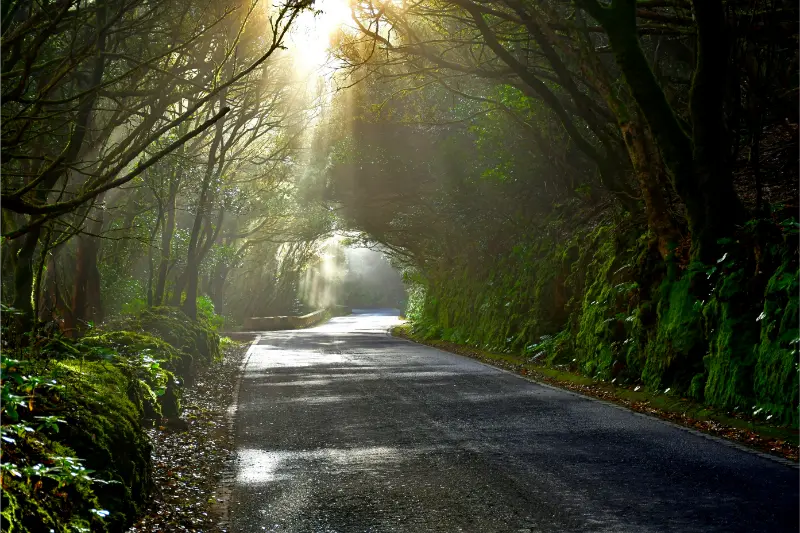
  • Camino de Los Laureles Tegueste Guide: Ancient Camino Real and Laurisilva Remnants

    Camino de Los Laureles Tegueste Guide: Ancient Camino Real and Laurisilva Remnants

    Camino de Los Laureles Tegueste is one of the Tenerife stops I would use to go beyond the island’s headline attractions. Camino de Los Laureles is a short historic route with a bigger story about how people moved through Tenerife before modern roads. Turismo de Tenerife identifies it as part of an old camino real used to reach the settlement even before the conquest, with a connection toward Camino de las Peñuelas. Remnants of laurisilva add a natural layer to the route. I like this combination because it shows that a path is not just recreation: it can preserve transport history, vegetation and the relationship between Tegueste and neighbouring La Laguna.

    In this guide I separate documented facts from planning advice. Historical or descriptive details come from official tourism information, while suggestions about timing, parking, combinations and pace are my practical way of building a realistic Tenerife day. I deliberately avoid inventing fixed opening hours when the responsible source does not publish a reliable current schedule.

    At a glance

    AreaTegueste
    Best fortravellers interested in local history, landscape and a more detailed Tenerife itinerary
    Time to allow20–60 minutes for the core stop; 2–4 hours with nearby places
    My planning rulecombine it with the same area rather than crossing the island for one small attraction

    Why this place deserves a dedicated guide

    Camino de Los Laureles is a short historic route with a bigger story about how people moved through Tenerife before modern roads. Turismo de Tenerife identifies it as part of an old camino real used to reach the settlement even before the conquest, with a connection toward Camino de las Peñuelas. Remnants of laurisilva add a natural layer to the route. I like this combination because it shows that a path is not just recreation: it can preserve transport history, vegetation and the relationship between Tegueste and neighbouring La Laguna.

    What the official record confirms

    The route forms part of an old camino real used to access Tegueste.

    Official tourism information states that the route was in use from before the conquest of Tenerife.

    Camino de Los Laureles connects with Camino de las Peñuelas.

    Remnants of laurisilva are one of the path’s characteristic natural features.

    The Tegueste historic-centre information presents the path as part of the old network connecting rural settlements before modern island roads.

    What I would pay attention to

    I would pay attention to the path surface, walls, vegetation and changes in gradient rather than walking it only for exercise. Historic routes often reveal where movement was easiest and how settlements connected before the road network reorganised travel. The surviving laurel-forest elements are equally important: they hint at vegetation that was once much more widespread. I avoid leaving the path to photograph plants or private properties, and after rain I expect stone and leaf litter to be more slippery than they look.

    Anaga Laurel Forest Trail Tenerife

    I also spend a minute looking at what sits around the site. Tenerife’s heritage is rarely isolated from topography. Ravines determined movement, water shaped agriculture, altitude affected crops and building materials came directly from volcanic terrain. Reading that setting helps me understand why a place exists where it does instead of reducing the visit to dates and names.

    How I would combine it with nearby places

    I combine Camino de Los Laureles with Tegueste’s historic core. Casa de los Tacoronte sits beside the route, while the church, Casa del Prebendado and Finca de los Zamorano are all useful for understanding the town that these paths served. For a longer walking day, Tegueste also links into the wider trail network around Anaga, but I treat those mountain routes as separate hikes with their own weather and transport planning.

    How I would plan the visit

    I treat this outdoor site as part of a geographically compact day. Tenerife looks small on a map, but steep roads, motorway traffic and very different weather by altitude can turn a simple list of stops into too much driving. My rule is to choose one municipality or one landscape corridor and let nearby places build the story.

    I also distinguish between what is always visible from public space and what depends on opening hours, authorised access or weather. Small museums and chapels can change schedules; ravines and old paths can be affected by rain; viewpoints can disappear into low cloud; forest facilities can be restricted during high fire risk. I verify operational details shortly before travelling instead of publishing a timetable that may age badly.

    Best time of day

    Morning is usually my easiest choice in north Tenerife. Parking tends to be calmer, I have time to change the plan if access differs from expectations, and cloud often evolves through the day. Late afternoon can produce beautiful light on the coast, but it can also bring more shade on steep north-facing terrain. For a forest or ravine stop I care more about recent rain, wind and daylight than about chasing a perfect photograph.

    If the place is active religious heritage, I avoid visiting in the middle of worship simply because a door is open. If it is a protected natural or archaeological site, I do not treat open ground as permission to wander anywhere. The best time is the one that combines respectful access, safe conditions and enough daylight for the rest of the route.

    Getting there and parking

    I use the official address or map position as an orientation point, then follow local signs for the final approach. Historic centres and rural lanes are exactly where navigation apps can suggest an impractical shortcut. I never block a resident entrance, farm track, church doorway or emergency route for the sake of saving a five-minute walk.

    Public transport works for many north-Tenerife towns, but upland recreation areas, ravines and viewpoints can be less convenient without a car. I check the current TITSA journey planner close to the date of travel. If I drive, I save the parking location before walking away; steep streets and similar-looking lanes can make the return less obvious than expected.

    Visiting with children

    For families, I keep the explanation concrete. I ask children to notice one thing: a carved doorway, an old wine press, the shape of a ravine, a craft object, a forest species or the difference between coast and pine zone. A short heritage stop followed by a picnic, viewpoint or easy walk usually works better than stacking several interiors in succession.

    I also keep safety specific to the setting. Old streets can be steep and uneven; ravine edges can lack barriers; forest ground can hide roots and loose needles; coastal viewpoints can be windy. I keep children close where terrain drops away and never encourage climbing on historic structures.

    Accessibility and comfort

    I never assume that “close to the road” means step-free. Historic buildings can have thresholds, old paving or narrow doors, while outdoor sites may involve slopes and uneven ground. If step-free access is essential, I verify it directly with the responsible authority before travelling.

    I carry water, sun protection and a light layer year-round. The north coast can feel humid and mild while upland Tegueste or La Guancha is cooler and windier. That difference is easy to underestimate when the driving distance is short.

    Photography and respectful behaviour

    I photograph from public space unless access is clearly permitted. I do not cross gates, climb walls, enter archaeological areas, move museum objects or step onto private agricultural land for a cleaner composition. At religious sites I keep my voice low and put the camera away during worship.
    Anaga Tenerife

    At protected landscapes I use photography as a reason to observe, not to leave the route. The details that usually make the strongest images—stone, vegetation, changing cloud and layers of terrain—can be seen without damaging the place.

    Food and a slower local day

    These north-Tenerife municipalities are well suited to a slower lunch rather than a rushed cross-island itinerary. I prefer to eat in the same area after the visit, especially in Acentejo where wine culture and local food are part of the destination itself. I keep a second option in mind because smaller restaurants and guachinches can have changing weekly opening days.

    For picnic areas I take rubbish away even when bins are present, avoid feeding wildlife and check fire regulations before using any cooking facility. A recreation area is shared infrastructure, not a private campsite.

    Where to stay nearby

    If the north is a priority, sleeping nearby reduces motorway time and makes morning visits easier. I compare the exact property location as carefully as the town name because Tenerife’s slopes can turn a short map distance into a steep walk. Compare accommodation around Tegueste on Booking.com.

    Tours and activities

    For travellers who want to add a guided experience elsewhere on the island, I compare current tours rather than hard-coding one product that may disappear or change. The widget below can surface available Tenerife activities while this article remains focused on the specific place.

    Common mistakes I would avoid

    • Driving across Tenerife for one small stop instead of building a local cluster.
    • Assuming an interior is open because the exterior is publicly accessible.
    • Entering a ravine, water gallery, archaeological zone or private field without clear authorisation.
    • Using old blog opening hours instead of checking an official source.
    • Ignoring low cloud, recent rain, wind or fire-risk restrictions.
    • Treating a working neighbourhood or devotional place like a theme-park attraction.

    A realistic half-day itinerary

    1. Arrive early enough to find legal parking without circling narrow streets.
    2. Spend the first part of the visit on the main site, reading the setting before taking photos.
    3. Walk or drive only a short distance to one or two related places in the same cluster.
    4. Take a coffee, lunch or picnic break locally.
    5. Use the final hour for a viewpoint, coast stop or easy walk only if weather and access are good.

    This loose structure is more useful to me than a minute-by-minute plan. It gives room for an interior that is unexpectedly closed, a local event, a cloud layer that changes a viewpoint or a path that is wetter than expected. Tenerife travel becomes easier when I plan a strong cluster and a flexible order.

    Why the north of Tenerife rewards slower travel

    La Victoria, Tegueste and La Guancha are not places I would rush through simply because they sit between more famous names on the map. Their value comes from accumulated small details: a path older than the modern road network, a craft technique, a ravine associated with Guanche history, a chapel beside a pine forest or a viewpoint over a coast shaped by Atlantic weather.

    Anaga Forest Tenerife

    That scale also makes the visit feel more personal. Instead of spending the day moving from ticketed attraction to ticketed attraction, I can walk, look, stop for food and understand how people used the same terrain for agriculture, worship, transport and community life. For repeat visitors to Tenerife, these smaller layers are often what make a second or third trip feel genuinely different.

    Frequently asked questions

    Is Camino de Los Laureles a modern walking path?

    No. It follows part of an old camino real that official tourism information says was used to access Tegueste even before the conquest.

    What vegetation is notable?

    The route preserves remnants of laurisilva, adding natural interest to its historic transport role.

    Does it connect to another old route?

    Yes. Turismo de Tenerife notes a connection with Camino de las Peñuelas.

    What footwear would I use?

    I prefer grippy walking shoes, especially after rain, because old stone or earthy surfaces can become slippery even on a short route.

    Official information

    For the documented facts and the latest operational information, I check Turismo de Tenerife – Camino de Los Laureles shortly before travelling. Local events, restoration, weather, fire restrictions and access conditions can change after an article is published, so the official source always takes priority for same-day conditions.

    Final thoughts

    I would not describe every small Tenerife stop as a universal “must-see”. That language is not helpful. The value of Camino de Los Laureles Tegueste is that it adds a precise layer to the island and makes a local cluster richer. When several of these places are combined, the municipality stops being a name on the motorway and becomes a destination with its own history, landscape and rhythm.

    My preferred approach is simple: know the key story before arriving, keep the visit respectful, stay flexible about access and spend enough time in the surrounding area for the place to make sense. That is how a small stop becomes useful rather than just another pin on a map.
  • Mirador de Montaña Grande Guide: TF-24 Views Over Santa Cruz, Anaga and El Rosario

    Mirador de Montaña Grande Guide: TF-24 Views Over Santa Cruz, Anaga and El Rosario

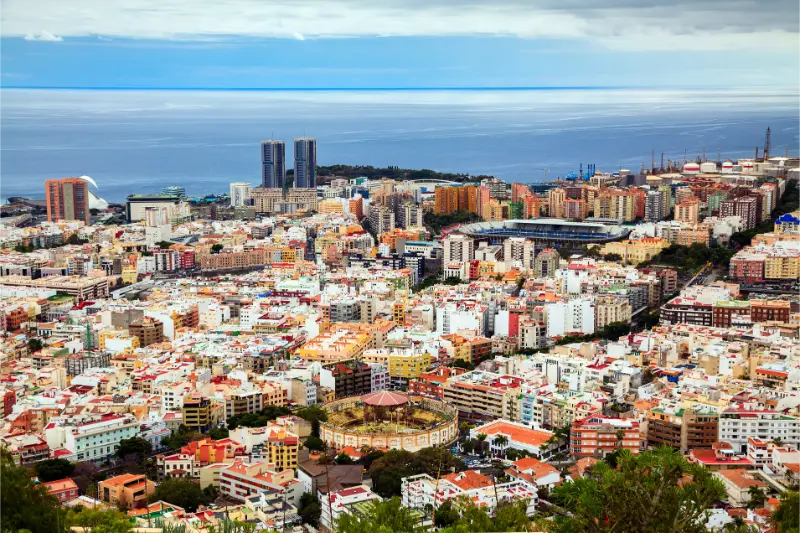
    Mirador de Montaña Grande El Rosario is one of the Tenerife stops I would use to go beyond the island’s headline attractions. Mirador de Montaña Grande is one of the most useful TF-24 viewpoints because the panorama explains Tenerife’s geography in several directions at once. The clearing opens in a pine forest as the road climbs toward the Teide highlands. From here official tourism information points out Santa Cruz, the agricultural zone of El Rosario and the angular relief of Anaga; looking south, the view can extend toward Malpaís de Güímar and even El Médano. I would use it as an orientation stop rather than simply a photo stop.

    In this guide I separate documented facts from planning advice. Historical or descriptive details come from official tourism or municipal information, while suggestions about timing, parking, combinations and pace are my practical way of building a realistic Tenerife day. I deliberately avoid inventing fixed opening hours when the responsible source does not publish a reliable current schedule.

    At a glance

    AreaEl Rosario
    Best fortravellers interested in local history, landscape and a more detailed Tenerife itinerary
    Time to allow20–60 minutes for the core stop; 2–4 hours with nearby places
    My planning rulecombine it with the same area rather than crossing the island for one small attraction

    Why this place deserves a dedicated guide

    Mirador de Montaña Grande is one of the most useful TF-24 viewpoints because the panorama explains Tenerife’s geography in several directions at once. The clearing opens in a pine forest as the road climbs toward the Teide highlands. From here official tourism information points out Santa Cruz, the agricultural zone of El Rosario and the angular relief of Anaga; looking south, the view can extend toward Malpaís de Güímar and even El Médano. I would use it as an orientation stop rather than simply a photo stop.

    What the official record confirms

    The viewpoint is on the TF-24 at approximately kilometre point 13 in El Rosario.

    It opens from a pine forest with mature trees.

    Views include Santa Cruz de Tenerife, agricultural areas of El Rosario and the Anaga mountains.

    Looking south, Turismo de Tenerife notes panoramas toward Malpaís de Güímar and El Médano.

    The official viewpoint information lists parking and disabled access.

    An interpretive panel or table is provided, while the official listing indicates no bus stop at the viewpoint.

    What I would pay attention to

    I would use the interpretive panel before taking photographs because the value of the view is in identifying landscape zones. Santa Cruz and the metropolitan coast sit very differently from the folded mountains of Anaga, while the agricultural slopes of El Rosario form another layer entirely. On a clear day the southern view adds the dry volcanic landscape around Güímar and the coast beyond. On a cloudy day, the pine forest itself can still be atmospheric, but I would not force a long wait if the cloud deck is clearly persistent.

    I also spend a minute looking at what sits around the site. Tenerife’s heritage and landscapes are rarely isolated from topography. Ravines determined movement, water shaped agriculture, altitude affected crops, ports responded to the sea and building materials came directly from volcanic terrain. Reading that setting helps me understand why a place exists where it does instead of reducing the visit to dates and names.

    How to read the panorama

    The easiest way to understand this viewpoint is to divide the panorama into three stories. The metropolitan story is Santa Cruz and the developed coast. The agricultural story is El Rosario, where cultivated land sits between settlement and forest. The geological story is the mountain relief of Anaga and the volcanic terrain visible toward Güímar. Seeing all three from one place makes Tenerife feel less like a collection of separate attractions and more like a connected island system.

    Auditorio De Tenerife Santa Cruz Coastline

    I also watch the cloud base. The trade-wind layer can hide one direction while leaving another completely open. That is normal rather than a failed visit. If visibility matters, I check webcams and the highland forecast before committing to a longer drive up the TF-24.

    How I would combine it with nearby places

    This stop fits naturally into a TF-24 day. I would pair it with La Esperanza, Bosque del Adelantado or Las Raíces rather than descending and climbing repeatedly. If I am heading farther toward Teide National Park, I treat Montaña Grande as the first landscape-reading stop and keep later viewpoints for different altitude zones. That prevents the common mistake of stopping at every lay-by until all the views begin to feel identical.

    How I would plan the visit

    I treat this outdoor site as part of a geographically compact day. Tenerife looks small on a map, but steep roads, motorway traffic and very different weather by altitude can turn a simple list of stops into too much driving. My rule is to choose one municipality or one landscape corridor and let nearby places build the story.

    I also distinguish between what is always visible from public space and what depends on opening hours, authorised access, sea state or weather. Small chapels and historic houses can change access; forest facilities can be restricted during high fire risk; viewpoints can disappear into cloud; coastal activity changes with wind and swell. I verify operational details shortly before travelling instead of publishing a timetable that may age badly.

    Best time of day

    Morning is usually my easiest choice for these stops. Parking tends to be calmer, I have time to change the plan if access differs from expectations, and light is often easier for architecture or landscape photography. On the coast I also check wind and sea conditions; in the uplands I care more about cloud base, recent rain and fire restrictions.

    If the place is active religious heritage, I avoid visiting in the middle of worship simply because a door is open. If it is a protected natural or military site, I do not treat open ground as permission to climb, enter structures or leave established routes. The best time is the one that combines respectful access, safe conditions and enough daylight for the rest of the route.

    Getting there and parking

    I use the official address or map position as an orientation point, then follow local signs for the final approach. Historic streets, forest roads and residential areas are exactly where navigation apps can suggest an impractical shortcut. I never block a resident entrance, farm track, church doorway or emergency route for the sake of saving a five-minute walk.

    Public transport works for several town and coastal stops, but upland recreation areas and viewpoints can be less convenient without a car. I check the current TITSA journey planner close to the date of travel. If I drive, I save the parking location before walking away; steep streets and similar-looking lanes can make the return less obvious than expected.

    Visiting with children

    For families, I keep the explanation concrete. I ask children to notice one thing: a carved doorway, an unusual façade pattern, the shape of a pine cone, a marina crane, a bunker view or the difference between coast and monteverde. A short focused stop followed by a picnic, viewpoint or easy walk usually works better than stacking several heritage interiors in succession.

    I also keep safety specific to the setting. Old streets can be steep and uneven; forest ground can hide roots and loose needles; coastal viewpoints can be windy; marinas have moving boats and operational areas; historic military structures can have drops or rough concrete. I keep children close where terrain or activity requires it.

    Accessibility and comfort

    I never assume that “close to the road” means step-free. Historic buildings can have thresholds, old paving or narrow doors, while outdoor sites may involve slopes and uneven ground. Where an official viewpoint specifically lists accessible access I still check current conditions if step-free use is essential.

    I carry water, sun protection and a light layer year-round. El Rosario can shift quickly from a mild coast to cool pine forest, while Santa Úrsula can be humid on the coast and much cooler in its upper neighbourhoods. That vertical climate change is easy to underestimate when the driving distance is short.

    Panoramic View Of Santa Cruz De Tenerife

    Photography and respectful behaviour

    I photograph from public space unless access is clearly permitted. I do not cross gates, climb walls, enter closed military structures, move museum objects or step onto private agricultural land for a cleaner composition. At religious sites I keep my voice low and put the camera away during worship.

    At natural sites I use photography as a reason to observe, not to leave the route. The details that usually make the strongest images—texture, vegetation, changing cloud, boats, cliffs and layers of terrain—can be seen without damaging the place.

    Food and a slower local day

    Both El Rosario and Santa Úrsula reward a slower local lunch instead of a rushed cross-island itinerary. Radazul has a very different food setting from upland La Esperanza, while Santa Úrsula is closely associated with wine culture, guachinches and north-Tenerife cooking. I keep a second option in mind because smaller restaurants and guachinches can have changing weekly opening days.

    For picnic areas I take rubbish away even when bins are present, avoid feeding wildlife and check fire regulations before using any cooking facility. A recreation area is shared infrastructure, not a private campsite.

    Where to stay nearby

    If this part of Tenerife is a priority, sleeping nearby reduces motorway time and makes morning visits easier. I compare the exact property location as carefully as the town name because slopes can turn a short map distance into a steep walk. Compare accommodation around El Rosario on Booking.com.

    Tours and activities

    For travellers who want to add a guided experience elsewhere on the island, I compare current tours rather than hard-coding one product that may disappear or change. The widget below can surface available Tenerife activities while this article remains focused on the specific place.

    Common mistakes I would avoid

    • Driving across Tenerife for one small stop instead of building a local cluster.
    • Assuming an interior is open because the exterior is publicly visible.
    • Entering a closed bunker, restricted forest area, private estate or operational marina zone.
    • Using old blog opening hours instead of checking an official source.
    • Ignoring cloud, recent rain, wind, swell or fire-risk restrictions.
    • Treating a working neighbourhood or devotional place like a theme-park attraction.

    A realistic half-day itinerary

    1. Arrive early enough to park legally and understand the setting before rushing to photos.
    2. Spend the first part of the visit on the main site, using official interpretation where available.
    3. Walk or drive only a short distance to one or two related places in the same cluster.
    4. Take a coffee, lunch or picnic break locally.
    5. Use the final hour for a viewpoint, coast stop or easy walk only if weather and access are good.

    This loose structure is more useful to me than a minute-by-minute plan. It gives room for an interior that is unexpectedly closed, a cloud layer that changes a viewpoint, a forest restriction, a rougher sea or a local event. Tenerife travel becomes easier when I plan a strong cluster and a flexible order.

    Why these smaller Tenerife stops are worth including

    El Rosario and Santa Úrsula both show how much variety Tenerife can pack into short distances. In El Rosario I can move from a marina and diving coast to pilgrimage heritage and pine forest. In Santa Úrsula, nineteenth-century decorative architecture, old estates, a modern landscaped sculpture, military history and monteverde all sit within one municipality.

    That scale makes a trip feel less like a checklist. Instead of spending the day moving only between famous ticketed attractions, I can walk, look, stop for food and understand how people used the same terrain for agriculture, worship, transport, defence, recreation and community life. For repeat visitors to Tenerife, these layers are often what make another trip feel genuinely different.

    Frequently asked questions

    Where exactly is the viewpoint?

    Turismo de Tenerife places it on the TF-24 at approximately kilometre point 13 in El Rosario.

    Is there parking?

    Yes. The official viewpoint listing indicates parking is available.

    What can I see?

    The documented panorama includes Santa Cruz, El Rosario farmland and Anaga, with views south toward Malpaís de Güímar and El Médano in suitable conditions.

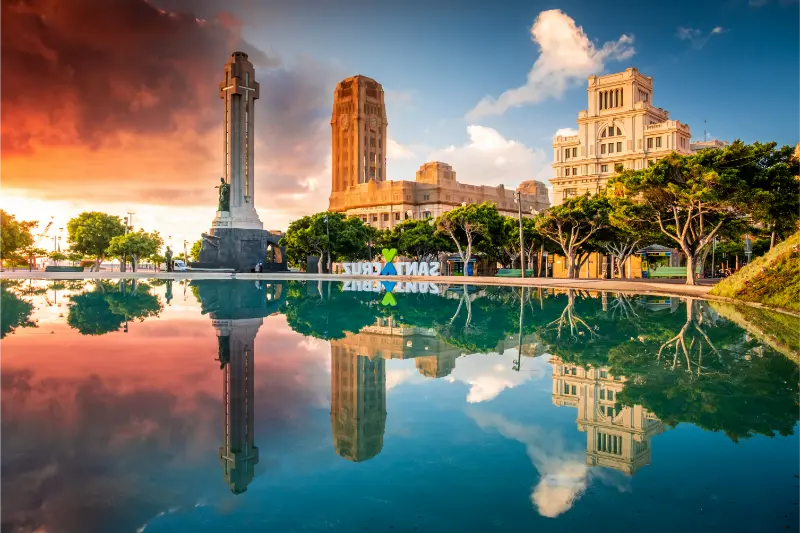
    Plaza De Espana Santa Cruz De Tenerife

    Is there public transport at the viewpoint?

    The official listing says there is no bus stop at the viewpoint, so a car is the simplest option for most visitors.

    Official information

    For the documented facts and the latest operational information, I check Turismo de Tenerife – Mirador de Montaña Grande shortly before travelling. Local events, restoration, weather, fire restrictions, sea conditions and access can change after an article is published, so the official source always takes priority for same-day conditions.

    Final thoughts

    I would not describe every small Tenerife stop as a universal “must-see”. That language is not helpful. The value of Mirador de Montaña Grande El Rosario is that it adds a precise layer to the island and makes a local cluster richer. When several of these places are combined, the municipality stops being a name on the motorway and becomes a destination with its own history, landscape and rhythm.

    My preferred approach is simple: know the key story before arriving, keep the visit respectful, stay flexible about access and spend enough time in the surrounding area for the place to make sense. That is how a small stop becomes useful rather than just another pin on a map.
  • Iglesia de Santa Ana Candelaria Guide: 1575 Origins and Baroque Art

    Iglesia de Santa Ana Candelaria Guide: 1575 Origins and Baroque Art

    Iglesia de Santa Ana Candelaria is a heritage stop I would add when I want a Tenerife itinerary to explain the island rather than simply collect the biggest attractions. I would include Santa Ana after the Basilica rather than before it. The contrast works well: first experience the grand regional pilgrimage centre, then see the smaller parish heritage that grew within the town itself.

    This guide separates documented facts from practical travel advice. I use official Tenerife tourism information for the historical, natural or architectural details, while recommendations about timing, parking and how to combine the stop are planning suggestions rather than guaranteed conditions.

    At a glance

    PlaceCandelaria
    Address / access referenceCalle Santa Ana, 38, 38509 Candelaria
    Best forhistory, architecture and a compact local walk
    Time to allow45–90 minutes for the core stop; 2–4 hours with nearby places
    Planning ruleCheck current access and opening information before travelling specifically for an interior

    Why this place deserves its own page

    I would include Santa Ana after the Basilica rather than before it. The contrast works well: first experience the grand regional pilgrimage centre, then see the smaller parish heritage that grew within the town itself.

    What the official record confirms

    The church was founded by local residents in 1575.

    Official tourism information highlights a rich artistic heritage inside.

    The image of Santa Ana dates from the eighteenth century.

    A wooden Crucified Christ in Baroque style dates from the seventeenth century.

    The church stands in the Santa Ana quarter, a short walk from the main Basilica and historic seafront area.

    What I would pay attention to

    See it as a neighbourhood church

    The Basilica dominates most Candelaria itineraries, but Santa Ana shows a different scale of religious life: a church created by local residents for their own community.

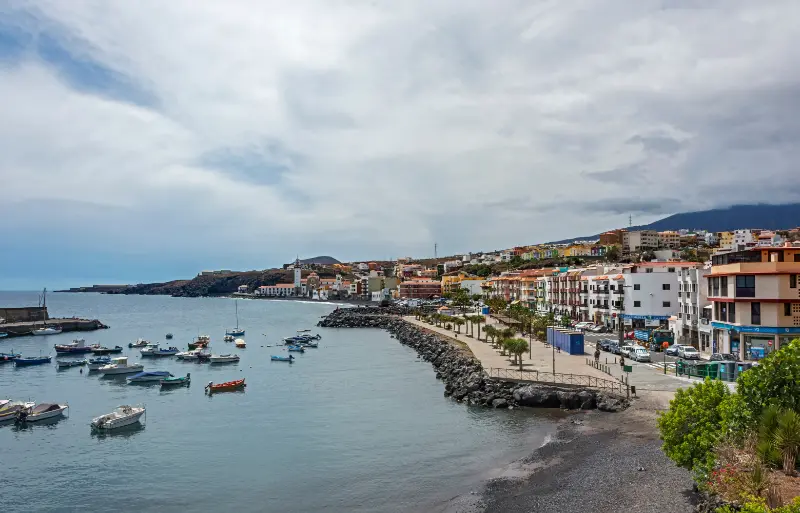
    Candelaria Harbor Tenerife

    Give the older crucifix attention

    A seventeenth-century wooden Baroque Christ is one of the specific works highlighted by the official tourism page and gives the interior a deeper chronology than the eighteenth-century titular image alone.

    Walk the connection to the main square

    The short distance from the Basilica makes this an easy addition. Moving between the monumental pilgrimage centre and the quieter Santa Ana quarter reveals two sides of Candelaria.

    How I would build it into a Tenerife day

    From Plaza de la Patrona, walk through the historic centre toward Santa Ana and Casa de las Miquelas. If the church is closed, the neighbourhood still works as part of the walking route; do not structure the whole day around guaranteed interior access.

    Why I keep the itinerary compact

    Tenerife rewards short geographic loops. When I keep several stops in the same area, I spend less time in the car and notice the transitions between coast, medianías and forest. That context is especially valuable for small monuments because the surrounding settlement explains why they are where they are.

    Getting there sensibly

    For rural Tenerife, the last kilometre matters more than the headline driving time. I check the route before leaving, avoid blindly following a navigation app onto a steep lane, and use signed roads or public paths. If conditions look different from the official information, local signs take priority.

    Weather, clothing and the best time of day

    Tenerife’s microclimates matter even on a short visit. The coast can be hot while the medianías are cloudy or windy, and exposed volcanic ground can feel much hotter than the air temperature suggests. I carry water, sun protection and a light layer in the car. For photography and walking, early morning or later afternoon often gives softer light and less heat, but I would never trade safe access or a confirmed opening time just to chase perfect light.

    Interior access and opening times

    Small churches, historic houses and civic rooms often have variable access. Unless the official source publishes a current timetable, I do not invent one. I plan the exterior and surrounding walk as worthwhile on their own, then treat an open interior, exhibition or guided visit as an extra. This makes the article useful even when local schedules change.

    Responsible visiting

    Small heritage places remain pleasant only if visitors behave as guests. I keep voices low near homes and churches, take all rubbish away, stay on public routes and obey barriers. At archaeological or ruined sites, touching, collecting or rearranging material can permanently damage what makes the place valuable.

    Families and slower travellers

    This can work well for families when expectations are adjusted. A small site does not need to fill two hours. I pair it with a square, picnic, garden or short walk and keep water and sun protection handy. Strollers may be awkward on old paving, steep lanes or unpaved paths, so I check surfaces before committing.

    Food break strategy

    A coffee or lunch stop is not wasted itinerary time here. It gives you a reason to stay in the town long enough to notice everyday life. I look for a place within the same cluster and avoid making a long detour solely because an online list labels one restaurant a must.

    A simple half-day plan

    1. Arrive with one legal parking plan and one backup.
    2. Spend enough time at the main place to understand its story instead of only taking a photograph.
    3. Walk to one or two nearby stops from the same cluster.
    4. Add a local coffee, lunch or picnic rather than driving immediately to another part of the island.
    5. Keep the final hour flexible for weather, closures or a viewpoint you discover along the way.

    Nearby guides to keep open

    Where to stay nearby

    If this area is more than a day trip, I compare accommodation in the same part of Tenerife rather than automatically returning to the busiest southern resorts. Staying locally can make early walks, evening village time and mountain-road days much easier. Compare accommodation around Candelaria on Booking.com.

    Common mistakes to avoid

    I would not rely on old blog opening times, assume a closed gate can be bypassed, or treat rural lanes as parking bays. Another common mistake is skipping the surrounding town. The context often explains the site better than an isolated façade photograph ever can.

    Practical checklist before you go

    • Re-check current opening, access or trail status on an official source.
    • Use legal parking and keep residents’ entrances, agricultural tracks and emergency access clear.
    • Carry water, sun protection and a light layer for altitude changes.
    • Wear footwear suited to old paving, dirt or volcanic surfaces.
    • Respect services, barriers, private property and archaeological material.
    • Keep the day geographically compact so one closure does not ruin the entire itinerary.

    Frequently asked questions

    When was Iglesia de Santa Ana founded?

    Official tourism information dates its foundation by local residents to 1575.

    What important artworks are inside?

    The official listing highlights an eighteenth-century image of Santa Ana and a seventeenth-century wooden Baroque crucifix.

    Is it the same church as the Basilica?

    No. Santa Ana is a separate historic church in the Santa Ana quarter of Candelaria.

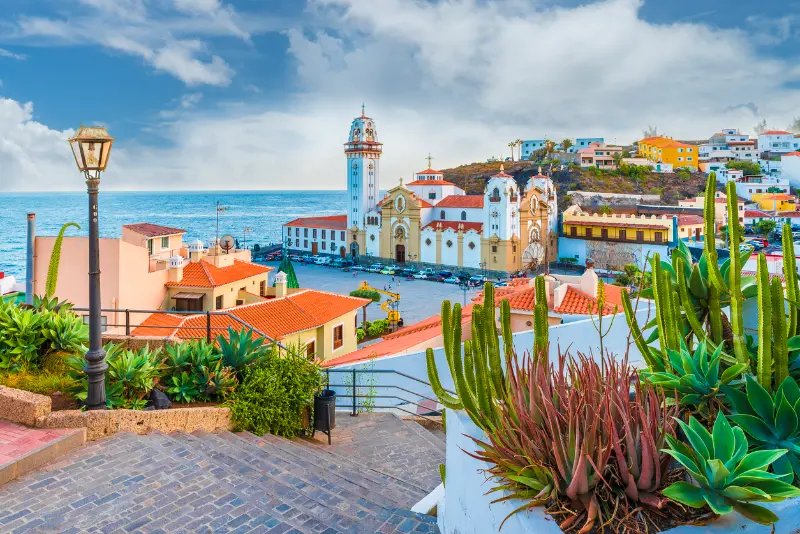
    Candelaria Tenerife Basilica And Coast

    Can I walk there from the Basilica?

    Yes. It is part of the compact historic-centre route and pairs naturally with Casa de las Miquelas.

    How long should I allow?

    About 20–40 minutes for the church itself, or longer for the full Candelaria walking loop.

    What if a service is underway?

    Wait or return later; sightseeing should never interrupt worship.

    Official information

    For the documented details used in this guide, see official Tenerife tourism page for Iglesia de Santa Ana. I re-check official information shortly before travelling because opening patterns, trail status, events and access arrangements can change.

    Final thoughts

    This is not a place I would oversell as a universal must-see. Its strength is the detail it adds to Tenerife: a layer of geology, craft, agriculture, migration, devotion or everyday infrastructure that is easy to miss on a first trip. Combined with nearby guides from the same cluster, it helps turn a generic island itinerary into one that actually explains the places you are passing through.

    Why this stop works in the wider Candelaria cluster

    On a map it is tempting to see every point of interest as independent. In practice, Candelaria makes more sense as a network of streets, paths, farming land and nearby settlements. I use this stop as a reference point, then look outward: where did residents travel, what resources were produced nearby, which road connected the community to the coast or mountains, and which landscape features limited development? Those questions turn a short visit into something memorable without requiring invented anecdotes.

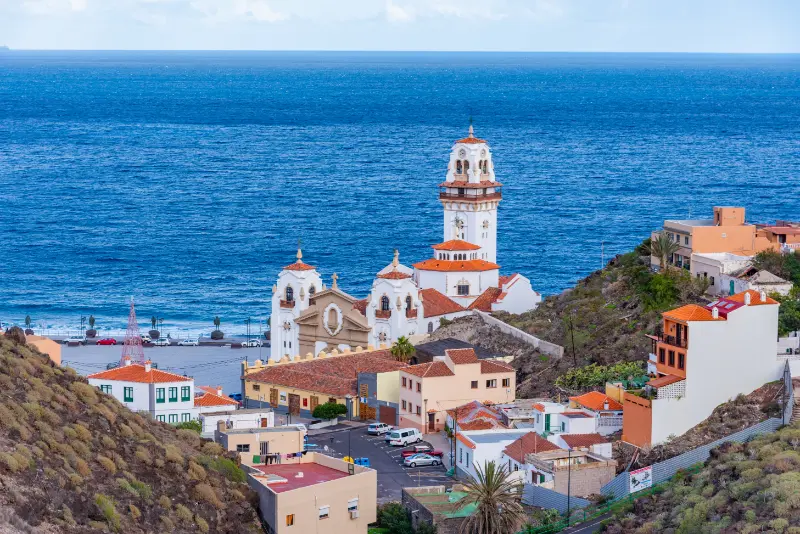
    Basilica Of Candelaria On The Tenerife Coast

    I also keep the pace realistic. A detailed half-day in one municipality often gives me more than a full day spent crossing Tenerife repeatedly. It reduces fuel and parking time, gives room for weather changes and makes internal links between the site and its neighbours visible in the real landscape rather than only on a screen.

    What I would research the evening before

    I check three things: the official access or opening status, the weather at the correct altitude, and the driving or walking route for the final kilometre. I do not rely on an old screenshot because road works, religious services, fire restrictions or trail maintenance can change quickly. If the site is small, I also save one nearby alternative so the outing remains worthwhile even if the main door is closed.

    For rural and historic Tenerife, that small amount of preparation is usually enough. I do not need an hour-by-hour schedule; I need a reliable first stop, a coherent cluster and enough flexibility to respond to the island as I find it.

  • Cueva de Chinguaro Güímar Guide: Guanche Heritage and the First Candelaria Sanctuary

    Cueva de Chinguaro Güímar Guide: Guanche Heritage and the First Candelaria Sanctuary

    Cueva de Chinguaro Güímar is a focused heritage stop in Güímar for travellers who want to understand the town beyond its headline sights. I use it as part of a connected local walk rather than as an isolated pin on the map.

    At a glance

    PlaceGüímar
    AddressCamino El Taro, 38500 Güímar
    Best forHistory, architecture, local culture and a slower town walk
    Time to allow30–60 minutes for the site; 2–3 hours for the wider local cluster
    Planning ruleCheck current access before travelling and combine it with nearby places

    Why I would include it

    Cueva de Chinguaro is one of the places where Tenerife’s Indigenous Guanche history, later Christian devotion and modern heritage interpretation overlap. I approach it carefully because the story is culturally significant and easily reduced to a simplified legend. The official tourism record identifies the cave as a historic site associated with Mencey Acaymo and with the earliest veneration of the image later known as the Virgin of Candelaria.

    What makes this stop useful is context. Tenerife’s best-known attractions can dominate an itinerary, but smaller heritage sites explain how towns actually developed: where people worshipped, learned, worked, stored crops, managed civic life or adapted older buildings to new uses. I use this page as a layer beneath the general destination guide, not as a replacement for it.

    History and context

    Cueva de Chinguaro is classified as a historic site and is considered archaeologically important.

    According to the official Tenerife tourism account, historians identify it as the cave-palace associated with Acaymo, mencey of Güímar.

    The same official account states that Guanches venerated the image later identified as the Virgin of Candelaria and associated it with the Indigenous figure Chaxiraxi.

    Chinguaro is therefore presented as the first sanctuary connected with the Virgin of Candelaria in the Canary Islands before the later cult centre developed in Candelaria itself.

    The site is best understood together with Candelaria and the broader Güímar Valley rather than as an isolated archaeological curiosity.

    How I approach the Guanche and Christian layers

    I avoid presenting the encounter between Guanche belief and Christian interpretation as a neat one-line conversion story. The official account reflects a later religious tradition, while the archaeological and Indigenous context deserves its own respect. I keep the wording careful and distinguish documented heritage interpretation from assumptions about what every person in the fifteenth century believed.

    The physical simplicity of a cave can make the site feel less impressive than a basilica, but that is exactly why context matters. Chinguaro helps explain how sacred geography can begin in a modest natural space and later move into formal architecture, pilgrimage and civic identity.

    For me the strongest itinerary links Chinguaro with the Basilica of Candelaria and Cueva de Achbinico on another stop or the same day. Those places allow the story to be followed geographically instead of compressed into a museum-style summary.

    Basilica Of Candelaria On The Tenerife Coast

    How I fit it into a half-day

    I combine Chinguaro with central Güímar, then continue to Candelaria if I want to follow the religious-historical thread. If the main goal is volcanic nature, I stay in the Güímar municipality and add the Malpaís instead. I would not squeeze Chinguaro, the pyramids, a three-hour hike and Candelaria into one short winter day.

    For planning the surrounding area, I would keep these guides open:

    What this stop adds to a Tenerife itinerary

    A long Tenerife trip becomes much more interesting when the days do not all have the same rhythm. Teide, Anaga, beaches and major attractions are important, but they are visually and logistically intense. A smaller heritage stop in Güímar creates contrast. I can spend part of a day walking, looking at materials and reading the town before returning to the coast or mountains.

    It also helps distribute time beyond the island’s busiest visitor zones. That does not mean searching for somewhere merely because it is “hidden”. These are established local places with documented history. The point is to understand them on their own terms rather than turning them into another checklist of secret spots.

    I find this particularly useful for repeat visitors. Once the headline attractions are familiar, detailed town clusters make Tenerife feel much larger. Two churches ten kilometres apart may share materials and devotional traditions but have completely different histories of patronage, rebuilding and community use.

    How I plan the visit

    I treat this as a heritage stop, not an attraction with a guaranteed theme-park timetable. Before travelling, I check the official page and, when relevant, the municipality’s current cultural programme. Churches can close for services, funerals or local celebrations; exhibition spaces can open only when an event is running; historic houses can have maintenance periods. A current check is much more useful than an old timetable copied from another blog.

    I also avoid building a long cross-island drive around one small monument. The value comes from combining several places in the same municipality. That approach reduces parking, gives me time for a coffee or lunch, and makes the historical context much clearer. If the interior is unexpectedly closed, the day still works because the surrounding streets, landscape and nearby sites remain part of the plan.

    For a relaxed visit I allow roughly 30–60 minutes for the place itself, more if there is an exhibition, guided activity or religious art I want to study. The wider historic-centre circuit normally deserves at least two hours. I would rather see three connected places properly than photograph eight doorways and remember none of them.

    Getting there and parking strategy

    For these smaller towns I prefer one parking decision followed by walking. Driving from one nearby monument to another usually saves little time and can create more stress on narrow streets. I choose a legal public parking area or street space where permitted, then cover the centre on foot. On market days, festivals and religious feast days, I expect traffic arrangements to change.

    If I am travelling without a car, I check TITSA’s current journey planner rather than relying on route numbers copied into an old article. Bus connections around the metropolitan north and the main TF-5 corridor are generally useful, while Isla Baja journeys can take longer. The key is to check the return connection before I begin a rural or coastal extension.

    Best time of day

    For a town-centre heritage walk, I prefer the morning or later afternoon. Midday can be warm on exposed squares, while some small businesses and cultural spaces may have limited opening patterns. In northern Tenerife, cloud can arrive even when the south is sunny, so I carry a light layer rather than assuming resort weather applies everywhere on the island.

    Basilica Of Our Lady Of Candelaria Tenerife Canary Islands Spain

    Weekdays often feel more ordinary and local; weekends can be livelier around markets, family lunches and events. Neither is automatically better. I choose according to whether I want quiet architecture time or a busier sense of community life, and I check the municipal calendar when a festival could alter access.

    Accessibility, children and respectful visiting

    Historic buildings in Tenerife can include steps, uneven paving, narrow doorways and changes of level that are not obvious from a map. I never assume that an entire site is step-free because the square outside is flat. Travellers using a wheelchair, mobility scooter or pushchair should confirm the exact entrance and current accessible route before setting out.

    With children, I turn the visit into a simple question rather than a lecture: what was this building for, who used it, and what detail tells us that? A bell tower, wine press, cloister, patio or pottery vessel is easier to remember than a sequence of dates. I keep indoor visits short and alternate them with a plaza, garden, snack or viewpoint.

    In active churches I dress and behave as I would in any functioning place of worship. I silence the phone, avoid flash where it is prohibited and never walk through a ceremony to get a photograph. In cultural buildings I follow staff instructions about photography and do not lean on old woodwork, altars or display cases.

    Photography without missing the place

    My first image is usually a contextual photograph rather than a close-up. I include the square, neighbouring houses, a stretch of street or the surrounding slopes so the building has a geographical story. After that I look for materials and construction details: volcanic stone, timber, roof tiles, ironwork, plaster, garden geometry or the way light enters a courtyard.

    Morning and late-afternoon side light often reveals texture better than harsh midday sun, but I would not delay an entire itinerary for ideal light. More important is avoiding blocked doorways and respecting people who are using the space for ordinary life. Historic centres are not film sets; residents still need to walk, drive, worship and work there.

    Where I pause for food or coffee

    I do not build these articles around one restaurant because businesses, opening days and ownership can change faster than historic information. Instead I leave time for a café, bakery or local restaurant in Güímar and choose from places that are clearly open on the day. In wine-country towns I look for local wines by the glass; in Isla Baja I am happy with a simple Canarian lunch rather than driving to a resort area for something familiar.

    This flexible pause is more than a convenience. It prevents the heritage circuit from becoming a forced march and gives me a chance to notice the normal pace of the town. I would rather spend forty minutes over lunch and skip one minor stop than hurry through every building.

    Where I would stay nearby

    If I wanted to explore Güímar and the surrounding district slowly, I would compare accommodation around Güímar. For this kind of itinerary, location matters more to me than resort facilities: a base that reduces repeated cross-island driving can make early-morning town walks, rural routes and evening meals much easier.

    Candelaria Harbor Tenerife

    Official information

    Before travelling I check the official Tenerife tourism page for Cueva de Chinguaro Güímar. I use it to confirm the address and any current visitor information, then check municipal or parish notices if I need a specific opening time. This is especially important for working religious buildings and spaces used for temporary exhibitions.

    Frequently asked questions

    Is this worth a special trip across Tenerife?

    Usually not on its own. I think it is worth visiting when it forms part of a wider day in the same town or district. The site becomes much stronger when paired with nearby heritage, a local meal, a viewpoint, a wine stop or a short walk.

    Do I need a ticket?

    I do not assume a ticket is required unless the current official information says so. Small churches and civic heritage spaces often have different access arrangements from conventional museums. I check the official source shortly before the visit for any admission, booking or event details.

    How long should I allow?

    About 30–60 minutes is a sensible planning range for the individual place, but the surrounding historic centre deserves longer. If an interior is closed, I use that time for the streets and nearby sites rather than waiting around without a confirmed reopening time.

    Can I combine it with a beach or hike?

    Yes, but I separate the logistics. Heritage walking needs ordinary comfortable shoes and flexible timing; a mountain trail or rough volcanic coast may need very different footwear, weather checks and daylight planning. I normally finish the town section first and then change focus.

    Final thoughts

    Cueva de Chinguaro Güímar is most rewarding when I do not ask it to carry an entire day on its own. Its real value is the way it deepens Güímar: one building or collection can explain a chapter of local history that a general sightseeing list cannot. I would keep the visit flexible, walk the surrounding streets and let the nearby places create the narrative.

    That is also the approach I prefer for My Tenerife Experience as the site grows: not one giant guide that tries to contain everything, but connected pages that allow a traveller to move from the broad destination to the exact church, house, trail, beach or cultural site that matches the day they actually want.

  • Casa de las Miquelas Candelaria Guide: Traditional Pottery and Local Crafts

    Casa de las Miquelas Candelaria Guide: Traditional Pottery and Local Crafts

    Casa de las Miquelas Candelaria is a focused heritage stop in Candelaria for travellers who want to understand the town beyond its headline sights. I use it as part of a connected local walk rather than as an isolated pin on the map.

    At a glance

    PlaceCandelaria
    AddressIsla de la Gomera, 13, 38530 Candelaria
    Best forHistory, architecture, local culture and a slower town walk
    Time to allow30–60 minutes for the site; 2–3 hours for the wider local cluster
    Planning ruleCheck current access before travelling and combine it with nearby places

    Why I would include it

    Casa de las Miquelas is the stop I would add when a Candelaria visit risks becoming only basilica, seafront and a quick photograph with the menceyes. The pottery centre moves the story into everyday work. During the eighteenth and nineteenth centuries, pottery was a major local industry, and this restored traditional house preserves that craft context through objects, clothing, explanations and workshop space. It gives the town a material history that is very different from its better-known religious symbolism.

    What makes this stop useful is context. Tenerife’s best-known attractions can dominate an itinerary, but smaller heritage sites explain how towns actually developed: where people worshipped, learned, worked, stored crops, managed civic life or adapted older buildings to new uses. I use this page as a layer beneath the general destination guide, not as a replacement for it.

    History and context

    Pottery was the principal industry of Candelaria during the eighteenth and nineteenth centuries, according to Tenerife’s official tourism information.

    The centre occupies a restored traditional house rather than a purpose-built modern museum, which helps the domestic setting become part of the interpretation.

    Its name remembers the two last female potters of the Santa Ana neighbourhood, preserving a direct link between the institution and local craft practitioners.

    The centre is organised into three rooms covering traditional trades, the production process, a collection of vessels and traditional clothing.

    A workshop area adds a practical dimension to the display, although actual activity and visitor access can vary with the current programme.

    Why pottery changes the way I understand Candelaria

    Candelaria is usually described through pilgrimage and Guanche-European religious history, but towns are sustained by work as well as belief. Pottery gives a different route into the past: raw material, technique, household needs, trade and the knowledge passed between generations.

    I pay attention to vessel shapes and intended uses rather than judging them only as decorative objects. Traditional ceramics were tools for storage, cooking and daily life. Their forms make more sense when I ask what problem each object solved.

    The fact that the centre is named after local women potters is also important. Craft history can easily become anonymous, so retaining a connection with identifiable makers gives the collection a stronger human scale.

    How I fit it into a half-day

    I would start at the seafront and Plaza de la Patrona, visit the basilica and Cueva de Achbinico, then walk toward the Santa Ana area for Casa de las Miquelas. This order moves from Candelaria’s large symbolic landmarks to a smaller craft story and makes the day feel progressively more local. I keep the promenade for the end, when there is no pressure to reach another timed attraction.

    Basilica Of Candelaria On The Tenerife Coast

    For planning the surrounding area, I would keep these guides open:

    What this stop adds to a Tenerife itinerary

    A long Tenerife trip becomes much more interesting when the days do not all have the same rhythm. Teide, Anaga, beaches and major attractions are important, but they are visually and logistically intense. A smaller heritage stop in Candelaria creates contrast. I can spend part of a day walking, looking at materials and reading the town before returning to the coast or mountains.

    It also helps distribute time beyond the island’s busiest visitor zones. That does not mean searching for somewhere merely because it is “hidden”. These are established local places with documented history. The point is to understand them on their own terms rather than turning them into another checklist of secret spots.

    I find this particularly useful for repeat visitors. Once the headline attractions are familiar, detailed town clusters make Tenerife feel much larger. Two churches ten kilometres apart may share materials and devotional traditions but have completely different histories of patronage, rebuilding and community use.

    How I plan the visit

    I treat this as a heritage stop, not an attraction with a guaranteed theme-park timetable. Before travelling, I check the official page and, when relevant, the municipality’s current cultural programme. Churches can close for services, funerals or local celebrations; exhibition spaces can open only when an event is running; historic houses can have maintenance periods. A current check is much more useful than an old timetable copied from another blog.

    I also avoid building a long cross-island drive around one small monument. The value comes from combining several places in the same municipality. That approach reduces parking, gives me time for a coffee or lunch, and makes the historical context much clearer. If the interior is unexpectedly closed, the day still works because the surrounding streets, landscape and nearby sites remain part of the plan.

    For a relaxed visit I allow roughly 30–60 minutes for the place itself, more if there is an exhibition, guided activity or religious art I want to study. The wider historic-centre circuit normally deserves at least two hours. I would rather see three connected places properly than photograph eight doorways and remember none of them.

    Getting there and parking strategy

    For these smaller towns I prefer one parking decision followed by walking. Driving from one nearby monument to another usually saves little time and can create more stress on narrow streets. I choose a legal public parking area or street space where permitted, then cover the centre on foot. On market days, festivals and religious feast days, I expect traffic arrangements to change.

    If I am travelling without a car, I check TITSA’s current journey planner rather than relying on route numbers copied into an old article. Bus connections around the metropolitan north and the main TF-5 corridor are generally useful, while Isla Baja journeys can take longer. The key is to check the return connection before I begin a rural or coastal extension.

    Best time of day

    For a town-centre heritage walk, I prefer the morning or later afternoon. Midday can be warm on exposed squares, while some small businesses and cultural spaces may have limited opening patterns. In northern Tenerife, cloud can arrive even when the south is sunny, so I carry a light layer rather than assuming resort weather applies everywhere on the island.

    Weekdays often feel more ordinary and local; weekends can be livelier around markets, family lunches and events. Neither is automatically better. I choose according to whether I want quiet architecture time or a busier sense of community life, and I check the municipal calendar when a festival could alter access.

    Accessibility, children and respectful visiting

    Historic buildings in Tenerife can include steps, uneven paving, narrow doorways and changes of level that are not obvious from a map. I never assume that an entire site is step-free because the square outside is flat. Travellers using a wheelchair, mobility scooter or pushchair should confirm the exact entrance and current accessible route before setting out.

    With children, I turn the visit into a simple question rather than a lecture: what was this building for, who used it, and what detail tells us that? A bell tower, wine press, cloister, patio or pottery vessel is easier to remember than a sequence of dates. I keep indoor visits short and alternate them with a plaza, garden, snack or viewpoint.

    In active churches I dress and behave as I would in any functioning place of worship. I silence the phone, avoid flash where it is prohibited and never walk through a ceremony to get a photograph. In cultural buildings I follow staff instructions about photography and do not lean on old woodwork, altars or display cases.

    Photography without missing the place

    My first image is usually a contextual photograph rather than a close-up. I include the square, neighbouring houses, a stretch of street or the surrounding slopes so the building has a geographical story. After that I look for materials and construction details: volcanic stone, timber, roof tiles, ironwork, plaster, garden geometry or the way light enters a courtyard.

    Morning and late-afternoon side light often reveals texture better than harsh midday sun, but I would not delay an entire itinerary for ideal light. More important is avoiding blocked doorways and respecting people who are using the space for ordinary life. Historic centres are not film sets; residents still need to walk, drive, worship and work there.

    Where I pause for food or coffee

    I do not build these articles around one restaurant because businesses, opening days and ownership can change faster than historic information. Instead I leave time for a café, bakery or local restaurant in Candelaria and choose from places that are clearly open on the day. In wine-country towns I look for local wines by the glass; in Isla Baja I am happy with a simple Canarian lunch rather than driving to a resort area for something familiar.

    Basilica Of Our Lady Of Candelaria Tenerife Canary Islands Spain

    This flexible pause is more than a convenience. It prevents the heritage circuit from becoming a forced march and gives me a chance to notice the normal pace of the town. I would rather spend forty minutes over lunch and skip one minor stop than hurry through every building.

    Where I would stay nearby

    If I wanted to explore Candelaria and the surrounding district slowly, I would compare accommodation around Candelaria. For this kind of itinerary, location matters more to me than resort facilities: a base that reduces repeated cross-island driving can make early-morning town walks, rural routes and evening meals much easier.

    Official information

    Before travelling I check the official Tenerife tourism page for Casa de las Miquelas Candelaria. I use it to confirm the address and any current visitor information, then check municipal or parish notices if I need a specific opening time. This is especially important for working religious buildings and spaces used for temporary exhibitions.

    Candelaria Harbor Tenerife

    Frequently asked questions

    Is this worth a special trip across Tenerife?

    Usually not on its own. I think it is worth visiting when it forms part of a wider day in the same town or district. The site becomes much stronger when paired with nearby heritage, a local meal, a viewpoint, a wine stop or a short walk.

    Do I need a ticket?

    I do not assume a ticket is required unless the current official information says so. Small churches and civic heritage spaces often have different access arrangements from conventional museums. I check the official source shortly before the visit for any admission, booking or event details.

    How long should I allow?

    About 30–60 minutes is a sensible planning range for the individual place, but the surrounding historic centre deserves longer. If an interior is closed, I use that time for the streets and nearby sites rather than waiting around without a confirmed reopening time.

    Can I combine it with a beach or hike?

    Yes, but I separate the logistics. Heritage walking needs ordinary comfortable shoes and flexible timing; a mountain trail or rough volcanic coast may need very different footwear, weather checks and daylight planning. I normally finish the town section first and then change focus.

    Final thoughts

    Casa de las Miquelas Candelaria is most rewarding when I do not ask it to carry an entire day on its own. Its real value is the way it deepens Candelaria: one building or collection can explain a chapter of local history that a general sightseeing list cannot. I would keep the visit flexible, walk the surrounding streets and let the nearby places create the narrative.

    That is also the approach I prefer for My Tenerife Experience as the site grows: not one giant guide that tries to contain everything, but connected pages that allow a traveller to move from the broad destination to the exact church, house, trail, beach or cultural site that matches the day they actually want.

  • Cueva de Achbinico Candelaria Guide: Sacred Cave and San Blas Hermitage

    Cueva de Achbinico Candelaria Guide: Sacred Cave and San Blas Hermitage

    Cueva de Achbinico Candelaria is a place I would add when I want a Tenerife itinerary to explain the island rather than simply collect viewpoints. It fits naturally into a visit to Candelaria and gives context that is easy to miss when I only stop at the most photographed landmark.

    Cueva de Achbinico, also known as the Ermita de San Blas, is one of Candelaria’s most historically significant religious places. Tenerife’s official tourism information describes it as the first temple associated with the Virgin of Candelaria in the town.

    Quick facts

    PlaceCandelaria
    TypeSacred Cave And Hermitage
    Time I allow20–45 minutes, preferably as part of a wider Candelaria visit
    Address / areaPaseo San Blas 1, Candelaria
    Best approachCombine it with nearby sights on foot and verify current access before travelling

    Why this place is worth understanding

    Its importance lies partly in the meeting of Indigenous Guanche history and later Christian devotion. The hermitage was built while respecting the natural cave, so the religious space is inseparable from the geology of the coast rather than being a conventional freestanding church.

    Since 2000 the hermitage has housed a bronze reproduction based on descriptions of the early icon of the Virgin. I treat that as interpretation rather than as an original object, which helps keep the different historical layers clear.

    Nearby is the Cueva de los Camellos, traditionally connected with the camels once used to move goods to and from Candelaria. The short distance to the Basilica and Plaza de la Patrona makes it easy to link sacred history, coastal geography and everyday transport history in a compact walk.

    This is a place where respectful interpretation matters more than ticking off architectural features. The story crosses Indigenous belief, Christian devotion and later historical memory, and not every element belongs to the same period. I avoid flattening those layers into a single simple narrative. The cave is small, but it can add far more context to a Candelaria visit than another panoramic stop.

    What I look for on the visit

    I try to arrive with two or three details in mind instead of reading a long list while I am standing in front of the building. That keeps the visit focused and makes the history easier to remember. The details I would prioritize here are:

    • The way the built hermitage adapts to the natural cave.
    • The intimate scale compared with the nearby basilica.
    • The bronze reproduction and the interpretation it represents.
    • The physical connection between the cave, seafront and plaza de la patrona.

    I also step back and look at the surrounding streets. Historic buildings make more sense when I see their relationship with plazas, former transport routes, the coast and neighbouring institutions. A tight photograph of one doorway rarely explains as much as a wider view of how the place sits inside the town.

    How I fit it into a Candelaria day

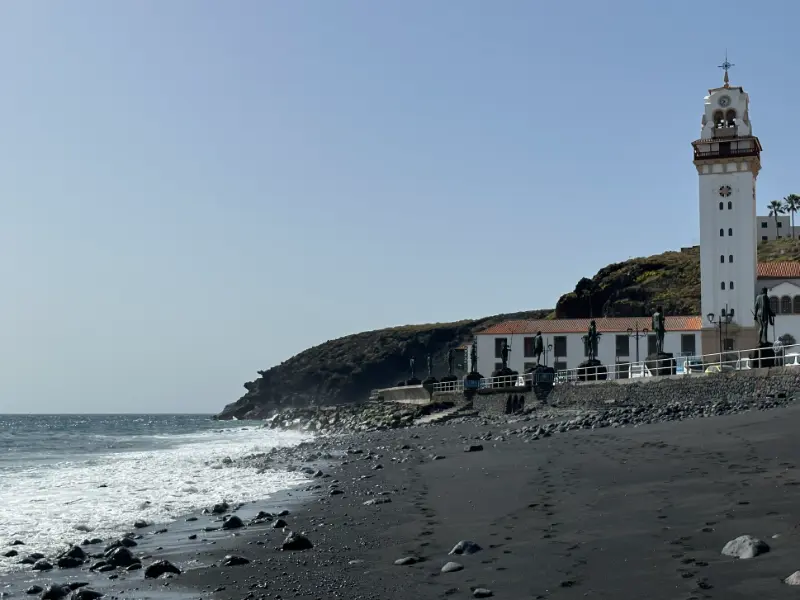
    Candelaria is easy to visit as a short coastal stop, but I think it deserves more than a photograph of the basilica. The historic seafront compresses several different stories into a small area: Guanche heritage, Marian devotion, fishing traditions, civic space and later monuments. Walking rather than driving between each point is the simplest way to see how they relate.

    Candelaria Harbor Tenerife

    I keep a visit flexible because religious services, feast days and processions can change access and atmosphere. The major celebrations around the Virgin of Candelaria are important local events rather than tourist performances, so I plan around them respectfully and expect larger crowds when dates coincide.

    The seafront is exposed to sun and wind, with little shade in some sections. Water, sun protection and footwear that works on steps and older paving make the visit more comfortable. I also avoid assuming that every part of a historic religious site is accessible to wheelchairs or pushchairs without checking the exact route.

    A compact itinerary works best: I connect the cave with the basilica, Plaza de la Patrona and the seafront statues, then decide whether to continue into the Güímar Valley. That creates a coherent half-day without turning the island into a series of long transfers.

    I usually begin at the central seafront area and walk between the basilica, plaza and cave rather than moving the car. If I want more culture, I add the Guanche context; if I want landscape, I continue toward the Güímar Valley. This makes Candelaria an anchor for a themed half-day rather than a ten-minute motorway stop.

    Candelaria Tenerife Basilica And Coast

    Access, opening hours and respectful behaviour

    I treat permanent historical information and day-to-day visitor access as two different things. The building or site may be centuries old, but hours, exhibitions, restoration work and the availability of interior rooms can change. I therefore use the official source for the final check rather than relying on an old timetable copied by a third-party travel site.

    Because this is an active or devotional religious setting, I keep my voice low, avoid flash where prohibited and do not photograph people at prayer. Services and ceremonies take priority over sightseeing. Clothing rules are not always enforced in the same way as at major cathedrals, but I still choose respectful dress and avoid walking around during a service simply to take pictures.

    Accessibility and visiting with children

    Historic centres in Tenerife can combine slopes, steps, narrow thresholds and uneven paving. I never label a whole visit ‘accessible’ based only on the main street. For a wheelchair, mobility scooter or pushchair, I check the exact entrance and the route between stops, and I am prepared to enjoy an exterior view if the historic fabric creates unavoidable barriers.

    With children I make the story concrete. A fort protecting ships, a gate controlling goods, a silver cross made in Havana, a volcanic eruption that changed a harbour or a cave adapted as a place of worship is easier to remember than a long sequence of dates. I keep indoor visits short and alternate them with plazas, gardens or the seafront.

    Photography: the views that explain the place

    My first photograph is usually a contextual one. I include the street, plaza, coastline or neighbouring building so the image shows where the monument belongs. After that I look for materials: basalt, carved stone, tea wood, plaster, metalwork or garden geometry. Side light in the morning or late afternoon often reveals texture better than flat midday sun.

    I avoid blocking doors and narrow pavements while composing a shot. In churches and working civic buildings I follow photography rules and never use a tripod if it interferes with other visitors. The goal is to document the place without turning local daily life into a photo set.

    A compact walking route nearby

    Rather than sending myself across the island for unrelated stops, I build a small cluster around this page. These are the guides I would use next:

    These links are deliberately local. I prefer a route where each stop adds another piece of the same story, because it reduces driving and makes the day feel less fragmented. It also leaves space for a meal, a market, weather changes and the small unplanned discoveries that usually become the most memorable part of a town visit.

    Where I would stay

    If I wanted to explore this part of Tenerife at a slower pace, I would compare accommodation in Candelaria. Staying nearby can be useful for quieter morning streets and for avoiding a long return drive after a full day in the northwest or east of the island.

    Official information

    Before travelling I check the official information for Cueva de Achbinico Candelaria. I use the official page for current access, temporary closures, events and opening arrangements because those details can change after this article is published.

    Basilica Of Candelaria On The Tenerife Coast

    Common planning mistakes I avoid

    • Treating a small historic site as a reason for a long cross-island drive instead of combining it with nearby places.
    • Assuming an old opening-hours screenshot is still valid.
    • Moving the car between attractions that are only a few minutes apart on foot.
    • Focusing on the façade and missing the relationship with the square, street or former coastline.
    • Packing too many churches or museums into one block until the details blur together.
    • Ignoring local events, services or municipal activity that can temporarily change access.

    Frequently asked questions

    Is it worth visiting on a first trip to Tenerife?

    Yes if I am already planning time in Candelaria. I would not normally cross the island for this one stop alone, but it adds genuine depth to a town visit and helps me understand details that the general sightseeing route can otherwise miss.

    How much time do I need?

    I would allow 20–45 minutes, preferably as part of a wider Candelaria visit. The exact time depends on interior access, events and how many nearby sights I connect. For a square, garden or exterior-only stop, I may stay less; for a church, historic house or cultural building I allow more.

    Do I need a car?

    Not for the monument itself once I am in the historic centre. A car can be useful for reaching the town from another part of Tenerife, but I prefer to park once and continue on foot. Bus travel is also possible in many cases, although I check the return timetable before starting the day.

    Can I rely on published opening hours?

    I use them as a starting point, not a guarantee. Religious services, holidays, restoration, municipal events and temporary exhibitions can alter normal access. The official link above is the source I check closest to the visit.

    What should I combine with it?

    I combine it with the Basilica, Plaza de la Patrona and the Guanche-history context, then continue toward the Güímar Valley only if I still have enough time to avoid rushing.

    Final thoughts

    Cueva de Achbinico Candelaria works best for me as part of a connected story rather than as a stand-alone pin. I would keep the visit flexible, read the setting as carefully as the monument itself and use the surrounding streets to understand how Candelaria changed over time. That slower approach is exactly what helps a Tenerife trip move beyond the standard highlights.

  • Casa Lorenzo Cáceres Icod Guide: Neoclassical House and Courtyard

    Casa Lorenzo Cáceres Icod Guide: Neoclassical House and Courtyard

    Casa Lorenzo Cáceres Icod is a place I would add when I want a Tenerife itinerary to explain the island rather than simply collect viewpoints. It fits naturally into a visit to Icod de los Vinos and gives context that is easy to miss when I only stop at the most photographed landmark.

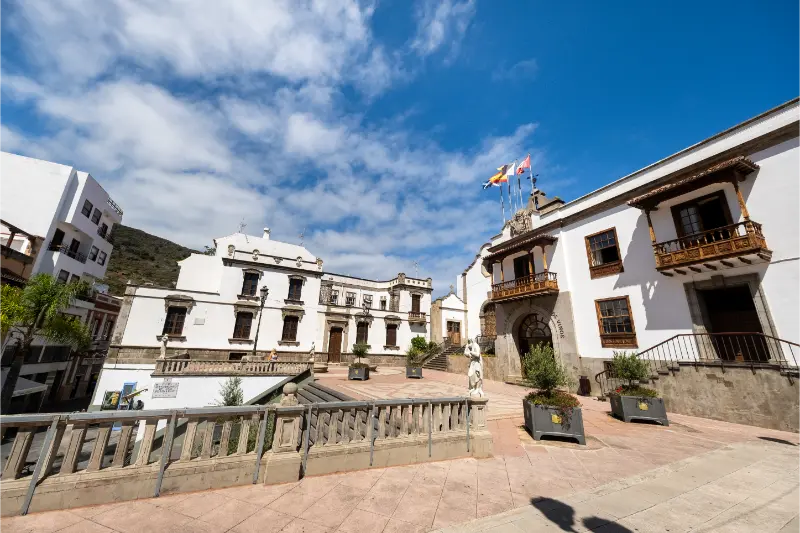
    Casa Lorenzo Cáceres stands opposite Plaza de la Constitución, known locally as Plaza de la Pila, and is one of the most important examples of nineteenth-century domestic architecture in Icod’s protected historic centre.

    Quick facts

    PlaceIcod de los Vinos
    TypeHistoric House
    Time I allow30–60 minutes if exhibition rooms and patio are open
    Address / areaPlaza de la Constitución 1, Icod de los Vinos
    Best approachCombine it with nearby sights on foot and verify current access before travelling

    Why this place is worth understanding

    Its story begins with disaster. A major fire in 1796 destroyed the convent of the Bernardas and nearby buildings. Nicolás de Lorenzo Delgado-Cáceres later commissioned a new house on part of the affected site, using plans prepared by his brother Gonzalo, a military engineer; permission to begin work was granted in 1798.

    The façade is restrained and balanced, with a stone arched entrance, timber balcony, rows of traditional windows and a strong cornice. The house is organized on three levels around a central patio, where wood dominates columns, openings, ceilings and circulation elements.

    Today parts of the building serve municipal and exhibition functions, which can allow visitors to see the courtyard when public access is available. I still verify current hours because civic use and temporary exhibitions can affect which spaces are open.

    I like this house because it shifts attention away from churches and public monuments toward domestic architecture. The patio, timber structure and service spaces show how a substantial urban residence worked. The post-fire construction date also gives it a different chronological layer from the older sixteenth- and seventeenth-century fabric nearby.

    What I look for on the visit

    I try to arrive with two or three details in mind instead of reading a long list while I am standing in front of the building. That keeps the visit focused and makes the history easier to remember. The details I would prioritize here are:

    • The sober neoclassical composition of the façade.
    • The arched stone doorway and timber balcony.
    • The central patio and wooden tuscan columns.
    • The relationship between the house and plaza de la pila.

    I also step back and look at the surrounding streets. Historic buildings make more sense when I see their relationship with plazas, former transport routes, the coast and neighbouring institutions. A tight photograph of one doorway rarely explains as much as a wider view of how the place sits inside the town.

    How I fit it into a Icod de los Vinos day

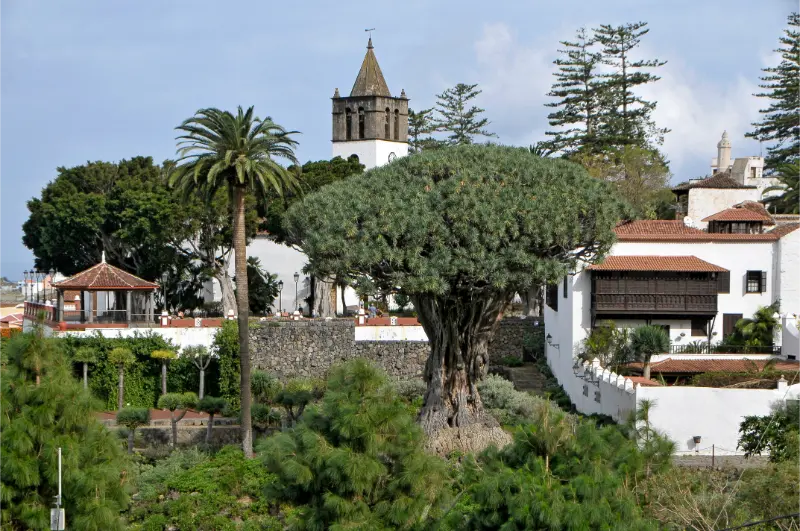
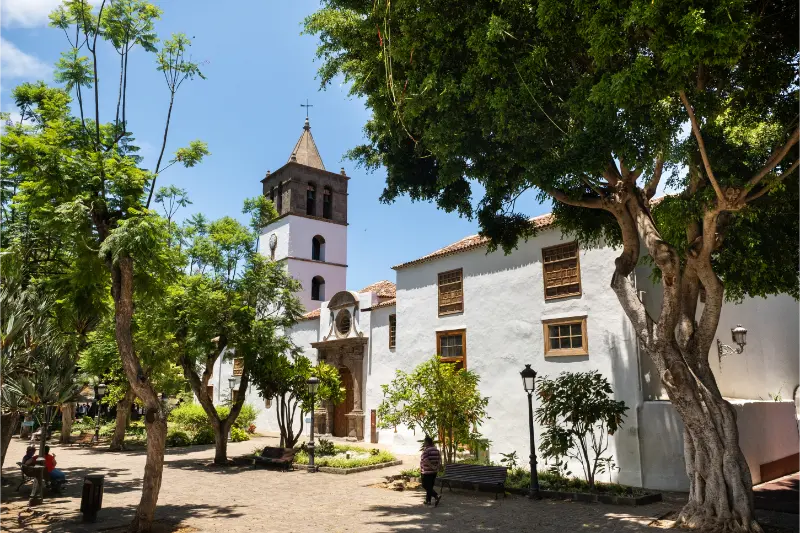
    Icod de los Vinos is often reduced to the Drago Milenario, but the historic centre deserves more time than a quick stop beside the dragon tree. The streets around San Marcos and the old convents preserve a layered story of religion, Atlantic trade, local elites, craftsmanship and public life. I plan the town on foot and treat the Drago as one part of a wider circuit rather than the only reason to come.

    Icod De Los Vinos Tenerife City View

    The centre has slopes, steps and older paving, so I allow more time than the distances on a map suggest. Driving from one monument to the next is usually less efficient than choosing a parking area and walking. For anyone with reduced mobility, I check the exact route and entrance conditions of the individual building rather than assuming the whole historic centre is step-free.

    I also keep opening hours flexible in my plan. Churches, libraries, municipal buildings and exhibition spaces are working places, not purpose-built tourist attractions, so access can change for services, events, maintenance or local holidays. If an interior is essential to the day, I verify it directly with the official source shortly before travelling.

    The strongest way to understand Icod is to connect architecture with the town’s wider economy. Wine, agriculture and overseas links helped shape the houses, churches and artworks that survive. That is why I like to combine one major monument with a domestic building, a plaza and a food or wine stop instead of visiting several churches back to back.

    I normally pair the historic centre with the Drago area, but I do not let the commercial zone around the famous tree dictate the whole visit. The best rhythm is a loop through plazas and heritage buildings, followed by the Drago or a wine-focused stop. If I am continuing to Garachico or Puerto de la Cruz, I keep the Icod visit compact enough that I am not driving mountain roads after a rushed late finish.

    Parque Del Drago Milenario Icod De Los Vinos Tenerife

    Access, opening hours and respectful behaviour

    I treat permanent historical information and day-to-day visitor access as two different things. The building or site may be centuries old, but hours, exhibitions, restoration work and the availability of interior rooms can change. I therefore use the official source for the final check rather than relying on an old timetable copied by a third-party travel site.

    Parts of the complex may have municipal, library, exhibition or other working uses. I do not assume every historic room is open, and I follow signs rather than wandering into offices. If a courtyard or gallery is accessible, I take time to observe materials and circulation instead of treating the interior only as a backdrop for photos.

    Accessibility and visiting with children

    Historic centres in Tenerife can combine slopes, steps, narrow thresholds and uneven paving. I never label a whole visit ‘accessible’ based only on the main street. For a wheelchair, mobility scooter or pushchair, I check the exact entrance and the route between stops, and I am prepared to enjoy an exterior view if the historic fabric creates unavoidable barriers.

    With children I make the story concrete. A fort protecting ships, a gate controlling goods, a silver cross made in Havana, a volcanic eruption that changed a harbour or a cave adapted as a place of worship is easier to remember than a long sequence of dates. I keep indoor visits short and alternate them with plazas, gardens or the seafront.

    Photography: the views that explain the place

    My first photograph is usually a contextual one. I include the street, plaza, coastline or neighbouring building so the image shows where the monument belongs. After that I look for materials: basalt, carved stone, tea wood, plaster, metalwork or garden geometry. Side light in the morning or late afternoon often reveals texture better than flat midday sun.

    I avoid blocking doors and narrow pavements while composing a shot. In churches and working civic buildings I follow photography rules and never use a tripod if it interferes with other visitors. The goal is to document the place without turning local daily life into a photo set.

    A compact walking route nearby

    Rather than sending myself across the island for unrelated stops, I build a small cluster around this page. These are the guides I would use next:

    These links are deliberately local. I prefer a route where each stop adds another piece of the same story, because it reduces driving and makes the day feel less fragmented. It also leaves space for a meal, a market, weather changes and the small unplanned discoveries that usually become the most memorable part of a town visit.

    Where I would stay

    If I wanted to explore this part of Tenerife at a slower pace, I would compare accommodation in Icod de los Vinos. Staying nearby can be useful for quieter morning streets and for avoiding a long return drive after a full day in the northwest or east of the island.

    Official information

    Before travelling I check the official information for Casa Lorenzo Cáceres Icod. I use the official page for current access, temporary closures, events and opening arrangements because those details can change after this article is published.

    Common planning mistakes I avoid

    • Treating a small historic site as a reason for a long cross-island drive instead of combining it with nearby places.
    • Assuming an old opening-hours screenshot is still valid.
    • Moving the car between attractions that are only a few minutes apart on foot.
    • Focusing on the façade and missing the relationship with the square, street or former coastline.
    • Packing too many churches or museums into one block until the details blur together.
    • Ignoring local events, services or municipal activity that can temporarily change access.

    Frequently asked questions

    Is it worth visiting on a first trip to Tenerife?

    Yes if I am already planning time in Icod de los Vinos. I would not normally cross the island for this one stop alone, but it adds genuine depth to a town visit and helps me understand details that the general sightseeing route can otherwise miss.

    Church In Icod De Los Vinos Tenerife

    How much time do I need?

    I would allow 30–60 minutes if exhibition rooms and patio are open. The exact time depends on interior access, events and how many nearby sights I connect. For a square, garden or exterior-only stop, I may stay less; for a church, historic house or cultural building I allow more.

    Do I need a car?

    Not for the monument itself once I am in the historic centre. A car can be useful for reaching the town from another part of Tenerife, but I prefer to park once and continue on foot. Bus travel is also possible in many cases, although I check the return timetable before starting the day.

    Can I rely on published opening hours?

    I use them as a starting point, not a guarantee. Religious services, holidays, restoration, municipal events and temporary exhibitions can alter normal access. The official link above is the source I check closest to the visit.

    What should I combine with it?

    I combine it with San Marcos, the Drago area and one additional cultural or wine-related stop. That gives the day variety and makes it easier to understand Icod beyond the single famous tree.

    Final thoughts

    Casa Lorenzo Cáceres Icod works best for me as part of a connected story rather than as a stand-alone pin. I would keep the visit flexible, read the setting as carefully as the monument itself and use the surrounding streets to understand how Icod de los Vinos changed over time. That slower approach is exactly what helps a Tenerife trip move beyond the standard highlights.

  • Franciscan Convent Icod Guide: Cloister, Neptune Fountain and Library

    Franciscan Convent Icod Guide: Cloister, Neptune Fountain and Library

    Franciscan Convent Icod is a place I would add when I want a Tenerife itinerary to explain the island rather than simply collect viewpoints. It fits naturally into a visit to Icod de los Vinos and gives context that is easy to miss when I only stop at the most photographed landmark.

    The Franciscan Convent of the Holy Spirit was founded in 1641 with support from the Alzola family and became one of Icod’s major religious complexes. The Franciscan community remained until 1823, after which the building began a long sequence of civic uses.

    Quick facts

    PlaceIcod de los Vinos
    TypeFormer Convent
    Time I allow45–90 minutes when public areas are accessible
    Address / areaCalle San Francisco 2–4, Icod de los Vinos
    Best approachCombine it with nearby sights on foot and verify current access before travelling

    Why this place is worth understanding

    Over time the former convent served as a military barracks, music-band headquarters, municipal theatre, educational centre and town hall. Today it houses the municipal library, so the building continues to function as a public institution rather than a static museum.

    The complex is organized around a large cloister. One of its most unusual features is the stone fountain with a figure of Neptune, traditionally associated with an Italian workshop and with a story that links the gift to travellers who received hospitality at the convent.

    The complex also includes the church of San Francisco and several chapels. The Chapel of Nuestra Señora de los Dolores is particularly noted for an elaborate eighteenth-century timber ceiling with Portuguese stylistic influence.

    Several important artworks once associated with the convent are now in the parish church of San Marcos, including the monumental silver filigree cross. I therefore treat the two buildings as a single historical cluster rather than unrelated attractions.

    The best detail here is not necessarily the largest room. The Neptune fountain introduces a classical mythological figure into a Franciscan cloister, which is exactly the kind of unexpected combination that makes a heritage visit memorable. I also like the fact that the library gives the building a present-day social purpose: history remains part of ordinary civic life.

    What I look for on the visit

    I try to arrive with two or three details in mind instead of reading a long list while I am standing in front of the building. That keeps the visit focused and makes the history easier to remember. The details I would prioritize here are:

    • The cloister proportions and timber circulation galleries.
    • The neptune fountain at the centre.
    • The stair and surviving convent architecture.
    • The way the municipal library occupies historic space.

    I also step back and look at the surrounding streets. Historic buildings make more sense when I see their relationship with plazas, former transport routes, the coast and neighbouring institutions. A tight photograph of one doorway rarely explains as much as a wider view of how the place sits inside the town.

    How I fit it into a Icod de los Vinos day

    Icod de los Vinos is often reduced to the Drago Milenario, but the historic centre deserves more time than a quick stop beside the dragon tree. The streets around San Marcos and the old convents preserve a layered story of religion, Atlantic trade, local elites, craftsmanship and public life. I plan the town on foot and treat the Drago as one part of a wider circuit rather than the only reason to come.

    Dragon Tree In Icod De Los Vinos Tenerife

    The centre has slopes, steps and older paving, so I allow more time than the distances on a map suggest. Driving from one monument to the next is usually less efficient than choosing a parking area and walking. For anyone with reduced mobility, I check the exact route and entrance conditions of the individual building rather than assuming the whole historic centre is step-free.

    I also keep opening hours flexible in my plan. Churches, libraries, municipal buildings and exhibition spaces are working places, not purpose-built tourist attractions, so access can change for services, events, maintenance or local holidays. If an interior is essential to the day, I verify it directly with the official source shortly before travelling.

    The strongest way to understand Icod is to connect architecture with the town’s wider economy. Wine, agriculture and overseas links helped shape the houses, churches and artworks that survive. That is why I like to combine one major monument with a domestic building, a plaza and a food or wine stop instead of visiting several churches back to back.

    I normally pair the historic centre with the Drago area, but I do not let the commercial zone around the famous tree dictate the whole visit. The best rhythm is a loop through plazas and heritage buildings, followed by the Drago or a wine-focused stop. If I am continuing to Garachico or Puerto de la Cruz, I keep the Icod visit compact enough that I am not driving mountain roads after a rushed late finish.

    Icod De Los Vinos Tenerife City View

    Access, opening hours and respectful behaviour

    I treat permanent historical information and day-to-day visitor access as two different things. The building or site may be centuries old, but hours, exhibitions, restoration work and the availability of interior rooms can change. I therefore use the official source for the final check rather than relying on an old timetable copied by a third-party travel site.

    Parts of the complex may have municipal, library, exhibition or other working uses. I do not assume every historic room is open, and I follow signs rather than wandering into offices. If a courtyard or gallery is accessible, I take time to observe materials and circulation instead of treating the interior only as a backdrop for photos.

    Accessibility and visiting with children

    Historic centres in Tenerife can combine slopes, steps, narrow thresholds and uneven paving. I never label a whole visit ‘accessible’ based only on the main street. For a wheelchair, mobility scooter or pushchair, I check the exact entrance and the route between stops, and I am prepared to enjoy an exterior view if the historic fabric creates unavoidable barriers.

    With children I make the story concrete. A fort protecting ships, a gate controlling goods, a silver cross made in Havana, a volcanic eruption that changed a harbour or a cave adapted as a place of worship is easier to remember than a long sequence of dates. I keep indoor visits short and alternate them with plazas, gardens or the seafront.

    Photography: the views that explain the place

    My first photograph is usually a contextual one. I include the street, plaza, coastline or neighbouring building so the image shows where the monument belongs. After that I look for materials: basalt, carved stone, tea wood, plaster, metalwork or garden geometry. Side light in the morning or late afternoon often reveals texture better than flat midday sun.

    I avoid blocking doors and narrow pavements while composing a shot. In churches and working civic buildings I follow photography rules and never use a tripod if it interferes with other visitors. The goal is to document the place without turning local daily life into a photo set.

    A compact walking route nearby

    Rather than sending myself across the island for unrelated stops, I build a small cluster around this page. These are the guides I would use next:

    These links are deliberately local. I prefer a route where each stop adds another piece of the same story, because it reduces driving and makes the day feel less fragmented. It also leaves space for a meal, a market, weather changes and the small unplanned discoveries that usually become the most memorable part of a town visit.

    Where I would stay

    If I wanted to explore this part of Tenerife at a slower pace, I would compare accommodation in Icod de los Vinos. Staying nearby can be useful for quieter morning streets and for avoiding a long return drive after a full day in the northwest or east of the island.

    Official information

    Before travelling I check the official information for Franciscan Convent Icod. I use the official page for current access, temporary closures, events and opening arrangements because those details can change after this article is published.

    Common planning mistakes I avoid

    • Treating a small historic site as a reason for a long cross-island drive instead of combining it with nearby places.
    • Assuming an old opening-hours screenshot is still valid.
    • Moving the car between attractions that are only a few minutes apart on foot.
    • Focusing on the façade and missing the relationship with the square, street or former coastline.
    • Packing too many churches or museums into one block until the details blur together.
    • Ignoring local events, services or municipal activity that can temporarily change access.

    Frequently asked questions

    Is it worth visiting on a first trip to Tenerife?

    Yes if I am already planning time in Icod de los Vinos. I would not normally cross the island for this one stop alone, but it adds genuine depth to a town visit and helps me understand details that the general sightseeing route can otherwise miss.

    Parque Del Drago Milenario Icod De Los Vinos Tenerife

    How much time do I need?

    I would allow 45–90 minutes when public areas are accessible. The exact time depends on interior access, events and how many nearby sights I connect. For a square, garden or exterior-only stop, I may stay less; for a church, historic house or cultural building I allow more.

    Do I need a car?

    Not for the monument itself once I am in the historic centre. A car can be useful for reaching the town from another part of Tenerife, but I prefer to park once and continue on foot. Bus travel is also possible in many cases, although I check the return timetable before starting the day.

    Can I rely on published opening hours?

    I use them as a starting point, not a guarantee. Religious services, holidays, restoration, municipal events and temporary exhibitions can alter normal access. The official link above is the source I check closest to the visit.

    What should I combine with it?

    I combine it with San Marcos, the Drago area and one additional cultural or wine-related stop. That gives the day variety and makes it easier to understand Icod beyond the single famous tree.

    Final thoughts

    Franciscan Convent Icod works best for me as part of a connected story rather than as a stand-alone pin. I would keep the visit flexible, read the setting as carefully as the monument itself and use the surrounding streets to understand how Icod de los Vinos changed over time. That slower approach is exactly what helps a Tenerife trip move beyond the standard highlights.

  • Plaza Andrés de Lorenzo Cáceres Icod Guide: Gardens and Historic Centre

    Plaza Andrés de Lorenzo Cáceres Icod Guide: Gardens and Historic Centre

    Plaza Andrés de Lorenzo Cáceres Icod is a place I would add when I want a Tenerife itinerary to explain the island rather than simply collect viewpoints. It fits naturally into a visit to Icod de los Vinos and gives context that is easy to miss when I only stop at the most photographed landmark.

    Plaza Andrés de Lorenzo Cáceres is one of the principal public spaces in Icod’s historic centre and sits directly beside the parish church of San Marcos. The square occupies elevated ground and has been reshaped several times as the town around it changed.

    Quick facts

    PlaceIcod de los Vinos
    TypeHistoric Square
    Time I allow20–45 minutes, or longer when combined with San Marcos and the Drago area
    Address / areaHistoric centre, beside Iglesia de San Marcos, Icod de los Vinos
    Best approachCombine it with nearby sights on foot and verify current access before travelling

    Why this place is worth understanding

    Until 1909 the space was smaller and an old street crossed the area. Later interventions created the more formal gardened square visitors see today, with broad walks, abundant planting, balustrades and a restrained design influenced by neoclassical ideas.

    The plaza is not only architectural scenery. It remains part of local ceremonial life, with major gatherings connected to Holy Week, the April celebrations of San Marcos and events around the Cristo del Calvario in September.

    That continuing use matters to my planning. A square that feels calm on an ordinary morning can become a major event space, and traffic, parking and access may change during processions or festivities. I check the municipal calendar if my visit coincides with an important local date.

    This is a place where I deliberately watch how people use the space. A plaza explains a town differently from a museum: routes cross, benches fill, church activity spills outside and seasonal events temporarily change circulation. The design is important, but the square makes most sense as living urban infrastructure rather than as a decorative garden.

    What I look for on the visit

    I try to arrive with two or three details in mind instead of reading a long list while I am standing in front of the building. That keeps the visit focused and makes the history easier to remember. The details I would prioritize here are:

    • The elevation and balustraded edges.
    • The sequence of garden paths rather than a single central monument.
    • The framed views of iglesia de san marcos.
    • How the space changes between quiet daily use and festival days.

    I also step back and look at the surrounding streets. Historic buildings make more sense when I see their relationship with plazas, former transport routes, the coast and neighbouring institutions. A tight photograph of one doorway rarely explains as much as a wider view of how the place sits inside the town.

    How I fit it into a Icod de los Vinos day

    Icod de los Vinos is often reduced to the Drago Milenario, but the historic centre deserves more time than a quick stop beside the dragon tree. The streets around San Marcos and the old convents preserve a layered story of religion, Atlantic trade, local elites, craftsmanship and public life. I plan the town on foot and treat the Drago as one part of a wider circuit rather than the only reason to come.

    Church In Icod De Los Vinos Tenerife

    The centre has slopes, steps and older paving, so I allow more time than the distances on a map suggest. Driving from one monument to the next is usually less efficient than choosing a parking area and walking. For anyone with reduced mobility, I check the exact route and entrance conditions of the individual building rather than assuming the whole historic centre is step-free.

    I also keep opening hours flexible in my plan. Churches, libraries, municipal buildings and exhibition spaces are working places, not purpose-built tourist attractions, so access can change for services, events, maintenance or local holidays. If an interior is essential to the day, I verify it directly with the official source shortly before travelling.

    The strongest way to understand Icod is to connect architecture with the town’s wider economy. Wine, agriculture and overseas links helped shape the houses, churches and artworks that survive. That is why I like to combine one major monument with a domestic building, a plaza and a food or wine stop instead of visiting several churches back to back.

    I normally pair the historic centre with the Drago area, but I do not let the commercial zone around the famous tree dictate the whole visit. The best rhythm is a loop through plazas and heritage buildings, followed by the Drago or a wine-focused stop. If I am continuing to Garachico or Puerto de la Cruz, I keep the Icod visit compact enough that I am not driving mountain roads after a rushed late finish.

    Dragon Tree In Icod De Los Vinos Tenerife

    Access, opening hours and respectful behaviour

    I treat permanent historical information and day-to-day visitor access as two different things. The building or site may be centuries old, but hours, exhibitions, restoration work and the availability of interior rooms can change. I therefore use the official source for the final check rather than relying on an old timetable copied by a third-party travel site.

    For an outdoor heritage stop I still check for temporary works, festival closures or event installations. A public square or park can remain accessible while part of it is fenced, and a fortress or interpretation space can change interior opening arrangements even when the exterior is always visible.

    Accessibility and visiting with children

    Historic centres in Tenerife can combine slopes, steps, narrow thresholds and uneven paving. I never label a whole visit ‘accessible’ based only on the main street. For a wheelchair, mobility scooter or pushchair, I check the exact entrance and the route between stops, and I am prepared to enjoy an exterior view if the historic fabric creates unavoidable barriers.

    With children I make the story concrete. A fort protecting ships, a gate controlling goods, a silver cross made in Havana, a volcanic eruption that changed a harbour or a cave adapted as a place of worship is easier to remember than a long sequence of dates. I keep indoor visits short and alternate them with plazas, gardens or the seafront.

    Photography: the views that explain the place

    My first photograph is usually a contextual one. I include the street, plaza, coastline or neighbouring building so the image shows where the monument belongs. After that I look for materials: basalt, carved stone, tea wood, plaster, metalwork or garden geometry. Side light in the morning or late afternoon often reveals texture better than flat midday sun.

    I avoid blocking doors and narrow pavements while composing a shot. In churches and working civic buildings I follow photography rules and never use a tripod if it interferes with other visitors. The goal is to document the place without turning local daily life into a photo set.

    A compact walking route nearby

    Rather than sending myself across the island for unrelated stops, I build a small cluster around this page. These are the guides I would use next:

    These links are deliberately local. I prefer a route where each stop adds another piece of the same story, because it reduces driving and makes the day feel less fragmented. It also leaves space for a meal, a market, weather changes and the small unplanned discoveries that usually become the most memorable part of a town visit.

    Where I would stay

    If I wanted to explore this part of Tenerife at a slower pace, I would compare accommodation in Icod de los Vinos. Staying nearby can be useful for quieter morning streets and for avoiding a long return drive after a full day in the northwest or east of the island.

    Official information

    Before travelling I check the official information for Plaza Andrés de Lorenzo Cáceres Icod. I use the official page for current access, temporary closures, events and opening arrangements because those details can change after this article is published.

    Common planning mistakes I avoid

    • Treating a small historic site as a reason for a long cross-island drive instead of combining it with nearby places.
    • Assuming an old opening-hours screenshot is still valid.
    • Moving the car between attractions that are only a few minutes apart on foot.
    • Focusing on the façade and missing the relationship with the square, street or former coastline.
    • Packing too many churches or museums into one block until the details blur together.
    • Ignoring local events, services or municipal activity that can temporarily change access.

    Frequently asked questions

    Is it worth visiting on a first trip to Tenerife?

    Yes if I am already planning time in Icod de los Vinos. I would not normally cross the island for this one stop alone, but it adds genuine depth to a town visit and helps me understand details that the general sightseeing route can otherwise miss.

    Icod De Los Vinos Tenerife City View

    How much time do I need?

    I would allow 20–45 minutes, or longer when combined with San Marcos and the Drago area. The exact time depends on interior access, events and how many nearby sights I connect. For a square, garden or exterior-only stop, I may stay less; for a church, historic house or cultural building I allow more.

    Do I need a car?

    Not for the monument itself once I am in the historic centre. A car can be useful for reaching the town from another part of Tenerife, but I prefer to park once and continue on foot. Bus travel is also possible in many cases, although I check the return timetable before starting the day.

    Can I rely on published opening hours?

    I use them as a starting point, not a guarantee. Religious services, holidays, restoration, municipal events and temporary exhibitions can alter normal access. The official link above is the source I check closest to the visit.

    What should I combine with it?

    I combine it with San Marcos, the Drago area and one additional cultural or wine-related stop. That gives the day variety and makes it easier to understand Icod beyond the single famous tree.

    Final thoughts

    Plaza Andrés de Lorenzo Cáceres Icod works best for me as part of a connected story rather than as a stand-alone pin. I would keep the visit flexible, read the setting as carefully as the monument itself and use the surrounding streets to understand how Icod de los Vinos changed over time. That slower approach is exactly what helps a Tenerife trip move beyond the standard highlights.

  • Iglesia de San Marcos Icod Guide: Mudéjar Art and Silver Filigree Cross

    Iglesia de San Marcos Icod Guide: Mudéjar Art and Silver Filigree Cross

    Iglesia de San Marcos Icod is a place I would add when I want a Tenerife itinerary to explain the island rather than simply collect viewpoints. It fits naturally into a visit to Icod de los Vinos and gives context that is easy to miss when I only stop at the most photographed landmark.

    The parish church of San Marcos is one of Icod de los Vinos’ most important monuments and was declared a Bien de Interés Cultural in the Monument category in 2006. Its history is closely tied to the earliest post-conquest settlement of the town.

    Quick facts

    PlaceIcod de los Vinos
    TypeChurch
    Time I allow45–90 minutes if the interior is open
    Address / areaCalle San Sebastián 26, Icod de los Vinos
    Best approachCombine it with nearby sights on foot and verify current access before travelling

    Why this place is worth understanding

    An early chapel was enlarged as the population grew. Major phases of work took place from the sixteenth through the eighteenth centuries, including a stone portal completed in the 1570s and later expansions that produced the three-nave church seen today.

    Inside, Mudéjar timber ceilings are among the details I would prioritize. The church has three naves and eight chapels, and the main chapel includes an elaborate early-eighteenth-century ceiling and altarpiece associated with local master Bartolomé de Acosta.

    The best-known object is the monumental silver filigree cross. The municipal heritage source records a height of 2.40 metres and a weight of 47 kilograms. It was made in Havana in the seventeenth century and later moved here from the Franciscan convent, illustrating the Atlantic connections behind Icod’s religious art.

    The church also preserves a Gothic image of San Marcos, probably from the fifteenth century and with Flemish influence. Local tradition places the image in the island’s pre-conquest story, but I separate the tradition itself from what can be documented with certainty and treat it as part of the layered local narrative.

    The silver cross changes the way I read the church. It is easy to think of Icod as a remote island town, but a seventeenth-century masterpiece made in Havana points in the opposite direction. The Canary Islands sat inside Atlantic networks of migration, trade, patronage and religious exchange. The object is therefore not an isolated treasure; it is evidence of those networks in metal.

    What I look for on the visit

    I try to arrive with two or three details in mind instead of reading a long list while I am standing in front of the building. That keeps the visit focused and makes the history easier to remember. The details I would prioritize here are:

    • The three-nave layout and stone arcades.
    • The mudéjar timber ceilings.
    • The main altarpiece and chapels.
    • The monumental silver filigree cross and the atlantic story behind it.

    I also step back and look at the surrounding streets. Historic buildings make more sense when I see their relationship with plazas, former transport routes, the coast and neighbouring institutions. A tight photograph of one doorway rarely explains as much as a wider view of how the place sits inside the town.

    How I fit it into a Icod de los Vinos day

    Icod de los Vinos is often reduced to the Drago Milenario, but the historic centre deserves more time than a quick stop beside the dragon tree. The streets around San Marcos and the old convents preserve a layered story of religion, Atlantic trade, local elites, craftsmanship and public life. I plan the town on foot and treat the Drago as one part of a wider circuit rather than the only reason to come.

    Parque Del Drago Milenario Icod De Los Vinos Tenerife

    The centre has slopes, steps and older paving, so I allow more time than the distances on a map suggest. Driving from one monument to the next is usually less efficient than choosing a parking area and walking. For anyone with reduced mobility, I check the exact route and entrance conditions of the individual building rather than assuming the whole historic centre is step-free.

    I also keep opening hours flexible in my plan. Churches, libraries, municipal buildings and exhibition spaces are working places, not purpose-built tourist attractions, so access can change for services, events, maintenance or local holidays. If an interior is essential to the day, I verify it directly with the official source shortly before travelling.

    The strongest way to understand Icod is to connect architecture with the town’s wider economy. Wine, agriculture and overseas links helped shape the houses, churches and artworks that survive. That is why I like to combine one major monument with a domestic building, a plaza and a food or wine stop instead of visiting several churches back to back.

    I normally pair the historic centre with the Drago area, but I do not let the commercial zone around the famous tree dictate the whole visit. The best rhythm is a loop through plazas and heritage buildings, followed by the Drago or a wine-focused stop. If I am continuing to Garachico or Puerto de la Cruz, I keep the Icod visit compact enough that I am not driving mountain roads after a rushed late finish.

    Church In Icod De Los Vinos Tenerife

    Access, opening hours and respectful behaviour

    I treat permanent historical information and day-to-day visitor access as two different things. The building or site may be centuries old, but hours, exhibitions, restoration work and the availability of interior rooms can change. I therefore use the official source for the final check rather than relying on an old timetable copied by a third-party travel site.

    Because this is an active or devotional religious setting, I keep my voice low, avoid flash where prohibited and do not photograph people at prayer. Services and ceremonies take priority over sightseeing. Clothing rules are not always enforced in the same way as at major cathedrals, but I still choose respectful dress and avoid walking around during a service simply to take pictures.

    Accessibility and visiting with children

    Historic centres in Tenerife can combine slopes, steps, narrow thresholds and uneven paving. I never label a whole visit ‘accessible’ based only on the main street. For a wheelchair, mobility scooter or pushchair, I check the exact entrance and the route between stops, and I am prepared to enjoy an exterior view if the historic fabric creates unavoidable barriers.

    With children I make the story concrete. A fort protecting ships, a gate controlling goods, a silver cross made in Havana, a volcanic eruption that changed a harbour or a cave adapted as a place of worship is easier to remember than a long sequence of dates. I keep indoor visits short and alternate them with plazas, gardens or the seafront.

    Photography: the views that explain the place

    My first photograph is usually a contextual one. I include the street, plaza, coastline or neighbouring building so the image shows where the monument belongs. After that I look for materials: basalt, carved stone, tea wood, plaster, metalwork or garden geometry. Side light in the morning or late afternoon often reveals texture better than flat midday sun.

    I avoid blocking doors and narrow pavements while composing a shot. In churches and working civic buildings I follow photography rules and never use a tripod if it interferes with other visitors. The goal is to document the place without turning local daily life into a photo set.

    A compact walking route nearby

    Rather than sending myself across the island for unrelated stops, I build a small cluster around this page. These are the guides I would use next:

    These links are deliberately local. I prefer a route where each stop adds another piece of the same story, because it reduces driving and makes the day feel less fragmented. It also leaves space for a meal, a market, weather changes and the small unplanned discoveries that usually become the most memorable part of a town visit.

    Where I would stay

    If I wanted to explore this part of Tenerife at a slower pace, I would compare accommodation in Icod de los Vinos. Staying nearby can be useful for quieter morning streets and for avoiding a long return drive after a full day in the northwest or east of the island.

    Official information

    Before travelling I check the official information for Iglesia de San Marcos Icod. I use the official page for current access, temporary closures, events and opening arrangements because those details can change after this article is published.

    Common planning mistakes I avoid

    • Treating a small historic site as a reason for a long cross-island drive instead of combining it with nearby places.
    • Assuming an old opening-hours screenshot is still valid.
    • Moving the car between attractions that are only a few minutes apart on foot.
    • Focusing on the façade and missing the relationship with the square, street or former coastline.
    • Packing too many churches or museums into one block until the details blur together.
    • Ignoring local events, services or municipal activity that can temporarily change access.

    Frequently asked questions

    Is it worth visiting on a first trip to Tenerife?

    Yes if I am already planning time in Icod de los Vinos. I would not normally cross the island for this one stop alone, but it adds genuine depth to a town visit and helps me understand details that the general sightseeing route can otherwise miss.

    Dragon Tree In Icod De Los Vinos Tenerife

    How much time do I need?

    I would allow 45–90 minutes if the interior is open. The exact time depends on interior access, events and how many nearby sights I connect. For a square, garden or exterior-only stop, I may stay less; for a church, historic house or cultural building I allow more.

    Do I need a car?

    Not for the monument itself once I am in the historic centre. A car can be useful for reaching the town from another part of Tenerife, but I prefer to park once and continue on foot. Bus travel is also possible in many cases, although I check the return timetable before starting the day.

    Can I rely on published opening hours?

    I use them as a starting point, not a guarantee. Religious services, holidays, restoration, municipal events and temporary exhibitions can alter normal access. The official link above is the source I check closest to the visit.

    What should I combine with it?

    I combine it with San Marcos, the Drago area and one additional cultural or wine-related stop. That gives the day variety and makes it easier to understand Icod beyond the single famous tree.

    Final thoughts

    Iglesia de San Marcos Icod works best for me as part of a connected story rather than as a stand-alone pin. I would keep the visit flexible, read the setting as carefully as the monument itself and use the surrounding streets to understand how Icod de los Vinos changed over time. That slower approach is exactly what helps a Tenerife trip move beyond the standard highlights.