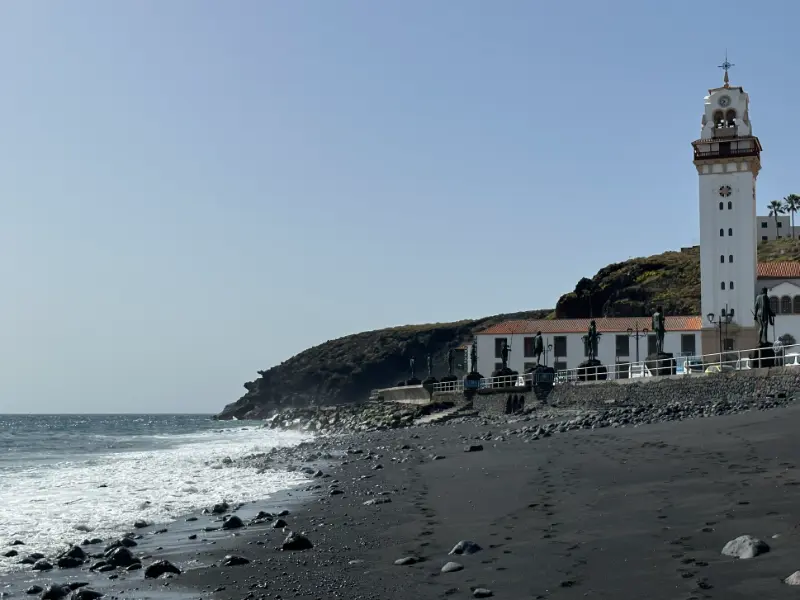
Category: Food & Culture

Tenerife food, Canarian dishes, wine, markets and cultural experiences for curious travellers.

  • La Orotava Town Hall Guide: Neoclassical Architecture and Plaza

    La Orotava Town Hall Guide: Neoclassical Architecture and Plaza

    Ayuntamiento de La Orotava is the kind of Tenerife stop that becomes much more rewarding when I understand what I am looking at before I arrive. It is not a place I would oversell as a reason to cross the whole island on its own; its strength is the way it adds detail to a well-planned day in La Orotava.

    In this guide I separate documented information from practical trip planning. Historical dates, dimensions and heritage details come from official tourism or municipal sources. Suggestions about timing, route order, photography and combinations are my planning approach. I avoid inventing fixed opening hours, prices or guaranteed access when the responsible source does not publish dependable current information.

    At a glance

    PlaceAyuntamiento de La Orotava
    WhereCarrera del Escultor Estévez, 1, 38300 La Orotava
    Best forarchitecture, historic-centre walks, civic history and Corpus Christi atmosphere
    Time to allow20–40 minutes for the exterior and plaza
    Planning ruleCombine it with nearby sights, verify same-day access and keep the schedule flexible.

    Why I would add Ayuntamiento de La Orotava to a Tenerife itinerary

    Large attractions explain only part of Tenerife. The island becomes more memorable when I connect its beaches and volcanic scenery with the civic spaces, religious buildings, houses and working waterfronts that show how individual communities developed. Ayuntamiento de La Orotava adds exactly that kind of context.

    I also like stops that improve an itinerary without creating another long drive. In La Orotava, several worthwhile places sit close enough to combine on foot or in a short local loop. That means I can spend more time observing and less time looking for parking or repeating the same road.

    For me, the goal is not to collect attractions. It is to build a route with a clear story: maritime history on the coast, architecture in the old town, religious art around a parish, or the relationship between public spaces and local life. When a small site helps that story, it earns its place in the schedule.

    What the official record confirms

    • The current Town Hall was designed in 1869.
    • It replaced the deteriorated convent of the Poor Clare nuns of San José on the same site.
    • Construction was expected to take about two and a half years but ultimately lasted 25 years.
    • The building was completed in 1895 in neoclassical style.

    A 25-year construction story

    The Town Hall looks composed and formal today, but its construction history was anything but quick. Turismo de Tenerife explains that the building was designed in 1869 after the demolition of the deteriorated convent of the Poor Clare nuns of San José. A project expected to take about two and a half years stretched to 25 because of financial difficulties, and the building was finally completed in 1895.

    That long timeline makes the façade more interesting to me. The Town Hall is not simply a late-19th-century civic landmark; it is also evidence of how ambitious municipal architecture depended on local finances, politics and changing priorities.

    Reading the neoclassical façade

    The official description highlights the tympanum and its reliefs. The town’s heraldic arms are surrounded by allegorical representations of Agriculture, Justice, History and Education. I like that combination because it tells visitors what the municipality wanted civic architecture to communicate: productive land, law, memory and public instruction.

    I step back across the plaza to see the composition as a whole before looking at details. La Orotava’s historic centre has many wooden balconies and older Canarian façades, so the more formal neoclassical language of the Town Hall creates a useful contrast.

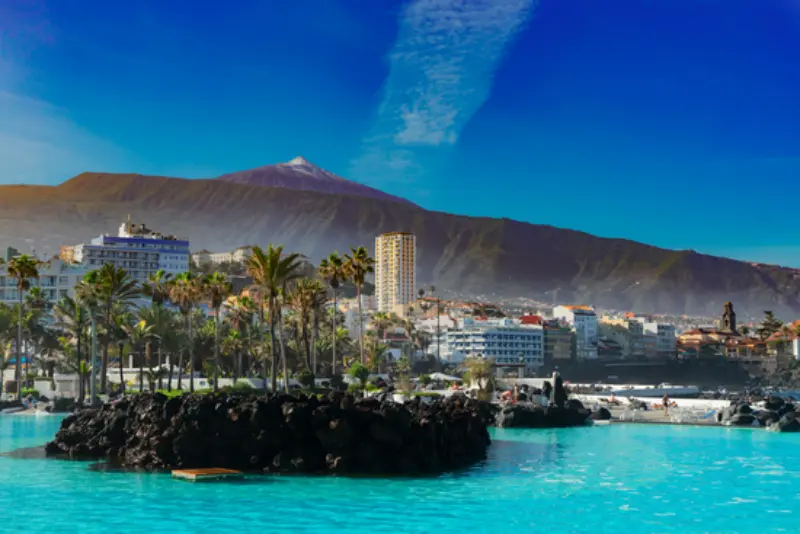
    La Orotava Historic Center Panorama Tenerife

    The plaza as part of the visit

    The building cannot be separated from the large square in front of it. Events and fairs use this space through the year, and during major local celebrations the plaza becomes one of the town’s key public stages. Even on an ordinary day, it is a good orientation point between the Hijuela del Botánico, historic churches and the steep streets that descend through the centre.

    I check the local event calendar before driving into the old town. A festival can make the visit more memorable, but it can also affect parking, traffic and access. Flexibility is more useful here than a tightly timed schedule.

    What to combine with it nearby

    I would build the visit around nearby pages already covered on this site rather than create an isolated detour. Good combinations include La Orotava travel guide, Hijuela del Botánico, Iglesia de la Concepción. For a broader overview, I also keep Jardines Victoria in the same planning cluster.

    How I plan the visit

    I start by deciding whether Ayuntamiento de La Orotava is the anchor of the outing or one stop within a wider walk. For a small heritage site, the second option is usually better. I allow enough time to read information panels, notice architectural details and take a few photographs without stretching a short stop into half a day.

    I then check the current official page on the same day or the evening before. Religious services, cultural events, restoration work, sea conditions or local festivals can change access. A flexible route is more resilient than a timetable that depends on every door opening exactly when expected.

    1. Start with the most time-sensitive stop, such as a museum interior, church access or safe bathing window.
    2. Continue on foot to nearby exterior sights and public spaces.
    3. Leave lunch or coffee flexible so a good local discovery does not become a scheduling problem.
    4. Keep the final stop optional, especially if traffic, weather or an event changes the pace of the day.

    This approach is especially useful in Tenerife because short map distances can hide steep gradients, one-way streets and difficult parking. A compact local cluster usually creates a better day than zig-zagging between distant municipalities.

    Getting there and moving around

    For La Orotava, I compare driving with public transport according to the rest of the day. A car is useful when the itinerary continues to rural viewpoints or another municipality, but it can become a burden in historic streets where parking is limited. If I am concentrating on the centre, I prefer to park once and walk.

    TITSA bus connections serve the main towns and tourist areas of Tenerife. I check the current route planner rather than copying a bus number into an evergreen article, because services and stops can change. When travelling with luggage, a pushchair or limited mobility, I also inspect the final approach on a map; the last few hundred metres can matter more than the intercity journey.

    Best time of day

    For architecture and street photography, morning or late afternoon usually gives softer light and fewer harsh shadows. For an active church or museum, opening arrangements matter more than photography. For a beach or waterfront, sea state and local safety information matter more than the clock.

    I also think about the rhythm of the surrounding town. A square may be quiet in the morning and animated before dinner; a working harbour feels different when fishing activity is underway; a heritage street can be easier to appreciate before the busiest visitor period. If I am staying nearby, returning at a second time of day is often more rewarding than trying to force everything into one visit.

    Practical tips that make the stop better

    Comfortable shoes are my default choice even for short urban visits. Historic paving can be uneven, and the north of Tenerife has steep streets that look gentler on a map than they feel on foot. I carry water and a light layer because conditions can change quickly between sun, cloud and Atlantic breeze.

    I do not assume that a public-looking heritage building has public toilets, step-free access or an always-open interior. Travellers who need specific accessibility features should verify them with the venue or municipality before relying on the visit. The same applies to parking reserved for disabled visitors.

    For churches and devotional spaces, I dress respectfully and keep noise low. For working harbour or beach areas, I obey barriers, flags and staff instructions. For historic houses, I respect private sections even when the exterior looks like a museum. These simple habits make tourism less intrusive for the people who use these places every day.

    Photography without missing the place itself

    I take a wide establishing photograph first, then look for details: stone, wood, ironwork, inscriptions, paving, old trees or the relationship between a building and the street around it. That method produces a better visual record than taking ten nearly identical front-on pictures.

    I never use a drone in an urban or protected area without checking the current legal requirements and local restrictions. Tenerife has controlled airspace, protected natural areas and crowded visitor zones; a general travel article should not be treated as flight authorisation.

    Where to eat and how I fit meals into the route

    I prefer eating near the cluster I am already exploring instead of driving across the island for a restaurant reservation. In La Orotava, that can mean a simple café, Canarian lunch, fish on the coast or a longer meal after the walking portion of the day. I check recent opening information because kitchens and weekly closing days can change.

    Jardines Victoria Fountain La Orotava Tenerife

    If I am interested in local food, I look beyond a single famous dish. Papas arrugadas, mojo, gofio, local cheeses, fish and island wines make more sense when connected to the agricultural and maritime history I have just been exploring. Food becomes part of the destination rather than a separate checklist.

    Where to stay

    If I want to explore this part of Tenerife over more than one day, I compare current accommodation on Booking.com. I look carefully at the exact map position, parking, elevation and recent guest comments instead of relying only on the property name.

    For a first visit to Tenerife I choose my base according to the majority of the itinerary, not one small attraction. A good base saves more time over a week than choosing a hotel simply because it is close to one place I plan to see once.

    Activities and tours

    A small local heritage or coastal stop can pair well with one organised experience on another day. I use the widget below to compare current tours and activities, while avoiding a schedule that stacks a long excursion immediately before or after a dense driving day.

    Who will enjoy this stop most?

    Ayuntamiento de La Orotava is a good fit for travellers who enjoy context rather than only headline attractions. Couples and solo travellers can fold it into a slow walking day; families can use it as a shorter educational stop between more active plans; repeat visitors may appreciate it because it reveals a layer of Tenerife that is easy to miss on a first trip.
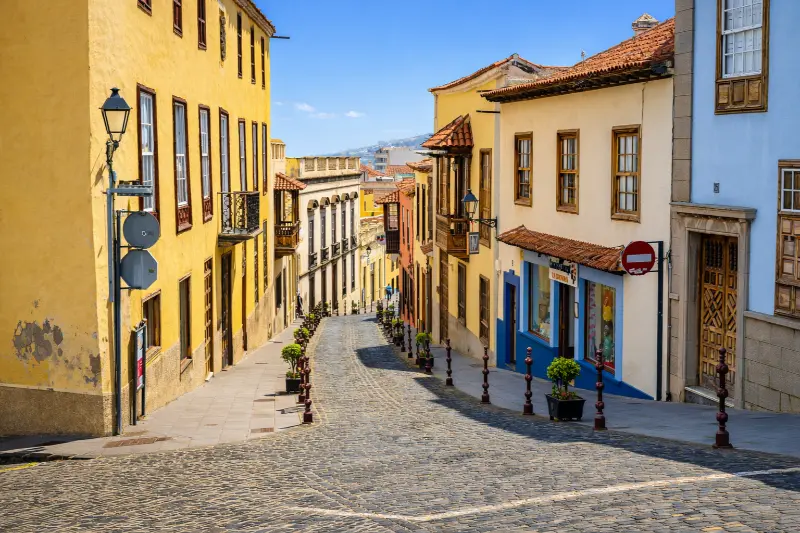
    Historic Center Of La Orotava Tenerife

    It may be less satisfying for someone with only a few hours on the island who is trying to prioritise Teide, Anaga or a major beach. I would rather be realistic about that than label every place a “must-see”. A useful travel site should help readers decide what fits their interests, not make every attraction sound equally essential.

    Common mistakes I would avoid

    • Driving across Tenerife only for this one stop without combining it with the surrounding area.
    • Assuming online opening hours are guaranteed when the place is religious, cultural or locally managed.
    • Underestimating hills, parking limitations or Atlantic conditions because the destination looks urban on a map.
    • Trying to photograph everything before taking time to understand the historical context.
    • Ignoring local events, services or safety instructions because an older travel article says something different.

    Frequently asked questions

    When was La Orotava Town Hall built?

    It was designed in 1869 and completed in 1895 after a construction process lasting about 25 years.

    What stood on the site before the Town Hall?

    The convent of the Poor Clare nuns of San José occupied the site before it was demolished.

    What style is the building?

    The official tourism description identifies it as neoclassical.

    What should I look for on the façade?

    The tympanum includes the town’s arms and allegories of Agriculture, Justice, History and Education.

    Official information

    For the documented background used in this guide and for any current operational information, I check the official visitor information for Ayuntamiento de La Orotava shortly before travelling. Same-day signs, staff instructions, parish notices, municipal updates, weather and safety restrictions always take priority over an evergreen article.

    Final thoughts

    I would include Ayuntamiento de La Orotava when it strengthens the story of a day in La Orotava. Its value is not measured by how many hours it occupies. A short stop can be meaningful when it explains the history, architecture, sea culture or everyday life around it.

    My preferred approach is simple: know the key facts before arriving, stay flexible about access, respect the place as part of local life and connect it with nearby sights. Done that way, this becomes one more piece of a Tenerife itinerary that feels coherent rather than crowded.
  • Muelle Pesquero Puerto de la Cruz Guide: Fishing Boats, Harbour History and Local Traditions

    Muelle Pesquero Puerto de la Cruz Guide: Fishing Boats, Harbour History and Local Traditions

    Muelle Pesquero is the kind of Tenerife stop that becomes much more rewarding when I understand what I am looking at before I arrive. It is not a place I would oversell as a reason to cross the whole island on its own; its strength is the way it adds detail to a well-planned day in Puerto de la Cruz.

    In this guide I separate documented information from practical trip planning. Historical dates, dimensions and heritage details come from official tourism or municipal sources. Suggestions about timing, route order, photography and combinations are my planning approach. I avoid inventing fixed opening hours, prices or guaranteed access when the responsible source does not publish dependable current information.

    At a glance

    PlaceMuelle Pesquero
    WhereMuelle Pesquero, 38400 Puerto de la Cruz
    Best forharbour atmosphere, fishing culture, photography and local traditions
    Time to allow30–60 minutes, longer during a harbour walk
    Planning ruleCombine it with nearby sights, verify same-day access and keep the schedule flexible.

    Why I would add Muelle Pesquero to a Tenerife itinerary

    Large attractions explain only part of Tenerife. The island becomes more memorable when I connect its beaches and volcanic scenery with the civic spaces, religious buildings, houses and working waterfronts that show how individual communities developed. Muelle Pesquero adds exactly that kind of context.

    I also like stops that improve an itinerary without creating another long drive. In Puerto de la Cruz, several worthwhile places sit close enough to combine on foot or in a short local loop. That means I can spend more time observing and less time looking for parking or repeating the same road.

    For me, the goal is not to collect attractions. It is to build a route with a clear story: maritime history on the coast, architecture in the old town, religious art around a parish, or the relationship between public spaces and local life. When a small site helps that story, it earns its place in the schedule.

    What the official record confirms

    • Municipal tourism material describes the fishing pier as the heart of Puerto de la Cruz.
    • In the 18th century Puerto de la Cruz was one of the most dynamic ports in the Canary Islands.
    • The harbour handled banana exports in the 18th and 19th centuries and helped bring Enlightenment ideas into the town.
    • Today small fishing boats still use the pier and fish is sold locally after the morning catch.

    Why the old fishing pier is more than a viewpoint

    The Muelle Pesquero is one of the easiest places to see why Puerto de la Cruz developed around the sea. Municipal visitor information describes a scene of small fishing boats, fresh-fish sales, terraces and local bathing, but the important layer is historical: this waterfront once connected the Orotava Valley’s produce with Atlantic trade routes.

    I like arriving without expecting a polished marina. The appeal lies in coexistence—working boats, residents, visitors, swimmers and old harbour buildings share a relatively small space. That makes the pier feel less like an attraction and more like a piece of the city that still performs several functions.

    Trade, bananas and ideas

    Puerto de la Cruz became one of the archipelago’s major ports in the 18th century. Municipal interpretation links the old harbour with export trade, including bananas in later periods, and with the arrival of Enlightenment ideas. I find that second point especially useful because it explains why a modest pier belongs in a cultural itinerary as much as in a maritime one.

    The nearby Casa de la Real Aduana and Batería de Santa Bárbara make the trade-and-defence story easier to read. Instead of separating those places, I walk them together and imagine the harbour as a system: goods arriving and leaving, taxes being administered, coastal defence and sailors carrying news between islands and Europe.

    Living traditions at the water’s edge

    The pier still has strong links with local fishing and religious festivities. The Virgen del Carmen celebrations bring the harbour into the centre of community life, while the eve of San Juan is associated with other deeply rooted local traditions. These events can be crowded and deserve respect; I never treat a religious procession or community celebration as a private photo opportunity.

    In 2026 the municipality carried out safety and appearance works around the fishing pier ahead of the July festivities. That is a useful reminder to check current access because active waterfronts can change through maintenance, events and sea conditions.

    What to combine with it nearby

    I would build the visit around nearby pages already covered on this site rather than create an isolated detour. Good combinations include Casa de la Real Aduana, Batería de Santa Bárbara, Puerto de la Cruz travel guide. For a broader overview, I also keep El Penitente in the same planning cluster.

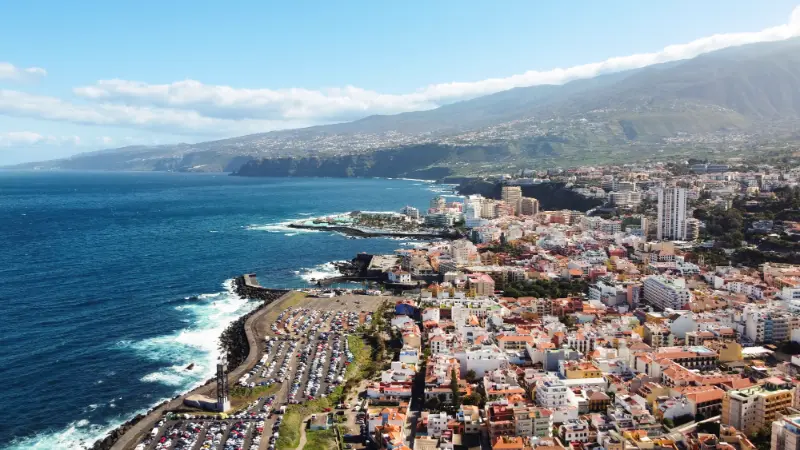
    Aerial View Of Puerto De La Cruz City Tenerife

    How I plan the visit

    I start by deciding whether Muelle Pesquero is the anchor of the outing or one stop within a wider walk. For a small heritage site, the second option is usually better. I allow enough time to read information panels, notice architectural details and take a few photographs without stretching a short stop into half a day.

    I then check the current official page on the same day or the evening before. Religious services, cultural events, restoration work, sea conditions or local festivals can change access. A flexible route is more resilient than a timetable that depends on every door opening exactly when expected.

    1. Start with the most time-sensitive stop, such as a museum interior, church access or safe bathing window.
    2. Continue on foot to nearby exterior sights and public spaces.
    3. Leave lunch or coffee flexible so a good local discovery does not become a scheduling problem.
    4. Keep the final stop optional, especially if traffic, weather or an event changes the pace of the day.

    This approach is especially useful in Tenerife because short map distances can hide steep gradients, one-way streets and difficult parking. A compact local cluster usually creates a better day than zig-zagging between distant municipalities.

    Getting there and moving around

    For Puerto de la Cruz, I compare driving with public transport according to the rest of the day. A car is useful when the itinerary continues to rural viewpoints or another municipality, but it can become a burden in historic streets where parking is limited. If I am concentrating on the centre, I prefer to park once and walk.

    TITSA bus connections serve the main towns and tourist areas of Tenerife. I check the current route planner rather than copying a bus number into an evergreen article, because services and stops can change. When travelling with luggage, a pushchair or limited mobility, I also inspect the final approach on a map; the last few hundred metres can matter more than the intercity journey.

    Best time of day

    For architecture and street photography, morning or late afternoon usually gives softer light and fewer harsh shadows. For an active church or museum, opening arrangements matter more than photography. For a beach or waterfront, sea state and local safety information matter more than the clock.

    I also think about the rhythm of the surrounding town. A square may be quiet in the morning and animated before dinner; a working harbour feels different when fishing activity is underway; a heritage street can be easier to appreciate before the busiest visitor period. If I am staying nearby, returning at a second time of day is often more rewarding than trying to force everything into one visit.

    Practical tips that make the stop better

    Comfortable shoes are my default choice even for short urban visits. Historic paving can be uneven, and the north of Tenerife has steep streets that look gentler on a map than they feel on foot. I carry water and a light layer because conditions can change quickly between sun, cloud and Atlantic breeze.

    I do not assume that a public-looking heritage building has public toilets, step-free access or an always-open interior. Travellers who need specific accessibility features should verify them with the venue or municipality before relying on the visit. The same applies to parking reserved for disabled visitors.

    For churches and devotional spaces, I dress respectfully and keep noise low. For working harbour or beach areas, I obey barriers, flags and staff instructions. For historic houses, I respect private sections even when the exterior looks like a museum. These simple habits make tourism less intrusive for the people who use these places every day.

    Photography without missing the place itself

    I take a wide establishing photograph first, then look for details: stone, wood, ironwork, inscriptions, paving, old trees or the relationship between a building and the street around it. That method produces a better visual record than taking ten nearly identical front-on pictures.

    I never use a drone in an urban or protected area without checking the current legal requirements and local restrictions. Tenerife has controlled airspace, protected natural areas and crowded visitor zones; a general travel article should not be treated as flight authorisation.

    Where to eat and how I fit meals into the route

    I prefer eating near the cluster I am already exploring instead of driving across the island for a restaurant reservation. In Puerto de la Cruz, that can mean a simple café, Canarian lunch, fish on the coast or a longer meal after the walking portion of the day. I check recent opening information because kitchens and weekly closing days can change.

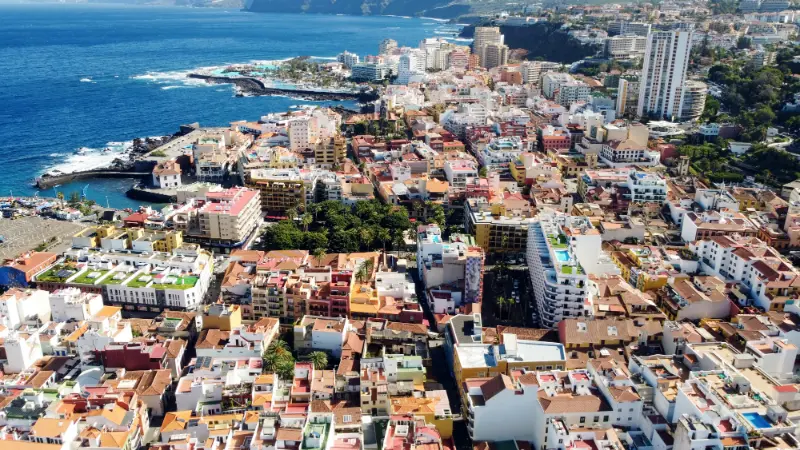
    Aerial View Of Puerto De La Cruz Tenerife

    If I am interested in local food, I look beyond a single famous dish. Papas arrugadas, mojo, gofio, local cheeses, fish and island wines make more sense when connected to the agricultural and maritime history I have just been exploring. Food becomes part of the destination rather than a separate checklist.

    Where to stay

    If I want to explore this part of Tenerife over more than one day, I compare current accommodation on Booking.com. I look carefully at the exact map position, parking, elevation and recent guest comments instead of relying only on the property name.

    For a first visit to Tenerife I choose my base according to the majority of the itinerary, not one small attraction. A good base saves more time over a week than choosing a hotel simply because it is close to one place I plan to see once.

    Activities and tours

    A small local heritage or coastal stop can pair well with one organised experience on another day. I use the widget below to compare current tours and activities, while avoiding a schedule that stacks a long excursion immediately before or after a dense driving day.

    Who will enjoy this stop most?

    Muelle Pesquero is a good fit for travellers who enjoy context rather than only headline attractions. Couples and solo travellers can fold it into a slow walking day; families can use it as a shorter educational stop between more active plans; repeat visitors may appreciate it because it reveals a layer of Tenerife that is easy to miss on a first trip.

    It may be less satisfying for someone with only a few hours on the island who is trying to prioritise Teide, Anaga or a major beach. I would rather be realistic about that than label every place a “must-see”. A useful travel site should help readers decide what fits their interests, not make every attraction sound equally essential.

    Common mistakes I would avoid

    • Driving across Tenerife only for this one stop without combining it with the surrounding area.
    • Assuming online opening hours are guaranteed when the place is religious, cultural or locally managed.
    • Underestimating hills, parking limitations or Atlantic conditions because the destination looks urban on a map.
    • Trying to photograph everything before taking time to understand the historical context.
    • Ignoring local events, services or safety instructions because an older travel article says something different.

    Frequently asked questions

    Is the Muelle Pesquero still used by fishermen?

    Yes. Municipal visitor information describes small fishing boats continuing to work from the pier and fresh fish being sold after the catch.

    Why was Puerto de la Cruz an important port?

    It was a major commercial outlet for the Orotava Valley and one of Tenerife’s important ports in the 18th century.

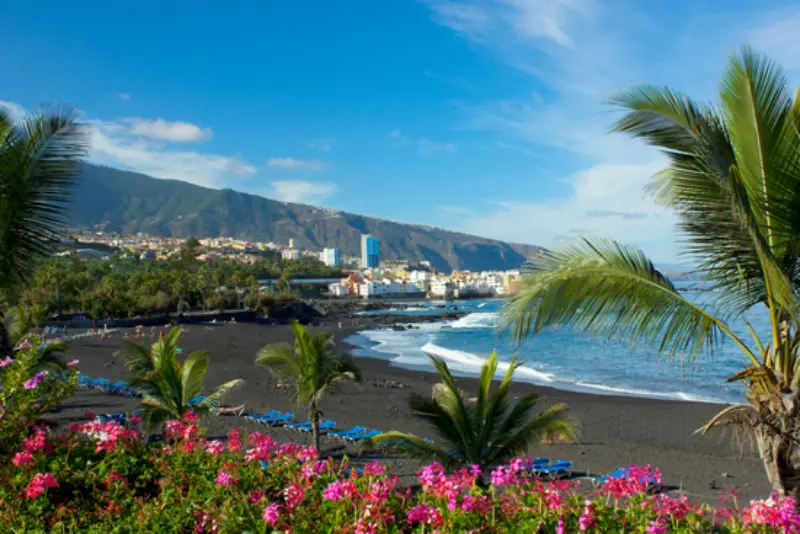
    Playa Jardin Puerto De La Cruz Tenerife

    Can I swim there?

    The harbour area is used locally for bathing, but conditions, event restrictions and safety instructions should always be checked on the day.

    What should I combine with the pier?

    Casa de la Real Aduana, Batería de Santa Bárbara, Plaza del Charco and La Ranilla all fit naturally into the same walk.

    Official information

    For the documented background used in this guide and for any current operational information, I check the official visitor information for Muelle Pesquero shortly before travelling. Same-day signs, staff instructions, parish notices, municipal updates, weather and safety restrictions always take priority over an evergreen article.

    Final thoughts

    I would include Muelle Pesquero when it strengthens the story of a day in Puerto de la Cruz. Its value is not measured by how many hours it occupies. A short stop can be meaningful when it explains the history, architecture, sea culture or everyday life around it.

    My preferred approach is simple: know the key facts before arriving, stay flexible about access, respect the place as part of local life and connect it with nearby sights. Done that way, this becomes one more piece of a Tenerife itinerary that feels coherent rather than crowded.
  • Sacred Art Museum Puerto de la Cruz Guide: Retablos, Silver and Parish History

    Sacred Art Museum Puerto de la Cruz Guide: Retablos, Silver and Parish History

    Museo Parroquial de Arte Sacro is the kind of Tenerife stop that becomes much more rewarding when I understand what I am looking at before I arrive. It is not a place I would oversell as a reason to cross the whole island on its own; its strength is the way it adds detail to a well-planned day in Puerto de la Cruz.

    In this guide I separate documented information from practical trip planning. Historical dates, dimensions and heritage details come from official tourism or municipal sources. Suggestions about timing, route order, photography and combinations are my planning approach. I avoid inventing fixed opening hours, prices or guaranteed access when the responsible source does not publish dependable current information.

    At a glance

    PlaceMuseo Parroquial de Arte Sacro
    WherePlaza de la Iglesia, 38400 Puerto de la Cruz
    Best forsacred art, church history, detailed indoor visits and rainy-day culture
    Time to allow30–60 minutes if the museum is open
    Planning ruleCombine it with nearby sights, verify same-day access and keep the schedule flexible.

    Why I would add Museo Parroquial de Arte Sacro to a Tenerife itinerary

    Large attractions explain only part of Tenerife. The island becomes more memorable when I connect its beaches and volcanic scenery with the civic spaces, religious buildings, houses and working waterfronts that show how individual communities developed. Museo Parroquial de Arte Sacro adds exactly that kind of context.

    I also like stops that improve an itinerary without creating another long drive. In Puerto de la Cruz, several worthwhile places sit close enough to combine on foot or in a short local loop. That means I can spend more time observing and less time looking for parking or repeating the same road.

    For me, the goal is not to collect attractions. It is to build a route with a clear story: maritime history on the coast, architecture in the old town, religious art around a parish, or the relationship between public spaces and local life. When a small site helps that story, it earns its place in the schedule.

    What the official record confirms

    • The museum belongs to the parish of Nuestra Señora de la Peña de Francia.
    • Its collection documents the history, worship and devotions connected with the mother church.
    • The parish developed from a simple hermitage founded in the early 17th century.
    • The collection includes altarpieces, sculpture, vestments, paintings and silver objects.

    Why this museum makes the church easier to understand

    A historic church can be visually impressive while still leaving many questions unanswered. The parish museum is useful because it gathers objects that explain how worship, processions, donations and artistic patronage shaped the community around Nuestra Señora de la Peña de Francia. I see it less as a separate attraction and more as an interpretive extension of the church.

    The official description specifically mentions altarpieces, sculpture, ornaments, paintings and silverwork. That variety matters: religious life was expressed through architecture, textiles, metalwork and images, not only through the main altar visitors see during a brief church visit.

    What to look for in sacred art

    I start with craftsmanship rather than trying to remember every saint or date. Silverwork shows the wealth and ceremonial ambitions of a parish; textiles reveal how liturgy used colour and material; sculpture and painting show changing artistic preferences and imported influences.

    Retablos are especially useful because they combine architecture, painting, carving and devotional storytelling. Even if I know little about Catholic iconography, I can look at symmetry, gilding, niches and how individual figures are arranged. Reading the labels slowly makes the collection much more rewarding.

    Planning around opening uncertainty

    Small parish museums rarely operate like large municipal institutions. Hours may depend on parish schedules, volunteers, religious celebrations or conservation work. I therefore check the official listing and parish information close to the day of my visit rather than assuming that an old timetable is still valid.

    If the museum is closed, I do not consider the trip wasted. Plaza de la Iglesia, the main church, San Telmo and the historic centre are close enough to build a good walking route. That flexibility is essential when planning smaller heritage sites on Tenerife.

    What to combine with it nearby

    I would build the visit around nearby pages already covered on this site rather than create an isolated detour. Good combinations include Iglesia de la Peña de Francia, Puerto de la Cruz travel guide, Museo Arqueológico. For a broader overview, I also keep Casa de la Real Aduana in the same planning cluster.

    Puerto De La Cruz City And Atlantic Ocean Tenerife

    How I plan the visit

    I start by deciding whether Museo Parroquial de Arte Sacro is the anchor of the outing or one stop within a wider walk. For a small heritage site, the second option is usually better. I allow enough time to read information panels, notice architectural details and take a few photographs without stretching a short stop into half a day.

    I then check the current official page on the same day or the evening before. Religious services, cultural events, restoration work, sea conditions or local festivals can change access. A flexible route is more resilient than a timetable that depends on every door opening exactly when expected.

    1. Start with the most time-sensitive stop, such as a museum interior, church access or safe bathing window.
    2. Continue on foot to nearby exterior sights and public spaces.
    3. Leave lunch or coffee flexible so a good local discovery does not become a scheduling problem.
    4. Keep the final stop optional, especially if traffic, weather or an event changes the pace of the day.

    This approach is especially useful in Tenerife because short map distances can hide steep gradients, one-way streets and difficult parking. A compact local cluster usually creates a better day than zig-zagging between distant municipalities.

    Getting there and moving around

    For Puerto de la Cruz, I compare driving with public transport according to the rest of the day. A car is useful when the itinerary continues to rural viewpoints or another municipality, but it can become a burden in historic streets where parking is limited. If I am concentrating on the centre, I prefer to park once and walk.

    TITSA bus connections serve the main towns and tourist areas of Tenerife. I check the current route planner rather than copying a bus number into an evergreen article, because services and stops can change. When travelling with luggage, a pushchair or limited mobility, I also inspect the final approach on a map; the last few hundred metres can matter more than the intercity journey.

    Best time of day

    For architecture and street photography, morning or late afternoon usually gives softer light and fewer harsh shadows. For an active church or museum, opening arrangements matter more than photography. For a beach or waterfront, sea state and local safety information matter more than the clock.

    I also think about the rhythm of the surrounding town. A square may be quiet in the morning and animated before dinner; a working harbour feels different when fishing activity is underway; a heritage street can be easier to appreciate before the busiest visitor period. If I am staying nearby, returning at a second time of day is often more rewarding than trying to force everything into one visit.

    Practical tips that make the stop better

    Comfortable shoes are my default choice even for short urban visits. Historic paving can be uneven, and the north of Tenerife has steep streets that look gentler on a map than they feel on foot. I carry water and a light layer because conditions can change quickly between sun, cloud and Atlantic breeze.

    I do not assume that a public-looking heritage building has public toilets, step-free access or an always-open interior. Travellers who need specific accessibility features should verify them with the venue or municipality before relying on the visit. The same applies to parking reserved for disabled visitors.

    For churches and devotional spaces, I dress respectfully and keep noise low. For working harbour or beach areas, I obey barriers, flags and staff instructions. For historic houses, I respect private sections even when the exterior looks like a museum. These simple habits make tourism less intrusive for the people who use these places every day.

    Photography without missing the place itself

    I take a wide establishing photograph first, then look for details: stone, wood, ironwork, inscriptions, paving, old trees or the relationship between a building and the street around it. That method produces a better visual record than taking ten nearly identical front-on pictures.

    I never use a drone in an urban or protected area without checking the current legal requirements and local restrictions. Tenerife has controlled airspace, protected natural areas and crowded visitor zones; a general travel article should not be treated as flight authorisation.

    Where to eat and how I fit meals into the route

    I prefer eating near the cluster I am already exploring instead of driving across the island for a restaurant reservation. In Puerto de la Cruz, that can mean a simple café, Canarian lunch, fish on the coast or a longer meal after the walking portion of the day. I check recent opening information because kitchens and weekly closing days can change.

    Puerto De La Cruz Skyline Tenerife

    If I am interested in local food, I look beyond a single famous dish. Papas arrugadas, mojo, gofio, local cheeses, fish and island wines make more sense when connected to the agricultural and maritime history I have just been exploring. Food becomes part of the destination rather than a separate checklist.

    Where to stay

    If I want to explore this part of Tenerife over more than one day, I compare current accommodation on Booking.com. I look carefully at the exact map position, parking, elevation and recent guest comments instead of relying only on the property name.

    For a first visit to Tenerife I choose my base according to the majority of the itinerary, not one small attraction. A good base saves more time over a week than choosing a hotel simply because it is close to one place I plan to see once.

    Activities and tours

    A small local heritage or coastal stop can pair well with one organised experience on another day. I use the widget below to compare current tours and activities, while avoiding a schedule that stacks a long excursion immediately before or after a dense driving day.

    Who will enjoy this stop most?

    Museo Parroquial de Arte Sacro is a good fit for travellers who enjoy context rather than only headline attractions. Couples and solo travellers can fold it into a slow walking day; families can use it as a shorter educational stop between more active plans; repeat visitors may appreciate it because it reveals a layer of Tenerife that is easy to miss on a first trip.

    It may be less satisfying for someone with only a few hours on the island who is trying to prioritise Teide, Anaga or a major beach. I would rather be realistic about that than label every place a “must-see”. A useful travel site should help readers decide what fits their interests, not make every attraction sound equally essential.

    Common mistakes I would avoid

    • Driving across Tenerife only for this one stop without combining it with the surrounding area.
    • Assuming online opening hours are guaranteed when the place is religious, cultural or locally managed.
    • Underestimating hills, parking limitations or Atlantic conditions because the destination looks urban on a map.
    • Trying to photograph everything before taking time to understand the historical context.
    • Ignoring local events, services or safety instructions because an older travel article says something different.

    Frequently asked questions

    Where is the Sacred Art Museum?

    It is in Plaza de la Iglesia and belongs to the parish of Nuestra Señora de la Peña de Francia.

    What does the collection include?

    The official listing mentions altarpieces, sculptures, ornaments, paintings and silver objects.

    Is it the same as the Archaeological Museum?

    No. The Archaeological Museum focuses on the island’s pre-Hispanic heritage, while this collection documents parish and devotional history.

    Should I check opening hours?

    Yes. Small parish museums can have limited or changing access, especially around services and religious events.

    Official information

    For the documented background used in this guide and for any current operational information, I check the official visitor information for Museo Parroquial de Arte Sacro shortly before travelling. Same-day signs, staff instructions, parish notices, municipal updates, weather and safety restrictions always take priority over an evergreen article.

    Final thoughts

    I would include Museo Parroquial de Arte Sacro when it strengthens the story of a day in Puerto de la Cruz. Its value is not measured by how many hours it occupies. A short stop can be meaningful when it explains the history, architecture, sea culture or everyday life around it.

    Aerial View Of Puerto De La Cruz City Tenerife

    My preferred approach is simple: know the key facts before arriving, stay flexible about access, respect the place as part of local life and connect it with nearby sights. Done that way, this becomes one more piece of a Tenerife itinerary that feels coherent rather than crowded.
  • Iglesia de San Francisco Puerto de la Cruz Guide: 1599 Church and Ecumenical Heritage

    Iglesia de San Francisco Puerto de la Cruz Guide: 1599 Church and Ecumenical Heritage

    Iglesia de San Francisco is the kind of Tenerife stop that becomes much more rewarding when I understand what I am looking at before I arrive. It is not a place I would oversell as a reason to cross the whole island on its own; its strength is the way it adds detail to a well-planned day in Puerto de la Cruz.

    In this guide I separate documented information from practical trip planning. Historical dates, dimensions and heritage details come from official tourism or municipal sources. Suggestions about timing, route order, photography and combinations are my planning approach. I avoid inventing fixed opening hours, prices or guaranteed access when the responsible source does not publish dependable current information.

    At a glance

    PlaceIglesia de San Francisco
    WhereCalle San Juan, 7, 38400 Puerto de la Cruz
    Best forreligious architecture, art, quiet heritage stops and old-town walks
    Time to allow20–40 minutes when access is available
    Planning ruleCombine it with nearby sights, verify same-day access and keep the schedule flexible.

    Why I would add Iglesia de San Francisco to a Tenerife itinerary

    Large attractions explain only part of Tenerife. The island becomes more memorable when I connect its beaches and volcanic scenery with the civic spaces, religious buildings, houses and working waterfronts that show how individual communities developed. Iglesia de San Francisco adds exactly that kind of context.

    I also like stops that improve an itinerary without creating another long drive. In Puerto de la Cruz, several worthwhile places sit close enough to combine on foot or in a short local loop. That means I can spend more time observing and less time looking for parking or repeating the same road.

    For me, the goal is not to collect attractions. It is to build a route with a clear story: maritime history on the coast, architecture in the old town, religious art around a parish, or the relationship between public spaces and local life. When a small site helps that story, it earns its place in the schedule.

    What the official record confirms

    • The church was built in 1599.
    • Turismo de Tenerife describes it as the oldest building in Puerto de la Cruz.
    • Its ecumenical character has allowed different foreign Christian communities to use it.
    • The interior contains artworks spanning styles from the 15th century to the present.

    A building older than the tourist city around it

    Puerto de la Cruz is famous for its role in the history of tourism, but San Francisco pushes the story much further back. The official tourism record dates the church to 1599 and identifies it as the city’s oldest surviving building. That gives the small church a disproportionate historical weight inside a centre now full of hotels, restaurants and busy pedestrian streets.

    I like using the church as a reminder that Puerto was a maritime settlement before it was a resort. A few minutes here helps connect the later merchant houses, harbour defences and cosmopolitan tourism culture to an earlier religious and urban layer.

    Why its ecumenical use is especially interesting

    The official description notes that different foreign Christian communities have used the church. In a port that maintained commercial and cultural links with northern Europe, that detail feels particularly appropriate. It turns the building into evidence of a town accustomed to outside influences rather than a purely local parish story.

    I avoid turning that history into a simplistic claim that the church was always open in the same way to every group. The more useful point for travellers is that the building’s modern ecumenical character reflects the international communities that have long formed part of Puerto de la Cruz.

    Looking at the art without rushing

    The interior holds works from several periods, from the 15th century through to modern times. Rather than trying to identify every object from memory, I look for changes in materials, carving styles, painting and devotional imagery. A small church can become a compact lesson in how sacred art evolved across centuries.

    Because it remains a religious space, I keep photography discreet and never assume every area is open. Masses, ceremonies or private prayer take priority over sightseeing, and posted parish information should always override a travel itinerary.

    What to combine with it nearby

    I would build the visit around nearby pages already covered on this site rather than create an isolated detour. Good combinations include Puerto de la Cruz travel guide, Iglesia de la Peña de Francia, Ermita de San Telmo. For a broader overview, I also keep Casa de la Real Aduana in the same planning cluster.

    Puerto De La Cruz At Sunset Tenerife

    How I plan the visit

    I start by deciding whether Iglesia de San Francisco is the anchor of the outing or one stop within a wider walk. For a small heritage site, the second option is usually better. I allow enough time to read information panels, notice architectural details and take a few photographs without stretching a short stop into half a day.

    I then check the current official page on the same day or the evening before. Religious services, cultural events, restoration work, sea conditions or local festivals can change access. A flexible route is more resilient than a timetable that depends on every door opening exactly when expected.

    1. Start with the most time-sensitive stop, such as a museum interior, church access or safe bathing window.
    2. Continue on foot to nearby exterior sights and public spaces.
    3. Leave lunch or coffee flexible so a good local discovery does not become a scheduling problem.
    4. Keep the final stop optional, especially if traffic, weather or an event changes the pace of the day.

    This approach is especially useful in Tenerife because short map distances can hide steep gradients, one-way streets and difficult parking. A compact local cluster usually creates a better day than zig-zagging between distant municipalities.

    Getting there and moving around

    For Puerto de la Cruz, I compare driving with public transport according to the rest of the day. A car is useful when the itinerary continues to rural viewpoints or another municipality, but it can become a burden in historic streets where parking is limited. If I am concentrating on the centre, I prefer to park once and walk.

    TITSA bus connections serve the main towns and tourist areas of Tenerife. I check the current route planner rather than copying a bus number into an evergreen article, because services and stops can change. When travelling with luggage, a pushchair or limited mobility, I also inspect the final approach on a map; the last few hundred metres can matter more than the intercity journey.

    Best time of day

    For architecture and street photography, morning or late afternoon usually gives softer light and fewer harsh shadows. For an active church or museum, opening arrangements matter more than photography. For a beach or waterfront, sea state and local safety information matter more than the clock.

    I also think about the rhythm of the surrounding town. A square may be quiet in the morning and animated before dinner; a working harbour feels different when fishing activity is underway; a heritage street can be easier to appreciate before the busiest visitor period. If I am staying nearby, returning at a second time of day is often more rewarding than trying to force everything into one visit.

    Practical tips that make the stop better

    Comfortable shoes are my default choice even for short urban visits. Historic paving can be uneven, and the north of Tenerife has steep streets that look gentler on a map than they feel on foot. I carry water and a light layer because conditions can change quickly between sun, cloud and Atlantic breeze.

    I do not assume that a public-looking heritage building has public toilets, step-free access or an always-open interior. Travellers who need specific accessibility features should verify them with the venue or municipality before relying on the visit. The same applies to parking reserved for disabled visitors.

    For churches and devotional spaces, I dress respectfully and keep noise low. For working harbour or beach areas, I obey barriers, flags and staff instructions. For historic houses, I respect private sections even when the exterior looks like a museum. These simple habits make tourism less intrusive for the people who use these places every day.

    Photography without missing the place itself

    I take a wide establishing photograph first, then look for details: stone, wood, ironwork, inscriptions, paving, old trees or the relationship between a building and the street around it. That method produces a better visual record than taking ten nearly identical front-on pictures.

    I never use a drone in an urban or protected area without checking the current legal requirements and local restrictions. Tenerife has controlled airspace, protected natural areas and crowded visitor zones; a general travel article should not be treated as flight authorisation.

    Where to eat and how I fit meals into the route

    I prefer eating near the cluster I am already exploring instead of driving across the island for a restaurant reservation. In Puerto de la Cruz, that can mean a simple café, Canarian lunch, fish on the coast or a longer meal after the walking portion of the day. I check recent opening information because kitchens and weekly closing days can change.

    Puerto De La Cruz City And Atlantic Ocean Tenerife

    If I am interested in local food, I look beyond a single famous dish. Papas arrugadas, mojo, gofio, local cheeses, fish and island wines make more sense when connected to the agricultural and maritime history I have just been exploring. Food becomes part of the destination rather than a separate checklist.

    Where to stay

    If I want to explore this part of Tenerife over more than one day, I compare current accommodation on Booking.com. I look carefully at the exact map position, parking, elevation and recent guest comments instead of relying only on the property name.

    For a first visit to Tenerife I choose my base according to the majority of the itinerary, not one small attraction. A good base saves more time over a week than choosing a hotel simply because it is close to one place I plan to see once.

    Activities and tours

    A small local heritage or coastal stop can pair well with one organised experience on another day. I use the widget below to compare current tours and activities, while avoiding a schedule that stacks a long excursion immediately before or after a dense driving day.

    Who will enjoy this stop most?

    Iglesia de San Francisco is a good fit for travellers who enjoy context rather than only headline attractions. Couples and solo travellers can fold it into a slow walking day; families can use it as a shorter educational stop between more active plans; repeat visitors may appreciate it because it reveals a layer of Tenerife that is easy to miss on a first trip.

    It may be less satisfying for someone with only a few hours on the island who is trying to prioritise Teide, Anaga or a major beach. I would rather be realistic about that than label every place a “must-see”. A useful travel site should help readers decide what fits their interests, not make every attraction sound equally essential.

    Common mistakes I would avoid

    • Driving across Tenerife only for this one stop without combining it with the surrounding area.
    • Assuming online opening hours are guaranteed when the place is religious, cultural or locally managed.
    • Underestimating hills, parking limitations or Atlantic conditions because the destination looks urban on a map.
    • Trying to photograph everything before taking time to understand the historical context.
    • Ignoring local events, services or safety instructions because an older travel article says something different.

    Frequently asked questions

    How old is Iglesia de San Francisco?

    The official Tenerife tourism listing dates it to 1599.

    Why is it important?

    It is described as the oldest building in Puerto de la Cruz and contains artworks from several centuries.

    Puerto De La Cruz Skyline Tenerife

    What does ecumenical mean here?

    The church has been used by different foreign Christian communities.

    Can I always visit the interior?

    No. It is an active religious space, so access can vary with services, events and local arrangements.

    Official information

    For the documented background used in this guide and for any current operational information, I check the official visitor information for Iglesia de San Francisco shortly before travelling. Same-day signs, staff instructions, parish notices, municipal updates, weather and safety restrictions always take priority over an evergreen article.

    Final thoughts

    I would include Iglesia de San Francisco when it strengthens the story of a day in Puerto de la Cruz. Its value is not measured by how many hours it occupies. A short stop can be meaningful when it explains the history, architecture, sea culture or everyday life around it.

    My preferred approach is simple: know the key facts before arriving, stay flexible about access, respect the place as part of local life and connect it with nearby sights. Done that way, this becomes one more piece of a Tenerife itinerary that feels coherent rather than crowded.

  • Plaza del Charco Puerto de la Cruz Guide: History, Fountain and Local Life

    Plaza del Charco Puerto de la Cruz Guide: History, Fountain and Local Life

    Plaza del Charco is the kind of Tenerife stop that becomes much more rewarding when I understand what I am looking at before I arrive. It is not a place I would oversell as a reason to cross the whole island on its own; its strength is the way it adds detail to a well-planned day in Puerto de la Cruz.

    In this guide I separate documented information from practical trip planning. Historical dates, dimensions and heritage details come from official tourism or municipal sources. Suggestions about timing, route order, photography and combinations are my planning approach. I avoid inventing fixed opening hours, prices or guaranteed access when the responsible source does not publish dependable current information.

    At a glance

    PlacePlaza del Charco
    WherePlaza del Charco, 38400 Puerto de la Cruz
    Best forpeople-watching, cafés, old-town orientation and an easy evening stroll
    Time to allow30–60 minutes, longer for coffee or dinner nearby
    Planning ruleCombine it with nearby sights, verify same-day access and keep the schedule flexible.

    Why I would add Plaza del Charco to a Tenerife itinerary

    Large attractions explain only part of Tenerife. The island becomes more memorable when I connect its beaches and volcanic scenery with the civic spaces, religious buildings, houses and working waterfronts that show how individual communities developed. Plaza del Charco adds exactly that kind of context.

    I also like stops that improve an itinerary without creating another long drive. In Puerto de la Cruz, several worthwhile places sit close enough to combine on foot or in a short local loop. That means I can spend more time observing and less time looking for parking or repeating the same road.

    For me, the goal is not to collect attractions. It is to build a route with a clear story: maritime history on the coast, architecture in the old town, religious art around a parish, or the relationship between public spaces and local life. When a small site helps that story, it earns its place in the schedule.

    What the official record confirms

    • Its name comes from a seawater pool that historically formed in the centre.
    • The square retains a central fountain with a taro plant.
    • Indian laurels and tall palms are defining features of the space.
    • Municipal heritage material describes the square as a long-standing social heart of Puerto de la Cruz.

    Why the name Plaza del Charco matters

    The name can sound odd until I remember how close the square is to the old shoreline. Historical descriptions explain that seawater once entered and formed pools here, giving rise to the name Charco. That small fact changes the way I read the space: the plaza is not just an inland garden but part of the old relationship between the town and the harbour.

    Municipal interpretation also records older names and the square’s long role as a meeting place. I find that continuity more interesting than trying to identify one single monument. The value of Plaza del Charco lies in the way generations of residents have crossed, talked, traded and celebrated here.

    Trees, shade and the central fountain

    The mature Indian laurels create a canopy that makes the square feel cooler and more intimate than the open seafront. Palms add height, while the central basin and its taro plant form the image many visitors remember. These are simple elements, but together they explain why the square works so well as a place to pause.

    I prefer to walk the perimeter first and then sit for a few minutes. That slower pace reveals how cafés, pedestrian routes and the shaded interior interact. It is also a useful reset point for families or travellers who have spent the morning in sunnier coastal areas.

    Morning, afternoon or evening?

    Early morning is quieter and better for photographs with fewer people. Midday can be busier, but the shade is valuable. Evening is when I most enjoy the square as a social place, because the surrounding streets and restaurants become part of the experience.

    I do not build the visit around a rigid time slot. Plaza del Charco is central enough that I can pass through more than once—perhaps first on a heritage walk and later before dinner. That repeated use feels more natural than treating it as an attraction with a fixed start and finish.

    What to combine with it nearby

    I would build the visit around nearby pages already covered on this site rather than create an isolated detour. Good combinations include Puerto de la Cruz travel guide, Casa de la Real Aduana, Casa Miranda. For a broader overview, I also keep Museo Arqueológico in the same planning cluster.

    Puerto De La Cruz And Lago Martianez Tenerife

    How I plan the visit

    I start by deciding whether Plaza del Charco is the anchor of the outing or one stop within a wider walk. For a small heritage site, the second option is usually better. I allow enough time to read information panels, notice architectural details and take a few photographs without stretching a short stop into half a day.

    I then check the current official page on the same day or the evening before. Religious services, cultural events, restoration work, sea conditions or local festivals can change access. A flexible route is more resilient than a timetable that depends on every door opening exactly when expected.

    1. Start with the most time-sensitive stop, such as a museum interior, church access or safe bathing window.
    2. Continue on foot to nearby exterior sights and public spaces.
    3. Leave lunch or coffee flexible so a good local discovery does not become a scheduling problem.
    4. Keep the final stop optional, especially if traffic, weather or an event changes the pace of the day.

    This approach is especially useful in Tenerife because short map distances can hide steep gradients, one-way streets and difficult parking. A compact local cluster usually creates a better day than zig-zagging between distant municipalities.

    Getting there and moving around

    For Puerto de la Cruz, I compare driving with public transport according to the rest of the day. A car is useful when the itinerary continues to rural viewpoints or another municipality, but it can become a burden in historic streets where parking is limited. If I am concentrating on the centre, I prefer to park once and walk.

    TITSA bus connections serve the main towns and tourist areas of Tenerife. I check the current route planner rather than copying a bus number into an evergreen article, because services and stops can change. When travelling with luggage, a pushchair or limited mobility, I also inspect the final approach on a map; the last few hundred metres can matter more than the intercity journey.

    Best time of day

    For architecture and street photography, morning or late afternoon usually gives softer light and fewer harsh shadows. For an active church or museum, opening arrangements matter more than photography. For a beach or waterfront, sea state and local safety information matter more than the clock.

    I also think about the rhythm of the surrounding town. A square may be quiet in the morning and animated before dinner; a working harbour feels different when fishing activity is underway; a heritage street can be easier to appreciate before the busiest visitor period. If I am staying nearby, returning at a second time of day is often more rewarding than trying to force everything into one visit.

    Practical tips that make the stop better

    Comfortable shoes are my default choice even for short urban visits. Historic paving can be uneven, and the north of Tenerife has steep streets that look gentler on a map than they feel on foot. I carry water and a light layer because conditions can change quickly between sun, cloud and Atlantic breeze.

    I do not assume that a public-looking heritage building has public toilets, step-free access or an always-open interior. Travellers who need specific accessibility features should verify them with the venue or municipality before relying on the visit. The same applies to parking reserved for disabled visitors.

    For churches and devotional spaces, I dress respectfully and keep noise low. For working harbour or beach areas, I obey barriers, flags and staff instructions. For historic houses, I respect private sections even when the exterior looks like a museum. These simple habits make tourism less intrusive for the people who use these places every day.

    Photography without missing the place itself

    I take a wide establishing photograph first, then look for details: stone, wood, ironwork, inscriptions, paving, old trees or the relationship between a building and the street around it. That method produces a better visual record than taking ten nearly identical front-on pictures.

    I never use a drone in an urban or protected area without checking the current legal requirements and local restrictions. Tenerife has controlled airspace, protected natural areas and crowded visitor zones; a general travel article should not be treated as flight authorisation.

    Where to eat and how I fit meals into the route

    I prefer eating near the cluster I am already exploring instead of driving across the island for a restaurant reservation. In Puerto de la Cruz, that can mean a simple café, Canarian lunch, fish on the coast or a longer meal after the walking portion of the day. I check recent opening information because kitchens and weekly closing days can change.

    Puerto De La Cruz At Sunset Tenerife

    If I am interested in local food, I look beyond a single famous dish. Papas arrugadas, mojo, gofio, local cheeses, fish and island wines make more sense when connected to the agricultural and maritime history I have just been exploring. Food becomes part of the destination rather than a separate checklist.

    Where to stay

    If I want to explore this part of Tenerife over more than one day, I compare current accommodation on Booking.com. I look carefully at the exact map position, parking, elevation and recent guest comments instead of relying only on the property name.

    For a first visit to Tenerife I choose my base according to the majority of the itinerary, not one small attraction. A good base saves more time over a week than choosing a hotel simply because it is close to one place I plan to see once.

    Activities and tours

    A small local heritage or coastal stop can pair well with one organised experience on another day. I use the widget below to compare current tours and activities, while avoiding a schedule that stacks a long excursion immediately before or after a dense driving day.

    Who will enjoy this stop most?

    Plaza del Charco is a good fit for travellers who enjoy context rather than only headline attractions. Couples and solo travellers can fold it into a slow walking day; families can use it as a shorter educational stop between more active plans; repeat visitors may appreciate it because it reveals a layer of Tenerife that is easy to miss on a first trip.

    It may be less satisfying for someone with only a few hours on the island who is trying to prioritise Teide, Anaga or a major beach. I would rather be realistic about that than label every place a “must-see”. A useful travel site should help readers decide what fits their interests, not make every attraction sound equally essential.

    Common mistakes I would avoid

    • Driving across Tenerife only for this one stop without combining it with the surrounding area.
    • Assuming online opening hours are guaranteed when the place is religious, cultural or locally managed.
    • Underestimating hills, parking limitations or Atlantic conditions because the destination looks urban on a map.
    • Trying to photograph everything before taking time to understand the historical context.
    • Ignoring local events, services or safety instructions because an older travel article says something different.

    Frequently asked questions

    Why is it called Plaza del Charco?

    The name comes from a seawater pool that historically formed in the centre of the area.

    What can I see in the square?

    The central fountain, taro plant, Indian laurels and palms are the most recognisable features.

    Is it a good place to start exploring Puerto de la Cruz?

    Yes. The old harbour, La Ranilla, Casa de la Real Aduana and several historic streets are nearby.

    Puerto De La Cruz City And Atlantic Ocean Tenerife

    Is it worth visiting at night?

    Yes. The surrounding cafés and pedestrian streets make the square especially pleasant in the evening.

    Official information

    For the documented background used in this guide and for any current operational information, I check the official visitor information for Plaza del Charco shortly before travelling. Same-day signs, staff instructions, parish notices, municipal updates, weather and safety restrictions always take priority over an evergreen article.

    Final thoughts

    I would include Plaza del Charco when it strengthens the story of a day in Puerto de la Cruz. Its value is not measured by how many hours it occupies. A short stop can be meaningful when it explains the history, architecture, sea culture or everyday life around it.

    My preferred approach is simple: know the key facts before arriving, stay flexible about access, respect the place as part of local life and connect it with nearby sights. Done that way, this becomes one more piece of a Tenerife itinerary that feels coherent rather than crowded.

  • Plaza de Europa Puerto de la Cruz Guide: Cannons, Sea Views and Civic Centre

    Plaza de Europa Puerto de la Cruz Guide: Cannons, Sea Views and Civic Centre

    Plaza de Europa is the kind of Tenerife stop that becomes much more rewarding when I understand what I am looking at before I arrive. It is not a place I would oversell as a reason to cross the whole island on its own; its strength is the way it adds detail to a well-planned day in Puerto de la Cruz.

    In this guide I separate documented information from practical trip planning. Historical dates, dimensions and heritage details come from official tourism or municipal sources. Suggestions about timing, route order, photography and combinations are my planning approach. I avoid inventing fixed opening hours, prices or guaranteed access when the responsible source does not publish dependable current information.

    At a glance

    PlacePlaza de Europa
    WherePlaza de Europa, 38400 Puerto de la Cruz
    Best forhistoric-centre walks, architecture, sea views and an easy orientation stop
    Time to allow20–40 minutes, or longer when combined with the old harbour
    Planning ruleCombine it with nearby sights, verify same-day access and keep the schedule flexible.

    Why I would add Plaza de Europa to a Tenerife itinerary

    Large attractions explain only part of Tenerife. The island becomes more memorable when I connect its beaches and volcanic scenery with the civic spaces, religious buildings, houses and working waterfronts that show how individual communities developed. Plaza de Europa adds exactly that kind of context.

    I also like stops that improve an itinerary without creating another long drive. In Puerto de la Cruz, several worthwhile places sit close enough to combine on foot or in a short local loop. That means I can spend more time observing and less time looking for parking or repeating the same road.

    For me, the goal is not to collect attractions. It is to build a route with a clear story: maritime history on the coast, architecture in the old town, religious art around a parish, or the relationship between public spaces and local life. When a small site helps that story, it earns its place in the schedule.

    What the official record confirms

    • The square was built beside the sea in 1992.
    • Its design evokes a balconied fortress.
    • Six authentic cannons from the 18th and 19th centuries stand beside the parapet.
    • Puerto de la Cruz City Hall faces the square, with the city coat of arms on its façade.

    Why the square looks like a coastal fort

    The first thing I notice about Plaza de Europa is that it does not behave like a conventional planted town square. Its broad stone edge, parapet and line of cannons deliberately borrow the language of coastal defence. That makes sense in a city whose old harbour had to live with Atlantic weather, maritime trade and the possibility of attack. The square is modern, but its visual vocabulary points back to the fortified shoreline that once protected Puerto de la Cruz.

    I would not describe the cannons as decoration without context. They are genuine pieces from the 18th and 19th centuries, and their presence helps connect this late-20th-century civic space to the older Batería de Santa Bárbara and Castillo de San Felipe. The best way to read the square is therefore as a bridge between modern public space and the city’s maritime history.

    How I use Plaza de Europa on a walking route

    I like this square as an orientation point because several layers of Puerto de la Cruz meet within a few minutes on foot. From the parapet I can look toward the ocean, then cross toward City Hall, continue to Casa Miranda and the old streets, or drop toward the harbour and Casa de la Real Aduana. This is a better use of the square than arriving only for a photograph and leaving.

    A compact route can start at San Telmo, follow the seafront to Plaza de Europa, continue through the old harbour and finish in Plaza del Charco or La Ranilla. The distances are short enough to stop for architectural details, cafés and viewpoints rather than treating the historic centre as a checklist.

    Best details to look for

    The six cannons naturally draw attention, but I also look at the relationship between the parapet, the open Atlantic horizon and the municipal building opposite. The city coat of arms on the Town Hall façade is a useful visual anchor, and the square’s broad geometry makes the contrast with the narrower historic streets especially clear.

    In late afternoon the light often makes the stonework and sea easier to photograph than at midday. I avoid climbing on historic objects or blocking pedestrian routes for pictures; the square works best when it remains a living civic space rather than a stage set.

    What to combine with it nearby

    I would build the visit around nearby pages already covered on this site rather than create an isolated detour. Good combinations include Puerto de la Cruz travel guide, Casa de la Real Aduana, Batería de Santa Bárbara. For a broader overview, I also keep Ermita de San Telmo in the same planning cluster.

    Playa Martianez From Mirador De La Paz Puerto De La Cruz Tenerife

    How I plan the visit

    I start by deciding whether Plaza de Europa is the anchor of the outing or one stop within a wider walk. For a small heritage site, the second option is usually better. I allow enough time to read information panels, notice architectural details and take a few photographs without stretching a short stop into half a day.

    I then check the current official page on the same day or the evening before. Religious services, cultural events, restoration work, sea conditions or local festivals can change access. A flexible route is more resilient than a timetable that depends on every door opening exactly when expected.

    1. Start with the most time-sensitive stop, such as a museum interior, church access or safe bathing window.
    2. Continue on foot to nearby exterior sights and public spaces.
    3. Leave lunch or coffee flexible so a good local discovery does not become a scheduling problem.
    4. Keep the final stop optional, especially if traffic, weather or an event changes the pace of the day.

    This approach is especially useful in Tenerife because short map distances can hide steep gradients, one-way streets and difficult parking. A compact local cluster usually creates a better day than zig-zagging between distant municipalities.

    Getting there and moving around

    For Puerto de la Cruz, I compare driving with public transport according to the rest of the day. A car is useful when the itinerary continues to rural viewpoints or another municipality, but it can become a burden in historic streets where parking is limited. If I am concentrating on the centre, I prefer to park once and walk.

    TITSA bus connections serve the main towns and tourist areas of Tenerife. I check the current route planner rather than copying a bus number into an evergreen article, because services and stops can change. When travelling with luggage, a pushchair or limited mobility, I also inspect the final approach on a map; the last few hundred metres can matter more than the intercity journey.

    Best time of day

    For architecture and street photography, morning or late afternoon usually gives softer light and fewer harsh shadows. For an active church or museum, opening arrangements matter more than photography. For a beach or waterfront, sea state and local safety information matter more than the clock.

    I also think about the rhythm of the surrounding town. A square may be quiet in the morning and animated before dinner; a working harbour feels different when fishing activity is underway; a heritage street can be easier to appreciate before the busiest visitor period. If I am staying nearby, returning at a second time of day is often more rewarding than trying to force everything into one visit.

    Practical tips that make the stop better

    Comfortable shoes are my default choice even for short urban visits. Historic paving can be uneven, and the north of Tenerife has steep streets that look gentler on a map than they feel on foot. I carry water and a light layer because conditions can change quickly between sun, cloud and Atlantic breeze.

    I do not assume that a public-looking heritage building has public toilets, step-free access or an always-open interior. Travellers who need specific accessibility features should verify them with the venue or municipality before relying on the visit. The same applies to parking reserved for disabled visitors.

    For churches and devotional spaces, I dress respectfully and keep noise low. For working harbour or beach areas, I obey barriers, flags and staff instructions. For historic houses, I respect private sections even when the exterior looks like a museum. These simple habits make tourism less intrusive for the people who use these places every day.

    Photography without missing the place itself

    I take a wide establishing photograph first, then look for details: stone, wood, ironwork, inscriptions, paving, old trees or the relationship between a building and the street around it. That method produces a better visual record than taking ten nearly identical front-on pictures.

    I never use a drone in an urban or protected area without checking the current legal requirements and local restrictions. Tenerife has controlled airspace, protected natural areas and crowded visitor zones; a general travel article should not be treated as flight authorisation.

    Where to eat and how I fit meals into the route

    I prefer eating near the cluster I am already exploring instead of driving across the island for a restaurant reservation. In Puerto de la Cruz, that can mean a simple café, Canarian lunch, fish on the coast or a longer meal after the walking portion of the day. I check recent opening information because kitchens and weekly closing days can change.

    Puerto De La Cruz And Lago Martianez Tenerife

    If I am interested in local food, I look beyond a single famous dish. Papas arrugadas, mojo, gofio, local cheeses, fish and island wines make more sense when connected to the agricultural and maritime history I have just been exploring. Food becomes part of the destination rather than a separate checklist.

    Where to stay

    If I want to explore this part of Tenerife over more than one day, I compare current accommodation on Booking.com. I look carefully at the exact map position, parking, elevation and recent guest comments instead of relying only on the property name.

    For a first visit to Tenerife I choose my base according to the majority of the itinerary, not one small attraction. A good base saves more time over a week than choosing a hotel simply because it is close to one place I plan to see once.

    Activities and tours

    A small local heritage or coastal stop can pair well with one organised experience on another day. I use the widget below to compare current tours and activities, while avoiding a schedule that stacks a long excursion immediately before or after a dense driving day.

    Who will enjoy this stop most?

    Plaza de Europa is a good fit for travellers who enjoy context rather than only headline attractions. Couples and solo travellers can fold it into a slow walking day; families can use it as a shorter educational stop between more active plans; repeat visitors may appreciate it because it reveals a layer of Tenerife that is easy to miss on a first trip.

    It may be less satisfying for someone with only a few hours on the island who is trying to prioritise Teide, Anaga or a major beach. I would rather be realistic about that than label every place a “must-see”. A useful travel site should help readers decide what fits their interests, not make every attraction sound equally essential.

    Common mistakes I would avoid

    • Driving across Tenerife only for this one stop without combining it with the surrounding area.
    • Assuming online opening hours are guaranteed when the place is religious, cultural or locally managed.
    • Underestimating hills, parking limitations or Atlantic conditions because the destination looks urban on a map.
    • Trying to photograph everything before taking time to understand the historical context.
    • Ignoring local events, services or safety instructions because an older travel article says something different.

    Frequently asked questions

    When was Plaza de Europa built?

    The official Tenerife tourism page dates the seafront square to 1992.

    Are the cannons real?

    Yes. The official listing describes six authentic 18th- and 19th-century cannons beside the parapet.

    Is Plaza de Europa in the historic centre?

    Yes. It sits beside the seafront and City Hall, within an easy walk of the old harbour and several protected buildings.

    How long do I need?

    Around 20–40 minutes is enough for the square itself, but it makes more sense as part of a longer historic-centre walk.

    Official information

    For the documented background used in this guide and for any current operational information, I check the official visitor information for Plaza de Europa shortly before travelling. Same-day signs, staff instructions, parish notices, municipal updates, weather and safety restrictions always take priority over an evergreen article.

    Final thoughts

    I would include Plaza de Europa when it strengthens the story of a day in Puerto de la Cruz. Its value is not measured by how many hours it occupies. A short stop can be meaningful when it explains the history, architecture, sea culture or everyday life around it.

    Puerto De La Cruz At Sunset Tenerife

    My preferred approach is simple: know the key facts before arriving, stay flexible about access, respect the place as part of local life and connect it with nearby sights. Done that way, this becomes one more piece of a Tenerife itinerary that feels coherent rather than crowded.

  • Dominican Convent Candelaria Guide: Sanctuary History, 1789 Fire and Sacred-Music Hall

    Dominican Convent Candelaria Guide: Sanctuary History, 1789 Fire and Sacred-Music Hall

    Dominican Convent Candelaria is one of those Tenerife places I include when I want a trip to go beyond beaches and headline attractions. It is specific enough to reward a curious visitor, but it works best when connected with the surrounding town, landscape and local history rather than treated as an isolated pin on a map.

    In this guide I separate documented facts from practical planning. Historical and descriptive details come from official Tenerife tourism sources; suggestions about timing, combinations and pace are my travel-planning approach. I do not invent fixed opening hours, guaranteed access, prices or services when the responsible source does not publish dependable current information.

    At a glance

    WherePaseo San Blas, 7, beside the Basilica of Candelaria
    Best forreligious history, pilgrimage context and the story behind the sanctuary complex
    Time to allow20–40 minutes for the exterior and context, longer with the basilica and Cueva de Achbinico
    Best approachCombine it with nearby heritage or landscape stops, verify current access and leave room for local events, traffic or weather.

    Why this place deserves a dedicated guide

    Tenerife is often planned through a familiar set of names: Teide, Anaga, Los Gigantes and the resort coast. Those places deserve attention, but they do not explain the whole island. Smaller civic buildings, houses, churches, plazas and living heritage sites show how communities developed and how people used the landscape long before modern tourism.

    Dominican Convent Candelaria belongs to that second layer of the island. I would not oversell it as a universal must-see. Its value comes from context, especially when I place it inside a coherent half-day route through the same municipality. That is also a better way to travel: less driving, more walking and more time to notice details.

    This style of planning is especially useful in Tenerife because short map distances can hide steep roads, difficult parking and large altitude changes. I prefer one compact cluster over a checklist that jumps from north to south and back again.

    What the official record confirms

    • The Dominican friars have been responsible for the care of the Virgin of Candelaria since 1530.
    • The present convent was built fourteen years after the earlier building was left in ruins by a fire in 1789.
    • The convent later suffered serious damage in the same storm associated with the disappearance of the original image of the Virgin.
    • After the Mendizábal confiscations the Dominicans left, the building later served as a prison, and the friars returned in 1922; the former chapel is now used as an events room and small auditorium for sacred-music concerts.

    Why the convent changes the way I understand the basilica

    Visitors naturally focus on the image of the Virgin and the basilica itself, but the Dominican presence explains how the sanctuary was maintained, organised and renewed over centuries. The convent is therefore not just an adjacent building. It represents the institutional history behind one of the most important pilgrimage destinations in the Canary Islands.

    The sequence of fire, storm damage, confiscation, alternative civic use and eventual Dominican return gives the site a much more complicated biography than a simple “historic monastery” label suggests. I find that chronology useful because it shows how religious buildings can change function dramatically while remaining central to local identity.

    I keep in mind that this is an active religious residence. I do not expect unrestricted access to residential areas, and I distinguish the public sanctuary zone from spaces used by the community. If there is a concert or cultural event in the former chapel, I check the current programme and entry arrangements rather than assuming access.

    What I would look for during the visit

    • The physical connection between convent and basilica.
    • Architectural evidence of rebuilding and later adaptation.
    • The former chapel area when publicly accessible for cultural events.
    • How the convent sits within the pilgrimage route linking Plaza de la Patrona and Cueva de Achbinico.

    How I plan access

    I enter the official place name in navigation and then use local signs for the final approach. In historic centres I would rather park legally a little farther away than squeeze into a narrow street, block a doorway or stop on a bend. A short walk usually improves the visit because it reveals the surrounding urban fabric.

    For buses I check TITSA on the actual travel date. Routes, frequencies and stop patterns can change, and a stop that looks close on a map may involve a steep climb. I also separate “I can reach the location” from “the interior is open”. Working churches, civic buildings, cultural rooms and historic houses can follow local schedules or close for events and maintenance.

    Best time of day

    For compact heritage stops I usually prefer the morning. Streets can be calmer, light is often comfortable for walking and I have more flexibility if one interior is closed. Late afternoon can also work well for plazas and viewpoints, especially when the site opens toward the coast or surrounding landscape.

    Tenerife’s microclimates matter even on simple urban days. A cool morning in the north can become bright and warm quickly, while the southeast may feel much drier. I carry water and sun protection, and I avoid building an itinerary that depends on one exact weather condition.

    How I connect this stop with the rest of Tenerife

    The easiest way to make this visit worthwhile is to keep the day geographically coherent. In the same broader cluster I would consider Basílica de Candelaria guide, Plaza de la Patrona de Canarias, Old Town Hall Candelaria, Cueva de Achbinico guide. These are options, not a checklist to complete at speed.

    Candelaria Harbor Tenerife

    When I have a car, I group stops by municipality and altitude. Without a car, I simplify even more: one town with several nearby points is usually a better day than trying to reproduce a driving itinerary by bus. This also leaves time for cafés, small shops and unplanned discoveries.

    How much time I would really spend here

    The headline time in the table is deliberately modest. Small heritage sites do not become more valuable because I spend two hours staring at them. I read the story before arriving, notice the important details, then let the wider neighbourhood complete the visit.

    For photographers or architecture enthusiasts I would add time, especially if the light is difficult or the site sits inside a larger historic ensemble. Families may move faster, while travellers with reduced mobility may need extra time to negotiate paving, slopes or parking. I prefer flexible ranges to false precision.

    Food, breaks and local spending

    I leave part of the day unscheduled for a café, bakery, guachinche, small restaurant or picnic depending on the area. Local spending is most useful when it fits the route naturally rather than when I chase a famous venue across the island. In smaller towns I also check opening patterns because kitchens and shops can close between meal periods or on weekly rest days.

    I avoid assuming that every historic plaza has toilets, shade or a full set of visitor services. A bottle of water, comfortable shoes and a small amount of flexibility solve many minor problems before they become annoying.

    Where to stay

    If this municipality is going to be more than a quick day trip, I compare current accommodation on Booking.com. I look closely at the exact map position, parking, elevation and recent guest comments because accommodation names do not always tell me how convenient the property will be for the particular village or coast I plan to explore.

    For a first Tenerife trip I still choose my base according to the majority of my itinerary, not one minor attraction. A good base reduces driving over the entire holiday and makes it easier to revisit an area at a different time of day.

    Activities and tours elsewhere on Tenerife

    A small local stop often pairs well with one larger organised activity on another day. I use the following widget to compare current tours and experiences, but I avoid stacking a long excursion immediately before or after a multi-stop driving day.

    Accessibility and comfort

    Accessibility varies between old streets, plazas, historic buildings and active civic or religious spaces. A place described as easy to reach does not automatically have step-free interior access, accessible toilets or reserved parking. Travellers who need specific access features should verify them with the responsible venue or municipality before relying on the visit.

    Comfortable shoes are useful even for short historic-centre walks because paving can be uneven. I also plan for shade and heat rather than assuming an urban stop is effortless. A few simple preparations make the difference between a relaxed route and one that feels rushed.

    Responsible visiting

    Small places feel visitor pressure quickly. I keep voices low near homes and places of worship, park only where legal, avoid drones unless every relevant rule allows them and never enter private land because a historic property looks accessible. At active public buildings I respect staff, queues and restricted areas.

    Photography should not disrupt the place. I avoid photographing worshippers at close range without permission, keep tripods out of narrow passages and remember that a town hall, parish building, private house or village street is not a studio set.

    A simple half-day plan

    1. Start with the main stop while the area is relatively quiet.
    2. Spend enough time to understand the documented story rather than taking one photograph and leaving.
    3. Add one or two nearby places from the same cluster instead of driving across the island.
    4. Pause for coffee, lunch or a local shop where it fits naturally.
    5. Keep the final stop optional so access changes, traffic or local events cannot ruin the day.

    This loose structure is more resilient than a minute-by-minute schedule. It also gives me room to stop when I discover a viewpoint, market, bakery or street detail that was not on the original plan.

    Frequently asked questions

    How long have the Dominicans cared for the Virgin of Candelaria?

    The official tourism source gives 1530 as the beginning of their responsibility for the image.

    Candelaria Tenerife Basilica And Coast

    What happened in 1789?

    The earlier convent was left in ruins by a fire, and the later building was constructed fourteen years afterward.

    Did the convent ever have a non-religious use?

    Yes. After the Dominicans were forced to leave during the confiscations, the building was later used as a prison.

    When did the Dominicans return?

    They returned in 1922 and again took responsibility for the sanctuary.

    Official information

    For documented background and any current operational information, I check the official Turismo de Tenerife listing for Dominican Convent Candelaria shortly before travelling. Same-day municipal information, event arrangements, restoration work, weather and access notices take priority over an evergreen travel article.

    Basilica Of Candelaria On The Tenerife Coast

    Final thoughts

    I would include Dominican Convent Candelaria when it fits the surrounding route and the interests of the people travelling with me. It is not about collecting another pin on a map. It is about understanding one more layer of Tenerife and connecting that layer to the community and landscape around it.

    My preferred approach is simple: know the key story before arriving, stay flexible about access, respect the place as part of local life and combine it with nearby stops. Done that way, even a small heritage site becomes a meaningful part of a much richer Tenerife trip.

  • Old Town Hall Candelaria Guide: Casa Cabildo, Canarian Balcony and Pilgrims’ Fountain

    Old Town Hall Candelaria Guide: Casa Cabildo, Canarian Balcony and Pilgrims’ Fountain

    Old Town Hall Candelaria is one of those Tenerife places I include when I want a trip to go beyond beaches and headline attractions. It is specific enough to reward a curious visitor, but it works best when connected with the surrounding town, landscape and local history rather than treated as an isolated pin on a map.

    In this guide I separate documented facts from practical planning. Historical and descriptive details come from official Tenerife tourism sources; suggestions about timing, combinations and pace are my travel-planning approach. I do not invent fixed opening hours, guaranteed access, prices or services when the responsible source does not publish dependable current information.

    At a glance

    WhereAntón Guanche, 2, beside the basilica in Candelaria
    Best forhistoric architecture, civic history and a compact basilica-area walk
    Time to allow20–40 minutes, plus time for the basilica, plaza and seafront
    Best approachCombine it with nearby heritage or landscape stops, verify current access and leave room for local events, traffic or weather.

    Why this place deserves a dedicated guide

    Tenerife is often planned through a familiar set of names: Teide, Anaga, Los Gigantes and the resort coast. Those places deserve attention, but they do not explain the whole island. Smaller civic buildings, houses, churches, plazas and living heritage sites show how communities developed and how people used the landscape long before modern tourism.

    Old Town Hall Candelaria belongs to that second layer of the island. I would not oversell it as a universal must-see. Its value comes from context, especially when I place it inside a coherent half-day route through the same municipality. That is also a better way to travel: less driving, more walking and more time to notice details.

    This style of planning is especially useful in Tenerife because short map distances can hide steep roads, difficult parking and large altitude changes. I prefer one compact cluster over a checklist that jumps from north to south and back again.

    What the official record confirms

    • The building was constructed in the 17th century as temporary accommodation for the island’s regidores and is also known as Casa Cabildo.
    • Over time it was used as a school, court and town hall.
    • More recently it has served as an exhibition room.
    • Its Canarian balcony stands directly above the Fuente de los Peregrinos, or Pilgrims’ Fountain.

    The detail I would notice before going inside: the balcony and fountain

    The Old Town Hall is easy to miss because the basilica and the open seafront plaza dominate most visits to Candelaria. I think the smaller civic building is valuable precisely because it shifts attention from pilgrimage alone to the administrative life that grew around the sanctuary. The Casa Cabildo label helps explain why island authorities needed a local presence here.

    Basilica Of Our Lady Of Candelaria Tenerife Canary Islands Spain

    I would stop beneath the Canarian balcony and look at the relationship with the Pilgrims’ Fountain. That vertical composition is more memorable to me than treating the building as a standalone façade. It also shows how practical needs, civic representation and religious movement overlapped in the same small area.

    If an exhibition is running, I check the municipal programme rather than assuming permanent museum hours. If the building is closed, I still include it in a walking circuit with the basilica, Plaza de la Patrona, the Dominican convent and Cueva de Achbinico. Those sites are close enough that one unavailable interior does not spoil the visit.

    What I would look for during the visit

    • The traditional Canarian balcony above the Pilgrims’ Fountain.
    • The building’s immediate relationship with the basilica complex.
    • Details that reflect its long civic use rather than a single architectural phase.
    • The transition from the historic religious core to the seafront and Plaza de la Patrona.

    How I plan access

    I enter the official place name in navigation and then use local signs for the final approach. In historic centres I would rather park legally a little farther away than squeeze into a narrow street, block a doorway or stop on a bend. A short walk usually improves the visit because it reveals the surrounding urban fabric.

    For buses I check TITSA on the actual travel date. Routes, frequencies and stop patterns can change, and a stop that looks close on a map may involve a steep climb. I also separate “I can reach the location” from “the interior is open”. Working churches, civic buildings, cultural rooms and historic houses can follow local schedules or close for events and maintenance.

    Best time of day

    For compact heritage stops I usually prefer the morning. Streets can be calmer, light is often comfortable for walking and I have more flexibility if one interior is closed. Late afternoon can also work well for plazas and viewpoints, especially when the site opens toward the coast or surrounding landscape.

    Tenerife’s microclimates matter even on simple urban days. A cool morning in the north can become bright and warm quickly, while the southeast may feel much drier. I carry water and sun protection, and I avoid building an itinerary that depends on one exact weather condition.

    How I connect this stop with the rest of Tenerife

    The easiest way to make this visit worthwhile is to keep the day geographically coherent. In the same broader cluster I would consider Basílica de Candelaria guide, Plaza de la Patrona de Canarias, Iglesia de Santa Ana, Dominican Convent Candelaria. These are options, not a checklist to complete at speed.

    Candelaria Harbor Tenerife

    When I have a car, I group stops by municipality and altitude. Without a car, I simplify even more: one town with several nearby points is usually a better day than trying to reproduce a driving itinerary by bus. This also leaves time for cafés, small shops and unplanned discoveries.

    How much time I would really spend here

    The headline time in the table is deliberately modest. Small heritage sites do not become more valuable because I spend two hours staring at them. I read the story before arriving, notice the important details, then let the wider neighbourhood complete the visit.

    For photographers or architecture enthusiasts I would add time, especially if the light is difficult or the site sits inside a larger historic ensemble. Families may move faster, while travellers with reduced mobility may need extra time to negotiate paving, slopes or parking. I prefer flexible ranges to false precision.

    Food, breaks and local spending

    I leave part of the day unscheduled for a café, bakery, guachinche, small restaurant or picnic depending on the area. Local spending is most useful when it fits the route naturally rather than when I chase a famous venue across the island. In smaller towns I also check opening patterns because kitchens and shops can close between meal periods or on weekly rest days.

    I avoid assuming that every historic plaza has toilets, shade or a full set of visitor services. A bottle of water, comfortable shoes and a small amount of flexibility solve many minor problems before they become annoying.

    Where to stay

    If this municipality is going to be more than a quick day trip, I compare current accommodation on Booking.com. I look closely at the exact map position, parking, elevation and recent guest comments because accommodation names do not always tell me how convenient the property will be for the particular village or coast I plan to explore.

    For a first Tenerife trip I still choose my base according to the majority of my itinerary, not one minor attraction. A good base reduces driving over the entire holiday and makes it easier to revisit an area at a different time of day.

    Activities and tours elsewhere on Tenerife

    A small local stop often pairs well with one larger organised activity on another day. I use the following widget to compare current tours and experiences, but I avoid stacking a long excursion immediately before or after a multi-stop driving day.

    Accessibility and comfort

    Accessibility varies between old streets, plazas, historic buildings and active civic or religious spaces. A place described as easy to reach does not automatically have step-free interior access, accessible toilets or reserved parking. Travellers who need specific access features should verify them with the responsible venue or municipality before relying on the visit.

    Comfortable shoes are useful even for short historic-centre walks because paving can be uneven. I also plan for shade and heat rather than assuming an urban stop is effortless. A few simple preparations make the difference between a relaxed route and one that feels rushed.

    Responsible visiting

    Small places feel visitor pressure quickly. I keep voices low near homes and places of worship, park only where legal, avoid drones unless every relevant rule allows them and never enter private land because a historic property looks accessible. At active public buildings I respect staff, queues and restricted areas.

    Photography should not disrupt the place. I avoid photographing worshippers at close range without permission, keep tripods out of narrow passages and remember that a town hall, parish building, private house or village street is not a studio set.

    A simple half-day plan

    1. Start with the main stop while the area is relatively quiet.
    2. Spend enough time to understand the documented story rather than taking one photograph and leaving.
    3. Add one or two nearby places from the same cluster instead of driving across the island.
    4. Pause for coffee, lunch or a local shop where it fits naturally.
    5. Keep the final stop optional so access changes, traffic or local events cannot ruin the day.

    This loose structure is more resilient than a minute-by-minute schedule. It also gives me room to stop when I discover a viewpoint, market, bakery or street detail that was not on the original plan.

    Frequently asked questions

    When was Candelaria’s Old Town Hall built?

    The official tourism listing dates the building to the 17th century.

    Why is it also called Casa Cabildo?

    It was built as temporary accommodation for the island’s regidores.

    What other functions has it had?

    It has been used as a school, court, town hall and exhibition space.

    Where is it?

    It stands beside the basilica, above the Pilgrims’ Fountain, making it easy to add to a walking visit of central Candelaria.

    Candelaria Tenerife Basilica And Coast

    Official information

    For documented background and any current operational information, I check the official Turismo de Tenerife listing for Old Town Hall Candelaria shortly before travelling. Same-day municipal information, event arrangements, restoration work, weather and access notices take priority over an evergreen travel article.

    Final thoughts

    I would include Old Town Hall Candelaria when it fits the surrounding route and the interests of the people travelling with me. It is not about collecting another pin on a map. It is about understanding one more layer of Tenerife and connecting that layer to the community and landscape around it.

    My preferred approach is simple: know the key story before arriving, stay flexible about access, respect the place as part of local life and combine it with nearby stops. Done that way, even a small heritage site becomes a meaningful part of a much richer Tenerife trip.

  • Alcalá–La Jaquita Promenade Guide: Sunsets, Natural Pools and Coastal Walks

    Alcalá–La Jaquita Promenade Guide: Sunsets, Natural Pools and Coastal Walks

    Alcalá La Jaquita promenade is the kind of Tenerife stop I include when I want a trip to go beyond the island’s headline attractions. It is specific, local and easy to connect with other places in the same municipality, which is exactly what makes a destination guide more useful for repeat visitors as well as first-timers.

    In this guide I separate documented facts from practical planning. Historical and descriptive details come from official Tenerife tourism or municipal sources; suggestions about timing, combinations and pace are my travel-planning approach. I do not invent fixed opening hours, guaranteed access, prices or services when the responsible source does not publish dependable current information.

    At a glance

    WhereAlcalá and La Jaquita on the Guía de Isora coast
    Best forsunset walks, easy coastal scenery, swimming stops and outdoor exercise
    Time to allow1–2 hours for a relaxed walk, longer if you swim or stop for food
    Planning styleCombine it with nearby stops, verify current conditions and keep enough flexibility for weather, access and local events.

    Why this place deserves a dedicated guide

    Tenerife is often planned through a small set of famous names: Teide, Anaga, Los Gigantes and the main resort beaches. Those places deserve attention, but a complete trip becomes much more interesting when I add smaller sites that explain how people actually lived, worked, worshipped, travelled or used the landscape.

    Alcalá La Jaquita promenade works best in that second category. I would not oversell it as a universal “must-see” that every visitor should cross the island to reach. Its value comes from context. When I combine it with other stops nearby, it adds a piece of history, landscape or everyday culture that the general municipal guide can only mention briefly.

    This approach also reduces wasted driving. Tenerife may look compact on a map, but motorway traffic, steep local roads and dramatic changes in altitude can make an overpacked itinerary tiring. I prefer to build one coherent area per half-day and leave room for an unplanned coffee, viewpoint or weather change.

    What the official record confirms

    • Turismo de Tenerife describes a long seafront promenade along the coast of Alcalá.
    • The route gives access to small black-sand beaches and natural swimming pools.
    • The promenade is promoted for sunset views.
    • It also includes a cycle lane and outdoor sports facilities.

    How I use this promenade rather than treating it as a single attraction

    The strength of the Alcalá–La Jaquita waterfront is choice. I can walk for exercise, stop at a cove, sit with an Atlantic view or build the promenade into a low-pressure afternoon after a busier excursion. That flexibility makes it particularly useful for mixed groups where not everyone wants the same activity.

    Swimming conditions are the main variable. Natural pools and volcanic coves can look calm while sets of waves arrive unexpectedly, so I separate a pleasant walk from a guaranteed swimming plan. I check the sea, observe how local bathers are using the access points and stay out when waves are washing over exposed edges.

    Tenerife Volcanic Natural Pools At Sunset

    For sunset I arrive early enough to enjoy the light rather than racing for a single photograph. The west coast can be beautiful in the final hour of the day, but cloud layers, haze and swell change the view. I prefer a flexible walk with several possible stopping points.

    What I would look for during the visit

    • Small black-sand bathing areas along the volcanic shoreline.
    • Natural pools that are attractive only when sea conditions allow safe use.
    • The cycle lane and outdoor-sport infrastructure mentioned by the official tourism source.
    • Open western views that make the promenade especially appealing late in the day.

    How I plan access

    I enter the official place name in navigation, then use local signs for the final approach. In historic centres and rural neighbourhoods I would rather park legally a little farther away than squeeze into a narrow street, block a doorway or stop on a bend. Where the attraction is on a walking route, I use the signed or clearly established access rather than an unofficial shortcut.

    For buses I check TITSA on the actual travel date. Routes, frequencies and stop patterns can change, and a stop that looks close on a map may involve a steep walk. For driving I allow extra time for local roads and for finding an appropriate parking space rather than treating the map estimate as an exact arrival time.

    I also separate “I can reach the location” from “the interior or facility is open”. Churches, cultural rooms, small businesses and public facilities can follow local schedules, close for maintenance or change access during events. When interior access matters, I check the official or municipal source shortly before travelling.

    Best time of day

    For most small heritage stops I prefer morning, when streets are often calmer and I have maximum flexibility if access changes. For coastal walks, late afternoon can be more comfortable and may produce better light. For forest and mountain stops, safety, visibility and current restrictions matter more than photography.

    Tenerife’s microclimates are important. Conditions at the southwest coast can be completely different from conditions in the pine forest or high villages. I carry water, sun protection and a light extra layer even on apparently simple half-day trips. If a route involves a barranco or exposed coast, I also take recent weather and sea conditions seriously.

    How I connect this stop with the rest of Tenerife

    The easiest way to make this visit worthwhile is to keep the day geographically coherent. In the same broader cluster I would consider Playa San Juan and Alcalá guide, Playa de La Jaquita guide, Guía de Isora travel guide, Playa de Abama guide. These links are not a checklist to complete in one rushed sequence; they are options I use to build a route around my interests and available time.

    When I have a car, I group stops by altitude as well as by municipality. Repeatedly driving from coast to medianías and back wastes time and fuel. Without a car, I simplify further: one town or coastal nucleus with two or three nearby points is usually a better day than trying to reproduce a driving itinerary by bus.

    Food, breaks and local spending

    I like to leave part of the day unscheduled for a café, bakery, guachinche, small restaurant or picnic depending on the area. Local spending is most useful when it fits the route naturally rather than when I chase a famous venue across the island. In smaller towns I also check opening patterns: kitchens may close between meal periods and some businesses take weekly rest days.

    For picnics I use designated places where appropriate, take every piece of rubbish away and never assume that barbecue facilities can be used during fire-risk restrictions. On the coast I keep food and bags well back from wave-washed edges. In historic centres I avoid treating residential doorways and church steps as private picnic furniture.

    Where to stay

    If this area is going to be more than a quick day trip, I compare current accommodation on Booking.com. I look closely at the exact map position, parking, elevation and recent guest comments because a property marketed under one municipality can be several kilometres from the particular village or coast I plan to explore.

    For a first Tenerife trip I still choose my base according to the majority of my itinerary, not one minor attraction. A southwest base suits repeated visits around Guía de Isora and the coast; a rural highland stay can be more atmospheric for Vilaflor; smaller eastern municipalities make more sense when the goal is slow local exploration rather than nightlife.

    Activities and tours elsewhere on Tenerife

    A small local stop often pairs well with one larger organised activity on another day. I use the following widget to compare current tours and experiences, but I avoid stacking a long excursion immediately before or after a rural walk or multi-stop driving day.

    Accessibility and comfort

    Accessibility varies significantly between old streets, promenades, rural paths and historic buildings. A place described as easy to reach does not automatically have step-free interior access, accessible toilets or reserved parking. Travellers who need specific access features should verify them with the responsible venue or municipality before relying on the visit.

    I also plan around heat, shade and surfaces. Comfortable shoes are useful even for short historic-centre walks because paving can be uneven. On exposed coastal promenades I carry sun protection; in forest recreation areas I bring a layer; around ravines I avoid wet or unstable ground after poor weather.

    Responsible visiting

    Small places feel visitor pressure more quickly than major attractions. I keep voices low near homes and places of worship, park only where legal, avoid drones unless every relevant rule allows them and do not enter private land because a building looks abandoned. At natural sites I stay on established access, do not collect rocks or plants and do not leave cairns or markings.

    Natural Pool Near Los Gigantes Puerto De Santiago Tenerife

    Photography is usually more rewarding when it does not disrupt the place. I avoid photographing worshippers at close range without permission, keep tripods out of narrow passages and remember that a working bakery, parish house, cultural office or village street is not a studio set.

    A simple half-day plan

    1. Start with the main stop while conditions are quiet and you have time to adapt.
    2. Spend long enough to understand the documented story rather than taking one photo and leaving.
    3. Add one or two nearby places from the same cluster instead of driving across the island.
    4. Pause for coffee, lunch or a picnic where it fits naturally.
    5. Keep the final stop optional so weather, sea state, traffic, opening arrangements or a local event cannot ruin the day.

    This loose structure is much more resilient than a minute-by-minute schedule. It also gives me room to stop when I discover a viewpoint, market, bakery or village square that was not on the original plan.

    Frequently asked questions

    Is the Alcalá–La Jaquita promenade good for sunset?

    Yes. Turismo de Tenerife specifically highlights the sunsets along this stretch of coast.

    Can I swim along the route?

    There are small black-sand beaches and natural pools, but whether I swim depends on sea conditions on the day.

    Tenerife Rocky Coast And Natural Pool

    Is there a cycle lane?

    The official tourism listing notes a cycle lane and outdoor sports facilities.

    How long should I allow?

    For a relaxed walk I would allow 1–2 hours, then add extra time for swimming, food or sunset.

    Official information

    For documented background and any current operational information, I check the official Turismo de Tenerife listing for Alcalá La Jaquita promenade shortly before travelling. Same-day official notices, municipal information, weather alerts, fire restrictions, sea conditions and local event arrangements take priority over an evergreen travel article.

    Final thoughts

    I would include Alcalá La Jaquita promenade in a Tenerife itinerary when it fits the surrounding route and the interests of the people travelling with me. It is not about collecting another pin on a map. It is about understanding one more layer of the island and connecting that layer to the landscapes and communities around it.

    My preferred approach is simple: know the key story before arriving, stay flexible about access, respect the place as part of local life and combine it with nearby stops. Done that way, even a small site becomes a meaningful part of a much richer Tenerife trip.

  • Mirador El Lagarito El Tanque Guide: Garachico Lava, Volcán de Taco and Isla Baja Views

    Mirador El Lagarito El Tanque Guide: Garachico Lava, Volcán de Taco and Isla Baja Views

    Mirador El Lagarito El Tanque is one of the Tenerife stops I would use to go beyond a generic list of attractions. Mirador El Lagarito is a compact roadside viewpoint with a very specific strength: it helps me read the volcanic relationship between El Tanque, Garachico and Isla Baja. The municipality describes views over Garachico and the coastal platform, with Volcán de Taco in Los Silos, the protected Acantilados de La Culata and direct visual access to the lava flow that overwhelmed Garachico's port in the 1706 eruption. I would stop here for geology and orientation rather than facilities or a long visit.

    In this guide I separate documented facts from planning advice. Historical, route or descriptive details come from official tourism, municipal or government sources; suggestions about pace, parking, combinations and timing are my practical way of building a realistic Tenerife day. I deliberately avoid inventing fixed opening hours or conditions when the responsible source does not publish a reliable current schedule.

    At a glance

    AreaEl Tanque, overlooking Garachico and Isla Baja
    Best forvolcanic history, landscape photography and short road-trip stops in northwest Tenerife
    Time to allow15–30 minutes, longer if visibility is exceptional
    My planning ruleKeep it in a geographically compact day and check same-day access or trail conditions.

    Why this place deserves a dedicated guide

    Mirador El Lagarito is a compact roadside viewpoint with a very specific strength: it helps me read the volcanic relationship between El Tanque, Garachico and Isla Baja. The municipality describes views over Garachico and the coastal platform, with Volcán de Taco in Los Silos, the protected Acantilados de La Culata and direct visual access to the lava flow that overwhelmed Garachico's port in the 1706 eruption. I would stop here for geology and orientation rather than facilities or a long visit.

    What the official record confirms

    • El Tanque's municipal tourism page describes El Lagarito as a viewpoint beside the public road.
    • The panorama includes Garachico and the Isla Baja coastal platform.
    • Volcán de Taco in Los Silos is one of the identifiable landscape features.
    • The viewpoint looks toward the protected Acantilados de La Culata area.
    • The municipality specifically highlights views of the lava flow associated with the 1706 eruption that affected Garachico's port.

    A viewpoint for understanding the 1706 eruption

    Garachico's eruption is often told from the harbour or old town below, where the destruction becomes an urban history. El Lagarito adds the opposite perspective. From higher ground I can see how lava moved from volcanic terrain toward the coastal settlement and why a port could be transformed by an event beginning far above it.

    The view also connects several municipalities. Volcán de Taco belongs to the Los Silos landscape, Garachico anchors the historic coast and El Tanque occupies the higher rural zone. That cross-municipal panorama is why I find the stop more informative than its small size suggests.

    How I would use the viewpoint on a road trip

    I would stop only when I can pull over legally and safely. A roadside mirador should never become an excuse for abrupt braking or standing in the carriageway. Once parked, I take a few minutes to identify Garachico, the coastal platform and the darker volcanic surfaces rather than photographing immediately.

    Garachico Coast And Natural Pools Tenerife

    Cloud can improve the scene as long as it does not hide the coast completely. Moving shadows make the relief easier to read, while clear late light can emphasise the contrast between lava, cultivated land and ocean. If visibility is poor, I continue to another stop rather than waiting beside the road for hours.

    How I would plan the visit

    A viewpoint is most useful when it fits the route I am already driving. I avoid zig-zagging across Tenerife for a single photograph. Visibility changes quickly, especially in the north, so I keep the stop flexible and accept that cloud may hide one layer while revealing another. I park only in marked or obviously safe places and keep clear of traffic lanes.

    Tenerife is compact on a map but not always in real travel time. Motorway traffic, steep local roads and rapid changes in altitude can turn a short list into an inefficient day. I choose one municipality or one landscape corridor and let nearby places build the story. That usually gives me more time to walk, eat locally and notice details instead of spending the day in the car.

    Best time of day

    Morning can offer clearer air before cloud builds, while late afternoon often gives stronger relief on slopes and lava. There is no guaranteed best hour because trade-wind cloud and calima can change visibility. I check live weather and use the viewpoint when the route and conditions align.

    I also think about photography without letting it control the visit. Strong midday light can be useful for clear documentary images, while lower light adds texture. More important than either is respecting the place: I do not block a doorway, stop traffic, enter a working area or cross a barrier for a cleaner composition.

    Getting there and parking

    I use the official location as my final reference and follow local signs for the last approach. Navigation apps can suggest narrow residential lanes, farm tracks or awkward turning points. I never block a resident entrance, trail access, emergency route, church doorway or working harbour area to save a few minutes of walking.

    For public transport I check the current TITSA journey planner close to the date of travel, because routes and timetables can change. If I drive, I save the parking location before walking away and keep valuables out of sight. In historic villages I would rather park legally a little farther away than circle repeatedly through narrow streets.

    How I would combine it with nearby places

    I would pair El Lagarito with Mirador Lomo Molino, El Tanque old town and Garachico. Together they create a coherent route from high rural landscape to volcanic history and coast. Travellers heading west can continue toward Los Silos and Buenavista instead of doubling back.

    Visiting with children

    Viewpoints are easy family additions when children can get out safely and the stop is short. I keep them away from road edges, walls that are not intended for climbing and active sport areas. A simple challenge—find the offshore rock, identify the old town or trace a lava flow—turns the panorama into something more engaging than a photograph.

    Accessibility and comfort

    Accessibility varies by mirador. Where an official listing states accessible access, I still check the final path and parking arrangement if step-free access is essential, because maintenance or temporary works can change the experience.

    I carry water, sun protection and a light layer year-round. Tenerife’s vertical climate means a warm coast and a cool, cloudy mid-altitude village can be separated by a short drive. Comfortable shoes matter even on urban heritage days because old paving and slopes can be surprisingly tiring.

    Photography and respectful behaviour

    I photograph from public space unless access is clearly permitted. I do not climb historic masonry, move devotional objects, enter closed buildings, step onto private agricultural land or walk into an operational harbour or sport zone. At religious sites I keep my voice low and put the camera away during worship. On natural routes I stay on the established path and do not collect plants, stones or archaeological material.

    Food and a slower local day

    One reason I like building a municipal cluster is that lunch becomes part of the place instead of a motorway stop. I look for local cafés, restaurants or guachinches that fit the area, then check their current opening day before relying on one specific business. In coastal settlements I look at the day’s fish and local dishes; in rural areas I am more likely to choose simple Canarian cooking, cheese, potatoes, stews or seasonal produce.

    I avoid over-scheduling after lunch. A viewpoint, short walk or second heritage stop usually makes more sense than racing to the opposite side of the island. The slower structure is especially useful when opening hours, cloud or sea conditions force a change.

    Where to stay nearby

    If this area is a priority, staying nearby can reduce driving and make an early start easier. I compare the exact location as carefully as the town name because slopes and road layout matter. Compare accommodation around El Tanque, overlooking Garachico and Isla Baja on Booking.com.

    Garachico Historic Town Tenerife

    Tours and activities

    For travellers who want to add a guided experience elsewhere on the island, I compare current options rather than hard-coding one product that may disappear or change. The widget below can surface available Tenerife activities while this article remains focused on the specific place.

    Common mistakes I would avoid

    • Driving across Tenerife for one small stop instead of creating a local cluster.
    • Assuming an interior, trail or bathing point is open because an old blog says it is.
    • Parking on a bend, blocking residents or stopping in an operational area.
    • Ignoring wind, cloud, heat, swell, recent rain or fire-risk restrictions.
    • Using a short distance as proof that a route is easy.
    • Treating a working neighbourhood, devotional site or historic structure like a theme-park set.

    A realistic half-day itinerary

    1. Arrive early enough to park legally and understand the setting before rushing to photos.
    2. Spend the first part of the visit on the main site or route, using official interpretation where available.
    3. Move only a short distance to one or two related places from the same cluster.
    4. Take a coffee, lunch or picnic break locally.
    5. Use the final hour for an easy viewpoint, seafront stop or heritage walk only if conditions and daylight are good.

    This loose structure is more useful to me than a minute-by-minute plan. It leaves room for a closed interior, a cloud layer that changes a viewpoint, a trail restriction, stronger wind or a local event. Tenerife travel becomes easier when I plan a strong cluster and a flexible order.

    Why smaller Tenerife stops are worth including

    Not every place needs to be a universal must-see. Smaller sites are valuable because they make a municipality understandable. They reveal how people used water, coast, farmland, roads, religious spaces, viewpoints and volcanic terrain. When several of these places are connected, a destination stops being just a name on the map and starts to have its own rhythm.

    For repeat visitors, this is often where Tenerife becomes more interesting. The first trip may be about Teide, beaches and the biggest attractions; later trips can be about how a fishing town works, why a spring created a settlement, how an old mill used water or what a lava flow looks like from the slope above.

    Frequently asked questions

    What can I see from Mirador El Lagarito?

    The municipal tourism page highlights Garachico, Isla Baja, Volcán de Taco, Acantilados de La Culata and the 1706 lava landscape.

    Garachico Town And Coast Tenerife

    Is it a long attraction?

    No. I treat it as a short road-trip viewpoint, usually 15–30 minutes.

    Why is the 1706 eruption important here?

    The viewpoint helps show the relationship between higher volcanic terrain and the lava that reached Garachico and affected its historic port.

    What should I combine with El Lagarito?

    Mirador Lomo Molino, El Tanque old town and Garachico make the most coherent nearby route.

    Official information

    For the documented facts and the latest operational information, I check Ayuntamiento de El Tanque – Miradores shortly before travelling. Weather, trail closures, restoration, public events, sea conditions and access can change after an article is published, so the current official source takes priority for same-day conditions.

    Final thoughts

    I would not oversell Mirador El Lagarito El Tanque. Its value is precision: it adds one clear layer to a Tenerife itinerary and works best when combined with nearby places. I would rather understand three connected stops in one area than collect ten disconnected photographs across the island.

    My preferred approach is simple: know the key story before arriving, keep the visit respectful, stay flexible about access and spend enough time in the surrounding area for the place to make sense. That is how a small stop becomes useful rather than just another pin on a map.