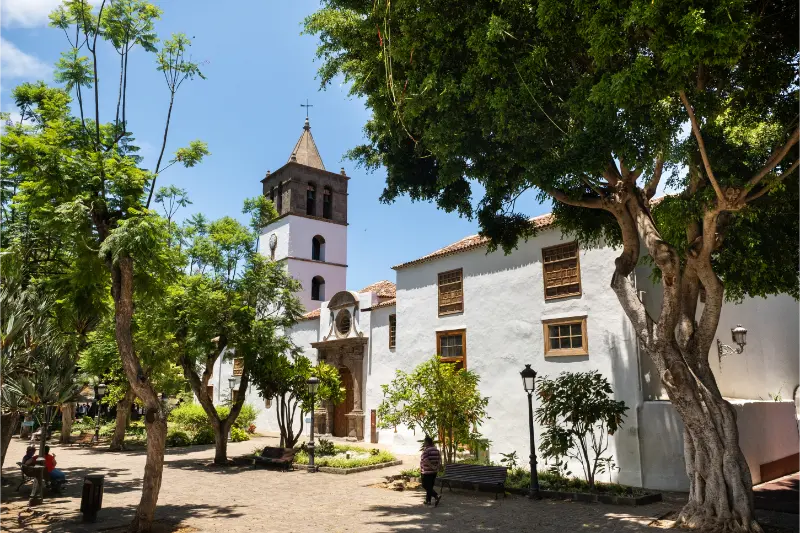
Franciscan Convent Icod is a place I would add when I want a Tenerife itinerary to explain the island rather than simply collect viewpoints. It fits naturally into a visit to Icod de los Vinos and gives context that is easy to miss when I only stop at the most photographed landmark.
The Franciscan Convent of the Holy Spirit was founded in 1641 with support from the Alzola family and became one of Icod’s major religious complexes. The Franciscan community remained until 1823, after which the building began a long sequence of civic uses.
Quick facts
| Place | Icod de los Vinos |
|---|---|
| Type | Former Convent |
| Time I allow | 45–90 minutes when public areas are accessible |
| Address / area | Calle San Francisco 2–4, Icod de los Vinos |
| Best approach | Combine it with nearby sights on foot and verify current access before travelling |
Why this place is worth understanding
Over time the former convent served as a military barracks, music-band headquarters, municipal theatre, educational centre and town hall. Today it houses the municipal library, so the building continues to function as a public institution rather than a static museum.
The complex is organized around a large cloister. One of its most unusual features is the stone fountain with a figure of Neptune, traditionally associated with an Italian workshop and with a story that links the gift to travellers who received hospitality at the convent.
The complex also includes the church of San Francisco and several chapels. The Chapel of Nuestra Señora de los Dolores is particularly noted for an elaborate eighteenth-century timber ceiling with Portuguese stylistic influence.
Several important artworks once associated with the convent are now in the parish church of San Marcos, including the monumental silver filigree cross. I therefore treat the two buildings as a single historical cluster rather than unrelated attractions.
The best detail here is not necessarily the largest room. The Neptune fountain introduces a classical mythological figure into a Franciscan cloister, which is exactly the kind of unexpected combination that makes a heritage visit memorable. I also like the fact that the library gives the building a present-day social purpose: history remains part of ordinary civic life.
What I look for on the visit
I try to arrive with two or three details in mind instead of reading a long list while I am standing in front of the building. That keeps the visit focused and makes the history easier to remember. The details I would prioritize here are:
- The cloister proportions and timber circulation galleries.
- The neptune fountain at the centre.
- The stair and surviving convent architecture.
- The way the municipal library occupies historic space.
I also step back and look at the surrounding streets. Historic buildings make more sense when I see their relationship with plazas, former transport routes, the coast and neighbouring institutions. A tight photograph of one doorway rarely explains as much as a wider view of how the place sits inside the town.
How I fit it into a Icod de los Vinos day
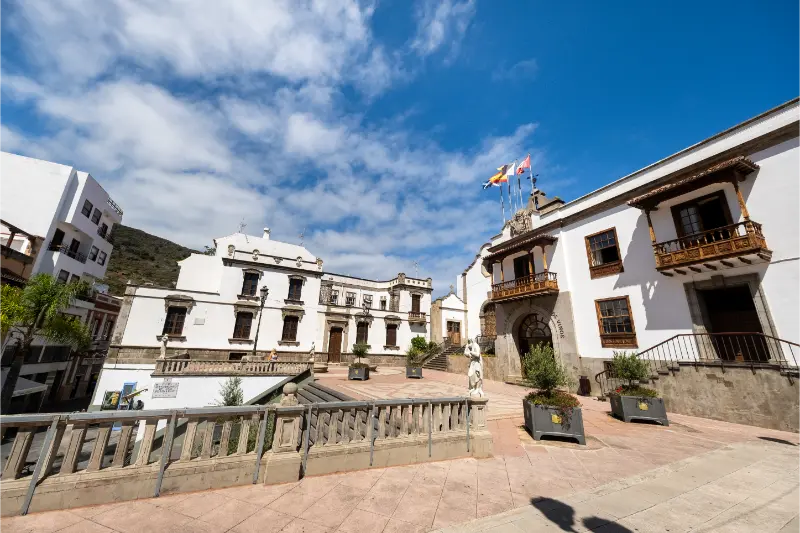
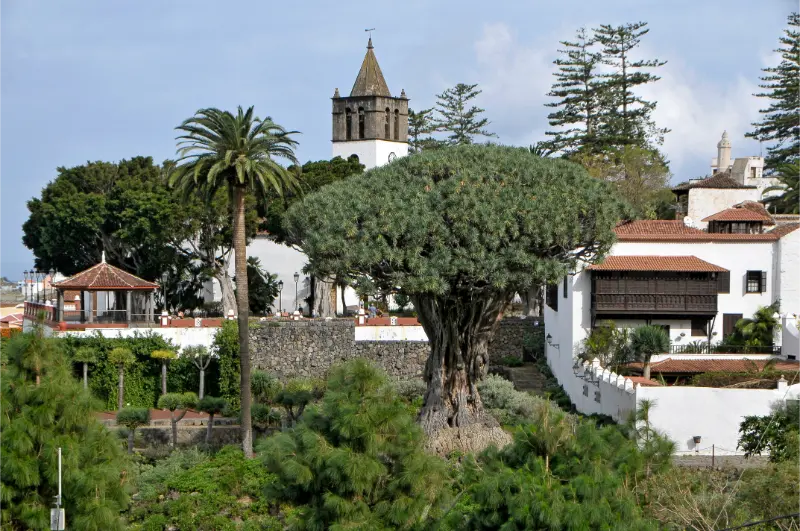
Icod de los Vinos is often reduced to the Drago Milenario, but the historic centre deserves more time than a quick stop beside the dragon tree. The streets around San Marcos and the old convents preserve a layered story of religion, Atlantic trade, local elites, craftsmanship and public life. I plan the town on foot and treat the Drago as one part of a wider circuit rather than the only reason to come.

The centre has slopes, steps and older paving, so I allow more time than the distances on a map suggest. Driving from one monument to the next is usually less efficient than choosing a parking area and walking. For anyone with reduced mobility, I check the exact route and entrance conditions of the individual building rather than assuming the whole historic centre is step-free.
I also keep opening hours flexible in my plan. Churches, libraries, municipal buildings and exhibition spaces are working places, not purpose-built tourist attractions, so access can change for services, events, maintenance or local holidays. If an interior is essential to the day, I verify it directly with the official source shortly before travelling.
The strongest way to understand Icod is to connect architecture with the town’s wider economy. Wine, agriculture and overseas links helped shape the houses, churches and artworks that survive. That is why I like to combine one major monument with a domestic building, a plaza and a food or wine stop instead of visiting several churches back to back.
I normally pair the historic centre with the Drago area, but I do not let the commercial zone around the famous tree dictate the whole visit. The best rhythm is a loop through plazas and heritage buildings, followed by the Drago or a wine-focused stop. If I am continuing to Garachico or Puerto de la Cruz, I keep the Icod visit compact enough that I am not driving mountain roads after a rushed late finish.
Access, opening hours and respectful behaviour
I treat permanent historical information and day-to-day visitor access as two different things. The building or site may be centuries old, but hours, exhibitions, restoration work and the availability of interior rooms can change. I therefore use the official source for the final check rather than relying on an old timetable copied by a third-party travel site.
Parts of the complex may have municipal, library, exhibition or other working uses. I do not assume every historic room is open, and I follow signs rather than wandering into offices. If a courtyard or gallery is accessible, I take time to observe materials and circulation instead of treating the interior only as a backdrop for photos.
Accessibility and visiting with children
Historic centres in Tenerife can combine slopes, steps, narrow thresholds and uneven paving. I never label a whole visit ‘accessible’ based only on the main street. For a wheelchair, mobility scooter or pushchair, I check the exact entrance and the route between stops, and I am prepared to enjoy an exterior view if the historic fabric creates unavoidable barriers.
With children I make the story concrete. A fort protecting ships, a gate controlling goods, a silver cross made in Havana, a volcanic eruption that changed a harbour or a cave adapted as a place of worship is easier to remember than a long sequence of dates. I keep indoor visits short and alternate them with plazas, gardens or the seafront.
Photography: the views that explain the place
My first photograph is usually a contextual one. I include the street, plaza, coastline or neighbouring building so the image shows where the monument belongs. After that I look for materials: basalt, carved stone, tea wood, plaster, metalwork or garden geometry. Side light in the morning or late afternoon often reveals texture better than flat midday sun.
I avoid blocking doors and narrow pavements while composing a shot. In churches and working civic buildings I follow photography rules and never use a tripod if it interferes with other visitors. The goal is to document the place without turning local daily life into a photo set.
A compact walking route nearby
Rather than sending myself across the island for unrelated stops, I build a small cluster around this page. These are the guides I would use next:
These links are deliberately local. I prefer a route where each stop adds another piece of the same story, because it reduces driving and makes the day feel less fragmented. It also leaves space for a meal, a market, weather changes and the small unplanned discoveries that usually become the most memorable part of a town visit.
Where I would stay
If I wanted to explore this part of Tenerife at a slower pace, I would compare accommodation in Icod de los Vinos. Staying nearby can be useful for quieter morning streets and for avoiding a long return drive after a full day in the northwest or east of the island.
Official information
Before travelling I check the official information for Franciscan Convent Icod. I use the official page for current access, temporary closures, events and opening arrangements because those details can change after this article is published.
Common planning mistakes I avoid
- Treating a small historic site as a reason for a long cross-island drive instead of combining it with nearby places.
- Assuming an old opening-hours screenshot is still valid.
- Moving the car between attractions that are only a few minutes apart on foot.
- Focusing on the façade and missing the relationship with the square, street or former coastline.
- Packing too many churches or museums into one block until the details blur together.
- Ignoring local events, services or municipal activity that can temporarily change access.
Frequently asked questions
Is it worth visiting on a first trip to Tenerife?
Yes if I am already planning time in Icod de los Vinos. I would not normally cross the island for this one stop alone, but it adds genuine depth to a town visit and helps me understand details that the general sightseeing route can otherwise miss.
How much time do I need?
I would allow 45–90 minutes when public areas are accessible. The exact time depends on interior access, events and how many nearby sights I connect. For a square, garden or exterior-only stop, I may stay less; for a church, historic house or cultural building I allow more.
Do I need a car?
Not for the monument itself once I am in the historic centre. A car can be useful for reaching the town from another part of Tenerife, but I prefer to park once and continue on foot. Bus travel is also possible in many cases, although I check the return timetable before starting the day.
Can I rely on published opening hours?
I use them as a starting point, not a guarantee. Religious services, holidays, restoration, municipal events and temporary exhibitions can alter normal access. The official link above is the source I check closest to the visit.
What should I combine with it?
I combine it with San Marcos, the Drago area and one additional cultural or wine-related stop. That gives the day variety and makes it easier to understand Icod beyond the single famous tree.
Final thoughts
Franciscan Convent Icod works best for me as part of a connected story rather than as a stand-alone pin. I would keep the visit flexible, read the setting as carefully as the monument itself and use the surrounding streets to understand how Icod de los Vinos changed over time. That slower approach is exactly what helps a Tenerife trip move beyond the standard highlights.