Category: Attractions & Experiences

Tenerife theme parks, wildlife activities, major attractions and bookable experiences with practical planning advice.

  • Museo Arqueológico Puerto de la Cruz Guide: Guanche Collection and Hours

    Museo Arqueológico Puerto de la Cruz Guide: Guanche Collection and Hours

    Museo Arqueológico de Puerto de la Cruz is the museum I would add when I want Puerto de la Cruz to be more than gardens, pools and seafront walks. In the La Ranilla district, it holds one of Tenerife’s most significant collections of Guanche ceramics together with other archaeological material.

    The current Cultura Puerto de la Cruz page lists Monday to Friday opening from 09:00 to 15:00 and weekends closed. A separate tourism listing has published different hours during the museum’s renovation phase, so I would confirm the same week rather than pretending the timetable is perfectly settled.

    Quick practical facts

    AddressCalle del Lomo 9A, La Ranilla, Puerto de la Cruz
    Current culture-portal hoursMonday–Friday 09:00–15:00
    WeekendClosed on the current culture page
    CollectionAbout 2,600 records
    StrengthMajor collection of Guanche ceramics
    Also includesAnthropological remains, lithic material and personal ornaments

    Why I would give Museo Arqueológico de Puerto de la Cruz its own stop

    Puerto de la Cruz is often sold through Loro Parque, Lago Martiánez and the botanical garden. The archaeological museum adds a completely different layer and gives La Ranilla more meaning than “pretty streets with restaurants and murals”.

    Its ceramic collection is especially important. The municipality describes it as the most significant representation of Guanche pottery on Tenerife, which makes this a focused museum rather than a generic collection of island curiosities.

    What to look for once you are there

    The Guanche ceramics

    The permanent collection includes a large and representative group of Indigenous pottery. I look at form, surface and use rather than treating every vessel as visually interchangeable.

    Guatimac and personal ornaments

    The museum is associated with distinctive small objects and personal adornments that show material culture at a human scale.

    Anthropological remains

    The collection includes Indigenous human remains, including mummified material. I approach these displays respectfully and follow the museum’s current ethical presentation rather than treating them as sensational objects.

    The La Ranilla setting

    The museum occupies a traditional Canarian house in the historic fishing district. The building and neighbourhood make the transition from archaeology to modern street life unusually immediate.

    The context that makes the visit more interesting

    The museum’s origins go back to the 1950s and the archaeological collection created by the Instituto de Estudios Hispánicos de Canarias. The current municipal museum opened in its La Ranilla building in 1991 after a long civic campaign to recover and present the collection.

    In 2025 the municipality announced plans to update the permanent exhibition and facilities. That helps explain why current practical information can shift and why I verify the timetable rather than copy an old guidebook.

    For me, the museum works best as one piece of a wider Guanche-history itinerary. MUNA in Santa Cruz has broader archaeological and natural-history scope, while Puerto de la Cruz offers a smaller, focused collection in a very different urban setting.

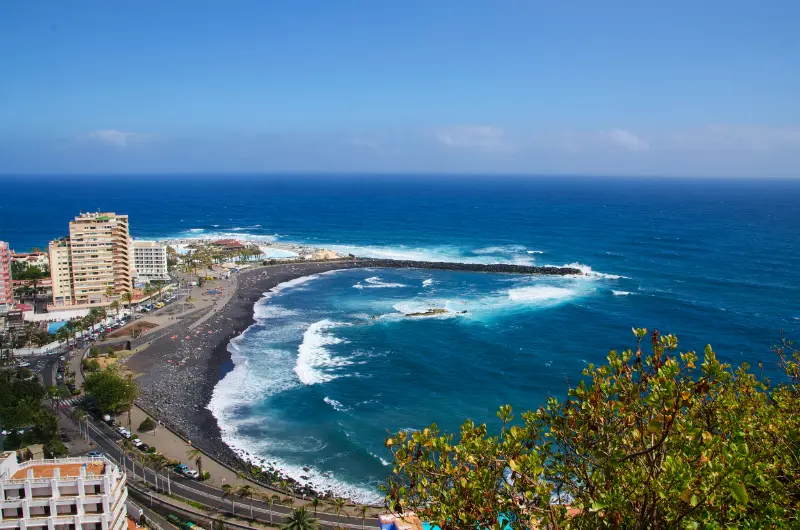
    Puerto De La Cruz And Lago Martianez Tenerife

    How I would plan the visit

    I would visit the museum before a walk through Puerto de la Cruz and La Ranilla. That way the historic district is not only a restaurant stop; it becomes part of a culture day.

    For comparison on another day, the MUNA guide gives a larger island-wide framework for Guanche archaeology and natural history.

    How much time to allow

    I would allow 60–90 minutes for the museum. A specialist could spend longer, but for most travellers that gives enough time to read the ceramic and archaeology interpretation without rushing.

    Then I reserve another hour or two for La Ranilla, the fishing harbour and street art. The museum works particularly well because those stops are walkable rather than separated by a car journey.

    Getting there without turning the visit into a transport problem

    Calle del Lomo is in central Puerto de la Cruz. If I am already staying in town, walking is simplest. Day visitors can use a central car park and explore the compact historic centre on foot.

    For a north-coast base I may compare Puerto de la Cruz hotels, especially if I want several days of gardens, museums and north-island day trips without constant cross-island driving.

    Accessibility and comfort

    The museum is inside a historic building, so I would contact the venue directly if step-free access to every display area is essential. A general “museum accessible” assumption is not specific enough for mobility planning.

    The surrounding La Ranilla streets are best explored slowly. Cobblestones, kerbs and busy restaurant areas can matter more than distance for some visitors.

    Is it worth visiting with children?

    Yes for school-age children, especially if they have already heard about the Guanches elsewhere on the trip. Pottery, small objects and a historic house are easier to connect with than a long chronological lecture.

    I handle human remains respectfully and prepare children for what they may see. If a family prefers not to view mummified material, staff can often help explain the layout.

    Best time of day

    Morning is the safest choice because the current published hours end at 15:00. It also leaves lunch and a relaxed La Ranilla walk afterward.

    I would not make a late-afternoon plan based on an old timetable. The museum has been through a renewal process and current hours should be confirmed.

    Photography and respectful visiting

    I prioritise the building exterior and La Ranilla context. Inside, archaeological museums often restrict photography around sensitive material, so I follow current signs and staff instructions.

    The most respectful visit is not about collecting images of human remains. Notes about materials, labels and display context are often more valuable than a phone gallery.

    Useful nearby stops

    A realistic half-day plan

    A strong half-day is museum in the morning, La Ranilla and Puerto Street Art on foot, then lunch near the harbour. Everything reinforces the sense of place without needing another attraction ticket.

    If I want a longer culture day, I add the botanical garden or Lago Martiánez later depending on weather rather than trying to squeeze in Loro Parque as well.

    Common mistakes I would avoid

    • Relying on an old timetable during a period of museum renewal.
    • Treating Guanche human remains as sensational displays.
    • Visiting only the museum and skipping the La Ranilla neighbourhood around it.
    • Assuming all rooms in a historic building have identical accessibility.
    • Using this smaller museum as a substitute for every other source on Guanche history.

    Current information: what I would check again

    Cultura Puerto de la Cruz currently lists Monday–Friday 09:00–15:00 and weekends closed. Another tourism listing has shown different hours, which is why I would confirm before making a timed journey.

    Puerto De La Cruz At Sunset Tenerife

    The municipality announced a modernisation of the permanent exhibition and facilities in 2025. Operational changes during that process are possible.

    Official source

    For current cultural information I use Cultura Puerto de la Cruz – Museo Arqueológico.

    Frequently asked questions

    What is the museum best known for?

    Its Guanche archaeological collection, especially the significant pottery holdings.

    Where is it?

    In La Ranilla at Calle del Lomo 9A, in central Puerto de la Cruz.

    What are the current hours?

    The municipal culture portal currently lists Monday–Friday 09:00–15:00. Confirm before travel because other official/tourist listings have differed during renewal work.

    How long do I need?

    About 60–90 minutes for the museum, plus time to walk through La Ranilla afterward.

    How I decide whether this stop belongs in my itinerary

    I do not add a place simply because it appears on a “top things to do” list. I ask what new layer it adds to the trip. Does it explain a part of Tenerife I have not understood yet? Does it fit naturally with places already on the route? Can I visit it without creating an hour of unnecessary driving? Those questions are especially useful on an island where a short distance on the map can still mean mountain roads, city parking or a change of microclimate.

    Puerto De La Cruz City And Atlantic Ocean Tenerife

    I also distinguish between a destination visit and a cluster visit. A destination visit is worth crossing the island for; a cluster visit becomes valuable because it sits beside two or three other strong stops. Many museums, churches, small forts and interpretation centres are at their best in the second category. That does not make them less important. It simply means the itinerary should respect their real scale.

    What I would verify on the morning of the visit

    Opening hours, temporary closures, road conditions and special events are the four details most likely to change. I save the official source rather than relying on a screenshot taken months earlier. For cultural buildings I also check whether a private event, religious service, renovation or guided group affects normal access. For Teide locations I add mountain weather and road status to that list.

    This last check takes only a few minutes and prevents the most common frustration in Tenerife planning: arriving with perfectly researched historical information but an outdated practical detail. I would rather change the order of a day than force an itinerary after the conditions have changed.

    What makes a good Tenerife visit different from a checklist

    The strongest days usually contain contrast. A museum works better when I can walk through the neighbourhood it explains; a volcanic trail means more after a visitor centre; a historic fort becomes clearer when modern city architecture surrounds it. I therefore build connections between places instead of treating every stop as an isolated review score.

    I also leave blank space. Tenerife rewards unplanned pauses: a view of Teide appearing above cloud, a local café, a small plaza, or a change in light can become more memorable than the tenth scheduled attraction. A complete travel site should help a reader make those choices, not pressure them to “complete” the island.

    Final thoughts

    The archaeological museum is one of the best ways to make a Puerto de la Cruz stay more culturally balanced. It adds Indigenous history to a destination better known for leisure and gardens.

    I would visit in the morning, take the collection seriously, then walk straight back into La Ranilla. The contrast between archaeological objects, traditional streets and contemporary murals is exactly what makes the area interesting.

  • Templo Masónico Santa Cruz Guide: 2026 Hours, History and Visits

    Templo Masónico Santa Cruz Guide: 2026 Hours, History and Visits

    Templo Masónico de Santa Cruz de Tenerife is one of the most distinctive cultural buildings in the Canary Islands and, after a major restoration, is again open to the public. Its Egyptian-inspired façade, sphinxes, palmiform columns and “all-seeing eye” are only the beginning; the interior explains the social and symbolic world of the historic Logia Añaza.

    The official Santa Cruz Cultura page currently publishes free visits Tuesday to Saturday from 11:00 to 18:00 and Sundays/holidays from 11:00 to 14:00, with Monday closed. Guided-visit dates are published separately. Because programming changes, I would check that page on the day I go.

    Quick practical facts

    LocationSanta Cruz de Tenerife
    Historic lodgeLogia Añaza
    Building completed1904
    ArchitectManuel de Cámara y Cruz
    Current free-visit hoursTuesday–Saturday 11:00–18:00; Sundays/holidays 11:00–14:00
    ClosedMonday
    Guided visitsDates published separately by Santa Cruz Cultura

    Why I would give Templo Masónico de Santa Cruz de Tenerife its own stop

    This is not a generic “secret society” attraction. The real value is architectural and social history: Freemasonry had a visible role in Santa Cruz’s cultural life, and the building expresses that history through deliberately symbolic spaces and decoration.

    The reopening also gives travellers a rare chance to enter a building that was closed for decades. I would prioritise it over a superficial exterior photo because the restored interior is where the sequence of spaces starts to make sense.

    What to look for once you are there

    The Egyptian-inspired façade

    Palm-form columns, sphinxes and the eye motif make the entrance instantly recognisable. I would read them as part of a symbolic architectural programme, not as random exotic decoration.

    The lodge rooms

    The official cultural description highlights spaces such as the sala de tenidas, chamber of reflection and dining/agape room. Their functions help explain how the lodge organised ceremony and community.

    The history of Logia Añaza

    Founded in 1895, the lodge became important in the social and cultural life of Tenerife during the early twentieth century. That local history is more interesting than importing clichés from films about Freemasonry.

    Restoration and reopening

    The building was confiscated after the Civil War, used institutionally and remained closed for decades. The city acquired it in 2001; it later received BIC protection and has now undergone major rehabilitation.

    The context that makes the visit more interesting

    Freemasonry in Spain has a politically charged history, especially across the dictatorship period. The temple’s confiscation and long closure are therefore part of a broader twentieth-century story, not merely a building-maintenance issue.

    I would also separate documented local history from sensational claims. The official cultural material gives plenty to work with—architecture, lodge history, symbolism and state confiscation—without inventing conspiracies.

    The building is particularly useful for understanding Santa Cruz as more than a port and carnival city. It reveals civic associations, intellectual networks and architectural ambition in the late nineteenth and early twentieth centuries.

    How I would plan the visit

    I would combine the temple with the Santa Cruz city guide and one nearby museum rather than crossing the island only for a short visit. The exact walking route depends on the day’s opening hours.

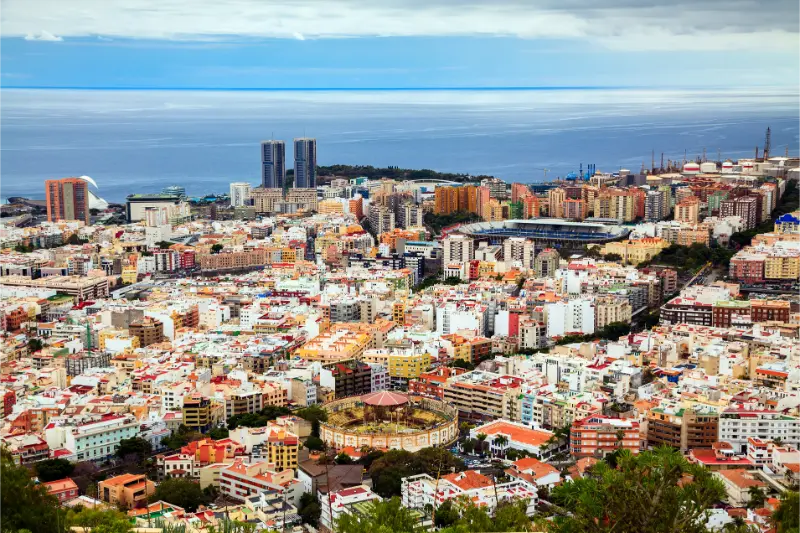
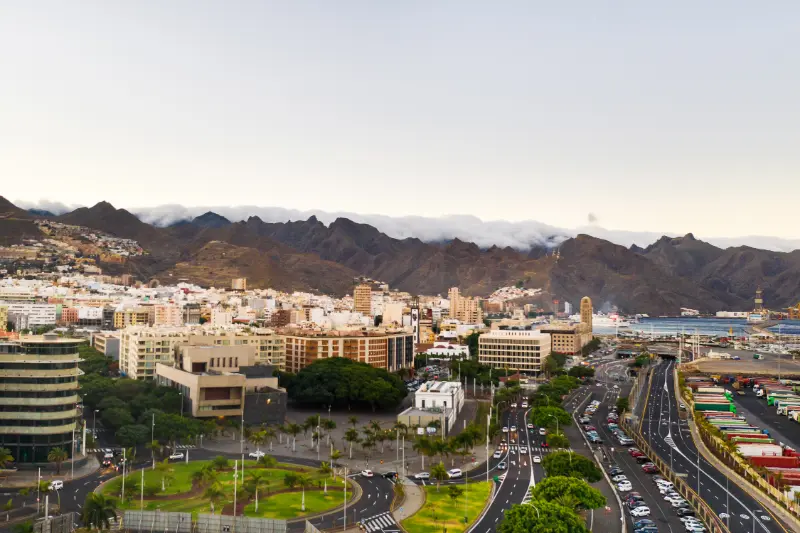
    Panoramic View Of Santa Cruz De Tenerife

    If I want a wider culture day, the TEA guide and MUNA guide offer very different modern-art and archaeology perspectives.

    How much time to allow

    For a free visit I would allow 45–75 minutes. Guided or theatricalised visits can have their own fixed duration and ticketing, so I follow the event information rather than this general estimate.

    I do not squeeze the temple between two timed reservations. Historic interiors are much more rewarding when I can stop to understand the room sequence and symbolism.

    Getting there without turning the visit into a transport problem

    The temple is in Santa Cruz and is easiest to incorporate into a central-city day by walking or using public transport. I avoid searching for doorstep parking in the old urban fabric.

    For an overnight culture break I may compare Santa Cruz hotels and use the tram/bus network instead of treating the capital as a quick car stop.

    Accessibility and comfort

    The restoration has been designed to reopen the building to public use, but if I have a specific mobility requirement I still check the latest access notes before visiting, especially for guided routes that may use multiple internal spaces.

    The difference between a free visit and a special theatrical or guided experience can affect movement through the building. I do not assume every event uses exactly the same route.

    Is it worth visiting with children?

    It can work well with older children and teenagers interested in symbols, architecture or mystery, as long as the explanation stays grounded in real history.

    For very young children, I would keep the visit short. The attraction is interpretation and architecture rather than interactive play.

    Best time of day

    I prefer morning or early afternoon, when I can combine the temple with another cultural stop before museums close. The published free-visit hours make that easy on most days except Monday.

    Special evening routes can create a different atmosphere, but they are programmed events rather than guaranteed daily access. I check the calendar instead of building a trip around an old event announcement.

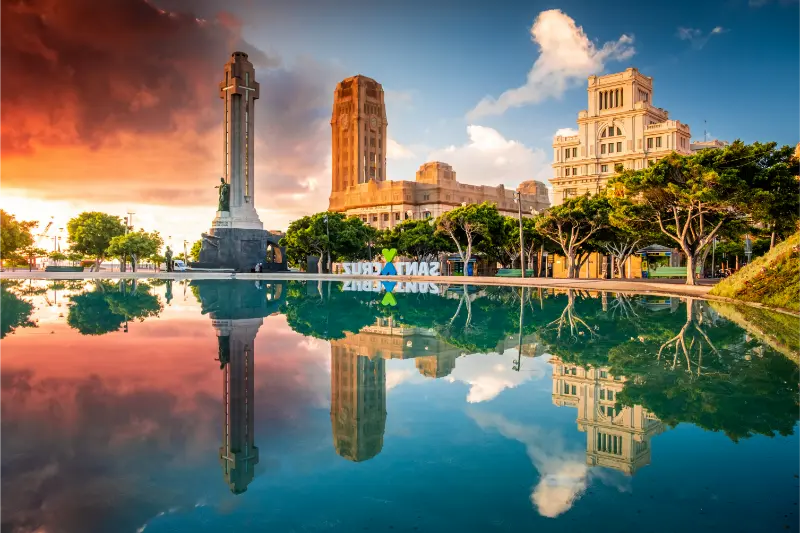
    Plaza de España reflecting pool and civic buildings in Santa Cruz de Tenerife
    Plaza de España, Santa Cruz de Tenerife.

    Photography and respectful visiting

    The façade is highly photogenic in frontal and angled views. Inside I follow posted rules and avoid reducing the building to a collection of “mysterious” symbols without context.

    If a guided group is moving through a narrow room, I prioritise not blocking circulation over getting a symmetrical image.

    Useful nearby stops

    A realistic half-day plan

    A strong half-day is Templo Masónico plus TEA or MUNA, then coffee or lunch in the centre. That creates a coherent culture block without unnecessary transport.

    If architecture is the theme, I would pair the temple with the Auditorio later in the day to compare two radically different moments in Santa Cruz design.

    Common mistakes I would avoid

    • Turning documented Masonic history into conspiracy storytelling.
    • Arriving on Monday, when the official page currently says the temple is closed.
    • Assuming guided visits run every day.
    • Blocking narrow interior spaces for photographs.
    • Ignoring the confiscation and twentieth-century political context.

    Current information: what I would check again

    The official Santa Cruz Cultura page currently lists free visits Tuesday–Saturday 11:00–18:00 and Sundays/holidays 11:00–14:00, with Monday closed.

    Guided visits and theatrical routes are announced separately and can sell out or use different times. I check the current cultural calendar before travel.

    Official source

    For opening and guided-visit information I use Santa Cruz Cultura – Templo Masónico.

    Frequently asked questions

    Is the Templo Masónico open to visitors in 2026?

    Yes. After restoration it is open for free visits on published days, with guided visits scheduled separately.

    What are the current free-visit hours?

    The official page currently lists Tuesday–Saturday 11:00–18:00 and Sundays/holidays 11:00–14:00. Monday is closed.

    Is this mainly about conspiracy theories?

    No. The most valuable visit is grounded in documented local Masonic, architectural and social history.

    Do guided visits run every day?

    No. The official page says upcoming guided dates are published separately, so check the calendar.

    How I decide whether this stop belongs in my itinerary

    I do not add a place simply because it appears on a “top things to do” list. I ask what new layer it adds to the trip. Does it explain a part of Tenerife I have not understood yet? Does it fit naturally with places already on the route? Can I visit it without creating an hour of unnecessary driving? Those questions are especially useful on an island where a short distance on the map can still mean mountain roads, city parking or a change of microclimate.

    I also distinguish between a destination visit and a cluster visit. A destination visit is worth crossing the island for; a cluster visit becomes valuable because it sits beside two or three other strong stops. Many museums, churches, small forts and interpretation centres are at their best in the second category. That does not make them less important. It simply means the itinerary should respect their real scale.

    What I would verify on the morning of the visit

    Opening hours, temporary closures, road conditions and special events are the four details most likely to change. I save the official source rather than relying on a screenshot taken months earlier. For cultural buildings I also check whether a private event, religious service, renovation or guided group affects normal access. For Teide locations I add mountain weather and road status to that list.

    This last check takes only a few minutes and prevents the most common frustration in Tenerife planning: arriving with perfectly researched historical information but an outdated practical detail. I would rather change the order of a day than force an itinerary after the conditions have changed.

    What makes a good Tenerife visit different from a checklist

    The strongest days usually contain contrast. A museum works better when I can walk through the neighbourhood it explains; a volcanic trail means more after a visitor centre; a historic fort becomes clearer when modern city architecture surrounds it. I therefore build connections between places instead of treating every stop as an isolated review score.

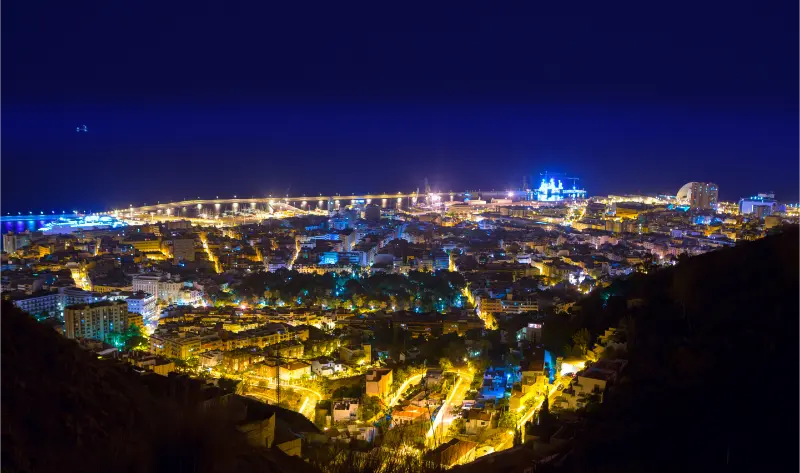
    Santa Cruz De Tenerife At Night

    I also leave blank space. Tenerife rewards unplanned pauses: a view of Teide appearing above cloud, a local café, a small plaza, or a change in light can become more memorable than the tenth scheduled attraction. A complete travel site should help a reader make those choices, not pressure them to “complete” the island.

    Final thoughts

    The restored Masonic Temple is one of the strongest additions to Santa Cruz’s cultural itinerary. It is visually unusual, historically specific and finally accessible enough to move beyond exterior curiosity.

    I would go for the architecture and documented local history, not for sensationalism. That approach makes the building much more interesting.
  • Parque Marítimo César Manrique Guide: 2026 Hours, Prices and Pools

    Parque Marítimo César Manrique Guide: 2026 Hours, Prices and Pools

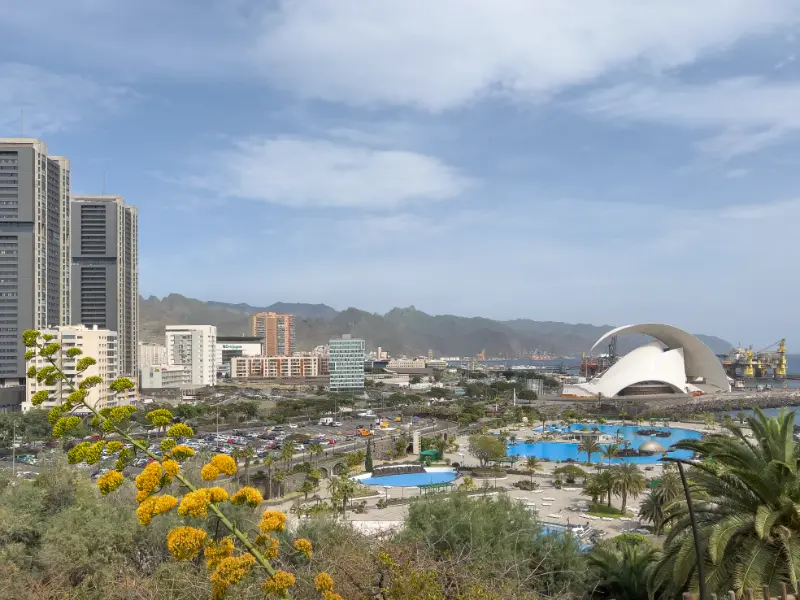
    Parque Marítimo César Manrique is Santa Cruz’s large seawater-pool complex and one of the most practical places to combine César Manrique design, family swimming and an urban sightseeing day. It covers about 22,000 square metres beside the Auditorio and Palmetum.

    For September 2026 the official site lists winter-season hours of 10:00–18:00, with pools closing at 17:45. It also currently warns that only one pool is open during the winter period, while maintenance affects the children’s and cascade pools. Those operational details are exactly why I would check the official page on the day of the visit.

    Quick practical facts

    LocationAvenida de la Constitución 5, Santa Cruz de Tenerife
    Current winter hours10:00–18:00; pools close 17:45
    2026/27 winter seasonFrom 7 September 2026 to 19 June 2027
    Non-resident adult€7.50 including sunbed
    Non-resident under 12€4.00
    Under 3Free
    PoolsThree seawater pools in the complex; current opening can vary by maintenance/season
    AccessibilityRamps, adapted facilities, pool hoist and amphibious chair published by the operator

    Why I would give Parque Marítimo César Manrique its own stop

    A lot of Tenerife advice treats Santa Cruz as a culture-and-shopping day and assumes swimming belongs only in the resort south. Parque Marítimo is a good counterexample. It gives the capital a genuine pool day option without leaving the urban waterfront.

    The design matters too. Volcanic rock, white surfaces, palms, salt water, waterfalls and Manrique-style wind elements turn the complex into more than a municipal swimming pool.

    What to look for once you are there

    The seawater pools

    The complex has two main seawater pools and a children’s pool, although the number operating can change with season and maintenance. I check the live notice before paying.

    Manrique’s design language

    Volcanic rock, vegetation, water and sculptural elements create the familiar Canarian dialogue between nature and built leisure space. The park opened in 1995 as a posthumous Manrique project.

    Family infrastructure

    The operator lists changing rooms, showers, food outlets, play facilities and seasonal children’s programming. I still treat specific activities as date-dependent rather than guaranteed every day.

    Accessibility features

    The official facility page lists reserved parking, ramps, adapted toilets, a pool hoist and an amphibious chair. For a traveller who needs a specific device, I would confirm availability before arrival.

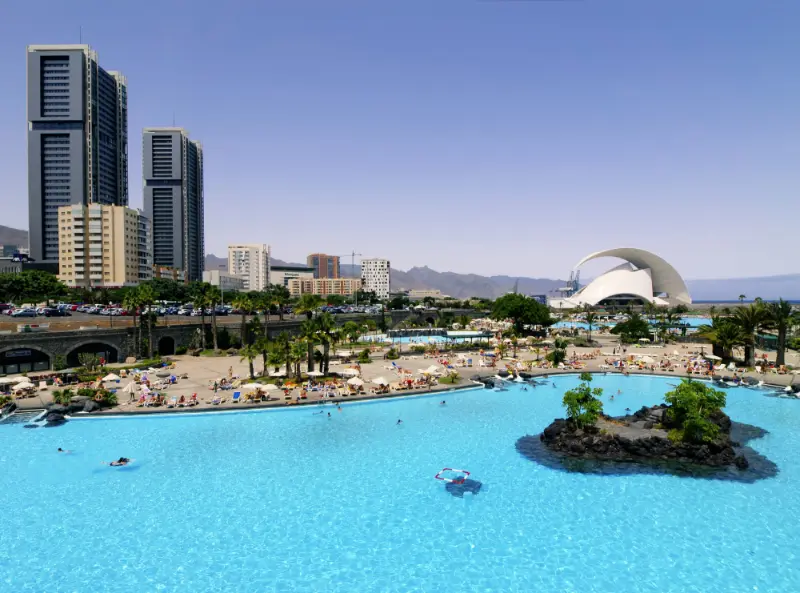
    Santa Cruz De Tenerife Skyline Across Parque Maritimo

    The context that makes the visit more interesting

    César Manrique’s influence in Tenerife is often associated with Lago Martiánez in Puerto de la Cruz, but Santa Cruz has its own major Manrique leisure landscape. Seeing both on one trip makes the similarities and differences much clearer.

    The maritime park belongs to a broader transformation of the southern city waterfront. Today the Auditorio, Palmetum, Castillo Negro and pools sit within a compact area that can be explored almost as one urban design district.

    Because this is an operating leisure facility, conditions are less static than at a monument. Pool maintenance, seasonal opening, children’s activities and tariffs can all change; I prefer a current official notice to a timeless-sounding blog promise.

    How I would plan the visit

    If swimming is the priority, I arrive soon after opening and then add the Auditorio or Palmetum later. If culture is the priority, I reverse the order and use the pools as the relaxing end of the day.

    I bring swimwear, sandals, sun protection and a light cover-up. Glass containers are prohibited by the facility rules, and the current website also states that smoking is prohibited inside.

    How much time to allow

    For a real swim-and-sun session I allow at least three hours. Entering for 45 minutes rarely makes sense once changing, finding a sunbed and drying off are included.

    For families, four to five hours is more realistic. If only one pool is open, I also adjust expectations about how much variety there will be inside the complex.

    Getting there without turning the visit into a transport problem

    The park is on the southern edge of central Santa Cruz near the Auditorio and Palmetum. It is accessible by public transport and the operator advertises a large parking area, but I do not build a peak-time plan around the assumption that parking will always be effortless.

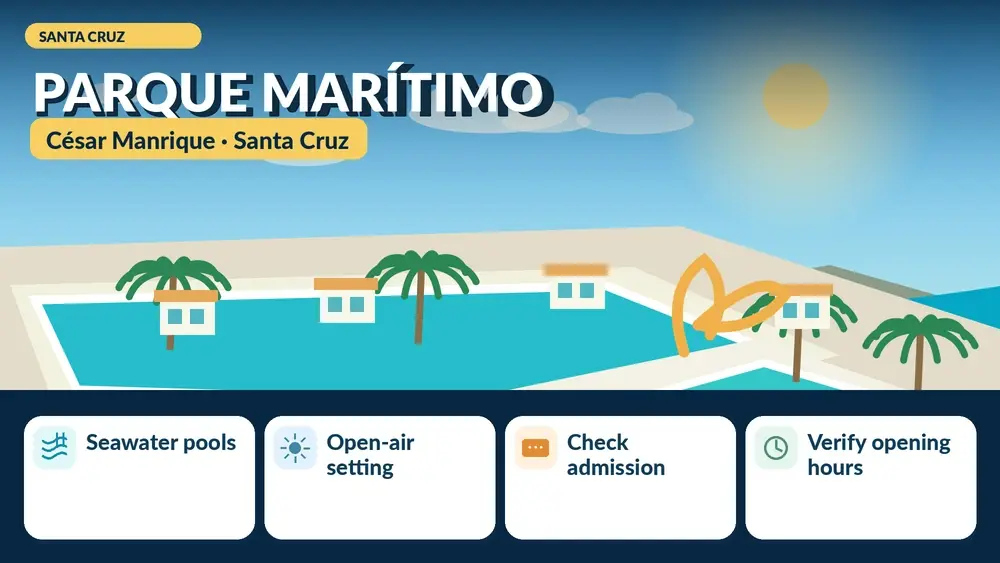
    Illustrated guide: Parque Marítimo César Manrique, with practical visitor tips
    Illustrated guide: Parque Marítimo César Manrique.

    For a city break, I may compare Santa Cruz accommodation and walk or use public transport for most central attractions.

    Accessibility and comfort

    This is one of the stronger accessibility stories in the city’s leisure offer. The operator lists ramps, adapted bathrooms, reserved parking, an elevator, a pool hoist and an amphibious chair.

    Specific equipment can be temporarily unavailable, so if access to the water depends on it I contact the park before travelling rather than assuming every listed service is ready at every moment.

    Is it worth visiting with children?

    Yes. The facility is designed for families, and summer programmes add activities for children. In the current winter period, however, the official website warns that only one pool is open and that some pools are closed for maintenance.

    That distinction matters. A family should decide whether a relaxed single-pool day still sounds worthwhile before arriving with expectations based on summer photos.

    Best time of day

    I prefer opening time or late morning, especially on warm days. It gives a better choice of space and leaves time to combine the visit with the surrounding seafront.

    In winter the earlier 18:00 closing makes a late-afternoon arrival poor value for most visitors. I check the seasonal timetable before fixing lunch reservations elsewhere.

    Photography and respectful visiting

    The best images use volcanic black, bright water and palms together. I also like compositions that include the Auditorio, because they show how the maritime park fits into Santa Cruz rather than making it look like an isolated resort.

    I keep photography considerate around swimmers and children. A public pool is not a location where strangers should become the foreground of a travel photo without consent.

    Useful nearby stops

    A realistic half-day plan

    A simple warm-weather half-day is maritime park first, then an early dinner or walk around the Auditorio. A culture-first version starts at Palmetum and uses the pool complex afterward.

    I do not try to add Las Teresitas to the same short half-day. The maritime park already solves the swimming need without a bus or car journey to San Andrés.

    Common mistakes I would avoid

    • Using summer photos to assume every pool is open in winter.
    • Arriving late without checking seasonal closing time.
    • Bringing glass containers despite the rules.
    • Assuming a listed accessibility device is guaranteed without confirmation.
    • Planning Santa Cruz as a beach-only day and overlooking the surrounding cultural cluster.

    Current information: what I would check again

    As of the official September 2026 update, winter hours are 10:00–18:00 with pool closure at 17:45. The non-resident adult ticket including sunbed is listed at €7.50 and under-12 at €4.00.

    The facility currently states that only one pool is open during the winter period and that the children’s and cascade pools are closed for maintenance. I would check the live notice immediately before visiting because this is operational information, not a permanent feature.

    Santa Cruz De Tenerife Skyline From Parque Maritimo

    Official source

    For current hours, tariffs and maintenance notices I use Parque Marítimo de Santa Cruz – official hours and tariffs.

    Frequently asked questions

    Is the water seawater?

    Yes. The complex is built around seawater swimming pools.

    How much is a non-resident adult ticket in September 2026?

    The official tariff page currently lists €7.50 including a sunbed. Check again because prices can change.

    Are all pools currently open?

    No. The official website currently states that only one pool is open in the winter season and that other pools are affected by maintenance.

    Is it accessible for reduced mobility?

    The operator publishes extensive accessibility features including ramps, adapted bathrooms, a pool hoist and an amphibious chair. Confirm specific equipment before travelling if it is essential.

    How I decide whether this stop belongs in my itinerary

    I do not add a place simply because it appears on a “top things to do” list. I ask what new layer it adds to the trip. Does it explain a part of Tenerife I have not understood yet? Does it fit naturally with places already on the route? Can I visit it without creating an hour of unnecessary driving? Those questions are especially useful on an island where a short distance on the map can still mean mountain roads, city parking or a change of microclimate.

    I also distinguish between a destination visit and a cluster visit. A destination visit is worth crossing the island for; a cluster visit becomes valuable because it sits beside two or three other strong stops. Many museums, churches, small forts and interpretation centres are at their best in the second category. That does not make them less important. It simply means the itinerary should respect their real scale.

    What I would verify on the morning of the visit

    Opening hours, temporary closures, road conditions and special events are the four details most likely to change. I save the official source rather than relying on a screenshot taken months earlier. For cultural buildings I also check whether a private event, religious service, renovation or guided group affects normal access. For Teide locations I add mountain weather and road status to that list.

    This last check takes only a few minutes and prevents the most common frustration in Tenerife planning: arriving with perfectly researched historical information but an outdated practical detail. I would rather change the order of a day than force an itinerary after the conditions have changed.

    What makes a good Tenerife visit different from a checklist

    The strongest days usually contain contrast. A museum works better when I can walk through the neighbourhood it explains; a volcanic trail means more after a visitor centre; a historic fort becomes clearer when modern city architecture surrounds it. I therefore build connections between places instead of treating every stop as an isolated review score.

    Santa Cruz De Tenerife Waterfront And Parque Maritimo

    I also leave blank space. Tenerife rewards unplanned pauses: a view of Teide appearing above cloud, a local café, a small plaza, or a change in light can become more memorable than the tenth scheduled attraction. A complete travel site should help a reader make those choices, not pressure them to “complete” the island.

    Final thoughts

    Parque Marítimo is useful because it makes Santa Cruz work for more kinds of traveller. A city day can include architecture, gardens and a proper swim without changing destination.

    I would just treat it like the operating pool complex it is: check the live opening notice first, especially outside summer, and then enjoy the Manrique design without assuming every brochure image matches today’s configuration.

  • Castillo Negro Santa Cruz Guide: History, Location and What to See

    Castillo Negro Santa Cruz Guide: History, Location and What to See

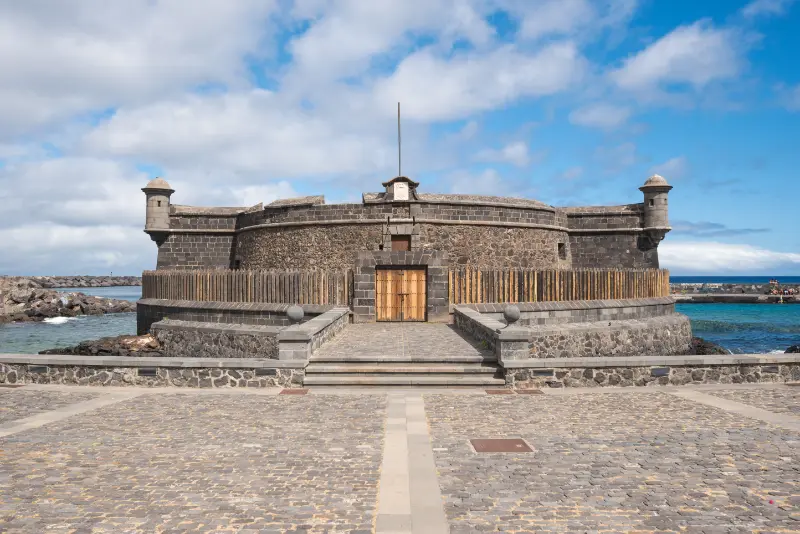
    Castillo de San Juan Bautista (Castillo Negro) is the compact circular fort that sits between some of Santa Cruz’s most modern landmarks. The contrast is the reason I like the stop: a seventeenth-century coastal defence beside the Auditorio, Parque Marítimo and Palmetum makes the city’s layers visible in a single walk.

    The Santa Cruz heritage service says construction began in the 1640s and that the fort took its present appearance after eighteenth-century remodelling. Turismo de Tenerife describes it as the best-preserved castle on the island. I would plan primarily for an exterior heritage stop unless an official event specifically advertises interior access.

    Quick practical facts

    Also known asCastillo Negro
    LocationAvenida de la Constitución, Santa Cruz de Tenerife
    Original construction1641–1643/44 period
    Major later remodelling1765–1767
    Heritage statusProtected historic monument / BIC context
    Best combined withAuditorio, Parque Marítimo César Manrique, Palmetum

    Why I would give Castillo de San Juan Bautista (Castillo Negro) its own stop

    Santa Cruz can feel like a city of twentieth- and twenty-first-century architecture when a visitor concentrates on the seafront. Castillo Negro interrupts that impression. Its low volcanic-stone form is evidence of the defensive coastline that existed long before the current avenues and cultural buildings.

    The stop is also efficient. I do not need a dedicated taxi ride or a half day; it belongs naturally in a walking route between the Auditorio, the maritime park and Palmetum.

    What to look for once you are there

    The circular military form

    The fort was designed for coastal defence rather than ceremony. Its compact round mass is especially striking against the sweeping forms of the Auditorio nearby.

    Volcanic masonry

    The dark stone helps explain the popular name visually, although the city heritage page notes that the name is also associated with the old place-name Caleta de los Negros.

    The seafront contrast

    This is one of the best places in Santa Cruz to photograph different periods of the city in one frame: fortification, modern cultural architecture, leisure pools and port infrastructure.

    The Nelson-era defensive story

    Santa Cruz’s forts belong to the wider military history of the port, including the failed British attack led by Admiral Nelson in 1797. I use Castillo Negro as a starting point and the Castillo de San Cristóbal interpretation centre for the deeper Nelson story.

    The context that makes the visit more interesting

    Santa Cruz grew around a strategic harbour. Coastal batteries and forts were not decorative architecture; they responded to the vulnerability of an Atlantic port connected to imperial trade routes.

    The city’s heritage service explains that San Juan Bautista was built to defend this section of coast and was financed and maintained within the island’s defensive system. Its later remodelling produced much of the appearance visitors see today.

    I avoid simplifying the name “Castillo Negro” into a certainty about black stone. Official local heritage material points to the historic toponym Caleta de los Negros as a likely origin, which is a good example of why place names deserve more care than a quick caption.

    Santa Cruz De Tenerife Skyline And Auditorium

    How I would plan the visit

    I would see the fort after the Auditorio de Tenerife and before or after the maritime park. The walking sequence makes the architecture itself part of the story.

    For the defensive history of central Santa Cruz, I would also add the Castillo de San Cristóbal guide under Plaza de España on the same or another day.

    How much time to allow

    Ten to twenty minutes is enough for a simple exterior stop. If a heritage event opens the interior, I would follow that event’s timetable rather than assume regular access.

    As part of a seafront architecture walk, I would allow two to four hours because Palmetum, the Auditorio and Parque Marítimo can each become a substantial visit.

    Getting there without turning the visit into a transport problem

    The fort is on Avenida de la Constitución in the modern seafront cultural zone. It is easier to treat this as a walking cluster than to move the car between each landmark.

    If I am staying in the capital, I may compare hotels in Santa Cruz and use tram/bus/walking for the city rather than keeping a rental car for every central stop.

    Accessibility and comfort

    Viewing the exterior is generally a low-effort urban stop, but I do not promise interior accessibility because regular interior opening is not the basis of this guide. If an event is announced, I check its specific access information.

    The surrounding seafront is exposed to sun and wind. Even on an urban day, a hat and water make the walk between the Auditorio, fort and Palmetum more comfortable.

    Is it worth visiting with children?

    Yes, especially if children enjoy forts, cannons or “spot the old building among the new ones” challenges. The short duration means it can add history without causing museum fatigue.

    I would not oversell a long list of dates. One simple story—why a port needed coastal defence—usually makes the building more memorable.

    Best time of day

    Morning gives softer light on parts of the seafront and makes it easy to continue into Palmetum or the maritime park. Late afternoon can create strong contrast with the modern architecture.

    At midday the exposed paved area can feel hot even when the Atlantic breeze is pleasant. I build in shade or an indoor stop rather than walking the entire waterfront continuously.

    Photography and respectful visiting

    My favourite composition is not an isolated fort. I deliberately include the Auditorio or the maritime park to show the time contrast that makes the location distinctive.

    I stay on public paths and never climb historic masonry for a better angle. A protected defensive structure is not a viewing platform.

    Useful nearby stops

    A realistic half-day plan

    A strong half-day starts at Palmetum or Parque Marítimo, walks past Castillo Negro and finishes at the Auditorio. If I still have energy, I continue toward the historic centre rather than adding another car journey.

    Aerial View Of Santa Cruz De Tenerife

    On a history-focused day I reverse the emphasis: Plaza de España and Castillo de San Cristóbal first, then the seafront fort as the final outdoor comparison.

    Common mistakes I would avoid

    • Expecting regular interior access without checking an event or official notice.
    • Driving between nearby seafront landmarks instead of walking the cluster.
    • Calling the building “black” only because of stone colour and ignoring the place-name history.
    • Climbing or sitting on protected masonry for photographs.
    • Visiting without linking it to Santa Cruz’s wider port-defence story.

    Current information: what I would check again

    The building is easy to identify from the public seafront, but interior access can depend on heritage programming. I therefore plan the visit so the exterior alone is worthwhile.

    For any special opening, reenactment or guided visit, I check the Santa Cruz cultural or heritage channels rather than relying on an old timetable.

    Official source

    For the fort’s history I use Santa Cruz de Tenerife – historic castles.

    Frequently asked questions

    Is Castillo Negro the same as Castillo de San Juan Bautista?

    Yes. Castillo Negro is the popular name for the coastal fort of San Juan Bautista.

    Can I go inside?

    Do not assume regular interior access. Plan for an exterior visit unless an official cultural event or guided opening is advertised.

    Is it far from the Auditorio?

    No. The fort sits in the same seafront zone and is very easy to combine with the Auditorio and Parque Marítimo.

    How long do I need?

    Around 10–20 minutes for the exterior, longer if a special guided opening is available.

    How I decide whether this stop belongs in my itinerary

    I do not add a place simply because it appears on a “top things to do” list. I ask what new layer it adds to the trip. Does it explain a part of Tenerife I have not understood yet? Does it fit naturally with places already on the route? Can I visit it without creating an hour of unnecessary driving? Those questions are especially useful on an island where a short distance on the map can still mean mountain roads, city parking or a change of microclimate.

    Auditorio De Tenerife Santa Cruz Coastline

    I also distinguish between a destination visit and a cluster visit. A destination visit is worth crossing the island for; a cluster visit becomes valuable because it sits beside two or three other strong stops. Many museums, churches, small forts and interpretation centres are at their best in the second category. That does not make them less important. It simply means the itinerary should respect their real scale.

    What I would verify on the morning of the visit

    Opening hours, temporary closures, road conditions and special events are the four details most likely to change. I save the official source rather than relying on a screenshot taken months earlier. For cultural buildings I also check whether a private event, religious service, renovation or guided group affects normal access. For Teide locations I add mountain weather and road status to that list.

    This last check takes only a few minutes and prevents the most common frustration in Tenerife planning: arriving with perfectly researched historical information but an outdated practical detail. I would rather change the order of a day than force an itinerary after the conditions have changed.

    What makes a good Tenerife visit different from a checklist

    The strongest days usually contain contrast. A museum works better when I can walk through the neighbourhood it explains; a volcanic trail means more after a visitor centre; a historic fort becomes clearer when modern city architecture surrounds it. I therefore build connections between places instead of treating every stop as an isolated review score.

    I also leave blank space. Tenerife rewards unplanned pauses: a view of Teide appearing above cloud, a local café, a small plaza, or a change in light can become more memorable than the tenth scheduled attraction. A complete travel site should help a reader make those choices, not pressure them to “complete” the island.

    Final thoughts

    Castillo Negro works because it is small, authentic and perfectly placed. In a few minutes it changes the waterfront from a collection of modern attractions into a timeline.

    I would see it slowly enough to notice the masonry and then turn around: the modern city surrounding it is part of the interpretation.

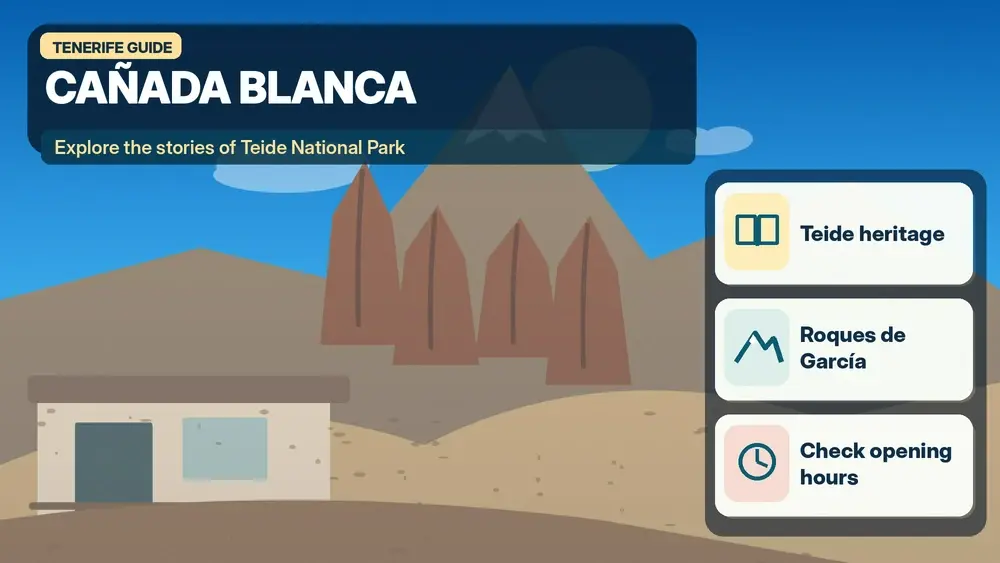
  • Cañada Blanca Visitor Centre Guide: Teide History, Hours and Roques de García

    Cañada Blanca Visitor Centre Guide: Teide History, Hours and Roques de García

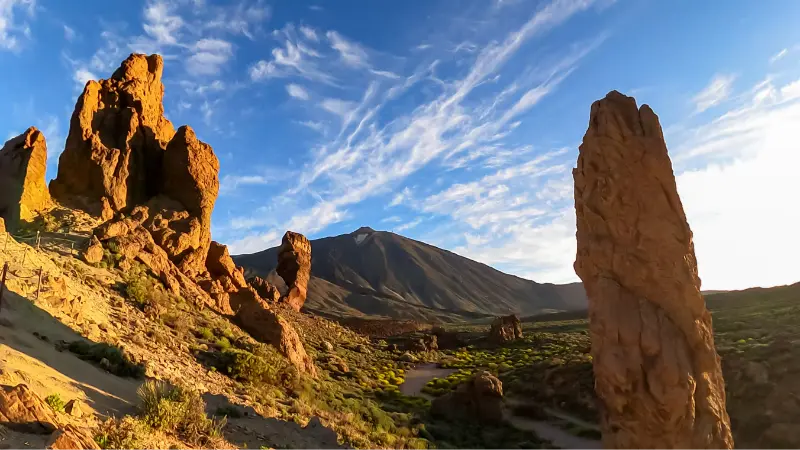
    Cañada Blanca Visitor Centre is the Teide National Park visitor centre I would choose when I want to understand how people lived in Las Cañadas, not only how the volcanoes formed. It stands beside the Parador and faces the Roques de García, so it can add real context to one of the most photographed stops in Tenerife.

    The park authority currently lists daily opening from 09:00 to 16:00, with closure on 25 December and 1 and 6 January. Admission is presented as part of the public visitor infrastructure; I still check the official page immediately before going because opening arrangements, parking and works can change.

    Quick practical facts

    WhereLas Cañadas del Teide, beside the Parador and Roques de García
    Current hoursDaily 09:00–16:00
    Annual closures25 December; 1 and 6 January
    Main themeHuman life, land use and Guanche culture in Las Cañadas
    Best paired withRoques de García, Siete Cañadas, Parador area
    AltitudeHigh-mountain environment; dress for Teide, not the coast

    Why I would give Cañada Blanca Visitor Centre its own stop

    Many first-time visitors drive into Teide National Park, photograph Roque Cinchado and leave with a strong impression of geology but very little sense of human history. Cañada Blanca corrects that imbalance. Its interpretation focuses on the different ways people used this high landscape and how those uses shaped what visitors see today.

    I also like the location because the museum does not require a separate detour. If I am already planning the Roques de García area, I can turn a scenic stop into a more complete visit without adding another long drive.

    What to look for once you are there

    The human story of Las Cañadas

    The exhibition looks at ways of life in the highlands and the practical uses people made of the environment. That perspective helps explain why paths, grazing areas and historic structures appear where they do.

    Teide National Park Desert Landscape Tenerife

    Guanche culture

    The centre gives special space to Guanche culture. I would use it as context rather than treating any single display as the whole story of Tenerife’s Indigenous past; the MUNA and other archaeological collections can add depth later in the trip.

    The view from the Cañada Blanca area

    Outside, the setting itself is part of the visit: Teide, Roques de García and Guajara frame the centre. The official viewpoint information identifies Cañada Blanca as one of the park’s key panorama points.

    A useful indoor pause at altitude

    The centre can be especially valuable when wind, intense sun or a short weather change makes a long outdoor stop less appealing. It lets me keep learning instead of simply waiting in the car.

    The context that makes the visit more interesting

    Las Cañadas is not an empty volcanic bowl. Archaeology, pastoral history and historic travel routes show long-term human relationships with the highlands. The visitor centre helps put names and uses to a landscape that can otherwise look purely geological.

    The nearby Roques de García are the visual magnet, but I would resist the temptation to treat them as a backdrop only. The caldera wall, lava formations and broad floor of Ucanca make much more sense after a few minutes of interpretation.

    In 2026 the authorities have also been working on accessibility and parking improvements around La Ruleta and Cañada Blanca. That is another reason I verify the current parking layout rather than relying on an old photograph or map pin.

    How I would plan the visit

    I would arrive with a simple sequence: visitor centre first, then Roques de García if I am hiking, or the viewpoint platforms if I only want an easy scenic stop. Seeing the exhibition first changes what I notice outside.

    If I want a longer walking day, the Siete Cañadas guide explains the linear trail that connects the El Portillo side with Cañada Blanca. I do not add that 16.6 km route casually to a museum visit; it needs its own transport and daylight plan.

    How much time to allow

    For the centre alone I would allow around 45–75 minutes rather than rushing through in ten. The exact time depends on whether I watch audiovisual material, read the interpretation closely and use the viewpoint.

    For a combined Cañada Blanca and Roques de García stop, two to three hours is far more realistic. Parking, walking between areas and simply pausing for the landscape consume time that a map does not show.

    Getting there without turning the visit into a transport problem

    The centre is on the TF-21 at the Parador/Roques de García area. I plan the road approach according to where I am staying because Teide has several access roads and a route that looks short in kilometres can be slow through mountain bends and viewpoint traffic.

    For a mountain-focused overnight I may compare stays in La Orotava or check southern bases depending on the next day’s route. I do not choose a hotel purely because it appears closest in a straight line.

    Accessibility and comfort

    The visitor centre is designed as public park infrastructure and is a much easier way to experience Teide than a steep hike. The surrounding area has been the subject of 2026 accessibility and parking works, so I check the current arrangement for mobility needs before travel.

    Altitude still matters even when the building is accessible. Cold wind, sun and breathlessness can affect someone who would be perfectly comfortable at sea level, so I bring layers and take the walk from parking to the centre at an easy pace.

    Is it worth visiting with children?

    Yes. For families, this is one of the best ways to make Teide more than “a big volcano”. Displays about people, landscapes and Guanche culture give children specific things to look for once they step outside.

    I would pair it with a short outdoor element rather than a demanding hike. The Roques de García guide helps me judge whether the full loop suits the family; otherwise the viewpoints alone are worthwhile.

    Roque Cinchado Roques De Garcia Tenerife

    Best time of day

    Morning is my preference because it leaves more flexibility for a walk afterward and usually gives a calmer planning rhythm. The high plateau can be surprisingly bright, so the difference between indoor interpretation and outdoor glare is welcome.

    Late afternoon can be beautiful, but I do not arrive close to closing time expecting a full museum visit. I also keep enough daylight for the mountain drive back to the coast.

    Photography and respectful visiting

    Inside, I follow the centre’s current photography rules. Outside, the most useful photographs are often wide contextual frames showing Roques de García, Teide and the caldera relationship rather than only a close-up of one rock.

    I never walk onto fragile volcanic ground to remove people from a composition. The official paths and viewpoint platforms already give strong lines and scale without creating another informal track.

    Useful nearby stops

    A realistic half-day plan

    A strong half-day is Cañada Blanca Visitor Centre, the Roques de García viewpoints and a short walk around the Parador area. That gives geology, human history and scenery without overloading the schedule.

    If I am continuing toward Vilaflor or Boca Tauce, I add only one more viewpoint. Teide days become stressful when every lay-by becomes a compulsory stop.

    Common mistakes I would avoid

    • Arriving only for a photo of Roque Cinchado and skipping the interpretation.
    • Assuming coastal temperatures apply at Cañada Blanca.
    • Building a tight schedule around a specific parking space.
    • Starting Siete Cañadas without solving the linear-route return.
    • Relying on old parking photos during a period of access improvements.

    Current information: what I would check again

    The official park page currently lists the centre 09:00–16:00 daily, closed 25 December and 1 and 6 January. I treat those as current published details, not permanent promises.

    Parking and pedestrian arrangements can be affected by ongoing improvements or high visitor pressure. Before driving up I check the park website and road information rather than assuming a previous trip’s layout is unchanged.

    Teide Observatory And Mount Teide Tenerife

    Official source

    For opening hours and the visitor-centre description, I use Teide National Park – visitor centres and hours.

    Frequently asked questions

    Is Cañada Blanca the same as El Portillo Visitor Centre?

    No. They are separate visitor centres in different parts of Teide National Park and have different interpretive emphases.

    What is the main theme?

    The centre focuses strongly on human life and land use in Las Cañadas, including a section on Guanche culture.

    Can I combine it with Roques de García?

    Yes. They are in the same general Parador/Cañada Blanca area and make a natural combined visit.

    Do I need hiking gear just to visit the centre?

    Not for the exhibition itself, but I still dress for a high-altitude environment and use shoes suitable for outdoor viewpoints if I plan to walk around.

    Final thoughts

    Cañada Blanca is one of the easiest ways to turn a Teide sightseeing day into something more meaningful. It explains the people who used this landscape and then lets you step outside into the exact terrain the exhibits describe.

    I would not measure its value by the time spent indoors. The point is that an hour of context can improve every photograph, viewpoint and trail that follows.

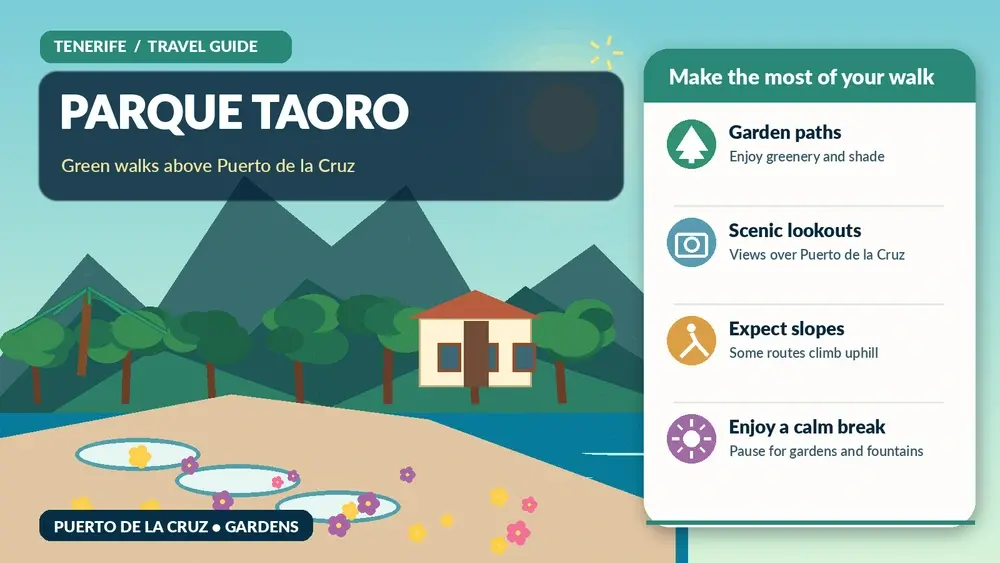
  • Parque Taoro Guide: Views, Gardens and Walks in Puerto de la Cruz

    Parque Taoro Guide: Views, Gardens and Walks in Puerto de la Cruz

    Parque Taoro is the Puerto de la Cruz place I choose when I want views and greenery without leaving town for a full nature excursion. It occupies the slopes of Montaña Taoro above the centre, with gardens, paths, viewpoints, fountains and historic buildings. The climb is real, but the reward is a completely different perspective over Puerto de la Cruz.

    Turismo de Tenerife describes the park as roughly 100,000 square metres divided into three main areas: La Atalaya, Camino de La Sortija and the Taoro gardens. The official page also notes a children’s area and food-and-drink facilities.

    Quick planning facts

    LocationUpper Puerto de la Cruz / Montaña Taoro
    SizeAbout 100,000 m²
    Main zonesLa Atalaya, Camino de La Sortija, Taoro gardens
    Best forViews, walking, running, gardens, sunset, family break
    PriceFree
    AccessRoad access plus steep pedestrian approaches from lower town
    Notable historyGran Hotel Taoro and Anglican Church

    Why I visit

    Puerto de la Cruz is experienced mostly at sea level: harbour, Playa Jardín, Lago Martiánez and the old streets. Taoro gives me the overview. From higher paths I understand the town’s position between Atlantic coast and the steep Orotava Valley.

    I combine it with my Puerto de la Cruz guide rather than treating the park as a separate day trip.

    The three areas

    La Atalaya is the part I associate most with viewpoints, including the Dulce María Loynaz viewpoint. Camino de La Sortija is used heavily by local runners and walkers. The Taoro gardens add landscaped paths, water features and a more formal park atmosphere.

    I do not try to follow a perfect circuit. I pick the area that matches my energy and enter from the most convenient side.

    The climb from town

    Walking up from central Puerto de la Cruz can be steep. On a hot or humid day, that climb changes the character of the visit. I bring water and allow more time than the map distance suggests.

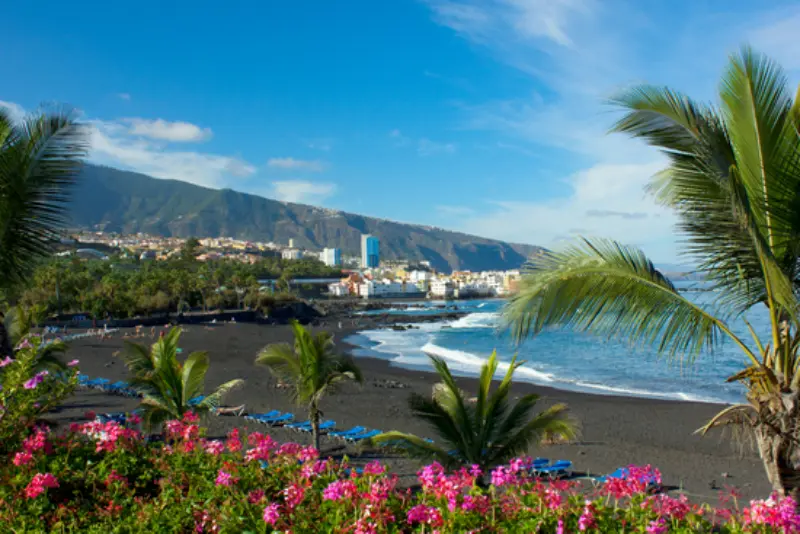
    Playa Jardin Puerto De La Cruz Tenerife

    Travellers with limited mobility may prefer road access or a taxi to the upper park, then a gentler walk. I confirm the most suitable entrance rather than assuming every path is accessible.

    Views and photography

    The best views are broad city-and-coast compositions rather than one iconic object. I like early morning for clearer air and late afternoon for softer light.

    Cloud can sit over the Orotava Valley while the coast remains bright. I treat changing weather as part of the scene instead of waiting only for a postcard-blue sky.

    Gran Hotel Taoro and Agatha Christie context

    The park area is tied to the history of the old Gran Hotel Taoro, opened in 1890 and associated with important visitors. Turismo de Tenerife specifically notes that Agatha Christie stayed there.

    That history connects the park to Puerto de la Cruz’s long role as an international resort, well before modern package tourism. I find it a useful counterpoint to the contemporary seafront.

    Running and exercise

    Camino de La Sortija is popular with people exercising. If I am only sightseeing, I stay aware of runners and avoid spreading across the path.

    For a travel workout, Taoro is more interesting than a hotel treadmill, but I do not underestimate the gradient. Heat and humidity can make a short run surprisingly demanding.

    Families

    The park can be a good decompression stop with children because there is room to move and an official children’s area. I still supervise near slopes, roads and water features.

    I pair it with a lighter attraction rather than another full-day park. The Botanical Garden is a natural same-day combination if the family enjoys plants.

    Evening and water features

    The official tourism page currently says the waterfalls and aquatic gardens operate daily from 18:00. I treat that as current information, not a permanent guarantee, and check if the water features are important to my visit.

    Evening is pleasant, but I decide in advance whether I am walking back down or using a taxi. Dark, steep routes are less enjoyable when I am tired.

    Official information

    I check Turismo de Tenerife’s Parque Taoro page for current facility notes. The park is listed as free and permanently accessible, but specific amenities can close for maintenance.

    Frequently asked questions

    Is Parque Taoro free?

    Yes, the official tourism page currently lists free admission.

    Is it walkable from central Puerto de la Cruz?

    Yes for reasonably fit visitors, but the route is steep. A taxi or car is easier for mobility limitations.

    How long do I need?

    About one to two hours works for a relaxed walk and viewpoints. Runners, families or garden lovers may stay longer.

    Final thoughts

    Parque Taoro is not a headline Tenerife attraction, and that is part of its value. It gives me a local park, a physical sense of Puerto de la Cruz’s steep setting and some of the best easy city views in the north.

    Playa Martianez From Mirador De La Paz Puerto De La Cruz Tenerife

    How I fit this stop into a full day

    I give the attraction a clear role: morning culture stop, midday break or late-afternoon visit. I avoid booking another timed activity immediately afterward because parking, queues and the temptation to stay longer can make the schedule brittle.

    I save the address, current hours and official page offline. If the place is unexpectedly closed, I already know the nearest alternative rather than spending half an hour searching from the pavement.

    Photography and visitor etiquette

    I check whether indoor photography is allowed and keep flash off around delicate objects, plants or exhibitions unless explicitly permitted. I also avoid turning narrow paths into a photo studio. Other visitors should be able to move through the space normally.

    Accessibility questions I ask before going

    Historic buildings and gardens can contain steps, cobbles, slopes and narrow doors. “Accessible” may apply to only part of a site. If mobility is important, I confirm the actual route, toilet access and parking rather than relying on a generic accessibility icon.

    Why small attractions matter in a long Tenerife trip

    A major park or famous viewpoint can be spectacular, but smaller cultural and garden stops prevent the itinerary from becoming repetitive. They are where I learn details that make later food, architecture and landscape easier to interpret.

    A final planning rule I use on Tenerife

    I leave at least one hour of unscheduled margin around rural, mountain or cultural stops. That buffer absorbs parking problems, weather changes, a longer lunch or a road that is slower than expected. It also gives me permission to stay when a place turns out to be more interesting than the itinerary suggested.

    Before driving away, I check the next fuel, food and return option. This small habit matters most in the parts of Tenerife where tourism infrastructure is deliberately light. Good planning should make the day feel freer, not more rigid.

    Why this article belongs in a complete Tenerife plan

    The island becomes much more interesting when I connect major sights with smaller landscapes and cultural stops. This experience adds context rather than another box to tick, which is exactly what I want from a second or third day away from the main resort areas.

    Puerto De La Cruz And Lago Martianez Tenerife

    Small details that improve the visit

    I check opening hours or access information on the same day whenever the experience depends on a museum, visitor centre, tasting, campsite or protected route. Tenerife is easy to travel around, but it is still frustrating to cross the island for a facility that has changed its schedule. A two-minute check before departure is one of the most useful habits in my planning.

    I also keep cash and a bank card, water, a light layer and a charged phone with me. None of those items is dramatic, but together they solve many of the small problems that can turn a relaxed day into unnecessary stress.

    What I would not try to combine on the same day

    I avoid attaching a long Teide hike, a late-night drive or several fixed-time attractions to a day that already involves rural roads, tasting, museums or protected landscapes. The island looks compact on a map, but the most rewarding places often deserve more time than their distance suggests.

    When I have extra time, I use it for a cafe, a short walk or a viewpoint rather than adding another far-away destination. That usually creates a better travel day and makes the article useful as a realistic plan rather than an impossible checklist.

    Before I leave

    I take one last look at the return journey before starting the visit. In Tenerife, a place that feels close on the map can sit on the opposite side of a ridge or at a very different altitude. Knowing whether I am returning by motorway, town roads or a mountain route helps me decide when to leave and prevents the final hour of the day from becoming rushed.

    I also keep the plan flexible enough to stop if the weather, light or atmosphere is better than expected. That flexibility is especially valuable in the north and in the mountains, where conditions can change quickly and a short unplanned stop can become the most memorable part of the day.

    Who I think will enjoy it most

    This experience works best for travellers who want more than the headline attractions and enjoy understanding how local culture, landscape and everyday life fit together. It is less suitable for anyone trying to maximize the number of famous sights in a single day, and that is exactly why I consider it valuable in a longer Tenerife itinerary.

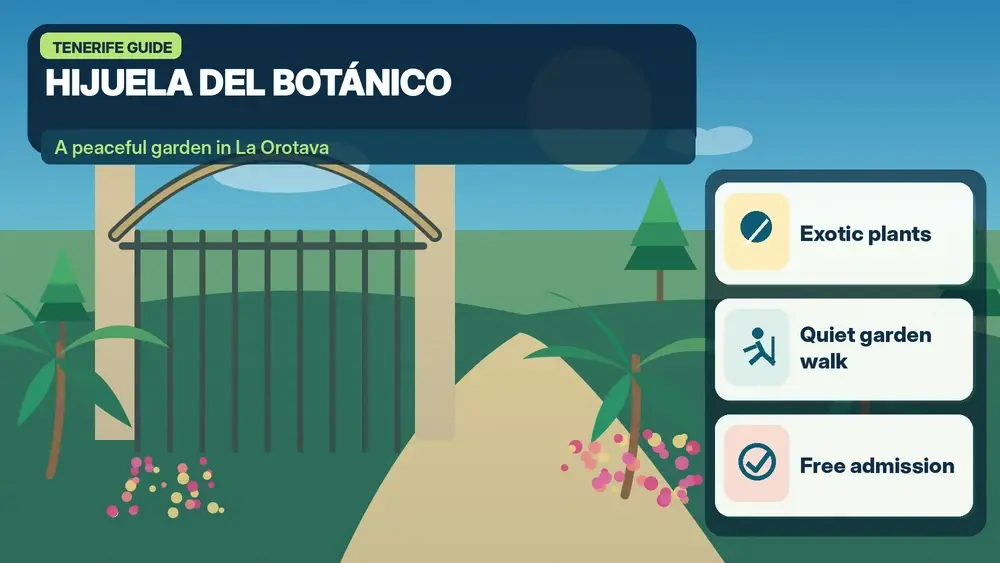
  • Hijuela del Botánico Guide: Free Historic Garden in La Orotava

    Hijuela del Botánico Guide: Free Historic Garden in La Orotava

    Hijuela del Botánico is one of the small La Orotava stops I like precisely because it does not demand half a day. Hidden behind the town hall, this historic botanical garden covers about 4,000 square metres and contains roughly a hundred species. It works beautifully as a quiet pause between churches, balconies and the steep streets of the historic centre.

    Turismo de Tenerife states that the garden was created in 1788 and has been a Bien de Interés Cultural since 2008. It was conceived as a complementary site to the acclimatization garden that is now the Jardín Botánico in Puerto de la Cruz.

    Quick planning facts

    LocationBehind La Orotava Town Hall
    SizeAbout 4,000 m²
    OriginCreated in 1788
    Heritage statusBien de Interés Cultural since 2008
    CollectionAround one hundred species
    Official priceFree
    Official hoursTurismo de Tenerife currently lists 09:00–14:00 year-round

    Why I add it to a La Orotava walk

    La Orotava can become architecture-heavy: carved balconies, churches, manor houses and steep stone streets. Hijuela changes the pace. I enter a green space, slow down and look at plants collected from very different parts of the world.

    My La Orotava guide gives the broader walking route. Hijuela is a good 20- to 40-minute component rather than the reason I cross the island on its own.

    A short history

    The garden is linked to the same historical interest in acclimatizing exotic plants that shaped the larger botanical garden in Puerto de la Cruz. Its creation in the late eighteenth century reflects Tenerife’s role in Atlantic scientific and botanical exchange.

    I find that context more interesting than simply counting species. The garden is evidence of how the island’s climate attracted botanists and plant collectors long before modern tourism.

    What I look for

    The official page highlights species such as horse chestnut, flame tree, sapote, Australian conifers and a notable dragon tree. Collections can evolve, so I treat those as examples rather than a guaranteed checklist for every visit.

    I look at tree form, bark, shade and how the garden is laid out within the historic town. Because it is compact, I can pay more attention to individual specimens than in a huge park.

    Best time of day

    Morning fits the official opening hours and works naturally with a La Orotava walking itinerary. I would visit before lunch, then continue to Casa de los Balcones, churches or viewpoints.

    Cloudy north-Tenerife weather is not a problem here. Soft light can actually make plants and stonework easier to photograph than hard midday sun.

    Photography

    The garden rewards detail: leaves, old trunks, framed views and the contrast between vegetation and town architecture. I avoid blocking narrow paths with a tripod and respect any areas closed for maintenance.

    If plant photography is a major interest, I combine the stop with my Puerto de la Cruz Botanical Garden guide. The two sites are linked historically but very different in scale.

    Accessibility and pace

    A compact garden can still include uneven surfaces or steps, so travellers with limited mobility should confirm the current accessible route. I do not assume heritage gardens meet the same standards as modern parks.

    For most visitors, the small scale is an advantage: it is easy to enjoy without exhausting legs already dealing with La Orotava’s slopes.

    Combining with food and culture

    After the garden I like a slow lunch or coffee in the historic centre. This is also a good day to connect architecture with local crafts at Casa de los Balcones or the MAIT crafts museum.

    La Orotava Historic Center Panorama Tenerife

    I avoid adding Puerto de la Cruz, Teide and several museums unless I am comfortable with a rushed day. La Orotava deserves time on foot.

    Official information

    I use Turismo de Tenerife’s Hijuela del Botánico page for current reference. It currently lists free admission and opening from 09:00 to 14:00 all year.

    Frequently asked questions

    Is Hijuela del Botánico the same as the Botanical Garden in Puerto de la Cruz?

    No. It is a separate, much smaller historic garden in La Orotava, although the two are historically linked.

    How long do I need?

    For most travellers 20 to 40 minutes is enough. Plant enthusiasts may stay longer.

    Is it worth visiting if I already saw the Puerto de la Cruz garden?

    Yes if you are already in La Orotava. The value is the historic setting and compact character, not a larger collection.

    Final thoughts

    Hijuela del Botánico is exactly the kind of small place that makes a travel day feel less mechanical. I would not oversell it as a major attraction, but I would absolutely include it in a thoughtful La Orotava walk.

    How I fit this stop into a full day

    I give the attraction a clear role: morning culture stop, midday break or late-afternoon visit. I avoid booking another timed activity immediately afterward because parking, queues and the temptation to stay longer can make the schedule brittle.

    I save the address, current hours and official page offline. If the place is unexpectedly closed, I already know the nearest alternative rather than spending half an hour searching from the pavement.

    Photography and visitor etiquette

    I check whether indoor photography is allowed and keep flash off around delicate objects, plants or exhibitions unless explicitly permitted. I also avoid turning narrow paths into a photo studio. Other visitors should be able to move through the space normally.

    Accessibility questions I ask before going

    Historic buildings and gardens can contain steps, cobbles, slopes and narrow doors. “Accessible” may apply to only part of a site. If mobility is important, I confirm the actual route, toilet access and parking rather than relying on a generic accessibility icon.

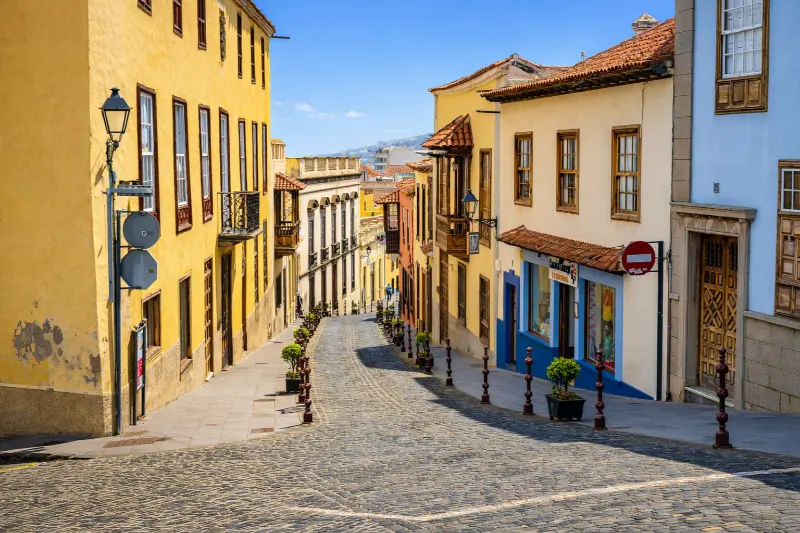
    Historic Center Of La Orotava Tenerife

    Why small attractions matter in a long Tenerife trip

    A major park or famous viewpoint can be spectacular, but smaller cultural and garden stops prevent the itinerary from becoming repetitive. They are where I learn details that make later food, architecture and landscape easier to interpret.

    A final planning rule I use on Tenerife

    I leave at least one hour of unscheduled margin around rural, mountain or cultural stops. That buffer absorbs parking problems, weather changes, a longer lunch or a road that is slower than expected. It also gives me permission to stay when a place turns out to be more interesting than the itinerary suggested.

    Before driving away, I check the next fuel, food and return option. This small habit matters most in the parts of Tenerife where tourism infrastructure is deliberately light. Good planning should make the day feel freer, not more rigid.

    Why this article belongs in a complete Tenerife plan

    The island becomes much more interesting when I connect major sights with smaller landscapes and cultural stops. This experience adds context rather than another box to tick, which is exactly what I want from a second or third day away from the main resort areas.

    Small details that improve the visit

    I check opening hours or access information on the same day whenever the experience depends on a museum, visitor centre, tasting, campsite or protected route. Tenerife is easy to travel around, but it is still frustrating to cross the island for a facility that has changed its schedule. A two-minute check before departure is one of the most useful habits in my planning.

    I also keep cash and a bank card, water, a light layer and a charged phone with me. None of those items is dramatic, but together they solve many of the small problems that can turn a relaxed day into unnecessary stress.

    What I would not try to combine on the same day

    I avoid attaching a long Teide hike, a late-night drive or several fixed-time attractions to a day that already involves rural roads, tasting, museums or protected landscapes. The island looks compact on a map, but the most rewarding places often deserve more time than their distance suggests.

    When I have extra time, I use it for a cafe, a short walk or a viewpoint rather than adding another far-away destination. That usually creates a better travel day and makes the article useful as a realistic plan rather than an impossible checklist.

    Before I leave

    I take one last look at the return journey before starting the visit. In Tenerife, a place that feels close on the map can sit on the opposite side of a ridge or at a very different altitude. Knowing whether I am returning by motorway, town roads or a mountain route helps me decide when to leave and prevents the final hour of the day from becoming rushed.

    I also keep the plan flexible enough to stop if the weather, light or atmosphere is better than expected. That flexibility is especially valuable in the north and in the mountains, where conditions can change quickly and a short unplanned stop can become the most memorable part of the day.

    Who I think will enjoy it most

    This experience works best for travellers who want more than the headline attractions and enjoy understanding how local culture, landscape and everyday life fit together. It is less suitable for anyone trying to maximize the number of famous sights in a single day, and that is exactly why I consider it valuable in a longer Tenerife itinerary.

  • MAIT La Orotava Guide: Ibero-American Crafts Museum, Hours and Tickets

    MAIT La Orotava Guide: Ibero-American Crafts Museum, Hours and Tickets

    The Museo de Artesanía Iberoamericana de Tenerife (MAIT) is one of the La Orotava museums I would choose when I want the town’s historic architecture and its craft traditions to reinforce each other. The museum occupies the former Dominican convent of San Benito Abad, now commonly referred to as the former Santo Domingo convent, and its permanent collections connect Canary Islands crafts with wider Ibero-American traditions.

    The La Orotava tourism website lists the museum at Calle Tomás Zerolo 34. At the time of this update, official municipal pages are not fully consistent on opening hours: the tourism page lists Monday to Friday 10:00–15:00 and Saturday 10:30–13:30, while the municipality’s facility page lists Monday to Friday 09:00–15:00. Both indicate a €2 general ticket and free admission for Tenerife residents. I therefore verify the timetable directly before travelling rather than presenting one listing as guaranteed.

    Quick visit facts

    LocationCalle Tomás Zerolo 34, La Orotava
    BuildingFormer Dominican convent, 17th century
    HoursOfficial municipal pages currently show differing schedules; verify before visiting
    Current listed general price€2; Tenerife residents free
    Collection focusCanarian and Ibero-American crafts
    Time I allow60–90 minutes
    Best pairingLa Orotava historic centre and Casa de los Balcones

    The building is part of the reason to visit

    I would not separate the collection from the former convent. The municipal museum description highlights the stone entrance arch, cloister, timber ceilings and stone staircase, with work associated with Canarian architect, sculptor and gilder Antonio de Orbarán. Those spaces give handmade objects a setting that feels appropriate rather than neutral.

    If architecture is my priority, I compare this building with the patios and balconies elsewhere in town. My La Orotava travel guide provides a walking route through the historic centre.

    What the collection covers

    The permanent exhibition is designed to represent Ibero-American craft traditions, including practices that continue today and others that have disappeared. The museum gives special attention to Canary Islands craftsmanship but also includes material from America, the Philippines and Spain. This broader context helps me see Canarian crafts as part of long networks of exchange rather than an isolated folk style.

    La Orotava Historic Center And Mountains Tenerife

    Highlighted collections include popular art from America and the Philippines, regional Canarian craft design awards, traditional musical instruments and Spanish popular pottery. I would choose a few themes and follow them rather than try to memorise every object label.

    What I look for in the Canarian craft rooms

    In the Canary Islands sections I slow down for techniques that are easy to overlook when they are reduced to souvenir labels. Openwork embroidery, or calado, depends on removing selected threads from fabric and rebuilding decorative patterns with careful hand stitching. Traditional pottery, basketry, woodwork and textile work are equally useful because they show how local materials, household needs and trade shaped everyday objects. I pay attention to labels explaining where an object was made, what raw materials were used and whether the piece was intended for daily work, dress, storage or decoration. That context matters more to me than simply deciding which object looks prettiest. It also helps later when I browse shops: I can ask how something was made and avoid assuming that every item marketed as Canarian represents the same craft tradition. MAIT works best when I use the collection as a vocabulary lesson before looking for contemporary artisan work elsewhere on the island.

    Illustrated guide: MAIT La Orotava, with practical visitor tips
    Illustrated guide: MAIT La Orotava.

    Why it complements Casa de los Balcones

    Casa de los Balcones is more immediately visual, with its architecture, courtyards and strong association with traditional crafts. MAIT is more museum-like and comparative. Visiting both can work well because one gives a domestic-architectural setting and the other provides a broader interpretive framework.

    My Casa de los Balcones guide explains the practical details of that second stop. I would normally leave time for a café between the two rather than turn La Orotava into a museum marathon.

    Crafts as living culture, not only souvenirs

    The museum is a useful reminder that “craft” can mean technique, design, social history and skilled labour—not simply an object bought at the end of a holiday. Lace, pottery, basketry, woodwork, textiles and musical instruments all carry information about materials, trade and everyday life.

    That changes how I shop later. I am more likely to ask who made an item, what material was used and whether the design belongs to a local tradition. The Tenerife food souvenirs guide covers edible products, but I apply the same principle to non-food crafts: fewer, better-documented objects are more meaningful than generic souvenirs.

    Official source I check

    For current visitor information I compare La Orotava tourism’s official MAIT page with the municipality’s current MAIT facility listing. Because those official pages can show different opening times, I treat the museum’s own contact details as the final check before travelling. Both sources are still useful for the address, ticket information and collection overview.

    How much time I would allow

    I would normally allow between one and two hours for MAIT – Museo de Artesanía Iberoamericana, then keep the rest of the day for the surrounding historic centre. Museums and interpretation centres are most useful when I do not rush through every panel. I choose the sections that interest me, read enough context to understand what I am looking at and then continue outside with a clearer sense of place.

    This is why I combine the visit with my La Orotava travel guide rather than treating the museum as an isolated stop. A coffee, market visit or short walk afterwards gives the information from the displays somewhere to “land” in the real city.

    Opening hours and tickets: what I verify

    Hours, temporary exhibitions and ticket systems can change, especially around public holidays, Carnival, Christmas and local events. I therefore use the official website as the final source on the day before visiting. If free timed entry or advance booking is offered, I reserve it rather than assume I can walk in at the busiest hour.

    I also check whether bags, tripods, food, flash photography or large groups have specific rules. These small details are easy to overlook and can matter more than the headline ticket price.

    Who I think gets the most from the visit

    MAIT – Museo de Artesanía Iberoamericana works best for travellers who want context, not only a list of sights. It is particularly useful on a cloudy day, for repeat visitors, for families with older children who like interactive or visual displays, and for anyone trying to understand Tenerife beyond beaches and viewpoints. I would not force a museum into every itinerary, but I think one or two well-chosen cultural visits make the rest of the island easier to read.

    Accessibility and comfort

    Before travelling with a wheelchair, stroller or limited mobility, I confirm the current accessibility information directly with the venue because historic buildings can have level changes, lifts or temporary restrictions. I also check nearby parking or the walking distance from a bus/tram stop. My broader accessible Tenerife guide is useful for planning the whole day rather than only the museum entrance.

    A realistic La Orotava cultural half-day

    I would start in the historic centre while the streets are quiet, visit MAIT near opening time, continue through the main squares and traditional houses, and choose one second interior such as Casa de los Balcones. Lunch then becomes the pause before deciding whether to continue to Puerto de la Cruz or drive toward the Orotava Valley viewpoints.

    Frequently asked questions

    Is MAIT only about Canarian crafts?

    No. The permanent exhibition is Ibero-American in scope, with a strong Canary Islands component but collections that also connect Spain, America and the Philippines.

    Is the building historic?

    Yes. The museum occupies a seventeenth-century former Dominican convent, and the architecture is a major part of the visit.

    Is it expensive?

    Official municipal information currently lists a €2 general ticket and free admission for Tenerife residents. I confirm both price and opening time before arrival, especially because official pages can be updated on different schedules.

    Final thoughts

    MAIT is a good example of the smaller Tenerife museum that becomes more valuable when placed in context. I would not visit only to “see crafts”; I would use it to understand the materials and techniques that appear elsewhere in La Orotava and then notice those details differently as I walk through the town.

    How I prepare before entering

    I read just enough before the visit to know the basic story, but I do not try to learn the entire collection online. A museum is more engaging when I recognise a few themes and still have room to discover something new. I save the official page and any digital guide, then put my phone away for parts of the visit.

    Fountain and gardens in front of the pink Liceo de Taoro building in La Orotava

    I also check the last admission time, not only the closing time. Some venues stop entry before the doors close, and temporary events can affect normal access. If I am building the day around a specific exhibition, I verify that it is still running.

    Photography without missing the museum

    If photography is permitted, I take a few images that help me remember an object or display and then keep moving. Photographing every label usually means I read nothing properly. For historic interiors I avoid blocking narrow passages, leaning on cases or using flash unless it is explicitly allowed.

    What I do after the visit

    I give myself ten minutes afterwards to walk without another objective. Museums can be dense, and the transition back into the city is often when the information becomes useful. I notice architecture, shop signs, festival posters or craft objects differently because I now have a context for them.

    This is also when I decide whether I need another museum. Often I do not. One strong visit plus a market, neighbourhood or historic street produces a more varied day than moving from ticket desk to ticket desk.

  • Casa del Carnaval Santa Cruz Guide: Free Museum, Costumes and Visit Tips

    Casa del Carnaval Santa Cruz Guide: Free Museum, Costumes and Visit Tips

    Casa del Carnaval is the place I would visit in Santa Cruz when I want to understand the Carnival outside the few intense weeks when the city is actually celebrating it. Instead of seeing the event only as parades and nightlife, the museum explains costumes, music, groups, posters and the creative work that keeps the festival alive throughout the year.

    The official Casa del Carnaval website describes a permanent exhibition with multimedia displays, Carnival posters, costumes and interactive elements. The current contact information lists Calle Aguere 19 in Santa Cruz and opening hours from 10:00 to 18:30 Monday to Sunday. Recent official notices also state that admission is free, with free tickets available through the website. Because exhibitions and access systems can change, I confirm those details before travelling.

    Quick visit facts

    LocationCalle Aguere 19, Santa Cruz de Tenerife
    Current listed hoursMonday–Sunday, 10:00–18:30
    AdmissionFree according to recent official notices; check current booking
    Best forCarnival history, costumes, posters, music and multimedia
    Time I allow60–90 minutes
    Combine withHistoric centre, market, TEA or Auditorio

    Why I think it is more useful than a simple Carnival photo stop

    Santa Cruz Carnival can be overwhelming if I encounter it only through images of the main gala. Casa del Carnaval gives names and roles to the different communities involved: murgas, comparsas, rondallas, musical groups, designers and Carnival characters. That context makes the live festival much easier to understand later.

    It is also valuable outside Carnival season. If my trip is in May, September or November, I can still see elaborate costumes and learn how the annual event changes. My Santa Cruz Carnival guide then becomes more useful because the terminology is no longer abstract.

    What the permanent exhibition includes

    The official description mentions the current Carnival Queen costume as a central display, along with posters, audiovisual material and screens explaining different aspects of the festival. Displays are designed to change, so I do not arrive expecting one specific costume from an old social-media post.

    There are also interactive elements associated with costumes, masks, wigs and musical instruments. I see these as an opportunity to understand the craftsmanship behind Carnival, not just as a place for novelty photographs.

    Carnival vocabulary I learn before a live event

    A short museum visit is much more useful when I use it to decode the vocabulary I will hear during Carnival. Murgas are satirical singing groups whose performances mix music, costumes and topical humour; comparsas place much more emphasis on dance, percussion and spectacular street presentation; rondallas bring a different musical tradition; and the Carnival Queen gala highlights enormous wearable designs that are closer to mobile stage architecture than ordinary clothing. I also pay attention to posters, costume sketches and references to designers because they reveal how much work happens months before a parade. I do not try to memorise every category in one visit. Instead, I leave with a few names and roles that help me recognise what I am seeing later in the streets or on television. That small amount of context turns Carnival from a colourful spectacle into a cultural event with distinct communities, competitions and creative traditions.

    Temporary exhibitions and why I check them

    The museum has a multipurpose space used for temporary exhibitions, talks, workshops and presentations. This is one of the reasons I always check the official site a few days before visiting. A temporary show on rondallas, murgas, posters or design can change the balance of the visit and may be the most interesting part for a repeat visitor.

    Best time to visit

    On a normal sightseeing day I would place Casa del Carnaval in the hotter middle part of the afternoon, then return outside for Santa Cruz’s plazas and pedestrian streets. During Carnival or major city events, I expect transport and opening arrangements to be less predictable and I verify everything again.

    Panoramic View Of Santa Cruz De Tenerife

    If I am visiting the city for the first time, my Santa Cruz de Tenerife guide helps connect the museum with Mercado Nuestra Señora de África, TEA, Parque García Sanabria and the Auditorio.

    Getting there

    The central location makes the museum practical without a car. I prefer public transport when spending a full day in Santa Cruz because parking can add unnecessary time. If I drive, I choose a legal public car park and walk rather than circle the centre looking for the closest street space.

    Official information to check

    I use the official Casa del Carnaval website for current hours, ticket reservations, contact details and temporary activities. The site lists Calle Aguere 19 and the 10:00–18:30 daily schedule at the time of this update, but I always recheck around holidays and festival dates.

    How much time I would allow

    I would normally allow between one and two hours for Casa del Carnaval, then keep the rest of the day for the surrounding historic centre. Museums and interpretation centres are most useful when I do not rush through every panel. I choose the sections that interest me, read enough context to understand what I am looking at and then continue outside with a clearer sense of place.

    This is why I combine the visit with my Santa Cruz de Tenerife guide rather than treating the museum as an isolated stop. A coffee, market visit or short walk afterwards gives the information from the displays somewhere to “land” in the real city.

    Plaza de España reflecting pool and civic buildings in Santa Cruz de Tenerife
    Plaza de España, Santa Cruz de Tenerife.

    Opening hours and tickets: what I verify

    Hours, temporary exhibitions and ticket systems can change, especially around public holidays, Carnival, Christmas and local events. I therefore use the official website as the final source on the day before visiting. If free timed entry or advance booking is offered, I reserve it rather than assume I can walk in at the busiest hour.

    I also check whether bags, tripods, food, flash photography or large groups have specific rules. These small details are easy to overlook and can matter more than the headline ticket price.

    Who I think gets the most from the visit

    Casa del Carnaval works best for travellers who want context, not only a list of sights. It is particularly useful on a cloudy day, for repeat visitors, for families with older children who like interactive or visual displays, and for anyone trying to understand Tenerife beyond beaches and viewpoints. I would not force a museum into every itinerary, but I think one or two well-chosen cultural visits make the rest of the island easier to read.

    Accessibility and comfort

    Before travelling with a wheelchair, stroller or limited mobility, I confirm the current accessibility information directly with the venue because historic buildings can have level changes, lifts or temporary restrictions. I also check nearby parking or the walking distance from a bus/tram stop. My broader accessible Tenerife guide is useful for planning the whole day rather than only the museum entrance.

    A good cultural cluster in Santa Cruz

    My preferred sequence is Mercado Nuestra Señora de África in the morning, TEA or MUNA around late morning, lunch, Casa del Carnaval in the afternoon and a walk through the centre or García Sanabria afterwards. I do not try to visit every museum. Two cultural stops with time for the city outside usually feel richer than five rushed interiors.

    Frequently asked questions

    Is Casa del Carnaval only worth visiting during Carnival?

    No. Its main purpose is to make Carnival accessible throughout the year, and exhibitions are updated to reflect the festival’s continuing history.

    Is admission free?

    Recent official museum notices describe free admission with online free tickets. Because ticket procedures can change, I confirm on the official site immediately before visiting.

    How long do I need?

    I would allow about an hour for a focused visit and up to 90 minutes if temporary exhibitions or multimedia displays interest me.

    Final thoughts

    Casa del Carnaval is small compared with a national museum, but it adds something important to a Tenerife trip: cultural context for a festival that shapes Santa Cruz far beyond the parade route. I would visit before Carnival if possible, then watch the live event with a much better understanding of the groups, costumes and traditions involved.

    How I prepare before entering

    I read just enough before the visit to know the basic story, but I do not try to learn the entire collection online. A museum is more engaging when I recognise a few themes and still have room to discover something new. I save the official page and any digital guide, then put my phone away for parts of the visit.

    Santa Cruz De Tenerife At Night

    I also check the last admission time, not only the closing time. Some venues stop entry before the doors close, and temporary events can affect normal access. If I am building the day around a specific exhibition, I verify that it is still running.

    Photography without missing the museum

    If photography is permitted, I take a few images that help me remember an object or display and then keep moving. Photographing every label usually means I read nothing properly. For historic interiors I avoid blocking narrow passages, leaning on cases or using flash unless it is explicitly allowed.

    What I do after the visit

    I give myself ten minutes afterwards to walk without another objective. Museums can be dense, and the transition back into the city is often when the information becomes useful. I notice architecture, shop signs, festival posters or craft objects differently because I now have a context for them.

    This is also when I decide whether I need another museum. Often I do not. One strong visit plus a market, neighbourhood or historic street produces a more varied day than moving from ticket desk to ticket desk.

  • Parque García Sanabria Guide: Gardens, Sculptures and a Green Walk in Santa Cruz

    Parque García Sanabria Guide: Gardens, Sculptures and a Green Walk in Santa Cruz

    Parque García Sanabria is not a day-trip attraction in the usual sense; it is the kind of city park that makes Santa Cruz easier to enjoy on foot and gives me a green pause between urban stops.

    A large botanical park in the city centre

    Santa Cruz City Council describes García Sanabria as covering about 55,000 square metres and containing more than 200 plant species from around the world, together with paths, fountains, ponds, children’s areas, monuments and sculptures. That scale is large enough to wander, but compact enough to use naturally inside a city day.

    Why the park exists

    The idea of creating a major urban park in Santa Cruz developed over decades as the city grew and public-health advocates argued for green space. The park is closely associated with mayor Santiago García Sanabria and became one of the capital’s defining civic landscapes. I like knowing that history because it frames the park as infrastructure for city life, not decoration.

    Botanical interest without a ticket

    I can explore palms, tropical and subtropical species without the formal structure of a botanical-garden admission. The city even maintains a geolocated botanical guide. I use labels and the route selectively, because the best experience is still the combination of plants, shade, water and everyday use by residents.

    The sculpture route

    The park contains a recognised sculpture route and the municipal open-data portal provides geolocated information for sculptures and routes. I enjoy discovering works while walking rather than turning the park into a scavenger hunt. Some pieces make more sense when I see how they sit among vegetation and paths.

    A good midday reset

    Santa Cruz can feel hot and bright in exposed streets. García Sanabria gives me shade, benches and a slower pace between museums, shopping or lunch. I still carry water and sun protection because shade is not continuous and the walk to and from the park may be exposed.

    Families and ordinary city life

    The children’s areas and open paths make the park easy to include in a family day. I value it precisely because it does not need to become another scheduled attraction. A child can play, adults can sit, and everyone gets a break from galleries or shopping. That ordinary usefulness is one of its strengths.

    Palmetum comparison

    The Palmetum is the better choice for a specialised botanical visit; García Sanabria is the better choice for a free central-city pause. Plant lovers can visit both without feeling that one repeats the other, because their histories, collections and urban roles are different.

    View from the Palmetum towards the Auditorio and Santa Cruz waterfront

    How I build it into a walking route

    I use the park as part of my Santa Cruz guide, connecting it with the Ramblas, central shopping streets or a museum depending on the day. I avoid driving to the park purely for 20 minutes if I am already parked elsewhere in central Santa Cruz; the city makes more sense on foot.

    How much time I would allow

    I would not rush Parque García Sanabria. For a focused visit I allow enough time to look rather than only photograph, and I add a buffer for the entrance, orientation and any temporary display or guided element. The right duration depends on interest: a specialist can spend much longer than someone adding it to a broader city day. I plan the rest of the day around one or two nearby places, not around an unrealistic chain of timed attractions.

    How I fit it into the surrounding city

    Parque García Sanabria works best when it is part of a coherent local route. I use my Santa Cruz de Tenerife guide to decide what belongs before and after it, keeping lunch and transport on the same side of town whenever possible. This is especially useful in Santa Cruz, where several major cultural sites sit within a relatively compact urban area but traffic and parking can still waste time if I keep moving the car.

    Tickets, opening hours and the one rule I never skip

    Anything operational can change, so I verify the official website shortly before the visit. I do not build a trip around an opening time copied months earlier from a travel article. Temporary exhibitions, guided tours, holiday closures and special events can all alter normal access. When a timed activity matters, I book it; when the visit is flexible, I still save the official page on my phone.

    Getting there and parking

    For Parque García Sanabria, I decide whether public transport is simpler than driving. In central Santa Cruz and Puerto de la Cruz, walking from another attraction or using urban transport can remove the stress of finding a space. If I drive, I choose a public car park first rather than searching for free kerbside parking immediately beside the entrance. The wider transport picture is covered in my getting around Tenerife guide.

    Panoramic View Of Santa Cruz De Tenerife

    Accessibility and comfort

    As a public urban park, many paths are straightforward, but gradients, surface condition and the most convenient accessible entrance can matter; I check the current route if mobility is limited. I still verify the exact access route if step-free movement, seating, adapted toilets or assistance is essential. Accessibility can be affected by temporary works or by the route between the car park and entrance, not only by the building itself. My accessible Tenerife guide covers the broader island context.

    Visiting with children

    The park is naturally family-friendly because children can move, play and take breaks without the behaviour expectations of a museum. I avoid assuming that a place is either “for children” or “not for children”; the age, attention span and interests matter. A shorter visit with one clear objective often works better than forcing a family to complete every room or garden path. I combine cultural stops with an outdoor break, snack or nearby park when that helps the day feel balanced.

    Photography without losing the experience

    I take photographs at Parque García Sanabria where permitted, but I do not let the phone dictate the visit. I look for context — architecture, planting, light, material and scale — rather than photographing every information panel. In galleries, museums or performance spaces I respect any restrictions on flash, video or specific rooms. If a guided visit has special rules, the guide’s instructions take priority.

    A rainy-day and hot-day advantage

    Parque García Sanabria can be useful when Tenerife weather does not match a beach plan, but I still check conditions around the journey. On a very hot day, an indoor or shaded cultural stop can be a welcome reset; on a wet north-coast day it can rescue an itinerary. I keep the day flexible rather than moving across the island purely to chase a forecast.

    Where I would stay

    I would not choose a hotel solely for Parque García Sanabria, but if several nearby attractions matter, staying in the same urban area can be efficient. I compare current accommodation nearby with my where to stay in Tenerife guide, paying more attention to walkability, evening atmosphere and parking than to being a few hundred metres closer to one entrance.

    Who I think will get the most from it

    Parque García Sanabria is strongest for travellers who enjoy understanding Tenerife beyond beaches and viewpoints. I would include it when the subject genuinely interests me, not because every attraction needs to be checked off. A well-chosen museum, garden or cultural building can add more depth to a trip than another rushed stop, especially when it explains the island’s landscape, history or contemporary life.

    What I check immediately before going

    Before leaving, I check the official page for opening hours, ticketing, closures and temporary programming. I also check the route from my current location and one nearby alternative. This takes only a few minutes and is the best protection against outdated information. If Parque García Sanabria is the main reason for the day, I save proof of any reservation offline.

    Official information I use before visiting

    For current access, opening information and notices, I use Santa Cruz City Council parks and gardens information. I recheck it close to the visit because practical details can change after this article is published.

    Plaza de España reflecting pool and civic buildings in Santa Cruz de Tenerife
    Plaza de España, Santa Cruz de Tenerife.

    A simple half-day structure

    If I only had half a day, I would make Parque García Sanabria the anchor rather than the excuse for a complicated circuit. I would arrive early enough to avoid feeling rushed, spend time on the part that genuinely interests me, then add one nearby walk or food stop. I keep the final hour loose so a longer conversation, exhibition, view or lunch does not create stress. This is the way I prefer to travel in Tenerife: the plan has a shape, but it is not a timetable that punishes me for enjoying a place.

    What I would do on a repeat visit

    On a repeat trip, I would use Parque García Sanabria as a reason to look at the surrounding area in more detail. First visits naturally concentrate on Teide, major beaches and the most famous towns. Later trips are where smaller museums, municipal centres, gardens and quieter streets become especially rewarding. I would check for temporary events, seasonal planting, a new exhibition or a local festival and let that determine the exact timing rather than repeating the same route from the first visit.