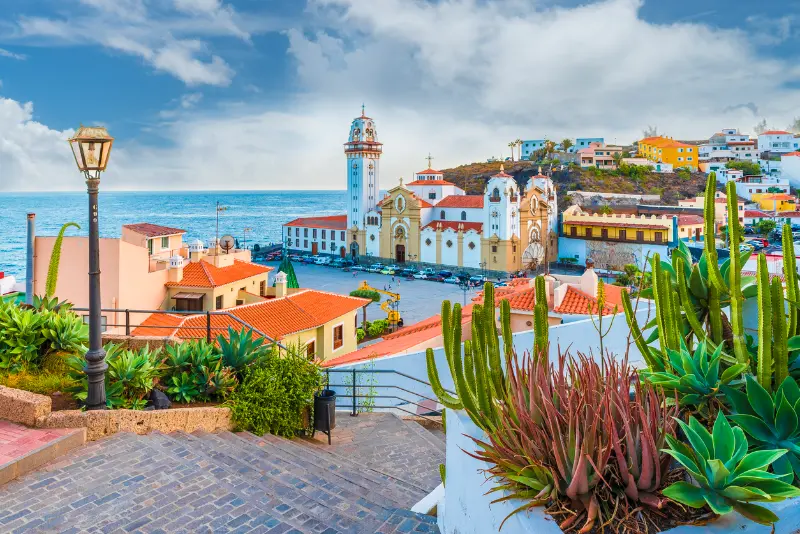
Category: Attractions & Experiences

Tenerife theme parks, wildlife activities, major attractions and bookable experiences with practical planning advice.

  • Jardín Botánico Puerto de la Cruz Guide: History, Plants and Visit Tips

    Jardín Botánico Puerto de la Cruz Guide: History, Plants and Visit Tips

    The Jardín de Aclimatación de La Orotava is one of those Tenerife names that confuses first-time visitors: despite the historic name, the famous botanical garden is in Puerto de la Cruz.

    Why the name says La Orotava but the garden is in Puerto de la Cruz

    The garden was created by royal order of Carlos III in 1788 to acclimatise tropical plants before possible transfer to mainland royal gardens. Its historic name refers to the wider Orotava Valley; administratively the garden is in Puerto de la Cruz. Knowing that prevents a very practical navigation mistake.

    A genuinely historic botanical garden

    Government sources describe it as the second-oldest botanical garden currently existing in Spain after Madrid’s Real Jardín Botánico. The historic enclosure is around 20,000 square metres and holds mature tropical and subtropical collections developed over more than two centuries. The sense of age is one of its strongest qualities.

    The plants I slow down for

    I look for the monumental figs and other mature specimens rather than trying to identify everything. Collections include palms, bromeliads, aroids, mulberries and many tropical trees. The famous Ficus macrophylla subsp. columnaris is especially memorable for its aerial-root architecture. Barriers around major specimens are there to protect both roots and visitors, so I never step beyond them for photographs.

    Current opening time

    A recent Government of the Canary Islands visitor sheet lists daily opening from 09:00 to 18:00. Because institutional hours can change for works, holidays or operational reasons, I still confirm the current information before the visit rather than treating 18:00 as permanent.

    How long I would spend

    For a casual visitor, about 60–90 minutes can be enough to walk slowly and enjoy the strongest specimens. A plant enthusiast can easily stay much longer. I would not combine the garden with a tightly timed attraction immediately afterward; the pleasure is in stopping when a canopy, root system or flowering plant catches my attention.

    Where it fits in a Puerto de la Cruz day

    I pair the garden with my Puerto de la Cruz guide, choosing one other major stop rather than every attraction in town. It works particularly well on a cloudy north-coast day when a long beach session is less appealing.

    Historic atmosphere versus the Palmetum

    The Jardín Botánico feels older, denser and more enclosed than the Palmetum. The Palmetum tells a modern regeneration story and specialises in palms from islands; this garden is about acclimatisation history and mature tropical specimens. Plant lovers can justify both.
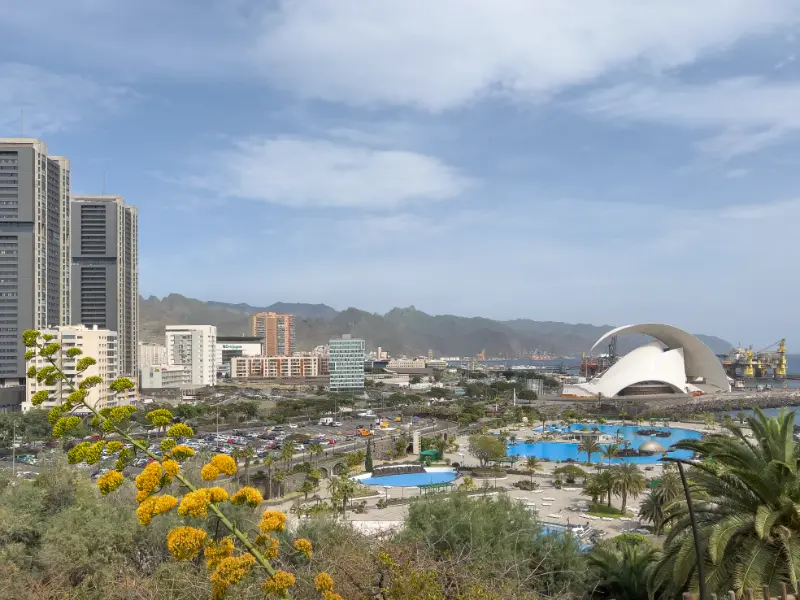
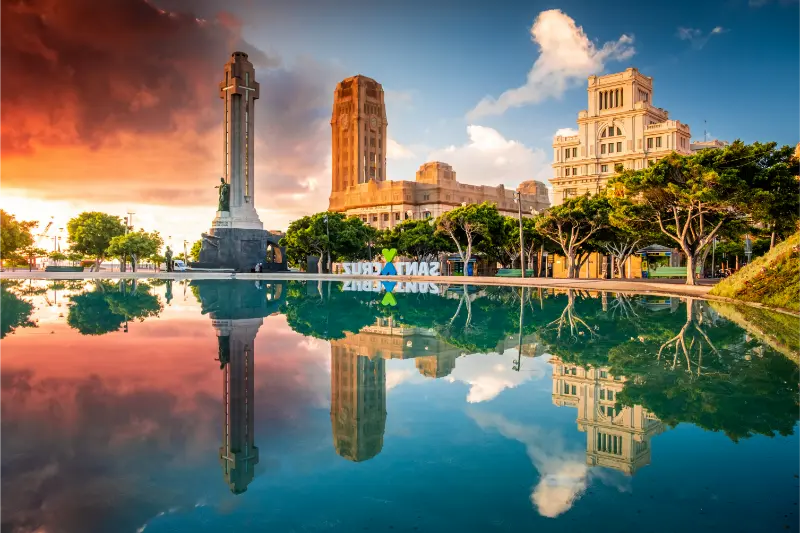
    View from the Palmetum towards the Auditorio and Santa Cruz waterfront

    How much time I would allow

    I would not rush the Jardín Botánico. For a focused visit I allow enough time to look rather than only photograph, and I add a buffer for the entrance, orientation and any temporary display or guided element. The right duration depends on interest: a specialist can spend much longer than someone adding it to a broader city day. I plan the rest of the day around one or two nearby places, not around an unrealistic chain of timed attractions.

    How I fit it into the surrounding city

    the Jardín Botánico works best when it is part of a coherent local route. I use my Puerto de la Cruz guide to decide what belongs before and after it, keeping lunch and transport on the same side of town whenever possible. This is especially useful in Santa Cruz, where several major cultural sites sit within a relatively compact urban area but traffic and parking can still waste time if I keep moving the car.

    Tickets, opening hours and the one rule I never skip

    Anything operational can change, so I verify the official website shortly before the visit. I do not build a trip around an opening time copied months earlier from a travel article. Temporary exhibitions, guided tours, holiday closures and special events can all alter normal access. When a timed activity matters, I book it; when the visit is flexible, I still save the official page on my phone.

    Getting there and parking

    For the Jardín Botánico, I decide whether public transport is simpler than driving. In central Santa Cruz and Puerto de la Cruz, walking from another attraction or using urban transport can remove the stress of finding a space. If I drive, I choose a public car park first rather than searching for free kerbside parking immediately beside the entrance. The wider transport picture is covered in my getting around Tenerife guide.

    Accessibility and comfort

    Most of the experience is a garden walk, so surface condition, route gradients and accessible toilets are more important than step-free access to one building. I verify current arrangements if mobility is a priority. I still verify the exact access route if step-free movement, seating, adapted toilets or assistance is essential. Accessibility can be affected by temporary works or by the route between the car park and entrance, not only by the building itself. My accessible Tenerife guide covers the broader island context.

    Visiting with children

    For children, the giant roots, unusual leaves and shaded paths can be more engaging than botanical labels. I set a short “find the strangest tree” challenge rather than turning the visit into a lesson. I avoid assuming that a place is either “for children” or “not for children”; the age, attention span and interests matter. A shorter visit with one clear objective often works better than forcing a family to complete every room or garden path. I combine cultural stops with an outdoor break, snack or nearby park when that helps the day feel balanced.

    Photography without losing the experience

    I take photographs at the Jardín Botánico where permitted, but I do not let the phone dictate the visit. I look for context — architecture, planting, light, material and scale — rather than photographing every information panel. In galleries, museums or performance spaces I respect any restrictions on flash, video or specific rooms. If a guided visit has special rules, the guide’s instructions take priority.

    A rainy-day and hot-day advantage

    the Jardín Botánico can be useful when Tenerife weather does not match a beach plan, but I still check conditions around the journey. On a very hot day, an indoor or shaded cultural stop can be a welcome reset; on a wet north-coast day it can rescue an itinerary. I keep the day flexible rather than moving across the island purely to chase a forecast.

    Where I would stay

    I would not choose a hotel solely for the Jardín Botánico, but if several nearby attractions matter, staying in the same urban area can be efficient. I compare current accommodation nearby with my where to stay in Tenerife guide, paying more attention to walkability, evening atmosphere and parking than to being a few hundred metres closer to one entrance.

    Who I think will get the most from it

    the Jardín Botánico is strongest for travellers who enjoy understanding Tenerife beyond beaches and viewpoints. I would include it when the subject genuinely interests me, not because every attraction needs to be checked off. A well-chosen museum, garden or cultural building can add more depth to a trip than another rushed stop, especially when it explains the island’s landscape, history or contemporary life.

    What I check immediately before going

    Before leaving, I check the official page for opening hours, ticketing, closures and temporary programming. I also check the route from my current location and one nearby alternative. This takes only a few minutes and is the best protection against outdated information. If the Jardín Botánico is the main reason for the day, I save proof of any reservation offline.

    Official information I use before visiting

    For current access, opening information and notices, I use Government/ICIA information about the Jardín de Aclimatación. I recheck it close to the visit because practical details can change after this article is published.

    A simple half-day structure

    If I only had half a day, I would make Jardín Botánico Puerto de la Cruz the anchor rather than the excuse for a complicated circuit. I would arrive early enough to avoid feeling rushed, spend time on the part that genuinely interests me, then add one nearby walk or food stop. I keep the final hour loose so a longer conversation, exhibition, view or lunch does not create stress. This is the way I prefer to travel in Tenerife: the plan has a shape, but it is not a timetable that punishes me for enjoying a place.

    What I would do on a repeat visit

    On a repeat trip, I would use Jardín Botánico Puerto de la Cruz as a reason to look at the surrounding area in more detail. First visits naturally concentrate on Teide, major beaches and the most famous towns. Later trips are where smaller museums, municipal centres, gardens and quieter streets become especially rewarding. I would check for temporary events, seasonal planting, a new exhibition or a local festival and let that determine the exact timing rather than repeating the same route from the first visit.

    Responsible visiting

    I try to leave Jardín Botánico Puerto de la Cruz and its surrounding neighbourhood exactly as I found them. In natural or planted spaces that means staying on paths, not collecting material and respecting barriers. In museums and historic areas it means following photography rules, keeping noise appropriate and treating residential streets as places where people live. Buying a coffee, lunch, local product or ticket where relevant is also a simple way to let some of the value of tourism remain in the area.
  • Palmetum Santa Cruz Guide: Tickets, Palm Collections, Views and Visit Tips

    Palmetum Santa Cruz Guide: Tickets, Palm Collections, Views and Visit Tips

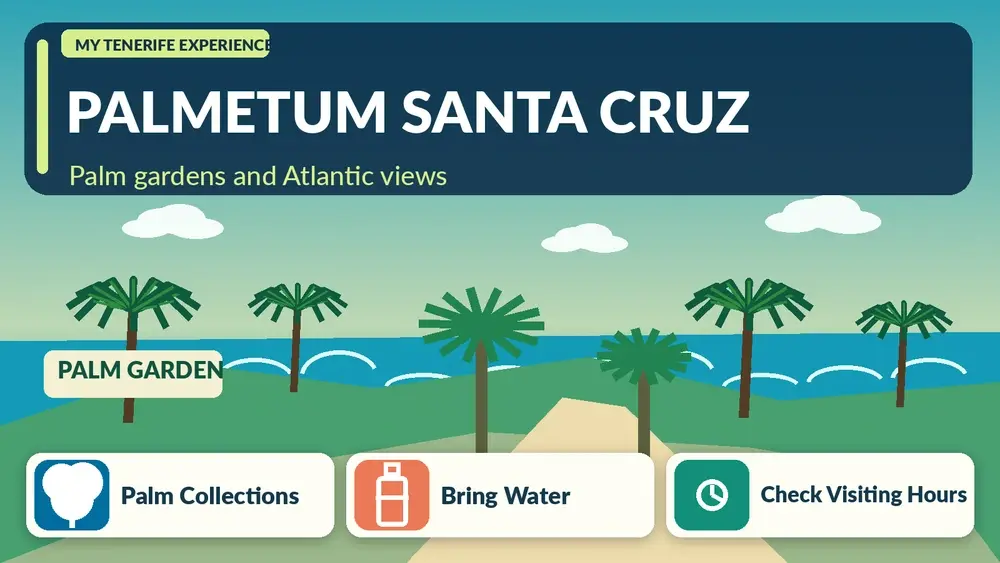
    The Palmetum is one of the places in Santa Cruz that changes the way I see the city: a botanical garden on a former landfill, with palms, sea views and a story of ecological transformation.

    What makes the Palmetum unusual

    The Palmetum covers about 12 hectares and specialises in the palm family. Its most distinctive story is the site itself: land that had been used as a rubbish dump was transformed into a botanical garden. That makes the visit interesting even before I start comparing species. The project links urban regeneration, plant conservation and a high viewpoint above the coast.

    The palm collection

    The official Palmetum describes its collection as the best palm collection in Europe and the largest botanical collection of palms from tropical islands. I do not try to memorise every species. I follow the geographic planting logic and look at how palms from different island environments vary in form, leaf structure and habitat.

    Current ticket prices I would verify again

    At the time of this update, the official tariff lists €6 for a non-resident adult and €2.80 for a non-resident child, with lower resident rates and free entry for children under three. A private one-hour guide for groups under 30 is listed separately. Because prices can change, I still check the official tariff page before travelling.

    Views are part of the experience

    The elevated position gives the garden a broader city-and-ocean role. I pause at viewpoints rather than treating the Palmetum as a flat collection of labelled plants. The contrast between dense tropical planting, the Atlantic, port infrastructure and the nearby Auditorio is one of the reasons the visit feels specifically Santa Cruz rather than interchangeable with another botanical garden.

    Heat, shade and the best time of day

    Much of the visit is outdoors, so midday sun can make a slow botanical walk tiring. I prefer morning or later afternoon when possible, carry water and use sun protection. Shade varies by section. Wind can also be noticeable on exposed viewpoints even when the lower city feels still.

    How I combine it with the Auditorio and waterfront

    The Palmetum pairs naturally with the Auditorio de Tenerife and a waterfront walk. I would not drive between them unless mobility requires it. Keeping the car parked and walking makes the architectural and landscape contrast much easier to appreciate.

    View from the Palmetum towards the Auditorio and Santa Cruz waterfront

    Palmetum versus García Sanabria

    The Palmetum and Parque García Sanabria are not duplicates. The Palmetum is a specialised botanical destination with an admission ticket and geographic collections; García Sanabria is a central urban park used as everyday city space. I would visit both on different parts of a Santa Cruz day if gardens are a real interest.

    How much time I would allow

    I would not rush the Palmetum. For a focused visit I allow enough time to look rather than only photograph, and I add a buffer for the entrance, orientation and any temporary display or guided element. The right duration depends on interest: a specialist can spend much longer than someone adding it to a broader city day. I plan the rest of the day around one or two nearby places, not around an unrealistic chain of timed attractions.

    How I fit it into the surrounding city

    the Palmetum works best when it is part of a coherent local route. I use my Santa Cruz de Tenerife guide to decide what belongs before and after it, keeping lunch and transport on the same side of town whenever possible. This is especially useful in Santa Cruz, where several major cultural sites sit within a relatively compact urban area but traffic and parking can still waste time if I keep moving the car.

    Tickets, opening hours and the one rule I never skip

    Anything operational can change, so I verify the official website shortly before the visit. I do not build a trip around an opening time copied months earlier from a travel article. Temporary exhibitions, guided tours, holiday closures and special events can all alter normal access. When a timed activity matters, I book it; when the visit is flexible, I still save the official page on my phone.

    Getting there and parking

    For the Palmetum, I decide whether public transport is simpler than driving. In central Santa Cruz and Puerto de la Cruz, walking from another attraction or using urban transport can remove the stress of finding a space. If I drive, I choose a public car park first rather than searching for free kerbside parking immediately beside the entrance. The wider transport picture is covered in my getting around Tenerife guide.

    Accessibility and comfort

    The Palmetum promotes inclusive visits and has developed accessibility initiatives, but gradients and outdoor surfaces still make it worth checking the current access information. I still verify the exact access route if step-free movement, seating, adapted toilets or assistance is essential. Accessibility can be affected by temporary works or by the route between the car park and entrance, not only by the building itself. My accessible Tenerife guide covers the broader island context.

    Visiting with children

    Children who like plants, lizards, viewpoints and open-air exploration can enjoy it, but I keep the route selective rather than demanding attention to every label. I avoid assuming that a place is either “for children” or “not for children”; the age, attention span and interests matter. A shorter visit with one clear objective often works better than forcing a family to complete every room or garden path. I combine cultural stops with an outdoor break, snack or nearby park when that helps the day feel balanced.

    Photography without losing the experience

    I take photographs at the Palmetum where permitted, but I do not let the phone dictate the visit. I look for context — architecture, planting, light, material and scale — rather than photographing every information panel. In galleries, museums or performance spaces I respect any restrictions on flash, video or specific rooms. If a guided visit has special rules, the guide’s instructions take priority.

    A rainy-day and hot-day advantage

    the Palmetum can be useful when Tenerife weather does not match a beach plan, but I still check conditions around the journey. On a very hot day, an indoor or shaded cultural stop can be a welcome reset; on a wet north-coast day it can rescue an itinerary. I keep the day flexible rather than moving across the island purely to chase a forecast.

    Where I would stay

    I would not choose a hotel solely for the Palmetum, but if several nearby attractions matter, staying in the same urban area can be efficient. I compare current accommodation nearby with my where to stay in Tenerife guide, paying more attention to walkability, evening atmosphere and parking than to being a few hundred metres closer to one entrance.

    Who I think will get the most from it

    the Palmetum is strongest for travellers who enjoy understanding Tenerife beyond beaches and viewpoints. I would include it when the subject genuinely interests me, not because every attraction needs to be checked off. A well-chosen museum, garden or cultural building can add more depth to a trip than another rushed stop, especially when it explains the island’s landscape, history or contemporary life.

    What I check immediately before going

    Before leaving, I check the official page for opening hours, ticketing, closures and temporary programming. I also check the route from my current location and one nearby alternative. This takes only a few minutes and is the best protection against outdated information. If the Palmetum is the main reason for the day, I save proof of any reservation offline.

    Official information I use before visiting

    For current access, opening information and notices, I use official Palmetum website. I recheck it close to the visit because practical details can change after this article is published.

    A simple half-day structure

    If I only had half a day, I would make Palmetum Santa Cruz the anchor rather than the excuse for a complicated circuit. I would arrive early enough to avoid feeling rushed, spend time on the part that genuinely interests me, then add one nearby walk or food stop. I keep the final hour loose so a longer conversation, exhibition, view or lunch does not create stress. This is the way I prefer to travel in Tenerife: the plan has a shape, but it is not a timetable that punishes me for enjoying a place.

    What I would do on a repeat visit

    On a repeat trip, I would use Palmetum Santa Cruz as a reason to look at the surrounding area in more detail. First visits naturally concentrate on Teide, major beaches and the most famous towns. Later trips are where smaller museums, municipal centres, gardens and quieter streets become especially rewarding. I would check for temporary events, seasonal planting, a new exhibition or a local festival and let that determine the exact timing rather than repeating the same route from the first visit.

    Responsible visiting

    I try to leave Palmetum Santa Cruz and its surrounding neighbourhood exactly as I found them. In natural or planted spaces that means staying on paths, not collecting material and respecting barriers. In museums and historic areas it means following photography rules, keeping noise appropriate and treating residential streets as places where people live. Buying a coffee, lunch, local product or ticket where relevant is also a simple way to let some of the value of tourism remain in the area.
  • Teide Observatory Guide: Tours, Altitude, Weather and Visit Tips

    Teide Observatory Guide: Tours, Altitude, Weather and Visit Tips

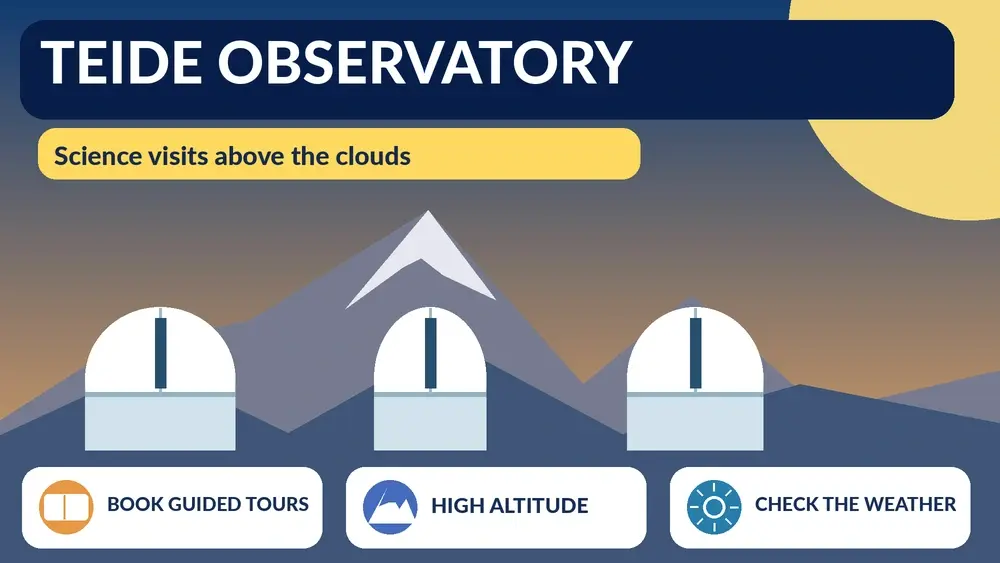
    The Teide Observatory is one of the places I would add when I want to understand why Tenerife is internationally important for astronomy, not just admire a dark sky. The observatory at Izaña is an active scientific facility operated within the Instituto de Astrofísica de Canarias network. That matters: visits are controlled around research, weather and safety rather than functioning like a museum where I can simply walk in.

    The IAC’s current 2026 visitor information says private and group visits require prior reservation. Its 2026 open days were held on 20–21 June and filled completely. The IAC also notes that visits can be affected by adverse weather, while commercial guided daytime visits currently advertise an approximate 1 hour 30 minute experience, minimum age of eight and arrival at least 30 minutes before the scheduled start. I would always re-check the official booking page because prices, calendars and access rules can change.

    Quick planning facts

    LocationIzaña, Tenerife highlands
    AltitudeAbout 2,400 m
    Type of placeActive astronomical research observatory
    Walk-in visitsNo — I would book an authorised visit in advance
    Typical guided daytime visitAbout 1.5 hours according to the current visitor operator
    Age noteCurrent guided visitor information excludes children under 8

    My first source would be the IAC Teide Observatory visits page. For the bookable public daytime tour, I would also check the current guided Observatory visit information.

    Why the observatory is worth adding to a Tenerife trip

    Stargazing from a viewpoint and visiting a research observatory are different experiences. A night under the stars is emotional and visual; the observatory adds instruments, scientific context and an explanation of how astronomers actually study the Sun and universe.

    I would choose the observatory if I am curious about science, travelling with older children or teenagers, or already planning a Teide day and want one structured activity. I would not choose it merely because it sits near Teide; the visit makes most sense when the astronomy itself interests me.

    What a guided daytime visit can include

    The current commercial daytime visit describes solar observation through filtered telescopes, entry into a night-sky telescope and an astrophysics workshop, subject to operational conditions. I would treat the exact telescope access as variable because this is a working observatory. Research priorities and weather can affect what visitors see.

    Illustrated guide: Teide Observatory, with practical visitor tips
    Illustrated guide: Teide Observatory.

    I would listen more than photograph. The value is understanding instruments, wavelengths, solar observation and why the Canary Islands have become such important astronomy locations.

    Booking: do not arrive hoping to improvise

    I would book before driving up. The IAC explicitly requires prior arrangements for visitor access, and the open days can fill quickly. This is not an attraction where I would rely on same-day availability.

    I would save the confirmation offline and bring the identification required by the operator. Current guided-tour information says visitors should arrive at the access gate at least 30 minutes early. I would build a larger buffer because mountain roads and parking take longer than a flat city journey.

    Altitude: the detail I would take seriously

    The observatory is around 2,400 metres above sea level. At that altitude some people notice shortness of breath, headache or fatigue. Current visitor information advises against the visit for people with certain health problems such as heart, respiratory issues or anaemia and notes that the site has walking on paths and stairs.

    If I had any medical concern about altitude, I would ask my own healthcare professional rather than rely on a travel article. I would also move slowly, drink water and avoid arriving dehydrated after a long hike.

    Accessibility and mobility

    The current guided daytime tour says it is not recommended for people with reduced mobility because the visit involves paths and stairs. That is an important distinction from a museum-style attraction. I would contact the operator before booking if mobility needs are significant.

    I would never assume that “low difficulty” means fully accessible. Difficulty describes physical effort broadly; accessibility depends on surfaces, steps and site design.

    Children: check the age rule

    Current public guided-tour information says children under eight are not allowed on the daytime Observatory visit. I would verify that rule at booking because it may apply differently to special educational programmes or future events.

    For older children, I would prepare them with a simple explanation of what they will see. An observatory visit becomes more interesting when a child already understands that the telescopes are research instruments rather than giant binoculars for tourists.

    Weather can cancel the visit

    High-altitude weather is not the same as resort weather. The operator specifically warns that snow, ice, rockfall risk and other adverse conditions can affect access and lead to cancellations. I would keep the rest of my mountain day flexible and never schedule the Observatory immediately before a flight or another inflexible commitment.

    If the tour is cancelled, I would not try to access the facility independently. I would switch to lower-altitude plans or another Teide viewpoint only if roads and authorities indicate conditions are safe.

    What to wear

    I would bring closed shoes, layers, sun protection and a windproof outer layer. Even when the coast is hot, Izaña can feel much cooler and windier. Strong sun at altitude is another reason to use sunscreen and sunglasses.

    I would avoid arriving in beachwear because the visit involves walking around a scientific facility at elevation, not relaxing at a resort.

    Getting there

    Current visitor information says access requires private transport or a booked transfer service for the guided visit, and bicycles are not permitted inside the facility. If I use a taxi, I would clarify the return arrangement because the driver may need to wait outside until the activity ends.

    For most visitors, a rental car or organised transfer is simplest. My getting around Tenerife guide explains the broader transport options.

    Combining the Observatory with Teide National Park

    This is the obvious combination, but I would not overbook. I would choose either a major Teide hike or the Observatory as the structured centre of the day, then use viewpoints and short walks around it. Trying to fit a summit permit, cable car, full observatory tour and sunset stargazing into one day can become exhausting.

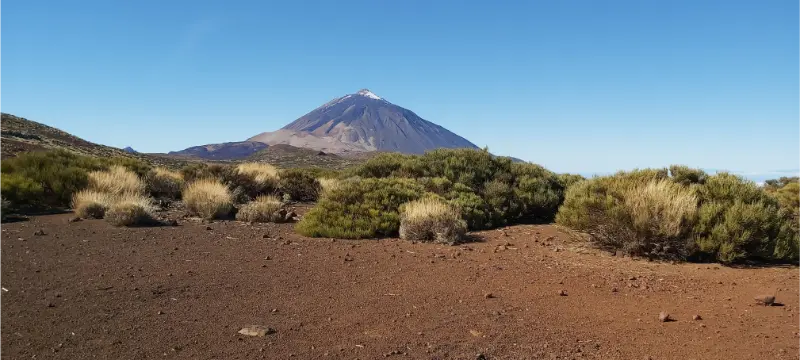
    Mount Teide behind an open volcanic plain and low scrub

    My Mount Teide guide and Roques de García guide help build a realistic route.

    Observatory visit versus stargazing tour

    If I want science and instruments, I would choose the Observatory. If I want a night experience under dark skies, constellations and visual observing, I would choose a stargazing activity. They complement each other but are not substitutes.

    My stargazing in Tenerife guide explains night-sky planning, clothing and location choices.

    2026 open days: useful context, not a permanent schedule

    The IAC held 2026 open days on 20 and 21 June, free in Spanish and lasting three hours, and the places filled. I would mention this only as an example of how special access works, not as something future visitors can use. Open-day dates change by year.

    If I am planning for another year, I would monitor the IAC’s official announcements rather than copy the 2026 dates into my calendar.

    Where to stay

    I would not choose a hotel solely to be near the Observatory because the highland site is not a normal accommodation zone. La Laguna, Puerto de la Cruz, Santa Cruz or southern resorts can all work depending on the rest of the itinerary.

    For a mountain-focused trip I would compare Tenerife accommodation on Booking.com and choose based on the full holiday, not one 90-minute activity.

    Photography and behaviour at an active observatory

    I would follow staff instructions about where photography is allowed. Research facilities have operational areas, equipment and safety rules that are not negotiable for a visitor. I would not wander away from the group for a better image.

    I would also keep noise and phone use under control during explanations. The point is to understand the facility, not simply collect a photograph of a dome.

    Common mistakes I would avoid

    • Driving up without a confirmed reservation.
    • Underestimating the effect of 2,400 m altitude.
    • Wearing only beach clothes because the coast is hot.
    • Arriving late and expecting the tour to wait.
    • Combining too many fixed Teide activities in one day.
    • Assuming the observatory is a public viewpoint that can be entered freely.

    Frequently asked questions

    Can I visit Teide Observatory without booking?

    I would not plan on it. The IAC requires prior arrangements for visitor access, and public tours are reservation-based.

    How high is the observatory?

    About 2,400 metres above sea level.

    Can young children visit?

    The current guided daytime visitor information excludes children under eight. I would confirm the rule for the exact activity booked.

    How long does the visit take?

    The current commercial daytime guided visit is advertised at approximately 1 hour 30 minutes, while special open-day programmes can be longer.

    Can bad weather cancel the visit?

    Yes. High-altitude road and site conditions can lead to cancellations for safety.

    My final take

    The Teide Observatory is most rewarding when I visit with the right expectation: this is a working scientific facility that happens to allow carefully managed public access. I would book ahead, respect altitude and weather, arrive early and use the experience to add scientific depth to a Teide day rather than treating it as another quick sightseeing stop.

  • Castillo de San Cristóbal Guide: Free Museum, El Tigre and Santa Cruz History

    Castillo de San Cristóbal Guide: Free Museum, El Tigre and Santa Cruz History

    The Castillo de San Cristóbal is one of Santa Cruz de Tenerife’s easiest historic sights to miss because the surviving walls are underground, directly beneath Plaza de España. That hidden setting is exactly what makes it interesting. The interpretation centre turns fragments uncovered during modern redevelopment into a compact story about the city’s coastal defences, the 1797 British attack and the famous cannon known as El Tigre. This guide is built around the details I would want before leaving my accommodation: what is actually worth my time, how I would get there, where the friction points are, and what I would combine with the visit without turning the day into a race.

    Quick planning facts

    LocationBeneath Plaza de España, Santa Cruz de Tenerife
    AdmissionFree
    2026 hoursMonday–Saturday 10:00–18:00
    Last access15 minutes before closing
    Closed24, 25 and 31 December; 1 and 6 January
    Historic timelineFortification begun in 1575; demolished in 1928; surviving walls rediscovered in 2006

    The first thing I would do is open the official Castillo de San Cristóbal visitor page. I use the official source for the elements most likely to change — opening times, admission, access restrictions or temporary closures — and use the rest of my itinerary as a flexible framework. I treat opening times, show schedules and prices as planning data rather than promises carved in stone. Tenerife attractions can adjust operations for maintenance, weather, capacity or special events, so I always re-check the official page on the morning of the visit. That small habit is especially useful when a visit depends on a particular presentation, planetarium slot or animal activity.

    Why I would put Castillo de San Cristóbal on an itinerary

    I like sights that change the way I read the city around them. After visiting the underground remains, Plaza de España is no longer just an open square by the port; it becomes the site of a defensive structure that once faced the sea. That kind of context is more valuable to me than collecting another photograph of a monument façade.

    The centre is also free and centrally located, so it has almost no logistical cost. I can add it to a Santa Cruz day without reserving half the itinerary, and the indoor setting makes it useful when the weather is hot, windy or briefly wet.

    What the experience is really like

    The visit is compact. I descend below the modern plaza, see portions of the original wall and follow interpretation about Tenerife’s defensive system and the fortifications that protected Santa Cruz and other coastal settlements. The museum is less about decorative objects and more about understanding place, conflict and urban change.

    The best-known object is the bronze cannon El Tigre. Popular tradition links it to the shot that injured Admiral Horatio Nelson during the failed British attack in July 1797, but the museum itself treats that specific attribution with appropriate caution. I would tell the story as tradition and symbolism, not as an unquestioned fact.

    The surviving fortress walls

    The walls are the reason the centre exists. They were found in 2006 during work on Plaza de España and incorporated into an underground gallery rather than removed from public view.

    I spend time looking at the relationship between the masonry and the modern structure above. It is a rare chance to see archaeology preserved directly inside the everyday city.

    El Tigre cannon

    El Tigre is a large eighteenth-century bronze cannon associated in local memory with the defence of Santa Cruz. It has enormous symbolic importance even though the claim that it fired the shot that wounded Nelson cannot be demonstrated conclusively.

    Panoramic View Of Santa Cruz De Tenerife

    That distinction actually makes the object more interesting: it opens a conversation about how communities remember events and how legends attach themselves to physical objects.

    The 1797 attack in context

    Nelson’s failed attack is one of the defining episodes in Santa Cruz history. I would understand it here first, then notice the references to 25 July and the city’s defensive past elsewhere in Santa Cruz.

    Rather than reducing the story to one famous admiral, I pay attention to the local militia, fortifications and broader geography that shaped the outcome.

    A hidden museum under Plaza de España

    The contrast between the bright open plaza and the underground remains is part of the appeal. Many visitors cross the square without realising the museum is below them.

    Because admission is free, there is very little reason not to look inside if I am already exploring central Santa Cruz.

    A good anchor for a walking route

    From Plaza de España I can continue toward Calle del Castillo, the waterfront, TEA, Mercado de Nuestra Señora de África or Parque García Sanabria.

    The centre therefore works best as a historical layer inside a broader city walk, not as an isolated destination that requires a special trip.

    How I would get there

    Plaza de España is one of the easiest places to reach in central Santa Cruz. The official museum information notes that it is around a 10–15 minute walk from the main bus interchange and close to the Fundación stop on tram line 1.

    If I drive, I would use one of the central car parks listed by the museum rather than searching street by street. Parking under Plaza de España itself can be especially convenient for a city-centre day. If I am comparing transport options across the island, I use my getting around Tenerife guide and, for road-based days, my Tenerife by car guide rather than relying on a route estimate that ignores parking, mountain roads or the walk from the final stop.

    How much time I would allow

    I would allow 30 to 60 minutes for the interpretation centre, depending on how much text I read. The attraction is compact enough that rushing is unnecessary.

    Because last access is 15 minutes before closing, I would not arrive at 17:45 expecting a meaningful visit. I prefer to use it as a morning or early-afternoon stop between other Santa Cruz sights.

    When I would go

    Any time of year works. In summer it provides a short indoor break from heat; in winter it can fill the gap between outdoor stops if showers pass over the capital.

    I also like it early in a Santa Cruz visit because the historical context changes how I interpret the streets and waterfront afterwards. For the broader seasonal picture, my best time to visit Tenerife guide explains why conditions can differ so much between coasts and elevations.

    Families, accessibility and different travel styles

    With children, I would keep the history simple: a fortress once stood here to defend the harbour; pieces of it were found under the modern square; and one famous cannon became part of the city’s story. That is enough to make the space tangible without turning it into a lecture.

    Because the centre is a modern interpretation space below the plaza, I would expect better access than in many historic fortifications, but I would still confirm current lift or step-free arrangements directly if they are essential to the visit. I never assume that the words “easy” or “accessible” mean the same thing for every traveller, so I check gradients, surfaces, toilets, shade and the distance from parking or public transport. My accessible Tenerife guide gives the wider planning context, while my Tenerife with kids guide is useful for family pacing.

    What I would bring

    I need almost nothing for the museum itself. A charged phone is useful for city navigation, and a light layer can be comfortable indoors if I have come from a hot waterfront walk.

    I would keep the visit bag light because the real advantage of this stop is how easily it fits into a longer walking day in Santa Cruz. I keep the day bag small enough that I am not tempted to leave valuables visible in a parked car. My Tenerife packing list goes deeper into clothing and gear for mixed beach, city and mountain days.

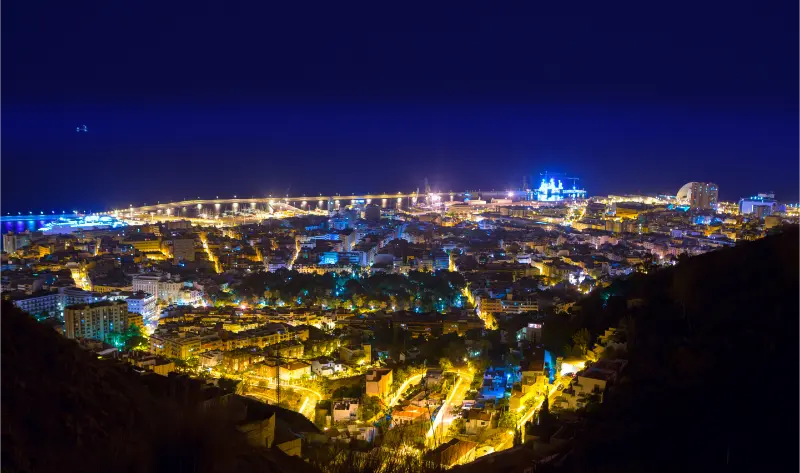
    Santa Cruz De Tenerife At Night

    What I would combine with it

    My natural route is Plaza de España and the castle remains, then TEA or MUNA, followed by the market or lunch. Later I might continue to Parque García Sanabria.

    If architecture is the priority, I can also include Auditorio de Tenerife. The key is to group central sights geographically instead of crossing Santa Cruz repeatedly.

    Food and breaks nearby

    I would plan food elsewhere in central Santa Cruz. The surrounding streets and market area offer much more choice than treating a small interpretation centre as a meal stop.

    A market lunch creates a satisfying contrast: military and urban history first, then a very contemporary taste of the city. For local dishes and ordering habits, I use my what to eat in Tenerife guide and eating out in Tenerife guide.

    Where I would stay

    Staying in Santa Cruz makes this an effortless walk. La Laguna is also practical thanks to the tram connection and gives a different atmosphere for the evening.

    I compare live accommodation around the area on Booking.com, then check the exact map position before booking. A hotel name can suggest one neighbourhood while the real walk to the beach, bus stop or attraction is much less convenient. My where to stay in Tenerife guide explains how I choose a base by trip style rather than star rating alone.

    A realistic half-day or full-day plan

    I would start at Plaza de España, spend 45 minutes underground, then walk through the central streets toward TEA or MUNA. Lunch would be around the market rather than next to the first sight I finish.

    The afternoon can continue toward García Sanabria or the Auditorio depending on interests. This creates a coherent Santa Cruz day with history, art, food and architecture rather than a scattered list.

    Mistakes I would avoid

    • Walking across Plaza de España without realising the museum is underneath.
    • Repeating the El Tigre/Nelson story as proven fact rather than local tradition.
    • Arriving in the final 15 minutes before closing.
    • Driving between central sights that are easier to connect on foot.
    • Treating the centre as a standalone half-day attraction instead of part of a city route.

    Most disappointing Tenerife days are not caused by choosing the wrong place; they come from mismatched expectations. I would rather do fewer things with enough time for parking, walking, weather and a proper meal than collect rushed stops that all blur together.

    Frequently asked questions

    Is admission really free?

    Yes. The official visitor information currently lists free entry.

    What are the opening hours?

    Monday to Saturday 10:00–18:00, with last access 15 minutes before closing and specified holiday closures.

    Where is the castle?

    The surviving walls are in an underground interpretation centre beneath Plaza de España in central Santa Cruz.

    Did El Tigre really wound Nelson?

    Local tradition says so, but the specific attribution is not historically proven. I would present it as an important legend attached to the 1797 defence.

    How long do I need?

    Around 30–60 minutes is enough for most visitors, making it easy to combine with other Santa Cruz sights.

    My final take

    The Castillo de San Cristóbal is a small but meaningful Santa Cruz stop: free, central and layered directly beneath the modern city. I would visit early in my walking route, treat the El Tigre story with historical nuance and use the museum to understand why the waterfront looks the way it does today.

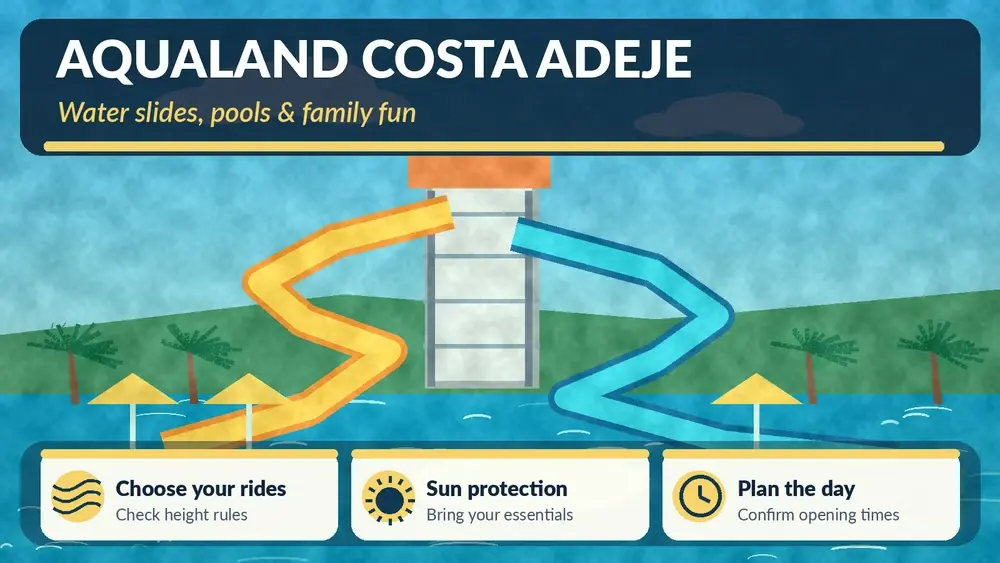
  • Aqualand Costa Adeje Guide: 2026 Tickets, Slides, Dolphin Show and Family Tips

    Aqualand Costa Adeje Guide: 2026 Tickets, Slides, Dolphin Show and Family Tips

    Aqualand Costa Adeje is the water park I would consider when family-friendly pools, slides and a shorter-scale park day matter more than chasing Tenerife’s biggest thrill rides. It sits close to the main Costa Adeje resorts and combines water attractions with a dolphinarium. The practical details matter: summer closing time is later, aquatic attractions stop before the park itself closes, and extras such as loungers are not automatically included. This guide is built around the details I would want before leaving my accommodation: what is actually worth my time, how I would get there, where the friction points are, and what I would combine with the visit without turning the day into a race.

    Quick planning facts

    LocationCosta Adeje, southern Tenerife
    2026 opening hoursDaily 10:00–17:00; July and August 10:00–18:00
    Adult 1-day ticketCurrently €37 at the ticket office / from €35 online
    Child 1-day ticketCurrently €29 at the ticket office / from €27 online
    Dolphin showCurrently listed at 15:30
    Important timingWater attractions close 30 minutes before park closing

    The first thing I would do is open the official Aqualand Costa Adeje website. I use the official source for the elements most likely to change — opening times, admission, access restrictions or temporary closures — and use the rest of my itinerary as a flexible framework. I treat opening times, show schedules and prices as planning data rather than promises carved in stone. Tenerife attractions can adjust operations for maintenance, weather, capacity or special events, so I always re-check the official page on the morning of the visit. That small habit is especially useful when a visit depends on a particular presentation, planetarium slot or animal activity.

    Why I would put Aqualand Costa Adeje on an itinerary

    Aqualand makes most sense to me for families who want a contained water-park day close to their hotel. It has adrenaline slides, family areas and dedicated children’s zones, but the overall proposition feels different from Siam Park. I would choose between them by age, confidence in water and desired intensity rather than assuming one is universally “better.”

    The location is another advantage. If I am staying in Costa Adeje, I can treat the park as one part of a resort holiday rather than an expedition. That makes it easier to leave when children are tired instead of feeling I must stay until closing to justify a long journey.

    What the experience is really like

    I would expect a classic water-park rhythm: changing, finding a base, applying sunscreen, alternating queues and pools, then repeated breaks for hydration. The park currently lists attractions across adrenaline, family, children and relaxation categories, including Hurakán, Twister Racer, wave-pool areas and several newer children’s features.

    The dolphin show is currently scheduled for 15:30. Whether I include it is a personal choice; if I do, I would build the afternoon around it and arrive early enough to be seated without a last-minute rush. I would also remember that slides close 30 minutes before the overall park closing time.

    Kidzworld and younger children

    For families with younger children, the dedicated kids areas are a major reason to consider Aqualand. The park currently lists features such as Pirates Island, Pelican Bay, Kids Pool and Splash Tower alongside broader family attractions.

    I would check height and supervision rules at each attraction rather than promising a child a particular slide based on a photo seen online.

    Slides for older children and adults

    The park includes faster attractions such as Kamikazes, Tornado, Tsunami, Gravity and Twister Racer. I would not attempt them all simply because they are on the map.

    My approach is to choose two or three priorities before lunch, then repeat favourites if queues and energy allow. Water parks become much more enjoyable when I stop treating the map as a checklist.

    The dolphinarium

    Aqualand states that its dolphinarium houses bottlenose dolphins and currently schedules a presentation at 15:30. Travellers have different views about captive-animal experiences, so I think this is something to decide consciously rather than treat as an automatic part of the ticket.

    If I attend, I follow staff rules, avoid disruptive behaviour and make the rest of the day work around the scheduled time rather than arriving late.

    Loungers and extras

    The current ticket information notes that a sunbed is not included in standard admission. That is exactly the kind of small extra I like to know before arrival because water-park spending can accumulate quickly.

    I set a realistic budget for lockers, food, loungers or other extras instead of comparing parks only on headline ticket price.

    The two-park option

    Aqualand and Jungle Park sell combined products. That can make financial sense if I genuinely want both experiences, but I would still visit them on separate days.

    Trying to squeeze a water park and an animal park into the same day would save neither time nor stress once changing, travel and show schedules are included.

    How I would get there

    From many Costa Adeje hotels, Aqualand is a short taxi or local-bus journey. Depending on the exact accommodation, walking may also be possible, but I check gradient and temperature rather than assuming a kilometre on the map is a pleasant walk with children and beach bags.

    If I drive, I confirm parking arrangements before leaving. If I use public transport, I save the return route because wet, tired children are not the moment I want to start learning the bus network. If I am comparing transport options across the island, I use my getting around Tenerife guide and, for road-based days, my Tenerife by car guide rather than relying on a route estimate that ignores parking, mountain roads or the walk from the final stop.

    How much time I would allow

    I would allow most of the day, especially with children. Water parks lose time in ways that normal sightseeing does not: changing rooms, lockers, sunscreen, drying off, queues and repeated toilet breaks all add up.

    I would arrive close to opening, use the first hours for priority slides, slow down after lunch and leave the final part of the afternoon flexible around the dolphin presentation and children’s energy.

    When I would go

    July and August currently have an extra hour, with closing at 18:00 instead of 17:00. That does not mean I need to stay longer; it simply gives more breathing room if the park is busy.

    On very windy or cool days a water park can feel less appealing than the air temperature suggests. I look at actual conditions in Costa Adeje, not just the island-wide forecast. For the broader seasonal picture, my best time to visit Tenerife guide explains why conditions can differ so much between coasts and elevations.

    Costa Adeje Coast Tenerife

    Families, accessibility and different travel styles

    Aqualand is clearly family-oriented, but children’s enjoyment still depends on age, height, water confidence and tolerance for queues. I would choose a few attractions everyone can share instead of splitting the family constantly between different thrill levels.

    For mobility or sensory needs, I would contact the park before booking and ask specific questions about changing facilities, pool entry, queueing and companion arrangements. Water-park accessibility is more complex than simply reaching the front gate. I never assume that the words “easy” or “accessible” mean the same thing for every traveller, so I check gradients, surfaces, toilets, shade and the distance from parking or public transport. My accessible Tenerife guide gives the wider planning context, while my Tenerife with kids guide is useful for family pacing.

    What I would bring

    Swimwear, high-SPF sunscreen, water, a hat for dry areas, flip-flops or water-friendly footwear and a dry change of clothes are my basics. I also bring a waterproof phone solution if I genuinely need the phone near the pools.

    I would not carry unnecessary valuables. Anything I do bring should fit comfortably in a locker rather than being left unattended on a lounger. I keep the day bag small enough that I am not tempted to leave valuables visible in a parked car. My Tenerife packing list goes deeper into clothing and gear for mixed beach, city and mountain days.

    What I would combine with it

    I would not combine Aqualand with another major ticketed attraction. A relaxed dinner and promenade walk in Costa Adeje is enough after several hours of sun and water.

    If I want a beach comparison the following day, Playa del Duque and the new Fañabé guide give me a completely different, slower kind of water day.

    Food and breaks nearby

    I expect park food to be convenient rather than the culinary highlight of Tenerife. I would eat a solid breakfast and plan the proper evening meal outside the park.

    With children, I prefer an early lunch before everyone becomes hungry at once. That also helps avoid wasting the quietest morning queue period on a long meal. For local dishes and ordering habits, I use my what to eat in Tenerife guide and eating out in Tenerife guide.

    Where I would stay

    Costa Adeje is the obvious base if Aqualand is high on the list. Los Cristianos and Playa de las Américas are also close enough that I would not change hotels solely for the park.

    Costa Adeje Panoramic View From The Sea Tenerife

    I compare live accommodation around the area on Booking.com, then check the exact map position before booking. A hotel name can suggest one neighbourhood while the real walk to the beach, bus stop or attraction is much less convenient. My where to stay in Tenerife guide explains how I choose a base by trip style rather than star rating alone.

    A realistic half-day or full-day plan

    I would arrive at opening, secure a locker and base, do priority slides first, then move into family and children’s areas. Lunch would be early enough that I am not eating immediately before faster rides.

    The afternoon stays flexible. If I choose the dolphin show, I build toward 15:30, then use the remaining time for a favourite pool or children’s area and start changing before the final rush.

    Mistakes I would avoid

    • Assuming online and ticket-office prices are identical.
    • Forgetting that water attractions close 30 minutes before the park itself.
    • Budgeting only for admission and ignoring lockers, food or loungers.
    • Trying to combine Aqualand and Jungle Park in one day.
    • Promising children a slide before checking height and safety rules.

    Most disappointing Tenerife days are not caused by choosing the wrong place; they come from mismatched expectations. I would rather do fewer things with enough time for parking, walking, weather and a proper meal than collect rushed stops that all blur together.

    Frequently asked questions

    What are the 2026 opening hours?

    Aqualand currently opens daily 10:00–17:00, extending to 18:00 in July and August.

    How much is an adult ticket?

    The current standard one-day adult price is €37 at the ticket office and from €35 online, subject to date and product conditions.

    Are sunbeds included?

    No. The current ticket information specifically notes that loungers are not included in the admission price.

    What time is the dolphin show?

    The official schedule currently lists 15:30. I would verify it on the day.

    When do the slides close?

    Aquatic attractions are scheduled to close 30 minutes before the overall park closing time.

    My final take

    Aqualand Costa Adeje works best for me as a full but uncomplicated family water day close to the southern resorts. I would buy only the ticket product I actually need, arrive early, budget for extras and remember that the slides stop before the park’s advertised closing time.

  • Basílica de Candelaria Guide: History, Guanche Context and Visit Tips

    Basílica de Candelaria Guide: History, Guanche Context and Visit Tips

    The Basílica de Candelaria is not simply a church stop on Tenerife’s east coast: it brings together Guanche memory, Catholic devotion, island identity and a modern 20th-century building facing the Atlantic.

    The story begins before the conquest

    Official Tenerife tourism information explains that a Gothic image of the Virgin of Candelaria appeared on the coast of the Güímar valley at the end of the 14th century, roughly a century before the conquest of Tenerife. The Guanches venerated the image under the name Chaxiraxi. That pre-conquest encounter is essential context because it explains why Candelaria’s religious story cannot be understood only from the modern basilica.

    What happened to the original image

    The original image was kept from 1526 in a sanctuary ordered under the second Adelantado, Pedro Fernández de Lugo. It disappeared during a flood in 1826. The current image was made in 1827 by the Tenerife sculptor Fernando Estévez. I include those dates because they correct the common impression that the statue seen today is the medieval original.

    The current basilica

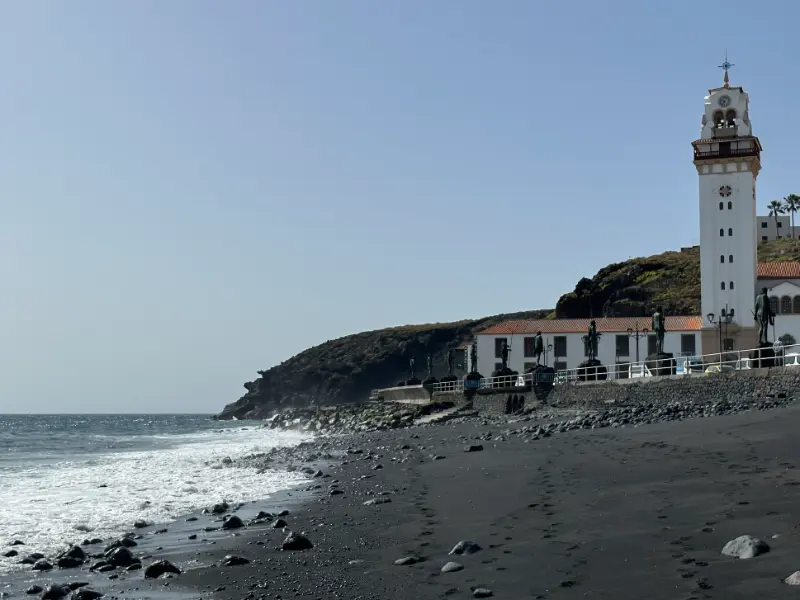
    The present basilica was designed by architect Enrique Marrero Regalado and built in 1959 through the initiative of Bishop Domingo Pérez Cáceres, who was from Güímar. The building has three naves, a roof that evokes Mudéjar forms and a dome rising about 25 metres over the crossing. I find the contrast between the monumental façade and open oceanfront plaza especially powerful.

    The Guanche mencey statues outside

    The seafront plaza is famous for the statues representing the nine Guanche menceyes, or kings, associated with Tenerife’s pre-conquest territories. I do not treat them as decorative props. They are part of how modern Candelaria frames indigenous memory in a public religious space. My broader Candelaria guide places the plaza, caves and seafront in context.

    Illustrated guide: Candelaria Old Town and Seafront, with practical visitor tips
    Illustrated guide: Candelaria Old Town and Seafront.

    Respectful behaviour inside

    This remains an active place of worship. I avoid turning a service into a sightseeing opportunity, keep my phone silent and follow any current photography restrictions. Modest, respectful clothing is sensible, particularly during religious celebrations. If a ceremony is underway, I am happy to see the exterior and return later rather than disrupt worship.

    Festivals and very busy dates

    The Virgin of Candelaria is the patroness of the Canary Islands and major religious dates can bring large crowds. If I want quiet architecture and reflection, I avoid arriving at the peak of a pilgrimage celebration. If I specifically want to experience a festival, I plan transport, road closures and parking as part of the event rather than expecting a normal day trip.

    Official background

    I use the official Tenerife tourism page for the Basílica de Candelaria for the core historical dates and architectural description in this guide.

    The seafront changes the architecture

    The basilica’s scale makes most sense from the open Plaza de la Patrona de Canarias, where sky and Atlantic provide a huge visual backdrop. I walk away from the façade before photographing it. From closer positions I focus on doors, arcades and regionalist details; from farther away I include the plaza and mencey statues so the building sits within Candelaria rather than floating as an isolated monument.

    Candelaria Harbor Tenerife

    What I would explain to children

    I would keep the story simple: an image found before the Spanish conquest, Guanche reverence, a lost original, a later replacement, and a modern basilica built centuries afterwards. That timeline makes the place understandable without turning a religious visit into a long lecture.

    How I fit Basílica de Candelaria into a Tenerife itinerary

    I would not plan Basílica de Candelaria in isolation. I first look at the geography of the day and decide what belongs naturally before or after it. I would combine the basilica with the mencey statues, seafront and nearby historic religious sites, then have lunch in Candelaria. Güímar can be added only if I still have a relaxed afternoon. That approach keeps driving or bus time under control and leaves enough margin for weather, queues, a longer lunch or simply staying somewhere because it is better than expected. For wider planning I use my Candelaria Tenerife guide and then build the day around one main experience rather than a collection of unrelated pins.

    When I would go

    For a quiet cultural visit I prefer a normal weekday morning. On major feast days the atmosphere can be extraordinary, but the logistics and crowd levels are completely different. Tenerife is a year-round destination, but the best hour for a specific place can matter more than the best month. I think about light, heat, wind, crowds and whether the surrounding streets are lively or congested. I also check the exact local forecast instead of relying on a forecast for the island as a whole; altitude and exposure create very different conditions over short distances.

    How long I would allow

    The basilica itself can be seen relatively quickly, but I allow two to three hours for the plaza, seafront and Candelaria context. I prefer a realistic visit that includes arrival, orientation and a few pauses. The number printed on a map rarely includes parking, walking from a bus stop, buying a ticket, using changing facilities or finding lunch. Building those small transitions into the plan is one of the easiest ways to make a Tenerife day feel relaxed rather than rushed.

    Candelaria Tenerife Basilica And Coast

    Getting there without wasting half the day

    Candelaria lies close to the TF-1 and is well connected by bus along the east-coast corridor. By car I use designated parking and accept a short walk on busy days. If I use public transport, I check both the outward and return timetable before leaving, not when I am ready to go home. If I drive, I save a legal parking option and a second choice on the map. Tenerife distances can look short, but urban traffic, steep roads and limited parking can change the real journey time. My getting around Tenerife guide explains the wider trade-offs between car, bus and taxi.

    What I would bring

    Sun protection is useful on the open plaza, while respectful clothing matters inside the basilica. I also bring water if I plan to continue walking along the seafront. I keep the day bag light: water, sun protection, a charged phone, and a thin layer if the visit may continue into evening or a higher area. For swimming places I add footwear suitable for hot paving or rough surfaces and never assume lockers or shaded space will be available. For museums or religious buildings I prefer simple, respectful clothing and a small bag that is easy to carry.

    Accessibility and travelling at a slower pace

    The plaza is more open than many historic hill towns, but I still verify church access and any event barriers if step-free movement is essential. Accessibility is not only about a wheelchair symbol: slopes, cobbles, stairs, distance from parking, toilets and shaded seating all matter. When step-free access is essential I confirm the current arrangements directly before travelling. My accessible Tenerife guide is a useful starting point for broader planning.

    Where I would eat nearby

    I prefer a seafront or town-centre lunch after the visit and use the meal to keep the day in Candelaria rather than rushing back to the motorway. I usually separate the attraction from lunch unless there is a genuinely good reason to eat on site. That gives me more choice and prevents a queue at the café from dictating the day. I look for a local restaurant, bakery or simple bar within the same area and keep one backup saved. For context on island dishes and restaurant habits, see my what to eat in Tenerife guide and eating out in Tenerife guide.

    Where to stay if this place is a priority

    Most travellers will visit Candelaria as a day trip rather than choose it as their only Tenerife base, but it can suit a quieter east-coast stay. I choose accommodation by map position rather than marketing description. A property that looks close can still be awkward on foot if there is a steep road, motorway barrier or long detour. I compare live options with accommodation in Candelaria and then cross-check the neighbourhood in my where to stay in Tenerife guide.

    Common mistakes I would avoid

    • Calling the current statue the original medieval image.
    • Visiting during worship without adjusting sightseeing behaviour.
    • Ignoring crowd and road impacts on major religious dates.
    • Seeing only the church and missing the Guanche context outside.

    The common thread is simple: I try not to turn Basílica de Candelaria into a box-ticking stop. Tenerife rewards a little spare time, especially in places where the surrounding promenade, historic streets, gardens or coastline are part of the experience.

    What I check on the day

    Before leaving I verify the official opening or access information, local weather, any temporary closure and the route back. I check whether a mass, procession or local celebration will affect access and decide whether that is something I want to experience or avoid. I save the official page and any ticket or reservation offline. This takes only a few minutes and is much more reliable than assuming that an old screenshot, blog post or map listing is still correct.

    My final take

    The basilica is most rewarding when I understand the layers around it: pre-conquest Guanche belief, later Catholic devotion, the lost original image, the 19th-century replacement and the monumental 1959 building. That makes Candelaria one of Tenerife’s most symbolically rich stops.

    Basilica Of Candelaria On The Tenerife Coast

    Frequently asked questions

    Do I need to book in advance?

    It depends on the venue and ticket type. I check the official page close to the visit; where timed tickets or guided experiences are offered, advance booking can be useful even if basic admission is available at the door.

    Is it worth visiting if I only have a few days in Tenerife?

    I would include it when the subject genuinely matches my interests and it fits geographically with the rest of the day. On a short first trip, I avoid adding an attraction simply because it appears on a long checklist.

    Can I visit with children?

    Usually yes, but I adjust the duration and expectations. A shorter, focused visit with food or outdoor time afterwards works better than making children absorb every exhibit or historical detail.

  • Casa Lercaro La Laguna Guide: Tenerife History Museum, 2026 Hours and Tickets

    Casa Lercaro La Laguna Guide: Tenerife History Museum, 2026 Hours and Tickets

    Casa Lercaro is where I would go in La Laguna when beautiful UNESCO streets are not enough and I want the island’s social, economic and institutional history explained inside a house that is itself part of that history.

    What Casa Lercaro is

    Casa Lercaro is one of the venues of the Museo de Historia y Antropología de Tenerife (MHA). The building stands in La Laguna’s historic centre and dates from the late 16th century, when the Lercaro family, Genoese merchants who came to Tenerife after the conquest, began its construction. The museum opened here in 1993 and presents Tenerife’s historical development from the 15th to the 20th centuries.

    Why I would visit after walking La Laguna

    La Laguna’s urban plan and architecture are easy to admire visually, but the museum helps explain who held power, how trade developed, how institutions changed and how everyday life evolved. That makes the streets outside more legible. I like visiting after an initial walk, because I already have images in my head that the exhibits can connect to.

    2026 opening hours

    The museum currently lists Casa Lercaro open Monday to Saturday from 09:00 to 19:00 and Sundays and public holidays from 10:00 to 17:00. It closes on 24, 25 and 31 December; 1 and 6 January; and Carnival Tuesday. Last access is 30 minutes before closing. I still check the official page before travelling.

    Current ticket prices and free-entry periods

    As of September 2026, general permanent-exhibition admission is €5 for non-resident adults and €3 for Canary Island residents. Reduced categories are listed at €3.50 and €2 respectively, while children under eight and several other eligible groups enter free. The museum currently offers free entry on Friday and Saturday from 16:00 until closing, with a different starting time when those days are public holidays.

    Location inside the UNESCO city

    The museum lists Calle San Agustín 22 and says it is about a five-minute walk from both the cathedral and the tourist information point at Plaza del Adelantado. This is exactly why I would not drive from one La Laguna sight to another. Once I am in the historic centre, walking is the natural way to connect them.

    San Cristobal De La Laguna Panoramic View Tenerife

    Parking and public transport

    The museum points to public parking at Plaza de la Milagrosa and Plaza del Cristo and notes that street spaces nearby can be difficult to find. La Laguna is also connected to Santa Cruz by tram, which often makes more sense than driving if I am staying in the metropolitan area.

    Official information I use

    I verify hours, tariffs and closures on the official Casa Lercaro visitor page. It is the source for the current 2026 practical information in this guide.

    What I focus on inside the museum

    I do not try to memorise every date. I follow a few themes: conquest and settlement, institutions, trade, social hierarchy, domestic life and the relationship between Tenerife and the wider Atlantic. Those themes help me connect museum objects to La Laguna, Santa Cruz, agriculture and migration across the island.

    Casa Lercaro with children or teenagers

    For younger visitors I shorten the visit and turn the historic house itself into part of the experience. Teenagers interested in colonial history, trade or identity may find it more useful if I connect exhibits to places they have already seen. A 60-minute focused visit is better than forcing everyone through every label.

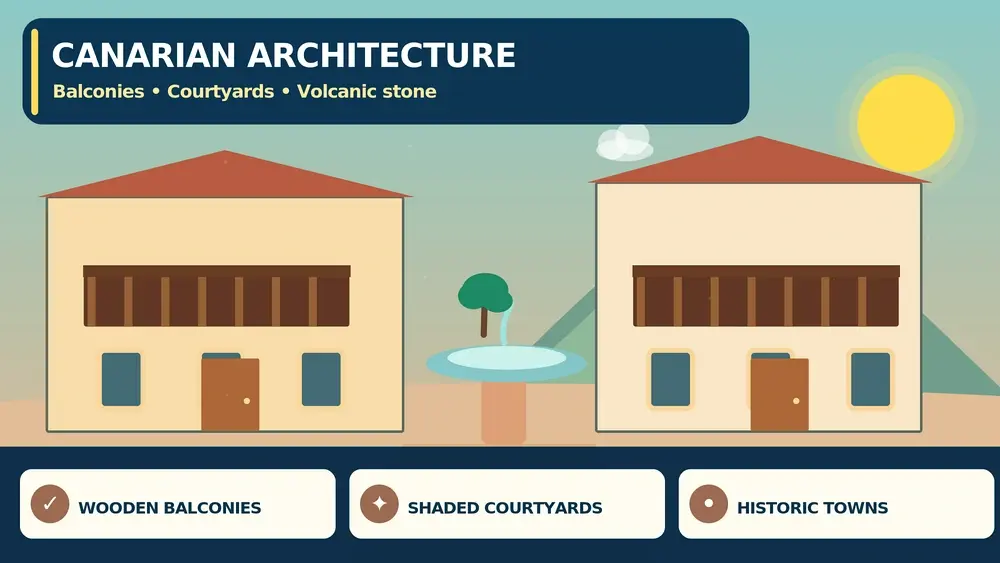
    Illustrated guide: Canarian Architecture in Tenerife, with practical visitor tips
    Illustrated guide: Canarian Architecture in Tenerife.

    How I fit Casa Lercaro into a Tenerife itinerary

    I would not plan Casa Lercaro in isolation. I first look at the geography of the day and decide what belongs naturally before or after it. I would walk the UNESCO centre first, visit Casa Lercaro, then continue to the cathedral, Plaza del Adelantado or a café. Anaga can be a separate half day rather than an automatic add-on. That approach keeps driving or bus time under control and leaves enough margin for weather, queues, a longer lunch or simply staying somewhere because it is better than expected. For wider planning I use my La Laguna guide and then build the day around one main experience rather than a collection of unrelated pins.

    When I would go

    I like mid-morning on a weekday, when the historic centre is active but I still have plenty of daylight after the museum. The free-entry periods can be useful, but I expect them to be more popular. Tenerife is a year-round destination, but the best hour for a specific place can matter more than the best month. I think about light, heat, wind, crowds and whether the surrounding streets are lively or congested. I also check the exact local forecast instead of relying on a forecast for the island as a whole; altitude and exposure create very different conditions over short distances.

    How long I would allow

    I allow 60–90 minutes for the permanent museum and at least half a day for La Laguna itself. I prefer a realistic visit that includes arrival, orientation and a few pauses. The number printed on a map rarely includes parking, walking from a bus stop, buying a ticket, using changing facilities or finding lunch. Building those small transitions into the plan is one of the easiest ways to make a Tenerife day feel relaxed rather than rushed.

    Getting there without wasting half the day

    If I am staying in Santa Cruz, the tram is one of the easiest ways to reach La Laguna. By car, I use a public car park and walk through the centre. If I use public transport, I check both the outward and return timetable before leaving, not when I am ready to go home. If I drive, I save a legal parking option and a second choice on the map. Tenerife distances can look short, but urban traffic, steep roads and limited parking can change the real journey time. My getting around Tenerife guide explains the wider trade-offs between car, bus and taxi.

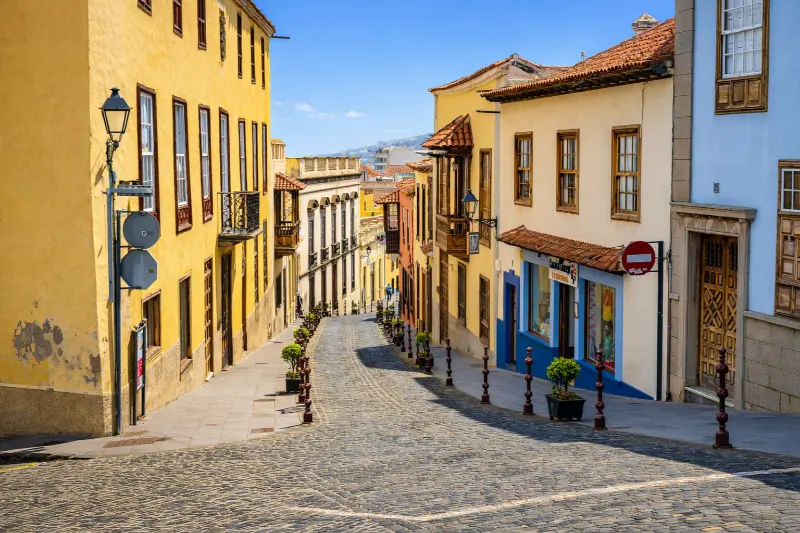
    La Laguna Colorful Historic Street Tenerife

    What I would bring

    A light layer is useful because La Laguna can feel cooler than the south. Otherwise I travel light and keep time for walking after the museum. I keep the day bag light: water, sun protection, a charged phone, and a thin layer if the visit may continue into evening or a higher area. For swimming places I add footwear suitable for hot paving or rough surfaces and never assume lockers or shaded space will be available. For museums or religious buildings I prefer simple, respectful clothing and a small bag that is easy to carry.

    Accessibility and travelling at a slower pace

    I check the museum’s current accessibility information if I need step-free circulation through the historic building, because heritage architecture can create constraints even when adaptations exist. Accessibility is not only about a wheelchair symbol: slopes, cobbles, stairs, distance from parking, toilets and shaded seating all matter. When step-free access is essential I confirm the current arrangements directly before travelling. My accessible Tenerife guide is a useful starting point for broader planning.

    Where I would eat nearby

    La Laguna is one of my favourite places for a long lunch or café stop because there is no need to return to a resort immediately after the museum. I usually separate the attraction from lunch unless there is a genuinely good reason to eat on site. That gives me more choice and prevents a queue at the café from dictating the day. I look for a local restaurant, bakery or simple bar within the same area and keep one backup saved. For context on island dishes and restaurant habits, see my what to eat in Tenerife guide and eating out in Tenerife guide.

    Where to stay if this place is a priority

    For a culture-focused trip, La Laguna or Santa Cruz can be excellent bases; for a beach holiday I would visit as a day trip. I choose accommodation by map position rather than marketing description. A property that looks close can still be awkward on foot if there is a steep road, motorway barrier or long detour. I compare live options with accommodation in La Laguna and then cross-check the neighbourhood in my where to stay in Tenerife guide.

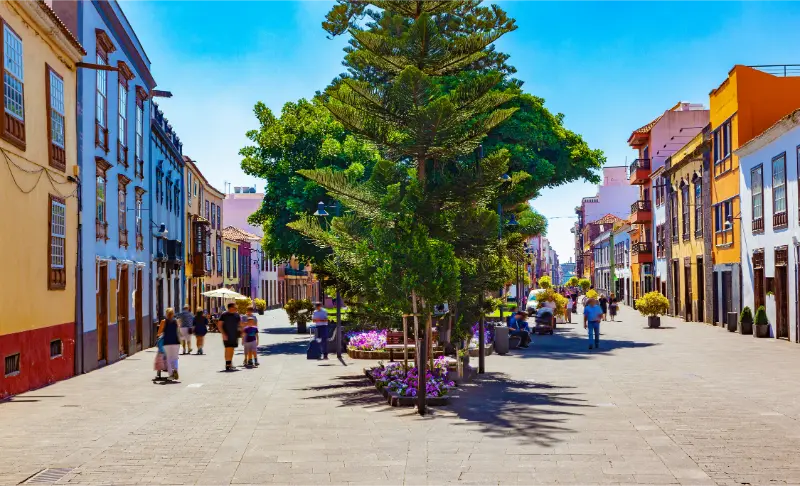
    La Laguna Pedestrian Street Tenerife

    Common mistakes I would avoid

    • Seeing La Laguna only as pretty façades and skipping historical context.
    • Driving between sights inside the pedestrian-friendly historic centre.
    • Arriving during the final 30 minutes and expecting a full visit.
    • Assuming free-entry hours will always be quiet.

    The common thread is simple: I try not to turn Casa Lercaro into a box-ticking stop. Tenerife rewards a little spare time, especially in places where the surrounding promenade, historic streets, gardens or coastline are part of the experience.

    What I check on the day

    Before leaving I verify the official opening or access information, local weather, any temporary closure and the route back. I confirm the current opening schedule, any temporary exhibition and whether a free-entry period changes expected crowd levels. I save the official page and any ticket or reservation offline. This takes only a few minutes and is much more reliable than assuming that an old screenshot, blog post or map listing is still correct.

    My final take

    Casa Lercaro is one of the best complements to a La Laguna walking day because it gives the UNESCO streets a deeper story. I would recommend it especially to travellers who want to understand Tenerife rather than only photograph it.

    Frequently asked questions

    Do I need to book in advance?

    It depends on the venue and ticket type. I check the official page close to the visit; where timed tickets or guided experiences are offered, advance booking can be useful even if basic admission is available at the door.

    Is it worth visiting if I only have a few days in Tenerife?

    I would include it when the subject genuinely matches my interests and it fits geographically with the rest of the day. On a short first trip, I avoid adding an attraction simply because it appears on a long checklist.

    Can I visit with children?

    Usually yes, but I adjust the duration and expectations. A shorter, focused visit with food or outdoor time afterwards works better than making children absorb every exhibit or historical detail.

  • Casa de los Balcones La Orotava Guide: History, Crafts and Visit Tips

    Casa de los Balcones La Orotava Guide: History, Crafts and Visit Tips

    Casa de los Balcones is one of the places where La Orotava’s historic centre becomes tangible: timber, courtyards, craft traditions and domestic architecture make more sense when I can see how they fit together inside a real house.

    Why the house matters

    The official Tenerife tourism page dates the building to around 1670 and highlights the long third-floor balcony made from Canary pine heartwood, known locally as tea. The internal patio has open galleries and an imposing wooden wine press. Those details matter because they show how status, climate, craftsmanship and agricultural life were expressed in architecture rather than presented only in museum labels.

    Traditional crafts are part of the story

    Casa de los Balcones has long been associated with traditional Canarian crafts. I pay attention not only to finished objects but to techniques, materials and the relationship between household spaces and artisan work. For travellers who have seen lace, embroidery or wooden balconies only in souvenir shops, the setting gives those objects a more meaningful context.

    The surrounding historic complex

    One reason I would not treat the Casa as an isolated attraction is the concentration of heritage nearby. The tourism authority notes Casa Jiménez Francy, built in 1632, and Casa Molina/Casa del Turista within a short walk. The broader streetscape is the real attraction: façades, courtyards, churches, stone and timber repeated across the historic centre.

    How I look at the famous balcony

    The balcony is visually dominant, but I try not to let one photograph replace the visit. I look at joinery, proportions, shade and how upper floors relate to the courtyard. Traditional Canarian balconies were functional as well as decorative, creating semi-outdoor space adapted to climate and domestic life.

    La Orotava deserves the rest of the day

    My La Orotava guide covers the wider town, including gardens, churches and viewpoints. I would normally build a half day around the historic centre, not drive in solely for Casa de los Balcones and leave. If I am based in Puerto de la Cruz, La Orotava is especially easy to combine with the coast without making the day feel like a road trip.

    Current visitor information

    The historic complex has an official website that sells tickets and presents Casa de los Balcones together with Palacio Lercaro, Molino de Gofio del Hoyo and Casa Eladia Machado. I check the official Casa de los Balcones site for current opening hours, ticket combinations and any temporary changes rather than embedding a price that may date quickly.

    Photography in a historic house

    Courtyards create strong light contrasts, so I expose for highlights and let shadows remain natural rather than using flash automatically. I also check the venue’s current photography rules. The most memorable images are often details—a carved balustrade, wooden gallery, stone threshold or textile work—rather than another full façade shot.

    What the house teaches about La Orotava

    After the visit I notice balconies elsewhere in town differently. I start seeing them as climate devices, status symbols, craft objects and extensions of domestic rooms. That is why I value small historic-house museums: the building becomes a visual key that makes the whole urban landscape easier to read.

    How I fit Casa de los Balcones into a Tenerife itinerary

    I would not plan Casa de los Balcones in isolation. I first look at the geography of the day and decide what belongs naturally before or after it. I would pair the house with the historic centre, nearby gardens and a long lunch. Puerto de la Cruz can be added later, but I would not leave La Orotava after a 30-minute museum stop. That approach keeps driving or bus time under control and leaves enough margin for weather, queues, a longer lunch or simply staying somewhere because it is better than expected. For wider planning I use my La Orotava travel guide and then build the day around one main experience rather than a collection of unrelated pins.

    When I would go

    Morning gives me cooler streets and time to wander before lunch. On busy excursion days, arriving earlier also makes photography around the historic centre calmer. Tenerife is a year-round destination, but the best hour for a specific place can matter more than the best month. I think about light, heat, wind, crowds and whether the surrounding streets are lively or congested. I also check the exact local forecast instead of relying on a forecast for the island as a whole; altitude and exposure create very different conditions over short distances.

    How long I would allow

    I allow 45–75 minutes for the house itself and at least half a day for La Orotava as a whole. I prefer a realistic visit that includes arrival, orientation and a few pauses. The number printed on a map rarely includes parking, walking from a bus stop, buying a ticket, using changing facilities or finding lunch. Building those small transitions into the plan is one of the easiest ways to make a Tenerife day feel relaxed rather than rushed.

    Getting there without wasting half the day

    La Orotava is accessible by bus from Puerto de la Cruz and other north-coast locations. By car, I park outside the tightest historic lanes and walk uphill rather than hunting for a space beside the attraction. If I use public transport, I check both the outward and return timetable before leaving, not when I am ready to go home. If I drive, I save a legal parking option and a second choice on the map. Tenerife distances can look short, but urban traffic, steep roads and limited parking can change the real journey time. My getting around Tenerife guide explains the wider trade-offs between car, bus and taxi.

    La Orotava Historic Center And Mountains Tenerife

    What I would bring

    Comfortable shoes are important because the historic centre has slopes and older paving. I also bring a light layer because north-coast weather can change quickly. I keep the day bag light: water, sun protection, a charged phone, and a thin layer if the visit may continue into evening or a higher area. For swimming places I add footwear suitable for hot paving or rough surfaces and never assume lockers or shaded space will be available. For museums or religious buildings I prefer simple, respectful clothing and a small bag that is easy to carry.

    Accessibility and travelling at a slower pace

    Historic houses can include thresholds, stairs and narrow circulation. If step-free access is essential, I contact the venue for the current accessible route before travelling. Accessibility is not only about a wheelchair symbol: slopes, cobbles, stairs, distance from parking, toilets and shaded seating all matter. When step-free access is essential I confirm the current arrangements directly before travelling. My accessible Tenerife guide is a useful starting point for broader planning.

    Where I would eat nearby

    I prefer eating in central La Orotava after the visit, which lets the house become part of a broader cultural morning rather than a stand-alone ticketed stop. I usually separate the attraction from lunch unless there is a genuinely good reason to eat on site. That gives me more choice and prevents a queue at the café from dictating the day. I look for a local restaurant, bakery or simple bar within the same area and keep one backup saved. For context on island dishes and restaurant habits, see my what to eat in Tenerife guide and eating out in Tenerife guide.

    Where to stay if this place is a priority

    Puerto de la Cruz is the easiest nearby base for most travellers, while La Orotava itself suits visitors who want a quieter historic setting. I choose accommodation by map position rather than marketing description. A property that looks close can still be awkward on foot if there is a steep road, motorway barrier or long detour. I compare live options with accommodation in and around La Orotava and then cross-check the neighbourhood in my where to stay in Tenerife guide.

    Common mistakes I would avoid

    • Visiting only for the exterior balcony photo.
    • Driving into the narrowest historic streets unnecessarily.
    • Assuming every part of a 17th-century house is step-free.
    • Leaving no time for the rest of La Orotava.

    The common thread is simple: I try not to turn Casa de los Balcones into a box-ticking stop. Tenerife rewards a little spare time, especially in places where the surrounding promenade, historic streets, gardens or coastline are part of the experience.

    What I check on the day

    Before leaving I verify the official opening or access information, local weather, any temporary closure and the route back. I verify current admission options and whether the ticket includes more than one historic property, then decide how much of the complex I genuinely want to see. I save the official page and any ticket or reservation offline. This takes only a few minutes and is much more reliable than assuming that an old screenshot, blog post or map listing is still correct.

    My final take

    Casa de los Balcones earns its place in a Tenerife itinerary because it turns abstract ideas about Canarian architecture and craft into a real, human-scale space. I would visit slowly and keep the rest of La Orotava in the same day.

    Frequently asked questions

    Do I need to book in advance?

    It depends on the venue and ticket type. I check the official page close to the visit; where timed tickets or guided experiences are offered, advance booking can be useful even if basic admission is available at the door.

    Is it worth visiting if I only have a few days in Tenerife?

    I would include it when the subject genuinely matches my interests and it fits geographically with the rest of the day. On a short first trip, I avoid adding an attraction simply because it appears on a long checklist.

    Can I visit with children?

    Usually yes, but I adjust the duration and expectations. A shorter, focused visit with food or outdoor time afterwards works better than making children absorb every exhibit or historical detail.

  • Parque del Drago Guide: Drago Milenario Tickets, Hours and Icod Visit Tips

    Parque del Drago Guide: Drago Milenario Tickets, Hours and Icod Visit Tips

    The Drago Milenario is one of Tenerife’s most recognisable natural symbols, but I would not reduce a visit to one photograph from a viewpoint: Parque del Drago gives the tree a botanical, cultural and landscape context.

    What the Drago Milenario actually is

    The tree is a Dracaena draco, the dragon tree species associated strongly with the Canary Islands. The Icod specimen was declared a National Monument in 1917 and stands at the heart of the historic town. The word “milenario” is traditional and symbolic; exact age estimates for ancient dragon trees are difficult because their growth does not work like a conventional tree with simple annual rings. I prefer to describe it as a venerable, exceptionally old specimen rather than pretend an exact birthday is scientifically certain.

    Why I would enter the park

    The official tourism page describes a three-hectare park planted with native Tenerife species and designed to represent several island ecosystems. The route also includes ethnographic elements, old trades, viewpoints and a cave interpretation of Guanche life. That means the ticket is not only payment for standing closer to the trunk; it supports a broader visit about Canarian flora and Icod heritage.

    2026 opening hours and ticket prices

    As of September 2026, the official tourism information lists daily summer opening from April to October from 09:00 to 20:00, and winter opening from November to March from 09:00 to 18:00. General admission is listed at €5 for adults, €3 for students and pensioners, €2.50 for children aged 6–11, and free for children under 6. Canary Island resident rates are lower. I still recheck before travelling because prices and operational details can change.

    Accessibility is an important limitation

    The official listing currently states that the park is not accessible for wheelchairs. That is a detail I would want to know before arriving, especially because the historic centre itself has gradients and older paving. Travellers who cannot enter the park can still see the Drago from public viewpoints around Icod and enjoy the surrounding streets, but the experience is different. I would plan the day around what is realistically accessible rather than discover the limitation at the gate.

    Illustrated guide: Parque del Drago and the Drago Milenario, with practical visitor tips
    Illustrated guide: Parque del Drago and the Drago Milenario.

    Rules worth knowing

    Pets are allowed on a lead according to the current official listing, while drones and smoking are prohibited. These rules make sense in a compact botanical environment. I also stay on marked paths and avoid touching plants simply to get a closer photograph.

    Pairing the park with Icod

    The Drago works best as the anchor of an Icod day, not a five-minute roadside stop. The historic centre, Iglesia de San Marcos and local food make the visit more rounded. My Icod de los Vinos guide covers the town, while my Cueva del Viento guide explains why the lava tube must be booked and planned separately.

    Official information I use

    I verify the current details on the official Tenerife tourism page for Parque del Drago. It currently lists the seasonal hours, admission prices and visitor rules used above.

    How I photograph the Drago respectfully

    I first look for context: church tower, historic roofs, garden vegetation and the scale of the crown. A tight trunk photograph can make the tree look like any unusual plant. A wider frame explains why it dominates the town. I stay on public paths and never lean on barriers or vegetation to remove an obstacle from the shot.

    Why the park works with children

    The visit is short enough for many families and the mix of unusual plants, ethnographic corners and the enormous tree gives children more variety than a single monument. I do not oversell the age as a precise number; instead I use the tree to talk about how plants grow, why old living things are hard to date and why conservation matters.

    How I fit Parque del Drago into a Tenerife itinerary

    I would not plan Parque del Drago in isolation. I first look at the geography of the day and decide what belongs naturally before or after it. I would combine the park with Icod’s historic centre and, only with a separate reservation and enough time, Cueva del Viento. Garachico also fits geographically if I am making a northwest day. That approach keeps driving or bus time under control and leaves enough margin for weather, queues, a longer lunch or simply staying somewhere because it is better than expected. For wider planning I use my Icod de los Vinos guide and then build the day around one main experience rather than a collection of unrelated pins.

    When I would go

    Morning is my favourite because I can see the park before lunch and then continue through Icod. In summer I avoid making the botanical walk the hottest part of the afternoon. Tenerife is a year-round destination, but the best hour for a specific place can matter more than the best month. I think about light, heat, wind, crowds and whether the surrounding streets are lively or congested. I also check the exact local forecast instead of relying on a forecast for the island as a whole; altitude and exposure create very different conditions over short distances.

    How long I would allow

    I allow about 60–90 minutes for the park itself, then at least another hour for Icod if this is my first visit. I prefer a realistic visit that includes arrival, orientation and a few pauses. The number printed on a map rarely includes parking, walking from a bus stop, buying a ticket, using changing facilities or finding lunch. Building those small transitions into the plan is one of the easiest ways to make a Tenerife day feel relaxed rather than rushed.

    Getting there without wasting half the day

    Icod is connected by bus with Puerto de la Cruz and other north-coast towns. By car I park outside the tightest historic streets and walk in rather than trying to stop beside the Drago. If I use public transport, I check both the outward and return timetable before leaving, not when I am ready to go home. If I drive, I save a legal parking option and a second choice on the map. Tenerife distances can look short, but urban traffic, steep roads and limited parking can change the real journey time. My getting around Tenerife guide explains the wider trade-offs between car, bus and taxi.

    What I would bring

    Comfortable shoes matter more than special equipment. I add water and sun protection and keep a light layer for the north coast in cooler months. I keep the day bag light: water, sun protection, a charged phone, and a thin layer if the visit may continue into evening or a higher area. For swimming places I add footwear suitable for hot paving or rough surfaces and never assume lockers or shaded space will be available. For museums or religious buildings I prefer simple, respectful clothing and a small bag that is easy to carry.

    Accessibility and travelling at a slower pace

    The park’s current official listing says it is not wheelchair accessible, so I would plan alternative viewpoints and accessible parts of Icod in advance when step-free access is required. Accessibility is not only about a wheelchair symbol: slopes, cobbles, stairs, distance from parking, toilets and shaded seating all matter. When step-free access is essential I confirm the current arrangements directly before travelling. My accessible Tenerife guide is a useful starting point for broader planning.

    Where I would eat nearby

    Icod is a good place to stop for Canarian food rather than leave immediately after the park. I look for a restaurant within the historic centre and keep the day geographically compact. I usually separate the attraction from lunch unless there is a genuinely good reason to eat on site. That gives me more choice and prevents a queue at the café from dictating the day. I look for a local restaurant, bakery or simple bar within the same area and keep one backup saved. For context on island dishes and restaurant habits, see my what to eat in Tenerife guide and eating out in Tenerife guide.

    Where to stay if this place is a priority

    Icod can work for a quiet northwestern base, but most first-time visitors will visit from Puerto de la Cruz or another north-coast town. I choose accommodation by map position rather than marketing description. A property that looks close can still be awkward on foot if there is a steep road, motorway barrier or long detour. I compare live options with accommodation around Icod de los Vinos and then cross-check the neighbourhood in my where to stay in Tenerife guide.

    Common mistakes I would avoid

    • Claiming the Drago has a precisely known age.
    • Arriving without checking the seasonal closing time.
    • Assuming the park is wheelchair accessible.
    • Trying to visit Cueva del Viento spontaneously without a reservation.

    The common thread is simple: I try not to turn Parque del Drago into a box-ticking stop. Tenerife rewards a little spare time, especially in places where the surrounding promenade, historic streets, gardens or coastline are part of the experience.

    What I check on the day

    Before leaving I verify the official opening or access information, local weather, any temporary closure and the route back. I check seasonal hours and any temporary maintenance notice, then confirm my next stop before entering so the day flows naturally. I save the official page and any ticket or reservation offline. This takes only a few minutes and is much more reliable than assuming that an old screenshot, blog post or map listing is still correct.

    My final take

    Parque del Drago is worth visiting when I treat the ancient dragon tree as part of Icod’s living landscape. The strongest visit combines botany, history and the town itself rather than reducing the tree to a souvenir photo.

    Dragon Tree In Icod De Los Vinos Tenerife

    Frequently asked questions

    Do I need to book in advance?

    It depends on the venue and ticket type. I check the official page close to the visit; where timed tickets or guided experiences are offered, advance booking can be useful even if basic admission is available at the door.

    Is it worth visiting if I only have a few days in Tenerife?

    I would include it when the subject genuinely matches my interests and it fits geographically with the rest of the day. On a short first trip, I avoid adding an attraction simply because it appears on a long checklist.

    Can I visit with children?

    Usually yes, but I adjust the duration and expectations. A shorter, focused visit with food or outdoor time afterwards works better than making children absorb every exhibit or historical detail.

  • Lago Martiánez Puerto de la Cruz Guide: César Manrique, Pools and Visit Tips

    Lago Martiánez Puerto de la Cruz Guide: César Manrique, Pools and Visit Tips

    Lago Martiánez is one of the places that explains Puerto de la Cruz better than a normal swimming pool ever could: Atlantic water, volcanic textures, palms and César Manrique’s design all meet on the seafront.

    Why Lago Martiánez is more than a place to swim

    The complex sits beside the ocean in Puerto de la Cruz and is closely associated with the Canarian artist and architect César Manrique. I think of it as landscape architecture first and a bathing complex second. Curved pools, black volcanic material, white surfaces, gardens and sculptural elements turn the visit into part of the city’s cultural identity. In 1995 the complex was declared a Bien de Interés Cultural. That context changes the way I use it: I do not arrive only to find a lounger, but also to walk slowly, notice the relationship with the Atlantic and understand why the place became an icon of the north coast.

    The setting on the Atlantic

    The most memorable contrast is between controlled seawater pools inside the complex and the much more powerful ocean just beyond them. Puerto de la Cruz can have real Atlantic swell, which is one reason a designed bathing environment is useful here. Nearby Playa de Martiánez is a black-sand-and-pebble beach with a surf area and can experience strong waves, so I treat the beach and the Lago as two different experiences rather than interchangeable swimming spots.

    Illustrated guide: Lago Martiánez Puerto de la Cruz, with practical visitor tips
    Illustrated guide: Lago Martiánez Puerto de la Cruz.

    César Manrique and the visual language

    Manrique’s work across the Canary Islands often tries to make architecture feel like an extension of volcanic landscape rather than an object placed on top of it. At Lago Martiánez I look for the same vocabulary: lava-coloured rock, organic curves, palms, water, white surfaces and art integrated into movement. Even travellers who do not normally visit architecture attractions can appreciate this because the design affects how the day feels, where views open, where people pause and how the sea remains present.

    How I would spend the time inside

    I would not race immediately to the largest pool. I first make a short orientation loop, choose a base and then alternate swimming with walking. The complex rewards a few slow circuits because different angles reveal the seafront, Teide-side skyline on clear days and details that disappear when I stay in one place. Families can treat it as an easy pool day, while adults who enjoy design can make the visit partly architectural.

    What changes the experience

    Wind, cloud and air temperature matter more here than at a sheltered hotel pool. North Tenerife can be sunny and warm, but it can also feel cooler than Costa Adeje, particularly when a breeze comes off the Atlantic. I check the Puerto de la Cruz forecast on the morning itself. If conditions are grey but dry, the Lago can still work well; if the main goal is sunbathing, I stay flexible.

    Lago Martianez Pool Complex Tenerife

    Combine it with Puerto de la Cruz

    The best reason to dedicate a page to Lago Martiánez is that it sits inside a city-resort you can explore on foot. I would pair it with the promenade, the older streets and a meal in town rather than drive away immediately. My Puerto de la Cruz guide gives the wider context, while the Jardín Botánico guide offers a very different nearby half-day.

    Current information

    Lago Martiánez is still actively used as a cultural and event venue in 2026, not simply preserved as a historic design. Because opening arrangements and maintenance closures can change, I check the Puerto de la Cruz municipal information before the visit rather than publishing a fixed timetable here. The tourism authority continues to describe the complex as an iconic Manrique project on the Atlantic seafront.

    Photography without losing the pool day

    I get the best photographs by moving rather than trying to stage the entire visit from one lounger. Wide views show the relationship between pools and Atlantic, while lower angles bring out lava textures, palms and white sculptural forms. I photograph early, then put the phone away for a while. Reflections and moving water are usually more interesting than crowded midday scenes. Because the complex is also a working leisure facility, I avoid photographing other swimmers closely without permission.

    Who I think will enjoy it most

    Families appreciate a structured swimming environment, design fans see a major Manrique work, and couples can combine the pools with a long seafront lunch. It may be less compelling to travellers who want remote nature or snorkelling. I match the place to the traveller rather than calling every famous attraction “unmissable.”

    Lago Martianez Pools And Palm Trees Tenerife

    How I fit Lago Martiánez into a Tenerife itinerary

    I would not plan Lago Martiánez in isolation. I first look at the geography of the day and decide what belongs naturally before or after it. I would normally pair it with central Puerto de la Cruz, the seafront and one additional stop such as the Botanical Garden. I would not combine it with a long Teide drive unless swimming is only a brief add-on. That approach keeps driving or bus time under control and leaves enough margin for weather, queues, a longer lunch or simply staying somewhere because it is better than expected. For wider planning I use my Puerto de la Cruz travel guide and then build the day around one main experience rather than a collection of unrelated pins.

    When I would go

    For a pool-focused visit I prefer a settled, bright day and arrive early enough to choose my pace before the middle of the day becomes busier. Late afternoon can be beautiful, but I do not rely on it if swimming time matters. Tenerife is a year-round destination, but the best hour for a specific place can matter more than the best month. I think about light, heat, wind, crowds and whether the surrounding streets are lively or congested. I also check the exact local forecast instead of relying on a forecast for the island as a whole; altitude and exposure create very different conditions over short distances.

    How long I would allow

    For a genuine bathing day I allow at least half a day; for architecture, photos and a shorter swim I still give it two to three hours. I prefer a realistic visit that includes arrival, orientation and a few pauses. The number printed on a map rarely includes parking, walking from a bus stop, buying a ticket, using changing facilities or finding lunch. Building those small transitions into the plan is one of the easiest ways to make a Tenerife day feel relaxed rather than rushed.

    Getting there without wasting half the day

    The complex is on the seafront of Puerto de la Cruz and works particularly well for travellers staying in town because it can be reached on foot from many central hotels. From elsewhere on the island, buses and car are both practical depending on the base. If I use public transport, I check both the outward and return timetable before leaving, not when I am ready to go home. If I drive, I save a legal parking option and a second choice on the map. Tenerife distances can look short, but urban traffic, steep roads and limited parking can change the real journey time. My getting around Tenerife guide explains the wider trade-offs between car, bus and taxi.

    What I would bring

    Swimwear, towel, sunscreen, sandals with good grip and a light layer are my basics. I also bring a reusable water bottle and avoid carrying valuables I do not need. I keep the day bag light: water, sun protection, a charged phone, and a thin layer if the visit may continue into evening or a higher area. For swimming places I add footwear suitable for hot paving or rough surfaces and never assume lockers or shaded space will be available. For museums or religious buildings I prefer simple, respectful clothing and a small bag that is easy to carry.

    Accessibility and travelling at a slower pace

    The urban seafront setting is generally easier than a wild coastal charco, but I still confirm the current accessible entrances, pool access aids and changing facilities if they are essential to the visit. Accessibility is not only about a wheelchair symbol: slopes, cobbles, stairs, distance from parking, toilets and shaded seating all matter. When step-free access is essential I confirm the current arrangements directly before travelling. My accessible Tenerife guide is a useful starting point for broader planning.

    Where I would eat nearby

    Puerto de la Cruz has enough restaurants that I rarely feel forced to eat at the first convenient place. I prefer to walk a little away from the busiest seafront strip if I want a more local lunch. I usually separate the attraction from lunch unless there is a genuinely good reason to eat on site. That gives me more choice and prevents a queue at the café from dictating the day. I look for a local restaurant, bakery or simple bar within the same area and keep one backup saved. For context on island dishes and restaurant habits, see my what to eat in Tenerife guide and eating out in Tenerife guide.

    Where to stay if this place is a priority

    If Lago Martiánez is central to the holiday, staying in Puerto de la Cruz makes more sense than commuting from the south. I choose accommodation by map position rather than marketing description. A property that looks close can still be awkward on foot if there is a steep road, motorway barrier or long detour. I compare live options with Puerto de la Cruz accommodation and then cross-check the neighbourhood in my where to stay in Tenerife guide.

    Aerial View Of Lago Martianez Puerto De La Cruz Tenerife

    Common mistakes I would avoid

    • Treating the complex as an ordinary hotel pool and missing the design.
    • Assuming north-coast weather will match Costa Adeje.
    • Trying to combine a full pool day with a packed cross-island itinerary.
    • Ignoring strong ocean conditions at nearby Playa de Martiánez.

    The common thread is simple: I try not to turn Lago Martiánez into a box-ticking stop. Tenerife rewards a little spare time, especially in places where the surrounding promenade, historic streets, gardens or coastline are part of the experience.

    What I check on the day

    Before leaving I verify the official opening or access information, local weather, any temporary closure and the route back. I especially check for maintenance notices or partial pool closures, because a large aquatic complex can change operations temporarily. I save the official page and any ticket or reservation offline. This takes only a few minutes and is much more reliable than assuming that an old screenshot, blog post or map listing is still correct.

    My final take

    I would recommend Lago Martiánez to travellers who want a relaxing day that still feels unmistakably Tenerife. It is most rewarding when I see the pools, the Atlantic and Manrique’s design as one experience rather than three separate attractions.

    Frequently asked questions

    Do I need to book in advance?

    It depends on the venue and ticket type. I check the official page close to the visit; where timed tickets or guided experiences are offered, advance booking can be useful even if basic admission is available at the door.

    Is it worth visiting if I only have a few days in Tenerife?

    I would include it when the subject genuinely matches my interests and it fits geographically with the rest of the day. On a short first trip, I avoid adding an attraction simply because it appears on a long checklist.

    Can I visit with children?

    Usually yes, but I adjust the duration and expectations. A shorter, focused visit with food or outdoor time afterwards works better than making children absorb every exhibit or historical detail.