Author: Patricia

  • Christmas in Tenerife: Weather, Traditions, Lights, Events and Holiday Planning

    Christmas in Tenerife: Weather, Traditions, Lights, Events and Holiday Planning

    Christmas in Tenerife is not a tropical version of northern Europe; it has its own Canarian rhythm, with mild coastal weather, illuminated historic centres, family celebrations and a festive season that continues through Three Kings on 6 January.

    What December weather really feels like

    At sea level, December is usually mild rather than hot in the guaranteed-summer sense, and the island’s microclimates still matter. The south is generally drier and sunnier, while the north can be greener, cloudier and wetter. Teide can be dramatically colder than the coast. I pack layers and use my best time to visit Tenerife guide rather than planning every day around a resort forecast.

    Where the Christmas atmosphere feels strongest

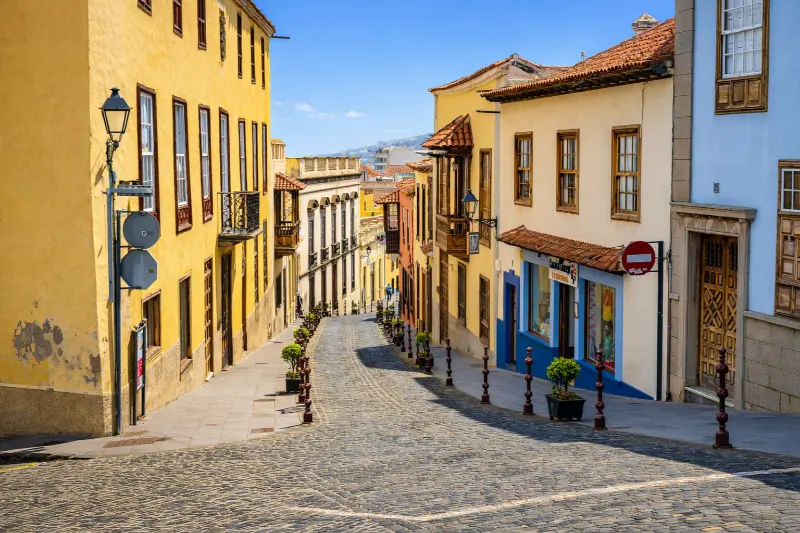
    Santa Cruz and La Laguna are natural choices for lights, shopping, concerts and city atmosphere. La Orotava and Puerto de la Cruz also have attractive historic settings, while southern resort areas add decorations and hotel programmes. I would choose one or two evenings specifically for festive streets rather than expecting every village to offer the same scale of display. My Santa Cruz guide and La Laguna guide help plan those evenings.

    The season runs beyond 25 December

    In Spain and the Canary Islands, the festive calendar does not end on Christmas Day. Christmas Eve on 24 December is a major family night, New Year’s Eve brings the twelve grapes tradition at midnight, and the Three Kings celebrations around 5–6 January are especially important for children. Visitors leaving on 26 December miss a large part of the local festive cycle.
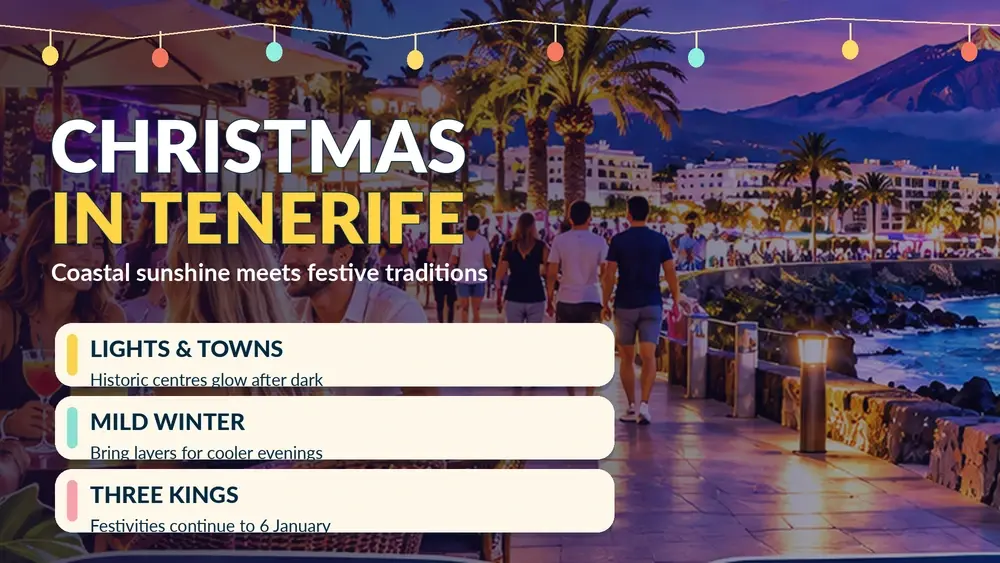
    Illustrated guide: Christmas in Tenerife, with practical visitor tips
    Illustrated guide: Christmas in Tenerife.

    The Christmas concert and annual events

    Tenerife has recurring festive traditions, including the Christmas concert associated with Santa Cruz harbour, craft fairs, markets, nativity scenes and municipal programmes. I do not publish future event times as permanent facts because exact dates, tickets and locations can change. For a 2026 trip I would check the official Tenerife agenda and municipal websites once the seasonal programmes are released.

    Eating out over the holidays needs more planning

    Christmas Eve, Christmas Day and New Year can be very different from a normal week. Some family-run restaurants close, while hotels and tourist areas may offer special menus that need reservations. I book any meal I consider essential and keep groceries in the accommodation for backup. My eating out in Tenerife guide explains meal times and reservations more generally.

    Beach on Christmas Day? Possible, but weather still decides

    A sunny beach morning is entirely possible, especially in the south, but I do not promise myself a swim simply because the island is Tenerife. Wind, swell and cloud can change conditions. I choose sheltered beaches based on the day and respect flags. My family beaches guide is useful when travelling with children.

    What I would book early

    Christmas and New Year are popular travel periods, so I book flights and accommodation earlier than I would for a random week in November. I also reserve any special dinner, rental car or high-demand attraction that matters to the trip. I keep ordinary sightseeing flexible because festive opening hours can vary.

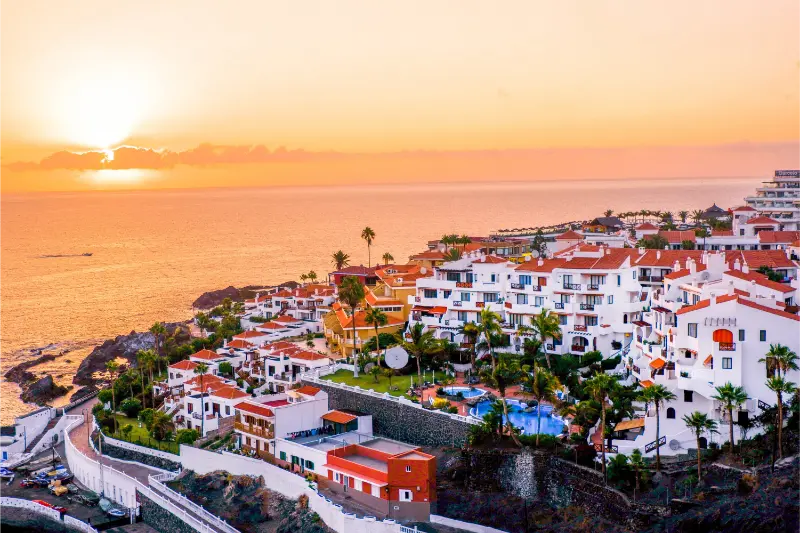
    Tenerife Coastal Sunset

    How I would fit this into a Tenerife itinerary

    I would not build an entire holiday around spending Christmas in Tenerife in isolation. I use it as one layer of a wider Tenerife trip and pair it with places that make geographical sense. I would combine one festive city evening with coast time and one inland or mountain day, rather than chasing events across the island. That approach reduces unnecessary driving and gives me time to notice the ordinary details that often become the most memorable part of the day: a local bakery, a quiet square, changing cloud on the slopes or a small viewpoint I had not planned. For a first visit, I compare the day with my Tenerife travel guide and keep one or two priorities rather than turning the route into a checklist.

    Transport and parking: what I plan before leaving

    Before setting out for spending Christmas in Tenerife, I decide whether a car actually improves the day. Tenerife has good bus links on many corridors, but timetables, transfers and the last connection matter more once I move away from the major resorts. With a car, I save the exact parking area or central street before departure and avoid assuming that a historic centre or coastal village has unlimited parking beside the main attraction. My getting around Tenerife guide explains the broader car, bus and taxi trade-offs.

    Weather and microclimates can change the plan

    Tenerife is compact on a map but not climatically uniform. For spending Christmas in Tenerife, I check the forecast for the exact area rather than relying on the weather at my hotel. Cloud, trade winds, calima and altitude can make two parts of the island feel completely different on the same day. I carry sun protection and water even when the morning looks mild, and I add a light layer whenever the route moves inland or uphill. My best time to visit Tenerife guide gives the island-wide seasonal context.

    Food stops: I keep them local and realistic

    I prefer to make one meal part of the experience instead of squeezing food between attractions. Around spending Christmas in Tenerife, that means looking for a local restaurant, bakery, market or simple café that fits the area rather than driving back to a resort simply because I recognise the menu. I keep a second option saved because opening days and kitchen hours can vary. For regional dishes and ordering ideas, I use my what to eat in Tenerife guide.

    What I would photograph — and what I would leave alone

    With spending Christmas in Tenerife, I look for context rather than only postcard angles. A wide image showing landscape, farming terraces, coast or surrounding streets often says more than a tightly framed landmark. I avoid blocking roads or doorways, respect private property and never cross barriers for a cleaner photograph. Early and late light can be attractive, but I do not create a complicated schedule solely for photography if it makes the rest of the day rushed.

    Accessibility and pace

    I never assume that a short distance means an easy visit. Around spending Christmas in Tenerife, paving, gradients, heat, stairs and parking location can matter more than kilometres. Travellers with limited mobility, small children or a slower preferred pace should choose fewer stops and verify current accessibility directly with the venue or municipality when it is essential. My accessible Tenerife guide covers the island more broadly.

    What I check on the morning of the visit

    On the day I visit spending Christmas in Tenerife, I check local weather, any official access notice and the route on a live map. If a museum, trail, beach facility or event is important, I also verify its opening or operating status. Tenerife changes quickly enough that a five-minute check is more valuable than an itinerary screenshot saved months earlier. I keep one nearby alternative so a closure, rough sea or unexpected cloud does not trigger a cross-island dash.

    My rule for avoiding an overpacked day

    I use a simple rule with spending Christmas in Tenerife: one main experience, one secondary stop and enough unscheduled time for lunch, walking and detours. Mountain roads and urban traffic can both take longer than expected. A looser plan also makes it easier to stay somewhere I like instead of leaving because the spreadsheet says the next stop begins at 15:10. The island feels far more distinctive when I give each area enough space.

    Who I think this experience suits best

    Spending christmas in tenerife works best for travellers who enjoy context and place rather than only headline attractions. It can suit couples, independent travellers and families, but the exact value depends on interests, mobility and where you are staying. I would not recommend adding it simply because it appears on a long “must-see” list. I include it when it adds a different side of Tenerife to the trip.

    Final planning thoughts

    My final advice for spending Christmas in Tenerife is to use this guide as a framework, then verify anything operational shortly before travelling. Tenerife rewards people who plan the essentials and leave the rest flexible. If I know the route, the likely weather, one food option and one backup, I consider the day ready. The rest can respond to the island rather than fighting it.

    Official information I would check before travelling

    For anything that can change, I use the current official information rather than treating a travel article as a timetable. The most useful starting point for this topic is official Tenerife events agenda. I check again close to the visit because opening hours, access restrictions, public events and local services can change after publication.

    Where I would stay for this part of the island

    If this area is a priority, staying nearby can turn a rushed day trip into a slower local experience. I compare location before star rating and look at walking access, parking and evening food options. For a current snapshot of availability I use Christmas accommodation in Tenerife, then compare it with my where to stay in Tenerife guide before booking.

    A half-day plan that keeps the route simple

    If I only had half a day for spending Christmas in Tenerife, I would start with the most distinctive element, add a short walk through the surrounding area and finish with one local food stop. I would not add a distant beach or mountain viewpoint simply to increase the number of pins on the map. Half-day plans work when the places share the same roads and parking logic. If transport is uncertain, I reverse the plan so the least time-sensitive element comes last.

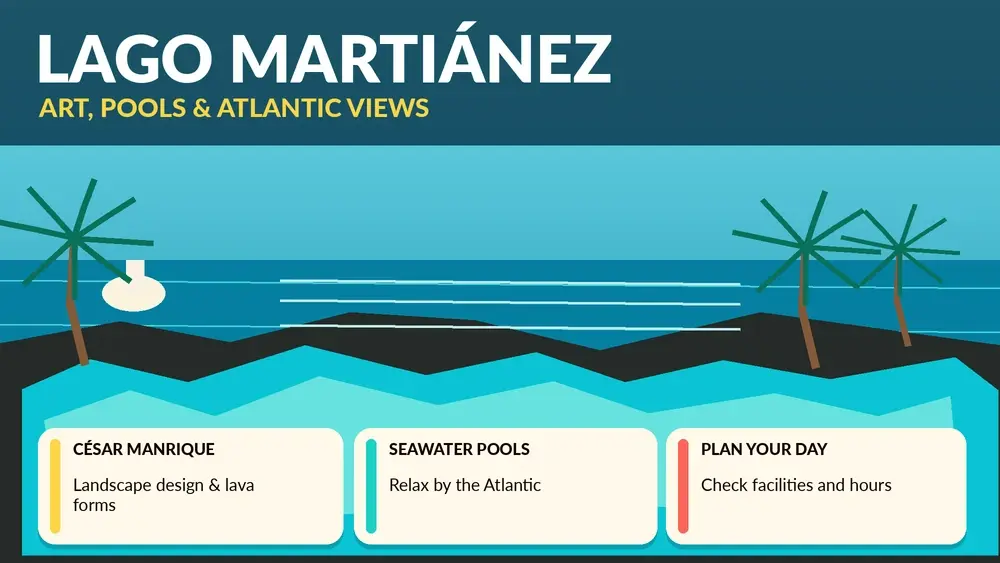
  • Lago Martiánez Puerto de la Cruz Guide: César Manrique, Pools and Visit Tips

    Lago Martiánez Puerto de la Cruz Guide: César Manrique, Pools and Visit Tips

    Lago Martiánez is one of the places that explains Puerto de la Cruz better than a normal swimming pool ever could: Atlantic water, volcanic textures, palms and César Manrique’s design all meet on the seafront.

    Why Lago Martiánez is more than a place to swim

    The complex sits beside the ocean in Puerto de la Cruz and is closely associated with the Canarian artist and architect César Manrique. I think of it as landscape architecture first and a bathing complex second. Curved pools, black volcanic material, white surfaces, gardens and sculptural elements turn the visit into part of the city’s cultural identity. In 1995 the complex was declared a Bien de Interés Cultural. That context changes the way I use it: I do not arrive only to find a lounger, but also to walk slowly, notice the relationship with the Atlantic and understand why the place became an icon of the north coast.
    The setting on the Atlantic

    The most memorable contrast is between controlled seawater pools inside the complex and the much more powerful ocean just beyond them. Puerto de la Cruz can have real Atlantic swell, which is one reason a designed bathing environment is useful here. Nearby Playa de Martiánez is a black-sand-and-pebble beach with a surf area and can experience strong waves, so I treat the beach and the Lago as two different experiences rather than interchangeable swimming spots.

    Illustrated guide: Lago Martiánez Puerto de la Cruz, with practical visitor tips
    Illustrated guide: Lago Martiánez Puerto de la Cruz.

    César Manrique and the visual language

    Manrique’s work across the Canary Islands often tries to make architecture feel like an extension of volcanic landscape rather than an object placed on top of it. At Lago Martiánez I look for the same vocabulary: lava-coloured rock, organic curves, palms, water, white surfaces and art integrated into movement. Even travellers who do not normally visit architecture attractions can appreciate this because the design affects how the day feels, where views open, where people pause and how the sea remains present.

    How I would spend the time inside

    I would not race immediately to the largest pool. I first make a short orientation loop, choose a base and then alternate swimming with walking. The complex rewards a few slow circuits because different angles reveal the seafront, Teide-side skyline on clear days and details that disappear when I stay in one place. Families can treat it as an easy pool day, while adults who enjoy design can make the visit partly architectural.

    What changes the experience

    Wind, cloud and air temperature matter more here than at a sheltered hotel pool. North Tenerife can be sunny and warm, but it can also feel cooler than Costa Adeje, particularly when a breeze comes off the Atlantic. I check the Puerto de la Cruz forecast on the morning itself. If conditions are grey but dry, the Lago can still work well; if the main goal is sunbathing, I stay flexible.

    Lago Martianez Pool Complex Tenerife

    Combine it with Puerto de la Cruz

    The best reason to dedicate a page to Lago Martiánez is that it sits inside a city-resort you can explore on foot. I would pair it with the promenade, the older streets and a meal in town rather than drive away immediately. My Puerto de la Cruz guide gives the wider context, while the Jardín Botánico guide offers a very different nearby half-day.

    Current information

    Lago Martiánez is still actively used as a cultural and event venue in 2026, not simply preserved as a historic design. Because opening arrangements and maintenance closures can change, I check the Puerto de la Cruz municipal information before the visit rather than publishing a fixed timetable here. The tourism authority continues to describe the complex as an iconic Manrique project on the Atlantic seafront.

    Photography without losing the pool day

    I get the best photographs by moving rather than trying to stage the entire visit from one lounger. Wide views show the relationship between pools and Atlantic, while lower angles bring out lava textures, palms and white sculptural forms. I photograph early, then put the phone away for a while. Reflections and moving water are usually more interesting than crowded midday scenes. Because the complex is also a working leisure facility, I avoid photographing other swimmers closely without permission.

    Who I think will enjoy it most

    Families appreciate a structured swimming environment, design fans see a major Manrique work, and couples can combine the pools with a long seafront lunch. It may be less compelling to travellers who want remote nature or snorkelling. I match the place to the traveller rather than calling every famous attraction “unmissable.”

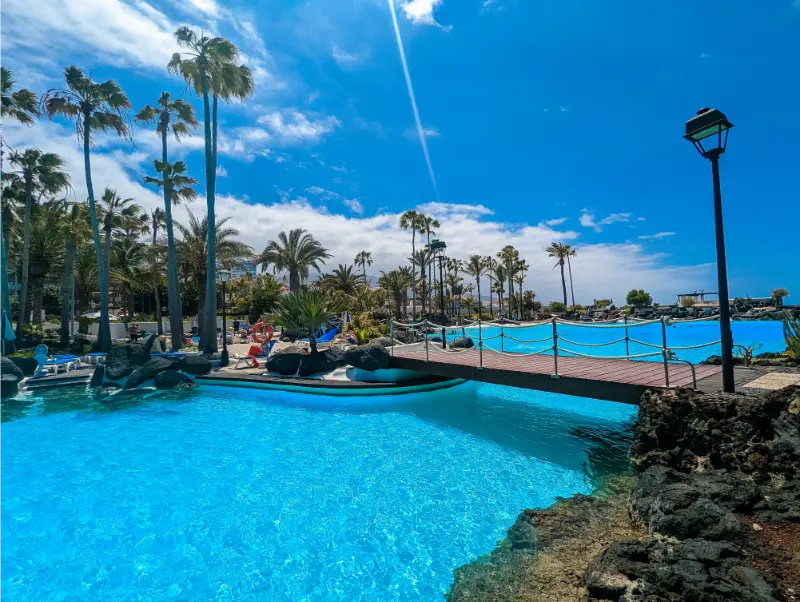
    Lago Martianez Pools And Palm Trees Tenerife

    How I fit Lago Martiánez into a Tenerife itinerary

    I would not plan Lago Martiánez in isolation. I first look at the geography of the day and decide what belongs naturally before or after it. I would normally pair it with central Puerto de la Cruz, the seafront and one additional stop such as the Botanical Garden. I would not combine it with a long Teide drive unless swimming is only a brief add-on. That approach keeps driving or bus time under control and leaves enough margin for weather, queues, a longer lunch or simply staying somewhere because it is better than expected. For wider planning I use my Puerto de la Cruz travel guide and then build the day around one main experience rather than a collection of unrelated pins.

    When I would go

    For a pool-focused visit I prefer a settled, bright day and arrive early enough to choose my pace before the middle of the day becomes busier. Late afternoon can be beautiful, but I do not rely on it if swimming time matters. Tenerife is a year-round destination, but the best hour for a specific place can matter more than the best month. I think about light, heat, wind, crowds and whether the surrounding streets are lively or congested. I also check the exact local forecast instead of relying on a forecast for the island as a whole; altitude and exposure create very different conditions over short distances.

    How long I would allow

    For a genuine bathing day I allow at least half a day; for architecture, photos and a shorter swim I still give it two to three hours. I prefer a realistic visit that includes arrival, orientation and a few pauses. The number printed on a map rarely includes parking, walking from a bus stop, buying a ticket, using changing facilities or finding lunch. Building those small transitions into the plan is one of the easiest ways to make a Tenerife day feel relaxed rather than rushed.

    Getting there without wasting half the day

    The complex is on the seafront of Puerto de la Cruz and works particularly well for travellers staying in town because it can be reached on foot from many central hotels. From elsewhere on the island, buses and car are both practical depending on the base. If I use public transport, I check both the outward and return timetable before leaving, not when I am ready to go home. If I drive, I save a legal parking option and a second choice on the map. Tenerife distances can look short, but urban traffic, steep roads and limited parking can change the real journey time. My getting around Tenerife guide explains the wider trade-offs between car, bus and taxi.

    What I would bring

    Swimwear, towel, sunscreen, sandals with good grip and a light layer are my basics. I also bring a reusable water bottle and avoid carrying valuables I do not need. I keep the day bag light: water, sun protection, a charged phone, and a thin layer if the visit may continue into evening or a higher area. For swimming places I add footwear suitable for hot paving or rough surfaces and never assume lockers or shaded space will be available. For museums or religious buildings I prefer simple, respectful clothing and a small bag that is easy to carry.

    Accessibility and travelling at a slower pace

    The urban seafront setting is generally easier than a wild coastal charco, but I still confirm the current accessible entrances, pool access aids and changing facilities if they are essential to the visit. Accessibility is not only about a wheelchair symbol: slopes, cobbles, stairs, distance from parking, toilets and shaded seating all matter. When step-free access is essential I confirm the current arrangements directly before travelling. My accessible Tenerife guide is a useful starting point for broader planning.

    Where I would eat nearby

    Puerto de la Cruz has enough restaurants that I rarely feel forced to eat at the first convenient place. I prefer to walk a little away from the busiest seafront strip if I want a more local lunch. I usually separate the attraction from lunch unless there is a genuinely good reason to eat on site. That gives me more choice and prevents a queue at the café from dictating the day. I look for a local restaurant, bakery or simple bar within the same area and keep one backup saved. For context on island dishes and restaurant habits, see my what to eat in Tenerife guide and eating out in Tenerife guide.

    Where to stay if this place is a priority

    If Lago Martiánez is central to the holiday, staying in Puerto de la Cruz makes more sense than commuting from the south. I choose accommodation by map position rather than marketing description. A property that looks close can still be awkward on foot if there is a steep road, motorway barrier or long detour. I compare live options with Puerto de la Cruz accommodation and then cross-check the neighbourhood in my where to stay in Tenerife guide.

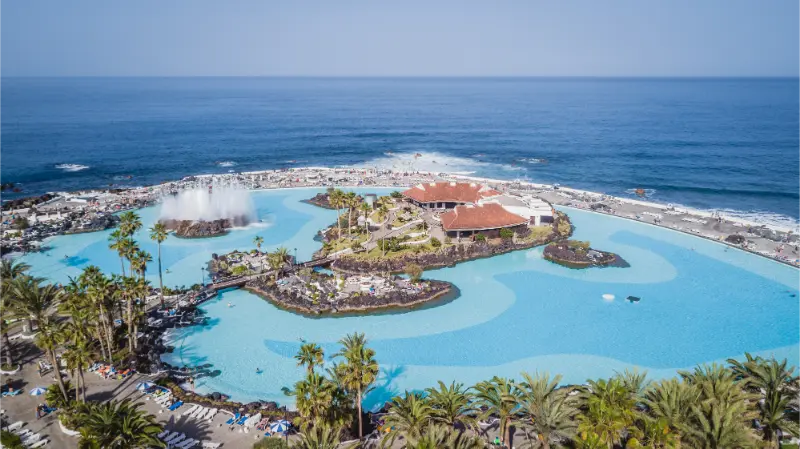
    Aerial View Of Lago Martianez Puerto De La Cruz Tenerife

    Common mistakes I would avoid

    • Treating the complex as an ordinary hotel pool and missing the design.
    • Assuming north-coast weather will match Costa Adeje.
    • Trying to combine a full pool day with a packed cross-island itinerary.
    • Ignoring strong ocean conditions at nearby Playa de Martiánez.

    The common thread is simple: I try not to turn Lago Martiánez into a box-ticking stop. Tenerife rewards a little spare time, especially in places where the surrounding promenade, historic streets, gardens or coastline are part of the experience.

    What I check on the day

    Before leaving I verify the official opening or access information, local weather, any temporary closure and the route back. I especially check for maintenance notices or partial pool closures, because a large aquatic complex can change operations temporarily. I save the official page and any ticket or reservation offline. This takes only a few minutes and is much more reliable than assuming that an old screenshot, blog post or map listing is still correct.

    My final take

    I would recommend Lago Martiánez to travellers who want a relaxing day that still feels unmistakably Tenerife. It is most rewarding when I see the pools, the Atlantic and Manrique’s design as one experience rather than three separate attractions.

    Frequently asked questions

    Do I need to book in advance?

    It depends on the venue and ticket type. I check the official page close to the visit; where timed tickets or guided experiences are offered, advance booking can be useful even if basic admission is available at the door.

    Is it worth visiting if I only have a few days in Tenerife?

    I would include it when the subject genuinely matches my interests and it fits geographically with the rest of the day. On a short first trip, I avoid adding an attraction simply because it appears on a long checklist.

    Can I visit with children?

    Usually yes, but I adjust the duration and expectations. A shorter, focused visit with food or outdoor time afterwards works better than making children absorb every exhibit or historical detail.

  • Tenerife with Babies and Toddlers: Beaches, Transport, Hotels and Practical Tips

    Tenerife with Babies and Toddlers: Beaches, Transport, Hotels and Practical Tips

    Tenerife can work extremely well with a baby or toddler when I build the trip around routine, shade and short transfers rather than trying to prove that family travel changes nothing. The island has warm-weather resorts, promenades, apartments, supermarkets and family attractions, but it also has steep towns, strong Atlantic beaches and winding mountain roads. I choose the base first, then let the child’s normal sleep and meal pattern shape the itinerary. A relaxed family week with fewer long day trips is usually more enjoyable than a checklist designed for adults.

    The easiest bases for very young children

    For a first family stay, I like areas where the beach, supermarket, pharmacy and restaurants are reachable without using the car for every small task. Costa Adeje and Los Cristianos are practical in the south, while Puerto de la Cruz can work for families who prefer the greener north and accept a higher chance of cloud.

    My where to stay guide compares the regions. With a toddler, I give extra weight to walkability and the exact slope between the accommodation and the seafront.

    Hotel versus apartment

    An apartment gives me a fridge, simple meal preparation and a separate sleeping area if the layout is good. A hotel can reduce chores and make pool days easier. The best choice depends on whether the child sleeps better with a separate room and how much self-catering I actually want to do.

    Illustrated guide: Tenerife with Babies and Toddlers, with practical visitor tips
    Illustrated guide: Tenerife with Babies and Toddlers.

    I read room descriptions carefully because “family room” does not always mean a separate bedroom. I compare family accommodation in Costa Adeje only after deciding which layout matters.

    Choosing beaches for toddlers

    I prioritise managed beaches with easy access, nearby toilets and conditions that are suitable on the day. No Tenerife beach is guaranteed calm every day, so I still follow flags and lifeguard instructions even at family-oriented bays.

    My family beaches guide is more useful than a list based only on sand colour because it considers facilities and practical access.

    Sun, shade and the middle of the day

    Young children are one reason I avoid building the entire day around noon. I use mornings for beaches or outings, return for lunch and rest, then go out again later when the light and temperature are softer.

    I bring strong sun protection, a hat, shade solution and more water than I think we need. Cloud does not remove UV exposure, especially on open promenades and at altitude.

    Car seats and rental cars

    If I rent a car, I arrange an appropriate approved child restraint in advance and confirm what the rental company actually supplies. I do not assume “child seat” means the correct size or configuration for every child.

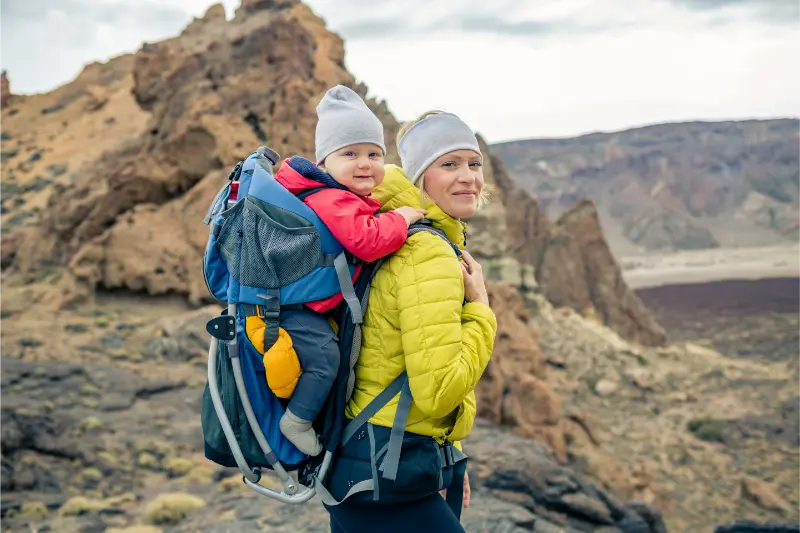
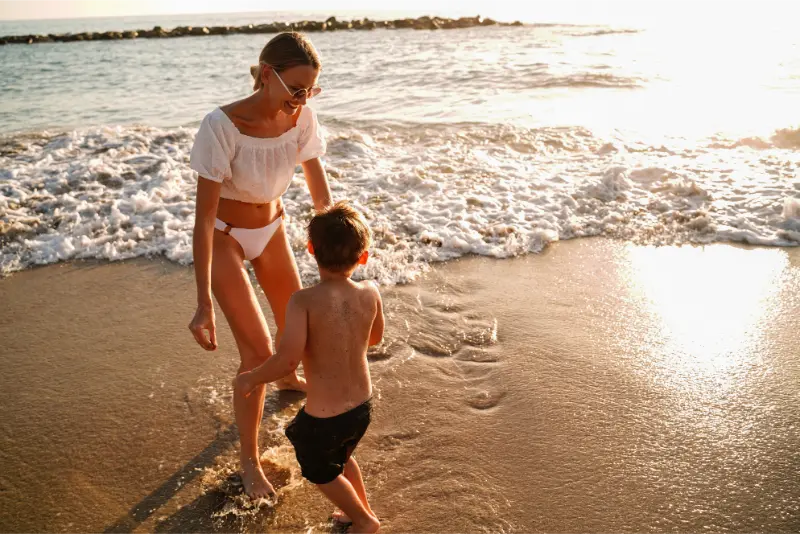
    Mother And Child On A Tenerife Beach

    I also avoid excessive mountain driving on consecutive days. Winding roads to Masca, Anaga or Teide can be tiring for small children even when adults enjoy the scenery.

    Pushchairs and carriers

    A lightweight pushchair is useful on resort promenades and in flatter towns. A baby carrier is much more practical for steps, old-town paving and short nature walks. I choose one based on the day rather than trying to push a stroller onto terrain it was never designed for.

    For accessible promenades and easier attractions, my accessible Tenerife guide can also help because many of the same surface and gradient details matter to pushchairs.

    Food, nappies and supermarket basics

    I buy bulky everyday items locally instead of filling luggage with a week of nappies or snacks. Large supermarkets in resort areas stock the basics, though specific brands or formulas may differ from home.

    For anything medically necessary or highly specific, I bring enough supply rather than assuming an identical product will be available. My grocery shopping guide covers the supermarket side.

    Attractions with very young children

    Large attractions can still work, but I do not expect a toddler to experience them like an older child. I choose a few sections, build in shade and food breaks, and leave before everyone is exhausted.

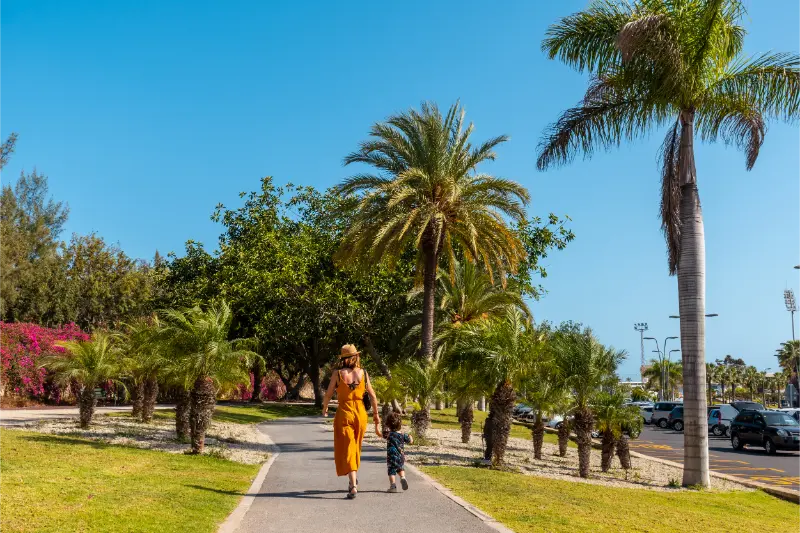
    Mother And Son Walking In Los Cristianos Tenerife

    My Tenerife with kids guide covers the broader family attraction options for different ages.

    How I would prepare before the trip

    For travelling in Tenerife with a baby or toddler, I make the important decisions before leaving home rather than trying to solve everything after landing. I save the addresses, official links and booking references I may need, take screenshots of anything that could matter without mobile data, and keep one simple alternative in mind. Tenerife is easy to travel around when the basic logistics are organised, but the island becomes less relaxing if every small choice has to be researched from a pavement or airport queue.

    What I would keep flexible

    I do not over-plan travelling in Tenerife with a baby or toddler. Opening hours, weather, traffic, family energy and local conditions can change the shape of a day. My preference is to fix the essentials and leave the rest adjustable. That means I know where I am sleeping, how I am moving between regions and which bookings are time-sensitive, while meals, beach stops and minor attractions can move according to how the day actually feels.

    The small mistakes that create unnecessary stress

    The mistakes I see most often around travelling in Tenerife with a baby or toddler are rarely dramatic; they are usually small assumptions that accumulate. Relying on one payment method, arriving with no offline information, packing for the resort but not the mountains, or assuming every service follows the same hours as at home can all turn into wasted time. I prefer simple redundancy: two ways to pay, a little cash, a charged phone, a backup layer of clothing and a second plan for anything weather-dependent.

    How this fits into a first Tenerife holiday

    On a first trip, I would use this guide together with my first-trip Tenerife guide and my getting around Tenerife guide. The first gives the island-wide context and the second solves the transport side. Together they make travelling in Tenerife with a baby or toddler much easier to place inside a realistic itinerary instead of treating it as an isolated checklist.

    Why I still check official information

    Rules and services connected with travelling in Tenerife with a baby or toddler can change after any travel article is published. I therefore use this page to understand the practical framework, then verify anything operational shortly before the trip. That is especially important for legal requirements, healthcare arrangements, transport rules, emergency information, tax procedures and opening times. A five-minute final check is usually more useful than relying on a screenshot saved months earlier.

    My practical rule for a calmer holiday

    My rule for travelling in Tenerife with a baby or toddler is to optimise for a calm trip, not for theoretical perfection. I would rather carry one extra useful item, choose a slightly easier base or pay for a service that genuinely removes friction than spend valuable holiday time fixing avoidable problems. Tenerife rewards spontaneity, but spontaneity works best when the essentials underneath it are reliable.

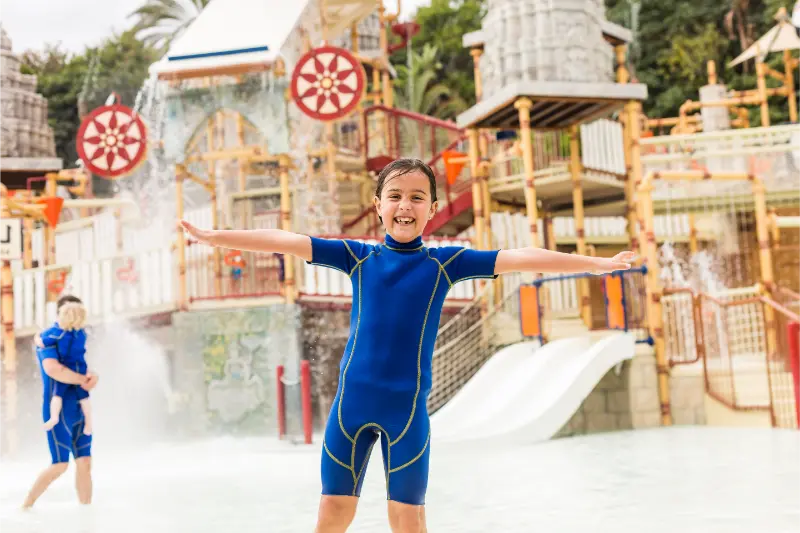
    Childrens Play Area At Siam Park Tenerife

    How I would use this advice

    I would choose one walkable family base, plan one meaningful outing per day at most, and protect nap and meal times instead of treating them as obstacles.

    For accommodation I focus on room layout, shade, lift access and walking distance to daily essentials before comparing pools or decorative extras.

    A note for repeat visitors

    Repeat visitors can simplify travelling in Tenerife with a baby or toddler because they already know which parts of Tenerife suit them. I still review the basics before each trip, especially if I am changing season, travelling with different companions or staying in another part of the island. A winter stay in Puerto de la Cruz and a summer week in Costa Adeje can require different clothing, transport habits and daily rhythms even though the destination is the same.

    What I would write down before departure

    I keep a short travel note for travelling in Tenerife with a baby or toddler with only information I may genuinely need: accommodation address, insurance or health details, emergency contact information, important booking numbers and one or two official websites. I do not save twenty pages of travel advice. The point is to make critical information easy to find when I am tired, offline or dealing with a change of plan.

    Why location matters

    Where I stay changes how I handle travelling in Tenerife with a baby or toddler. A central resort can put supermarkets, pharmacies, restaurants and transport within walking distance, while a rural house may require more advance shopping and a car. Neither is better in itself. I choose the base that matches the trip and then adapt the practical preparation to that location rather than expecting every part of Tenerife to offer the same level of services on the doorstep.

    One final planning check

    The day before travelling, I review travelling in Tenerife with a baby or toddler once more and remove anything that has become unnecessary. Good preparation should make luggage, decisions and schedules lighter, not heavier. If I can explain my plan in a few sentences and know what I would do if one part changes, I consider the practical side ready and stop researching.

  • Playa El Bollullo Guide: Black Sand, Access and Swimming Near La Orotava

    Playa El Bollullo Guide: Black Sand, Access and Swimming Near La Orotava

    El Bollullo is one of the north Tenerife beaches I visit for atmosphere first and swimming second. Set below cliffs in El Rincón, La Orotava, the beach combines fine black volcanic sand with a green agricultural backdrop and a much wilder Atlantic feel than the resort beaches of the south. Turismo de Tenerife currently lists it at about 200 metres long and 40 metres wide, with access on foot or by car, a small parking capacity and a walking option from Puerto de la Cruz of roughly 45 minutes. The same official information warns that waves are often strong, which is the detail I take most seriously.

    Why El Bollullo feels different

    The setting is the main reason I come. Dark sand, cliffs, banana-growing countryside and open Atlantic water make the beach feel detached from nearby urban areas even though Puerto de la Cruz is not far away. I would not describe it as secret, but the limited access prevents it from feeling like a large resort strand.

    The beach belongs naturally in a north-coast itinerary with La Orotava or Puerto de la Cruz. My La Orotava guide is the obvious companion if I want culture before or after the sea.

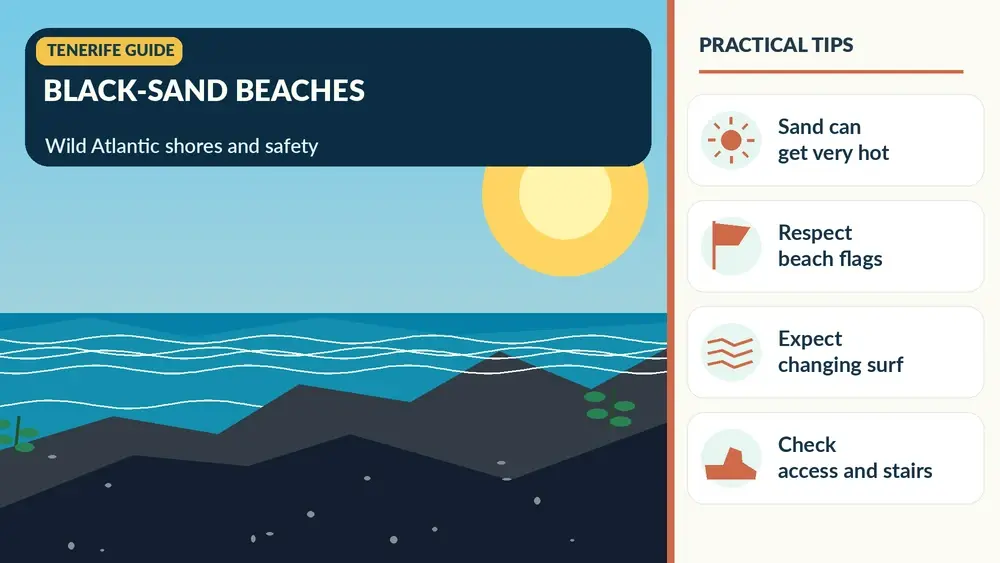
    Illustrated guide: Tenerife Black-Sand Beach Safety, with practical visitor tips
    Illustrated guide: Tenerife Black-Sand Beach Safety.

    Walking from Puerto de la Cruz

    Official tourism information gives roughly 45 minutes on foot from Puerto de la Cruz. I like this option because the approach through El Rincón turns the beach into a small outing rather than a parking exercise. The return includes climbing and can feel warm, so I carry water.

    I use a map rather than following random footpaths through agricultural land. Working farms and private access deserve the same respect as protected nature.

    Driving and parking

    The road access is narrow in places and parking is limited, officially listed at fewer than 50 spaces. I arrive earlier and avoid assuming I can park right beside the beach in peak season. If access feels stressful, the walking route is often the better experience.

    I never block a farm entrance or force a passing manoeuvre on a narrow lane. The last kilometre of a beach trip should not become the most difficult part of the day.

    The steps down to the beach

    From the upper access, the final approach includes steps. They are manageable for most active visitors but make the beach less suitable for wheelchairs, pushchairs or anyone with significant mobility limitations. Turismo de Tenerife currently lists no adapted access.

    I carry only what I actually need. A heavy cooler and several bags feel much heavier on the climb back up.

    Waves, currents and swimming

    El Bollullo often has strong surf. I watch conditions, flags and lifeguard guidance where present and do not enter simply because other people are in the water. Northern beaches can have powerful currents even when the shore break looks manageable from above.

    If swimming is the priority, I keep an alternative beach in mind. My black-sand beaches guide compares several options rather than presenting one beach as ideal every day.

    Facilities

    Official information currently lists food and drink services, cleaning, sunbed and umbrella rental, but I still bring water because beach services can vary by season and day. I also take all rubbish back up with me.

    The beach is more enjoyable when I do not depend on having every resort facility. Its appeal is precisely that the setting remains relatively natural.

    Best time of day

    I prefer morning for easier parking and a calmer arrival. Late afternoon can be beautiful for light, but cliffs may cast shade and I do not want to climb the access path after dark. Midday is hotter on the steps and often busier.

    Cloudy northern weather does not ruin El Bollullo. Dark sand and green cliffs can look especially dramatic under softer light.

    Who should visit

    I recommend El Bollullo to travellers staying in Puerto de la Cruz or La Orotava, photographers and beach lovers who understand that wild Atlantic conditions are part of the experience. I would choose a more accessible, protected beach for toddlers, weak swimmers or anyone who wants guaranteed calm water.

    For families, my family beaches guide offers easier alternatives.

    How I would plan it

    I would arrive in the morning, spend a few hours on the beach only if sea conditions are comfortable, then continue to La Orotava or Puerto de la Cruz for lunch.

    Historic Center Of La Orotava Tenerife

    Before swimming I check current flags and conditions; for static access details I use the official El Bollullo page.

    What I bring

    I take water, sun protection, compact beach gear, footwear suitable for the steps and a light layer if the north is cloudy. I avoid carrying valuables into rough water and keep electronics protected from black sand, which gets into bags more easily than expected.

    Where I would stay nearby

    Puerto de la Cruz is easiest for restaurants and evening life, while La Orotava offers a more historic atmosphere. I compare Puerto de la Cruz accommodation with La Orotava based on whether walking access to the coast or an old-town base matters more.

    What I would check before leaving

    Before setting out for Playa El Bollullo, I check the current weather, any trail or beach alerts, road access and the amount of daylight I realistically have left. Tenerife can change character quickly between the coast and higher ground, so I do not assume that conditions at my hotel describe the place I am about to visit. I save the route offline, carry more water than I expect to need and keep one nearby alternative in mind rather than relying on a single perfect plan.

    How I fit it into a wider Tenerife itinerary

    I would place Playa El Bollullo on a day that already focuses on the same part of the island. That sounds obvious, but it prevents a lot of unnecessary driving. I prefer one strong natural experience plus a nearby town, viewpoint or meal rather than trying to cross Tenerife for a second headline attraction. This approach leaves enough time to stop when the light is good, deal with parking calmly and follow local instructions without feeling that the schedule is collapsing.

    The pace I recommend for a first visit

    For a first visit to Playa El Bollullo, I deliberately allow more time than the minimum duration shown on a map. Natural places are enjoyable because I can slow down, look at the terrain and adapt to wind, cloud or sea state. Rushing encourages poor decisions, especially near exposed coasts or on volcanic ground. If the visit ends earlier than expected, I use the spare time for a café, a short village walk or another nearby stop rather than adding a distant attraction.

    What I would avoid

    I would avoid treating Playa El Bollullo as a location that has to work in every condition. Strong sun, wind, swell, low cloud or a temporary closure can change the experience completely. I also avoid leaving marked routes for a better photograph, parking where access is clearly restricted and assuming that quiet places have no rules. Tenerife’s most memorable landscapes are often protected precisely because they are fragile, so the best visit is the one that leaves the setting looking unchanged.

    A useful backup plan

    My backup plan for Playa El Bollullo stays geographically close. If the weather or access is wrong, I choose a nearby village, museum, promenade, sheltered beach or viewpoint rather than driving across the island. This makes the day more resilient and keeps the trip enjoyable even when the original idea has to change. Tenerife offers enough variety within each region that a cancelled walk or rough sea does not need to become a wasted day.

    Why I verify operational details again

    Conditions connected with Playa El Bollullo can change after any article is published. Trail status, parking arrangements, lifeguard services, road restrictions and weather warnings are operational details rather than permanent facts. I use this guide to understand the place, then check the relevant official source shortly before going. That final check is especially important after storms, heat alerts, wildfires or periods of heavy swell.

    A note on footwear and small practical details

    For Playa El Bollullo, small practical choices usually matter more than specialist equipment. I wear footwear that matches the surface, carry sun protection and keep hands free on rough ground. I also avoid bringing more gear than I need. A lighter bag makes climbs, steps and beach access easier, and it reduces the temptation to leave belongings unattended while I move closer to water or viewpoints.

    Why I leave room for the unexpected

    One of the reasons I enjoy Playa El Bollullo is that the best moment is not always the one I planned. A cloud may lift, the light may improve, wildlife may appear or a quiet corner may simply deserve more time. I therefore avoid booking the next activity too tightly. Leaving an hour of margin is often what lets a natural place feel like an experience rather than another appointment on the itinerary.

    My final rule for a better visit

    My final rule for Playa El Bollullo is simple: I would rather leave with one strong memory than with proof that I visited every nearby stop. I keep the route realistic, respect the setting and change plans when conditions suggest it. That approach usually produces better photographs, safer decisions and a much more relaxed day, while also leaving a reason to return to this part of Tenerife on a future trip.

  • Mirador de Chipeque Guide: Teide, Sea of Clouds and Sunset Views

    Mirador de Chipeque Guide: Teide, Sea of Clouds and Sunset Views

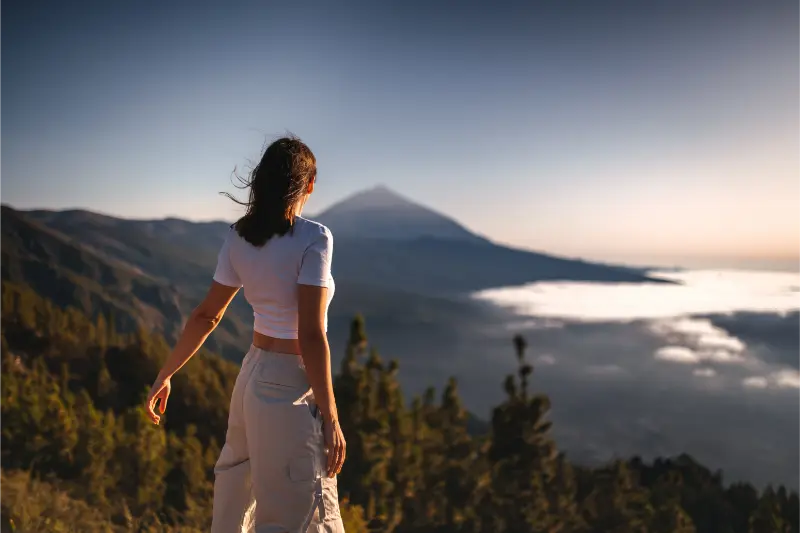
    Mirador de Chipeque is one of the Tenerife viewpoints I would choose when the journey itself matters as much as the photograph. Officially known as Mirador de Cumbres del Norte or Chipeque, it sits by the TF-24 in the high forest above Santa Úrsula. On a clear day the viewpoint looks across the Orotava Valley toward Teide; when the trade-wind cloud layer fills the valley, the scene can become a broad white “sea of clouds”. Turismo de Tenerife lists parking and adapted access at the viewpoint but no bus stop, so I plan it primarily as a driving stop.

    What I can see from Chipeque

    The classic view looks toward Teide over the northern slope, often with cloud below. Official tourism information also notes visibility toward the Teno Massif and, in clear conditions, the silhouette of La Palma. I do not expect all of those elements on every visit; mountain visibility changes quickly.

    The uncertainty is part of the appeal. Chipeque is a place I visit because conditions can transform the same landscape from one hour to the next.

    The sea of clouds

    The cloud layer forms when moist trade-wind air meets Tenerife’s terrain and is capped by warmer, drier air above. From the coast this can feel like a grey day; from Chipeque I may be standing in sunshine above the clouds. That inversion is one of the island’s defining climate experiences.

    I never treat it as guaranteed. If the cloud level is too high, the viewpoint may sit inside mist; if it is too low or absent, the valley may be completely clear. Both can be beautiful.

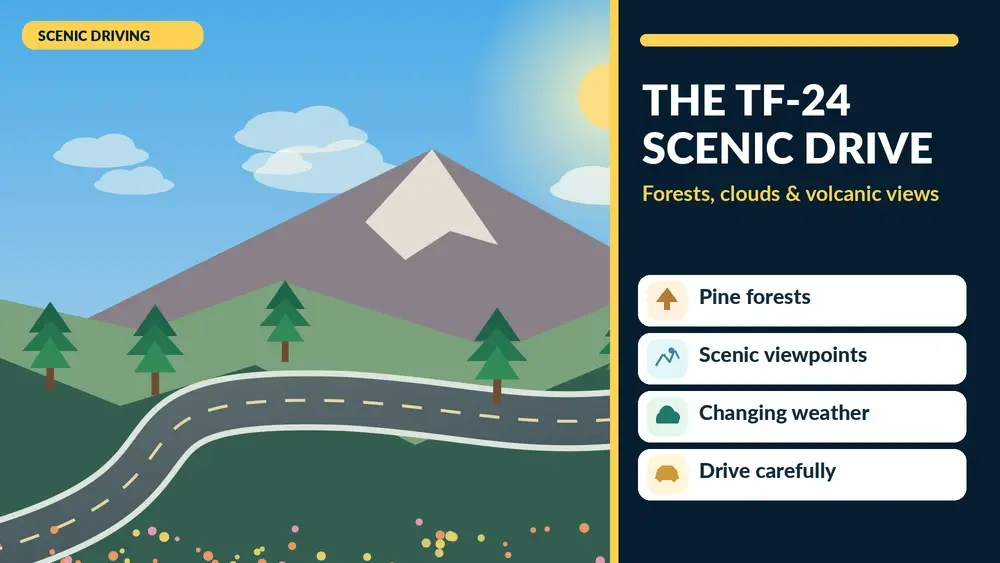
    Driving the TF-24

    Chipeque is reached from the high ridge roads rather than from a town-centre promenade. The TF-24 is scenic but can be winding, foggy and dark after sunset. I allow extra time and avoid driving it when tired.

    There is no regular bus stop listed at the viewpoint, which makes a rental car the practical choice for most visitors. My Tenerife driving guide covers mountain-road habits and parking in more detail.

    Illustrated guide: TF-24 Tenerife Scenic Drive, with practical visitor tips
    Illustrated guide: TF-24 Tenerife Scenic Drive.

    Parking and roadside safety

    Turismo de Tenerife lists parking at the viewpoint. I use the formal space and keep children close because the environment remains roadside and mountainous even though access is easy. I do not stop in the traffic lane when the car park is full.

    Popular sunset times can create pressure. Arriving earlier is more enjoyable than chasing the last light and then searching for a space.

    Sunset at Chipeque

    Sunset can be spectacular when Teide catches warm light above cloud, but it also means the return drive happens in darkness. I bring a warm layer, because temperature drops quickly once the sun disappears, and I have the route home saved before phone signal becomes inconsistent.

    I stay only as long as I am comfortable driving afterward. A viewpoint should not turn into a risky descent simply because the sky remained colourful for another ten minutes.

    Photography tips

    A telephoto lens compresses Teide and the cloud layer beautifully, while a wider lens includes pines and foreground. I expose carefully because bright cloud can fool automatic metering. A small tripod is useful after sunset if wind is moderate and space allows.

    I keep equipment inside the viewpoint area and never step beyond barriers for an unobstructed composition. My Tenerife photography guide covers similar decisions at other mountain viewpoints.

    Weather and clothing

    Chipeque can be much colder and windier than Puerto de la Cruz or Santa Cruz on the same day. I carry a jacket even if I left the coast in shorts. In wet or foggy conditions, road visibility matters more to me than whether the viewpoint might clear later.

    After storms or unusual weather, I check road and official alerts before driving high into the forest.

    Combining Chipeque with other stops

    I would combine it with La Esperanza, another high-ridge viewpoint or a Teide day rather than with distant southwest resorts. If I am coming from the north, La Orotava or Puerto de la Cruz can fit naturally before or after.

    Mount Teide And Volcanic Landscape Tenerife

    My best viewpoints in Tenerife helps build a route without turning the day into a sequence of car parks.

    How I would plan it

    For sunset I arrive well before golden hour, enjoy the changing cloud rather than chasing a single photograph, then descend before fatigue sets in.

    I use the official Chipeque viewpoint page for the current location and facilities information.

    When a disappointing forecast can still work

    A cloudy forecast for Puerto de la Cruz does not necessarily mean Chipeque will be cloudy. The viewpoint can sit above the inversion layer. I check mountain forecasts and webcams where available, but I still accept that the final few kilometres may reveal conditions no app predicted perfectly.

    A quiet alternative to attraction-heavy days

    Chipeque works well when I want a memorable evening without tickets or a long hike. For accommodation on the northern side, I compare La Orotava accommodation with Puerto de la Cruz depending on whether mountain access or nightlife matters more.

    What I would check before leaving

    Before setting out for Mirador de Chipeque, I check the current weather, any trail or beach alerts, road access and the amount of daylight I realistically have left. Tenerife can change character quickly between the coast and higher ground, so I do not assume that conditions at my hotel describe the place I am about to visit. I save the route offline, carry more water than I expect to need and keep one nearby alternative in mind rather than relying on a single perfect plan.

    How I fit it into a wider Tenerife itinerary

    I would place Mirador de Chipeque on a day that already focuses on the same part of the island. That sounds obvious, but it prevents a lot of unnecessary driving. I prefer one strong natural experience plus a nearby town, viewpoint or meal rather than trying to cross Tenerife for a second headline attraction. This approach leaves enough time to stop when the light is good, deal with parking calmly and follow local instructions without feeling that the schedule is collapsing.

    The pace I recommend for a first visit

    For a first visit to Mirador de Chipeque, I deliberately allow more time than the minimum duration shown on a map. Natural places are enjoyable because I can slow down, look at the terrain and adapt to wind, cloud or sea state. Rushing encourages poor decisions, especially near exposed coasts or on volcanic ground. If the visit ends earlier than expected, I use the spare time for a café, a short village walk or another nearby stop rather than adding a distant attraction.

    What I would avoid

    I would avoid treating Mirador de Chipeque as a location that has to work in every condition. Strong sun, wind, swell, low cloud or a temporary closure can change the experience completely. I also avoid leaving marked routes for a better photograph, parking where access is clearly restricted and assuming that quiet places have no rules. Tenerife’s most memorable landscapes are often protected precisely because they are fragile, so the best visit is the one that leaves the setting looking unchanged.

    A useful backup plan

    My backup plan for Mirador de Chipeque stays geographically close. If the weather or access is wrong, I choose a nearby village, museum, promenade, sheltered beach or viewpoint rather than driving across the island. This makes the day more resilient and keeps the trip enjoyable even when the original idea has to change. Tenerife offers enough variety within each region that a cancelled walk or rough sea does not need to become a wasted day.

    Why I verify operational details again

    Conditions connected with Mirador de Chipeque can change after any article is published. Trail status, parking arrangements, lifeguard services, road restrictions and weather warnings are operational details rather than permanent facts. I use this guide to understand the place, then check the relevant official source shortly before going. That final check is especially important after storms, heat alerts, wildfires or periods of heavy swell.

    A note on footwear and small practical details

    For Mirador de Chipeque, small practical choices usually matter more than specialist equipment. I wear footwear that matches the surface, carry sun protection and keep hands free on rough ground. I also avoid bringing more gear than I need. A lighter bag makes climbs, steps and beach access easier, and it reduces the temptation to leave belongings unattended while I move closer to water or viewpoints.

    Why I leave room for the unexpected

    One of the reasons I enjoy Mirador de Chipeque is that the best moment is not always the one I planned. A cloud may lift, the light may improve, wildlife may appear or a quiet corner may simply deserve more time. I therefore avoid booking the next activity too tightly. Leaving an hour of margin is often what lets a natural place feel like an experience rather than another appointment on the itinerary.

    My final rule for a better visit

    My final rule for Mirador de Chipeque is simple: I would rather leave with one strong memory than with proof that I visited every nearby stop. I keep the route realistic, respect the setting and change plans when conditions suggest it. That approach usually produces better photographs, safer decisions and a much more relaxed day, while also leaving a reason to return to this part of Tenerife on a future trip.

  • Roques de García Trail Guide: Easy Teide Walk with Iconic Volcanic Views

    Roques de García Trail Guide: Easy Teide Walk with Iconic Volcanic Views

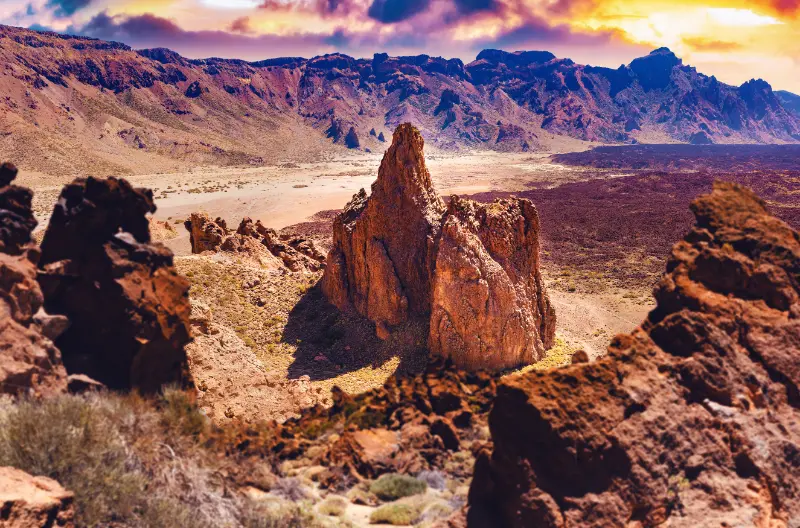
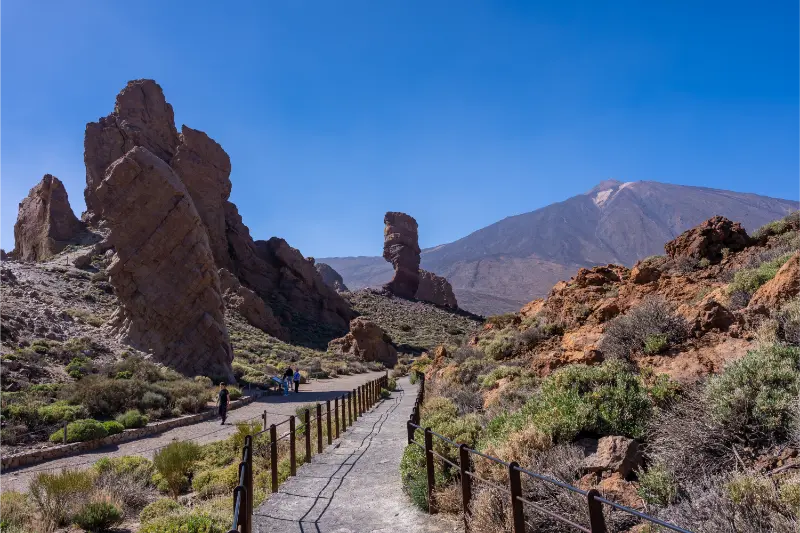
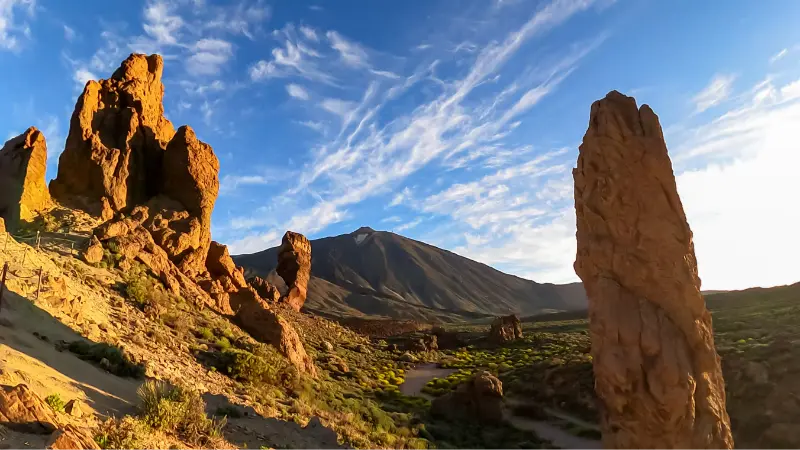
    Roques de García is the Teide walk I recommend when someone wants a genuine volcanic trail without committing to a summit-style hike. Trail 03 begins and ends at Mirador de La Ruleta beside the famous rock formations, and Turismo de Tenerife currently lists it as a 3.5 km circular route of low difficulty taking about two hours, with roughly 211 metres of ascent. The numbers are modest, but the entire walk sits above 2,000 metres, so altitude, sun and fast-changing mountain weather still deserve respect.

    Why this trail works so well for a first Teide visit

    The route starts in one of the national park’s most recognisable settings. Roque Cinchado and the surrounding formations rise beside the road, but walking the loop reveals how different they look from behind and below. The trail also opens views toward Llano de Ucanca, where the scale of the caldera becomes much easier to understand.

    I prefer this to spending the entire Teide visit moving between car parks. Even a short walk gives me silence, texture and distance from the road.

    Official distance and difficulty

    Trail 03 is currently listed at 3.5 km, about two hours, with a high point around 2,187 metres and a low point around 2,025 metres. The official rating is low difficulty, but the route includes a descent and climb rather than remaining flat throughout.

    I use the two-hour estimate as a planning minimum. Photo stops, crowding near the start and the effects of altitude can easily stretch the outing. There is no prize for finishing quickly.

    Altitude changes how an easy walk feels

    At more than 2,000 metres, I may feel breathless sooner than expected, especially if I have driven directly from sea level. I slow the first twenty minutes, drink water and do not compare my pace with hikers who have already spent several days at altitude.

    Sun exposure is also stronger while wind can make the air feel cold. I carry a layer and sunscreen regardless of what the temperature was in Costa Adeje. My Mount Teide guide covers the wider high-altitude planning in more detail.

    Roque Cinchado Trail Teide National Park Tenerife

    Parking at La Ruleta

    The main practical challenge is often parking rather than the path. Roques de García is one of Teide’s most popular roadside stops, so spaces near La Ruleta can fill quickly. I arrive earlier in the day and keep the itinerary flexible instead of circling aggressively for a space.

    I never park outside marked areas or on vegetation. A few extra minutes of walking are preferable to damaging protected ground or narrowing the road.

    Walking direction and terrain

    The official description circles the formations and descends toward the plain before returning. The surface is volcanic, uneven and exposed, so shoes with grip make the walk more comfortable. I stay on the trail even where footprints suggest shortcuts.

    Because the route is circular, navigation is straightforward in clear conditions, but fog or poor visibility can make landmarks disappear. I check the forecast before committing.

    No permit for Trail 03, but rules still matter

    Turismo de Tenerife currently states that no authorisation is required for Trail 03. That is different from some regulated Teide routes, especially those connected with summit access. I do not generalise one trail’s rules to the entire national park.

    My hiking permits and trail rules guide explains why checking the exact trail number is essential in Teide.

    Photography and the famous Roque Cinchado

    Roque Cinchado is an obvious subject, but I also photograph the plain, layered lava and the way Teide changes position as I move around the formations. Morning and late afternoon usually give more texture than the harshest midday light.

    Roque Cinchado Roques De Garcia Tenerife

    I avoid blocking the trail at narrow points for photos. Popular landscapes work better when everyone gives other walkers space to pass.

    Who I recommend this trail to

    Roques de García suits first-time visitors, families with walking experience, photographers and travellers who have limited time in the national park. It is a meaningful walk without the logistics of the cable car or summit permit.

    Anyone with mobility limitations can still enjoy the initial viewpoint area, and the park has an accessible section nearby. I cover those options in my accessible Tenerife guide.

    How I would plan it

    I would arrive early, walk Trail 03 at an unhurried pace, spend time at the viewpoints and then continue through the national park without trying to add another demanding hike.

    The official Trail 03 page is where I confirm current status and route information before the trip.

    Combining the trail with a scenic drive

    Roques de García fits naturally into a Teide driving day because it sits beside the main national-park road. I still limit the number of additional stops. My Tenerife by car guide explains why mountain driving times are easier when I leave margin rather than building a minute-by-minute loop.

    Where to stay for an early Teide day

    Vilaflor is convenient from the south, while La Orotava works from the north. Resort bases are perfectly possible, but an inland night can make sunrise or early-morning access calmer. I compare Vilaflor accommodation when a mountain-focused day is the priority.

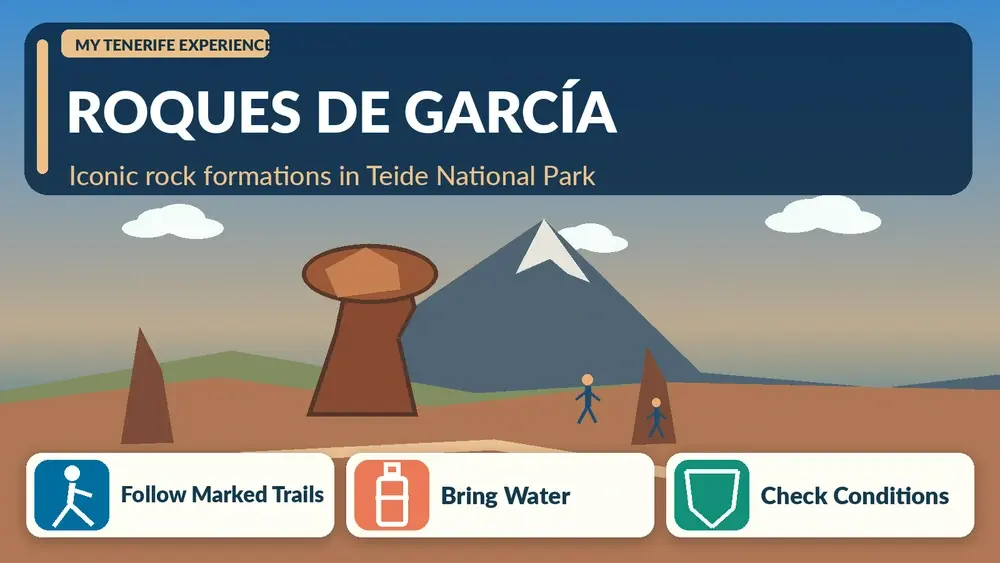
    Illustrated guide: Roques de García Trail, with practical visitor tips
    Illustrated guide: Roques de García Trail.

    What I would check before leaving

    Before setting out for Roques de García trail, I check the current weather, any trail or beach alerts, road access and the amount of daylight I realistically have left. Tenerife can change character quickly between the coast and higher ground, so I do not assume that conditions at my hotel describe the place I am about to visit. I save the route offline, carry more water than I expect to need and keep one nearby alternative in mind rather than relying on a single perfect plan.

    How I fit it into a wider Tenerife itinerary

    I would place Roques de García trail on a day that already focuses on the same part of the island. That sounds obvious, but it prevents a lot of unnecessary driving. I prefer one strong natural experience plus a nearby town, viewpoint or meal rather than trying to cross Tenerife for a second headline attraction. This approach leaves enough time to stop when the light is good, deal with parking calmly and follow local instructions without feeling that the schedule is collapsing.

    The pace I recommend for a first visit

    For a first visit to Roques de García trail, I deliberately allow more time than the minimum duration shown on a map. Natural places are enjoyable because I can slow down, look at the terrain and adapt to wind, cloud or sea state. Rushing encourages poor decisions, especially near exposed coasts or on volcanic ground. If the visit ends earlier than expected, I use the spare time for a café, a short village walk or another nearby stop rather than adding a distant attraction.

    Mount Teide And Volcanic Landscape Tenerife

    What I would avoid

    I would avoid treating Roques de García trail as a location that has to work in every condition. Strong sun, wind, swell, low cloud or a temporary closure can change the experience completely. I also avoid leaving marked routes for a better photograph, parking where access is clearly restricted and assuming that quiet places have no rules. Tenerife’s most memorable landscapes are often protected precisely because they are fragile, so the best visit is the one that leaves the setting looking unchanged.

    A useful backup plan

    My backup plan for Roques de García trail stays geographically close. If the weather or access is wrong, I choose a nearby village, museum, promenade, sheltered beach or viewpoint rather than driving across the island. This makes the day more resilient and keeps the trip enjoyable even when the original idea has to change. Tenerife offers enough variety within each region that a cancelled walk or rough sea does not need to become a wasted day.

    Why I verify operational details again

    Conditions connected with Roques de García trail can change after any article is published. Trail status, parking arrangements, lifeguard services, road restrictions and weather warnings are operational details rather than permanent facts. I use this guide to understand the place, then check the relevant official source shortly before going. That final check is especially important after storms, heat alerts, wildfires or periods of heavy swell.

    A note on footwear and small practical details

    For Roques de García trail, small practical choices usually matter more than specialist equipment. I wear footwear that matches the surface, carry sun protection and keep hands free on rough ground. I also avoid bringing more gear than I need. A lighter bag makes climbs, steps and beach access easier, and it reduces the temptation to leave belongings unattended while I move closer to water or viewpoints.

    Why I leave room for the unexpected

    One of the reasons I enjoy Roques de García trail is that the best moment is not always the one I planned. A cloud may lift, the light may improve, wildlife may appear or a quiet corner may simply deserve more time. I therefore avoid booking the next activity too tightly. Leaving an hour of margin is often what lets a natural place feel like an experience rather than another appointment on the itinerary.

  • Puerto de Santiago Guide: Playa de la Arena, Los Gigantes and Tenerife West Coast

    Puerto de Santiago Guide: Playa de la Arena, Los Gigantes and Tenerife West Coast

    Puerto de Santiago is the west-coast base I choose when I want Los Gigantes scenery without staying in the busiest part of Los Gigantes itself. The resort area stretches through a volcanic coastline with small black-sand beaches, restaurants, apartments and easy access to Playa de la Arena. It belongs to Santiago del Teide and works especially well for sunset, boat trips and a slower holiday where I do not need major nightlife every evening. Because nearby place names blend together on booking sites, this guide explains what Puerto de Santiago actually feels like and how I would use it as a base.

    Where Puerto de Santiago sits

    Puerto de Santiago lies between the Los Gigantes area and Playa de la Arena on Tenerife’s west coast. In practical terms, the urban areas merge, but hills and road layout still affect walking times. I check the exact accommodation pin rather than assuming every property described as “Los Gigantes” or “Puerto Santiago” is beside the same promenade.

    The setting is defined by dark volcanic coast, views toward La Gomera and the nearby cliffs. It is more compact and less nightlife-focused than Playa de las Américas.

    Playa de Puerto Santiago

    The small urban beach beside the harbour has black sand and a local, maritime atmosphere. Official tourism describes it as a sheltered cove near the fishing port with easy access and nearby food options. Its modest size is part of the charm but also means I keep expectations realistic during busy summer periods.

    I check sea conditions before swimming. Sheltered does not mean risk-free, and the volcanic west coast can still receive swell.

    Playa de la Arena

    Playa de la Arena is the best-known beach in the immediate area and one of the west coast’s most convenient black-sand options. Official tourism lists an urban setting, lifeguard service, accessible facilities, restaurants and a designated diving area. I like it because I can combine a genuine volcanic-sand beach with normal resort conveniences.

    Puerto De Santiago Tenerife At Night

    The black sand becomes very hot in strong sun, so sandals are practical. I also respect flags and lifeguard instructions rather than assuming clear water means calm conditions.

    Los Gigantes cliffs and boat trips

    The cliffs dominate the northern view and are the main reason many travellers choose this part of Tenerife. Puerto de Santiago gives easy access to boat departures from nearby Los Gigantes for whale watching and coastal excursions. My whale-watching guide explains how I choose a responsible operator.

    I do not schedule a boat trip on the only day I have in the area. Sea conditions can change, so a two- or three-night stay gives more flexibility if an excursion moves.

    Sunset and evening atmosphere

    West-facing orientation is one of Puerto de Santiago’s strongest advantages. La Gomera can appear on clear evenings, and the changing light on the cliffs makes sunset more than a beach event. I find a safe promenade or terrace rather than driving to a viewpoint at the last minute.

    Evenings are generally relaxed, with restaurants and bars rather than a large club scene. Travellers wanting intense nightlife should read my Tenerife nightlife guide before choosing this base.

    Walking, hills and accessibility

    The area is hillier than it first appears. A hotel can be close to the sea on a map but involve steep roads or steps. I check elevation and pedestrian routes before booking, particularly with a stroller or reduced mobility. Playa de la Arena itself has accessible services, but that does not make every surrounding street flat.

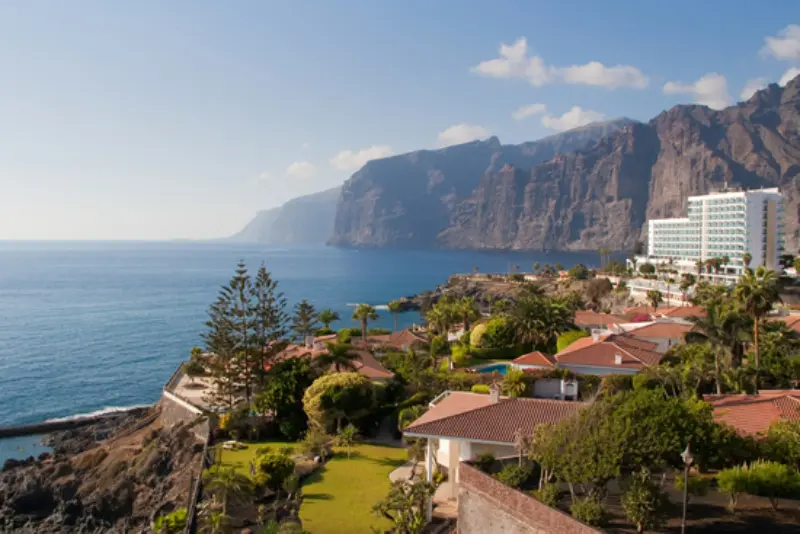
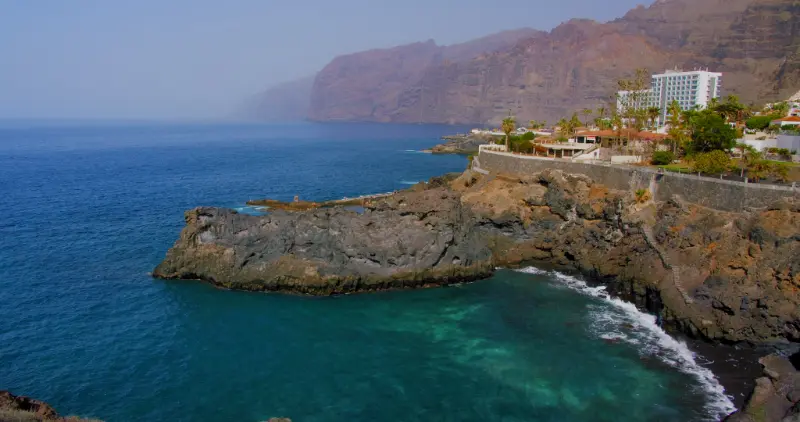
    Rocky coast at Puerto de Santiago with the Los Gigantes cliffs in the distance
    Rocky coastline at Puerto de Santiago, with the Los Gigantes cliffs in the distance.

    For a fully level seafront holiday, parts of Los Cristianos or Costa Adeje can be easier. Puerto de Santiago trades some walking simplicity for west-coast scenery.

    Day trips from Puerto de Santiago

    Masca, Santiago del Teide, Teno and Teide are obvious inland excursions, while Playa San Juan and Alcalá work for a slower coastal day. I group these geographically rather than driving east to Anaga and back in one day. My Teno guide and Santiago del Teide guide are the most natural companions to this base.

    If I want a cross-island day, I start early and accept that the return drive after sunset can be tiring on winding roads.

    Where to stay and who will like it

    Puerto de Santiago suits couples, families who like smaller beaches, whale-watching visitors and travellers seeking a quieter west-coast base. I choose a property near Playa de la Arena for beach convenience or closer to Los Gigantes for marina access. Parking matters if I have a rental car.

    I compare Puerto de Santiago hotels and apartments with Los Gigantes accommodation before deciding which side of the same coastal area fits the trip best.

    How I would plan it

    I would stay at least two nights if boat trips or Masca are important, because the west coast becomes much more enjoyable when one cancelled plan does not disrupt the whole itinerary.

    Puerto de Santiago is not a place I choose for a huge list of attractions. I choose it for cliffs, black sand, sunset and easy access to the west side of Tenerife.

    Puerto De Santiago Tenerife At Sunset

    Eating in Puerto de Santiago

    I look for a mix of Canarian fish restaurants, casual terraces and simple local cafés. The waterfront has tourist-oriented menus, but walking a little away from the main viewpoints can produce more everyday options. I check recent opening days rather than planning dinner around one old recommendation.

    Transport without a car

    Buses connect the area with other southwest towns, and a no-car stay can work if the holiday is mostly local plus organised excursions. A rental car becomes more useful for rural Teno, mountain villages and flexible Teide days. I compare the trade-off with my Tenerife without a car guide.

    Planning Puerto de Santiago Tenerife around the rest of the trip

    I would not let Puerto de Santiago Tenerife dominate every day of the holiday. Tenerife works best when active or detailed plans are balanced with a slower meal, a short walk or time by the sea. I group nearby places together, leave a realistic margin for parking and changing conditions, and avoid crossing the island simply to add one more stop. That makes this part of the trip feel intentional rather than squeezed between unrelated attractions.

    What I check the evening before

    The evening before this part of the trip, I confirm weather, access, opening information and the exact route from my accommodation. For Puerto de Santiago Tenerife, small practical changes can matter more than they appear on a static itinerary. I save essential information offline, charge the phone and keep a nearby alternative in mind. That preparation means a closure, stronger wind or slower traffic changes the plan without ruining the day.

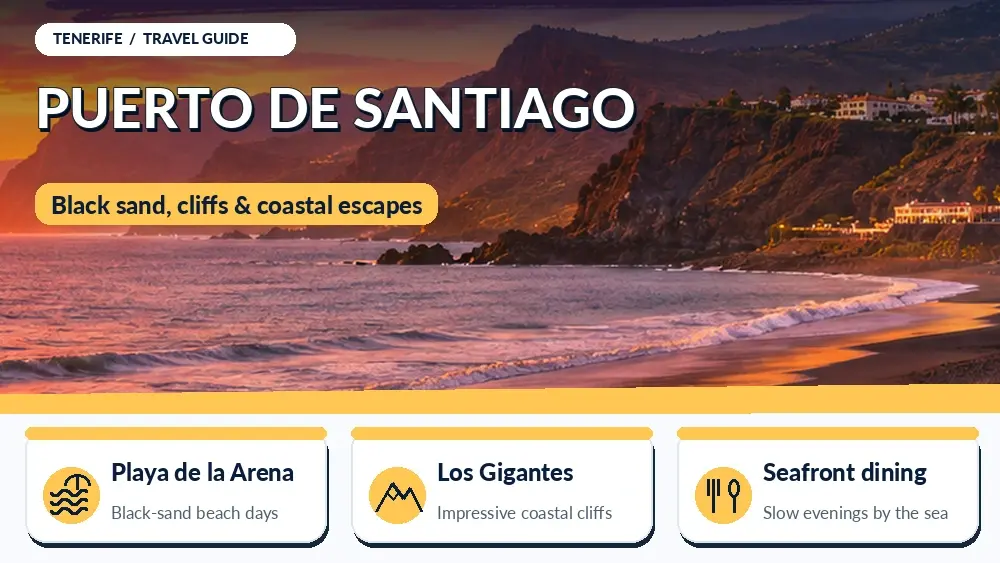
    Illustrated guide: Puerto de Santiago, with practical visitor tips
    Illustrated guide: Puerto de Santiago.

    How I keep the day geographically sensible

    I build this day around one section of Tenerife. Even when puerto de santiago guide: playa de la arena, los gigantes and tenerife west coast sounds easy to combine with several famous attractions, mountain roads and elevation can turn short map distances into long travel times. I prefer adding one nearby village, beach, viewpoint or lunch stop. The result is less time in the car and more time actually experiencing the area.

    The pace I recommend for a first visit

    For a first experience of Puerto de Santiago Tenerife, I deliberately leave more time than the minimum suggested by a map or booking page. I want room to stop, understand the setting and adapt to local conditions. Tenerife rewards that slower approach because weather, light and atmosphere change quickly. Finishing with spare energy is more useful than proving that I managed to fit another distant attraction into the same day.

    A useful backup plan

    My backup plan for Puerto de Santiago Tenerife is always something close by and simple: a town centre, sheltered café, promenade, museum, market or viewpoint that does not depend on the same conditions. I do not choose an alternative on the opposite coast. Keeping the backup local prevents a weather change or closure from becoming an exhausting cross-island drive and makes the itinerary much more resilient.

    Why I would verify details again on arrival

    Information connected with Puerto de Santiago Tenerife can change after an article is published, especially where permits, natural areas, operating hours or transport are involved. I therefore use this guide to understand the trip and then verify the final operational details shortly before going. That habit is more reliable than treating any travel article, including this one, as a permanent timetable.

    What I would avoid

    I would avoid turning Puerto de Santiago Tenerife into a race against the clock. The common mistakes are leaving too late, adding distant stops, relying on a single parking option and assuming conditions will match the coast where the day began. A simpler route with time for one proper break is usually more memorable. It also leaves enough flexibility to follow local signs and instructions instead of feeling pressured by a schedule.

    How this fits a longer stay

    On a week-long Tenerife trip, I place Puerto de Santiago Tenerife beside geographically related days rather than between two long drives. That lets me reuse knowledge of roads, parking and local weather instead of starting from zero each morning. On a shorter trip, I would keep only the element that matters most and save secondary stops for another visit. Tenerife has enough depth that leaving something for next time is not a failure.

  • San Miguel de Abona Guide: Historic Centre, Golf del Sur and Local Tenerife

    San Miguel de Abona Guide: Historic Centre, Golf del Sur and Local Tenerife

    San Miguel de Abona is one of the most useful municipalities for understanding how different inland and coastal Tenerife can be within a short drive. The historic town sits above the southern resorts with traditional architecture and local streets, while the municipal coastline includes Golf del Sur, Amarilla Golf and Marina San Miguel. Official tourism information describes the historic centre as one of the best-preserved traditional urban cores in southern Tenerife. I would visit San Miguel not as a substitute for La Laguna or La Orotava, but as a quieter south-island day that combines heritage, volcanic scenery and an easy connection to the coast.

    Start in the historic centre

    The traditional centre follows the old royal road around Calle de la Iglesia. I begin near Casa del Capitán and continue toward El Calvario, the church of San Miguel Arcángel and the civic buildings along the route. The scale is small enough for an unhurried walk, which is exactly the appeal. I pay attention to doors, courtyards and the relationship between houses and the sloping street rather than looking only for monumental landmarks.

    The town is inland and higher than the coast, so the air can feel different from Golf del Sur on the same day. I bring a light layer and do not assume resort weather applies at every elevation.

    Casa del Capitán and local history

    Casa del Capitán is one of the buildings that gives the old centre context. The official tourism material presents it as a historic residence now used as a museum, and I would check current opening hours before making it the centrepiece of the visit. Even when an interior is closed, the surrounding streets still make the trip worthwhile.

    I like small local museums because they explain agricultural life and migration patterns that large resort areas often hide. San Miguel becomes more interesting once I see the coastal development as only one recent layer of a much older municipality.

    Church of San Miguel Arcángel and the old road

    The parish church anchors the historic centre and reflects the late Canarian Baroque tradition described by official tourism sources. I use it as the point around which to orient the walk rather than trying to follow a rigid sightseeing route. From there, short side streets reveal a quieter town that feels far removed from the TF-1 corridor.

    I visit respectfully around services and local events. This is an active parish, not a museum set, and the best experience is often simply sitting in the square for a few minutes.

    Golf del Sur and Amarilla Golf

    The coastal part of San Miguel is much more international. Golf del Sur and Amarilla Golf are established golf areas with apartments, hotels and holiday infrastructure. My Tenerife golf guide covers course planning in more detail, but the important point here is that a traveller can stay on the coast and still reach the historic town quickly by car.

    Golf Course Near Los Cristianos Tenerife

    The environment is drier and more open than the inland streets. It suits travellers who want golf, marina activity and airport convenience more than a traditional beach-resort promenade.

    Marina San Miguel and the volcanic shoreline

    Marina San Miguel gives the coast a working leisure-harbour character and supports sailing, diving and other water activities. The shore around this part of Tenerife is volcanic and often more rugged than the broad beaches of Los Cristianos or Las Américas. I come for sea views, walking and activity access rather than expecting a long sandy bay.

    For swimming I choose designated, safe access and pay attention to conditions. The south coast can be sunny but wind-exposed, particularly around open headlands.

    Montaña Amarilla and nearby nature

    Montaña Amarilla lies close to the municipal boundary and is one of the south’s most distinctive volcanic coastal landscapes. If I include it, I treat the protected terrain carefully and stay on appropriate paths. It pairs well with San Miguel because the contrast between ochre coastal geology and the traditional inland centre is exactly what makes this area interesting.

    My Las Galletas and Costa del Silencio guide provides the practical coastal context if I want to extend the day eastward.

    Market, food and local produce

    The municipality’s farmers’ market is a useful stop when opening times align with the trip. Official tourism currently lists morning opening on selected midweek and weekend days, but I verify the schedule rather than hard-coding it into the itinerary. I look for seasonal fruit, vegetables, cheese, bread and local products rather than expecting a souvenir market.

    This is also a good area to explore Canarian food away from the busiest resort strips. My Tenerife food guide explains dishes and ingredients worth recognising on menus.

    Who should stay in San Miguel de Abona

    I would stay here for golf, a quieter southern base, airport convenience or a longer trip with a rental car. Golf del Sur and Amarilla Golf have the most visitor infrastructure; the historic town is better for local atmosphere but has fewer tourist services. Travellers whose priority is a classic sandy beach and nightlife will find stronger choices farther west.

    Golf Del Sur Volcanic Coast Tenerife

    For prices and availability I compare San Miguel de Abona accommodation with El Médano and Costa Adeje before deciding what kind of south-Tenerife experience I actually want.

    How I would plan it

    I would give San Miguel half a day for the historic centre and another half for the coast rather than rushing both in two hours. The municipality makes sense when I allow its inland-coastal contrast to be the theme of the day.

    Official San Miguel de Abona tourism information is worth checking for current opening hours, routes and municipal points of interest.

    A simple day route

    I would begin inland before the strongest afternoon heat, walk the historic centre, stop for lunch and then descend toward the marina and coast. If I want a sunset, I continue west only as far as necessary rather than turning the day into a full southern-island road trip.

    Parking and getting around

    A car is the easiest way to connect the old town with Golf del Sur and the coast. I still park considerately on narrow historic streets and walk the final section when possible. Buses serve the municipality, but combining several dispersed points takes more timetable planning than visiting one compact resort.

    Planning San Miguel de Abona around the rest of the trip

    I would not let San Miguel de Abona dominate every day of the holiday. Tenerife works best when active or detailed plans are balanced with a slower meal, a short walk or time by the sea. I group nearby places together, leave a realistic margin for parking and changing conditions, and avoid crossing the island simply to add one more stop. That makes this part of the trip feel intentional rather than squeezed between unrelated attractions.

    What I check the evening before

    The evening before this part of the trip, I confirm weather, access, opening information and the exact route from my accommodation. For San Miguel de Abona, small practical changes can matter more than they appear on a static itinerary. I save essential information offline, charge the phone and keep a nearby alternative in mind. That preparation means a closure, stronger wind or slower traffic changes the plan without ruining the day.

    How I keep the day geographically sensible

    I build this day around one section of Tenerife. Even when san miguel de abona guide: historic centre, golf del sur and local tenerife sounds easy to combine with several famous attractions, mountain roads and elevation can turn short map distances into long travel times. I prefer adding one nearby village, beach, viewpoint or lunch stop. The result is less time in the car and more time actually experiencing the area.

    The pace I recommend for a first visit

    For a first experience of San Miguel de Abona, I deliberately leave more time than the minimum suggested by a map or booking page. I want room to stop, understand the setting and adapt to local conditions. Tenerife rewards that slower approach because weather, light and atmosphere change quickly. Finishing with spare energy is more useful than proving that I managed to fit another distant attraction into the same day.

    A useful backup plan

    My backup plan for San Miguel de Abona is always something close by and simple: a town centre, sheltered café, promenade, museum, market or viewpoint that does not depend on the same conditions. I do not choose an alternative on the opposite coast. Keeping the backup local prevents a weather change or closure from becoming an exhausting cross-island drive and makes the itinerary much more resilient.

    Why I would verify details again on arrival

    Information connected with San Miguel de Abona can change after an article is published, especially where permits, natural areas, operating hours or transport are involved. I therefore use this guide to understand the trip and then verify the final operational details shortly before going. That habit is more reliable than treating any travel article, including this one, as a permanent timetable.

    What I would avoid

    I would avoid turning San Miguel de Abona into a race against the clock. The common mistakes are leaving too late, adding distant stops, relying on a single parking option and assuming conditions will match the coast where the day began. A simpler route with time for one proper break is usually more memorable. It also leaves enough flexibility to follow local signs and instructions instead of feeling pressured by a schedule.

  • Camping in Tenerife: Campsites, Permits, Bivouac Rules and Tenerife ON

    Camping in Tenerife: Campsites, Permits, Bivouac Rules and Tenerife ON

    Camping in Tenerife is possible, but I would never treat the island as a place where I can pitch a tent wherever a scenic road happens to end. Tenerife’s protected landscapes are actively managed, and the official Tenerife ON system lists camping areas, nature camps, caravan camping and authorised overnight bivouac zones. Some facilities require advance reservations; certain high-mountain areas have separate permits; temporary fire-risk restrictions can change access at short notice. For me, the attraction is sleeping close to pine forest or starting a mountain day early, but the experience works only when I plan around the rules rather than around a romantic idea of wild camping.

    Start with Tenerife ON, not with an old camping blog

    Tenerife ON is the official planning platform for the island’s natural areas and is where I check current facilities, alerts and reservation requirements. Its facility directory distinguishes recreational areas, camping areas, nature camps, caravan camping and authorised bivouac areas. That distinction matters because a picnic area is not automatically a legal overnight campsite. I search the exact facility and date, read its current information sheet and reserve when the system requires it.

    I also check alerts on the day of travel. Fire risk, maintenance, weather or environmental measures can affect access after a trip has already been planned. My Tenerife hiking permits guide explains the same principle for trails: official current information overrides an older itinerary.

    Forest camping areas and nature camps

    The island has managed facilities in forest areas, including sites shown by Tenerife ON in zones such as La Esperanza and the northern pine forests. Facilities vary, so I never assume drinking water, showers, electricity or a shop will be available simply because the word “camping” appears on a map. I read the resource sheet line by line and bring enough water and food for the specific stay.

    Illustrated guide: Camping in Tenerife, with practical visitor tips
    Illustrated guide: Camping in Tenerife.

    Forest camping is particularly appealing in warm months because the altitude can be cooler than the coast, but that same elevation creates cold nights. I pack for the overnight low rather than the daytime temperature at my beach accommodation.

    Camping is not the same as using a recreational area

    Tenerife has many recreational picnic areas, but the Cabildo’s general rules state that ordinary recreational-area use is tied to daylight hours unless a specific overnight facility or authorisation applies. This is why I do not decide to sleep at a picnic table after a late barbecue. I separate daytime picnic planning from overnight accommodation and check the status of each site.

    Fire rules also deserve special attention. Restrictions can tighten during hot or dry periods, and summer measures may limit cooking or close facilities entirely. I prefer a cold-meal backup so dinner does not depend on being allowed to light a stove or use a barbecue.

    Teide bivouac: a very different experience

    Authorised bivouac near Teide is not standard tent camping. Tenerife ON describes designated overnight bivouac zones on high routes where prior booking is compulsory. In the Teide authorised bivouac area, tents and similar shelters are prohibited; the concept is sleeping or resting in the open with a sleeping bag or bivvy-type protection without altering the environment. Separate trail permission may also be required for the approach.

    At more than 2,500 metres, temperature, wind and sun exposure can be severe. I would only attempt this with mountain experience, suitable equipment and a conservative weather forecast. It is not an inexpensive substitute for a hotel. It is a high-altitude activity with genuine consequences if equipment or judgement is poor.

    View Of Mount Teide From Pine Forest Tenerife

    Campervans and motorhomes

    A campervan does not automatically create permission to sleep anywhere a vehicle can park. Tenerife ON distinguishes caravan-camping resources, and municipal or protected-area rules can affect overnight use. I check the exact legal status of the intended stop rather than relying on the presence of other vans. A crowded roadside pull-off may simply mean several people are making the same assumption.

    I also plan waste and water responsibly. Grey water, toilets and rubbish need proper facilities. The freedom of a van holiday only works if overnight behaviour does not turn viewpoints and beaches into informal campsites.

    What I pack for a Tenerife camping night

    My packing list changes with altitude. On the coast I prioritise ventilation, sun protection and wind stability; in pine forest I add warmer layers; near Teide I prepare for mountain cold, strong UV and rapid weather change. A sleeping mat matters as much as a sleeping bag because volcanic or compacted ground can draw heat quickly.

    I carry a headlamp, enough water, power bank, rubbish bags and offline directions. I also save the booking confirmation locally in case reception is poor. For any remote site, someone outside the group knows where I intend to stay.

    A couple sitting beside a campervan with a guitar

    Food, fire and leave-no-trace habits

    I plan food that can be eaten without flame. Even when cooking is normally permitted, temporary fire restrictions can make a stove unusable. I keep all food contained, pack out rubbish and never leave organic waste because it can alter wildlife behaviour. I use toilets where provided and follow the site’s rules when they are not.

    The goal is to leave no evidence that I slept there. That includes noise and light: forest camps are not resort entertainment areas, and bright lights or music affect both other campers and wildlife.

    Who camping in Tenerife suits best

    I recommend managed camping to hikers, cyclists and nature-focused travellers who are comfortable with simple facilities and changing weather. I would not choose it simply to save money on a first family holiday unless the group already enjoys camping. The island has enough affordable apartments and rural stays that discomfort is unnecessary if outdoor sleeping is not part of the experience itself.

    For a mixed trip, one or two legal camping nights can be more enjoyable than trying to camp every night. I like combining a forest stay with a normal base where I can shower, recharge equipment and adapt if the weather changes.

    How I would plan it

    Before every overnight stay I would check the exact facility on Tenerife ON facilities and verify current alerts and reservation conditions.

    For nights when camping is not practical, I compare Tenerife accommodation rather than improvising an unauthorised roadside stay.

    Reservations and last-minute changes

    I save both the reservation and the cancellation rules. If wind, heat or a forest alert makes the original site unsuitable, I would rather lose part of a plan than force an overnight stay in poor conditions. This is one of the advantages of treating camping as a nature activity rather than as fixed accommodation.

    How camping fits a longer Tenerife itinerary

    A forest night pairs naturally with hiking, stargazing or a cycling route, but I keep the following morning light. Packing camp, driving mountain roads and beginning a long trail before breakfast can create an unnecessarily demanding day. I build recovery time into the itinerary just as I would after a hard Teide hike.

    Planning camping in Tenerife around the rest of the trip

    I would not let camping in Tenerife dominate every day of the holiday. Tenerife works best when active or detailed plans are balanced with a slower meal, a short walk or time by the sea. I group nearby places together, leave a realistic margin for parking and changing conditions, and avoid crossing the island simply to add one more stop. That makes this part of the trip feel intentional rather than squeezed between unrelated attractions.

    What I check the evening before

    The evening before this part of the trip, I confirm weather, access, opening information and the exact route from my accommodation. For camping in Tenerife, small practical changes can matter more than they appear on a static itinerary. I save essential information offline, charge the phone and keep a nearby alternative in mind. That preparation means a closure, stronger wind or slower traffic changes the plan without ruining the day.

    How I keep the day geographically sensible

    I build this day around one section of Tenerife. Even when camping in tenerife: campsites, permits, bivouac rules and tenerife on sounds easy to combine with several famous attractions, mountain roads and elevation can turn short map distances into long travel times. I prefer adding one nearby village, beach, viewpoint or lunch stop. The result is less time in the car and more time actually experiencing the area.

    The pace I recommend for a first visit

    For a first experience of camping in Tenerife, I deliberately leave more time than the minimum suggested by a map or booking page. I want room to stop, understand the setting and adapt to local conditions. Tenerife rewards that slower approach because weather, light and atmosphere change quickly. Finishing with spare energy is more useful than proving that I managed to fit another distant attraction into the same day.

    A useful backup plan

    My backup plan for camping in Tenerife is always something close by and simple: a town centre, sheltered café, promenade, museum, market or viewpoint that does not depend on the same conditions. I do not choose an alternative on the opposite coast. Keeping the backup local prevents a weather change or closure from becoming an exhausting cross-island drive and makes the itinerary much more resilient.

  • Road Cycling in Tenerife: Teide Climbs, Routes, Bike Rental and Safety Tips

    Road Cycling in Tenerife: Teide Climbs, Routes, Bike Rental and Safety Tips

    Tenerife is one of the few places where I can start a ride near sea level and finish in genuine high-mountain terrain on the same day. That vertical scale is what makes the island so attractive to road cyclists, but it is also what makes casual planning risky. Official Tenerife tourism information highlights road routes that rise beyond 2,000 metres and notes that professional teams regularly use the island for altitude training. I would therefore approach cycling here as a mountain trip with sunshine, not simply as a warm-weather spin. This guide focuses on realistic route choice, Teide climbs, rental logistics, weather and the details that matter once the gradient begins.

    Why Tenerife works so well for road cycling

    The island combines long climbs, generally good mountain roads, year-round riding weather and huge changes in landscape over relatively short distances. A single route can pass banana plantations, dry southern slopes, pine forest and volcanic high ground. The official cycling portal lists routes across the island, including demanding loops from La Orotava, Garachico and Santa Cruz. What I value most is the variety: I can choose a controlled endurance day on the lower coast or a serious climbing day toward Teide without changing destination.

    I would not judge difficulty only by kilometres. In Tenerife, cumulative ascent and altitude are the numbers that change the ride. A 70-kilometre mountain route can feel much harder than a flat century elsewhere, particularly when the final hour is above the cloud layer. I compare cycling days with my Tenerife driving guide because the same winding roads that make scenic drives memorable also demand concentration on a bike.

    Cycling On Mountain Road Tenerife

    The Teide climb: the ride many cyclists come for

    The ascent toward Teide is the island’s signature road-cycling challenge. There are several approaches, including roads from La Orotava in the north and from southern or western areas through Vilaflor, Chío or other highland connections. The attraction is not a single summit line but the sustained climbing and the chance to ride through pine forest into the open caldera landscape. I decide the route according to my base, fitness and wind rather than choosing the longest ascent simply because it sounds impressive.

    Altitude matters. Above 2,000 metres the temperature, sun exposure and perceived effort can differ dramatically from the coast. I carry a wind layer for the descent even on a warm day and do not assume that a sunny beach forecast describes the national park. For the wider mountain context I use my Mount Teide guide and check current conditions before leaving.

    Where I would base a cycling holiday

    For climbing-focused riders, the south and southwest offer reliable access toward Vilaflor and western Teide roads, while Puerto de la Cruz and La Orotava place me close to the northern ascent. Costa Adeje has the largest resort infrastructure and easy access to rental services; El Médano is useful for an active atmosphere but can be windy; Los Gigantes gives dramatic western routes but more immediate gradients. I choose accommodation based on the first and last 20 kilometres of each ride, not on beach reputation alone.

    Illustrated guide: Road Cycling in Tenerife, with practical visitor tips
    Illustrated guide: Road Cycling in Tenerife.

    If I am travelling with a non-cycling partner, I compromise. A base such as Costa Adeje, Puerto de la Cruz or La Laguna gives the rider useful roads while the rest of the group still has independent things to do. I compare areas in where to stay in Tenerife before booking.

    Bike rental, gearing and what I would reserve in advance

    I reserve a quality road bike before high season rather than assuming my preferred frame size will be available on arrival. I confirm pedal system, helmet, spare tube or tubeless support, pump, lights and the gearing fitted to the bike. Tenerife is not the place where I want an unnecessarily aggressive cassette. Compact or sub-compact gearing makes long gradients much more enjoyable, especially if the plan includes Teide after several consecutive riding days.

    I also photograph the bike at collection and test brakes and shifting before starting a mountain route. If I bring my own bike, I check airline packing rules and transfer space. A standard airport taxi may not be the right solution for a large bike box, so I arrange transport before landing.

    Traffic, road position and descents

    The island has quiet mountain stretches but also busy approach roads and resort traffic. I use lights in poor visibility, avoid unnecessary bunching on narrow roads and expect drivers around bends. The biggest risk for many visiting cyclists is not the climb but the descent: speed rises quickly, surfaces change, cloud can reduce visibility and corners may tighten more than expected. I descend within sight distance rather than copying local riders who know every bend.

    I am particularly conservative after a long Teide climb because fatigue reduces reaction time. I stop before the descent, add a layer, eat something and check that hands are not too cold for effective braking. That five-minute reset is one of the simplest safety habits on the island.

    Weather, wind and microclimates

    Tenerife can give me several different weather systems in one ride. The north may be cloudy while the south is bright, the trade wind can make exposed sections difficult, and high ground can be cold even when the coast feels summery. I check forecasts for the coast, mid-altitude and Teide separately. Wind direction often matters more than temperature because a strong crosswind on an exposed descent can turn a pleasant route into a stressful one.

    I keep a lower-altitude alternative for uncertain days. That approach mirrors the planning advice in my Tenerife weather and seasons guide: the island is rideable for much of the year, but the best route is the one that fits the day rather than the one fixed weeks earlier.

    Fuel, water and pacing on long climbs

    I eat before I am hungry and drink before I feel dry. Long Tenerife climbs can create the illusion that a café is always around the next bend, but high sections have long gaps between services. I leave with enough carbohydrate for the planned duration plus a reserve, and I refill whenever a reliable opportunity appears. Strong sun and dry air can increase fluid needs even when the temperature feels comfortable.

    I also avoid racing the first climb of the holiday. The island encourages ambition because every road seems to point uphill, but a better plan is to use the first ride to learn gradients, heat and rental-bike fit. I save the biggest Teide day until I know how my body responds.

    Road Through Teide National Park Tenerife

    My favourite way to build a three-ride mini plan

    I would begin with a shorter coastal or mid-altitude ride, use the second day for a longer route with moderate climbing, then attempt Teide after either a rest day or an easy spin. That sequence gives me time to adjust bike position and understand local roads. If the mountain weather looks poor, I reverse the order rather than forcing the headline ride on the wrong day.

    For a mixed holiday I alternate hard cycling with sightseeing days. A recovery day in La Orotava, Garachico or on a calm beach is not wasted time; it often makes the next ride better.

    How I would plan it

    I would use the official Tenerife cycling information as a starting point for current route ideas and local cycling services, then build each day around weather and my actual fitness.

    For accommodation, I would compare current Tenerife accommodation options only after deciding which side of the island gives the best access to the rides I actually want to do.

    What I would carry on every ride

    Even on a short ride I carry identification, phone, payment card, two ways to repair a puncture, basic multitool, sun protection and a light layer. For mountain days I add more food than I expect to need and make sure navigation works offline. The most useful equipment is often boring: clear-lens glasses in cloud, a small rear light in shaded roads and gloves that remain comfortable on a long descent.

    A note on training load

    Tenerife makes it easy to accumulate more climbing than planned. I watch total elevation across the week and protect recovery days instead of turning every outing into a summit attempt. Travellers arriving from a winter with limited outdoor riding should be especially cautious: warm weather can hide the fact that the muscular load is far higher than normal.

    Planning road cycling in Tenerife around the rest of the trip

    I would not let road cycling in Tenerife dominate every day of the holiday. Tenerife works best when active or detailed plans are balanced with a slower meal, a short walk or time by the sea. I group nearby places together, leave a realistic margin for parking and changing conditions, and avoid crossing the island simply to add one more stop. That makes this part of the trip feel intentional rather than squeezed between unrelated attractions.

    What I check the evening before

    The evening before this part of the trip, I confirm weather, access, opening information and the exact route from my accommodation. For road cycling in Tenerife, small practical changes can matter more than they appear on a static itinerary. I save essential information offline, charge the phone and keep a nearby alternative in mind. That preparation means a closure, stronger wind or slower traffic changes the plan without ruining the day.