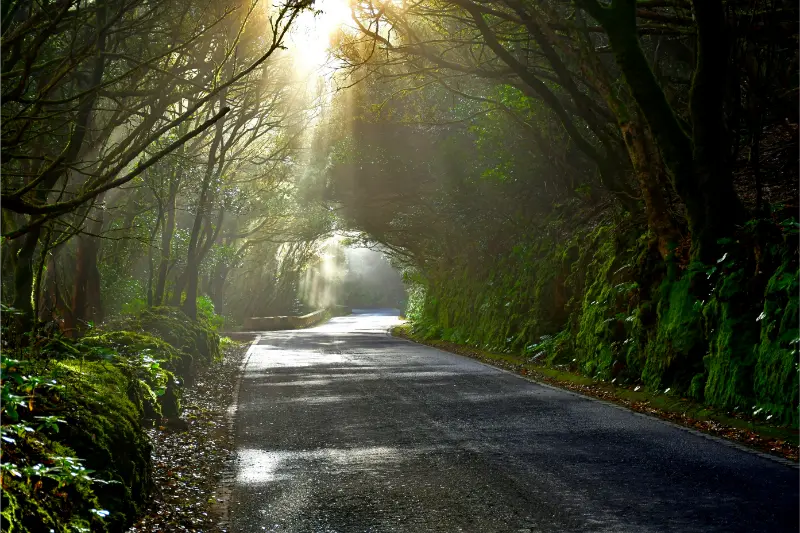
Chamorga is one of the places that shows me why Anaga deserves more than a quick viewpoint stop. It is a small, remote hamlet deep in the northeastern massif, reached by mountain roads and surrounded by ridges, ravines and old walking routes. I do not come here for a list of monuments. I come for the feeling of being at the far end of Tenerife’s road network, where the landscape sets the pace.
One of the most important official routes connected with Chamorga is PR-TF 5 toward Igueste de San Andrés. Turismo de Tenerife lists it as a linear route of about 10.3 km, around five hours, medium difficulty, with substantial descent and more than 600 metres of accumulated ascent. That immediately tells me how to plan: Chamorga is not a place where I casually start a long trail without transport, daylight and weather checks.
Quick planning facts
| Area | Anaga Rural Park, northeast Tenerife |
|---|---|
| Character | Remote mountain hamlet |
| Main trail link | PR-TF 5 Chamorga–Igueste de San Andrés |
| Official route distance | About 10.3 km |
| Official route time | About 5 hours |
| Difficulty | Medium |
| Permit | No permit listed for PR-TF 5; check current status |
| Best for | Rural Anaga, hiking, landscapes and slow travel |
Why Chamorga is worth the drive
Chamorga gives me a different scale of Anaga. Cruz del Carmen is an excellent introduction, but Chamorga feels deeper inside the mountains and farther from the urban edge. The road takes time, which naturally filters out travellers trying to collect many attractions in one day.
I like to think of it as a destination for people who already understand that Anaga is about roads, weather and small settlements as much as about famous viewpoints. My Anaga Rural Park guide is the best starting point if this is your first day in the massif.
The road to Chamorga
The road is narrow, winding and exposed to changing cloud. I leave extra time and never pressure myself to match a map app’s optimistic estimate. Buses, local vehicles, cyclists and walkers can all appear around bends, so I drive defensively and use pull-outs only where stopping is clearly safe.
If mountain driving makes me anxious, I would not use Chamorga as a test. Anaga has easier places to experience by bus or on broader roads. My driving guide explains how I judge whether a scenic road is actually a good fit for my trip.
PR-TF 5: what the numbers mean
The official route from Chamorga to Igueste de San Andrés is linear, not circular. That is the single most important planning detail. A five-hour walk does not end where the car started, so I need a transport solution at the far end. The route also loses much more elevation than it gains, which can be hard on knees even if the climbing figure looks manageable.
I do not treat the stated duration as a promise. Photography, heat, cloud, wet rock and route-finding can all add time. Before leaving, I check the official trail status and any alerts. The route is listed as not requiring authorization, but status can still change.
A shorter visit without the long hike
Chamorga is still worthwhile if I do not want PR-TF 5. I can explore the hamlet respectfully, walk a short section on a clear trail, enjoy the mountain landscape and then return the same way. That makes the destination more accessible to travellers who are comfortable with the drive but not with a multi-hour linear hike.
I avoid wandering onto private terraces or treating homes as attractions. Small Anaga settlements are living communities. Quiet behaviour and careful parking matter more here than in a resort town.
Weather and microclimate
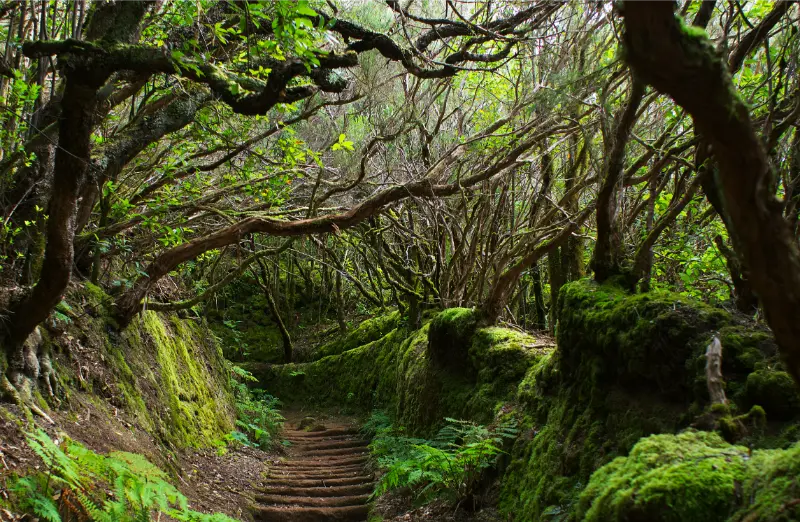
Anaga can be cool, damp and cloudy while the south coast is bright sunshine. I carry a light waterproof layer even on warm days and I do not worry if cloud briefly hides the views. In the laurel-forest zone, mist is part of the landscape rather than automatically a sign of bad weather.

What makes me cancel a long walk is not ordinary cloud but unsafe conditions: strong wind, heavy rain, poor visibility on exposed sections or official warnings. I use my best time to visit Tenerife guide only as seasonal context and check same-day conditions separately.
Parking and local etiquette
Parking capacity is limited in remote hamlets. I use only clear legal spaces and never leave a car where it narrows the road for buses or emergency vehicles. If the obvious area is full, I change the plan rather than inventing a parking space on a bend.
I also keep noise low, take rubbish away and buy something locally when a small café or shop is open. Tourism works better in places like Chamorga when visitors act like guests rather than like the village is an outdoor set.
What I bring for a Chamorga day
- Closed walking shoes with reliable grip.
- A light rain and wind layer even if the coast is sunny.
- Enough water and food for the planned route.
- Offline mapping and a charged phone.
- Sun protection for exposed ridges.
- Extra time and a backup plan if the trail is unsuitable.
For a full hike, I add emergency basics and tell someone the route. For a simple village visit, I still carry more water than I would for a resort afternoon because services are limited.
Combining Chamorga with other Anaga stops
I keep the combinations modest. Cruz del Carmen, a viewpoint and Chamorga can already fill a day once road time is included. Trying to add Taganana, Benijo and multiple hikes often turns Anaga into a rushed driving exercise.
For a more coastal day, I would pair Taganana with Almáciga instead. For a forest-focused day, Cruz del Carmen and the Sendero de los Sentidos are easier.
Getting there without a car
Public transport in remote Anaga requires more attention than urban routes. Services can be limited and seasonal or timetable changes matter. I use TITSA’s current journey planner, not an old screenshot from a blog.
If I am planning a linear hike, the bus schedule becomes part of the safety plan. Missing the final connection is not a minor inconvenience when the route ends far from the starting point.
Where to stay for a Chamorga day
La Laguna is my favourite practical base for exploring Anaga because it keeps me close to the mountain roads while offering a full range of food and accommodation. I can compare La Laguna accommodation on Booking.com.
Santa Cruz can also work well, especially if I am combining Anaga with San Andrés or the east side of the massif. I would not choose a distant southern resort if my main goal for several days is deep Anaga exploration.
Official trail information
I use the official PR-TF 5 route page for the route statistics and safety reminders. I also check current trail status before setting out because closures can follow weather or maintenance.
My hiking permits and trail rules guide explains the wider Tenerife ON system and why “no permit required” does not mean “always open.”
Mistakes I would avoid
- Starting PR-TF 5 without a plan for the finish at Igueste.
- Underestimating the drive because the distance looks short.
- Parking on a narrow bend or in front of local access.
- Assuming a south-coast weather forecast applies to Anaga.
- Packing too little water because the route passes through settlements.
Chamorga rewards preparation. Once logistics are handled, the day can feel wonderfully simple: road, mountains, walking and a tiny community at the edge of the island.
Frequently asked questions
Is Chamorga worth visiting without hiking?
Yes, if you enjoy remote landscapes and scenic drives. I would still keep the visit respectful and simple.
Does PR-TF 5 require a permit?
The official route page currently lists no authorization requirement, but I check current status before walking.
Is PR-TF 5 circular?
No. It is a linear route from Chamorga to Igueste de San Andrés, so transport planning is essential.
How long does the official route take?
Turismo de Tenerife lists about five hours, but I allow extra time.
Where would I stay?
La Laguna is my preferred practical base for multiple Anaga days.
How I decide whether this fits my itinerary
Before adding Chamorga Tenerife to a Tenerife plan, I ask what role it plays in the day. If it is the main experience, I leave enough time for weather, transport and an unhurried visit. If it is a secondary stop, I keep expectations smaller and avoid turning a flexible day into a chain of deadlines. This distinction sounds simple, but it is one of the most useful ways I have found to plan an island with mountain roads and very different microclimates.
I also compare travel time with time actually spent at the destination. A place can look close on the map and still require slow roads, parking searches or bus connections. I would rather visit two places properly than spend the day moving between five. This is especially true in Anaga, Teno and the north coast, where the journey is often part of the experience.
My practical backup plan
I always choose a nearby alternative before leaving accommodation. If the sea is rough, I switch from swimming to a town, market or viewpoint. If cloud removes a mountain panorama, I walk in the forest or move to a different elevation. If parking is full, I do not wait indefinitely; I continue to the backup stop and return later only if it still makes sense.

That flexibility is not a compromise. In Tenerife it is often the difference between a stressful day and a memorable one. The island is compact enough that several different landscapes may be available within the same region, so changing the plan does not mean losing the day.
Responsible travel notes
I treat small villages, beaches and natural areas as shared local spaces. I use legal parking, keep noise low near homes, stay on marked paths, take rubbish away and follow temporary closures even when other people ignore them. On the coast I avoid climbing barriers for photographs, and in protected landscapes I do not collect plants, rocks or other natural material.
I also try to spend some money locally when it is appropriate: a coffee, lunch, market purchase or small shop can make a visit more connected to the community. Responsible travel is not about making a performance of being perfect; it is mostly a series of ordinary decisions that reduce pressure on places I want to remain enjoyable.
My final take
Chamorga is not a place I would add merely to say I reached a remote corner of Tenerife. I go because the road, hamlet and walking landscape show Anaga at its most rural. The trip works best when I give it time, respect the community and treat trail logistics as seriously as the scenery.