Author: Patricia

  • Casa de los Capitanes Generales Guide: La Laguna Courtyard and Tourist Office

    Casa de los Capitanes Generales Guide: La Laguna Courtyard and Tourist Office

    Casa de los Capitanes Generales is one of the most useful first stops in La Laguna because it combines heritage with practical orientation. The seventeenth-century Alvarado-Bracamonte house is one of the clearest examples of elite domestic architecture in the historic centre, and it currently contains the main tourist information office. I like starting here because I can look at a genuine courtyard house, ask about temporary openings elsewhere in the UNESCO area and then continue on foot with a better sense of the street plan. It is a rare case where a tourism office actually belongs on the sightseeing list.

    Quick visit facts

    AddressCalle Obispo Rey Redondo / La Carrera, historic centre of La Laguna
    Current tourist-office hoursMon–Fri except holidays, 09:00–16:30
    Building periodFirst half of the 17th century
    Also known asCasa Alvarado-Bracamonte
    Heritage statusBien de Interés Cultural

    Who built the house

    The house is linked to Diego de Alvarado-Bracamonte, Governor, Corregidor and Captain of War for La Palma and Tenerife, who lived in La Laguna between 1624 and 1635. The family’s wealth and political position are visible in a building that was designed to express status without abandoning the basic organisation of a Canarian courtyard house.

    Between 1705 and 1723, six Captains General of the Canary Islands lived here, which explains the name by which the building is best known today.

    What to notice on the façade

    The official tourism description emphasises masonry over stonework and the use of reddish volcanic tuff, probably from a La Laguna quarry, particularly around the doorway and corners. The irregular arrangement of windows reflects the building’s seventeenth-century construction rather than the perfect symmetry I might expect from a later neoclassical façade.

    A broad tiled eave and sgraffito with Hispano-Muslim tradition add another layer. I would stop across the street for the overall proportions before moving close to the stonework.

    The courtyard as the key to the house

    Inside, the plan revolves around a large courtyard reached through the entrance hall. In a historic Canarian house, the patio is not decorative leftover space: it brings light and air while organising rooms around a protected interior. The original functions included domestic rooms, stables, cellars, storage and carriage-related spaces.

    Modern municipal uses have changed the rooms, but the courtyard still makes the logic of the building easy to understand.

    Using the tourist office strategically

    The official La Laguna tourism page currently lists the information office Monday to Friday, excluding public holidays, from 09:00 to 16:30. I would use it for questions that are difficult to solve from generic travel websites: current guided walks, one-off opening of churches, heritage-night programmes, local closures and accessible routes.

    Because several La Laguna monuments have event-based or religious access rather than stable museum timetables, getting fresh information here can save a lot of unnecessary walking later in the day.
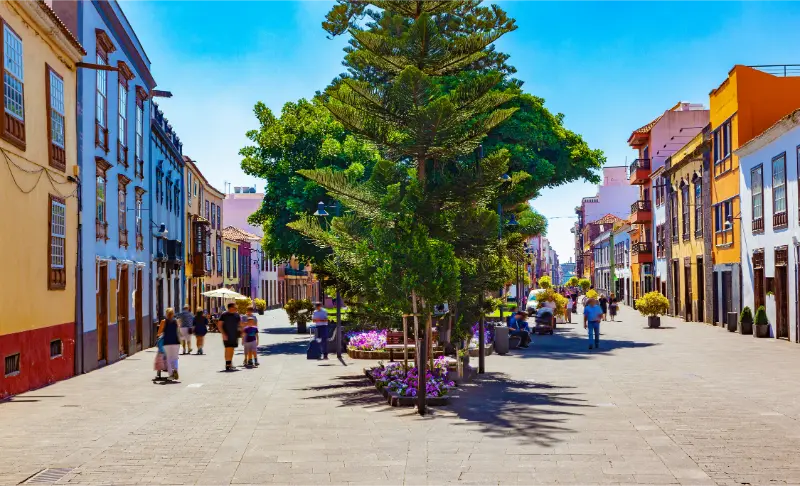
    La Laguna Pedestrian Street Tenerife

    How I would plan the visit

    I treat this as a cultural attraction, not as a box to tick between two unrelated stops. The useful question is how much context I want before I arrive. If I already know the basic history of San Cristóbal de La Laguna, I can focus on details inside the building or site. If it is my first day in the area, I prefer to walk the surrounding streets first so the architecture, urban position and historical references make more sense when I enter.

    I also leave a little flexibility around the visit. Cultural buildings in Tenerife can host services, rehearsals, exhibitions, private events, restoration work or municipal activities that temporarily change access. A plan with a 30–60 minute buffer is more realistic than an itinerary where every door has to open at the exact minute shown in an old search result.

    Getting there without turning the visit into a parking problem

    For central San Cristóbal de La Laguna sights, I generally prefer public transport or a single car park followed by walking. Historic centres were not designed around modern traffic, and driving from one monument to the next often wastes more time than it saves. If I am arriving from another part of Tenerife, I check the nearest tram, TITSA or municipal parking option before setting off and then build a compact walking loop.

    If I want an early start or an evening event, I sometimes compare accommodation in San Cristóbal de La Laguna rather than drive across the island twice. That is not necessary for every visitor, but it can make a culture-heavy day much calmer, especially when the programme includes a performance, a temporary exhibition or dinner in the historic centre.
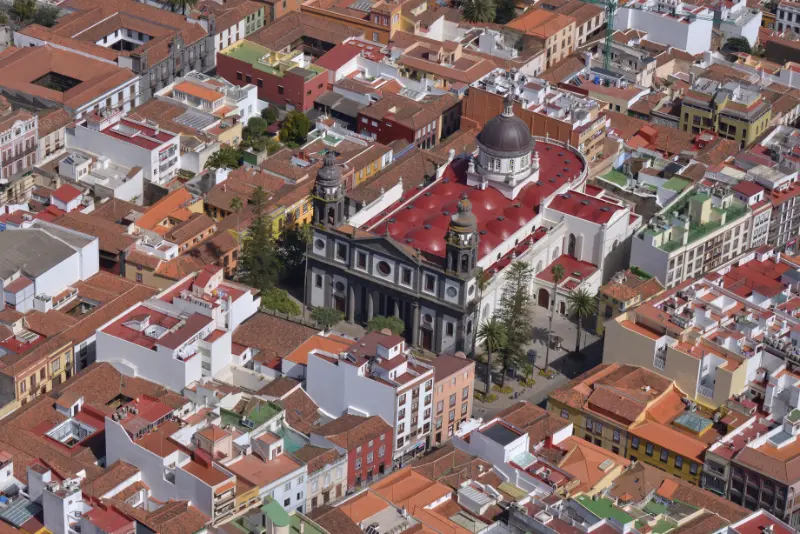
    Aerial View Of La Laguna Tenerife

    How long I would allow

    I separate “door-to-door time” from “time inside”. A small museum can take 45 minutes but still occupy two hours once I include the walk from transport, reading exterior interpretation, a coffee and a nearby square. A theatre may be a ten-minute façade stop on an ordinary day and a full evening if I have a ticket. A church can be a brief architectural visit or much longer if I want to understand its chapels and historical layers.

    My rule is to avoid stacking more than three substantial indoor visits in the same half-day. After that, attention drops and collections blur together. Tenerife’s historic towns work particularly well when I alternate an interior with streets, courtyards, markets, viewpoints or a meal.

    Photography and respectful behaviour

    I assume that photography rules can vary by room, exhibition and event. I look for signs before using a camera, keep flash off around artworks and documents, and never photograph people in a religious setting without permission. In theatres I do not assume that the rules for the lobby also apply during a performance. In active churches and convents, worship always takes priority over sightseeing.

    I also travel light inside older buildings. Narrow corridors, historic furniture and delicate surfaces are easier to enjoy without a large backpack. If a site has staff at reception, I ask before leaning a bag against a wall, using a tripod or filming extensively. Those small habits protect the place and make the visit more comfortable for everyone.

    Accessibility: what I check rather than assume

    Historic architecture can create a mismatch between a site’s cultural importance and its physical accessibility. A restored building may have lifts and ramps; another may still have thresholds, steps or narrow historic openings. I check the current official accessibility information when mobility, stroller access or fatigue is important, and I contact the venue if a specific route through the building matters.

    I also distinguish between getting to the entrance and seeing every space. A central pedestrian street can be easy to reach while an upper gallery, tower or heritage room remains difficult. That distinction is useful when planning with a wheelchair user, an older traveller or a young child.

    Visiting with children

    I would not automatically exclude a cultural stop from a family itinerary. The key is scale. One strong object, a courtyard, a fortress wall, a theatre interior or a story about a historical character can be more memorable to a child than a long sequence of display cases. I keep the visit shorter, explain what to look for before entering and give children a simple mission such as finding a coat of arms, a cannon, a painted ceiling or a particular architectural detail.

    For very young children, I pair the indoor stop with a nearby square or park. That changes the rhythm of the day and makes it easier for adults to enjoy the site without expecting a child to behave like a museum researcher for two hours.

    What I would combine nearby

    I prefer combinations that explain the same place from different angles. A history museum plus a historic street, or a fortress plus the old port, usually feels more coherent than crossing the island for a second attraction just because it has a high review score. These clusters also reduce driving and make it easier to stop for lunch somewhere local rather than eating according to the car park.

    Current status: what I would verify again

    The tourism office currently lists Monday–Friday, excluding public holidays, 09:00–16:30. The building also serves municipal functions, so access to working areas should not be confused with unrestricted museum access to every room.

    Because this is information that can change, I save the official page on my phone and check it again on the morning of the visit. I do not rely on a photo of an opening-hours board from an old review, particularly around public holidays, Carnival, local fiestas or renovation periods.

    San Cristobal De La Laguna Historic Center Tenerife

    Official source

    For the latest practical information I use La Laguna Tourism’s official Casa Alvarado-Bracamonte information-office page rather than a third-party timetable.

    Frequently asked questions

    Is this just a tourist office?

    No. It is a major seventeenth-century heritage building that now also houses the main tourist information office.

    Why is it called Casa de los Capitanes Generales?

    Six Captains General of the Canary Islands lived here between 1705 and 1723.

    Can I use it to ask about same-day monument openings?

    Yes. That is one of the best reasons to begin a La Laguna visit here.

    What should I look for architecturally?

    The volcanic-stone doorway and corners, irregular window layout, tiled eaves, sgraffito details and the central courtyard.

    Final thoughts

    Casa de los Capitanes Generales works on two levels: it is a historic object and a practical doorway into the rest of La Laguna. I would spend time on the façade and courtyard, then use the tourist office to refine the day. That combination makes the building more useful than a quick photograph would suggest.

  • Casa Anchieta La Laguna Guide: History, Exhibitions and 2026 Visit Status

    Casa Anchieta La Laguna Guide: History, Exhibitions and 2026 Visit Status

    Casa Anchieta is one of the most interesting historic houses in La Laguna precisely because it is still changing function. It is associated with the childhood of José de Anchieta, the sixteenth-century Jesuit missionary and writer who later worked in Brazil, but the building is not a conventional museum with stable daily hours yet. In September 2026 it is being used for temporary exhibitions and heritage events while the longer-term interpretation project continues to develop. I would therefore visit with two pieces of information in mind: the house itself is historically significant, and access depends on the programme running on the day.

    Quick visit facts

    LocationPlaza del Adelantado, La Laguna
    Historic figureJosé de Anchieta lived here during his first 14 years
    Building originsOriginal house dates to the 16th century, with later rebuilding and alterations
    Current useHeritage events and temporary exhibitions; permanent museum-style access should not be assumed
    September 2026Temporary exhibition “La Laguna: la memoria de las víctimas” runs 15–20 September with published exhibition hours

    José de Anchieta and what the house actually represents

    Official heritage sources make an important correction to a common simplification: this is not confirmed as José de Anchieta’s birthplace. It is the house where he lived during his early years, traditionally the first fourteen years of his life, before his studies and later journey to the Portuguese world and Brazil.

    That distinction matters. I would rather understand the property accurately as a childhood home within newly founded La Laguna than repeat an attractive but uncertain “birth house” label.

    Layers of architecture

    The original property has sixteenth-century roots, but what I see today is the result of reconstruction and later modification. Municipal heritage sources describe a major seventeenth-century rebuilding, nineteenth-century changes and a 1905 remodelling of the main façade by architect Mariano Estanga. Traditional elements survive inside, including structural walls, roofs, timber systems, courtyard organisation and a semi-basement cellar.

    This layered fabric makes the house useful for understanding heritage restoration: preserving a historic building does not mean freezing it at one date.

    Restoration and future interpretation

    After periods of different institutional use, the building underwent municipal restoration and has been the subject of plans for a dedicated interpretation centre on Anchieta and his historical context. A June 2026 council agenda still referenced questions about the musealisation and equipment process, so I would not present a permanent opening schedule as settled.

    The responsible way to plan a visit is to check current exhibitions, open days or guided activities. That is more accurate than treating every heritage house as a seven-day museum.

    What is happening in September 2026

    On 16 September 2026, the City Council announced the temporary exhibition “La Laguna: la memoria de las víctimas” at Casa Anchieta, open from 15 to 20 September. The published general exhibition hours are 10:00–14:00 and 17:00–20:00, with special arrangements on 18–19 September for heritage-night activities.

    That programme is temporary, not a permanent house timetable. After 20 September, I would check the municipal heritage and events pages again before expecting interior access.

    How I would plan the visit

    I treat this as a cultural attraction, not as a box to tick between two unrelated stops. The useful question is how much context I want before I arrive. If I already know the basic history of San Cristóbal de La Laguna, I can focus on details inside the building or site. If it is my first day in the area, I prefer to walk the surrounding streets first so the architecture, urban position and historical references make more sense when I enter.

    I also leave a little flexibility around the visit. Cultural buildings in Tenerife can host services, rehearsals, exhibitions, private events, restoration work or municipal activities that temporarily change access. A plan with a 30–60 minute buffer is more realistic than an itinerary where every door has to open at the exact minute shown in an old search result.

    Getting there without turning the visit into a parking problem

    For central San Cristóbal de La Laguna sights, I generally prefer public transport or a single car park followed by walking. Historic centres were not designed around modern traffic, and driving from one monument to the next often wastes more time than it saves. If I am arriving from another part of Tenerife, I check the nearest tram, TITSA or municipal parking option before setting off and then build a compact walking loop.

    La Laguna Colorful Historic Street Tenerife

    If I want an early start or an evening event, I sometimes compare accommodation in San Cristóbal de La Laguna rather than drive across the island twice. That is not necessary for every visitor, but it can make a culture-heavy day much calmer, especially when the programme includes a performance, a temporary exhibition or dinner in the historic centre.

    How long I would allow

    I separate “door-to-door time” from “time inside”. A small museum can take 45 minutes but still occupy two hours once I include the walk from transport, reading exterior interpretation, a coffee and a nearby square. A theatre may be a ten-minute façade stop on an ordinary day and a full evening if I have a ticket. A church can be a brief architectural visit or much longer if I want to understand its chapels and historical layers.

    My rule is to avoid stacking more than three substantial indoor visits in the same half-day. After that, attention drops and collections blur together. Tenerife’s historic towns work particularly well when I alternate an interior with streets, courtyards, markets, viewpoints or a meal.

    Photography and respectful behaviour

    I assume that photography rules can vary by room, exhibition and event. I look for signs before using a camera, keep flash off around artworks and documents, and never photograph people in a religious setting without permission. In theatres I do not assume that the rules for the lobby also apply during a performance. In active churches and convents, worship always takes priority over sightseeing.

    I also travel light inside older buildings. Narrow corridors, historic furniture and delicate surfaces are easier to enjoy without a large backpack. If a site has staff at reception, I ask before leaning a bag against a wall, using a tripod or filming extensively. Those small habits protect the place and make the visit more comfortable for everyone.

    Accessibility: what I check rather than assume

    Historic architecture can create a mismatch between a site’s cultural importance and its physical accessibility. A restored building may have lifts and ramps; another may still have thresholds, steps or narrow historic openings. I check the current official accessibility information when mobility, stroller access or fatigue is important, and I contact the venue if a specific route through the building matters.

    I also distinguish between getting to the entrance and seeing every space. A central pedestrian street can be easy to reach while an upper gallery, tower or heritage room remains difficult. That distinction is useful when planning with a wheelchair user, an older traveller or a young child.

    La Laguna Pedestrian Street Tenerife

    Visiting with children

    I would not automatically exclude a cultural stop from a family itinerary. The key is scale. One strong object, a courtyard, a fortress wall, a theatre interior or a story about a historical character can be more memorable to a child than a long sequence of display cases. I keep the visit shorter, explain what to look for before entering and give children a simple mission such as finding a coat of arms, a cannon, a painted ceiling or a particular architectural detail.

    For very young children, I pair the indoor stop with a nearby square or park. That changes the rhythm of the day and makes it easier for adults to enjoy the site without expecting a child to behave like a museum researcher for two hours.

    What I would combine nearby

    I prefer combinations that explain the same place from different angles. A history museum plus a historic street, or a fortress plus the old port, usually feels more coherent than crossing the island for a second attraction just because it has a high review score. These clusters also reduce driving and make it easier to stop for lunch somewhere local rather than eating according to the car park.

    Current status: what I would verify again

    As of 18 September 2026, Casa Anchieta is open for the temporary exhibition running 15–20 September, with published general hours of 10:00–14:00 and 17:00–20:00 and special heritage-night arrangements on 18–19 September. Those hours belong to the temporary exhibition, not to a guaranteed permanent museum schedule.

    Because this is information that can change, I save the official page on my phone and check it again on the morning of the visit. I do not rely on a photo of an opening-hours board from an old review, particularly around public holidays, Carnival, local fiestas or renovation periods.

    Aerial View Of La Laguna Tenerife

    Official source

    For the latest practical information I use the current La Laguna City Council notice for Casa Anchieta’s September 2026 exhibition rather than a third-party timetable.

    Frequently asked questions

    Is Casa Anchieta open every day?

    I would not assume so. In 2026 the house is hosting temporary exhibitions and heritage events while the longer-term interpretation project develops.

    Was José de Anchieta born here?

    Official heritage sources say the building is associated with his childhood and that he lived here for his first 14 years, but they distinguish that from a confirmed birthplace claim.

    Can I visit on 18 September 2026?

    Yes, a temporary exhibition is running 15–20 September, with general hours and special heritage-night programming published by the City Council.

    Where is it?

    On Plaza del Adelantado in the heart of La Laguna’s historic centre.

    Final thoughts

    Casa Anchieta is worth following because it is not finished as a tourism product. The house has authentic architectural layers, a strong historical association and an evolving public role. I would visit when an exhibition or open day gives access, and I would treat the changing programme as part of the experience rather than a planning inconvenience.

  • Teatro Leal La Laguna Guide: Architecture, 2026 Programme and Tickets

    Teatro Leal La Laguna Guide: Architecture, 2026 Programme and Tickets

    Teatro Leal is not simply an evening venue in La Laguna. Its 1915 building is part of the historic centre’s cultural identity, with an eclectic façade, modernist details and an interior decorated with murals and paintings. In September 2026 it is actively programming the 2026–27 season after the summer break, so this is one of the places where heritage and current city life genuinely overlap. I would see the exterior by day even without a ticket, but the most complete experience is to attend a performance and watch the building do the job it was designed to do.

    Quick visit facts

    AddressC/ Obispo Rey Redondo, 50, San Cristóbal de La Laguna
    Opened1915
    ArchitectAntonio Pintor
    Current statusActive; 2026–27 season underway
    Ticket officeMon–Sat 11:00–13:00 and 18:00–20:00; Sunday opens 2 hours before a performance, according to current event information

    The building and its 1915 ambition

    The theatre was promoted by Antonio Leal Martín, whose surname it carries, with plans by architect Antonio Pintor. Official heritage material dates its completion and inauguration to 1915. The façade is symmetrical and eclectic, with modernist decorative language, masks, vegetation and later medallions honouring Lope de Vega and Calderón de la Barca.

    Inside, four levels and decorative paintings create a much richer space than the relatively narrow street façade suggests. Historical descriptions also note the old mechanical system that could raise the stalls floor to stage level for dances and social events—an excellent example of a theatre designed as a flexible civic interior.

    Cinema as part of the story

    Soon after opening, the theatre was adapted for film projection, and La Laguna heritage sources emphasise its role in important early cinema screenings. That matters because it shows how quickly theatres had to absorb new media rather than remain dedicated only to stage performance.

    When I visit today, I keep that layered use in mind. The Leal has been theatre, social space, cinema and cultural symbol, with periods of closure and restoration along the way.

    What the 2026–27 season means for visitors

    The City Council announced the new season reopening on 2 September 2026 with music, comedy, dance, theatre and family programming. For a traveller, that variety is useful: I do not need to understand Spanish perfectly to enjoy every kind of event, especially music and dance.

    I check the programme before fixing my La Laguna day. If there is an evening performance, I shift museums to the morning, leave time for dinner and stay in the pedestrian centre rather than driving away at sunset.

    San Cristobal De La Laguna Panoramic View Tenerife

    Buying tickets and choosing an event

    Current municipal event pages list the box office Monday to Saturday from 11:00 to 13:00 and 18:00 to 20:00, with Sunday opening two hours before the show. PMR seating is handled through the box office by phone or in person, so I would arrange accessibility needs before the performance date rather than at the door.

    For sold-out comedy or popular music, advance purchase makes sense. For an unfamiliar local company, I often treat the event as part of the travel experience rather than needing to know the performers beforehand.

    How I would plan the visit

    I treat this as a cultural attraction, not as a box to tick between two unrelated stops. The useful question is how much context I want before I arrive. If I already know the basic history of San Cristóbal de La Laguna, I can focus on details inside the building or site. If it is my first day in the area, I prefer to walk the surrounding streets first so the architecture, urban position and historical references make more sense when I enter.

    I also leave a little flexibility around the visit. Cultural buildings in Tenerife can host services, rehearsals, exhibitions, private events, restoration work or municipal activities that temporarily change access. A plan with a 30–60 minute buffer is more realistic than an itinerary where every door has to open at the exact minute shown in an old search result.

    Getting there without turning the visit into a parking problem

    For central San Cristóbal de La Laguna sights, I generally prefer public transport or a single car park followed by walking. Historic centres were not designed around modern traffic, and driving from one monument to the next often wastes more time than it saves. If I am arriving from another part of Tenerife, I check the nearest tram, TITSA or municipal parking option before setting off and then build a compact walking loop.

    If I want an early start or an evening event, I sometimes compare accommodation in San Cristóbal de La Laguna rather than drive across the island twice. That is not necessary for every visitor, but it can make a culture-heavy day much calmer, especially when the programme includes a performance, a temporary exhibition or dinner in the historic centre.

    La Laguna Colorful Historic Street Tenerife

    How long I would allow

    I separate “door-to-door time” from “time inside”. A small museum can take 45 minutes but still occupy two hours once I include the walk from transport, reading exterior interpretation, a coffee and a nearby square. A theatre may be a ten-minute façade stop on an ordinary day and a full evening if I have a ticket. A church can be a brief architectural visit or much longer if I want to understand its chapels and historical layers.

    My rule is to avoid stacking more than three substantial indoor visits in the same half-day. After that, attention drops and collections blur together. Tenerife’s historic towns work particularly well when I alternate an interior with streets, courtyards, markets, viewpoints or a meal.

    Photography and respectful behaviour

    I assume that photography rules can vary by room, exhibition and event. I look for signs before using a camera, keep flash off around artworks and documents, and never photograph people in a religious setting without permission. In theatres I do not assume that the rules for the lobby also apply during a performance. In active churches and convents, worship always takes priority over sightseeing.

    I also travel light inside older buildings. Narrow corridors, historic furniture and delicate surfaces are easier to enjoy without a large backpack. If a site has staff at reception, I ask before leaning a bag against a wall, using a tripod or filming extensively. Those small habits protect the place and make the visit more comfortable for everyone.

    Accessibility: what I check rather than assume

    Historic architecture can create a mismatch between a site’s cultural importance and its physical accessibility. A restored building may have lifts and ramps; another may still have thresholds, steps or narrow historic openings. I check the current official accessibility information when mobility, stroller access or fatigue is important, and I contact the venue if a specific route through the building matters.

    I also distinguish between getting to the entrance and seeing every space. A central pedestrian street can be easy to reach while an upper gallery, tower or heritage room remains difficult. That distinction is useful when planning with a wheelchair user, an older traveller or a young child.

    Visiting with children

    I would not automatically exclude a cultural stop from a family itinerary. The key is scale. One strong object, a courtyard, a fortress wall, a theatre interior or a story about a historical character can be more memorable to a child than a long sequence of display cases. I keep the visit shorter, explain what to look for before entering and give children a simple mission such as finding a coat of arms, a cannon, a painted ceiling or a particular architectural detail.

    For very young children, I pair the indoor stop with a nearby square or park. That changes the rhythm of the day and makes it easier for adults to enjoy the site without expecting a child to behave like a museum researcher for two hours.

    What I would combine nearby

    I prefer combinations that explain the same place from different angles. A history museum plus a historic street, or a fortress plus the old port, usually feels more coherent than crossing the island for a second attraction just because it has a high review score. These clusters also reduce driving and make it easier to stop for lunch somewhere local rather than eating according to the car park.

    Current status: what I would verify again

    The theatre is active in September 2026, with the 2026–27 season underway. Current municipal event pages list the box office Monday–Saturday 11:00–13:00 and 18:00–20:00, with Sunday opening two hours before the performance. Programme times and prices vary by event.

    Because this is information that can change, I save the official page on my phone and check it again on the morning of the visit. I do not rely on a photo of an opening-hours board from an old review, particularly around public holidays, Carnival, local fiestas or renovation periods.

    La Laguna Pedestrian Street Tenerife

    Official source

    For the latest practical information I use Teatro Leal’s official website rather than a third-party timetable.

    Frequently asked questions

    Is Teatro Leal open in 2026?

    Yes. The theatre reopened its seasonal programme in September 2026 and is actively hosting events.

    Can I visit without seeing a show?

    You can always appreciate the façade from the pedestrian street, but interior access outside events or organised visits should be checked rather than assumed.

    When was it built?

    The theatre was completed and inaugurated in 1915.

    Is it accessible for wheelchair users?

    The theatre provides PMR seating arrangements; current event information asks visitors to contact or visit the box office for those seats.

    Final thoughts

    Teatro Leal is one of the easiest ways to experience La Laguna as a living city rather than a preserved historic centre. I would see the façade during the day, then return for a performance if the programme fits. The contrast between the UNESCO streets outside and an active century-old auditorium inside is exactly what makes the stop worthwhile.

  • Fundación Cristino de Vera Guide: Free Art Museum in La Laguna

    Fundación Cristino de Vera Guide: Free Art Museum in La Laguna

    The Fundación Cristino de Vera is one of the strongest small cultural visits in La Laguna because the experience is very focused: a historic eighteenth-century Canarian house, a permanent collection dedicated to Cristino de Vera and a programme of temporary exhibitions and educational activities. The foundation’s official visit page currently lists free admission and split opening hours Tuesday to Friday, with Saturday mornings and an August closure. That makes it an excellent stop when I want art without committing half a day to a large museum. It also sits on Calle San Agustín, one of the most rewarding streets in the UNESCO-listed historic centre.

    Quick visit facts

    AddressCalle San Agustín, 18, San Cristóbal de La Laguna
    AdmissionFree
    Current hoursTue–Fri 10:00–14:00 and 17:00–20:00; Sat 10:00–14:00
    ClosedMonday, Sunday, public holidays and August
    CollectionPermanent collection of Cristino de Vera plus temporary cultural programming

    Why the building matters as much as the art

    The foundation occupies an eighteenth-century manor built in the tradition of the Canarian domestic house. Wood, courtyard relationships and the scale of the rooms create a setting very different from a purpose-built contemporary gallery. I would therefore look at how the art sits inside the house, not just at individual paintings.

    The institution uses upper-floor spaces for the permanent collection and ground-floor areas for temporary exhibitions and cultural activity. That division helps keep the visit manageable: I can understand the artist’s vocabulary while still encountering work or events that change over time.

    Understanding Cristino de Vera

    Cristino de Vera, born in Santa Cruz de Tenerife in 1931 and deceased in 2026, developed a visual language often associated with still life, figures, landscape, vanitas motifs, sobriety and spiritual reflection. The foundation’s permanent collection is the best place in Tenerife to see those ideas together rather than as isolated works elsewhere.

    I would avoid looking for a single “masterpiece” and instead pay attention to repetition: objects, empty space, restrained colour, skulls, flowers, figures and quiet interiors change meaning when seen across several rooms.

    A living cultural space, not a memorial room

    The foundation describes itself as a place for encounter, and the 2026 programme supports that idea with talks, workshops, screenings, school activities and guided visits. The current website may show periods with no temporary exhibition, but the permanent collection remains the core reason to visit.

    If a guided activity is available, I consider it worth booking because this is the kind of art that benefits from context. The work can appear deceptively simple until someone points out the symbolism, composition and dialogue with Spanish painting traditions.

    How it fits into Calle San Agustín

    Calle San Agustín is almost an open-air timeline of La Laguna. A short walk can connect the foundation with Casa Lercaro, religious architecture and civic buildings. This density is one reason I prefer to reach La Laguna by tram or park once and stay on foot.

    San Cristobal De La Laguna Historic Center Tenerife

    The foundation’s scale also makes it a good “reset” between larger heritage stops. Forty-five quiet minutes with paintings can balance a day otherwise full of dates, façades and church interiors.

    How I would plan the visit

    I treat this as a cultural attraction, not as a box to tick between two unrelated stops. The useful question is how much context I want before I arrive. If I already know the basic history of San Cristóbal de La Laguna, I can focus on details inside the building or site. If it is my first day in the area, I prefer to walk the surrounding streets first so the architecture, urban position and historical references make more sense when I enter.

    I also leave a little flexibility around the visit. Cultural buildings in Tenerife can host services, rehearsals, exhibitions, private events, restoration work or municipal activities that temporarily change access. A plan with a 30–60 minute buffer is more realistic than an itinerary where every door has to open at the exact minute shown in an old search result.

    Getting there without turning the visit into a parking problem

    For central San Cristóbal de La Laguna sights, I generally prefer public transport or a single car park followed by walking. Historic centres were not designed around modern traffic, and driving from one monument to the next often wastes more time than it saves. If I am arriving from another part of Tenerife, I check the nearest tram, TITSA or municipal parking option before setting off and then build a compact walking loop.

    If I want an early start or an evening event, I sometimes compare accommodation in San Cristóbal de La Laguna rather than drive across the island twice. That is not necessary for every visitor, but it can make a culture-heavy day much calmer, especially when the programme includes a performance, a temporary exhibition or dinner in the historic centre.

    How long I would allow

    I separate “door-to-door time” from “time inside”. A small museum can take 45 minutes but still occupy two hours once I include the walk from transport, reading exterior interpretation, a coffee and a nearby square. A theatre may be a ten-minute façade stop on an ordinary day and a full evening if I have a ticket. A church can be a brief architectural visit or much longer if I want to understand its chapels and historical layers.

    My rule is to avoid stacking more than three substantial indoor visits in the same half-day. After that, attention drops and collections blur together. Tenerife’s historic towns work particularly well when I alternate an interior with streets, courtyards, markets, viewpoints or a meal.

    Photography and respectful behaviour

    I assume that photography rules can vary by room, exhibition and event. I look for signs before using a camera, keep flash off around artworks and documents, and never photograph people in a religious setting without permission. In theatres I do not assume that the rules for the lobby also apply during a performance. In active churches and convents, worship always takes priority over sightseeing.

    I also travel light inside older buildings. Narrow corridors, historic furniture and delicate surfaces are easier to enjoy without a large backpack. If a site has staff at reception, I ask before leaning a bag against a wall, using a tripod or filming extensively. Those small habits protect the place and make the visit more comfortable for everyone.

    Accessibility: what I check rather than assume

    Historic architecture can create a mismatch between a site’s cultural importance and its physical accessibility. A restored building may have lifts and ramps; another may still have thresholds, steps or narrow historic openings. I check the current official accessibility information when mobility, stroller access or fatigue is important, and I contact the venue if a specific route through the building matters.

    San Cristobal De La Laguna Panoramic View Tenerife

    I also distinguish between getting to the entrance and seeing every space. A central pedestrian street can be easy to reach while an upper gallery, tower or heritage room remains difficult. That distinction is useful when planning with a wheelchair user, an older traveller or a young child.

    Visiting with children

    I would not automatically exclude a cultural stop from a family itinerary. The key is scale. One strong object, a courtyard, a fortress wall, a theatre interior or a story about a historical character can be more memorable to a child than a long sequence of display cases. I keep the visit shorter, explain what to look for before entering and give children a simple mission such as finding a coat of arms, a cannon, a painted ceiling or a particular architectural detail.

    For very young children, I pair the indoor stop with a nearby square or park. That changes the rhythm of the day and makes it easier for adults to enjoy the site without expecting a child to behave like a museum researcher for two hours.

    What I would combine nearby

    I prefer combinations that explain the same place from different angles. A history museum plus a historic street, or a fortress plus the old port, usually feels more coherent than crossing the island for a second attraction just because it has a high review score. These clusters also reduce driving and make it easier to stop for lunch somewhere local rather than eating according to the car park.

    Current status: what I would verify again

    The official visit page checked in September 2026 lists free admission; Tuesday–Friday 10:00–14:00 and 17:00–20:00; Saturday 10:00–14:00; Monday, Sunday and public holidays closed; and the foundation closed during August. Temporary exhibition schedules can change independently of the permanent collection.

    Because this is information that can change, I save the official page on my phone and check it again on the morning of the visit. I do not rely on a photo of an opening-hours board from an old review, particularly around public holidays, Carnival, local fiestas or renovation periods.

    La Laguna Colorful Historic Street Tenerife

    Official source

    For the latest practical information I use Fundación Cristino de Vera’s official visit page rather than a third-party timetable.

    Frequently asked questions

    Is admission free?

    Yes. The foundation’s current official visit page states that admission is free.

    Is it open on Sunday?

    No. The current schedule lists Sundays closed.

    How long would I allow?

    Around 45–75 minutes for a thoughtful first visit, longer if a temporary exhibition or guided activity is running.

    Is the museum only about Cristino de Vera?

    The permanent collection is dedicated to him, while the foundation also hosts temporary exhibitions and cultural activities.

    Final thoughts

    This is the kind of small museum I would recommend even to travellers who do not normally build trips around galleries. The combination of a historic La Laguna house, a coherent permanent collection and free admission creates a low-pressure visit, and the art rewards the quieter pace that the UNESCO centre deserves.

  • Teatro Guimerá Santa Cruz Guide: History and 2026 Renovation Status

    Teatro Guimerá Santa Cruz Guide: History and 2026 Renovation Status

    Teatro Guimerá is one of the most important historic buildings in central Santa Cruz, but in 2026 it is also a good example of why travel guides need dates. The City Council currently lists the theatre as temporarily closed for renovation, with no performances scheduled inside the building while work continues. That does not make the site irrelevant. Its façade, location and story explain a major shift in nineteenth-century Santa Cruz, when a growing bourgeois city wanted a purpose-built theatre rather than improvised performance spaces. I would therefore visit the exterior as part of a historic-centre walk and save an interior performance for after the official reopening.

    Quick visit facts

    LocationPlaza Isla de la Madera, Santa Cruz de Tenerife
    Current statusTemporarily closed for renovation
    Performances in buildingNone scheduled while works continue
    Original projectArchitect Manuel de Oraá, 1848
    Historic opening1851; official municipal sources record the mid-19th-century inauguration
    Heritage statusBien de Interés Cultural, Monument

    Why the theatre matters to Santa Cruz

    Before a proper municipal theatre existed, visiting companies performed in private houses and adapted commercial spaces. Municipal heritage accounts describe earlier venues in warehouses and wine-related premises before the city committed to a new theatre on the former Dominican convent site. That sequence says a lot about Santa Cruz becoming a more confident urban capital.

    The theatre was designed by Manuel de Oraá, the municipal and provincial architect. The basic nineteenth-century form—a rectangular building with a horseshoe auditorium—placed Santa Cruz within a broader European theatre tradition while using local resources and civic fundraising.

    Architecture to notice from outside

    The façade is restrained compared with later theatres. The municipal description notes a central upper element carrying references to Isabel II and the city arms, while the side walls are organised in two levels of openings and iron balconies. I would look at proportions first: the building reads as a civic institution rather than a church or palace.

    Its position near La Recova also matters. The theatre belongs to a cluster of nineteenth-century civic spaces created as Santa Cruz reworked land and buildings affected by the disentailment of religious property.

    The theatre and Ángel Guimerá

    The theatre eventually took the name of Ángel Guimerá, the celebrated dramatist born in Santa Cruz. That naming connects the building to a figure whose literary career developed beyond the island, while keeping his birthplace visible in the city centre.

    For me, this is a useful reminder that cultural heritage is not only architecture. A theatre accumulates performances, audiences, political events and local memory over generations, even when the building is temporarily silent.

    What the current renovation changes for visitors

    The key practical fact in September 2026 is simple: the official City Council page states that Teatro Guimerá is temporarily closed for works and that there are no performances or shows scheduled in the building during the renovation. I would not buy a city-centre itinerary based on an old programme or expect the box office to function normally.

    The institution continues work on audiovisual projects, archives and documentation while the theatre is transformed. I treat the closure as part of the building’s history rather than a reason to delete it from a heritage walk.

    How I would plan the visit

    I treat this as a cultural attraction, not as a box to tick between two unrelated stops. The useful question is how much context I want before I arrive. If I already know the basic history of Santa Cruz de Tenerife, I can focus on details inside the building or site. If it is my first day in the area, I prefer to walk the surrounding streets first so the architecture, urban position and historical references make more sense when I enter.

    Auditorio De Tenerife Santa Cruz Coastline

    I also leave a little flexibility around the visit. Cultural buildings in Tenerife can host services, rehearsals, exhibitions, private events, restoration work or municipal activities that temporarily change access. A plan with a 30–60 minute buffer is more realistic than an itinerary where every door has to open at the exact minute shown in an old search result.

    Getting there without turning the visit into a parking problem

    For central Santa Cruz de Tenerife sights, I generally prefer public transport or a single car park followed by walking. Historic centres were not designed around modern traffic, and driving from one monument to the next often wastes more time than it saves. If I am arriving from another part of Tenerife, I check the nearest tram, TITSA or municipal parking option before setting off and then build a compact walking loop.

    If I want an early start or an evening event, I sometimes compare accommodation in Santa Cruz de Tenerife rather than drive across the island twice. That is not necessary for every visitor, but it can make a culture-heavy day much calmer, especially when the programme includes a performance, a temporary exhibition or dinner in the historic centre.

    How long I would allow

    I separate “door-to-door time” from “time inside”. A small museum can take 45 minutes but still occupy two hours once I include the walk from transport, reading exterior interpretation, a coffee and a nearby square. A theatre may be a ten-minute façade stop on an ordinary day and a full evening if I have a ticket. A church can be a brief architectural visit or much longer if I want to understand its chapels and historical layers.

    Panoramic View Of Santa Cruz De Tenerife

    My rule is to avoid stacking more than three substantial indoor visits in the same half-day. After that, attention drops and collections blur together. Tenerife’s historic towns work particularly well when I alternate an interior with streets, courtyards, markets, viewpoints or a meal.

    Photography and respectful behaviour

    I assume that photography rules can vary by room, exhibition and event. I look for signs before using a camera, keep flash off around artworks and documents, and never photograph people in a religious setting without permission. In theatres I do not assume that the rules for the lobby also apply during a performance. In active churches and convents, worship always takes priority over sightseeing.

    I also travel light inside older buildings. Narrow corridors, historic furniture and delicate surfaces are easier to enjoy without a large backpack. If a site has staff at reception, I ask before leaning a bag against a wall, using a tripod or filming extensively. Those small habits protect the place and make the visit more comfortable for everyone.

    Accessibility: what I check rather than assume

    Historic architecture can create a mismatch between a site’s cultural importance and its physical accessibility. A restored building may have lifts and ramps; another may still have thresholds, steps or narrow historic openings. I check the current official accessibility information when mobility, stroller access or fatigue is important, and I contact the venue if a specific route through the building matters.

    I also distinguish between getting to the entrance and seeing every space. A central pedestrian street can be easy to reach while an upper gallery, tower or heritage room remains difficult. That distinction is useful when planning with a wheelchair user, an older traveller or a young child.

    Visiting with children

    I would not automatically exclude a cultural stop from a family itinerary. The key is scale. One strong object, a courtyard, a fortress wall, a theatre interior or a story about a historical character can be more memorable to a child than a long sequence of display cases. I keep the visit shorter, explain what to look for before entering and give children a simple mission such as finding a coat of arms, a cannon, a painted ceiling or a particular architectural detail.

    For very young children, I pair the indoor stop with a nearby square or park. That changes the rhythm of the day and makes it easier for adults to enjoy the site without expecting a child to behave like a museum researcher for two hours.

    What I would combine nearby

    I prefer combinations that explain the same place from different angles. A history museum plus a historic street, or a fortress plus the old port, usually feels more coherent than crossing the island for a second attraction just because it has a high review score. These clusters also reduce driving and make it easier to stop for lunch somewhere local rather than eating according to the car park.

    Current status: what I would verify again

    As of September 2026, the City Council explicitly states that Teatro Guimerá is temporarily closed for renovation and that no functions or shows are programmed inside while the work continues. I would check the official page for a reopening announcement rather than trust older ticket listings.

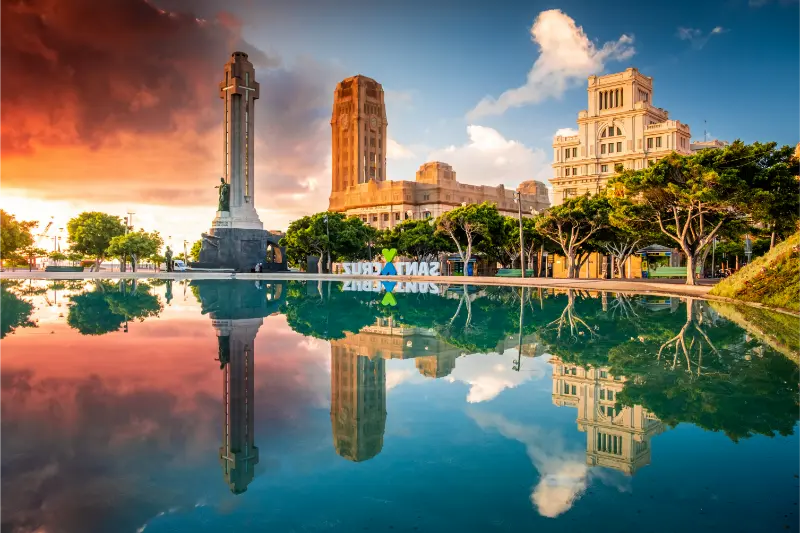
    Plaza de España reflecting pool and civic buildings in Santa Cruz de Tenerife
    Plaza de España, Santa Cruz de Tenerife.

    Because this is information that can change, I save the official page on my phone and check it again on the morning of the visit. I do not rely on a photo of an opening-hours board from an old review, particularly around public holidays, Carnival, local fiestas or renovation periods.

    Official source

    For the latest practical information I use Santa Cruz City Council’s Teatro Guimerá page rather than a third-party timetable.

    Frequently asked questions

    Is Teatro Guimerá open in September 2026?

    No. The current municipal page says it is temporarily closed for renovation.

    Can I still see the building?

    Yes, the exterior and its urban setting can be included in a central Santa Cruz walk, but interior access should not be assumed.

    When was it built?

    The project dates to 1848 and the theatre opened in the early 1850s; municipal sources cite 1851 for its inauguration.

    Who designed it?

    Manuel de Oraá, a key nineteenth-century architect in Tenerife.

    Final thoughts

    I would not pretend that a closed theatre offers the same experience as a live performance. In 2026, Guimerá is a heritage stop rather than an evening venue. But that temporary condition makes the history even clearer: Santa Cruz has repeatedly adapted this building to changing expectations, and the current renovation is another chapter in that process.

  • Museo Municipal de Bellas Artes Santa Cruz Guide: 2026 Hours and Highlights

    Museo Municipal de Bellas Artes Santa Cruz Guide: 2026 Hours and Highlights

    The Museo Municipal de Bellas Artes is easy to miss when Santa Cruz is reduced to shopping streets, the Auditorio and the waterfront. I think that is precisely why it deserves a dedicated stop. The municipal museum on Calle José Murphy presents a collection that reaches from sixteenth-century Flemish painting to later Canarian and Spanish work, and the official city page currently gives long weekday hours that make it unusually easy to fit into a Santa Cruz day. It is also a useful counterpoint to MUNA and TEA: one explains natural and archaeological history, one focuses on contemporary culture, while Bellas Artes lets you read the city through older visual art and collecting.

    Quick visit facts

    AddressCalle José Murphy, 12, Santa Cruz de Tenerife
    Current hoursTue–Fri 10:00–20:00; Sat, Sun and holidays 10:00–15:00
    ClosedMonday
    Collection rangeFrom Flemish painting of the 16th century to later Spanish and Canarian art
    Key workTríptico de Nava y Grimón, dated 1546

    Why this museum adds something different

    Santa Cruz has several strong cultural institutions, but Bellas Artes tells a particular story: how a nineteenth- and twentieth-century capital assembled and displayed older European art alongside Canarian work. The museum’s history is tied to the growth of civic institutions in a port city whose bourgeois culture expanded with trade and capital status.

    I would therefore look not only at individual paintings but also at the collection as evidence of what Santa Cruz wanted a municipal museum to be. The building opened on Calle José Murphy in 1933, and the collection grew through purchases, deposits, donations and works connected with national museums.

    Tríptico de Nava y Grimón

    The best-known work is the Tríptico de Nava y Grimón, an oil-on-panel triptych dated 1546. The municipal heritage material identifies it as one of the collection’s major pieces and links it to Flemish Renaissance painting. Seeing it in Tenerife also helps explain the island’s long commercial and cultural connections with northern Europe.

    I would spend time on the physical object rather than treating it as a name to photograph. Hinged devotional works were designed to create sequences and relationships between images, and the triptych format rewards slower looking.

    Other names and periods to notice

    The city’s official museum page highlights works associated with Pieter Coecke, José de Ribera and Brueghel, while the municipal history of the collection also records important groups of Canarian artists, prints and later acquisitions. This mix means the visit is not a linear survey of “Spanish art”; it is more like a layered municipal collection shaped by Tenerife’s institutions and donors.

    If I have limited time, I pick three themes—Flemish connections, Canarian painters and nineteenth-century civic culture—rather than trying to remember every label.

    The museum in the wider city

    Calle José Murphy sits close to the traditional centre, so I would combine the museum with Plaza del Príncipe, the historic commercial streets and the older churches. This makes the art feel connected to urban history instead of isolated in a white-walled gallery.

    For contemporary art on the same day, TEA gives a useful contrast. For archaeology and Guanche material, MUNA answers a completely different set of questions. I would not try to rank the three; they serve different interests.

    How I would plan the visit

    I treat this as a cultural attraction, not as a box to tick between two unrelated stops. The useful question is how much context I want before I arrive. If I already know the basic history of Santa Cruz de Tenerife, I can focus on details inside the building or site. If it is my first day in the area, I prefer to walk the surrounding streets first so the architecture, urban position and historical references make more sense when I enter.

    Aerial View Of Santa Cruz De Tenerife

    I also leave a little flexibility around the visit. Cultural buildings in Tenerife can host services, rehearsals, exhibitions, private events, restoration work or municipal activities that temporarily change access. A plan with a 30–60 minute buffer is more realistic than an itinerary where every door has to open at the exact minute shown in an old search result.

    Getting there without turning the visit into a parking problem

    For central Santa Cruz de Tenerife sights, I generally prefer public transport or a single car park followed by walking. Historic centres were not designed around modern traffic, and driving from one monument to the next often wastes more time than it saves. If I am arriving from another part of Tenerife, I check the nearest tram, TITSA or municipal parking option before setting off and then build a compact walking loop.

    If I want an early start or an evening event, I sometimes compare accommodation in Santa Cruz de Tenerife rather than drive across the island twice. That is not necessary for every visitor, but it can make a culture-heavy day much calmer, especially when the programme includes a performance, a temporary exhibition or dinner in the historic centre.

    How long I would allow

    I separate “door-to-door time” from “time inside”. A small museum can take 45 minutes but still occupy two hours once I include the walk from transport, reading exterior interpretation, a coffee and a nearby square. A theatre may be a ten-minute façade stop on an ordinary day and a full evening if I have a ticket. A church can be a brief architectural visit or much longer if I want to understand its chapels and historical layers.

    Auditorio De Tenerife Santa Cruz Coastline

    My rule is to avoid stacking more than three substantial indoor visits in the same half-day. After that, attention drops and collections blur together. Tenerife’s historic towns work particularly well when I alternate an interior with streets, courtyards, markets, viewpoints or a meal.

    Photography and respectful behaviour

    I assume that photography rules can vary by room, exhibition and event. I look for signs before using a camera, keep flash off around artworks and documents, and never photograph people in a religious setting without permission. In theatres I do not assume that the rules for the lobby also apply during a performance. In active churches and convents, worship always takes priority over sightseeing.

    I also travel light inside older buildings. Narrow corridors, historic furniture and delicate surfaces are easier to enjoy without a large backpack. If a site has staff at reception, I ask before leaning a bag against a wall, using a tripod or filming extensively. Those small habits protect the place and make the visit more comfortable for everyone.

    Accessibility: what I check rather than assume

    Historic architecture can create a mismatch between a site’s cultural importance and its physical accessibility. A restored building may have lifts and ramps; another may still have thresholds, steps or narrow historic openings. I check the current official accessibility information when mobility, stroller access or fatigue is important, and I contact the venue if a specific route through the building matters.

    I also distinguish between getting to the entrance and seeing every space. A central pedestrian street can be easy to reach while an upper gallery, tower or heritage room remains difficult. That distinction is useful when planning with a wheelchair user, an older traveller or a young child.

    Visiting with children

    I would not automatically exclude a cultural stop from a family itinerary. The key is scale. One strong object, a courtyard, a fortress wall, a theatre interior or a story about a historical character can be more memorable to a child than a long sequence of display cases. I keep the visit shorter, explain what to look for before entering and give children a simple mission such as finding a coat of arms, a cannon, a painted ceiling or a particular architectural detail.

    For very young children, I pair the indoor stop with a nearby square or park. That changes the rhythm of the day and makes it easier for adults to enjoy the site without expecting a child to behave like a museum researcher for two hours.

    What I would combine nearby

    I prefer combinations that explain the same place from different angles. A history museum plus a historic street, or a fortress plus the old port, usually feels more coherent than crossing the island for a second attraction just because it has a high review score. These clusters also reduce driving and make it easier to stop for lunch somewhere local rather than eating according to the car park.

    Current status: what I would verify again

    The municipal page checked in September 2026 lists Tuesday–Friday 10:00–20:00 and Saturdays, Sundays and public holidays 10:00–15:00, with Monday closed. Carnival and exceptional city events can modify cultural-space hours, so I still verify the day before.

    Because this is information that can change, I save the official page on my phone and check it again on the morning of the visit. I do not rely on a photo of an opening-hours board from an old review, particularly around public holidays, Carnival, local fiestas or renovation periods.

    Panoramic View Of Santa Cruz De Tenerife

    Official source

    For the latest practical information I use Santa Cruz City Council’s official Museo Municipal de Bellas Artes page rather than a third-party timetable.

    Frequently asked questions

    What is the main highlight?

    The Tríptico de Nava y Grimón of 1546 is one of the museum’s best-known works, but the value of the visit is the broader mix of Flemish, Spanish and Canarian art.

    Is it useful if I already plan to visit TEA?

    Yes. TEA is focused on contemporary culture; Bellas Artes covers a different historical and collecting tradition.

    How long should I allow?

    About 60–90 minutes works well for a first visit without museum fatigue.

    Is Monday a good museum day?

    Not for this museum: the current official schedule lists Monday closed.

    Final thoughts

    Bellas Artes is the kind of museum that improves a Santa Cruz itinerary without dominating it. I would use it to add depth between the market, old centre and parks, and to see how European and Canarian artistic traditions ended up sharing the same municipal collection on an Atlantic island.

  • La Orotava Carpet Museum Guide: Hours, Price and Corpus Tradition

    La Orotava Carpet Museum Guide: Hours, Price and Corpus Tradition

    Centro de Arte Efímero “Alfombras de La Orotava” is the small La Orotava museum that explains the flower and volcanic-sand carpets associated with Corpus Christi. It is the place I would visit if I am in Tenerife outside the festival period and want to understand why “alfombras” are such a big part of the town’s identity.

    The municipal tourism page currently lists Monday–Friday opening from 10:00 to 14:00, a €2 visitor price and free admission for Tenerife residents. The centre is at Calle San Francisco 5, beside the Casa de los Balcones area.

    Quick practical facts

    AddressCalle San Francisco 5, La Orotava
    Current hoursMonday–Friday 10:00–14:00
    Current visitor price€2
    Tenerife residentsFree according to the municipal tourism page
    ThemeCorpus Christi flower and Teide-sand carpets
    History representedMore than 160 years of alfombrista tradition

    Why I would give Centro de Arte Efímero “Alfombras de La Orotava” its own stop

    The Corpus carpets are inherently temporary. If a traveller visits in November, there is no street carpet to see. A permanent interpretation centre is therefore essential if the tradition is going to make sense year-round.

    The museum also prevents a common misunderstanding: these are not simply “pretty flower designs”. The tradition involves planning, templates, natural materials, community organisation, religious festival context and, for the main plaza, coloured sands associated with Teide.

    What to look for once you are there

    Historic sketches and documents

    The municipal description mentions early designs and documentary material that show how the tradition developed rather than presenting it as timeless folklore.

    Tools and moulds

    Practical objects explain how complex images are transferred onto streets and plazas. I find these more useful than only looking at finished photographs.

    Flowers, heather and volcanic sands

    The materials are part of the identity of the carpets. The contrast between perishable flowers and mineral colour is also the reason the works are genuinely ephemeral.

    The historic house setting

    The centre occupies a traditional building in one of La Orotava’s most attractive heritage streets, so the museum naturally connects with the townscape outside.

    The context that makes the visit more interesting

    La Orotava’s carpet tradition became especially renowned from the mid-nineteenth century. Municipal heritage material links a key early development to the Monteverde family and Leonor del Castillo, after which the practice expanded into a major expression of the Corpus festivities.

    La Orotava Historic Center And Mountains Tenerife

    The carpets are community art, religious festival practice and local identity at once. I avoid reducing them to a craft demonstration because their meaning depends on procession, street, neighbourhood and time.

    The volcanic-sand carpet in the town-hall square is particularly associated with the dramatic colour palette of Teide materials. The interpretation centre helps explain technique year-round without encouraging anyone to collect volcanic material themselves.

    How I would plan the visit

    I would combine the centre with the La Orotava guide and Casa de los Balcones because they are in the same historic walking zone.

    If garden time appeals more than another indoor attraction, the Hijuela del Botánico is an easy nearby contrast.

    How much time to allow

    Forty-five minutes to one hour is enough for most visitors. The centre is focused, and that focus is a strength rather than a reason to rush.

    I would then spend at least another hour walking the surrounding streets. The historic setting helps explain why making art directly on the street has such impact during Corpus.

    Getting there without turning the visit into a transport problem

    Calle San Francisco is in La Orotava’s historic centre. I park once and walk; trying to move a car between Casa de los Balcones, the carpet centre, Hijuela and the church is unnecessary.

    If I want a quieter north-island base, I may compare La Orotava accommodation and use the town for Teide and valley day trips.

    Accessibility and comfort

    The museum occupies a historic property, so I would check direct accessibility if step-free access to all rooms is essential. The old-centre streets also have slopes and traditional paving.

    A short focused visit can still be worthwhile even if a traveller does not cover every room. I would ask staff which display best explains the technique and history.

    Is it worth visiting with children?

    Good for creative children because the process—drawing, templates, materials and building a design on the ground—is easy to understand visually.

    I would connect the museum to an activity: ask children to design a simple geometric carpet on paper after the visit. That turns a short heritage stop into something memorable.

    Best time of day

    Morning is the obvious choice because the current published timetable ends at 14:00. I would not leave this museum for the end of an afternoon La Orotava visit.

    During the Corpus period the wider town programme can change opening and crowd patterns. That is when I check special festival information rather than relying only on normal hours.

    Photography and respectful visiting

    I photograph sketches, tools or displays only where permitted, but I also photograph the street outside. The museum makes more sense when the viewer can imagine those designs covering the surrounding paving.

    During the real Corpus carpets I never step onto or over protected work for a better angle. The artwork is temporary and vulnerable by definition.

    Useful nearby stops

    A realistic half-day plan

    A strong morning is carpet centre, Casa de los Balcones, Hijuela del Botánico and a slow walk through the historic streets before lunch.

    I would save the MAIT for another block if museum fatigue starts. La Orotava is better when indoor heritage and outdoor townscape alternate.

    Common mistakes I would avoid

    • Assuming the carpets exist on the streets all year.
    • Arriving after 14:00 on a normal weekday and expecting the museum open.
    • Reducing the tradition to decoration without Corpus and community context.
    • Driving between nearby historic-centre sights.
    • Collecting volcanic sand or other natural material to imitate the carpets.

    Current information: what I would check again

    The municipal tourism page currently lists Monday–Friday 10:00–14:00, €2 for visitors and free entry for Tenerife residents.

    Festival periods and special exhibitions can produce different hours, so I check the local programme around Corpus Christi.

    Official source

    For normal hours, price and the heritage description I use La Orotava Tourism – Centro de Arte Efímero.

    Frequently asked questions

    Can I see La Orotava’s street carpets all year?

    No. The actual street carpets are tied to Corpus celebrations, but the interpretation centre explains the tradition year-round.

    What are the current normal hours?

    The municipal tourism page lists Monday–Friday 10:00–14:00.

    How much is admission?

    The same page currently lists €2 for visitors and free admission for Tenerife residents.

    How long should I allow?

    Around 45–60 minutes for the centre, plus time to explore the surrounding historic streets.

    How I decide whether this stop belongs in my itinerary

    I do not add a place simply because it appears on a “top things to do” list. I ask what new layer it adds to the trip. Does it explain a part of Tenerife I have not understood yet? Does it fit naturally with places already on the route? Can I visit it without creating an hour of unnecessary driving? Those questions are especially useful on an island where a short distance on the map can still mean mountain roads, city parking or a change of microclimate.

    I also distinguish between a destination visit and a cluster visit. A destination visit is worth crossing the island for; a cluster visit becomes valuable because it sits beside two or three other strong stops. Many museums, churches, small forts and interpretation centres are at their best in the second category. That does not make them less important. It simply means the itinerary should respect their real scale.

    What I would verify on the morning of the visit

    Opening hours, temporary closures, road conditions and special events are the four details most likely to change. I save the official source rather than relying on a screenshot taken months earlier. For cultural buildings I also check whether a private event, religious service, renovation or guided group affects normal access. For Teide locations I add mountain weather and road status to that list.

    This last check takes only a few minutes and prevents the most common frustration in Tenerife planning: arriving with perfectly researched historical information but an outdated practical detail. I would rather change the order of a day than force an itinerary after the conditions have changed.

    What makes a good Tenerife visit different from a checklist

    The strongest days usually contain contrast. A museum works better when I can walk through the neighbourhood it explains; a volcanic trail means more after a visitor centre; a historic fort becomes clearer when modern city architecture surrounds it. I therefore build connections between places instead of treating every stop as an isolated review score.

    I also leave blank space. Tenerife rewards unplanned pauses: a view of Teide appearing above cloud, a local café, a small plaza, or a change in light can become more memorable than the tenth scheduled attraction. A complete travel site should help a reader make those choices, not pressure them to “complete” the island.

    Final thoughts

    The carpet centre solves a real travel problem: most visitors are not in La Orotava on the exact days when the ephemeral art covers the streets. The museum turns a once-a-year tradition into something understandable at any season.

    I would visit in the morning, learn the process, then walk outside and imagine the same paving transformed by flowers, heather and volcanic colour.

  • Museo Arqueológico Puerto de la Cruz Guide: Guanche Collection and Hours

    Museo Arqueológico Puerto de la Cruz Guide: Guanche Collection and Hours

    Museo Arqueológico de Puerto de la Cruz is the museum I would add when I want Puerto de la Cruz to be more than gardens, pools and seafront walks. In the La Ranilla district, it holds one of Tenerife’s most significant collections of Guanche ceramics together with other archaeological material.

    The current Cultura Puerto de la Cruz page lists Monday to Friday opening from 09:00 to 15:00 and weekends closed. A separate tourism listing has published different hours during the museum’s renovation phase, so I would confirm the same week rather than pretending the timetable is perfectly settled.

    Quick practical facts

    AddressCalle del Lomo 9A, La Ranilla, Puerto de la Cruz
    Current culture-portal hoursMonday–Friday 09:00–15:00
    WeekendClosed on the current culture page
    CollectionAbout 2,600 records
    StrengthMajor collection of Guanche ceramics
    Also includesAnthropological remains, lithic material and personal ornaments

    Why I would give Museo Arqueológico de Puerto de la Cruz its own stop

    Puerto de la Cruz is often sold through Loro Parque, Lago Martiánez and the botanical garden. The archaeological museum adds a completely different layer and gives La Ranilla more meaning than “pretty streets with restaurants and murals”.

    Its ceramic collection is especially important. The municipality describes it as the most significant representation of Guanche pottery on Tenerife, which makes this a focused museum rather than a generic collection of island curiosities.

    What to look for once you are there

    The Guanche ceramics

    The permanent collection includes a large and representative group of Indigenous pottery. I look at form, surface and use rather than treating every vessel as visually interchangeable.

    Guatimac and personal ornaments

    The museum is associated with distinctive small objects and personal adornments that show material culture at a human scale.

    Anthropological remains

    The collection includes Indigenous human remains, including mummified material. I approach these displays respectfully and follow the museum’s current ethical presentation rather than treating them as sensational objects.

    The La Ranilla setting

    The museum occupies a traditional Canarian house in the historic fishing district. The building and neighbourhood make the transition from archaeology to modern street life unusually immediate.

    The context that makes the visit more interesting

    The museum’s origins go back to the 1950s and the archaeological collection created by the Instituto de Estudios Hispánicos de Canarias. The current municipal museum opened in its La Ranilla building in 1991 after a long civic campaign to recover and present the collection.

    In 2025 the municipality announced plans to update the permanent exhibition and facilities. That helps explain why current practical information can shift and why I verify the timetable rather than copy an old guidebook.

    For me, the museum works best as one piece of a wider Guanche-history itinerary. MUNA in Santa Cruz has broader archaeological and natural-history scope, while Puerto de la Cruz offers a smaller, focused collection in a very different urban setting.

    Puerto De La Cruz And Lago Martianez Tenerife

    How I would plan the visit

    I would visit the museum before a walk through Puerto de la Cruz and La Ranilla. That way the historic district is not only a restaurant stop; it becomes part of a culture day.

    For comparison on another day, the MUNA guide gives a larger island-wide framework for Guanche archaeology and natural history.

    How much time to allow

    I would allow 60–90 minutes for the museum. A specialist could spend longer, but for most travellers that gives enough time to read the ceramic and archaeology interpretation without rushing.

    Then I reserve another hour or two for La Ranilla, the fishing harbour and street art. The museum works particularly well because those stops are walkable rather than separated by a car journey.

    Getting there without turning the visit into a transport problem

    Calle del Lomo is in central Puerto de la Cruz. If I am already staying in town, walking is simplest. Day visitors can use a central car park and explore the compact historic centre on foot.

    For a north-coast base I may compare Puerto de la Cruz hotels, especially if I want several days of gardens, museums and north-island day trips without constant cross-island driving.

    Accessibility and comfort

    The museum is inside a historic building, so I would contact the venue directly if step-free access to every display area is essential. A general “museum accessible” assumption is not specific enough for mobility planning.

    The surrounding La Ranilla streets are best explored slowly. Cobblestones, kerbs and busy restaurant areas can matter more than distance for some visitors.

    Is it worth visiting with children?

    Yes for school-age children, especially if they have already heard about the Guanches elsewhere on the trip. Pottery, small objects and a historic house are easier to connect with than a long chronological lecture.

    I handle human remains respectfully and prepare children for what they may see. If a family prefers not to view mummified material, staff can often help explain the layout.

    Best time of day

    Morning is the safest choice because the current published hours end at 15:00. It also leaves lunch and a relaxed La Ranilla walk afterward.

    I would not make a late-afternoon plan based on an old timetable. The museum has been through a renewal process and current hours should be confirmed.

    Photography and respectful visiting

    I prioritise the building exterior and La Ranilla context. Inside, archaeological museums often restrict photography around sensitive material, so I follow current signs and staff instructions.

    The most respectful visit is not about collecting images of human remains. Notes about materials, labels and display context are often more valuable than a phone gallery.

    Useful nearby stops

    A realistic half-day plan

    A strong half-day is museum in the morning, La Ranilla and Puerto Street Art on foot, then lunch near the harbour. Everything reinforces the sense of place without needing another attraction ticket.

    If I want a longer culture day, I add the botanical garden or Lago Martiánez later depending on weather rather than trying to squeeze in Loro Parque as well.

    Common mistakes I would avoid

    • Relying on an old timetable during a period of museum renewal.
    • Treating Guanche human remains as sensational displays.
    • Visiting only the museum and skipping the La Ranilla neighbourhood around it.
    • Assuming all rooms in a historic building have identical accessibility.
    • Using this smaller museum as a substitute for every other source on Guanche history.

    Current information: what I would check again

    Cultura Puerto de la Cruz currently lists Monday–Friday 09:00–15:00 and weekends closed. Another tourism listing has shown different hours, which is why I would confirm before making a timed journey.

    Puerto De La Cruz At Sunset Tenerife

    The municipality announced a modernisation of the permanent exhibition and facilities in 2025. Operational changes during that process are possible.

    Official source

    For current cultural information I use Cultura Puerto de la Cruz – Museo Arqueológico.

    Frequently asked questions

    What is the museum best known for?

    Its Guanche archaeological collection, especially the significant pottery holdings.

    Where is it?

    In La Ranilla at Calle del Lomo 9A, in central Puerto de la Cruz.

    What are the current hours?

    The municipal culture portal currently lists Monday–Friday 09:00–15:00. Confirm before travel because other official/tourist listings have differed during renewal work.

    How long do I need?

    About 60–90 minutes for the museum, plus time to walk through La Ranilla afterward.

    How I decide whether this stop belongs in my itinerary

    I do not add a place simply because it appears on a “top things to do” list. I ask what new layer it adds to the trip. Does it explain a part of Tenerife I have not understood yet? Does it fit naturally with places already on the route? Can I visit it without creating an hour of unnecessary driving? Those questions are especially useful on an island where a short distance on the map can still mean mountain roads, city parking or a change of microclimate.

    Puerto De La Cruz City And Atlantic Ocean Tenerife

    I also distinguish between a destination visit and a cluster visit. A destination visit is worth crossing the island for; a cluster visit becomes valuable because it sits beside two or three other strong stops. Many museums, churches, small forts and interpretation centres are at their best in the second category. That does not make them less important. It simply means the itinerary should respect their real scale.

    What I would verify on the morning of the visit

    Opening hours, temporary closures, road conditions and special events are the four details most likely to change. I save the official source rather than relying on a screenshot taken months earlier. For cultural buildings I also check whether a private event, religious service, renovation or guided group affects normal access. For Teide locations I add mountain weather and road status to that list.

    This last check takes only a few minutes and prevents the most common frustration in Tenerife planning: arriving with perfectly researched historical information but an outdated practical detail. I would rather change the order of a day than force an itinerary after the conditions have changed.

    What makes a good Tenerife visit different from a checklist

    The strongest days usually contain contrast. A museum works better when I can walk through the neighbourhood it explains; a volcanic trail means more after a visitor centre; a historic fort becomes clearer when modern city architecture surrounds it. I therefore build connections between places instead of treating every stop as an isolated review score.

    I also leave blank space. Tenerife rewards unplanned pauses: a view of Teide appearing above cloud, a local café, a small plaza, or a change in light can become more memorable than the tenth scheduled attraction. A complete travel site should help a reader make those choices, not pressure them to “complete” the island.

    Final thoughts

    The archaeological museum is one of the best ways to make a Puerto de la Cruz stay more culturally balanced. It adds Indigenous history to a destination better known for leisure and gardens.

    I would visit in the morning, take the collection seriously, then walk straight back into La Ranilla. The contrast between archaeological objects, traditional streets and contemporary murals is exactly what makes the area interesting.

  • Templo Masónico Santa Cruz Guide: 2026 Hours, History and Visits

    Templo Masónico Santa Cruz Guide: 2026 Hours, History and Visits

    Templo Masónico de Santa Cruz de Tenerife is one of the most distinctive cultural buildings in the Canary Islands and, after a major restoration, is again open to the public. Its Egyptian-inspired façade, sphinxes, palmiform columns and “all-seeing eye” are only the beginning; the interior explains the social and symbolic world of the historic Logia Añaza.

    The official Santa Cruz Cultura page currently publishes free visits Tuesday to Saturday from 11:00 to 18:00 and Sundays/holidays from 11:00 to 14:00, with Monday closed. Guided-visit dates are published separately. Because programming changes, I would check that page on the day I go.

    Quick practical facts

    LocationSanta Cruz de Tenerife
    Historic lodgeLogia Añaza
    Building completed1904
    ArchitectManuel de Cámara y Cruz
    Current free-visit hoursTuesday–Saturday 11:00–18:00; Sundays/holidays 11:00–14:00
    ClosedMonday
    Guided visitsDates published separately by Santa Cruz Cultura

    Why I would give Templo Masónico de Santa Cruz de Tenerife its own stop

    This is not a generic “secret society” attraction. The real value is architectural and social history: Freemasonry had a visible role in Santa Cruz’s cultural life, and the building expresses that history through deliberately symbolic spaces and decoration.

    The reopening also gives travellers a rare chance to enter a building that was closed for decades. I would prioritise it over a superficial exterior photo because the restored interior is where the sequence of spaces starts to make sense.

    What to look for once you are there

    The Egyptian-inspired façade

    Palm-form columns, sphinxes and the eye motif make the entrance instantly recognisable. I would read them as part of a symbolic architectural programme, not as random exotic decoration.

    The lodge rooms

    The official cultural description highlights spaces such as the sala de tenidas, chamber of reflection and dining/agape room. Their functions help explain how the lodge organised ceremony and community.

    The history of Logia Añaza

    Founded in 1895, the lodge became important in the social and cultural life of Tenerife during the early twentieth century. That local history is more interesting than importing clichés from films about Freemasonry.

    Restoration and reopening

    The building was confiscated after the Civil War, used institutionally and remained closed for decades. The city acquired it in 2001; it later received BIC protection and has now undergone major rehabilitation.

    The context that makes the visit more interesting

    Freemasonry in Spain has a politically charged history, especially across the dictatorship period. The temple’s confiscation and long closure are therefore part of a broader twentieth-century story, not merely a building-maintenance issue.

    I would also separate documented local history from sensational claims. The official cultural material gives plenty to work with—architecture, lodge history, symbolism and state confiscation—without inventing conspiracies.

    The building is particularly useful for understanding Santa Cruz as more than a port and carnival city. It reveals civic associations, intellectual networks and architectural ambition in the late nineteenth and early twentieth centuries.

    How I would plan the visit

    I would combine the temple with the Santa Cruz city guide and one nearby museum rather than crossing the island only for a short visit. The exact walking route depends on the day’s opening hours.

    Panoramic View Of Santa Cruz De Tenerife

    If I want a wider culture day, the TEA guide and MUNA guide offer very different modern-art and archaeology perspectives.

    How much time to allow

    For a free visit I would allow 45–75 minutes. Guided or theatricalised visits can have their own fixed duration and ticketing, so I follow the event information rather than this general estimate.

    I do not squeeze the temple between two timed reservations. Historic interiors are much more rewarding when I can stop to understand the room sequence and symbolism.

    Getting there without turning the visit into a transport problem

    The temple is in Santa Cruz and is easiest to incorporate into a central-city day by walking or using public transport. I avoid searching for doorstep parking in the old urban fabric.

    For an overnight culture break I may compare Santa Cruz hotels and use the tram/bus network instead of treating the capital as a quick car stop.

    Accessibility and comfort

    The restoration has been designed to reopen the building to public use, but if I have a specific mobility requirement I still check the latest access notes before visiting, especially for guided routes that may use multiple internal spaces.

    The difference between a free visit and a special theatrical or guided experience can affect movement through the building. I do not assume every event uses exactly the same route.

    Is it worth visiting with children?

    It can work well with older children and teenagers interested in symbols, architecture or mystery, as long as the explanation stays grounded in real history.

    For very young children, I would keep the visit short. The attraction is interpretation and architecture rather than interactive play.

    Best time of day

    I prefer morning or early afternoon, when I can combine the temple with another cultural stop before museums close. The published free-visit hours make that easy on most days except Monday.

    Special evening routes can create a different atmosphere, but they are programmed events rather than guaranteed daily access. I check the calendar instead of building a trip around an old event announcement.

    Plaza de España reflecting pool and civic buildings in Santa Cruz de Tenerife
    Plaza de España, Santa Cruz de Tenerife.

    Photography and respectful visiting

    The façade is highly photogenic in frontal and angled views. Inside I follow posted rules and avoid reducing the building to a collection of “mysterious” symbols without context.

    If a guided group is moving through a narrow room, I prioritise not blocking circulation over getting a symmetrical image.

    Useful nearby stops

    A realistic half-day plan

    A strong half-day is Templo Masónico plus TEA or MUNA, then coffee or lunch in the centre. That creates a coherent culture block without unnecessary transport.

    If architecture is the theme, I would pair the temple with the Auditorio later in the day to compare two radically different moments in Santa Cruz design.

    Common mistakes I would avoid

    • Turning documented Masonic history into conspiracy storytelling.
    • Arriving on Monday, when the official page currently says the temple is closed.
    • Assuming guided visits run every day.
    • Blocking narrow interior spaces for photographs.
    • Ignoring the confiscation and twentieth-century political context.

    Current information: what I would check again

    The official Santa Cruz Cultura page currently lists free visits Tuesday–Saturday 11:00–18:00 and Sundays/holidays 11:00–14:00, with Monday closed.

    Guided visits and theatrical routes are announced separately and can sell out or use different times. I check the current cultural calendar before travel.

    Official source

    For opening and guided-visit information I use Santa Cruz Cultura – Templo Masónico.

    Frequently asked questions

    Is the Templo Masónico open to visitors in 2026?

    Yes. After restoration it is open for free visits on published days, with guided visits scheduled separately.

    What are the current free-visit hours?

    The official page currently lists Tuesday–Saturday 11:00–18:00 and Sundays/holidays 11:00–14:00. Monday is closed.

    Is this mainly about conspiracy theories?

    No. The most valuable visit is grounded in documented local Masonic, architectural and social history.

    Do guided visits run every day?

    No. The official page says upcoming guided dates are published separately, so check the calendar.

    How I decide whether this stop belongs in my itinerary

    I do not add a place simply because it appears on a “top things to do” list. I ask what new layer it adds to the trip. Does it explain a part of Tenerife I have not understood yet? Does it fit naturally with places already on the route? Can I visit it without creating an hour of unnecessary driving? Those questions are especially useful on an island where a short distance on the map can still mean mountain roads, city parking or a change of microclimate.

    I also distinguish between a destination visit and a cluster visit. A destination visit is worth crossing the island for; a cluster visit becomes valuable because it sits beside two or three other strong stops. Many museums, churches, small forts and interpretation centres are at their best in the second category. That does not make them less important. It simply means the itinerary should respect their real scale.

    What I would verify on the morning of the visit

    Opening hours, temporary closures, road conditions and special events are the four details most likely to change. I save the official source rather than relying on a screenshot taken months earlier. For cultural buildings I also check whether a private event, religious service, renovation or guided group affects normal access. For Teide locations I add mountain weather and road status to that list.

    This last check takes only a few minutes and prevents the most common frustration in Tenerife planning: arriving with perfectly researched historical information but an outdated practical detail. I would rather change the order of a day than force an itinerary after the conditions have changed.

    What makes a good Tenerife visit different from a checklist

    The strongest days usually contain contrast. A museum works better when I can walk through the neighbourhood it explains; a volcanic trail means more after a visitor centre; a historic fort becomes clearer when modern city architecture surrounds it. I therefore build connections between places instead of treating every stop as an isolated review score.

    Santa Cruz De Tenerife At Night

    I also leave blank space. Tenerife rewards unplanned pauses: a view of Teide appearing above cloud, a local café, a small plaza, or a change in light can become more memorable than the tenth scheduled attraction. A complete travel site should help a reader make those choices, not pressure them to “complete” the island.

    Final thoughts

    The restored Masonic Temple is one of the strongest additions to Santa Cruz’s cultural itinerary. It is visually unusual, historically specific and finally accessible enough to move beyond exterior curiosity.

    I would go for the architecture and documented local history, not for sensationalism. That approach makes the building much more interesting.

  • Iglesia de La Concepción Santa Cruz Guide: History and Visit Tips

    Iglesia de La Concepción Santa Cruz Guide: History and Visit Tips

    Iglesia Matriz de Nuestra Señora de La Concepción is the historic church I would use to understand the oldest part of Santa Cruz rather than treating the capital only as a modern port city. Turismo de Tenerife identifies it as the city’s principal Catholic church, built on the site of the first hermitage established by the conquerors.

    The five-nave layout, 1786 tower and collection of historic objects make it a richer stop than its position just off the main shopping streets might suggest. Because it remains an active place of worship, I do not publish a fixed tourist opening schedule unless the parish itself confirms one; service times and religious events take priority.

    Quick practical facts

    LocationPlaza de la Iglesia, 38003 Santa Cruz de Tenerife
    TypeActive historic parish church
    ArchitectureCanarian Baroque; unique five-nave plan in the archipelago
    TowerBuilt in 1786
    Notable heritageFoundational cross, historic chapels and religious art
    Visit styleFree/quiet church visit when open; respect services and parish activity

    Why I would give Iglesia Matriz de Nuestra Señora de La Concepción its own stop

    The church gives Santa Cruz a chronological anchor. Plaza de España, shopping streets and contemporary architecture are easy to enjoy without understanding how the settlement grew; La Concepción brings the early colonial city and port into the picture.

    It also contains objects tied to civic memory, so the visit is not only architectural. I would read the church as both a religious building and a repository of stories the city chose to preserve.

    What to look for once you are there

    The five naves

    Turismo de Tenerife notes that La Concepción is the only church in the Canary Islands with five naves. Looking across the interior helps reveal how the building expanded over time rather than appearing as a single perfectly planned construction.

    The 1786 tower

    The tower is one of the recognisable vertical markers of the old centre. I look at it from the plaza before entering so the exterior composition makes sense.

    The foundational cross

    The church preserves the wooden cross associated with Alonso Fernández de Lugo’s landing and the foundation narrative of Santa Cruz. It is historically important, but I place it within the broader and more complex history of conquest and Indigenous Guanche society.

    Canarian woodwork and chapels

    Ceilings, altars and side chapels reward a slower visit. The building is much more interesting when I stop looking for one “must-see object” and notice the craftsmanship across the interior.

    The context that makes the visit more interesting

    Santa Cruz’s conquest-era narrative is not neutral. The church’s foundation story belongs to the Castilian conquest of Tenerife, which had profound consequences for the Guanche population. I would not present a foundational cross without acknowledging that wider context.

    Auditorio De Tenerife Santa Cruz Coastline

    At the same time, the church evolved with the city over centuries. Fires, rebuilding, enlargement and changing devotional practices created the layered structure visitors see today.

    That makes La Concepción a useful counterpart to the MUNA. The church preserves the civic-religious memory of the post-conquest city, while archaeological collections help tell the island’s pre-conquest Indigenous history.

    How I would plan the visit

    I would place the church inside a walking route from the Mercado Nuestra Señora de África to the old centre and Castillo de San Cristóbal. It does not need a separate transport plan.

    For deeper Indigenous context I would also use the MUNA guide rather than expecting one religious monument to explain the whole history of Tenerife.

    How much time to allow

    Twenty to forty minutes is usually enough for a respectful architectural visit when the church is open and no service is taking place.

    If I am interested in religious art and read every chapel carefully, I allow closer to an hour. I never treat a service as a sightseeing opportunity that should adapt to my schedule.

    Getting there without turning the visit into a transport problem

    The church is in central Santa Cruz and works best on foot. Parking a rental car specifically beside every old-centre monument creates more stress than using a central car park or public transport and walking.

    If I am staying overnight, I may compare central Santa Cruz hotels so the historic centre, market and seafront can all be reached without repeated driving.

    Accessibility and comfort

    The surrounding central streets are relatively easy urban terrain, but historic churches can have thresholds and internal access constraints. If step-free access is essential, I would contact the parish or tourism office before relying on general city-accessibility assumptions.

    Inside, seating can provide a useful pause on a hot city day, but I remember it is primarily a worship space, not a rest lounge.

    Is it worth visiting with children?

    It can work well with school-age children if I turn the visit into a visual challenge: count the naves, find the tower from the plaza, compare the wooden ceiling with modern buildings seen earlier.

    I keep the history age-appropriate and concise. A 25-minute focused visit is better than insisting that children inspect every altar.

    Best time of day

    Morning usually fits naturally with the market and old-centre walk. I avoid arriving during a major service if my aim is architectural sightseeing.

    Festival periods can be atmospheric but also busy. I check local religious calendars around Holy Week and major feast days.

    Photography and respectful visiting

    Exterior photographs are strongest from the plaza and nearby streets where the tower can be placed in the context of the old centre. Inside I follow posted rules and never use flash if it is prohibited.

    I avoid photographing worshippers at close range. The fact that a church is open to visitors does not turn people attending a service into tourist subjects.

    Useful nearby stops

    A realistic half-day plan

    A good half-day begins at Mercado de África, walks to La Concepción, continues through the historic streets to Plaza de España and ends at Castillo de San Cristóbal or TEA/MUNA depending on interests.

    I leave the Auditorio/Palmetum waterfront for a separate block unless I have a full day. Santa Cruz is more enjoyable when I explore compact neighbourhood clusters rather than zigzagging across the city.

    Panoramic View Of Santa Cruz De Tenerife

    Common mistakes I would avoid

    • Assuming a fixed tourist timetable for an active parish church.
    • Ignoring services or religious ceremonies while sightseeing.
    • Presenting the conquest-era foundation story without Guanche context.
    • Using flash or photographing worshippers intrusively.
    • Driving from monument to monument inside the compact centre.

    Current information: what I would check again

    Turismo de Tenerife publishes the address and heritage description but not a guaranteed tourist opening schedule. I take that as a sign to verify locally rather than invent precise hours.

    For Holy Week, feast days or weddings I expect access patterns to differ. Flexibility is part of visiting an active religious building.

    Official source

    For the heritage description and address I use Turismo de Tenerife – Iglesia Matriz de La Concepción.

    Frequently asked questions

    Is La Concepción the cathedral of Tenerife?

    No. It is the principal historic parish church of Santa Cruz, not the Cathedral of La Laguna.

    Why is the interior unusual?

    Turismo de Tenerife notes that it is the only church in the Canary Islands with five naves.

    Can tourists always enter?

    No fixed tourist timetable is guaranteed on the tourism page. It is an active parish, so services and events can affect access.

    How long should I allow?

    Around 20–40 minutes for a focused visit, longer if you are especially interested in architecture or religious art.

    How I decide whether this stop belongs in my itinerary

    I do not add a place simply because it appears on a “top things to do” list. I ask what new layer it adds to the trip. Does it explain a part of Tenerife I have not understood yet? Does it fit naturally with places already on the route? Can I visit it without creating an hour of unnecessary driving? Those questions are especially useful on an island where a short distance on the map can still mean mountain roads, city parking or a change of microclimate.

    Plaza de España reflecting pool and civic buildings in Santa Cruz de Tenerife
    Plaza de España, Santa Cruz de Tenerife.

    I also distinguish between a destination visit and a cluster visit. A destination visit is worth crossing the island for; a cluster visit becomes valuable because it sits beside two or three other strong stops. Many museums, churches, small forts and interpretation centres are at their best in the second category. That does not make them less important. It simply means the itinerary should respect their real scale.

    What I would verify on the morning of the visit

    Opening hours, temporary closures, road conditions and special events are the four details most likely to change. I save the official source rather than relying on a screenshot taken months earlier. For cultural buildings I also check whether a private event, religious service, renovation or guided group affects normal access. For Teide locations I add mountain weather and road status to that list.

    This last check takes only a few minutes and prevents the most common frustration in Tenerife planning: arriving with perfectly researched historical information but an outdated practical detail. I would rather change the order of a day than force an itinerary after the conditions have changed.

    What makes a good Tenerife visit different from a checklist

    The strongest days usually contain contrast. A museum works better when I can walk through the neighbourhood it explains; a volcanic trail means more after a visitor centre; a historic fort becomes clearer when modern city architecture surrounds it. I therefore build connections between places instead of treating every stop as an isolated review score.

    I also leave blank space. Tenerife rewards unplanned pauses: a view of Teide appearing above cloud, a local café, a small plaza, or a change in light can become more memorable than the tenth scheduled attraction. A complete travel site should help a reader make those choices, not pressure them to “complete” the island.

    Final thoughts

    La Concepción is one of those places that makes a city map more intelligible. After seeing it, the old centre feels less like a random set of streets and more like a settlement with a long, complicated chronology.

    I would visit quietly, acknowledge both the religious and conquest-era context, and then continue on foot through the historic centre.