Tag: Tenerife with kids

  • Best Family Beaches in Tenerife: Calm Water, Facilities and Practical Tips

    Best Family Beaches in Tenerife: Calm Water, Facilities and Practical Tips

    A good family beach in Tenerife is not simply the prettiest beach on a map. When I travel with children, I care more about the combination of manageable water, easy access, toilets or nearby cafés, room for a stroller, shade options, and a simple escape plan if the wind or waves suddenly change. Tenerife has spectacular wild beaches, but some of the most photogenic ones are not the places I would choose for a relaxed day with small children.

    This guide focuses on beaches that make family logistics easier. It complements my broader Tenerife with kids guide and best beaches in Tenerife guide. Conditions are never guaranteed on an Atlantic island, so I still check the sea, flags and lifeguard instructions when I arrive. A beach that feels gentle in the morning can be less comfortable later in the day.

    What I look for in a family beach

    My first filter is water entry. Sheltered bays, breakwaters and gradual shorelines are usually easier with younger children than exposed surf beaches. The second filter is practical: parking, bus access, a promenade, toilets, showers, food and somewhere to buy water. None of these details sound exciting when planning a holiday, but they are exactly what turns a beach visit into an easy half-day rather than a logistical exercise.

    I also separate “good for paddling” from “safe without supervision.” No Atlantic beach is a substitute for close adult attention. I keep children within reach near the shoreline, respect warning flags and avoid rock pools or breakwaters when swell is pushing water over them. Tenerife offers many developed beaches with lifeguard services, but I still treat the ocean as the final authority.
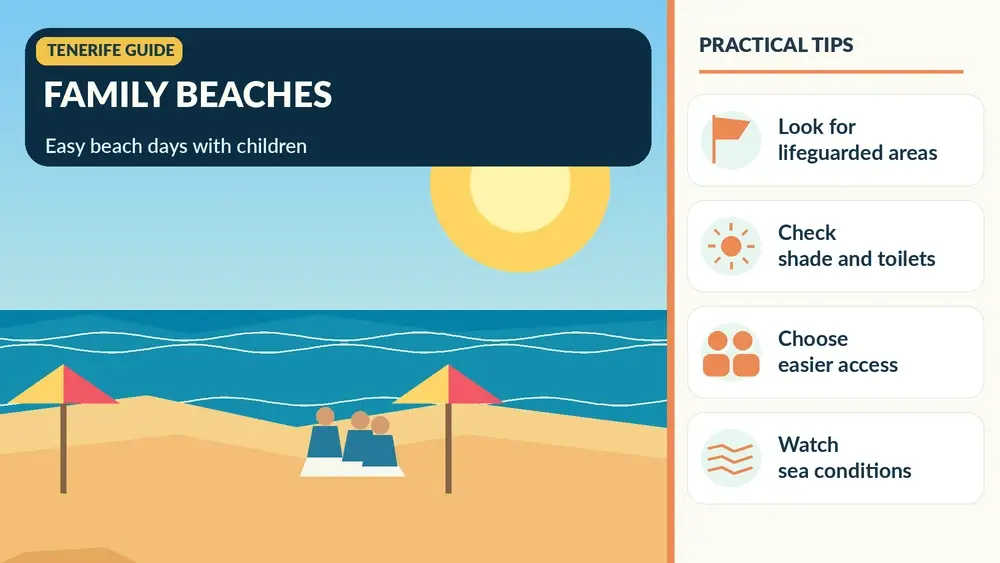
    Illustrated guide: Best Family Beaches in Tenerife, with practical visitor tips
    Illustrated guide: Best Family Beaches in Tenerife.

    Las Teresitas: my easiest north-east family beach

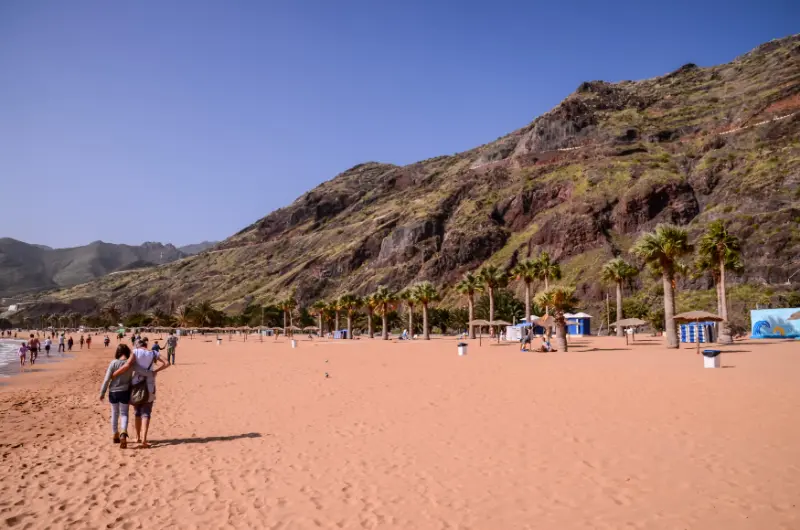
    Las Teresitas is one of the beaches I recommend most often to families staying around Santa Cruz or La Laguna. The long strip of pale sand and the offshore protection usually create a calmer feel than many exposed beaches on the north coast. The beach is spacious enough for children to play, and its length makes it easier to find a comfortable section even when the central area is busy.

    The practical side is strong too: there is road access, parking, bus service from Santa Cruz and food options around the beach and San Andrés. I like arriving earlier in the day, especially on weekends. The mountain backdrop gives Las Teresitas much more character than a generic resort beach, while the easy setup keeps the day simple.

    Las Vistas: the convenient choice in Los Cristianos

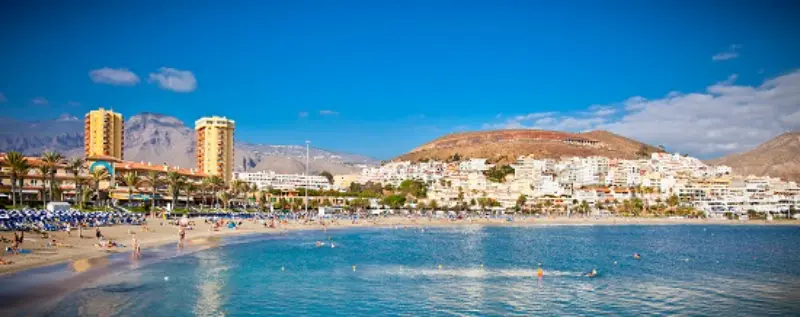
    For families based in the south, Las Vistas is hard to beat for convenience. It sits between Los Cristianos and Playa de las Américas, with a long pedestrian promenade, restaurants, shops and easy links to the wider resort area. I cover the neighbourhood in more detail in my Los Cristianos guide.

    Las Vistas is especially useful when one family member wants the beach while another wants cafés, shopping or a walk. You are not committed to an isolated beach day. The broad sandy area also gives children room to play away from the waterline. In peak periods, I prefer walking or using public transport rather than circling for the closest parking space.
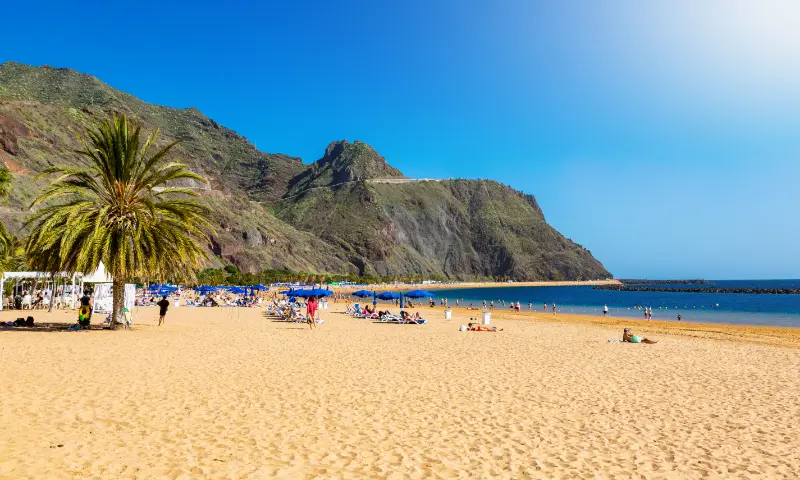
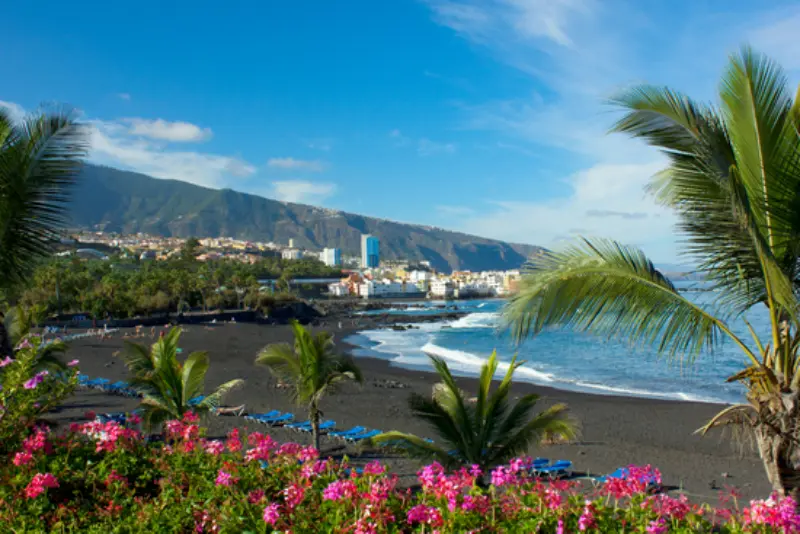
    Playa De Las Teresitas Sandy Beach Tenerife

    La Pinta: small, sheltered and close to Puerto Colón

    Playa de La Pinta, beside Puerto Colón in Costa Adeje, is a smaller beach that works well when I want a contained setting rather than a huge stretch of sand. The bay is sheltered by harbour infrastructure, and the surrounding promenade is packed with restaurants and services. That makes snacks, toilets and a quick change of plan easy.

    The location also lets a family combine beach time with a gentle harbour walk or a boat excursion on another day. My Costa Adeje guide explains the wider area. Because watersports and harbour activity are nearby, I still keep an eye on designated swimming areas and on the daily sea conditions.

    El Camisón: a useful middle ground in Playa de las Américas

    El Camisón is the beach I often suggest to families who want to stay near the energy of Playa de las Américas without choosing the most exposed surf sections. It is backed by the promenade and has plenty of cafés and restaurants within a short walk.

    The beach is relatively compact, which can be useful with children because the walk from towel to water is not endless. As elsewhere, I pay attention to flags and conditions. If the family wants a quieter atmosphere, I would compare El Camisón with Las Vistas rather than assume one is always better; they are close enough to try both during the same holiday.
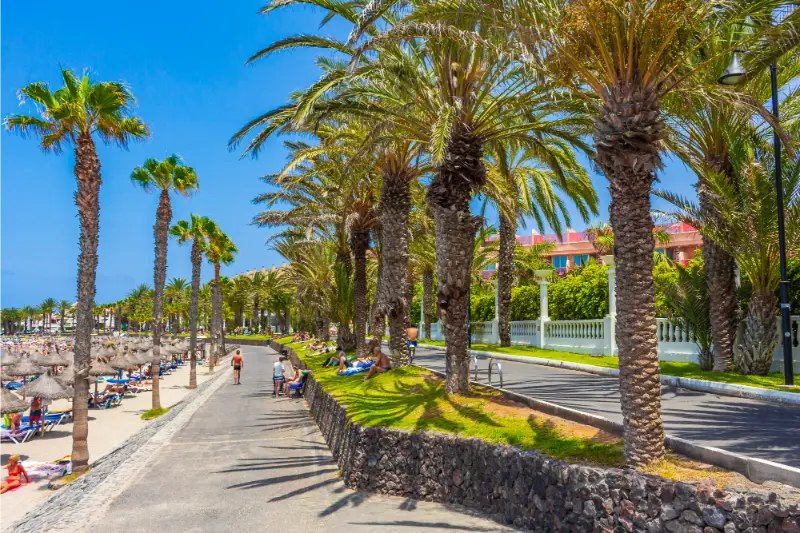
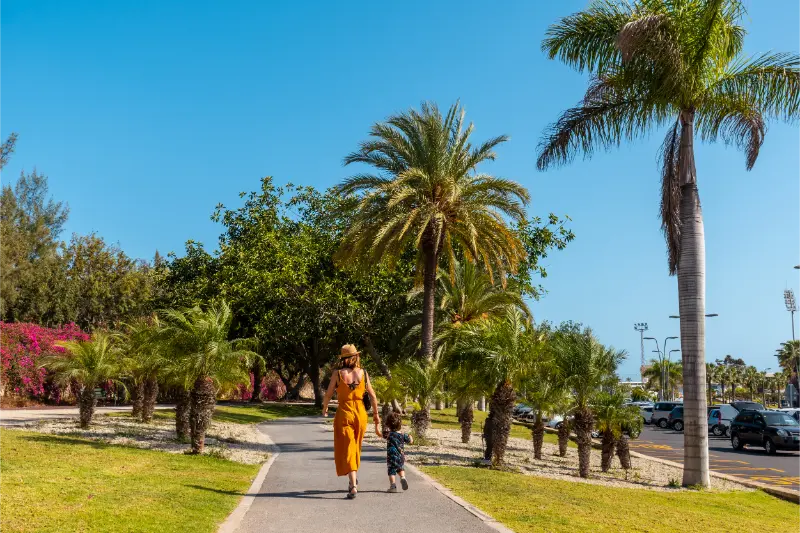
    Palm-lined promenade beside Playa del Camisón

    Playa del Duque: polished, comfortable and easy to pair with lunch

    Playa del Duque is one of the most polished beach environments in Costa Adeje. The promenade is attractive, there are restaurants and higher-end hotels nearby, and access is straightforward. For a family that values comfort over a wild setting, it is an easy option.

    I would not choose it because it is “safer” in an absolute sense; sea conditions still matter. I choose it because the infrastructure makes the whole day easier. It can also work well with grandparents or mixed-age groups, where not everyone wants to spend hours in the sand. A beachfront lunch or promenade walk gives the day more flexibility.

    Playa de Fañabé and Torviscas: good for a classic resort day

    Fañabé and the adjacent Torviscas area are practical choices for families who want a traditional resort beach day. The seafront is lively, accommodation is plentiful and almost every basic service is nearby. These beaches are particularly convenient if you are staying in Costa Adeje without a car.

    The trade-off is that they can feel busy and commercial. I see that as an advantage for some families and a disadvantage for others. If I want quiet scenery, I go elsewhere. If I want a beach where lunch, ice cream, a pharmacy and the walk back to the hotel are all easy, this part of the south performs very well.
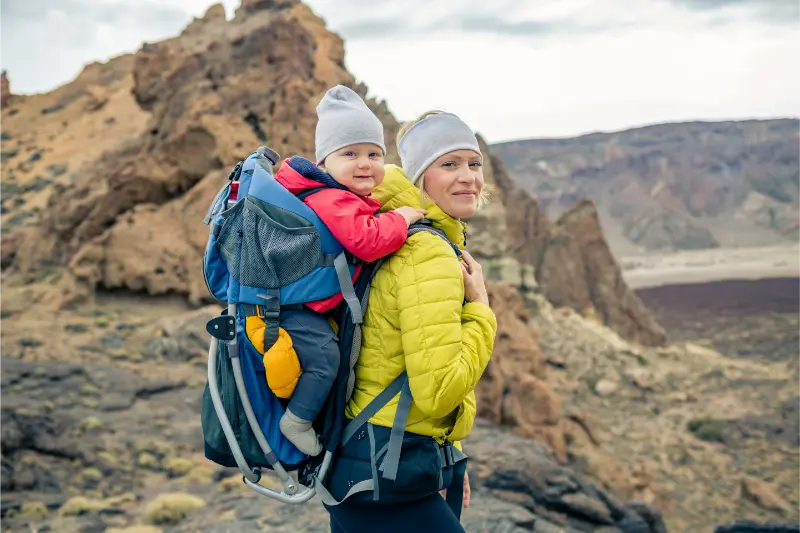
    Exploring Tenerife With Kids

    Playa de San Juan and Alcalá: a slower family atmosphere

    Families who prefer a smaller coastal-town rhythm should look at Playa San Juan and Alcalá. These places feel less dominated by large resort infrastructure than Costa Adeje, while still offering promenades, swimming areas and restaurants.

    I like them for families that enjoy a morning swim followed by a long lunch and an evening walk rather than a schedule of attractions. The coastline is volcanic and some entries are rockier than a classic sandy beach, so I choose the exact bathing area according to the children’s ages and current sea conditions.

    Beaches I admire but would not pick first with small children

    Benijo is one of Tenerife’s most dramatic beaches, but it is exposed to Atlantic swell and involves steps. El Bollullo and El Socorro can also have strong waves. I visit places like these for scenery, photography or experienced swimming only when conditions are appropriate, not because a “best beaches” list tells me they are unmissable.

    The same applies to natural pools. They can be wonderful, but ocean swell can make them dangerous even when the pool itself looks protected. For younger children I prefer developed pools or beaches with lifeguards and simple access. My rule is to match the place to the family rather than force the family to match the place.

    How I plan a family beach day

    I pack sun protection, hats, more water than I think we need, simple snacks, a dry layer and a small first-aid kit. Dark volcanic sand can become surprisingly hot, so beach shoes are useful even on days when the air temperature feels mild. I also bring a lightweight towel or cover that can create shade over a stroller for short periods without blocking ventilation.

    Timing matters. An early beach session followed by lunch often works better than arriving at midday and trying to keep everyone comfortable through the hottest hours. If the forecast is windy in El Médano or rough on the north coast, I choose a more sheltered beach rather than treating the original plan as fixed.

    Choosing a base for a family beach holiday

    If beach convenience is the priority, I compare Costa Adeje, Los Cristianos and Puerto de la Cruz rather than choosing Tenerife as one undifferentiated destination. Costa Adeje has the widest resort infrastructure; Los Cristianos has a walkable harbour-and-beach setup; the north offers greener scenery but more variable Atlantic conditions.

    Accommodation location matters more than hotel star rating when travelling with children. I check the real walking route to the beach, slopes, road crossings and supermarket access. Families can compare family accommodation across Tenerife and then verify the neighbourhood before committing.

    Beach safety details I never skip

    I teach children that a green flag is not permission to run into the sea without an adult. I identify the lifeguard point, agree where our towels are, and avoid inflatables that can drift in wind. After swimming, I rinse salt and reapply sunscreen rather than assuming morning protection will last all day.

    On black-sand beaches I test the surface with my own feet before letting a child walk barefoot. On rocky entries, simple water shoes can prevent cuts. These small habits matter more to me than finding the beach with the most impressive social-media photo.
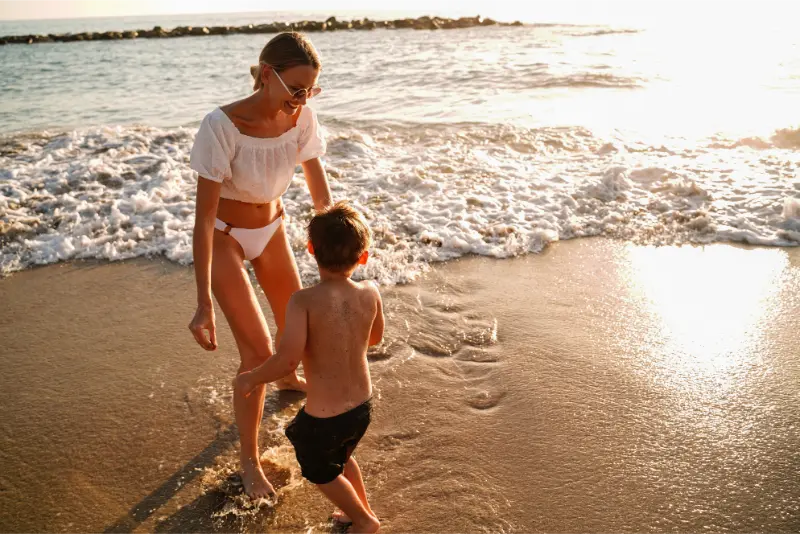
    Mother And Child On A Tenerife Beach

    Final thoughts

    Tenerife gives families far more choice than one “best” beach. Las Teresitas is my favourite easy option near the capital, Las Vistas works brilliantly around Los Cristianos, and Costa Adeje offers several beaches where services are almost effortless.

    The important part is matching beach style to the day: sheltered and serviced when everyone needs an easy outing, wilder scenery when children are older and conditions are suitable. That flexibility is one of the reasons Tenerife works so well for family trips.


  • Playa de Las Teresitas Guide: Tenerife’s Golden-Sand Beach Near Santa Cruz

    Playa de Las Teresitas Guide: Tenerife’s Golden-Sand Beach Near Santa Cruz

    Playa de Las Teresitas is the beach I would add to a Santa Cruz or Anaga day when I want an easy swim rather than a wild Atlantic beach. It sits beside the village of San Andrés, northeast of Santa Cruz, and its pale sand, palms and sheltered water look very different from the black volcanic beaches found elsewhere on Tenerife. The contrast is part of the appeal.

    The official Tenerife tourism site describes Las Teresitas as roughly 1.3 kilometres long, around 80 metres wide, family-oriented and protected by breakwaters that reduce wave action. It also lists practical services such as toilets, showers, lifeguarding, accessible facilities, bars and restaurants. Those features make it one of the simplest beaches to recommend to first-time visitors who want comfort.

    Why Las Teresitas feels different

    Many travellers picture Tenerife as a dark-sand volcanic island, so Las Teresitas can be surprising. The light-coloured sand and rows of palms create a softer, almost resort-like visual atmosphere even though the beach is next to a local fishing village rather than a major hotel strip. Behind it rise the dry lower slopes of Anaga, which gives the beach a dramatic natural frame.

    I would not call it Tenerife’s ‘best’ beach in every sense because beach preferences are personal. For wild scenery I prefer Benijo; for easy south-coast hotel access I would choose Fañabé or Del Duque; for wind sports, El Médano. Las Teresitas is strongest when calm water, space, services and proximity to Santa Cruz matter.

    Swimming and family use

    The breakwater usually makes the shoreline calmer than many open Atlantic beaches, which is one reason families like it. I still treat the ocean as the ocean: I follow flags and lifeguard instructions, keep young children within reach and do not assume that calm-looking water means zero risk. Weather, currents and local conditions can change.

    Illustrated guide: Playa de Las Teresitas, with practical visitor tips
    Illustrated guide: Playa de Las Teresitas.

    With children I choose a base near the services, create shade early and avoid the hottest middle part of the day if possible. The beach is long enough that walking farther from the busiest access points can change the atmosphere noticeably.

    How to get there from Santa Cruz

    Las Teresitas is close enough to Santa Cruz that I do not consider a rental car essential. Urban buses serve San Andrés and the beach area, and a taxi can be practical for a family. If I am already driving for an Anaga day, I use the beach as the last stop and accept that parking is easier at some times than others.

    The advantage of public transport is that I do not spend part of a beach day circling for a space during a busy weekend. The advantage of a car is flexibility if I am continuing toward Anaga viewpoints. My Tenerife without a car guide and driving guide compare both approaches.

    Parking

    There is parking by the beach, but I never interpret the existence of a car park as a guarantee of an easy space at midday on a sunny weekend. If driving, I arrive earlier, avoid blocking access roads and never leave valuables visible in the vehicle. For a relaxed city-and-beach day, I often prefer leaving the car in Santa Cruz and using public transport.

    San Andrés: do not skip the village

    The small village immediately beside Las Teresitas is part of the experience. Instead of eating only at a beach kiosk, I like the option of walking into San Andrés for fish or Canarian food. A long lunch there gives the day a local rhythm that is different from the southern resorts.

    Playa De Las Teresitas Beach Tenerife

    I also respect that San Andrés is a residential place, not an extension of the beach. I park legally, keep beach gear out of doorways and avoid treating narrow streets as photo sets. Small habits matter in places that receive large numbers of day visitors.

    What to bring

    • Shade or sun protection, especially for children.
    • Water even if you plan to use beach bars.
    • A light layer if combining the beach with higher Anaga viewpoints.
    • Secure footwear if you plan a long walk beyond the sand.
    • Only the valuables you genuinely need.

    I usually bring less to Las Teresitas than to a remote beach because services are close. That is one of the reasons I recommend it to travellers who do not want a logistical expedition every time they swim.

    Best combinations for one day

    Santa Cruz + Las Teresitas

    This is the easiest combination. I spend the morning in Santa Cruz—market, historic streets, TEA or the Auditorio area—then travel to San Andrés for lunch and beach time. My Santa Cruz guide provides a realistic city plan.

    Anaga + Las Teresitas

    If I drive, I can start in La Laguna or Cruz del Carmen, enjoy selected Anaga viewpoints and finish at Las Teresitas when I no longer want mountain roads. I keep the hiking modest because wet laurel forest and a hot beach day require different clothing and energy. Read my Anaga Rural Park guide before planning trails.

    Las Teresitas only

    There is nothing wrong with dedicating a full slow day to the beach and San Andrés. Not every Tenerife day needs three attractions. In fact, a relaxed day here can be the ideal counterweight after Teide or a long road trip.

    Best time of day

    I like morning for easier logistics and softer light, or late afternoon for a calmer end to a Santa Cruz day. Midday can be perfectly enjoyable if you want a classic beach day and have shade. Weekends and holidays can feel busier because the beach is popular with local residents as well as visitors.

    Weather differences from the south

    The northeast can be cloudier or windier than Costa Adeje even when the south is bright. I look at the local forecast rather than the island-wide symbol on a weather app. If Las Teresitas is grey while the south is sunny, that does not mean the forecast was ‘wrong’; Tenerife’s relief creates real microclimates.

    Playa De Las Teresitas Tenerife From Above

    Is Las Teresitas good without a car?

    Yes, particularly if you are staying in Santa Cruz or La Laguna. It is one of the island beaches I am comfortable recommending to travellers who do not rent a car because public transport reaches the area and the beach itself has services. The challenge is not the beach; it is adding remote Anaga stops on the same day.

    Where to stay

    For repeated beach visits combined with city life, I would stay in Santa Cruz rather than search for a resort directly on Las Teresitas. The capital gives far more restaurants, transport and evening options. You can compare Santa Cruz accommodation.

    Official information

    For current services and beach information, I use Tenerife Tourism’s official Las Teresitas page. It currently lists the beach as 1,300 metres long, family-friendly and equipped with services including toilets, showers, lifeguarding, accessible access and food options.

    Frequently asked questions

    Is Las Teresitas natural golden sand?

    The beach’s appearance has been heavily shaped by human intervention, including imported light-coloured sand and breakwaters. I visit for the present-day beach experience rather than treating it as an untouched natural cove.

    Can I visit from Costa Adeje?

    Yes, but I would combine it with Santa Cruz or Anaga so the long cross-island journey has more purpose. For a beach-only day from the south, closer beaches are more efficient.

    Is it safe for children?

    It is popular with families and generally more sheltered than many open-ocean beaches, but I still follow flags, lifeguards and normal water-safety rules.

    How long would I stay?

    Two to four hours works well as part of a city day; a full day is worthwhile if the goal is simple beach relaxation with lunch in San Andrés.

    How I decide whether to include Las Teresitas in a first-week plan

    If I already have several south-coast beach days, I include Las Teresitas only when it is attached to Santa Cruz or Anaga. That way the journey adds a genuinely different part of Tenerife rather than simply another stretch of sand. If the holiday is based in the capital, the decision reverses: Las Teresitas becomes the easy local beach and the southern resorts become the long excursion.

    Playa De Las Teresitas Tenerife Promenade

    This is a useful general rule for Tenerife. I group places by geography and experience instead of chasing a list of famous names. The island feels smaller, the driving falls and I spend more time actually being somewhere.

    Photography, shade and a slower beach rhythm

    Las Teresitas is especially photogenic when the mountains behind San Andrés are clear, but I do not build the visit around obtaining one exact postcard image. Light, haze and cloud change quickly in the northeast. I take a few photographs, then put the phone away and use the beach for what it does best: easy swimming, walking and a long break from sightseeing.

    If I plan several hours here, shade becomes part of the itinerary. The pale sand and open waterfront can feel bright even on a mild day, and reflected light adds to sun exposure. I reapply sunscreen after swimming and give children regular shaded breaks instead of waiting until everyone feels overheated.

  • Loro Parque Tenerife Guide: How to Plan a Full Day in Puerto de la Cruz

    Loro Parque Tenerife Guide: How to Plan a Full Day in Puerto de la Cruz

    Loro Parque is one of Tenerife’s best-known paid attractions and a common reason travellers build a day around Puerto de la Cruz. I think it works best when you treat it as a large zoological park that requires a full visit rather than a quick stop before seeing the rest of the north. The site is compact enough to walk but dense enough that presentation times, animal areas, meals and simple breaks can fill most of the day.

    The park’s current official information lists opening every day from 09:30 to 17:30 and recommends advance ticket purchase. Those details are easy to check, but the more important planning question is how the visit fits into your Tenerife trip. If you are already staying in Puerto de la Cruz, it is simple. From Costa Adeje or Los Cristianos, it becomes a long dedicated excursion, so I would not add a second major north-coast itinerary on the same day.

    What kind of visit to expect

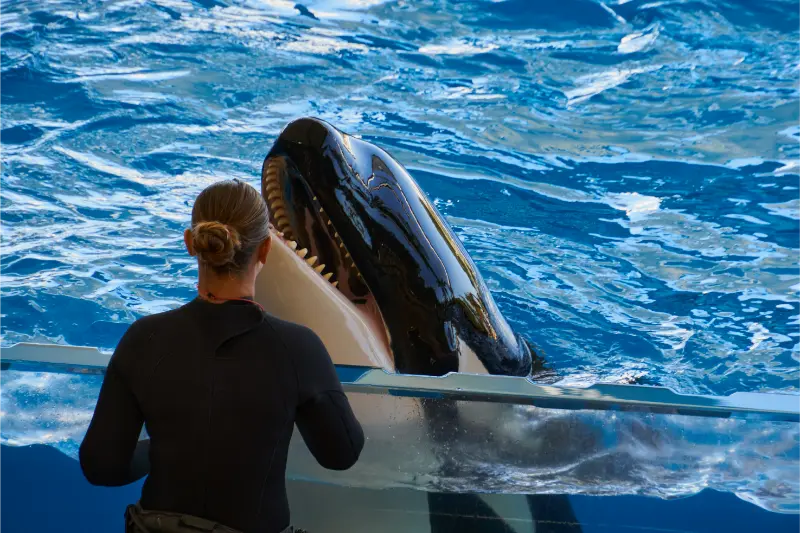
    Loro Parque contains a broad range of animal habitats and scheduled presentations, plus restaurants, shaded areas and landscaped paths. The experience is very different from a nature hike or whale-watching trip because you are visiting managed animal collections. I separate those experiences mentally: if my goal is to see cetaceans in the wild, I choose a regulated whale-watching trip; if I want a structured family attraction with many species in one place, Loro Parque serves a different purpose.

    Travellers also have different views about keeping cetaceans and other wild animals in human care. I think it is reasonable to read the park’s own conservation information as well as independent animal-welfare perspectives and decide according to your values. This guide focuses on practical trip planning rather than telling you what ethical conclusion to reach.

    How much time I would allow

    I would reserve most of the operating day. Rushing through in three hours means either skipping large areas or walking constantly with no time to observe. With young children, the pace naturally becomes slower because meals, toilets and rest matter. If a family has only a half day available, I would choose fewer zones deliberately rather than attempt the full park.

    Visit styleTime I would allowApproach
    Fast highlights4–5 hoursChoose priority habitats and limited presentations
    First full visitMost of the dayBalanced route with meal and rest
    Young childrenFull flexible dayFewer targets, more breaks
    Repeat visitVariableFocus on favourite habitats and new areas

    Presentation times and route planning

    The official park publishes presentation schedules, and I use those only as anchors. Trying to attend every presentation can turn the visit into a timetable exercise where you constantly cross the park. I pick the sessions that matter to my group, then build a walking route around nearby habitats. I arrive a little early because seating and access can take time.

    If an animal chooses not to be visible or an activity changes, I move on. Animals are not a guaranteed performance product, and operational schedules can change. That mindset makes the day calmer and avoids frustration when a carefully planned sequence does not happen exactly as expected.

    What to bring

    • Comfortable walking shoes rather than beach sandals.
    • Sun protection even though many areas have shade.
    • A light layer if the north is cooler or cloudier than your resort.
    • A refillable water bottle if permitted under current park rules.
    • Only the camera equipment you genuinely want to carry all day.
    • Any child essentials that keep breaks simple and predictable.

    Puerto de la Cruz often feels cooler and greener than the south, so I do not assume the weather at my Costa Adeje hotel represents the north coast. I check the forecast that morning and carry one light layer. Tenerife’s microclimates are part of the island’s character; my weather and season guide explains why conditions can differ so much over a short distance.

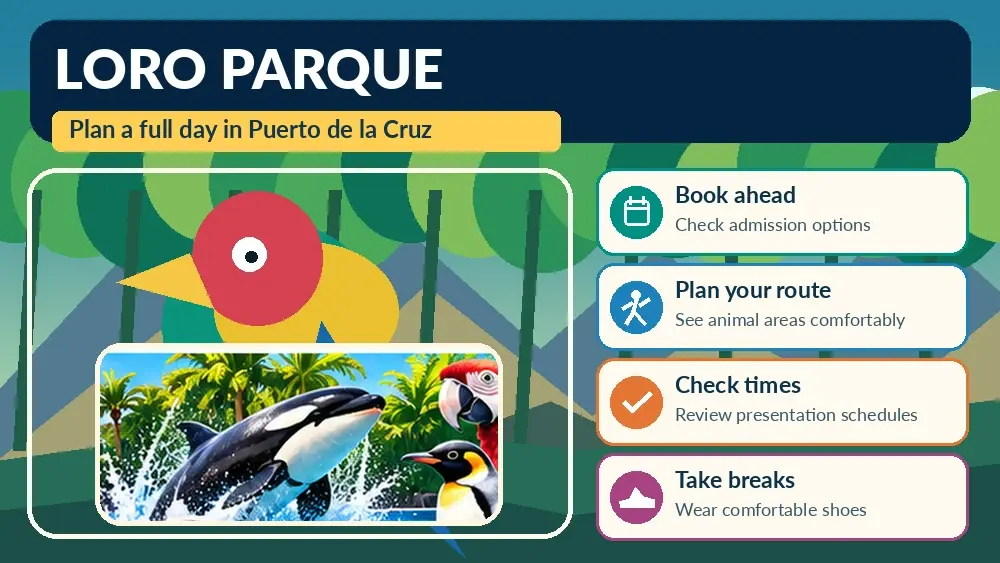
    Illustrated guide: Loro Parque Tenerife, with practical visitor tips
    Illustrated guide: Loro Parque Tenerife.

    Getting to Loro Parque from Puerto de la Cruz

    If I stay in Puerto de la Cruz, I would not rent a car just for the park. Loro Parque currently advertises a free express train through Puerto de la Cruz, with service information published on its official visitor page. Walking, taxi and local connections may also be practical depending on the hotel. I check the current route and times because visitor transport details can change.

    Getting there from southern Tenerife

    From Costa Adeje, Los Cristianos or Playa de las Américas, the day requires more planning. The park advertises bus transport from the south, while driving gives more control over departure time. If I drive, I accept that the motorway journey can be substantial and I avoid adding a late mountain road or another large attraction afterward.

    A family that strongly wants both Siam Park and Loro Parque can do them on separate days. I would never put them back-to-back if the children tire easily; a beach or easy resort day between them creates a better holiday rhythm. For family planning, see Tenerife with kids.

    Food, breaks and pacing

    The park lists restaurants, cafés and kiosks, so I plan to eat inside rather than build the day around leaving and returning. I usually choose lunch slightly before or after the busiest period and use the meal as a real rest. Children often enjoy the afternoon much more after twenty quiet minutes away from crowds.

    I also avoid carrying unnecessary shopping or souvenirs from the start. If I want something from a park shop, I look near the end of the visit. Anything bought early becomes another object to carry through a full day of walking.

    Can you combine Loro Parque with Puerto de la Cruz?

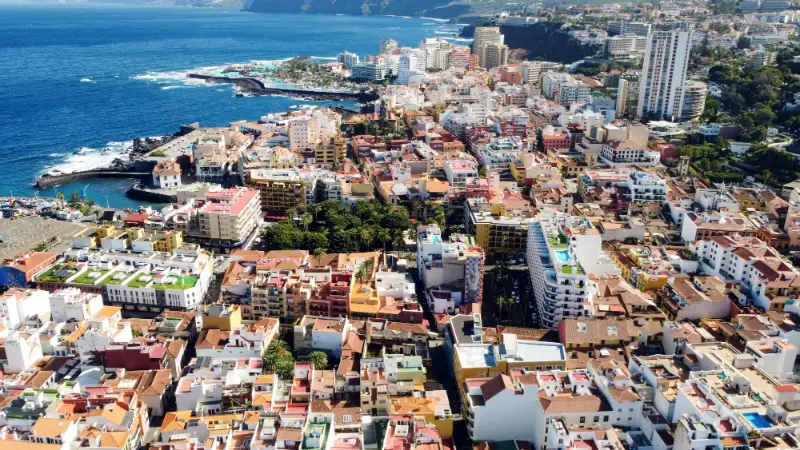
    If the park is the priority, I would combine it only with a simple evening walk or dinner in Puerto de la Cruz. Lago Martiánez, La Orotava and a detailed historic-centre visit deserve more time than leftovers at the end of an exhausting day. Travellers staying overnight in the north can explore those places the following morning. My Puerto de la Cruz guide has a better plan for the town itself.

    Aerial View Of Puerto De La Cruz Tenerife

    Where to stay

    Puerto de la Cruz is by far the most convenient base if Loro Parque is a major trip priority. It also positions you well for La Orotava, Icod, Garachico and the north side of Teide. If you prefer the sunnier south for the rest of the holiday, I would stay there and accept one long excursion rather than change hotels for a single attraction. You can compare current Puerto de la Cruz hotel prices.

    My practical full-day plan

    I would arrive near opening, identify the day’s presentation times, choose two or three priorities and begin walking before spending too long at the entrance. Late morning is for the first scheduled presentation and nearby habitats. Lunch is a genuine break. The afternoon is for areas missed earlier, a final selected presentation and a relaxed exit before the closing rush.

    That plan sounds simple because it is. The biggest planning mistake is over-engineering the day. A zoological park works best when you allow time to watch rather than move constantly from sign to sign.

    Official information to check

    Before visiting, I use the official Loro Parque visitor page for current hours, presentation schedules, transport and visitor rules. The published information currently lists daily opening from 09:30 to 17:30, but the official page should always take priority over older travel articles.

    Frequently asked questions

    Is Loro Parque a half-day attraction?

    It can be if you deliberately choose a limited number of areas, but I would not plan a first visit that way. Most travellers get better value from a full, slower day.

    Should I stay in Puerto de la Cruz?

    Only if the north suits the rest of your trip as well. Puerto de la Cruz is a strong base for northern towns and landscapes, but I would not change hotels solely to shorten the journey to one attraction.

    Playa Jardin Puerto De La Cruz Tenerife

    Is it suitable for small children?

    The park is easy to understand as a family attraction, but the practical issue is stamina. I plan more breaks, fewer fixed presentation targets and a flexible exit time with preschool-age children.

    What would I pair with it on another day?

    La Orotava, Icod de los Vinos, Garachico and a north-coast itinerary all pair naturally with a Puerto de la Cruz stay. I would keep those explorations for a separate day so the park itself is not rushed.

    How I fit the park into a north-Tenerife itinerary

    If I spend three nights in Puerto de la Cruz, I use one day for Loro Parque, one day for La Orotava and a Teide approach, and one day for Icod and Garachico. That structure keeps driving short and gives the north enough attention. On a single-day trip from the south, I accept that the park is the destination and save the historic towns for another holiday.

    This is especially important for families. Children often remember the animal they watched for ten minutes more vividly than the fifth viewpoint adults squeezed into the return drive. I would rather finish early and have ice cream on the Puerto de la Cruz promenade than add a rushed detour simply because it appears nearby on a map.

  • Tenerife with Kids: A Practical Family Travel Guide

    Tenerife with Kids: A Practical Family Travel Guide

    Tenerife can be an excellent family destination, but the best trip with children is rarely the one that tries to fit every famous attraction into a week. Distances, altitude, heat, wind and winding mountain roads affect children more than adults, and the difference between a relaxed family holiday and an exhausting one is often the pace. I plan one big activity day, then one easier day.

    This guide is designed for families who want beaches, nature and memorable experiences without treating children like miniature adults. It covers where to stay, beaches, Teide, water parks, boat trips, food, driving and the practical details I would consider before booking.

    Best areas to stay with children

    For a first family trip, Costa Adeje is the simplest all-round choice. It offers family-oriented accommodation, promenades, restaurants, beaches and easy access to major attractions. Los Cristianos is also practical because much of the central area is walkable and the harbour adds ferry and excursion options. Families who prefer a greener, more traditional atmosphere may enjoy Puerto de la Cruz, but the north’s weather is less consistently sunny.

    I choose accommodation by daily convenience rather than the number of pools. Look at walking gradients, supermarket access, room layout, kitchen facilities if useful, blackout quality, parking and the actual distance to the beach. My detailed where to stay in Tenerife guide compares the main bases.

    The easiest family beaches

    With young children, I prioritise beaches with straightforward access, lifeguard presence, toilets and nearby food. Las Vistas and several Costa Adeje beaches are generally easier than remote coves. The sea is still the Atlantic, so no beach should be considered automatically safe. Check flags and keep small children within immediate reach.

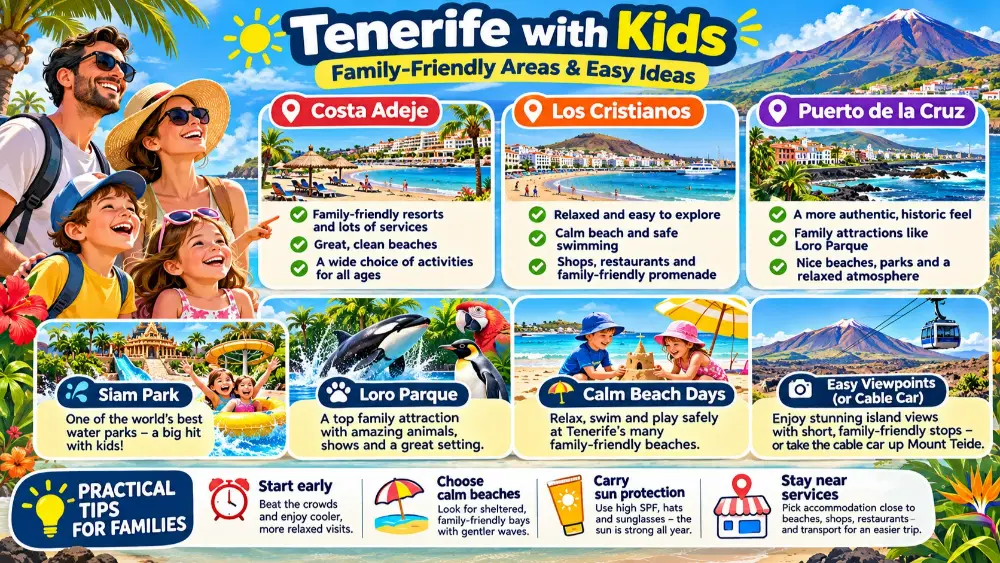
    Illustrated guide: Tenerife with Kids, with practical visitor tips
    Illustrated guide: Tenerife with Kids.

    A beach with dramatic cliffs but difficult access is not automatically a better family experience. Save wild beaches such as Benijo for a scenic stop if the children are old enough to handle steps and a longer drive. See the Tenerife beaches guide for a practical comparison.

    Mount Teide with children

    Teide is unforgettable for families because the volcanic landscape feels almost like another planet, but altitude changes the rules. The cable-car upper station is around 3,555 metres, temperatures can be much lower than on the coast and some activities have age or health restrictions. I would never promise children a summit experience before checking current official requirements.

    For many families, the best version is a scenic drive, viewpoints, Roques de García and perhaps the cable car if everyone meets the conditions and is comfortable at altitude. Keep the day shorter than an adult hiking itinerary, take warm layers and water, and watch for headache, nausea or unusual tiredness. My Mount Teide guide covers permits and current access planning.

    Water parks and big-ticket attractions

    Tenerife is known for major water and animal attractions, particularly in the south and Puerto de la Cruz area. These can be expensive, so I would choose based on the child’s age and interests rather than assuming every family must visit everything. A full water-park day can be physically tiring; place it between quieter days and arrive with a clear plan for sun protection, lockers and meal breaks.

    For very young children, a hotel pool plus beach may be just as successful as an all-day attraction. The goal is not to maximise ticket value by staying until closing if everyone is exhausted.

    Mother And Child On A Tenerife Beach

    Whale watching with children

    The waters off southwest Tenerife are well known for cetacean excursions. A shorter trip is often better with children than the longest cruise available. Choose an operator that follows responsible wildlife-observation standards and explains how it minimises disturbance. The Tenerife tourism authority maintains a sustainability framework for participating whale-watching companies.

    Seasickness is the practical issue families often forget. Bring sun protection, a light layer and any appropriate motion-sickness strategy recommended for your child. Never guarantee sightings; wildlife is not a theme-park schedule.

    Anaga and nature days

    Anaga can be magical for children who enjoy forests and viewpoints. The laurel forest feels completely different from the southern coast, but roads are winding and the weather can be misty or cool. I would select one short, age-appropriate walk and a few viewpoints rather than spend six hours driving through every corner.

    Trail access can change, and some natural areas require reservations. Check Tenerife ON before a nature day. Closed trails, barriers and warnings apply to families just as much as serious hikers.

    A family-friendly weekly rhythm

    Day typeExampleWhy it works
    EasyBeach + promenadeLow logistics
    BigTeide scenic dayMemorable but tiring
    EasyPool / local townRecovery
    BigLa Laguna + AnagaCulture and nature
    MediumBoat tripOne focused activity
    EasyBeach / water park depending ageFlexible
    FlexibleRepeat favourite or weather backupReduces pressure

    This rhythm is deliberately slower than my general 7-day Tenerife itinerary. With children, the value of a flexible afternoon is much higher than squeezing in one more village.

    Driving with children

    A rental car is useful because you can carry spare clothes, snacks, water and beach equipment. Mountain roads can cause motion sickness, so keep meals light before winding routes and allow stops. Reserve the correct car seat or booster in advance and check that the vehicle has enough luggage room once the seat is installed.

    If nobody wants to drive, stay in a well-connected resort and use organised excursions for Teide or Anaga. My Tenerife transport guide explains TITSA buses, taxis and airport transfers.

    Food with children

    Canarian food is usually easy to introduce gradually. Papas arrugadas, grilled fish, chicken, simple meats, cheese and bread can work well for less adventurous eaters, while adults can add stronger mojos, goat dishes, octopus or gofio-based recipes. Resort areas also have international options, so there is no need to turn every meal into a cultural challenge.

    I prefer lunch as the main local-food exploration with children, then keep dinner flexible. A long rural meal can be enjoyable when everyone is fresh and frustrating after a full day in the mountains. See what to eat in Tenerife for more ideas.

    Sun, heat and hydration

    Tenerife’s mild reputation can make families underestimate the sun. UV exposure is strong, and wind can make hot conditions feel deceptively comfortable. Use sunscreen, hats and regular water breaks. Dark volcanic sand can become very hot. In the mountains, the problem can be the opposite: cooler temperatures and wind despite intense sun.

    Strollers and walking

    A stroller is useful on promenades and resort areas, but historic streets, steps, volcanic paths and mountain trails are a different story. If your trip depends on a stroller, research access for each activity rather than assuming ‘easy walk’ means smooth pavement. A lightweight carrier can be more practical for some viewpoints and short trails, depending on the child’s age and the adult’s ability.

    Mother And Son Walking In Los Cristianos Tenerife

    Family travel in north versus south

    The south usually wins for easy sunshine, resort facilities and major family attractions. The north wins for gardens, traditional towns and a greener environment. A first family trip does not need to choose one side exclusively: stay in the south for convenience and make one or two northbound day trips.

    If the family prefers cooler scenery and urban walking to beaches, Puerto de la Cruz can be a great base. Match the base to the children you actually have, not to a generic ‘family hotel’ label.

    What I pack in the family day bag

    • Water for everyone
    • High-SPF sunscreen and hats
    • Light warm layer for Teide or Anaga
    • Snacks that work during drives
    • Spare clothes for younger children
    • Basic first-aid items and any regular medication
    • Motion-sickness supplies if relevant
    • Small towel or swimwear on mixed sightseeing days
    • Offline copy of bookings and identification when required

    What I would skip with very young children

    I would skip a strenuous Teide summit hike, overly long boat trips, cliffside routes that require constant supervision and itineraries with multiple hotel changes. Tenerife will still be there when the children are older. The best family memories are often simple: a safe beach, a volcanic viewpoint, a banana plantation seen from the road, ice cream in a plaza and a sunset walk.

    How to save money without making the trip harder

    A family apartment with a small kitchen can reduce breakfast and snack costs. Renting a car only for exploration days can be cheaper than keeping it all week. Choose one expensive attraction rather than three. Buy supermarket water and picnic items for mountain days, but still budget for local restaurants because food is part of the experience.

    Woman Swimming In A Tenerife Pool

    For accommodation, compare family-friendly accommodation in Tenerife and then verify the exact room configuration, not just the advertised maximum occupancy.

    My family rule for Tenerife

    Plan around energy, not around the number of attractions. If the morning goes well, you can always add a stop. If it goes badly, a beach or pool afternoon can rescue the day. Building that flexibility into the itinerary from the start is more useful than finding the ‘perfect’ family schedule online.

    Tenerife gives families an unusual combination of easy resort infrastructure and genuinely impressive nature. Use the first for comfort and the second in measured doses. That balance is what makes the island work so well with children.