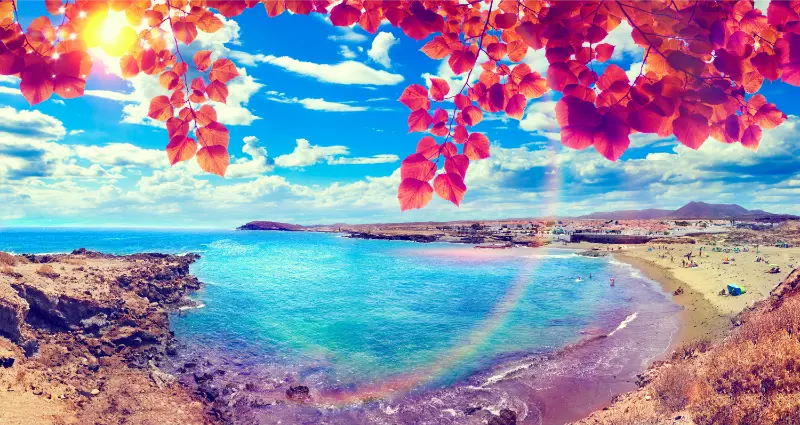
El Pris is one of the north-coast stops I choose when I want Tenerife to feel local rather than resort-like. The fishing village sits below Tacoronte on a steep Atlantic shoreline, with a small dark beach, a natural swimming pool and seafood restaurants gathered into a compact waterfront.
Turismo de Tenerife highlights the pool’s ramps, handrails and family-friendly access, but I still treat it as an ocean pool: swell, spray and temporary closures matter. The best visit combines the water with a slow meal and the wider Acentejo coast rather than treating El Pris as a quick photo stop.
Quick planning facts
| Location | El Pris, Tacoronte |
|---|---|
| Best for | Natural pool, seafood, sunset, local atmosphere |
| Beach | Small urban dark-sand/gravel beach with strong-wave exposure |
| Pool access | Steps and ramps with handrails |
| Parking | Available but limited at busy times |
| Best timing | Morning for swimming; late afternoon for food and sunset |
| Combine with | Mesa del Mar, Tacoronte, El Sauzal |
Why El Pris feels different from Tenerife’s resort coast
El Pris is a small fishing settlement below Tacoronte where the coast feels functional and local rather than designed around a resort promenade. Fishing boats, compact houses, a small dark beach, the natural pool and seafood restaurants sit close together on a steep volcanic shoreline.
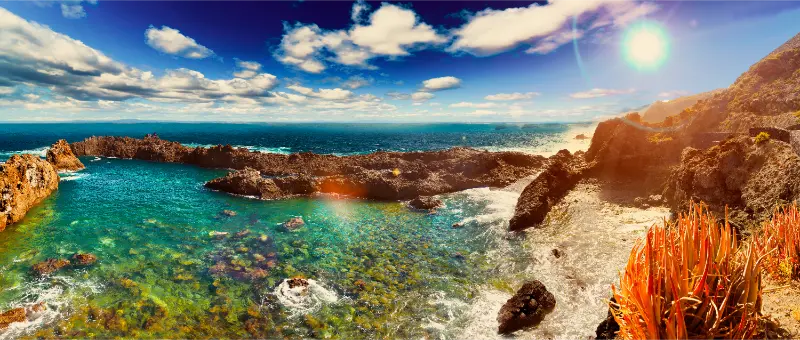
I like El Pris because it gives context to the north coast. The Atlantic is more exposed here, the landscape is greener above the cliffs, and the sunset can frame Teide in the distance. It is a useful counterpoint to the polished beaches of Costa Adeje.
The natural pool: the main reason I stop here
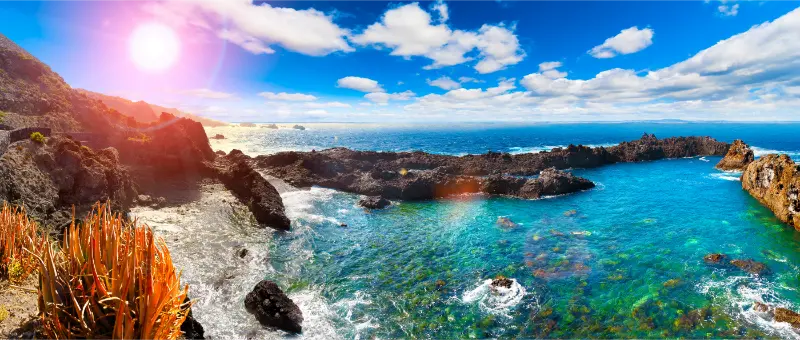
Turismo de Tenerife describes the natural pool as especially suitable for families and older visitors because it has steps and ramps with handrails that make entry easier. The pool sits directly beside an exposed ocean, so I still judge conditions before entering and never assume that a wall removes all wave risk.
The contrast is striking on days with swell: the water inside can look relatively calm while waves break strongly outside. I stay away from the outer edge when the sea is energetic and obey any local closures or warning signs.
El Pris beach and ocean safety
The nearby urban beach is small, with dark sand, gravel and lava pebbles. Official tourism information lists strong waves as a characteristic of the area, which is why I see the beach as a place for atmosphere first and swimming second.
If I want easier family swimming, I compare conditions with the pool or choose another beach entirely. My Tenerife safety guide explains the flag system, currents and the simple rule I follow: if locals and lifeguards are staying out, I stay out too.
Where to eat and what I order
Fresh fish is part of the identity of El Pris. I prefer simple preparations where I can ask what was landed recently, and I am happy with grilled fish, potatoes, salad and mojo rather than searching for a complicated tasting menu.
I compare menus and prices before sitting down, especially at peak lunch time. My Tenerife food guide helps with fish names, papas arrugadas, mojo and other dishes I expect to see.
Driving, parking and the steep approach
The road drops sharply from the Tacoronte area to the coast, so I drive slowly and use lower gears rather than riding the brakes. Parking exists, but the settlement is compact and I avoid arriving at the busiest lunch or sunset time if I want an easy visit.
If I am using buses, I check TITSA on the day because local frequencies can change. My Tenerife bus guide explains how I plan connections outside the main tourist corridors.
Best time of day
Morning is best when I care most about swimming and easy parking. Late afternoon is my choice for atmosphere, dinner and sunset, especially when the air is clear enough to see Teide behind the coast.
I do not plan a sunset stop without leaving margin for the drive back up the hill. Narrow roads are easier when I am not rushing or driving hungry after dark.
Where I would stay
I would not choose El Pris as a first-time base unless I specifically wanted a very local, quiet coast. Tacoronte, La Laguna or Puerto de la Cruz give me more services while keeping El Pris within day-trip range.
For a north-coast stay I compare accommodation around Tacoronte on Booking.com and then check the exact road and walking access before booking.
Official information I check before going
I use the official Tenerife tourism page for the El Pris natural pool for the basic facilities and location. For the beach, I also check current sea conditions rather than relying on old photographs.
Because coastal infrastructure can be affected by storms, I treat barriers, closures and maintenance notices as current information even if a travel article says the place is normally open.
How I fit it into a realistic Tenerife day
I treat El Pris as part of a wider Tacoronte and Acentejo day rather than an isolated pin on the map. Tenerife looks compact, but mountain roads, parking searches and changing weather can turn short distances into slow travel. I decide in advance which stop is the priority and which stops are optional.
My preferred approach is to pair it with Mesa del Mar, Tacoronte, El Sauzal or a winery stop. That creates a day with contrast without spending most of the time in the car. I also keep one backup plan nearby in case wind, cloud, surf or temporary access restrictions change the experience.
Weather, clothing and microclimates
I never use a single Tenerife forecast for the whole island. North-coast cloud, Anaga mist, Teide sunshine and south-coast heat can all occur on the same day. I check the forecast for the exact municipality and, for mountain or coastal activities, I also look at wind and sea conditions.
Even on warm days I carry sun protection, water and a light layer. At higher elevations I add a windproof layer, while on the coast I bring footwear with grip because volcanic rock, wet steps and black sand can all be slippery or hot.
Responsible travel habits I use here
Small beaches, villages, viewpoints and trailheads are shared local spaces. I park only where it is legal, keep access to homes and farm tracks clear, take rubbish away and avoid turning narrow roads into informal photo stops. In protected areas I stay on the marked route and never collect volcanic material, plants or other natural objects.
I also prefer to support the area in a simple way: a coffee, lunch, market purchase or locally made product is often a better souvenir than something generic. Respectful travel is mostly about ordinary decisions that reduce pressure on places I want to remain enjoyable.
My backup plan when conditions are wrong
If the sea is rough, I do not force a swim. If a viewpoint is inside cloud, I move lower or switch to a village, museum or food stop. If parking is full, I continue to the next planned place rather than circling residential streets. This flexibility is especially useful in Tenerife because very different landscapes sit close together.
I build the day around one must-do experience and several optional stops. That structure produces better trips than trying to complete a rigid checklist, and it makes it easier to respond to closures, weather and local events without feeling that the day has failed.
Frequently asked questions
Is El Pris good for swimming?
The natural pool can be suitable when conditions are safe, but the surrounding Atlantic coast is exposed and the beach itself can have strong waves.
Is El Pris good with children?
The pool has access features that make it popular with families, but adults should still monitor sea conditions and children closely.
Can I eat fresh fish there?
Yes. The village is known for restaurants serving Canarian seafood and is a good place to build lunch into the visit.
Is El Pris worth a special trip?
Yes if you enjoy local coastal places, natural pools and seafood; I would combine it with other Tacoronte or Acentejo stops.

Can I reach El Pris without a car?
Public transport is possible, but I check the current TITSA timetable because local service patterns can change.
Questions I ask myself before I go
I check four things before leaving: current access, exact weather, realistic travel time and what I will do if the first plan fails. Tenerife is an easy island to underestimate because distances look short on a map. A mountain road, coastal traffic or a full car park can add far more time than expected.
I also decide whether the destination is the purpose of the day or simply one stop. When it is the main purpose, I leave enough time to experience it slowly. When it is secondary, I set a clear limit so the rest of the itinerary does not become rushed.
What makes this worth adding to a longer Tenerife trip
The strongest Tenerife itineraries mix famous landmarks with smaller places and experiences. Teide, Anaga and the main beaches explain the island at a large scale, while a local pool, rural trail, village festival or food tradition explains how people actually use and understand the landscape.
I therefore do not judge a place only by the number of attractions. A short viewpoint can be valuable if it helps me read the geography; a small village can be memorable if I slow down for lunch; a modest trail can reveal volcanic history better than a long drive through the same area.
Practical travel habits that improve the day
I download maps or save the route before entering areas with weaker mobile coverage. I start with a full bottle of water, keep a layer in the car, carry some cash for small local businesses and avoid planning every meal at the most obvious tourist time. These are small habits, but they make rural Tenerife much easier.
I also leave more space between stops than a navigation app suggests. That time absorbs photo stops, roadworks, wrong turns and simple curiosity. The best travel days on Tenerife often improve when I have enough margin to stop somewhere I had not planned.
My final take
I visit El Pris for the combination, not for one single attraction: ocean pool, fishing-village scale, seafood and a steep north-coast landscape. When the sea is safe and the weather is clear, it can be one of the most satisfying small stops around Tacoronte.