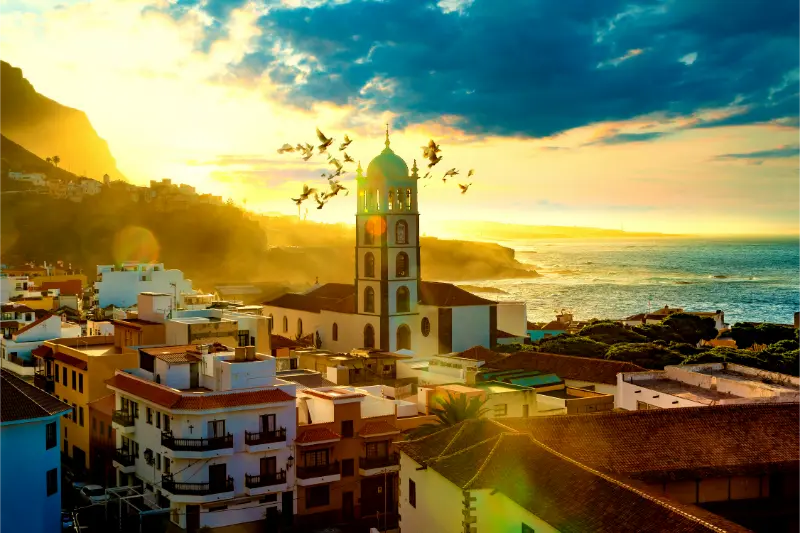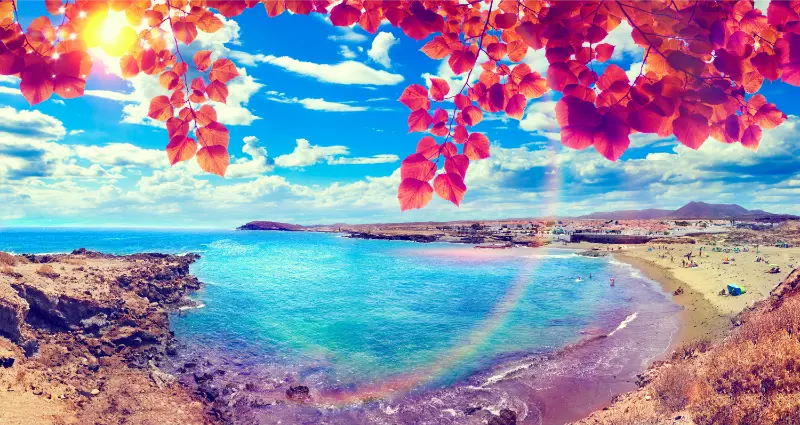
Tag: Tenerife natural pools

  • Charco del Viento Tenerife Guide: Volcanic Pool, Snorkelling and Safety

    Charco del Viento Tenerife Guide: Volcanic Pool, Snorkelling and Safety

    Charco del Viento is one of the north Tenerife natural pools I visit for the volcanic setting as much as the swim. Lava flows reached the sea and formed two rocky arms that partly protect a small bay on the La Guancha coast.

    The shelter can make the water calmer than the open Atlantic, but I never treat a natural pool as risk-free. My decision to enter depends on the actual waves, access and warning signs I see on the day.

    Quick planning facts

    LocationSanta Catalina, La Guancha
    TypeNatural volcanic bathing area
    Best forSwimming and snorkelling in calm conditions
    Main hazardAtlantic swell and slippery volcanic rock
    FootwearWater shoes helpful
    Best timingCalm-sea mornings are my preference
    Combine withLa Guancha, San Juan de la Rambla, Icod

    How the natural pool was formed

    Charco del Viento is a volcanic bathing area in Santa Catalina, La Guancha. Ancient lava flows reached the sea, cooled rapidly and created two natural rock arms that partially shelter a small bay from the stronger Atlantic swell.
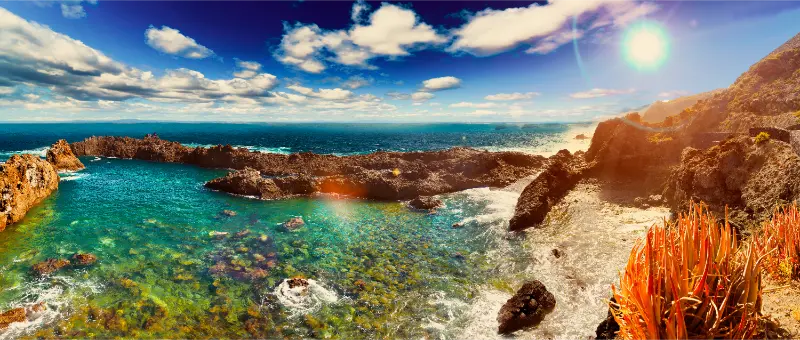
    Tenerife Volcanic Natural Pool

    That geology is what makes the place beautiful and what can make visitors overconfident. The lava barriers reduce wave energy but do not turn the ocean into a swimming pool with guaranteed conditions.

    Swimming and snorkelling

    On calm days the sheltered water can be clear enough for snorkelling, and Turismo de Tenerife specifically mentions swimming, fishing and snorkelling as common activities. I enter slowly because volcanic rock can be uneven and slippery.

    If waves are overtopping the outer rocks or the water is moving strongly through the pool, I stay out. I never stand on exposed edges to photograph incoming surf.

    Footwear and comfort

    Water shoes are useful for rough rock and entry points. I also bring a towel that I do not mind placing on volcanic ground, sun protection and enough water.

    There may be periods when access infrastructure changes after storms, so I judge the site in front of me rather than relying entirely on old images.

    Why I combine it with La Guancha

    The pool makes more sense as part of a wider La Guancha day. My La Guancha guide links the coast with the rural town, forest and other local landscapes.

    That also gives me a strong backup plan if the sea is too rough: I can turn the day inland instead of waiting for conditions to improve.

    Photography and wave safety

    The geometry of the lava arms and clear water is photogenic, but I use a zoom or phone from a safe position rather than approaching the outer edge during swell.

    North-coast waves can arrive in larger sets after several quiet minutes. I never let a photograph make me forget that pattern.

    Official source

    I use the official Charco del Viento page for location and geological description.

    For the actual decision to enter the water, I rely on current sea conditions, warning signs and any local closure.

    How I judge whether it is a swimming day

    At Charco del Viento I decide whether to swim only after seeing the sea in person. Beach descriptions are useful, but Atlantic conditions change with swell, wind, tide and local currents. A beach that looked easy yesterday can be completely different today.

    I look for warning flags, lifeguard instructions where present, local closures and the behaviour of experienced bathers. If the beach is not supervised, I become more conservative. My Tenerife safety guide explains the ocean-safety habits I use around the island.

    What I bring

    My basic beach kit is simple: water, reef-safe sun protection, a hat, sandals or water shoes for hot or rough surfaces, and a light layer for wind. On black sand I also remember that the surface can become surprisingly hot in strong sun.

    I do not leave valuables visible in the car, and I take all litter away. On beaches without services I assume there will be no shade, toilets, drinking water or food unless the official listing says otherwise.

    Best time of day

    Morning is my default for easier parking, gentler temperatures and a better chance of finding space. Late afternoon can be beautiful, but I keep enough daylight for walking back to the car or navigating coastal roads.

    For a family day I avoid arriving hungry at the busiest lunch hour. I either bring a simple picnic where appropriate or decide in advance which nearby village will be the food stop.

    Getting there and parking

    I check the final approach before driving to Charco del Viento, especially because small coastal settlements in La Guancha can have narrow streets. I use legal parking only and never convert a turning area, bus stop or resident access into an improvised space.

    If the official beach information lists bus access, I still verify the current route and timetable. My Tenerife without a car guide is useful when I am building a trip around public transport.

    What to combine nearby

    I combine Charco del Viento with La Guancha village, San Juan de la Rambla, Icod de los Vinos or other north-coast viewpoints rather than driving across the island after a beach stop. The goal is to understand one piece of Tenerife in depth: its coast, village streets, volcanic terrain and food.
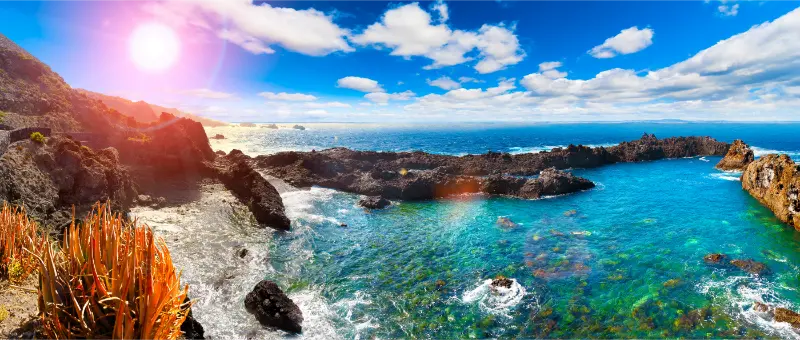
    Tenerife Volcanic Natural Pools At Sunset

    This is also more resilient. If swimming is not sensible, I can still use the day for a walk, a viewpoint or a local meal without wasting hours in the car.

    Where I would stay

    I would choose accommodation in La Guancha only if the wider area fits the trip, not simply to be near one beach. For most first-time visitors I compare the convenience of a larger base with the atmosphere of a quieter local zone.

    When I want to stay close, I compare accommodation in the wider area on Booking.com and then verify the exact road, parking and walking access before booking.

    Frequently asked questions

    Is Charco del Viento safe for swimming?

    It can be enjoyable in calm conditions, but ocean swell can still affect the pool. I stay out when waves are overtopping the outer rocks or access is closed.

    Can I snorkel there?

    Yes, snorkelling is a popular activity when the sea is calm and visibility is good.

    Do I need water shoes?

    They are useful because volcanic rock can be rough and slippery.

    Is it a normal swimming pool?

    No. It is a natural volcanic bathing area connected to the Atlantic.

    Natural Pool Near Los Gigantes Puerto De Santiago Tenerife

    What should I combine it with?

    La Guancha village, San Juan de la Rambla or Icod de los Vinos make logical nearby stops.

    How I decide whether this stop belongs in my itinerary

    I ask whether the place adds something different from the previous day. Tenerife can easily become a sequence of similar viewpoints or beaches if I plan from a list instead of from geography. I prefer contrast: coast after forest, heritage after a hike, or a quiet village after a major attraction.

    I also compare the detour with the experience. A small stop that sits naturally on my route can be excellent; the same stop may not justify a two-hour cross-island drive. This is why I group days by area and protect time for unplanned discoveries.

    Small mistakes I try to avoid

    I do not trust travel times that ignore parking, mountain bends or finding the correct entrance. I do not leave water in the hotel because the plan looks short. I do not assume a café, toilet or ticket office will be open simply because an old article mentions it. And I never turn a closed gate or warning barrier into a challenge to get around.

    Another common mistake is trying to reproduce a photograph exactly. Light, tide, cloud, vegetation and access all change. I use images for orientation, then accept the conditions I actually find. That approach is safer and usually creates a more genuine travel experience.

    What I save on my phone before leaving

    I save the exact destination, an offline map, the official information page and one backup stop in the same area. For a hike I also save the route file or map, emergency information and the latest access notice. For a beach I check sea conditions and identify a nearby non-swimming alternative.

    This simple preparation matters most in rural Tenerife, where a weak signal or a closed road can otherwise turn a small change into a long detour. It also lets me spend less time looking at my phone once I arrive.

    Responsible travel details that matter

    I stay on marked paths, never collect volcanic rocks or plants in protected areas, keep drones subject to current rules and avoid photographing people at close range without permission. In villages I remember that the photogenic doorway is somebody’s home and the narrow lane may be the only access for residents.

    On the coast I keep away from unstable edges and do not approach blowholes or outer rocks during swell. I take rubbish away, avoid feeding wildlife and use established access rather than creating shortcuts through vegetation. These are small decisions, but repeated by many visitors they determine how well places cope with tourism.

    My final take

    Charco del Viento is beautiful because it remains part of the ocean. I enjoy the clear water and lava forms when conditions are calm, but I keep the same respect for swell that I would use on an exposed north-coast beach.

  • El Pris Tenerife Guide: Natural Pool, Fishing Village and Seafood

    El Pris Tenerife Guide: Natural Pool, Fishing Village and Seafood

    El Pris is one of the north-coast stops I choose when I want Tenerife to feel local rather than resort-like. The fishing village sits below Tacoronte on a steep Atlantic shoreline, with a small dark beach, a natural swimming pool and seafood restaurants gathered into a compact waterfront.

    Turismo de Tenerife highlights the pool’s ramps, handrails and family-friendly access, but I still treat it as an ocean pool: swell, spray and temporary closures matter. The best visit combines the water with a slow meal and the wider Acentejo coast rather than treating El Pris as a quick photo stop.

    Quick planning facts

    LocationEl Pris, Tacoronte
    Best forNatural pool, seafood, sunset, local atmosphere
    BeachSmall urban dark-sand/gravel beach with strong-wave exposure
    Pool accessSteps and ramps with handrails
    ParkingAvailable but limited at busy times
    Best timingMorning for swimming; late afternoon for food and sunset
    Combine withMesa del Mar, Tacoronte, El Sauzal

    Why El Pris feels different from Tenerife’s resort coast

    El Pris is a small fishing settlement below Tacoronte where the coast feels functional and local rather than designed around a resort promenade. Fishing boats, compact houses, a small dark beach, the natural pool and seafood restaurants sit close together on a steep volcanic shoreline.

    Tenerife Volcanic Natural Pool

    I like El Pris because it gives context to the north coast. The Atlantic is more exposed here, the landscape is greener above the cliffs, and the sunset can frame Teide in the distance. It is a useful counterpoint to the polished beaches of Costa Adeje.

    The natural pool: the main reason I stop here

    Turismo de Tenerife describes the natural pool as especially suitable for families and older visitors because it has steps and ramps with handrails that make entry easier. The pool sits directly beside an exposed ocean, so I still judge conditions before entering and never assume that a wall removes all wave risk.

    The contrast is striking on days with swell: the water inside can look relatively calm while waves break strongly outside. I stay away from the outer edge when the sea is energetic and obey any local closures or warning signs.

    El Pris beach and ocean safety

    The nearby urban beach is small, with dark sand, gravel and lava pebbles. Official tourism information lists strong waves as a characteristic of the area, which is why I see the beach as a place for atmosphere first and swimming second.

    If I want easier family swimming, I compare conditions with the pool or choose another beach entirely. My Tenerife safety guide explains the flag system, currents and the simple rule I follow: if locals and lifeguards are staying out, I stay out too.

    Where to eat and what I order

    Fresh fish is part of the identity of El Pris. I prefer simple preparations where I can ask what was landed recently, and I am happy with grilled fish, potatoes, salad and mojo rather than searching for a complicated tasting menu.

    I compare menus and prices before sitting down, especially at peak lunch time. My Tenerife food guide helps with fish names, papas arrugadas, mojo and other dishes I expect to see.

    Driving, parking and the steep approach

    The road drops sharply from the Tacoronte area to the coast, so I drive slowly and use lower gears rather than riding the brakes. Parking exists, but the settlement is compact and I avoid arriving at the busiest lunch or sunset time if I want an easy visit.

    If I am using buses, I check TITSA on the day because local frequencies can change. My Tenerife bus guide explains how I plan connections outside the main tourist corridors.

    Best time of day

    Morning is best when I care most about swimming and easy parking. Late afternoon is my choice for atmosphere, dinner and sunset, especially when the air is clear enough to see Teide behind the coast.

    I do not plan a sunset stop without leaving margin for the drive back up the hill. Narrow roads are easier when I am not rushing or driving hungry after dark.

    Where I would stay

    I would not choose El Pris as a first-time base unless I specifically wanted a very local, quiet coast. Tacoronte, La Laguna or Puerto de la Cruz give me more services while keeping El Pris within day-trip range.

    For a north-coast stay I compare accommodation around Tacoronte on Booking.com and then check the exact road and walking access before booking.

    Official information I check before going

    I use the official Tenerife tourism page for the El Pris natural pool for the basic facilities and location. For the beach, I also check current sea conditions rather than relying on old photographs.

    Because coastal infrastructure can be affected by storms, I treat barriers, closures and maintenance notices as current information even if a travel article says the place is normally open.

    How I fit it into a realistic Tenerife day

    I treat El Pris as part of a wider Tacoronte and Acentejo day rather than an isolated pin on the map. Tenerife looks compact, but mountain roads, parking searches and changing weather can turn short distances into slow travel. I decide in advance which stop is the priority and which stops are optional.

    My preferred approach is to pair it with Mesa del Mar, Tacoronte, El Sauzal or a winery stop. That creates a day with contrast without spending most of the time in the car. I also keep one backup plan nearby in case wind, cloud, surf or temporary access restrictions change the experience.

    Weather, clothing and microclimates

    I never use a single Tenerife forecast for the whole island. North-coast cloud, Anaga mist, Teide sunshine and south-coast heat can all occur on the same day. I check the forecast for the exact municipality and, for mountain or coastal activities, I also look at wind and sea conditions.

    Even on warm days I carry sun protection, water and a light layer. At higher elevations I add a windproof layer, while on the coast I bring footwear with grip because volcanic rock, wet steps and black sand can all be slippery or hot.

    Responsible travel habits I use here

    Small beaches, villages, viewpoints and trailheads are shared local spaces. I park only where it is legal, keep access to homes and farm tracks clear, take rubbish away and avoid turning narrow roads into informal photo stops. In protected areas I stay on the marked route and never collect volcanic material, plants or other natural objects.

    I also prefer to support the area in a simple way: a coffee, lunch, market purchase or locally made product is often a better souvenir than something generic. Respectful travel is mostly about ordinary decisions that reduce pressure on places I want to remain enjoyable.

    My backup plan when conditions are wrong

    If the sea is rough, I do not force a swim. If a viewpoint is inside cloud, I move lower or switch to a village, museum or food stop. If parking is full, I continue to the next planned place rather than circling residential streets. This flexibility is especially useful in Tenerife because very different landscapes sit close together.

    I build the day around one must-do experience and several optional stops. That structure produces better trips than trying to complete a rigid checklist, and it makes it easier to respond to closures, weather and local events without feeling that the day has failed.

    Frequently asked questions

    Is El Pris good for swimming?

    The natural pool can be suitable when conditions are safe, but the surrounding Atlantic coast is exposed and the beach itself can have strong waves.

    Tenerife Volcanic Natural Pools At Sunset

    Is El Pris good with children?

    The pool has access features that make it popular with families, but adults should still monitor sea conditions and children closely.

    Can I eat fresh fish there?

    Yes. The village is known for restaurants serving Canarian seafood and is a good place to build lunch into the visit.

    Is El Pris worth a special trip?

    Yes if you enjoy local coastal places, natural pools and seafood; I would combine it with other Tacoronte or Acentejo stops.

    Natural Pool Near Los Gigantes Puerto De Santiago Tenerife

    Can I reach El Pris without a car?

    Public transport is possible, but I check the current TITSA timetable because local service patterns can change.

    Questions I ask myself before I go

    I check four things before leaving: current access, exact weather, realistic travel time and what I will do if the first plan fails. Tenerife is an easy island to underestimate because distances look short on a map. A mountain road, coastal traffic or a full car park can add far more time than expected.

    I also decide whether the destination is the purpose of the day or simply one stop. When it is the main purpose, I leave enough time to experience it slowly. When it is secondary, I set a clear limit so the rest of the itinerary does not become rushed.

    What makes this worth adding to a longer Tenerife trip

    The strongest Tenerife itineraries mix famous landmarks with smaller places and experiences. Teide, Anaga and the main beaches explain the island at a large scale, while a local pool, rural trail, village festival or food tradition explains how people actually use and understand the landscape.

    I therefore do not judge a place only by the number of attractions. A short viewpoint can be valuable if it helps me read the geography; a small village can be memorable if I slow down for lunch; a modest trail can reveal volcanic history better than a long drive through the same area.

    Practical travel habits that improve the day

    I download maps or save the route before entering areas with weaker mobile coverage. I start with a full bottle of water, keep a layer in the car, carry some cash for small local businesses and avoid planning every meal at the most obvious tourist time. These are small habits, but they make rural Tenerife much easier.

    I also leave more space between stops than a navigation app suggests. That time absorbs photo stops, roadworks, wrong turns and simple curiosity. The best travel days on Tenerife often improve when I have enough margin to stop somewhere I had not planned.

    My final take

    I visit El Pris for the combination, not for one single attraction: ocean pool, fishing-village scale, seafood and a steep north-coast landscape. When the sea is safe and the weather is clear, it can be one of the most satisfying small stops around Tacoronte.

  • Mesa del Mar Guide: Playa de La Arena, Natural Pools and Tacoronte Coast

    Mesa del Mar Guide: Playa de La Arena, Natural Pools and Tacoronte Coast

    Mesa del Mar is one of those north-coast places that makes more sense when I stop thinking in terms of a single beach. The small coastal settlement below Tacoronte combines Playa de La Arena, volcanic cliffs, swimming infrastructure and a road that drops dramatically from the agricultural slopes above. I come here for the contrast: vineyards and towns at altitude, then a sudden descent to black sand and Atlantic water.

    The official tourism information lists Playa de La Arena at Mesa del Mar as a 350-metre black-sand beach with parking, toilets and a solarium. It also notes that Mesa del Mar has two pools, one seasonal and another available year-round. That combination makes the area more versatile than a remote north-coast cove, although ocean conditions still deserve respect.

    Quick planning facts

    MunicipalityTacoronte
    Main beachPlaya de La Arena, black sand
    Official lengthAbout 350 m
    FacilitiesSolarium, toilets and parking listed
    Public transportInterurban bus service
    RoadSteep, winding descent from Tacoronte
    Best forLocal atmosphere, black sand, swimming and north-coast scenery
    NearbyTacoronte, El Sauzal and Acentejo wine country

    Why Mesa del Mar feels different

    The geography does most of the work. The coast of Acentejo is steep and dramatic, so reaching Mesa del Mar feels like moving into a separate world below the towns and vineyards. The road descends in tight curves, and the ocean suddenly fills the view. I find that transition as memorable as the beach itself.

    This is not the manicured resort landscape of the south. Buildings sit close to the coast, cliffs rise behind them and the beach is used by local families as well as visitors. For the wider area, my Tacoronte and El Sauzal guide gives useful context on wine country, viewpoints and local food.

    Playa de La Arena: what to expect

    The beach is broad enough to feel like a real beach day rather than just a swimming spot. Its black sand absorbs heat quickly, so footwear is useful when the sun is strong. The official listing describes the water as calm, but I still judge conditions when I arrive because north-coast swell can change quickly.

    I prefer this beach when I want a local atmosphere and do not need the full resort service of Costa Adeje. The scenery is more rugged, and on some days the ocean is the dominant presence. My black-sand beaches guide helps compare it with El Bollullo, El Socorro and other volcanic beaches.

    The natural pools

    Mesa del Mar also has swimming pools built into the coastal setting. The official tourism page says there are two, with one operating only in summer and another available throughout the year. I treat opening and maintenance details as changeable and verify locally before relying on a pool as the main reason for the trip.

    Natural and coastal pools can feel safer than an exposed beach, but they are not immune to swell. Waves can overtop walls and wet surfaces become slippery. I use the same caution here that I explain in my Tenerife natural pools guide.

    Tenerife Volcanic Natural Pools At Sunset

    Driving the road down

    The descent is part of the experience and the main logistical challenge. The official tourism information specifically warns that the road has pronounced bends. I drive slowly, leave space for vehicles climbing uphill and avoid stopping for photos on the road itself.

    If I am uncomfortable with steep roads, I would consider the bus rather than turning the drive into a stressful obligation. My Tenerife driving guide covers mountain and coastal roads, while the bus guide helps with public transport planning.

    Parking and arrival strategy

    The official listing indicates parking, but capacity can still be a problem at popular times. I prefer weekday mornings or an early weekend arrival. Once parked, I keep the car in one place and explore on foot rather than moving it between the beach and pools.

    On hot days the climb back to a vehicle parked higher up can feel harder than expected. I pack light and do not bring equipment I will not actually use. If I am travelling with children, I keep water, hats and dry clothes immediately accessible.

    Swimming safely on the north coast

    The north coast is beautiful precisely because it is exposed to the Atlantic. I do not let a calm-looking moment at the shoreline override flags or local warnings. If waves are strong, I stay out and use the visit for walking, photography and lunch.

    For families, I decide where to swim based on conditions that day rather than on a fixed plan. A pool may be the better option on one visit; the beach may be perfect on another. My family beaches guide has easier alternatives when predictable swimming is the main priority.

    Food and supplies

    I do not assume the same level of choice I would find in a large resort. I bring water and a few snacks, then decide whether to eat locally or drive back toward Tacoronte. The advantage of being below a major wine-growing area is that a coastal stop can pair naturally with a later meal or wine-country visit inland.

    If I plan to drink wine, I do not combine that with driving the steep road. Either I keep the tasting alcohol-free, designate a driver or separate the experiences into different days.

    Who should choose Mesa del Mar

    I recommend it most to travellers who enjoy local beaches, volcanic scenery and places that do not feel designed exclusively for tourists. It is also useful for repeat visitors who already know the big southern beaches and want a different side of Tenerife.

    I would be more cautious recommending it to someone who wants step-free access, a huge choice of restaurants or a guaranteed calm-water beach. The official beach listing does not classify Playa de La Arena as accessible.

    A north-coast day I like

    • Start in Tacoronte or El Sauzal for coffee and a look at the vineyards.
    • Descend to Mesa del Mar before the busiest part of the day.
    • Swim only if beach or pool conditions are safe.
    • Have a relaxed lunch or return inland for local food.
    • Finish at an Acentejo viewpoint before sunset if visibility is good.

    This schedule respects the road instead of making me drive it repeatedly, and it shows why Mesa del Mar works best as part of a wider north-coast day.

    Where to stay

    Most first-time visitors do not need to sleep in Mesa del Mar itself. I would usually base in La Laguna, Puerto de la Cruz or another north-coast town and visit for the day. For a broad search I can compare Tenerife accommodation on Booking.com.

    If the purpose of the trip is slow travel and local coast rather than sightseeing efficiency, then a quieter apartment in the Tacoronte area can make sense. I would check the exact elevation and road access before booking because coastal and inland addresses can be very different.

    Official information I check

    I use the official Playa de La Arena page for beach characteristics and current destination information. I also check the weather and sea state before driving down, especially outside summer.

    The coast can change after storms or maintenance work, so I avoid writing a rigid plan around a single facility. The area is still worth seeing even if swimming is not possible.

    Mistakes I would avoid

    • Driving the descent too fast because a car is following closely.
    • Assuming the north-coast ocean is safe because it looks calm from above.
    • Arriving at peak time and expecting unlimited parking.
    • Planning an alcohol tasting before driving the steep road.
    • Visiting only for a quick photo and missing the beach-and-pool combination.

    Mesa del Mar rewards a slower pace. The experience is the descent, the volcanic coast and the change of atmosphere from the vineyards above.

    Frequently asked questions

    Is Mesa del Mar the same as Playa de La Arena?

    Mesa del Mar is the coastal settlement; Playa de La Arena is its main black-sand beach.

    Are there natural pools?

    Yes. Official tourism information mentions two pools, one seasonal and one normally available year-round; I still verify current opening conditions.

    Natural Pool Near Los Gigantes Puerto De Santiago Tenerife

    Can I reach Mesa del Mar by bus?

    Yes, the official beach listing indicates interurban bus access. I check the current TITSA schedule before travelling.

    Is the road difficult?

    It is steep and winding with pronounced bends, so I drive slowly and avoid rushing.

    Is it worth visiting in winter?

    Yes for scenery and local atmosphere, but swimming depends more heavily on sea conditions.

    How I decide whether this fits my itinerary

    Before adding Mesa del Mar Tenerife to a Tenerife plan, I ask what role it plays in the day. If it is the main experience, I leave enough time for weather, transport and an unhurried visit. If it is a secondary stop, I keep expectations smaller and avoid turning a flexible day into a chain of deadlines. This distinction sounds simple, but it is one of the most useful ways I have found to plan an island with mountain roads and very different microclimates.

    I also compare travel time with time actually spent at the destination. A place can look close on the map and still require slow roads, parking searches or bus connections. I would rather visit two places properly than spend the day moving between five. This is especially true in Anaga, Teno and the north coast, where the journey is often part of the experience.

    My practical backup plan

    I always choose a nearby alternative before leaving accommodation. If the sea is rough, I switch from swimming to a town, market or viewpoint. If cloud removes a mountain panorama, I walk in the forest or move to a different elevation. If parking is full, I do not wait indefinitely; I continue to the backup stop and return later only if it still makes sense.

    That flexibility is not a compromise. In Tenerife it is often the difference between a stressful day and a memorable one. The island is compact enough that several different landscapes may be available within the same region, so changing the plan does not mean losing the day.

    Responsible travel notes

    I treat small villages, beaches and natural areas as shared local spaces. I use legal parking, keep noise low near homes, stay on marked paths, take rubbish away and follow temporary closures even when other people ignore them. On the coast I avoid climbing barriers for photographs, and in protected landscapes I do not collect plants, rocks or other natural material.

    Tenerife Rocky Coast And Natural Pool

    I also try to spend some money locally when it is appropriate: a coffee, lunch, market purchase or small shop can make a visit more connected to the community. Responsible travel is not about making a performance of being perfect; it is mostly a series of ordinary decisions that reduce pressure on places I want to remain enjoyable.

    My final take

    Mesa del Mar is one of my favourite examples of how Tenerife’s north coast connects mountains, vineyards and ocean in a very small space. I would come for the whole setting, not just for a checklist beach stop. If conditions are good, Playa de La Arena and the pools make it an excellent half-day; if the sea is rough, the drive and landscape still justify the visit.

  • El Caletón Garachico Guide: Natural Pools, Safety and Volcanic History

    El Caletón Garachico Guide: Natural Pools, Safety and Volcanic History

    El Caletón is one of those Tenerife swimming places where the landscape tells the story before I read a single information panel. The natural pools sit directly beside the historic centre of Garachico, formed in a coastline reshaped by volcanic activity. They are beautiful, photogenic and easy to combine with a town visit, but I would never treat them like a hotel pool. The same ocean that fills the lava pools can become powerful enough to make bathing unsafe.

    Tenerife Tourism describes El Caletón as a group of natural bathing pools and one of Garachico’s main attractions. It notes that the water is often calm inside the pools but specifically warns visitors to be cautious because the sea in this area can be strong. That warning is central to how I would plan the visit.

    El Caletón at a glance

    LocationGarachico, north Tenerife
    TypeVolcanic natural pools/charcos
    Best forSwimming in suitable conditions, volcanic scenery, combining with historic Garachico
    Main riskAtlantic swell and waves entering exposed sections
    Planning styleFlexible: visit the town even if the pools are unsafe for swimming

    I would use the official El Caletón page for current visitor information and then judge conditions on site.

    Why El Caletón is different from an ordinary beach

    The experience is shaped by lava. Instead of a long sand shoreline, I move between rock formations, pools and man-made access points. The water feels more enclosed than the open Atlantic, but the pools remain connected to the sea. That is why waves can suddenly matter even when the section where I am standing looks protected.

    I would come for the combination of geology and swimming, not because I expect a large area for sunbathing. Space can feel limited on busy summer days, and the most attractive rock edges are not always the safest places to sit.

    The volcanic story behind Garachico

    Garachico was once one of Tenerife’s important ports before the 1706 eruption changed the coastline and damaged the old harbour. The lava that transformed the town also contributed to the rocky shore that now makes El Caletón so distinctive. I find the pools more meaningful when I see them as part of Garachico’s history rather than as a standalone Instagram stop.

    My Garachico guide connects the pools with the historic streets, churches, old fortifications and the wider story of the town.

    When I would swim — and when I would not

    I would swim only when access is open, local conditions look controlled and there are no warnings indicating danger. I would watch the outer ocean for several minutes before entering. A wave cycle can have quiet intervals that create false confidence.

    If waves are washing strongly over exposed rock or people are being pushed around inside a pool, I would not enter. Natural pools can create an illusion of protection, but their edges, ladders and channels can become slippery or turbulent. I would never climb barriers or ignore closures for a photograph.

    Footwear and moving around the pools

    Wet volcanic rock can be sharp and slippery. I would use secure sandals or water shoes with grip rather than flip-flops that can slide or float away. I would move slowly, use handrails where provided and keep both hands free when descending ladders.

    For children, I would choose the most protected accessible section and stay within arm’s reach. I would not let a child stand on the outer rocks to watch waves, even if other visitors are doing it.

    Water temperature and comfort

    The pools contain ocean water, so they follow the seasonal feel of the Atlantic rather than warming like a shallow hotel pool. On a sunny day the contrast between warm rock and cooler water can be refreshing; on a cloudy northern day it can feel much cooler.

    I would bring a towel and a dry layer if the weather is breezy. My Tenerife sea-temperature guide explains what swimming generally feels like across the year.

    Best time to visit

    I would arrive earlier in the day during busy periods. El Caletón is directly beside a famous historic town, so it can attract both swimmers and sightseeing visitors. Early arrival gives me more space and a better chance to understand conditions before the area becomes crowded.

    I would not choose the time only from the weather icon. Swell is more important than sunshine. A grey calm morning can be better for swimming than a bright day with a powerful sea.

    What to do if swimming is unsafe

    This is where El Caletón has a major advantage over remote natural pools: Garachico is right there. If the sea is too rough, I have not wasted the journey. I can walk the historic centre, visit the waterfront, have lunch and watch the ocean from a safe distance.

    Garachico Natural Pools And Coast Tenerife

    That is why I consider El Caletón a strong all-weather planning stop. The swim is a bonus, not the only reason to come.

    Parking in Garachico

    I would park legally in the town or designated public areas and walk. Garachico’s historic streets were not designed for modern visitor traffic, and searching for the closest possible space can create unnecessary stress.

    On weekends and summer days I would add a parking buffer. If I have a lunch reservation or another fixed activity, I would not calculate the schedule from ideal traffic conditions.

    Where to stay

    Garachico can work as a quiet northwestern base for travellers who prefer historic atmosphere to large resorts. I would compare Garachico accommodation on Booking.com, paying attention to parking and stairs in older properties.

    If I am staying elsewhere, El Caletón works well as a day trip from Puerto de la Cruz or as part of a northwest itinerary.

    What I would combine with El Caletón

    I would keep the day geographically coherent. Garachico plus Icod de los Vinos is an obvious pair. Another option is Garachico plus Los Silos and Buenavista del Norte. If I continue toward Punta de Teno, I would check current access rules and avoid overloading the day.

    My best natural pools in Tenerife guide is useful if I want to compare El Caletón with Bajamar, Punta del Hidalgo and other coastal swimming areas.

    Photography without taking risks

    The contrast between dark lava, white water and Garachico’s architecture is extremely photogenic. I would use a zoom or wider composition from a stable position rather than stepping onto wet outer rocks. Waves are unpredictable, and a photograph is not worth a fall into a surge channel.

    I would also keep electronics in a secure waterproof bag. Even a relatively small splash can travel farther than expected when it hits vertical rock.

    Food after the swim

    Garachico has enough restaurants and cafés that I would plan lunch in town rather than carry a large picnic onto the pools. Tenerife Tourism specifically suggests pairing the swim with local seafood and Canarian food.

    After salt water and sun, I would choose a relaxed meal and leave time for a walk before driving mountain roads.

    El Caletón with limited mobility

    I would investigate the exact access before promising a swim to someone with mobility limitations. The surrounding seafront is easy to include in a town visit, but natural-pool access can involve ladders, wet surfaces and irregular rock. Conditions and usable sections matter.

    For travellers prioritizing adapted bathing facilities, I would compare more engineered pools and beaches in my accessible Tenerife guide.

    How I would decide whether to bring children

    El Caletón can be memorable with children, but I would make the decision from the sea rather than from the calendar. On a calm day, older children who are confident in the water may enjoy the protected sections. On a rough day, I would turn the visit into a geology-and-town stop and choose a more controlled beach or pool elsewhere. I would never promise children a swim before seeing conditions, because that can create pressure to enter when the sensible choice is to stay out.

    I would also keep snacks, dry clothes and footwear close. Natural pools often involve more getting in and out, waiting for waves and moving between sections than a normal beach, so comfort becomes part of safety.

    Common mistakes I would avoid

    • Treating the pools like a closed swimming facility rather than part of the ocean.
    • Entering because other people are swimming even when waves look stronger than I am comfortable with.
    • Wearing slippery footwear on wet lava.
    • Driving into the historic centre at the busiest time solely to save a short walk.
    • Leaving the town immediately if the pools are closed; Garachico itself is worth several hours.

    Frequently asked questions

    Are the El Caletón pools natural?

    Yes. They are volcanic coastal pools formed within the lava shoreline, with access adapted for bathing.

    Tenerife Volcanic Natural Pools At Sunset

    Is El Caletón always safe for swimming?

    No. The official tourism page warns about strong sea conditions. I would decide from current warnings and the actual swell.

    Do I need water shoes?

    They are not mandatory, but secure grippy footwear can make moving across wet volcanic surfaces more comfortable.

    Can I visit without swimming?

    Absolutely. The pools sit beside historic Garachico, so the area is worthwhile even when the sea is too rough.

    How long would I spend there?

    For the pools alone, perhaps one to three hours depending on conditions. Combined with Garachico, I would allow at least half a day.

    My final take

    El Caletón is at its best when I treat it as a volcanic landscape first and a swimming place second. In calm conditions it can be one of the most memorable places to enter the ocean in northern Tenerife. In rough conditions, I would enjoy the geology and historic town from land and come back another time rather than challenge the Atlantic.

  • Bajamar and Punta del Hidalgo Guide: Natural Pools and Tenerife’s Northeast Coast

    Bajamar and Punta del Hidalgo Guide: Natural Pools and Tenerife’s Northeast Coast

    Bajamar and Punta del Hidalgo are where I go when I want a Tenerife coast day built around ocean swimming, walking and seafood rather than a sandy beach. Both sit on the northeast edge of San Cristóbal de La Laguna municipality, with Anaga rising behind them and the Atlantic directly in front. The coast feels open, local and much less resort-like than the southwest.

    The headline attractions are the seawater pools, but I like the whole rhythm: a morning swim if conditions allow, a long promenade walk, lunch with a view and then an Anaga or La Laguna stop on the way back. I always keep the ocean in charge. A natural pool can be closed or unsafe when swell is strong, and no itinerary is worth ignoring that.

    Natural Pool Near Los Gigantes Puerto De Santiago Tenerife

    Bajamar: easy-access seawater pools

    Bajamar is known for developed ocean pools protected from much of the open sea. The area has changing rooms, places to sit and a seafront setting that makes it practical for families and travellers who prefer infrastructure. My broader natural pools guide compares Bajamar with other volcanic bathing areas around the island.

    I arrive earlier on sunny weekends because local residents use these pools too. I do not treat them as a private resort facility; I keep belongings compact, avoid occupying extra space and follow any posted closure or safety instructions.

    Punta del Hidalgo pools

    Tenerife’s official tourism page describes Punta del Hidalgo’s seawater pools as Blue Flag bathing facilities with surveillance, showers and adapted access for people with reduced mobility. The official Punta del Hidalgo page is worth checking before the day.

    The setting is more open and dramatic than an inland swimming pool, with mountains and ocean framing the water. Even in a protected pool, spray and surge can increase during rough seas, so I listen to lifeguards and never cross barriers.

    The coastal walk between sea and mountains

    One of the best reasons to visit is simply walking beside the Atlantic. The road and promenade sections around Punta del Hidalgo reveal the abrupt meeting of Anaga and the sea, and the light changes constantly as cloud moves across the mountains.

    I bring sun protection even when the hills are cloudy. Coastal wind can make the temperature feel mild while UV remains strong. For a longer walk, I carry water because cafés may be spaced farther apart than in a southern resort promenade.

    Swimming versus watching the ocean

    I decide whether to swim only after I arrive. If flags, lifeguards or closures indicate poor conditions, I switch to walking and lunch. The northeast is beautiful precisely because it is exposed to the Atlantic; that exposure can produce rough days.

    This approach removes disappointment. A trip to Bajamar and Punta del Hidalgo is still worthwhile for scenery, food and atmosphere even without entering the water. I prefer that mindset to taking risks simply because I brought a swimsuit.

    Where to eat

    Fresh fish and simple Canarian dishes fit this coast perfectly. I look for daily fish, grilled options, potatoes with mojo and local desserts rather than searching for elaborate fine dining. Punta del Hidalgo in particular has a strong association with seafood restaurants.

    My food guide explains common island dishes. I ask about the fish and price by weight when relevant so there are no surprises at the end of the meal.

    Combine the coast with La Laguna

    Bajamar and Punta del Hidalgo are natural extensions of a La Laguna day. I might spend the morning in the historic centre, have lunch near the coast and swim in the afternoon, or reverse the order in hot weather.

    The city and coast have noticeably different microclimates. I keep a light layer in the car or bag because La Laguna can feel cooler, especially later in the day, even when the seafront is pleasant.

    Combine the coast with Anaga

    Punta del Hidalgo sits at the edge of the Anaga landscape, so it can be paired with selected viewpoints or a hike. I use my Anaga guide to choose a realistic route rather than trying to cross the entire massif after swimming.

    A good combination is one substantial activity plus the coast. If I hike for four or five hours, I keep the pool stop simple. If I want a relaxed swim and long lunch, I choose only a short forest walk or viewpoint.

    Getting there by car

    From La Laguna, roads descend toward the northeast coast through Tejina and Bajamar. Driving is generally less dramatic than deep Anaga roads, but local streets and coastal parking can become busy. My Tenerife driving guide covers general parking habits.

    I avoid leaving valuables visible in the car and do not park where a narrow lane becomes harder for residents or buses. If the closest spaces are full, I would rather walk a few extra minutes than create a problem.

    Getting there by bus

    The coast is one of the easier non-resort areas to visit by public transport from La Laguna because TITSA services connect the city with Bajamar and Punta del Hidalgo. I check current schedules before leaving and save the return options, particularly in the evening. My no-car guide explains travelcards and route planning.

    I build extra time around the bus because a coastal day should not feel like a race. If I miss one connection, a coffee by the ocean is a better response than stressing through the final hour.

    Accessibility and comfort

    Developed pools are a better choice than wild lava charcos for travellers who need railings, showers and easier entries. Punta del Hidalgo’s official listing specifically notes adapted access. I still check the exact facility I plan to use because maintenance or temporary closures can change what is available.

    I bring non-slip sandals, a warm layer for after swimming and a dry bag for phone and wallet. Wet volcanic surfaces can be slippery even where the pool itself is well designed.

    Best time to visit

    I prefer a calm-weather morning, then use the afternoon for lunch and walking. Weekdays can feel quieter than sunny weekends. In winter, air temperatures are often mild, but the water and wind may feel cool when I get out.

    I check marine conditions rather than just the weather icon. A sunny day can still have strong swell. That distinction matters at every natural pool in Tenerife.

    Tenerife Rocky Coast And Natural Pool

    Where to stay

    Punta del Hidalgo appeals to travellers who want a quiet edge-of-island base, walking access to the sea and proximity to Anaga rather than nightlife. Bajamar feels slightly more practical for pool-focused stays. I compare accommodation around Bajamar, Punta del Hidalgo and La Laguna and read recent comments about parking and road noise.

    For a first Tenerife holiday, I usually keep La Laguna or Puerto de la Cruz as the broader base and visit the northeast coast for the day. For a repeat trip, staying here can be wonderfully slow.

    My half-day and full-day plans

    For a half day, I choose one pool, take a coastal walk and have lunch. For a full day, I add La Laguna or a short Anaga walk. I do not add Santa Cruz, Las Teresitas and Taganana as well unless the purpose of the day is simply driving.

    The northeast feels best when there is time to sit by the ocean. I leave gaps in the plan because tide, swell and appetite decide the pace better than a minute-by-minute schedule.

    Frequently asked questions

    Are Bajamar and Punta del Hidalgo good for swimming?

    Yes, their developed seawater pools are popular, but ocean conditions still matter. I obey closures and lifeguard instructions.

    Which is better, Bajamar or Punta del Hidalgo?

    Bajamar is very convenient for pool time, while Punta del Hidalgo has a stronger edge-of-Anaga atmosphere and long coastal views. They are close enough to see both.

    Can I visit without a car?

    Yes. Public buses connect the area with La Laguna, making it one of the easier local coast trips without a car.

    Are the pools free?

    Public pool access is generally free, but I check current local information because services and maintenance arrangements can change.

    Can I combine the area with Anaga?

    Yes, but I choose a short Anaga element unless I am prepared for a long active day.

    What I bring for a natural-pool day

    My small kit is simple: swimsuit, towel, non-slip sandals, sunscreen, water, a light layer and a waterproof pouch for valuables. I do not bring inflatable toys into rough ocean pools unless local rules and conditions clearly allow them. Large inflatables can become dangerous when wind or surge increases.

    Tenerife Volcanic Coast Natural Pool

    After swimming, I change into dry clothes before a long bus ride or drive. The northeast breeze can make wet swimwear surprisingly uncomfortable even on an otherwise warm day.

    I also keep a small snack in the bag because a pool morning can easily extend into a long coastal walk. If the cafés are busy, I do not let hunger push me into rushing the return journey. A relaxed natural-pool day works best when I have enough water, something simple to eat and no strict reservation immediately afterward.

  • Best Natural Pools in Tenerife: Volcanic Charcos, Safety and Where to Swim

    Best Natural Pools in Tenerife: Volcanic Charcos, Safety and Where to Swim

    Tenerife’s natural pools and volcanic charcos are one of the best ways to understand the island’s coastline. Instead of a conventional sandy beach, you swim in seawater held between lava formations, sometimes in a carefully adapted pool with steps and facilities and sometimes in a much wilder rock basin shaped by the Atlantic. The photographs can make every charco look calm; reality is more nuanced, because waves, tides and local closures decide whether a place is suitable on a particular day.

    I therefore plan natural-pool days differently from beach days. I choose one or two places, check conditions, keep an alternative nearby and never assume that a rock barrier makes the water automatically safe. The official Tenerife tourism site maintains a useful overview of natural pools and charcos around the island.

    Why Tenerife has so many natural pools

    Volcanic eruptions created an irregular coast of lava flows, ledges and cavities. In many places the sea enters these formations and leaves behind protected or semi-protected pools. Some were later adapted with steps, terraces and changing facilities, while others remain almost completely natural. That distinction matters because the level of comfort and supervision varies enormously.

    I like natural pools because they combine swimming with geology. You can literally see how lava met the ocean. But I also respect them more than a hotel pool: a large wave can cross a wall that looked high a minute earlier. My rule is to observe the water before entering and follow any local signs, barriers or staff instructions.

    El Caletón in Garachico

    El Caletón is the natural-pool experience I recommend most often to a first-time visitor because it sits in the historic town of Garachico. The pools are formed in lava on the waterfront, so you can combine a swim with old streets, churches, cafés and viewpoints without dedicating the entire day to bathing.

    Garachico was dramatically reshaped by the 1706 Trevejo eruption, and the volcanic coast is part of the town’s identity. On a calm day, El Caletón can feel surprisingly accessible compared with wilder charcos. On a rough day, however, sections may be unsafe or closed. I never climb around barriers for a photograph. My Garachico guide covers the town in more detail.

    Bajamar pools

    Bajamar, on the north coast near La Laguna, has adapted seawater pools that are easier to understand for families than an undeveloped rock charco. The setting still feels strongly Atlantic, but there are structured bathing areas and a promenade. I like Bajamar when I want the natural-pool atmosphere without the same level of scrambling over rocks.

    The north coast is exposed, so waves can be impressive even when the pool itself looks protected. That is part of the visual drama, but it is also why local safety instructions matter. I check the sea first, then decide how long to stay rather than committing the entire afternoon in advance.

    Jóver and the northeast coast

    Jóver is another place I consider when exploring the northeast. It feels less like a major tourist attraction and more like a local coastal stop, which is exactly the appeal. The trade-off is that services and parking can be more limited, and a place that feels wonderfully quiet at one hour can become awkward if everyone arrives at once.

    I would combine Jóver with La Laguna, Bajamar or Punta del Hidalgo instead of driving from the south solely for the pool. That produces a richer day and gives me alternatives if the sea is not cooperative. For the cultural half of the itinerary, see my La Laguna guide.

    Charco del Viento and other north-coast rock pools

    The coast around La Guancha, Icod and neighboring municipalities contains beautiful volcanic bathing places, including Charco del Viento. These are the locations where I pay the closest attention to swell and access. A wild charco can look completely different depending on tide and ocean energy, so yesterday’s social-media video is not a safety forecast for today.

    If the sea is active, I switch the plan to viewpoints, towns or a conventional beach. There is no prize for entering a natural pool in marginal conditions. The north is full of alternatives: Icod de los Vinos, La Orotava, Puerto de la Cruz and Garachico all work well as backup sightseeing.

    Tenerife Volcanic Coast Natural Pool

    Natural pools near Los Gigantes and the west

    Western Tenerife also has volcanic bathing areas and rock pools, although I choose carefully because exposed coastlines can receive strong swell. Around Los Gigantes and Puerto de Santiago, the cliffs are the main attraction, and I prefer to make swimming a bonus rather than the only purpose of the day. If conditions are wrong, a coastal walk or whale-watching trip can replace the swim.

    My Los Gigantes guide explains how I structure a west-coast day without overloading it. This is particularly useful if you also want to see Masca or Punta de Teno.

    How I check safety before swimming

    I look at the ocean for several minutes before approaching the water. I watch where waves break, whether water is washing across the pool edge and whether local swimmers are avoiding a section. I obey closure signs and do not assume that good swimmers are immune to impact from waves or slippery rock.

    Footwear matters too. Volcanic surfaces can be sharp, wet algae can be extremely slippery and access ladders may be exposed to surge. Water shoes can help in suitable places, but they do not make dangerous sea conditions safe. With children, I choose adapted pools, stay within arm’s reach where appropriate and avoid wild charcos in rough weather.

    What to bring

    • Secure footwear for wet volcanic surfaces.
    • A towel and dry layer, especially on the breezier north coast.
    • Water and sun protection.
    • A small waterproof bag for essentials, while leaving valuables at the accommodation.
    • A flexible itinerary with a nearby town or beach as Plan B.

    Natural pools versus beaches

    I do not see one as better than the other. Beaches such as Las Teresitas, El Médano or the southern resort bays are easier for long swimming and sunbathing days. Natural pools are more about landscape and the sensation of being inside Tenerife’s volcanic coast. On a one-week trip I would include both.

    Tenerife Volcanic Natural Pool At Sunset

    If you are choosing between locations, my best beaches in Tenerife article covers the conventional options, while this guide is for days when rock, lava and the Atlantic are the main attraction.

    Best natural-pool itinerary in the north

    A relaxed route could start in La Laguna, continue to Bajamar for a swim if conditions are good, then follow the north coast on another day toward Garachico and Icod. I would not try to visit six charcos in one day. The pleasure comes from staying long enough to swim, dry off and explore the surrounding town.

    For travellers using a rental car, I also avoid leaving bags visible in the vehicle while swimming. Natural pools often involve parking a short walk away, and a car full of luggage is unnecessary risk. My Tenerife by car guide includes broader road-trip and parking advice.

    Where to stay

    Puerto de la Cruz is a good base if north-coast pools are a priority because it puts several towns within manageable reach and gives you restaurants and evening life afterward. La Laguna is better for the northeast, while Garachico suits a slower rural-style trip. The south is still possible, but you will spend more time driving.

    You can compare Tenerife accommodation and then judge the route from the exact property rather than the resort name. On Tenerife, altitude and winding roads can make apparently short distances misleading.

    Frequently asked questions

    Are Tenerife’s natural pools free?

    Many are free public bathing areas, but facilities and access arrangements vary. I always check the current local information for the specific pool.

    Tenerife Volcanic Natural Pool

    Are they safe in winter?

    Safety depends on the sea on that day, not simply the season. Winter can bring energetic Atlantic swell to the north coast, so flexibility matters.

    Which pool is easiest for a first visit?

    I like El Caletón because it combines well with Garachico, and adapted complexes such as Bajamar are more straightforward than wild rock pools.

    Can children use them?

    Some adapted pools can work very well for families in calm conditions. Wild charcos require much more caution and are not places where I would relax supervision.

    What is the main rule?

    If the ocean looks wrong, do something else. Tenerife offers enough towns, beaches and viewpoints that there is never a reason to force a swim.

    How I choose a pool on the day

    I make the final choice in the morning rather than weeks in advance. I check the weather on the specific coast, look at sea conditions and then decide whether I want a structured pool such as Bajamar or a wilder charco. If I am travelling with older relatives or children, I give accessibility and easy entry far more weight than how photogenic the rocks look online.

    I also time the visit around the rest of the day. A natural pool is ideal after sightseeing because you can swim for an hour, dry off and continue to dinner without committing to a full beach day. On the north coast I keep a dry change of clothes in the car because wind can make wet swimwear uncomfortable quickly. This simple flexibility is what turns Tenerife’s charcos from a risky checklist into one of the island’s most enjoyable coastal experiences.

  • Garachico Tenerife Guide: Historic Streets, Natural Pools and Volcanic History

    Garachico Tenerife Guide: Historic Streets, Natural Pools and Volcanic History

    Garachico is one of the places in Tenerife where the landscape and the town’s history make sense together. Today it is a peaceful northwest town of cobbled streets, churches, squares and volcanic natural pools, but it was once one of the island’s most important ports. The 1706 eruption of the Trevejo volcano sent lava toward the coast and transformed that port economy. Garachico rebuilt, and the contrast between historic architecture and black volcanic rock is still central to the visit.

    I would not treat Garachico as a quick photo stop between other attractions. The town is compact, but it rewards a few unhurried hours: walk the centre, look at the coastline, have lunch and only then decide whether the sea is suitable for a swim at El Caletón. It combines naturally with La Orotava, Icod de los Vinos or the wider Isla Baja region.

    Why Garachico is worth visiting

    The strongest reason is atmosphere. Garachico has enough historic architecture to feel important but is small enough that the visit remains relaxed. Tenerife’s official tourism information highlights its sixteenth- and seventeenth-century heritage and its protected historic centre. You can understand much of the town on foot without a checklist.

    It is also a useful counterpoint to Tenerife’s resort coast. If you are staying in Costa Adeje, the drive north shows how much climate, vegetation and architecture change across the island. I would include Garachico in a first week if you enjoy historic towns or natural pools.

    Plaza de la Libertad and the historic core

    Plaza de la Libertad is the place I use to orient myself. Around it and the nearby streets you will find traditional façades, religious buildings and old civic architecture. Sit down for a few minutes before deciding where to walk next; Garachico is more enjoyable when you notice details rather than follow a rushed monument route.

    The Church of Santa Ana and former convent buildings help explain the wealth and significance of the old port. Some interiors have limited hours, so I focus on the townscape first and treat any open building as a bonus.

    Castillo de San Miguel

    The small coastal fortress of San Miguel is one of Garachico’s landmarks and a reminder that the old port needed defence as well as commerce. Its setting beside the volcanic shoreline makes it easy to include in the seafront walk.

    El Caletón natural pools

    El Caletón is one of the main reasons many visitors know Garachico. Lava formations created pools and channels along the coast that can offer a memorable swim when the Atlantic is calm enough. The important phrase is when conditions allow. Natural pools are not ordinary swimming pools, and waves can make them dangerous or lead to closures.

    Check barriers, flags and local instructions when you arrive. If access is restricted, do not treat the visit as a failure. The volcanic coast is still worth seeing, and forcing a swim defeats the point of travelling safely.

    The 1706 eruption and how to read the landscape

    Knowing the basic story of the 1706 eruption changes how Garachico looks. Lava reached the sea and damaged the harbour that had supported the town’s commercial importance. Instead of seeing black rock as a decorative backdrop, you begin to read it as part of the town’s economic history.

    This is one reason I enjoy Garachico more after visiting Teide or learning about Tenerife’s volcanic formation. The island’s geology is not confined to the national park; it shaped where communities developed and how they changed.

    How long to spend in Garachico

    TimeWhat I would include
    1–2 hoursHistoric centre + seafront
    Half dayAdd lunch and El Caletón if open
    Full day in northwestCombine Garachico with Icod, Buenavista or Teno
    OvernightEnjoy the town after day visitors leave

    A half day is ideal for most first-time visitors. If you love historic towns and quiet evenings, staying overnight can be surprisingly rewarding.

    Garachico Historic Town Tenerife

    Combine Garachico with La Orotava

    La Orotava and Garachico make a strong cultural day from Puerto de la Cruz. Start in La Orotava when the streets are quieter, then continue west for lunch and an afternoon in Garachico. Trying to add Teide as well turns the day into too much driving.

    Use my La Orotava guide to plan the first half. If you are based in the south, consider returning by a different route only if daylight and road conditions make sense.

    Garachico and Teno

    The northwest also leads toward Buenavista del Norte and Teno Rural Park. This is a beautiful extension for travellers with more than one week, but access rules around popular points such as Punta de Teno can restrict private vehicles. Check current Tenerife ON information rather than assuming you can drive everywhere.

    Masca is also in the wider Teno area, but its gorge walk now has a regulated system and mandatory transport arrangements. My Masca guide explains why it should be planned separately.

    Food

    Garachico is an excellent place for a slow lunch. I look for Canarian fish dishes, octopus, potatoes with mojo, cheese and local wine rather than eating quickly to reach the next stop. The town’s pace suits a proper midday break.

    Garachico Town And Coast Tenerife

    For a wider island food list, see what to eat in Tenerife.

    Getting there and parking

    Garachico is on Tenerife’s northwest coast. The final approach is slower than motorway driving and can be busy on popular days. Parking near the centre is finite, so arriving earlier helps. If you park outside the oldest streets, the walk is short enough that I prefer that to circling for the closest possible space.

    Public buses also serve the area, which can work well if you are staying in the north. For island transport strategy, use getting around Tenerife.

    Where to stay

    Most visitors see Garachico as a day trip, which is exactly why an overnight stay can feel special. After buses and rental cars leave, the squares become quieter and dinner feels less rushed. I would choose a historic property or small hotel in or near the old centre rather than expect large-resort facilities.

    If that suits your travel style, compare accommodation in Garachico and check parking before confirming.

    What to bring

    • Comfortable shoes for cobbled streets.
    • Swimwear only if you are willing to accept that natural pools may be closed.
    • A light layer for the north-coast weather.
    • Water and sun protection even on cloudy days.
    • Enough time for lunch rather than a schedule built around ten-minute stops.

    My ideal Garachico visit

    I would arrive before late morning, walk Plaza de la Libertad and the historic streets, continue to the seafront and Castillo de San Miguel, inspect the ocean conditions at El Caletón and then have lunch. If swimming is safe, I would stay longer. If not, I would drive toward Buenavista, Icod or return slowly through the north rather than waiting for the sea to change.

    For current background and municipal visitor information, see the official Tenerife tourism page for Garachico.

    Garachico Town At Sunset Tenerife

    Natural pools are weather-dependent attractions

    This point is worth repeating because it changes expectations. A natural pool is connected to the ocean, and the ocean decides whether it is safe. When a pool is closed, the correct response is to enjoy the town and coastline, not search for an unguarded entry point nearby. I build Garachico around history and food so swimming is a bonus rather than the single purpose of the visit.

    A slower north-coast road trip

    If I have ten days or more, I like Garachico as part of a northwestern day that begins in the Orotava Valley and ends toward Buenavista. I reduce the number of stops and increase the time spent in each. This is one of the areas where Tenerife feels most rewarding when you stop trying to complete a checklist.

    Practical planning notes I would save before the trip

    For Garachico Tenerife guide, I save the accommodation address, parking or bus information, one official information link and the route back to my base before leaving. Tenerife is easy to travel around, but mountain roads, microclimates and busy coastal areas can turn a simple day into a slower one. I therefore keep one optional stop that can be removed without losing the main purpose of the day.

    I also carry water, sun protection and a light layer whenever the day leaves the immediate coast. Even short journeys can move from warm sunshine to wind, cloud or cooler high ground. That small amount of preparation makes it easier to respond to the island as it actually is rather than force a schedule created before arrival.

    Finally, I avoid judging a destination by the busiest thirty minutes of the day. Arriving earlier, staying later, walking one street beyond the obvious viewpoint and sitting down for a proper meal often changes the experience completely. My goal with these guides is not to collect attractions but to make each place easier to understand and enjoy at a realistic pace.

    I also keep the final hour of the day deliberately open. Traffic, parking, weather and a meal that lasts longer than expected are normal parts of travel in Tenerife, not problems to solve by rushing. Leaving that margin means I can stop at an unexpected viewpoint, wait for safer sea conditions, or simply stay longer in a town that I am enjoying. It also makes the return drive more comfortable because I am not trying to recover time lost earlier in the itinerary. For me, that flexibility is one of the most useful habits on an island where short distances can hide very different roads and conditions.