
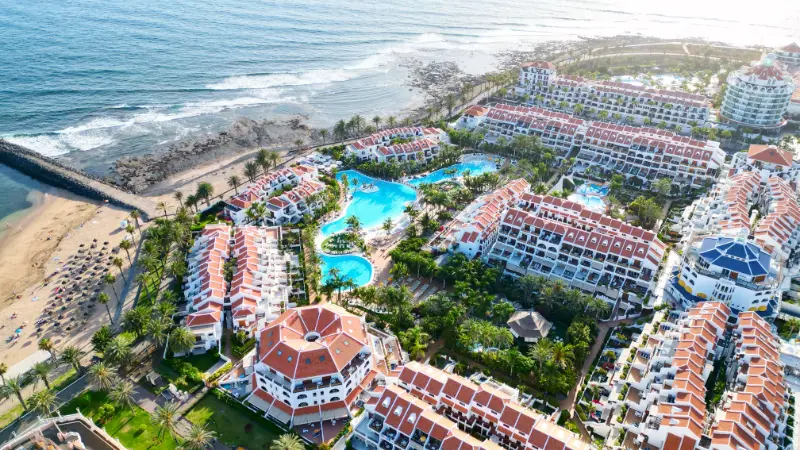
Playas de Troya are the classic central beaches of the Playa de las Américas and Costa Adeje resort strip, and their biggest advantage is how easy they are to use. Troya I and II form a long urban beachfront with grey volcanic sand, Blue Flag recognition, adapted access and a promenade full of services. I would choose them when I want swimming and resort energy without needing a car. This guide is built around the details I would want before leaving my accommodation: what is actually worth my time, how I would get there, where the friction points are, and what I would combine with the visit without turning the day into a race.
Quick planning facts
| Location | Adeje / Playa de las Américas resort area |
|---|---|
| Combined length | About 650 metres |
| Typical width | About 20 metres |
| Sand | Grey volcanic sand |
| Quality recognition | Blue Flag |
| Accessibility | Official information lists adapted access |
The first thing I would do is open the official Tenerife tourism page for Playas de Troya. I use the official source for the elements most likely to change — opening times, admission, access restrictions or temporary closures — and use the rest of my itinerary as a flexible framework. I never judge a Tenerife beach only by a photograph. The same stretch of coast can feel completely different with a change in swell, wind or tide. I check the flag or local warning signs on arrival, follow lifeguard instructions where a service is present, and keep an alternative nearby. A flexible beach plan is safer and usually more enjoyable than trying to force the original schedule.
Why I would put Playas de Troya on an itinerary
Troya is about location. Hotels, apartments, restaurants, shops, taxis and nightlife are all close, so a beach day can begin and end on foot. That is valuable for travellers who want to reduce driving or who are staying in the heart of Playa de las Américas.
The grey sand also gives visitors a gentle introduction to Tenerife’s volcanic identity without the remoteness or stronger conditions found at some natural black-sand beaches. I would not call it wild, but it is unmistakably part of a volcanic island.
What the experience is really like
The official tourism information describes the usual wave conditions as calm and presents the beaches as suitable for families and water activities. I still read the flag and look at the actual sea before swimming. Urban protection and breakwaters can reduce wave energy, but they do not eliminate ocean risk.
The atmosphere changes through the day. Morning can feel more relaxed, afternoons are busier, and the surrounding resort comes alive toward evening. I like the ability to swim, shower, change pace and then continue straight into a promenade dinner without another transfer.
Two connected resort beaches
Troya I and II function as one broader beachfront experience for most visitors. I do not worry too much about where one name ends and the other begins; I choose the section that looks comfortable on the day.
Walking the entire stretch first can help me find the right balance of space, water activity and proximity to facilities.
Grey volcanic sand
The sand is grey rather than the pale resort sand found on some other southern beaches. That colour is part of the island’s geology and creates a different visual character from Fañabé or Las Teresitas.
Dark sand can become very hot in strong sun, so I keep footwear accessible rather than leaving it buried under towels.
Services and adapted access
The official listing includes showers, foot-wash points, cleaning, loungers, parasols, bars, restaurants and adapted access. That makes Troya practical for a broad range of travellers.
As always, I verify any specific accessibility equipment or assistance schedule locally if it is essential.
The promenade and resort atmosphere
The beachfront avenue is a major part of the experience. I can move between the beach, cafés, shops and hotel areas without repeatedly changing transport.
This is especially useful at night because I can finish the swim, shower and continue directly into the evening rather than driving after a long beach day.
Water activities
Water sports are offered from the area, but I choose operators carefully and ask what is included before paying. I do not assume that a busy beach means every activity is equally suitable for beginners.
For surf specifically, I use my Tenerife surfing guide because the best conditions and spots vary around the coast.
How I would get there
For anyone staying in Playa de las Américas or nearby Costa Adeje, walking is the obvious choice. The beach is built into the resort, and driving a few hundred metres usually creates more hassle than it solves.
There is no dedicated beach parking listed, but parking exists in surrounding areas and buses serve the resort. If I am arriving from another town, I decide in advance whether public transport or a paid car park is simpler than searching residential streets. If I am comparing transport options across the island, I use my getting around Tenerife guide and, for road-based days, my Tenerife by car guide rather than relying on a route estimate that ignores parking, mountain roads or the walk from the final stop.
How much time I would allow
I can spend an entire day here, but I think Troya is especially good for flexible half-days. A morning swim can lead into lunch and another attraction; an afternoon swim can turn naturally into dinner and nightlife.
That flexibility is one of the beach’s strongest advantages. I do not need a rigid arrival or departure time because almost every practical service is nearby.
When I would go
Morning gives me the best chance of a quieter beach and cooler sand. Late afternoon is excellent if I want the transition into the resort evening.
I avoid judging conditions solely by the forecast for Tenerife South Airport. Local wind and swell can differ even across a short stretch of coast. For the broader seasonal picture, my best time to visit Tenerife guide explains why conditions can differ so much between coasts and elevations.
Families, accessibility and different travel styles
The beach’s calm-water reputation and facilities make it practical for families, but I still supervise children continuously. Inflatables, breakwaters and crowds can create a false sense of security.
Adapted access is listed by the official tourism site. If I need a specific assisted-bathing service, I confirm the current provision locally rather than relying on a general accessibility icon. I never assume that the words “easy” or “accessible” mean the same thing for every traveller, so I check gradients, surfaces, toilets, shade and the distance from parking or public transport. My accessible Tenerife guide gives the wider planning context, while my Tenerife with kids guide is useful for family pacing.
What I would bring
Sunscreen, water, hat, sandals and a simple valuables plan are enough for most visitors because food and facilities are close. I do not overpack a resort beach.
I also carry a light cover-up for restaurants and shops so I can move from sand to promenade without returning to the hotel for every small need. I keep the day bag small enough that I am not tempted to leave valuables visible in a parked car. My Tenerife packing list goes deeper into clothing and gear for mixed beach, city and mountain days.
What I would combine with it
Troya pairs naturally with Playa de las Américas itself. I can make a full resort day without adding transport.
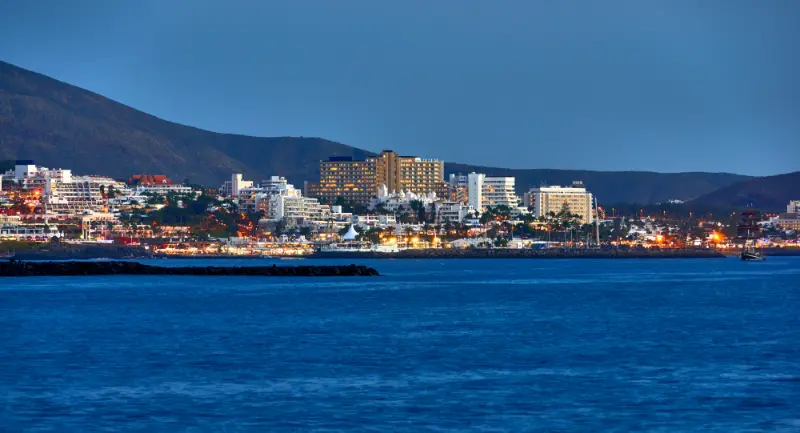
For contrast, I would use another day for La Tejita or Benijo, where the coast feels much less urban.
Food and breaks nearby
I have enormous choice around Troya, which is both useful and overwhelming. I would check menus and recent reviews before hunger peaks rather than choose the first place with a promoter outside.
For a quick beach lunch, convenience wins. For dinner, I am willing to walk farther along the resort strip or inland for somewhere that feels less dependent on passing beach traffic. For local dishes and ordering habits, I use my what to eat in Tenerife guide and eating out in Tenerife guide.
Where I would stay
Troya is ideal for travellers who want nightlife, restaurants and beach access within walking distance. It is less suited to people seeking a quiet residential base.
I compare live accommodation around the area on Booking.com, then check the exact map position before booking. A hotel name can suggest one neighbourhood while the real walk to the beach, bus stop or attraction is much less convenient. My where to stay in Tenerife guide explains how I choose a base by trip style rather than star rating alone.
A realistic half-day or full-day plan
I would swim in the morning, walk the full beachfront, choose a shaded lunch, then either return to the beach or take a long break at the hotel during the strongest sun.
Late afternoon I would come back for another walk and let the beach day turn into dinner or evening entertainment. That is when staying nearby delivers the most value.
Mistakes I would avoid
- Driving from a nearby resort hotel when walking is easier.
- Assuming calm-water reputation means no need to check flags.
- Walking barefoot on dark sand at the hottest part of the day.
- Choosing a water-sports operator without asking about safety and total price.
- Expecting a quiet natural beach atmosphere in the centre of a major resort.
Most disappointing Tenerife days are not caused by choosing the wrong place; they come from mismatched expectations. I would rather do fewer things with enough time for parking, walking, weather and a proper meal than collect rushed stops that all blur together.
Frequently asked questions
Are Playas de Troya sandy?
Yes. The official description lists grey sand and a combined beachfront of about 650 metres.
Do they have a Blue Flag?
Yes, the official tourism page lists Blue Flag recognition.
Are they accessible?
Adapted access is listed. I would verify any specific assisted-bathing equipment or service before travelling.
Are the waves calm?
The beaches are described as usually having calm wave conditions, but I always check the actual sea and flags on the day.
Is there parking?
The official page says there is no dedicated beach parking, although parking can be found in surrounding areas.
My final take
Playas de Troya are about convenience, central location and a classic Playa de las Américas atmosphere. I would choose them for a simple urban beach day, respect the Atlantic despite the usual calm-water reputation, and enjoy the fact that the promenade lets the day continue without another journey.
