
Quick summary: Santa Cruz de Tenerife completed approval of its low-emission-zone ordinance in August 2026. The city says the regulation takes effect after the legal publication period but begins with an 18-month information phase in which the ZBE restrictions and sanctions are not yet applied. That makes 2026 a transition period rather than a reason to avoid driving into Santa Cruz. I still watch signs and official updates because the system is designed to move from information toward later enforcement.
| Situation | Practical approach |
|---|---|
| Driving in 2026 information phase | Follow normal traffic rules and official ZBE signs; current city guidance says no ZBE restrictions or sanctions during the information phase. |
| Rental car | Keep the contract and registration details available and check the latest city guidance before entering. |
| Future trip | Recheck the ZBE status because restrictions are intended to change after the information period. |
| Parking in the centre | Plan a specific car park or use public transport rather than circling narrow streets. |
What changed in August 2026
Santa Cruz published the definitive ZBE ordinance in the provincial bulletin on 24 August 2026. The city stated that, after the legal 15-day period, an 18-month phase would begin that is exclusively informational, without ZBE circulation restrictions or sanctions.
For a visitor travelling in September 2026, that means the existence of a ZBE should not be confused with active penalty enforcement. I would still use the official municipal page because this is exactly the kind of rule that changes over time and old driving guides can become misleading.
Why I still learn the boundary
Even during an information phase, I want to recognise the signs and understand where the system applies. That prevents surprise if cameras, road markings or information panels appear while I am driving. It also helps me plan for a later trip when restrictions may be active.
I save the municipal ZBE map or page before entering the city. I do not rely on a rental-car employee remembering every current municipal traffic rule, because the driver remains responsible for following signs and restrictions.
Rental cars and registration questions
A rental car is usually Spanish-registered, but that does not automatically mean every future ZBE access requirement will be handled without action. Different Spanish cities use different systems for exemptions, labels and foreign vehicles. I check the Santa Cruz rules that are actually in force on my travel date.
I keep the rental agreement in the vehicle and know the registration number. If a future registration or exemption process applies, those are the details likely to matter. I never pay an unofficial website simply because it claims every Tenerife rental must buy a ‘ZBE permit’.
Parking can be the bigger issue than the ZBE
For many tourists, central Santa Cruz parking is more practically relevant than the low-emission rules in 2026. I choose a specific car park near the area I want to visit and navigate directly to it rather than circling the centre while reading signs.

TITSA and the tram can also remove the parking problem. If I am staying in La Laguna or arriving from another area with a convenient connection, I sometimes leave the car outside the most congested part of the city and use public transport for the final leg.
Future enforcement: check again before the next trip
The 18-month information period means a 2027 or 2028 article can easily be wrong if it repeats the September 2026 situation. I therefore date this advice mentally: it is a current snapshot, not a permanent exemption.
Before a future road trip I check the Santa Cruz municipal ZBE page for the enforcement date, vehicle categories, exemptions, registration requirements and sanctions. That five-minute update is more useful than memorising a rule that has not yet entered its restrictive phase.
How I would prepare before travelling
I save the official municipal ZBE page and a central car park before driving into Santa Cruz. That is enough for a 2026 visit because the city has announced an information phase without ZBE sanctions.
For a future trip I recheck the rules a few days before arrival and again if my rental company sends a notice about environmental restrictions.
What I would verify instead of assuming
I verify the date of any article I read. ZBE rules are time-sensitive, and a statement that is correct in September 2026 can become wrong later.
I verify whether a website asking for payment is an official municipal service. I do not buy an environmental sticker or registration from an unknown intermediary unless the official rules require it.
A Tenerife-specific detail that matters
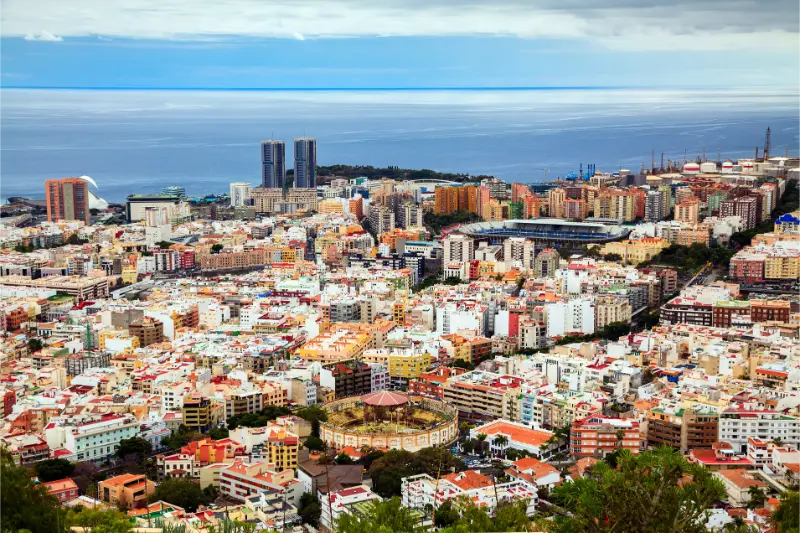
Santa Cruz is the island capital and has dense central streets, tram corridors and busy parking. Even without active ZBE sanctions, parking strategy can determine whether the drive feels easy or frustrating.
The Tenerife road network itself has no general island-wide low-emission system. This article concerns the municipal Santa Cruz ZBE rather than a rule for every road on the island.
Mistakes I would avoid
I would not tell a 2026 visitor that the ZBE is already fining normal tourist traffic when the city has explicitly announced an 18-month information period.
I would not assume that the information phase lasts forever. I recheck before any later trip.
Useful related guides on My Tenerife Experience
- Tenerife Car Rental Insurance Guide
- Tenerife Traffic Rules
- Car Breakdown or Accident in Tenerife
- Tenerife Car Hire Fuel Policies
Useful official resources
- Santa Cruz official ZBE page
- Santa Cruz announcement on definitive ZBE approval
- DGT environmental labels
My practical checklist
- Check the official ZBE page close to travel.
- Know that 2026 is an information phase under current city guidance.
- Keep rental-car registration details handy.
- Plan a central car park before entering.
- Follow road signs even if a navigation app disagrees.
- Recheck future enforcement dates for later trips.
Frequently asked questions
Is the Santa Cruz ZBE fining drivers in September 2026?
The city says the definitive regulation enters an 18-month information phase without ZBE restrictions or sanctions.
Do rental cars need a special permit in 2026?
Under the current information-phase announcement, ZBE restrictions are not being enforced. Future requirements should be checked on the official city page.
Does the ZBE cover all of Tenerife?
No. It is a municipal Santa Cruz de Tenerife measure, not an island-wide low-emission zone.
Should I avoid Santa Cruz by car?
Not necessarily. In 2026 the bigger practical issue for many visitors is central parking and congestion rather than ZBE enforcement.
Final thoughts
For a 2026 Tenerife trip, I treat the Santa Cruz ZBE as a rule to understand and monitor, not as a current barrier to visiting the city by car. The important habit is checking the official page again when enforcement moves beyond the information phase.
How I would visit Santa Cruz by car with minimum stress
I choose the attraction or neighbourhood first, then pick a car park that lets me walk between several stops. I enter that car park directly into navigation before leaving the motorway. This avoids last-minute lane changes and unnecessary loops through one-way streets.

If traffic is heavy, I consider parking farther out and using the tram or bus for the centre. A hybrid plan can be faster than insisting on parking beside every attraction.
One more practical point
I also keep enough time for the return because city traffic at commuting hours can affect the drive back to the south or north.
How I would apply this on a real Tenerife trip
The way I would use this advice is to make the decision before it becomes urgent. I would save the relevant documents and official contacts offline, tell any travelling companion what the plan is, and build one realistic fallback into the day. In Tenerife, a short distance on the map can still involve motorway traffic, mountain roads, strong sun or a change of altitude, so I avoid leaving an important medical, transport or administrative question until the final hour. I also keep receipts, confirmations and screenshots together in one folder because the most useful evidence is usually created before a problem occurs, not after it.
I would also review the plan after the first day rather than treating it as fixed. If the accommodation, weather, transport or my own comfort is different from what I expected, I adjust the remaining itinerary. That might mean moving an outdoor activity to the morning, choosing a different restaurant, using a taxi instead of driving, or contacting an official service earlier. This kind of small correction is more valuable than trying to follow a perfect schedule. The goal is a Tenerife trip that stays practical when real conditions replace assumptions.
Final practical scenario
If something still does not go to plan, I would simplify rather than improvise with incomplete information. I would use the official contact listed above, explain the exact situation, note the name or reference number I receive, and make the smallest change that keeps the trip safe and workable. In practice that could mean changing a booking, delaying a drive, choosing a simpler meal, visiting a pharmacy or clinic, or moving one activity to another day. Tenerife gives enough flexibility that one changed plan rarely ruins the holiday, but delaying a necessary decision can turn a small issue into a larger one.
For longer stays I would repeat the same check halfway through the trip: medication or supplies remaining, transport plans, weather-sensitive bookings and any administrative deadlines. That small review is especially useful when the holiday lasts two weeks or more, because assumptions made before departure may no longer match the reality on the island.
Leave a Reply