Tag: car rental Tenerife

  • Santa Cruz Low-Emission Zone (ZBE): What Tenerife Drivers Need to Know in 2026

    Santa Cruz Low-Emission Zone (ZBE): What Tenerife Drivers Need to Know in 2026

    Quick summary: Santa Cruz de Tenerife completed approval of its low-emission-zone ordinance in August 2026. The city says the regulation takes effect after the legal publication period but begins with an 18-month information phase in which the ZBE restrictions and sanctions are not yet applied. That makes 2026 a transition period rather than a reason to avoid driving into Santa Cruz. I still watch signs and official updates because the system is designed to move from information toward later enforcement.

    SituationPractical approach
    Driving in 2026 information phaseFollow normal traffic rules and official ZBE signs; current city guidance says no ZBE restrictions or sanctions during the information phase.
    Rental carKeep the contract and registration details available and check the latest city guidance before entering.
    Future tripRecheck the ZBE status because restrictions are intended to change after the information period.
    Parking in the centrePlan a specific car park or use public transport rather than circling narrow streets.

    What changed in August 2026

    Santa Cruz published the definitive ZBE ordinance in the provincial bulletin on 24 August 2026. The city stated that, after the legal 15-day period, an 18-month phase would begin that is exclusively informational, without ZBE circulation restrictions or sanctions.

    For a visitor travelling in September 2026, that means the existence of a ZBE should not be confused with active penalty enforcement. I would still use the official municipal page because this is exactly the kind of rule that changes over time and old driving guides can become misleading.

    Why I still learn the boundary

    Even during an information phase, I want to recognise the signs and understand where the system applies. That prevents surprise if cameras, road markings or information panels appear while I am driving. It also helps me plan for a later trip when restrictions may be active.

    I save the municipal ZBE map or page before entering the city. I do not rely on a rental-car employee remembering every current municipal traffic rule, because the driver remains responsible for following signs and restrictions.

    Rental cars and registration questions

    A rental car is usually Spanish-registered, but that does not automatically mean every future ZBE access requirement will be handled without action. Different Spanish cities use different systems for exemptions, labels and foreign vehicles. I check the Santa Cruz rules that are actually in force on my travel date.

    I keep the rental agreement in the vehicle and know the registration number. If a future registration or exemption process applies, those are the details likely to matter. I never pay an unofficial website simply because it claims every Tenerife rental must buy a ‘ZBE permit’.

    Parking can be the bigger issue than the ZBE

    For many tourists, central Santa Cruz parking is more practically relevant than the low-emission rules in 2026. I choose a specific car park near the area I want to visit and navigate directly to it rather than circling the centre while reading signs.

    Santa Cruz De Tenerife Skyline And Auditorium

    TITSA and the tram can also remove the parking problem. If I am staying in La Laguna or arriving from another area with a convenient connection, I sometimes leave the car outside the most congested part of the city and use public transport for the final leg.

    Future enforcement: check again before the next trip

    The 18-month information period means a 2027 or 2028 article can easily be wrong if it repeats the September 2026 situation. I therefore date this advice mentally: it is a current snapshot, not a permanent exemption.

    Before a future road trip I check the Santa Cruz municipal ZBE page for the enforcement date, vehicle categories, exemptions, registration requirements and sanctions. That five-minute update is more useful than memorising a rule that has not yet entered its restrictive phase.

    How I would prepare before travelling

    I save the official municipal ZBE page and a central car park before driving into Santa Cruz. That is enough for a 2026 visit because the city has announced an information phase without ZBE sanctions.

    For a future trip I recheck the rules a few days before arrival and again if my rental company sends a notice about environmental restrictions.

    What I would verify instead of assuming

    I verify the date of any article I read. ZBE rules are time-sensitive, and a statement that is correct in September 2026 can become wrong later.

    I verify whether a website asking for payment is an official municipal service. I do not buy an environmental sticker or registration from an unknown intermediary unless the official rules require it.

    A Tenerife-specific detail that matters

    Santa Cruz is the island capital and has dense central streets, tram corridors and busy parking. Even without active ZBE sanctions, parking strategy can determine whether the drive feels easy or frustrating.

    The Tenerife road network itself has no general island-wide low-emission system. This article concerns the municipal Santa Cruz ZBE rather than a rule for every road on the island.
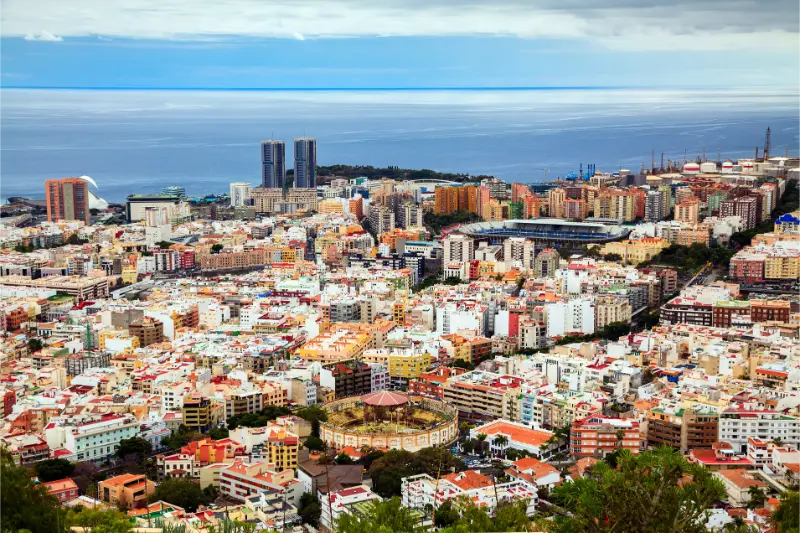
    Aerial View Of Santa Cruz De Tenerife

    Mistakes I would avoid

    I would not tell a 2026 visitor that the ZBE is already fining normal tourist traffic when the city has explicitly announced an 18-month information period.

    I would not assume that the information phase lasts forever. I recheck before any later trip.

    Useful related guides on My Tenerife Experience

    Useful official resources

    My practical checklist

    • Check the official ZBE page close to travel.
    • Know that 2026 is an information phase under current city guidance.
    • Keep rental-car registration details handy.
    • Plan a central car park before entering.
    • Follow road signs even if a navigation app disagrees.
    • Recheck future enforcement dates for later trips.

    Frequently asked questions

    Is the Santa Cruz ZBE fining drivers in September 2026?

    The city says the definitive regulation enters an 18-month information phase without ZBE restrictions or sanctions.

    Do rental cars need a special permit in 2026?

    Under the current information-phase announcement, ZBE restrictions are not being enforced. Future requirements should be checked on the official city page.

    Does the ZBE cover all of Tenerife?

    No. It is a municipal Santa Cruz de Tenerife measure, not an island-wide low-emission zone.

    Should I avoid Santa Cruz by car?

    Not necessarily. In 2026 the bigger practical issue for many visitors is central parking and congestion rather than ZBE enforcement.

    Final thoughts

    For a 2026 Tenerife trip, I treat the Santa Cruz ZBE as a rule to understand and monitor, not as a current barrier to visiting the city by car. The important habit is checking the official page again when enforcement moves beyond the information phase.

    How I would visit Santa Cruz by car with minimum stress

    I choose the attraction or neighbourhood first, then pick a car park that lets me walk between several stops. I enter that car park directly into navigation before leaving the motorway. This avoids last-minute lane changes and unnecessary loops through one-way streets.

    Auditorio De Tenerife Santa Cruz Coastline

    If traffic is heavy, I consider parking farther out and using the tram or bus for the centre. A hybrid plan can be faster than insisting on parking beside every attraction.

    One more practical point

    I also keep enough time for the return because city traffic at commuting hours can affect the drive back to the south or north.

    How I would apply this on a real Tenerife trip

    The way I would use this advice is to make the decision before it becomes urgent. I would save the relevant documents and official contacts offline, tell any travelling companion what the plan is, and build one realistic fallback into the day. In Tenerife, a short distance on the map can still involve motorway traffic, mountain roads, strong sun or a change of altitude, so I avoid leaving an important medical, transport or administrative question until the final hour. I also keep receipts, confirmations and screenshots together in one folder because the most useful evidence is usually created before a problem occurs, not after it.

    I would also review the plan after the first day rather than treating it as fixed. If the accommodation, weather, transport or my own comfort is different from what I expected, I adjust the remaining itinerary. That might mean moving an outdoor activity to the morning, choosing a different restaurant, using a taxi instead of driving, or contacting an official service earlier. This kind of small correction is more valuable than trying to follow a perfect schedule. The goal is a Tenerife trip that stays practical when real conditions replace assumptions.

    Final practical scenario

    If something still does not go to plan, I would simplify rather than improvise with incomplete information. I would use the official contact listed above, explain the exact situation, note the name or reference number I receive, and make the smallest change that keeps the trip safe and workable. In practice that could mean changing a booking, delaying a drive, choosing a simpler meal, visiting a pharmacy or clinic, or moving one activity to another day. Tenerife gives enough flexibility that one changed plan rarely ruins the holiday, but delaying a necessary decision can turn a small issue into a larger one.

    For longer stays I would repeat the same check halfway through the trip: medication or supplies remaining, transport plans, weather-sensitive bookings and any administrative deadlines. That small review is especially useful when the holiday lasts two weeks or more, because assumptions made before departure may no longer match the reality on the island.

  • Getting Around Tenerife: Rental Car, Buses, Taxis and Airport Transfers

    Getting Around Tenerife: Rental Car, Buses, Taxis and Airport Transfers

    Getting around Tenerife is easy once you understand the shape of the island, but choosing the wrong transport strategy can add hours of unnecessary travel. The main coastal motorway is straightforward, while many of the places that make Tenerife special—Teide, Anaga, Masca, small northern towns and remote viewpoints—sit behind mountain roads or limited parking. For that reason, I do not automatically recommend either a rental car or public transport to everyone. I match transport to the itinerary.

    This guide explains the two airports, driving, buses, the ten+ system, taxis, parking and how I would move around with or without a car. The key idea is simple: use a car when flexibility genuinely improves the day, and avoid paying for one when you will spend three days walking around the same resort.

    Tenerife has two airports: TFS and TFN

    Tenerife South Airport (TFS) handles the largest share of international leisure traffic and is the most convenient airport for Costa Adeje, Playa de las Américas, Los Cristianos and El Médano. Tenerife North–Ciudad de La Laguna Airport (TFN) is close to La Laguna and Santa Cruz and is especially important for domestic and inter-island connections. Aena states that TFN is around 10 kilometres from Santa Cruz, while TFS sits in the south close to the main tourist zone.

    Always check the airport code before booking transfers or rental cars. ‘Tenerife Airport’ is not specific enough. A cheap flight into the opposite airport can still be a good deal, but only after you account for the transfer time to your accommodation.

    From Tenerife South Airport to the resorts

    TFS is well connected by road and bus. Taxis are available from the airport, rental-car companies operate there and TITSA runs services linking the airport with major tourist areas. If your hotel is in Costa Adeje or Los Cristianos and you plan to stay locally for the first days, you do not necessarily need to collect a rental car immediately.

    I often prefer to separate airport logistics from sightseeing. A pre-planned bus, taxi or transfer can be easier after a late flight, then the car can start the next morning or later in the week. This also avoids paying for parking during days when the car remains unused.

    From Tenerife North Airport

    TFN is convenient for La Laguna, Santa Cruz and much of the north. It can also make sense for travellers arriving from mainland Spain or another Canary Island. If you are staying in Puerto de la Cruz, it is generally more naturally positioned than TFS, although exact journey times depend on traffic and your route.

    If you land at one airport and depart from the other, confirm one-way car-rental conditions before booking. The island is manageable, but returning to the wrong airport because an old itinerary says only ‘Tenerife Airport’ is an avoidable mistake.

    Do you need a rental car in Tenerife?

    For a resort holiday focused on beaches, pools and organised excursions, no. For an independent first trip that includes Teide, Anaga, the north coast and west-coast viewpoints, a car makes the itinerary much more flexible. It allows you to change direction when weather differs between north and south and to stop at places that are awkward to reach on a rigid timetable.

    The decision is not only about cost. Think about driver confidence. Mountain roads can be narrow, steep and winding, especially around parts of Anaga and Teno. If that makes you anxious, buses plus guided day trips can create a better holiday than forcing yourself to drive everywhere.

    What driving is like

    The main TF-1 and TF-5 corridors are modern roads, but congestion can build around urban areas and commuter periods. Once you leave the main roads, speed drops quickly. A route that looks short in kilometres may involve bends, villages, viewpoints and slow vehicles. I always add extra time to mountain routes and avoid scheduling a fixed restaurant reservation immediately after a long scenic drive.

    Fuel stations are easy to find in populated areas, but I would not head into a long mountain day with an almost empty tank. Download offline maps and remember that phone navigation can select a technically valid road that is less comfortable than a major signed route.

    Tour Bus On Mountain Road Tenerife

    Parking: where the car becomes less convenient

    Parking is one of the biggest arguments against keeping a car for every day. Historic centres such as La Laguna and La Orotava, busy beach resorts and popular natural viewpoints can be frustrating at peak times. Never assume you can leave a car anywhere because other vehicles are stopped there. Protected areas and mountain roads have specific restrictions for safety and conservation.

    When choosing accommodation, I treat guaranteed parking as a real amenity. A slightly more expensive hotel with a space can be better value than spending thirty minutes every evening circling dense streets.

    TITSA buses: the main public transport network

    TITSA buses connect towns, airports and many tourist areas across Tenerife. The network is extensive enough to support a car-free holiday if you choose your accommodation strategically. The official site includes a journey planner and specific information for airport and tourist routes.

    For sightseeing by bus, I prefer simple days with one main destination. A plan that requires three connections each way is fragile and leaves little room for spontaneous stops. Santa Cruz, La Laguna, Puerto de la Cruz, Costa Adeje and Los Cristianos are much easier bases for public-transport users than an isolated rural property.

    ten+ travelcards and current fares

    TITSA’s current fare information lists a 24-hour Day Travelcard at €10 and a 7-day Travelcard at €50, with a €2 physical card price where applicable. The ten+ wallet is another option, and the ten+ Móvil app supports selected tickets. These prices were checked against TITSA’s official information in September 2026 and can change, so verify them before your trip.

    The best product depends on how intensively you use buses and trams. Do not buy a seven-day pass simply because you are on the island for seven days; compare it with the journeys you realistically expect to make. Use the official TITSA fares page for current details.

    Tram in the Santa Cruz–La Laguna area

    Tenerife’s tram is useful in the metropolitan area, especially between Santa Cruz and La Laguna. It is not an island-wide rail system, so it does not replace buses or a car for Teide, Costa Adeje or the northwestern coast. For a city-focused day, however, it can reduce parking stress and works with the broader ten+ transport ecosystem.

    Taxis and private transfers

    Taxis are practical for airport transfers, evenings and short journeys when waiting for a bus is not worth the time. They become expensive as a substitute for a rental car on repeated cross-island trips. If you are travelling as a family or group, compare the total taxi or transfer cost with rental and parking rather than looking only at the per-person bus fare.

    Woman Relaxing In Rental Car Tenerife

    For late arrivals, I value certainty. Knowing how you will reach the hotel before landing is more important than finding the absolute cheapest option at midnight.

    Getting to Mount Teide without a car

    You can visit Teide without driving, but your freedom is reduced. Scheduled public transport and organised tours are the main alternatives. A tour can be especially sensible if you want a cable-car visit without worrying about mountain driving, parking and return timing. If you use public transport, confirm the latest schedules and build a generous buffer; mountain conditions and cable-car operation can change.

    Read my Mount Teide guide before choosing a transport method because summit permits and regulated trail reservations are separate from simply reaching the national park.

    Getting around with children

    With children, I value fewer transfers, predictable toilet stops and avoiding very late returns. A car can make family days easier because you can carry extra clothes, snacks and beach equipment. The trade-off is car-seat logistics and parking. If you rent, reserve the correct child restraint in advance rather than hoping the right size is available on arrival.

    For a slower family plan, see Tenerife with kids.

    My ideal transport strategy for a seven-day first trip

    If I were staying in Costa Adeje for one week, I would consider a car for three or four exploration days rather than automatically for all seven. I would use it for Teide, Anaga/La Laguna and the north or west coast, then spend the remaining days walking locally, taking a taxi or using buses. That combination reduces parking hassle while preserving independence where it matters most.

    Travellers staying in a rural finca or planning daily hikes should keep the car longer. Travellers staying in Los Cristianos with pre-booked tours may not need one at all.

    Airport and transport links I would bookmark

    Common transport mistakes

    • Booking a hotel without checking its exact elevation and then assuming everywhere is walkable.
    • Renting a car for seven days but using it only twice.
    • Planning mountain drives by kilometre count rather than realistic road time.
    • Relying on an old screenshot of a bus timetable.
    • Parking outside marked or legal areas near natural attractions.
    • Forgetting that Tenerife has two airports.
    • Scheduling a long drive immediately before a flight without traffic margin.

    Car, bus or taxi: my final decision rule

    Use a car for flexibility and remote access, buses for value and straightforward town-to-town travel, and taxis for short convenient gaps. Combining all three is often smarter than choosing one mode for the entire holiday.

    Once transport is decided, revisit your accommodation and itinerary. My where to stay guide and 7-day itinerary are designed to work together with this transport plan, so you can reduce backtracking before you book anything non-refundable.