Tag: Tenerife beaches

  • Playa de Las Vistas Guide: Calm Water, Accessibility and Los Cristianos Tips

    Playa de Las Vistas Guide: Calm Water, Accessibility and Los Cristianos Tips

    Playa de Las Vistas is one of the easiest beaches in southern Tenerife to recommend when convenience matters as much as scenery. It is not a hidden cove and I would not visit expecting solitude, but that is exactly why it works so well for families, travellers with reduced mobility, people staying without a car and anyone who wants a straightforward beach day with restaurants, toilets and a long promenade close at hand. Its light-coloured sand and sheltered water also make it feel very different from the wilder black-sand beaches of the north.

    The official Tenerife tourism page lists Las Vistas as an urban beach in Arona, around 850 metres long and 80 metres wide, with adapted access, toilets, showers, sunbed and umbrella rental, food nearby and parking. The beach is protected by breakwaters, so the water is generally calmer than at many open-coast beaches. I would still judge the actual sea on the day rather than treating “calm” as a guarantee.

    Las Vistas at a glance

    LocationArona, between Los Cristianos and Playa de las Américas
    LengthAbout 850 m
    SandLight/golden sand
    CharacterUrban, easy-access, family-friendly
    AccessibilityAdapted access is listed by the official tourism authority
    Best forSwimming, families, long promenade walks, easy beach days

    I would check the official Las Vistas beach page for the latest service information before relying on a specific facility.

    Why Las Vistas is so practical

    Some Tenerife beaches are destinations in themselves; Las Vistas works more like part of a continuous resort coastline. I can arrive on foot from Los Cristianos, spend a few hours swimming, walk toward Playa de las Américas for lunch and return without needing a car. That makes it especially useful on the first or last day of a holiday, when I do not want a complicated excursion.

    The promenade is one of the beach’s biggest strengths. Instead of being trapped in a single bay, I can move between different stretches of coast, cafés and viewpoints. For travellers who become restless after two hours on a towel, that flexibility matters.

    What the beach actually feels like

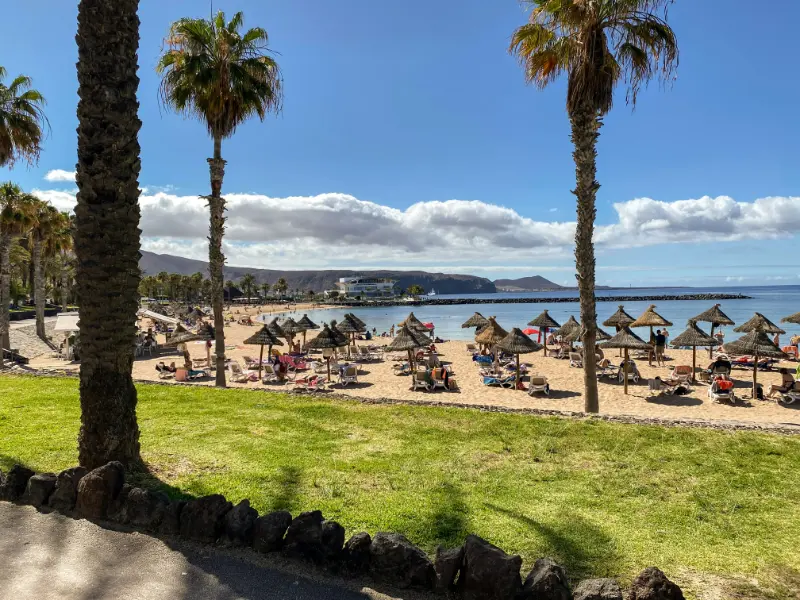
    I would describe Las Vistas as open, bright and organised rather than wild. The pale sand, broad width and developed seafront create a classic resort-beach atmosphere. An artificial island and fountain in the water are recognizable visual features, and the scale of the beach means that even when it is busy I can usually find a different section rather than leaving immediately.

    Because it is urban, I would expect noise, families, beach vendors, watersports and plenty of movement. If I wanted dramatic volcanic cliffs and fewer services, I would choose somewhere else. If I wanted a comfortable swim close to my hotel, this would be high on my list.

    Swimming conditions and safety

    The official description emphasizes the beach’s very calm swell, helped by protective breakwaters. That is one reason Las Vistas is popular with families. Even so, I would always check flags, lifeguard instructions and the actual water before entering. A sheltered beach can still have changing currents, wind chop or temporary restrictions.

    For children, I would focus on the shallow entry, but I would not treat any ocean beach like a swimming pool. I would stay close, keep flotation toys under control in wind and use water shoes only if someone prefers them; the sand itself is generally comfortable for bare feet.

    Accessibility: one of the main reasons to choose Las Vistas

    Las Vistas is a strong option for travellers who need a more accessible beach environment. Tenerife Tourism lists adapted access, and the surrounding promenade is much easier to navigate than steep natural coves or beaches reached by long stairs. I would still verify current seasonal assistance, amphibious-chair availability or specific mobility services if they are essential to the trip.

    My accessible Tenerife guide compares beaches and attractions more broadly. Accessibility is not one universal category: a beach can have ramps but still have soft sand, long distances or changing service hours, so I would plan around the actual needs of the traveller.

    Las Vistas with children

    If I were staying in Los Cristianos with young children, Las Vistas would be one of my default choices. The combination of calmer water, toilets, food, shade options and an easy promenade removes many of the logistical problems that make beach days tiring for parents.
    Los Cristianos Port Tenerife

    I would arrive with sun protection already applied, bring water even though shops are close, and choose a meeting point in case older children wander along the wide beach. The southern sun can be intense even when the breeze feels comfortable. My family beaches guide gives alternatives if Las Vistas feels too busy.

    Where Las Vistas sits between Los Cristianos and Playa de las Américas

    One of the most useful things to understand is that the beach is part of a larger walkable resort strip. To one side I have Los Cristianos, with its harbour, older resort fabric and ferry connections. In the other direction the promenade leads toward Playa de las Américas, where the atmosphere becomes more nightlife- and entertainment-oriented.

    That means I can choose accommodation based on the neighbourhood I prefer without losing access to Las Vistas. My Los Cristianos guide and Playa de las Américas guide explain the differences.

    Los Cristianos At Sunset Tenerife

    Best time of day

    I would choose the morning for the calmest start, easier sunbed availability and a less crowded promenade. Late afternoon is better if I want softer light and a beach-to-dinner transition. Around midday, especially in peak holiday periods, the beach can feel much busier and the sun is strongest.

    I would not arrive only for sunset expecting a dramatic west-facing horizon like Playa de la Arena or Los Gigantes. Las Vistas is more about an easy full beach session than a single spectacular evening view.

    Sunbeds, umbrellas and shade

    The official page lists sunbed and umbrella rental, but prices and operating arrangements can change. I would treat rental availability as a convenience rather than something to build the entire day around. If shade is essential for a baby or someone sensitive to sun, I would bring a backup plan and check local rules for personal beach shelters.

    The promenade has many opportunities to step out of the sun for food or drinks, which is one advantage over remote beaches.

    Food and drink nearby

    I would not carry a full picnic unless I specifically wanted one. The seafront has a wide range of restaurants, cafés and shops, and walking a few minutes away from the most obvious beachfront tables can sometimes give me more choice and better value.

    For a simple beach lunch I would choose something that does not make the afternoon feel heavy: grilled fish, salad, a sandwich or Canarian dishes shared at the table. I would keep valuables with me rather than leaving a bag unattended while everyone goes to eat.

    Parking and arriving by car

    Tenerife Tourism lists parking, but this is a dense resort area and I would not assume I can park directly beside the sand in high season. I would aim for an established public car park or a legal street space and accept a short walk. Circling narrow resort streets for the “perfect” spot is rarely worth the time.

    If my accommodation is within Los Cristianos or Playa de las Américas, walking is usually the better option. Public buses also serve the broader resort area, making Las Vistas one of the easier Tenerife beaches to visit without a rental car.

    Where I would stay for easy access

    For travellers who want to walk to the beach daily, Los Cristianos is the most obvious base, with Playa de las Américas also very close. I would compare accommodation on Booking.com in Los Cristianos and check the map carefully; “near the beach” can still mean a steep uphill walk in parts of southern Tenerife.

    What I would combine with Las Vistas

    I would keep combinations local. A walk through Los Cristianos harbour, a seafront lunch, Playa del Camisón or an evening in Playa de las Américas all make sense. I would not drive to Teide or Anaga after spending most of the day here; that turns a relaxing beach day into unnecessary logistics.

    Los Cristianos Bay Tenerife

    If I had only one beach day in the south and wanted maximum convenience, Las Vistas would be a strong choice. If I wanted luxury atmosphere I might prefer Playa del Duque; for a broader Costa Adeje resort day, Fañabé is another option.

    Common mistakes I would avoid

    • Assuming calm water means there is no need to check beach flags.
    • Driving into the busiest streets at midday expecting parking beside the sand.
    • Forgetting that the southern sun can be very strong even with a breeze.
    • Choosing accommodation only by distance without checking hills and walking routes.
    • Expecting a secluded “secret Tenerife” atmosphere from a major urban beach.

    Frequently asked questions

    Is Playa de Las Vistas good for families?

    Yes. Its generally calm water, broad sand, services and adapted access make it one of the more practical family beaches in the south.

    Is the sand natural?

    The beach is known for its light-coloured imported sand and engineered protection. I would visit for comfort and accessibility rather than wilderness.

    Can I walk there from Los Cristianos?

    Yes. Las Vistas is directly connected to Los Cristianos by the seafront promenade.

    Can I continue walking to Playa de las Américas?

    Yes. The promenade makes this one of the easiest continuous coastal walks in the resort zone.

    Is Las Vistas accessible?

    The official tourism authority lists adapted access. I would verify any specific seasonal assistance service in advance if it is essential.

    My final take

    I would choose Playa de Las Vistas when I want an uncomplicated swimming beach with strong facilities and a walkable location. It is not Tenerife’s wildest coast, but it is one of the island’s most useful beaches for families, first-time visitors and travellers who value accessibility and convenience. The key is to enjoy it for what it is: a very well-connected urban beach rather than a hidden natural escape.

  • San Juan de la Rambla Guide: Charco de La Laja, Historic Streets and North Coast

    San Juan de la Rambla Guide: Charco de La Laja, Historic Streets and North Coast

    San Juan de la Rambla is one of those north-Tenerife places that makes sense precisely because it is not a large attraction. The municipality combines a small historic centre, steep green slopes, Atlantic viewpoints and one of the island’s best-known volcanic bathing spots, Charco de La Laja. Official Tenerife tourism describes La Laja as a lava-formed natural pool with generally clear, calm water when sea conditions allow, while also warning that swell can become strong. That balance is exactly how I approach the area: beautiful, local and rewarding, but not a place where I ignore the Atlantic. I would include San Juan de la Rambla on a north-coast day with Los Realejos, La Guancha, Icod or Garachico rather than crossing the island solely for one swim.

    The historic centre

    The old centre is compact, and that is part of its charm. Traditional houses, small streets and ocean views create a slower atmosphere than Puerto de la Cruz. Official tourism highlights historic properties and religious buildings as part of the municipality’s character.

    I park carefully, walk rather than drive between nearby streets and accept that opening hours for small churches or cultural sites may be limited. The value is the ensemble, not a single must-see interior.

    Charco de La Laja

    Charco de La Laja is the place most visitors recognise. Lava created a protected-looking basin on the coast, reached by a path and steps. On a calm day the water can look almost swimming-pool smooth; on a rough day waves can change the situation completely.

    I check conditions at the site, respect closures and do not interpret other people swimming as proof that conditions are safe for me. My natural pools guide explains the same rule across Tenerife’s charcos.

    Las Aguas and the coast

    The coastal hamlet of Las Aguas is another reason to slow down. It gives access to sea views and restaurants in a setting that feels embedded in the north coast rather than built around tourism. I like it for lunch after the historic centre.

    This is a good place to try local fish or Canarian dishes without needing a formal food itinerary. My food guide provides the background.

    Walking and viewpoints

    The municipality is steep, so even short walks can involve gradients. I prefer coastal and village strolls unless I have researched a specific hiking route. After rain, stone and shaded surfaces can be slippery.

    For a larger walking day I continue to Los Realejos or choose a dedicated trail rather than improvising on rural roads.

    Weather on the north coast

    San Juan de la Rambla is greener and often cloudier than the south. That does not mean constant rain; it means more variable cloud, humidity and a different quality of light. I keep a flexible schedule and sometimes visit when the south is too hot.

    Swimming conditions depend more on swell than air temperature. A warm sunny day can still produce unsafe waves at a natural pool.

    Tenerife Rocky Coast And Natural Pool

    How to get there

    By car, the north motorway and connecting roads make San Juan de la Rambla straightforward to add to a north-coast itinerary, though parking in small centres can be limited. Official tourism places Tenerife North Airport roughly 40 km away and Tenerife South considerably farther.

    Buses connect the municipality with other northern towns, but I check current TITSA times for the exact stop. For a multi-village day, a car is more flexible.

    Where to stay

    This is not where I would send a first-time visitor seeking resort services. It suits rural stays, repeat visitors, couples who want quiet and travellers comfortable driving to beaches and attractions.

    If the atmosphere appeals, compare San Juan de la Rambla accommodation with Puerto de la Cruz or Icod before deciding. A beautiful rural property can also be isolated after dark.

    How I combine San Juan de la Rambla with nearby places

    My favourite logical combinations are Icod plus San Juan de la Rambla, or Los Realejos plus San Juan de la Rambla. Garachico can be added if I start early, but I do not try to swim in every natural pool along the coast.

    Tenerife Volcanic Coast Natural Pool

    Use my Icod guide and Garachico guide to build a route based on two or three strong stops rather than six rushed ones.

    My final planning advice

    I think San Juan de la Rambla is best treated as a place to experience rather than consume. A walk, one swim if conditions are right, lunch and a few quiet streets can be enough. That is exactly why it adds variety to a Tenerife trip dominated by big attractions.

    If you are staying in the south, I would include it only as part of a broader north-coast day. If you are based in Puerto de la Cruz, La Orotava or Icod, it becomes an easy half-day excursion that can be adjusted around weather.

    A north-coast half day

    From Puerto de la Cruz I can make San Juan de la Rambla a relaxed half day: historic centre, La Laja if the sea is calm, then lunch in Las Aguas. That leaves the afternoon free for Icod, Garachico or a return to the hotel. I prefer this rhythm to trying to collect every charco between Los Realejos and Buenavista.

    For a north-coast half day, I keep the decision flexible. I compare live conditions with the rest of the day, leave margin for slower roads or parking, and choose the version that keeps San Juan de la Rambla guide comfortable rather than ambitious. Tenerife can change quickly between coast, forest and high ground.

    Photography without taking risks

    La Laja is photogenic because of the contrast between black lava, white water and the village above. I take photos from established paths and platforms. Wet lava is not a tripod platform, and waves do not respect the edge that looks dry in a previous photograph.

    This is one part of San Juan de la Rambla guide that I do not lock in too early. Around photography without taking risks, current weather, access and the energy of the group matter more than the plan I wrote at home. I leave enough time to change direction without turning the day into a rush.

    When I skip the natural pool

    If waves are breaking over the outer lava or local authorities close access, I do not wait for a gap and jump in. I turn the visit into a photography and lunch stop. The north coast offers enough alternatives that missing one swim is never a ruined day.

    Before relying on when i skip the natural pool, I recheck anything time-sensitive and keep a nearby alternative. A closure, weather change or full car park should change one stop, not the whole day. For San Juan de la Rambla guide, that small amount of redundancy makes independent travel much calmer.

    Tenerife Volcanic Natural Pool

    Parking and steep streets

    The municipality is compact but not flat. I park where permitted and walk the last part, accepting the gradient. If mobility is limited, I study the exact access to the viewpoint or restaurant rather than assuming a village centre is step-free.

    I verify parking and steep streets close to the visit rather than assuming an older timetable or review is still correct. If conditions are different, I switch to the backup I already chose. This keeps San Juan de la Rambla guide practical without filling the itinerary with unnecessary contingency stops.

    Lunch in Las Aguas

    I like placing lunch after the pool because it removes any rush to reach the water at a particular time. Fresh fish and Canarian dishes fit the setting, and a slower meal gives me time to reassess weather before continuing along the north coast.

    The final check for lunch in las aguas happens on the day: weather, access, transport and any local notice. I would rather adapt early than spend an hour trying to rescue a plan that no longer works. That flexibility is especially useful when organising San Juan de la Rambla guide.

    A rainy-day alternative

    If the coast is wet or rough, I shift the emphasis to Icod, La Orotava or a museum in Puerto de la Cruz. North-coast weather often changes over short distances, so I keep the car itinerary flexible rather than cancelling the entire day.

    For a rainy-day alternative, I save one realistic alternative in the same area and avoid crossing the island just to replace a missed stop. That way San Juan de la Rambla guide stays geographically sensible even when Tenerife’s weather or access conditions change.

    Final planning check for San Juan de la Rambla guide

    Before I lock in this part of the trip, I compare the plan with the next day as well. A late finish, long drive or tiring activity can affect what follows. I prefer to leave a little unused time in the schedule, especially when San Juan de la Rambla guide is combined with mountain roads, swimming, hiking or a restaurant reservation. That margin is what lets me stop at an unexpected viewpoint, wait out a shower or simply stay longer somewhere I like without feeling that the itinerary is falling apart.

  • Best Family Beaches in Tenerife: Calm Water, Facilities and Practical Tips

    Best Family Beaches in Tenerife: Calm Water, Facilities and Practical Tips

    A good family beach in Tenerife is not simply the prettiest beach on a map. When I travel with children, I care more about the combination of manageable water, easy access, toilets or nearby cafés, room for a stroller, shade options, and a simple escape plan if the wind or waves suddenly change. Tenerife has spectacular wild beaches, but some of the most photogenic ones are not the places I would choose for a relaxed day with small children.

    This guide focuses on beaches that make family logistics easier. It complements my broader Tenerife with kids guide and best beaches in Tenerife guide. Conditions are never guaranteed on an Atlantic island, so I still check the sea, flags and lifeguard instructions when I arrive. A beach that feels gentle in the morning can be less comfortable later in the day.

    What I look for in a family beach

    My first filter is water entry. Sheltered bays, breakwaters and gradual shorelines are usually easier with younger children than exposed surf beaches. The second filter is practical: parking, bus access, a promenade, toilets, showers, food and somewhere to buy water. None of these details sound exciting when planning a holiday, but they are exactly what turns a beach visit into an easy half-day rather than a logistical exercise.

    I also separate “good for paddling” from “safe without supervision.” No Atlantic beach is a substitute for close adult attention. I keep children within reach near the shoreline, respect warning flags and avoid rock pools or breakwaters when swell is pushing water over them. Tenerife offers many developed beaches with lifeguard services, but I still treat the ocean as the final authority.

    Las Teresitas: my easiest north-east family beach

    Las Teresitas is one of the beaches I recommend most often to families staying around Santa Cruz or La Laguna. The long strip of pale sand and the offshore protection usually create a calmer feel than many exposed beaches on the north coast. The beach is spacious enough for children to play, and its length makes it easier to find a comfortable section even when the central area is busy.

    The practical side is strong too: there is road access, parking, bus service from Santa Cruz and food options around the beach and San Andrés. I like arriving earlier in the day, especially on weekends. The mountain backdrop gives Las Teresitas much more character than a generic resort beach, while the easy setup keeps the day simple.

    Las Vistas: the convenient choice in Los Cristianos

    For families based in the south, Las Vistas is hard to beat for convenience. It sits between Los Cristianos and Playa de las Américas, with a long pedestrian promenade, restaurants, shops and easy links to the wider resort area. I cover the neighbourhood in more detail in my Los Cristianos guide.

    Las Vistas is especially useful when one family member wants the beach while another wants cafés, shopping or a walk. You are not committed to an isolated beach day. The broad sandy area also gives children room to play away from the waterline. In peak periods, I prefer walking or using public transport rather than circling for the closest parking space.

    Childrens Play Area At Siam Park Tenerife

    La Pinta: small, sheltered and close to Puerto Colón

    Playa de La Pinta, beside Puerto Colón in Costa Adeje, is a smaller beach that works well when I want a contained setting rather than a huge stretch of sand. The bay is sheltered by harbour infrastructure, and the surrounding promenade is packed with restaurants and services. That makes snacks, toilets and a quick change of plan easy.

    The location also lets a family combine beach time with a gentle harbour walk or a boat excursion on another day. My Costa Adeje guide explains the wider area. Because watersports and harbour activity are nearby, I still keep an eye on designated swimming areas and on the daily sea conditions.

    El Camisón: a useful middle ground in Playa de las Américas

    El Camisón is the beach I often suggest to families who want to stay near the energy of Playa de las Américas without choosing the most exposed surf sections. It is backed by the promenade and has plenty of cafés and restaurants within a short walk.

    The beach is relatively compact, which can be useful with children because the walk from towel to water is not endless. As elsewhere, I pay attention to flags and conditions. If the family wants a quieter atmosphere, I would compare El Camisón with Las Vistas rather than assume one is always better; they are close enough to try both during the same holiday.

    Playa del Duque: polished, comfortable and easy to pair with lunch

    Playa del Duque is one of the most polished beach environments in Costa Adeje. The promenade is attractive, there are restaurants and higher-end hotels nearby, and access is straightforward. For a family that values comfort over a wild setting, it is an easy option.

    I would not choose it because it is “safer” in an absolute sense; sea conditions still matter. I choose it because the infrastructure makes the whole day easier. It can also work well with grandparents or mixed-age groups, where not everyone wants to spend hours in the sand. A beachfront lunch or promenade walk gives the day more flexibility.

    Playa de Fañabé and Torviscas: good for a classic resort day

    Fañabé and the adjacent Torviscas area are practical choices for families who want a traditional resort beach day. The seafront is lively, accommodation is plentiful and almost every basic service is nearby. These beaches are particularly convenient if you are staying in Costa Adeje without a car.

    The trade-off is that they can feel busy and commercial. I see that as an advantage for some families and a disadvantage for others. If I want quiet scenery, I go elsewhere. If I want a beach where lunch, ice cream, a pharmacy and the walk back to the hotel are all easy, this part of the south performs very well.

    Exploring Tenerife With Kids

    Playa de San Juan and Alcalá: a slower family atmosphere

    Families who prefer a smaller coastal-town rhythm should look at Playa San Juan and Alcalá. These places feel less dominated by large resort infrastructure than Costa Adeje, while still offering promenades, swimming areas and restaurants.

    I like them for families that enjoy a morning swim followed by a long lunch and an evening walk rather than a schedule of attractions. The coastline is volcanic and some entries are rockier than a classic sandy beach, so I choose the exact bathing area according to the children’s ages and current sea conditions.

    Beaches I admire but would not pick first with small children

    Benijo is one of Tenerife’s most dramatic beaches, but it is exposed to Atlantic swell and involves steps. El Bollullo and El Socorro can also have strong waves. I visit places like these for scenery, photography or experienced swimming only when conditions are appropriate, not because a “best beaches” list tells me they are unmissable.

    The same applies to natural pools. They can be wonderful, but ocean swell can make them dangerous even when the pool itself looks protected. For younger children I prefer developed pools or beaches with lifeguards and simple access. My rule is to match the place to the family rather than force the family to match the place.

    How I plan a family beach day

    I pack sun protection, hats, more water than I think we need, simple snacks, a dry layer and a small first-aid kit. Dark volcanic sand can become surprisingly hot, so beach shoes are useful even on days when the air temperature feels mild. I also bring a lightweight towel or cover that can create shade over a stroller for short periods without blocking ventilation.

    Timing matters. An early beach session followed by lunch often works better than arriving at midday and trying to keep everyone comfortable through the hottest hours. If the forecast is windy in El Médano or rough on the north coast, I choose a more sheltered beach rather than treating the original plan as fixed.

    Choosing a base for a family beach holiday

    If beach convenience is the priority, I compare Costa Adeje, Los Cristianos and Puerto de la Cruz rather than choosing Tenerife as one undifferentiated destination. Costa Adeje has the widest resort infrastructure; Los Cristianos has a walkable harbour-and-beach setup; the north offers greener scenery but more variable Atlantic conditions.

    Accommodation location matters more than hotel star rating when travelling with children. I check the real walking route to the beach, slopes, road crossings and supermarket access. Families can compare family accommodation across Tenerife and then verify the neighbourhood before committing.

    Beach safety details I never skip

    I teach children that a green flag is not permission to run into the sea without an adult. I identify the lifeguard point, agree where our towels are, and avoid inflatables that can drift in wind. After swimming, I rinse salt and reapply sunscreen rather than assuming morning protection will last all day.

    On black-sand beaches I test the surface with my own feet before letting a child walk barefoot. On rocky entries, simple water shoes can prevent cuts. These small habits matter more to me than finding the beach with the most impressive social-media photo.

    Mother And Child On A Tenerife Beach

    Final thoughts

    Tenerife gives families far more choice than one “best” beach. Las Teresitas is my favourite easy option near the capital, Las Vistas works brilliantly around Los Cristianos, and Costa Adeje offers several beaches where services are almost effortless.

    The important part is matching beach style to the day: sheltered and serviced when everyone needs an easy outing, wilder scenery when children are older and conditions are suitable. That flexibility is one of the reasons Tenerife works so well for family trips.

  • Best Beaches in Tenerife: From Easy Family Bays to Wild Volcanic Shores

    Best Beaches in Tenerife: From Easy Family Bays to Wild Volcanic Shores

    Tenerife’s beaches are more varied than the classic image of a Canary Islands resort suggests. You can spend the morning on a pale, sheltered beach with sunbeds and cafés, then drive to a black-sand bay framed by volcanic cliffs or a windy stretch of coast where surfers and kitesurfers dominate the horizon. That variety is why I do not rank one beach as the single best on the island; I choose according to the kind of day I want.

    This guide focuses on beaches that are useful for real trip planning: family-friendly choices, scenic black-sand beaches, surf areas, beaches near major resorts and places that combine well with sightseeing. Always check local conditions and beach flags before swimming because Atlantic waves and currents can change quickly.

    Playa del Duque: polished and convenient

    Playa del Duque in Costa Adeje is one of the easiest beaches for travellers who want comfort. The surrounding area has hotels, restaurants, a promenade and extensive tourist services. The beach is attractive, organised and straightforward for a resort day, which is why it works especially well for couples and families who do not want complicated logistics.

    It is not the beach I would choose for a wild or local atmosphere. Its strength is convenience. If you are staying in Costa Adeje, I would use Playa del Duque for a relaxed half-day and save the rental car for beaches that are genuinely different rather than driving elsewhere simply because another name appears on a top-ten list.

    Playa de Las Vistas: one of the easiest family options

    Between Los Cristianos and Playa de las Américas, Las Vistas is broad, central and supported by a long promenade. It is useful for families because food, toilets and other services are close, and you can walk to a large range of accommodation. Conditions still vary, but it is a much simpler proposition than a remote natural beach.

    I like Las Vistas on days when the goal is not adventure but an uncomplicated swim, lunch and walk. If you have children, that kind of easy day becomes more valuable after a long Teide or Anaga excursion.

    Playa de Las Teresitas: the classic beach near Santa Cruz

    Las Teresitas is one of Tenerife’s most recognisable beaches, a long arc of light-coloured sand near the village of San Andrés, northeast of Santa Cruz. It is a natural addition to a day in the capital or a scenic drive toward Anaga. The bay setting and mountain backdrop make it visually very different from the southern resort beaches.

    Because it is popular with residents as well as visitors, weekends and good-weather days can be busy. I prefer arriving earlier, then combining the beach with lunch in San Andrés or continuing into the northeast if the weather is suitable.

    Tenerife Beach With Palm Trees

    El Médano and Playa de la Tejita: for wind, space and Montaña Roja

    El Médano is one of Tenerife’s best-known wind-sports areas. The beach merges with a relaxed town atmosphere, and the view toward Montaña Roja gives the coast a distinctive identity. It is a good place to watch windsurfing or kitesurfing even if you are not participating.

    On the other side of Montaña Roja, Playa de la Tejita feels more open and natural. Wind can be strong, and there is less resort-style shelter, so I see it as a beach for travellers who enjoy space and landscape rather than guaranteed calm water. Respect protected areas around the natural reserve and avoid leaving marked paths where restrictions apply.

    Playa Jardín and the Puerto de la Cruz coast

    The northern coast has a darker, more volcanic character. Beaches around Puerto de la Cruz are useful if you are staying in the north, but I choose them with conditions in mind. Waves can be stronger than at sheltered southern beaches. The value of the area is the combination: black sand, gardens, promenades, town life and easy access to La Orotava and other northern sights.

    A north-coast beach day also works well when the south is extremely hot or when you want a break from resort scenery. Just remember that the weather can be cloudier on the northern side even when the south is bright.

    Playa de Benijo: scenery first

    Benijo, beneath the Anaga mountains, is one of the most dramatic beaches on Tenerife. The attraction is the setting: dark sand, powerful Atlantic water and offshore rock formations. I treat it primarily as a landscape stop rather than promising myself a swim. Sea conditions can be serious, access involves steps, and the road through Anaga deserves time and concentration.

    For me, Benijo fits best into an Anaga day rather than a beach-hopping schedule. Arrive with proper footwear, check daylight, and never enter the water just because other people are swimming. The safest decision can be to enjoy the view from shore.

    Playa de Abama: beautiful but access needs planning

    The small beach below the Abama resort area is known for sheltered water and a photogenic setting. Public access to beaches in Spain is not the same as having easy resort-style access to every facility, so understand the walking route, parking situation and practical limitations before making a special trip. It can be pleasant, but I would not cross the island only for one small beach if your itinerary is already full.

    Black sand or golden sand?

    Tenerife’s volcanic beaches are part of the island’s identity. Black sand can become extremely hot under strong sun, so footwear is useful. Lighter beaches may feel more familiar, but colour tells you little about swimming conditions. Exposure, swell, wind, tide and local protection matter much more than sand colour.

    Surfers On A Tenerife Beach
    If you want…Try…Why
    Resort comfortPlaya del DuqueServices and promenade
    Family convenienceLas VistasCentral and easy facilities
    Scenery near Santa CruzLas TeresitasMountain-backed bay
    Wind sportsEl MédanoConsistent active atmosphere
    Wild volcanic sceneryBenijoDramatic Anaga setting
    North-coast characterPuerto de la Cruz beachesBlack sand and town access

    Natural pools: an alternative to the beach

    Tenerife also has natural swimming pools and volcanic bathing areas, especially around the north and west. Garachico is the most famous example, but access can be restricted when the sea is rough. These places should never be treated like ordinary hotel pools. Waves can wash across platforms and conditions can change rapidly. Follow closures and local instructions.

    Natural pools are especially useful on a sightseeing day because you can combine a short swim with historic towns and viewpoints. I would not promise children a swim until I have seen the conditions in person.

    Beach safety in Tenerife

    The Atlantic deserves respect. Flags, lifeguard instructions, barriers and local warnings are more important than any recommendation in a travel guide. A red flag means do not enter the water. Even on a sunny day, swell can produce strong shore break or currents. Remote beaches may not have lifeguards at all.

    • Check the flag and observe the water before swimming.
    • Keep children within immediate reach, not just within sight.
    • Avoid rocky entries when waves are breaking.
    • Do not swim after drinking alcohol.
    • Protect feet from hot dark sand and sharp volcanic rock.
    • Use reef-safe habits and take all rubbish away from natural beaches.
    • If locals leave the water because conditions worsen, pay attention.

    Best beaches without a car

    If you do not have a car, the easiest strategy is to stay in a coastal area with several beaches connected by promenade or bus. Costa Adeje, Los Cristianos and Playa de las Américas are obvious choices. Las Teresitas is reachable from Santa Cruz by public transport, while El Médano is connected by bus routes but requires more planning depending on your starting point.

    Playa De Las Teresitas Sandy Beach Tenerife

    TITSA covers the island extensively, but a beach day becomes less relaxing if you are watching multiple transfers. Use the official journey planner and choose one good beach rather than trying to collect three in a day. My transport guide explains how I plan car-free days.

    Beaches with children

    For family days I prioritise easy access, toilets, food, shade options and lifeguard presence over dramatic scenery. Las Vistas and the main Costa Adeje beaches are usually more practical than remote northern coves. Even then, calm-looking water can change. Small children do not need a long list of beaches; they need one safe, convenient place where the adults are not stressed.

    For a broader family plan, see Tenerife with kids.

    When to go to the beach

    Tenerife can support beach days throughout much of the year, but the best coast may change with wind and cloud. The south generally receives more sunshine, while the north can be greener and cloudier. In summer, sand and exposed promenades can be very hot at midday. In winter, the sun may feel warm while the ocean remains refreshing and mountain air is much colder.

    That is why I keep beach plans flexible. A cloudy morning in the north can become a sunny afternoon in the south, and a windy day at El Médano may feel much calmer in a sheltered bay elsewhere. See my weather and best-time guide for the seasonal picture.

    My beach-planning rule

    I would choose two or three beaches for a week-long holiday, not ten. Pick one convenient beach near your accommodation, one beach that offers a completely different landscape and perhaps one that pairs naturally with sightseeing. This reduces driving, parking and the temptation to judge each place after twenty hurried minutes.

    If you stay in the south, a balanced combination could be Playa del Duque or Las Vistas for convenience, Las Teresitas on a Santa Cruz/Anaga day and Benijo purely for scenery if sea conditions and daylight are appropriate. That gives you three different sides of Tenerife’s coast without turning the holiday into a beach checklist.