Tag: historic Tenerife

  • San Juan de la Rambla Guide: Charco de La Laja, Historic Streets and North Coast

    San Juan de la Rambla Guide: Charco de La Laja, Historic Streets and North Coast

    San Juan de la Rambla is one of those north-Tenerife places that makes sense precisely because it is not a large attraction. The municipality combines a small historic centre, steep green slopes, Atlantic viewpoints and one of the island’s best-known volcanic bathing spots, Charco de La Laja. Official Tenerife tourism describes La Laja as a lava-formed natural pool with generally clear, calm water when sea conditions allow, while also warning that swell can become strong. That balance is exactly how I approach the area: beautiful, local and rewarding, but not a place where I ignore the Atlantic. I would include San Juan de la Rambla on a north-coast day with Los Realejos, La Guancha, Icod or Garachico rather than crossing the island solely for one swim.

    The historic centre

    The old centre is compact, and that is part of its charm. Traditional houses, small streets and ocean views create a slower atmosphere than Puerto de la Cruz. Official tourism highlights historic properties and religious buildings as part of the municipality’s character.

    I park carefully, walk rather than drive between nearby streets and accept that opening hours for small churches or cultural sites may be limited. The value is the ensemble, not a single must-see interior.

    Charco de La Laja

    Charco de La Laja is the place most visitors recognise. Lava created a protected-looking basin on the coast, reached by a path and steps. On a calm day the water can look almost swimming-pool smooth; on a rough day waves can change the situation completely.

    I check conditions at the site, respect closures and do not interpret other people swimming as proof that conditions are safe for me. My natural pools guide explains the same rule across Tenerife’s charcos.

    Las Aguas and the coast

    The coastal hamlet of Las Aguas is another reason to slow down. It gives access to sea views and restaurants in a setting that feels embedded in the north coast rather than built around tourism. I like it for lunch after the historic centre.

    This is a good place to try local fish or Canarian dishes without needing a formal food itinerary. My food guide provides the background.

    Walking and viewpoints

    The municipality is steep, so even short walks can involve gradients. I prefer coastal and village strolls unless I have researched a specific hiking route. After rain, stone and shaded surfaces can be slippery.

    For a larger walking day I continue to Los Realejos or choose a dedicated trail rather than improvising on rural roads.

    Weather on the north coast

    San Juan de la Rambla is greener and often cloudier than the south. That does not mean constant rain; it means more variable cloud, humidity and a different quality of light. I keep a flexible schedule and sometimes visit when the south is too hot.

    Swimming conditions depend more on swell than air temperature. A warm sunny day can still produce unsafe waves at a natural pool.

    How to get there

    By car, the north motorway and connecting roads make San Juan de la Rambla straightforward to add to a north-coast itinerary, though parking in small centres can be limited. Official tourism places Tenerife North Airport roughly 40 km away and Tenerife South considerably farther.

    Buses connect the municipality with other northern towns, but I check current TITSA times for the exact stop. For a multi-village day, a car is more flexible.

    Where to stay

    This is not where I would send a first-time visitor seeking resort services. It suits rural stays, repeat visitors, couples who want quiet and travellers comfortable driving to beaches and attractions.

    If the atmosphere appeals, compare San Juan de la Rambla accommodation with Puerto de la Cruz or Icod before deciding. A beautiful rural property can also be isolated after dark.

    How I combine San Juan de la Rambla with nearby places

    My favourite logical combinations are Icod plus San Juan de la Rambla, or Los Realejos plus San Juan de la Rambla. Garachico can be added if I start early, but I do not try to swim in every natural pool along the coast.

    Use my Icod guide and Garachico guide to build a route based on two or three strong stops rather than six rushed ones.

    My final planning advice

    I think San Juan de la Rambla is best treated as a place to experience rather than consume. A walk, one swim if conditions are right, lunch and a few quiet streets can be enough. That is exactly why it adds variety to a Tenerife trip dominated by big attractions.

    If you are staying in the south, I would include it only as part of a broader north-coast day. If you are based in Puerto de la Cruz, La Orotava or Icod, it becomes an easy half-day excursion that can be adjusted around weather.

    A north-coast half day

    From Puerto de la Cruz I can make San Juan de la Rambla a relaxed half day: historic centre, La Laja if the sea is calm, then lunch in Las Aguas. That leaves the afternoon free for Icod, Garachico or a return to the hotel. I prefer this rhythm to trying to collect every charco between Los Realejos and Buenavista.

    For a north-coast half day, I keep the decision flexible. I compare live conditions with the rest of the day, leave margin for slower roads or parking, and choose the version that keeps San Juan de la Rambla guide comfortable rather than ambitious. Tenerife can change quickly between coast, forest and high ground.

    Photography without taking risks

    La Laja is photogenic because of the contrast between black lava, white water and the village above. I take photos from established paths and platforms. Wet lava is not a tripod platform, and waves do not respect the edge that looks dry in a previous photograph.

    This is one part of San Juan de la Rambla guide that I do not lock in too early. Around photography without taking risks, current weather, access and the energy of the group matter more than the plan I wrote at home. I leave enough time to change direction without turning the day into a rush.

    When I skip the natural pool

    If waves are breaking over the outer lava or local authorities close access, I do not wait for a gap and jump in. I turn the visit into a photography and lunch stop. The north coast offers enough alternatives that missing one swim is never a ruined day.

    Before relying on when i skip the natural pool, I recheck anything time-sensitive and keep a nearby alternative. A closure, weather change or full car park should change one stop, not the whole day. For San Juan de la Rambla guide, that small amount of redundancy makes independent travel much calmer.

    Parking and steep streets

    The municipality is compact but not flat. I park where permitted and walk the last part, accepting the gradient. If mobility is limited, I study the exact access to the viewpoint or restaurant rather than assuming a village centre is step-free.

    I verify parking and steep streets close to the visit rather than assuming an older timetable or review is still correct. If conditions are different, I switch to the backup I already chose. This keeps San Juan de la Rambla guide practical without filling the itinerary with unnecessary contingency stops.

    Lunch in Las Aguas

    I like placing lunch after the pool because it removes any rush to reach the water at a particular time. Fresh fish and Canarian dishes fit the setting, and a slower meal gives me time to reassess weather before continuing along the north coast.

    The final check for lunch in las aguas happens on the day: weather, access, transport and any local notice. I would rather adapt early than spend an hour trying to rescue a plan that no longer works. That flexibility is especially useful when organising San Juan de la Rambla guide.

    A rainy-day alternative

    If the coast is wet or rough, I shift the emphasis to Icod, La Orotava or a museum in Puerto de la Cruz. North-coast weather often changes over short distances, so I keep the car itinerary flexible rather than cancelling the entire day.

    For a rainy-day alternative, I save one realistic alternative in the same area and avoid crossing the island just to replace a missed stop. That way San Juan de la Rambla guide stays geographically sensible even when Tenerife’s weather or access conditions change.

    Final planning check for San Juan de la Rambla guide

    Before I lock in this part of the trip, I compare the plan with the next day as well. A late finish, long drive or tiring activity can affect what follows. I prefer to leave a little unused time in the schedule, especially when San Juan de la Rambla guide is combined with mountain roads, swimming, hiking or a restaurant reservation. That margin is what lets me stop at an unexpected viewpoint, wait out a shower or simply stay longer somewhere I like without feeling that the itinerary is falling apart.


  • Santa Cruz de Tenerife Carnival Guide: Parades, Street Nights and Practical Tips

    Santa Cruz de Tenerife Carnival Guide: Parades, Street Nights and Practical Tips

    The Carnival of Santa Cruz de Tenerife is not a single parade. It is a sequence of galas, competitions, street celebrations, daytime events and traditions that build over several weeks and then spill into the centre of Santa Cruz. The first time I looked at the programme, the number of event names was confusing. Once I understood the rhythm, planning became much easier.

    I treat Carnival as a city experience, not simply a party. It makes sense to combine it with my Santa Cruz de Tenerife guide and, if time allows, a day in La Laguna. Exact dates and event times change every year, so I always check the official Tenerife Carnival information before booking transport or tickets.

    Understanding the Carnival calendar

    The official programme begins well before the biggest street nights. Murgas, comparsas, rondallas and other groups compete and perform during the build-up. The Queen Election Gala is one of the major indoor spectacles, followed by the opening parade that brings the celebration decisively into the streets. After that, the city centre becomes the main stage.

    For a short trip, I decide whether I want the grand spectacle, the street atmosphere or the more family-friendly daytime events. Trying to see everything usually creates more stress than enjoyment. A visitor who loves costumes and choreography may prioritise the gala and parade, while someone who wants the famous street experience should focus on the core Carnival weekend and the following nights.

    The Queen Gala: spectacle rather than street party

    The Gala de Elección de la Reina is the glamorous, theatrical side of Carnival. The elaborate costumes are enormous constructions designed for presentation on stage, and the event has a completely different feel from the free-flowing street nights. Tickets are normally required, and demand can be high.

    I would choose the gala if I wanted to see the craftsmanship and scale of Carnival in a controlled setting. It is not the best choice for someone who only has one evening and mainly wants to dance in the street. If the gala matters to you, watch the official sales announcements rather than relying on third-party resale information.

    The opening parade and the first big street night

    The Cabalgata Anunciadora is one of the moments when the event becomes immediately understandable to a visitor: groups, costumes, music and floats move through Santa Cruz and the city shifts from preparation to celebration. It is visually rich and a good first Carnival event if you have never attended before.

    After the parade, the street atmosphere continues into the night. I wear comfortable shoes and clothes I do not mind standing in for hours. Distances that look short on a map can take much longer because streets are busy and some routes are diverted. I avoid making a tight dinner reservation on the opposite side of the centre.

    Street Carnival: why a costume matters

    The street nights are the part many visitors imagine when they hear “Tenerife Carnival.” Music stages, bars, food stands and crowds fill central Santa Cruz. Wearing a costume is part of the social language of the event. It does not need to be elaborate; even a simple, comfortable idea helps you feel involved rather than like a spectator standing outside the celebration.

    I prioritise practicality. A clever costume that is impossible to walk in becomes a burden after an hour. I avoid expensive accessories that I would be upset to lose, carry only what I need and keep my phone and wallet secure. Carnival is festive, but the same common-sense precautions I use at any huge public event still apply.

    Daytime Carnival and families

    Carnival is not only for late-night crowds. Daytime events create a different atmosphere and are much easier for families or travellers who do not want to stay out until the early morning. Streets can still be busy and colourful, but the rhythm is less demanding.

    If travelling with children, I choose one or two daytime events rather than trying to reproduce an adult Carnival schedule. I plan regular food and rest breaks, agree on a meeting point with older children and avoid the densest late-night areas. My general family planning tips are in the Tenerife with kids guide.

    The Burial of the Sardine and closing traditions

    One of Carnival’s most distinctive traditions is the Burial of the Sardine, a deliberately theatrical mock funeral that mixes humour, exaggeration and spectacle. It is a reminder that Carnival has its own language and rituals, not just a sequence of concerts.

    Later events and the piñata weekend extend the celebration before the season finally winds down. For visitors, the useful lesson is that there is no single “Carnival night.” Depending on arrival dates, you can experience very different versions of the festival. I choose dates based on the event I most want to see, then build the rest of the trip around it.

    Where to stay during Carnival

    If Carnival is the main reason for the trip, I prefer staying in or close to central Santa Cruz. It reduces the need to solve late-night transport after streets have been closed or routes modified. You can compare accommodation in Santa Cruz and then check the walking route to the central event area before booking.

    La Laguna can also be a good base if accommodation in Santa Cruz is limited, but I would confirm late transport options for the specific night. Staying far in the south can work for a day visit, yet it is much less convenient if your goal is the street carnival after midnight.

    Transport and road closures

    Carnival changes normal traffic patterns. Roads close, bus stops move and taxi demand rises. I do not assume that a route used on a normal Tuesday will operate exactly the same way during a major street night. TITSA and the local authorities publish special arrangements closer to the event.

    If I am staying elsewhere on the island, I check public transport before deciding to drive. Parking at the edge of the city and continuing on foot can be more sensible than attempting to reach the centre. My broader Tenerife without a car guide explains the island’s normal public-transport system.

    Casa del Carnaval: useful even outside Carnival season

    If my travel dates do not match the festival, I still like the idea of visiting the Casa del Carnaval. The museum space in Santa Cruz presents costumes, posters and audiovisual material that explain the history and creative work behind the celebration.

    It is also useful before the festival because it gives context to the groups, queens and visual traditions. A traveller who understands a little of the culture behind Carnival usually gets more from the street experience than someone who arrives expecting only a generic party.

    My first-timer strategy

    For a first visit I would choose three anchors: one major parade or gala, one street night and one daytime session. That gives a balanced picture without exhausting the trip. I would leave the morning after the street night deliberately slow, with no Teide sunrise drive or demanding hike scheduled.

    I also book accommodation early, pack a light costume, carry a small power bank and keep a screenshot of my hotel address. Most importantly, I follow the current official programme. Carnival is a living annual event, so old schedules are useful for understanding the pattern but not for planning exact times.

    What to pack for Carnival

    My Carnival day bag is deliberately small: phone, power bank, ID, payment card, a little cash, water and a light layer. I avoid a large backpack in dense crowds. If rain is possible, a compact waterproof layer is more useful than an umbrella, which becomes awkward among thousands of people.

    Performer in a multicoloured feathered carnival costume

    For footwear I choose trainers I can stand and dance in for hours. New shoes, high heels and fragile costume pieces turn into problems quickly. The best costume is one I can still enjoy after midnight.

    Respecting the city and residents

    Carnival takes over central Santa Cruz, but people still live and work there. I use bins, avoid blocking doorways and treat public spaces as part of a city rather than a temporary festival site. The event is famous because local groups invest an enormous amount of work in it throughout the year.

    I also avoid assuming that every costumed person is there to pose for tourists. Asking before taking a close portrait is basic courtesy and usually leads to a better interaction anyway.

    Practical planning notes

    Before I build a day around Santa Cruz de Tenerife Carnival guide, I check opening or access conditions, the weather in the exact part of the island, transport for the return journey and how much walking the day really involves. Tenerife rewards flexible planning because coast, mountain and urban conditions can differ sharply. I keep one alternative nearby instead of replacing a cancelled plan with a long drive to the opposite side of the island.

    I also leave more time for meals and parking than a map suggests. Historic centres, beach promenades and mountain trailheads all become slower at popular times. An itinerary with some empty space usually produces better travel experiences than one that requires every transfer to work perfectly. When official restrictions or warning signs conflict with my original plan, I change the plan rather than looking for a workaround.

    For accommodation, I pay attention to the real route from the property to the places I expect to use every day. Tenerife has steep streets, large resort zones and rural roads where a short straight-line distance can hide a significant climb or an inconvenient walk. Reading the map at neighbourhood level is one of the simplest ways to avoid a poor base.

    Final thoughts

    Santa Cruz Carnival is easiest to enjoy when I stop thinking of it as one giant event and instead choose the parts that match my travel style. The gala offers spectacle, the parade offers colour, the street nights offer participation and the daytime programme makes the festival accessible to a much wider range of visitors.

    With accommodation and transport sorted in advance, the rest can be spontaneous. I leave space to wander, watch a comparsa pass, find a square full of music and experience the city at its most extroverted.

  • Candelaria Tenerife Guide: Basilica, Guanche Heritage, Seafront and Day-Trip Tips

    Candelaria Tenerife Guide: Basilica, Guanche Heritage, Seafront and Day-Trip Tips

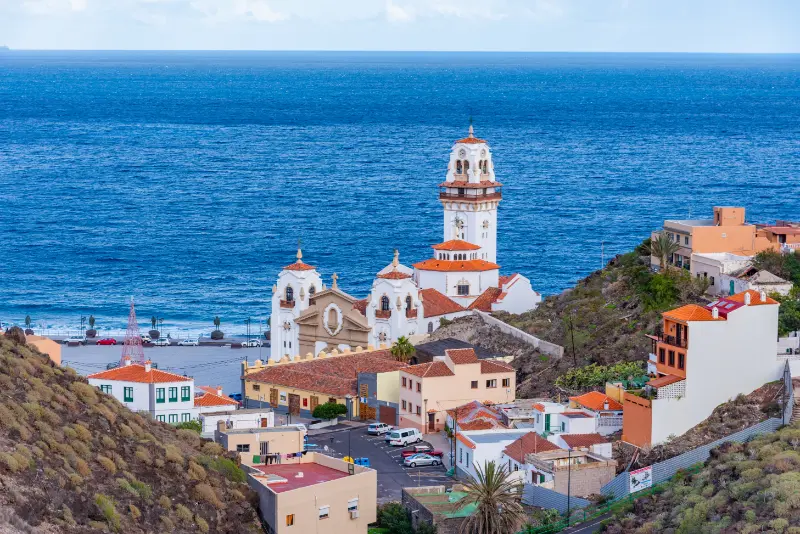
    Candelaria is one of the Tenerife towns I would add when you want more than beaches and volcanic scenery. It sits on the east coast, within easy reach of Santa Cruz and the TF-1, and combines religious history, Guanche heritage, a broad seafront plaza and an everyday local atmosphere. The town is best known for the Basilica of Nuestra Señora de Candelaria, but the most interesting visit is not just a quick photograph of the church.

    I like to spend half a day here, walking from the basilica to the bronze statues of the nine menceyes, visiting the Cueva de Achbinico area, continuing along the waterfront and stopping for lunch. Candelaria also fits naturally into a driving day between the north and south because it is much easier to reach than many mountain villages.

    Why Candelaria matters in Tenerife

    The basilica is dedicated to the Virgin of Candelaria, patroness of the Canary Islands. According to the official Tenerife tourism information, a Gothic image associated with the Virgin appeared on the coast of the Güímar valley before the Spanish conquest, and the Guanches venerated it under the name Chaxiraxi. The original image was lost in a flood in 1826; the current carving dates from 1827 and is by the Tenerife sculptor Fernando Estévez.

    The present basilica was built in 1959 and designed by Enrique Marrero Regalado. These facts are useful, but what interests me most is the layering of cultures visible around the square: Catholic pilgrimage, pre-conquest memory, monumental architecture and a waterfront that remains part of daily town life. For current opening details, I check the official basilica information.

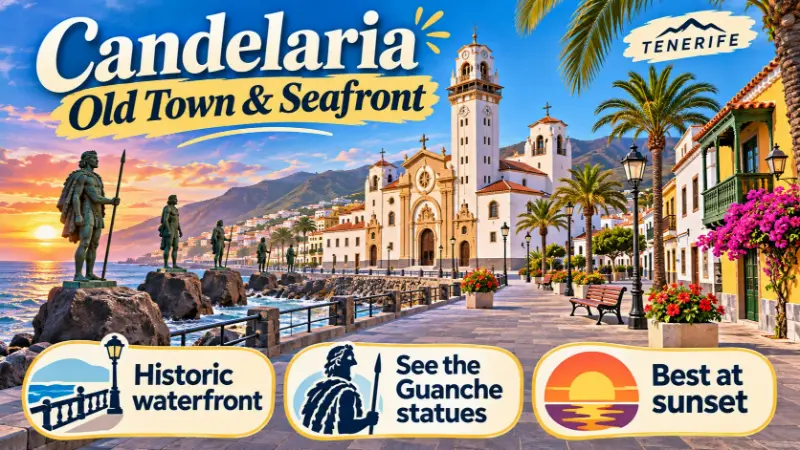
    Illustrated guide: Candelaria Old Town and Seafront, with practical visitor tips
    Illustrated guide: Candelaria Old Town and Seafront.

    Plaza de la Patrona de Canarias

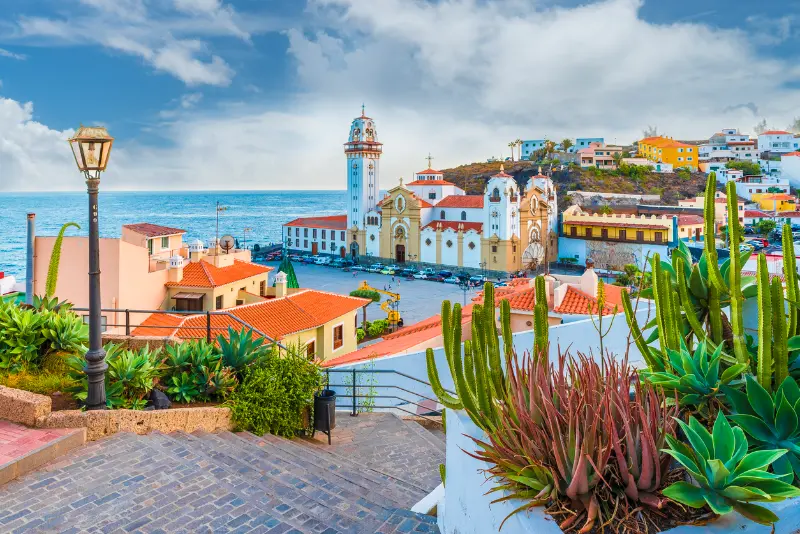
    The large plaza in front of the basilica is the natural starting point. It opens directly toward the ocean and gives the church enough space to feel monumental. I do not rush through it. The scale makes more sense when you walk to the seaward side and look back, then continue toward the mencey statues.

    During major religious celebrations the atmosphere changes completely, particularly around 2 February and 15 August. Those dates can be fascinating if you want to experience the pilgrimage tradition, but they also mean crowds and different traffic conditions. I would not plan a quiet sightseeing stop on a festival day without checking local arrangements.

    The nine menceyes

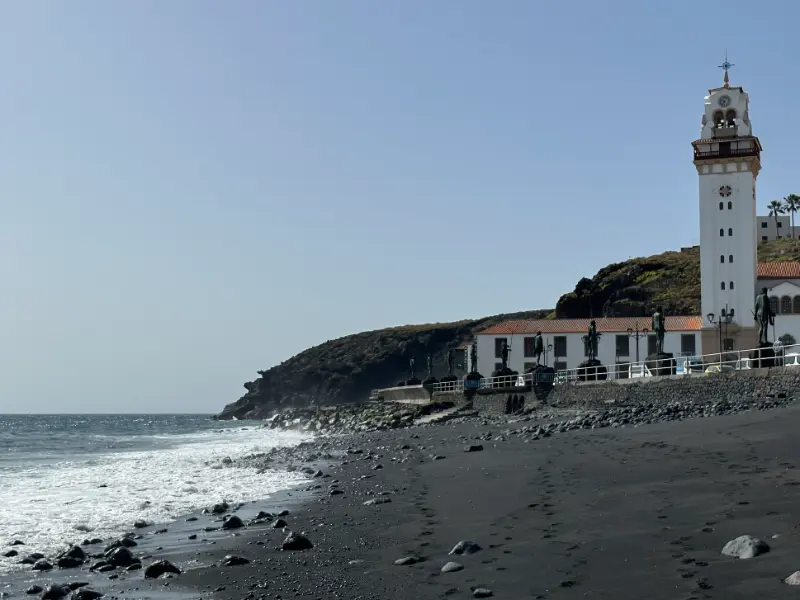
    Along the edge of the plaza stand large bronze sculptures representing the nine Guanche menceyes, or kings, associated with Tenerife’s pre-conquest territories. They give visitors a visual reminder that the island’s history did not begin with European settlement. I think they are much more meaningful when you spend a little time reading about the Guanches rather than using them only as a photo backdrop.

    Candelaria is a good place to start that conversation because the story of the Virgin is itself linked to Guanche tradition. I avoid oversimplifying the history into a romantic legend; the conquest of the Canary Islands involved profound political and cultural change. A responsible travel guide can acknowledge the tradition while still treating Indigenous history as more than decoration.

    Cueva de Achbinico or Cueva de San Blas

    Near the basilica is the Cueva de Achbinico, also known as the Cueva de San Blas. The official tourism information links it to the place where the Guanches kept the image of the Virgin. The cave has archaeological and religious importance, and it is one of the small stops that turns Candelaria from a one-building visit into a more complete historical walk.

    Candelaria Tenerife Basilica And Coast

    I keep my behaviour quiet and respectful because these are living religious spaces, not theme-park exhibits. Clothing does not need to be formal, but beachwear is not how I would enter the basilica or a place of worship.

    Walking the seafront

    After the historic core I like to continue along the promenade. The coast here is different from the sandy resort beaches of the southwest; it feels more urban and local. The walk gives you cafés, small beaches and views back toward the town. It is an easy contrast after the formal scale of the basilica.

    If your trip is focused on beaches, I would not choose Candelaria primarily for a classic beach day. Instead, pair it with cultural sightseeing and save a dedicated swimming day for Las Teresitas, El Médano or one of the southern bays.

    Food and lunch

    Candelaria works well for lunch because you are not trapped inside a single attraction complex. I look for simple Canarian dishes, fish when it is genuinely local to the restaurant’s offer, papas arrugadas with mojo and seasonal products. If I have already eaten heavily in the resort, this is a good day for a slower lunch rather than another international menu.

    My Tenerife food guide explains dishes and the difference between restaurants, traditional food and guachinche culture. Candelaria itself is not where I would specifically hunt for a famous guachinche; I focus on the town and eat where the menu and setting suit the day.

    Getting to Candelaria by car

    The town is straightforward to reach via the TF-1 compared with mountain destinations such as Masca or Anaga. From Santa Cruz it is a short drive in normal traffic, while travellers staying in Costa Adeje can use it as a stop on a northbound day. Parking becomes more complicated during festivals and busy weekends, so I follow local signs rather than trying to drive as close as possible to the basilica.

    Basilica Of Candelaria On The Tenerife Coast

    If I am combining Candelaria with another place, I prefer Santa Cruz or the Güímar valley rather than adding Teide and La Orotava in the same day. Simple geographic logic makes the itinerary more enjoyable.

    Getting there by bus

    Candelaria is also one of the easier cultural day trips without a car. TITSA services connect the town with the metropolitan area and other parts of the island. The official tourism page currently references lines such as 120, 122, 123 and 124 from the Santa Cruz area, but I always verify the live timetable before travel because routes and frequencies can change.

    For tickets, travelcards and the practical differences between bus-based and car-based itineraries, see my Tenerife without a car guide.

    How long do you need?

    Two to four hours is enough for the main sights at a comfortable pace. I would allow longer if you want lunch and a seafront walk. Candelaria is not a town where I need a checklist of twenty attractions; its strength is that the main sights are concentrated and easy to understand.

    That makes it particularly useful on arrival or departure days when you want a meaningful stop without risking a long mountain road. Just keep luggage out of sight in the car and do not leave valuables unattended.

    Best combinations for a day trip

    From Santa Cruz, I would visit Candelaria in the morning and return to the capital for the market, waterfront or evening. Another option is to continue toward Güímar and explore the agricultural east. From the south, Candelaria can be the cultural stop on a day that also includes Santa Cruz.

    If La Laguna and Anaga are your priorities, I would give them their own day. My Santa Cruz guide and La Laguna guide can help you decide how to divide the northeast.

    Where to stay

    Most visitors do not need to change hotels specifically for Candelaria, but the east coast can appeal to travellers who want a quieter base between Santa Cruz and the south. Before booking, I check walking distance to the seafront and bus stops rather than judging the town only by hotel photos.

    You can compare accommodation in Tenerife and use the map to see whether a property really suits your planned driving or public-transport route.

    Frequently asked questions

    Is the basilica free to enter?

    Visitors can normally enter the basilica without a conventional attraction ticket, but services, events and religious ceremonies can affect access. I check current information and behave respectfully during worship.

    What are the current visiting hours?

    The official tourism page currently lists Monday 15:00–19:30 and Tuesday to Sunday 07:30–19:30, but religious schedules can change, so I verify before a special trip.

    Basilica Of Our Lady Of Candelaria Tenerife Canary Islands Spain

    Is Candelaria worth visiting if I am not religious?

    Yes. The town is interesting for architecture, Guanche history, public sculpture, the seafront and the wider story of Tenerife.

    Can I visit with children?

    Yes. The central area is much easier than a mountain hike, although children should still be supervised near the waterfront and inside religious spaces.

    How would I fit it into a first Tenerife trip?

    I would use Candelaria as a half-day cultural stop, ideally combined with Santa Cruz or another east-coast destination rather than turning it into an exhausting island-wide loop.

    What I would notice beyond the headline sights

    Candelaria is especially rewarding if you pay attention to the transition between pilgrimage town and ordinary coastal life. A few streets from the monumental square, people are shopping, meeting for coffee and walking the promenade. I like that contrast because it prevents the visit from becoming a single historical photograph.

    I also leave a little time for interpretation. The relationship between Guanche tradition, later Christian devotion and modern Canarian identity is complex, and the town makes more sense when you read a few panels or official background notes rather than reducing everything to a legend about a statue. For photographers, morning and late afternoon light usually give the seafront more texture, but I never let photography interfere with ceremonies or people using religious spaces. A respectful pace is the best way to enjoy Candelaria.

  • San Cristóbal de La Laguna Guide: UNESCO Streets, History and Anaga Day Trips

    San Cristóbal de La Laguna Guide: UNESCO Streets, History and Anaga Day Trips

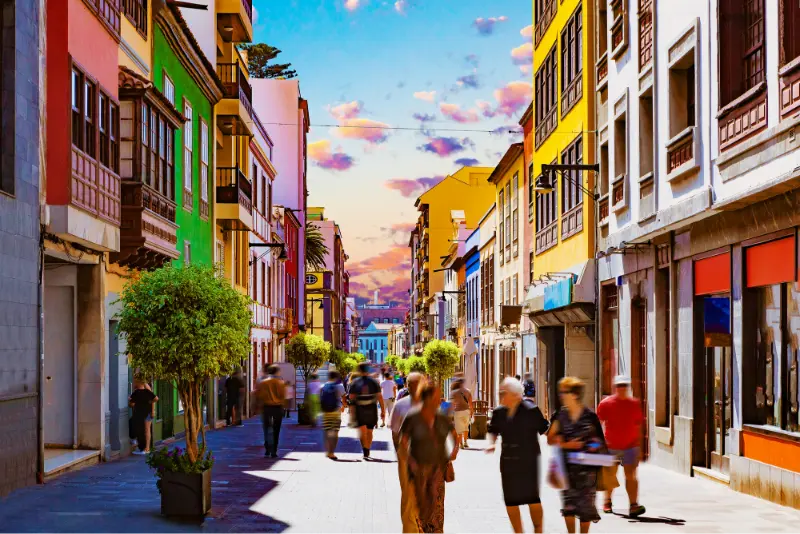
    San Cristóbal de La Laguna is the Tenerife town I recommend when someone tells me they want history, architecture and local life rather than another resort afternoon. Its historic centre is compact enough to explore on foot, yet it rewards slow attention: wooden balconies, inner courtyards, churches, colourful façades, university energy and cafés all sit inside a street plan with global historical importance.

    UNESCO inscribed La Laguna as a World Heritage Site in 1999. The city is often described as the first non-fortified Spanish colonial town whose planned layout later influenced settlements in the Americas. You do not need to be an architecture specialist to appreciate it. The key is to walk rather than drive through, because much of the experience comes from the relationship between streets, squares and building fronts.

    Why La Laguna belongs in a first Tenerife itinerary

    Tenerife’s landscapes are so dramatic that cultural stops can get pushed aside. La Laguna fixes that imbalance. It gives context to the island’s colonial history and creates a natural gateway to Anaga. I would often combine the two: La Laguna in the morning, lunch in or near the city, then a carefully chosen Anaga route or viewpoint in the afternoon.

    Because the city sits at roughly 600 metres above sea level, it can feel noticeably cooler than the southern coast. A light layer is useful even when you leave a warm beach resort. This north–south and coast–altitude contrast is one of the recurring themes of Tenerife; see my Tenerife weather guide for more.

    How to explore the historic centre

    I would start near Plaza del Adelantado and walk toward the main pedestrian streets without worrying about a perfect route. Calle Obispo Rey Redondo, often called La Carrera, and Calle Herradores are natural axes. From them, detour into courtyards, churches and quieter side streets as they catch your attention.

    The city is best when you give yourself permission to stop for coffee. A two-hour march through landmarks misses the university-town atmosphere that makes La Laguna feel lived-in rather than preserved behind glass.

    Cathedral and Iglesia de la Concepción

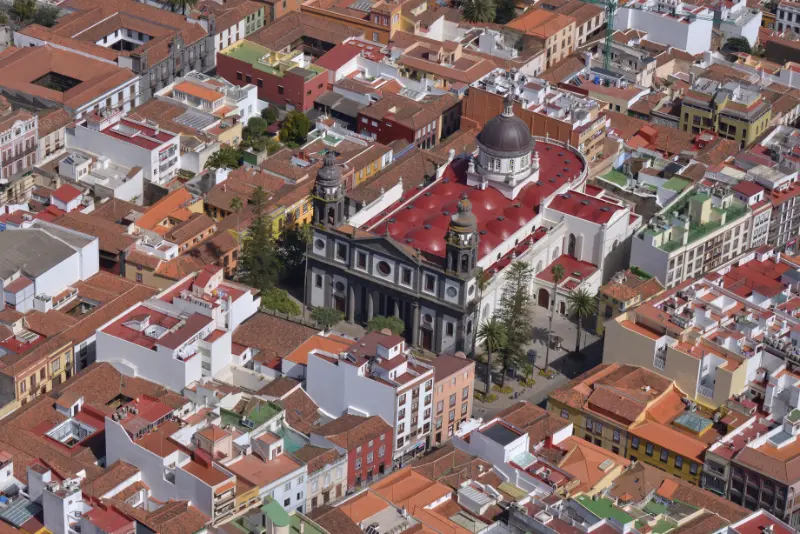
    The Cathedral of San Cristóbal de La Laguna and the Church of La Concepción are two of the historic centre’s main religious landmarks. Opening hours can change around services, events and restoration work, so I check locally rather than building a rigid schedule around interior access. Even from outside, they help orient a walk through the old town.

    San Cristobal De La Laguna Panoramic View Tenerife

    The tower of La Concepción is also one of the city’s recognisable vertical landmarks. If access is available and you are comfortable with the climb, it can add a different perspective over the tiled roofs and urban grid.

    Historic houses and courtyards

    La Laguna’s real architectural pleasure is in its domestic buildings. Look for wooden balconies, stone portals, patios and the way houses turn inward around courtyards. Some historic buildings are public institutions or cultural spaces, while others remain private, so respect access signs rather than assuming every photogenic doorway is open.

    This is where a guided walking tour can add value. The stories of merchants, religious orders, political power and Atlantic trade explain details you might otherwise pass without noticing.

    University atmosphere, cafés and shopping

    La Laguna is home to the University of La Laguna, the first university in the Canary Islands, and that student population keeps the centre energetic. Cafés, bars, bookstores and independent shops prevent the World Heritage area from feeling like a museum. I like visiting on a weekday when normal city life is active.

    For lunch, this is a good place to look beyond resort menus. Try Canarian dishes or modern restaurants using island ingredients. For a food checklist, use what to eat in Tenerife.

    La Laguna and Anaga

    The pairing is almost too obvious to ignore. From La Laguna, roads climb quickly toward Cruz del Carmen and the laurel forests of Anaga. The landscape can change from urban streets to misty woodland in a remarkably short time. I would choose one trail or a few viewpoints, not try to cover the entire rural park after lunch.

    Some Anaga areas require reservations and temporary closures are possible, so check Tenerife ON before setting off. My Anaga Rural Park guide explains how I plan the nature half of the day.

    La Laguna Colorful Historic Street Tenerife

    Getting to La Laguna

    The tram from Santa Cruz is one of the easiest transport options and avoids parking. Tenerife North Airport is nearby, which makes La Laguna a practical first or last-night base for some itineraries. Buses connect it with other towns and parts of Anaga. If you drive, I prefer to park outside the pedestrian core and explore the centre on foot.

    My Tenerife transport guide covers buses, airports and rental-car strategy across the island.

    Where to stay

    Staying overnight changes the experience. Day visitors leave, restaurants settle into an evening rhythm and the streets feel more local. I would stay here for a culture-focused city break, an early Tenerife North Airport flight, several Anaga hikes or a split itinerary that includes both north and south.

    Accommodation choice is smaller than in the major resorts, which is part of the appeal. Look for a central guesthouse, boutique hotel or apartment within walking distance of the historic core. You can compare accommodation in La Laguna after checking the exact street and parking arrangements.

    How long do you need?

    Time availableWhat I would do
    2–3 hoursHistoric-centre walk, coffee and one interior visit
    Half dayAdd lunch, courtyards and slower shopping
    Full dayCombine with a light Anaga visit
    1–2 nightsUse La Laguna as a base for Anaga and Santa Cruz

    For a first visit, half a day is enough to understand why the city matters. A full day is better if architecture and food interest you. Staying overnight makes sense when you want to explore the northeast without repeatedly driving from the southern resorts.

    La Laguna with children

    The pedestrian centre is easier with children than a car-based sightseeing day, but younger children may lose interest in a long architectural route. I would keep the history portion short, add a pastry or ice-cream break, and then move to an outdoor stop. Combining the town with a very short Anaga walk can work better than expecting children to appreciate every historic house.

    For family pacing across the island, see Tenerife with kids.

    What to wear and weather

    Do not dress for La Laguna based only on the weather at Costa Adeje. Its elevation and northeastern position make it cooler and sometimes mistier. Comfortable walking shoes are more useful than beach sandals on old streets, and a light waterproof or wind layer can save the day before heading into Anaga.

    My ideal La Laguna visit

    I would arrive in the morning, walk slowly from Plaza del Adelantado through the pedestrian core, choose one or two buildings to explore properly, have lunch somewhere that serves island produce and then decide whether the weather favours Anaga. If clouds are thick in the mountains, stay longer in the city rather than forcing a scenic drive with no visibility.

    Aerial View Of La Laguna Tenerife

    For official background and current visitor information, use the Tenerife tourism page for San Cristóbal de La Laguna.

    Photography without missing the city

    La Laguna is extremely photogenic, but I try not to experience it entirely through a camera. Courtyards, doorways and balconies deserve attention, yet many are private spaces. I photograph from public streets, respect signs and spend at least part of the walk without trying to collect every façade. The city makes more sense as a whole than as a sequence of isolated Instagram frames.

    A cooler base in summer

    Travellers who struggle with summer heat may appreciate La Laguna’s elevation, particularly in the evening. It is not a guarantee of cool weather, but conditions often feel different from the coast. That can make it a useful split-stay base when a trip includes both beach days and serious walking in the northeast.

    Practical planning notes I would save before the trip

    For La Laguna Tenerife guide, I save the accommodation address, parking or bus information, one official information link and the route back to my base before leaving. Tenerife is easy to travel around, but mountain roads, microclimates and busy coastal areas can turn a simple day into a slower one. I therefore keep one optional stop that can be removed without losing the main purpose of the day.

    I also carry water, sun protection and a light layer whenever the day leaves the immediate coast. Even short journeys can move from warm sunshine to wind, cloud or cooler high ground. That small amount of preparation makes it easier to respond to the island as it actually is rather than force a schedule created before arrival.

    Finally, I avoid judging a destination by the busiest thirty minutes of the day. Arriving earlier, staying later, walking one street beyond the obvious viewpoint and sitting down for a proper meal often changes the experience completely. My goal with these guides is not to collect attractions but to make each place easier to understand and enjoy at a realistic pace.