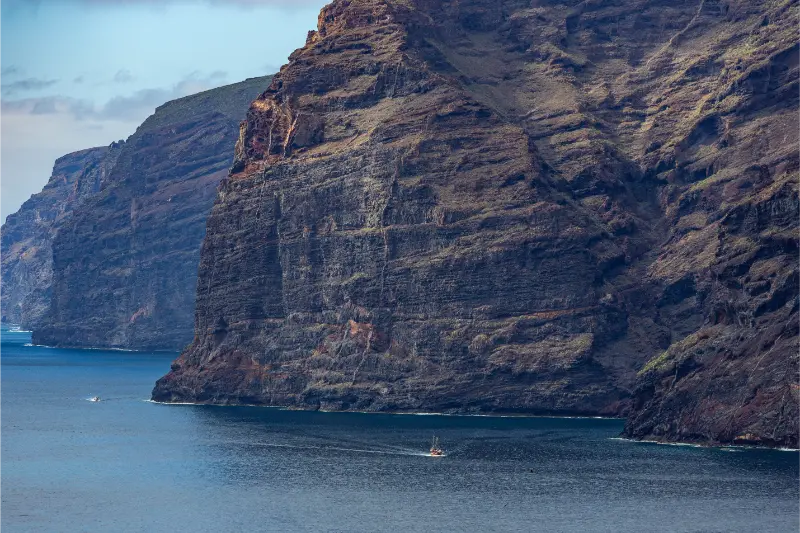
Kayaking gives me a version of Tenerife that road trips cannot reach. Lava cliffs, caves, coves and the height of Los Gigantes are completely different when the viewpoint is only a metre above the Atlantic. Official tourism information lists kayaking around Los Gigantes, Las Galletas, Los Cristianos and Las Teresitas, and notes that the activity is possible year-round when conditions cooperate. I still treat the sea with more respect than the calendar: wind, swell and current matter more than a sunny sky. For most visitors, a guided tour is the simplest way to start.
Los Gigantes: the headline kayaking landscape
The cliffs of Los Gigantes rise dramatically from the northwest coast and are the place I would choose for the strongest scenery. Official tourism describes sections reaching around 600 metres above the sea, so the scale from a kayak is extraordinary. Guided tours commonly depart from the marina area and follow conditions rather than a fixed promise of distance. I would book the paddling experience separately from whale watching expectations: marine life may appear, but wildlife is never guaranteed.

This is the point where I slow the itinerary down. I leave enough time for parking, a short walk and a change of plan if weather or opening conditions are different from what I expected. Tenerife rewards flexibility, and I would rather enjoy one place properly than rush through three stops because they looked close together on a map.
Los Cristianos and the south coast
Los Cristianos is practical because the harbour, accommodation and transport infrastructure are easy to use. Kayak tours in this area may combine paddling with snorkelling when sea conditions allow. The setting is more developed than Los Gigantes, but that convenience can be ideal for families or first-time paddlers. I also like that the rest of the day can remain car-free, with Las Vistas, restaurants and buses all close to the harbour area.
In practical terms, I check this again on the morning of the visit. Opening hours, sea state, wind and local access can change, especially on an island where coast, forest and high ground behave very differently. I also keep one nearby alternative so a small change never means crossing Tenerife unnecessarily.
Las Galletas and Costa del Silencio
The Las Galletas coast provides another southern option with a stronger local-harbour feel. Volcanic shoreline, diving activity and the nearby Montaña Amarilla area make the wider coastline interesting even if the exact tour route changes. My Las Galletas and Costa del Silencio guide helps turn a paddle into a full day. I would not launch independently from an unfamiliar rocky access simply because the water looks calm.
I would build the rest of the day around this stop rather than squeeze it between two distant attractions. That usually means choosing a nearby lunch, beach, viewpoint or town and accepting that driving time is part of the experience. The result is a calmer day and a much better sense of place.
Las Teresitas and the northeast side
Las Teresitas offers a different visual experience: golden sand below Anaga rather than giant western cliffs. It can be a good place for a gentler paddle in appropriate conditions, but the northeast is exposed to weather patterns that differ from the south. I combine this area with San Andrés or Santa Cruz and check the local forecast, wind and any beach notices before taking equipment onto the water.
For first-time visitors, the useful question is not only whether this is worth seeing, but whether it fits the base and transport plan. I compare the route with my Tenerife transport guide and avoid creating a day with repeated north-south crossings just to tick off one more place.
Guided tour versus kayak rental
A rental gives experienced paddlers more independence, but a guided tour removes several uncertainties: launch points, local wind, group pacing, rescue procedures and where not to enter. For a first sea-kayak outing in Tenerife I prefer a guide, especially around cliffs or areas with boat traffic. Official tourism currently states that no special permit is generally required for kayaking, but that does not remove the need to respect navigation, protected areas and local instructions.
I also think about the time after the main activity. A museum, flight, paddle or village visit is more enjoyable when I have not booked a rigid dinner on the opposite side of the island. I keep the final hours loose enough for an unexpected viewpoint, traffic, changing weather or simply staying longer somewhere I like.
Wildlife: enjoy sightings without chasing animals
Tenerife’s southwest waters are famous for cetaceans, but I do not paddle toward whales or dolphins hoping for a close encounter. Kayaks must still respect wildlife and the wider rules that protect the marine environment. If responsible cetacean watching is the priority, I use an authorised boat operator and my whale watching guide. A kayak tour should be satisfying because of the coast even if no animal appears.
My planning rule here is simple: use current information rather than copying an itinerary from an older trip report. Tenerife manages natural areas, sports zones and public facilities actively, so the best plan is the one that can absorb a closure or timetable change without becoming stressful.
What to wear and what I protect from water
I use sun protection, a hat or secure cap when allowed, swimwear or quick-drying clothing and footwear appropriate for the operator’s launch. I assume everything can get wet. Phone, car key and medication need a genuinely waterproof solution, not a thin shopping bag. In cooler or windy conditions the operator may provide or recommend thermal protection. I also bring water even for a relatively short paddle.
If I am travelling with children or a mixed-age group, I shorten the visit before anyone gets tired. That is particularly useful in Tenerife, where a sunny morning can turn into a windy afternoon at altitude or a rougher sea on the coast. I prefer leaving with energy for the next stop.
When I would cancel or switch activities
Strong wind, significant swell or a nervous group member can turn kayaking from enjoyable to stressful. I accept an operator cancellation and switch to a coastal walk, museum or sheltered beach. My coastal walks guide and rainy-day guide give alternatives that do not require forcing the sea plan. I never treat prepayment as a reason to ignore conditions.
I treat this as part of a wider area rather than an isolated attraction. Linking places geographically creates better travel days: less driving, more time on foot and more chances to notice the cafés, promenades, architecture and landscapes that never make a top-ten list.
My final planning advice
For a first kayaking experience I would choose the landscape that matters most: Los Gigantes for scale, Los Cristianos for convenience, or Las Galletas for a quieter southern base. Then I would let the operator decide the safest exact route on the day.
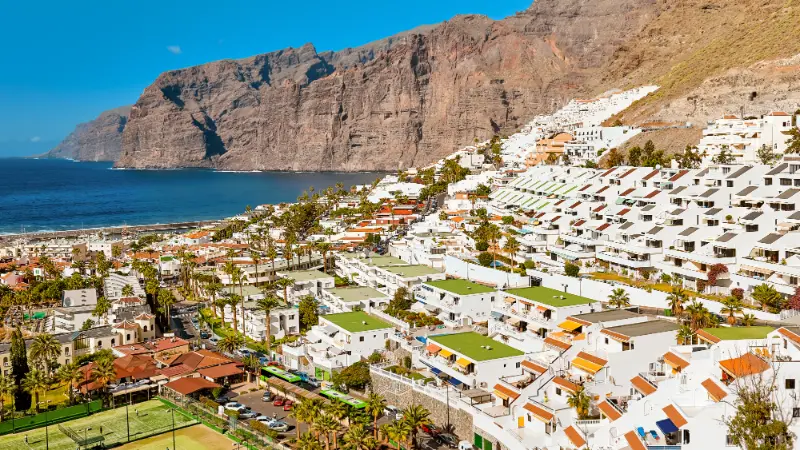
If Los Gigantes is the priority, compare current Los Gigantes accommodation prices so an early tour does not require a long cross-island drive.
How I keep this day realistic
I do not turn this guide into a checklist. I choose the two or three elements that matter most, leave the rest optional and build in time for a proper meal or a slower walk. Tenerife often looks compact on a map, but elevation changes, winding roads and parking can make a short distance consume more of the day than expected. A realistic plan also makes it easier to respond to cloud, wind or heat without feeling that the trip has gone wrong.
What I check before leaving accommodation
Before heading out I check the exact destination, current weather at that location rather than at the hotel, and any notice from the official operator or municipality. I also carry water, sun protection and a light layer because conditions change quickly between the coast and higher ground. If the activity is time-sensitive, I save the booking confirmation offline and keep enough battery for maps and transport information.
Why I leave a backup option nearby
A backup does not need to be another major attraction. It can be a beach, historic centre, market, café or viewpoint in the same part of Tenerife. That small amount of preparation prevents a closure or rough sea from turning into a long cross-island drive. It is one of the habits that makes independent travel here much easier, especially when several people have different interests and energy levels.
The pace I would choose
I would rather finish this day feeling that I could have stayed longer than arrive back exhausted. Many of Tenerife’s best experiences depend on atmosphere: sitting by the sea after an activity, walking a town at dusk, watching cloud move across a ridge or finding a local restaurant without a schedule. Leaving space for those moments is more valuable than adding another stop simply because it appears in a guidebook.
How I keep this day realistic
I do not turn this guide into a checklist. I choose the two or three elements that matter most, leave the rest optional and build in time for a proper meal or a slower walk. Tenerife often looks compact on a map, but elevation changes, winding roads and parking can make a short distance consume more of the day than expected. A realistic plan also makes it easier to respond to cloud, wind or heat without feeling that the trip has gone wrong.