Category: Food & Culture

Tenerife food, Canarian dishes, wine, markets and cultural experiences for curious travellers.

  • Palacio de Nava La Laguna Guide: Architecture and 2026 Access Status

    Palacio de Nava La Laguna Guide: Architecture and 2026 Access Status

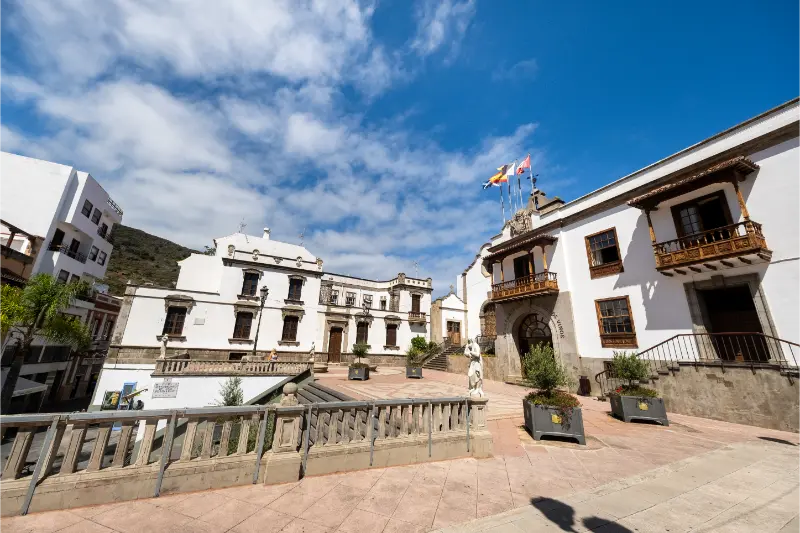
    Palacio de Nava is one of the façades that makes Plaza del Adelantado feel like the ceremonial centre of old La Laguna. It is also a building that rewards caution in travel planning. The palace is architecturally important and easy to appreciate from outside, but interior access is not an everyday guarantee. In September 2026 the city is offering exceptional guided access during Las Noches del Patrimonio while conservation work continues, which underlines the point: I would plan first for the exterior and treat any interior opening as a bonus confirmed through the official programme.

    Quick visit facts

    LocationNorth side of Plaza del Adelantado, La Laguna
    ConstructionWork began in 1585 on a site associated with Jorge Grimón
    Major remodellingTomás Nava y Grimón y Porlier transformed the building in 1776
    ProtectionBien de Interés Cultural, Monument category, since 2000
    Current accessNormally limited; September 2026 heritage events include exceptional guided access while conservation work continues

    A façade built by several centuries

    The palace is often described through the mixture of mannerist, baroque and neoclassical elements visible on its stone façade. That mixture is not accidental decoration. It reflects successive building campaigns, especially the substantial eighteenth-century transformation that gave the house much of its present appearance.

    I find it more useful to look for changes in proportion, ornament and stonework than to force the whole façade into one stylistic label. The building is interesting precisely because it resists that simplification.

    The house behind the façade

    Official heritage information describes a rectangular plan with two interior courtyards and a rear garden. Those spaces are important for understanding elite domestic architecture in La Laguna, where the street façade was only one part of a larger sequence from entrance hall to patio, stairs, principal rooms and service or garden areas.

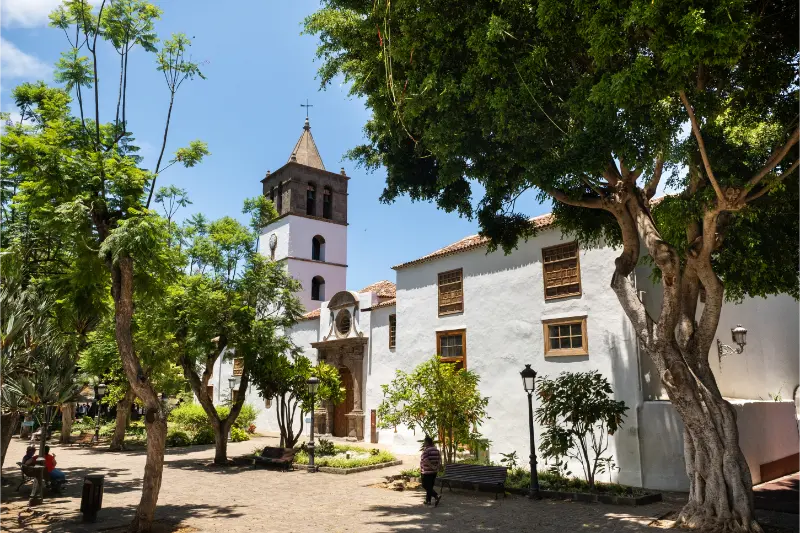
    San Cristobal De La Laguna Historic Center Tenerife

    Because the interior is not routinely open, photographs and special guided visits are often the only way most visitors encounter that spatial organisation. I therefore avoid promising rooms that may be inaccessible on an ordinary day.

    2026 conservation and exceptional opening

    On 17 September 2026 the city announced exceptional access to the palace during Las Noches del Patrimonio on 18 and 19 September. The municipal notice also says the building has been closed to the public for years while conservation interventions continue, with the special route limited and guided for preservation reasons.

    That is exactly the kind of status that can change. If I am visiting after the heritage weekend, I assume the exterior is the reliable experience unless the tourism office confirms another opening. This prevents a disappointing detour based on a social-media photo from a one-off event.

    How to appreciate it when the doors are closed

    I start across the square rather than directly under the façade. The distance lets me see the composition, the stone skin and how the palace relates to the scale of Plaza del Adelantado. Then I move closer for the portal, balconies and carved details.

    After that, I compare it with Palacio Salazar and Casa de los Capitanes elsewhere in the centre. The contrast between these houses is more informative than trying to decide which is the ‘most beautiful’. Each represents a different phase and expression of elite architecture in Tenerife.

    How I would plan the visit

    I build the stop into a compact local route rather than drive across Tenerife for one doorway. That reduces parking stress and gives the site context. Historic centres and small museums are often more rewarding when I can compare them with the streets, squares, markets or landscapes that produced them.

    I also leave flexibility. Opening hours can change for public holidays, conservation work, religious services, private events or temporary exhibitions. My practical rule is simple: if entering the building is essential to the day, I check the official source again that morning. If the exterior or surrounding district is valuable by itself, I can be more spontaneous.

    How much time I would allow

    I separate time inside from total visit time. A compact museum may need only 45 minutes, yet the real stop can take 90 minutes once I include walking, ticketing, photography and a nearby coffee. A church or palace may be quicker if only the exterior is accessible, but I still avoid scheduling another fixed-time activity immediately afterwards.

    For a culture-heavy day, I rarely stack more than three substantial interiors in one half-day. Alternating an indoor visit with a square, garden, lunch or short walk keeps attention higher and makes details easier to remember.

    Photography, accessibility and families

    Photography rules are not universal. I keep flash off around artworks and living collections, look for signs and ask before filming extensively. In active religious sites I never photograph worshippers without permission, and in gardens or wildlife spaces I avoid handling plants or animals for a better picture.

    Accessibility also has to be checked site by site. A pedestrian historic centre can be easy to reach while a heritage staircase, old threshold or narrow gallery is not. When step-free access is essential, I contact the venue rather than infer accessibility from a modern-looking entrance. With children, I shorten the visit and give them one or two things to look for; that usually works better than expecting them to read every label.

    When I would go

    Weekday mornings are usually the easiest time for combining cultural attractions with open museums, but they are not automatically the quietest during school visits or organised groups. Late afternoon often gives better street atmosphere, while indoor opening can be more limited. I choose according to the experience I want rather than chasing a mythical hour with no other visitors.

    Tenerife’s local fiestas, Carnival, religious celebrations and heritage weekends can transform normal access. Those dates can be wonderful, but they require a different plan. I check road closures, event programmes and special opening rules before assuming an ordinary timetable still applies.

    Where I would stay if I wanted a slower visit

    For a day trip, I would normally return to my main base. If I want two culture-heavy days without repeated driving, I sometimes compare accommodation in San Cristóbal de La Laguna. Staying locally is most useful when I want early streets, evening restaurants or several attractions that open on different schedules.

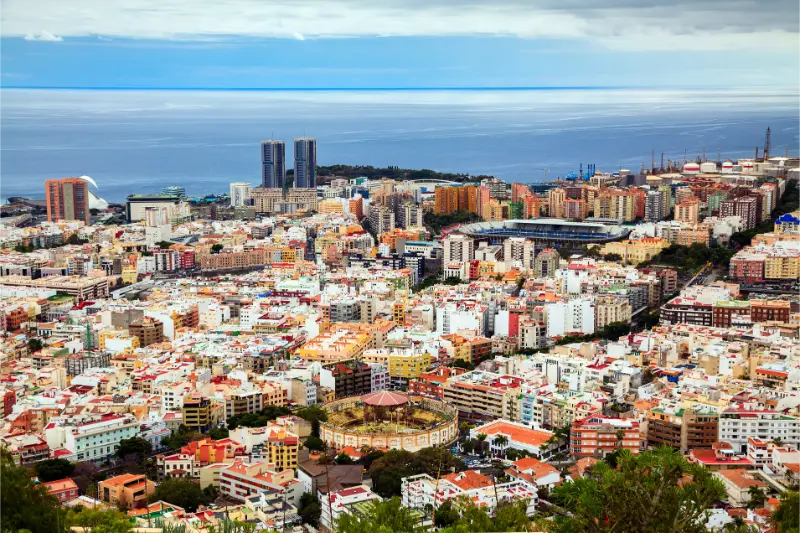
    San Cristobal De La Laguna Panoramic View Tenerife

    Common mistakes I would avoid

    • Using an old Google review as the only source for opening hours.
    • Assuming an open gate means every interior room is public.
    • Driving from monument to monument inside a walkable historic centre.
    • Trying to photograph everything instead of spending time with a few details.
    • Ignoring services, worship, conservation work or local events that can temporarily change access.

    What I would combine nearby

    I prefer these combinations because they keep the day geographically coherent. The point is not to collect the largest possible number of attractions; it is to understand one part of Tenerife more deeply while spending less time in traffic.

    Official source

    For current access, opening information and temporary changes I check the official information for this site before travelling.

    Frequently asked questions

    Can I normally tour Palacio de Nava inside?

    Not as a standard everyday attraction. Interior access is limited and special guided openings can occur, so check the official La Laguna programme.

    When did the palace take its present form?

    Construction began in the sixteenth century, but a major remodelling in 1776 strongly shaped the present appearance.

    What styles can I see?

    The façade combines elements generally described as mannerist, baroque and neoclassical.

    Is the exterior worth seeing if it is closed?

    Yes. Its stone façade and position on Plaza del Adelantado are central to understanding the historic centre.

    Final thoughts

    Palacio de Nava La Laguna earns a place in a Tenerife itinerary when I treat it as part of its neighbourhood rather than an isolated pin on a map. I would verify the practical details, give the site enough time to reveal its context and then continue on foot to nearby places. That slower approach is usually what turns a short stop into something I actually remember after the trip.
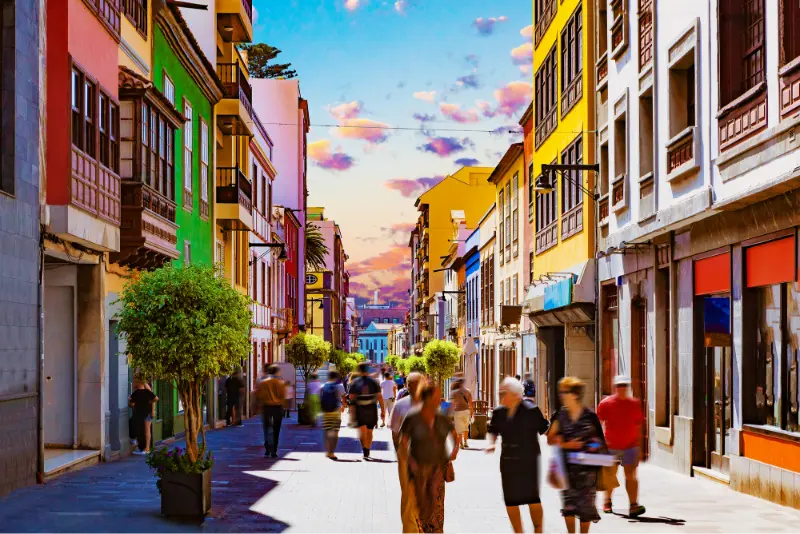
    La Laguna Colorful Historic Street Tenerife

    A slower way to experience San Cristóbal de La Laguna

    One reason I prefer a slower plan is that the surrounding streets often explain details that a label cannot. Building materials, balconies, gardens, shopfronts, church bells, small courtyards and changes in elevation all connect an attraction to the town around it. I stop before and after the visit, compare what I have just seen with neighbouring buildings and note how locals actually use the area. That simple habit turns heritage from background scenery into a readable landscape.

    I also avoid making every decision around headline attractions. A small museum, quiet square or specialist garden can be more memorable than a famous site when it matches my interests. Tenerife rewards this kind of selective travel because the island packs very different histories and ecosystems into short distances. Giving one neighbourhood a full morning often teaches me more than driving to three distant highlights.

    My practical checklist before leaving

    The night before, I check the official page, public transport or parking plan, expected weather and whether a local event changes access. I carry water even on an urban day, keep a light layer for La Laguna or the north, and leave enough phone battery for tickets and maps. I save the attraction name and address offline in case mobile data becomes unreliable inside a thick-walled heritage building.

    On arrival, I read the entrance signs before buying anything or joining a queue. If the current situation differs from what I found online, I trust the staff and posted information. That may sound obvious, but it is the simplest way to avoid turning a small schedule change into a frustrating day.
  • Plaza del Adelantado Guide: La Laguna History, Fountain and Walking Route

    Plaza del Adelantado Guide: La Laguna History, Fountain and Walking Route

    Plaza del Adelantado is the square I use to understand La Laguna’s ‘Villa de Abajo’. It looks pleasant enough as a place to sit under trees, but its real value comes from the buildings and institutions around it. The square took its name from Alonso Fernández de Lugo, the Adelantado associated with the conquest and early government of Tenerife, and for centuries it functioned as one of the city’s principal civic stages. I would not treat it as a two-minute photo stop: it is a useful orientation point for reading the planned part of the UNESCO city.

    Quick visit facts

    LocationHistoric centre of San Cristóbal de La Laguna
    NameNamed after Adelantado Alonso Fernández de Lugo
    First paving1798
    Garden layoutInterior garden areas arranged in 1843
    FountainMarble fountain commissioned from a French workshop and installed in 1870

    Why this square matters to the city plan

    La Laguna developed with a contrast between the less formally planned early settlement and the more geometric lower town. Plaza del Adelantado became the civic heart of that ordered section, surrounded by government, religious and aristocratic buildings. Looking outward from the square makes the city’s urban history much easier to grasp than reading a plaque in isolation.

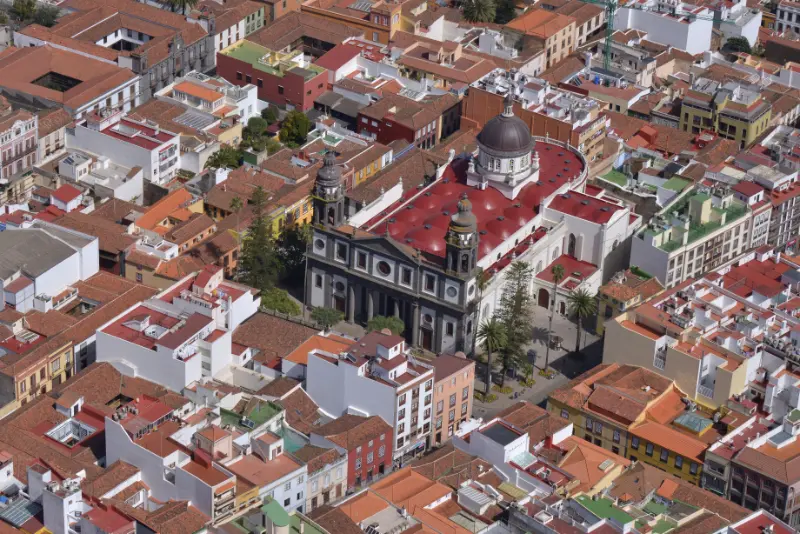
    Aerial View Of La Laguna Tenerife

    I like to stand near the centre and turn slowly through the four sides. The sequence of façades is the lesson: Palacio de Nava, municipal buildings, Casa Anchieta and the convent area each represent a different kind of power or social role.

    The fountain and the nineteenth-century square

    The square changed with the city. Official tourism information records its first paving in 1798, the arrangement of interior garden areas in 1843 and the installation of the present marble fountain in 1870 after it was commissioned from a French workshop. Those dates matter because the landscaped square visitors see today is not simply a surviving sixteenth-century space.

    This is a good example of how historic centres accumulate layers. The location is early, the urban importance is early, but the visible furniture and landscaping reflect later ideas about civic beauty and public space.

    What to look at around the edges

    The north side is dominated by the stone presence of Palacio de Nava, while nearby buildings connect the square with municipal and religious history. Casa Anchieta adds another layer because of its association with José de Anchieta and its modern cultural use. The convent of Santa Catalina introduces a still-living religious community to the same urban frame.

    Instead of photographing only the fountain, I would use the square as a base for short five- to ten-minute detours. Each return to the plaza makes the relationships between the monuments clearer.

    The best time to stop

    Morning is practical if I want to combine the square with museums and heritage interiors. Late afternoon is better if my priority is atmosphere, outdoor cafés and softer light on the stone façades. Because the square also hosts civic and cultural activity, the feel can change dramatically during festivals and special heritage events.

    I avoid designing a visit around an exact promise of silence. Plaza del Adelantado is a functioning city space, not an archaeological enclosure, and that everyday use is part of its appeal.

    How I would plan the visit

    I build the stop into a compact local route rather than drive across Tenerife for one doorway. That reduces parking stress and gives the site context. Historic centres and small museums are often more rewarding when I can compare them with the streets, squares, markets or landscapes that produced them.

    I also leave flexibility. Opening hours can change for public holidays, conservation work, religious services, private events or temporary exhibitions. My practical rule is simple: if entering the building is essential to the day, I check the official source again that morning. If the exterior or surrounding district is valuable by itself, I can be more spontaneous.

    How much time I would allow

    I separate time inside from total visit time. A compact museum may need only 45 minutes, yet the real stop can take 90 minutes once I include walking, ticketing, photography and a nearby coffee. A church or palace may be quicker if only the exterior is accessible, but I still avoid scheduling another fixed-time activity immediately afterwards.

    For a culture-heavy day, I rarely stack more than three substantial interiors in one half-day. Alternating an indoor visit with a square, garden, lunch or short walk keeps attention higher and makes details easier to remember.

    Photography, accessibility and families

    Photography rules are not universal. I keep flash off around artworks and living collections, look for signs and ask before filming extensively. In active religious sites I never photograph worshippers without permission, and in gardens or wildlife spaces I avoid handling plants or animals for a better picture.

    Accessibility also has to be checked site by site. A pedestrian historic centre can be easy to reach while a heritage staircase, old threshold or narrow gallery is not. When step-free access is essential, I contact the venue rather than infer accessibility from a modern-looking entrance. With children, I shorten the visit and give them one or two things to look for; that usually works better than expecting them to read every label.

    When I would go

    Weekday mornings are usually the easiest time for combining cultural attractions with open museums, but they are not automatically the quietest during school visits or organised groups. Late afternoon often gives better street atmosphere, while indoor opening can be more limited. I choose according to the experience I want rather than chasing a mythical hour with no other visitors.

    Tenerife’s local fiestas, Carnival, religious celebrations and heritage weekends can transform normal access. Those dates can be wonderful, but they require a different plan. I check road closures, event programmes and special opening rules before assuming an ordinary timetable still applies.

    Where I would stay if I wanted a slower visit

    For a day trip, I would normally return to my main base. If I want two culture-heavy days without repeated driving, I sometimes compare accommodation in San Cristóbal de La Laguna. Staying locally is most useful when I want early streets, evening restaurants or several attractions that open on different schedules.

    San Cristobal De La Laguna Historic Center Tenerife

    Common mistakes I would avoid

    • Using an old Google review as the only source for opening hours.
    • Assuming an open gate means every interior room is public.
    • Driving from monument to monument inside a walkable historic centre.
    • Trying to photograph everything instead of spending time with a few details.
    • Ignoring services, worship, conservation work or local events that can temporarily change access.

    What I would combine nearby

    I prefer these combinations because they keep the day geographically coherent. The point is not to collect the largest possible number of attractions; it is to understand one part of Tenerife more deeply while spending less time in traffic.

    Official source

    For current access, opening information and temporary changes I check the official information for this site before travelling.

    Frequently asked questions

    Is Plaza del Adelantado free to visit?

    Yes. It is a public square in the historic centre.

    How old is the fountain?

    The marble fountain was installed in 1870 after being commissioned from a French workshop.

    Why is it called Plaza del Adelantado?

    It takes its name from Alonso Fernández de Lugo, the Adelantado associated with the conquest and early government of Tenerife.

    Is it a good starting point for La Laguna?

    Yes. Several major heritage buildings stand on or very close to the square, making it an excellent orientation point.

    Final thoughts

    Plaza del Adelantado earns a place in a Tenerife itinerary when I treat it as part of its neighbourhood rather than an isolated pin on a map. I would verify the practical details, give the site enough time to reveal its context and then continue on foot to nearby places. That slower approach is usually what turns a short stop into something I actually remember after the trip.

    A slower way to experience San Cristóbal de La Laguna

    One reason I prefer a slower plan is that the surrounding streets often explain details that a label cannot. Building materials, balconies, gardens, shopfronts, church bells, small courtyards and changes in elevation all connect an attraction to the town around it. I stop before and after the visit, compare what I have just seen with neighbouring buildings and note how locals actually use the area. That simple habit turns heritage from background scenery into a readable landscape.

    San Cristobal De La Laguna Panoramic View Tenerife

    I also avoid making every decision around headline attractions. A small museum, quiet square or specialist garden can be more memorable than a famous site when it matches my interests. Tenerife rewards this kind of selective travel because the island packs very different histories and ecosystems into short distances. Giving one neighbourhood a full morning often teaches me more than driving to three distant highlights.

    My practical checklist before leaving

    The night before, I check the official page, public transport or parking plan, expected weather and whether a local event changes access. I carry water even on an urban day, keep a light layer for La Laguna or the north, and leave enough phone battery for tickets and maps. I save the attraction name and address offline in case mobile data becomes unreliable inside a thick-walled heritage building.

    On arrival, I read the entrance signs before buying anything or joining a queue. If the current situation differs from what I found online, I trust the staff and posted information. That may sound obvious, but it is the simplest way to avoid turning a small schedule change into a frustrating day.
  • Real Santuario del Cristo de La Laguna Guide: History and Visit Tips

    Real Santuario del Cristo de La Laguna Guide: History and Visit Tips

    The Real Santuario del Cristo de La Laguna is not simply another historic church on a UNESCO walking route. It remains an active place of devotion around one of Tenerife’s most important religious images, and its story is tied to the Franciscan convent of San Miguel de las Victorias founded after the conquest. I approach it differently from a museum: first as a living sanctuary, then as an architectural and historical site. That change of attitude makes the visit quieter and more meaningful, especially if there is a service or someone praying in front of the Cristo.

    Quick visit facts

    SettingPlaza del Cristo, San Cristóbal de La Laguna
    OriginsFranciscan convent founded after the conquest; construction began in 1506
    Later historyThe complex suffered floods in 1713 and a major fire in 1810
    Key featureThe main sanctuary houses the venerated Cristo de La Laguna and a striking silver-covered high altarpiece
    Visit styleActive religious site: worship takes priority over sightseeing

    From convent to sanctuary

    The complex began with the Franciscan foundation of San Miguel de las Victorias. Official heritage material places the start of construction in 1506 and notes that the work appears to have been substantially completed by around 1560. The site changed repeatedly after that, and natural disaster as well as fire altered what survived.

    This history explains why I do not expect a perfectly intact sixteenth-century monastery. The value lies in the continuity of the place: Franciscan presence, devotional use, rebuilding and civic memory all overlap around the same square.

    The Cristo and the silver altarpiece

    The sanctuary’s focus is the image of the Santísimo Cristo de La Laguna. The official description also draws attention to the main altarpiece covered in repoussé silver, a visually unusual setting that changes the atmosphere of the single nave. The contrast between the relatively sober architecture and the concentrated richness of the presbytery is one of the details I remember most.

    I would give the image and altar space without treating them as decorative props. For local worshippers they have a devotional meaning that is different from the tourist’s architectural interest. Quiet observation, modest photography and attention to signs are the right approach.

    What the disasters changed

    The convent and church were not untouched by Tenerife’s environmental history. Flooding in 1713 and the fire of 1810 are specifically noted in the heritage record. The present complex therefore contains rebuilding and adaptation rather than one unbroken original fabric.

    That makes the sanctuary a good place to think about resilience in La Laguna. Many historic buildings survived because they were repaired, repurposed and maintained, not because time left them alone.

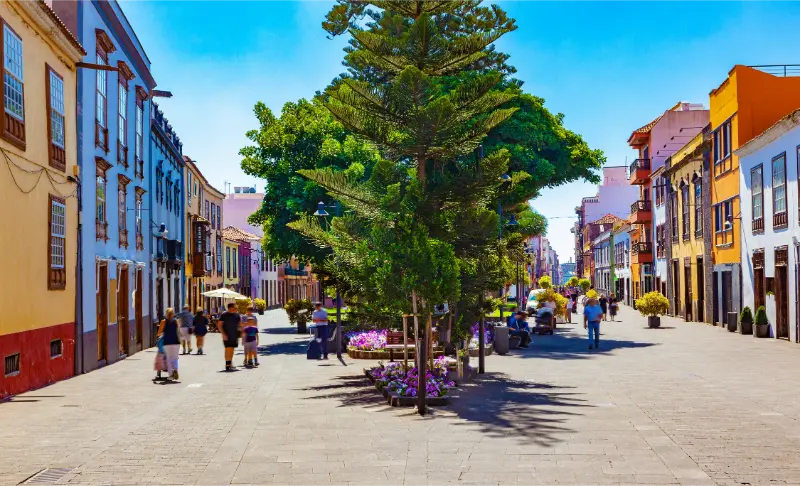
    La Laguna Pedestrian Street Tenerife

    Plaza del Cristo and the wider city

    The large open plaza in front of the sanctuary feels very different from the tighter pedestrian streets around the cathedral and La Concepción. I use that contrast to slow the route down. It is also a practical point from which to understand how religious festivals can occupy urban space at a scale that a small church forecourt never could.

    From here I either continue toward the historic centre or use the stop as the end of a longer circuit. The sanctuary is close enough to the main UNESCO streets to walk, but far enough from the densest visitor flow to feel like a change of rhythm.

    How I would plan the visit

    I build the stop into a compact local route rather than drive across Tenerife for one doorway. That reduces parking stress and gives the site context. Historic centres and small museums are often more rewarding when I can compare them with the streets, squares, markets or landscapes that produced them.

    I also leave flexibility. Opening hours can change for public holidays, conservation work, religious services, private events or temporary exhibitions. My practical rule is simple: if entering the building is essential to the day, I check the official source again that morning. If the exterior or surrounding district is valuable by itself, I can be more spontaneous.

    How much time I would allow

    I separate time inside from total visit time. A compact museum may need only 45 minutes, yet the real stop can take 90 minutes once I include walking, ticketing, photography and a nearby coffee. A church or palace may be quicker if only the exterior is accessible, but I still avoid scheduling another fixed-time activity immediately afterwards.

    For a culture-heavy day, I rarely stack more than three substantial interiors in one half-day. Alternating an indoor visit with a square, garden, lunch or short walk keeps attention higher and makes details easier to remember.

    Photography, accessibility and families

    Photography rules are not universal. I keep flash off around artworks and living collections, look for signs and ask before filming extensively. In active religious sites I never photograph worshippers without permission, and in gardens or wildlife spaces I avoid handling plants or animals for a better picture.

    Accessibility also has to be checked site by site. A pedestrian historic centre can be easy to reach while a heritage staircase, old threshold or narrow gallery is not. When step-free access is essential, I contact the venue rather than infer accessibility from a modern-looking entrance. With children, I shorten the visit and give them one or two things to look for; that usually works better than expecting them to read every label.

    When I would go

    Weekday mornings are usually the easiest time for combining cultural attractions with open museums, but they are not automatically the quietest during school visits or organised groups. Late afternoon often gives better street atmosphere, while indoor opening can be more limited. I choose according to the experience I want rather than chasing a mythical hour with no other visitors.

    Tenerife’s local fiestas, Carnival, religious celebrations and heritage weekends can transform normal access. Those dates can be wonderful, but they require a different plan. I check road closures, event programmes and special opening rules before assuming an ordinary timetable still applies.

    Where I would stay if I wanted a slower visit

    For a day trip, I would normally return to my main base. If I want two culture-heavy days without repeated driving, I sometimes compare accommodation in San Cristóbal de La Laguna. Staying locally is most useful when I want early streets, evening restaurants or several attractions that open on different schedules.

    Aerial View Of La Laguna Tenerife

    Common mistakes I would avoid

    • Using an old Google review as the only source for opening hours.
    • Assuming an open gate means every interior room is public.
    • Driving from monument to monument inside a walkable historic centre.
    • Trying to photograph everything instead of spending time with a few details.
    • Ignoring services, worship, conservation work or local events that can temporarily change access.

    What I would combine nearby

    I prefer these combinations because they keep the day geographically coherent. The point is not to collect the largest possible number of attractions; it is to understand one part of Tenerife more deeply while spending less time in traffic.

    Official source

    For current access, opening information and temporary changes I check the official information for this site before travelling.

    Frequently asked questions

    Is the Santuario del Cristo a museum?

    No. It is an active religious sanctuary, so services and devotional use take priority over sightseeing.

    When did the complex begin?

    Construction of the Franciscan complex began in 1506 after the conquest of Tenerife.

    What is the main artistic feature?

    The sanctuary centres on the Cristo de La Laguna, set in a richly silver-covered main altarpiece.

    Can I combine it with the UNESCO centre on foot?

    Yes. It is an easy extension of a La Laguna historic-centre walk.

    San Cristobal De La Laguna Historic Center Tenerife

    Final thoughts

    Real Santuario del Cristo de La Laguna earns a place in a Tenerife itinerary when I treat it as part of its neighbourhood rather than an isolated pin on a map. I would verify the practical details, give the site enough time to reveal its context and then continue on foot to nearby places. That slower approach is usually what turns a short stop into something I actually remember after the trip.

    A slower way to experience San Cristóbal de La Laguna

    One reason I prefer a slower plan is that the surrounding streets often explain details that a label cannot. Building materials, balconies, gardens, shopfronts, church bells, small courtyards and changes in elevation all connect an attraction to the town around it. I stop before and after the visit, compare what I have just seen with neighbouring buildings and note how locals actually use the area. That simple habit turns heritage from background scenery into a readable landscape.

    I also avoid making every decision around headline attractions. A small museum, quiet square or specialist garden can be more memorable than a famous site when it matches my interests. Tenerife rewards this kind of selective travel because the island packs very different histories and ecosystems into short distances. Giving one neighbourhood a full morning often teaches me more than driving to three distant highlights.

    My practical checklist before leaving

    The night before, I check the official page, public transport or parking plan, expected weather and whether a local event changes access. I carry water even on an urban day, keep a light layer for La Laguna or the north, and leave enough phone battery for tickets and maps. I save the attraction name and address offline in case mobile data becomes unreliable inside a thick-walled heritage building.

    On arrival, I read the entrance signs before buying anything or joining a queue. If the current situation differs from what I found online, I trust the staff and posted information. That may sound obvious, but it is the simplest way to avoid turning a small schedule change into a frustrating day.
  • Catedral de La Laguna Guide: History, Art and 2026 Access Status

    Catedral de La Laguna Guide: History, Art and 2026 Access Status

    The Catedral de La Laguna is one of the places where Tenerife’s history is easiest to read in layers. It began as the church of Los Remedios in the sixteenth century, became the cathedral of the new Nivariense diocese in the nineteenth century and was substantially rebuilt in the early twentieth century. The result is not a single-period monument: a neoclassical façade from the earlier building stands in front of a later interior with neo-Gothic vaulting, while the chapels preserve works that are older than both. I would include it in a first La Laguna walk even when interior access is restricted, because the building still explains the city’s religious and civic evolution from the street.

    Quick visit facts

    LocationHistoric centre of San Cristóbal de La Laguna
    OriginsLos Remedios church began in the early 16th century
    Cathedral statusElevated to cathedral in the 19th century after creation of the Nivariense diocese
    ArchitectureNeoclassical façade with a largely early-20th-century neo-Gothic interior
    Current noteAn official Tenerife tourism page currently warns that the cathedral is under renovation and cannot be visited; verify before going

    Why the cathedral is more complicated than it first looks

    The façade can make the building appear older and more stylistically unified than it really is. The earlier church suffered repeated structural problems, and by the end of the nineteenth century much of it had to be replaced. The early-twentieth-century reconstruction retained the main façade while rebuilding the body of the church. That is why I look at the exterior and interior as two chapters rather than one seamless design.

    This layered character is exactly what makes the cathedral interesting. La Laguna was the political and ecclesiastical centre of Tenerife for centuries, and the building changed as institutions, engineering techniques and tastes changed. It is a useful reminder that heritage cities are not frozen in the century in which they were founded.

    The artworks I would look for when access is possible

    The cathedral’s collection is as important as its architecture. Official tourism material highlights the Retablo de Mazuelos, whose Flemish panels are linked to Hendrick van Balen’s circle, the Carrara-marble pulpit by the Genoese sculptor Pasquale Bocciardo, the image of the Virgen de los Remedios and other paintings and sculptures connected with Canary, Flemish, Genoese and Spanish workshops.

    I would not try to see everything at once. A better approach is to choose three anchors: the main chapel, the marble pulpit and one devotional image or painting. That leaves enough attention to notice the spatial effect of the vaults and ambulatory rather than turning the visit into a list of names.

    Current 2026 access: the detail I would check first

    There is a practical reason not to rely on an old travel blog here. As checked on 18 September 2026, one official Turismo de Tenerife architecture page explicitly says the cathedral is under renovation and, for the moment, cannot be visited. Other official destination pages still describe it as part of the normal historic-centre route. I treat the closure warning as the safer information and verify again on the day.

    Even during a closure, the cathedral remains worth including in a walking route because the exterior, square and surrounding street pattern make sense together. I would simply avoid building a tightly timed itinerary around an interior visit until the official status confirms reopening.

    How I would place it in a La Laguna walking route

    I would approach from the pedestrian centre rather than drive directly to the door. The cathedral sits naturally between the Villa de Arriba and Villa de Abajo parts of the historic centre, so it works well after the Iglesia de La Concepción and before the palaces around Plaza del Adelantado.

    La Laguna Colorful Historic Street Tenerife

    That sequence also helps with interpretation: La Concepción represents the older parish focus, the cathedral shows the later ecclesiastical centre, and the palaces explain the civil elite of the UNESCO city. In a compact area, the walk becomes a story rather than a collection of isolated monuments.

    How I would plan the visit

    I build the stop into a compact local route rather than drive across Tenerife for one doorway. That reduces parking stress and gives the site context. Historic centres and small museums are often more rewarding when I can compare them with the streets, squares, markets or landscapes that produced them.

    I also leave flexibility. Opening hours can change for public holidays, conservation work, religious services, private events or temporary exhibitions. My practical rule is simple: if entering the building is essential to the day, I check the official source again that morning. If the exterior or surrounding district is valuable by itself, I can be more spontaneous.

    How much time I would allow

    I separate time inside from total visit time. A compact museum may need only 45 minutes, yet the real stop can take 90 minutes once I include walking, ticketing, photography and a nearby coffee. A church or palace may be quicker if only the exterior is accessible, but I still avoid scheduling another fixed-time activity immediately afterwards.

    For a culture-heavy day, I rarely stack more than three substantial interiors in one half-day. Alternating an indoor visit with a square, garden, lunch or short walk keeps attention higher and makes details easier to remember.

    Photography, accessibility and families

    Photography rules are not universal. I keep flash off around artworks and living collections, look for signs and ask before filming extensively. In active religious sites I never photograph worshippers without permission, and in gardens or wildlife spaces I avoid handling plants or animals for a better picture.

    Accessibility also has to be checked site by site. A pedestrian historic centre can be easy to reach while a heritage staircase, old threshold or narrow gallery is not. When step-free access is essential, I contact the venue rather than infer accessibility from a modern-looking entrance. With children, I shorten the visit and give them one or two things to look for; that usually works better than expecting them to read every label.

    When I would go

    Weekday mornings are usually the easiest time for combining cultural attractions with open museums, but they are not automatically the quietest during school visits or organised groups. Late afternoon often gives better street atmosphere, while indoor opening can be more limited. I choose according to the experience I want rather than chasing a mythical hour with no other visitors.

    Tenerife’s local fiestas, Carnival, religious celebrations and heritage weekends can transform normal access. Those dates can be wonderful, but they require a different plan. I check road closures, event programmes and special opening rules before assuming an ordinary timetable still applies.

    Where I would stay if I wanted a slower visit

    For a day trip, I would normally return to my main base. If I want two culture-heavy days without repeated driving, I sometimes compare accommodation in San Cristóbal de La Laguna. Staying locally is most useful when I want early streets, evening restaurants or several attractions that open on different schedules.

    La Laguna Pedestrian Street Tenerife

    Common mistakes I would avoid

    • Using an old Google review as the only source for opening hours.
    • Assuming an open gate means every interior room is public.
    • Driving from monument to monument inside a walkable historic centre.
    • Trying to photograph everything instead of spending time with a few details.
    • Ignoring services, worship, conservation work or local events that can temporarily change access.

    What I would combine nearby

    I prefer these combinations because they keep the day geographically coherent. The point is not to collect the largest possible number of attractions; it is to understand one part of Tenerife more deeply while spending less time in traffic.

    Official source

    For current access, opening information and temporary changes I check the official information for this site before travelling.

    Frequently asked questions

    Can I visit the cathedral inside in September 2026?

    I would not assume so. An official Tenerife tourism page currently states that it is under renovation and not visitable, so check the latest official status before planning an interior visit.

    Is the façade the same age as the interior?

    No. The main façade is an earlier neoclassical survival, while much of the present church body dates from the early twentieth-century reconstruction.

    Why is it important to La Laguna?

    It became the cathedral of the Nivariense diocese and contains major religious artworks connected with Tenerife’s long Atlantic cultural links.

    Aerial View Of La Laguna Tenerife

    Is it easy to combine with other sights?

    Yes. It is in the pedestrian historic centre and fits naturally with La Concepción, Casa Lercaro, Teatro Leal and Plaza del Adelantado.

    Final thoughts

    Catedral de La Laguna earns a place in a Tenerife itinerary when I treat it as part of its neighbourhood rather than an isolated pin on a map. I would verify the practical details, give the site enough time to reveal its context and then continue on foot to nearby places. That slower approach is usually what turns a short stop into something I actually remember after the trip.

  • Museo Malvasía Icod Guide: Wine Tastings, History and 2026 Visit Tips

    Museo Malvasía Icod Guide: Wine Tastings, History and 2026 Visit Tips

    Museo Malvasía is the small Icod stop I recommend when I want to understand why Tenerife wine is more than a souvenir bottle. The space sits in Plaza de la Pila, inside the historic centre, and mixes tasting with an introduction to Canarian grape varieties, the long export history of island wine and the particular role of aromatic Malvasía. It is not a conventional museum with long galleries and display cases. I think of it as an interpretation-and-tasting room where the most useful part of the visit is the conversation around what is in the glass.

    Quick visit facts

    LocationPlaza de la Pila 5, Icod de los Vinos
    Main themeCanarian wine, especially Malvasía and other island varieties
    ExperiencesExpress, historical and premium tastings are currently promoted
    Current-hours noteThe official site showed conflicting 2026 hours when checked: the homepage listed Tuesday–Saturday 11:00–17:00, while shop/product pages listed 11:00–18:00; verify before travelling
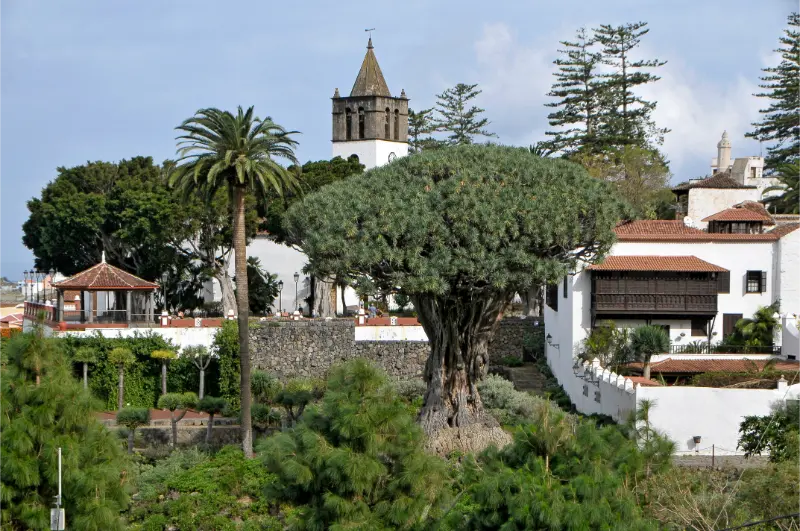
    Best pairingHistoric Icod, Parque del Drago and Casa del Plátano on foot

    Why Malvasía matters in Tenerife

    Malvasía is part of the Atlantic wine story that connected the Canary Islands with European markets for centuries. I do not reduce that history to the old phrase about “Canary wine”; the interesting part is how volcanic soils, island microclimates and surviving local varieties still shape what producers pour today. A tasting here gives me a reason to compare dry, sweet, young and aged styles instead of buying a bottle only because the label says Tenerife.

    The museum also explains wine as trade and culture. Icod was part of a north-coast economy linked to agriculture, ports and export networks. That makes the stop much stronger when I have already walked through the old centre and seen the merchant houses rather than visiting it as an isolated tasting room.

    What the tasting experience is like

    The official site currently promotes several levels of tasting, from a short express option to more elaborate historical and premium formats. I choose according to time and interest rather than automatically booking the biggest one. If wine is only one part of an Icod day, a focused tasting can be enough. If wine is one of the main reasons for the trip, I allow more time for explanation and pairing.

    Icod De Los Vinos Tenerife City View

    I ask what is included before starting, especially if I am driving. The point is learning, not maximizing the number of pours. If I have a rental car, I either keep consumption minimal, travel with a non-drinking driver or use local transport/taxi arrangements. Tenerife wine tourism is much more enjoyable when transport is solved before the first glass.

    The 2026 opening-hours discrepancy I would not ignore

    When I checked the official website on 18 September 2026, different pages did not agree completely: the main page showed Tuesday to Saturday 11:00–17:00, while shop and product pages showed 11:00–18:00. Both listed Sunday and Monday closed. I therefore would not build a late-afternoon arrival around the later time without confirming directly.

    This is exactly the kind of small operational detail that older travel articles often hide. I prefer to tell readers when the source itself is inconsistent. A short phone call or same-day website check is more useful than pretending one timetable is certain.

    What I would buy and what I would skip

    The shop goes beyond wine and includes island products such as mojo, preserves, liqueurs and grape-based items. I focus on products I can actually transport safely and legally. Bottles need luggage planning, while sealed sauces or preserves are easier for many travellers.

    I would not assume every product labelled “local” has the same origin or production method. I ask where it is made, whether it is from Tenerife or another Canary Island and what makes it different from a supermarket version. Those questions usually lead to a better souvenir than simply choosing the prettiest packaging.

    How I would plan the visit

    I build this stop into a geographically coherent day rather than cross Tenerife for one doorway or viewpoint. That approach matters especially in the north, where parking, one-way streets, cloud and short opening windows can turn a simple plan into wasted time. I identify one main experience, two nearby options and a place for lunch, then leave enough flexibility to change the order.

    Operational details are the first thing I recheck. Opening hours, services, event schedules and interior access can change. If entering a building or joining a tour is essential, I verify the official source again on the morning of the visit. If the value is mainly the exterior, street or landscape, I can be more spontaneous.

    How much time I would allow

    I separate the time physically spent at the attraction from the time the stop consumes in the itinerary. A small museum may take 45 minutes but easily use 90 once I include parking, walking, tickets, a coffee and the transition to the next place. An exterior heritage stop may take only 15 minutes yet become an hour when I follow the surrounding historic route.

    I also avoid stacking too many similar places. Three churches or five historic houses in succession blur together. I alternate an interior with a square, seafront walk, garden, market or meal so each place keeps its identity.

    Getting there and moving around

    For central historic areas I prefer walking once I have arrived. Repeatedly moving the car a few hundred metres usually wastes time and creates more parking stress. For rural wineries and museums, I check the final approach carefully because a bus stop shown in the same village does not necessarily mean public transport reaches the entrance.

    If I do drive, I never leave luggage visible in the car and I do not plan alcohol tastings around uncertain driving arrangements. For public transport, I keep the return option in mind before the visit rather than checking it only when the attraction closes.

    Accessibility, families and pace

    Historic buildings can have thresholds, stairs and narrow interiors even when the surrounding town is relatively accessible. When step-free access is essential, I contact the venue rather than infer it from photos. Outdoor heritage sites may also have uneven stone, slopes or wet seafront surfaces.

    With children, I shorten the history lesson and give the place one clear story: a pirate defence, a trading house, a craft, a grape variety or a famous local figure. That usually works better than expecting everyone to absorb every date and name.

    What I would bring

    For a town visit I carry water, sun protection and a light layer because north-Tenerife cloud can change quickly. For rural stops I add footwear with reliable grip and avoid assuming a tasting room or small museum has the same facilities as a large attraction. I also keep enough phone battery for maps, booking confirmations and current transport information.

    Where I would stay for a slower visit

    If this area is more than a day trip, I sometimes compare accommodation in Icod de los Vinos. Staying locally is most useful when I want early streets, evening restaurants or several attractions that open on different schedules. I would not move hotels for one small sight, but a two- or three-night north-Tenerife base can make a culture-heavy itinerary much calmer.

    Parque Del Drago Milenario Icod De Los Vinos Tenerife

    Common mistakes I would avoid

    • Relying on an old review for current opening hours.
    • Assuming a historic building is a public museum because the exterior is protected.
    • Trying to drive between every stop in a compact old town.
    • Scheduling a wine tasting without deciding who will drive afterwards.
    • Ignoring sea conditions around urban waterfront heritage.
    • Photographing worshippers or private interiors without permission.

    What I would combine nearby

    I prefer these combinations because they keep the day geographically coherent. Less driving gives me more time to notice street details, viewpoints, cafés and local life that are often more memorable than an extra rushed attraction.

    Official source

    For current access, schedules and temporary changes I check the official or municipal information for this place shortly before travelling.

    Frequently asked questions

    Is Museo Malvasía a traditional museum?

    Not really. It is a small wine interpretation, tasting and retail space rather than a large gallery museum.

    Do I need to book a tasting?

    I would book or at least confirm ahead if a particular tasting matters to the day, especially on weekends or for a group.

    What are the current hours?

    The official site showed inconsistent closing times when checked in September 2026, so I would verify directly before travelling.

    Can I combine it with the Drago?

    Yes. It sits in the historic centre and works naturally with Parque del Drago, Casa del Plátano and the old streets of Icod.

    Church In Icod De Los Vinos Tenerife

    How I turn a short stop into useful context

    I spend a few minutes before arrival understanding why the place is where it is. A customs house beside a harbour, a chapel beside a sailors’ promenade, a rural museum in the medianías or a winery on a volcanic slope all make more sense when location is treated as evidence rather than background. That habit also helps me remember the visit after the holiday because the facts attach to a physical landscape.

    After the visit I compare the place with one nearby site that tells a different part of the same story. Trade works well with defence, wine with agriculture, craft with forest resources, and a religious building with the public square around it. I would rather make two strong connections than collect ten unrelated attractions.

    What can change after publication

    Hours, prices, exhibitions, tour schedules, interior access, road works and event programmes are all operational information, not permanent facts. I therefore distinguish them from history and architecture. The historical section of a guide may remain useful for years; the timetable should always be checked again close to travel.

    When official sources disagree, I do not silently pick the version that makes the itinerary look easiest. I mention the discrepancy and plan around the more conservative interpretation. That is especially important for late-afternoon arrivals, rural transport and attractions with small teams.

    My practical final check

    Before leaving accommodation I save the destination name, official page and a nearby alternative. I check weather at the actual location, not only at the resort, and I look at the return route before committing to a tasting or long walk. These are small habits, but they remove most of the avoidable friction from independent travel in Tenerife.

    Final thoughts

    Museo Malvasía Icod is most rewarding when I use it to understand a wider piece of Tenerife rather than treat it as another box to tick. I verify the practical details, give the place enough time for its context to emerge and then continue to nearby stops on foot or with a short, logical transfer. That is the style of travel that makes a dense island itinerary feel calmer and more personal.

  • Convento de Santa Catalina La Laguna Guide: Sor María de Jesús and Architecture

    Convento de Santa Catalina La Laguna Guide: Sor María de Jesús and Architecture

    The Convento de Santa Catalina de Siena occupies one of the most prominent corners of Plaza del Adelantado, yet the experience is very different from visiting a municipal museum. It remains a Dominican cloistered convent, so the public face is mainly the church and the extraordinary historical story attached to the community. The convent opened in 1611 and survived nineteenth-century religious confiscations that transformed many other Spanish institutions. It is also closely associated with Sor María de Jesús de León y Delgado, known locally as La Siervita, whose body is traditionally exposed for veneration once a year on 15 February.

    Quick visit facts

    LocationPlaza del Adelantado, La Laguna
    OrderDominican nuns
    Opened23 April 1611
    Key figureSor María de Jesús de León y Delgado (La Siervita)
    Annual traditionHer body is publicly venerated on 15 February
    Visit typeActive cloistered religious institution; church access depends on worship and community use

    How the convent was founded

    Plans for a women’s monastery in La Laguna go back to the early sixteenth century, but the foundation only became reality in 1611 after Juan de Cabrejas and María de Salas acquired and donated property associated with the former houses of the Adelantados. Four Dominican nuns came from Seville to begin the enclosed community.

    Successive acquisitions expanded the complex across the block, and by the seventeenth century the convent had become one of the island’s important religious houses.

    Architecture visible from the city

    The complex is recognisable by tiled roofs, high walls, small openings associated with the cells, a bell gable and the characteristic wooden ajimez-style screened viewpoints. These elements create a very different street presence from La Laguna’s open merchant-house balconies.

    The church has a single nave and a timber roof with Mudéjar character. Carved wooden doors and stone arches reinforce the sense that the convent belongs to the same broad architectural world as the historic houses around it, even though its function demanded privacy.

    Sor María de Jesús and Amaro Pargo

    Sor María de Jesús died in 1731 and became a major object of local devotion. The naval captain and corsair Amaro Rodríguez Felipe—better known as Amaro Pargo—was closely connected to her memory and arranged a wooden coffin after her exhumation. Her body is kept in the convent and is associated with an ongoing canonisation cause.

    The annual public veneration on 15 February can draw large numbers of people. I would treat that day as a religious event first and a tourism curiosity second.

    How I would visit respectfully

    Because this is a functioning cloistered convent, I would not expect open access to private convent areas. I would visit the church when public access is compatible with services and community life, keep voices low, dress appropriately and avoid intrusive photography.

    If my trip does not coincide with an opening, the exterior still adds important context to Plaza del Adelantado. The convent, Casa Anchieta and other civic buildings around the square show how religious and secular institutions occupied the same urban core.

    How I would plan the visit

    I treat this as a cultural attraction, not as a box to tick between two unrelated stops. The useful question is how much context I want before I arrive. If I already know the basic history of San Cristóbal de La Laguna, I can focus on details inside the building or site. If it is my first day in the area, I prefer to walk the surrounding streets first so the architecture, urban position and historical references make more sense when I enter.

    I also leave a little flexibility around the visit. Cultural buildings in Tenerife can host services, rehearsals, exhibitions, private events, restoration work or municipal activities that temporarily change access. A plan with a 30–60 minute buffer is more realistic than an itinerary where every door has to open at the exact minute shown in an old search result.

    Getting there without turning the visit into a parking problem

    For central San Cristóbal de La Laguna sights, I generally prefer public transport or a single car park followed by walking. Historic centres were not designed around modern traffic, and driving from one monument to the next often wastes more time than it saves. If I am arriving from another part of Tenerife, I check the nearest tram, TITSA or municipal parking option before setting off and then build a compact walking loop.

    San Cristobal De La Laguna Historic Center Tenerife

    If I want an early start or an evening event, I sometimes compare accommodation in San Cristóbal de La Laguna rather than drive across the island twice. That is not necessary for every visitor, but it can make a culture-heavy day much calmer, especially when the programme includes a performance, a temporary exhibition or dinner in the historic centre.

    How long I would allow

    I separate “door-to-door time” from “time inside”. A small museum can take 45 minutes but still occupy two hours once I include the walk from transport, reading exterior interpretation, a coffee and a nearby square. A theatre may be a ten-minute façade stop on an ordinary day and a full evening if I have a ticket. A church can be a brief architectural visit or much longer if I want to understand its chapels and historical layers.

    My rule is to avoid stacking more than three substantial indoor visits in the same half-day. After that, attention drops and collections blur together. Tenerife’s historic towns work particularly well when I alternate an interior with streets, courtyards, markets, viewpoints or a meal.

    Photography and respectful behaviour

    I assume that photography rules can vary by room, exhibition and event. I look for signs before using a camera, keep flash off around artworks and documents, and never photograph people in a religious setting without permission. In theatres I do not assume that the rules for the lobby also apply during a performance. In active churches and convents, worship always takes priority over sightseeing.

    I also travel light inside older buildings. Narrow corridors, historic furniture and delicate surfaces are easier to enjoy without a large backpack. If a site has staff at reception, I ask before leaning a bag against a wall, using a tripod or filming extensively. Those small habits protect the place and make the visit more comfortable for everyone.

    Accessibility: what I check rather than assume

    Historic architecture can create a mismatch between a site’s cultural importance and its physical accessibility. A restored building may have lifts and ramps; another may still have thresholds, steps or narrow historic openings. I check the current official accessibility information when mobility, stroller access or fatigue is important, and I contact the venue if a specific route through the building matters.

    I also distinguish between getting to the entrance and seeing every space. A central pedestrian street can be easy to reach while an upper gallery, tower or heritage room remains difficult. That distinction is useful when planning with a wheelchair user, an older traveller or a young child.

    Visiting with children

    I would not automatically exclude a cultural stop from a family itinerary. The key is scale. One strong object, a courtyard, a fortress wall, a theatre interior or a story about a historical character can be more memorable to a child than a long sequence of display cases. I keep the visit shorter, explain what to look for before entering and give children a simple mission such as finding a coat of arms, a cannon, a painted ceiling or a particular architectural detail.

    For very young children, I pair the indoor stop with a nearby square or park. That changes the rhythm of the day and makes it easier for adults to enjoy the site without expecting a child to behave like a museum researcher for two hours.

    What I would combine nearby

    I prefer combinations that explain the same place from different angles. A history museum plus a historic street, or a fortress plus the old port, usually feels more coherent than crossing the island for a second attraction just because it has a high review score. These clusters also reduce driving and make it easier to stop for lunch somewhere local rather than eating according to the car park.

    San Cristobal De La Laguna Panoramic View Tenerife

    Current status: what I would verify again

    The official municipal heritage page explains the history and religious significance but does not publish a simple daily tourism timetable. The convent remains an active cloistered community, so I verify church access locally. The annual public veneration of Sor María de Jesús is traditionally on 15 February.

    Because this is information that can change, I save the official page on my phone and check it again on the morning of the visit. I do not rely on a photo of an opening-hours board from an old review, particularly around public holidays, Carnival, local fiestas or renovation periods.

    Official source

    For the latest practical information I use La Laguna City Council’s heritage page for the Convento de Santa Catalina de Siena rather than a third-party timetable.

    La Laguna Colorful Historic Street Tenerife

    Frequently asked questions

    Can visitors walk around the whole convent?

    No. It is an active cloistered religious community; public access should not be confused with access to the private convent.

    Who is La Siervita?

    Sor María de Jesús de León y Delgado, a Dominican nun associated with strong local devotion and an ongoing canonisation process.

    When can her body be seen?

    Municipal accessibility and heritage material notes the annual public veneration on 15 February.

    Is the building from the 17th century?

    Yes. The convent opened in 1611 and developed its characteristic form during the seventeenth century.

    Final thoughts

    Santa Catalina is not a conventional attraction, and that is exactly why I would include it. The building still has the purpose that shaped its walls, screens and church four centuries ago. Visiting respectfully—or simply understanding the exterior from Plaza del Adelantado—adds a religious and social layer that a house museum cannot provide.

  • Iglesia de La Concepción La Laguna Guide: Tower, History and Visit Tips

    Iglesia de La Concepción La Laguna Guide: Tower, History and Visit Tips

    Iglesia de Nuestra Señora de la Concepción is one of the buildings that helps me understand the older “Villa de Arriba” side of La Laguna. Tourism material describes it as the first church founded in Tenerife and the mother parish from which later island parishes developed, although the earliest church stood in a different location from the present building. What I see today is the result of centuries of enlargement, reconstruction and restoration. The stone tower is the landmark, but I would not reduce the visit to climbing or photographing it: the changing fabric of the church tells a broader story about the growth of the city.

    Quick visit facts

    LocationHistoric centre of San Cristóbal de La Laguna
    Present-site rebuildingNew three-nave church planned from 1511; major works completed in the 16th century
    TowerCurrent main construction 1694–1697
    Heritage protectionHistoric-Artistic Monument from 1948; BIC protection expanded in 2012
    Visit typeActive church; tourist access should respect liturgical use

    From first parish to the present building

    Local tradition links the earliest parish community to the first years after the Castilian conquest and the foundation of La Laguna. The tourism office notes that the first parish church occupied another site, while in 1511 a new three-nave temple was planned closer to the developing upper town.

    Construction moved slowly and later centuries repeatedly altered the church. This is why I read the building as an architectural palimpsest rather than a perfectly preserved sixteenth-century monument.

    The tower

    The tower is the most recognisable element. Earlier tower attempts dated to the sixteenth and seventeenth centuries, while the principal surviving construction was carried out from 1694 to 1697. Built in stone on a square base and finished with an upper pavilion, it anchors views along the surrounding streets.

    At the base is the baptistery with a ribbed vault of Gothic inspiration. Even if tower access is not available when I visit, the exterior is worth walking around because the proportions change from different streets.

    Inside: three naves and later interventions

    The present interior has three naves separated by round arches on cylindrical columns of red tuff with varied capitals. The chancel was modified in the late eighteenth century, bringing neoclassical language into a building whose earlier layers include Gothic and Mudéjar references.

    A roof collapse in 1972 led to restoration that changed some interior elements, while later conservation campaigns from 2000 onward have continued to protect the building. I would keep this complicated restoration history in mind rather than assuming every visible surface is ancient.

    How I visit an active church

    I do not treat an active parish like a museum with guaranteed entry every minute. Mass, funerals, weddings and parish activity can affect access, and exact tourist hours are not clearly published on the municipal heritage page I use for history. I therefore check locally on the day, dress respectfully and enter quietly if the church is open.

    If access is limited, the exterior and tower still make the stop worthwhile as part of a La Laguna architectural walk.

    Aerial View Of La Laguna Tenerife

    How I would plan the visit

    I treat this as a cultural attraction, not as a box to tick between two unrelated stops. The useful question is how much context I want before I arrive. If I already know the basic history of San Cristóbal de La Laguna, I can focus on details inside the building or site. If it is my first day in the area, I prefer to walk the surrounding streets first so the architecture, urban position and historical references make more sense when I enter.

    I also leave a little flexibility around the visit. Cultural buildings in Tenerife can host services, rehearsals, exhibitions, private events, restoration work or municipal activities that temporarily change access. A plan with a 30–60 minute buffer is more realistic than an itinerary where every door has to open at the exact minute shown in an old search result.

    Getting there without turning the visit into a parking problem

    For central San Cristóbal de La Laguna sights, I generally prefer public transport or a single car park followed by walking. Historic centres were not designed around modern traffic, and driving from one monument to the next often wastes more time than it saves. If I am arriving from another part of Tenerife, I check the nearest tram, TITSA or municipal parking option before setting off and then build a compact walking loop.

    If I want an early start or an evening event, I sometimes compare accommodation in San Cristóbal de La Laguna rather than drive across the island twice. That is not necessary for every visitor, but it can make a culture-heavy day much calmer, especially when the programme includes a performance, a temporary exhibition or dinner in the historic centre.

    San Cristobal De La Laguna Historic Center Tenerife

    How long I would allow

    I separate “door-to-door time” from “time inside”. A small museum can take 45 minutes but still occupy two hours once I include the walk from transport, reading exterior interpretation, a coffee and a nearby square. A theatre may be a ten-minute façade stop on an ordinary day and a full evening if I have a ticket. A church can be a brief architectural visit or much longer if I want to understand its chapels and historical layers.

    My rule is to avoid stacking more than three substantial indoor visits in the same half-day. After that, attention drops and collections blur together. Tenerife’s historic towns work particularly well when I alternate an interior with streets, courtyards, markets, viewpoints or a meal.

    Photography and respectful behaviour

    I assume that photography rules can vary by room, exhibition and event. I look for signs before using a camera, keep flash off around artworks and documents, and never photograph people in a religious setting without permission. In theatres I do not assume that the rules for the lobby also apply during a performance. In active churches and convents, worship always takes priority over sightseeing.

    I also travel light inside older buildings. Narrow corridors, historic furniture and delicate surfaces are easier to enjoy without a large backpack. If a site has staff at reception, I ask before leaning a bag against a wall, using a tripod or filming extensively. Those small habits protect the place and make the visit more comfortable for everyone.

    Accessibility: what I check rather than assume

    Historic architecture can create a mismatch between a site’s cultural importance and its physical accessibility. A restored building may have lifts and ramps; another may still have thresholds, steps or narrow historic openings. I check the current official accessibility information when mobility, stroller access or fatigue is important, and I contact the venue if a specific route through the building matters.

    I also distinguish between getting to the entrance and seeing every space. A central pedestrian street can be easy to reach while an upper gallery, tower or heritage room remains difficult. That distinction is useful when planning with a wheelchair user, an older traveller or a young child.

    Visiting with children

    I would not automatically exclude a cultural stop from a family itinerary. The key is scale. One strong object, a courtyard, a fortress wall, a theatre interior or a story about a historical character can be more memorable to a child than a long sequence of display cases. I keep the visit shorter, explain what to look for before entering and give children a simple mission such as finding a coat of arms, a cannon, a painted ceiling or a particular architectural detail.

    For very young children, I pair the indoor stop with a nearby square or park. That changes the rhythm of the day and makes it easier for adults to enjoy the site without expecting a child to behave like a museum researcher for two hours.

    What I would combine nearby

    I prefer combinations that explain the same place from different angles. A history museum plus a historic street, or a fortress plus the old port, usually feels more coherent than crossing the island for a second attraction just because it has a high review score. These clusters also reduce driving and make it easier to stop for lunch somewhere local rather than eating according to the car park.

    Current status: what I would verify again

    The municipal tourism page provides detailed history and heritage information but does not give a simple permanent tourist timetable. Because this is an active church, I would verify same-day access locally and never plan a tight itinerary around assumed opening hours.

    Because this is information that can change, I save the official page on my phone and check it again on the morning of the visit. I do not rely on a photo of an opening-hours board from an old review, particularly around public holidays, Carnival, local fiestas or renovation periods.

    Official source

    For the latest practical information I use La Laguna Tourism’s official Iglesia de Nuestra Señora de la Concepción page rather than a third-party timetable.

    San Cristobal De La Laguna Panoramic View Tenerife

    Frequently asked questions

    Is this the oldest church in Tenerife?

    La Laguna tourism describes it as the first church founded in Tenerife and the mother parish, while also explaining that the earliest church stood on a different site from the present building.

    When was the tower built?

    The principal surviving tower dates from 1694–1697 after earlier tower constructions.

    Can I always enter?

    No. It is an active church, so services and parish use can affect access.

    Is it protected heritage?

    Yes. It was declared a Historic-Artistic Monument in 1948, with BIC protection expanded in 2012.

    Final thoughts

    La Concepción is most rewarding when I stop looking for a single construction date. The church grew with La Laguna, suffered failures, was rebuilt and restored, and still functions as a parish. That continuity is more interesting than a perfectly frozen monument—and the tower remains one of the historic centre’s essential visual markers.

  • Casa de los Capitanes Generales Guide: La Laguna Courtyard and Tourist Office

    Casa de los Capitanes Generales Guide: La Laguna Courtyard and Tourist Office

    Casa de los Capitanes Generales is one of the most useful first stops in La Laguna because it combines heritage with practical orientation. The seventeenth-century Alvarado-Bracamonte house is one of the clearest examples of elite domestic architecture in the historic centre, and it currently contains the main tourist information office. I like starting here because I can look at a genuine courtyard house, ask about temporary openings elsewhere in the UNESCO area and then continue on foot with a better sense of the street plan. It is a rare case where a tourism office actually belongs on the sightseeing list.

    Quick visit facts

    AddressCalle Obispo Rey Redondo / La Carrera, historic centre of La Laguna
    Current tourist-office hoursMon–Fri except holidays, 09:00–16:30
    Building periodFirst half of the 17th century
    Also known asCasa Alvarado-Bracamonte
    Heritage statusBien de Interés Cultural

    Who built the house

    The house is linked to Diego de Alvarado-Bracamonte, Governor, Corregidor and Captain of War for La Palma and Tenerife, who lived in La Laguna between 1624 and 1635. The family’s wealth and political position are visible in a building that was designed to express status without abandoning the basic organisation of a Canarian courtyard house.

    Between 1705 and 1723, six Captains General of the Canary Islands lived here, which explains the name by which the building is best known today.

    What to notice on the façade

    The official tourism description emphasises masonry over stonework and the use of reddish volcanic tuff, probably from a La Laguna quarry, particularly around the doorway and corners. The irregular arrangement of windows reflects the building’s seventeenth-century construction rather than the perfect symmetry I might expect from a later neoclassical façade.

    A broad tiled eave and sgraffito with Hispano-Muslim tradition add another layer. I would stop across the street for the overall proportions before moving close to the stonework.

    The courtyard as the key to the house

    Inside, the plan revolves around a large courtyard reached through the entrance hall. In a historic Canarian house, the patio is not decorative leftover space: it brings light and air while organising rooms around a protected interior. The original functions included domestic rooms, stables, cellars, storage and carriage-related spaces.

    Modern municipal uses have changed the rooms, but the courtyard still makes the logic of the building easy to understand.

    Using the tourist office strategically

    The official La Laguna tourism page currently lists the information office Monday to Friday, excluding public holidays, from 09:00 to 16:30. I would use it for questions that are difficult to solve from generic travel websites: current guided walks, one-off opening of churches, heritage-night programmes, local closures and accessible routes.

    Because several La Laguna monuments have event-based or religious access rather than stable museum timetables, getting fresh information here can save a lot of unnecessary walking later in the day.

    La Laguna Pedestrian Street Tenerife

    How I would plan the visit

    I treat this as a cultural attraction, not as a box to tick between two unrelated stops. The useful question is how much context I want before I arrive. If I already know the basic history of San Cristóbal de La Laguna, I can focus on details inside the building or site. If it is my first day in the area, I prefer to walk the surrounding streets first so the architecture, urban position and historical references make more sense when I enter.

    I also leave a little flexibility around the visit. Cultural buildings in Tenerife can host services, rehearsals, exhibitions, private events, restoration work or municipal activities that temporarily change access. A plan with a 30–60 minute buffer is more realistic than an itinerary where every door has to open at the exact minute shown in an old search result.

    Getting there without turning the visit into a parking problem

    For central San Cristóbal de La Laguna sights, I generally prefer public transport or a single car park followed by walking. Historic centres were not designed around modern traffic, and driving from one monument to the next often wastes more time than it saves. If I am arriving from another part of Tenerife, I check the nearest tram, TITSA or municipal parking option before setting off and then build a compact walking loop.

    If I want an early start or an evening event, I sometimes compare accommodation in San Cristóbal de La Laguna rather than drive across the island twice. That is not necessary for every visitor, but it can make a culture-heavy day much calmer, especially when the programme includes a performance, a temporary exhibition or dinner in the historic centre.

    Aerial View Of La Laguna Tenerife

    How long I would allow

    I separate “door-to-door time” from “time inside”. A small museum can take 45 minutes but still occupy two hours once I include the walk from transport, reading exterior interpretation, a coffee and a nearby square. A theatre may be a ten-minute façade stop on an ordinary day and a full evening if I have a ticket. A church can be a brief architectural visit or much longer if I want to understand its chapels and historical layers.

    My rule is to avoid stacking more than three substantial indoor visits in the same half-day. After that, attention drops and collections blur together. Tenerife’s historic towns work particularly well when I alternate an interior with streets, courtyards, markets, viewpoints or a meal.

    Photography and respectful behaviour

    I assume that photography rules can vary by room, exhibition and event. I look for signs before using a camera, keep flash off around artworks and documents, and never photograph people in a religious setting without permission. In theatres I do not assume that the rules for the lobby also apply during a performance. In active churches and convents, worship always takes priority over sightseeing.

    I also travel light inside older buildings. Narrow corridors, historic furniture and delicate surfaces are easier to enjoy without a large backpack. If a site has staff at reception, I ask before leaning a bag against a wall, using a tripod or filming extensively. Those small habits protect the place and make the visit more comfortable for everyone.

    Accessibility: what I check rather than assume

    Historic architecture can create a mismatch between a site’s cultural importance and its physical accessibility. A restored building may have lifts and ramps; another may still have thresholds, steps or narrow historic openings. I check the current official accessibility information when mobility, stroller access or fatigue is important, and I contact the venue if a specific route through the building matters.

    I also distinguish between getting to the entrance and seeing every space. A central pedestrian street can be easy to reach while an upper gallery, tower or heritage room remains difficult. That distinction is useful when planning with a wheelchair user, an older traveller or a young child.

    Visiting with children

    I would not automatically exclude a cultural stop from a family itinerary. The key is scale. One strong object, a courtyard, a fortress wall, a theatre interior or a story about a historical character can be more memorable to a child than a long sequence of display cases. I keep the visit shorter, explain what to look for before entering and give children a simple mission such as finding a coat of arms, a cannon, a painted ceiling or a particular architectural detail.

    For very young children, I pair the indoor stop with a nearby square or park. That changes the rhythm of the day and makes it easier for adults to enjoy the site without expecting a child to behave like a museum researcher for two hours.

    What I would combine nearby

    I prefer combinations that explain the same place from different angles. A history museum plus a historic street, or a fortress plus the old port, usually feels more coherent than crossing the island for a second attraction just because it has a high review score. These clusters also reduce driving and make it easier to stop for lunch somewhere local rather than eating according to the car park.

    Current status: what I would verify again

    The tourism office currently lists Monday–Friday, excluding public holidays, 09:00–16:30. The building also serves municipal functions, so access to working areas should not be confused with unrestricted museum access to every room.

    Because this is information that can change, I save the official page on my phone and check it again on the morning of the visit. I do not rely on a photo of an opening-hours board from an old review, particularly around public holidays, Carnival, local fiestas or renovation periods.

    Official source

    For the latest practical information I use La Laguna Tourism’s official Casa Alvarado-Bracamonte information-office page rather than a third-party timetable.

    Frequently asked questions

    Is this just a tourist office?

    No. It is a major seventeenth-century heritage building that now also houses the main tourist information office.

    Why is it called Casa de los Capitanes Generales?

    Six Captains General of the Canary Islands lived here between 1705 and 1723.

    Can I use it to ask about same-day monument openings?

    Yes. That is one of the best reasons to begin a La Laguna visit here.

    What should I look for architecturally?

    The volcanic-stone doorway and corners, irregular window layout, tiled eaves, sgraffito details and the central courtyard.

    Final thoughts

    Casa de los Capitanes Generales works on two levels: it is a historic object and a practical doorway into the rest of La Laguna. I would spend time on the façade and courtyard, then use the tourist office to refine the day. That combination makes the building more useful than a quick photograph would suggest.

    San Cristobal De La Laguna Historic Center Tenerife
  • Casa Anchieta La Laguna Guide: History, Exhibitions and 2026 Visit Status

    Casa Anchieta La Laguna Guide: History, Exhibitions and 2026 Visit Status

    Casa Anchieta is one of the most interesting historic houses in La Laguna precisely because it is still changing function. It is associated with the childhood of José de Anchieta, the sixteenth-century Jesuit missionary and writer who later worked in Brazil, but the building is not a conventional museum with stable daily hours yet. In September 2026 it is being used for temporary exhibitions and heritage events while the longer-term interpretation project continues to develop. I would therefore visit with two pieces of information in mind: the house itself is historically significant, and access depends on the programme running on the day.

    Quick visit facts

    LocationPlaza del Adelantado, La Laguna
    Historic figureJosé de Anchieta lived here during his first 14 years
    Building originsOriginal house dates to the 16th century, with later rebuilding and alterations
    Current useHeritage events and temporary exhibitions; permanent museum-style access should not be assumed
    September 2026Temporary exhibition “La Laguna: la memoria de las víctimas” runs 15–20 September with published exhibition hours

    José de Anchieta and what the house actually represents

    Official heritage sources make an important correction to a common simplification: this is not confirmed as José de Anchieta’s birthplace. It is the house where he lived during his early years, traditionally the first fourteen years of his life, before his studies and later journey to the Portuguese world and Brazil.

    That distinction matters. I would rather understand the property accurately as a childhood home within newly founded La Laguna than repeat an attractive but uncertain “birth house” label.

    Layers of architecture

    The original property has sixteenth-century roots, but what I see today is the result of reconstruction and later modification. Municipal heritage sources describe a major seventeenth-century rebuilding, nineteenth-century changes and a 1905 remodelling of the main façade by architect Mariano Estanga. Traditional elements survive inside, including structural walls, roofs, timber systems, courtyard organisation and a semi-basement cellar.

    This layered fabric makes the house useful for understanding heritage restoration: preserving a historic building does not mean freezing it at one date.

    Restoration and future interpretation

    After periods of different institutional use, the building underwent municipal restoration and has been the subject of plans for a dedicated interpretation centre on Anchieta and his historical context. A June 2026 council agenda still referenced questions about the musealisation and equipment process, so I would not present a permanent opening schedule as settled.

    The responsible way to plan a visit is to check current exhibitions, open days or guided activities. That is more accurate than treating every heritage house as a seven-day museum.

    What is happening in September 2026

    On 16 September 2026, the City Council announced the temporary exhibition “La Laguna: la memoria de las víctimas” at Casa Anchieta, open from 15 to 20 September. The published general exhibition hours are 10:00–14:00 and 17:00–20:00, with special arrangements on 18–19 September for heritage-night activities.

    That programme is temporary, not a permanent house timetable. After 20 September, I would check the municipal heritage and events pages again before expecting interior access.

    How I would plan the visit

    I treat this as a cultural attraction, not as a box to tick between two unrelated stops. The useful question is how much context I want before I arrive. If I already know the basic history of San Cristóbal de La Laguna, I can focus on details inside the building or site. If it is my first day in the area, I prefer to walk the surrounding streets first so the architecture, urban position and historical references make more sense when I enter.

    I also leave a little flexibility around the visit. Cultural buildings in Tenerife can host services, rehearsals, exhibitions, private events, restoration work or municipal activities that temporarily change access. A plan with a 30–60 minute buffer is more realistic than an itinerary where every door has to open at the exact minute shown in an old search result.

    Getting there without turning the visit into a parking problem

    For central San Cristóbal de La Laguna sights, I generally prefer public transport or a single car park followed by walking. Historic centres were not designed around modern traffic, and driving from one monument to the next often wastes more time than it saves. If I am arriving from another part of Tenerife, I check the nearest tram, TITSA or municipal parking option before setting off and then build a compact walking loop.

    La Laguna Colorful Historic Street Tenerife

    If I want an early start or an evening event, I sometimes compare accommodation in San Cristóbal de La Laguna rather than drive across the island twice. That is not necessary for every visitor, but it can make a culture-heavy day much calmer, especially when the programme includes a performance, a temporary exhibition or dinner in the historic centre.

    How long I would allow

    I separate “door-to-door time” from “time inside”. A small museum can take 45 minutes but still occupy two hours once I include the walk from transport, reading exterior interpretation, a coffee and a nearby square. A theatre may be a ten-minute façade stop on an ordinary day and a full evening if I have a ticket. A church can be a brief architectural visit or much longer if I want to understand its chapels and historical layers.

    My rule is to avoid stacking more than three substantial indoor visits in the same half-day. After that, attention drops and collections blur together. Tenerife’s historic towns work particularly well when I alternate an interior with streets, courtyards, markets, viewpoints or a meal.

    Photography and respectful behaviour

    I assume that photography rules can vary by room, exhibition and event. I look for signs before using a camera, keep flash off around artworks and documents, and never photograph people in a religious setting without permission. In theatres I do not assume that the rules for the lobby also apply during a performance. In active churches and convents, worship always takes priority over sightseeing.

    I also travel light inside older buildings. Narrow corridors, historic furniture and delicate surfaces are easier to enjoy without a large backpack. If a site has staff at reception, I ask before leaning a bag against a wall, using a tripod or filming extensively. Those small habits protect the place and make the visit more comfortable for everyone.

    Accessibility: what I check rather than assume

    Historic architecture can create a mismatch between a site’s cultural importance and its physical accessibility. A restored building may have lifts and ramps; another may still have thresholds, steps or narrow historic openings. I check the current official accessibility information when mobility, stroller access or fatigue is important, and I contact the venue if a specific route through the building matters.

    I also distinguish between getting to the entrance and seeing every space. A central pedestrian street can be easy to reach while an upper gallery, tower or heritage room remains difficult. That distinction is useful when planning with a wheelchair user, an older traveller or a young child.

    La Laguna Pedestrian Street Tenerife

    Visiting with children

    I would not automatically exclude a cultural stop from a family itinerary. The key is scale. One strong object, a courtyard, a fortress wall, a theatre interior or a story about a historical character can be more memorable to a child than a long sequence of display cases. I keep the visit shorter, explain what to look for before entering and give children a simple mission such as finding a coat of arms, a cannon, a painted ceiling or a particular architectural detail.

    For very young children, I pair the indoor stop with a nearby square or park. That changes the rhythm of the day and makes it easier for adults to enjoy the site without expecting a child to behave like a museum researcher for two hours.

    What I would combine nearby

    I prefer combinations that explain the same place from different angles. A history museum plus a historic street, or a fortress plus the old port, usually feels more coherent than crossing the island for a second attraction just because it has a high review score. These clusters also reduce driving and make it easier to stop for lunch somewhere local rather than eating according to the car park.

    Current status: what I would verify again

    As of 18 September 2026, Casa Anchieta is open for the temporary exhibition running 15–20 September, with published general hours of 10:00–14:00 and 17:00–20:00 and special heritage-night arrangements on 18–19 September. Those hours belong to the temporary exhibition, not to a guaranteed permanent museum schedule.

    Because this is information that can change, I save the official page on my phone and check it again on the morning of the visit. I do not rely on a photo of an opening-hours board from an old review, particularly around public holidays, Carnival, local fiestas or renovation periods.

    Official source

    For the latest practical information I use the current La Laguna City Council notice for Casa Anchieta’s September 2026 exhibition rather than a third-party timetable.

    Aerial View Of La Laguna Tenerife

    Frequently asked questions

    Is Casa Anchieta open every day?

    I would not assume so. In 2026 the house is hosting temporary exhibitions and heritage events while the longer-term interpretation project develops.

    Was José de Anchieta born here?

    Official heritage sources say the building is associated with his childhood and that he lived here for his first 14 years, but they distinguish that from a confirmed birthplace claim.

    Can I visit on 18 September 2026?

    Yes, a temporary exhibition is running 15–20 September, with general hours and special heritage-night programming published by the City Council.

    Where is it?

    On Plaza del Adelantado in the heart of La Laguna’s historic centre.

    Final thoughts

    Casa Anchieta is worth following because it is not finished as a tourism product. The house has authentic architectural layers, a strong historical association and an evolving public role. I would visit when an exhibition or open day gives access, and I would treat the changing programme as part of the experience rather than a planning inconvenience.

  • Iglesia de La Concepción Santa Cruz Guide: History and Visit Tips

    Iglesia de La Concepción Santa Cruz Guide: History and Visit Tips

    Iglesia Matriz de Nuestra Señora de La Concepción is the historic church I would use to understand the oldest part of Santa Cruz rather than treating the capital only as a modern port city. Turismo de Tenerife identifies it as the city’s principal Catholic church, built on the site of the first hermitage established by the conquerors.

    The five-nave layout, 1786 tower and collection of historic objects make it a richer stop than its position just off the main shopping streets might suggest. Because it remains an active place of worship, I do not publish a fixed tourist opening schedule unless the parish itself confirms one; service times and religious events take priority.

    Quick practical facts

    LocationPlaza de la Iglesia, 38003 Santa Cruz de Tenerife
    TypeActive historic parish church
    ArchitectureCanarian Baroque; unique five-nave plan in the archipelago
    TowerBuilt in 1786
    Notable heritageFoundational cross, historic chapels and religious art
    Visit styleFree/quiet church visit when open; respect services and parish activity

    Why I would give Iglesia Matriz de Nuestra Señora de La Concepción its own stop

    The church gives Santa Cruz a chronological anchor. Plaza de España, shopping streets and contemporary architecture are easy to enjoy without understanding how the settlement grew; La Concepción brings the early colonial city and port into the picture.

    It also contains objects tied to civic memory, so the visit is not only architectural. I would read the church as both a religious building and a repository of stories the city chose to preserve.

    What to look for once you are there

    The five naves

    Turismo de Tenerife notes that La Concepción is the only church in the Canary Islands with five naves. Looking across the interior helps reveal how the building expanded over time rather than appearing as a single perfectly planned construction.

    The 1786 tower

    The tower is one of the recognisable vertical markers of the old centre. I look at it from the plaza before entering so the exterior composition makes sense.

    The foundational cross

    The church preserves the wooden cross associated with Alonso Fernández de Lugo’s landing and the foundation narrative of Santa Cruz. It is historically important, but I place it within the broader and more complex history of conquest and Indigenous Guanche society.

    Canarian woodwork and chapels

    Ceilings, altars and side chapels reward a slower visit. The building is much more interesting when I stop looking for one “must-see object” and notice the craftsmanship across the interior.

    The context that makes the visit more interesting

    Santa Cruz’s conquest-era narrative is not neutral. The church’s foundation story belongs to the Castilian conquest of Tenerife, which had profound consequences for the Guanche population. I would not present a foundational cross without acknowledging that wider context.

    Auditorio De Tenerife Santa Cruz Coastline

    At the same time, the church evolved with the city over centuries. Fires, rebuilding, enlargement and changing devotional practices created the layered structure visitors see today.

    That makes La Concepción a useful counterpart to the MUNA. The church preserves the civic-religious memory of the post-conquest city, while archaeological collections help tell the island’s pre-conquest Indigenous history.

    How I would plan the visit

    I would place the church inside a walking route from the Mercado Nuestra Señora de África to the old centre and Castillo de San Cristóbal. It does not need a separate transport plan.

    For deeper Indigenous context I would also use the MUNA guide rather than expecting one religious monument to explain the whole history of Tenerife.

    How much time to allow

    Twenty to forty minutes is usually enough for a respectful architectural visit when the church is open and no service is taking place.

    If I am interested in religious art and read every chapel carefully, I allow closer to an hour. I never treat a service as a sightseeing opportunity that should adapt to my schedule.

    Getting there without turning the visit into a transport problem

    The church is in central Santa Cruz and works best on foot. Parking a rental car specifically beside every old-centre monument creates more stress than using a central car park or public transport and walking.

    If I am staying overnight, I may compare central Santa Cruz hotels so the historic centre, market and seafront can all be reached without repeated driving.

    Accessibility and comfort

    The surrounding central streets are relatively easy urban terrain, but historic churches can have thresholds and internal access constraints. If step-free access is essential, I would contact the parish or tourism office before relying on general city-accessibility assumptions.

    Inside, seating can provide a useful pause on a hot city day, but I remember it is primarily a worship space, not a rest lounge.

    Is it worth visiting with children?

    It can work well with school-age children if I turn the visit into a visual challenge: count the naves, find the tower from the plaza, compare the wooden ceiling with modern buildings seen earlier.

    I keep the history age-appropriate and concise. A 25-minute focused visit is better than insisting that children inspect every altar.

    Best time of day

    Morning usually fits naturally with the market and old-centre walk. I avoid arriving during a major service if my aim is architectural sightseeing.

    Festival periods can be atmospheric but also busy. I check local religious calendars around Holy Week and major feast days.

    Photography and respectful visiting

    Exterior photographs are strongest from the plaza and nearby streets where the tower can be placed in the context of the old centre. Inside I follow posted rules and never use flash if it is prohibited.

    I avoid photographing worshippers at close range. The fact that a church is open to visitors does not turn people attending a service into tourist subjects.

    Useful nearby stops

    A realistic half-day plan

    A good half-day begins at Mercado de África, walks to La Concepción, continues through the historic streets to Plaza de España and ends at Castillo de San Cristóbal or TEA/MUNA depending on interests.

    I leave the Auditorio/Palmetum waterfront for a separate block unless I have a full day. Santa Cruz is more enjoyable when I explore compact neighbourhood clusters rather than zigzagging across the city.

    Panoramic View Of Santa Cruz De Tenerife

    Common mistakes I would avoid

    • Assuming a fixed tourist timetable for an active parish church.
    • Ignoring services or religious ceremonies while sightseeing.
    • Presenting the conquest-era foundation story without Guanche context.
    • Using flash or photographing worshippers intrusively.
    • Driving from monument to monument inside the compact centre.

    Current information: what I would check again

    Turismo de Tenerife publishes the address and heritage description but not a guaranteed tourist opening schedule. I take that as a sign to verify locally rather than invent precise hours.

    For Holy Week, feast days or weddings I expect access patterns to differ. Flexibility is part of visiting an active religious building.

    Official source

    For the heritage description and address I use Turismo de Tenerife – Iglesia Matriz de La Concepción.

    Frequently asked questions

    Is La Concepción the cathedral of Tenerife?

    No. It is the principal historic parish church of Santa Cruz, not the Cathedral of La Laguna.

    Plaza De Espana Santa Cruz De Tenerife

    Why is the interior unusual?

    Turismo de Tenerife notes that it is the only church in the Canary Islands with five naves.

    Can tourists always enter?

    No fixed tourist timetable is guaranteed on the tourism page. It is an active parish, so services and events can affect access.

    How long should I allow?

    Around 20–40 minutes for a focused visit, longer if you are especially interested in architecture or religious art.

    How I decide whether this stop belongs in my itinerary

    I do not add a place simply because it appears on a “top things to do” list. I ask what new layer it adds to the trip. Does it explain a part of Tenerife I have not understood yet? Does it fit naturally with places already on the route? Can I visit it without creating an hour of unnecessary driving? Those questions are especially useful on an island where a short distance on the map can still mean mountain roads, city parking or a change of microclimate.

    I also distinguish between a destination visit and a cluster visit. A destination visit is worth crossing the island for; a cluster visit becomes valuable because it sits beside two or three other strong stops. Many museums, churches, small forts and interpretation centres are at their best in the second category. That does not make them less important. It simply means the itinerary should respect their real scale.

    What I would verify on the morning of the visit

    Opening hours, temporary closures, road conditions and special events are the four details most likely to change. I save the official source rather than relying on a screenshot taken months earlier. For cultural buildings I also check whether a private event, religious service, renovation or guided group affects normal access. For Teide locations I add mountain weather and road status to that list.

    This last check takes only a few minutes and prevents the most common frustration in Tenerife planning: arriving with perfectly researched historical information but an outdated practical detail. I would rather change the order of a day than force an itinerary after the conditions have changed.

    What makes a good Tenerife visit different from a checklist

    The strongest days usually contain contrast. A museum works better when I can walk through the neighbourhood it explains; a volcanic trail means more after a visitor centre; a historic fort becomes clearer when modern city architecture surrounds it. I therefore build connections between places instead of treating every stop as an isolated review score.

    I also leave blank space. Tenerife rewards unplanned pauses: a view of Teide appearing above cloud, a local café, a small plaza, or a change in light can become more memorable than the tenth scheduled attraction. A complete travel site should help a reader make those choices, not pressure them to “complete” the island.

    Final thoughts

    La Concepción is one of those places that makes a city map more intelligible. After seeing it, the old centre feels less like a random set of streets and more like a settlement with a long, complicated chronology.

    I would visit quietly, acknowledge both the religious and conquest-era context, and then continue on foot through the historic centre.