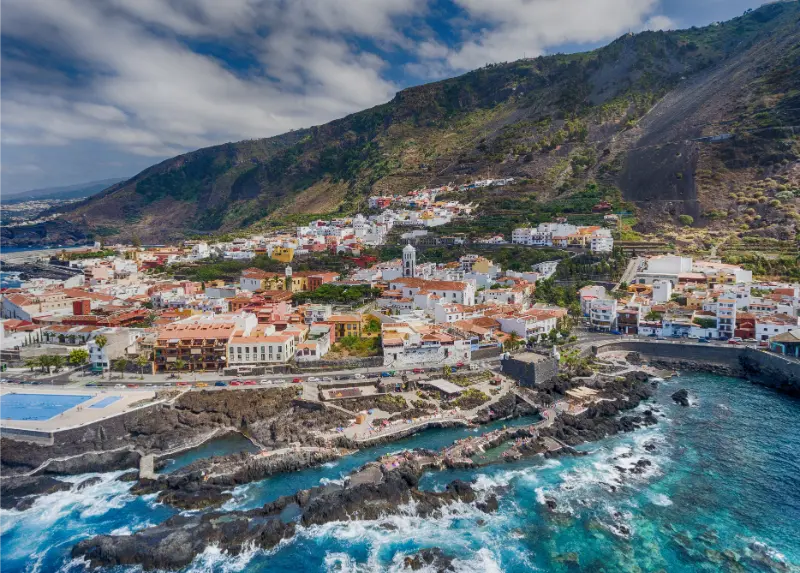
El Caletón is one of those Tenerife swimming places where the landscape tells the story before I read a single information panel. The natural pools sit directly beside the historic centre of Garachico, formed in a coastline reshaped by volcanic activity. They are beautiful, photogenic and easy to combine with a town visit, but I would never treat them like a hotel pool. The same ocean that fills the lava pools can become powerful enough to make bathing unsafe.
Tenerife Tourism describes El Caletón as a group of natural bathing pools and one of Garachico’s main attractions. It notes that the water is often calm inside the pools but specifically warns visitors to be cautious because the sea in this area can be strong. That warning is central to how I would plan the visit.
El Caletón at a glance
| Location | Garachico, north Tenerife |
|---|---|
| Type | Volcanic natural pools/charcos |
| Best for | Swimming in suitable conditions, volcanic scenery, combining with historic Garachico |
| Main risk | Atlantic swell and waves entering exposed sections |
| Planning style | Flexible: visit the town even if the pools are unsafe for swimming |
I would use the official El Caletón page for current visitor information and then judge conditions on site.
Why El Caletón is different from an ordinary beach
The experience is shaped by lava. Instead of a long sand shoreline, I move between rock formations, pools and man-made access points. The water feels more enclosed than the open Atlantic, but the pools remain connected to the sea. That is why waves can suddenly matter even when the section where I am standing looks protected.
I would come for the combination of geology and swimming, not because I expect a large area for sunbathing. Space can feel limited on busy summer days, and the most attractive rock edges are not always the safest places to sit.
The volcanic story behind Garachico
Garachico was once one of Tenerife’s important ports before the 1706 eruption changed the coastline and damaged the old harbour. The lava that transformed the town also contributed to the rocky shore that now makes El Caletón so distinctive. I find the pools more meaningful when I see them as part of Garachico’s history rather than as a standalone Instagram stop.
My Garachico guide connects the pools with the historic streets, churches, old fortifications and the wider story of the town.
When I would swim — and when I would not
I would swim only when access is open, local conditions look controlled and there are no warnings indicating danger. I would watch the outer ocean for several minutes before entering. A wave cycle can have quiet intervals that create false confidence.
If waves are washing strongly over exposed rock or people are being pushed around inside a pool, I would not enter. Natural pools can create an illusion of protection, but their edges, ladders and channels can become slippery or turbulent. I would never climb barriers or ignore closures for a photograph.
Footwear and moving around the pools
Wet volcanic rock can be sharp and slippery. I would use secure sandals or water shoes with grip rather than flip-flops that can slide or float away. I would move slowly, use handrails where provided and keep both hands free when descending ladders.
For children, I would choose the most protected accessible section and stay within arm’s reach. I would not let a child stand on the outer rocks to watch waves, even if other visitors are doing it.
Water temperature and comfort
The pools contain ocean water, so they follow the seasonal feel of the Atlantic rather than warming like a shallow hotel pool. On a sunny day the contrast between warm rock and cooler water can be refreshing; on a cloudy northern day it can feel much cooler.
I would bring a towel and a dry layer if the weather is breezy. My Tenerife sea-temperature guide explains what swimming generally feels like across the year.
Best time to visit
I would arrive earlier in the day during busy periods. El Caletón is directly beside a famous historic town, so it can attract both swimmers and sightseeing visitors. Early arrival gives me more space and a better chance to understand conditions before the area becomes crowded.

I would not choose the time only from the weather icon. Swell is more important than sunshine. A grey calm morning can be better for swimming than a bright day with a powerful sea.
What to do if swimming is unsafe
This is where El Caletón has a major advantage over remote natural pools: Garachico is right there. If the sea is too rough, I have not wasted the journey. I can walk the historic centre, visit the waterfront, have lunch and watch the ocean from a safe distance.
That is why I consider El Caletón a strong all-weather planning stop. The swim is a bonus, not the only reason to come.
Parking in Garachico
I would park legally in the town or designated public areas and walk. Garachico’s historic streets were not designed for modern visitor traffic, and searching for the closest possible space can create unnecessary stress.
On weekends and summer days I would add a parking buffer. If I have a lunch reservation or another fixed activity, I would not calculate the schedule from ideal traffic conditions.
Where to stay
Garachico can work as a quiet northwestern base for travellers who prefer historic atmosphere to large resorts. I would compare Garachico accommodation on Booking.com, paying attention to parking and stairs in older properties.
If I am staying elsewhere, El Caletón works well as a day trip from Puerto de la Cruz or as part of a northwest itinerary.
What I would combine with El Caletón
I would keep the day geographically coherent. Garachico plus Icod de los Vinos is an obvious pair. Another option is Garachico plus Los Silos and Buenavista del Norte. If I continue toward Punta de Teno, I would check current access rules and avoid overloading the day.
My best natural pools in Tenerife guide is useful if I want to compare El Caletón with Bajamar, Punta del Hidalgo and other coastal swimming areas.
Photography without taking risks
The contrast between dark lava, white water and Garachico’s architecture is extremely photogenic. I would use a zoom or wider composition from a stable position rather than stepping onto wet outer rocks. Waves are unpredictable, and a photograph is not worth a fall into a surge channel.
I would also keep electronics in a secure waterproof bag. Even a relatively small splash can travel farther than expected when it hits vertical rock.
Food after the swim
Garachico has enough restaurants and cafés that I would plan lunch in town rather than carry a large picnic onto the pools. Tenerife Tourism specifically suggests pairing the swim with local seafood and Canarian food.
After salt water and sun, I would choose a relaxed meal and leave time for a walk before driving mountain roads.
El Caletón with limited mobility
I would investigate the exact access before promising a swim to someone with mobility limitations. The surrounding seafront is easy to include in a town visit, but natural-pool access can involve ladders, wet surfaces and irregular rock. Conditions and usable sections matter.
For travellers prioritizing adapted bathing facilities, I would compare more engineered pools and beaches in my accessible Tenerife guide.
How I would decide whether to bring children
El Caletón can be memorable with children, but I would make the decision from the sea rather than from the calendar. On a calm day, older children who are confident in the water may enjoy the protected sections. On a rough day, I would turn the visit into a geology-and-town stop and choose a more controlled beach or pool elsewhere. I would never promise children a swim before seeing conditions, because that can create pressure to enter when the sensible choice is to stay out.
I would also keep snacks, dry clothes and footwear close. Natural pools often involve more getting in and out, waiting for waves and moving between sections than a normal beach, so comfort becomes part of safety.
Common mistakes I would avoid
- Treating the pools like a closed swimming facility rather than part of the ocean.
- Entering because other people are swimming even when waves look stronger than I am comfortable with.
- Wearing slippery footwear on wet lava.
- Driving into the historic centre at the busiest time solely to save a short walk.
- Leaving the town immediately if the pools are closed; Garachico itself is worth several hours.
Frequently asked questions
Are the El Caletón pools natural?
Yes. They are volcanic coastal pools formed within the lava shoreline, with access adapted for bathing.
Is El Caletón always safe for swimming?
No. The official tourism page warns about strong sea conditions. I would decide from current warnings and the actual swell.
Do I need water shoes?
They are not mandatory, but secure grippy footwear can make moving across wet volcanic surfaces more comfortable.
Can I visit without swimming?
Absolutely. The pools sit beside historic Garachico, so the area is worthwhile even when the sea is too rough.
How long would I spend there?
For the pools alone, perhaps one to three hours depending on conditions. Combined with Garachico, I would allow at least half a day.
My final take
El Caletón is at its best when I treat it as a volcanic landscape first and a swimming place second. In calm conditions it can be one of the most memorable places to enter the ocean in northern Tenerife. In rough conditions, I would enjoy the geology and historic town from land and come back another time rather than challenge the Atlantic.