
Kitesurfing in Tenerife is closely associated with El Médano, the windy south-east coast where the Atlantic, open beaches and reliable trade winds have built one of the Canary Islands’ best-known watersports communities. Tenerife’s official tourism site describes El Médano as offering around 300 windy days a year, which explains why boards and kites are part of the landscape in almost every season.
That does not mean every day is suitable for every rider. Wind direction, strength, shore break, tide, beach use and local zones matter. For a beginner, the smartest decision is not to rent equipment and copy experienced riders; it is to book a recognised lesson, understand the local launch area and progress under supervision.
Kitesurfing Tenerife at a glance
| Main hub | El Médano |
|---|---|
| Best for beginners | Lessons with a qualified local school in conditions suitable for learning |
| Best season | Possible year-round; wind consistency and strength vary |
| Need your own gear? | No; schools and rental centres serve the El Médano area |
| Main safety issue | Do not treat strong trade winds and busy launch zones as beginner-friendly without instruction |
The official Tenerife tourism overview for the sport is the Tenerife kitesurf page. I use it as a starting point, then confirm the day’s conditions and local rules with the school or operator actually putting me on the water.
Why El Médano is the centre of Tenerife kitesurfing
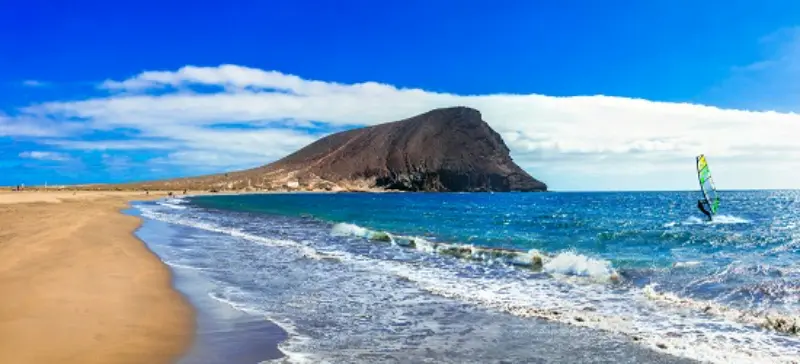
El Médano sits on an exposed stretch of the south-east coast near Montaña Roja. The trade winds accelerate across the area, creating the conditions that have made the town internationally known for windsurfing and kitesurfing. This is not a manufactured watersports resort; the wind shapes the atmosphere of the place.
My El Médano guide explains the town, beaches and Montaña Roja area. If kitesurfing is the main purpose of the holiday, staying here is much easier than commuting from Costa Adeje every day.
Is El Médano good for beginners?
It can be, with instruction and when the school judges the conditions appropriate. A famous kitesurf spot is not automatically an easy spot. Strong wind can make kite control physically and mentally demanding, and a busy beach requires good awareness of other riders and beach users.

A proper beginner lesson should start with safety systems, wind window, launch and landing procedure, kite control and body dragging before independent riding. Progress varies enormously. I would never book a single lesson with the expectation that everyone will finish riding a board confidently.
What a first lesson should feel like
For me, a good lesson feels controlled rather than spectacular. The instructor explains the conditions, checks equipment, identifies safe zones and gives you one skill at a time. If the wind is inappropriate, postponing or changing the lesson is a sign of professional judgement, not poor service.
Ask about group size. One instructor managing too many first-timers can mean long waits and less individual feedback. Private or semi-private lessons cost more but may provide more useful water time.
Do you need to be strong or very fit?
You do not need bodybuilder strength, but basic fitness, mobility and comfort in the water help. Modern kite systems are not controlled by simply pulling with the arms; technique matters more. However, repeated attempts, walking equipment and dealing with chop can be tiring.
If you have a medical condition, injury or limited swimming confidence, tell the school before booking. The operator can advise whether the activity and conditions are appropriate.
Wind seasons in Tenerife
Kitesurfing is possible throughout the year, but Tenerife’s trade-wind pattern is not identical every month. Summer often brings frequent, stronger north-easterly trade winds, while winter can be more variable with different weather systems. Local thermal effects and acceleration around the island also matter.
I do not plan a one-week holiday around a promise that it will be windy every day. Instead, I allow several possible riding days and keep alternative activities ready. That flexibility is especially important for beginners because a day that thrills advanced riders may be unsuitable for a first lesson.
Where exactly should you ride?
Use the zone recommended by a local school or current beach signage. El Médano includes different stretches of coast used by swimmers, windsurfers and kitesurfers, and practical zones can depend on conditions and local management. Do not launch from the nearest empty-looking patch of sand without understanding what is permitted and safe.
For ordinary beach time, read my El Médano travel guide. Kitesurfing changes how you look at the same shoreline: wind direction, obstacles, downwind space and other users become more important than where the sand looks prettiest.
Rental for experienced riders
Experienced independent riders can find equipment rental in the El Médano area, but rental companies may require proof of competence or reserve the right to refuse equipment in unsuitable conditions. That is normal. A kite is not equivalent to renting a beach umbrella.
Check what the rental includes: kite sizes, board, harness, wetsuit, helmet, impact vest, insurance and rescue arrangements can differ. If you bring your own equipment, ask local riders or a school about the spot before launching.
What to wear
Water temperature around Tenerife is mild by European Atlantic standards, but wind creates cooling. The right wetsuit thickness depends on season, session length and personal tolerance. I prefer asking a local centre what they are currently using rather than packing based on a generic sea-temperature chart.
Sun protection is essential. Wind can make the day feel cooler while UV exposure remains strong. Use a suitable water-resistant sunscreen and consider coverage that protects shoulders and back.
Kitesurfing safety basics
The most important rule is to know your own level. Do not ride in conditions beyond your training because other people make them look manageable. Maintain safe distance from swimmers, rocks, structures and other riders. Learn the local right-of-way etiquette and launch/landing process.
Never rely on an offshore wind to “bring you back”. Understand the actual wind direction and what lies downwind. Check equipment before every session, know how to activate the safety release and do not disable safety systems to make setup more convenient.
Travelling with your own kite gear
If you fly with equipment, compare airline sports-baggage rules before buying the ticket. A cheaper fare can become more expensive after board-bag fees. Measure and weigh the packed bag at home, and protect fins and fragile components.
At accommodation, storage matters. A tiny room in a pedestrian old town may be less practical than a simple apartment near El Médano with space to dry equipment. Search current Tenerife stays on Booking.com.
Can you combine kitesurfing with surfing?
Yes, and it is a good way to protect the holiday from unsuitable wind. Tenerife has several surf zones, especially around the south-west and north coast. Conditions and etiquette differ, so a kitesurfer should not assume the same competence transfers automatically to a surf break.
My surfing in Tenerife guide covers beginner lessons and the main areas. On a mixed watersports trip, I decide each morning based on conditions rather than forcing one discipline.
Other activities for no-wind days
El Médano gives you useful backups. Walk toward Montaña Roja, spend a beach day, visit the town’s cafés or use the day for Teide and the south-east. A no-wind day is not a lost day on Tenerife.
If you want a bookable alternative, compare current experiences here:
Kitesurf trip without a rental car
A car is not essential if you stay in El Médano and your school operates locally. The town is compact, and Tenerife South Airport is relatively close. For island sightseeing, buses and selected tours can fill the gaps.
If you base yourself elsewhere, commuting with a board bag becomes less convenient. My Tenerife without a car guide explains the broader transport strategy.
My 5-day beginner kitesurf plan
Day 1: arrive, walk the beach and visit the school. Do not assume the first afternoon should be a lesson after a tiring flight.
Day 2: first lesson if conditions suit. Learn safety systems and kite control rather than chasing board time.
Day 3: second lesson or a rest/sightseeing day depending on wind and fatigue.
Day 4: continue progression. If the instructor considers you ready, spend more time on water starts and controlled riding.
Day 5: final coached session or switch to another Tenerife activity. I would rather finish with good technique than force an unsafe last session because it was prepaid.
Common mistakes
- Booking one lesson and expecting independent riding immediately.
- Assuming El Médano’s famous wind is suitable for every beginner every day.
- Renting equipment without understanding local zones.
- Choosing accommodation far away to save a small amount, then paying for daily transport.
- Underestimating sun exposure because the wind feels cool.
- Ignoring airline sports-baggage fees when travelling with gear.
Frequently asked questions
Where is the best place to kitesurf in Tenerife?
El Médano is the island’s main kitesurf hub and the first place I would research. Exact launch areas and suitability depend on current conditions and local rules.
Can a complete beginner learn in Tenerife?
Yes, with a qualified school and suitable conditions. Do not attempt self-teaching with rented equipment.
Is kitesurfing possible all year?
Tenerife supports year-round watersports, but wind strength and consistency vary. Summer trade winds are often a major draw, while winter conditions can be more variable.
Should I stay in El Médano?
If kitesurfing is the main purpose of the trip, yes. Staying locally reduces transport, makes last-minute condition changes easier and lets you use the town’s watersports infrastructure.
Final thoughts
Tenerife is a strong kitesurf destination because El Médano combines reliable wind, an established riding community and a town where the sport is part of everyday life. The same conditions that make it exciting also demand respect.
For a beginner, invest in instruction and flexibility. For an experienced rider, learn the local setup before launching. In both cases, the best Tenerife kitesurf holiday is one where the wind decides the session and you still enjoy the island when it does not cooperate.
Leave a Reply