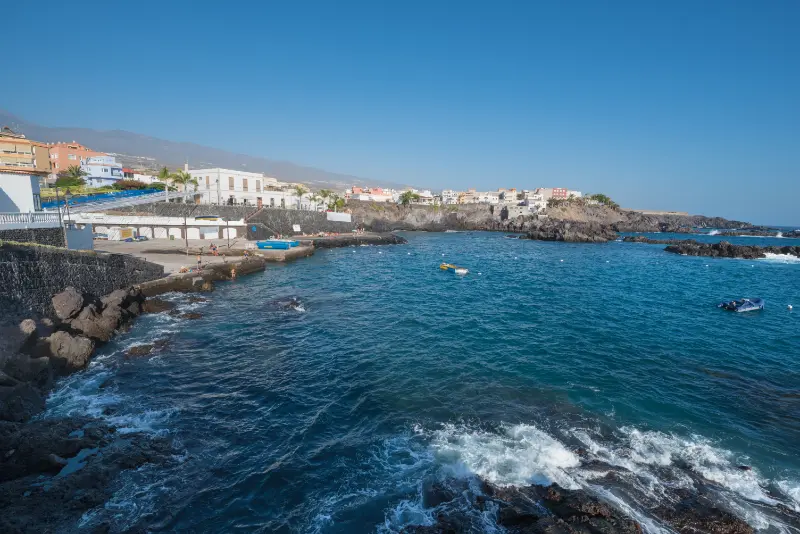
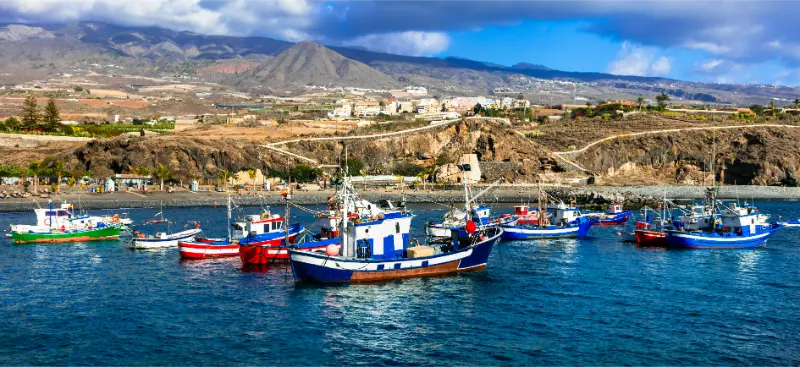
Playa San Juan and Alcalá are two southwest Tenerife places I recommend when someone likes the climate of the south but not the intensity of the biggest resorts. They sit on the Guía de Isora coast, west of Costa Adeje, with fishing-harbour roots, black volcanic shoreline, long promenades and sunset views toward La Gomera.
Neither is a “secret village.” Both have tourism, apartments and hotels. What they offer is a calmer scale: I can walk to dinner, swim from an urban beach when conditions are good and spend the evening by the sea without the same nightlife density as Playa de las Américas. They work as a day trip, but they can also be smart bases for a slower holiday.
Playa San Juan: the practical beach town
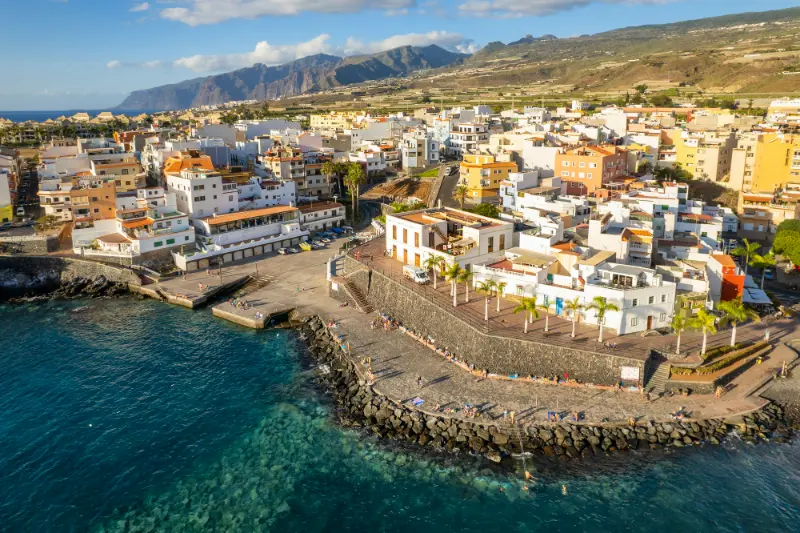
Tenerife’s official tourism page describes Playa San Juan as a sheltered black-sand and pebble beach beside the fishing harbour, protected by the breakwater and equipped with showers, parking, lifeguard services, accessible facilities and nearby restaurants. I check the official Playa San Juan beach page for current services.
The protection from wind and waves makes it more approachable than many exposed north-coast beaches, though I still follow flags and local advice. The town’s scale is the main attraction for me: the beach, harbour, cafés and promenade sit close enough to create an easy day on foot.
The Playa San Juan promenade
The official tourism site notes a seafront walk of almost two kilometres, with cafés, restaurants and a historic lime kiln near the water. I use the promenade for an unstructured late afternoon: walk, stop for coffee, watch boats and stay for sunset.
This is not a place where I need a detailed sightseeing checklist. The pleasure is the everyday coastal rhythm. I bring a light layer after sunset in winter because the breeze can feel cooler once the sun drops.
Alcalá: village atmosphere and sunsets
Alcalá lies a short distance north and has a small fishing harbour, volcanic beach and attractive seafront. The official page describes a small urban beach of dark sand and gravel with restaurants around it. I like Alcalá most around late afternoon when the light faces La Gomera.
The centre feels compact and walkable. I explore the square, waterfront and side streets rather than trying to turn it into a museum visit. It is a good place for travellers who enjoy watching local life as much as visiting attractions.
La Jaquita and the Alcalá coastal walk
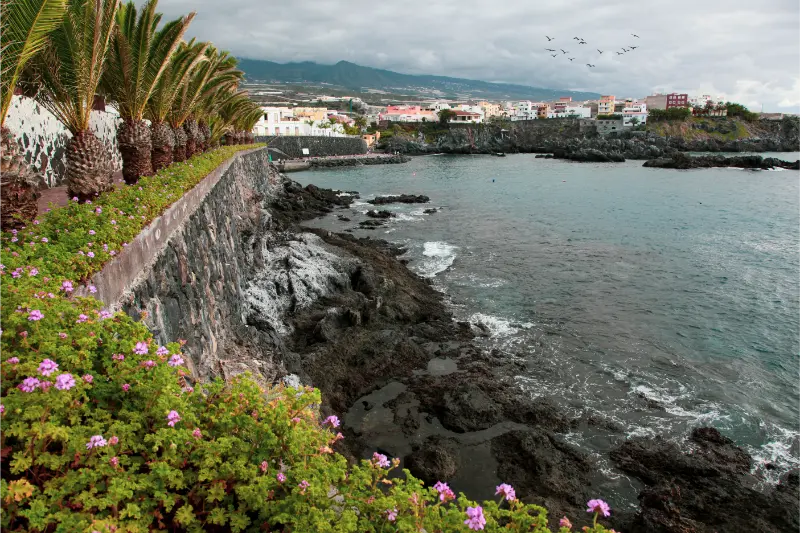
The Alcalá–La Jaquita promenade includes small dark-sand beaches, natural pools, landscaped areas and space for walking or cycling. The official promenade page explains the seafront layout.
I enjoy walking this stretch without needing to swim at every cove. Sea conditions can affect natural bathing areas, so I treat the pools as optional rather than guaranteed. The path itself is enough reason to come.
Playa de La Jaquita
The official beach information describes La Jaquita as a roughly 700-metre coastal front divided into small black-sand bathing areas with adapted facilities, showers, changing rooms and a children’s area. This makes it one of the more practical volcanic-coast options for travellers who want services.
I still check which section is open and best for the day because coastal maintenance and sea conditions can affect individual areas. I use water shoes if the entry looks stony and keep children close around lava edges.
Where to eat
Both Playa San Juan and Alcalá are good for fish, seafood and simple Canarian meals. I prefer restaurants that fit naturally into the harbour or promenade day rather than driving away for a famous name. My Tenerife food guide helps with dishes and ordering.
At seafood restaurants I ask what is fresh and whether prices are per portion or by weight. For sunset dinner, I reserve if the restaurant is small or the date is busy, especially on weekends and holidays.
Sunset toward La Gomera
One reason I choose this coast is the west-facing horizon. On clear evenings La Gomera can sit sharply across the water, and the sky often changes long after the sun reaches the horizon. I stay for the afterglow rather than leaving immediately after sunset.
I do not need a cliff-top Instagram spot. The normal seafront gives a safer and more relaxed view, with cafés and lighting nearby for the walk back.
How the area compares with Costa Adeje
Costa Adeje has more large resorts, polished beaches, shopping and excursion infrastructure. Playa San Juan and Alcalá feel smaller and less nightlife-focused. I choose Costa Adeje for maximum convenience and these Guía de Isora towns for a slower coastal routine.
The trade-off is fewer attractions within walking distance. If I want Siam Park, nightlife and constant tour departures, I will travel more from Playa San Juan. If I want morning coffee, a swim and sunset on foot, that quieter scale is the advantage.
How the area compares with Los Gigantes
Los Gigantes is more dramatic visually because of the cliffs and has a strong boat-trip identity. Playa San Juan and Alcalá are gentler, flatter-feeling coastal bases with longer everyday promenades.
I can visit all three in one west-coast day, but I prefer not to rush. A good plan is Los Gigantes in the morning and Alcalá at sunset, or Playa San Juan for lunch followed by a boat trip elsewhere.
Getting there by car
The TF-1 makes the southwest coast easier to reach than it once was, and local roads connect the coastal settlements. Parking can still be limited around the oldest waterfront areas. My driving guide covers general road and parking habits.
I save the exact accommodation or car-park pin because “Alcalá” or “Playa San Juan” can bring navigation into tight central streets. I would rather park slightly outside the core and walk.
Getting there without a car
TITSA buses serve the southwest corridor, making both towns realistic without a car, especially for travellers who plan a slow stay rather than daily remote hikes. My no-car Tenerife guide explains how I use the network and ten+ travelcards.
I check late-evening return times before committing to sunset if I am staying elsewhere. The atmosphere is relaxed enough that waiting for a bus is not a problem, but missing the last convenient connection can turn a cheap day trip into an expensive taxi ride.
Where to stay
Playa San Juan suits travellers who want a slightly larger local centre with a sheltered beach and promenade. Alcalá suits those who prioritise village atmosphere, sunset and access to La Jaquita. I compare accommodation in Playa San Juan, Alcalá and Guía de Isora and pay attention to whether a listing is genuinely walkable to the sea.
Large resort properties exist around this coast too, so I read the map rather than assuming every “Alcalá” hotel sits in the old village. The experience changes significantly when the property is isolated behind a long resort entrance.
My ideal day
I start with a swim or coffee in Playa San Juan, walk the promenade and have lunch by the harbour. In the afternoon I move to Alcalá, walk toward La Jaquita and stay for sunset. If I am based nearby, I split that into two separate slow days instead.
I do not add Teide or Anaga to this plan. The point of the Guía de Isora coast is a day that requires very little performance: ocean, food, walking and light.
Frequently asked questions
Which is better, Playa San Juan or Alcalá?
Playa San Juan has a more practical sheltered beach and longer town promenade; Alcalá feels smaller and is excellent for sunset and the La Jaquita coastal walk.
Are the beaches black sand?
Yes, the coast is volcanic and includes dark sand, gravel and pebble sections.
Can I stay here without a car?
Yes, especially for a relaxed coastal holiday. Buses connect the southwest, though a car is more useful for remote mountain trips.
Is this area quieter than Costa Adeje?
Generally yes. There are hotels and tourism, but nightlife and large-resort density are lower in the village centres.
Can I see La Gomera from the coast?
On clear days, La Gomera is visible across the water and is particularly attractive around sunset.
Who will enjoy this coast most
I recommend Playa San Juan and Alcalá to couples, repeat Tenerife visitors, families who prefer a quieter evening, and travellers who want to walk to the sea without living inside a nightlife district. I would choose somewhere else for a first trip focused mainly on clubs, large shopping centres or a packed schedule of major attractions.
For remote hiking, a car is still useful. For everyday coastal life, however, the ability to walk for coffee, groceries, dinner and sunset makes these towns much more practical than their small size suggests.
I would also consider them for a split stay: a few nights here after a busier Costa Adeje stay can change the pace without requiring a move to the far north. The west-coast location still keeps Los Gigantes, whale-watching departures and Teide approaches within reasonable reach, while evenings remain noticeably calmer.
Leave a Reply