
Palacio Salazar is one of the best façades in La Laguna for seeing how Canarian domestic architecture could become deliberately monumental. The house was developed in the seventeenth century for the Salazar family, and its richly carved stone front was commissioned in 1681. Today it remains the episcopal residence, so I do not treat it as a conventional museum with guaranteed room-by-room access. The right way to visit is to appreciate the exterior, look for any publicly accessible courtyard or cultural activity and respect the building’s continuing institutional use.
Quick visit facts
| Location | Calle San Agustín, historic La Laguna |
|---|---|
| Main construction | Present palace developed in the mid-17th century |
| Façade | Noble stone façade commissioned in 1681 |
| Later use | Acquired as an episcopal residence and still used by the Nivariense diocese |
| Modern history | A major accidental fire in January 2006 led to reconstruction |
Why the façade stands out
The palace has two high storeys, a central doorway, large windows protected by projecting ironwork and upper openings framed with classical columns and pediments. The composition culminates in the Salazar coat of arms in white Carrara marble and two corner turrets that rise above the main façade line.
I like to compare this façade with Palacio de Nava. Both are aristocratic statements, but Salazar feels more insistently baroque in the way stone, columns, pediments and heraldry are concentrated toward the street.
The courtyard and internal sequence
Official heritage information describes an entrance leading to an interior courtyard with columns on decorated plinths and a three-flight stone staircase under an octagonal coffered ceiling. That sequence is typical of the way important Canarian houses used a patio to organise circulation while also creating a semi-public reception space.
Access to institutional areas is not something I assume. If the gate or courtyard is open to visitors, I remain within the clearly public zone and do not interpret an open door as permission to explore offices or private episcopal rooms.
The 2006 fire and restoration
A serious accidental fire on 23 January 2006 damaged the palace. The building was subsequently reconstructed for the diocese. Knowing that changes the way I look at the apparent historic continuity: much of the value lies not only in surviving fabric but also in the careful reconstruction of a landmark that the city chose to preserve.
This is a useful theme across Tenerife’s historic centres. Fire, earthquakes, storms, decay and changing use have repeatedly forced decisions about what to conserve and how to rebuild.
How I combine Palacio Salazar with San Agustín street
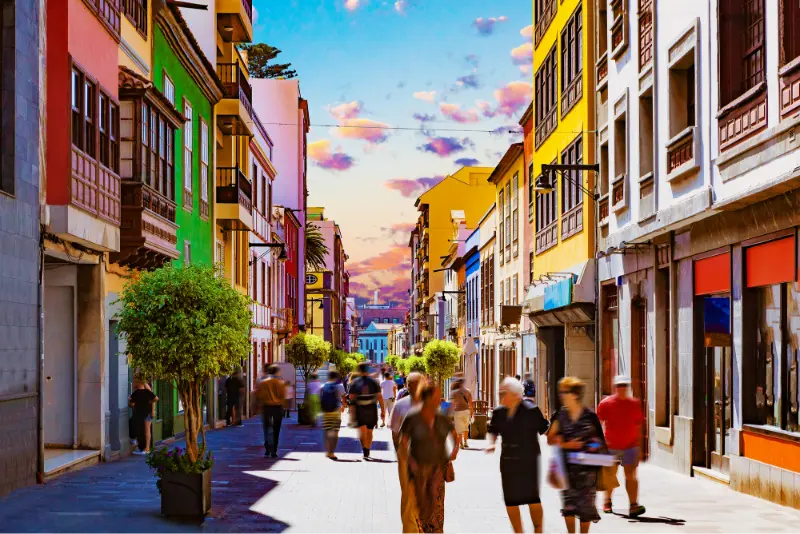
Calle San Agustín is one of La Laguna’s strongest heritage corridors. I would combine the palace with Casa Lercaro, Fundación Cristino de Vera and the former convent or educational buildings along the same axis. Walking the street slowly reveals different approaches to portals, timber, stone and patios without needing to cross the whole city.

If I only have an hour, this concentrated route gives more architectural context than rushing between distant headline attractions.
How I would plan the visit
I build the stop into a compact local route rather than drive across Tenerife for one doorway. That reduces parking stress and gives the site context. Historic centres and small museums are often more rewarding when I can compare them with the streets, squares, markets or landscapes that produced them.
I also leave flexibility. Opening hours can change for public holidays, conservation work, religious services, private events or temporary exhibitions. My practical rule is simple: if entering the building is essential to the day, I check the official source again that morning. If the exterior or surrounding district is valuable by itself, I can be more spontaneous.
How much time I would allow
I separate time inside from total visit time. A compact museum may need only 45 minutes, yet the real stop can take 90 minutes once I include walking, ticketing, photography and a nearby coffee. A church or palace may be quicker if only the exterior is accessible, but I still avoid scheduling another fixed-time activity immediately afterwards.
For a culture-heavy day, I rarely stack more than three substantial interiors in one half-day. Alternating an indoor visit with a square, garden, lunch or short walk keeps attention higher and makes details easier to remember.
Photography, accessibility and families
Photography rules are not universal. I keep flash off around artworks and living collections, look for signs and ask before filming extensively. In active religious sites I never photograph worshippers without permission, and in gardens or wildlife spaces I avoid handling plants or animals for a better picture.
Accessibility also has to be checked site by site. A pedestrian historic centre can be easy to reach while a heritage staircase, old threshold or narrow gallery is not. When step-free access is essential, I contact the venue rather than infer accessibility from a modern-looking entrance. With children, I shorten the visit and give them one or two things to look for; that usually works better than expecting them to read every label.
When I would go
Weekday mornings are usually the easiest time for combining cultural attractions with open museums, but they are not automatically the quietest during school visits or organised groups. Late afternoon often gives better street atmosphere, while indoor opening can be more limited. I choose according to the experience I want rather than chasing a mythical hour with no other visitors.
Tenerife’s local fiestas, Carnival, religious celebrations and heritage weekends can transform normal access. Those dates can be wonderful, but they require a different plan. I check road closures, event programmes and special opening rules before assuming an ordinary timetable still applies.
Where I would stay if I wanted a slower visit
For a day trip, I would normally return to my main base. If I want two culture-heavy days without repeated driving, I sometimes compare accommodation in San Cristóbal de La Laguna. Staying locally is most useful when I want early streets, evening restaurants or several attractions that open on different schedules.
Common mistakes I would avoid
- Using an old Google review as the only source for opening hours.
- Assuming an open gate means every interior room is public.
- Driving from monument to monument inside a walkable historic centre.
- Trying to photograph everything instead of spending time with a few details.
- Ignoring services, worship, conservation work or local events that can temporarily change access.
What I would combine nearby
I prefer these combinations because they keep the day geographically coherent. The point is not to collect the largest possible number of attractions; it is to understand one part of Tenerife more deeply while spending less time in traffic.
Official source
For current access, opening information and temporary changes I check the official information for this site before travelling.
Frequently asked questions
Is Palacio Salazar a normal museum?
No. It is an important heritage building that still serves as the episcopal residence, so public access can be limited.
When was the façade built?
The noble stone façade was commissioned in 1681.
What happened in 2006?
An accidental fire severely damaged the palace, after which it was reconstructed for the diocese.
What should I notice from outside?
Look at the paired columns, pediments, projecting ironwork, Carrara-marble coat of arms and corner turrets.
Final thoughts
Palacio Salazar La Laguna earns a place in a Tenerife itinerary when I treat it as part of its neighbourhood rather than an isolated pin on a map. I would verify the practical details, give the site enough time to reveal its context and then continue on foot to nearby places. That slower approach is usually what turns a short stop into something I actually remember after the trip.
A slower way to experience San Cristóbal de La Laguna
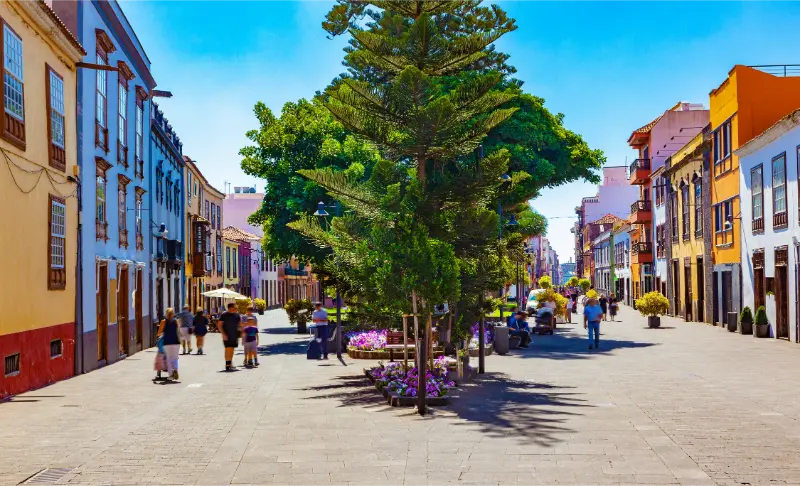
One reason I prefer a slower plan is that the surrounding streets often explain details that a label cannot. Building materials, balconies, gardens, shopfronts, church bells, small courtyards and changes in elevation all connect an attraction to the town around it. I stop before and after the visit, compare what I have just seen with neighbouring buildings and note how locals actually use the area. That simple habit turns heritage from background scenery into a readable landscape.
I also avoid making every decision around headline attractions. A small museum, quiet square or specialist garden can be more memorable than a famous site when it matches my interests. Tenerife rewards this kind of selective travel because the island packs very different histories and ecosystems into short distances. Giving one neighbourhood a full morning often teaches me more than driving to three distant highlights.
My practical checklist before leaving
The night before, I check the official page, public transport or parking plan, expected weather and whether a local event changes access. I carry water even on an urban day, keep a light layer for La Laguna or the north, and leave enough phone battery for tickets and maps. I save the attraction name and address offline in case mobile data becomes unreliable inside a thick-walled heritage building.
On arrival, I read the entrance signs before buying anything or joining a queue. If the current situation differs from what I found online, I trust the staff and posted information. That may sound obvious, but it is the simplest way to avoid turning a small schedule change into a frustrating day.