Ermita de El Calvario is a useful stop for travellers who want to understand Tenerife beyond beaches and headline attractions. I would not cross the whole island only for this one place, but I would absolutely use it to add historical and local context to a day in Icod de los Vinos.
In this guide I separate documented facts from practical planning. Dates, dimensions, artistic details and historical associations come from official tourism or municipal heritage sources. My suggestions about timing, route order, photography and combinations are travel-planning advice. I avoid inventing fixed opening hours, prices or guaranteed access when current official information is uncertain.
At a glance
| Place | Ermita de El Calvario |
|---|---|
| Where | Plaza del Calvario, 1, 38430 Icod de los Vinos |
| Best for | local devotion, quiet architecture, historic plazas and festival context |
| Time to allow | 20–40 minutes with the surrounding plaza |
| Planning rule | Combine it with nearby sights, verify current access and keep the route flexible. |
Why I would include Ermita de El Calvario in a Tenerife itinerary
One of the easiest mistakes on Tenerife is to jump from one major attraction to another without understanding the towns between them. Places like Ermita de El Calvario slow the trip down in a useful way. They show how local history, religion, trade, architecture or landscape developed at the level of an individual community.
I also value stops that work inside a compact cluster. In Icod de los Vinos, I can usually combine several worthwhile places without repeated driving. That gives me more time to notice details, stop for coffee, change plans if a door is closed and still finish the day without feeling that I have been chasing a checklist.
My rule is simple: a small site earns its place when it helps explain the destination. I would rather spend thirty attentive minutes somewhere meaningful than add three generic viewpoints just to increase the number of stops.
What the official record confirms
- The chapel was completed in the 19th century.
- Inside is a Crucified Christ accompanied by Saint John and the Virgin.
- The figures can be viewed through the glass of the door when the interior is closed.
- The surrounding Plaza del Calvario developed as an important historic public space and is associated with major local festivities.
The chapel is only half the story
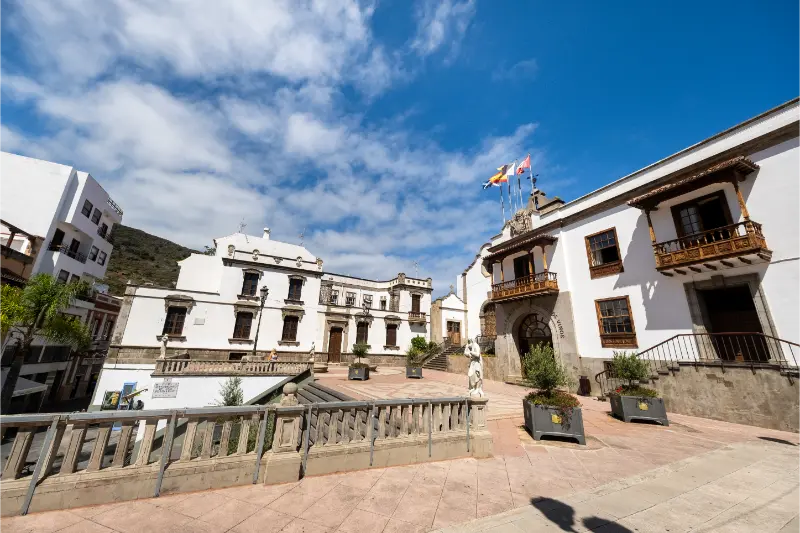
Ermita de El Calvario is small, but the surrounding plaza gives it much more context. Municipal heritage records describe changes linked to water supply, transport and later landscaping, so I would spend time looking around rather than focusing only on the chapel door. This is a good example of how a religious landmark can also anchor the urban history of a neighbourhood.
A fountain and water-distribution point were added after an 1815 donation, and later transport infrastructure increased movement through the area. Those details help explain why the Calvario became more than a devotional stop: it was woven into the practical expansion of Icod.
What can be seen even when the door is closed
The official tourism listing notes that the Crucified Christ, Saint John and the Virgin can be appreciated through the glazed door. That makes this an unusually forgiving stop for travellers who arrive outside interior-access hours. I still avoid pressing against the glass or obstructing worshippers, but the arrangement allows a basic understanding of the devotional group.
I look for the relationship between the figures and the small scale of the building. Calvario chapels often work through intimacy rather than grandeur, and this one is most effective when approached quietly as part of the town rather than as a museum display.
September festivities and local meaning
The municipal heritage page identifies the feast of the Santísimo Cristo del Calvario, held on the last Sunday of September, as one of Icod’s major celebrations. During the festivities the plaza is decorated and the image moves between the chapel and the parish church of San Marcos.
For visitors, that means two things. First, a festival period can be culturally rewarding. Second, access, traffic and parking may be very different from an ordinary day. I would check the municipal programme if travelling in late September and decide whether I want to experience the event or avoid the crowds.
What to combine with it nearby
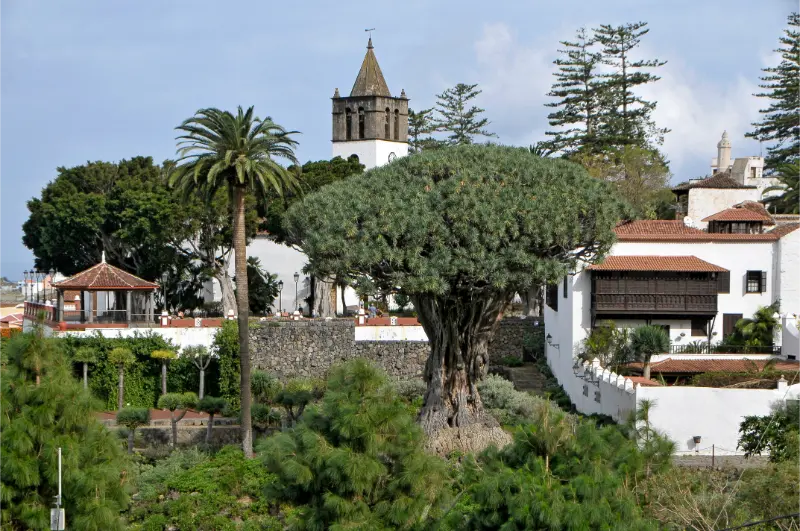
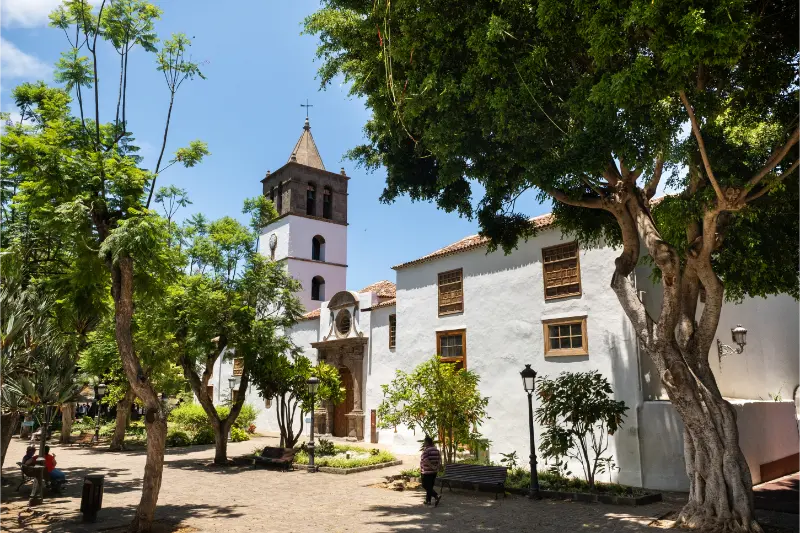
I would build the visit around nearby pages already covered on this site rather than create an isolated detour. Good combinations include Icod de los Vinos guide, Iglesia de San Marcos, Plaza de la Constitución. For a broader planning option, I also keep Franciscan Convent Icod in the same cluster.
How I plan the visit
I start by deciding whether Ermita de El Calvario is the anchor of the outing or a supporting stop. For a small heritage site, the second option is usually better. I allow enough time to read information, look at details and take a few photographs, but I do not turn a short visit into half a day simply because the itinerary has empty space.
I then check the official source shortly before travelling. Religious services, conservation work, local events, seasonal timetables or staffing can change access. If the interior is closed, I want the surrounding route to remain worthwhile.
- Start with the most time-sensitive stop, such as a museum or church interior.
- Continue on foot to exterior heritage, public squares and streets.
- Keep lunch or coffee flexible so a delay does not break the itinerary.
- Leave the final stop optional, especially if traffic, weather or a local event changes the pace.
This style of planning works particularly well in Tenerife’s historic towns. Short map distances can hide steep streets, difficult parking and one-way systems, while a compact walking loop often reveals much more than several rushed car stops.
How I read the history without oversimplifying it
Heritage sites often mix documented facts, later restoration, local tradition and popular legend. I try to keep those layers separate. A date recorded by an official heritage inventory is not the same kind of evidence as a story passed through generations, even though both can be valuable for understanding the place.
I also avoid treating Tenerife’s colonial period as a neutral backdrop. Conquest, Indigenous Guanche history, Atlantic trade, migration and religious institutions all shaped the island. Where one of those themes is relevant to Ermita de El Calvario, I name it directly rather than reducing the story to decorative architecture.
What I look for on site
Before reaching for my phone, I look at materials and relationships: volcanic stone, timber, limewashed walls, ironwork, paving, courtyards, altarpieces, old trees or the way a building faces a square. These details usually tell me more than a single façade photograph.
I also pay attention to later changes. Historic buildings are rarely frozen in one century. Fires, floods, new roads, restorations, changing religious use and civic adaptation can all become part of the story. I find a place more interesting when I can see those layers rather than searching for an imaginary “original” version.
Getting there and moving around
For Icod de los Vinos, I compare driving with public transport according to the rest of the day. A car is helpful when I am continuing to rural viewpoints or another municipality, but it can be inconvenient in older streets with limited parking. If I am concentrating on the historic centre, I prefer to park once and walk.
TITSA serves the main towns and tourist areas of Tenerife. I check the current journey planner instead of hard-coding a bus number into an evergreen article, because routes and stops can change. Travellers with a pushchair, luggage or limited mobility should also inspect the final approach: gradients, cobbles and steps often matter more than the intercity journey.
Best time of day
For architecture and street photography, morning or late afternoon usually gives softer light. For a church or museum, access arrangements matter more than the angle of the sun. I prefer arriving early enough that a closed door does not create pressure to rush the rest of the route.
Weekends, feast days and local events can transform a quiet square into a busy community space. That can be a highlight if I want atmosphere, but it can also affect parking and interior access. I check local notices when travelling around major religious or municipal celebrations.
Practical tips that make the stop better
Comfortable shoes are my default even for short urban visits. Historic paving can be uneven and north-Tenerife towns often have steeper streets than a map suggests. I carry water and a light layer because cloud, breeze and sun can change quickly across short distances.
I do not assume that a public-looking heritage building has toilets, step-free access or continuous opening. Travellers who need specific accessibility features should verify them directly with the venue or municipality. The same applies to reserved parking and interior photography rules.
For churches and devotional spaces, I dress respectfully and keep noise low. For historic houses, I respect private sections even when the façade looks museum-like. For monumental trees or rural heritage, I stay on public access and avoid trampling roots, crops or private land.
Photography without missing the place itself
I take one wide establishing image, then look for details: stonework, wood, metal, inscriptions, paving, vegetation or the relationship between a building and its square. That produces a more useful visual record than ten almost identical front-on photographs.
I never assume drone use is legal simply because a place looks quiet. Tenerife has controlled airspace, protected areas and populated zones. A travel guide cannot replace current aviation rules or local restrictions.
Where to eat and how I fit meals into the route
I prefer eating near the area I am already exploring instead of driving across the island for a single restaurant. In Icod de los Vinos, that might mean a café in the historic centre, a traditional Canarian lunch or a longer meal after the walking portion of the day. I check recent opening information because weekly closing days and kitchen hours change.

Local food makes more sense when connected to the place: papas arrugadas, mojo, gofio, cheeses, fish and Tenerife wines all reflect agriculture, trade and everyday island life. I would rather choose a simple meal that fits the route than interrupt the day for a famous restaurant far away.
Where to stay
If I want to explore this part of Tenerife over more than one day, I compare current accommodation on Booking.com. I pay attention to the exact map position, parking, elevation and recent guest comments rather than relying only on the property name.
For a first visit, I choose a base according to the majority of the itinerary. A good location saves more time over a week than staying next to one small attraction that I will visit only once.
Activities and tours
A heritage stop can pair well with one organised experience elsewhere on the island. I use the widget below to compare current options, but I avoid stacking a long excursion immediately before or after a dense driving day.
Who will enjoy this stop most?
Ermita de El Calvario is best for travellers who enjoy context rather than only headline attractions. Couples and solo travellers can fold it into a slow walking day; families can use it as a short educational stop; repeat visitors may appreciate it because it reveals a layer of Tenerife that is easy to miss on a first trip.
It may be less useful for someone with only a few hours on the island who is still trying to prioritise Teide, Anaga or a major beach. I would rather say that clearly than label every place a “must-see”. A good guide should help readers decide what fits their interests.
Common mistakes I would avoid
- Driving across Tenerife only for this single stop without combining it with the surrounding area.
- Assuming old opening hours are guaranteed for a church, museum or locally managed heritage site.
- Underestimating gradients, parking limitations or narrow streets in historic centres.
- Treating local legends as proven history without saying they are traditions.
- Ignoring services, worship, safety signs or private boundaries because a place appears tourist-oriented.
Frequently asked questions
When was Ermita de El Calvario built?
The official tourism listing says the small chapel was completed in the 19th century.
Can I see the religious figures if the chapel is closed?
The Crucified Christ, Saint John and the Virgin can be viewed through the glazed door.
What happens here in September?
The Santísimo Cristo del Calvario festivities are traditionally held on the last Sunday of September, with religious and local events.
Is the plaza worth seeing too?
Yes. Its water, transport and festival history makes the surrounding public space part of the visit.
Official information
For the documented background used in this guide and for any current operational information, I check the official visitor or heritage information for Ermita de El Calvario shortly before travelling. Same-day signs, staff instructions, parish notices, municipal updates and safety restrictions always take priority over an evergreen article.
Final thoughts
I would include Ermita de El Calvario when it strengthens the story of a day in Icod de los Vinos. Its value is not measured by how many hours it occupies. A short stop can be meaningful when it explains architecture, faith, trade, landscape or everyday life.
My preferred approach is simple: know the key facts before arriving, stay flexible about access, respect the place as part of local life and connect it with nearby sights. Done that way, it becomes one more piece of a Tenerife itinerary that feels coherent rather than crowded.