Tag: Benijo

  • Taganana Tenerife Guide: Anaga Village, Beaches, Hikes and Practical Tips

    Taganana Tenerife Guide: Anaga Village, Beaches, Hikes and Practical Tips

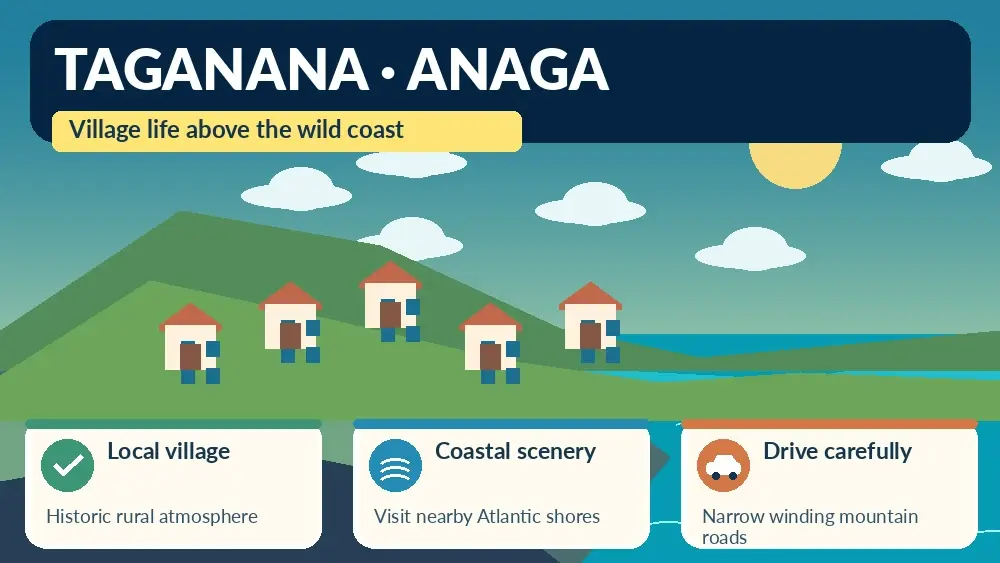
    Taganana is the Anaga village that makes me slow down the most. Reaching it means crossing a mountain landscape of laurel forest and deep ravines before the road drops toward a remote-looking Atlantic coast. The village itself is small and lived-in; nearby beaches such as Roque de las Bodegas, Almáciga and Benijo give the day its dramatic seascape.

    I do not visit Taganana as if it were an attraction with a ticket gate. People live here, roads are narrow and parking is limited. I come for the landscape, traditional settlement, food and a sense of how isolated Anaga communities were before modern roads. Respecting that scale is essential to enjoying the place.

    Why Taganana feels different

    Tenerife’s official tourism information describes Taganana as one of Anaga’s traditional settlements and highlights its nearby beaches, including Roque de las Bodegas, Almáciga and Benijo. The official Taganana page is useful before the drive.

    The change begins before I arrive. Roads pass through cloud forest and then open onto steep cultivated slopes and ravines. I allow generous travel time because this is a mountain journey, not a quick coastal transfer from Santa Cruz.

    Walking through the village

    I explore Taganana on foot without expecting a long list of monuments. Traditional houses, small lanes, terraces and the church area create the character. The village’s history is connected with agriculture, wine and the difficulty of transport through Anaga.

    I keep noise down, avoid blocking doorways and remember that a picturesque lane may be someone’s access to home. Photography is fine from public space, but I do not treat private courtyards as open exhibits.

    Roque de las Bodegas

    Roque de las Bodegas is the easiest of the nearby coastal stops for combining ocean views with restaurants. The road runs close to the shore and the beach has a more accessible feel than Benijo. I often choose it for lunch after walking in the village.

    The sea can still be rough. I assess waves and flags rather than assuming the presence of restaurants and parking makes the beach sheltered. On a strong-swell day, I enjoy the coast from land.

    Almáciga

    Almáciga is a dark volcanic beach below Anaga’s steep slopes and is well known for surf. The official page warns that waves are often strong and describes the beach as a surf location. My Tenerife surf guide explains why I do not treat a surfer-filled beach as automatically safe for casual swimming.

    I like stopping here to watch the ocean, but parking is limited. I never leave the car where it narrows the road or blocks residents. If the area is crowded, I continue rather than circling repeatedly.

    Benijo

    Benijo is the most dramatic beach in the area, with black sand and views toward the Roques de Anaga. My detailed Playa de Benijo guide covers the stair access and strong-wave precautions.

    I arrive with enough daylight for the return climb and drive. Sunset can be beautiful, but the mountain road back is not the place to be tired, rushed or distracted. If I am unfamiliar with Anaga roads, I prefer an earlier visit.

    Las Vueltas de Taganana trail

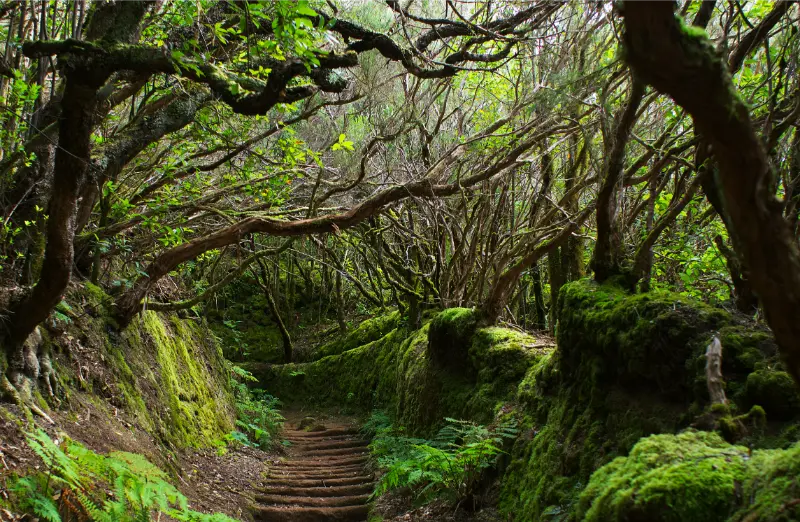
    The historic Las Vueltas route once served as an important connection between Taganana and the highlands. Tenerife’s official trail description lists a 4.5-kilometre route of roughly 2 hours 30 minutes and medium difficulty, descending through laurel forest and traditional paths toward the village. I consult the official Las Vueltas page and current trail status before walking.
    Anaga Laurel Forest Path Tenerife

    This is not a casual add-on after a full beach day. I plan footwear, transport between trail endpoints and weather carefully. Wet stone can be slippery, and cloud in the upper forest may be very different from sunshine on the coast.

    PR-TF 8 Afur–Taganana–Afur

    For experienced hikers, the official PR-TF 8 description lists a demanding circular route of about 14.3 kilometres, around seven hours and substantial accumulated ascent and descent. It connects Afur, the Tamadite area, Taganana and the forest. I check current trail status before considering it.

    I would not recommend this as a spontaneous holiday walk. Seven hours in steep terrain requires fitness, water, food, daylight and a stable forecast. If I mainly want Taganana, a shorter walk plus village time is often the better travel experience.

    Food in Taganana

    The coast is known for simple fish restaurants, while the village and surrounding Anaga area also connect with traditional wine and agricultural products. I eat where it fits the day rather than driving back to the city for a famous restaurant.

    My food guide explains Canarian basics. In a small community, I am especially patient when service is slower; the point of the visit is not resort efficiency.

    Driving to Taganana

    The roads through Anaga are narrow, winding and scenic. I use my Tenerife driving guide as a reminder to keep speeds low, use legal parking and avoid stopping on blind bends. I also check fuel before entering the massif rather than expecting a station in every village.

    If I am uncomfortable with mountain roads, I do not force a rental-car day simply because the route is famous. Public transport or an organised excursion can make the visit more relaxing.

    Visiting by bus

    Taganana is served by TITSA, and buses are a realistic way to reach the village without driving. Schedules are less frequent than urban routes, so I check the current timetable and know my return option before leaving Santa Cruz or La Laguna. My no-car guide covers the practical side of using TITSA.

    A bus also changes the day positively: I can look out at the mountains instead of concentrating on bends and parking. The trade-off is that hopping between all three beaches becomes less flexible, so I choose priorities.

    Taganana and Anaga in one day

    I combine Taganana with one or two Anaga viewpoints or a short laurel-forest walk. My Anaga Rural Park guide explains the broader geography. I do not attempt every major trail, viewpoint and beach in a single day.

    Anaga Laurel Forest Tenerife

    A realistic plan could be forest walk in the morning, Taganana for lunch and one coastal beach afterward. That gives the landscape time to change naturally as I descend from cloud forest to the Atlantic.

    When to go

    I prefer a weekday morning outside the busiest holiday periods, but weather matters more than calendar. Anaga can be cloudy or wet even when the south is sunny. That is normal. I bring a light waterproof layer and do not cancel simply because the high forest is misty.

    Strong rain, wind or official warnings are different. I follow closures and do not enter ravines or exposed trails during unsafe conditions. The coast can also be rough independently of the mountain weather.

    Where to stay

    Most visitors see Taganana as a day trip, but rural accommodation can suit hikers or travellers who specifically want Anaga evenings and early mornings. Services are limited compared with a resort, so I check food options, parking and transport before booking. I compare accommodation in Anaga and northeast Tenerife rather than assuming every property is close to Taganana itself.

    For a first Tenerife trip, La Laguna or Santa Cruz is usually the easier base. Staying inside Anaga makes more sense when the rural setting is the purpose of the trip.

    My ideal Taganana day

    I leave early, stop at one high Anaga viewpoint, take a short forest walk, descend to Taganana, have lunch near the coast and choose either Roque de las Bodegas, Almáciga or Benijo depending on sea conditions and parking. Then I return before I am tired.

    Anaga Laurel Forest Trail Tenerife

    The most important choice is what to leave out. Anaga feels remote because the roads and terrain demand time. A day with fewer stops creates a stronger sense of place than a list of ten photo pins.

    Frequently asked questions

    Is Taganana worth visiting?

    Yes, especially if you enjoy mountain scenery, traditional villages, dark-sand beaches and a slower rural atmosphere.

    Can I drive to Taganana?

    Yes, but the Anaga roads are winding and parking near the coast is limited. I drive slowly and use legal spaces only.

    Can I reach Taganana by bus?

    Yes. TITSA serves the village, but I check the current timetable because frequencies are more limited than in the city.

    Which Taganana beach is best?

    Benijo is the most dramatic, Almáciga is known for surf and Roque de las Bodegas is often the easiest for combining the coast with restaurants. Sea conditions can change the best choice.

    How long do I need?

    A full day is ideal if I want to include an Anaga forest stop, village time, lunch and one beach without rushing.

    Respecting Anaga communities

    I buy lunch or coffee locally when it fits the day, take litter away and avoid parking across gates or agricultural access. In small settlements, a single badly parked car can affect residents far more than it would in a resort car park. I also keep music and drone activity under control; quiet is part of the value of the place.

    If a road, path or parking area is closed, I do not search for an unofficial bypass. Protected landscapes and rural communities function best when visitors accept that access sometimes changes.
  • Playa de Benijo Guide: Black Sand, Anaga Scenery, Access and Safety Tips

    Playa de Benijo Guide: Black Sand, Anaga Scenery, Access and Safety Tips

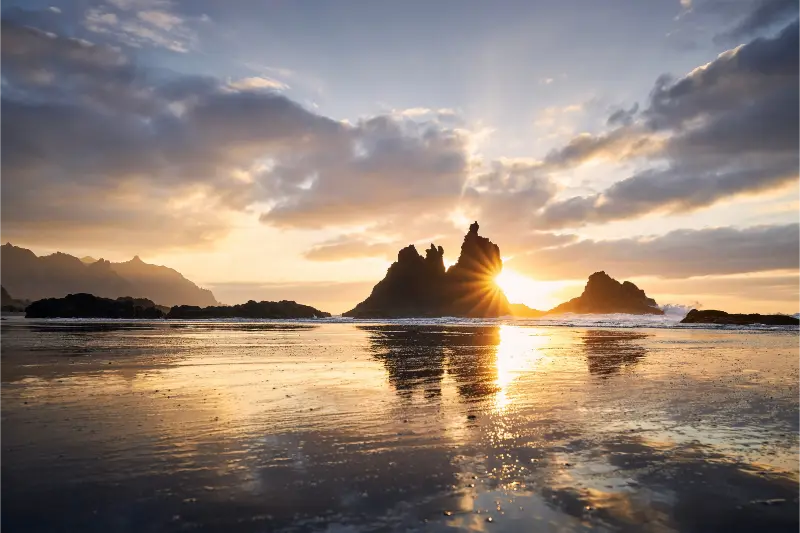
    Playa de Benijo is the Tenerife beach I think of when someone asks for dramatic scenery rather than an easy resort day. Black volcanic sand, the Roques de Anaga rising offshore and the steep green slopes of the Anaga massif give the place a raw character that feels very different from the manicured beaches of Costa Adeje. It is also a beach that deserves respect. Access involves steps, parking is limited and the Atlantic can be powerful, so I would never describe Benijo as a simple all-purpose swimming beach.

    For me, the best way to experience Benijo is as part of a wider day in northeastern Tenerife. I would combine it with Taganana, a viewpoint or short walk in Anaga and a meal in one of the small coastal settlements rather than driving across the island only for an hour on the sand. If you have not explored this side of Tenerife before, my Anaga Rural Park guide explains how the forests, mountain roads and coastal villages fit together.

    Why Playa de Benijo is special

    Benijo is not famous because it has the calmest water or the largest list of services. Its appeal is the setting. The beach sits below a rugged section of the Anaga coast, with dark sand in the foreground and volcanic rock formations offshore. At low light, especially around sunset, the contrast between black sand, white surf and the silhouettes of the roques can be extraordinary.

    Illustrated guide: Playa de Benijo, with practical visitor tips
    Illustrated guide: Playa de Benijo.

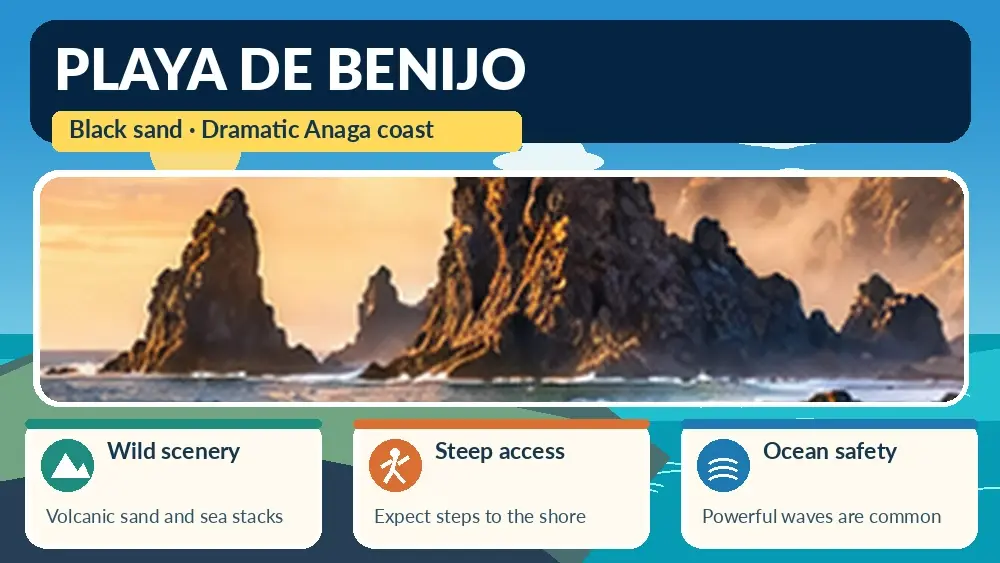
    The official Tenerife tourism information describes Benijo as an isolated beach near Taganana, around 300 metres long, reached on foot by a path with stairs. It also warns that the waves can be strong. I treat that warning as central to the visit, not as a footnote. On days with rough sea conditions, I am perfectly happy to enjoy Benijo from the shore without swimming. You can check the official Playa de Benijo information before setting out.

    How to get to Benijo

    By car, the route through Anaga is scenic but slower than the map distance suggests. The roads twist around steep slopes, visibility changes with cloud and there are sections where patient driving matters more than speed. If I am coming from Santa Cruz or La Laguna, I build generous time into the day and avoid creating a schedule that depends on arriving at an exact minute.

    Parking around Benijo is limited. The official tourism page indicates fewer than 50 parking spaces, which is another reason I avoid arriving at the busiest part of a sunny weekend afternoon. If the closest spaces are full, I do not improvise by blocking narrow roads or entrances. I would rather park legally farther away if possible, change the order of the day or return at another time.

    Public transport can also work, but I check the current TITSA route and timetable immediately before travelling because rural services are less frequent than buses in the main resorts. A bus-based Anaga day is entirely possible if you choose a small number of stops. For the wider network, see my Tenerife without a car guide.

    The stairs and beach access

    The final access is on foot using a path and stairs. That matters if you are travelling with a stroller, have reduced mobility or simply expect a flat promenade like the beaches of the south. Benijo is not the place I would choose for a visitor who needs step-free access. Good footwear is useful even if the plan is just to spend time on the sand, particularly if the steps are damp or you continue to viewpoints and village streets afterward.

    I also keep the return climb in mind. Descending to the beach can feel easy when you are excited by the view; climbing back after sunset, carrying beach gear, is another matter. I bring only what I really need and make sure I have enough daylight to return comfortably.

    Can you swim at Playa de Benijo?

    Sometimes people do, but I would never promise safe swimming conditions. The beach is exposed to Atlantic swell and currents, and the official guidance specifically urges caution because the waves are often strong. I judge the sea on the day, follow any local warnings and stay out when the conditions look uncertain. A beautiful beach does not become less worthwhile just because I decide not to enter the water.

    For families with young children, I generally prefer a sheltered beach with easier access and lifeguard infrastructure. My best beaches in Tenerife guide includes more practical options for swimming days. Benijo works better as a landscape experience for many families, with the beach visit kept short and flexible.

    Sunset at Benijo

    Sunset is the moment most people imagine when they see photographs of Benijo, and it can be magnificent. The mistake is to focus only on the sunset itself and forget the road out. Mountain roads in Anaga become more demanding after dark, especially if cloud or mist forms higher up. If I stay for the last light, I make sure the driver is comfortable with the return journey and I do not drink alcohol with dinner before driving.

    I arrive early enough to walk down without rushing, choose a safe place well above the reach of unexpected waves and keep an eye on the tide. I also bring a light layer. Even after a warm afternoon, wind and humidity can make the coast feel cooler once the sun disappears.

    Taganana, Almáciga and Roque de las Bodegas

    Benijo makes more sense when you treat it as part of the Taganana coast. Taganana itself has a traditional village atmosphere tucked into the Anaga landscape, while the coast around Roque de las Bodegas and Almáciga offers other views, beaches and places to eat. I like to stop for a simple Canarian lunch or fish rather than racing directly from one photo stop to another.

    If I have a full day, I might start with a forest viewpoint in the higher part of Anaga, descend toward Taganana, have lunch near the coast and finish at Benijo later in the afternoon. That route shows why Tenerife can feel like several islands in one: laurel forest, steep ravines, tiny villages and black-sand coastline all appear within a relatively small area.

    What to bring

    • Supportive shoes for the stairs and uneven surfaces.
    • Water, sunscreen and a hat even when the mountains are cloudy.
    • A light layer for wind or cooler conditions after sunset.
    • Only a small amount of beach gear; the return climb is easier when you travel light.
    • A charged phone, while remembering that mountain coverage can be less reliable than in resort areas.

    Best time of day

    There is no single perfect time. Morning can be quieter and makes the return drive simple. Late afternoon gives better light and the possibility of sunset. Midday works if the sea is calm and you are already touring the coast, but the harsh light can flatten the landscape in photographs and parking may be more difficult. I choose according to the weather and the rest of my Anaga plan rather than chasing a fixed formula.

    Season also changes the character of the beach. Tenerife is a year-round destination, but ocean conditions vary from day to day. My best time to visit Tenerife guide explains the island’s broader seasonal differences without pretending that any month guarantees calm seas.

    Where to stay for Benijo

    If Benijo and Anaga are priorities, I would consider Santa Cruz or La Laguna rather than the far southwest. You gain easier access to the northeast and can combine the coast with the capital, UNESCO streets and mountain walks. Travellers who want nightlife and resort beaches can still visit from Costa Adeje, but the driving day is much longer.

    You can compare accommodation across Tenerife and then check the exact map position rather than booking by town name alone. In mountain areas, a property that looks close in a straight line may involve a surprisingly long road journey.

    A realistic Benijo day plan

    My preferred plan is intentionally simple. I leave after breakfast, stop at one or two Anaga viewpoints, descend toward Taganana, have lunch, visit the coast and keep Benijo as the final major stop. If the sea is rough, I photograph and walk instead of swimming. If parking is impossible, I do not let that ruin the day; the Anaga coast has plenty of other beautiful places.

    I also resist the temptation to combine Benijo with Teide or the far west on the same day. Tenerife may look compact on a map, but mountain roads turn ambitious itineraries into hours behind the wheel. Benijo deserves a day that feels slow enough to notice the landscape.

    Frequently asked questions

    Is Playa de Benijo suitable for children?

    The scenery can be wonderful for a family outing, but the stairs, exposed water and limited services make it less convenient than Tenerife’s main family beaches. I would supervise children very closely and choose another beach for easy swimming.

    Is Benijo a nudist beach?

    The official tourism information notes that the beach is frequented by naturists. In practice, visitors should simply respect other beach users and the relaxed character of the place.

    Are there restaurants nearby?

    Yes, there are places to eat in the surrounding coastal area and around Taganana. Opening days and hours can vary, so I do not build a late remote meal around one specific restaurant without checking first.

    Do I need a full day?

    Not for the beach alone, but I strongly prefer a full Anaga day because the forest, viewpoints and villages are part of what makes Benijo memorable.

    What is the biggest mistake?

    Treating Benijo like a normal resort beach. The best visit comes from accepting limited parking, stairs, changing ocean conditions and a slower mountain-road journey.

  • Best Beaches in Tenerife: From Easy Family Bays to Wild Volcanic Shores

    Best Beaches in Tenerife: From Easy Family Bays to Wild Volcanic Shores

    Tenerife’s beaches are more varied than the classic image of a Canary Islands resort suggests. You can spend the morning on a pale, sheltered beach with sunbeds and cafés, then drive to a black-sand bay framed by volcanic cliffs or a windy stretch of coast where surfers and kitesurfers dominate the horizon. That variety is why I do not rank one beach as the single best on the island; I choose according to the kind of day I want.

    This guide focuses on beaches that are useful for real trip planning: family-friendly choices, scenic black-sand beaches, surf areas, beaches near major resorts and places that combine well with sightseeing. Always check local conditions and beach flags before swimming because Atlantic waves and currents can change quickly.

    Playa del Duque: polished and convenient

    Playa del Duque in Costa Adeje is one of the easiest beaches for travellers who want comfort. The surrounding area has hotels, restaurants, a promenade and extensive tourist services. The beach is attractive, organised and straightforward for a resort day, which is why it works especially well for couples and families who do not want complicated logistics.

    It is not the beach I would choose for a wild or local atmosphere. Its strength is convenience. If you are staying in Costa Adeje, I would use Playa del Duque for a relaxed half-day and save the rental car for beaches that are genuinely different rather than driving elsewhere simply because another name appears on a top-ten list.

    Playa de Las Vistas: one of the easiest family options

    Between Los Cristianos and Playa de las Américas, Las Vistas is broad, central and supported by a long promenade. It is useful for families because food, toilets and other services are close, and you can walk to a large range of accommodation. Conditions still vary, but it is a much simpler proposition than a remote natural beach.

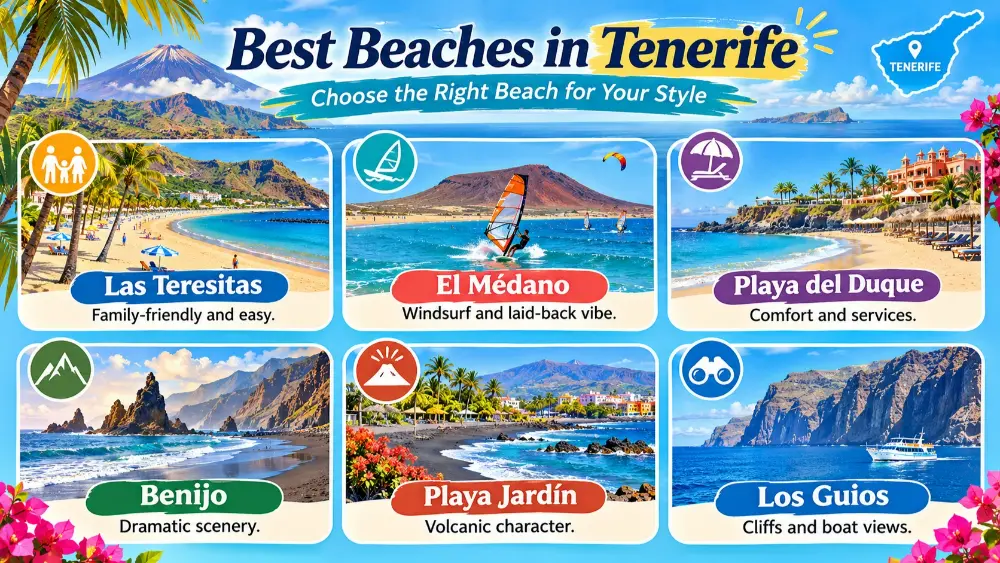
    Illustrated guide: Best Beaches in Tenerife, with practical visitor tips
    Illustrated guide: Best Beaches in Tenerife.

    I like Las Vistas on days when the goal is not adventure but an uncomplicated swim, lunch and walk. If you have children, that kind of easy day becomes more valuable after a long Teide or Anaga excursion.

    Playa de Las Teresitas: the classic beach near Santa Cruz

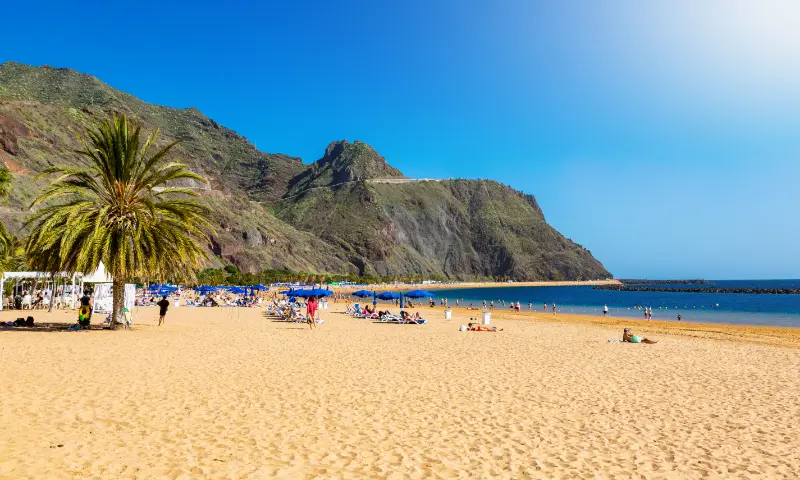
    Las Teresitas is one of Tenerife’s most recognisable beaches, a long arc of light-coloured sand near the village of San Andrés, northeast of Santa Cruz. It is a natural addition to a day in the capital or a scenic drive toward Anaga. The bay setting and mountain backdrop make it visually very different from the southern resort beaches.

    Because it is popular with residents as well as visitors, weekends and good-weather days can be busy. I prefer arriving earlier, then combining the beach with lunch in San Andrés or continuing into the northeast if the weather is suitable.

    El Médano and Playa de la Tejita: for wind, space and Montaña Roja

    El Médano is one of Tenerife’s best-known wind-sports areas. The beach merges with a relaxed town atmosphere, and the view toward Montaña Roja gives the coast a distinctive identity. It is a good place to watch windsurfing or kitesurfing even if you are not participating.

    On the other side of Montaña Roja, Playa de la Tejita feels more open and natural. Wind can be strong, and there is less resort-style shelter, so I see it as a beach for travellers who enjoy space and landscape rather than guaranteed calm water. Respect protected areas around the natural reserve and avoid leaving marked paths where restrictions apply.

    Playa Jardín and the Puerto de la Cruz coast

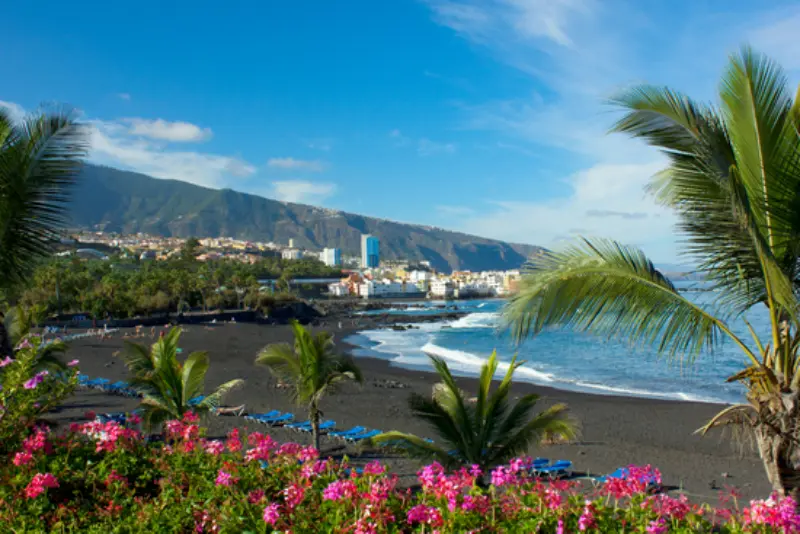
    The northern coast has a darker, more volcanic character. Beaches around Puerto de la Cruz are useful if you are staying in the north, but I choose them with conditions in mind. Waves can be stronger than at sheltered southern beaches. The value of the area is the combination: black sand, gardens, promenades, town life and easy access to La Orotava and other northern sights.

    Playa Jardin Puerto De La Cruz Tenerife

    A north-coast beach day also works well when the south is extremely hot or when you want a break from resort scenery. Just remember that the weather can be cloudier on the northern side even when the south is bright.

    Playa de Benijo: scenery first

    Benijo, beneath the Anaga mountains, is one of the most dramatic beaches on Tenerife. The attraction is the setting: dark sand, powerful Atlantic water and offshore rock formations. I treat it primarily as a landscape stop rather than promising myself a swim. Sea conditions can be serious, access involves steps, and the road through Anaga deserves time and concentration.

    For me, Benijo fits best into an Anaga day rather than a beach-hopping schedule. Arrive with proper footwear, check daylight, and never enter the water just because other people are swimming. The safest decision can be to enjoy the view from shore.

    Playa de Abama: beautiful but access needs planning

    The small beach below the Abama resort area is known for sheltered water and a photogenic setting. Public access to beaches in Spain is not the same as having easy resort-style access to every facility, so understand the walking route, parking situation and practical limitations before making a special trip. It can be pleasant, but I would not cross the island only for one small beach if your itinerary is already full.

    Black sand or golden sand?

    Tenerife’s volcanic beaches are part of the island’s identity. Black sand can become extremely hot under strong sun, so footwear is useful. Lighter beaches may feel more familiar, but colour tells you little about swimming conditions. Exposure, swell, wind, tide and local protection matter much more than sand colour.

    If you want…Try…Why
    Resort comfortPlaya del DuqueServices and promenade
    Family convenienceLas VistasCentral and easy facilities
    Scenery near Santa CruzLas TeresitasMountain-backed bay
    Wind sportsEl MédanoConsistent active atmosphere
    Wild volcanic sceneryBenijoDramatic Anaga setting
    North-coast characterPuerto de la Cruz beachesBlack sand and town access

    Natural pools: an alternative to the beach

    Tenerife also has natural swimming pools and volcanic bathing areas, especially around the north and west. Garachico is the most famous example, but access can be restricted when the sea is rough. These places should never be treated like ordinary hotel pools. Waves can wash across platforms and conditions can change rapidly. Follow closures and local instructions.

    Natural pools are especially useful on a sightseeing day because you can combine a short swim with historic towns and viewpoints. I would not promise children a swim until I have seen the conditions in person.

    Beach safety in Tenerife

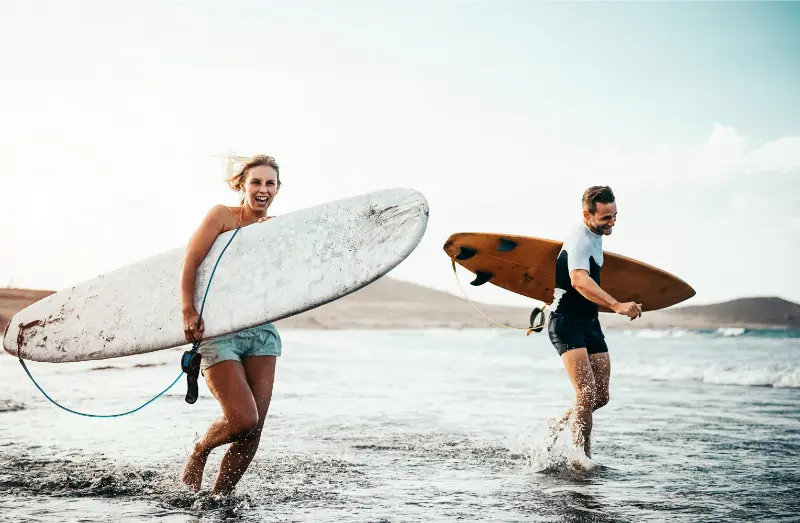
    The Atlantic deserves respect. Flags, lifeguard instructions, barriers and local warnings are more important than any recommendation in a travel guide. A red flag means do not enter the water. Even on a sunny day, swell can produce strong shore break or currents. Remote beaches may not have lifeguards at all.

    Surfers On A Tenerife Beach
    • Check the flag and observe the water before swimming.
    • Keep children within immediate reach, not just within sight.
    • Avoid rocky entries when waves are breaking.
    • Do not swim after drinking alcohol.
    • Protect feet from hot dark sand and sharp volcanic rock.
    • Use reef-safe habits and take all rubbish away from natural beaches.
    • If locals leave the water because conditions worsen, pay attention.

    Best beaches without a car

    If you do not have a car, the easiest strategy is to stay in a coastal area with several beaches connected by promenade or bus. Costa Adeje, Los Cristianos and Playa de las Américas are obvious choices. Las Teresitas is reachable from Santa Cruz by public transport, while El Médano is connected by bus routes but requires more planning depending on your starting point.

    TITSA covers the island extensively, but a beach day becomes less relaxing if you are watching multiple transfers. Use the official journey planner and choose one good beach rather than trying to collect three in a day. My transport guide explains how I plan car-free days.

    Beaches with children

    For family days I prioritise easy access, toilets, food, shade options and lifeguard presence over dramatic scenery. Las Vistas and the main Costa Adeje beaches are usually more practical than remote northern coves. Even then, calm-looking water can change. Small children do not need a long list of beaches; they need one safe, convenient place where the adults are not stressed.

    For a broader family plan, see Tenerife with kids.

    When to go to the beach

    Tenerife can support beach days throughout much of the year, but the best coast may change with wind and cloud. The south generally receives more sunshine, while the north can be greener and cloudier. In summer, sand and exposed promenades can be very hot at midday. In winter, the sun may feel warm while the ocean remains refreshing and mountain air is much colder.

    That is why I keep beach plans flexible. A cloudy morning in the north can become a sunny afternoon in the south, and a windy day at El Médano may feel much calmer in a sheltered bay elsewhere. See my weather and best-time guide for the seasonal picture.

    My beach-planning rule

    I would choose two or three beaches for a week-long holiday, not ten. Pick one convenient beach near your accommodation, one beach that offers a completely different landscape and perhaps one that pairs naturally with sightseeing. This reduces driving, parking and the temptation to judge each place after twenty hurried minutes.

    If you stay in the south, a balanced combination could be Playa del Duque or Las Vistas for convenience, Las Teresitas on a Santa Cruz/Anaga day and Benijo purely for scenery if sea conditions and daylight are appropriate. That gives you three different sides of Tenerife’s coast without turning the holiday into a beach checklist.