Category: Where to Stay

Area-by-area accommodation advice for choosing the best Tenerife base for your travel style.

  • Tenerife Honeymoon Guide: Romantic Areas, Hotels, Beaches and Couple Experiences

    Tenerife Honeymoon Guide: Romantic Areas, Hotels, Beaches and Couple Experiences

    Tenerife Honeymoon Guide is the kind of practical Tenerife topic that can change the shape of an entire trip. I prefer to make the key decisions before arrival, then keep the daily plan flexible enough for weather, local rules and the way the island actually feels once I am there.

    This guide separates stable planning advice from details that can change. Where rules, access or services matter, I rely on official Tenerife or Canary Islands information and recommend checking again shortly before travel. I do not invent opening hours, prices or permissions when the current source does not guarantee them.

    At a glance

    TopicPlanning a tenerife honeymoon that balances romantic downtime with the island’s landscapes
    Best planning approachDecide the non-negotiables early, verify current rules, and leave room for Tenerife’s microclimates and local conditions.
    Who this guide helpsFirst-time visitors, repeat travellers and anyone whose accommodation, food, transport or trip style depends on this topic.
    My ruleUse official information for rules and safety; use travel advice for route order, convenience and trade-offs.

    What current official information confirms

    • Turismo de Tenerife promotes a dedicated luxury offer covering high-end hotels, villas, wellness, gastronomy and exclusive experiences.
    • The island’s tourism strategy has explicitly treated weddings, honeymoons and romantic breaks as a distinct visitor segment.
    • Tenerife offers very different honeymoon settings within short distances: dry southern resorts, volcanic highlands, green northern towns and dramatic western sunsets.
    • Two airports make it practical to choose arrival and departure logistics around the part of the island where the couple stays.
    • Whale watching, stargazing, spa time, fine dining, scenic drives and boutique heritage stays can all fit a honeymoon without requiring a beach-resort-only itinerary.

    Choose the honeymoon mood before choosing the hotel

    The most useful question is not ‘What is the best honeymoon hotel?’ but ‘What do we want the days to feel like?’. Costa Adeje works for polished resorts, spas and easy beach time. La Caleta is quieter and food-focused. The Abama/Guía de Isora area suits privacy and sunsets. Puerto de la Cruz or Garachico suits couples who prefer character, gardens and historic streets over a large resort complex.
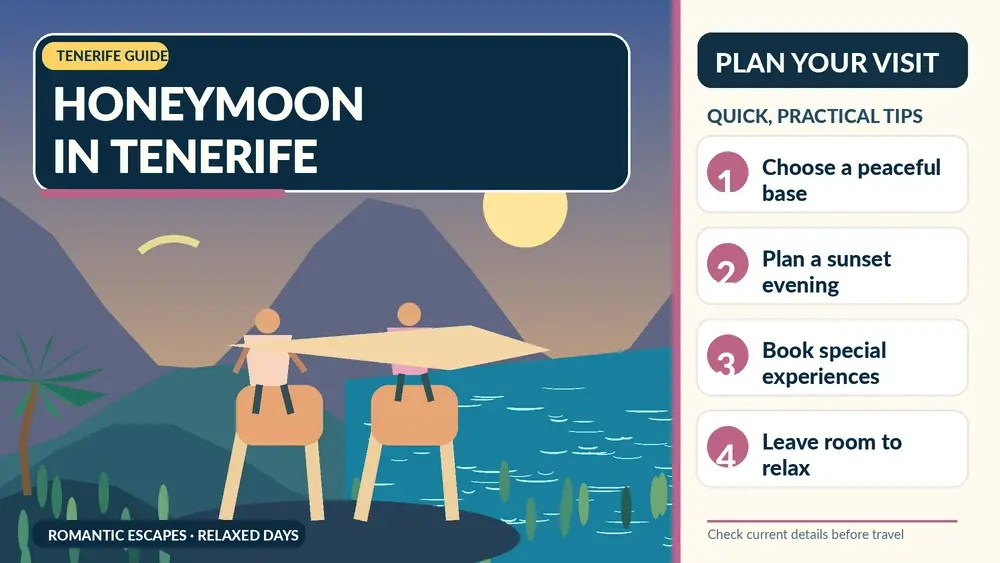
    Illustrated guide: Tenerife Honeymoon, with practical visitor tips
    Illustrated guide: Tenerife Honeymoon.

    Once the mood is clear, hotel comparison becomes much easier. I prioritise room privacy, balcony or terrace, noise level, pool style and walking access to dinner. A honeymoon suite is less valuable if the property’s location forces a taxi every evening for the experiences we actually want.

    A honeymoon needs empty time

    I would never schedule Tenerife as a checklist of attractions from 08:00 to 20:00 every day. The island has enough variety that it is tempting to do Teide, Anaga, Masca, whale watching and La Gomera in one week. That can turn a honeymoon into a logistics exercise.

    My preferred rhythm alternates a bigger experience with a slower day. After Teide and stargazing, I keep the next morning relaxed. After a boat trip, I leave the evening flexible. This gives weather-dependent activities room to move and makes the expensive hotel or villa part of the holiday rather than only a place to sleep.

    The romantic experiences that feel specifically Tenerife

    Sunset with La Gomera on the horizon, high-altitude stargazing near Teide, a quiet dinner in La Caleta, a walk through La Orotava, a boat trip to see cetaceans responsibly, and a drive through volcanic landscapes all feel tied to the island. I choose these over generic ‘romance packages’ that could happen anywhere.

    I also like one food-focused experience: a wine tasting, a special Canarian dinner or a market-and-village day. Shared memories become more distinctive when the place itself is part of them.

    South versus north for couples

    The south is easier for reliable sun, resort facilities and ocean-facing evenings. The north is greener, more atmospheric and often better for historic-town wandering. A split stay can work well on a 7- to 10-night honeymoon: four or five nights in the south and two or three in the north, or the reverse depending on priorities.
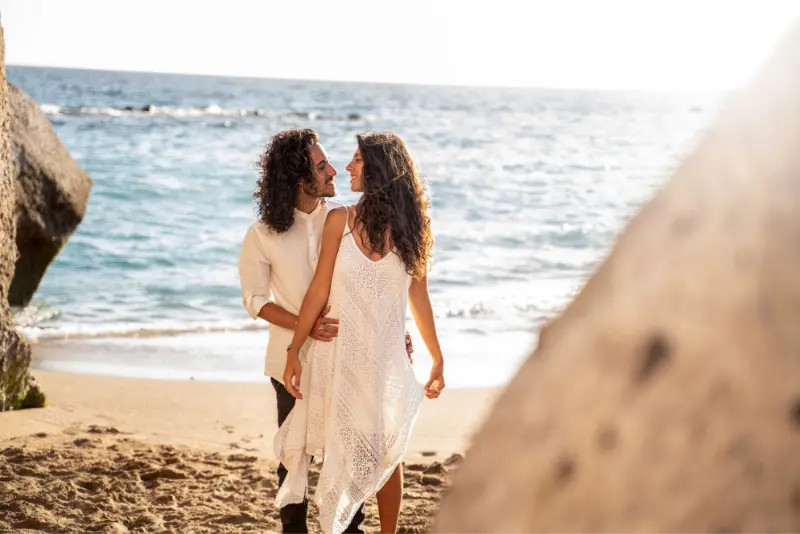
    Couple On Holiday In Tenerife

    I would not split a short four-night trip. Packing and transfer time can consume the benefit. For a short honeymoon, I choose one base and use a private tour or rental car for the other side of the island.

    How much should I pre-book?

    I reserve the room, any high-demand Teide access or premium tour, and one or two important dinners. I leave the rest open. Weather can alter mountain plans, and couples often discover they want more pool or beach time than expected after the wedding period.

    I also check cancellation terms carefully. Honeymoon trips often involve more expensive rooms and experiences, so flexible conditions can be worth paying a little more for.

    Small details that improve the trip more than expensive upgrades

    A well-timed airport transfer, a room away from nightlife, one sunset dinner booked for the right time, a late checkout if the flight is evening, and a realistic driving day can improve the honeymoon more than a decorative package in the room.

    I tell the hotel it is a honeymoon, but I never plan around promised freebies. If an upgrade appears, it is a bonus. I book the room category I would be happy to keep.

    Useful related guides already on this site

    I would plan this topic together with Tenerife for Couples, Costa Adeje Travel Guide, Stargazing in Tenerife. For a broader second layer, I also use Whale Watching in Tenerife. Those pages cover the transport, location or activity details that would make this article unnecessarily repetitive.

    How I turn this advice into an actual trip

    I start with the parts that are difficult to change: airport, accommodation area, any permit or reservation, and the days that depend on weather. Then I place planning a Tenerife honeymoon that balances romantic downtime with the island’s landscapes inside that framework instead of allowing one concern to dominate the whole holiday. Tenerife is compact, but mountain roads, microclimates and busy resort zones make over-planning surprisingly easy.

    I keep one flexible half-day in every week. If Teide is cloudy, a trail closes, the sea is rough or a restaurant cannot accommodate what I need, I want a backup that still feels worthwhile. Santa Cruz, La Laguna, Puerto de la Cruz, local markets, museums and coastal promenades can all work as alternatives depending on the base.
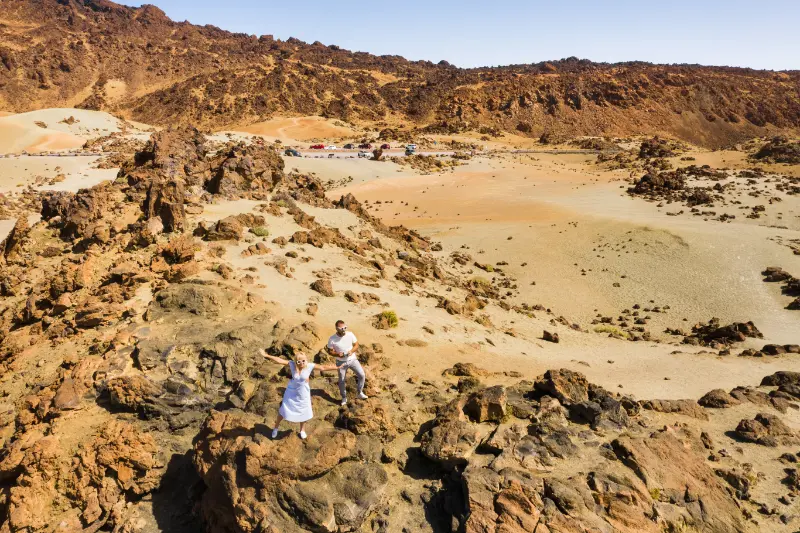
    Couple At Teide Volcano Crater Tenerife

    Choosing where to stay

    Location often solves more problems than an extra hotel star. The south gives the widest resort infrastructure and generally drier coastal weather; the north gives greener landscapes and easier access to many historic towns; Santa Cruz and La Laguna work well for urban travellers. I compare current accommodation on Booking.com, checking the exact map position rather than relying on the destination name.

    I read recent reviews for the detail that matters to this specific trip: parking, dietary handling, pet policy, noise, accessibility, kitchen facilities or transfer convenience. A high average score does not answer those questions.

    Practical habits I use on Tenerife

    I save official pages offline or bookmark them before a mountain or rural day. Mobile coverage is generally good in populated areas, but I do not want a rule, reservation or trail map to depend on perfect reception. I also carry water, sun protection and a light layer because the island can change temperature quickly with altitude.

    I avoid building a schedule around exact driving times from a map. Parking, viewpoints, buses, roadworks and slow mountain traffic can add time. If I have a fixed booking, I arrive early and make the stop before it optional rather than after it.

    How I handle information that changes

    Travel blogs are good for explaining choices; they are not the final authority for a current permit, temporary closure, health notice, hotel inclusion or municipal rule. I use the official source linked below close to the travel date and follow on-site instructions. This is especially important for protected natural areas, water, animals, dietary safety and camping.

    I also distinguish between a documented rule and my own preference. When I recommend a route, base or meal strategy, that is planning advice. When I state that a reservation is required or a facility has specific services, that should come from the current official information.

    Activities and tours

    I use organised tours selectively—mainly when they solve transport, permits, guiding or a safety/logistics problem. I compare current options below, but I do not book an excursion simply to fill every day.

    Frequently asked questions

    Is Tenerife good for a honeymoon?

    Yes. It combines resort comfort with Teide, volcanic coast, historic towns, whale watching, food and year-round mild coastal weather.

    Which area is most romantic?

    Costa Adeje and La Caleta are easy for polished beach-and-dining stays; Guía de Isora suits privacy, while Garachico and Puerto de la Cruz offer a more historic northern atmosphere.

    Should we split the honeymoon between north and south?

    For 7–10 nights it can work well. For a shorter stay, one base plus day trips is usually more relaxing.

    What should we book early?

    Book the accommodation, any permit- or capacity-limited Teide plans, premium boat/private tours and the few dinners that really matter to you.

    Official information to check before travelling

    For the current rules or background used in this article, I check the relevant official Tenerife or Canary Islands information. I would recheck it close to departure because access conditions, hotel products, local regulations and public notices can change after an article is published.
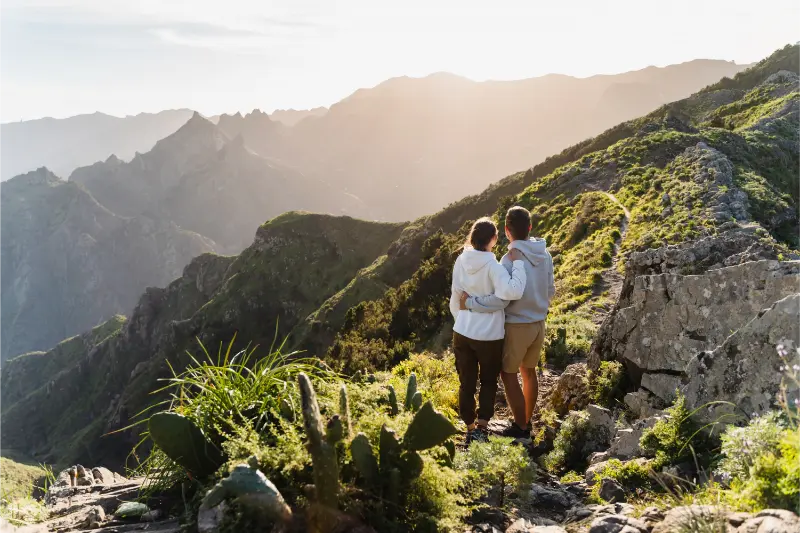
    Couple Exploring Tenerife

    Final thoughts

    Tenerife Honeymoon Guide is most useful when it helps me make a few better decisions rather than adding another layer of complexity. Tenerife rewards flexible planning: choose the right base, respect current local rules, give mountain and ocean conditions room to change, and leave enough unscheduled time to enjoy the island rather than only manage it.

    That is the approach I would use for planning a Tenerife honeymoon that balances romantic downtime with the island’s landscapes: verify the facts that matter, keep the itinerary realistic and let the rest of the holiday stay pleasantly adaptable.
  • Where to Stay in Tenerife: Best Areas for Every Type of Trip

    Where to Stay in Tenerife: Best Areas for Every Type of Trip

    Where you stay can completely change the feel of a Tenerife holiday. The island is compact compared with many destinations, but the mountains, winding roads and different microclimates mean that two hotels only 40 kilometres apart can deliver very different trips. I would choose the area before choosing the property: first decide whether you want guaranteed resort convenience, nightlife, family beaches, local atmosphere, a greener climate or easy access to hiking.

    This guide compares the main bases I would consider for different types of travellers. There is no single ‘best’ place to stay in Tenerife. Costa Adeje may be ideal for one week with children, Puerto de la Cruz can be far more rewarding for a couple who wants traditional towns and northern scenery, while El Médano appeals to travellers who prefer a breezy, low-key beach town.

    Quick comparison: the main areas

    AreaBest forWatch for
    Costa AdejeFirst-timers, couples, familiesHigher prices in prime beachfront zones
    Los CristianosWalkability, families, ferriesBusy central areas
    Playa de las AméricasNightlife, entertainmentLess quiet at night
    Puerto de la CruzNorth coast, culture, sceneryCloudier than the south at times
    El MédanoSurf, relaxed atmosphereWind is part of the experience
    Santa Cruz / La LagunaCity breaks, cultureNot a classic beach-resort base

    Costa Adeje: the easiest all-round base

    For many first-time visitors, Costa Adeje is the most straightforward base. It has a long seafront, a wide range of hotels and apartments, restaurants at different price levels, beaches with services and easy access to excursions. Playa del Duque feels more polished, while areas closer to Puerto Colón are busier and useful for boat trips. Families appreciate the practical infrastructure; couples can choose quieter, higher-end properties; and first-time visitors rarely struggle to find what they need.

    The main compromise is that Costa Adeje can feel like a destination designed around tourism rather than everyday Canarian life. That is not necessarily negative, but I would use it as a comfortable base and deliberately plan days in Teide, Anaga, La Laguna, Garachico or the Orotava Valley. Also check the elevation of your accommodation. Some hotels and apartments sit well above the waterfront, making the return walk much steeper than the map suggests.

    Illustrated guide: Where to Stay in Tenerife, with practical visitor tips
    Illustrated guide: Where to Stay in Tenerife.

    Los Cristianos: practical and walkable

    Los Cristianos has a more established town feel than parts of the neighbouring resort strip. The harbour is active, ferries leave for other islands, the promenade links into the wider southern coast and there are plenty of restaurants and everyday services. I like it for travellers who want to do a lot on foot and for families who value a relatively simple day-to-day routine.

    It can be crowded, and the atmosphere around the centre is busy rather than secluded. If peace is a priority, look at the exact street and distance from nightlife or traffic. Los Cristianos is particularly useful when your itinerary includes a ferry day to La Gomera, because you can avoid an early cross-island transfer.

    Playa de las Américas: nightlife and constant activity

    Playa de las Américas is best when you want energy: bars, restaurants, entertainment, shopping and a busy seafront. It can suit younger travellers, groups and anyone who prefers to have something happening every evening. The resort also connects on foot with Los Cristianos and Costa Adeje, so you can move through a large stretch of the southern coast without a car.

    I would be more selective here if travelling with small children or if sleep quality is a priority. A quiet room in the right part of the resort can work perfectly, but booking solely by price can put you closer to late-night venues than expected. Read the most recent accommodation reviews with location in mind, not just the overall score.

    Tenerife Resort And Mountain Panorama

    Puerto de la Cruz: my pick for a greener, more traditional feel

    Puerto de la Cruz is a strong choice if you want the north’s landscapes and culture to be part of everyday life. It has a seafront, black-sand beaches, gardens, plazas and easy access to La Orotava, Icod and the northern coast. The town has a long tourism history but feels different from the purpose-built south. For travellers who enjoy cafés, walking streets and day trips through older towns, it can be an excellent base.

    The trade-off is weather. The north is greener precisely because it receives more humidity and cloud than the south. You can still have beautiful sunny days, but travellers whose top priority is lying in the sun every afternoon may prefer the south. I see Puerto de la Cruz as a base for exploring, not just resort living.

    El Médano: relaxed, windy and active

    El Médano has a more casual atmosphere, a beach-town centre and a strong wind- and water-sports identity. It is close to Tenerife South Airport, yet feels less like a large resort complex. The beach and promenade are easy to use, and the landscape around Montaña Roja gives the area a distinctive setting.

    The wind is not a minor detail; it is one of the reasons people come. If you love kitesurfing or windsurfing, that can be a major advantage. If you dream of completely still beach days, it may be a disadvantage. I would choose El Médano for independent travellers, active couples and repeat visitors who want a different southern base.

    Los Gigantes and Puerto de Santiago: scenery and a slower west-coast rhythm

    The west coast around Los Gigantes offers dramatic cliff views, boat-trip access and a quieter atmosphere than the largest southern resorts. It is appealing for couples and travellers who expect to spend more time around the west of Tenerife. Sunsets can be excellent, and the cliffs give even ordinary seafront walks a spectacular background.

    The location is less central for eastern and northeastern sightseeing. If your plan includes several days in Anaga, Santa Cruz or La Laguna, you will spend more time driving. For a slow holiday focused on the coast, Teno and boat excursions, however, it makes sense.

    Santa Cruz and La Laguna: best for an urban Tenerife trip

    Santa Cruz is the island capital and works well for travellers interested in shopping, museums, city life and easy access to Playa de Las Teresitas. La Laguna, higher and cooler, is one of Tenerife’s most attractive historic environments and a natural gateway to Anaga. These areas are less obvious for a classic resort holiday but can be excellent for a short city-focused stay or a split trip.

    I especially like the idea of spending a few nights in the south and a few nights around La Laguna or the north on a longer trip. A split stay reduces repeated cross-island driving and lets you experience the climate and evening atmosphere of two distinct parts of Tenerife.

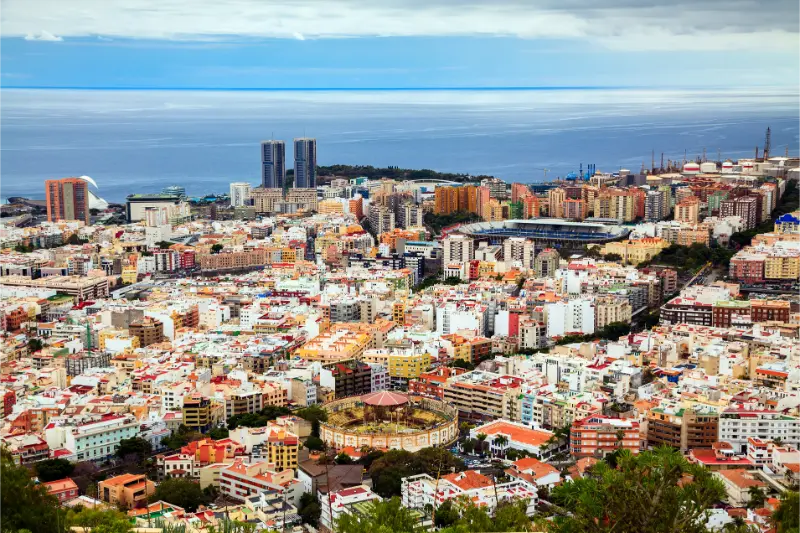
    Aerial panorama of the city and Atlantic waterfront in Santa Cruz de Tenerife

    North or south Tenerife?

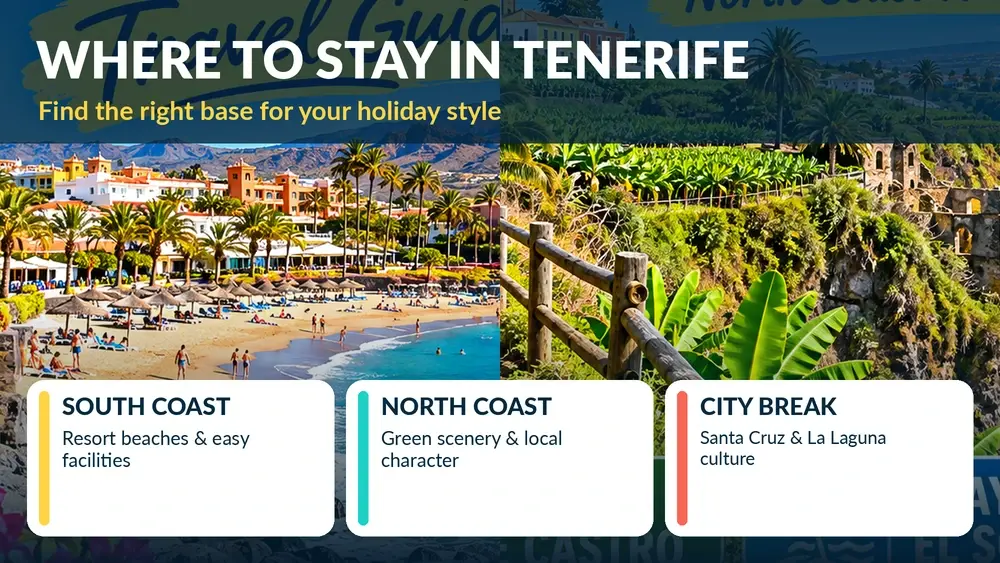
    The decision is easier if you identify your non-negotiable priority. Choose the south for more consistent sunshine, broad tourist infrastructure, family attractions and resort convenience. Choose the north for greener landscapes, traditional towns, food, gardens and easier access to many northern sights. Neither side is objectively better; they are different tools for different trips.

    The official tourism board highlights the same climatic contrast: the south generally has more sunshine and a drier environment, while the north receives more humidity and supports lush vegetation. That difference is one of the island’s strengths, not a flaw.

    Do you need a car where you stay?

    If you stay in Costa Adeje, Los Cristianos or Playa de las Américas and plan mostly organised excursions, you can manage without a car. TITSA buses connect the major tourist centres, airports and towns. A car becomes more valuable when you want sunrise viewpoints, remote trailheads, flexible Teide timing or a day that combines small villages and natural areas.

    Parking should be part of the accommodation decision. In older towns and dense resort zones, free street parking can be competitive. A hotel with parking may save more time than a cheaper room several streets away. See the full Tenerife transport guide before deciding whether to rent for the whole trip or only selected days.

    Where I would stay for different travel styles

    • First visit: Costa Adeje or Los Cristianos for simplicity.
    • Families: Costa Adeje for services and easy activity days; Los Cristianos for walkability.
    • Couples: Costa Adeje for comfort, Puerto de la Cruz for atmosphere, Los Gigantes for scenery.
    • Nightlife: Playa de las Américas.
    • Hiking and nature: La Laguna, north Tenerife or a split stay.
    • Surf and wind sports: El Médano.
    • Local culture: La Laguna, Santa Cruz, Puerto de la Cruz or La Orotava area.
    • Without a car: choose a central resort or town with strong bus connections and walkable services.

    How I choose an actual hotel or apartment

    I start with the map, not the photo gallery. I check walking distance to the beach or town centre, road gradient, bus stops, parking, supermarket access and the likely evening noise. Then I compare recent reviews for recurring problems: construction, poor soundproofing, difficult parking or long waits for lifts in large resort hotels. Only after that do I compare pools, breakfast and room design.

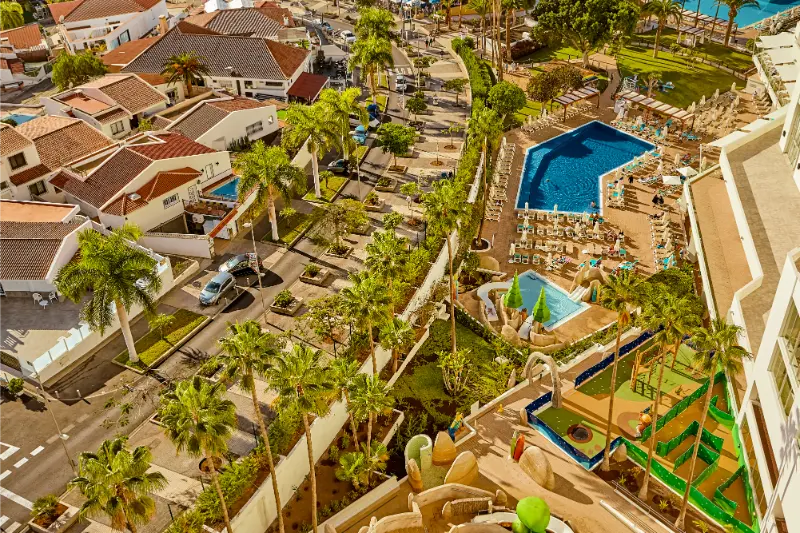
    Aerial View Of Tenerife Seaside Resort

    For current availability you can compare Tenerife hotels and apartments. Filter by neighbourhood rather than simply by ‘Tenerife’, because island-wide search results can mix properties that are more than an hour apart by road.

    When a split stay is worth it

    A split stay is useful on trips of ten nights or more. For example, five or six nights in Costa Adeje followed by four nights in Puerto de la Cruz or La Laguna creates two different holidays and shortens several sightseeing days. It is less useful on a five-night trip because moving accommodation consumes time and adds packing friction.

    If you are following my 7-day itinerary, I would usually keep one base. If you have two weeks, I would seriously consider north plus south. That is one of the easiest ways to appreciate how much variety Tenerife packs into a relatively small island.

    Final choice: match the base to the holiday you actually want

    The biggest accommodation mistake in Tenerife is booking an attractive hotel in an area that does not match your plans. A luxury resort can still be inconvenient if every place you want to visit is on the opposite side of the island. Start by writing down your top five experiences, place them on a map, and then choose the base that reduces unnecessary driving while giving you the atmosphere you want in the evening.

    For a first trip with mixed interests, I would keep the decision simple: Costa Adeje for easy resort comfort, Los Cristianos for walkability, Puerto de la Cruz for northern character, and La Laguna for culture and nature access. From there, refine by budget, exact neighbourhood and transport plan.