Tag: windsurf Tenerife

  • Surfing in Tenerife: Best Areas, Beginner Lessons and Surf Etiquette

    Surfing in Tenerife: Best Areas, Beginner Lessons and Surf Etiquette

    Tenerife works for surfers because the island has several very different coasts in a compact area. Atlantic swell reaches the north and northwest with power, reef breaks shape the south around Las Américas, and the wind around El Médano creates a separate world of windsurfing, wingfoil and kitesurf. That variety is exciting, but it also means “surf in Tenerife” is not one beginner-friendly experience.

    I match the break to my level, use a reputable school when learning and never paddle out simply because the beach looks busy with boards. Volcanic reefs, currents, local line-ups and rapidly changing swell deserve respect. This guide is about choosing the right area and planning a surf trip responsibly.

    Why Tenerife has year-round surf potential

    Tenerife’s official tourism site describes a wide range of surf and bodyboard spots with sand, rock and volcanic reef bottoms, and notes that the strongest waves are generally on the north and northwest coasts. The official surf and bodyboard page is a good starting point for current operators and locations.

    Year-round potential does not mean identical conditions every month. Swell direction, wind and local exposure change what works on a given day. I check a reliable forecast and, when I am not familiar with the island, ask a local school rather than choosing a break from a generic “best surf spots” list.
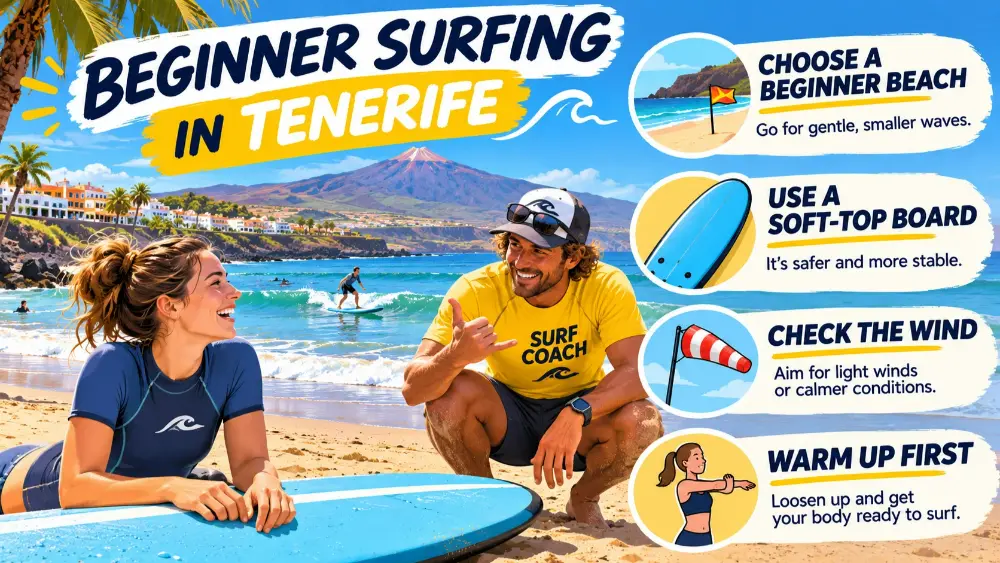
    Illustrated guide: Surfing in Tenerife, with practical visitor tips
    Illustrated guide: Surfing in Tenerife.

    Playa de las Américas: the famous south-coast surf zone

    Las Américas is the most convenient surf base for many visitors because breaks sit next to hotels, restaurants and surf shops. The reef setups can produce excellent waves, but some are not beginner spots. My Playa de las Américas guide explains the neighbourhood beyond surfing.

    As a beginner, I book a lesson and let the instructor choose the appropriate section and tide. I do not paddle into the main peak because I watched a tutorial online. Reef breaks punish mistakes more severely than a forgiving sandy beach, and local etiquette matters in crowded line-ups.

    El Médano: wind sports first, surf depending on conditions

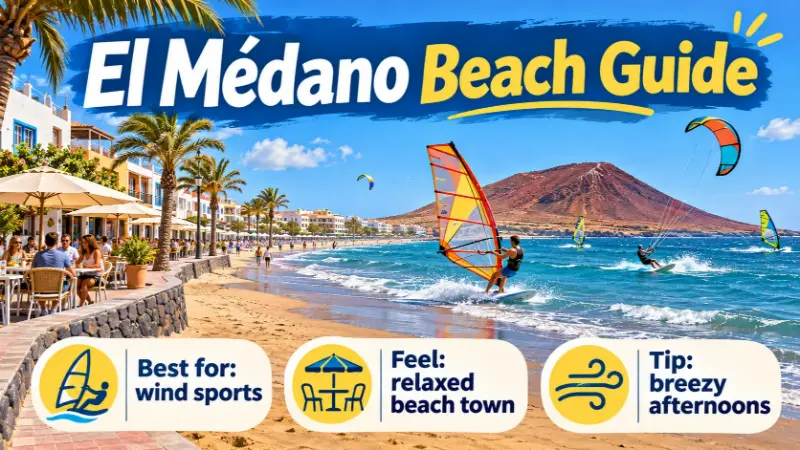
    El Médano is internationally known for windsurfing and other wind sports. Tenerife’s official tourism page notes that the beach’s outer section is especially suited to windsurf and kitesurf, while the area nearer the town is calmer and more family-oriented. The official site also highlights the approximately 300 windy days that support windsurf and wingfoil activity on the island.

    For classic surfing, conditions vary by spot and wind. I use my El Médano guide to understand the beach layout, then speak to a local school about the day. I do not treat windsurf, kitesurf and surf as interchangeable; each sport needs different space and conditions.
    Surfing In Tenerife

    Almáciga and the Anaga coast

    Almáciga is one of the northeast’s best-known surf beaches. The official beach description highlights strong waves throughout the year and notes that surf schools train there. The setting below Anaga is spectacular, but the remote feel should make me more cautious, not less.

    I combine the area with Taganana and watch conditions before entering. If I am a novice, I use an instructor who has chosen that beach for the day rather than assuming every school session happens there regardless of swell.

    El Socorro in Los Realejos

    El Socorro is a recognised north-coast surf beach with a strong local scene. It can suit intermediate and experienced surfers when conditions align, but the north coast is powerful and currents matter. I check flags and observe the line-up before entering.

    The beach works well as part of a Los Realejos day. My Los Realejos guide combines it with Rambla de Castro and the historic centre, which is useful if the surf becomes too large or messy.

    Beginner lessons: what I look for

    For a first lesson, I care more about instructor quality and beach selection than the cheapest price. I ask whether equipment, insurance and transport are included, how large the group will be and whether the school changes location based on conditions. A responsible school should be willing to cancel or relocate when the ocean is unsuitable.

    I tell the instructor honestly about swimming ability and previous experience. Surfing is safer and more enjoyable when the coach does not have to discover mid-session that a student is uncomfortable in deep water.

    Intermediate and advanced surfers

    Experienced surfers usually care about reef shape, swell direction, wind and crowd patterns. Tenerife offers serious waves, but visiting skill does not override local etiquette. I wait my turn, do not snake or drop in, and avoid paddling straight into a compact local peak without understanding how it works.

    Booties can be useful around volcanic rock, but protective gear does not remove the consequences of hitting reef. I inspect entry and exit points from shore first and ask locally if I am uncertain. On an unfamiliar reef, a conservative session is better than a heroic one.

    Surf etiquette in Tenerife

    The basic rules are universal: the surfer closest to the peak has priority, do not drop in, paddle around the breaking zone when possible, hold onto the board unless letting go is the safer emergency option, and apologise clearly if I make a mistake. Crowded holiday zones demand even more awareness because skill levels mix.

    I also respect people on the beach. I do not leave boards across promenades, rinse wax or gear where it creates a slippery surface, or change in doorways. Surf culture works best when the land side of the session is as considerate as the water side.

    Boards, wetsuits and water temperature

    The exact equipment depends on season, body temperature and session length. I ask the rental shop rather than packing based only on air temperature. Atlantic water can feel cool after an hour even when the beach is sunny, and wind increases heat loss.
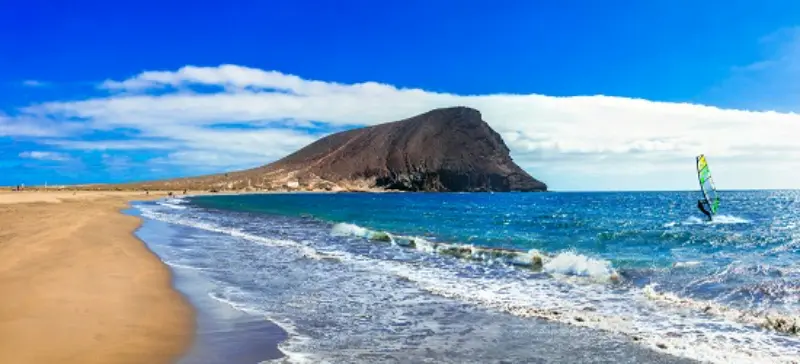
    El Medano Beach And Montana Roja Tenerife

    For a short holiday, renting is usually simpler than flying with a board unless I am travelling specifically to surf. A good rental shop can also swap board volume or type as conditions change, which is more useful than being locked into one board all week.

    Where to stay for a surf-focused trip

    Las Américas is the easiest base for walking to reef breaks and having full resort infrastructure. El Médano suits wind-sport travellers and has a relaxed town atmosphere. The north can work for experienced surfers who want access to several exposures, though a car becomes more useful. I compare accommodation in Tenerife’s surf areas after deciding which coast matches the trip.

    I do not choose a hotel based on a surf-map pin alone. Secure board storage, parking, early breakfast, drying space and access to food after a session can matter more than being 200 metres closer to one break.

    Surfing without a car

    Las Américas is easiest without a car because shops, schools and breaks are concentrated in a walkable area. El Médano is also manageable once I am there, with public transport connecting it to the wider south. My no-car Tenerife guide explains buses and travelcards.

    For north-coast surf exploration, a car adds flexibility, but I never use a vehicle to chase every forecast model across the island in one day. Surfing tired after hours of driving is not a good trade.

    Non-surf days are part of a good surf trip

    Wind can be wrong, swell can be too small or too large, and the safest decision may be not to surf. Tenerife makes that easy because I can switch to Teide, La Laguna, a wine day or a coastal walk. My best things to do guide gives alternatives across the island.

    I actually like leaving one or two non-surf days in the plan from the start. They let the body recover and prevent the holiday from feeling disappointing when the ocean refuses to follow the forecast.

    Montana Roja At El Medano Tenerife

    Frequently asked questions

    Is Tenerife good for beginner surfers?

    Yes, with the right school and conditions. I would not choose a reef break independently as a beginner; I let an instructor select the safest beach and session.

    Where is the best surf in Tenerife?

    Las Américas is the most famous south-coast zone, while the north and northwest receive stronger swell. Almáciga and El Socorro are well known, but the best spot changes with conditions and ability.

    Do I need a wetsuit?

    It depends on season, session duration and personal comfort. Rental shops can advise on current water conditions and provide suitable equipment.

    Can I surf in Tenerife all year?

    There is year-round potential, but swell and wind patterns vary. Not every break works every day.

    Is El Médano mainly for surfing?

    It is especially famous for windsurfing, kitesurfing and wingfoil. Classic surf conditions depend on the specific spot and day.

    How I read a surf forecast as a visitor

    I look at swell height, period, direction and wind together, then compare that information with a local break description or school advice. A large number alone does not tell me whether a beach will be suitable. Reef orientation, tide and wind can transform the same forecast into completely different conditions around the island.

    When I am unfamiliar with a spot, I watch for at least fifteen minutes before entering. I identify where people paddle out, where waves break, where current seems to move and where the safe exit is. That small pause often tells me more than another hour of online forecasting.
  • El Médano Tenerife Guide: Beaches, Windsurfing, Montaña Roja and Where to Stay

    El Médano Tenerife Guide: Beaches, Windsurfing, Montaña Roja and Where to Stay

    El Médano is the Tenerife beach town I recommend when someone wants the south without the polished resort feel of Costa Adeje. It is close to Tenerife South Airport, built around a walkable seafront and known for windsurfing and kitesurfing. The constant presence of boards, sails and wind gives it an identity that feels more active and informal than the large hotel zones farther west.

    The official tourism site describes the main El Médano beach as a 750-metre urban beach of fine grey sand, with the calmer section near the town suiting families and the farther section attracting wind and kite sports. Montaña Roja dominates the view and makes the coastline immediately recognisable.

    Who I think El Médano suits

    I would shortlist El Médano for independent travellers, surfers, wind- and kite-sport enthusiasts, couples who prefer apartments and cafés to large resorts, and repeat Tenerife visitors who want a different south-coast base. It can also work for families who understand that wind is part of the destination rather than an occasional inconvenience.

    I would not choose it for a traveller whose top priority is the calmest possible beach every day, a huge resort pool complex or luxury shopping. Costa Adeje is better for that. My where to stay in Tenerife guide compares the areas directly.

    Illustrated guide: El Médano Tenerife, with practical visitor tips
    Illustrated guide: El Médano Tenerife.

    The main beach and town waterfront

    The town end is the easiest place for a casual swim because cafés, restaurants and services are close. I like being able to leave the beach for lunch without changing the entire day’s plan. The atmosphere becomes sportier as you move along the coast, and on windy days the sky can fill with kites and sails.

    Even if I am not participating, I keep well clear of launch and landing areas used by kite- and windsurfers. Equipment moves quickly and riders need predictable space. A beach is shared infrastructure, and respecting sport zones is basic safety.

    Windsurfing and kitesurfing

    El Médano’s reputation is built on wind. Beginners should use a qualified local school rather than rent advanced equipment because the conditions, launch zones and right-of-way rules require instruction. Experienced riders still need current local information about wind direction, tides, restricted areas and beach zoning.

    I would never promise a specific wind strength months in advance. If watersports are the main reason for the trip, I plan a longer stay and accept that nature chooses the schedule. On lighter days I explore the town, Montaña Roja area, southern villages or other beaches.

    Montaña Roja and the protected landscape

    The red volcanic cone beside El Médano is one of the south’s most distinctive landmarks. I treat the surrounding protected area as a nature visit, not extra beach parking. I stay on authorised routes, respect temporary restrictions and carry water because the exposed landscape has little shade.

    Montana Roja And El Medano Tenerife

    A walk in this area gives El Médano more depth than a standard resort. In a few hours you can move from a café-lined town beach to a dry volcanic landscape with wide coastal views. That transition is exactly what I enjoy about Tenerife.

    Wind: advantage or disadvantage?

    Both. The breeze can make hot summer days comfortable and powers the sports culture that gives El Médano its personality. It can also make beach umbrellas impractical, cool a winter afternoon and irritate travellers who imagined completely still resort conditions. I choose the town because of the wind, not in spite of it.

    El Médano with children

    The calmer town-side section can work well for families, and having restaurants and services within a short walk simplifies the day. I would still choose accommodation carefully because a family with a stroller may value a flat central location more than a slightly cheaper apartment farther inland.

    For a first family trip where water parks, broad sandy resort beaches and extensive hotel entertainment are priorities, Costa Adeje may be easier. For a family that enjoys a local-town feel and outdoor sports, El Médano can be excellent. See Tenerife with kids for a wider comparison.

    Restaurants and evenings

    The centre has a relaxed café-and-restaurant culture, and I find evenings more informal than in the luxury parts of Costa Adeje. I would use a stay here to eat local fish, Canarian dishes and simple international food rather than search for a formal resort dining scene. The seafront is naturally the focus of an evening walk.

    Getting there and airport proximity

    El Médano is close to Tenerife South Airport, which is convenient on arrival and departure days. Proximity also means aircraft may be noticeable depending on location and conditions, so a traveller sensitive to noise should read recent accommodation reviews and examine the map before booking. I value the easy transfer enough that the trade-off does not bother me for a short stay.

    Public buses connect the area with other southern points, but a car is useful if I want to explore remote beaches, Teide and the north. For a trip without driving, I would stay centrally and plan around bus corridors rather than assume every scenic location is easy to reach. See Tenerife without a car.

    Day trips from El Médano

    • Teide National Park via a planned mountain day.
    • Costa Adeje for Siam Park or resort beaches.
    • Los Cristianos for ferries and a different seafront atmosphere.
    • Vilaflor and the high southern slopes for a landscape change.
    • Candelaria or Santa Cruz when travelling toward the northeast.

    I do not use El Médano as a base for repeated late-night drives from the far north. The island looks small on a map, but a holiday becomes tiring when every interesting place is treated as a return journey.

    El Medano Shoreline Tenerife

    Where to stay in El Médano

    I prefer accommodation within easy walking distance of the main seafront if the town atmosphere is the reason for staying. A rental car does not compensate for an inconvenient apartment when I want to walk out for breakfast or a sunset drink. You can compare current El Médano accommodation.

    A simple one-day plan

    I start with coffee in town, spend the morning on the main beach or in a watersports lesson, have lunch near the seafront and use the afternoon for a protected-landscape walk if conditions are comfortable. I return for sunset rather than drive immediately to another attraction. The point of El Médano is its rhythm, not a checklist.

    Official beach information

    For current facilities I check Tenerife Tourism’s official Playa de El Médano page. It describes the beach as 750 metres long, with the town-side section more family-friendly and the farther section particularly associated with windsurfing and kitesurfing.

    Frequently asked questions

    Is El Médano always windy?

    No place has identical conditions every day, but wind is a defining feature of the area. I would not book the town expecting the sheltered feel of a protected resort bay.

    Is it good for non-surfers?

    Yes. I enjoy the walkable centre, cafés, beach and volcanic scenery even without doing watersports. The question is whether you like the active, breezy atmosphere.

    Do I need a car?

    Not for the town itself. A car expands your island options, but buses and taxis can support a simple south-focused holiday.

    Would I stay here on a first Tenerife trip?

    Yes if the town’s personality matches the traveller. For someone who wants maximum resort convenience and calm beaches, I would choose Costa Adeje instead.

    A note on choosing accommodation in a windy town

    I pay attention to balcony orientation, window quality and the route to the beach, not only the apartment’s interior photographs. A sea-view terrace can be wonderful, but if it is fully exposed to the prevailing wind it may be less usable than expected. Recent guest reviews often reveal whether a building feels sheltered or noisy better than marketing text.

    For a longer stay I also value a washing machine or drying space because wind-sport clothing and beach towels accumulate quickly. Small practical features matter more in El Médano than a grand lobby. The town rewards travellers who live locally for a week rather than move between hotel facilities.

    How I would split a three-night stay in El Médano

    With three nights I would give the first day almost entirely to the town and beach, the second to a southern or Teide excursion and the third to watersports or Montaña Roja depending on the wind. That balance lets El Médano remain a place I actually experience rather than merely sleep in.

    I also leave room for a morning when the wind or sea changes my plan. A café breakfast, a market visit, a walk toward the quieter coastline or a bus to another southern town can replace a cancelled lesson without making the day feel lost. That adaptability is one of the reasons the town suits independent travellers so well.

    El Medano South Tenerife Coast

    Final planning advice

    For my own El Medano Tenerife guide planning, I keep the day flexible, verify the latest official information, avoid overloading the schedule and leave enough time for transport, food and weather changes. Tenerife rewards realistic pacing. The most memorable part of a day is often the unplanned coffee, viewpoint or conversation that only fits when the itinerary has margin. I also keep a simple backup plan so a closure, wind change or delayed bus does not turn one adjustment into a wasted day.