
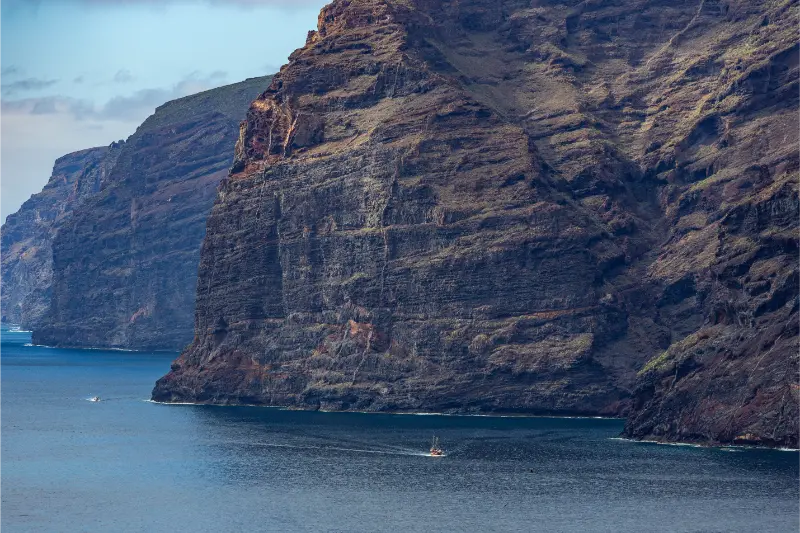
Los Gigantes is one of the best places in Tenerife to experience the island from the sea. The resort itself is small and easy to understand, but the reason I come is the enormous wall of the Teno cliffs rising beyond the harbour. From land they dominate the horizon; from a boat their scale becomes much more convincing. In places the cliffs reach around 600 metres above the Atlantic.
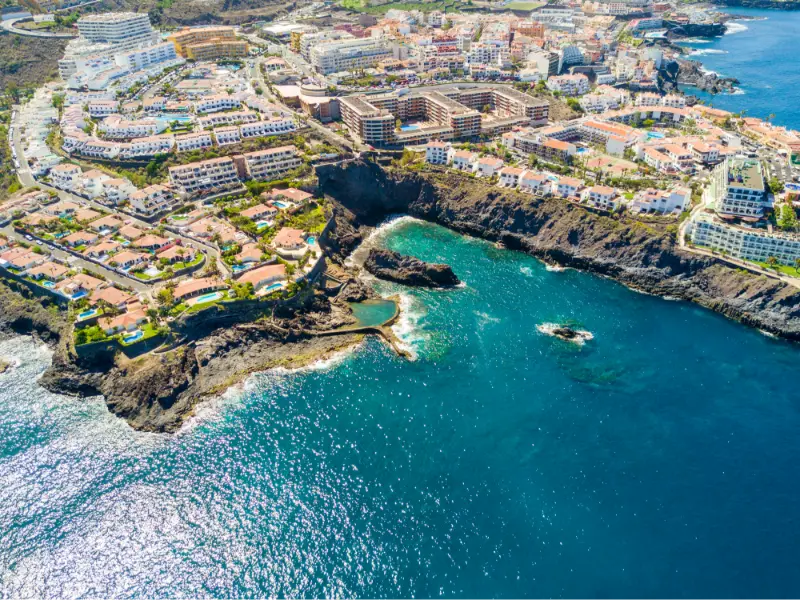
The area works as a day trip from Costa Adeje, but it can also be a very good base for travellers who prefer a quieter west-coast atmosphere. Puerto de Santiago and Playa de la Arena sit nearby, creating a broader resort zone with beaches, apartments and restaurants. I would choose Los Gigantes for sunsets, boat trips and access to Teno rather than for nightlife.
The cliffs: what makes them special
The Acantilados de Los Gigantes form part of the dramatic western edge of Teno Rural Park. Their near-vertical faces are the product of Tenerife’s old volcanic terrain and long erosion. Viewpoints on land are useful, but the perspective from the water shows how abruptly the mountains meet the ocean.
If you have only a few hours, see the harbour and one good viewpoint. If you have half a day, add a boat trip. I would not spend the whole visit driving between minor viewpoints because parking and steep streets can consume more time than expected.
Whale and dolphin watching
Southwest Tenerife is one of the island’s main areas for cetacean-watching excursions. Los Gigantes harbour has authorised operators, and the combination of wildlife observation with cliff views makes it especially attractive. I choose companies that follow the island’s regulations and treat animal welfare as more important than guaranteeing close encounters.
The official Tenerife tourism site publishes information about authorised whale-watching companies and boats. Use that as a filter before comparing price, vessel size and trip duration. Wildlife sightings can be frequent, but they remain wildlife sightings—not a performance.
Boat trips beneath the cliffs
Even travellers who are less interested in wildlife may enjoy a shorter scenic trip because the cliffs themselves are the attraction. Sea conditions determine comfort, so check the forecast if you are sensitive to motion. A small fast boat and a large catamaran provide very different experiences; choose based on comfort as much as duration.
Some trips include swimming stops when conditions permit. Treat those as optional, follow crew instructions and remember that open-ocean conditions are different from a sheltered beach.
Playa de los Guíos
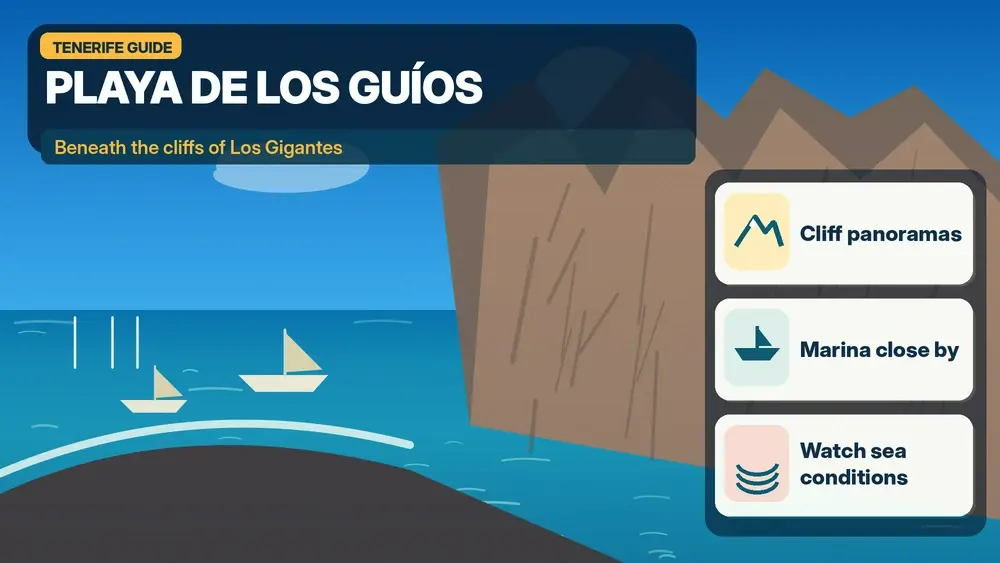
The small dark-sand beach near the cliffs gives you an easy way to combine sea time with the harbour. Its scale and facilities are more limited than the large southern beaches, but the setting is unique. I would choose it for scenery and convenience rather than expect a full resort-beach infrastructure day.
For a more substantial beach nearby, Playa de la Arena in the Puerto de Santiago area is another option. My Tenerife beach guide compares west-coast stops with other parts of the island.
Natural pools and ocean safety
The west coast has rocky bathing areas and natural pools, but conditions can become dangerous when swell increases. Never enter because other people are doing so or because a photo makes the water look calm. Follow closures, barriers and local warnings.
Los Gigantes and Masca
Los Gigantes is closely associated with Masca because the cliffs form the coastal edge of the Teno landscape and the regulated Masca Gorge descent currently exits by boat from Masca Bay toward the Los Gigantes area. If you are hiking, the logistics need to be booked under the official system rather than improvised at the harbour.
Read my Masca guide for the 2026 access rules before connecting the two experiences.
A west-coast day without the Masca hike
My easier west-coast day would start with a morning boat trip from Los Gigantes, continue with lunch near the harbour or Puerto de Santiago, then finish at a beach or viewpoint. If you have a car and enough daylight, add Santiago del Teide or a Teno viewpoint—but not every stop on the map.
This version works well after a major Teide or Anaga day because it gives you scenery without another demanding hike.
Where to stay
| Base | Best for | Character |
|---|---|---|
| Los Gigantes | Harbour and cliff views | Compact, quiet resort |
| Puerto de Santiago | Apartments and local services | More spread out |
| Playa de la Arena | Beach-focused stay | Relaxed and practical |
| Costa Adeje | More resort choice, day trip to west | Busier and farther away |
Los Gigantes can feel wonderfully calm in the evening compared with the main southern resorts. If you value that, compare accommodation in Los Gigantes and check the exact gradient between the hotel and harbour; streets can be steep.
Getting there
Driving from the south is straightforward for much of the route, but parking becomes the main practical issue near the harbour. Arrive before a booked boat trip with a generous buffer. TITSA buses serve the area, and organised excursions are another option if you do not want to drive.
For transport across the island, use my Tenerife transport guide.
Food and sunset
I would save time for a proper lunch or early dinner rather than eat quickly between activities. Fish and Canarian dishes make sense on the west coast, and sunset can be excellent when the horizon is clear. The light on La Gomera and the cliffs is often more memorable than another attraction.
Los Gigantes with children
Families can enjoy a short boat trip and beach time, but vessel choice matters. Shade, toilet access, trip length, seasickness and the age of the children are more important than marketing claims. Do not schedule a long boat excursion immediately after a winding mountain drive if someone in the family is prone to motion sickness.

For family pacing, see Tenerife with kids.
When to visit
The west and southwest are generally sunny, making Los Gigantes viable year-round. Boat conditions still depend on wind and swell, and summer heat can make midday walks on steep streets tiring. I prefer to book the sea activity first and keep the land portion flexible.
My ideal Los Gigantes visit
I would arrive early enough to park without stress, take a responsible whale- or cliff-watching trip, have lunch near the harbour, walk to a viewpoint and then choose either Playa de los Guíos or Playa de la Arena. If sunset is important, stay rather than racing back across the island before the best light.
For current background on the cliffs and visitor information, see the official Tenerife tourism page for Los Gigantes cliffs.
Choosing the right boat
Look beyond duration and price. Ask how much shade there is, how many passengers the boat carries, whether there is a toilet, how wildlife viewing is managed and what happens if conditions change. Smaller boats can feel more intimate but also more exposed to motion; larger vessels can be more comfortable for some travellers. The best choice depends on your group, not on one universal ranking.
Accessibility and steep streets
Los Gigantes is compact but not flat. Some accommodation sits well above the harbour, so travellers with mobility limitations should inspect the route carefully. A spectacular cliff view from a balcony may come with a steep return walk. When the harbour is central to your plans, proximity at the same elevation can be more useful than a panoramic hotel high on the slope.
Practical planning notes I would save before the trip
For Los Gigantes Tenerife guide, I save the accommodation address, parking or bus information, one official information link and the route back to my base before leaving. Tenerife is easy to travel around, but mountain roads, microclimates and busy coastal areas can turn a simple day into a slower one. I therefore keep one optional stop that can be removed without losing the main purpose of the day.
I also carry water, sun protection and a light layer whenever the day leaves the immediate coast. Even short journeys can move from warm sunshine to wind, cloud or cooler high ground. That small amount of preparation makes it easier to respond to the island as it actually is rather than force a schedule created before arrival.
Finally, I avoid judging a destination by the busiest thirty minutes of the day. Arriving earlier, staying later, walking one street beyond the obvious viewpoint and sitting down for a proper meal often changes the experience completely. My goal with these guides is not to collect attractions but to make each place easier to understand and enjoy at a realistic pace.
I also keep the final hour of the day deliberately open. Traffic, parking, weather and a meal that lasts longer than expected are normal parts of travel in Tenerife, not problems to solve by rushing. Leaving that margin means I can stop at an unexpected viewpoint, wait for safer sea conditions, or simply stay longer in a town that I am enjoying. It also makes the return drive more comfortable because I am not trying to recover time lost earlier in the itinerary. For me, that flexibility is one of the most useful habits on an island where short distances can hide very different roads and conditions.