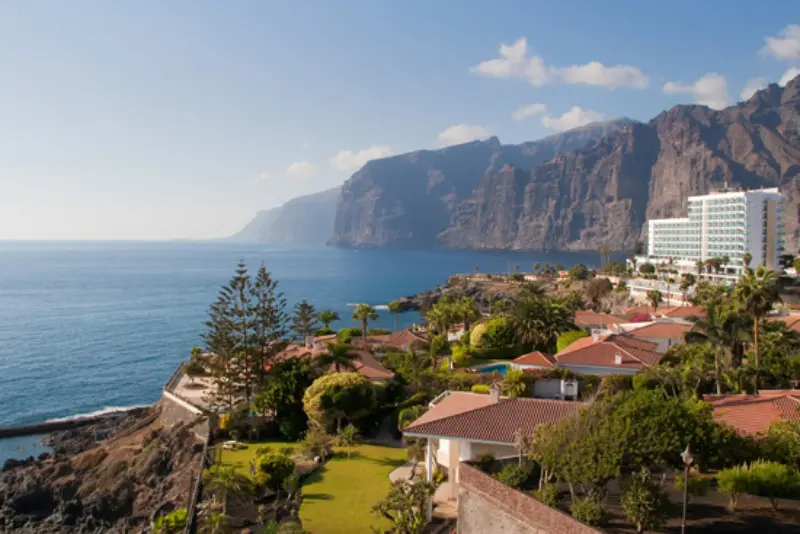
Puerto de Santiago is the west-coast base I choose when I want Los Gigantes scenery without staying in the busiest part of Los Gigantes itself. The resort area stretches through a volcanic coastline with small black-sand beaches, restaurants, apartments and easy access to Playa de la Arena. It belongs to Santiago del Teide and works especially well for sunset, boat trips and a slower holiday where I do not need major nightlife every evening. Because nearby place names blend together on booking sites, this guide explains what Puerto de Santiago actually feels like and how I would use it as a base.
Where Puerto de Santiago sits
Puerto de Santiago lies between the Los Gigantes area and Playa de la Arena on Tenerife’s west coast. In practical terms, the urban areas merge, but hills and road layout still affect walking times. I check the exact accommodation pin rather than assuming every property described as “Los Gigantes” or “Puerto Santiago” is beside the same promenade.
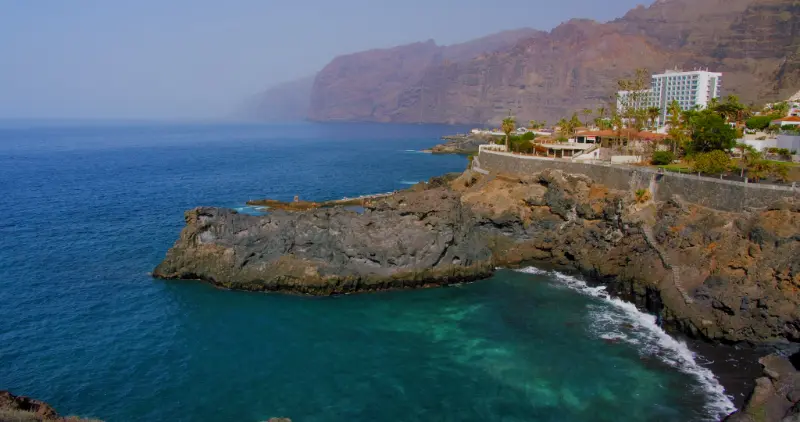
The setting is defined by dark volcanic coast, views toward La Gomera and the nearby cliffs. It is more compact and less nightlife-focused than Playa de las Américas.
Playa de Puerto Santiago
The small urban beach beside the harbour has black sand and a local, maritime atmosphere. Official tourism describes it as a sheltered cove near the fishing port with easy access and nearby food options. Its modest size is part of the charm but also means I keep expectations realistic during busy summer periods.
I check sea conditions before swimming. Sheltered does not mean risk-free, and the volcanic west coast can still receive swell.
Playa de la Arena
Playa de la Arena is the best-known beach in the immediate area and one of the west coast’s most convenient black-sand options. Official tourism lists an urban setting, lifeguard service, accessible facilities, restaurants and a designated diving area. I like it because I can combine a genuine volcanic-sand beach with normal resort conveniences.
The black sand becomes very hot in strong sun, so sandals are practical. I also respect flags and lifeguard instructions rather than assuming clear water means calm conditions.
Los Gigantes cliffs and boat trips
The cliffs dominate the northern view and are the main reason many travellers choose this part of Tenerife. Puerto de Santiago gives easy access to boat departures from nearby Los Gigantes for whale watching and coastal excursions. My whale-watching guide explains how I choose a responsible operator.

I do not schedule a boat trip on the only day I have in the area. Sea conditions can change, so a two- or three-night stay gives more flexibility if an excursion moves.
Sunset and evening atmosphere
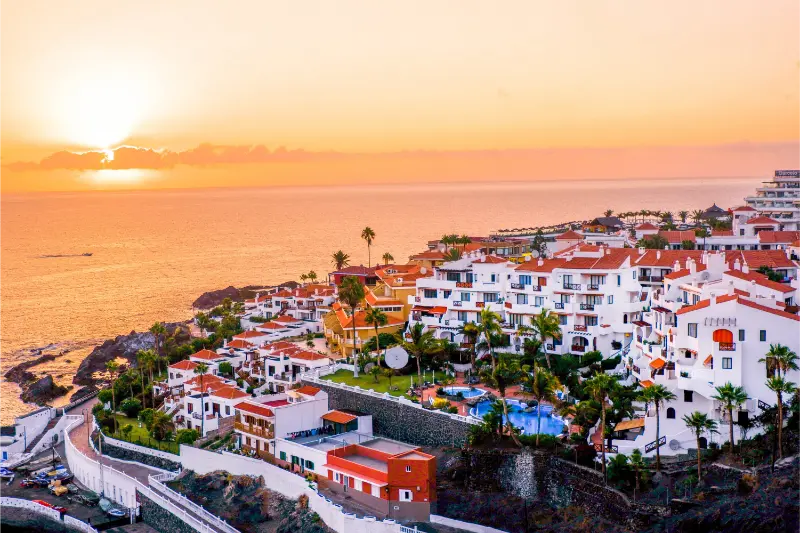
West-facing orientation is one of Puerto de Santiago’s strongest advantages. La Gomera can appear on clear evenings, and the changing light on the cliffs makes sunset more than a beach event. I find a safe promenade or terrace rather than driving to a viewpoint at the last minute.
Evenings are generally relaxed, with restaurants and bars rather than a large club scene. Travellers wanting intense nightlife should read my Tenerife nightlife guide before choosing this base.
Walking, hills and accessibility
The area is hillier than it first appears. A hotel can be close to the sea on a map but involve steep roads or steps. I check elevation and pedestrian routes before booking, particularly with a stroller or reduced mobility. Playa de la Arena itself has accessible services, but that does not make every surrounding street flat.
For a fully level seafront holiday, parts of Los Cristianos or Costa Adeje can be easier. Puerto de Santiago trades some walking simplicity for west-coast scenery.
Day trips from Puerto de Santiago
Masca, Santiago del Teide, Teno and Teide are obvious inland excursions, while Playa San Juan and Alcalá work for a slower coastal day. I group these geographically rather than driving east to Anaga and back in one day. My Teno guide and Santiago del Teide guide are the most natural companions to this base.
If I want a cross-island day, I start early and accept that the return drive after sunset can be tiring on winding roads.
Where to stay and who will like it
Puerto de Santiago suits couples, families who like smaller beaches, whale-watching visitors and travellers seeking a quieter west-coast base. I choose a property near Playa de la Arena for beach convenience or closer to Los Gigantes for marina access. Parking matters if I have a rental car.
I compare Puerto de Santiago hotels and apartments with Los Gigantes accommodation before deciding which side of the same coastal area fits the trip best.
How I would plan it
I would stay at least two nights if boat trips or Masca are important, because the west coast becomes much more enjoyable when one cancelled plan does not disrupt the whole itinerary.
Puerto de Santiago is not a place I choose for a huge list of attractions. I choose it for cliffs, black sand, sunset and easy access to the west side of Tenerife.
Eating in Puerto de Santiago
I look for a mix of Canarian fish restaurants, casual terraces and simple local cafés. The waterfront has tourist-oriented menus, but walking a little away from the main viewpoints can produce more everyday options. I check recent opening days rather than planning dinner around one old recommendation.
Transport without a car
Buses connect the area with other southwest towns, and a no-car stay can work if the holiday is mostly local plus organised excursions. A rental car becomes more useful for rural Teno, mountain villages and flexible Teide days. I compare the trade-off with my Tenerife without a car guide.
Planning Puerto de Santiago Tenerife around the rest of the trip
I would not let Puerto de Santiago Tenerife dominate every day of the holiday. Tenerife works best when active or detailed plans are balanced with a slower meal, a short walk or time by the sea. I group nearby places together, leave a realistic margin for parking and changing conditions, and avoid crossing the island simply to add one more stop. That makes this part of the trip feel intentional rather than squeezed between unrelated attractions.
What I check the evening before
The evening before this part of the trip, I confirm weather, access, opening information and the exact route from my accommodation. For Puerto de Santiago Tenerife, small practical changes can matter more than they appear on a static itinerary. I save essential information offline, charge the phone and keep a nearby alternative in mind. That preparation means a closure, stronger wind or slower traffic changes the plan without ruining the day.
How I keep the day geographically sensible
I build this day around one section of Tenerife. Even when puerto de santiago guide: playa de la arena, los gigantes and tenerife west coast sounds easy to combine with several famous attractions, mountain roads and elevation can turn short map distances into long travel times. I prefer adding one nearby village, beach, viewpoint or lunch stop. The result is less time in the car and more time actually experiencing the area.
The pace I recommend for a first visit
For a first experience of Puerto de Santiago Tenerife, I deliberately leave more time than the minimum suggested by a map or booking page. I want room to stop, understand the setting and adapt to local conditions. Tenerife rewards that slower approach because weather, light and atmosphere change quickly. Finishing with spare energy is more useful than proving that I managed to fit another distant attraction into the same day.
A useful backup plan
My backup plan for Puerto de Santiago Tenerife is always something close by and simple: a town centre, sheltered café, promenade, museum, market or viewpoint that does not depend on the same conditions. I do not choose an alternative on the opposite coast. Keeping the backup local prevents a weather change or closure from becoming an exhausting cross-island drive and makes the itinerary much more resilient.
Why I would verify details again on arrival
Information connected with Puerto de Santiago Tenerife can change after an article is published, especially where permits, natural areas, operating hours or transport are involved. I therefore use this guide to understand the trip and then verify the final operational details shortly before going. That habit is more reliable than treating any travel article, including this one, as a permanent timetable.
What I would avoid
I would avoid turning Puerto de Santiago Tenerife into a race against the clock. The common mistakes are leaving too late, adding distant stops, relying on a single parking option and assuming conditions will match the coast where the day began. A simpler route with time for one proper break is usually more memorable. It also leaves enough flexibility to follow local signs and instructions instead of feeling pressured by a schedule.
How this fits a longer stay
On a week-long Tenerife trip, I place Puerto de Santiago Tenerife beside geographically related days rather than between two long drives. That lets me reuse knowledge of roads, parking and local weather instead of starting from zero each morning. On a shorter trip, I would keep only the element that matters most and save secondary stops for another visit. Tenerife has enough depth that leaving something for next time is not a failure.